On The War Memorial Trail…..A Face For WWII Soldier James Walter Auld

July 7, 2020.  Last year, a request was made for photos and information on PEI soldiers from WWII who were buried in The Netherlands.  (See Photos and Info Requested For WW2 Soldiers From PEI Buried In The Netherlands)

It’s been a slow and difficult quest, but in the past few months two photos have been found, one for Joseph Edmund HENNEBERY (See On The War Memorial Trail…..A Face For Joseph Hennebery!) and now one for James ‘Walter’ AULD.

The story of how Walter’s photo was found has several twists and turns.  Pieter had zero luck in finding anyone related to this WWII soldier, who is buried in the Canadian War Cemetery in Bergen Op Zoom in The Netherlands, until we met Helen MacEwen, who had invited us to see a WWI era map her father-in-law had sent to the Island in 1918.  (See The WW1 Era ‘Course Of The Rhine’ Map of Germany)

We brought along a ‘wish list’ of photos and after looking at the list, Helen suggested that Pieter contact Allison Ellis, as his wife Melba came from the same area as Walter.  “…Allison is a retired politician…” Helen explained, “...and knows a lot of people…”  (See http://www.peildo.ca/fedora/repository/leg:27520)

It was a long shot. Lots of people over the years have suggested names, which turned out to be a fruitless exercise, but this time Pieter found a kindred spirit.  Allison remembered a Walter Auld and it was soon determined that this was the same person.  “…. I’ve been to his grave in The Netherlands….” Pieter was told. Allison didn’t have a photo, but thought he knew who to ask.  “…Leave it with me…” he said. A week later, we were sitting in the home of Allison and Melba, and Pieter had a photo that Walter’s niece, Judy Bartlett, had provided.

CIMG4156 Jun 23 2020 Pieter with Melba & Allison Ellis

Left to right: Melba Ellis, Pieter, Allison Ellis.  (Photo credit: Daria Valkenburg)

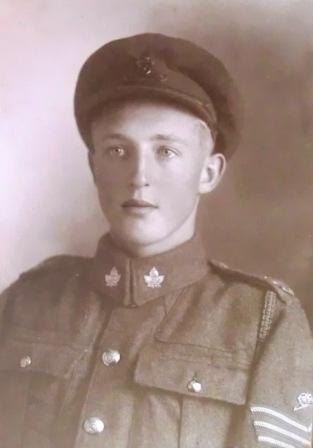
James Walter Auld

Walter Auld. (Photo courtesy of Judy Bartlett Family Collection)

James ‘Walter’ AULD was born October 21, 1923 in Glenwood, the son of James and Margaret Auld of O’Leary Station, and was a garage mechanic with Corney Brothers in Summerside.  After enlisting in Charlottetown on February 20, 1942, he was sent for basic training as a rifleman.

A note in his service file indicates he was unhappy with this placement and noted he had been promised a position as a driver or mechanic when he enlisted.  His mechanical knowledge was assessed as ‘superior’ and the recommendation was made that he be transferred to a position where his skills could be used.

In May 1942 he was transferred to the Princess Louise Fusiliers (Motor Division), and by October 1942 he was on his way to England. In August 1943 he was transferred to the Algonquin Regiment.  In July 1944 he was with his unit, first in France and then as they moved into The Netherlands.

According to the War Diary for the Algonquin Regiment, on November 1, 1944 they were under the command of the 10th Canadian Infantry Brigade, 4th Canadian Armoured Division, and in action to try and take the town of Welberg, The Netherlands.   This was part of Operation Suitcase, which began on October 20, 1944, and as part of the bigger Battle of the Scheldt operation.  (See https://canadianbattlefieldtours.ca/operation-suitcase/)
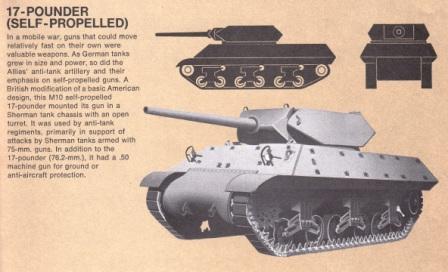
self propelled tank p49

The war diary entry for November 1, 1944 recorded that “… Zero hour was at 19:00 hours…. We had 17 SP (self-propelled) tanks in support to deal with the enemy SP tanks…. Shortly after the kick-off, ‘A’ Company reported that one SP had bogged down and was holding the Company up  and before they got going again ‘D’ Company reported they were 300 yards from Welberg.  At 20:45 hours ‘A’ Company reported that one of the SPs had been hit and was burning.  At 21:00 hours ‘A’ Company reported another SP burning and that the situation was very confused due to heavy shelling of their positions by enemy SPs….”

At some point in this battle on November 1, 1944, Walter lost his life, aged 21. On November 6, 1944, he was buried in a cemetery in Steenbergen, not far from where he died.
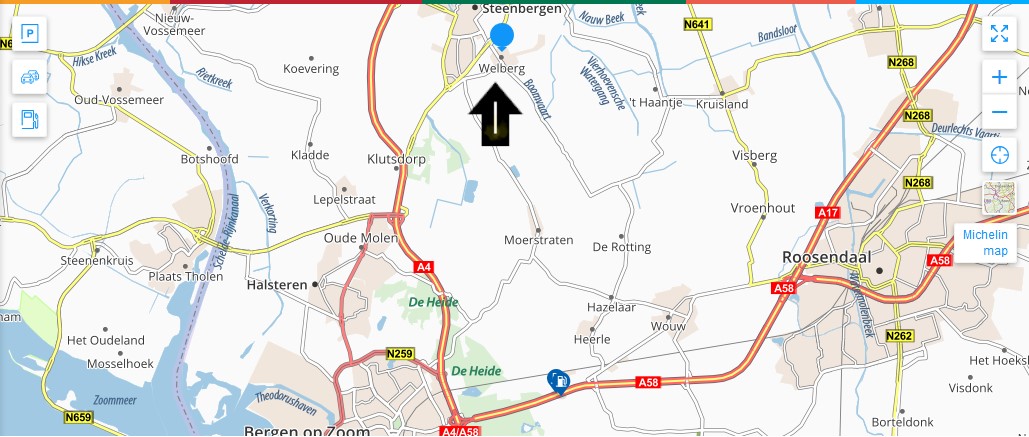
Map where Auld died with arrow

Map with a black arrow showing the approximate location where Auld lost his life near Welberg. The unit had come from the area of Moerstaten. He was initially buried in Steenbergen, then later in Bergen Op Zoom. (Map courtesy of Michelin)

In October 1946 Walter was reburied in the Canadian War Cemetery in Bergen Op Zoom.  We were there in October 2019 and Pieter placed Canadian and PEI flags by his grave.  (See On The War Memorial Trail…..Our 2019 Visit To The Canadian War Cemetery In Bergen Op Zoom for an account of our visit.)
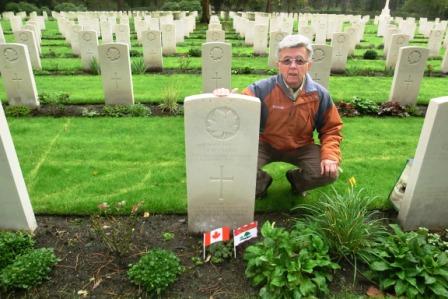
CIMG3388 Oct 7 2019 Bergen Op Zoom James Auld

Pieter by the grave of Walter Auld at the Canadian War Cemetery in Bergen Op Zoom.  (Photo credit: Daria Valkenburg)

Thanks to the combined efforts of Allison and Melba Ellis, Judy Bartlett, and Helen MacEwen, a photo of James ‘Walter’ Auld is on its way to the researchers at the Canadian War Cemetery in Bergen Op Zoom. If you have information to share about Canadian soldiers buried in The Netherlands, please contact Pieter at memorialtrail@gmail.com or comment on the blog.

© Daria Valkenburg

….Want to follow our research?….

If you are reading this posting, but aren’t following our research, you are welcome to do so.  Our blog address: https://onthewarmemorialtrail.com/
4 countries, 6 weeks, 7,000 km – an unforgettable war memorial journey in Europe…. Daria’s book ‘No Soldier Buried Overseas Should Ever Be Forgotten‘ is available in print and e-book formats.  Net proceeds of book sales help support research costs and the cost of maintaining this blog. For more information see https://nosoldierforgotten.com/

You are also invited to subscribe to our YouTube Channel: On The War Memorial Trail With Pieter Valkenburg: https://www.youtube.com/channel/UCJ591TyjSheOR-Cb_Gs_5Kw. 

Never miss a posting!  Subscribe below to have each new story from the war memorial trail delivered to your inbox.
On The War Memorial Trail…..The WWI Era ‘Course Of The Rhine’ Map of Germany

July 3, 2020.  It’s always a pleasure to hear from readers.  After reading about Harold Keith Howatt’s travels to WWI Germany as part of the post-occupation forces, Helen MacEwen contacted us about a map that her father-in-law sent to his future wife in 1918.  “…I have been reading with interest your reports about the WWI Veterans and wondered if I could bring further information about my father-in-law’s last tour after the German surrender. His name was Sgt. Herbert ‘Herb’ S. MACEWEN from Stanley Bridge…”

Helen went on to describe the map.  “…I have a copy of the ‘COURSE OF THE RHINE: From Mayence to Cologne’. It is a fold-out map of the Rhine River within a hard-cover. It is very fragile but does mention the different towns that you mentioned in your stories…” (You can read Howatt’s account at The WW1 Soldier Who Went To Post WW1 Germany)  Today we know Mayence as Mainz.

CIMG4111 Jun 14 2020 Herbert MacEwan in uniform

Herbert MacEwen.  (Photo courtesy of Helen MacEwen collection)

Howatt was in the 8th Canadian Siege Battery during WWI, while MacEwen was in the 2nd Canadian Siege Battery.  Both batteries were later attached to the 2nd Brigade, the only Canadian Heavy Artillery Brigade that went to Germany.

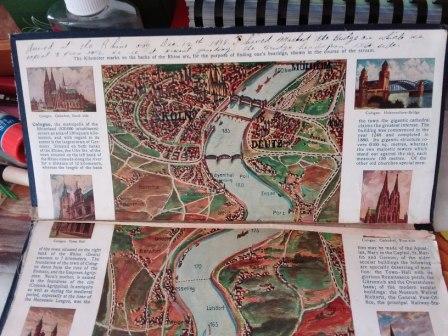
We were intrigued and made arrangements to meet Helen and see the map.  It turned out to be a surprise, as it was a foldable, panoramic map in full colour, showing the area along the Rhine River between Mainz and Cologne.  To complete the surprise, the map was written in English, but published in Germany.  It was clear that this had to be a map that pre-dated WWI and was designed for tourists!

20200614_144359 Jun 14 2020 Pieter & Helen MacEwan with panoramic map of Rhine River

Pieter and Helen MacEwen with the foldable, panoramic map. (Photo credit: Daria Valkenburg)

Ralf Gräfenstein, a historian in Berlin, found a document that might explain why a map published in Germany over 100 years ago would be in English. “…These maps were made in English for tourists from Britain and Overseas, who came before the beginning of WWI and after the war to the German Rhine area…” he explained.

Ralf referred me to a 2006 dissertation written by Thilo Nowack of the University of Bonn, entitled ‘Rhein, Romantik, Reisen. Der Ausflugs- und Erholungsreiseverkehr im Mittelrheintal im Kontext gesellschaftlichen Wandels (1890 bis 1970)’ and gave a reference to the chapters that would be of interest. (Translation of the dissertation: ‘Rhine, romance, travel. Excursion and recreational travel in the Middle Rhine Valley in the context of social change (1890 to 1970)’).

In the dissertation, it was explained that “… the Tourism Society of the Rhine Area was founded in 1904… with the goal “to promote and make traveling and the stay on the Rhine and its side valleys pleasant’…” in response to the view that “… the Rhineland had lost its attraction as a travel destination since the late 19th century…”  As part of the tourism promotion effort, “… posters, brochures and other booklets were used to advertise in German, English, French and Dutch…” and placed “…in train stations at home and abroad…”  Tourist promotion was economically important as “… the invention and expansion of steam shipping and railroads enabled an enormous increase in travel on the Rhine…”

It seems likely that Herbert MacEwen could have found the map in a shop or train station someplace in Germany, most likely Cologne.  It’s clearly a tourist map, with key destinations identified along the Rhine, with brief explanations and diagrams.

20200614_144505 EXCERPT Jun 14 2020 Portion of map between Cologne & Mehlem - Copy

An excerpt from the map, showing illustrations and descriptions.  (Photo credit: Daria Valkenburg)

Helen noted that “…Herb had sent this map to his girlfriend in Stanley Bridge. They married in 1921.  He states that they stayed near Mehlem-on-Rhine…”

At the top of the map Herb had written “… Arrived at the Rhine on December 12th, 1918.  I have marked the bridge on which we expect to pass over. We are at present guarding the bridgehead from this site…”  This confirms the entry in Harold Howatt’s account, which stated that they had arrived in Cologne on December 12.

20200614_143410 Jun 14 2020 note on map saying unit was guarding bridge head

Herb MacEwen’s note at the top of the map.  (Photo credit: Pieter Valkenburg)

A bridgehead is the strategically important area of ground around the end of a bridge over a body of water.  (For more information, see https://en.wikipedia.org/wiki/Bridgehead)

On December 13, Harold Howatt had noted that “….the Canadian troops marched across the Rhine, reviewed as they crossed the bridge by General Plumer and General Currie…” The bridge crossed was the Hohenzollern Bridge in Cologne. (See https://en.wikipedia.org/wiki/Hohenzollern_Bridge)

To our amazement, Pieter found a video from the Imperial War Museum of this march across the Hohenzollern Bridge: https://www.iwm.org.uk/collections/item/object/1060008233.

Herb MacEwen was discharged on May 18, 1919.   His daughter-in-law Helen told us that “…he would be 21 years old.  He apparently, ‘conveniently,’ put his birthdate down as older than fact when he joined the Army…”

The individual stories of our soldiers enrich the sometimes dry facts of history, and it was wonderful to learn of the shared history of Herb MacEwen and Harold Howatt.

For more information on the post WWI occupation of the Rhineland, see https://en.wikipedia.org/wiki/Occupation_of_the_Rhineland

For more information on General Sir Herbert Plumer, who commanded the Army of Occupation, see https://en.wikipedia.org/wiki/Herbert_Plumer,_1st_Viscount_Plumer

For more information on General Sir Arthur Currie, see https://en.wikipedia.org/wiki/Arthur_Currie

Thank you to Helen MacEwen for sharing the story of Herb MacEwen and Course Of The Rhine Map from the early 20th Century.  If you have a story to share, please contact Pieter at memorialtrail@gmail.com or comment on the blog.

© Daria Valkenburg

….Want to follow our research?….

If you are reading this posting, but aren’t following our research, you are welcome to do so.  Our blog address: https://onthewarmemorialtrail.com/

4 countries, 6 weeks, 7,000 km – an unforgettable war memorial journey in Europe…. Daria’s book ‘No Soldier Buried Overseas Should Ever Be Forgotten‘ is available in print and e-book formats.  Net proceeds of book sales help support research costs and the cost of maintaining this blog. For more information see https://nosoldierforgotten.com/

You are also invited to subscribe to our YouTube Channel: On The War Memorial Trail With Pieter Valkenburg: https://www.youtube.com/channel/UCJ591TyjSheOR-Cb_Gs_5Kw. 

Never miss a posting!  Subscribe below to have each new story from the war memorial trail delivered to your inbox.


Canada Day In Tryon

20200630_200525 Jul 1 2020 Happy Canada Day

The Canadian flag flies proudly! (Photo credit: Daria Valkenburg)

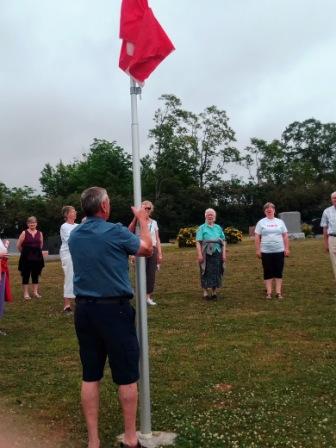
July 1, 2020.  Happy Canada Day! On July 1, a Canada Day ceremony to inaugurate a new flagpole and bench at the Tryon Cenotaph at the Tryon People’s Cemetery was attended by several members of the community, including Pieter and myself.  This event was coordinated by the Tryon Women’s Institute, Tryon People’s Cemetery, and Merry Pop-Ins Childcare Centre, with funding for the flagpole and bench provided by Heritage Canada.

Exif_JPEG_420

Pieter by the Tryon Cenotaph. (Photo credit: Daria Valkenburg)

Three names from WWI that are listed on the portion of the Tryon Cenotaph shown in the photo above are also listed on the Cenotaph outside the Borden-Carleton Legion.  Over the years, their stories have been told in this blog:

Dignitaries attending today’s event included:

  • The Honourable Wayne Easter, Member of Parliament for Malpeque
  • The Honourable Jamie Fox, Minister of Fisheries and Communities and MLA for District 19
  • The Honourable Peter Bevan-Baker, Leader of the Official Opposition and MLA for District 17
  • Reverend Doctor Karen MacLeod-Wilkie, Minister of South Shore United Church
Exif_JPEG_420

Peter Bevan-Baker plays ‘O Canada’ as the flag is raised. (Photo credit: Daria Valkenburg)

Exif_JPEG_420

Tom Albrecht raises the flag on new flagpole.  (Photo credit: Daria Valkenburg)

Exif_JPEG_420

Of course there were Canada Day cupcakes!  Left to right: Jamie Fox, Fran Albrecht, Helen Green, Jack Sorensen.  (Photo credit: Daria Valkenburg)

Exif_JPEG_420

Standing by the Tryon Cenotaph, left to right: Wayne Easter, Peter Bevan-Baker, Jamie Fox. (Photo credit: Daria Valkenburg)

Barb Clement was kind enough to send a short video made while ‘O Canada’ was played. See https://drive.google.com/file/d/1vLQOBYtgnnOET7gAdi88C-9Z4HHf3BQr/view?usp=sharing

Thank you to the organizers of this Canada Day event, and to Barb Clement for sharing the video. If you have a story to share about any of the names on the Tryon Cenotaph, please contact Pieter at memorialtrail@gmail.com or comment on the blog.

© Daria Valkenburg

….Want to follow our research?…

If you are reading this posting, but aren’t following our research, you are welcome to do so.  Our blog address: https://onthewarmemorialtrail.com/

4 countries, 6 weeks, 7,000 km – an unforgettable war memorial journey in Europe…. Daria’s book ‘No Soldier Buried Overseas Should Ever Be Forgotten‘ is available in print and e-book formats.  Net proceeds of book sales help support research costs and the cost of maintaining this blog. For more information see https://nosoldierforgotten.com/

Subscribe to our YouTube Channel: On The War Memorial Trail With Pieter Valkenburg: https://www.youtube.com/channel/UCJ591TyjSheOR-Cb_Gs_5Kw. 

Never miss a posting!  Subscribe below to have each new story from the war memorial trail delivered to your inbox.

On The War Memorial Trail…..A Face For WWII Soldier Joseph Hennebery!

May 31, 2020.  Last year, a request was made for photos and information on PEI soldiers from WWII who were buried in The Netherlands.  (See Photos and Info Requested For WW2 Soldiers From PEI Buried In The Netherlands)  One of these soldiers, buried in the Canadian War Cemetery in Groesbeek, was Joseph ‘Joe’ Edmund HENNEBERY. 

He was born in Morell on July 7, 1919, the son of Edmund Joseph and Mary ‘May’ Hennebery, and was a sapper with the Royal Canadian Engineers – 33rd Field Company, and served in the UK, France, and The Netherlands.  He died in The Netherlands on April 20, 1945, aged 25, along with two other men, Pte L. A. CROSS, a cook in the platoon, and Sapper A. COLVIN, following an accident on April 18 while off duty.

When we were in The Netherlands last fall, Pieter placed flags at his grave.  “It’s always much more meaningful when I’m standing at a grave and have an idea what the person looked like.”  After our return, a chance encounter with Hennebery’s niece, Teresa Hennebery, resulted in a photo of her uncle, finally giving a face to the name listed on the grave.  “He looks exactly like my father” Teresa explained. “Joe is my father’s brother.”

improved colour photo Joseph Hennebery

Joseph ‘Joe’ E. Henneberry.  (Photo courtesy Hennebery Family Collection.  Photo restoration and colourization by Pieter Valkenburg)

“The Hennebery Family from Morell Rear (now called Green Meadows) was very committed to the World War II war effort.  At one point seven of the twelve children in the family were serving in the Canadian Army or Air Force.  Sadly, Joe was the only one of the Hennebery siblings that did not come home.”

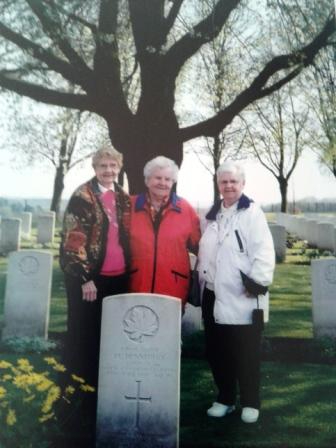
In 2000, Teresa visited his grave with family members.  “…That was the first time anyone from the Hennebery family visited Joe Hennebery’s grave.  It was a very emotional and impactful trip…”

20200529_184532 Hennebery family visiting grave

In 2000, Joe Hennebery’s sister-in-law Mary visited his grave, and posed for a photo with her sisters. Left to right: Laura Brazel, Mary Hennebery, Evelyn McAliney.  (Photo courtesy Hennebery Family Collection)

20200529_185216 Teresa ahd Mary Hennebery

Teresa and Mary Hennebery at Joe Hennebery’s grave in 2000.  (Photo courtesy Hennebery Family Collection)

On behalf of the Hennebery family, Teresa wrote that “…The family appreciates the efforts of the Dutch people to commemorate and remember those Islanders and Canadians who gave their lives for our freedom. ‘Dying for freedom is not the worst thing that could happen; being forgotten is.’…”

Joe Hennebery is not the only family member buried in a Dutch cemetery.  Michael Joseph ‘Joe’ MCKENNA, the brother of Teresa’s mother Mary, is buried in the Canadian War Cemetery in Holten. “…My mother and I were in Holland in May 2000 for a commemoration ceremony for her brother (also named Joe) who was killed in Rha a couple of weeks before my other Uncle Joe died.  It was so beautiful and the people of Rha treated us like Royalty...”

Thank you to Teresa Hennebery for sharing her family photos, which will be forwarded by Pieter to the researchers at the Canadian War Cemetery in Groesbeek.  If you have information to share about Canadian soldiers buried in The Netherlands, please contact Pieter at memorialtrail@gmail.com or comment on the blog.

© Daria Valkenburg

….Want to follow our research?….

If you are reading this posting, but aren’t following our research, you are welcome to do so.  Our blog address: https://onthewarmemorialtrail.com/

4 countries, 6 weeks, 7,000 km – an unforgettable war memorial journey in Europe…. Daria’s book ‘No Soldier Buried Overseas Should Ever Be Forgotten‘ is available in print and e-book formats.  Net proceeds of book sales help support research costs and the cost of maintaining this blog. For more information see https://nosoldierforgotten.com/

You are also invited to subscribe to our YouTube Channel: On The War Memorial Trail With Pieter Valkenburg: https://www.youtube.com/channel/UCJ591TyjSheOR-Cb_Gs_5Kw. 

Never miss a posting!  Subscribe below to have each new story from the war memorial trail delivered to your inbox.
On The War Memorial Trail…..The WWI Soldier Who Went To Post WWI Germany

April 29, 2020.  In an earlier posting, the observations made by Harold Keith HOWATT of Augustine Cove towards the end of WW1 were recorded.  (See One Soldier Records His Observations During The Last Few Days Of World War I) Harold was in the 8th Canadian Siege Battery during WW1 and came home after the war.

8th Siege Battery photo

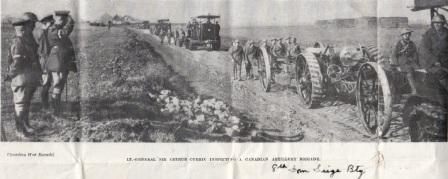
On October 30, 1918, as Howatt’s unit travelled towards Belgium from France in the last days of the war, the Brigade was inspected by Lt-General Sir Arthur  Currie.  (Harold Howatt collection.  Photo from ‘Purely Personal’ issue of November 30, 1918.)

After the official hostilities ended on November 11, 1918, Harold was in Belgium with his unit, and hoped he could go to Germany with the Army of Occupation.  He got his wish.

On November 17, 1918, Harold’s unit was informed it would be attached to the 2nd Brigade, the only Canadian Heavy Artillery Brigade going to Germany.

Before the march into Germany, however, Harold wrote, on November 19, 1918, how happy he was to have a real bath… “...Wonderful to relate, we had a bath parade to the bath at one of the mines. It was a rather long walk but a great bath when we got there, a shower bath with lots of warm water…”

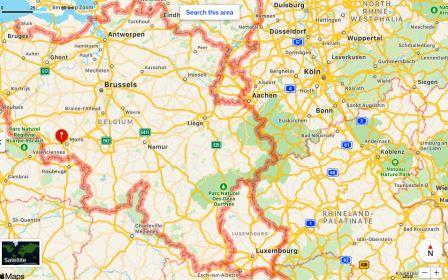
Screenshot Map of route to Germany at DuckDuckGo

Route from Mons, Belgium to Mehlem (near Bonn), Germany taken by Howatt’s unit. (Map courtesy of http://www.duckduckgo.com)

On November 20, the unit was on the move. “…Breakfast at 5 o’clock this morning, then we fell in at 6:30 and marched up to the square.  Here we formed up and started for Germany, the lorries ahead, then the signallers and B.C.A.s, then the guns with the gun crews walking behind….” (B.C.A. is an acronym for Battery Commander Assistant, the position held by Harold.) “...We stopped at a town called Jemappes, about four kms west of Mons.  We were billeted in a big factory, away up in the top story...”  The unit stayed there for a week.

On November 28, 1918, Harold and his unit were on their way again.  “…Up this morning at 5:30, had two cups of coffee, then breakfast, and away.  We travelled in the lorries through town after town.  Had great fun waving our hands to all the pretty girls as we passed…” 

Pretty girls weren’t all that caught Harold’s interest. “…We stopped in one town for a few minutes and we were talking to a Canadian infantry corporal.  His company was guarding trainloads of munitions left by the Germans.  They had big munitions works in the town, and there were over 300 cars of shells and high explosives in the railway yards…”  Harold didn’t identify this town, but mentioned that they stopped overnight in Ligny, and he was billeted in a farmhouse with a Belgian family.

The next day, November 29, Harold continued his account.  “…Left Ligny this morning at about eight o’clock and arrived here in Namur about twelve.  All along the road are abandoned German lorries, tractors, and motorcars.  They must have left hundreds and hundreds behind them.  I don’t know whether these cars have broken down or whether the petrol gave out.  I saw one yard full of lorries….”

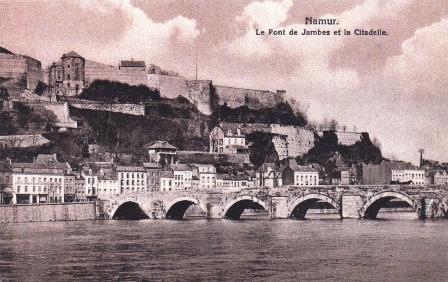
Namur postcard

Postcard showing the citadel in Namur. (Harold Howatt collection.)

The unit stopped in Namur for a rest break, giving Harold time to explore the town.  “…Namur is quite a place.  The forts are on a high cliff or hill behind the town.  The town has been badly smashed up in some places….”

On December 1, the unit was moving ahead again.  “…We started about seven.   The road ran along the bank of the Meuse, and on the other side are enormous cliffs towering high in the air…..”  While Harold, as part of the advance party, arrived in Huy around noon to secure accommodations “….the guns did not get in until nearly dark.  Just as we were waiting around for supper Mr. Goodwin came around and said that the B.C.A.s and signallers had to clear the mud off the wheels…”  Harold, along with a small group, cleared off one gun, but noted that a number of men disappeared, rather than going out in the dark to tackle this task!

The next day, rather than continuing on, the unit was put to work cleaning the guns. On December 4, the unit moved further along to Hamoir, where they stopped for another few days.  On December 8, the unit travelled as far as Petit-Thier “…only 3 kms from the border.  It is a very small place…”

On December 9, Harold recorded that “…At last we are where we have been trying to get for over four years.  ‘In Germany’ This morning, at about eight o’clock we crossed the frontier, the first Canadian Siege Battery to enter Germany….”

He noted that the mood in Germany was not the same as in Belgium.  “…About the only difference we noted on crossing the frontier was the absence of flags and any demonstrations on the part of the people.  They still came out when we passed and just looked at us without a word or smile.  One or two we met on the road saluted us.  The people do not seem to fear us, in fact I think they welcome us, hoping the presence of the troops will restore order, and result in a more even distribution of food. The country we passed through today was desolate….” That night they stopped in a small village, Mirfeld, where Harold was “…billeted in a schoolroom...”

On December 10, while trying to find a place to stay in Büllingen, the unit ran into opposition.  “…At first they were going to put us in the station house, but the old station master kicked about it, saying he had a telegram from a conference in Aix-la-Chapelle saying that station houses were not to be used for billeting troops...”  The Canadians found other accommodation.

By December 12, they had reached Cologne, and the next day, December 13, “….the Canadian troops marched across the Rhine, reviewed as they crossed the bridge by General Plumer and General Currie.  It was an inspiring sight to see the Canadians cross to the east bank of the Rhine….. The people here do not seem to be very hostile, in fact many are quite friendly but it must have been a bitter pill for these proud Prussians to swallow to have to witness the occupation of their city by the hated Canadians….”

On December 16, the unit travelled to its final destination in Germany.  “….We started about 1:30 pm for Bonn or somewhere near.  We passed through Bonn…. and arrived about dusk in a little town called Mehlem.  We are billeted in an old theatre….”

The 2nd Canadian Brigade stayed in Mehlem until January 28, 1919, when the Canadian Army of Occupation was relieved by the British 84th Brigade Royal Garrison Artillery.  Canadian troops moved back to Belgium and then onwards towards demobilization and home. Harold was discharged on May 18, 1919.

There is an Island link between the Canadian Brigade, which Harold was part of, and the British Brigade! One of the members of the British Army of Occupation was Lt. Henry “Harry” Warburton STEWART, one of the names listed on the Cenotaph outside the Borden-Carleton Legion.  Stewart died in hospital while in Germany and is buried in Cologne. (For an account of our visit to the cemetery and his story, see https://onthewarmemorialtrail.com/2018/02/26/on-the-war-memorial-trail-in-cologne/)

Henry Warburton Stewart

Henry “Harry” Warburton Stewart. (Photo courtesy B. Stewart family collection)

At the time we visited Cologne we did not have access to the war diaries for Stewart’s unit.  Thanks to the coronavirus pandemic we got a lucky break.  The National Archives in the United Kingdom has offered free access to its digitized records while the Archives are closed to the public. Pieter was able to get the war diaries, so we now have confirmation why Stewart was in Germany.

His unit, the 77th Siege Battery Royal Garrison Artillery, became part of the 84th Brigade Royal Garrison Artillery, sent to relieve the Canadians.  According to the war diary, on January 29, 1919 “….a party of the 77th Siege Battery arrived in Namur…”  Unlike Harold’s unit, which travelled by road, this unit “…. travelled to Mehlem by train...”  No mention is made of where in Mehlem the 77th Siege Battery was billeted.  Stewart must have fallen ill shortly after arriving in Mehlem as he ended up in hospital in nearby Bonn and died on February 11.

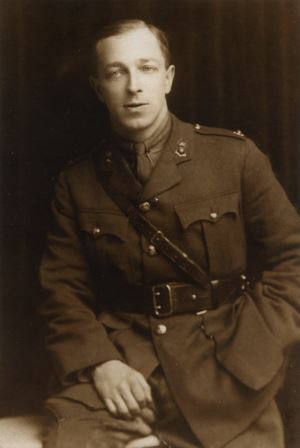
Unfortunately, as yet, we have not yet found a photo of Harold Howatt. UPDATE: A photo has been found.

As well, the service file for Henry Warburton Stewart has not yet been digitized by the National Archives and is not available online. Can you help?  If so, please let Pieter know.  You can email him at memorialtrail@gmail.com or comment on the blog.

© Daria Valkenburg

….Want to follow our research?…

If you are reading this posting, but aren’t following our research, you are welcome to do so.  Our blog address: https://onthewarmemorialtrail.com/

4 countries, 6 weeks, 7,000 km – an unforgettable war memorial journey in Europe…. Daria’s book ‘No Soldier Buried Overseas Should Ever Be Forgotten‘ is available in print and e-book formats.  Net proceeds of book sales help support research costs and the cost of maintaining this blog. For more information see https://nosoldierforgotten.com/

Subscribe to our YouTube Channel: On The War Memorial Trail With Pieter Valkenburg: https://www.youtube.com/channel/UCJ591TyjSheOR-Cb_Gs_5Kw. 

Never miss a posting!  Subscribe below to have each new story from the war memorial trail delivered to your inbox.

Dutch Kings Day Is A Reminder Of The Upcoming Liberation Of The Netherlands Anniversary

kings day

April 27, 2020.  Today is Kings Day (Koningsdag) in The Netherlands, the national holiday in that country, equivalent to our Canada Day on July 1.  It celebrates the birthday of the Dutch King Willem-Alexander.  Normally there are lots of activities, but with social distancing due to the coronavirus, events have been cancelled, and people have been asked to celebrate at home.

20200427_124326 Apr 27 2020 Pieter with Dutch flag

On a windy Island, Pieter has to hang on to the Dutch flag for dear life! (Photo credit: Daria Valkenburg)

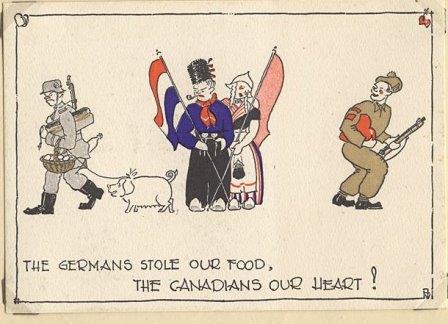
Here on the Island, a proud Dutch-born Pieter put out the Dutch flag by our garage and held on to it long enough to take a photo before the wind whipped it around the pole.  The day is a reminder of next week’s 75th Liberation of The Netherlands on May 5.  Most events have been cancelled or curtailed, but the day will still be marked.

NFA03_dou-201-1_W

Cartoon found on geheugenvannederland.nl

Alice van Bekkum, Chair of the Face To Graves Foundation Groesbeek, has advised that stories and photos collected on those buried at the Canadian War Cemetery in Groesbeek are now online at www.facestograves.nl. She will be interviewed by CBC Calgary reporter Erin Collins on May 5.  (For more information see: Press Release Digital Monument May 2020)

Readers of this blog are aware of Pieter’s efforts to help the Foundation and other researchers with photos and stories about Prince Edward Island soldiers buried in The Netherlands. (See Photos and Info Requested For WW2 Soldiers From PEI Buried In The Netherlands)

Of the Islanders buried in Groesbeek, photos for all but two have been found.  Still missing photos are two who lost their lives in 1945:

  1. Joseph Edmond HENNEBERY, born in Morell, was with the Royal Canadian Engineers -33rd Field Company. He died on April 20, 1945, aged 25.  UPDATE: Photo found!
  2. Barney Ruben MCGUIGAN, born in St. Peter’s, son of Thomas and Sadie McGuigan, was with the North Shore (New Brunswick) Regiment. He died on February 26, 1945, aged 17.  UPDATE: Photo found!

If you have photos or information to share about Henneberry, McGuigan, or other Canadian soldiers buried in The Netherlands, please contact Pieter at memorialtrail@gmail.com or comment on the blog.

© Daria Valkenburg

….Want to follow our research?….

If you are reading this posting, but aren’t following our research, you are welcome to do so.  Our blog address: https://onthewarmemorialtrail.com/

4 countries, 6 weeks, 7,000 km – an unforgettable war memorial journey in Europe…. Daria’s book ‘No Soldier Buried Overseas Should Ever Be Forgotten‘ is available in print and e-book formats.  Net proceeds of book sales help support research costs and the cost of maintaining this blog. For more information see https://nosoldierforgotten.com/

You are also invited to subscribe to our YouTube Channel: On The War Memorial Trail With Pieter Valkenburg: https://www.youtube.com/channel/UCJ591TyjSheOR-Cb_Gs_5Kw. 

Never miss a posting!  Subscribe below to have each new story from the war memorial trail delivered to your inbox.

One Soldier Records His Observations During The Last Few Days Of World War I

April 20, 2020.  As we stay in social isolation during the Coronavirus (Covid-19) pandemic, many people are wondering how we will react once the restrictions are lifted, how they will be lifted, and when they will be lifted.  At the moment there are no clear answers.  But there are examples in the past about how people reacted when major events came to an end. 

One of these was the reaction of WWI soldiers when they learned that the war would end on the 11th hour of the 11th month in 1918.  Some didn’t believe it would happen, others wondered why wait when a ceasefire was already in the works.  Some thought to reduce the loss of life by not actively pursuing the soon to be ex-enemy, while others strove to aggressively take out as many enemies out as possible.  George Lawrence PRICE, the Canadian soldier who was shot by a German sniper and died two minutes before the 11 am ceasefire comes to mind as an example of the latter. (See https://en.wikipedia.org/wiki/George_Lawrence_Price)

Harold Keith HOWATT, of Augustine Cove, was in the 8th Canadian Siege Battery during WW1 and survived the war.  With this year’s pandemic in mind, we looked through his writings to see if there was any mention of what later became known as the Spanish flu among the troops.  To our surprise, only one mention was made of flu, and it had nothing to do with soldiers! 

On October 29, 1918 he wrote that “….I received three letters from PEI and in one of them was the news that Morley Newsome had died of influenza.  It was quite a blow to me, we had always been such good friends….” (Morley NEWSOME, the son of Samuel Newsome and Charlotte Dawson, died on October 8, 1918, and is buried in Charlottetown.)

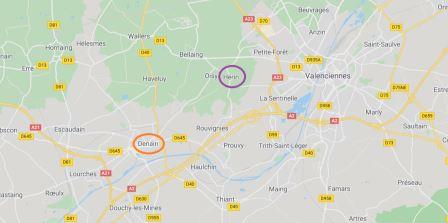
Next we wondered what he wrote once the news of an upcoming ceasefire was announced.  The first mention is of a rumour on November 5, 1918, while he was in Hérin, France, not that far from the Belgian border. “…The Allied Army is going strong all along the line, the Belgians are reported to be in Ghent, the Americans have captured Sedan, and the French are going strong.  There are rumours of an armistice…”

Wikipedia Western_front_1918_allied

Orange star is the approximate location of Hérin, France where Howatt was located in early November.  Brown arrow is the location of Sedan, Belgium. (Map source: https://en.wikipedia.org/wiki/Hundred_Days_Offensive)

On November 6, 1918, he wrote that “…Peace rumours growing stronger.  It is reported that Mons is captured, also that the Germans have asked the Allied Command if they will receive a peace delegation…” Mons is in Belgium.

The next day, November 7, he recorded that it was “….officially reported that Turkey and Austria have unconditionally surrendered, that the Allied Fleet is in the Black Sea, and that Austria has to allow the Allies to march through their territory to attack Germany from the south…”

On November 8, he sounds a hopeful note.  “…It is official that Germany is sending a peace delegation across the lines.  No one knows where the Germans are in front of here, somewhere beyond Mons.  There is great expectation of peace….”

On November 9, he writes about going into the nearby town of Denain for a concert and later to visit a canteen where he met Canadians who recently arrived from England. “… There were a great number of Canadians in Denain today, two or three thousand reinforcements who have just come over from Blighty.  The rumour tonight is that the Allies have given Germany until Monday at 11:00 hours to agree to the terms of the armistice….”  All these rumours in the days before social media indicate the keen interest in what was happening!

Google Maps Cambrai

Hérin is circled in purple.  Denain is circled in orange. (Source: Google map for area around Cambrai, France.)

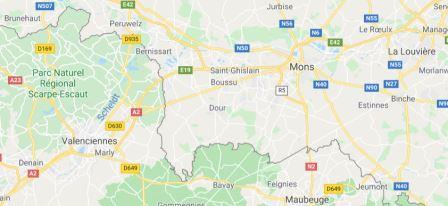
On November 10, Harold’s unit was woken up at 5 am and told they would be on the move to Boussu, Belgium, a small town 10 kms west of Mons.  Then nothing happened all morning!  Hurry up and wait?  Finally, after dinner, Harold was part of an advance party that left in a truck with “…several signallers, two cooks, and Lutly and I…”

Google maps Boussu

Howatt’s advance party travelled through Valenciennes to Boussu.  (Map source: Google)

When they arrived in Boussu, Harold recorded that “…There are a large number of civilians in the town, and there was great excitement among the civilians, the band started to play, and the civilians flocked around, and started to dance, sing, and shout ‘La guerre est fini’.  The general impression seems to be that the war is about over…..”

The first entry for Monday, November 11, 1918 was in quotes and underlined.  “Hostilities have ceased.”  Harold then gave an account of the reaction.  “….At eleven o’clock this morning fighting ceased, the Germans have evidently accepted the terms of the armistice.  There was not much excitement today, the fellows hardly believe that it is true.  There is just a quiet undertone of gladness…”

With fighting over, the rest of Harold’s unit came to Boussu and they were billeted in a chateau built in 1539 and belonging to the Marquisse de Charbonne, a Parisian who used the chateau as a summer home.  Howatt mentions that the chateau had been “…used by Fritz as billets. When we got over there to hold the billets we found about twenty Belgian girls here cleaning out the place.  It was in an awful mess….. We certainly had a circus here this morning with those girls, they would work for a while, then they would have a dance. I laughed more than I have for ages….”

The end of fighting didn’t mean that soldiers were free to leave. On November 12, Harold reported that “…Gun crews went down to clean the guns and signallers and B.C.A.s to clean their stores…” (B.C.A. is an acronym for Battery Commander Assistant, the position held by Harold.)

On November 13, Harold mentioned more rumours going through his unit.  “...There are all sorts of rumours going around today, some say that we are going up into Germany, others say we are going right back to Canada.  I wouldn’t mind going into Germany at all….”  Not long afterwards, Harold did go to Germany as part of the Army of Occupation.

We think of major events as having a beginning and an end.  They do, but the timing is staggered and never crystal clear.  Not only are there rumours, but there is a time lag when people begin to believe that what they have been told is true.  It must have been an enormous shock, mixed with relief, to learn that fighting was over, and then came the uncertainty while waiting to hear what would happen next. This is a lesson for us with the pandemic.

After returning home, Harold married Louise Wright, and died on October 15, 1985, aged 93.  Does anyone have a photo of Harold Howatt? If so, please let Pieter know.  You can email him at memorialtrail@gmail.com or comment on the blog. UPDATE:  A photo has been found.

© Daria Valkenburg

….Want to follow our research?…

If you are reading this posting, but aren’t following our research, you are welcome to do so.  Our blog address: https://onthewarmemorialtrail.com/

4 countries, 6 weeks, 7,000 km – an unforgettable war memorial journey in Europe…. Daria’s book ‘No Soldier Buried Overseas Should Ever Be Forgotten‘ is available in print and e-book formats.  Net proceeds of book sales help support research costs and the cost of maintaining this blog. For more information see https://nosoldierforgotten.com/

Subscribe to our YouTube Channel: On The War Memorial Trail With Pieter Valkenburg: https://www.youtube.com/channel/UCJ591TyjSheOR-Cb_Gs_5Kw. 

Never miss a posting!  Subscribe below to have each new story from the war memorial trail delivered to your inbox.

On The War Memorial Trail…..The WWII Seaman Who Was Hit By A Tram

April 5, 2020. Sometimes strange mishaps happen.  You’d expect that a seaman serving in Halifax, Nova Scotia would either be safe or, at worst, lose his life at sea.  But that’s not what happened to Singleton Charles JEFFERY!

20191221_154309 Singelton Jeffery newspaper from Mitch MacDonald

Singleton Charles Jeffery.  (Photo courtesy of May 17, 1941 edition of The Charlottetown Guardian, submitted by Mitch MacDonald. )

Jeffery was born on May 13, 1917 in Bayfield, New Brunswick, the son of Stephen and Alice Jeffery, and grew up in Cape Traverse.  After his father died, his mother remarried, to James Campbell.  A fisherman on the Island in pre-war years, he also worked as a seaman for Imperial Oil in Halifax, transporting oil, before enlisting with the Royal Canadian Naval Reserve in Halifax on May 5, 1940, Jeffery was also one of the few servicemen listed on the Cenotaph outside the Borden-Carleton Legion who was married and had children.  He married a few months after enlistment and, with his wife Mildred Catharina, had two children: Betty Patricia and Diane May.

While Jeffery served aboard Navy ships in the Atlantic Ocean, his family lived in Halifax, where he was based.  On the evening of December 1, 1943, while stationed at the H.M.C.S. ‘Stadacona’ navy base as a patrolman, he was fatally hit by a tram in Halifax.  (For more information on H.M.C.S. ‘Stadacona’, see https://en.wikipedia.org/wiki/CFB_Halifax#Stadacona)

A Board of Inquiry on December 27, 1943 found that: “…There was contributory negligence on part of the street car operator and the deceased.  The operator was negligent in that he did not bring the street car to a full stop or slow down to a minimum speed and ring his bell to indicate to the would-be passengers that he was not making the regular stop…”

The Board noted that Jeffery was negligent in “…that he crowded so close to the street car tracks at a point twenty to thirty feet south of the regular stop that he was struck…”  The Board found that although Jeffery had “…consumed a considerable quantity of beer (ten glasses)…” he was not found to be drunk, but his “…judgment may have been impaired by effects of the beverage..”  An autopsy showed that he had a full stomach, indicating that he had eaten, and not just been drinking.

On December 29, 1943, during the Board of Inquiry, a witness who had been on the tram at the time of the accident testified that he did NOT hear the conductor sound the bell as the tram approached the stop. According to the customary practice, the tram operator was supposed to ring a bell if he was NOT going to stop and pick up passengers.  In his opinion, he believed that Jeffery “…thought the street car was going to stop and he started to go in front of it in order to cross the street….”

Another witness at the December 29, 1943 Board of Inquiry testified that he and another sailor had also been hit by the tram, but were not seriously injured.  He too explained that he was of the opinion that since the tram operator was slowing down “…we had the idea that he was stopping…” When asked if the tram operator had rung his bell to indicate he was not stopping, the answer was no.

A colleague of Jeffery had been with him at the Canteen testified that although both of them had drunk beer, neither was drunk.  He explained that after leaving the Canteen, Jeffery “…intended going to the Nova Scotian to a dance…”

In response to the inquiry by the Department of National Defence into the incident, on February 2, 1944, the Nova Scotia Light and Power Company, which operated the tram, wrote that according to the tram operator: “…when approaching the Navy entrance to the Wet Canteen, he noticed a group of sailors out on the streets and about the tracks. He sounded the gong and slowed down; the sailors cleared away for the passing of the tram, and he continued at slow speed.  When approximately 20 feet south of the point where the main group of sailors were standing, a man stumbled forward and struck the side of the right front corner post of the tram.  He was spun around and fell to the pavement on the western side of the tram tracks. Another sailor standing alongside the party who was struck attempted to grab him as he stumbled, but failed to reach him in time….”

While the Board of Inquiry had multiple witnesses testify that the tram operator’s actions gave the impression that he was going to stop and pick up the waiting servicemen, the final opinion by the District Pensions Advocate of the Department of Pensions and National Health of the Veterans Bureau concluded that “…I am of the opinion that the injuries sustained by Jeffery were due to his own negligence in either standing too close to the tram track and failing to remove himself when he should have seen the tram proceeding towards him, or in stepping closer to the track after the front of the tram had safely passed him.  I think it is significant that the front of the tram did not hit Jeffery.”

A victim of a tragic accident, Jeffery is buried at the Bedford Gate of Heaven cemetery in Nova Scotia, which we visited.

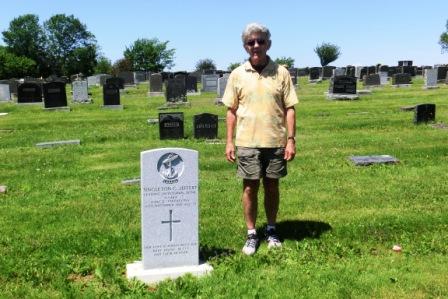
CIMG7699 Jul 10 2017 Pieter by Jeffery gravestone

Pieter by the grave of Singleton Charles Jeffery at the Bedford Gate Of Heaven Cemetery. (Photo credit: Daria Valkenburg)

Pieter is still looking for a better photo of Singleton Charles Jeffery, as well as photos and information on the names listed on the Cenotaph outside the Borden-Carleton Legion.  If you have an item to share please contact Pieter at memorialtrail@gmail.com or comment on the blog.

© Daria Valkenburg

….Want to follow our research?…

If you are reading this posting, but aren’t following our research, you are welcome to do so.  Our blog address: https://onthewarmemorialtrail.com/

4 countries, 6 weeks, 7,000 km – an unforgettable war memorial journey in Europe…. Daria’s book ‘No Soldier Buried Overseas Should Ever Be Forgotten‘ is available in print and e-book formats.  Net proceeds of book sales help support research costs and the cost of maintaining this blog. For more information see https://nosoldierforgotten.com/

Subscribe to our YouTube Channel: On The War Memorial Trail With Pieter Valkenburg: https://www.youtube.com/channel/UCJ591TyjSheOR-Cb_Gs_5Kw. 

Never miss a posting!  Subscribe below to have each new story from the war memorial trail delivered to your inbox.
The WWII Soldier From Emerald Junction Who Lost His Life In Italy

March 10, 2020. Among the names listed on the Cenotaph outside of the Borden-Carleton Legion are 4 that died in Italy during WWII.  One of these men was Ernest Murray NORTON (see The Last Valentine From A WWII Soldier).  This posting is about a young man who lost his life during the Battle of Moro.

George Alfred DUNN was born February 11, 1915 in Roseville, the son of Joseph J. Dunn and Mary Ellen Jones.  Dunn didn’t have an easy life.  His mother died when he was six.  His father died when Dunn was only 9 years old, and he was brought up by his uncle, William Dunn, of Emerald Junction.

A woodsman before enlisting with the Carleton & York Regiment in St. Stephen, New Brunswick on September 8, 1939, he received training in Woodstock, New Brunswick and then went to Europe with the first Canadian contingent, sailing to England on December 8, 1939 aboard the S.S. ‘Monarch of Bermuda’, and arriving on December 17.

Alfred Dunn

George Alfred Dunn. (Photo source: http://www.ancestry.com. Photo colourization: Pieter Valkenburg)

On May 8, 1941, he was temporarily attached for a month to the Guards Depot while at a Drill Instructors Course. Upon completion, he was sent to No.1 AFW RCOC in Aldershot for a few weeks while he completed a PT No. 32 Course. On October 18, 1941 he was promoted to Acting Lance Corporal. (NOTE: RCOC refers to Royal Canadian Ordnance Corps, a unit provisioning troops with the means to fight, such as uniforms, weapons and equipment.  AFW refers to Army Field Workshop.)

On May 16, 1942, he was promoted to Corporal, then on November 1942 he received another promotion, to Lance Sergeant, and was sent for more training.  On June 16, 1943 he was sent to Italy, and then, on August 25, 1943, he was promoted to Sergeant.

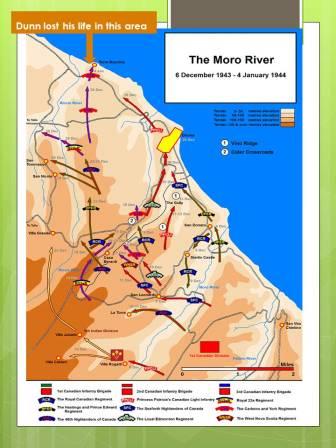
On December 6, 1943, Canadian forces, along with British, Indian, and New Zealand infantry divisions, began a series of large-scale assaults on major crossing points along the Moro River in Eastern Italy, with the objective of securing a large bridgehead along the defensive line. The intention was to breach the German Army’s Winter Line defensive system and advance to Pescara—and eventually Rome. (For more information see https://en.wikipedia.org/wiki/Moro_River_Campaign)

According to the War Diary of the Carleton & York Regiment for January 1944, the unit was in Ortona, Italy on January 1.  The weather was “dull and cloudy all day with rain during the evening” the report read, which went on to summarize what happened on December 31, 1943.  “The transport finds the going pretty heavy on account of the mud.  ‘A’ Company, who suffered the greatest during the Battle of Point 59 was brought back to a rear position where ‘B’ Company was and ‘B’ Company was placed at the front.” One of those wounded on December 31, 1943 was Sgt Dunn.  According to the casualty report, he received “shrapnel wounds to the right leg and multiple wounds to the face” while in action.

On January 2, 1944, Dunn died of injuries received in action during the Battle of Moro (Point 59). He’s buried at Moro River Canadian War Cemetery in Italy.

grave stone Sgt. G.A. Dunn (find a grave)

Grave of George Alfred Dunn at Moro River Canadian War Cemetery.  (Photo source: http://www.findagrave.com)

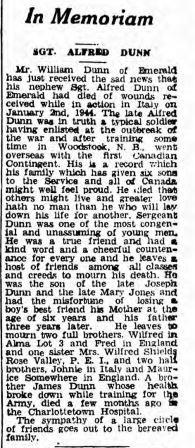
According to his obituary in the ‘Charlottetown Guardian’ of February 3, 1944, page 5, Dunn was part of a family that was in service, with a brother who had died a few months earlier.  “…He was a true friend and had a kind word and a cheerful countenance for every one…” it said.

Obituary G.A. Dunn, Charlottetown Guardian 03 february 1944 page 5

Obituary from the Charlottetown Guardian of February 3, 1944.

No family of George Alfred Dunn has been found as yet, unfortunately.  If you have information or photos to share please contact Pieter at memorialtrail@gmail.com, or comment on the blog. 

© Daria Valkenburg

….Want to follow our research?….

If you are reading this posting, but aren’t following our research, you are welcome to do so.  Our blog address: https://onthewarmemorialtrail.com/

Front cover OnTheWarMememorialTrailinEurope4 countries, 6 weeks, 7,000 km – an unforgettable war memorial journey in Europe…. Daria’s book ‘No Soldier Buried Overseas Should Ever Be Forgotten‘ is available in print and e-book formats.  Net proceeds of book sales help support research costs and the cost of maintaining this blog. For more information see https://nosoldierforgotten.com/ 

You are also invited to subscribe to our YouTube Channel: On The War Memorial Trail With Pieter Valkenburg: https://www.youtube.com/channel/UCJ591TyjSheOR-Cb_Gs_5Kw. 

Never miss a posting!  Subscribe below to have each new story from the war memorial trail delivered to your inbox.

On The War Memorial Trail….The WWII Volunteer Who Perhaps Should Never Have Enlisted

March 7, 2020. While researching the names on the Cenotaph outside the Borden-Carleton Legion in Borden-Carleton, Prince Edward Island, Pieter uncovered the sad story of a man who perhaps should never have joined the military during WWII… Ernest Ramey GALLANT.

A labourer living in Borden (now Borden-Carleton) before the war, on January 23, 1940 he enlisted in the Royal Canadian Naval Reserve in Halifax as a stoker.  On his attestation paper he said he was born October 25, 1915 in Summerside, the son of John Peter Gallant and Mary Blanche Geneau. Gallant was assigned to H.M.C.S. Skeena on March 26, 1940.  On April 3, 1940, while the ship was in port in St. John, New Brunswick, he left the ship without leave and was arrested for being drunk and improperly dressed.  He was imprisoned for 60 days in Rockhead Prison in Halifax.

On June 3, 1940 he was removed from the Skeena and then discharged on August 1, 1940 ‘due to misconduct’ following a trial in Halifax on July 15, 1940.  According to the trial record, he was charged with damaging a screen door and resisting arrest by two officers.

That should have been the end of Gallant’s military service story, but on June 27, 1941 he enlisted with the North Nova Scotia Highlanders in Kentville, Nova Scotia, using a birthdate of October 26, 1914 and a birthplace of Borden.  On his attestation paper he denied having previous military service.

He was sent by his unit to England but spent most of the time in hospital or detention.  On January 14, 1942, he was sentenced to 6 months detention for striking an officer.  On February 5, 1942, while in detention, he incurred a self-inflicted gunshot wound in his thigh and spent the next months in hospital.  On August 20, 1942, he was sent to the No.1 Neurological Hospital for assessment.

On September 28, 1942, a Medical Board placed him in Category ‘E’ for “chronic alcoholism and mental deficiency”, according to his Hospital Discharge Notification.  The case history report stated that “the patient was admitted with a long history of drunkenness and since enlistment he has failed to adjust to army routine……. His army behaviour has rendered him a liability…”

On October 1, 1942, it was determined that he was mentally unfit to stand trial. It was recommended that he be sent back to Canada as “it is clear that no action taken will … influence the soldier’s future behaviour as he requires institutional care, and will probably continue to require it.”

He was returned to Canada and placed in Ste Anne de Bellevue Hospital in Montreal, Quebec on April 16, 1943.  On April 29, 1943, he was formally discharged due to being “unable to meet the required military physical standards”. However, Gallant “refused to sign Discharge Proceedings”.  On May 20, 1943, he died of toxemia and septic throat while at the hospital and was buried in Notre Dame des Neiges Cemetery, located in the borough of Côte-des-Neiges-Notre-Dame-de-Grâce, in Montreal.

grave stone Ernest Gallant

Grave of Ernest Ramey Gallant in Notre Dame des Neiges Cemetery in Montreal. (Photo source: http://www.findagrave.com)

Although Gallant died after being discharged, the military allowed that his death was “due to service”, meaning that he qualified for service medals and a military burial, giving a compassionate ending for this man’s family.  Unfortunately, no photo or family of Gallant have been found as yet.  If you have information or photos to share please contact Pieter at memorialtrail@gmail.com or comment on the blog.

© Daria Valkenburg

….Want to follow our research?….

If you are reading this posting, but aren’t following our research, you are welcome to do so.  Our blog address: https://onthewarmemorialtrail.com/

4 countries, 6 weeks, 7,000 km – an unforgettable war memorial journey in Europe…. Daria’s book ‘No Soldier Buried Overseas Should Ever Be Forgotten‘ is available in print and e-book formats.  Net proceeds of book sales help support research costs and the cost of maintaining this blog. For more information see https://nosoldierforgotten.com/ 

You are also invited to subscribe to our YouTube Channel: On The War Memorial Trail With Pieter Valkenburg: https://www.youtube.com/channel/UCJ591TyjSheOR-Cb_Gs_5Kw. 

Never miss a posting!  Subscribe below to have each new story from the war memorial trail delivered to your inbox.