On The War Memorial Trail…. Visit To Bathmen And The Schipbeek Canal

October 26, 2025. While in Europe this spring for the 80th Anniversary of Liberation Commemoration events, we visited 14 cemeteries to place flags at the graves of 383 soldiers that Pieter has researched since 2014, with the stories of many of these soldiers previously told on this blog. 

On our ‘wish list’ of places to see was the Schipbeek Canal, the location where several soldiers whose stories we told lost their lives.  The Schipbeek is a tributary of the IJssel River.

When I mentioned Schipbeek Canal to a few Dutch colleagues, I was kindly told that Schipbeek was a canal, that to add the word Canal was an oxymoron.  But, who outside of the Dutch would know that?  So, I continue to say Schipbeek Canal, which is located outside of the town of Bathmen, not too far from where we were staying near Holten.  We had been so busy that we never got there, and I’d regretfully crossed it off the list.

After the exhausting day on the Battlefield Tour with Joël Stoppels, all that was planned for the following day was rest, packing our suitcases for the move further south towards Belgium, and laundry.  Pieter had other ideas, however, just as I settled on the couch to read a book. “…Let’s go to Bathmen…” he said in mid-morning. 

…No!..” I said. Anyone who has met Pieter knows he doesn’t give up easily. 

...C’mon, let’s get it over with….”  I didn’t have the energy to argue, so just got dressed and, just like that, we were back on the war memorial trail!  Luckily, Bathmen was only a few exits down the highway from where we were staying.

….We arrived in Bathmen…
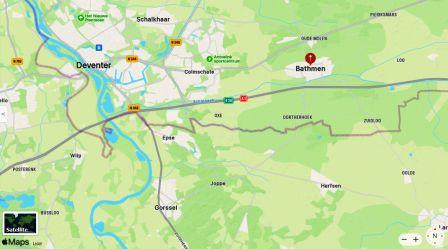
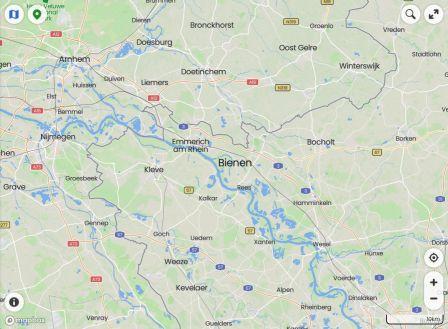
Map shows location of Bathmen and Gorssel. (Map source: DuckDuckGo)
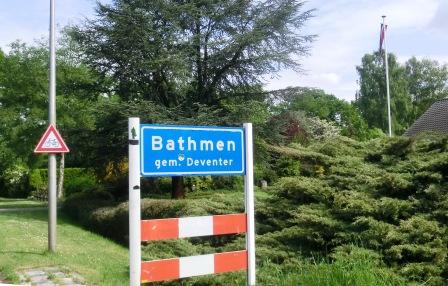
The village sign for Bathmen.  (Photo credit: Daria Valkenburg)

Once we arrived in Bathmen, it was to find that the Schipbeek Canal went through the village.  The challenge became to find where exactly the Canadians were as they fought to establish a bridgehead over the canal.  It wasn’t long before Pieter figured out that we needed to follow a road called Gorsselseweg!

…. Gorsselseweg was where the bridgehead over the Schipbeek was established…
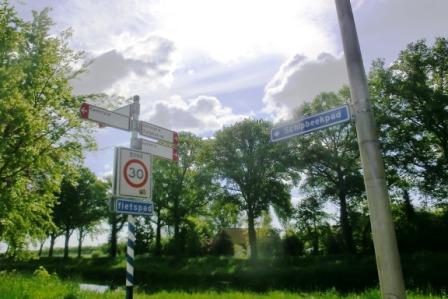
The South Saskatchewan Regiment marched 8 km from Gorssel towards Bathmen.  (Photo credit: Daria Valkenburg)

Troops from the South Saskatchewan Regiment, the Regiment in which Leo Francis TONEY was in, marched 8 km (5 miles) from Gorssel towards Bathmen on April 7, 1945, but had to cross the Schipbeek Canal before reaching the village. 

The bridge over the canal located on the Gorsselseweg was the scene of so much fighting, before a bridgehead was established by the North Nova Scotia Highlanders, who then went on to liberate Bathmen on April 8, 1945.
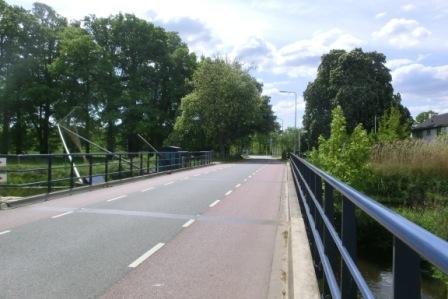
How the bridge over the Schipbeek Canal looks today on the Gorsselseweg.  (Photo credit: Daria Valkenburg)

Today, the bridge and the canal are peaceful and beautiful spots, and it’s difficult to imagine how hard troops had to fight back in April 1945.  Crossing the Schipbeek was difficult as the area was strongly defended by German troops.
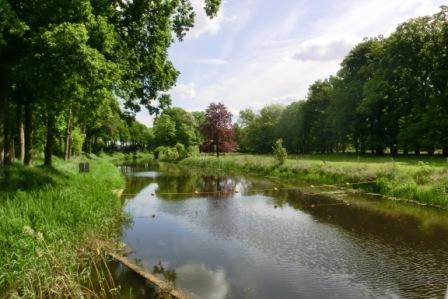
The Schipbeek Canal, as seen from the bridge on the Gorsselseweg.  (Photo credit: Daria Valkenburg)

The Schipbeek Canal, as seen from the bridge on the Gorsselseweg.  (Photo credit: Daria Valkenburg)
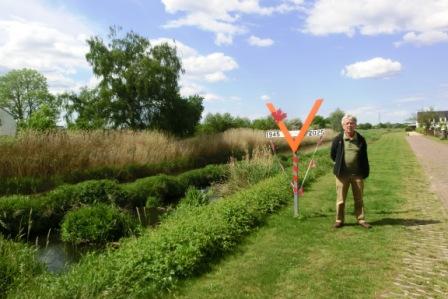
The maple leaf and V for Victory were present on the Gorsselseweg! (Photo credit: Daria Valkenburg)

….4 soldiers whose stories were previously told were at the Schipbeek…

Four soldiers, whose stories were previously told on this blog, were involved in the crossing of the Schipbeek and liberation of Bathmen…..

  • Philip LAFORTE, born in Lac du Bonnet, Manitoba, was serving with the Royal Winnipeg Rifles when he was killed on April 7, 1945 in The Netherlands, aged 33, as the Regiment crossed the Schipbeek, in order to establish a bridgehead as preparation for an assault on the city of Deventer by the 7th Canadian Brigade. You can read his story at https://onthewarmemorialtrail.com/2022/03/22/on-the-war-memorial-trail-remembering-ww2-soldier-philip-laforte/
  • Donald Charles MACKENZIE of Springhill, Nova Scotia, was serving with the Royal Winnipeg Rifles when they were ordered to cross the Schipbeek Canal on April 7, 1945, and establish a bridgehead as preparation for an assault on the city of Deventer by the 7th Canadian Brigade. He was in command of the unit Pioneers attached to ‘D’ Company, which had the responsibility of bridging the canal. In spite of heavy fire, he managed to crawl out onto the Bridge, dragging a couple of planks, which he placed in position, allowing the company to cross quickly and secure a solid bridgehead. He received a Military Medal for his actions.  Sadly, a few weeks later, he lost his life on April 22, 1945. He had been wounded during heavy fighting at the railway bridge near Appingedam, and placed in a house temporarily to rest. However, he was fatally hit by shrapnel by German shelling of the house.  You can read his story at https://onthewarmemorialtrail.com/2022/01/23/on-the-war-memorial-trail-the-ww2-soldier-from-springhill-who-received-a-memorial-cross/
  •  Richard Joseph RANEY, born in Point Michaud, Richmond County, Nova Scotia, was serving with the North Nova Scotia Highlanders, when he was killed on April 8, 1945, aged 18, during the fight to secure the bridge over the Schipbeek and enter the village of Bathmen. You can read his story at https://onthewarmemorialtrail.com/2021/01/16/on-the-war-memorial-trail-atlantic-canada-remembers-part-3/
  • Leo Francis TONEY, born in Wolfville, Nova Scotia, was serving with the South Saskatchewan Regiment, when he was killed on Saturday, April 7, 1945, aged 21, while trying to cross the Schipbeek in The Netherlands at  a bridgehead that had been formed at a weir on the border of the municipalities of Bathmen and Holten. You can read his story at https://onthewarmemorialtrail.com/2021/05/22/on-the-war-memorial-trail-remembering-ww2-soldier-leo-francis-toney/

….We learned that a solider from Prince Edward Island received a posthumous Dutch medal…

Pieter at an information panel beside the Schipbeek along the Gorsselseweg.  (Photo credit: Daria Valkenburg)

While we were taking photos of the Schipbeek Canal, we saw an information panel, and to our surprise, learned of a Prince Edward Island connection to what happened during the crossing of the Canal and the liberation of Bathmen!

Joseph William CAMPBELL, of Newport, Prince Edward Island, was serving with the North Nova Scotia Highlanders, was killed on April 8, 1945, aged 22, during the securing of the bridge over the Schipbeek. (See https://www.veterans.gc.ca/en/remembrance/memorials/canadian-virtual-war-memorial/detail/2226998?Joseph%20William%20Campbell)

On December 8, 1945, he was posthumously awarded the Knight of the Fourth Class, Military Willems Order by Queen Wilhelmina of The Netherlands. This honour is the oldest and highest honour of the Kingdom of The Netherlands. (See https://en.wikipedia.org/wiki/Military_Order_of_William)

….Two monuments in Bathmen…

From the Gorsselseweg we made our way into Bathmen itself, to a small area dedicated to honouring those who lost their lives in April 1945. 

There was a memorial stone honouring Joseph William Campbell, and Pieter made sure he placed flags of Canada and Prince Edward Island beside this marker.
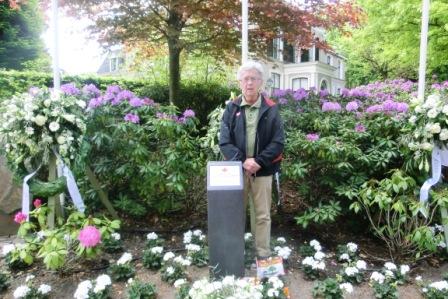
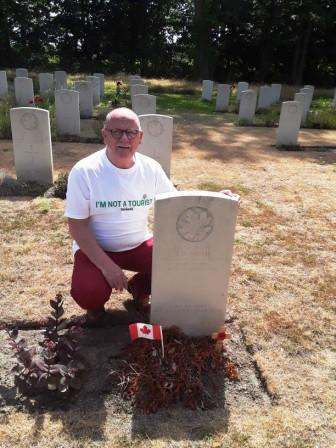
Pieter by the memorial stone honouring Joseph William Campbell from Newport, Prince Edward Island, after he’d placed flags of Canada and Prince Edward Island. (Photo credit: Daria Valkenburg)

Memorial stone honouring Joseph William Campbell from Newport, Prince Edward Island. (Photo credit: Daria Valkenburg)

Beside the memorial stone honouring Joseph William Campbell is a monument in memory of Bathmen’s liberation by the Canadians in April 1945. A plaque on a large stone says ‘In grateful memory of our Canadian liberators’ and was placed here in 1995, 50 years after Bathmen was liberated.
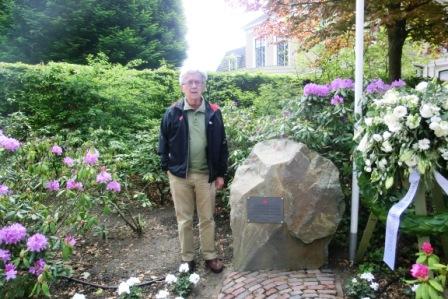
Pieter by the monument honouring the Canadians who liberated Bathmen. (Photo credit: Daria Valkenburg)

This ended our visit to Bathmen and Schipbeek.  Although it had been an effort to leave our cosy cottage, I’m glad that Pieter persisted, as we now had seen with our own eyes the Schipbeek Canal, which we had read so much about in war diaries. 
The flags placed at the memorial stone were donated.  Our thanks go to: 

  • Alan Waddell, Constituent Assistant, on behalf of Heath MacDonald, MP for Malpeque, for the Canadian flag.
  • Matt MacFarlane, MLA for District 19, Borden-Kinkora, for the Prince Edward Island flag. 

Our adventures continue as we share the highlights of our adventures on the 2025 European War Memorial Tour.  Coming up on our journey of remembrance is a visit to Uden War Cemetery.

If you have a story or photos to share, please contact Pieter at memorialtrail@gmail.com or comment on the blog. 

© Daria Valkenburg

….Want to follow our research?…

If you are reading this posting, but aren’t following our research, you are welcome to do so.  Our blog address: https://onthewarmemorialtrail.com/
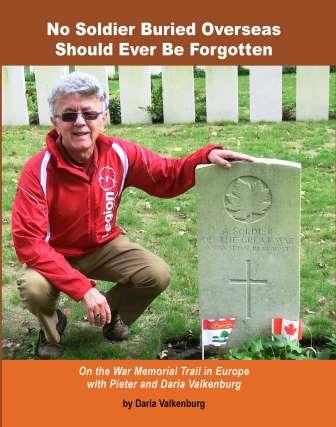
4 countries, 6 weeks, 7,000 km – an unforgettable war memorial journey in Europe…. Daria’s book ‘No Soldier Buried Overseas Should Ever Be Forgotten‘ is available in print and e-book formats.  Net proceeds of book sales help support research costs and the cost of maintaining this blog. For more information see https://nosoldierforgotten.com/

Subscribe to our YouTube Channel: On The War Memorial Trail With Pieter Valkenburg: https://www.youtube.com/channel/UCJ591TyjSheOR-Cb_Gs_5Kw

Never miss a posting!  Subscribe below to have each new story from the war memorial trail delivered to your inbox.

On The War Memorial Trail….2025 Faces of Holten Exhibition Part 6: Soldiers Killed In Battle In The Netherlands

September 14, 2025.  Pieter has been involved in finding photos of Canadians who are buried in all three Canadian War Cemeteries in The Netherlands since 2014, with stories of many soldiers told on this blog. 

While in Europe for the 80th Anniversary of Liberation Commemoration events, he placed flags at the graves of 383 soldiers in 14 cemeteries. At the Canadian War Cemetery in Holten, The Netherlands, flags were placed at 156.

Our visit coincided with The 2025 Faces Of Holten Exhibition, which ran for three weeks in May, showing photos of the soldiers by their graves. Visitors found it meaningful to see what the soldiers looked like.

—-Recap…..

In Part 1, soldiers who were killed near Posterenk in April 1945, were featured.  (See https://onthewarmemorialtrail.com/2025/08/24/on-the-war-memorial-trail-2025-faces-of-holten-exhibition-part-1-soldiers-killed-near-posterenk/)

In Part 2, the graves and photos of two soldiers listed on the Cenotaph outside the Borden-Carleton Legion in Prince Edward Island, were featured.  (See https://onthewarmemorialtrail.com/2025/08/29/on-the-war-memorial-trail-2025-faces-of-holten-exhibition-part-2-the-soldiers-listed-on-the-cenotaph-in-borden-carleton/)

In Part 3, the graves and photos of two soldiers who lost their lives while travelling in military vehicles were featured. (See https://onthewarmemorialtrail.com/2025/09/01/on-the-war-memorial-trail-2025-faces-of-holten-exhibition-part-3-soldiers-killed-while-travelling-in-vehicles/)

In Part 4, the graves and photos of six soldiers who lost their lives in the Battle of Leer during Operation Duck were featured. (See https://onthewarmemorialtrail.com/2025/09/04/on-the-war-memorial-trail-2025-faces-of-holten-exhibition-part-4-soldiers-who-drowned-during-operation-duck/)

In Part 5, the graves and photos of 8 Indigenous soldiers were featured. (See https://onthewarmemorialtrail.com/2025/09/10/on-the-war-memorial-trail-2025-faces-of-holten-exhibition-part-5-indigenous-soldiers/)

…7 soldiers are commemorated…

Now, the 2025 Faces of Holten Exhibition series concludes in Part 6, as we feature the graves and photos of seven more soldiers, whose stories have previously been told, who lost their lives in battles in The Netherlands.

Grave of Clive Elbert Steele Gerow.  (Photo credit: Daria Valkenburg)

Clive Elbert Steele GEROW, from Burk’s Falls, Ontario, was killed in action during the liberation of Deventer in The Netherlands on April 10, 1945 while serving with the 27th Armoured Regiment (Sherbrooke Fusiliers Regiment), aged 30.  You can read his story at https://onthewarmemorialtrail.com/2023/10/07/on-the-war-memorial-trail-the-wwii-soldier-from-burks-falls-killed-during-the-liberation-of-deventer/

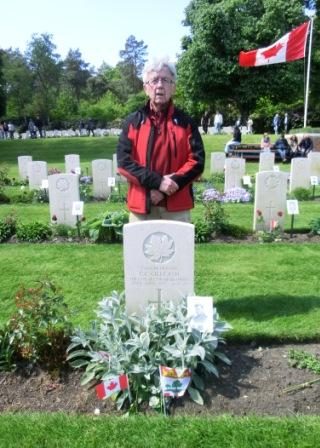
Pieter by the grave of Carman Edward Gillcash. (Photo credit: Daria Valkenburg)

Carman Edward GILLCASH, from Glenwood, Prince Edward Island, was serving with the Cape Breton Highlanders when he lost his life on April 29, 1945 during the Battle of the Delfzijl Pocket in The Netherlands, aged 27. You can read his story at https://onthewarmemorialtrail.com/2022/10/22/on-the-war-memorial-trail-the-wwii-soldier-from-glenwood-killed-during-the-battle-of-the-delfzijl-pocket/

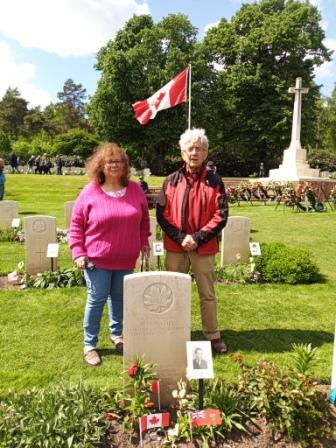
Daria and Pieter at the grave of Theodor ‘Ted’ Henschel. (Photo courtesy of Valkenburg Family)

Theodor ‘Ted’ HENSCHEL, who was born in Winnipeg, Manitoba, but lived in Trail, British Columbia, was serving with the Canadian Scottish Regiment when he was killed in action during the Battle for Wagenborgen in The Netherlands on April 22, 1945, aged 28. You can read his story at https://onthewarmemorialtrail.com/2023/08/14/on-the-war-memorial-trail-the-wwii-soldier-from-trail-who-played-the-cornet/

Just as Pieter finished placing flags at Ted’s grave, an elderly Dutch lady approached us, and asked if she could take our photo by the grave!  We were a bit confused, but then wondered if she thought that we were relatives.  Pieter explained to her that we were not relatives, but were placing flags at graves of soldiers that he had researched.  She wanted a photo anyways, and so it’s one of only two photos of the two of us together by a grave at one of the cemeteries!  (The other photo had been taken in the Canadian War Cemetery in Groesbeek by a Faces To Graves Groesbeek volunteer.)

Grave of Gordon Frederick Johnson. (Photo credit: Daria Valkenburg)

Gordon Frederick JOHNSON, from Truro, Nova Scotia, was serving with the North Nova Scotia Highlanders when he was killed in action, at the age of 33, on April 8, 1945, near Zutphen, The Netherlands, while trying to retrieve an anti-tank weapon that one of the members in his platoon had left behind. You can read his story at https://onthewarmemorialtrail.com/2021/07/17/on-the-war-memorial-trail-the-search-for-a-photo-of-gordon-frederick-johnson-is-over/

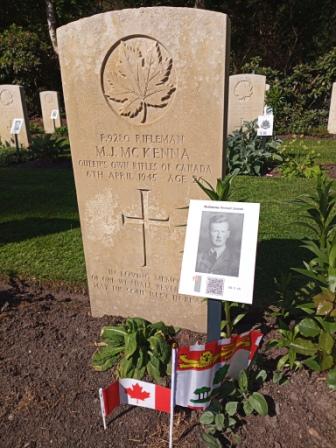
Grave of Michael Joseph ‘Joe’ McKenna. (Photo credit: Pieter Valkenburg)

Michael Joseph ‘Joe’ MCKENNA, from Newton Cross, Prince Edward Island, was serving with the Queen’s Own Rifles when was killed in The Netherlands on April 5, 1945 during the Battle of Rha, at the age of 26. You can read his story at https://onthewarmemorialtrail.com/2022/09/22/on-the-war-memorial-trail-the-wwii-soldier-from-prince-edward-island-killed-during-the-battle-of-rha/

Grave of Archibald Phillip ‘Archie’ McLean. (Photo credit: Daria Valkenburg)

Archibald Phillip ‘Archie’ MCLEAN from Edmundston, New Brunswick, was serving with the the Carleton & York Regiment when he died from wounds received on April 13, 1945 during Operation Cannonshot in The Netherlands, aged 25. You can read his story at https://onthewarmemorialtrail.com/2023/09/13/on-the-war-memorial-trail-archie-was-a-good-guy/

When Pieter was researching Archie’s story back in 2023, we met with Archie’s nephew, Donald Moore, who gave Pieter a poppy pin, and asked if Pieter would place it at his uncle’s grave next time we visited the cemetery in Holten.  Shortly after the story was published in the fall of 2023, Donald passed away. 

Pieter never forgot Donald’s request, and when we were preparing for our 2025 European War Memorial Tour, the poppy travelled with us. On May 1, 2025, Pieter affixed Donald’s poppy pin onto Archie’s grave.

Pieter places the poppy pin from Donald Moore onto the gravestone of Archibald Phillip ‘Archie’ McLean.  (Photo credit: Daria Valkenburg)

Pieter by the grave of Charles Borden Tuplin. (Photo credit: Daria Valkenburg)

Charles ‘Charlie’ Borden TUPLIN, from Indian River, Prince Edward Island, was serving with the Black Watch when he was fatally wounded in The Netherlands, and listed as having died on December 8, 1944, aged 34. You can read his story at https://onthewarmemorialtrail.com/2021/03/29/on-the-war-memorial-trail-the-ww2-soldier-from-indian-river/

….All of the flags placed at graves were donated…

All of the flags placed at graves were donated.  Our thanks go to: 

  • Alan Waddell, Constituent Assistant, on behalf of Heath MacDonald, MP for Malpeque, for the Canadian flags.
  • Jean-Claude D’Amours, MLA for Edmundston-Madawaska Centre, Minister responsible for Military Affairs, with the help of Cécile LePage, Province of New Brunswick, for the New Brunswick flag.
  • Matt MacFarlane, MLA for District 19, Borden-Kinkora, for the Prince Edward Island flag. 
  • Don Coutts on behalf of the Muttart and Coutts families in memory of Flight Sergeant Elmer Bagnall Muttart for the Ontario flag.
  • Brad Robertson, Chief of Protocol, Government of Manitoba, on behalf of Wab Kinew, Premier of Manitoba, for the Manitoba flag.
  • Kyle Graham, Research Officer, Military Relations, Nova Scotia Intergovernmental Affairs, on behalf of Premier Tim Houston, Province of Nova Scotia, for the Nova Scotia flag.

This concludes the 2025 Faces Of Holten Exhibition series, featuring soldiers whose stories have been previously told on this blog. But our adventures are not over, as we continue with our 2025 European War Memorial Tour.

Pieter encourages readers with photos to come forward so that eventually all the known graves of Canadians buried in Holten will have a photo displayed by their grave. Email him at memorialtrail@gmail.com

© Daria Valkenburg

….Want to follow our research?…

If you are reading this posting, but aren’t following our research, you are welcome to do so.  Our blog address: https://onthewarmemorialtrail.com/

4 countries, 6 weeks, 7,000 km – an unforgettable war memorial journey in Europe…. Daria’s book ‘No Soldier Buried Overseas Should Ever Be Forgotten‘ is available in print and e-book formats.  Net proceeds of book sales help support research costs and the cost of maintaining this blog. For more information see https://nosoldierforgotten.com/

Subscribe to our YouTube Channel: On The War Memorial Trail With Pieter Valkenburg: https://www.youtube.com/channel/UCJ591TyjSheOR-Cb_Gs_5Kw

Never miss a posting!  Subscribe below to have each new story from the war memorial trail delivered to your inbox.
On The War Memorial Trail….2025 Faces of Holten Exhibition Part 4: Soldiers Who Drowned During Operation Duck

Cross of Remembrance at the Canadian War Cemetery in Holten, The Netherlands. (Photo credit: Daria Valkenburg)

September 4, 2025.  Pieter has been involved in finding photos of Canadians who are buried in all three Canadian War Cemeteries in The Netherlands since 2014, with stories of many soldiers told on this blog. 

While in The Netherlands and Belgium for the 80th Anniversary of Liberation Commemoration events, he placed flags at the graves of 383 soldiers in 14 cemeteries. At the Canadian War Cemetery in Holten, The Netherlands, flags were placed at 156 graves. Our visit coincided with The 2025 Faces Of Holten Exhibition, which ran for three weeks in May.

In Part 1, the graves and photos of soldiers who were killed near Posterenk in April 1945, and are buried in the Canadian War Cemetery in Holten, were featured. (See https://onthewarmemorialtrail.com/2025/08/24/on-the-war-memorial-trail-2025-faces-of-holten-exhibition-part-1-soldiers-killed-near-posterenk/)

In Part 2, the graves and photos of two soldiers whose names are listed on the Cenotaph outside the Borden-Carleton Legion were featured. (See https://onthewarmemorialtrail.com/2025/08/29/on-the-war-memorial-trail-2025-faces-of-holten-exhibition-part-2-the-soldiers-listed-on-the-cenotaph-in-borden-carleton/)

In Part 3, the graves and photos of soldiers killed in vehicle accidents were featured. (See https://onthewarmemorialtrail.com/2025/09/01/on-the-war-memorial-trail-2025-faces-of-holten-exhibition-part-3-soldiers-killed-while-travelling-in-vehicles/)

Now, in Part 4, six soldiers who lost their lives in the Battle of Leer during Operation Duck, whose stories have previously been told on this blog, are featured.  Four of these soldiers were in the North Nova Scotia Highlanders Regiment, while two were with the Stormont, Dundas and Glengarry Highlanders.

…6 soldiers who drowned during Operation Duck are commemorated…

Grave of Joseph ‘Ambroise’ Comeau. (Photo credit: Daria Valkenburg)

Joseph ‘Ambroise’ COMEAU, from Lower Saulnierville, Nova Scotia, was one of 5 soldiers from the North Nova Scotia Highlanders Regiment who drowned in a tragic accident in the Battle of Leer in Germany on April 28, 1945, aged 21.  You can read his story at https://onthewarmemorialtrail.com/2021/05/17/on-the-war-memorial-trail-a-tragic-drowning-on-the-leda-river-in-germany-part-3/

After sending a photo of the grave with Ambroise’s photo to his niece, Simone Comeau, she not only thanked us, but a few days later wrote to say that “…my son, Delphis, has a pen pal in The Hague and he told him about your project and that he had a great-uncle buried in the Holten cemetery. That pen pal went to visit his tomb the week of the commemorations and he sent Delphis a photo almost identical to the one you sent me.

Afterwards he sent him another one and he had added two flowers, a red one to represent Canada and an orange one to represent Holland. Delphis was so pleased that he wanted me to tell you….”  What a lovely gesture by the pen pal!

Grave of Lewis Wilkieson Marsh. (Photo credit: Pieter Valkenburg)

Lewis Wilkieson MARSH, from Sydney Mines, Nova Scotia, was one of 5 soldiers from the North Nova Scotia Highlanders Regiment who drowned in a tragic accident in the Battle of Leer in Germany on April 28, 1945, aged 19. You can read his story at https://onthewarmemorialtrail.com/2021/05/18/on-the-war-memorial-trail-a-tragic-drowning-on-the-leda-river-in-germany-part-4/

RCMP piper Mike Ward played a lament at the grave of Lewis Wilkieson Marsh of Nova Scotia.  (Photo credit: Daria Valkenburg)

While at the cemetery in Holten, we met others who were honouring the fallen, including an RCMP pipe band from Ottawa. One of the pipers noticed Pieter placing flags nearby at Lewis’s grave, and came over to play a lament. It was so hauntingly beautiful that I had tears in my eyes.

After sending a photo of the grave with the photo of Lewis to his niece, Burnie Reynaert, she wrote back to say “…Thank you, Daria and Pieter. My heart is full of gratitude for all you do. There are no words….

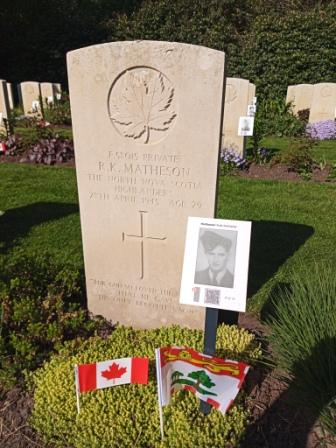
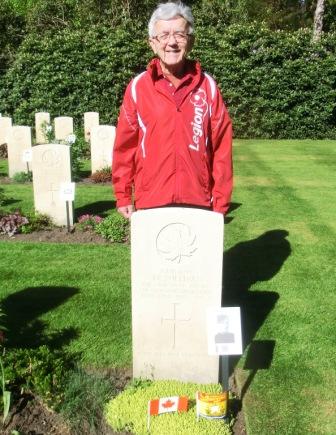
Grave of Ruel Kitchener Matheson.  (Photo credit: Pieter Valkenburg)

Ruel Kitchener MATHESON, from Dundas, Prince Edward Island, was one of 5 soldiers from the North Nova Scotia Highlanders Regiment who drowned in a tragic accident in the Battle of Leer in Germany on April 28, 1945, aged 29.  You can read his story at https://onthewarmemorialtrail.com/2021/05/18/on-the-war-memorial-trail-a-tragic-drowning-on-the-leda-river-in-germany-part-4/

Grave of Francis ‘Frank’ Eugene Munroe.  (Photo credit: Daria Valkenburg)

Francis ‘Frank’ Eugene MUNROE, from Halifax, Nova Scotia, was one of 19 men from with the Stormont, Dundas and Glengarry Highlanders who drowned during the crossing of the Ems River in Germany on April 28, 1945, at the age of 22, while participating in Operation Duck. You can read his story at https://onthewarmemorialtrail.com/2025/03/11/on-the-war-memorial-trail-tragedy-on-the-ems-part-2-the-wwii-soldier-from-halifax-who-drowned-during-operation-duck/

Grave of Lloyd William Murray.  (Photo credit: Daria Valkenburg)

Lloyd William MURRAY, from Tatamagouche, Nova Scotia, was one of 5 soldiers from the North Nova Scotia Highlanders Regiment who drowned in a tragic accident in the Battle of Leer in Germany on April 28, 1945, aged 27.  You can read his story at https://onthewarmemorialtrail.com/2021/05/16/on-the-war-memorial-trail-a-tragic-drowning-on-the-leda-river-in-germany-part-2/

Pieter by the grave of James Edward Sullivan.  (Photo credit: Daria Valkenburg)

James Edward SULLIVAN, from Rexton, New Brunswick, one of 19 men serving with the Stormont, Dundas and Glengarry Highlanders who drowned during the crossing of the Ems River in Germany on April 28, 1945, at the age of 25, while participating in Operation Duck. You can read his story at https://onthewarmemorialtrail.com/2025/03/05/on-the-war-memorial-trail-tragedy-on-the-ems-part-1-the-wwii-soldier-from-rexton-who-drowned-during-operation-duck/

….All of the flags placed at graves were donated…

All of the flags placed at graves were donated.  Our thanks go to: 

  • Alan Waddell, Constituent Assistant, on behalf of Heath MacDonald, MP for Malpeque, for the Canadian flags.
  • Matt MacFarlane, MLA for District 19, Borden-Kinkora, for the Prince Edward Island flag. 
  • Armel ‘Mel’ Lanteigne, President of the Caraquet Legion in New Brunswick for the New Brunswick flag.
  • Kyle Graham, Research Officer, Military Relations, Nova Scotia Intergovernmental Affairs, on behalf of Premier Tim Houston, Province of Nova Scotia, for the Nova Scotia flags.
  • La Société acadienne de Clare at the request of Simone Comeau for the Acadian flag.

Thank you to Simone Comeau and Burnie Reynaert for their kind words.  In Part 5, the graves and photos of Indigenous soldiers killed will be featured as we continue with our 2025 European War Memorial Tour.

Pieter encourages readers with photos to come forward so that eventually all the known graves of Canadians buried in Holten will have a photo displayed by their grave. Email him at memorialtrail@gmail.com

© Daria Valkenburg

….Want to follow our research?…

If you are reading this posting, but aren’t following our research, you are welcome to do so.  Our blog address: https://onthewarmemorialtrail.com/

4 countries, 6 weeks, 7,000 km – an unforgettable war memorial journey in Europe…. Daria’s book ‘No Soldier Buried Overseas Should Ever Be Forgotten‘ is available in print and e-book formats.  Net proceeds of book sales help support research costs and the cost of maintaining this blog. For more information see https://nosoldierforgotten.com/

Subscribe to our YouTube Channel: On The War Memorial Trail With Pieter Valkenburg: https://www.youtube.com/channel/UCJ591TyjSheOR-Cb_Gs_5Kw

Never miss a posting!  Subscribe below to have each new story from the war memorial trail delivered to your inbox.
On The War Memorial Trail….. The WWII Soldier From Clermont Killed During Operation Veritable

September 30, 2024. When you visit a Canadian War Cemetery and place down a flag by a soldier’s grave, it stays with you, and makes you wonder about the person who is buried there.  Before our first war memorial tour in 2017, Pieter asked the Canadian War Cemeteries in The Netherlands for a list of soldiers from Prince Edward Island who are buried there, and we made sure to place flags at their graves.

Screenshot 2024-09-30 at 09-15-25 Clermont - Google Maps

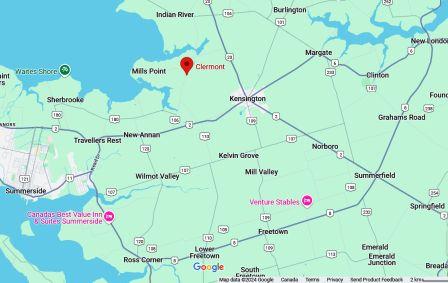
Clermont is located in Prince County, Prince Edward Island.  (Map source: Google)

Over the years, Pieter has researched many of the soldiers from Prince Edward Island who are buried in The Netherlands, and he continues to do so. One of these WWII soldiers was John ‘Weston’ CAMPBELL, born May 29, 1916 in Clermont, Prince Edward Island, the son of Archibald Joseph and Lavinia Helen (nee Brennan) Campbell.  

brant

C.G.S. Brant in Charlottetown around 1930.  (Photo source: https://sailstrait.wordpress.com)

Weston’s father was Captain of the Canadian Government Ship ‘Brant’, a buoy and lighthouse tender that operated from the Charlottetown Marine Wharf.  The family also operated a farm, and Weston worked there after leaving school upon completing Grade 10.

On June 29, 1937, Weston joined the 1st Battalion of the Prince Edward Island Highlanders Militia, before enlisting in active service with the Regiment on October 3, 1939. His basic training was taken in Charlottetown, Prince Edward Island, and Dartmouth, Nova Scotia. (See https://en.wikipedia.org/wiki/Prince_Edward_Island_Highlanders)

….Weston was transferred to the North Nova Scotia Highlanders…

Weston was promoted to Corporal and then Acting Sergeant by the time he was transferred to the North Nova Scotia Highlanders, 3rd Division, on June 20, 1940, and joined them at their headquarters in Amherst, Nova Scotia.  Training in preparation for overseas service continued.

According to his Personnel Selection Record, Weston played hockey, soccer, baseball, and softball.  His brother Vernon was a Chief Petty Officer in the Canadian Navy.  He had 4 sisters and 1 other brother.  The interviewer described Weston as…sturdy, good-looking, well-balanced, with keen pride in regiment….

CAMPBELL John Weston

John ‘Weston’ Campbell as a Sergeant.  (Photo courtesy of North Nova Scotia Highlanders Museum)

On July 5, 1941 he was promoted to Sergeant, just as the Regiment moved to Debert, Nova Scotia for final preparations before going overseas.  InNo Retreating Footsteps by Will Bird, he noted that “…the 3rd Division units were moving to Debert….Word came that the North Novas would be included in the 9th Highland Brigade along with the Highland Light Infantry and the Stormont, Dundas and Glengarry Highlanders

….Weston left Canada for England….

On July 19, 1941, Weston and his Regiment left Halifax, Nova Scotia aboard the Orion, arriving in Avonmouth, England on July 29, 1941.  Two days later, they were allowed to disembark and left by train for Aldershot, where…the North Novas arrived at Albuhera Barracks

He continued to train and take courses, and then was transferred to the No. 1 Non-Effective Transit Depot (NETD) on July 7, 1942Tweedsmuir Camp in Surrey, near the village of Thursley, was set up as Number One Transit Depot for handling thousands of medical and psychological cases during WWII.  

It was also used as a base for returning Canadian and American troops, and that appears to be why Weston was there, as shortly after his arrival he was sent back to Canada, arriving on July 29, 1942.  The following day he was assigned to No. 6 District Depot in Halifax, Nova Scotia, for a short period.

….Weston returned to Canada for officer training….

On August 14, 1942, Weston was sent to the No. 30 Officers Training Centre in Brockville, Ontario for training. After successfully completing his 12 week course on November 7, 1942, he was recommended for promotion and appointment to the rank of 2nd Lieutenant.

With his new officers’ rank, he was transferred to the A-14 Canadian Infantry Training Centre in Camp Aldershot, Nova Scotia on November 13, 1942.  He was sent for additional training to the A25 Canadian Army Small Arms Training Centre (CSATC) in Long Branch, Ontario from November 14 to December 12, 1942, after which he was promoted to Lieutenant.

On January 9, 1943, Weston was transferred to No. 61 Canadian Army (Basic) Training Centre in New Glasgow, Nova Scotia for additional training, before returning to A-14 Canadian Infantry Training Centre in Camp Aldershot on April 14, 1943.

….Weston left Canada again for overseas service….

On June 19, 1943, Weston left Canada for overseas service.  After arriving in the United Kingdom on June 24, 1943, he was assigned to No. 7 Canadian Infantry Reinforcement Unit (CIRU).   He arrived there just as a fellow Islander, Harold ‘Hal’ Gabriel BULGER, whose story was previously told, was transferred to the Princess Louise Fusiliers.  (See https://onthewarmemorialtrail.com/2024/08/05/on-the-war-memorial-trail-the-bulger-brothers-part-i-the-wwii-soldier-from-foxley-river-killed-during-the-battle-of-moerbrugge/)

On July 29, 1943, Weston returned to the North Nova Scotia Highlanders, who were still in the United Kingdom. Training and exercises continued, as extensive preparations began for Operation Overlord (the larger Normandy invasion) and Operation Neptune (the English Channel-crossing portion of Operation Overlord) on June 6, 1944 – what we know today as D-Day.

InNo Retreating Footsteps by Will Bird, he recorded that among “…the officers selected to land in France on D Day with the North Novas….” was Lt. J.W. Campbell who would be leading an anti-tank platoon.

…Weston survived D-Day….

The North Nova Scotia Highlanders left England for Normandy, France on June 6, 1944, after waiting in place in the English Channel on landing craft earlier.   The war diary for Sunday, June 4, 1944 noted that “…we are tied up with two other landing craft tank.   The Padre is on one, so he had a church service at 10:30 hours on the quarter deck of the middle craft…

On June 5, 1944 the war diary recorded that “…at 14:00 hours the flotilla moved out to the open sea and formed up with the other craft taking part in the invasion…

After landing on the beaches of Normandy on June 6, 1944, as part of the 9th Infantry Brigade, 3rd Canadian Infantry Division, 21st Army Group, the war diary noted that the Regiment had 10 casualties that day– 4 killed, 6 wounded. 

Weston had survived D-Day and received a promotion to Acting Captain on June 22, 1944. The Regiment continued to fight in North-West Europe, including the Battle of the Scheldt, which began October 2, 1944. (See https://en.wikipedia.org/wiki/Battle_of_the_Scheldt)  Weston was confirmed as Captain on October 4, 1944.

On December 19, 1944, he was promoted again.  The war diary entry for that day reported that “…Captain J. W. Campbell was made Acting Major today, and is to command ‘B’ Company…

On January 10, 1945, while on leave in the United Kingdom, he married Mary Margaret Taylor in Sheffield, Yorkshire, England. 

He returned to the Regiment on January 15, 1945 and the war diary entry for that day recorded that “…the battalion officers held a party for Major J. W. Campbell who has just returned from his privilege leave to the United Kingdom.  It appears that he was married during this leave….

….Weston lost his life during Operation Veritable…

Screenshot 2024-09-30 at 11-09-38 emmerich germany - Google Search

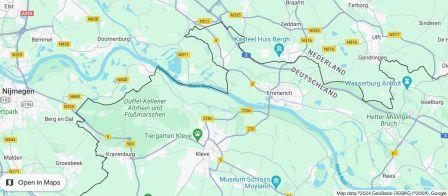
Map shows Emmerich, Germany located on the Rhine River. Allied troops had to cross the river in amphibious vehicles.  (Map source: Google maps)

The Regiment was informed that they were to take part in Operation Veritable. (See https://en.wikipedia.org/wiki/Operation_Veritable) After leaving Nijmegen in The Netherlands, they reached Kellen, Germany near Kleve, just on the other side of the border with The Netherlands, on February 12, 1945. 

On February 14, using amphibious vehicles, the North Novies made their way towards Emmerich.   The war diary for that day reported that “….we have been given the job of taking out the triangle formed by the road running southwest … and the canal running south east….

Three Companies were involved. …The attack is to be made across the river which has overflowed its banks and now forms a barrier over 200 yards wide. Buffaloes are to be used for the attack

The action began at noon, with ‘C’ Company on the left, and ‘A’ Company on the right of the road.  “… ‘B’ Company, which arrived late at the rendezvous, set out at 12:10 hours with their axis along the main road…

The war diary entry continued, explaining that “…the assault companies landed on the shore with terrific fire support from field and medium artillery, plus the machine guns of the Buffaloes…

The attack, which ended at 6:15 pm,  was ultimately successful, but “…our total number of casualties for today’s action was 3 killed and 8 wounded, including Major J. W. Campbell, commanding ‘B’ Company, who was killed…”  Both ‘B’ and ‘C’ Companies had been heavily mortared during the day.

….Weston is buried in Groesbeek…

Weston was initially buried in a churchyard in Warbeyen, Germany, located halfway between Emmerich and Kleve, before being reburied in the Canadian War Cemetery in Groesbeek, The Netherlands.  He was 28 years old and had been married just over a month.

CIMG9018 Sep 16 2017 Groesbeek Cemetery grave of JW Campbell from Daria

Grave of John ‘Weston’ Campbell in the Canadian War Cemetery in Groesbeek, The Netherlands.  (Photo credit: Daria Valkenburg)

Seven years after we placed flags at his grave, we finally know John ‘Weston’ Campbell’s story! If you have photos or information to share, please email Pieter at memorialtrail@gmail.com, comment on the blog, or tweet to @researchmemori1.

© Daria Valkenburg

….Want to follow our research?….

If you are reading this posting, but aren’t following our research, you are welcome to do so.  Our blog address: https://onthewarmemorialtrail.com/

Front cover OnTheWarMememorialTrailinEurope4 countries, 6 weeks, 7,000 km – an unforgettable war memorial journey in Europe…. Daria’s book ‘No Soldier Buried Overseas Should Ever Be Forgotten‘ is available in print and e-book formats.  Net proceeds of book sales help support research costs and the cost of maintaining this blog. For more information see https://nosoldierforgotten.com/ 

You are also invited to subscribe to our YouTube Channel: On The War Memorial Trail With Pieter Valkenburg: https://www.youtube.com/channel/UCJ591TyjSheOR-Cb_Gs_5Kw

Never miss a posting!  Subscribe below to have each new story from the war memorial trail delivered to your inbox.

On The War Memorial Trail…..The Bulger Brothers – Part 2:  The WWII Stretcher Bearer From Foxley River Killed During The Battle of Bienen

August 19, 2024. During WWII, the Bulger family of Foxley River, Prince Edward Island, suffered a double tragedy, losing two sons:  Harold ‘Hal’ Gabriel BULGER, who is buried in the Canadian War Cemetery in Adegem, Belgium, and Lawrence William BULGER, who is buried in the Canadian War Cemetery in Groesbeek, The Netherlands.

We were aware of Lawrence Bulger from last year’s series on soldiers from the North Nova Scotia Highlanders who lost their lives during the Battle of Bienen on March 25, 1945. Since his name was not on a photo wish list, we didn’t research his story at that time. The date of the Battle of Bienen was significant to Pieter as he was “…exactly one year old when this battle occurred….” and it’s why he made such an effort to research so many of the North Novies that died that day.

….Another story in the Battle of Bienen series….

This year, when we decided to tell the story of one more soldier killed during the Battle of Bienen, we asked Edison Smith for help in contacting a family member for Lawrence Bulger.  Edison’s grandfather, Edison Alexander SMITH, and great-uncle Ralph Schurman BOULTER, both lost their lives in the Battle of Bienen.  Edison put us in contact with Bev Jeffery, niece of the Bulger brothers.

In Part 1 of this two-part series, Hal’s story was told.  (See https://onthewarmemorialtrail.com/2024/08/05/on-the-war-memorial-trail-the-bulger-brothers-part-i-the-wwii-soldier-from-foxley-river-killed-during-the-battle-of-moerbrugge/).  Now, in Part 2, we tell Lawrence’s story.

To learn more about the Bulger brothers, we were delighted to meet with Bev, the family’s historian, who explained that her “mother was Harold and Lawrence’s sister Agatha….

CIMG6828 May 27 2024 Bev Jeffery & Pieter Mill River Resort

Pieter with Bev Jeffery at Mill River Resort in Mill River, Prince Edward Island.  (Photo credit: Daria Valkenburg)

Born May 31, 1924 in Portage, Prince Edward Island, Lawrence was the son of Gabriel and Anne ‘Annie’ Marion (nee Milligan) Bulger of Foxley River, Prince Edward Island.  One of 16 children, Lawrence had two brothers and thirteen sisters. 

Lawrence Bulger with Guitar

Lawrence Bulger with his guitar at home on Prince Edward Island. (Photo courtesy of Bev Jeffery)

…Lawrence enlisted at the age of 17 ….

Before enlisting at the No. 6 District Depot in Charlottetown, Prince Edward Island, on March 10, 1942, Lawrence had worked on his family’s farm. He’d also worked at J.N. Kenny Contractors, a building contracting firm in Halifax, Nova Scotia until December 24, 1941.  He was only 17 when he enlisted, but tried to get around that by adding a year to his birth year, saying he was born in 1923. 

Lawrence Bulger colourized by RU

Lawrence Bulger, shortly after enlisting in 1942.  (Photo courtesy of Bev Jeffery.  Photo colourization by Pieter Valkenburg)

After completing his basic training at No. 62 Canadian Army (Basic) Training Centre (CABTC) in Charlottetown, Lawrence was transferred to the Princess Louise Fusiliers (Motor), an infantry regiment, in Halifax, Nova Scotia on July 14, 1942.   

Then, on November 21, 1942, his real age was discovered and he was sent to No. 6 District Depot in Halifax while a decision was made about his future in the army.  Lawrence was described as a “…quiet but friendly man...” who was “…accustomed to hard work…” It was also noted that he “…cannot drive a car….” and “…hasn’t had any trades experience of any kind…”  It was recommended that he be given infantry training.

On November 30, 1942, Lawrence was transferred to the Anti-Aircraft Artillery Formation Camp in Bedford, Nova Scotia.  He remained there until September 1, 1943, when he was sent to No. 61 Canadian Army (Basic) Training Centre (CABTC) in New Glasgow, Nova Scotia.  It was the second time he had to go through basic training.

…Lawrence was transferred from the Infantry to the Medical Corps ….

lawrence bulger Sep 1943 colourized

Lawrence Bulger in the fall of 1943.  (Photo courtesy of Bev Jeffery.  Photo colourization by Pieter Valkenburg)

On September 17, 1943, he was reallocated to the Royal Canadian Army Medical Corps (RCAMC) and, once his basic training was complete, was transferred to A22 Canadian Army Medical Corps Training Centre in Camp Borden, Ontario on October 6, 1943.  While at Camp Borden, Lawrence received advanced training to prepare him as a stretcher bearer, with three key responsibilities when dealing with the wounded in a war zone: stop the bleeding, treat for shock, and evacuate. 

In an interview on October 26, 1943, it was noted that Lawrence was “…very disappointed about reallocation to RCAMC, as he was enthusiastic about the Infantry.  A sturdy active chap….

…Lawrence married Violet May Bedgood ….

Violet(Bedgood) & Lawrence Bulger 1943 001

Violet May Bedgood and Lawrence Bulger in 1943.  (Photo courtesy of Bev Jeffery)

Just before his transfer to Camp Borden, Lawrence married Violet May Bedgood in Halifax, Nova Scotia on October 2, 1943, a few days after receiving permission to do so.  According to his application for permission to marry, they had known each other for a year.

Lawrence completed his advanced training in Camp Borden and was deemed ready for overseas service. He was granted special embarkation leave from December 15 to 23, 1943, the last extended period of time to visit with his wife and family.

On January 19, 1944, he was sent to No. 1 Training Brigade in Debert, Nova Scotia, for further training and in preparation for overseas service. 

….Lawrence left Canada for overseas service….

On March 6, 1944, Lawrence left Canada, arriving in the United Kingdom on March 13, 1944, where he was assigned to 1 Canadian General Reinforcement Unit (CGRU).  He was sent for further training while in the United Kingdom and worked as an orderly at No. 18 Canadian General Hospital.

Bev Jeffery had written that Violet was “…pregnant when Lawrence shipped out….” On May 16, 1944, their son Lawrence ‘Larry’ William was born in Halifax, Nova Scotia – a child that Lawrence would never meet in person.

Lawrence was transferred from RCAMC to No. 1 Canadian Infantry Training Regiment (CITR) on December 14, 1944.  As part of the Canadian Infantry Corps, he would be putting his training as a stretcher bearer to use in an infantry regiment in an active war zone.

….Lawrence was transferred to the North Nova Scotia Highlanders….

Screenshot 2022-11-07 at 10-07-46 Bienen

The North Nova Scotia Highlanders made their way from Xanten towards Bienen in Germany in March 1945.  (Map source: Mapcarta)

On February 17, 1945, Lawrence was sent by plane to northwest Europe as part of the CIC-X4 reinforcement troops, and then was assigned to the North Nova Scotia Highlanders on March 11, 1945, joining the Regiment as they left Xanten, Germany for the Reichwald forest.

The Regiment was in the midst of preparations for Operation Plunder, which began March 21, and involved Allied troops crossing the Rhine River to the north of the Ruhr industrial region in western Germany. With aerial and military support, this took place on the night of March 23, 1945 near Rees, a town situated on the right bank of the Rhine River, approximately 20 km (12.4 miles) east of Kleve. (See https://en.wikipedia.org/wiki/Operation_Plunder)

…Lawrence lost his life in the Battle of Bienen ….

On the next afternoon, March 24, 1945, Allied troops encountered fierce German resistance near the village of Bienen. They got as far as Bienen, when troop movement stopped due to blown bridges across the Rhine in that area.

In ‘No Retreating Footsteps’ by Will Bird, he noted that the 7th Argyll and Sutherland Highlanders had made “… three attempts …. to capture the village, but they were turned back by very heavy machine gun fire from the front of the village, supported by heavy mortar fire…

On March 25, 1945, the North Nova Scotia Highlanders reached Bienen, Germany for the climax of 9 Canadian Infantry Brigade’s role in Operation Plunder. The Regiment was tasked with passing through the 7th Argyll and Sutherland Highlanders who had been stopped in front of Bienen during the night. 

Bienen was a difficult challenge as the road through it was the only access point.  In ‘No Retreating Footsteps’ author Will Bird explained that it was “… an isthmus of solid land about half a mile wide with one road, the main Rees-Emmerich highway, which passed through Bienen exactly at the narrowest point…

Aerial Bienen post-war

Post-war aerial of Bienen (view to the southeast towards Rees). The aerial clearly demonstrates the tactical importance of Bienen, laying astride the narrow neck of land. The main road from Rees to Emmerich (nowadays Emmericher Strasse) runs straight through Bienen. (Photo source: http://www.WW2Talk.com and identified as ‘Courtesy Becker’)

March 25, 1945 was Palm Sunday – one week before Easter. The battle began in the morning and didn’t end until late that evening.  Right from the start, troops were pinned down, …suffering heavy casualties…” per the Regiment’s war diary for that day.  Worse, in terms of communications, “….contact between platoons was next to impossible because of the murderous fire and heavy mortaring….” 

The one day battle proved devastating in terms of casualties, both dead and wounded, as they fought in a deadly battle on open ground.  Among the casualties was 20 year old Lawrence William Bulger.  He was one of several stretcher bearers who lost their lives that day, killed by machine gun fire while attending to the wounded on the battlefield.

….Lawrence is buried in Groesbeek….

Like Clifford BATEMAN, John Joseph BOHON, Ralph Schurman BOULTER, Charles ‘Marshall’ CARSON, Harry William DOUCETTE, Marven Glenroy HARVEY, Kitchener ‘Kitty’ LANGILLE, Marvin William MCGREGOR, Austin Havelock MUNROE, Wilfred ‘Willy’ Joseph POWER, Louis Allan SEXTON, and John Lewis WALLACE, Lawrence was temporarily buried in the military cemetery in Rees, Germany. According to his military file, he was buried on April 5, 1945. The following year he was reburied in the Canadian War Cemetery in Groesbeek, The Netherlands.

In October 2019, Pieter and I visited the cemetery and placed Canadian and Prince Edward Island flags by Lawrence’s grave.  (See https://onthewarmemorialtrail.com/2019/12/04/on-the-war-memorial-trail-our-2019-visit-to-the-canadian-war-cemetery-in-groesbeek/)

CIMG3356 Oct 5 2019 Groesbeek Lawrence Bulger from Daria

Grave of Lawrence William Bulger in the Canadian War Cemetery in Groesbeek, The Netherlands.  (Photo credit: Daria Valkenburg)

….Lawrence and his brother Hal are remembered on the Ellerslie Monument….

CIMG6817 May 27 2024 Pieter by Ellerslie Monument - Bulgers

Pieter points to the names of Lawrence and Hal Bulger on the Ellerslie Monument.  (Photo credit: Daria Valkenburg)

In May 2024 we visited the Ellerslie Monument in Ellerslie, Prince Edward Island, just 13.4 km (8.3 miles) from Foxley River, where the names of Lawrence and his brother Hal, who lost his life on September 10, 1944 during the Battle of Moerbrugge in Belgium, are commemorated.  

This concludes the 2 part series on the Bulger Brothers. Thank you to Bev Jeffery for submitting photos and information on her Uncle Lawrence, and to Edison Smith for contacting the Jeffery family.

Do you have photos or information to share? Email Pieter at memorialtrail@gmail.com, comment on the blog, or tweet to @researchmemori1.

© Daria Valkenburg

….Previous stories about North Novies killed during the Battle of Bienen and buried in Groesbeek….

….Want to follow our research?….

If you are reading this posting, but aren’t following our research, you are welcome to do so.  Our blog address: https://onthewarmemorialtrail.com/

Front cover OnTheWarMememorialTrailinEurope4 countries, 6 weeks, 7,000 km – an unforgettable war memorial journey in Europe…. Daria’s book ‘No Soldier Buried Overseas Should Ever Be Forgotten‘ is available in print and e-book formats.  Net proceeds of book sales help support research costs and the cost of maintaining this blog. For more information see https://nosoldierforgotten.com/ 

You are also invited to subscribe to our YouTube Channel: On The War Memorial Trail With Pieter Valkenburg: https://www.youtube.com/channel/UCJ591TyjSheOR-Cb_Gs_5Kw

Never miss a posting!  Subscribe below to have each new story from the war memorial trail delivered to your inbox.
On The War Memorial Trail…..The WWII Soldier From Stellarton With A Street Named In His Honour

Lt. Percy Dexter Higgins

Percy Dexter Higgins.  (Photo courtesy of the Higgins Family)

May 6, 2024. In a January 2021 posting in the Atlantic Canada Remembers series, we wrote about Percy ‘Dexter’ HIGGINS of Stellarton, Nova Scotia, who was serving with the North Nova Scotia Highlanders when he lost his life during the Battle of Warnsveld in The Netherlands on April 4, 1945. (See https://onthewarmemorialtrail.com/2021/01/16/on-the-war-memorial-trail-atlantic-canada-remembers-part-3/)

Screenshot 2024-04-24 at 10-46-59 warnsveld - Google Search

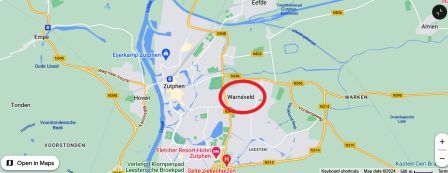
Map shows location of Warnsveld, The Netherlands.  (Map source: Google)

Warnsveld is located in the eastern part of The Netherlands about 2 km (1.2 miles) from Zutphen.  Not long after the article was posted, we received an email from Warnsveld resident Harm Kuijper, advising that there was a proposal to name a street after Dexter, near where he lost his life. 

Harm asked if we would contact Dexter’s family about this initiative, which we did.  Donald Higgins had submitted a photo of his uncle, Percy ‘Dexter’ HIGGINS, writing that “…My father’s brother, Lt. Percy Dexter Higgins, is buried in Holten Cemetery. He served with North Nova Scotia Highlanders R.C.I.C. (from N.S.)…

…A street in The Netherlands was named for Dexter in 2024 …..

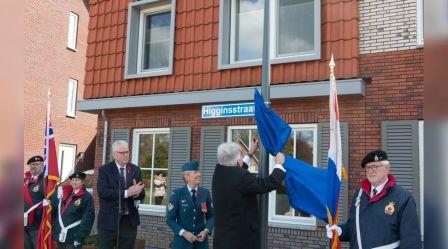
On April 5, 2024, Harm contacted us again, this time to let us know that Higginsstraat (Higgins Street) had been unveiled the day before.  “Higginsstraat was officially unveiled yesterday…..” he wrote.  “…. We had the Canadian ambassador visiting, who was able to attend our first two commemorations. Then unfortunately he had to return to The Hague due to commitments. Sergeant Nicole Mitchell then revealed the street name together with the Mayor of Zutphen….

Harm also included a link to a Dutch language article from ‘Achterhoek Nieuws’:  https://www.contactzutphen.nl/nieuws/algemeen/482711/onthulling-straatnaambord-markeert-herdenking-bij-het-witte-k

An English translation of the article is below:

Screenshot 2024-04-15 at 11-39-35 Onthulling straatnaambord markeert herdenking bij het Witte Kruisje

Unveiling of the street sign honouring Lieutenant Percy Dexter Higgins. Photo: Henk Derksen.  Left to right: Barry and Yvonne Swarthoff from RCL Branch 5, Harm Kuijper, Sgt Nicole Mitchell of the Canadian Army, Zutphen mayor Wimar Jaeger, Wim Poppink from RCL Branch 5.

Unveiling of the street name sign marks the commemoration at the Witte Kruisje 

ZUTPHEN – Every year the commemoration is held at the Witte Kruisje (White Cross) in Leesten in honour of the Canadian corporal A.P. Periard, who was killed on April 4, 1945. This year the commemoration took on a special character due to the presence of the Canadian ambassador, relatives of Private Harry Gervais, and the unveiling of a street sign in honour of Lieutenant Percy Dexter Higgins. 

For this special occasion, the 48th Highlanders Pipes And Drums and the Royal Canadian Legion Branch 005 were also present. The commemoration at the Witte Kruisje was led by group 6 of the Lea Dasbergschool, where Mrs. Ineke Hissink welcomed those present. Mayor Wimar Jaeger addressed those present and laid a flower arrangement, followed by the ambassador and other attendees. 

After two minutes of silence, the Wilhelmus (Dutch National Anthem) and the Canadian National anthem were played and sung. Students from the Lea Dasbergschool recited poems and placed their flower arrangements. 

Afterwards, the students returned to school, while the other guests moved to the Canadian monument on Kerkhofweg. This monument contains the names of 35 Canadian and one English soldier who died during the liberation of Warnsveld and Zutphen. Harm Kuijper, the Canadian ambassador (Hugh Adsett), Mayor Jaeger, and Scott Gravel spoke at this monument. Flowers were laid and after a moment of silence the national anthems were played and sung. 

Finally, all those present returned to Leesten, where Mayor Jaeger, together with Sergeant Nicole Mitchell, unveiled the street sign in honour of Lieutenant Percy Dexter Higgins, who was killed on the grounds of the Groot Graffel (now GGnet)….

Private Harry Louis GERVAIS, son of Moise and Hattie-Mae Gervais, of La Passe, Ontario, died April 4, 1945 while serving with the Stormont, Dundas and Glengarry Highlanders, aged 19, and is also buried in the Canadian War Cemetery in Holten, The Netherlands.

..…Who was Percy ‘Dexter’ Higgins? …..

Born October 4, 1921 in Stellarton, Nova Scotia, Dexter was the son of Percy Dowell and Evangeline Higgins. On June 28, 1938, Dexter joined ‘C’ Company of the Pictou Highlanders Militia in Stellarton, giving his year of birth as 1919, to make him two years older.  In reality, he was still in high school.

On October 12, 1939 he signed up for active service with ‘C’ Company of the Pictou Highlanders in Stellarton, this time using his actual birth year.  At this point in time Dexter was working as a grocery clerk for Blair Brothers, a retail store in Stellarton. 

Dexter was transferred to Amherst, Nova Scotia and the North Nova Scotia Highlanders, 3rd Division, on October 26, 1940.   In an interview for his Occupational History Form, it was recorded that in addition to being fluent in English, he was able to read French.

….Dexter left Canada for overseas service….

On July 7, 1941, Dexter was sent to Debert, Nova Scotia, in preparation for overseas service.  Dexter and his fellow North Novies boarded the ‘Orion’ on Halifax, Nova Scotia on July 19, 1941, arriving in Avonmouth, United Kingdom on July 31, 1941.

Dexter qualified as a Clerk Group C on June 24, 1942 and was promoted to Lance Corporal from Private on May 27, 1943.

On November 1, 1943, Dexter received permission to marry Elizabeth Mary Minihane, of Cowfold, Sussex, England.  They married in West Grinstead not long afterwards.

Dexter was then attached, for all purposes, to No. 1 Canadian Officers Cadet Training Unit (OCTU) School on December 15, 1943. His daughter Carol Anne was born on March 30, 1944, just ahead of his transfer to No. 4 Canadian Infantry Reinforcement Unit (CIRU) on April 4, 1944.

On May 1, 1944, Dexter was selected for officers training and sent to No. 1 Pre-Officers Cadet Training Unit School, receiving a commission as Lieutenant on November 16, 1944. 

He next was sent to the Canadian Military Headquarters (CMHQ) course on January 28, 1945, which he completed on March 12, 1945.  A few days later, on March 16, 1945, Dexter was transferred to the X-4 Reinforcement List of the Canadian Infantry Corps.

The next day, March 17, 1945, he left for North West Europe, arriving the following day.  On March 27, 1945, he returned to the North Nova Scotia Highlanders, and assigned to ‘B’ Company the following day.  He joined the North Novies in Rees, Germany, as one of the reinforcements following the losses of 39 men during the Battle of Bienen two days earlier. (For links to previous stories told about North Novies killed during this battle, see https://onthewarmemorialtrail.com/2023/09/02/on-the-war-memorial-trail-honouring-the-memories-of-the-north-novies-who-lost-their-lives-during-the-battle-of-bienen/)

Dexter’s lack of actual combat experience would soon prove deadly, as the battle-hardened North Novies moved towards German/Netherlands border and into The Netherlands for the upcoming Battle of Warnsveld.       

..…Dexter died during the night of April 4-5, 1945 …..

Dexter lost his life during the Battle of Warnsveld which began late in the day on April 4, 1945. Three accounts state he died on April 4, 1945, while his service file states April 5, 1945.  The discrepancy between the accounts and the service file is likely because April 5 is when his body was retrieved.

An account of the events is in Will R. Bird’s ‘No Retreating Footsteps… the story of the North Novas’: “…. April 4th was bright and sunny…The Brigadier arrived and the Novas’ next objective was the town of Warnsveld…. The troops were carried in vehicles to a debussing point in the woods…… there was a delay as a huge crater in the road had to be filled by the Sappers before the ‘Wasps’ could get over. Then the tanks had not arrived and the company could not get forward until 1730 hours. ‘A’ Company started to hit snipers in concealed positions and progress was slow as each house had to be searched in turn….

Bird’s account mentions what happened next. “….There was considerable shooting going on in various spots and ‘B’ Company sent a platoon to make sure of an area between them and ‘A’ Company.  Lt Higgins was in command. There was open ground to be crossed with a fence running at an angle. Three attempts to get over were driven back by machine gun fire.  Lt Higgins then tried to lead a rush up by the cover of the fence and was killed as he jumped over on the other side….

..…The war diary for the North Novies also states Dexter died April 4, 1945 …..

The war diary entry for April 4, 1945 for the North Nova Scotia Highlanders also states that Lt Higgins died on April 4, 1945.  “…The Brigadier came to see the Commanding Officer at 1150 hours and gave to the North Nova Scotia Highlanders as their next objective, the town of Warnsveld, code name DAFFODIL….

As reported in Will Bird’s account, the actual battle began at 5:30 pm.  Over the course of the evening, one platoon of ‘B’ Company “…had been sent to clear the area between them and ‘A’ Company and while doing so they came under Machine Gun fire and Lt. P. Higgins was killed. The troops ‘A’ Company were meeting were 16 years old, who were fighting fanatically and surprisingly well with very little support outside of machine guns and bazookas…

‘A’ Company reached its position by 11:00 pm, and reported that “…they sent back 18 prisoners of war, all young fanatics….

The fight continued into the night.  Shortly after midnight, the war diary entry for April 5, 1945 noted that “…at this point of the attack ‘A’ Company became involved in a fierce fight for a hospital in the woods…The Germans were well dug in and held a fairly strong position…..By 0300 hours ‘A’ Company reported the hospital and woods cleared…” 

..…A former Warnsveld resident related an eyewitness account that also stated Dexter had died April 4, 1945…..

After the original posting about Percy ‘Dexter’ Higgins in 2021, we also received an email from retired United Church Minister, Reverend Henk Dykman, who grew up in the Warnsveld area, and now lives in Ontario.  The North Nova Scotia Regiment “….had on the 4th of April 1945 its worst day of all of their campaign in The Netherlands…

Henk then explained that he had been told a slightly different account of how Dexter had died than was in Will Bird’s book, while at a reunion of North Nova Scotia Highlanders in Guelph, Ontario in the 1990s. “….The official records of the North Novas do not mention it, but he died in front of the large main building of Het Groot Graffel, a psychiatric hospital. The actual date was April 4 around 10:00 pm but we hang on to April 5, when his body was recovered…

Henk recalled being approached by veteran Vincent HULL.  “ ‘I heard you mentioning Dexter Higgins to someone. I was in his platoon and with him when he died’ Hull said….

Henk asked for more information as Dexter had died a bit less than one kilometre (0.6 mile) north of the teacherage where Henk’s father was principal at the elementary school and where Henk grew up.

….Vincent grabbed a piece of paper and drew a little map. I recognized right away what he was drawing. ‘We came from the north over a low sandhill to a highway and ducked into a dry ditch. On the other side of the road was a wood with here and there some buildings. We could see them well because of the floodlights which were bounced off low clouds and gave a diffused shine. On several roofs were red crosses. It was obviously a hospital.’ ”  This most likely is the hospital mentioned in the war diary.

Henk recalled Vincent’s words.  “…. ‘We better radio the company to give our position, I said to Dexter.’  Dexter decided to investigate further, however, saying “ ‘Well, it’s quiet now, there is a road over there, let’s move on’….

Vincent then explained how Dexter lost his life. “…We went to a wide lane towards the biggest building, Dexter in front. He had not gone far on that lane when a machine gun opened up from a small window in the roof and shot him. A sergeant and a corporal were wounded as we ran back to the ditch as fast as we could. Everything was quiet again and after we bandaged the wounded we decided to stay where we were. It was before midnight and we did not move till dawn. We saw quite a few German soldiers retreating, but they did not see us. At dawn we saw our comrades from ‘A’ Company moving from one building to another so we got up and went again towards that big one….” 

….So that was Vincent’s story and the details fitted my memories about where it was very well….” Henk wrote.  “….Dexter was the only Canadian killed at that hospital. So now he will be honoured with a street name at a new subdivision south of the hospital….

..…Dexter is buried in Holten …..

Dexter was originally buried in the Civilian Cemetery in Warnsveld, before being reburied in the Canadian War Cemetery in Holten. 

Grave of Percy Dexter Higgins CVWM

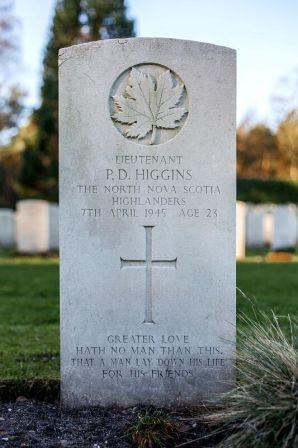
Grave of Percy ‘Dexter’ Higgins in the Canadian War Cemetery in Holten, The Netherlands.  (Photo courtesy of the Canadian Virtual War Memorial)

An error was made in recording the date of Dexter’s death as April 7, 1945 on the Canadian Virtual War Memorial and on his gravestone.  The family was provided with the service file records should they wish to ask the Commonwealth War Graves Commission for a correction to be made on his gravestone, and for a correction to be made on the Canadian Virtual War Memorial. 

Thank you to Donald Higgins for providing a photo, to Harm Kuijper for letting us know about the street naming ceremony, and to Henk Dykman for relating the story he’d heard about how Lt Higgins died. Do you have photos or information to share? Email Pieter at memorialtrail@gmail.com, comment on the blog, or tweet to @researchmemori1.

© Daria Valkenburg

….Want to follow our research?….

If you are reading this posting, but aren’t following our research, you are welcome to do so.  Our blog address: https://onthewarmemorialtrail.com/

Front cover OnTheWarMememorialTrailinEurope4 countries, 6 weeks, 7,000 km – an unforgettable war memorial journey in Europe…. Daria’s book ‘No Soldier Buried Overseas Should Ever Be Forgotten‘ is available in print and e-book formats.  Net proceeds of book sales help support research costs and the cost of maintaining this blog. For more information see https://nosoldierforgotten.com/ 

You are also invited to subscribe to our YouTube Channel: On The War Memorial Trail With Pieter Valkenburg: https://www.youtube.com/channel/UCJ591TyjSheOR-Cb_Gs_5Kw

Never miss a posting!  Subscribe below to have each new story from the war memorial trail delivered to your inbox.
On The War Memorial Trail….. The WWII Soldier From Barney’s River Who Lost His Life During The Battle of Groningen

April 12, 2024.  One of the biases faced by many soldiers during the war was the perception that an excellent education would result in an intelligent and capable leader of those in battle.  This was not always the case, unfortunately, and often an otherwise obvious candidate for promotion into an officer rank was not chosen, solely based on his early educational background.

In researching the story of Joseph Taylor MACLEOD of Barney’s River, Nova Scotia, Pieter encountered a well-respected, capable, and intelligent man, who was rightfully promoted several times.  However, due to having left school after completing Grade 5, he did not rise as high in rank as he might have if he had been a high school graduate.  What he did achieve during his military service is a testament to what can happen when promotions are based on merit.

….Joseph enlisted with The Pictou Highlanders….

Screenshot 2024-03-22 at 12-32-28 Avondale Station

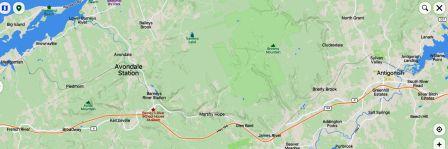
Map shows Avondale Station, Nova Scotia, where Joseph Taylor MacLeod was born.  (Map source: http://www.mapcarta.com)

Born November 11, 1914 in Avondale Station, Pictou County, Nova Scotia, Joseph Taylor MACLEOD was the son of Robert and Ella Margaret MacLeod. He was the youngest in his family and had 5 brothers and 1 sister.  Two of his brothers also served during WWII.

When Joseph enlisted with The Pictou Highlanders in Mulgrave, Nova Scotia on August 5, 1940, he was married and living in Barney’s River, Nova Scotia.  He had left school at age 13, after completing Grade 5, and was working as a tallyman in a sawmill for Robert Gillis.  He’d also worked as a truck driver for his father, a butcher, for several years.

His Personnel Selection Record noted that Joseph enjoyed playing baseball, hockey, and softball, and liked to read about history.

….Joseph’s son Cyril provided a photo….

On September 10, 1935, Joseph had married Irene Elizabeth McGregor and they had 4 children.  One son, Cyril Raymond, kindly provided a photo of his father when Pieter contacted him.

Joseph Taylor MacLeod van zoon Cyril MacLeod

Joseph Taylor MacLeod.  (Photo courtesy of Cyril MacLeod)

….Joseph was in the Intelligence Section of The Pictou Highlanders….

After completing basic training, Joseph took advantage of training opportunities, such as a chemical warfare course in January 1941 in Long Branch, Nova Scotia. He qualified as a Motorcyclist Class III on May 5, 1941.  On October 6, 1941, he was promoted to Lance Corporal, and was assigned to the Intelligence Section under Major Manning, Intelligence Officer for The Pictou Highlanders, in Dartmouth, Nova Scotia.

A month later, he was promoted to Lance Corporal, and then, in April 1942 to Corporal.  On June 1, 1942 he was promoted again, to Lance Sergeant.  All this time he worked in the Intelligence Section of The Pictou Highlanders.

….Joseph was temporarily assigned overseas….

On June 2, 1942, Joseph was sent overseas as a NCO (Non-Commissioned Officer), serving as Acting Platoon Sergeant with the Seaforth Highlanders of Canada until September 21, 1942.  He was then posted to the NETC (Non-Effective Transit Depot) until October 7, 1942, when he was transferred back to Canada.

On November 1, 1942, he returned to The Pictou Highlanders and was sent to the No. 6 District Depot in Halifax, Nova Scotia, before being transferred to Sussex Camp in Sussex, New Brunswick.

On March 16, 1943, he was sent to Newfoundland as Acting Platoon Sergeant.  He continued taking training, completing a Junior Leaders Course in Gander from May to June 1943.

Joseph’s lack of higher education, which was attributed to the distance he lived from school, would eventually hinder his chances at further promotion.  While in Newfoundland he was recommended for a commission – which would mean he would become an officer – but his education level “…spoiled his chances…” according to his Personnel Selection Record.

On August 22, 1943, he returned from Newfoundland and was assigned to Debert, Nova Scotia.  Upon his return, Joseph had been told that his rank as Acting Platoon Sergeant was to be confirmed, but then bad luck intervened when the 7th Division was disbanded. 

On October 1, 1943, Joseph was sent to No. 1 Transit Camp in Windsor, Nova Scotia, in preparation for overseas service.

….Joseph left Canada for overseas service….

On November 26, 1943, Joseph left Canada for the United Kingdom, arriving on December 1, 1943, and assigned to No. 7 Canadian Infantry Reinforcement Unit (CIRU).  He arrived in the United Kingdom as Lance Sergeant, but was then reduced to Corporal.

In a December 14, 1943 interview to update his Personnel Selection Record, the interviewer noted that Joseph felt “…somewhat let down by the non-confirming of his rank in Canada, in view of his long and varied service and qualifications, but has decided to take it philosophically…

A listing of qualifications noted that Joseph qualified as a Driver I/C (Driver, internal combustion), and Motorcyclist Class III (MCIII), Assistant Quartermaster Instructor (AIQI), and Chemical Warfare Q2.

The Personnel Selection Record continued by recording that Joseph “…liked his work with Intelligence Section Pictou Highlanders, but could not carry rank of Lance Sergeant there, so was obliged to become Acting Platoon Sergeant…

On March 22, 1944, with the rank of Corporal, Joseph was transferred to the North Nova Scotia Highlanders.  In May 1944, he requested to revert to the rank of Private. 

Joseph remained with the North Novies in the United Kingdom until July 24, 1944, when he was sent to France as part of the 21st Army Group.  Now a Private, he was transferred to the Royal Hamilton Light Infantry (nicknamed The Rileys) on July 27, 1944.

….Joseph was wounded during the Battle for Clair Tizon….

Clair Tizon

Map with location of Clair Tizon. (Map source: http://www.canadiansoldiers.com)

On August 12, 1944, the Royal Hamilton Light Infantry was ordered to advance towards Clair Tizon, France. At a small crossroads near the abandoned hamlet of Barbery, they encountered fierce German resistance as they moved through wheat fields.

The German counterattacks were an attempt to hold the Falaise pocket, but by dusk the Germans withdrew.  The Canadians had won, but at a cost of 20 soldiers killed and 100 wounded. (See http://canadiansoldiers.com/history/battlehonours/northwesteurope/clairtison.htm)

Among the wounded was Joseph.  He was admitted to the 43rd Battalion General Hospital, and then the 110th Battalion General Hospital.  He didn’t return to his Regiment until October 2, 1944. 

On October 18, 1944, he was promoted to Lance Sergeant.  On January 7, 1945, he received what would be his final promotion – to Acting Sergeant.

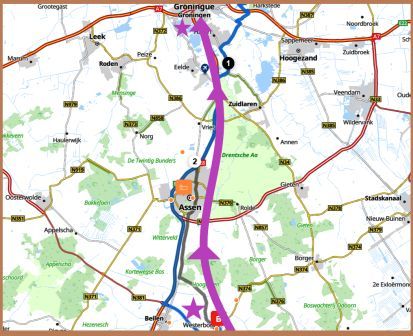
….As the Rileys travelled towards Groningen they were attacked by the Dutch SS guarding a concentration camp….

Screenshot 2024-03-20 at 11-47-11 Groningen - Westerbork route planner - journey distance time and costs – ViaMichelin

Map shows route taken by the RHLI as they moved from Westerbork towards Groningen.  (Map source: http://www.viamichelin.co.uk)

An excerpt from Semper Paratus: The History of the Royal Hamilton Light Infantry (Wentworth Regiment) 1862-1977 by Kingsley Brown, Sr, Kingsley Brown, Jr, and Brereton Greenhous, recorded that “…the RHLI crossed the Ijeselson Canal by a small foot bridge on April 10 and, moving quickly on tanks and Kangaroos, reached the outskirts of Groningen within two days.  At this point the battalion again became the spearhead for 4th Brigade and 2nd Division…

A description of the fight that followed noted that “…. ‘it took more than a day for the Battalion to fight its way into Groningen’ John Lisson recalled. ‘The Germans were not only firing light arms, but blasting us with four-barreled flak guns. They had developed a nasty technique of firing at the glazed tile roofs of the buildings and bringing them crashing down on top of us. The tiles would fly off in sharp fragments just like shrapnel’….

As if this wasn’t enough to deal with, the Rileys had encountered members of the Dutch SS who had been guarding the Westerbork concentration camp, who “…were fighting desperately because they had nothing to expect but the firing squad if they were caught…”  (See https://en.wikipedia.org/wiki/Westerbork_transit_camp)

….Joseph was killed by sniper fire during the Battle of Groningen….

After travelling from Westerbork to Assen and then on towards Groningen, the War Diary for the Royal Hamilton Light Infantry for April 13, 1945 stated that by 4 pm they had arrived “…approximately one mile from Groningen, our final objective.  Tactical Headquarters was set up in a farm house while the Companies continued to their objective in the town.  The opposition in this sector was increasing, consisting mainly of medium machine gun and small arms fire…

The Battle of Groningen would not be an easy victory.   (See https://www.canadiansoldiers.com/history/battlehonours/northwesteurope/groningen.htm and https://library.mcmaster.ca/battle-groningen-april-1945)

Conditions had deteriorated by the evening of April 13.  “…Word was received that the forward elements are meeting serious resistance in the form of small arms fire, road blocks, and mines….” 

At the same time as over 100 prisoners of war began surrendering, sniper fire continued.  By 8:30 pm, the War Diary entry stated that “…we have suffered several fatal casualties from snipers…” Among the casualties was Joseph.

….Joseph is buried in the Canadian War Cemetery in Holten….

Screenshot 2024-03-20 at 16-29-08 53.205625168048 6.5339885049894 156A Peizerweg Groningen GR - MapQuest

According to the GPS coordinates provided at the time, Joseph was initially buried beside what is today the Peizerweg in Groningen. The black circle marks the spot.  (Map source:  Mapquest)

On April 15, 1945, Joseph was initially buried beside a road in Groningen, before being reburied the following year in the Canadian War Cemetery in Holten, The Netherlands.  

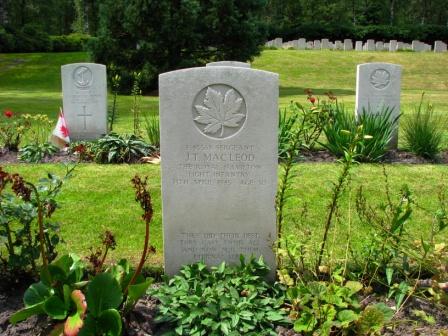
macleod, joseph taylor from Holten

Grave of Joseph Taylor MacLeod in the Canadian War Cemetery in Holten, The Netherlands.  (Photo courtesy of the Information Centre Canadian Cemetery Holten)

….Sam Matvichuk also died during the Battle of Groningen….

Sam MATVICHUK, whose story was previously told, also lost his life during the Battle of Groningen, while serving with the Royal Regiment of Canada.  You can read his story here: https://onthewarmemorialtrail.com/2022/08/19/on-the-war-memorial-trail-the-wwii-soldier-born-in-broadacres-who-died-during-the-battle-of-groningen/

Thank you to Cyril MacLeod for sharing a photo of his father, Henk Vincent for sharing the Royal Hamilton Light Infantry War Diary for April 1945, and to David Ryan for sharing an excerpt from Semper Paratus: The History of the Royal Hamilton Light Infantry (Wentworth Regiment) 1862-1977.

Do you have photos or information to share? Email Pieter at memorialtrail@gmail.com, comment on the blog, or tweet to @researchmemori1.

© Daria Valkenburg

….Want to follow our research?….

If you are reading this posting, but aren’t following our research, you are welcome to do so.  Our blog address: https://onthewarmemorialtrail.com/

Front cover OnTheWarMememorialTrailinEurope4 countries, 6 weeks, 7,000 km – an unforgettable war memorial journey in Europe…. Daria’s book ‘No Soldier Buried Overseas Should Ever Be Forgotten‘ is available in print and e-book formats.  Net proceeds of book sales help support research costs and the cost of maintaining this blog. For more information see https://nosoldierforgotten.com/ 

You are also invited to subscribe to our YouTube Channel: On The War Memorial Trail With Pieter Valkenburg: https://www.youtube.com/channel/UCJ591TyjSheOR-Cb_Gs_5Kw

Never miss a posting!  Subscribe below to have each new story from the war memorial trail delivered to your inbox.

On The War Memorial Trail….. The WWII Soldier From Feltzen South Killed During The Attack On Weener

January 21, 2024. After Pieter noticed that four names on the photo wish lists from the Canadian War Cemetery in Holten had lost their lives on April 24, 1945, and that all four were with the North Shore (New Brunswick) Regiment – 2 from New Brunswick and 2 from Nova Scotia – he began to investigate what had happened that day.

Nine men from the Regiment died during the Attack On Weener in Germany.  Pieter decided to research all four soldiers and was able to find family and photos for two.  Unfortunately, while family was found for the other two soldiers, there were no photos.  Those two soldiers ended up on our Cold Case List when all other research possibilities were exhausted. (See https://onthewarmemorialtrail.com/our-cold-cases/

In the last blog posting, the story of FrançoisFrank’ GUIMOND was told.  See https://onthewarmemorialtrail.com/2024/01/13/on-the-war-memorial-trail-the-wwii-soldier-from-st-louis-killed-during-the-attack-on-weener/

….The search for a photo of Sydney was successful….

The photo search for Sydney Guy MOSHER of Nova Scotia was ultimately successful. After quite a bit of research, Pieter was able to get in contact with Shirley McIlmoyl and John Gosling, the children of Sydney’s sister Myrtle Gosling, and it was John who had a photo of their uncle.  John’s son John sent us a photo.

Sydney Guy Mosher from John Gosling

Sydney Guy Mosher. (Photo courtesy of the Gosling Family)

Sydney was born August 22, 1914 in Feltzen South, Lunenburg County, Nova Scotia, the son of James Roger and Ida Selena (nee Spindler) Mosher.  He was one of four children, and had a brother and two sisters.

…. Sydney enlisted in the fall of 1943….

On August 9, 1941 he married Olive Sarah Copeland in Mahone Bay, Nova Scotia.  When he enlisted on October 19, 1943 at the No. 6 District Depot in Halifax, Nova Scotia, he was working as a meat cutter for J. A. Leaman Co. Ltd., a wholesale business, in Halifax. 

Sydney was sent to No. 60 Canadian Army Basic Training Centre (CABTC) in Yarmouth, Nova Scotia for basic training on November 19, 1943.  Then, on January 23, 1944, he was assigned to A14 Canadian Infantry Training Centre (CITC) in Aldershot, Nova Scotia.

On March 25, 1944, Sydney had embarkation leave until April 7, the last time he would see his family before leaving Canada.

He sailed to England on April 30, 1944, and upon arriving on May 7 was assigned to No 4 Canadian Infantry Reinforcement Unit (CIRU). Coincidentally, he arrived there on the same day as James ‘Jim’ Andrew MACLEOD of New Brunswick, whose story was previously told.  (See https://onthewarmemorialtrail.com/2023/11/29/on-the-war-memorial-trail-the-wwii-soldier-killed-by-mortar-fire-when-his-brother-was-two-years-old/)

On June 1, 1944 he was transferred to the 12th Battalion, Canadian Base Reinforcement Group (CBRG) for a very short period before being sent to the 11th Battalion of the 21st Army Group and the unallocated list for the North Nova Scotia Highlanders on June 12. 

…. Sydney left the United Kingdom in July 1944….

On July 22, 1944, he left for France, joining the Regiment as part of a reinforcement group.  He remained with the North Nova Scotia Highlanders until October 20, 1944, when he was transferred to the North Shore (New Brunswick) Regiment.  Both Regiments were in Mollekot, a rural area on the Belgium/Dutch border at the time, for the tail end of the Battle of the Scheldt. (See https://en.wikipedia.org/wiki/Battle_of_the_Scheldt)

The War Diary for the North Shore (New Brunswick) Regiment for October 19, 1944 noted that at 5 pm they were ordered to replace the North Nova Scotia Highlanders of 9th Brigade.  “…We were to take charge at first light.  The Battalion moved to IJzendijke for the night…” 

Sydney was with the Regiment as they moved deeper into The Netherlands, fighting near the Bergsche Maas River at Kapelsche Veer. In February 1945, the Regiment moved into Germany, fighting in the Rhineland, the Hochwald, before returning to The Netherlands.

On April 3, 1945, the Regiment was back in The Netherlands for the liberation of Zutphen, on the east bank of the IJssel River, an attack that began on April 6, 1945 and ended on April 8.  Canadian and Polish troops then worked until April 19, 1945 to liberate the Dutch towns of Heino, Meppel, and Makkum.

…. Sydney’s Regiment was ordered near Weener to relieve Polish troops….

On April 20, 1945, the Regiment’s war diary reported new orders, requiring them to advance 140 km (87 miles) back into Germany, to relieve a Polish Armoured Division near Weener.  …We are to take over from the Poles on the night of April 21…

On April 23, 1945, the Regiment’s war diary reported that the “…plan is for North Shore to capture Weener….”  The Attack on Weener began.  “At 1045 hours C Company reported sniper fire was bothering them and the road was cratered. The tanks were trying to get around the crater. At 1100 hours enemy were reported … and a heavy gun was firing… At 1245 hours C Company and the tanks were moved back a short distance to allow the artillery to engage a road block which was now holding up our progress …

After encountering quite a bit of resistance, the Regiment noted that “….by 1800 hours all companies were on objectives and were taking prisoners of war from houses and cellars…. A total of 103 prisoners of war were taken from the town. These were identified as Kriegsmarine fighting as infantry…”  Kriegsmarine was the navy of Nazi Germany.

…. Sydney lost his life on April 24, 1945 ….

Screenshot 2024-01-16 at 18-10-13 The Coordinate Translator

The distance between Weener and Leer is 11 km (7 miles). The red marker shows where the carriers were attacked, according to the map coordinates provided in the war diary.  They were 3 km from Weener and 8 km from Leer. (Map source: Google maps)

The war diary entry for April 24, 1945 was not as positive.  The Battalion was unsure if the bridge over the Ems River to Leer was intact and sent out a reconnaissance party to check it out.  This was important information needed for the upcoming push to Leer a few days later. 

…This morning at 0900 hours a battle group consisting of A Company mounted on the Carrier platoon were sent to recce the bridge to see if it was intact, but ran into heavy enemy fire… It was found the enemy was using a new device for mining the roads, which had not been encountered before…The first two carriers passed over the mined area, but the third was blown up and created a crater approximately 40 feet by 20 feet…

All on board of that third troop carrier were casualties. Things got worse as two German self-propelled guns then opened fire and a second carrier took a direct hit.  Among the casualties was Sydney Guy Mosher, dead at age 30.

…. It turned out the bridge to Leer no longer existed ….

In ‘Fields of Valour’ by Ken Smith, it was noted that soldiers had been killed trying to locate a bridge that was no longer there. Lives might have been saved if information from air surveillance had been received.

Smith wrote that “….the attack on Weener was supposed to be an easy affair using ‘A’ Company, but ‘C’ Company had to be brought in to outflank the enemy, as ‘A’ Company was attempting to take the Leer bridge when a carrier was lost to a mine with casualties. At the same time several dreaded 88 guns began firing. The men were pinned and Typhoons had to be called in to finally silence the big guns.

The whole affair was useless as the Leer Bridge was already out of commission, with the attack costing the lives of men, mostly by mines or shelling….

Either an Allied strike took out the bridge or the Germans had blown it. Given that the area was mined, it suggests that it was the Germans who had blown up the bridge to delay the Allied advance.

….Other soldiers from the North Shore (New Brunswick) Regiment who lost their lives on April 24, 1945….

Besides Sydney Guy Mosher and Frank Guimond, those who were killed on April 24, 1945 included:

  • Private Emile Joseph ARSENEAULT of Lewisville, New Brunswick, age 22
  • Private Ronald Burton DOHERTY of St. John, New Brunswick, age 19
  • Private Wallace Herbert LARLEE of Perth, New Brunswick, age 19  (on our Cold Case List)
  • Private Andrew MEEHAN of Hammondvale, New Brunswick, but born in Ireland, age 21
  • Private Owen Burton MILLER of Deseronto, Ontario, age 21
  • Private Francis Leslie MULCAHY of Halifax, Nova Scotia, age 21 (on our Cold Case List)
  • Private Edmund SAMPSON of Cannes, Nova Scotia, age 30

….Sydney is buried in the Canadian War Cemetery in Holten….

Sydeny was initially buried on April 26, 1945 “…in front of the school…” in Niew Schans, “…about 4 miles southwest of Weener…” before being reburied the following year in the Canadian War Cemetery in Holten, The Netherlands.

mosher find a grave

Grave of Sydney Guy Mosher in the Canadian War Cemetery in Holten, The Netherlands.  (Photo source: http://www.findagrave.com)

Thank you to John Gosling Sr, John Gosling Jr, and Shirley McIlmoyl for ensuring we received a photo of Sydney Guy Mosher.

If you can help with photos for two other soldiers killed on April 24, 1945 who are currently on the Cold Case List, please let us know.  The names: Wallace Herbert LARLEE of Perth, New Brunswick, and Francis Leslie MULCAHY of Halifax, Nova Scotia.

Do you have photos or information to share? Email Pieter at memorialtrail@gmail.com, comment on the blog, or tweet to @researchmemori1.

© Daria Valkenburg

….Want to follow our research?….

If you are reading this posting, but aren’t following our research, you are welcome to do so.  Our blog address: https://onthewarmemorialtrail.com/

Front cover OnTheWarMememorialTrailinEurope4 countries, 6 weeks, 7,000 km – an unforgettable war memorial journey in Europe…. Daria’s book ‘No Soldier Buried Overseas Should Ever Be Forgotten‘ is available in print and e-book formats.  Net proceeds of book sales help support research costs and the cost of maintaining this blog. For more information see https://nosoldierforgotten.com/ 

You are also invited to subscribe to our YouTube Channel: On The War Memorial Trail With Pieter Valkenburg: https://www.youtube.com/channel/UCJ591TyjSheOR-Cb_Gs_5Kw

Never miss a posting!  Subscribe below to have each new story from the war memorial trail delivered to your inbox.
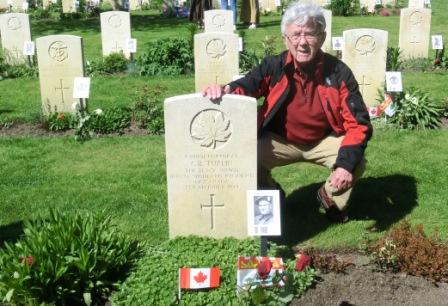
On The War Memorial Trail…..‘No Soldier Buried Overseas Should Ever Be Forgotten’ Is Still Available

OnTheWarMememorialTrailinEurope_Barcode

4 countries, 6 weeks, 7,000 km – an unforgettable war memorial journey in Europe…. Daria’s book ‘No Soldier Buried Overseas Should Ever Be Forgotten’ is available in print and e-book formats.

December 19, 2023. We appreciate hearing from readers of ‘No Soldier Buried Overseas Should Ever Be Forgotten’, and love seeing the photos that you send.  In many cases, the only time we know someone has purchased a book is when they write to let us know. 

IMG_2273 Dec 1 2022 Ray Coulsen by John Wales

Ray Coulsen with book. (Photo credit: John Wales)

Ray Coulsen, Curator at the Nova Scotia Highlanders Regimental Museum in Amherst, Nova Scotia, purchased a copy and was able to read about two North Novies featured in the book:

  • James Arthur AFFLECK, buried at Calais Canadian War Cemetery in France
  • George Ashley BARTLETT, buried at Bayeux War Cemetery in France
John Wales

John Wales with book. (Photo courtesy of John Wales)

Until he moved from Amherst, John Wales had been the Assistant Curator at the Nova Scotia Highlanders Regimental Museum, and had also a great interest in the story of Elmer Bagnall MUTTART, of the Royal Canadian Air Force, who is buried in Harlingen General Cemetery in The Netherlands, and whose story is also featured in the book.

CIMG6561 Oct 20 2023 Paulette Ryan with book

Paulette Ryan with book. (Photo credit: Daria Valkenburg)

Paulette Ryan contacted us after a trip in which she visited the Canadian War Cemeteries in The Netherlands.  We had a chance to meet for coffee as she had brought back a booklet for Pieter from Alice van Bekkum, Chair of the Faces To Graves Foundation Groesbeek.  The Dutch-language booklet contains short stories about some of the soldiers buried in the Canadian War Cemetery in Groesbeek.

CIMG6559 Oct 20 2023 Pieter with Paulette Ryan

Pieter with Paulette Ryan.  (Photo credit: Daria Valkenburg)


20230918_124503 Sep 18 2023 Malcolm John Pres Richibuctu Legion with book

Malcolm John with book.  (Photo credit: Daria Valkenburg)

This fall we visited the Richibucto Legion Branch No. 30 in Richibucto, New Brunswick, and met the Branch President, Malcolm John.  The Legion had photos of WWII soldier Albert Noel LAMONTAGNE in a shadow box donated by the family of Albert Chevarie.  Malcolm had sent us photos of every item in the shadow box, for an upcoming story in 2024 about this soldier, who is buried in the Canadian War Cemetery in Groesbeek, The Netherlands.

After purchasing a book last fall, Simone Comeau took the time to write.  “I have just completed reading your interesting book. Your work and dedication is unbelievable. Thank you very much for all you have done and are still doing so that no one gave their lives in vain. Your efforts are a great relief to the families of the fallen soldiers as many were left just knowing their loved ones had died somewhere in Europe. This includes my family and my uncle’s siblings and their parents…

Simone’s uncle, WWII soldier Joseph ‘Ambroise’ COMEAU, from Lower Saulnierville, Nova Scotia, was one of 5 soldiers from the North Nova Scotia Highlanders Regiment who drowned in a tragic accident on the Leda River during the Battle of Leer in Germany on April 28, 1945.  (See https://onthewarmemorialtrail.com/2021/05/17/on-the-war-memorial-trail-a-tragic-drowning-on-the-leda-river-in-germany-part-3/ and https://onthewarmemorialtrail.com/2021/11/10/on-the-war-memorial-trail-linking-the-past-with-the-present/)

If you’ve read ‘No Soldier Buried Overseas Should Ever Be Forgotten’ do let us know!  In case you missed an earlier blog posting, ‘Holten Heroes’, by Jan Braakman, and translated from Dutch by us, was published a few months ago.  For more information, see https://onthewarmemorialtrail.com/2023/11/01/new-book-about-soldiers-buried-in-the-canadian-war-cemetery-in-holten-the-netherlands/

Thank you to Ray Coulsen, John Wales, Paulette Ryan, Malcom John, and Simone Comeau.  Do you have photos or information to share? Email Pieter at memorialtrail@gmail.com, comment on the blog, or tweet to @researchmemori1.

© Daria Valkenburg

…Previous Postings About The Book…

To read previous postings about ‘No Soldier Buried Overseas Should Ever Be Forgotten’:

….Want to follow our research?….

If you are reading this posting, but aren’t following our research, you are welcome to do so.  Our blog address: https://onthewarmemorialtrail.com/

Front cover OnTheWarMememorialTrailinEurope4 countries, 6 weeks, 7,000 km – an unforgettable war memorial journey in Europe…. Daria’s book ‘No Soldier Buried Overseas Should Ever Be Forgotten‘ is available in print and e-book formats.  Net proceeds of book sales help support research costs and the cost of maintaining this blog. For more information see https://nosoldierforgotten.com/ 

You are also invited to subscribe to our YouTube Channel: On The War Memorial Trail With Pieter Valkenburg: https://www.youtube.com/channel/UCJ591TyjSheOR-Cb_Gs_5Kw

Never miss a posting!  Subscribe below to have each new story from the war memorial trail delivered to your inbox.
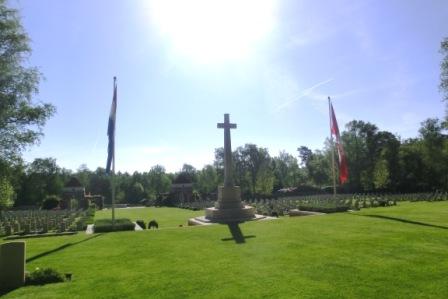
On The War Memorial Trail….. Part 2: The WWII Letters Of Edison Reynolds Smith
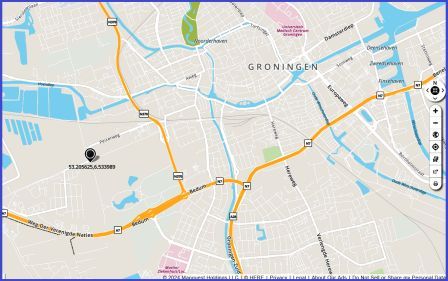
20220903_190017 Wayne and Angela Leighton in Annapolis Valley

Angela Leighton and her husband Wayne at the Lookoff (Blomidon) in Nova Scotia’s Annapolis Valley. (Photo submitted by Angela Leighton)

December 12, 2023. In Part 1 of the WWII letters of Edison Reynolds SMITH, which had been shared by his niece, Angela Leighton, Edison had enlisted and was in France.  Meanwhile, his family was dealing with the death of Edison’s younger brother Wesley – which Edison was as yet unaware of – and had received a telegram stating that Edison had been wounded.  (See https://onthewarmemorialtrail.com/2023/12/07/on-the-war-memorial-trail-part-1-the-wwii-letters-of-edison-reynolds-smith/)

The telegram had been sent to Edison’s brother, Wesley Smith in Cooks Cove, Nova Scotia, stating that Edison had been wounded on June 9, 1944, but remained on duty with his unit.  However, Wesley did not receive the telegram – he had drowned on May 27, 1944.

Now, Edison’s story continues in Part 2…..

Edison Reynolds Smith

Edison Reynolds Smith.  (Photo courtesy of Angela Leighton)

… Edison was transferred to the Canadian Scottish Regiment…

According to his service file, Edison was in the hospital until June 11, 1944, after which he was transferred to the 1st Battalion, Canadian Scottish Regiment, British Western European Forces (BWEF)In his letters, Edison didn’t mention being wounded.

His first letter from France, dated June 14, 1944 letter to his aunt, Elsie Myers, confirmed he was in the 1st Battalion, Cdn Scottish Regiment, ‘A’ Company. …I am in France now.  I’ve been here a few days.  The last letter I wrote was before I left the docks in England…. The French people are very nice to us… I am with the Canadian Scottish Regiment and with a pretty good bunch of men.  George is over here too somewhere, I suppose, but he’d be with the North Nova Scotia Highlanders...”  Sgt George MYERS was a nephew of Edison’s uncle, Roland Myers.

On June 26, 1944, Edison wrote to his brother Wesley, still unaware that his brother had died on May 27, 1944.  “…Just a line or two to let you know I am still kicking….It’s pretty noisy here at times. Most of the fellows I’m with are from British Columbia….The days seem pretty long over here longer than they did in England.  I never got any leave or anything when I was in England… There are quite a few cattle over here. They are around our trenches every day….I might be able to get in the North Nova Scotia Highlanders, the same as George is in.  My name is gone in for them anyway…” 

On July 1, 1944, Edison got his wish and was transferred back to the North Nova Scotia Highlanders. 

… Edison was heartbroken to learn that his brother Wesley had died…

In a July 2, 1944 letter to his Aunt Elsie, Edison mentions he was now in ‘C’ Company of the North Nova Scotia Highlanders.  He was shocked to learn about his brother’s death. “…I was just over to see George and Percy.  I just arrived at this unit yesterday and I went to look George up this afternoon and found him, and I also saw Percy….”  Angela believes that Percy referred to Percy LUMSDEN.

 …I was shocked when George told me about Wes.  Cold chills came over me when he handed me a piece that was cut out of the newspaper telling about the terrible thing that that happened to him. How did it happen?  I can hardly believe it.  I just trembled when I read it. I suppose you sent me the news but I haven’t received it yet because I have been moved around so much. I bet there was a large funeral. I suppose the reserve army was there too….It’s going to be hard on me for a while and all of us…Wes was a friend of everybody’s and was a smart boy too. He died a good soldier….

Edison then wrote to his sister Dorothy on July 4, 1944. “…It’s hard for me to believe that Wes has been drowned. Charlie MacKenzie was drowned too…”  

… Edison related some of what he was experiencing …

In a July 12, 1944 to his Aunt Elsie, Edison carefully mentioned troop losses. “…We are moving deeper into France all the time.  We have lost a lot of the fellows I came overseas with.…I’ll be glad when we get to Paris…

On July 15, 1944, he wrote to his cousin Abbie. “…I was down to the beach yesterday for a bath and I saw Percy there…. We are back of the lines now, having a rest after being in the front lines for over a month.  It’s a lot quieter back here and we can have a night’s sleep in peace.  My nerves were getting kind of shook up and a good rest will do a fellow good…

It was Percy Lumsden who told him that the family had been informed that he was wounded, which he addressed in the letter to Abbie. “…Percy said he got a letter from Ruth and she said it was in the paper that that I was wounded.  I haven’t got a scratch on me.  It must be a mistake I guess…I hope you can make my writing out.  My hand is shakier than it was….

It’s unclear whether Edison was simply sparing his family, as his service file clearly notes that he had been wounded and briefly hospitalized.

… Edison longed for the war to end …

Edison wondered if he’d made the right decision to enlist in his July 24, 1944 letter to his sister Dorothy. “…War is awful…and you don’t realize it until you get in the thick of it… I wish I had of stayed home and helped Uncle Rollie.  I might have been able to if I had of put in for farming leave early enough, but I was so anxious to get over here and get a crack at Jerry.  I’m not quite so anxious now though…

Around the same date, he wrote more frankly to his cousin Abbie. “…I’m right in the front line.  I’ve been in the front line since D-Day, the day I landed in Normandy….The only pleasure we get here is getting letters.  We have it pretty tough of course, you can expect that in a place like this.….

… Edison delighted in getting a care package from home …

Mail and care packages were morale boosters.  Edison’s August 2, 1944 letter to his sister Dorothy reflects this.  “…I got the box you sent me for my birthday. The oranges were rotten, but I found a couple that were fit to eat. The chocolates were in good shape though and so was the cake.  I enjoyed it very much. I gave some of the boys some chocolates and some of the cake…It was a treat for me to get those chocolates because it’s something you don’t see very often over here…

 … Edison felt the tide of war was turning …

On September 2, 1944, in a letter to his sister Dorothy, Edison noted that France was nearly liberated.  “…We have been moving so fast that I don’t get much time to write.  The weather over here is terrible, wet, raining every day, but I imagine there will be a dry spell after a while… The war looks pretty good now.  Paris has fallen and we are nearing the borders of Germany and Belgium. It makes you feel good when we go into a town and see the streets lined with cheering Frenchmen.  They are certainly glad to see us coming….

Edison related a close call in a September 7, 1944 letter to his cousin Abbie. “…I’ve had some close calls, but I’m still on the go.  I had a bullet go through my pant leg and a piece of shrapnel hit my steel helmet, so I think that’s close enough .

The last letter written by Edison was on October 6, 1944 to his uncle, Roland Myers. “…I am in Belgium now and we are having pretty good weather these last few days, nice and warm.….”   

What Edison was unable to explain was that he was in the midst of the Battle of the Scheldt, which had begun on October 2, 1944. (See https://en.wikipedia.org/wiki/Battle_of_the_Scheldt and https://www.thecanadianencyclopedia.ca/en/article/canada-and-the-battle-of-the-scheldt)

On October 6, 1944, Operation Switchback, the second main operation of the Battle of the Scheldt began, with the goal of clearing the ‘Breskens Pocket’ – the German defences around Breskens in The Netherlands. (See https://www.canadiansoldiers.com/history/battlehonours/northwesteurope/breskenspocket.htm)

….How Edison Lost His Life….

Map showing where Edison lost his life

Edison was initially buried between Hoofdplaat and Terneuzen, The Netherlands.  (Map source: ‘No Retreating Footsteps’ by Will R. Bird)

On October 16, 1944, the North Nova Scotia Regiment was in The Netherlands, tasked with attacking a heavily defended dyke.  Sadly, it was the day that Edison lost his life, as was related in a November 17, 1944 letter to his aunt from Captain L.C. Niuhold, ‘C’ Company, North Nova Scotia Highlanders:  “…As second-in-command of the company in which your nephew served, I was present on the 16th of October in the battle in which he was killed. …

It was part of the campaign in the Scheldt in Holland which eventually opened the great port of Antwerp.  On the 16th of October the company was leading the battalion in an attack along a stubbornly defended dyke.  The going was slow and difficult but owing to the courage and determination of your nephew and his pals, the position was eventually taken. 

It was after we had reached our first objective and your nephew was bringing in some prisoners, that a burst of machine-gun fire from another direction hit him and instantly killed him.  The same burst of fire killed his platoon officer and another one of his pals who were with him.

Your nephew was buried, along with the other boys who died that day, in a pretty orchard in Southern Holland, with a funeral service held by our battalion padre.

I wish to extend my heartfelt sympathy to you in the loss of your nephew.  He is missed by everyone in the company as he was one of our best soldiers…

… Edison is buried in the Canadian War Cemetery in Adegem…

Edison was initially buried between the towns of Hoofdplaat and Terneuzen, The Netherlands. After the war ended, Edison was reburied in the Canadian War Cemetery in Adegem, Belgium.  Pieter’s cousin, François Breugelmans visited Edison’s grave with his wife, Mieke de Bie, and ensured a Canadian flag was placed by his headstone.

SMITH and Francois from Mieke

François Breugelmans by the grave of Edison Reynolds Smith at the Canadian War Cemetery in Adegem.  (Photo credit: Mieke de Bie)

Thank you to Angela Leighton for providing photos, Edison’s letters, and information.  Thank you also to François Breugelmans and Mieke de Bie for visiting Edison’s grave at the cemetery in Adegem. Do you have a story to tell? Email Pieter at memorialtrail@gmail.com, or comment on the blog.  

© Daria Valkenburg

….Want to follow our research?….

If you are reading this posting, but aren’t following our research, you are welcome to do so.  Our blog address: https://onthewarmemorialtrail.com/

Front cover OnTheWarMememorialTrailinEurope4 countries, 6 weeks, 7,000 km – an unforgettable war memorial journey in Europe…. Daria’s book ‘No Soldier Buried Overseas Should Ever Be Forgotten‘ is available in print and e-book formats.  Net proceeds of book sales help support research costs and the cost of maintaining this blog. For more information see https://nosoldierforgotten.com/ 

You are also invited to subscribe to our YouTube Channel: On The War Memorial Trail With Pieter Valkenburg: https://www.youtube.com/channel/UCJ591TyjSheOR-Cb_Gs_5Kw

Never miss a posting!  Subscribe below to have each new story from the war memorial trail delivered to your inbox.