Pieter looks at the memorial outside St. Joseph’s Roman Catholic Cemetery in Kelly’s Cross. (Photo credit: Daria Valkenburg)
February 11, 2026. One of the cemeteries that Pieter was assigned when he became a volunteer under the National Volunteer Program for the Commonwealth War Graves Commission (CWGC) last year was Kelly’s Cross (St. Joseph) Parish Cemetery in Kelly’s Cross, Prince Edward Island. There is only one CWGC war grave at this cemetery…. that of WWII soldier Michael ‘Cecil’ STORDY, who died June 14, 1945, aged 19.
….Two brothers gave their lives in WWII…
Two Stordy brothers are listed on the memorial outside St. Joseph’s Roman Catholic Church in Kelly’s Cross. (Photo credit: Pieter Valkenburg)
When Pieter visited the cemetery last summer to inspect the grave, he noticed a memorial outside St. Joseph’s Roman Catholic Church. When he took a look at the memorial, he saw, to his surprise, that there were two Stordys listed – Michael ‘Cecil’ and John ‘Lawrence’.
A curious Pieter looked up RCAF Flight Sergeant John ‘Lawrence’ Stordy, and discovered that this was Cecil’s older brother, who had died in Germany on April 27, 1943, aged 22. “…We have to tell the stories of both brothers….” he said.
We began with Cecil, who is buried in Kelly’s Cross, in a CWGC grave.
….A photo came from Cecil’s younger sister…
Born May 8, 1926 in Brookvale, Prince Edward Island, Cecil was the son of John ‘Anthony’ and Mary ‘Ermina’ (nee Duffy) Stordy. When he enlisted at the No. 6 District Depot in Halifax, Nova Scotia on March 16, 1945, he stated that he had completed Grade 8 and was working on his father’s farm.
On March 23, 1945, Cecil was sent to No. 60 Canadian Army (Basic) Training Centre in Yarmouth, Nova Scotia, for basic training. After successfully completing his basic training, on May 20, 1945, he was next sent to A14 Canadian Infantry Training Centre (CITC) – Camp Aldershot in Aldershot, Nova Scotia, and assigned to ‘E’ Company.
Michael ‘Cecil’ Stordy. (Photo courtesy of Bernadette Stordy Noonan)
A photo of Cecil was submitted by Patti W Noonan, who explained that the photo came from the late Bernadette ‘Bernie’ Stordy Noonan, the youngest sister of Cecil and Lawrence. Patti wrote “….my husband – Sgt Barry Noonan, RCMP (Rtd) is Bernadette’s son and the grand-nephew of both Cecil and Lawrence. He is a member of our Legion and proudly remembers them at our November 11 ceremonies as well as the December Candlelighting. …”
….A drowning accident claimed Cecil’s life…
Camp Aldershot primarily featured infrastructure for land-based warfare, such as rifle ranges, trench systems, and bayonet assault courses. While undergoing infantry training at Aldershot, Cecil was part of a group involved in a swimming exercise on June 14, 1945. Swimming training was designed for ‘water-proofing’ soldiers and conducting emergency, wet-gap crossings.
According to Cecil’s service file, the exercise took place at Peach Lake, which likely was near Kentville, in one of the water areas frequently used for training, including water obstacle courses and swimming.
The exercise began around 2 pm. Unfortunately Cecil accidentally drowned about half an hour later, at 2:30 pm. According to a Court of Inquiry Report into the accident, Cecil “…got on a raft in the area used for swimming, got into water over his depth, was unable to hang onto the raft, and went under the surface.
His body was found and artificial respiration was commenced and continued while being transferred to hospital and after 2 hours he was pronounced dead…”
….Cecil was buried in St. Joseph’s Parish Cemetery in Kelly’s Cross…
Grave of Michael ‘Cecil’ Stordy, with a photo of him that was placed by Pieter. (Photo credit: Pieter Valkenburg)
On June 17, 1945, Cecil was buried in St. Joseph’s Parish Cemetery in Kelly’s Cross, Prince Edward Island. Reverend Ayers stated that he “….officiated at the services in the church and at the grave. Sgt Thomas Whelan of the 17th Armoured Regiment, Charlottetown, was in charge of the firing party….”
Patti wrote that “….all of the family is very proud of the sacrifice by Lawrence and Cecil…” and rightly so.
Coming up in Part 2, the Stordy Brothers series continues, with John ‘Lawrence’ STORDY, who lost his life in Germany in 1943.
Thank you to Patti Noonan and the late Bernadette Stordy Noonan for providing a photo. Do you have a story to tell? Email Pieter at memorialtrail@gmail.com or comment on the blog.
If you are reading this posting, but aren’t following our research, you are welcome to do so. Our blog address: https://onthewarmemorialtrail.com/
4 countries, 6 weeks, 7,000 km – an unforgettable war memorial journey in Europe…. Daria’s book ‘No Soldier Buried Overseas Should Ever Be Forgotten‘ is available in print and e-book formats. Net proceeds of book sales help support research costs and the cost of maintaining this blog. For more information see https://nosoldierforgotten.com/
December 24, 2025. 2025 was another busy year for us, and we remain committed to the On The War Memorial Trail research project. As of today, since this project began, Pieter has been able to cross 359 photo search requests from the three Canadian War Cemeteries in The Netherlands off of their photo search lists.
In addition, he has found photos for an additional 111 soldiers – for WWI and WWII soldiers buried in Belgium, listed on a memorial wall in the United Kingdom, airmen buried in municipal cemeteries in The Netherlands, and soldiers from Prince Edward Island who are buried in Canada. I have written stories for many of these soldiers, with many more stories still to come.
While several long-standing searches for photos were successful, allowing Pieter to complete his files for those soldiers, many files still remain open. In most cases, family members were found, but no photo was available for one reason or another.
The files in which Pieter has had zero luck in finding photos continue to be placed on the Cold Case Filespage on the On The War Memorial Trail website. We started this page in 2023 and have been lucky to have several names cleared off of the list. Perhaps 2026 will see more names removed! (See https://onthewarmemorialtrail.com/our-cold-cases/)
New research files were added, and Pieter was able to finish his research for many files. As always, there is a lag between him completing his work and me documenting his research, but that is on my very optimistic ‘to do’ list for this winter.
This spring we were in Europe for 5 weeks on our 2025 European War Memorial Tour. Among the highlights of our trip, Pieter placed flags at 383 graves in 14 cemeteries in The Netherlands and Belgium. We attended the commemoration service for the 80th Anniversary of the Liberation of The Netherlands at the Canadian War Cemetery in Groesbeek.
As well, we visited several memorials in The Netherlands and Germany, attended the grave re-dedication ceremony of a WWII soldier from Ontario, and, with the help of GPS coordinates on a trench map, we found the location of the original burial of a WWI soldier from Prince Edward Island who was killed during the Battle of Passchendaele in October 1917.
Pieter became a volunteer under the National Volunteer Program for the Commonwealth War Graves Commission (CWGC), and was assigned four local cemeteries which have CWGC gravestones. A photo of him was even featured on a postcard promoting volunteers!
The project to upload photos to the Canadian Virtual War Memorial website, which began in the fall of 2023, continues. Pieter advises that he plans to continue this project into 2026.
This year, we were able to meet several families, which we very much appreciated – this year in New Brunswick, Nova Scotia, and Prince Edward Island. We are grateful that so many families have come forward to share photos and information, and are thankful for help from the media in helping to find photos. What follows in the rest of this posting is a summary of what happened in 2025 with this research project.
… Statement about Pieter in the Senate of Canada….
Matthew B. MacFarlane, MLA for District 19, Borden-Kinkora, Leader of the Green Party of Prince Edward Island, informed us that he’d given a brief statement about us in the legislature on November 4, 2025. We had no idea he’d done this until he sent us the link! (https://www.facebook.com/share/v/1Ame5ppZio/)
…DariaHonoured With PEI Senior Islander of the Year Award….
Left to right: Honourable Barb Ramsay, Daria, Peter Holman. (Photo credit: Matthew B. MacFarlane)
PEI Seniors Secretariat slide shown during the readout of Daria’s biography
On October 1, 2025, Daria received the PEI Senior Islander of the Year Award from the Seniors Secretariat of Prince Edward Island, for her involvement with Hear PEI, a volunteer organization that works to build awareness of hearing loss issues, and in the ongoing research and writing of stories connected to the On The War Memorial Trail Research Project, sharing the untold stories of brave Canadians who served in the two World Wars, all based on her husband Pieter’s research.
…. Pieter Appointed Knight of the Order of Orange-Nassau….
On July 2, 2025, by Royal Decree of His Majesty Willem-Alexander, King of The Netherlands, Pieter was appointed Knight of the Order of Orange-Nassau. The decoration was presented to Pieter by Her Excellency Margriet Vonno, Ambassador of The Netherlands to Canada, in a beautiful ceremony hosted by His Honour, Dr Wassim Salamoun, Lt Governor of Prince Edward Island.
His Honour Dr Wassim Salamoun, Lt Governor of Prince Edward Island, Pieter Valkenburg, Her Excellency Margriet Vonno, Ambassador of The Netherlands to Canada. (Photo credit: Matthew B. MacFarlane)
Order of Orange-Nassau. (Photo credit: Daria Valkenburg)
….Pieter and Daria Honoured With Faces To Graves Groesbeek Foundation Certificate and ‘Coin’….
Daria and Pieter Valkenburg hold the Faces To Graves Coin and Certificate that was presented to them by Alice van Bekkum, Chair of Faces To Graves Groesbeek Foundation. (Photo credit: Kim Huvenaars)
….‘Holten Heroes: Stories from a Canadian Field of Honour’ Added To PEI Library Catalogue….
Crapaud Public Library and Kinkora Public Library Branch Library Technician Elsie Hovey holds the book ‘Holten Heroes’, with translators Daria and Pieter Valkenburg on either side of her. (Photo credit: Brenda Graves)
‘Holten Heroes: Stories from a Canadian Field of Honour’ by Dutch journalist Jan Braakman was translated by Pieter and Daria Valkenburg from the original Dutch language book ‘Holtense Canadezen’. A compilation of stories about many of the 1,394 Canadians buried in the Canadian War Cemetery in Holten, The Netherlands, the book was added to the Prince Edward Island Library Catalogue this fall. For more information on the book, see https://onthewarmemorialtrail.com/2023/11/01/new-book-about-soldiers-buried-in-the-canadian-war-cemetery-in-holten-the-netherlands/
‘Holten Heroes’ displayed on a bookshelf in the Crapaud Public Library. (Photo credit: Elsie Hovey)
.....Pieter now a volunteer under CWGC’s National Volunteer Program….
Postcard promoting CWGC’s National Volunteer Program included a photo of Pieter (top left) that Daria took at Cape Traverse Community Cemetery.
When the Commonwealth CWGC asked for volunteers across Canada to be part of the National Volunteer Program to visit local cemeteries and gather information about the condition of CWGC war graves, Pieter applied and was accepted as a volunteer. After receiving training on how to inspect headstones, how to report a grave in need of repair, and how to safely clean headstones where required, he was assigned 4 cemeteries in the South Shore area on Prince Edward Island. The 4 cemeteries are:
Seven Mile Bay (St Peter’s) Cemetery (4 CWGC graves)
Shortly after Pieter began his inspection of the cemeteries, a photo that I took of him at Cape Traverse Community Cemetery was chosen to be used on a postcard promoting the National Volunteer Program.
…Presentation At The Annual Remembrance Service At Crapaud Community Hall….
Pieter needed a few seconds to regain his composure following the heartfelt introduction by Senator Robinson. (Photo credit: Matthew B. MacFarlane)
…Presentation At The Annual Remembrance Service At Borden-Carleton Legion….
Pieter was the guest speaker during the Remembrance Day service at Borden-Carleton Legion. (Photo credit: Matthew B. MacFarlane)
On November 11, 2025, Pieter was the guest speaker at the Annual Remembrance Service at the Borden-Carleton Legion in Borden-Carleton, Prince Edward Island. Similar to his presentation a few days earlier at Crapaud Community Hall, Pieter spoke about what Remembrance Day means to him, and based his speech around 5 words: Gratitude… Sorrow ….Thankfulness…. Respect….. and Admiration…
…. Uploading photos to the Canadian Virtual War Memorial website ……
In 2023, he began with uploading photos of 3 WWII soldiers. As of the end of 2024, Pieter uploaded photos for 20 WWI soldiers and 195 WWII, for a total of 218 soldiers. This year, he uploaded photos of:
1 WWI soldiers
9 WWII soldiers and airmen
This resulted in a total contribution of 228 soldiers.
…. Soldiers Listed On The Cenotaph Outside Borden-Carleton Legion …….
This year we added more information on soldiers whose stories had previously been told:
While in Belgium this spring, we found the location of the original burial of WWI soldier Vincent Earl CARR of Prince Edward Island who was killed during the Battle of Passchendaelein October 1917.
After a 10 year search we received a photo for WWI soldier Harry ROBINSON of Augustine Cove, Prince Edward Island, who died on June 27, 1916 after contracting blood poisoning from a cellulitis infection.
… WWII Related Stories….
We shared a story about the 2024 candle lighting at graves of Canadian soldiers at the Canadian War Cemetery in Adegem, Belgium.
We shared the story about the successful search for a photo of WWII soldier Peter HYDICHUK, from Saskatchewan, who lost his life in The Netherlands on March 31, 1945, while serving with the South Saskatchewan Regiment.
We shared the story about the successful search for a photo of WWII soldier Garnet Joseph GALLANT, from Nova Scotia, who lost his life in Germany on February 18, 1945 during the Battle of Moyland Wood, while serving with the Regina Rifles Regiment.
…. Stories About Servicemen From The Maritimes…
We also featured stories about servicemen from The Maritimes:
WWII soldier Azade BOUDREAU from New Brunswick, who drowned in a canal in Ghent, Belgium on December 15, 1944.
WWII soldier George Allan BUCHANAN from Nova Scotia, who was severely wounded on April 10, 1945 in Sögel, Germany and died of his wounds upon arriving at a military hospital in The Netherlands.
WWI soldier John Joseph FOY from Prince Edward Island, who survived WWI and moved to New Brunswick, where he became a rural mailman until his death on July 1, 1964.
WWII soldier Joseph Stephen GALLANT from Prince Edward Island, who was serving with the Royal Winnipeg Rifles when he lost his life on October 11, 1944 during the Battle of the Leopold Canal.
WWII soldier Arthur GAUDET from Prince Edward Island, who was killed in action during Operation Blockbuster in Germany on February 26, 1945.
WWII soldier Merle Vincent HAMILTON from Nova Scotia, one of 5 men killed on April 19, 1945 when the armoured car they were in hit a mine in Germany during the Battle for the Küsten Canal.
WWII soldier David ‘Lloyd’ George HOPE from New Brunswick, one of 7 men from the 23rd Field Company of the Royal Canadian Engineers who lost their lives during the crossing of the Lower Rhine River in The Netherlands on September 25-26, 1944 while participating in Operation Berlin – the attempt to save survivors of the British 1st Airborne after the disastrous Operation Market Garden and at the end of the Battle of Arnhem/Oosterbeek.
WWII Knights of Columbus Auxiliary Services Supervisor Joseph Augustine MACKENNA from Prince Edward Island, who drowned in a canal in Ghent, Belgium. Although he was last seen on the evening of June 12, 1945, his death was ‘arbitrarily determined’ to be June 20, 1945, and his death ‘confirmed’ on June 21, 1945.
WWII soldier Francis ‘Frank’ Eugene MUNROE from Nova Scotia, one of 19 men from his Regiment who drowned during the crossing of the Ems River in Germany on April 28, 1945 while participating in Operation Duck.
WWII soldier James Edward SULLIVAN from New Brunswick, one of 19 men from his Regiment who drowned during the crossing of the Ems River in Germany on April 28, 1945 while participating in Operation Duck.
WWII soldier John Peter ‘JP’ WHITE from Prince Edward Island, who died in Charlottetown, Prince Edward Island, following an operation on December 15, 1945.
…. Stories About Servicemen From Outside The Maritimes…
WWII soldier Stewart Lyon ANDERSON from Manitoba, one of 5 men killed on April 19, 1945 when the armoured car they were in hit a mine in Germany during the Battle for the Küsten Canal.
WWII soldier John Lewis HUGHES from Manitoba, who was killed at a beach dressing station during Operation Infatuate on Walcheren Island in The Netherlands on November 2, 1944, when 3 Allied tracked vehicles exploded after being hit by German shellfire.
WWII soldier Joseph ‘Albert Noel’ LAMONTAGNE from Quebec, who was killed in action during the advance towards Xanten in Germany on March 3, 1945.
WWII soldier Omer VINCENT from Manitoba, who was slain in a barn in the municipality of Bronkhurst in The Netherlands, during a patrol on April 13, 1945.
…In Conversation And Features…
We featured the 3-part story of Croatian-born WWI and WWII veteran Nikola ‘Nick’ OSTOJIC, who spent 4 years as a POW in Germany after the Royal Yugoslav Army surrendered, then 3 years in a Displaced Persons camp in Austria, before finally finding freedom before finally finding freedom and a new life in Prince Edward Island, where he raised horses, and later Ontario, in Canada.
We featured the 2-part story of Nova Scotia born Dr. James ‘Alton’ ROSS, based on his WWII diary while serving as a doctor aboard the hospital ship HMHS Lady Nelson.
We featured multiple stories about our 5 week 2025 European War Memorial Tour, during which Pieter placed flags at 383 graves at 14 cemeteries in The Netherlands and Belgium. We attended the commemoration service for the 80th Anniversary of the Liberation of The Netherlands at the Canadian War Cemetery in Groesbeek. As well, we visited several memorials in The Netherlands and Germany, attended the grave re-dedication ceremony of Arthur VANANCE – a WWII soldier from Ontario – and, with the help of GPS coordinates on a trench map, we found the location of the original burial of a WWI soldier from Prince Edward Island who was killed during the Battle of Passchendaele in October 1917.
We were asked to find family of WWII soldier John Graham MUSTARD of Saskatchewan, who died February 20, 1945, aged 24, while serving with the Fort Garry Horse and is buried in the Canadian War Cemetery in Groesbeek, The Netherlands. The Cemetery had been asked to find family by a man whose parents had adopted the soldier’s grave back in 1946, and which he has kept up with visiting. He had letters that the soldier’s family wrote to the family in The Netherlands and wanted to repatriate them. With the help of Judie Klassen, a nephew was found, and the two men were put in contact with each other.
We featured the May 24, 2025 ceremony in The Netherlands, where we were presented with a Certificate and a Faces To Graves ‘coin’ by the Faces To Graves Groesbeek Foundation, for research into Canadian soldiers buried in the Canadian War Cemetery in Groesbeek, The Netherlands.
We reported on Pieter’s new role as a volunteer with the Commonwealth War Graves Commission (CWGC) National Volunteer Program, and his assignment to monitor and clean CWGC graves at 4 cemeteries in Prince Edward Island, beginning with Cape Traverse Community Cemetery.
We featured the July 2, 2025 ceremony in Charlottetown, where, by Royal Decree of His Majesty Willem-Alexander, King of The Netherlands, Pieter was appointed Knight of the Order of Orange-Nassau.
We featured the October 1, 2025 ceremony in Charlottetown, where Daria received the PEI Senior Islander of the Year Award.
We expressed our sadness at the passing of Dr. Tim Cook, Chief Historian at the Canadian War Museum in Ottawa.
We reported on how volunteers at the Borden-Carleton Legion in Prince Edward Island honour deceased veterans by placing flags at the graves and monuments in the area served by the Legion.
As part of our Remembrance Week 2025 feature, we wrote about the visits that members of the Borden-Carleton Branch of the Royal Canadian Legion made to three schools on Prince Edward Island for Remembrance Services.
As part of our Remembrance Week 2025 feature, we shared updates on previous stories of WWII soldiers, a visit to the Commonwealth War Graves Commission in Ottawa, a visit to the Memramcook Veterans Park in Memramcook, and a visit to the Beach Grove Memorial Forest in Charlottetown.
As part of our Remembrance Week 2025 feature, we wrote about the Remembrance Service at Crapaud Community Hall, where Pieter was the guest speaker.
As part of our Remembrance Week 2025 feature, we wrote about the Remembrance Day ceremonies we attended at the Legion in Borden-Carleton, and at the memorial in Kinkora, Prince Edward Island.
…. Interviews To Highlight Search For Photos and More….
Pieter was interviewed by Kevin Rollason of the Winnipeg Free Press, about the successful search for a photo of WWII soldier John Lewis HUGHES, and the new photo search for WWII soldier Charles ‘Gordon’ ERICKSON. The article ‘Searching for a hero: Faces to Graves project hunts for photo of Winnipeg soldier who died in the Netherlands’ ran online on November 10, 2025. This search was successful.
Pieter was interviewed by Taylor O’Brien for CBC PEI Radio’s Island Morning With Mitch Cormier The 7 minute interview ran on August 7, 2025. ‘Pieter Valkenburg of North Tryon has spent more than a decade researching Canadian soldiers buried in the Netherlands. Now, he’s being honoured by the King of the Netherlands for his dedication to preserving their stories.’ (You can listen here: https://www.cbc.ca/listen/live-radio/1-30-island-morning/clip/16162199-islander-knighted-king-netherlands)
Pieter was interviewed by Josh Lewis of the Eastern Graphic about receiving a knighthood of the Order of Orange-Nassau by royal decree of His Majesty Willem-Alexander, King of The Netherlands. The article, ‘Valkenburg knighted for preserving stories of fallen soldiers’, ran in the newspaper on July 16, 2025.
.... Letters To The Editor For Photo Searches….
Letters to the editor in various newspapers were written in the quest for a photo for:
WWII soldier Lorne Mart COLFORD of Nova Scotia, who is buried in The Netherlands. On October 29, 2025, a letter to the editor was published online in the Chronicle Herald, ‘May We Never Forget’. (See https://letterstoeditor.com/index.php/chronicle-herald/) Up to now, this search has been unsuccessful.
WWII soldier Valmont PERRY of Prince Edward Island, who is buried in Belgium. On October 15, 2025, a letter to the editor was published in the West Prince Graphic, ‘Searching For Soldier’s Photo’. Up to now, this search has been unsuccessful.
WWII soldier Harry BIZNAR of Ontario, who is buried in The Netherlands. On July 5, 2025 a letter to the editor was published in The Windsor Star. (See Reader asks: Anyone in Windsor know family of WW2 vet Harry Biznar? Windsor Star https://share.google/MruypoLEAt5LwRfqG) This search was successful.
… Successful Search For Photos …..
Many WWII soldiers are buried in cemeteries in Europe. Pieter continues to work with photo wish lists from Canadian War Cemeteries for WWII soldiers buried in The Netherlands. This year we also received photos and information on soldiers buried in Belgium, Canada, and on a memorial wall at Runnymede in the United Kingdom.
Photos of soldiers buried in Dutch cemeteries were forwarded to researchers there for their digital archive. Whenever possible, stories are featured on the blog but there is such a backlog due to the success of Pieter’s research that I can’t keep up! This year, photos were found for:
Buried in Holten Canadian War Cemetery in The Netherlands:
Stewart Lyon ANDERSON
Thomas William BOUCHER
Bramwell Ernest CHURCHILL
Samuel George ENGEN
John ‘Jack’ Lewis HUGHES
Edward Alexander MUNRO
Buried in Groesbeek Canadian War Cemetery in The Netherlands:
Albert Donald AHLWARDT
Georges Joseph ARSENAULT
Lionel Beaudoin
Harry BIznar
Leslie Alban ‘Les’ Cross
Alfred Edward Stanley FORD
Garnet Joseph GALLANT
Harry Griffin
Peter HYDICHUK
Merrill Perez LLOYD
Donald MONTGOMERY
George Austin NORDVALL
Joseph Renaud Thomas OUELLETTE
William VERASKY
Buried in Bergen Op Zoom Canadian War Cemetery in The Netherlands:
Edward Walter BAIRD
George Edwin John CLACY
Wilfred Earl CLEMENTS
Howard Ralph DRAKE
Francis John DUFFY
Charles ‘Gordon’ ERICKSON
Stephen Joseph FEDAK
Joseph Henry FRASER
John Arthur GALLERY
Gerald Vincent JORGENSEN
Hans Karl GRAFFUNDER
Melvin Robert James GRAHAM
Robert Francis HAYMAN
Dave HIEBERT
Kenneth George HUGHES
Con Nicholas HUTZCAL
Norman Hubert JAMES
Lloyd JOHNSON
Gerald Vincent ‘Vin’ JORGENSON
Joseph ‘Joe’ Julius Augustus LAWRENCE
David LIVINGSTON
James Hawthorne LOVE
Frank Arnold LOWE
William Murray MAJURY
Roy Stanley MARTIN
Clifford Lloyd MILLER
William Gerald NAYLEN
Alexander NODRICK
Marion PODBOROCHINSKI
Edward James REID
Joseph Frederick STANLEY
John Harold Francis STEEDS
Norman Lawrence STEELE
Basil STILLMAN
Arthur Percival THOMPSON
Ray Camille WATERMAN
Buried in Rhenen General Cemetery in The Netherlands:
David Lloyd George HOPE
Buried in Adegem Canadian War Cemetery in Belgium:
Charles John ACORN
Joseph Stephen ‘Steve’ GALLANT
Joseph Augustine MCKENNA
Buried in Berks Cemetery Extension in Belgium:
George Pigrum BOWIE
Buried in Tryon People’s Cemetery in Canada:
Harry ROBINSON
Buried in Kelly’s Cross (St Joseph) Parish Cemetery in Canada:
Michael Cecil STORDY
Buried in Seven Mile Bay (St Peter’s) Cemetery in Canada:
John Peter ‘JP’ WHITE
Listed on Runnymede Memorial in United Kingdom:
Richard Albert John BENNETT
Photo Search For Airmen For Air Research Drenthe Foundation in The Netherlands:
One of the projects of the Air Research Drenthe Foundation in The Netherlands is to install information panels near WWII air crash sites. While many of the airmen lost their lives and are buried in The Netherlands or just across the border in Germany, other airmen survived the crash and were in prisoner of war camps until the war ended. It can be difficult to find photos and families of airmen that survived, but Pieter took up the challenge. Family was found for:
Flight Lt Owen Horace MORGAN, of Rosedale, Alberta, navigator aboard Special Duties Hudson T9405 MA-K that was shot down on February 22, 1945 near Meppen, Germany. He survived the crash and became a POW in Stalag VIC in Linden, Germany until the camp was liberated on April 7, 1945.
… The Cold Case Files …..
Not all searches have been successful, for one reason or another. Below is a list of outstanding files for which research has been done, but no photo has been found. If you can help with a photo, please let us know. (See https://onthewarmemorialtrail.com/our-cold-cases/ for the complete list)
Clifford Alexander BLAKE of Toronto, Ontario, son of William C. and Sarah L. Blake, husband of Ferne E. Blake, died February 16, 1945, aged 23, while serving with the Royal Winnipeg Rifles.
John BROWN of London, Ontario, son of Mary T. Brown, died April 14, 1945, aged 26, while serving with the Argyll & Sutherland Highlanders.
James LymanCAMERON, born in Victoria-By-The-Sea, Prince Edward Island, son of Edward H. and Susan (Harrington) Cameron, died July 24, 1916, aged 23, while serving with the 7th Canadian Infantry Battalion (1st British Columbia). (Listed on the Borden-Carleton Cenotaph)
Leigh HuntCAMERON, born in Albany, Prince Edward Island, son of Alexander Walter Cameron and Phoebe Ann (nee Murray) Cameron, died May 5, 1916, aged 17, shortly after enlisting with the 105th Battalion, C Company. (Listed on the Borden-Carleton Cenotaph)
William Galen CAMPBELL, born in Wellington, Prince Edward Island, son of John G. and Grace Emma Campbell, died April 24, 1953, aged 55, many years after being discharged from the 8th Siege Battery of the 3rd Brigade Canadian Garrison Artillery. (Listed on the Borden-Carleton Cenotaph)
Karl CHRISTENSEN, from Alberta, but born in Starheim, Nordfjord, Norway, son of Kristian Kristiansen Hafsas and Marie K. Hafsas, died April 10, 1945, aged 41, while serving with the 8th Field Squadron, Royal Canadian Engineers.
Richard Alfred CLINE, from Saint John, New Brunswick, son of Emma J. Cline, died October 5, 1944, aged 21, while serving with the Essex Scottish Regiment. NEW!
Roy Henri COATES, of Morris, Manitoba, but born in Winnipeg, son of James Henry and Lydia Jane Coates, died May 2, 1945, aged 23, while serving with Royal Canadian Army Service Corps – – 3rd Casualty Clearing Station. NEW!
Lorne Mart COLFORD of Dartmouth, Nova Scotia, but born in Chezzetcook, Nova Scotia, son of Howard and Jeanette Colford, died April 14, 1945, aged 22, while serving with the Royal Hamilton Light Infantry.
Bazil CORMIER, born in Tignish, Prince Edward Island, son of Joseph Cormier and Mary Arsenault, died August 12, 1918, aged 20, while serving with the 26th (New Brunswick) Battalion. (Listed on the Borden-Carleton Cenotaph)
Eric John CRUE of Moncton, New Brunswick, son of John and Margaret Crue, died April 6, 1945, aged 23, while serving with the Algonquin Regiment.
James Frank DOLMAN of Flatlands, New Brunswick, son of Frank Dolman and Lydia Thompson, husband of Henriette Gertrude Lyons, died April 14, 1945, aged 32, while serving with the New Brunswick Rangers -10th Independent Machine Gun Company.
Douglas Bernard FARROW of Amherst, Nova Scotia, died April 26, 1945, aged 27, while serving with the Algonquin Regiment.
Clifford Glen FORSYTH, born in Brandon, Manitoba, son of Alexander ‘Sandy’ Forsyth and Margaret McDougall, died April 11, 1945, aged 20, while serving with the Lake Superior Regiment.
Ernest Ramey GALLANT, born in Borden (now Borden-Carleton), Prince Edward Island, son of John P. and Mary Blanche Gallant, died May 20, 1943, aged 27, while serving with the North Nova Scotia Highlanders Regiment. (Listed on the Borden-Carleton Cenotaph)
Robert Cecil HARVEY of Centre Burlington, Nova Scotia, son of Douglas and Myrtle B. Harvey, died April 22, 1945, aged 23, while serving with the British Columbia Regiment – 28th Armoured Regiment.
William James ‘Jimmy’ Sutherland HOLE, born in Carman, Manitoba, grandson of William and Eva Alise Hole, son of Daisy Hole, died April 22, 1945, aged 20, while serving with the Royal Winnipeg Rifles.
Gordon John HOPPER of London, Ontario, son of Gordon and Vera Mae Hopper, died April 16, 1945, aged 19, while serving with the Lincoln and Welland Regiment.
George Mcdonald JOHNSTON of Toronto, Ontario, son of William and Annie Johnston, died April 2, 1945, aged 27, while serving with the Lake Superior Regiment.
Wesley Robert JOHNSTON of Red Bank, New Brunswick, son of Robert A. and Janette ‘Jennie’ (nee Simpson) Johnston, died March 3, 1945, aged 24, while serving with the Royal Regiment of Canada. NEW!
Wallace Herbert LARLEE of Perth, New Brunswick, died April 24, 1945, aged 19, while serving with the North Shore (New Brunswick) Regiment.
Albert George LE RUE of Halifax, Nova Scotia, son of William and Catherine Le Rue, died March 7, 1945, aged 24, while serving with the Algonquin Regiment.
Logan ElwoodLESLIE, born in Oxford, Nova Scotia, died April 9, 1945, son of John J. and Georgie Mary Leslie of Moncton, New Brunswick, while serving with the Royal Hamilton Light Infantry.
Charles W. LOWTHER, born in North Carleton, Prince Edward Island, son of Bessie Lowther, died September 25, 1918, aged 21, while serving with the 25th Battalion, Canadian Infantry. (Listed on the Borden-Carleton Cenotaph)
Harry Donald MACPHERSON, from Vancouver, British Columbia, son of Alex Mann Macpherson and Jane Bell Macpherson, husband of Gwendolyn Eva Macpherson, died April 29, 1945, aged 33, while serving with the Canadian Scottish Regiment.
John Redmond MAHONEY, born in Port Elgin, New Brunswick, son of John J. and Gertrude C. Mahoney, died April 12, 1945, aged 30, while serving with the New Brunswick Rangers-10th Independent Machine Gun Company.
Wilbert Harold MOORE, born in Fredericton, New Brunswick, son of Jessie Louise and Hugh Irving Moore, died June 16, 1945, aged 28, while serving with the 3rd Division Works Transport Company, Royal Canadian Army Service Corps.
Walter MUNRO, born in Kelwood, Manitoba, son of John Alexander and Lavina (nee McLaughlin, widow of Robert Jamieson) Munro, husband of Hazel Mary Bird, died December 31, 1944, aged 31, while serving with the Royal Canadian Army Service Corps. NEW!
Archibald Henry NELSON, born in Charlottetown, Prince Edward Island, son of William Henry and Winnifred Frances Nelson, died April 18, 1945, aged 34, while serving with the North Nova Scotia Highlanders Regiment.
Valmont PERRY, of St. Louis, Prince Edward Island, son of Peter M. and Mary Ann Perry, and husband of Rose Doucette, died October 21, aged 26, while serving with the Stormont, Dundas and Glengarry Highlanders. NEW!
Arthur ClintonROBINSON, born in Tryon, Prince Edward Island, son of Albert J. and Flora P. Scruton Robinson, died March 27, 1916, aged 19, while serving with the 26th (New Brunswick) Battalion. (Listed on the Borden-Carleton Cenotaph)
Wilfred ROY, of Robertville, Gloucester County, New Brunswick, son of Camille and Catherine Roy, died October 28, 1945, aged 38, while serving with the Royal Canadian Army Service Corps.
Charles Patrick SHEFFIELD of Sundridge, Ontario, son of Charles and Mrs Sheffield, husband of Bessie Alice Butler from Botwood, Newfoundland, and father of Patrick William Wallace Sheffield, died May 4, 1945, aged 24, while serving with the Algonquin Regiment.
Charles Bernard STAFFORD of Halifax, Nova Scotia, son of Charles Bernard and Blanche Stafford, husband of Winifred Leitha Stafford of Intake, Sheffield, England, died April 18, 1945, aged 28, while serving with the Royal Canadian Army Medical Corps – 9th Field Ambulance.
Frank Peter VARDIG of St. John, New Brunswick, son of Charles and Lily Vardig, died June 12, 1945, aged 23, while serving with the Carleton & York Regiment.
Charles Joseph YOUNES, born in Halifax, Nova Scotia, son of Albert Charles and Susan Younes, died March 30, 1945, aged 24, while serving with the Queens Own Cameron Highlanders of Canada. NEW!
….Case Closed!….
The following files were completed and removed from the Cold Case List in 2025:
Harry BIZNAR of Windsor, Ontario, but born in Montreal, Quebec, son of Fred and Katherine Biznar, died March 26, 1945, aged 28, while serving with the Lincoln and Welland Regiment. Action: After a Letter to the Editor ran in The Windsor Star on July 5, 2025, a photo was provided by Biznar’s niece, Carol Cox. Thank you Carol!
Douglas Gordon BLACK of Amherst, Nova Scotia, son of Sherman and Alice Black, died March 3, 1945, while serving with the Algonquin Regiment. – Action: Photo found by his grave at the Canadian War Cemetery in Groesbeek, The Netherlands, when we were at the cemetery to lay flags.
Bramwell Ernest CHURCHILL, of London, Ontario, son of David and Agnes C. Churchill, husband of Eva Blanche Churchill, died May 1, 1945, aged 40, while serving with the 5th Anti-Tank Regiment of the Royal Canadian Artillery.– Action: Newspaper photo found by Alan Campbell, newsletter editor forthe Lambton County Branch of the Ontario Genealogical Society. Thank you Alan!
Leslie Alban CROSS, of Newcastle, New Brunswick, son of Archibald and Laura Cross, died April 19, 1945, aged 30, while serving with the Royal Canadian Army Service Corps. Action: Photo sent by the Crocker family.
Samuel George ENGEN of The Pas, Manitoba, son of Louis Julius Engen and Mary Helen (nee Buck) Engen, husband of Miriam Susan Pranteau, died April 23, 1945, aged 27, while serving with the Lake Superior Regiment. – Action: After a 3 year search by various family members, a photo was found by Clover Rusk in an album that had belonged to her great-grandfather Aaron, the older brother of Samuel. Thank you Clover!
Garnet Joseph GALLANT of Amherst, Nova Scotia, son of Charles and Mary (nee Gautreau) Gallant, died February 18, 1945, aged 22, while serving with the Regina Rifles Regiment.– Action: Photo sent by niece Janet Lowerison, on behalf of the Gallant Family. Thank you Janet!
John Arthur GALLERY of Saint John, New Brunswick, son of William and Grace Gallery, died October 13, 1944, aged 22, while serving with the Black Watch (Royal Highland Regiment) of Canada. – Action: Newspaper photo found by Etienne Gaudet. Thank you Etienne!
Peter HYDICHUK of Theodore, Saskatchewan, son of Alex and Ann Hydichuk, died March 31, 1945, aged 27, while serving with the South Saskatchewan Regiment. – Action: Photo sent by Garry Bodnaryk, whose mother had been the soldier’s girlfriend….and who had kept the photo as a remembrance all her life. Thank you Garry!
John Lewis HUGHES, born in Eriksdale, Manitoba, son of Ebenezer George and Ellen (nee Rogan) Hughes, husband of Irene (nee Goodwin) Hughes of Winnipeg, Manitoba, died November 2, 1944, aged 28, while serving with the Royal Canadian Army Medical Corp – 10th Field Dressing Station. – Action: Photo of soldier sent by Judy Gleich from the collection of Jim and Kay Forsyth. Thank you Judy!
Francis Leslie MULCAHY of Halifax, Nova Scotia, son of Daniel and Mary Mulcahy, died April 24, 1945, aged 21, while serving with the North Shore (New Brunswick) Regiment. – Action: Photo and newspaper obit of soldier sent by Henk Vincent of the Canadian War Cemetery in Holten. Thank you Henk!
Edward Alexander MUNRO of Birch River, Manitoba, son of Thomas Henry and Margaret ‘Maggie’ (nee Moore) Munro, died October 6, 1945, aged 27, while serving with the Royal Canadian Army Service Corps, 219 Infantry Brigade Company.– Action: Photo sent by Glenda Foster of the Swan Valley Legion Branch #39 in Manitoba. Thank you Glenda!
George Austin NORDVALL of Birch River, Manitoba, died February 21, 1945, while serving with the Royal Winnipeg Rifles. – Action: Photo sent by nephew Ed Nordvall after Pieter got in contact with Ed’s sister, Donna McIsaac, and Donna’s brother-in-law, Don McIsaac. Sometimes it takes a village! Thank you Ed, Donna, and Don!
HarryROBINSON, born in Augustine Cove, Prince Edward Island, son of Thomas and Sarah Robinson, husband of Clara J. Robinson, died June 27, 1916, aged 34, while serving with the 105th Battalion, C Company. (Listed on the Borden-Carleton Cenotaph)– Action: After a 10 year search, a photo was sent by Elaine McCormick, who said she and her brother, Carl Robinson, found the photo of their great-uncle, brother of their grandfather John Joseph Robinson, in a photo album belonging to their late aunt Beulah Robinson Thomson. Thank you Elaine and Carl!
Harry WHITE of Halifax, Nova Scotia, son of Wilfred and Mary White, died May 19, 1945, aged 27, while serving with the West Nova Scotia Regiment. – Action: Photo found by his grave at the Canadian War Cemetery in Groesbeek, The Netherlands, when we were at the cemetery to lay flags.
…Thank you for your support and encouragement of this research project!…
As 2025 comes to an end, we would like to thank all who helped with researching these stories and contributed photos. We also thank readers of this blog, and the On The War Memorial Trail column in the County Line Courier newspaper, who suggested some of the stories you’ve read. A big thank you goes to Mike and Isabel Smith, owners of the County Line Courier.
Thank you to all the families that contributed photos and stories. Thank you to Judie Klassen, Judy Gleich, and Shawn Rainville who volunteered their time to help find families of soldiers through newspaper and online searches. Thank you to Etienne Gaudet for helping to find photos of New Brunswick soldiers on our behalf.
Thank you to the media who helped publicize the search for photos and information – CBC PEI Radio, Chronicle Herald,Eastern Graphic, Portage Online, WestPrince Graphic, Winnipeg Free Press, and The Windsor Star.
Last, but not least, the YouTube channel and videos would not be possible without the invaluable support of post-production editor Wendy Nattress. Wendy also designed and manages the book website: https://nosoldierforgotten.com/
….HappyHolidays…
Pieter and I wish you all the best for the holidays and in 2026. May we never forget those who gave their lives for our freedom.
Pieter’s research work continues. If you have photos or information to share, please email Pieter at memorialtrail@gmail.com or comment on the blog.
If you are reading this posting, but aren’t following our research, you are welcome to do so. Our blog address: https://onthewarmemorialtrail.com/
4 countries, 6 weeks, 7,000 km – an unforgettable war memorial journey in Europe…. Daria’s book ‘No Soldier Buried Overseas Should Ever Be Forgotten‘ is available in print and e-book formats. Net proceeds of book sales help support research costs and the cost of maintaining this blog. For more information see https://nosoldierforgotten.com/
November 9, 2025. When we write a story on the blog, we often receive additional information about the soldiers we’ve written about, about other soldiers buried in the same cemetery, or who served in the same unit. This Remembrance Week 2025 posting gives an update on three soldiers whose stories were previously told, one whose story is coming up in a future posting, and about our visit to the Commonwealth War Graves Commission office in Ottawa, Ontario.
Each year we also try to visit one or more war memorials in Canada. In this posting we feature a visit to the Memramcook Veterans Park in Memramcook, New Brunswick, and Beach Grove Memorial Forest in Charlottetown, Prince Edward Island.
…A banner for WWII soldier Joseph ‘Ambroise’ Comeau….
Banner for WWII soldier Joseph ‘Ambroise’ Comeau. (Photo credit: Simone Comeau)
One of the WWII soldiers buried in the Canadian War Cemetery in Holten, The Netherlands, is Joseph ‘Ambroise’ COMEAU, from Lower Saulnierville, Nova Scotia. Ambroise was one of 5 soldiers from the North Nova Scotia Highlanders Regiment who drowned in a tragic accident in the Battle of Leerin Germany on April 28, 1945, aged 21. His was one of the 383 graves we visited this spring during our 2025 European War Memorial Tour, and Pieter had placed flags of Canada and Nova Scotia, as well as an Acadian flag, by his grave.
When Simone Comeau recently sent us a photo of her uncle’s banner, she explained why it included both a Canadian and Acadian flag. “…We had a choice as to which flag we wanted along with the flag of Canada so since you honoured the Acadian veterans this year in Holland and we are Acadians I figured it was only appropriate to do so….”
….The family of WWII soldier James ‘Jimmy’ Oliver Thomas framed the photo we sent…
Framed photo taken at the grave of James ‘Jimmy’ Oliver Thomas. (Photo courtesy of Rodd Cooper)
During our visit to the various cemeteries during the 2025 European War Memorial Tour, we took photos of each grave at which Pieter placed flags, and later sent photos to the families of these soldiers. Rodd Cooper, nephew of WWII soldier James ‘Jimmy’ Oliver THOMAS framed the photo we had emailed him, and emailed us back a photo of the framed picture with the family’s thanks. We were deeply touched by this!
Born in St. Peters, Manitoba, Jimmy died in Germany on May 2, 1945, aged 33, a few days after being liberated from the Stalag VII-A POW Camp in Moosburg, Germany. He had been taken prisoner of war on May 22, 1943, while serving with the Seaforth Highlanders of Canada, during the breaking of the Hitler Line.
….WWII soldier Samuel George Engen was remembered by his great-niece Clover Rusk on National Indigenous Veterans Day…
In a November 8, 2025 Facebook posting, Clover Rusk remembered her great-uncle, Samuel George ENGEN of The Pas, Manitoba on National Indigenous Veterans Day….and thanked Pieter “…for dedicating his time to Indigenous war vets buried overseas…”
After a 3 year search by various family members, a photo was found by Clover earlier this year, in an album that had belonged to her great-grandfather Aaron, the older brother of Samuel.
The son of Louis Julius Engen and Mary Helen (nee Buck) Engen, and husband of Miriam Susan Pranteau, Samuel died April 23, 1945 in Germany, during the Battle for the Kusten Canal, aged 27, while serving with the Lake Superior Regiment.
Samuel is buried in the Canadian War Cemetery in Holten, The Netherlands, which we visited this past May, and where Pieter placed flags of Canada and Manitoba by his grave. His story will be told in an upcoming posting.
….Flags were placed at the grave of WWII airman William Andrew Hood on our behalf…
Grave of William Andrew Hood. (Photo credit: Robert van der Ende)
One of the cemeteries to visit on our 2025 European War Memorial Tour was Eindhoven General Cemetery in Eindhoven, The Netherlands, where WWII airman William Andrew HOOD, of Little Bras D’or, Cape Breton Island, Nova Scotia, is buried.
Eindhoven was near where we were for a family visit, and we had planned to go to the cemetery before we left for Belgium the following day. But….by this time we were totally exhausted, and didn’t see how we could manage it. Thankfully, Robert van der Ende volunteered to take flags of Canada and Nova Scotia and place them at William’s grave on our behalf. We were very grateful for that act of kindness! This was the only cemetery on our list that we didn’t personally visit.
Left to right: Pieter Valkenburg, Julene Warren, Daria Valkenburg, Elizabeth Hale. (Photo courtesy of Valkenburg Family Collection)
During a trip to Ottawa in October, we visited the CWGC office and met with two of the coordinators overseeing the volunteers: Elizabeth Hale and Julene Warren. It was a chance to put faces to names, and to learn more about the important work being done to look after war graves here in Canada.
….We visited the Memramcook Veterans Park in Memramcook, New Brunswick…
Our friend and fellow researcher, Etienne Gaudet, had invited us several times to visit his hometown of Memramcook, New Brunswick, and one Saturday in June we were able to do so. Etienne proudly took us around the Memramcook Veterans Park, which commemorates those who served and are from the Memramcook area.
Etienne Gaudet (left) with Pieter at Memramcook Veterans Park. (Photo credit: Daria Valkenburg)
A unique billboard highlighted the ships on which troops travelled to Great Britain, and the countries in Europe in which they fought.
Etienne Gaudet (left) with Pieter at Memramcook Veterans Park. (Photo credit: Daria Valkenburg)
Etienne also wanted us to meet 102 year old WWII veteran, Romeo LEBLANC, and we were delighted to have the opportunity to do so.
Etienne Gaudet (left) and Pieter (right) with WWII veteran Romeo LeBlanc. (Photo credit: Daria Valkenburg)
….We visited the Beach Grove Memorial Forest in Charlottetown, Prince Edward Island…
Pieter at the entrance to Beach Grove Memorial Forest in Charlottetown. (Photo credit: Daria Valkenburg)
This spring we received an email from Jim Little, saying he was writing a story about Private Frank LUTZ, an orphan from Prince Edward Island, who was badly wounded on February 20, 1945 during the Battle of Moyland Wood, while serving with the Canadian Scottish Regiment. He died on March 2, 1945, aged 19, and is buried in the Canadian War Cemetery in Groesbeek, The Netherlands. (See https://www.facestograves.nl/LifeStories/LUTZ%20Frank-JLE-bio-EN.pdf)
Jim wanted to know if Frank was listed on a cenotaph on the Island. Yes, was the answer….he is listed on a Canadian Army memorial stone at Beach Grove Memorial Forest in Charlottetown. The memorial forest honours WWII veterans from Prince Edward Island with granite stones that list their names and includes a tree for each person that is honoured.
Pieter walks along the path in Beach Grove Memorial Forest. (Photo credit: Daria Valkenburg)
The memorial stones are located along a path in the forest, which, during the war, had been used as a training facility for various regiments and units. The stones honour those who died during the war while serving in the Royal Canadian Navy, Merchant Navy, Canadian Army, and Royal Canadian Air Force. We found Frank’s name listed on the stone for the Canadian Army.
Frank Lutz was listed on one of the memorial stones for the Canadian Army. (Photo credit: Daria Valkenburg)
We ended up spending a long time in the forest, looking at each stone, as Pieter had researched so many of the names listed on each stone!
Thank you to Simone Comeau, Rodd Cooper, Etienne Gaudet, Clover Rusk, and Robert van der Ende. The work of remembrance of those who served continues.
The flags placed at William Andrew Hood’s grave were donated. Our thanks go to:
Alan Waddell, Constituent Assistant, on behalf of Heath MacDonald, MP for Malpeque, for the Canadian flag.
Kyle Graham, Research Officer, Military Relations, Nova Scotia Intergovernmental Affairs, on behalf of Premier Tim Houston, Province of Nova Scotia, for the Nova Scotia flag.
If you have a story to tell, please let Pieter know. You can email him at memorialtrail@gmail.com, or comment on the blog.
If you are reading this posting, but aren’t following our research, you are welcome to do so. Our blog address: https://onthewarmemorialtrail.com/
4 countries, 6 weeks, 7,000 km – an unforgettable war memorial journey in Europe…. Daria’s book ‘No Soldier Buried Overseas Should Ever Be Forgotten‘ is available in print and e-book formats. Net proceeds of book sales help support research costs and the cost of maintaining this blog. For more information see https://nosoldierforgotten.com/
Postcard promoting CWGC’s National Volunteer Program included a photo of Pieter (top left) that Daria took at Cape Traverse Community Cemetery.
September 28, 2025. One of the cemeteries that Pieter was assigned when he became a volunteer under the National Volunteer Program for the Commonwealth War Graves Commission (CWGC) was Seven Mile Bay (St Peter’s) Cemetery in Seven Mile Bay, Prince Edward Island. There are 4 CWGC war graves at this cemetery.
…3 soldiers buried in Seven Mile Bay are listed on the Cenotaph outside the Borden-Carleton Legion…
Pieter at Seven Mile Bay (St Peter’s) Cemetery. Can you spot the Confederation Bridge in the background? (Photo credit: Daria Valkenburg)
Three of the WWII soldiers buried in this cemetery are listed on the Cenotaph outside the Borden-Carleton Legion in Borden-Carleton, Prince Edward Island. Their stories have been previously told on this blog….
Frank Lewis ARSENAULT of Kinkora, Prince Edward Island, was serving in the Royal Canadian Army Medical Corps, Home War Establishment Unit, and based at the Petawawa Military Hospital in Ontario, when he drowned accidentally in the Ottawa River on September 30, 1942, aged 29. His body wasn’t found until a month later. He left behind a wife and 4 children. (See https://onthewarmemorialtrail.com/2019/12/14/on-the-war-memorial-trail-the-ww2-soldier-who-drowned-in-quebec/)
John Daniel ‘Jack’ FERGUSON of Borden (now Borden-Carleton), Prince Edward Island, was serving in the Royal Canadian Navy Reserve, and on patrol duty out of Halifax, Nova Scotia. After becoming ill while serving aboard the patrol ship ‘Ross Norman’, he was sent to Camp Hill Hospital in Halifax on August 19, 1942. On August 30, 1942 he went into shock from peritonitis. Despite treatment, he died on September 6, 1942, aged 19. (See https://onthewarmemorialtrail.com/2020/03/04/the-ww2-able-seaman-who-died-of-peritonitis/)
…1 soldier buried in Seven Mile Bay did not have a CWGC headstone…
Grave of John Peter ‘JP’ White. (Photo credit: Pieter Valkenburg)
The fourth grave, that of John Peter ‘JP’ WHITE, was listed as a CWGC grave, but did not have the distinctive CWGC headstone, and the name of the soldier was unfamiliar to Pieter. Instead, the headstone listed the soldier, and his wife, Frances (nee Smith), who had died 3 years earlier.
His curiosity aroused, Pieter decided to research the soldier and look for a family member. It wasn’t long before he came in contact with JP’s niece, Alice Cash Blakeney, and we had a chance to meet her in Summerside. “….My mother was his sister Martina, and she always referred to him as JP…” Alice explained.
Pieter with Alice Cash Blakeney, who is holding a photo of her uncle, JP White. (Photo credit: Daria Valkenburg)
…JP grew up in Emerald Junction.…
The family homestead where JP White grew up. (Photo courtesy of Alice Cash Blakeney and Estate of Bernadette White Adler)
Born in Emerald Junction, Prince Edward Island, on June 2, 1912, JP was the son of John Thomas and Janie Josephine (nee Cameron) White. JP had 2 brothers and 4 sisters, and although their father was a carpenter, the family also ran a small farm.
Front row, left to right: JP, Martina, Dave, Bernadette. Back row, left to right: Matthew, Agnes, John Thomas, Janie Josephine, Mary Catherine. (Photo courtesy of Alice Cash Blakeney and Estate of Bernadette White Adler)
….JP enlisted in 1942…
After completing Grade 8, JP began working as a carpenter. On February 4, 1942, he married Frances Teresa Smith in Charlottetown. “…The Whites were noted as being great dancers, so it’s likely that JP met his wife Frances Smith at a dance….” Alice reflected.
JP originally enlisted under the National Resources Mobilization Act (NRMA) at the No. 6a NRMA Clearing Depot in Charlottetown, Prince Edward Island on August 27, 1942 and began basic training at No. 62 Canadian Army Basic Training Centre in Charlottetown. At the time, he stated he had been a carpenter for the past 10 or 12 years, having learned the trade from his father. (See https://en.wikipedia.org/wiki/National_Resources_Mobilization_Act)
Just as JP was completing his basic training, tragedy struck on October 1, 1942. Alice said that “…JP’s wife died in childbirth….”
On October 30, 1942, JP was sent to A1 Canadian Artillery Training Centre (CATC) in Petawawa, Ontario for infantry training as a gunner.
While in Petawawa, JP tried to enlist as ‘Active’, but was “…advised to remain…” under the NRMA, as he was considered “…unsuitable for operational duty…” due to bad knees.
In January 1943, he was granted a 2 week furlough, allowing him to return home to Prince Edward Island. The furlough was then extended by another 11 days, after which he returned to Petawawa.
John Peter ‘JP’ White in January 1943 during his return to Prince Edward Island while on furlough. (Photo courtesy of Alice Cash Blakeney and Estate of Bernadette White Adler)
….JP was transferred to the 10th LAA for a short period in June 1943…
After qualifying as a Carpenter Group ‘B’ on April 26, 1943, JP was transferred to the 10th Light Anti-Aircraft (LAA) Regiment of the Royal Canadian Artillery (RCA) on June 15, 1943, and sent to Tracadie, New Brunswick. The 10th LAA was part of the 7th (Home Defence) Division and JP was posted to the 8th Light Anti-Aircraft Battery RCA in Saint John, New Brunswick.
He spent the next months working as a carpenter, but starting in August 1943, he had medical issues, resulting in brief hospitalizations. Health issues ended his assignment with the 10th LAA and on October 28, 1943 he was transferred to No. 6 District Depot in Halifax, Nova Scotia.
In a November 30, 1943 interview that was recorded in his Personnel Selection Record, he was described as “…a mature serious-minded soldier of steady judgement….” It went on to state that JP “…wished to remain in the service and would prefer duty in his trade…” and that his knee condition “…should not impair his efficiency as a tradesman…” It was recommended that he be transferred to a suitable Home War Establishment (HWE) for duty as a carpenter.
….JP was assigned to the Royal Canadian Engineers as a carpenter…
John Peter ‘JP’ White. (Photo courtesy of Alice Cash Blakeney and Estate of Bernadette White Adler)
On January 19, 1944, JP was transferred to No. 6 Field Company of the Royal Canadian Engineers in Debert, Nova Scotia. He remained there until May 24, 1944 when he was granted 6 weeks of spring farm leave in order to return to Prince Edward Island and work on the family farm. His father had died in 1936, meaning that JP and his brothers had to help out his mother.
Upon his return back to duty on July 29, 1944, he was assigned to No. 6 Engineer Survey and Works (ES&W) Company of the Royal Canadian Engineers in Halifax, Nova Scotia, and continued to work as a carpenter.
Unfortunately, he had another medical issue on November 28, 1944, when he was hospitalized for 3 weeks in the Military Hospital in Debert, Nova Scotia with appendicitis.
He was discharged from hospital on December 19, 1944 and sent to No. 5 Casualty Retraining Centre (CRC) in Sussex, New Brunswick for 71 days for further recovery. On January 19, 1945, he was hospitalized again, this time at the Sussex Military Hospital.
On March 8, 1945, he was deemed ‘fit for duty’. A report on his condition in the Supplement To Personnel Selection Record stated that JP was “…pleasant and straightforward….” and had “…cooperated well and followed the training in all grades at this Centre making satisfactory recovery…” He was assessed as remaining “…suitable for employment in RCE for base duties…” as a carpenter.
….JP enlisted in the Active Army in April 1945…
On March 21, 1945, JP was again sent to No. 6 District Depot in Halifax, Nova Scotia, in preparation for his change in status when he was deemed fit enough to enlist in the Active Army on April 5, 1945. He returned to No. 6 Field Company of the Royal Canadian Engineers in Halifax on April 29, 1945, where it was noted that JP requested to return to No. 6 Engineer Survey and Works (ES&W) Company of the Royal Canadian Engineers.
No sooner had JP been assigned to No. 6 Engineer Survey and Works (ES&W) Company than he requested a 3 month leave of absence without pay for compassionate farm leave. This was granted from June 28, 1945 until September 27, 1945.
When he returned back to duty, however, it was to No. 6 District Depot in Halifax. On October 2, 1945, a few days after returning to duty, he applied again for farm leave without pay, which was granted until April 1946.
….JP died following an operation in December 1945…
JP never returned to his army duties. While back on Prince Edward Island for the farm leave that had been granted to him, he was hospitalized in Charlottetown, and died following an operation on December 15, 1945, aged 33.
JP was buried alongside his wife Frances in Seven Mile Bay (St Peter’s) Cemetery in Seven Mile Bay, Prince Edward Island.
A note on his death record noted that he would not receive a separate Commonwealth War Graves Commission headstone unless the family applied for it. It further stated that ‘next of kin does not answer correspondence’.
JP’s family was overwhelmed, not only by his death, but by the death of his mother in March 1946, leaving his brother Matthew, who lived in Charlottetown and had a family of his own, in addition to managing the farm, as the next-of-kin.
Thank you to Alice Cash Blakeney for providing the photos and information on her uncle. Do you have a story to tell? Email Pieter at memorialtrail@gmail.com or comment on the blog.
If you are reading this posting, but aren’t following our research, you are welcome to do so. Our blog address: https://onthewarmemorialtrail.com/
4 countries, 6 weeks, 7,000 km – an unforgettable war memorial journey in Europe…. Daria’s book ‘No Soldier Buried Overseas Should Ever Be Forgotten‘ is available in print and e-book formats. Net proceeds of book sales help support research costs and the cost of maintaining this blog. For more information see https://nosoldierforgotten.com/
CWGC Volunteer Pieter trying to activate the Work App at Cape Traverse Community Cemetery. (Photo credit: Daria Valkenburg)
August 8, 2025. Anyone who has visited a War Graves Cemetery managed by the Commonwealth War Graves Commission (CWGC) can attest to how well the graves are cared for and the incredible work done by the gardeners in ensuring that flowers and small shrubs are planted in each row of graves.
And yes, the grass is kept green and well-watered, as we ourselves experienced while visiting one of the Canadian War Cemeteries in The Netherlands on a very hot day. It wasn’t that I minded getting drenched, but I didn’t appreciate my carefully written spreadsheet of the graves to visit getting water-soaked!
We knew that the CWGC commemorates and cares for the graves of men and women of the Commonwealth that died during WWI and WWII, but were astounded to learn that this involves 1.7 million graves. Six member countries make up the CWGC– the United Kingdom, Canada, Australia, New Zealand, India, and South Africa.
According to the CWGC website, “… 23,000 locations in over 150 countries and territories….” are covered with “…. over 2,000 ‘constructed’ war cemeteries the largest being Tyne Cot in Belgium….” – which we had visited in 2017.
….Who is commemorated in a CWGC grave?…
CWGC commemorates personnel who died between August 4, 1914 and August 31, 1921 for WWI and September 3, 1939 and December 31, 1947 for WWII, while serving in a Commonwealth military force or specified auxiliary organization.
CWGC also commemorates those who died in the same WWI and WWII time period as above, after they were discharged from a Commonwealth military force, if their death was caused by their wartime service.
Commonwealth civilians who died between September 3, 1939 and December 31, 1947 as a consequence of enemy action, Allied weapons of war, or while in an enemy prison camp are also commemorated.
….Pieter is now a volunteer under CWGC’s National Volunteer Program…
Not all Canadians who died during WWI or WWII are buried overseas. They may have died of illness or accidents and were buried in Canada, but still have a CWGC gravestone. Recently the CWGC asked for volunteers across Canada to be part of the National Volunteer Program and visit local cemeteries and gather information about the condition of CWGC war graves.
Having visited so many CWGC cemeteries, as well as CWGC graves in municipal cemeteries, in Europe, Pieter applied and was accepted as a volunteer. After receiving training on how to inspect headstones, how to report a grave in need of repair, and how to safely clean headstones where required, he was assigned 4 cemeteries in the South Shore area on Prince Edward Island. The 4 cemeteries are:
Seven Mile Bay (St Peter’s) Cemetery (4 CWGC graves)
….There are 3 CWGC graves at Cape Traverse Community Cemetery…
Pieter with Rev Kent Compton outside the Free Church of Scotland in Cape Traverse. (Photo credit: Daria Valkenburg
Cape Traverse Community Cemetery, formerly known as the Free Church of Scotland Cemetery, was first on Pieter’s list. A sub-committee of the Cape Traverse Ice Boat Heritage Incorporated maintains the cemetery on behalf of the Free Church of Scotland. “…The church is still responsible for the cemetery and owns the land….” explained Reverend Kent Compton.
Jim Glennie (left) and Andrew MacKay (right) with Pieter Valkenburg (centre). (Photo credit: Daria Valkenburg)
“…This is the third summer that we’re cutting the grass at the cemetery…” reflected Andrew MacKay. Andrew and Jim Glennie, two volunteers with the organization, said that the organization had been approached for help by older parishioners in the community.
….Three CWGC graves were inspected at Cape Traverse Community Cemetery…
There are 3 CWGC graves in this cemetery, whose stories have all been told over the years on this blog:
18 year old WWII soldier Harold ‘Lloyd’ LEFURGEY of North Bedeque was undergoing basic infantry training at No 70 Canadian Infantry (Basic) Training Centre in Fredericton, New Brunswick, when he fell ill with acute appendicitis. He was rushed to Fredericton Military Hospital on March 17, 1945, but died on the operating table before the operation actually started. (See https://onthewarmemorialtrail.com/2020/05/23/the-young-ww2-soldier-who-lost-his-life-on-the-operating-table/)
WWI soldier Elmyr KRUGER was born in Melita, Manitoba, but moved to Saskatchewan with his family as a child. While serving with the 232rd Battalion, he was assigned to the 6th Battalion Canadian Garrison Regiment for escort duty, overseeing German Prisoners of War from the Amherst Internment Camp, who were assigned to a work detail for the railway in Borden. Being forced to live in unheated and filthy rail cars and with inadequate food, Kruger was one of several guards who fell ill in October 1918. He died October 21, 1918 of pneumonia after contracting Spanish flu, aged 21. Two other guards died of the same condition. (See https://onthewarmemorialtrail.com/2018/10/25/the-forgotten-ww1-soldier/)
Step 5 – Gently brush dirt off of the sides and back of Elmyr’s grave. (Photo credit: Daria Valkenburg)
Step 6 – Wash the sides and back of Elmyr’s grave with water. (Photo credit: Daria Valkenburg)
….Over 100 years old but a very clean grave now…
Rev Kent Compton and Pieter by the WWI grave of Elmyr Kruger. (Photo credit: Daria Valkenburg)
The grave of Elmyr Kruger has been in place in the cemetery since October 1918, and now looks almost like new after being cleaned! Rev Compton and Pieter visited Elmyr’s grave a few days after it was cleaned.
….Can you help with finding photos?…
While a photo of Harold ‘Lloyd’ Lefurgey was provided by family years ago, no photo has yet been found for Elmyr Kruger or Leigh Hunt Cameron. If you can help with finding a photo, please email Pieter at memorialtrail@gmail.com or comment on the blog.
If you are reading this posting, but aren’t following our research, you are welcome to do so. Our blog address: https://onthewarmemorialtrail.com/
4 countries, 6 weeks, 7,000 km – an unforgettable war memorial journey in Europe…. Daria’s book ‘No Soldier Buried Overseas Should Ever Be Forgotten‘ is available in print and e-book formats. Net proceeds of book sales help support research costs and the cost of maintaining this blog. For more information see https://nosoldierforgotten.com/
December 30, 2017. During our first visit to the Canadian War Cemetery in Groesbeek in The Netherlands, we were able to place flags at the graves of three PEI soldiers buried there. In the last blog entry we told the story of George PrestonSMITH of Kinkora, who was with the North Shore (New Brunswick) Regiment, and the accident in which he lost his life. (See On the War Memorial Trail ….. At The Canadian War Cemetery in Groesbeek)
Excerpt about George Preston Smith from Will Bird’s book about The North Shore (New Brunswick) Regiment.
Before returning to place flags at the rest of the known soldiers from PEI, we stopped by a memorial marking the route on February 8, 1945 where soldiers marched into Germany on their way from Groesbeek, as part of Operation Veritable. This was the northern part of an Allied pincer movement that took place between February 8 and March 11, 1945 during the final stages of the Second World War.
The operation was conducted by Field Marshal Bernard Montgomery’s Anglo-Canadian 21st Army Group, primarily consisting of the First Canadian Army under Lieutenant-General Harry Crerar and the British XXX Corps under Lieutenant-General Brian Horrocks. Their objective was to clear German forces from the area between the Rhine and Maas rivers, east of the German/Dutch frontier, in the Rhineland.
Pieter at the memorial for Operation Veritable in Groesbeek. (Photo credit: Daria Valkenburg)
Close-up view of the text on the memorial for Operation Veritable in Groesbeek. (Photo credit: Pieter Valkenburg)
On our second visit to the Canadian War Cemetery in Groesbeek we were joined by Pieter’s former colleague in the Dutch Foreign Service, Ad Scheepers, and his wife Noor, who live in Groesbeek.
Ad and Noor Scheepers with Pieter by the grave of Cpl Arthur Gaudet. (Photo credit: Daria Valkenburg)
Ad was a fountain of information about the cemetery, and noted that it was along the Liberation Route, which one can take to visit the many monuments and memorials in this part of The Netherlands. The cemetery, on a road called Zeven Heuvelenweg (Seven Hills Way), is the largest war cemetery of the Commonwealth Graves Commission in The Netherlands.
Most of the soldiers buried here fell during the fighting on the Lower Rhine between February 8 and March 26, 1945. It’s called the Canadian War Cemetery and we’d always assumed all of the burials were Canadian, but it’s not true. By number and nationality, the 2,617 soldiers buried here are from:
2,399 from Canada
267 from Great Britain
3 from Belgium
2 from Poland
2 from Australia
1 from New Zealand
1 from Russia
1 from Yugoslavia
1 from The Netherlands
Inscribed on the Groesbeek Memorial in the cemetery are the names of 1,103 soldiers reported missing in action between August 1944 and May 1945. Only a few have been identified since the memorial was put up. Unfortunately, most are still listed as MIA (Missing In Action).
Ad told us he’d read that the Cross of Sacrifice in the cemetery was positioned where it was so it could be clearly seen from Germany, a stone’s throw away from the border. It’s likely true, as one prerequisite that Canadian Officers had in selecting land for the cemetery was to have a view of Germany.
In a Dutch reference we read that construction on the cemetery began in 1945 by six Canadian soldiers. The location of the cemetery, on a hilltop, was chosen by Groesbeek Mayor Grotenhuis van Onstein for its view on the German border from the cemetery. The Cemetery was officially opened on May 4, 1947 by the Dutch Queen Wilhelmina. When the cemetery opened, the headstones were made from wood, as was the Cross of Sacrifice. Later, the headstones were temporarily replaced by metal versions, and beginning in 1950 the headstones and Cross of Sacrifice were replaced by stone designs.
Pieter by the Cross of Sacrifice at the Canadian War Cemetery in Groesbeek. (Photo credit: Daria Valkenburg)
In alphabetical order, here are the known soldiers from PEI that are buried in the cemetery:
L/Cpl Ralph Schurman BOULTER, North Nova Scotia Highlanders, from West Point
Pte Lawrence BULGER, North Nova Scotia Highlanders, from Foxley River
Major John Weston CAMPBELL, North Nova Scotia Highlanders, from Clermont
Cpl Preston D. CAMPBELL, Algonquin Regiment, from Coleman
Rifleman William Alfred CANNON, Regina Rifle Regiment, from Pownal
Cpl Arthur GAUDET, Les Fusiliers Mont-Royal, from Mont Carmel
Sapper Joseph Edmond HENNEBERY, Corps of Royal Canadian Engineers, from Morrell
Cpl George Ivan MACKINNON, North Nova Scotia Highlanders, from Mt. Albion
Cpl Robert Bruce MACNEILLL, North Nova Scotia Highlanders, from Charlottetown
Pte Barney R. MCGUIGAN, North Shore (New Brunswick) Regiment, born in Souris
Cpl Stephen A. MCKINNON, Royal Hamilton Light Infantry, from St. Peter’s Bay
L/Cpl Edward Gabriel PERRY, Argyll & Sutherland Highlanders of Canada (Princess Louise), from St. Nicholas
Pte John Clifford ROGERS, North Shore (New Brunswick) Regiment, born in Hope River
Pte Ralph K. SILLIKER, Lake Superior Regiment, from O’Leary
Sgt Edison Alexander SMITH, North Nova Scotia Highlanders, from West Point
Pte George Preston SMITH, North Shore Regiment, from Kinkora
Pte William L. WEATHERBIE, Royal Regiment of Canada, from Charlottetown
Do you have photos or information on any of these soldiers? If you know of other soldiers from PEI, please help the researchers at the Faces to Grave project by sharing that information. Photos and stories can be sent either through their website at http://facestograves.nl/index.html or by email to info@facestograves.nl. Alternatively, you can contact us and we will forward your info for you.
Comments or stories? You can share them by emailing us at memorialtrail@gmail.com, commenting on the blog, or tweet to @researchmemori1.
If you are reading this posting, but aren’t following our research, you are welcome to do so. Our blog address: https://onthewarmemorialtrail.com/
4 countries, 6 weeks, 7,000 km – an unforgettable war memorial journey in Europe….Daria’s book ‘No Soldier Buried Overseas Should Ever Be Forgotten‘ is available in print and e-book formats. Net proceeds of book sales help support research costs and the cost of maintaining this blog. For more information see https://nosoldierforgotten.com/
October 22, 2017. After we paid our respects to Arthur Robinson at La Laiterie Military Cemetery in Belgium, we made our way to Chester Farm Military Cemetery, 5 km south of Ypres, where another WWI soldier, James LymonCAMERON, is buried. The cemetery, one of three in the area, is in a farming area.
Directional sign to Chester Farm Cemetery. Note the John Deere dealership. We are in a farming area, only 5 km south of Ypres. (Photo credit: Pieter Valkenburg)
Chester Farm was the name given to a farm about 1 km south of Blauwepoort Farm, on the road from Zillebeke to Voormezeele. The names of these two places may be almost unpronounceable, but we encountered them over and over again as scenes of many fierce battles.
Stone marker on gate of Chester Farm Military Cemetery. (Photo credit: Daria Valkenburg)
The cemetery opened in March 1915 and has 420 Commonwealth burials, 7 of them unidentified. It’s in a beautiful location, surrounded by cows. It seems fitting for an Islander to be in such a rural location.
Chester Farm Military Cemetery, surrounded by cows. Pieter had already placed flags on the grave of James Lymon Cameron. (Photo credit: Daria Valkenburg)
Private James Lymon Cameron was born December 30, 1892 in Victoria, Prince Edward Island, the son of Edward H. Cameron, a carpenter, and Susan Estelle Harrington of Hampton. The family was Roman Catholic and worshipped at the church in Kelly’s Cross.
With such a background on the island, it was a mystery to us why no one seemed to know the family, until Pieter’s research revealed that the family must have moved around quite a bit for Edward’s work. In a 1900 US census, the family was living in South Bend City, in the state of Washington, and James Lymon’s sister Ethel was recorded as having been born in New Hampshire in 1889. He had an older sister Lucy who was born on Prince Edward Island, but was not listed in the 1900 census, suggesting that she was no longer alive, and a younger brother Otto, who was born on Prince Edward Island.
In a 1921 census from Vancouver, another younger brother, Edward, is recorded as having been born in the USA around 1906. Ethel is living with her parents and brother. She is recorded as married with the last name Gilbert, but her husband is not with her.
At the time that James Lymon enlisted on March 18, 1915 with the 47th Battalion (BC) CEF, the family was living in Vancouver, and he was employed as a marine oiler. By October 1915 he was on his way to Europe, and transferred twice, first to the 30th Reserve Battalion, and then to the 7th Canadian Infantry Battalion (1st British Columbia).
On July 24, 1916, he was killed by enemy shell fire at ‘The Bluff’ at Ypres Salient during The Battle of The Bluff near St. Eloi. The Bluff is a mound near St Eloi, south-east of Ypres, which was created from a spoil heap during the digging of the Ypres–Comines Canal before the war.
Pieter by the grave of James Lymon Cameron at Chester Farm Military Cemetery. (Photo credit: Daria Valkenburg)
The war diary of the 7th Canadian Infantry Battalion for July 2, 1916, explained what happened in three terse lines: “Bombardment of Front Line. Headquarters Shelled. Our retaliation effective.”
Unfortunately, this is all we know about James Lymon Cameron. We don’t even know what he looked like. If you can add any further information or provide a photo, please let us know.
In the next blog entry we visit Menin Gate in Ypres. Comments or stories? You can share them by emailing us at memorialtrail@gmail.com or by commenting on this blog.
If you are reading this posting, but aren’t following our research, you are welcome to do so. Our blog address: https://onthewarmemorialtrail.com/
4 countries, 6 weeks, 7,000 km – an unforgettable war memorial journey in Europe….Daria’s book ‘No Soldier Buried Overseas Should Ever Be Forgotten‘ is available in print and e-book formats. Net proceeds of book sales help support research costs and the cost of maintaining this blog. For more information see https://nosoldierforgotten.com/
October 1, 2017. Leaving the Arras area, which we had thought was busy enough, was an experience, as now we encountered toll roads. We soon learned to dread the words ‘gare de péage’. While all the toll booths have iconic names, like the first one we pulled up at, named ‘Jules Verne’, they are now mostly automated, and you need cash or a debit or credit card.
…. ‘Gare de péage’ meant frustration in trying to pay a toll in Normandy….
If you are one of the modern people thinking ‘Dinosaur’, let me describe the experience. First off, the box where you have to pay is designed to accommodate truckers, not people in dinky toy cars like the majority of cars used in Europe. Most people do not have the rubber arms needed to reach up to drop the money in, so each toll booth encounter takes longer than it would if you paid an attendant, as car doors open and people try to squeeze out in the available space to drop their money in manually, or pay by card. And of course, you need first to figure out WHERE you place your money as there is more than one slot.
If you use cash, as we did, you soon also learned that it’s best to have exact change, as otherwise you have to WAIT for change and then reach up to another slot to get your money. Anyone in a hurry sometimes leaves their change behind!
PEI is not alone in charging heavy tolls. We left 7.70 euros at Jules Verne, only to encounter another toll booth 6 minutes later! At this one we picked up a ticket which cost us another 5.70 euros half an hour later. The count so far … 13.40 euros. In Canadian dollars it comes to about $19.75, and the day was just beginning.
…. We were on the right street but in the wrong community!….
It took us just over 2 ½ hours to get to Rouen from Mont St. Eloi, and, following the GPS instructions to the St. Sever Cemetery, arrived at Boulevard Stanislas Girardin, only to find it was in downtown Rouen. No cemetery in sight! The streets are extremely narrow, jam packed with cars and pedestrians and most of the streets one way traffic only. We finally gave up trying to figure out what had gone wrong and stopped in front of a short driveway into a huge government building behind a walled gate, and asked a passerby for help.
The poor man looked at our sheet from the Commonwealth War Graves Commission and finally said, very kindly, that we were on the right street, but not in Rouen. The cemetery was in a nearby community. Sure enough, when we looked at the cemetery location instructions, it said it was “situated on the eastern edge of the southern Rouen suburbs of Le Grand Quevilly and Le Petit Quevilly.” But what we didn’t understand was why we’d been directed downtown when we had the right street.
The man explained that it was in either Le Grand Quevilly or Le Petit Quevilly, he wasn’t sure which. So, the GPS got reprogrammed for Le Grand Quevilly. The word “suburb” was a misnomer.
While this discussion had been going on, traffic was backing up as people wanting to get into or out of the government driveway were held up as we were blocking the road. Not one person honked or showed any impatience! We thanked the man for his help, and then slowly backed up onto the traffic, and made our way out of town.
…. A car salesman steered us in the right direction to the cemetery….
Le Grand Quevilly was a short distance away, but it was not the location of the cemetery. We pulled into a car dealership to ask directions, only to find out that France shuts down for lunch break. Everything was locked up, but we found a salesman in a tent on the lot, reading his emails.
“I’m from a different country,” he said, when we asked about the cemetery. Then he made us laugh when he went on to say, “I’m from Paris.” But he was very effective at finding someone who could help us and that’s when we learned that we wanted to be in Le Petit Quevilly, and how to get there.
In Le Petit Quevilly, on a street by the same name as in Rouen (what are the odds?), we were able to find St. Sever Cemetery Extension, the location where Bazil Cormier is buried.
Sign to the St. Sever Cemetery in Le Petit Quevilly. (Photo credit: Daria Valkenburg)
According to the information provided by the Canadian War Graves Commission, during WWI, Commonwealth camps and hospitals were stationed on the southern outskirts of Rouen. Most hospitals remained there during the war. A number of those who died in the hospitals were buried in other cemeteries, but the majority were buried at St. Sever Cemetery. In September 1916, the Extension, where Bazil Cormier is buried, began.
In WWII, Rouen was again a hospital centre, and several Commonwealth soldiers who were prisoners of war during the German occupation are buried in the Extension.
…. St. Sever Cemetery Extension was huge….
St. Sever Cemetery Extension is the largest cemetery we’ve been to so far, with 8,348 WWI Commonwealth burials, 10 of them unidentified, 328 WWII Commonwealth burials, 18 of them unidentified, and 8 foreign nationals.
With such a large cemetery, it was not easy to find Cormier’s grave. Luckily, in this cemetery, several gardeners from the Commonwealth War Graves Commission were on site. While Pieter went to look in the Grave Register, I looked at the graves, trying to find the row in which Cormier was buried. One gardener asked if I needed help. When I explained who we were looking for, he asked if I had the paper with the burial information. I explained it was on the other side of the cemetery with Pieter, who was comparing it to the information in the Grave Register.
Just to let you know how great these workers are, the gardener immediately went over to the other side of the cemetery and then spent the next few minutes looking for the grave, which of course was as far away as possible from where we were!
Pieter at the grave of Bazil Cormier in St. Sever Cemetery Extension in Le Petit Quevilly. (Photo credit: Daria Valkenburg)
…. Bazil Cormier lost his life during the Battle of Amiens….
According to his Attestation papers, Private Bazil CORMIER was born January 6, 1898 in Tignish, the son of Joseph Cormier and Marie Arsenault. A farmer before enlisting with the 105th Draft Regiment on December 4, 1916, he died of wounds received in the Battle of Amiens near Cachy on August 12, 1918, at the age of 21. At the time of his death he was with the 26th New Brunswick Battalion.
The War Graves Register Circumstances of Death notes that “…During operations east of Amiens, on the morning of August 8th 1918, he was hit in the head by a machine gun bullet. He was immediately dressed by a comrade and carried out, but succumbed to his wounds at No. 4 General Hospital, Rouen, four days later...” According to the active/casualty document in his file, however, he was transported to the No. 5 General Hospital, not the No. 4 General Hospital, where he died.
The Battle of Amiens, also known as the Third Battle of Picardy, was the opening phase of the Allied offensive which began on August 8, 1918, later known as the Hundred Days Offensive, that ultimately led to the end of the First World War. This is the same battle in which James CAIRNS lost his life on August 9, 1918.
Pieter by the grave of Bazil Cormier. (Photo credit: Daria Valkenburg)
As with too many of the WWI soldiers, we have no photo or further information about Bazil Cormier.
The cemeteries we’d been to in the past days had all been in the countryside. St. Sever Cemetery Extension was in an urban setting, and bordered the Rouen Soccer Club, which caught the interest of soccer fan Pieter.
The Rouen Soccer Club was on the other side of the fence of the St. Sever Cemetery Extension. (Photo credit: Daria Valkenburg)
We couldn’t leave the cemetery without giving flag pins to the gardeners, one of whom spoke English and told Pieter that he had just graduated from horticultural college and loved his job. The head gardener, who had helped us in the beginning, was unfortunately out on an errand, so we were not able to say goodbye to him.
Pieter with a young CWGC gardener at St. Sever Cemetery Extension. (Photo credit: Daria Valkenburg)
In the next blog entry we make our way to Bayeux, which has a connection with Pieter’s genealogical research as well as the Cenotaph research project. Do you have photo or info on Bazil Cormier? Comments or stories? You can share them by emailing us at memorialtrail@gmail.com or by commenting on this blog.
If you are reading this posting, but aren’t following our research, you are welcome to do so. Our blog address: https://onthewarmemorialtrail.com/
4 countries, 6 weeks, 7,000 km – an unforgettable war memorial journey in Europe….Daria’s book ‘No Soldier Buried Overseas Should Ever Be Forgotten‘ is available in print and e-book formats. Net proceeds of book sales help support research costs and the cost of maintaining this blog. For more information see https://nosoldierforgotten.com/
October 1, 2017. After visiting the cemeteries and Vimy Memorial to honour the memories of the soldiers on the Cenotaph outside the Borden-Carleton Legion who perished in the area around Arras, we went to our “local” café for the past few days, L’Eurostar Café Brasserie, for a well-deserved rest and final meal before leaving the area.
Pieter enjoying Leffe blond beer at L’Eurostar Café Brasserie in Arras. (Photo credit: Daria Valkenburg)
In France, dinner is not served before 7 pm. Normally that wasn’t a problem for us as we would arrive at a restaurant completely exhausted long after 7 pm, but after the success in finally finding Manitoba Cemetery we arrived back in Arras in the late afternoon, and decided to have an early dinner before packing up to leave the area in the morning.
We arrived at the café at 5:45 pm only to be told the kitchen didn’t open before 7 pm. We were too tired to go back to the hotel and come back later, so we ordered an appetizer, camembert cheese of course in honour of our host country, and a drink and relaxed until the chef appeared, right on the dot of 7 pm.
Since we had all this time to relax and reflect on our journey so far, I asked Pieter how he felt. He said that, for him, “…visiting the graves made things come full circle. You start off with a name on the Cenotaph. Then you begin the research and read up on what happened. Hopefully you get a photo and personal stories. Now we’ve ended up where the person died after a very short life….”
Pieter thought a bit before he continued, “….on the one side, I feel sorry they died so young. On the other hand I feel honoured to be there to pay respects to them. It makes me want to know more about them, now that I’ve visited their grave or memorial….”
We both agreed that for the soldiers without a photo the picture is not complete. “…When I stand by a grave at the cemetery and have a photo so I know how the person looked, then I can feel a connection…” Pieter explained.
“…It’s especially sad for soldiers like Arthur Collett, buried in Grandcourt Road Cemetery, and James Cairns, buried in Manitoba Cemetery, that they are buried in cemeteries that get very few visitors. They are just a number….“ Each identified grave lists the soldier’s name, unit, rank, and identification number.
We both also agreed that the gardeners and maintenance staff at the Commonwealth War Graves Commission do a fantastic job of keeping up the cemeteries. Over the past days, we’ve handed out Canadian flag pins to anyone we’ve seen driving around in the white vans with CWGC written on them and they have been enthusiastically received. Up to now, we hadn’t seen anyone in a cemetery itself, but the work they do in sometimes very difficult locations, such as Grandcourt Road Cemetery, is to be commended.
When Pieter began this project, World War I was just history to us, no different than the various dates and historical facts we learned in school over the years. Now it’s become a story with real people, and along the way, we are meeting wonderful people who work hard to preserve the history that we have largely forgotten.
In the next blog entry we visit the ruins of Mount St. Eloi church before going on to Rouen to St. Sever Cemetery Extension. Do you have photos or information about James Cairns? Does anyone know the family members who visited the grave of Ted Arsenault of Abrams Village? Comments or stories? You can share them by emailing us at memorialtrail@gmail.com or by commenting on this blog.
If you are reading this posting, but aren’t following our research, you are welcome to do so. Our blog address: https://onthewarmemorialtrail.com/
4 countries, 6 weeks, 7,000 km – an unforgettable war memorial journey in Europe…. Daria’s book ‘No Soldier Buried Overseas Should Ever Be Forgotten‘ is available in print and e-book formats. Net proceeds of book sales help support research costs and the cost of maintaining this blog. For more information see https://nosoldierforgotten.com/
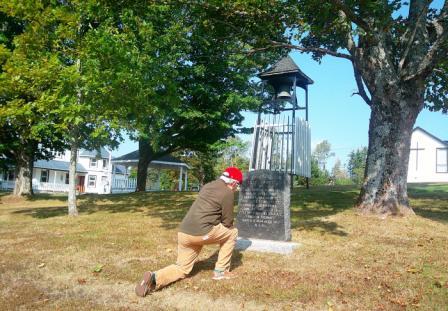
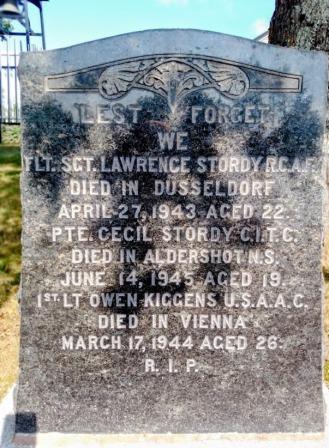
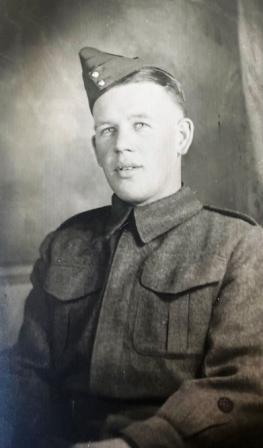
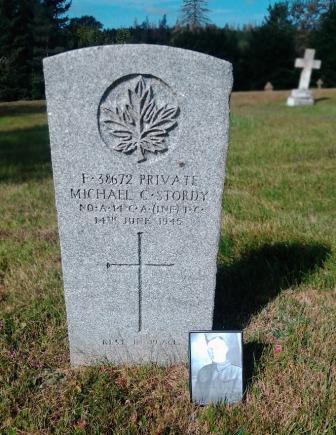
 4 countries, 6 weeks, 7,000 km – an unforgettable war memorial journey in Europe…. Daria’s book ‘No Soldier Buried Overseas Should Ever Be Forgotten‘ is available in print and e-book formats. Net proceeds of book sales help support research costs and the cost of maintaining this blog. For more information see https://nosoldierforgotten.com/
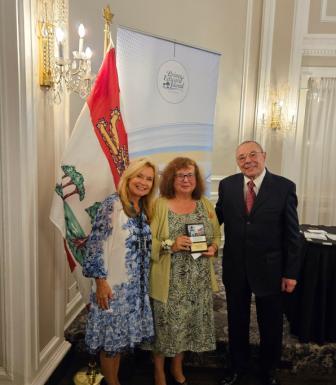
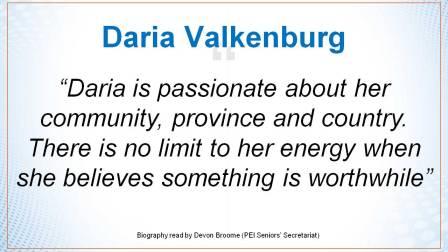
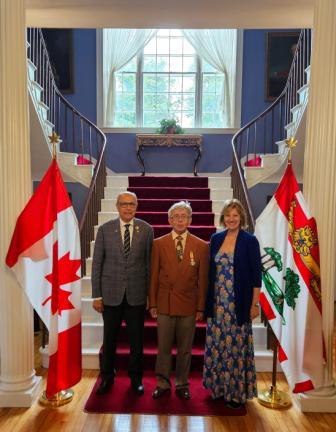

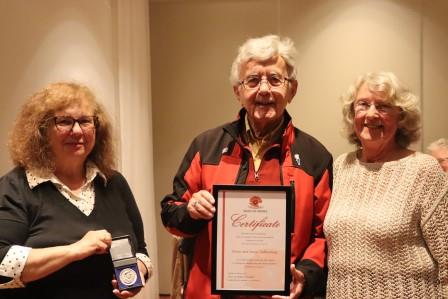
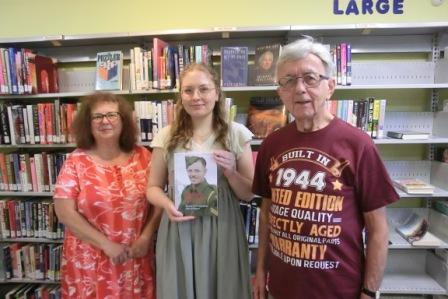
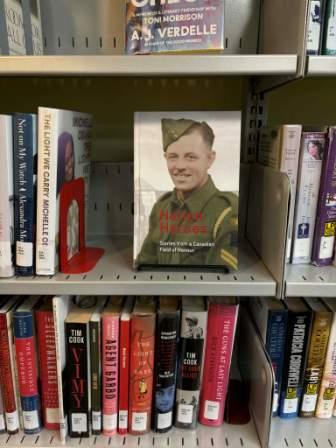
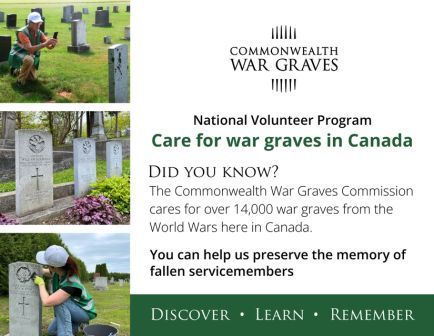
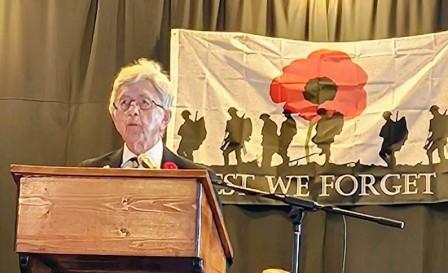
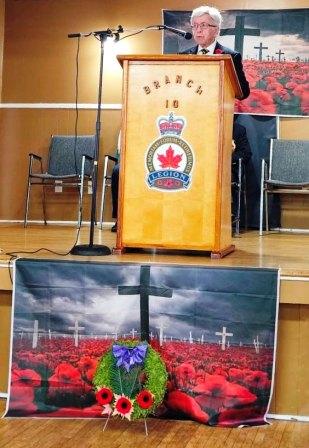



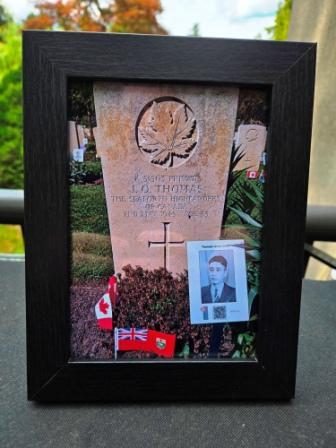
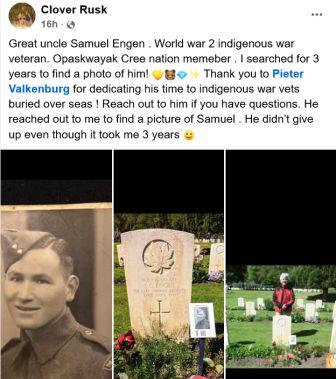

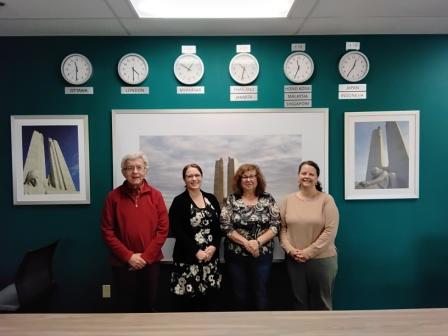
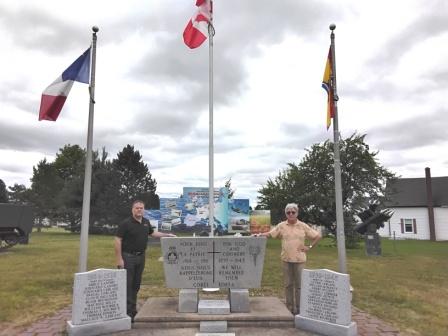


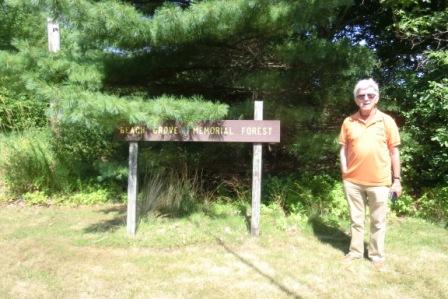

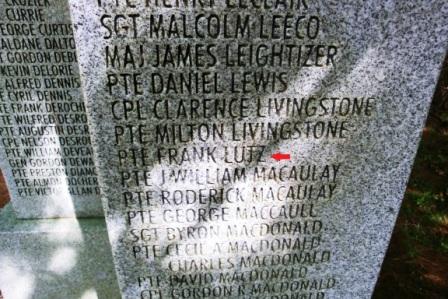
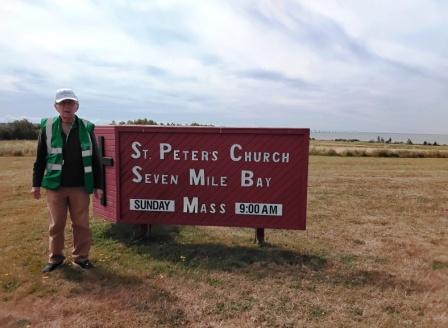


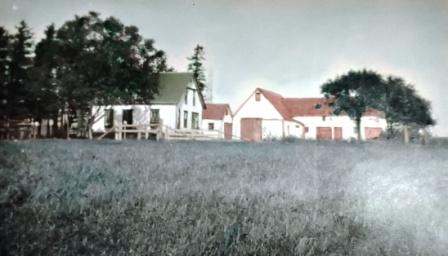
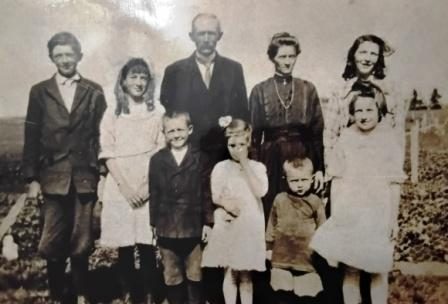
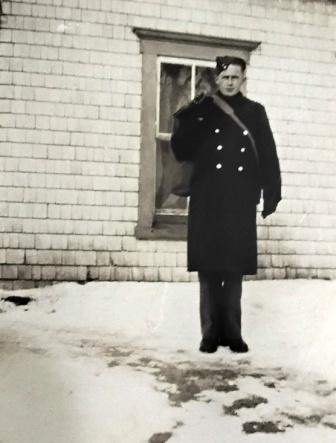

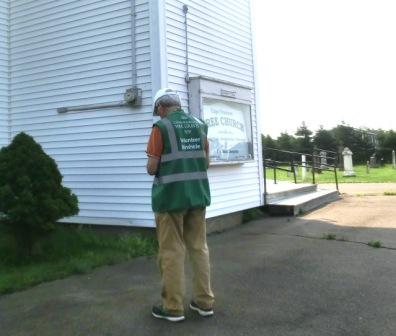
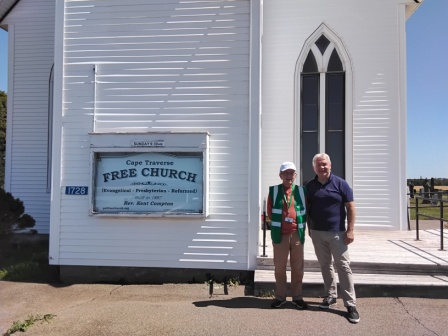

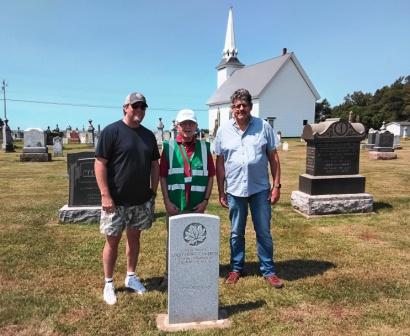


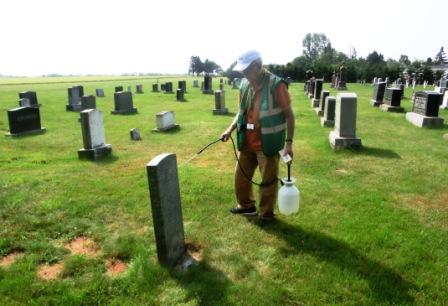
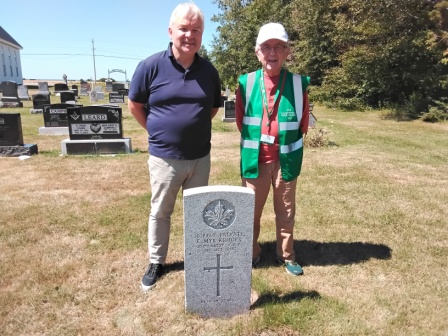
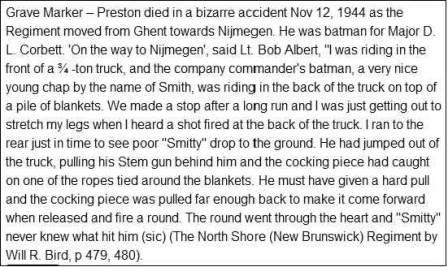


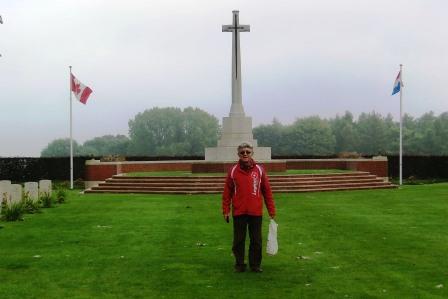


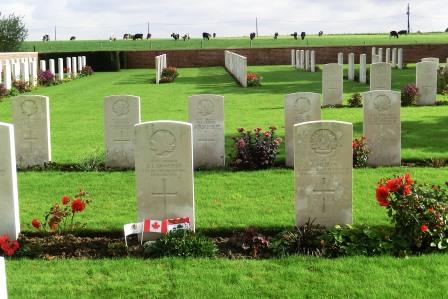


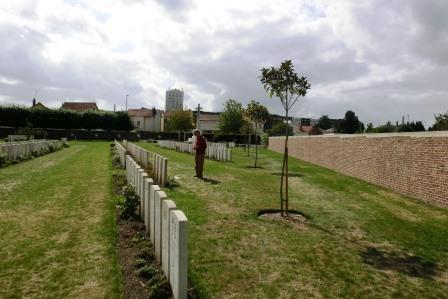
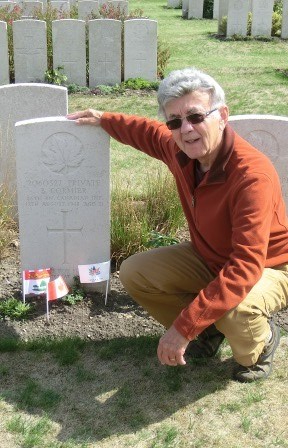

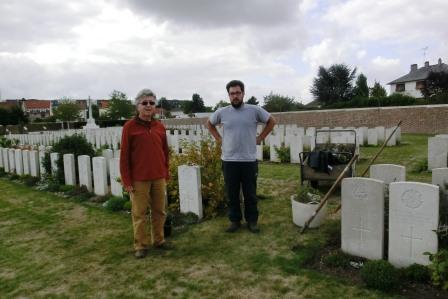

 On The War Memorial Trail Research Project........ with Pieter and Daria Valkenburg