On The War Memorial Trail…..A Tragic Drowning On The Leda River in Germany – Part 1

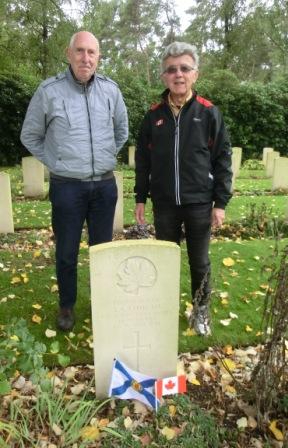
May 15, 2021.  When we visited the Canadian War Cemetery in Holten in October 2019, we laid flags down at the graves of five Canadian soldiers who drowned in a tragic accident in the Battle of Leer in Germany on April 28, 1945, one of the final actions to end WWII in Europe.

(See https://onthewarmemorialtrail.com/2019/10/08/on-the-war-memorial-trail-our-2019-visit-to-the-canadian-war-cemetery-in-holten/)

…5 North Nova Scotia Highlanders Drowned….

These 5 soldiers, all from the North Nova Scotia Highlanders Regiment, were:

  • Joseph ‘Ambroise’ COMEAU, age 22, of Saulnierville, Nova Scotia
  • Lewis Wilkieson MARSH, age 19, of Sydney Mines, Nova Scotia
  • Ruel Kitchener MATHESON, age 29, of Charlottetown, Prince Edward Island
  • Lloyd William MURRAY, age 28, of Tatamagouche, Nova Scotia
  • Howard Milo NICHOLLS, age 21, of Mattawa, Ontario

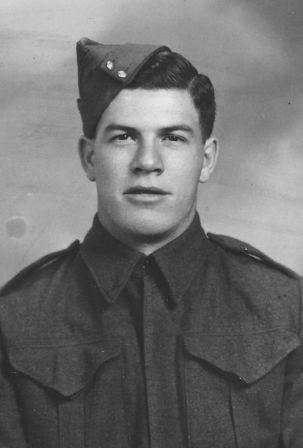
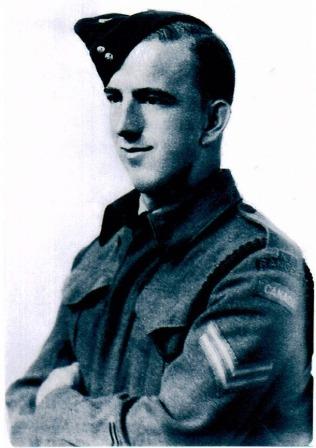
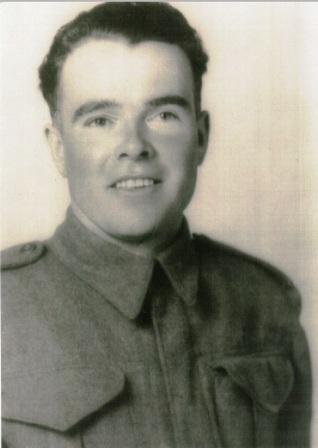
This tragedy became known to us when the people at the Holten Canadian Cemetery Information Centre asked for help in finding family of these soldiers as part of their project to put a face to every name on each gravestone.

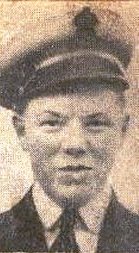
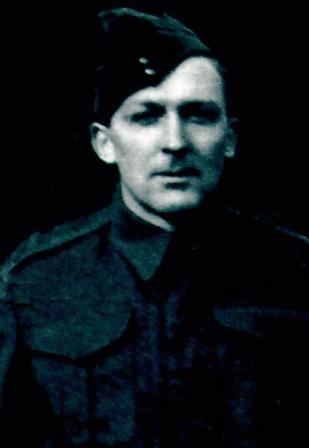
Two families immediately came forward – the Comeau family in Nova Scotia shared information about Joseph ‘Ambroise’ COMEAU, as did the nephew of Lloyd William MURRAY.

Joseph ‘Ambroise’ Comeau.  (Photo courtesy of niece Simone Comeau)

Lloyd William Murray.  (Photo courtesy of Murray Baillie)

…Operation Duck…

Putting faces to names made us want to know more about what happened in this event with the aptly named codename Operation Duck (See https://codenames.info/operation/duck-iii/).

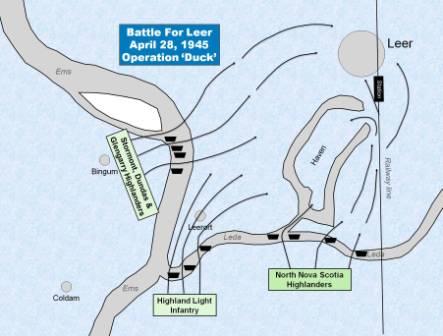
The plan? The North Nova Scotia Highlanders would cross the Leda River in assault boats and secure the northern bank of the river in preparation for the attack to capture Leer. The Highland Light Infantry of Canada would cross the Leda River, where the Ems and Leda rivers meet. The Stormont, Dundas and Glengarry Highlanders would go across the Ems River towards the western edge of Leer.

These three Regiments were part of the 9th Canadian Infantry Brigade.  (See https://www.canadiansoldiers.com/history/battlehonours/northwesteurope/leer.htm)

Map showing the Ems and Leda Rivers, and position of Regiments during the Battle for Leer.  (Map courtesy of and ©Jan Braakman)

In a translated excerpt from the recently published book ‘Holtense Canadezen’ (The Faces Of Holten) by Jan Braakman, we learned that the North Novies were not the only Regiment to have had casualties.  The men from the Highland Light Infantry all crossed safely, but 19 men from the Stormont, Dundas & Glengarry Highlanders didn’t.

…Why Operation Duck Was Important…

Jan Braakman’s account explained why Operation Duck was important. “…At the end of April 1945, Canadian troops stood just across the Dutch-German border in Ostfriesland (East Frisia in Germany) in front of the river Ems. The town of Leer was on the other side of the river on the route to Emden. Surrounded by inaccessible lowlands in the north and with rivers (Ems and Leda) in the west and south, Leer was a well defensible and therefore difficult to capture port city. All access bridges over the Ems and Leda were blown up by the Germans. For the Canadians there was no other option than to reach the city by water….

River crossings can be tricky due to currents and tides, and in wartime, there is always the risk of enemy fire.  “….The Ems River has an open connection with the Wadden Sea, which means that tides influence water levels and currents in the river. Tides made the currents unpredictable, and the Canadian Army didn’t have accurate information about the tides. What was clear: high tide was the best time to make the crossing. Aerial photographs showed that German troops had fortified themselves well behind the dikes that surrounded the city…. 

A decision was made on how to cross the two rivers – the Leda and the Ems.. “ Only under the protection of a smoke screen and solid artillery support would it be possible to successfully complete the attack on Leer, using boats … General Simonds ordered that on April 28, 1945, before darkness fell, there had to be a solid bridgehead, from which the capture of Leer could be initiated. That meant that the attack had to be launched during the middle of the day, around three o’clock, when the water level was at its highest… 

The Highland Light Infantry crossed safely, but the other two regiments ran into trouble.  “…The crossing was made at three different places. At the same time, artillery fire and attacks from the air put the German defence line to the test. The North Nova Scotia Highlanders would cross the Leda from the south bank and take the harbour of Leer, which abutted the city on a peninsula...

 ….Panic Led To Tragedy….

Things didn’t go as planned.  3 sets of assault boats used by the North Nova Scotia Highlanders set off at 15:45 hours on April 28.  In ‘No Retreating Footsteps… the story of the North Novas’ by Will Bird, he explained that “…9 men were allotted to a boat at the river crossing.  Two men in each were operating these boats which used outboard motors….

In each boat were 7 North Novies and two boat operators from the Royal Canadian Engineers.  “…. C Company, commanded by Major Winhold, had moved off from Driever …. with Thirteen Platoon leading, then…. Fourteen Platoon under Lt S Laskin and Fifteen under Lt McGlashen…

Unfortunately for the men in the boat from Fifteen Platoon, one of the Engineers didn’t have nerves of steel.  “…Just as the craft were launched some shelling began and the young Engineer at the motor of the boat ….. became very excited.  His mate shouted at him not to turn on full power as the heavy load would sink when the motor dipped, but a shell landed quite near and the nervous man gave the motor the gun, sinking the boat at once…

Five of the North Novies drowned.  Lt McGlashen managed to save himself and another man.  Men were not the only casualties.  “…Fifteen Platoon had been chosen to lead the attack, but most of its weapons were lost…

What a tragic accident!  To see what an assault boat looks like, take a look at this short YouTube video, which shows troops preparing to cross the Ems:

…. to be continued…..

In Part 2 the aftermath of the accident is discussed and we’ll learn about the men who drowned.

Thank you to Jan Braakman for permission to quote from his book and use of the map showing the position of the Regiments, and to Simone Comeau and Murray Baillie for sharing photos.

If you have information to share about these or any Canadian soldiers buried in The Netherlands, please contact Pieter at memorialtrail@gmail.com or comment on the blog. 

© Daria Valkenburg

…Want to follow our research?…

If you are reading this posting, but aren’t following our research, you are welcome to do so.  Our blog address: https://onthewarmemorialtrail.com/

Front cover OnTheWarMememorialTrailinEurope4 countries, 6 weeks, 7,000 km – an unforgettable war memorial journey in Europe…. Daria’s book ‘No Soldier Buried Overseas Should Ever Be Forgotten‘ is available in print and e-book formats.  Net proceeds of book sales help support research costs and the cost of maintaining this blog. For more information see https://nosoldierforgotten.com/

You are also invited to subscribe to our YouTube Channel: On The War Memorial Trail With Pieter Valkenburg: https://www.youtube.com/channel/UCJ591TyjSheOR-Cb_Gs_5Kw.

Never miss a posting!  Subscribe below to have each new story from the war memorial trail delivered to your inbox.

On The War Memorial Trail….. Atlantic Canada Remembers – Part 9

April 15, 2021. More of the photos submitted by Atlantic Canadians of soldiers buried overseas are featured in Part 9. Pieter is ensuring that every email is acknowledged, and that the photos of soldiers buried in The Netherlands are forwarded to the appropriate cemetery for their digital archives.

Soldiers buried at the Canadian War Cemetery in Holten, The Netherlands

Alexis Daigle (Photo submitted by Gilberte Manuel)

After being contacted by Marc Comeau, President of Royal Canadian Legion Branch 45 in Tracadie, New Brunswick, Gilberte Manuel submitted a photo of Alexis D.  DAIGLE on behalf of “…Alfrida Richard, the niece of Alexis Daigle of Pointe-Sapin….

Born March 2, 1920 in Lower Spain, New Brunswick, the son of Dominique Daigle and Exelda Mazerolle, Alexis was a fisherman before enlisting in Fredericton on August 28, 1941.  After completing basic training, he was attached to the Canadian Army (Basic) Training Centre in Montmagny, Quebec on a Home War Established (HWE) basis as an engineer’s helper.

His service file noted that he was a “jack of all trades…” and could speak both French and English.  He was described as a “…quiet and non-talkative single young man of above average intelligence...”

In January 1945 he arrived in the United Kingdom and assigned to the Canadian Infantry Training Regiment (CITR).  A month later, on February 24, 1945, he was sent to continental Europe, and on March 1, 1945 transferred to Le Régiment de la Chaudière.

On April 6, 1945, while serving with Le Régiment de la Chaudière in The Netherlands, Alexis was killed in action (‘mort au champ d’honneur‘) near Zutphen, during the Battle of Zutphen.  (For more information on this battle, see https://www.canadiansoldiers.com/history/battlehonours/northwesteurope/zutphen.htm)

According to the Regiment’s war diary for April 1945, the Battalion had “…proceeded on foot to a concentrated area just past Almen, approximately 3 miles short of Zutphen…..”  where they rested until the start of an operation which began “…on the night 5-6 April…

The attack started at 4:30 am. “… Only slight opposition was encountered up to the outskirts of the town of Zutphen. The objective was C and D companies to seize the ground in between the main highway leading to town and the first row of houses….

Alexis was in D Company and it’s likely that he lost his life in what happened next.  “…. Between the starting line and the objective there was a canal on which both leading companies were stopped for almost two hours.  First opposition was then encountered from well-sited snipers, machine gun nests, and bazookas...

Alexis was one of 4 soldiers in the Regiment killed in that operation.  The others were:

  • V. PARE (D Company)
  • S. BOUCHARD (D Company)
  • E. PARADIS (C Company)

Alexis was temporarily buried in Almen, and later reburied in in the Canadian War Cemetery in Holten.

Mathieu Michaud. (Photo submitted by the Grand Falls branch of the Royal Canadian Legion)

Patrick Côté of the Royal Canadian Legion, Branch 21 in Grand Falls, New Brunswick, submitted a photo of Mathieu MICHAUD. Born November 11, 1921 in Drummond, New Brunswick, he was the son of Achille Michaud and Fébronie Laforest.

Patrick provided a translated excerpt from a book, ‘Military Heritage – The Greater Grand Falls Region’, by Jean-Guy Plourde, which explained that “….wanting to emulate his older brother Laurent, he enrolled in the army on December 3, 1942, and received training in Fredericton. From March 10 to July 24, 1943, he was in Valcartier, Quebec before becoming a gunner. The authorities assigned him to Goose Bay, Labrador from August 1, 1943 to June 30, 1944. From November 30, 1944, he made a two week stay in Sorel, Quebec before embarking for the great adventure. On January 10, 1945, he made the crossing to the United Kingdom where he was stationed until March 1, 1945….

In the UK he was assigned to the Canadian Infantry Training Regiment (CITR).  On March 2, 1945 he left for Northwest Europe, and then transferred to Le Régiment De La Chaudière on March 21, 1945.

He was killed in action (‘mort au champ d’honneur‘) in The Netherlands while part of the Regiment’s Company C and died on April 8, 1945.  According to the Regiment’s war diary, the Battle of Zutphen had ended on April 7 but continued to encounter sniper fire.  Mathieu was one of two soldiers from Company C that died that day.  The other soldier was H. A. MARCHAND.

Like Alexis Daigle, Mathieu was temporarily buried in Almen, before being reburied in the Canadian War Cemetery in Holten.

Soldiers buried at the Canadian War Cemetery in Groesbeek, The Netherlands
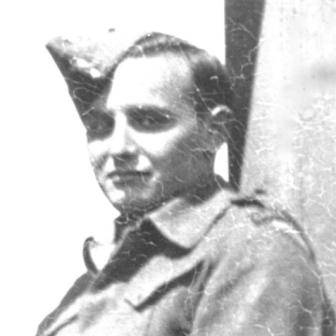
Elbridge Wellington Miller. (Photo courtesy of Elbridge Wellington Miller Family)

Wilmot Tompkins submitted a photo, explaining that “…This is Elbridge Wellington Miller, my great-uncle, buried in Groesbeek. My wife found your interview and your blog while searching for the place my great-uncle lost his life…” Wilmot had seen a list of 28 men listed as having lost their lives in Keppeln, in a posting about a video plea for a photo of Frank MCGOVERN.  (See https://bordencarletonresearchproject.wordpress.com/2020/12/09/the-search-for-a-photo-of-frank-edward-mcgovern-moves-to-youtube/)

Elbridge Wellington MILLER was born in Deerville, New Brunswick, the son of David W and Elizabeth Miller, and was a labourer before enlisting on December 3, 1942 in Fredericton.  By April 4, 1943 he was in the United Kingdom. On August 19, 1943 he was transferred to the North Shore (New Brunswick) Regiment.

Serving with the North Shore (New Brunswick) Regiment, he landed in France on D-Day (June 6, 1944) and was wounded by shrapnel in the left thigh and right ankle during the Battle of the Scheldt on October 13, 1944, resulting in a recovery period in England before rejoining his unit a month later.

He lost his life on February 26, 1945 in Germany during the Battle of Keppeln, during Operation Blockbuster, the last part of Operation Veritable. (For more information, see https://en.wikipedia.org/wiki/Operation_Blockbuster and https://en.wikipedia.org/wiki/Operation_Veritable)

Eldridge was one of 28 men killed in action that day, as was explained in the posting about Frank McGovern. Another of these soldiers was Barney MCGUIGAN. (For his story, please see https://onthewarmemorialtrail.com/2020/08/07/on-the-war-memorial-trail-the-search-for-barney-reuben-mcguigan/)

Like Frank McGovern and Barney McGuigan, Eldridge was temporarily buried in the Bedburg Military Cemetery, and then later reburied in the Canadian War Cemetery in Groesbeek.

Alphonse Robert.  (Photo courtesy of the Robert Family)

Armel ‘Mel’ Lanteigne, President of the Caraquet branch of the Royal Canadian Legion, submitted a photo of Alphonse ROBERT on behalf of the Robert family.  Alphonse came from a family of “…9 children…” Mel wrote, “…one died at an early age.  His father Amédée was a veteran of WW1 and after returning to Caraquet, his job was lighthouse keeper on Caraquet’s island, where he lived with his family….

Born October 23, 1923 in Caraquet, Alphonse was the son of Amédée and Alma Robert, and was a fisherman before enlisting on August 23, 1943.

In January 1945 he was in the United Kingdom, assigned to the Canadian Infantry Training Regiment (CITR).  On March 28, 1945 he was transferred to North West Europe and was serving with Les Fusiliers Mont-Royal when he lost his life on March 30, 1945 in Germany.

Alphonse was temporarily buried in Germany, and later reburied in the Canadian War Cemetery in Groesbeek.  NOTE:  For an update to this story, please see: https://onthewarmemorialtrail.com/2021/10/12/on-the-war-memorial-trail-an-update-on-the-story-of-ww2-soldier-alphonse-robert/

Thank you to Marc Comeau, Patrick Côté, Armel ‘Mel’ Lanteigne, Gilberte Manuel, Alfrida Richard, and Wilmot Tompkins for sharing photos and anecdotes.  Atlantic Canadians remember their loved ones who are buried overseas.

More photos and stories in Atlantic Canada Remembers – Part 10! To share photos or information, please email Pieter at memorialtrail@gmail.com, comment on the blog, or tweet to @researchmemori1.

© Daria Valkenburg

…..Previous postings in the Atlantic Canada Remembers series….

Missed the previous postings in this series? See:

…..Want to follow our research?….

If you are reading this posting, but aren’t following the blog, you are welcome to do so. Our blog address: https://onthewarmemorialtrail.com/
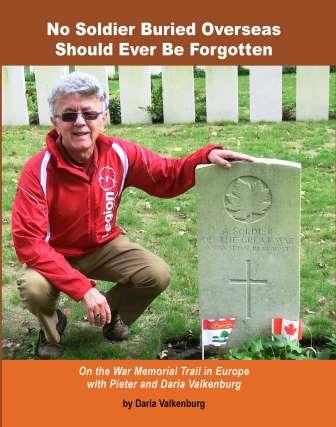
Front cover OnTheWarMememorialTrailinEurope4 countries, 6 weeks, 7,000 km – an unforgettable war memorial journey in Europe…. Daria’s book ‘No Soldier Buried Overseas Should Ever Be Forgotten‘ is available in print and e-book formats.  Net proceeds of book sales help support research costs and the cost of maintaining this blog. For more information see https://nosoldierforgotten.com/

You are also invited to subscribe to our YouTube Channel: On The War Memorial Trail With Pieter Valkenburg: https://www.youtube.com/channel/UCJ591TyjSheOR-Cb_Gs_5Kw.

Never miss a posting!  Subscribe below to have each new story from the war memorial trail delivered to your inbox.

On The War Memorial Trail….. Atlantic Canada Remembers – Part 8

March 16, 2021. More of the photos submitted by Atlantic Canadians of soldiers buried overseas are featured in this posting. Pieter is ensuring that every email is acknowledged, and that the photos of soldiers buried in The Netherlands are forwarded to the appropriate cemetery for their digital archives.  Thank you to the members of Royal Canadian Legions in Nova Scotia and New Brunswick for their help.

Soldiers buried at the Canadian War Cemetery in Holten, The Netherlands

Fryday published in Toronto Newspaper

George Albert Fryday.  (Photo submitted by Marion Fryday-Cook.)

Marion Fryday-Cook, President of the Royal Canadian Legion’s Nova Scotia/Nunavat Command, submitted a photo of George Albert FRYDAY, explaining that “I am a relative of Rifleman George A. Fryday, Service Number B/136751, who is buried in Holten Canadian War Cemetery, Netherlands.  He was born in Toronto, Ontario. Thank you for honouring our fallen….” 

At the age of 15, George joined the Merchant Marine, and later the Royal Canadian Navy Volunteer Reserve.  However, once it was established that he was under age, he was discharged.  At the age of 17, he enlisted in the Canadian Army and was sent overseas in December 1944.  He was serving in the Queen’s Own Rifles Regiment when he lost his life on May 4, 1945, aged 19. 

Frederick Joseph Tait

Frederick Joseph Tait. (Photo submitted by the Grand Falls branch of the Royal Canadian Legion)

Patrick Côté of the Royal Canadian Legion, Branch 21 in Grand Falls, New Brunswick, submitted a photo of Frederick Joseph TAIT, born April 26, 1921 in Grand Falls, New Brunswick, the son of Herbert Henry Tait and Louise Emeline Leclair.

Patrick referenced a book, ‘Military Heritage – The Greater Grand Falls Region’, by Jean-Guy Plourde, which explained that “…. Prior to the war, he worked in a grocery store…”  Before enlistment on February 1, 1943 in Fredericton, he served in the New Brunswick Cadet Corps, and had been an Instructor in Infantry Training with the 2nd Carleton & York Regiment since 1940.

According to the Personnel Selection Record of his service file, he was fluent in both French and English and was assessed as “…good NCO instructor material…”  (NCO refers to Non-Commissioned Officer.)  He had a “…confident bearing…” and “…stability above average….” Unfortunately, his educational background was “…not high enough for commissioned rank…” 

After being deployed overseas in December 1943 he served in Sicily, where he fell ill and was hospitalized for 8 months.  After being released from hospital, he “…went on leave to England….” Over Christmas 1944 he was able to meet his brother Clair, also with the Canadian Army.

Clair survived WWII but Frederick didn’t.  While serving with the Carleton & York Regiment as the unit advanced to the Apeldoorn Canal in The Netherlands on April 15, 1945, he lost his life and was temporarily buried in Posterenk, near Zutphen.

CIMG9297 Sep 25 2017 Edwin and Pieter with CYR list

Edwin van der Wolf and Pieter in Posterenk in 2017.  Pieter holds up a list of the 6 Carleton & York Regiment soldiers who were temporarily buried in the village.  (Photo credit: Daria Valkenburg)

In September 2017, Pieter and I visited the village of Posterenk with Edwin van der Wolf, one of the research volunteers at the Canadian War Cemetery in Holten.  Edwin explained that “… the Carleton & York Regiment came from Italy to Marseilles, and then into The Netherlands where, on April 13, 1945, the village of Posterenk was liberated.  Six soldiers from the Regiment were buried here temporarily….” 

Edwin gave us a list of the 6 soldiers from the Carleton & York Regiment who were temporarily buried in the village.  Frederick Joseph Tait was one of these men!

Posterenk list of 6 CYR members

List of 6 Carleton & York Regiment soldiers temporarily buried in Posterenk in 1945.

Soldiers buried at the Canadian War Cemetery in Groesbeek, The Netherlands

Photo Burgess Porter

Burgess Allison Porter.  (Photo submitted by Everett Dalton)

Everett Dalton submitted a photo of Burgess Allison PORTER, writing that Burgess was “…the son of Annie ‘Laura’ (nee Porter) McCall…Born October 2, 1922 in Grafton, Nova Scotia, his mother died when he was 2 years old.  Although his biological father, Reg McCall was still alive, it was his mother’s wish that her son be raised by “…Frank Oscar and Lennie Alma (nee Pineo) Porter….”  

While not formally adopted, he was raised by them and was known by the surname Porter. His service file identifies Frank and Lennie Porter as his grandparents. 

Born October 2, 1922, Burgess was from Grafton, Nova Scotia, and a store clerk before he enlisted in Halifax on April 14, 1941.  On January 20, 1942 he arrived in the United Kingdom as part of the Artillery Holding Unit, and in April 1942 was attached to the 4th Field Regiment of the Royal Canadian Artillery as a bombardier. 

On July 7, 1944 his unit landed in France, and unfortunately Burgess was killed on February 21, 1945 in Germany and was temporarily buried in Bedburg, Germany.

Soldiers buried at the Canadian War Cemetery in Bergen Op Zoom, The Netherlands

Clayton Wilfred Shannon virtual war memorial BoZ

Clayton Wilfred Shannon.  (Photo from Canadian Virtual War Memorial)

Patrick Côté of the Royal Canadian Legion, Branch 21 in Grand Falls, New Brunswick sent the link to the Canadian Virtual War Memorial page for Clayton Wilfred SHANNON, who had served with the Calgary Highlanders and lost his life on September 22, 1944.

Patrick referenced a book, ‘Military Heritage – The Greater Grand Falls Region’, by Jean-Guy Plourde, which explained that Clayton, born August 2, 1920 in Grand Falls, the son of Frederick Herman Shannon and Bertha Mulherin, “…was musically inclined… playing guitar and singing.  Before his army service, he had even made a couple of records….

In 1940 “…with his cousin, Adrien Mulherin, he left home to enlist in the Carleton & York Regiment….”   After serving 4 years in Canada, he went overseas “…in July 1944, with the Calgary Highlanders…. While in combat near the border of Holland and Belgium, Clayton was killed, only a few weeks after arriving in Europe…

Clayton lost his life in Belgium during the Battle of the Scheldt, and was initially buried in Wommelgem, on the outskirts of Antwerp, one of 11 members of the Calgary Highlanders buried there before being reburied in Bergen Op Zoom. (For more information on what happened in Wommelgem, see https://onthewarmemorialtrail.com/2021/02/13/on-the-war-memorial-trail-the-search-for-soldiers-who-died-in-wommelgem-belgium-in-fall-1944/)

Gregory P. A. McCarthy (2)

Gregory Philip Anthony McCarthy.  (Photo submitted by the Grand Falls branch of the Royal Canadian Legion)

Patrick Côté of the Royal Canadian Legion, Branch 21 in Grand Falls, New Brunswick, submitted a photo of Gregory Philip Anthony MCCARTHY, born February 28, 1922 on a farm in California Settlement in Grand Falls, son of Thomas and Agnes McCarthy. 

Patrick referenced a book, ‘Military Heritage – The Greater Grand Falls Region’, by Jean-Guy Plourde, which explained that Gregory “…was the youngest of 11 children….He had …. helped on the farm for 8 years and also worked in lumbering prior to his enlistment…. On 26 March 1941 Gregory enlisted in the Canadian Army at Woodstock, NB…

After completing his basic training, he was “… transferred to the 1st Battalion New Brunswick Rangers….on 19 May 1941….”  After a promotion to Lance Corporal on December 1, 1941 he went to Labrador as a Driver Mechanic. 

On September 10, 1943 he left for the United Kingdom “… where he completed a mortar course and remained until his deployment to France with the 10th Independent Machine Gun Company, NB Rangers, arriving on 22 July 1944….

His commanding officers described him as “…dependable, reliable, and well-thought of in his unit….”  While serving in Germany and The Netherlands, he was a member of a mortar detachment responsible for engaging the enemy. On January 19, 1945, near Waalwijk in The Netherlands, their own mortar misfired and exploded, causing 3 members of the team to be seriously wounded, with fatal consequences for Gregory.  He was initially buried in Tilburg.

Thank you to Patrick Côté, Everett Dalton, and Marion Fryday-Cook for sharing photos and anecdotes.  Atlantic Canadians remember their loved ones who are buried overseas.

More photos and stories in Atlantic Canada Remembers – Part 9! To share photos or information, please email Pieter at memorialtrail@gmail.com, or comment on the blog. 

© Daria Valkenburg

…..Previous postings in the Atlantic Canada Remembers series….

Missed the previous postings in this series? See:

…..Want to follow our research?….

If you are reading this posting, but aren’t following the blog, you are welcome to do so.  Our blog address: https://onthewarmemorialtrail.com/

Front cover OnTheWarMememorialTrailinEurope4 countries, 6 weeks, 7,000 km – an unforgettable war memorial journey in Europe…. Daria’s book ‘No Soldier Buried Overseas Should Ever Be Forgotten‘ is available in print and e-book formats.  Net proceeds of book sales help support research costs and the cost of maintaining this blog. For more information see https://nosoldierforgotten.com/

Screenshot_2021-02-27 On The War Memorial Trail With Pieter Valkenburg

You are also invited to subscribe to our YouTube Channel: On The War Memorial Trail With Pieter Valkenburg: https://www.youtube.com/channel/UCJ591TyjSheOR-Cb_Gs_5Kw

Never miss a posting!  Subscribe below to have each new story from the war memorial trail delivered to your inbox.
On The War Memorial Trail….. Atlantic Canada Remembers – Part 7

February 22, 2021. We continue to feature more of the photos submitted by Atlantic Canadians of soldiers buried overseas. Pieter is ensuring that every email is acknowledged, and that the photos of soldiers buried in The Netherlands will be forwarded to the appropriate cemetery for their digital archives.  Thank you to the various members of Royal Canadian Legions in Nova Scotia and New Brunswick for their help.

The volunteers at all three Canadian War Cemeteries in Holten, Groesbeek, and Bergen Op Zoom are now active, and Pieter has received wish lists for photos from all three cemeteries.  Submissions for soldiers buried in municipal cemeteries are being held until Pieter gets the go-ahead that those volunteers are active again.

Soldiers buried at the Canadian War Cemetery in Holten, The Netherlands

Ken Dennis of Yarmouth let us know about the Wartime Heritage Association website, which features some of the soldiers from the area who served in WW2.  One of the profiles, written by Flip Jonkman, was of a soldier on the photo wish list of the Canadian War Cemetery in Holten…. Brenton Leroy RINGER. (See http://wartimeheritage.com/whaww2ns2/wwii_ringer_brenton_leroy.htm)

Born on March 22, 1925 in Northfield, Nova Scotia, the son of Ralph and Alberta Ringer of Clementsport, he was an electrician’s helper when he enlisted, at age 18, with the North Nova Scotia Highlanders in Halifax on January 17, 1944.  He later transferred to the 10th Armoured Regiment on March 27, 1945, and lost his life on April 12, 1945 during the liberation of Heino, The Netherlands, when the Sherman tank he was in was hit on the road to Zwolle. 

There were 5 men in the tank, with one survivor.  The survivor knocked on the door of a nearby farmhouse to ask for help, the home of Flip Jonkman’s parents.  Flip was not born at the time, but always remembered the story, and in 2020, was instrumental in getting a memorial stone placed near the site of the attack.  (See the article in Dutch for more information: https://www.destentor.nl/raalte/vurige-wens-in-vervulling-voor-flip-jonkman-73-uit-heino-nu-gedenksteen-is-geplaatst~a694b86d/?referrer=https%3A%2F%2Fduckduckgo.com%2F)

Another of the names on the photo wish list for the Canadian War Cemetery in Holten was found on the Wartime Heritage Association website…. that of Louis Graham RICHARD. (See http://wartimeheritage.com/whaww2ns/wwii_richard_louis_graham.htm)

Born February 13, 1918, the son of Raphael Daniel and Mary Ann Richard of Londonderry, Nova Scotia, Louis was a store clerk before enlisting with the No 2 Canadian Armed Corps in Halifax on February 17, 1943 as a trooper.  On October 14, 1944 he was sent to the United Kingdom, and then on March 31, 1945 to Western Europe with the 9th Armoured Regiment (BC Dragoons).  

Louis was killed in action in The Netherlands during the Battle of Delfzijl Pocket on April 26, 1945, at the age of 27, and was temporarily buried in Wirdum in the province of Groningen, The Netherlands before being reburied in the Canadian War Cemetery in Holten. (For more information on this battle, see https://www.canadiansoldiers.com/history/battlehonours/northwesteurope/delfzijlpocket.htm)

Soldiers buried at the Canadian War Cemetery in Groesbeek, The Netherlands

Percy Clayton Cromwell photo only

Percy Clayton Cromwell.  (Photo submitted by Ken Dennis)

Ken Dennis submitted a photo of Percy Clayton CROMWELL, explaining that “…I am a member of the Yarmouth Branch 61 Legion…” After receiving a wish list of photos from Pieter, he noticed one name from Yarmouth, Nova Scotia.  “…Having been shown this email, I decided to trace his local roots…

…He was a labourer, then for CP out of the Halifax area and upon enlisting moved his family to Yarmouth where they grew up….” CP refers to the Canadian Pacific Railway.

Percy was born in Yarmouth on February 12, 1914, the son of James Alfred and Annie May Cromwell.  He enlisted with the West Nova Scotia Regiment in Aldershot, Nova Scotia on May 14, 1940.

Percy was with the Royal Canadian Electrical and Mechanical Engineers when he drowned in The Netherlands on February 8, 1945.  He’d been on guard duty along a canal in the Dutch province of Brabant on a very dark, windy, and rainy night, and it would have been very easy to lose his bearings and accidentally fall into the canal.  His body was not found until March 12, 1945.  He left behind a wife, Lillian Beryl, and four children. 

Frank Lewis Libby photo only

Francis Lewis Libby. (Photo from the New Brunswick Military Recognition Booklet)

Kent Caldwell, a member of the Royal Canadian Legion in New Brunswick, sent an entry on Francis ‘Frank’ Lewis LIBBY from one of the annual issues of the New Brunswick Military Recognition Booklet, explaining that the photo was a copy from a newspaper clipping.  The entry stated that “…Francis served with the Calgary Highlanders in England and Northwest Europe.  He was killed in The Netherlands in 1945…” 

Francis was born February 21, 1918 in Milltown, New Brunswick, the son of Clifford and Mary Christine Libby.  Before enlisting on July 25, 1941, he worked at the Canadian Cottons Plant in Milltown.  On October 4, 1941, he married Dorothy Louise Caswell.  He and Dorothy had a son Francis Brian in 1944 while he was overseas in Europe, and where he transferred to the Calgary Highlanders in September 1944. Francis lost his life on January 5, 1945 after being killed along the Dutch-German border. He was temporarily buried in Nijmegen, before his reburial, on July 30, 1945, in Groesbeek.

Hiram Albion Lord photo only

Hiram Albion Lord. (Photo from the New Brunswick Military Recognition Booklet)

Kent Caldwell, a member of the Royal Canadian Legion in New Brunswick, also sent an entry on Hiram Albion LORD from one of the annual issues of the New Brunswick Military Recognition Booklet, explaining that the photo was a copy from a newspaper clipping.  The entry stated that “…Hiram served with the North Shore (New Brunswick) Regiment during the Second World War and was killed in action in 1945…” 

Born November 7, 1924 in Lords Cove, Deer Island, New Brunswick, the son of Minnie Smith, Hiram was a fisherman before enlisting on November 4, 1943 and served in Canada until his arrival in the United Kingdom on July 21, 1944.   On August 17, 1944 he went with his unit to Western Europe and lost his life on January 8, 1945 near Nijmegen, The Netherlands.

Stanley Spray

Stanley Spray. (Photo submitted by Royal Canadian Legion Branch #20 in Digby)

Donna Flaherty, President of Royal Canadian Legion Branch #20 in Digby, Nova Scotia, submitted a photo of Stanley SPRAY, writing “…This picture hangs on our Memorial Wall….

Born April 24, 1913 in Nottinghamshire, England, the son of Edgar and Edith Spray, Stanley immigrated to Canada, and settled in Digby, Nova Scotia, where he ran a small farm and worked for J. J. Wallis as a printer before his enlistment on July 6, 1940 with the 52nd Anti-Tank Battery.  He was married to Alda May and the father of two daughters, Jean Carolyn and Joan Carol. 

He received several promotions, and was a battery quartermaster sergeant with the Royal Canadian Artillery when WW2 ended.  Stanley lost his life in a tragic vehicle accident near Nijmegen, The Netherlands on July 23, 1945, when he was catapulted out of the back of an army truck that collided with an oncoming military vehicle.

Thank you to Kent Caldwell, Ken Dennis, and Donna Flaherty for sharing photos and anecdotes.  Atlantic Canadians remember their loved ones who are buried overseas. If you have a higher resolution photo of Percy Clayton Cromwell, Frank Lewis Libby, or Hiram Albion Lord, please send it in to us.

More photos and stories in Atlantic Canada Remembers – Part 8! To share photos or information, please email Pieter at memorialtrail@gmail.com, or comment on the blog. 

© Daria Valkenburg

…..Previous postings in the Atlantic Canada Remembers series….

Missed the previous postings in this series? See:

…..Want to follow our research?….

If you are reading this posting, but aren’t following the blog, you are welcome to do so.  Our blog address: https://onthewarmemorialtrail.com/

Front cover OnTheWarMememorialTrailinEurope4 countries, 6 weeks, 7,000 km – an unforgettable war memorial journey in Europe…. Daria’s book ‘No Soldier Buried Overseas Should Ever Be Forgotten‘ is available in print and e-book formats.  Net proceeds of book sales help support research costs and the cost of maintaining this blog. For more information see https://nosoldierforgotten.com/

You are also invited to subscribe to our YouTube Channel: On The War Memorial Trail With Pieter Valkenburg: https://www.youtube.com/channel/UCJ591TyjSheOR-Cb_Gs_5Kw

Never miss a posting!  Subscribe below to have each new story from the war memorial trail delivered to your inbox.
On The War Memorial Trail….. Atlantic Canada Remembers – Part 5

January 27, 2021. Responses to the news clips on CTV’s Atlantic Live At 5 on January 4 and 13 continue to come in.  As mentioned in the previous 4 parts, Pieter is ensuring that every email is acknowledged, and that the photos of soldiers buried in The Netherlands are forwarded to the appropriate cemetery for their digital archives.

This posting features more of the photos submitted…..

Soldiers buried at the Canadian War Cemetery in Holten, The Netherlands

William Herbert Bellamy

William Herbert Bellamy.  (Photo courtesy of the Bellamy Family)

On behalf of the Bellamy Family, Linda Fury submitted a photo of her uncle, William Herbert “Billy’ BELLAMY, explaining that ….There are about 150 members of our family now.  We hold reunions often and all know the story of our Uncle Bill.  He belonged to the North Nova Scotia Highlanders and died in January 1945 while a prisoner in Germany.  Thanks so much for all you have done and are continuing to do.  Your work is very much appreciated by all of us….

William Herbert ‘Billy’ was born on May 2, 1921 in Hereford, England, the son of Percy and Frances Bellamy.  In 1927 he immigrated to Canada with his family and settled in Midgic Station (now Midgic), New Brunswick.  Following his 18th birthday, he enlisted with the West Nova Scotia Highlanders on August 2, 1940 in Aldershot, Nova Scotia. On April 30, 1941 he transferred to the North Nova Scotia Highlanders, and was on his way to England in July 1941.

The North Nova Scotia Highlanders were among the troops to land in Normandy on D-Day on June 6, 1944.  Unfortunately, on June 7, 1944 he was captured by the Germans in Normandy and became a prisoner of war (POW).  On August 13, 1944 he arrived at Stalag XII A [Limburg an der Lahn, Hessen, a POW transit camp] and then, on August 26, 1944 was transferred to Stalag Camp VIII B [Lamsdorf, Oberschlesien] near the German-Polish border.  On November 2, 1944 he was sent to the work camp E 902 Delbrückschächte Hindenburg where, along with other POWs, he worked in a nearby coal mine.

According to an account that a former POW sent after the war to Billy’s father, Billy was seriously injured on January 1, 1945 when the mine ceiling collapsed.  He was taken to hospital in Hindenburg (now Zabrze and part of Poland).  However, according to the POW record kept by his captors, he was seriously injured on November 23, 1944 and sent to a military hospital in Knurow (now Knurów, Poland). Curiously, the same injuries described as happening on January 1, 1945 were reported on the POW record as having occurred on November 23, 1944.

In January 1945 he died of his injuries. Records of the exact circumstances have not been found, likely due to advancing Russian troops.  His military service file lists his official date of death as January 28, 1945. On February 6, 1945, Billy was buried in the Municipal Cemetery of Teupitz (in the state of Brandenburg, Germany).  After the war ended he was reburied in the Heerstrasse British Cemetery in Berlin, and then in 1949 reburied for the final time in Holten.

Robert Cole

Robert Theodore Cole. (Photo courtesy of Emily Gilbert)

Ervin Ellis submitted a photo of Robert Theodore COLE, explaining that “I was told by Kent Caldwell that you were looking for a picture of Robert Cole, WWII Veteran from Coles Island. A woman that I knew had close ties to that area.  She said the whole family was deceased but her first husband was part of that family, if anyone had any pictures it would be her.  She looked through her old pictures and by some sort of miracle she had pictures…”  This was Emily Gilbert.  Robert Cole was the nephew of her husband.

Born in Coles Island, New Brunswick, the son of Fred and Maria Cole, Robert enlisted in March 1940 and served in Canada and Labrador before going overseas in September 1943. He was in France by 1944, and also was with his regiment in Belgium, The Netherlands, and Germany.  He lost his life on April 21, 1945 during the Battle of Friesoythe in Germany while serving with the Lorne Scots – Ground Defence Platoon.

Ervin’s assistance was invaluable in putting a face to this soldier’s name! He went on to write Pieter that “….This is a great project you are working on, saw you on TV a couple of times. I am the Zone Commander for the legions in this area so I know them pretty good and their Cenotaphs. If I can help you any let me know…”  Needless to say, Pieter has taken Ervin up on his offer and is grateful for the help that he and Kent Caldwell have provided.

Joseph Gerald Fougere

Joseph Gerald Fougere. (Photo submitted by Doug Landry)

Gerald Douglas ‘Doug’ Landry submitted a photo of his uncle, Joseph ‘Gerald’ FOUGERE, explaining that he was “….born in Poulamon, Nova Scotia, the only son of Felix and Josephine (Marchand) Fougere. Gerald had three sisters: Evelyn, married to Thomas Sampson; Anita, married to Val Poirier; and Theresa, married to James W. Landry….

Doug went on to write that “…Gerald was with the Perth Regiment.  He was dangerously wounded in action on April 24th, 1945 and died of wounds on April 26th, 1945 at the age of 28 years, 11 months….” He lost his life during the Battle of the Delfzijl Pocket.

Soldiers Buried In Adegem Canadian War Cemetery in Belgium

Arthur Jack Taylor

Arthur ‘Jack’ Taylor.  (Photo courtesy of the Taylor Family)

On behalf of the Taylor family, Art Taylor submitted a photo of his uncle, Arthur Brambel ‘Jack’ TAYLOR, explaining that “…My father and his four brothers, from the small town of Woodstock, New Brunswick, all served in WWII.  Three saw action.  My father (John Taylor) was in the Royal Canadian Navy and escorted convoys to Europe.  His two brothers were in the army.  Russell Taylor fought into Holland and survived.  His other brother Arthur ‘Jack’ Taylor was with the Winnipeg Rifles.  He was killed at the Leopold Canal on October 12, 1944.  He is buried at the Adegem Canadian War Cemetery in Belgium.  He was 26 years old…

Jack was a rifleman, killed during Operation Switchback, part of the Battle of the Scheldt.  A Wikipedia article explains that “….October 10, 11, and 12 were days of intense struggle while the men of the 7th Brigade with the Royal Winnipeg Rifles took, lost and then retook a group of houses known as Graaf Jan and the Regina Rifles found themselves pinned down by a group of well dug-in pillboxes that seemed to be resilient to artillery…(For more information see https://en.wikipedia.org/wiki/Battle_of_the_Scheldt#Operation_Switchback) Jack was initially buried in Madelgem before being reburied in Adegem.

Thank you to Ervin Ellis, Emily Gilbert, Doug Landy, Linda Fury, and Art Taylor for sharing photos and anecdotes.  Kudos to CTV’s Atlantic Live At 5 for helping to get the word out on this quest of remembrance. Atlantic Canadians remember their loved ones who are buried overseas.  Pieter and I extend our condolences to Ervin Ellis, who sadly lost his wife on January 20.

More photos and stories in Atlantic Canada Remembers – Part 6! If you have photos or information to share, please email Pieter at memorialtrail@gmail.com, or comment on the blog.

© Daria Valkenburg

…..Previous postings in the Atlantic Canada Remembers series….

Missed the previous postings in this series? See:

…Want to follow our research?…

If you are reading this posting, but aren’t following our research, you are welcome to do so.  Our blog address: https://onthewarmemorialtrail.com/

Front cover OnTheWarMememorialTrailinEurope4 countries, 6 weeks, 7,000 km – an unforgettable war memorial journey in Europe…. Daria’s book ‘No Soldier Buried Overseas Should Ever Be Forgotten‘ is available in print and e-book formats.  Net proceeds of book sales help support research costs and the cost of maintaining this blog. For more information see https://nosoldierforgotten.com/

You are also invited to subscribe to our YouTube Channel: On The War Memorial Trail With Pieter Valkenburg: https://www.youtube.com/channel/UCJ591TyjSheOR-Cb_Gs_5Kw.

Never miss a posting!  Subscribe below to have each new story from the war memorial trail delivered to your inbox.

On The War Memorial Trail….. A Face For WWII Soldier Alderic Basque

20180222_153507 Feb 22 2018 Daria & Pieter on beach by Whales Tail

A beach in Florida is just a distant memory this winter! More time for research! (Photo taken by Brien Robertston)

December 31, 2020.  One of the pluses of being socially distanced and not going away for a winter holiday is that Pieter can concentrate on his research rather than basking in the Florida sunshine.  Instead of snowbird get-togethers and running on a beach by the Gulf of Mexico, he has been digging into a list of WWII soldiers from New Brunswick and Nova Scotia that researchers at the Canadian War Cemetery in Holten, The Netherlands sent him.  The goal?  To find photos of 40 soldiers from New Brunswick and 26 from Nova Scotia who are buried in The Netherlands. 

Recently, with the help of Marc Comeau, President of the Royal Canadian Legion in Tracadie, New Brunswick and Marielle Arsenault, Executive Secretary at the Municipalité Régionale de Tracadie, the family of one soldier was found: Alderic BASQUE.

IMG_20201218_151124 cropped picture of Alderic Basque

Alderic Basque.  (Photo courtesy of Hermenegilde Basque and Dorina Basque-St-Coeur)

Alderic was born in St. Pons, New Brunswick on May 23, 1915, the son of Olivier and Tharzile Basque. A woodsman and farmer before enlistment in Fredericton, New Brunswick on January 15, 1945, he spoke both French and English. 

A few days after enlistment, he was on his way to the United Kingdom.  By March 31, 1945 he was in North West Europe with Le Régiment de Chaudière, which was part of the 8th Canadian Infantry Brigade.  (For more information, see https://www.canadiansoldiers.com/regiments/infantry/chaudiereregiment.htm)

….Alderic was killed during the Attack on Weener….

Screenshot_2020-12-31 Weener Map Germany Google Satellite Maps

Map showing The Netherlands on the left and Germany on the right.  Weener is indicated by the red mark.  (Map source: http://www.maplandia.com/germany/niedersachsen/weser-ems/leer/weener/)

On April 26, 1945, he was killed in action during a battle near the town of Weener, Germany, not far from the Dutch border.  He was temporarily buried near Heide, Germany, before reburial in the Canadian War Cemetery in Holten, The Netherlands on March 27, 1946.

grave of Alderic Basque

Grave of Alderic Basque at the Canadian War Cemetery in Holten.  (Photo courtesy of Canadian Virtual War Memorial https://www.veterans.gc.ca/eng/remembrance/memorials/canadian-virtual-war-memorial)

….Memories of Alderic were shared by his niece ….

Alderic’s sister, Dorina Basque-St-Coeur, shared a few memories of her brother with her daughter, Exodia Austin. 

Exodia was kind enough to share these with Pieter, giving us a picture of the man behind the uniform. “… My mother often told me that when her brother Alderic came for a visit he had a war medal on him. He was godfather to my oldest brother Denis who was just 1 or 2 years old. Denis liked to play with the medal and decoration when he sat on his knee. My Mother was so afraid that Alderic would be punished because nobody should touch the medal, but Alderic let my brother play with the medal….”  This would likely have been the Canadian Volunteer Service Medal and Clasp. 

Exodia explained that her mother talked about some of the skills and interests that her brother had.  “…Alderic was a good person. He made himself a pair of wooden skates. Imagine!  He also wanted to learn how to step dance. He practiced often in his room but never learned.  Probably he would have learned if he had survived the army…” 

An all too familiar tale of heartache that many soldiers experienced was also recalled.  “…. My mother also told me that Alderic had a girlfriend. But she saw another solder during that time. So when Alderic found out, he didn’t want to come back. And it was that year that he was killed….” 

Thank you to Exodia Austin, her mother Dorina Basque-St-Couer, and her cousin Hermenegilde Basque, for sharing a photo and memories of Alderic Basque.  And thank you to Marc Comeau and Marielle Arsenault for caring enough about the memory of a soldier to help find his family. 

….Photos sought….

While work continues on the list of New Brunswick and Nova Scotia soldiers, a reminder that photos of two soldiers from Prince Edward Island buried in The Netherlands have yet to be found:

UPDATE:  Photos for these two soldiers have been found since this posting was published!

If anyone has a story or photo to share about any Canadian military personnel buried in The Netherlands, please contact Pieter at memorialtrail@gmail.com, or comment on the blog. 

© Daria Valkenburg

….Want to follow our research?….

If you are reading this posting, but aren’t following our research, you are welcome to do so.  Our blog address: https://onthewarmemorialtrail.com/

Front cover OnTheWarMememorialTrailinEurope4 countries, 6 weeks, 7,000 km – an unforgettable war memorial journey in Europe…. Daria’s book ‘No Soldier Buried Overseas Should Ever Be Forgotten‘ is available in print and e-book formats.  Net proceeds of book sales help support research costs and the cost of maintaining this blog. For more information see https://nosoldierforgotten.com/ 

You are also invited to subscribe to our YouTube Channel: On The War Memorial Trail With Pieter Valkenburg: https://www.youtube.com/channel/UCJ591TyjSheOR-Cb_Gs_5Kw

Never miss a posting!  Subscribe below to have each new story from the war memorial trail delivered to your inbox.
The WWII Soldier Killed In Action While Crossing The Foglia River In Italy

October 9, 2020.  Four WWII soldiers on the Cenotaph outside the Borden-Carleton Legion lost their lives in Italy…. George Alfred DUNN of the Carleton & York Regiment, Ernest Murray NORTON of the West Nova Scotia Regiment, Arnold Dudley TAYLOR, also of the West Nova Scotia Regiment, and the subject of this posting, Albert Eugene ARSENAULT of the Cape Breton Highlanders.

Albert Eugene Arsenault

Albert Eugene Arsenault. (Photo courtesy of Borden-Carleton Legion Branch #10)

Albert was born on May 5, 1916 in Palmer Road, the son of Joseph and Philoman (Minnie) Arsenault, whose family later moved to Albany.  A farm labourer before the war, at the time of his enlistment he was working as a lumberman with the Canadian Lumber Company in Stewiacke, Nova Scotia.   On April 30, 1940, he enlisted with the PEI Highlanders in Dartmouth, Nova Scotia. The enlistment record indicated he spoke both English and French fluently.

Like so many soldiers, he served in several units.  One of the first was the North Nova Scotia Highlanders.  On September 25, 1942, he left for England, where he served as a military guard.  He left for Italy on February 19, 1944, arriving on March 3, 1944.  In May 1944 he was transferred to the Cape Breton Highlanders.

The Allies began the day of August 30th with an air bombardment against German positions at dawn. At 5.30 p.m., the Perth Regiment attacked the end of a ridge northeast of Montecchio, while a knoll at the west end of the town and the high ground beyond were the objectives of the Cape Breton Highlanders. Both units faced incessant fire from the heights as well as minefields along the flat lands. The Perths managed to break through the line first, reaching and passing their objective. The Cape Breton troops had the support of tanks from the 8th Princess Louise’s (New Brunswick) Hussars, which helped three of their companies make it to the base of the knoll. After each attempt, however, they were driven back to the Foglia, with casualties totalling 19 members killed and 46 wounded. The Irish Regiment, which had been in reserve, was moved through the path of the Perths. Tanks and artillery guns were not yet available here and as a result the regiment lost 19 killed and 31 wounded.” (Source: https://www.veterans.gc.ca/eng/remembrance/memorials/overseas/second-world-war/italy/montecchio)

One of those killed in action while crossing the Foglia River near Montecchio, during the battle to take a knoll on the Gothic defence line on August 30, 1944 was Albert Arsenault.  He was buried in the Montecchio War Cemetery in Italy. 582 Commonwealth soldiers, including 289 Canadians, who died in late August and September 1944 in the battle to break The Gothic Line, are buried here.

MONTECCHIO-WAR-CEMETERY~838-06_06_2019-13_23 CWGC

Montecchio War Cemetery, in the locality of Montecchio in the Commune of Montelabbate (Province of Pesaro).  (Photo source: https://www.cwgc.org)

To read the previous postings on George Alfred Dunn and Ernest Murray Norton, see:

Dunn:

Norton:

Pieter has not found family members who might have more information on Albert Eugene Arsenault.  If you can help, please email Pieter at memorialtrail@gmail.com or comment on the blog.

© Daria Valkenburg

….Want to follow our research?…

If you are reading this posting, but aren’t following our research, you are welcome to do so.  Our blog address: https://onthewarmemorialtrail.com/

4 countries, 6 weeks, 7,000 km – an unforgettable war memorial journey in Europe…. Daria’s book ‘No Soldier Buried Overseas Should Ever Be Forgotten‘ is available in print and e-book formats.  Net proceeds of book sales help support research costs and the cost of maintaining this blog. For more information see https://nosoldierforgotten.com/

Subscribe to our YouTube Channel: On The War Memorial Trail With Pieter Valkenburg: https://www.youtube.com/channel/UCJ591TyjSheOR-Cb_Gs_5Kw

Never miss a posting!  Subscribe below to have each new story from the war memorial trail delivered to your inbox.

On The War Memorial Trail…..A Mariner Named Arsenault Who Drowned In South America

Cenotaph outside Borden Carleton Legion by Pieter Valkenburg

Cenotaph outside the Borden-Carleton Legion. (Photo credit: Pieter Valkenburg)

July 18, 2020.  When Pieter first began researching the names on the Cenotaph outside the Borden-Carleton Legion in Borden-Carleton, Prince Edward Island, he had a lot of slogging to do to figure out who these names represented.  There were no records, Legion minutes that might have shed light on how the names were selected were missing, and no newspaper accounts could be found that identified the names.

With a lot of hard work digging through war diaries, and reading of soldier records found at Library and Archives Canada, and the cooperation of the families of several  of these men in providing photos and letters written by them, 45 of the 46 names originally listed on the Cenotaph were identified.  Along the way, 2 more names that were inadvertently missed were added.

The one missing name, an F. Arsenault, remained a question mark.  No soldier could be identified as a possibility, so Pieter turned to records from the Canadian Merchant Navy.  There was one likely possibility…. Joseph ‘Francis’ ARSENAULT, born May 15, 1928 in Tignish.  At the time of his application for a Merchant Seaman’s Identity Certificate in Halifax on November 19, 1945, both he and his father Basil were listed as living in Albany.  His mother, Angeline Pire, had died in 1929 in Palmer Road.

image of francis arsenault_Page_1

Image of Francis Arsenault from his Application For Merchant Seaman’s Identity Certificate

With the help of Donna Matthews of Veterans Affairs, the story was pieced together.  Francis Arsenault’s first voyage was on the ‘Asbjorn’, as a U/Boy (Utility boy), serving between November 27 and December 7, 1945.

He then was sent to the ‘Argyle Park’ as a mess boy on December 7, 1945, sailing to St John, for two voyages and leaving the ship in St John on January 17, 1946.

On January 23, 1946, he transferred to the ‘Hampstead Park’ as an m/boy (mess boy), and was discharged on May 18, 1946.

His next voyage was aboard ‘Noranda Park’, as a galley boy, sailing on May 20, 1946, arriving on July 29, 1946 in Port Alfred, South Africa.  The ship was then renamed ‘Oceanside’ and he signed on for another voyage from Port Alfred to Georgetown, Guyana.  While on ‘Oceanside’ he was promoted to second cook.

According to the website Fort Ships of WW2, “…the ‘Park’ ships were run by the Park Steamship Company and were named after well-known national, provincial or municipal parks in Canada.  The Company became a Canadian Government Crown Corporation in 1942 to own, manage and operate the ships allocated to it for the purposes of the war…. The appointed Canadian managers were responsible for the hiring of crew and officers as well as supplying the ships with fuel and supplies.  They had little control over the routing of the vessel, or the cargo as war materials took precedence… After the war the fleet was gradually disposed of…” (See http://fortships.tripod.com/Parks%20A-N.htm)

map of guyana from Pinterest

Unfortunately, ‘Oceanside’ was his last ship.  On August 12, 1946, while the ship was in Mackenzie City (now part of Linden) on the Demerara River in Guyana (in South America), he drowned after he fell out of a small boat while returning to the ship ‘under the influence of drink’, according to the Department of Transport Central Register of Seamen.

A large mining camp established by the Aluminum Company of Canada (later nationalized as the Guyana Bauxite Company) was in this area. Bauxite mined here would have been brought to Mackenzie City for processing and then loaded onto oceangoing vessels.  Most likely, this was why ‘Oceanside’ was in Guyana.

According to the Official Log of ‘Oceanside’ for August 12, 1946, the Captain wrote that “…This is to certify that the Chief Steward reported to me that at 00:30 this morning that F. Arsenault 2nd Cook, had fallen out of a boat when returning to the ship, very much under the influence of drink, and was drowned. He was not seen after he left the boat, he sank like a stone. J. Hilliard, who was with him, jumped after him to attempt to rescue him, but after swimming around for some time without finding any trace of him he gave up the attempt, but with others from the ship who saw the accident continued the search with flashlights along the beach in both up and down stream from the spot he fell in, hoping they may find him clinging to something. This search went on until 01:45, when the men returned to the ship, and the 3rd mate reported with regret that they were unsuccessful….

It was a mystery why Francis was considered a veteran when he died more than a year after WWII ended.  Donna Mathews explained that “…Per the Canada Remembers Section of Veterans Affairs, Arsenault was added to the Merchant Navy Book of Remembrance and Canadian Virtual War Memorial.  The cut-off date to include those that died during the Second World War was December 30, 1947…

Thank you to Donna Mathews for her assistance in researching this merchant mariner’s story.  If anyone has more information or a photo for Francis Arsenault, please contact Pieter at memorialtrail@gmail.com or comment on the blog.

© Daria Valkenburg

….Want to follow our research?….

If you are reading this posting, but aren’t following our research, you are welcome to do so.  Our blog address: https://onthewarmemorialtrail.com/

4 countries, 6 weeks, 7,000 km – an unforgettable war memorial journey in Europe…. Daria’s book ‘No Soldier Buried Overseas Should Ever Be Forgotten‘ is available in print and e-book formats.  Net proceeds of book sales help support research costs and the cost of maintaining this blog. For more information see https://nosoldierforgotten.com/ 

You are also invited to subscribe to our YouTube Channel: On The War Memorial Trail With Pieter Valkenburg: https://www.youtube.com/channel/UCJ591TyjSheOR-Cb_Gs_5Kw

Never miss a posting!  Subscribe below to have each new story from the war memorial trail delivered to your inbox.
On The War Memorial Trail….The WWII Volunteer Who Perhaps Should Never Have Enlisted

March 7, 2020. While researching the names on the Cenotaph outside the Borden-Carleton Legion in Borden-Carleton, Prince Edward Island, Pieter uncovered the sad story of a man who perhaps should never have joined the military during WWII… Ernest Ramey GALLANT.

A labourer living in Borden (now Borden-Carleton) before the war, on January 23, 1940 he enlisted in the Royal Canadian Naval Reserve in Halifax as a stoker.  On his attestation paper he said he was born October 25, 1915 in Summerside, the son of John Peter Gallant and Mary Blanche Geneau. Gallant was assigned to H.M.C.S. Skeena on March 26, 1940.  On April 3, 1940, while the ship was in port in St. John, New Brunswick, he left the ship without leave and was arrested for being drunk and improperly dressed.  He was imprisoned for 60 days in Rockhead Prison in Halifax.

On June 3, 1940 he was removed from the Skeena and then discharged on August 1, 1940 ‘due to misconduct’ following a trial in Halifax on July 15, 1940.  According to the trial record, he was charged with damaging a screen door and resisting arrest by two officers.

That should have been the end of Gallant’s military service story, but on June 27, 1941 he enlisted with the North Nova Scotia Highlanders in Kentville, Nova Scotia, using a birthdate of October 26, 1914 and a birthplace of Borden.  On his attestation paper he denied having previous military service.

He was sent by his unit to England but spent most of the time in hospital or detention.  On January 14, 1942, he was sentenced to 6 months detention for striking an officer.  On February 5, 1942, while in detention, he incurred a self-inflicted gunshot wound in his thigh and spent the next months in hospital.  On August 20, 1942, he was sent to the No.1 Neurological Hospital for assessment.

On September 28, 1942, a Medical Board placed him in Category ‘E’ for “chronic alcoholism and mental deficiency”, according to his Hospital Discharge Notification.  The case history report stated that “the patient was admitted with a long history of drunkenness and since enlistment he has failed to adjust to army routine……. His army behaviour has rendered him a liability…

On October 1, 1942, it was determined that he was mentally unfit to stand trial. It was recommended that he be sent back to Canada as it is clear that no action taken will … influence the soldier’s future behaviour as he requires institutional care, and will probably continue to require it.

He was returned to Canada and placed in Ste Anne de Bellevue Hospital in Montreal, Quebec on April 16, 1943.  On April 29, 1943, he was formally discharged due to being “unable to meet the required military physical standards”. However, Gallant “refused to sign Discharge Proceedings.  On May 20, 1943, he died of toxemia and septic throat while at the hospital and was buried in Notre Dame des Neiges Cemetery, located in the borough of Côte-des-Neiges-Notre-Dame-de-Grâce, in Montreal.

grave stone Ernest Gallant

Grave of Ernest Ramey Gallant in Notre Dame des Neiges Cemetery in Montreal. (Photo source: http://www.findagrave.com)

Although Gallant died after being discharged, the military allowed that his death was “due to service”, meaning that he qualified for service medals and a military burial, giving a compassionate ending for this man’s family.  Unfortunately, no photo or family of Gallant have been found as yet.  If you have information or photos to share please contact Pieter at memorialtrail@gmail.com or comment on the blog.

© Daria Valkenburg

….Want to follow our research?….

If you are reading this posting, but aren’t following our research, you are welcome to do so.  Our blog address: https://onthewarmemorialtrail.com/

4 countries, 6 weeks, 7,000 km – an unforgettable war memorial journey in Europe…. Daria’s book ‘No Soldier Buried Overseas Should Ever Be Forgotten‘ is available in print and e-book formats.  Net proceeds of book sales help support research costs and the cost of maintaining this blog. For more information see https://nosoldierforgotten.com/ 

You are also invited to subscribe to our YouTube Channel: On The War Memorial Trail With Pieter Valkenburg: https://www.youtube.com/channel/UCJ591TyjSheOR-Cb_Gs_5Kw

Never miss a posting!  Subscribe below to have each new story from the war memorial trail delivered to your inbox.

On The War Memorial Trail….On The Road To Rouen

October 1, 2017.  Leaving the Arras area, which we had thought was busy enough, was an experience, as now we encountered toll roads.  We soon learned to dread the words ‘gare de péage’.  While all the toll booths have iconic names, like the first one we pulled up at, named ‘Jules Verne’, they are now mostly automated, and you need cash or a debit or credit card.

…. ‘Gare de péage’ meant frustration in trying to pay a toll in Normandy….

If you are one of the modern people thinking ‘Dinosaur’, let me describe the experience.  First off, the box where you have to pay is designed to accommodate truckers, not people in dinky toy cars like the majority of cars used in Europe.  Most people do not have the rubber arms needed to reach up to drop the money in, so each toll booth encounter takes longer than it would if you paid an attendant, as car doors open and people try to squeeze out in the available space to drop their money in manually, or pay by card.  And of course, you need first to figure out WHERE you place your money as there is more than one slot.

If you use cash, as we did, you soon also learned that it’s best to have exact change, as otherwise you have to WAIT for change and then reach up to another slot to get your money.  Anyone in a hurry sometimes leaves their change behind!

PEI is not alone in charging heavy tolls.  We left 7.70 euros at Jules Verne, only to encounter another toll booth 6 minutes later!  At this one we picked up a ticket which cost us another 5.70 euros half an hour later.  The count so far … 13.40 euros.  In Canadian dollars it comes to about $19.75, and the day was just beginning.

…. We were on the right street but in the wrong community!….

It took us just over 2 ½ hours to get to Rouen from Mont St. Eloi, and, following the GPS instructions to the St. Sever Cemetery, arrived at Boulevard Stanislas Girardin, only to find it was in downtown Rouen.  No cemetery in sight!  The streets are extremely narrow, jam packed with cars and pedestrians and most of the streets one way traffic only.  We finally gave up trying to figure out what had gone wrong and stopped in front of a short driveway into a huge government building behind a walled gate, and asked a passerby for help.

The poor man looked at our sheet from the Commonwealth War Graves Commission and finally said, very kindly, that we were on the right street, but not in Rouen.  The cemetery was in a nearby community.  Sure enough, when we looked at the cemetery location instructions, it said it was “situated on the eastern edge of the southern Rouen suburbs of Le Grand Quevilly and Le Petit Quevilly.”  But what we didn’t understand was why we’d been directed downtown when we had the right street.

The man explained that it was in either Le Grand Quevilly or Le Petit Quevilly, he wasn’t sure which.  So, the GPS got reprogrammed for Le Grand Quevilly.  The word “suburb” was a misnomer.

While this discussion had been going on, traffic was backing up as people wanting to get into or out of the government driveway were held up as we were blocking the road.  Not one person honked or showed any impatience!  We thanked the man for his help, and then slowly backed up onto the traffic, and made our way out of town.

…. A car salesman steered us in the right direction to the cemetery….

Le Grand Quevilly was a short distance away, but it was not the location of the cemetery.  We pulled into a car dealership to ask directions, only to find out that France shuts down for lunch break.  Everything was locked up, but we found a salesman in a tent on the lot, reading his emails.

I’m from a different country,” he said, when we asked about the cemetery.  Then he made us laugh when he went on to say, “I’m from Paris.”  But he was very effective at finding someone who could help us and that’s when we learned that we wanted to be in Le Petit Quevilly, and how to get there.

In Le Petit Quevilly, on a street by the same name as in Rouen (what are the odds?), we were able to find St. Sever Cemetery Extension, the location where Bazil Cormier is buried.

CIMG8598 Sep 7 2017 sign directing us to St Sever Cemetery Extension

Sign to the St. Sever Cemetery in Le Petit Quevilly. (Photo credit: Daria Valkenburg)

According to the information provided by the Canadian War Graves Commission, during WWI, Commonwealth camps and hospitals were stationed on the southern outskirts of Rouen.  Most hospitals remained there during the war.  A number of those who died in the hospitals were buried in other cemeteries, but the majority were buried at St. Sever Cemetery.  In September 1916, the Extension, where Bazil Cormier is buried, began.

In WWII, Rouen was again a hospital centre, and several Commonwealth soldiers who were prisoners of war during the German occupation are buried in the Extension.

…. St. Sever Cemetery Extension was huge….

St. Sever Cemetery Extension is the largest cemetery we’ve been to so far, with 8,348 WWI Commonwealth burials, 10 of them unidentified, 328 WWII Commonwealth burials, 18 of them unidentified, and 8 foreign nationals.

With such a large cemetery, it was not easy to find Cormier’s grave.  Luckily, in this cemetery, several gardeners from the Commonwealth War Graves Commission were on site.  While Pieter went to look in the Grave Register, I looked at the graves, trying to find the row in which Cormier was buried.  One gardener asked if I needed help.  When I explained who we were looking for, he asked if I had the paper with the burial information.  I explained it was on the other side of the cemetery with Pieter, who was comparing it to the information in the Grave Register.

Just to let you know how great these workers are, the gardener immediately went over to the other side of the cemetery and then spent the next few minutes looking for the grave, which of course was as far away as possible from where we were!

CIMG8587 Sep 7 2017 Pieter at the grave of Bazil Cormier at St Sever Cemetery Extension

Pieter at the grave of Bazil Cormier in St. Sever Cemetery Extension in Le Petit Quevilly. (Photo credit: Daria Valkenburg)

…. Bazil Cormier lost his life during the Battle of Amiens….

According to his Attestation papers, Private Bazil CORMIER was born January 6, 1898 in Tignish, the son of Joseph Cormier and Marie Arsenault.  A farmer before enlisting with the 105th Draft Regiment on December 4, 1916, he died of wounds received in the Battle of Amiens near Cachy on August 12, 1918, at the age of 21.  At the time of his death he was with the 26th New Brunswick Battalion.

The War Graves Register Circumstances of Death notes that “During operations east of Amiens, on the morning of August 8th 1918, he was hit in the head by a machine gun bullet. He was immediately dressed by a comrade and carried out, but succumbed to his wounds at No. 4 General Hospital, Rouen, four days later...”  According to the active/casualty document in his file, however, he was transported to the No. 5 General Hospital, not the No. 4 General Hospital, where he died.

The Battle of Amiens, also known as the Third Battle of Picardy, was the opening phase of the Allied offensive which began on August 8, 1918, later known as the Hundred Days Offensive, that ultimately led to the end of the First World War.  This is the same battle in which James CAIRNS lost his life on August 9, 1918.

CIMG8592 Sep 7 2017 Pieter at grave of B Cormier in St Sever Cemetery Extension

Pieter by the grave of Bazil Cormier. (Photo credit: Daria Valkenburg)

As with too many of the WWI soldiers, we have no photo or further information about Bazil Cormier.

The cemeteries we’d been to in the past days had all been in the countryside.  St. Sever Cemetery Extension was in an urban setting, and bordered the Rouen Soccer Club, which caught the interest of soccer fan Pieter.

CIMG8590 Sep 7 2017 next to St Sever Cemetery Extension is the soccer club of Rouen

The Rouen Soccer Club was on the other side of the fence of the St. Sever Cemetery Extension. (Photo credit: Daria Valkenburg)

We couldn’t leave the cemetery without giving flag pins to the gardeners, one of whom spoke English and told Pieter that he had just graduated from horticultural college and loved his job.  The head gardener, who had helped us in the beginning, was unfortunately out on an errand, so we were not able to say goodbye to him.

CIMG8596 Sep 7 2017 Pieter with a CWGC gardener at St Sever Cemetery Extension

Pieter with a young CWGC gardener at St. Sever Cemetery Extension. (Photo credit: Daria Valkenburg)

In the next blog entry we make our way to Bayeux, which has a connection with Pieter’s genealogical research as well as the Cenotaph research project. Do you have photo or info on Bazil Cormier?  Comments or stories?  You can share them by emailing us at memorialtrail@gmail.com or by commenting on this blog.

© Daria Valkenburg

….Want to follow our research?….

If you are reading this posting, but aren’t following our research, you are welcome to do so.  Our blog address: https://onthewarmemorialtrail.com/

Front cover OnTheWarMememorialTrailinEurope4 countries, 6 weeks, 7,000 km – an unforgettable war memorial journey in Europe…. Daria’s book ‘No Soldier Buried Overseas Should Ever Be Forgotten‘ is available in print and e-book formats.  Net proceeds of book sales help support research costs and the cost of maintaining this blog. For more information see https://nosoldierforgotten.com/ 

You are also invited to subscribe to our YouTube Channel: On The War Memorial Trail With Pieter Valkenburg: https://www.youtube.com/channel/UCJ591TyjSheOR-Cb_Gs_5Kw

Never miss a posting!  Subscribe below to have each new story from the war memorial trail delivered to your inbox.