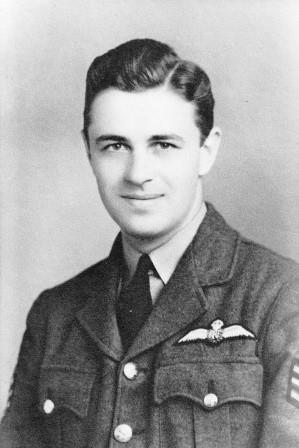
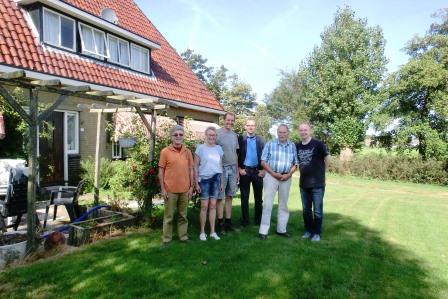
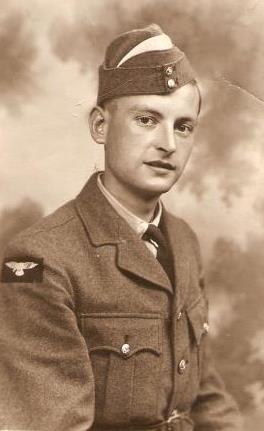
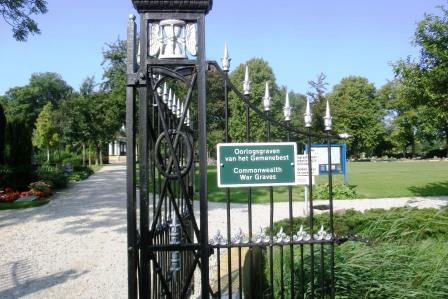
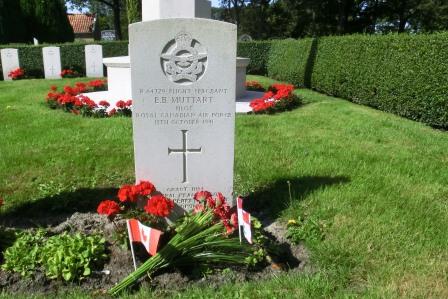
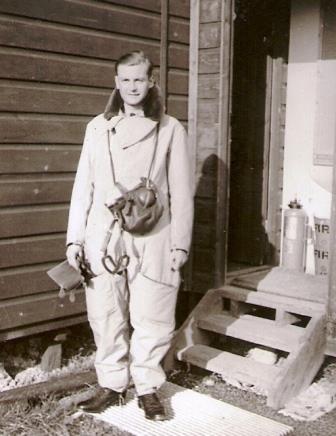
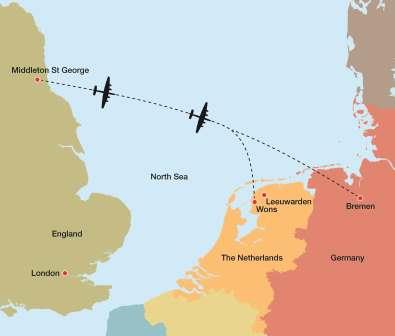
On the War Memorial Trail ….. At Holten Canadian War Cemetery

January 20, 2018.  After visiting the Information Centre at the Canadian War Cemetery in Holten, we went into the cemetery itself to lay flags at the graves of five known soldiers from PEI.  Two of them, William Douglas SHERREN and George Martin MCMAHON are listed on the Cenotaph outside the Borden-Carleton Legion.

We had wondered why the cemetery had more landscaping than most Commonwealth War Cemeteries and why it was not on one level, but terraced.  Edwin van der Wolf, our guide, explained that the cemetery originally was on flat ground.  The Canadian government acquired more land than was used in the belief that the war would last longer and go into Denmark, resulting in more casualties. Luckily, that didn’t happen, and meant that the excess land could be used for landscaping.

When the cemetery was first opened, metal crosses were used to mark each grave, and there is a display in front of the Information Centre that shows one.

CIMG9100 Sep 18 2017 display of original metal cross used in Holten Cemetery

Metal cross originally used to mark each grave in Holten Canadian War Cemetery. (Photo credit: Daria Valkenburg)

Originally, the Cross of Sacrifice in the cemetery was placed further back than in its present location.  Similar to the story we’d heard about the placement of a Cross of Sacrifice at Groesbeek Canadian War Cemetery, Edwin noted that he had heard that when Holten Cemetery began, Lt. General Guy Granville Simonds, Commander of the 2nd Canadian Army, “wanted the Cross of Sacrifice to be 60 metres high and lit up so that it could be seen across the German border as a reminder of who had conquered them.”  Whether this story is true or not, we don’t know.

CIMG9123 Sep 18 2017 Holten Cemetery Pieter & Edwin van der Wolf by cross of remembrance

Pieter with Edwin van der Wolf by the Cross of Sacrifice at Holten Canadian War Cemetery. (Photo credit: Daria Valkenburg)


IMG_20170918_133147255_HDR Sep 18 2017 landscaping at Holten Cemetery

Landscaped grounds of Holten Canadian War Cemetery. (Photo credit: Pieter Valkenburg)

The first grave where flags were placed was that of Captain William Douglas Sherren, born November 25, 1914 in Crapaud, son of William Douglas Sherren and Florence Amanda nee Carrier.  Married to Florence Mead Strickland, he was the father of two sons, Hubert and Harrison Blair.  An electrician before the war, Sherren enlisted on January 6, 1941 as a Lieutenant with the First Survey Regiment, Royal Canadian Artillery.  On March 29, 1944 he was promoted to Captain.

Wiliam Douglas Sherren

William Douglas Sherren. (Photo courtesy of Holten Canadian War Cemetery Information Centre)

On July 9, 1944, not long after D-Day, he arrived in France from England.  He was recognized by King George VI as a Member of the Military Division of the Most Excellent Order of the British Empire in March 1945, in recognition of gallant and distinguished service in North West Europe.

Unfortunately, on April 25, 1945, while in Germany, the vehicle he was travelling in struck a landmine. He was severely wounded and died on April 28, 1945.  Originally buried in Cloppenburg Hospital Cemetery in Lower Saxony, he was reburied in Holten Canadian War Cemetery in 1947, after the war ended.

IMG_20170918_134108826 Sep 18 2017 grave of WD Sherren Holten cemetery

Grave of Captain William Douglas Sherren at Holten Canadian War Cemetery. (Photo credit: Pieter Valkenburg)

The next set of flags were placed at the grave of Gunner George Martin McMahon, born January 14, 1913 in Emerald Junction, son of  Peter A McMahon and Catherine nee Monaghan.  Married to Margaret Kathleen Greenan, he was the father of 5 children. In addition, one child, Joseph Louis died in 1942 at the age of three months, and another child, Georgie, was born in November 1945 after McMahon’s death.  Prior to enlistment in Montreal with the Royal Canadian Artillery on December 7, 1943, he was a machinist with Canadian Vickers Ltd.  Fluent in both English and French, his army record noted he could play the violin.

OLYMPUS DIGITAL CAMERA

George Martin McMahon. (Photo courtesy “Around Kinkora Area” by G. K. Farmer)

McMahon left Canada for England in March 1945, and was sent to North West Europe in May 1945.  According to a letter to his widow, written by Colonel C. L. Laurin, McMahon was on “a short leave to Amsterdam in company of a comrade with the same regiment.  On the evening of the 10th of August 1945, at approximately 11:50 pm, they parted company…” 

McMahon’s friend returned to the Army leave hotel alone.  The following day, this soldier, made enquiries and was informed that the body of the deceased had been found in a canal….”  It was determined that he had accidentally drowned on August 11, 1945.   He was first buried in Hilversum Community Cemetery, and in 1946 was reburied in Holten Canadian War Cemetery.

IMG_20170918_134412720 Sep 18 2017 G McMahon grave Holten Cemetery

Grave of George Martin McMahon at Holten Canadian War Cemetery. (Photo credit: Pieter Valkenburg)

After visiting McMahon’s grave we went on to place flags at the graves of three more known soldiers from PEI: Carman GILLCASH, Frederick Charles CHEVERIE, and Daniel Peter MacKenzie.

Edwin van der Wolf told us that MacKenzie had been with the Carleton & York Regiment, which liberated the village of Posterenk.  This is where MacKenzie, plus 5 more from his unit, lost his life from sniper fire from Germans using the village’s windmill as a hideout.  For the past two years, on April 13, the people from the village commemorate the event around the old windmill.

Do you have more information or photos on these five soldiers from PEI?  Have you visited Holten Cemetery and its Information Centre?  Do you know of more soldiers from PEI buried in the Cemetery?  You can share your comments and stories by emailing us at memorialtrail@gmail.com or by commenting on this blog.

© Daria Valkenburg

….Want to follow our research?….

If you are reading this posting, but aren’t following our research, you are welcome to do so.  Our blog address: https://onthewarmemorialtrail.com/
Front cover OnTheWarMememorialTrailinEurope4 countries, 6 weeks, 7,000 km – an unforgettable war memorial journey in Europe…. Daria’s book ‘No Soldier Buried Overseas Should Ever Be Forgotten‘ is available in print and e-book formats.  Net proceeds of book sales help support research costs and the cost of maintaining this blog. For more information see https://nosoldierforgotten.com/ 

You are also invited to subscribe to our YouTube Channel: On The War Memorial Trail With Pieter Valkenburg: https://www.youtube.com/channel/UCJ591TyjSheOR-Cb_Gs_5Kw

Never miss a posting!  Subscribe below to have each new story from the war memorial trail delivered to your inbox.
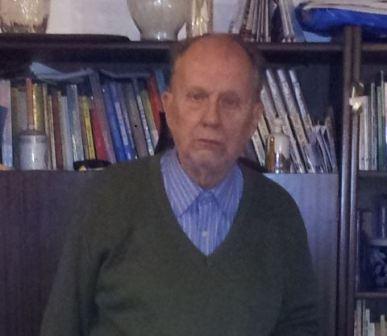
On the War Memorial Trail ….. At The Information Centre at Holten Canadian War Cemetery

January 16, 2018.  After visiting the very large Canadian War Cemetery in Groesbeek we next went to visit a smaller Canadian War Cemetery in Holten.  This is the second largest WWII cemetery in The Netherlands.  The majority of those buried here died during the last stages of the war in Holland, during the advance of the Canadian 2nd Corps into northern Germany, and across the Ems in April and the first days of May 1945.

After the war ended, their remains were brought into this cemetery, which has 1,394 WWII burials, 1382 of them identified.  The burials are listed as the following: There are 1,394 burials: Navy 2, Army 1,378, Air Force 14, of which 1,355 are Canadian, 36 British, 2 Australian and 1 Belgian.

Five of the known burials are soldiers from Prince Edward Island, two of which are listed on the Cenotaph outside the Borden-Carleton Legion, and part of Pieter’s Cenotaph Research Project.  William Douglas SHERREN and George Martin MCMAHON are listed on the Cenotaph.  Carman GILLCASH, Frederick Charles CHEVERIE, and Daniel Peter MACKENZIE are the other three soldiers from Prince Edward Island.

This was a very different visit than when we were at the Canadian War Cemetery in Groesbeek, as there is a large information centre in Holten, where we met with Henk Vincent and Edwin Van der Wolf, two of the volunteers at the Centre.

CIMG9099 Sep 18 2017 Pieter outside Holten Info Centre

Pieter outside the Information Centre at Holten Cemetery in The Netherlands, with a bag of flag pins for schoolchildren who light candles at each grave at Christmas and flags for various ceremonies. (Photo credit: Daria Valkenburg)

The volunteers at Holten Cemetery have run a “Face to Every Name” project, in an attempt to receive a photo and learn more about every soldier buried there.  The original project began in 1995, during the 50th Anniversary of the Liberation of The Netherlands, with a group of friends who helped organize annual commemoration events.  They called themselves “Welcome Again Veterans”. 

While the organization that dealt with annual commemorations began in the 1950s, the new group started actively collecting photos, memoirs and books, and stories that had been donated over the years.

In 2005, as veterans arriving for liberation events began decreasing, the group started to think of a small museum as a repository for the information that had been collected.  By 2010, with funding secured from private donations, and Dutch municipal and provincial governments, plus the European Union, construction began, and the new Information Centre open in September 2011.  Unlike most Dutch construction, the Information Centre is constructed of wood, “just like in Canada”, according to Van der Wolf.

Today, the Information Centre receives 25,000 visitors per year, and we were eager to be two of them. Entrance is free, with donations helping to cover the operating costs of running this facility.

CIMG9104 Sep 18 2017 Henk Vincent Pieter Edwin van der Wolf in Holten Info Centre

Henk Vincent, left, and Edwin Van der Wolf, right, with Pieter in the centre, at the Information Centre at Holten Canadian War Cemetery. (Photo credit: Daria Valkenburg)

Highlights of some of the displays you can see and interact with are:

·         An Information wall with a map of northern and eastern Netherlands, showing where you can see where divisions entered the area, and liberation dates of different villages and towns, as well as a few important places where heavy fighting had taken place.  

·         The film hall, which lists the names of the 1,394 soldiers buried in Holten on its wall, then watch a 17 minute film about the cemetery.

 ·         Three information tables that use touch screen technology:

·         Information table 1 is a Database with basic data on all Canadian soldiers buried in The Netherlands. In addition, there are photos and biographies for many soldiers buried in Holten. 

·         Information table 2 is entitled ‘Meet a soldier, which features a more detailed life story for four fallen liberators using films with unique documents and photos.

 ·         Information table 3 showcases Interviews with witnesses of the liberation, plus three liberation stories, written during or directly after the liberation days.

 ·         Showcase wall, with a panorama photo of the entrance of the cemetery, and 8 showcases that highlight different themes. There are also 4 touch screens with films about the liberation of various villages and cities in northern and eastern Netherlands, a film about the Commonwealth War Graves Commission, and various photographs and films of commemorations at the cemetery over the years.

 ·         Four Documentaries:

1.      ‘Victory in The Netherlands’, an authentic film from 1945 on the liberation of northern and eastern Netherlands.

2.      The liberation of cities and villages in northern and eastern Netherlands from day to day.

3.      ‘Heroes Remember’, where Canadian veterans talk about their experiences of the liberation of The Netherlands.

4.        The May 4, 2015 ceremony at the cemetery.

 ·         Reading table, which includes memoirs and original newspaper articles about the liberation.

 ·         Cemetery Map

After touring the Information Centre, we continued on to the Cemetery itself, to lay flags at the graves of our five soldiers from PEI.

Have you visited Holten Cemetery and its Information Centre?  Do you know of more soldiers from PEI buried in the Cemetery?  You can share your comments and stories by emailing us at memorialtrail@gmail.com or by commenting on this blog.

© Daria Valkenburg

….Want to follow our research?….

If you are reading this posting, but aren’t following our research, you are welcome to do so.  Our blog address: https://onthewarmemorialtrail.com/

Front cover OnTheWarMememorialTrailinEurope4 countries, 6 weeks, 7,000 km – an unforgettable war memorial journey in Europe…. Daria’s book ‘No Soldier Buried Overseas Should Ever Be Forgotten‘ is available in print and e-book formats.  Net proceeds of book sales help support research costs and the cost of maintaining this blog. For more information see https://nosoldierforgotten.com/ 

You are also invited to subscribe to our YouTube Channel: On The War Memorial Trail With Pieter Valkenburg: https://www.youtube.com/channel/UCJ591TyjSheOR-Cb_Gs_5Kw

Never miss a posting!  Subscribe below to have each new story from the war memorial trail delivered to your inbox.

On the War Memorial Trail ….. The Liberation Route

January 6, 2018.  After flags were laid at the graves of the known soldiers from PEI at the Canadian War Cemetery in Groesbeek, we travelled along The Liberation Route with our friends Ad and Noor Scheepers.  History lives and breathes here, and if you are unaware of the past, you can take things at face value.

One example…I’m fascinated by windmills.  Not the ugly behemoths that we see now, but the older windmills that are still seen in Europe.  One of these is in Groesbeek, and is now a shop, and I wanted a photo of it.  Ad told us that during WWII the windmill had been used first as a reference point by the US 82nd Airborne Division and later as an observation point in 1944 in preparation for Operation Market Garden.  This was an Allied military operation, from September 17-25, 1944 that succeeded in liberating Nijmegen and Eindhoven, but failed in liberating the last bridge held in Arnhem, which would enable troops to the Rhine into Germany.  If you’ve seen the movie ‘A Bridge Too Far’ (See https://en.wikipedia.org/wiki/A_Bridge_Too_Far_(film)), then you may be familiar with what is discussed in this blog entry.

CIMG9038 Sep 16 2017 Windmill in Groesbeek that was a lookout post during WWII

Windmill in Groesbeek that was used as an observation post during WWII. (Photo credit: Pieter Valkenburg)

From Groesbeek, we followed the Liberation Route to Klein Amerika (Little America), a high spot near Groesbeek.  For some reason, Klein Amerika had this name long before WWII!  This was the area where parachutes and gliders landed in preparation for Operation Market Garden, to capture the bridges held by Germans during WWII.  In addition to the 505th of the US Army’s 82nd airborne division who landed here, the 1st Canadian Army guarded the area in the winter of 1944-1945.

CIMG9044 Sep 16 2017 Klein Amerika Monument 82nd Airborne Division and the 1st Canadian Army

Memorial at Klein Amerika honouring the 1st Canadian Army who guarded the area in the winter of 1944-45. (Photo credit: Daria Valkenburg)

Today, Klein Amerika has a memorial park, complete with jeeps and a replica of a Waco glider, and an information panel that plays newsreels about the events of the battle and its preparation.

CIMG9041 Sep 16 2017 Klein Amerika Ad & Pieter inspect jeep while Noor reads info panel

Ad Scheepers and Pieter inspect a jeep, while Noor watches one of the newsreels on the information panel at Klein Amerika. (Photo credit: Daria Valkenburg)

CIMG9042 Sep 16 2017 Klein Amerika Pieter & Ad in the replica Waco glider

Ad and Pieter in the Waco glider replica at Klein Amerika. (Photo credit: Daria Valkenburg)

Ad told us a story he’d heard about a commander of the British Airborne Division who landed in Klein Amerika and sneaked across the border to Germany.  He came back safely and when asked where he’d been, said he’d gone to Germany to be the first Brit to “piss on the Germans”.  We’ve not been able to confirm this story, but with the border so close by, it could be true.

We followed the Liberation Route across the border into Germany and then ended the tour at a café in Milligen, where the Rhine and Waal Rivers meet. It was fascinating to see how much shipping is done by boat here!

CIMG9059 Sep 16 2017 boat near De Gelderse Poort Cafe in Milligan where Rhine and Waal meet

Shipping traffic in Milligen, where the Rhine and Waal Rivers meet. (Photo credit: Daria Valkenburg)

Now that we had a better idea of what troops faced in trying to liberate this part of The Netherlands, we were even more honoured to be working on this cenotaph research project.  In our next blog entry, we visit another Canadian War Cemetery, this time in Holten.

Comments or stories?  You can share them by emailing us at memorialtrail@gmail.com or by commenting on this blog.

© Daria Valkenburg

….Want to follow our research?….

If you are reading this posting, but aren’t following our research, you are welcome to do so.  Our blog address: https://onthewarmemorialtrail.com/

Front cover OnTheWarMememorialTrailinEurope4 countries, 6 weeks, 7,000 km – an unforgettable war memorial journey in Europe…. Daria’s book ‘No Soldier Buried Overseas Should Ever Be Forgotten‘ is available in print and e-book formats.  Net proceeds of book sales help support research costs and the cost of maintaining this blog. For more information see https://nosoldierforgotten.com/ 

You are also invited to subscribe to our YouTube Channel: On The War Memorial Trail With Pieter Valkenburg: https://www.youtube.com/channel/UCJ591TyjSheOR-Cb_Gs_5Kw

Never miss a posting!  Subscribe below to have each new story from the war memorial trail delivered to your inbox.

On the War Memorial Trail ….. PEI Soldiers Buried In The Canadian War Cemetery in Groesbeek

December 30, 2017.  During our first visit to the Canadian War Cemetery in Groesbeek in The Netherlands, we were able to place flags at the graves of three PEI soldiers buried there.  In the last blog entry we told the story of George Preston SMITH of Kinkora, who was with the North Shore (New Brunswick) Regiment, and the accident in which he lost his life. (See On the War Memorial Trail ….. At The Canadian War Cemetery in Groesbeek)

Our thanks to Alice van Bekkum of the Faces to Graves Project, who shared an eye witness account that was recorded by Will Bird in his 1963 book about the North Shore (New Brunswick) Regiment. (See https://books.google.com/books/about North_Shore_New_Brunswick_Regiment.html?id=Iz7WAAAAMAAJ)

Will Bird account of what happened to George Preston Smith

Excerpt about George Preston Smith from Will Bird’s book about The North Shore (New Brunswick) Regiment.

Before returning to place flags at the rest of the known soldiers from PEI, we stopped by a memorial marking the route on February 8, 1945 where soldiers marched into Germany on their way from Groesbeek, as part of Operation Veritable.  This was the northern part of an Allied pincer movement that took place between February 8 and March 11, 1945 during the final stages of the Second World War.

The operation was conducted by Field Marshal Bernard Montgomery’s Anglo-Canadian 21st Army Group, primarily consisting of the First Canadian Army under Lieutenant-General Harry Crerar and the British XXX Corps under Lieutenant-General Brian Horrocks. Their objective was to clear German forces from the area between the Rhine and Maas rivers, east of the German/Dutch frontier, in the Rhineland.

CIMG8998 Sep 15 2017 Pieter by memorial showis where soldiers marched into Germany from Groesbeek operation veritable

Pieter at the memorial for Operation Veritable in Groesbeek. (Photo credit: Daria Valkenburg)

CIMG8996 Sep 15 2017 memorial shows where soldiers marched into Germany from Groesbeek operation veritable

Close-up view of the text on the memorial for Operation Veritable in Groesbeek. (Photo credit: Pieter Valkenburg)

On our second visit to the Canadian War Cemetery in Groesbeek we were joined by Pieter’s former colleague in the Dutch Foreign Service, Ad Scheepers, and his wife Noor, who live in Groesbeek.

CIMG9023 Sep 16 2017 Groesbeek Cemetery Ad & Noor Scheepers with Pieter by Gaudets grave

Ad and Noor Scheepers with Pieter by the grave of Cpl Arthur Gaudet. (Photo credit: Daria Valkenburg)

Ad was a fountain of information about the cemetery, and noted that it was along the Liberation Route, which one can take to visit the many monuments and memorials in this part of The Netherlands.  The cemetery, on a road called Zeven Heuvelenweg (Seven Hills Way), is the largest war cemetery of the Commonwealth Graves Commission in The Netherlands.

Most of the soldiers buried here fell during the fighting on the Lower Rhine between February 8 and March 26, 1945.  It’s called the Canadian War Cemetery and we’d always assumed all of the burials were Canadian, but it’s not true.  By number and nationality, the 2,617 soldiers buried here are from:

  • 2,399 from Canada
  • 267 from Great Britain
  • 3 from Belgium
  • 2 from Poland
  • 2 from Australia
  • 1 from New Zealand
  • 1 from Russia
  • 1 from Yugoslavia
  • 1 from The Netherlands

Inscribed on the Groesbeek Memorial in the cemetery are the names of 1,103 soldiers reported missing in action between August 1944 and May 1945. Only a few have been identified since the memorial was put up. Unfortunately, most are still listed as MIA (Missing In Action).

Ad told us he’d read that the Cross of Sacrifice in the cemetery was positioned where it was so it could be clearly seen from Germany, a stone’s throw away from the border.  It’s likely true, as one prerequisite that Canadian Officers had in selecting land for the cemetery was to have a view of Germany.

In a Dutch reference we read that construction on the cemetery began in 1945 by six Canadian soldiers. The location of the cemetery, on a hilltop, was chosen by Groesbeek Mayor Grotenhuis van Onstein for its view on the German border from the cemetery. The Cemetery was officially opened on May 4, 1947 by the Dutch Queen Wilhelmina. When the cemetery opened, the headstones were made from wood, as was the Cross of Sacrifice.  Later, the headstones were temporarily replaced by metal versions, and beginning in 1950 the headstones and Cross of Sacrifice were replaced by stone designs.

CIMG8945 Sep 15 2017 Groesbeek cemetery Pieter at Cross for remembrance

Pieter by the Cross of Sacrifice at the Canadian War Cemetery in Groesbeek. (Photo credit: Daria Valkenburg)

In alphabetical order, here are the known soldiers from PEI that are buried in the cemetery:

  • L/Cpl Ralph Schurman BOULTER, North Nova Scotia Highlanders, from West Point
  • Pte Lawrence BULGER, North Nova Scotia Highlanders, from Foxley River
  • Major John Weston CAMPBELL, North Nova Scotia Highlanders, from Clermont
  • Cpl Preston D. CAMPBELL, Algonquin Regiment, from Coleman
  • Rifleman William Alfred CANNON, Regina Rifle Regiment, from Pownal
  • Cpl Arthur GAUDET, Les Fusiliers Mont-Royal, from Mont Carmel
  • Sapper Joseph Edmond HENNEBERY, Corps of Royal Canadian Engineers, from Morrell
  • Cpl George Ivan MACKINNON, North Nova Scotia Highlanders, from Mt. Albion
  • Cpl Robert Bruce MACNEILLL, North Nova Scotia Highlanders, from Charlottetown
  • Pte Barney R. MCGUIGAN, North Shore (New Brunswick) Regiment, born in Souris
  • Cpl Stephen A. MCKINNON, Royal Hamilton Light Infantry, from St. Peter’s Bay
  • L/Cpl Edward Gabriel PERRY, Argyll & Sutherland Highlanders of Canada (Princess Louise), from St. Nicholas
  • Pte John Clifford ROGERS, North Shore (New Brunswick) Regiment, born in Hope River
  • Pte Ralph K. SILLIKER, Lake Superior Regiment, from O’Leary
  • Sgt Edison Alexander SMITH, North Nova Scotia Highlanders, from West Point
  • Pte George Preston SMITH, North Shore Regiment, from Kinkora
  • Pte William L. WEATHERBIE, Royal Regiment of Canada, from Charlottetown

Do you have photos or information on any of these soldiers?  If you know of other soldiers from PEI, please help the researchers at the Faces to Grave project by sharing that information. Photos and stories can be sent either through their website at http://facestograves.nl/index.html or by email to info@facestograves.nl.  Alternatively, you can contact us and we will forward your info for you.

Comments or stories?  You can share them by emailing us at memorialtrail@gmail.com, commenting on the blog, or tweet to @researchmemori1.    

© Daria Valkenburg

…Want to follow our research?…

If you are reading this posting, but aren’t following our research, you are welcome to do so.  Our blog address: https://onthewarmemorialtrail.com/

Front cover OnTheWarMememorialTrailinEurope4 countries, 6 weeks, 7,000 km – an unforgettable war memorial journey in Europe…. Daria’s book ‘No Soldier Buried Overseas Should Ever Be Forgotten‘ is available in print and e-book formats.  Net proceeds of book sales help support research costs and the cost of maintaining this blog. For more information see https://nosoldierforgotten.com/

Subscribe to our YouTube Channel: On The War Memorial Trail With Pieter Valkenburg: https://www.youtube.com/channel/UCJ591TyjSheOR-Cb_Gs_5Kw

Never miss a posting!  Subscribe below to have each new story from the war memorial trail delivered to your inbox.

On the War Memorial Trail ….. At The Canadian War Cemetery in Groesbeek

December 25, 2017.  During lunch with members of the Royal Canadian Legion in The Netherlands, we mentioned that we would be going to the Canadian War Cemetery in Groesbeek to lay flags at the graves of Prince Edward Island soldiers, and one from New Brunswick.  Although we had a list of 17 soldiers, only one was listed on the Cenotaph outside the Borden-Legion Carleton, George Preston SMITH of Kinkora, who was with the North Shore (New Brunswick) Regiment.

Placing flags at the grave of a soldier from New Brunswick was at the request of our friend, Brenda Graves of North Tryon, in memory of her uncle Frank Edward MCGOVERN. He also was from the North Shore (New Brunswick) Regiment, and died February 26, 1945 at the age of 19. Brenda, who is researching her family history, unfortunately has only a poor quality photo of her uncle.  Can anyone help put a face to this name?

Just outside the cemetery, by the parking lot, is a banner asking people for help in the Faces to Graves Foundation Groesbeek project.  The project was begun by members of the Royal Canadian Legion in The Netherlands to create a virtual memorial for all who are buried at the Groesbeek Canadian War Cemetery or listed on the Groesbeek Memorial.  2,338 soldiers are buried here.

CIMG8926 Sep 15 2017 faces to grave banner at Groesbeek cemetery

Faces to Graves Foundation banner. (Photo credit: Pieter Valkenburg)

Many of the war dead were brought to this cemetery from nearby Germany. Fallen Canadian soldiers from WWII, who were buried in German battlefields, were reinterred here (except for one who is buried in Reichswald Forest War Cemetery in Germany). General Harry Crerar, who commanded Canadian land forces in Europe, had ordered that Canadian dead were not to be buried on German soil.

CIMG8928 Sep 15 2017 Daria at Groesbeek cemetery

Daria at entrance to Groesbeek Canadian War Cemetery, with flowers to place at the grave of Frank Edward McGovern. (Photo credit: Pieter Valkenburg)

CIMG8937 Sep 15 2017 Groesbeek cemetery grave of Brendas uncle FE McGovern

Grave of Frank Edward McGovern at Groesbeek Canadian War Cemetery. (Photo credit: Daria Valkenburg)

George Preston Smith (2)

George Preston Smith. (Photo courtesy of Canadian Virtual War Memorial)

Private George Preston SMITH was born September 3, 1923 in Kinkora, the son of William Wilfred and Mabel Smith.  A store clerk before enlisting on April 1, 1943, he served in England, France, and Belgium, before meeting his death in Belgium in an unfortunate accident on November 12, 1944.  Smith was accidentally killed while trying to take his Stengun out of the back of a military truck. The gun was under a pile of greatcoats. He grabbed it by the muzzle and gave it a hard pull, causing the cocking piece to be pulled back far enough. When he let it go, the cocking piece went forward again with enough pressure to push a round into the chamber and fire it.

On November 15, 1944, he was buried in the Civil Cemetery in Malden, Belgium.  In 1946, his remains were exhumed and he was reburied in the Groesbeek Canadian War Cemetery.

CIMG8940 Sep 15 2017 Groesbeek cemetery Pieter at the grave of George Preston Smith

Pieter by the grave of Private George Preston Smith. (Photo credit: Daria Valkenburg)

After paying our respects to McGovern and Smith, Pieter placed flags on two more graves of PEI soldiers.  We had been invited by Alice van Bekkum, of the Faces to Graves Foundation, to participate in a special ceremony, along with members of the Royal Canadian Legion in The Netherlands.  Wish Of A Lifetime Canada (see https://wishofalifetime.ca/), an organization that fulfills seniors’ dreams and shares their stories to inspire those of all ages, had granted a wish that had a PEI connection.

Harriet Jenereaux, born in West Point, PEI, now living in Nova Scotia, wanted to see the grave of her father, Sgt Edison Alexander SMITH, who is buried in the cemetery in Groesbeek.  Harriet and her husband Keith were flown to The Netherlands, members of the Royal Canadian Legion provided a colour party, and Alice van Bekkum paid for a bugler to play The Last Post at the grave.   (See https://www.youtube.com/watch?v=BgXkld9BUIA)

CIMG8948 Sep 15 2017 Groesbeek cemetery bugler with Yvonne and Berry Swarthoff providing colour parade

Bugler with Royal Canadian Legion’s colour party of Yvonne and Berry Swarthoff at Groesbeek Canadian War Cemetery. (Photo credit: Daria Valkenburg)

Before Harriet arrived at the cemetery, Pieter made sure that Canadian and PEI flags were placed at her father’s grave, and that of her uncle, L/Cpl Ralph Schurman BOULTER, her mother’s brother.  Smith, aged 32, and Boulter, aged 28, were in the North Nova Scotia Highlanders, and were both killed in battle while crossing the Rhine on March 25, 1945.

CIMG8952 Sep 15 2017 Groesbeek cemetery Alice van Bekkum

Alice van Bekkum arranged for a photo of Smith to be placed by his grave. (Photo credit: Daria Valkenburg)

As Harriet neared her father’s grave, she called out to her husband Keith, “There’s Daddy!”  It was a poignant moment for us, the Dutch members of the Legion, an astonishing amount of reporters and press photographers, plus a representative of Phillips, the Dutch sponsor of Wish of a Lifetime.

CIMG8950 Sep 15 2017 Groesbeek cemetery Harriet Jenereux at her fathers grave

Harriet Jenereaux kneels at her father’s grave. (Photo credit: Daria Valkenburg)

After the ceremony and greeting Harriet, it was time for us to enjoy a cup of coffee and a piece of Dutch apple cake.  We’d return to place flags at the graves of the other 14 soldiers from PEI once all the commotion regarding Harriet’s visit had diminished.

Do you have relatives buried in Groesbeek Canadian War Cemetery?  If so, please consider participating in the Faces to Graves project by submitting photos and stories either through their website at http://facestograves.nl/index.html or by email to info@facestograves.nl.  Alternatively, you can contact us and we will forward your info for you.

Comments or stories?  You can share them by emailing us at memorialtrail@gmail.com, or commenting on the blog.

© Daria Valkenburg

…Want to follow our research?…

If you are reading this posting, but aren’t following our research, you are welcome to do so.  Our blog address: https://onthewarmemorialtrail.com/

Front cover OnTheWarMememorialTrailinEurope4 countries, 6 weeks, 7,000 km – an unforgettable war memorial journey in Europe…. Daria’s book ‘No Soldier Buried Overseas Should Ever Be Forgotten‘ is available in print and e-book formats.  Net proceeds of book sales help support research costs and the cost of maintaining this blog. For more information see https://nosoldierforgotten.com/

Subscribe to our YouTube Channel: On The War Memorial Trail With Pieter Valkenburg: https://www.youtube.com/channel/UCJ591TyjSheOR-Cb_Gs_5Kw.

Never miss a posting!  Subscribe below to have each new story from the war memorial trail delivered to your inbox.

On the War Memorial Trail ….. A Taste of Canada in The Netherlands

December 22, 2017.  After travelling through Europe for weeks, and arriving in The Netherlands for the next phase of our war memorial tour, we were delighted to receive an invitation from the Royal Canadian Legion in The Netherlands for lunch at their home base in Lochem.  While we knew that the home base was in a restaurant called Mondani, we were completely astonished to see that it was a Canadian restaurant.  We eagerly went inside and found a piece of west coast Canada!

CIMG8916 Sep 13 2017 Mondani Restaurant in Lochem

Photo: Pieter outside the Canadian restaurant Mondani in Lochem, The Netherlands. (Photo credit: Daria Valkenburg)

Owners Berry Swarthoff, of The Netherlands, and his wife Yvonne, from Dawson Creek, BC, opened their restaurant in 1991. With a pan-Canadian menu, including a seafood cocktail from Prince Edward Island, it’s a great place to meet and enjoy a taste of Canada.  They even serve Tim Horton’s coffee upon request.

CIMG8920 Sep 13 2017 Berry & Yvonne Swarthoff Mondani Restaurant in Lochem

Photo: Berry and Yvonne Swarthoff in their Canadian restaurant Mondani in Lochem, The Netherlands. (Photo credit: Daria Valkenburg)

The Royal Canadian Legion in The Netherlands, of which the Swarthoffs are members, is one of 5 branches in Europe.  Pieter and I were invited for lunch to meet with other members of the Legion, including Branch President Gerard Hendricks and Vice-President Martin Reelick.  Alice van Bekkum, president of the Faces to Graves project at the Canadian War Cemetery in Groesbeek, was also present.  Of the 18 known PEI soldiers buried in Groesbeek, one is on the Cenotaph outside the Borden-Carleton Legion.  Pieter intended to place flags on the graves of all 18 soldiers.

CIMG8925 Sep 13 2017 Daria & Pieter by Legion sign at Mondani restaurant in Lochem

Photo: Pieter and Daria by the Legion sign at Restaurant Mondani in Lochem, The Netherlands. (Photo credit: Berry Swarthoff)

CIMG8919 Sep 13 2017 Mondani Restaurant in Lochem Legion members

Photo: Left to right: Gerard Hendricks, Martin Reelick, Pieter Valkenburg, Alice van Bekkum. (Photo credit: Daria Valkenburg)

The main purpose of the Dutch branch of the Royal Canadian Legion is remembrance.  We have 40 to 50 events annually normally, and then every five years we have 65 extra commemorations...” said Hendricks.  “Many families had daughters who were war brides, and many Canadian soldiers were stationed in The Netherlands after the war.  Plus, 85% of The Netherlands was liberated by Canadian troops.  Many friendships still survive.  So a Royal Canadian Legion branch here is most appropriate….”

The branch has members from the Dutch public, as well as Canadian embassy officials, Canadian expats, and even a Canadian pilot on exchange with the Dutch Air Force.

Since the Legion uses the Mondani restaurant as its home base, there are few fixed costs.  Travel costs, and the costs of flags for colour parties make up the bulk of the Legion’s expenses.  “We travel across The Netherlands, and in April we were at Vimy Ridge for the 2017 commemoration ceremonies...” noted Hendricks.

To help with finances, the Canadian Embassy in The Hague hosts an annual fundraiser at the ambassador’s residence, plus the Legion sells T-shirts, bags, and hats to raise money.

The lunch was a Dutch one, not Canadian, but it was delicious, and we were enveloped in a warm atmosphere of friendship.  After the Dutch members of the Legion left, Berry, who surely knows what Canadians like, asked if we’d like a piece of lemon meringue pie.  Did we ever!  And it was delicious.  My mother, who was an excellent cook and baker, could not have made a better pie.

The visit to Lochem reminded us not only of home, but that so many people in Europe are grateful for the help Canada gave in the liberation of their countries.  We were very much looking forward to continuing our war memorial trail in Pieter’s country of birth.  As in Belgium, we would be joined by friends, old and new, who shared in honouring the soldiers who gave their lives during war.

Comments or stories?  You can share them by emailing us at memorialtrail@gmail.com or by commenting on this blog.

© Daria Valkenburg

….Want to follow our research?….

If you are reading this posting, but aren’t following our research, you are welcome to do so.  Our blog address: https://onthewarmemorialtrail.com/

Front cover OnTheWarMememorialTrailinEurope4 countries, 6 weeks, 7,000 km – an unforgettable war memorial journey in Europe…. Daria’s book ‘No Soldier Buried Overseas Should Ever Be Forgotten‘ is available in print and e-book formats.  Net proceeds of book sales help support research costs and the cost of maintaining this blog. For more information see https://nosoldierforgotten.com/ 

You are also invited to subscribe to our YouTube Channel: On The War Memorial Trail With Pieter Valkenburg: https://www.youtube.com/channel/UCJ591TyjSheOR-Cb_Gs_5Kw

Never miss a posting!  Subscribe below to have each new story from the war memorial trail delivered to your inbox.
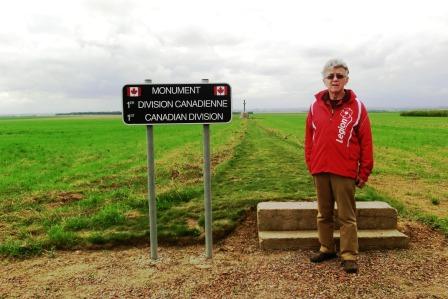
On The War Memorial Trail….Two Campbell Brothers in WWI

December 8, 2017. After visiting the Sanctuary Wood Cemetery, we stopped at the Battle of Mount Sorrel Monument, honouring the 15th Canadian Infantry at Observatory Ridge.  We had noticed this monument only because of a torn Canadian flag beside it!  We learned that the plaque was unveiled on October 22, 2011 before Canadian and Belgian dignitaries by members of the 15th Battalion Memorial Project.

IMG_20170910_133239840_HDR Sep 10 2017 Batttle of Mount Sorrel Monument

Battle of Mount Sorrel Monument, honouring the 15th Canadian Infantry at Observatory Ridge. (Photo credit: Pieter Valkenburg)

While no one on the Cenotaph outside the Borden-Carleton Legion was in the 15th Canadian Infantry, these soldiers were in the thick of things during the Battle of Mount Sorrel, in which George Albert Campbell and Charles Benjamin Murray Buxton lost their lives.

Buxton’s story was told in previous blog entries, and this blog entry is to tell what little we know about George ‘Albert’ CAMPBELL and how he lost his life.

george-albert-campbell-from-gerald-tingley.jpg

Private George Albert Campbell. (Photo courtesy of Gerald Tingley family collection)

Albert was born on July 8, 1895 in Wellington, PEI, the son of John George Campbell and Grace Emma, nee Barlow.  A fisherman and farmer before enlisting on April 6, 1915 with the 6th Canadian Mounted Rifles, he later transferred to the 5th Canadian Mounted Rifles.

During the Battle of Mount Sorrel, the 5th Canadian Mounted Rifles were in a supporting position, occupying the strongpoint, dugouts, and trenches in Maple Copse and Zillebeke area, as noted in ‘With The Patricia’s In Flanders 1914-1918 Then & Now’ by Stephen K. Newman.

Newman goes on to explain in his book that “….the 5th Canadian Mounted Rifles in Maple Copse held on despite heavy shelling that flattened the entire wood and made their old trenches untenable.  They waited for the reinforcements from 2nd Canadian Mounted Rifles and the 9th Brigade.  The two eighteen pounder sacrifice guns of the 5th Battery Canadian Field Artillery hidden in the southern part of Sanctuary Wood did their job to the last man and were overrun.  The German success depended on their bulling through the Patricia line and moving the 5th Canadian Mounted Rifles out of Maple Copse….

Albert was in the midst of this battle, as a member of the 5th Canadian Mounted Rifles.  According to the Canadian War Graves Register Circumstances of Death, he was killed in action in the vicinity of Maple Copse.

The War Diary of the unit for June 2, 1916 notes: “A red letter day in the history of the battalion ever to be remembered by those who lived through it. The battalion went into the line in the night of the 31st of May /1st of June occupying a position in Brigade support at Maple Copse.

 ‘A’ company and two platoons of ‘B’ company at Maple Copse. Nothing of importance occurred until the morning of the 2nd of June when at about at 8.30 a.m., the enemy began a very heavy bombardment of the frontline and all the ground at Maple Copse and vicinity. Heavy bombardments continued till noon on the 3rd and continued again after 6 p.m

Unfortunately, Albert has no known grave, and his name is therefore listed on the Menin Gate Memorial.  It’s quite likely, however, that he might be buried in Maple Copse Cemetery in an unknown grave.

CIMG8858 Sep 10 2017 Maple Copse Cemetery

Entrance to Maple Copse Cemetery. (Photo credit: Pieter Valkenburg)

Maple Copse was the name used by the British Army for a small plantation east of Zillebeke and just west of Sanctuary Wood.  It was used by medical staff as a dressing station, and burials took place here both before and after the Battle of Mount Sorrel.

The cemetery was destroyed by shellfire during the Battle of Mount Sorrel and when fighting resumed afterwards, with the gravestones destroyed and ending up in the rubble.  Of 256 named graves that were known to exist, only 26 could be definitely located.  Perhaps Albert is in one of these.  Of the 256 graves, 114 had soldiers from the United Kingdom and 142 from Canada.

Like he did with Buxton at the Sanctuary Wood Cemetery, Pieter put Canadian flags on 4 unknown graves from a Canadian Regiment, and then placed a PEI flag on one of these in memory of George ‘Albert’ Campbell.

CIMG8864 Sep 10 2017 Pieter by grave of unknown soldier at Maple Copse Cemetery

Pieter by the grave of an unknown soldier from a Canadian regiment at Maple Copse Cemetery. (Photo credit: Daria Valkenburg)

With the advances in DNA research, perhaps one day there will be the possibility to find out who the unknown soldiers are in Maple Copse and Sanctuary Wood cemeteries.  Wouldn’t that be a genealogical project to get involved with?

Unfortunately, we have very little information about his life prior to enlistment, but are grateful for the photo of Albert sent by a distant relative, Gerald Tingley.  If anyone has more information or photos, please help us honour Albert’s memory by sharing them.  (For previous blog entries that have mentioned Albert, see A Daytime Visit To Menin Gate Memorial in Ypres and A Visit To Sanctuary Wood.)

There are two Campbells on the Cenotaph outside the Borden-Carleton Legion, one who died and one who survived, but with injuries.  George ‘Albert’ Campbell had a younger brother, William Galen CAMPBELL, born June 16, 1897 in Wellington, who enlisted on April 22, 1916 with the 5th Siege Battery as a gunner, shortly before his older brother died.  He later transferred to the 8th Siege Battery of the 3rd Brigade Canadian Garrison Artillery, and was poisoned by a mustard gas shell, during action near Lievin (Pas de Calais) in France on May 28, 1918.

The war diary of the 8th Siege Battery tersely noted what happened to the unit:

27 May 1918: Intense gas bombardment on Lievin and many gas shells fell around Thelus and vicinity.

28 May 1918: Twenty nine other ranks of Lievin section admitted to hospital, gassed.

29 May 1918: Capt. Cunningham, Lt Messeray and 39 other ranks of Lievin section to hospital, gassed.

Unlike his brother Albert, William Galen survived and married Ida May McNally on January 5, 1919.  On April 14, 1919 he was discharged from military service.  He passed away on April 24, 1954 in Charlottetown and is buried in the cemetery at the Free Church of Scotland in Cape Traverse.  We have no photo or further information on William Galen Campbell.

william-g-campbell-gravestone-free-church-of-scotland-cape-traverse.jpg

Grave of William Galen Campbell in the cemetery of the Free Church of Scotland in Cape Traverse. (Photo credit: Pieter Valkenburg)

While our visit to Maple Copse Cemetery ended our Belgian visit to graves and memorials for the names on the Cenotaph outside the Borden-Carleton Legion, we were interested in visiting some of the other memorials in the area.  So, in the next blog entry, we will continue on the war memorial trail in Belgium.

Comments or stories?  You can share them by emailing us at memorialtrail@gmail.com or by commenting on this blog.

© Daria Valkenburg

….Want to follow our research?….

If you are reading this posting, but aren’t following our research, you are welcome to do so.  Our blog address: https://onthewarmemorialtrail.com/

Front cover OnTheWarMememorialTrailinEurope4 countries, 6 weeks, 7,000 km – an unforgettable war memorial journey in Europe…. Daria’s book ‘No Soldier Buried Overseas Should Ever Be Forgotten‘ is available in print and e-book formats.  Net proceeds of book sales help support research costs and the cost of maintaining this blog. For more information see https://nosoldierforgotten.com/ 

You are also invited to subscribe to our YouTube Channel: On The War Memorial Trail With Pieter Valkenburg: https://www.youtube.com/channel/UCJ591TyjSheOR-Cb_Gs_5Kw

Never miss a posting!  Subscribe below to have each new story from the war memorial trail delivered to your inbox.
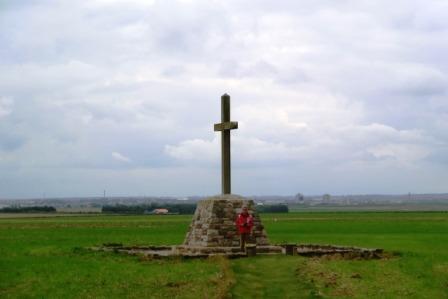
On The War Memorial Trail….A Visit To Sanctuary Wood

November 19, 2017.  After visiting the Princess Patricia’s Light Infantry Memorial in Zonnebeke, Belgium, we went to Sanctuary Wood in Zillebeke to the Hill 62 Monument overlooking Mount Sorrel.  This memorial commemorates Canadian forces who served in Ypres Salient, especially during the Battle of Mount Sorrel in June 1916.

CIMG8771 Sep 9 2017 Sign to Sanctuary Wood

Sign at the entrance to Hill 62 (Sanctuary Wood) Memorial. (Photo credit: Daria Valkenburg)

The road leading to the memorial, Canadalaan (literally Canada Avenue, but also known colloquially as Maple Avenue), once formed part of the Canadian front line.  After the war, the avenue was planted with maple trees as a mark of respect for the Canadian sacrifice.

Two of the men listed on the Cenotaph outside the Borden-Carleton Legion lost their lives here, during the Battle of Mount Sorrel: Charles ‘Charlie’ Benjamin BUXTON of the Princess Patricia’s Light Infantry, and George ‘Albert’ CAMPBELL of the 5th Canadian Mounted Rifles.  Both men have no known grave and are listed on the Menin Gate Memorial in Ypres. (See A Daytime Visit To Menin Gate Memorial in Ypres )

Before going to Sanctuary Wood Cemetery and Maple Copse Cemetery, places where perhaps our two soldiers are lying in an unmarked grave, we wanted to know more about what exactly happened here during the defence of Ypres in 1916.  The first thing that struck is was how close Ypres was.  We could see it clearly from the memorial!

CIMG8775 Sep 9 2017 Sanctuary Wood Ypres can be seen from Hill 62

The spires of buildings in Ypres can be clearly seen from Sanctuary Wood. (Photo credit: Daria Valkenburg)

Sanctuary Wood, also known as Hill 62, was the place where Canadian troops fought as a national unit for the first time.  During the battle, which was fought between June 2 and June 4, 1916, 8,430 soldiers were killed, wounded, or missing.

We were curious why it was called Hill 62, and a bit bemused to realize it was called that because the hill was 62 metres above sea level!

Hill 62 and nearby Mount Sorrel were the only places of a higher elevation that were not controlled by the Germans….and they wanted it.  Canadian troops were almost alone in defending this territory, having only the support of British artillery.  The rest of the British troops were preparing for the Battle on the Somme in July 1916.

So what happened?  On June 2, 1916, the Germans attacked the Canadian positions with artillery and the detonation of 4 large mines under Mount Sorrel.  You can imagine the deadly effect this had in the trenches.

As per the map of the battle, Buxton’s unit (PPCLI) was at Sanctuary Wood, and suffered 400 losses.  Campbell’s unit was a support brigade at Maple Copse, and by the end of the day 59 were killed, 272 wounded, and 50 missing. Buxton and Campbell were among the casualties.

battle of mount sorrel map

Map of Battle of Mount Sorrel on June 2, 1916. (Credit: http://www.canadiansoldiers.com)

It only seemed right to place the photos and plaques we had of these men, which we’d taken to Menin Gate earlier in the day, here at Sanctuary Wood Memorial.

CIMG8897 Sep 11 2017 Photos & Plaques of Buxton & Campbell at Sanctuary Wood

Plaques and photos for George Albert Campbell and Charles Benjamin Buxton. (Photo credit: Daria Valkenburg)

CIMG8894 Sep 11 2017 Pieter at Sanctuary Wood with photos and plaques of Buxton & Campbell

Pieter holds the photos and plaques of Buxton and Campbell at the Sanctuary Wood Memorial. (Photo credit: Daria Valkenburg)

We decided we had to visit both Sanctuary Wood Cemetery and Maple Copse Cemetery and learn exactly what happened to each man, but that would have to wait for another day.  It was getting late, and we wanted to get to Ypres for the Last Post ceremony at Menin Gate.

Comments or stories?  You can share them by emailing us at memorialtrail@gmail.com or by commenting on this blog.

© Daria Valkenburg

….Want to follow our research?….

If you are reading this posting, but aren’t following our research, you are welcome to do so.  Our blog address: https://onthewarmemorialtrail.com/

Front cover OnTheWarMememorialTrailinEurope4 countries, 6 weeks, 7,000 km – an unforgettable war memorial journey in Europe…. Daria’s book ‘No Soldier Buried Overseas Should Ever Be Forgotten‘ is available in print and e-book formats.  Net proceeds of book sales help support research costs and the cost of maintaining this blog. For more information see https://nosoldierforgotten.com/ 

You are also invited to subscribe to our YouTube Channel: On The War Memorial Trail With Pieter Valkenburg: https://www.youtube.com/channel/UCJ591TyjSheOR-Cb_Gs_5Kw

Never miss a posting!  Subscribe below to have each new story from the war memorial trail delivered to your inbox.
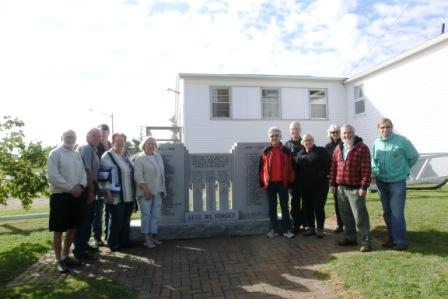
On The War Memorial Trail….A Visit To Tyne Cot Cemetery

November 10, 2017.  While we were in Zonnebeke, we made a stop on the war memorial trail at Tyne Cot Cemetery.  In France, unless it was a big cemetery or memorial, like Vimy Ridge or Beau Hamel, there were few visitors.  In Belgium, to our surprise, members of car and motorcycle clubs visited the various cemeteries and memorials as part of their touring schedules.  During our visit to Tyne Cot Cemetery, a club for a car named Burton stopped on their own war memorial rally tour.

The Burton is a Dutch sports car based on French 2CV technology. The Burton is an open, nostalgic-looking sports car built on the chassis of the 2CV with a modern fibreglass body and built from a kit. Of course, car-mad Pieter couldn’t resist taking a few photos as he made his way from the parking lot to the cemetery.

IMG_20170909_151921275 Sep 9 2017 Burton car in Tyne Cot cemetery parking lot

Burton sports car in the parking lot of Tyne Cot Cemetery in Zonnebeke. (Photo credit: Pieter Valkenburg)

Tyne Cot Cemetery is the largest Commonwealth War Cemetery in the world, with 11,956 graves, of which 1,011 are Canadian.  Most were killed during the Battle of Passchendaele.  In addition, 34,957 soldiers with no known grave, who died after August 15, 1917, have their names engraved on the cemetery walls.  Those soldiers with no known grave who died before August 15, 1917 are listed on the Menin Gate Memorial (See A Daytime Visit To Menin Gate Memorial in Ypres).

IMG_20170909_153120338 Sep 9 2017 Tyne Cot Cemetery graves with wall of those with no known grave

Names of soldiers with no known grave, who died after August 15, 1917 are engraved on the walls of Tyne Cot Cemetery. (Photo credit: Pieter Valkenburg)

Surprisingly, with the large number of war dead in Tyne Cot, no one from the Cenotaph outside the Borden-Carleton Legion is buried or commemorated there.  But if you are on a war memorial trail, it would be a shame to miss seeing the largest cemetery.

IMG_20170909_153208728 Sep 9 2017 Tyne Cot Cemetery graves

Tyne Cot Cemetery in Zonnebeke. (Photo credit: Pieter Valkenburg)

As we made our way to the cemetery and the visitors centre, we passed by a grassy area of plastic poppies with messages from the public in Britain. This was an initiative of the Royal British Legion’s Passchendaele 100 Memorial, who collected the poppies and brought them to the cemetery.  Some of the messages commemorated a loved one, others were very general in nature.  It certainly made for a colourful display!

IMG_20170909_152308460 Sep 9 2017 plastic poppies in field in Tyne Cot cemetery in Zonnebeke

Plastic poppies with messages from the British public on display at Tyne Cot Cemetery. (Photo credit: Pieter Valkenburg)

We learned that a Victoria Cross recipient from the 27th (City of Winnipeg) Battalion is buried here, James Peter ROBERTSON, a private who was killed on November 6, 1917 during the final phase of the Battle of Passchendaele.  When his platoon was blocked by barbed wire and a German machine gun, he dashed to an opening in the enemy position, and rushed the gun, killing four German soldiers and turning the machine gun on the rest of the Germans.  This allowed the platoon to continue towards its objective.  Afterwards, when two Canadian snipers were wounded in front of their trench, he went out and carried one in, while under fire.  Unfortunately, he was killed as he returned with the second man.  With Daria being from Winnipeg, Pieter of course visited the grave of this soldier and placed flags.

IMG_20170909_152917733 Sep 9 2017 grave opf JP Robertson in Tyne Cot cemetery

Grave of Victoria Cross recipient James Peter Robertson, buried at Tyne Cot Cemetery in Zonnebeke. (Photo credit: Pieter Valkenburg)

 We are continually humbled by the depth of sacrifice from the soldiers.  Like in northern France, you can’t go very far before you encounter another cemetery or memorial.  As we continued on the War Memorial Trail, we thought of the two other soldiers from the Cenotaph project who died in this area, George Campbell and Charles Buxton, and whose names are on the Menin Gate Memorial.

As Buxton was with the Princess Patricia’s Light Infantry, our next stop was the Princess Patricia’s Light Infantry Memorial in Zonnebeke.  Comments or stories?  You can share them by emailing us at memorialtrail@gmail.com or by commenting on this blog.

© Daria Valkenburg

….Want to follow our research?….

If you are reading this posting, but aren’t following our research, you are welcome to do so.  Our blog address: https://onthewarmemorialtrail.com/

Front cover OnTheWarMememorialTrailinEurope4 countries, 6 weeks, 7,000 km – an unforgettable war memorial journey in Europe…. Daria’s book ‘No Soldier Buried Overseas Should Ever Be Forgotten‘ is available in print and e-book formats.  Net proceeds of book sales help support research costs and the cost of maintaining this blog. For more information see https://nosoldierforgotten.com/ 

You are also invited to subscribe to our YouTube Channel: On The War Memorial Trail With Pieter Valkenburg: https://www.youtube.com/channel/UCJ591TyjSheOR-Cb_Gs_5Kw

Never miss a posting!  Subscribe below to have each new story from the war memorial trail delivered to your inbox.
On The War Memorial Trail…We Visit Passchendaele and Surrounding Area

November 2, 2017.  After hearing so much about Passchendaele and the terrible 100 days of fighting over a mere 8 km of territory in 1917, we had to go and see the area for ourselves.  245,000 allied soldiers alone were casualties, not to mention Belgian citizens and German soldiers. We kept thinking, “How could it be worth such a heavy sacrifice?”
We followed two routes in this area, the Ypres Salient Route, and No Man’s Land Route (Niemandsland Route in Flemish).

CIMG8738 Sep 9 2017 sign saying Ypres Salient Route

Signs along the road marked the routes you could follow on the war memorial trail in Belgium. (Photo credit: Pieter Valkenburg)

One soldier on the Cenotaph outside the Borden-Carleton Legion, Vincent CARR, died on October 30, 1917 during the Battle of Passchendaele.  His story was told earlier in this blog.  (See links to The Cenotaph Research Project Begins and The WWI Names On The Cenotaph).  He’s buried at Cement House Cemetery in Langemark, and our first stop on the war memorial trail in the Passchendaele area was there.

CIMG8723 Sep 9 2017 Pieter at Cement House Cemetery with flags

Pieter at the entrance to Cement House Cemetery. (Photo credit: Daria Valkenburg)

Cement House was the military name given to a fortified farm building on the Langemark-Boesinghe (now called Boezinghe) road.  There are 3,952 WWI Commonwealth graves, 2,225 of them unidentified.  There are an additional 22 WWII graves, 5 of which are unidentified.

After placing the flags on Carr’s grave, we saw that the graves on either side of him were Canadians from the same Canadian Motor Machine Gun Brigade unit as Carr, and that they died on the same day.  It seemed only right to take a photo of all three graves and pay tribute to R. BELLAS, our Vincent CARR, and J. B. WILLSON.

IMG_20170909_131617502 Graves of Bellas Carr Willson in Cement House Cemetery

The graves of R. Bellas, V. Carr, and J. B. Willson in Cement House Cemetery. (Photo credit: Pieter Valkenburg)

After leaving Cement House Cemetery, we stopped at the St. Julien Memorial (Sint Juliaan in Flemish), a Canadian War Memorial commemorating the Canadian First Division’s participation in the Second Battle of Ypres in World War I.  This was a nasty battle where the troops faced the first poison gas attacks along the Western Front on April 22, 1915.  The memorial is commonly known as the Brooding Soldier, the name given to the statue sculpted by Frederick Chapman Clemesha, an architect from Regina who was also a WWI veteran.

Unfortunately, the heavens opened as we arrived in the parking lot.  We waited a few minutes in the hope that the rain would stop, but no luck.  There was a big tour bus beside us and no one got out of it either.  After ten minutes the bus left (guess they had to stay on schedule).  At that point Pieter said, rain or not, he was going to the memorial.  Only his cousin François was willing to join him!  Mieke and I stayed in the car.

cimg8733-sep-9-2017-pieter-by-brooding-soldier-monument-st-juliaan-memorial-in-langemark.jpg

St. Julien Memorial in Langemark. (Photo credit: François Breugelmans)

The sculpture is a stone tower, topped by the head and shoulders of a soldier, whose head is bowed.  The soldier is in the pose of a serviceman standing with ‘reversed arms’ – resting his hands on the rifle butt and the rifle pointing with its barrel to the ground. This pose is a gesture of mourning and respect for the fallen.

The memorial is inscribed as follows: THIS COLUMN MARKS THE BATTLEFIELD WHERE 18,000 CANADIANS ON THE BRITISH LEFT WITHSTOOD THE FIRST GERMAN GAS ATTACKS THE 22ND-24TH OF APRIL 1915. 2,000 FELL AND HERE LIE BURIED.

The location of the statue is where the Canadian position was when they were attacked by gas.  None of the troops had gas masks.  They tried to protect themselves as best they good, and some pressed handkerchiefs soaked with urine around their mouths.  As we now know, this did little good.

A few minutes after the Pieter and François came back into the car and we pulled away from the parking lot, it stopped raining and the sun came out.  It was like a message had been received!

Although it was after 2 pm, and three of us were hungry and tired, we had a few more stops before Pieter would allow us to have a rest and lunch!  We grumbled that he had forgotten we were volunteers on this journey, not military recruits!  Our war memorial route continues in the next blog entry.

As yet, we have not been able to find any information on Vincent Carr’s wife, Bessie Carr, who came from Summerside, and died in 1918, a year after her husband.  Can you help?  If you are related to R. Bellas or J. B. Willson, we’d like to hear from you as well.  Comments or stories?  You can share them by emailing us at memorialtrail@gmail.com or by commenting on this blog.

© Daria Valkenburg

….Want to follow our research?….

If you are reading this posting, but aren’t following our research, you are welcome to do so.  Our blog address: https://onthewarmemorialtrail.com/

Front cover OnTheWarMememorialTrailinEurope4 countries, 6 weeks, 7,000 km – an unforgettable war memorial journey in Europe…. Daria’s book ‘No Soldier Buried Overseas Should Ever Be Forgotten‘ is available in print and e-book formats.  Net proceeds of book sales help support research costs and the cost of maintaining this blog. For more information see https://nosoldierforgotten.com/ 

You are also invited to subscribe to our YouTube Channel: On The War Memorial Trail With Pieter Valkenburg: https://www.youtube.com/channel/UCJ591TyjSheOR-Cb_Gs_5Kw

Never miss a posting!  Subscribe below to have each new story from the war memorial trail delivered to your inbox.