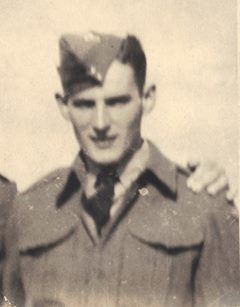
On The War Memorial Trail….A Visit To The Canadian War Cemetery In Adegem

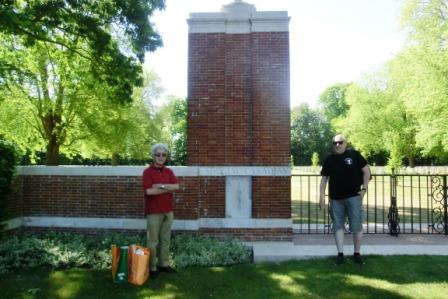
Pieter (left) with Patrick Michiels at the Canadian War Cemetery in Adegem.  The bags by Pieter’s feet contain flags!  (Photo credit: Daria Valkenburg)

December 8, 2025.  Readers of this blog are aware that Pieter has been involved in finding photos of Canadians who are buried in The Netherlands since 2014.  This past spring we were in The Netherlands and Belgium for the 80th Anniversary of Liberation Commemoration events, and placed flags at the graves of 383 soldiers in 14 cemeteries. 

….Flags placed at the graves of soldiers from 8 provinces…

After visiting a number of cemeteries in The Netherlands during our 2025 European War Memorial Tour, we made our way into Belgium. The first cemetery there that we visited was the Canadian War Cemetery in Adegem.  Many Canadians who lost their lives during the Battle of the Scheldt are not only buried in the Canadian War Cemetery in Bergen Op Zoom in The Netherlands, but are also buried at the Canadian War Cemetery in Adegem, Belgium.

While most of those buried in Adegem died during the operations for the clearance of the south bank of the Scheldt, many Canadians who lost their lives elsewhere in Belgium were also brought here for burial.  

There are 1,119 WWII Commonwealth burials, 848 of them Canadian, and one unidentified burial from WWI. There are also 33 Polish and two French burials.  Flags were placed by Pieter at 29 graves at this cemetery:

  • 3 were from Nova Scotia
  • 2 from New Brunswick
  • 12 from Prince Edward Island
  • 2 from British Columbia
  • 2 from Saskatchewan
  • 3 from Manitoba
  • 1 from Alberta
  • 4 from Ontario

4 of the graves also received an Acadian flag.  All of the graves received a Canadian flag.  Provincial flags were placed at all graves, with the exception of the soldiers from British Columbia and Saskatchewan, for which, unfortunately, we did not receive flags.

….This was our first visit to Adegem…

Our journey to the cemetery in Adegem had a few hiccups.  It started with a mistake on my part, when I left my tablet behind at the hotel in Zaltbommel, and didn’t realize it was missing until we were half an hour into our journey to Adegem and had to turn around and go back.  Luckily, it was still in the hotel room, and we were on our way again. 

Then the GPS couldn’t find the cemetery and we got lost before Pieter’s good sense of direction got us to the cemetery….1 ½ hours later than planned.
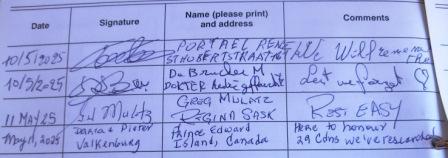
As always, when we are in a war cemetery, we write an entry in the visitors’ book.  (Photo credit: Daria Valkenburg)

We were joined by Patrick Michiels, a Belgian researcher, who had been so helpful to us over the past few years in taking photos of graves of soldiers that Pieter had researched, even going on Christmas Day last year to take photos of the Christmas Eve candles at their graves.  (See https://onthewarmemorialtrail.com/2024/12/31/2024-christmas-eve-candle-lighting-at-the-canadian-war-cemetery-in-adegem/)
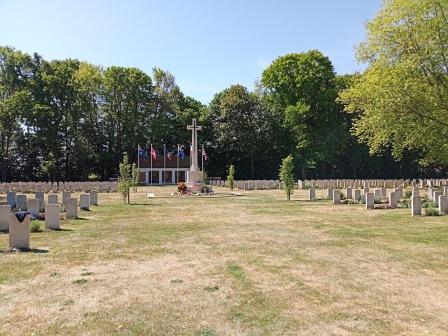
Overview of the Canadian War Cemetery in Adegem with the Cross of Sacrifice.  (Photo credit: Daria Valkenburg)

It took over 2 hours for Pieter to place the flags and to photograph each of the 29 graves, with a slight delay caused when Pieter cut his hand on a sharp knife that Patrick had lent him so he could poke a hole into the very dry soil in order to get the flags placed.  There was no real damage to his hand, but lots of blood!  It didn’t help that it was over 30oC (86oF) and the hot sun was beating down on us, making it feel hotter.

…4 soldiers whose stories were previously told are commemorated…

The graves and photos of 4 soldiers, whose stories have previously been told on this blog, are featured.
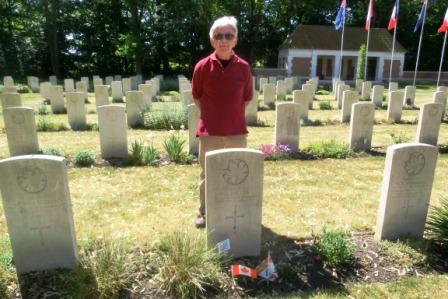
Pieter stands behind the grave of Harold ‘Hal’ Gabriel Bulger.  (Photo credit: Daria Valkenburg)

Harold ‘Hal’ Gabriel BULGER of Foxley River, Prince Edward Island, was serving with the Algonquin Regiment when he was killed during the Battle of Moerbrugge in Belgium on September 10, 1944, at the age of 26. You can read his story at https://onthewarmemorialtrail.com/2024/08/05/on-the-war-memorial-trail-the-bulger-brothers-part-i-the-wwii-soldier-from-foxley-river-killed-during-the-battle-of-moerbrugge/
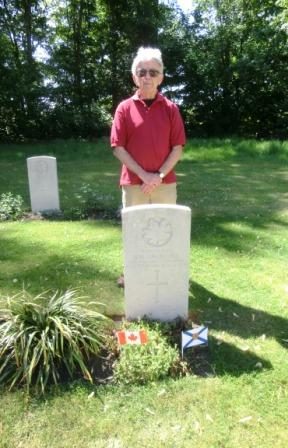
Pieter stands behind the grave of Bruce Wilbur Churchill.  (Photo credit: Daria Valkenburg)

Bruce Wilbur CHURCHILL, born in Sandford, Yarmouth County, Nova Scotia, was serving with the Algonquin Regiment when was accidentally killed at the age of 23 on September 29, 1944 in The Netherlands when a bullet from a Bren Gun ricocheted and hit him.  You can read his story at https://onthewarmemorialtrail.com/2022/06/05/on-the-war-memorial-trail-the-ww2-soldier-who-lost-his-life-in-a-monastery-garden/
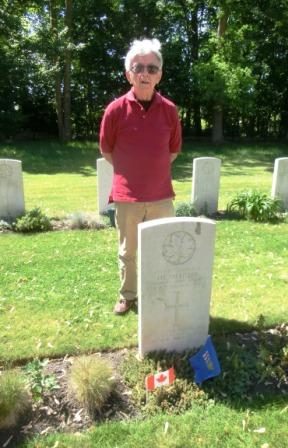
Pieter stands behind the grave of Joseph ‘Joe’ Hudson Pallister.  (Photo credit: Daria Valkenburg)

Joseph ‘Joe’ Hudson PALLISTER, born in Calgary, Alberta, was serving with the Canadian Scottish Regiment when he was killed during the Battle of the Leopold Canal in Belgium on October 6, 1944, aged 21.  You can read his story at https://onthewarmemorialtrail.com/2023/06/18/on-the-war-memorial-trail-1-wwii-soldier-2-families-3-countries/

After we sent photos of our visit to Joseph’s grave to his great-nephew, Thomas Mouser, he not only thanked us, but shared a letter written by Captain John ‘Jack’ Lawrence GALLAGHER to Joseph’s mother about her son…. 

….I wish to express my deepest sympathies to you on the loss of your son, Joe.  He was with the battalion for a long time, and was with me in ‘C’ Company from D-Day until the severe action in which he was killed.

During that time he became liked by everyone for his easy-going good humour and respected for his coolness in action and resourcefulness as our NCO. 

I can only say that he was killed instantly while carrying out his job, and that his conduct in that battle and all others that he participated in was an example to us all….”  

What a heartfelt letter of sympathy to a grieving mother! Captain Gallagher survived WWII, with the rank of Major and a Croix de Guerre (Bel) with Palm, and passed away in 2012. (See https://www.legacy.com/us/obituaries/legacyremembers/john-gallagher-obituary?id=44106495)

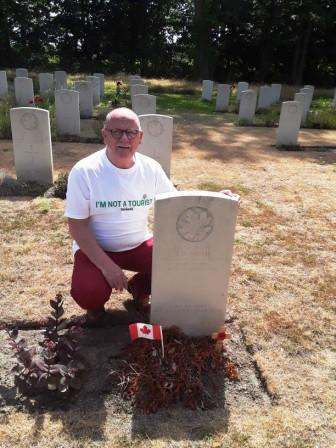
Pieter stands behind the grave of Edison Reynolds Smith.  (Photo credit: Daria Valkenburg)

Edison Reynolds SMITH, born on Port Hood Island, Cape Breton, Nova Scotia, was serving with the North Nova Scotia Highlanders when he lost his life in The Netherlands on October 16, 1944 during the Battle of the Scheldt, at the age of 20.  You can read his story at https://onthewarmemorialtrail.com/2023/12/07/on-the-war-memorial-trail-part-1-the-wwii-letters-of-edison-reynolds-smith/ and https://onthewarmemorialtrail.com/2023/12/12/on-the-war-memorial-trail-part-2-the-wwii-letters-of-edison-reynolds-smith/

….Photos of 3 soldiers from Prince Edward Island are sought…

Photos are still being sought for three soldiers from Prince Edward Island who are buried in Adegem:

  • Valmont PERRY of St. Louis was serving with the Stormont, Dundas and Glengarry Highlanders when he lost his life on October 21, 1944 at the age of 26.
  • Allan Rattenbury READ of Read’s Corner was serving with the Regina Rifle Regiment when he lost his life on October 27, 1944 at the age of 21.
  • John James SAUNDERS of Bloomfield was serving with the South Saskatchewan Regiment when he lost his life on September 22, 1944 at the age of 27.  

If you have photos or information to share about these men, please let Pieter know.

….All of the flags placed at graves were donated…

All of the flags placed at graves were donated.  Our thanks go to:

  • Alan Waddell, Constituent Assistant, on behalf of Heath MacDonald, MP for Malpeque, for the Canadian flags.
  • Matt MacFarlane, MLA for District 19, Borden-Kinkora, for the flags from Prince Edward Island.
  • Kyle Graham, Research Officer, Military Relations, Nova Scotia Intergovernmental Affairs, on behalf of Premier Tim Houston, Province of Nova Scotia, for the Nova Scotia flags.
  • Wayne Ewasko, MLA for Lac Du Bonnet, Manitoba, Interim Leader of the Official Opposition, Province of Manitoba, who donated the Manitoba flags.
  • Don Coutts on behalf of the Muttart and Coutts families in memory of Flight Sergeant Elmer Bagnall Muttart for the Ontario flags.
  • Jean-Claude D’Amours, MLA for Edmundston-Madawaska Centre, Minister responsible for Military Affairs, with the help of Cécile LePage, Province of New Brunswick, for the New Brunswick flags.
  • Marie Renaud, MLA St Albert, Alberta at the request of Roman Berezowsky, for the Alberta flag.
  • La Société acadienne de Clare at the request of Simone Comeau for the Acadian flags.
Thank you to Patrick Michiels for joining us during our visit to Adegem.  Thank you also to Thomas Mouser for sharing the letter of sympathy written by Captain Gallagher.  We’ll continue to share the highlights of our adventures on the 2025 European War Memorial Tour. 

The research work continues for Pieter.  If you have photos or information to share about soldiers buried in The Netherlands or Belgium, please email him at memorialtrail@gmail.com, or comment on the blog.    

© Daria Valkenburg

….Want to follow our research?…

If you are reading this posting, but aren’t following our research, you are welcome to do so.  Our blog address: https://onthewarmemorialtrail.com/
4 countries, 6 weeks, 7,000 km – an unforgettable war memorial journey in Europe…. Daria’s book ‘No Soldier Buried Overseas Should Ever Be Forgotten‘ is available in print and e-book formats.  Net proceeds of book sales help support research costs and the cost of maintaining this blog. For more information see https://nosoldierforgotten.com/

Subscribe to our YouTube Channel: On The War Memorial Trail With Pieter Valkenburg: https://www.youtube.com/channel/UCJ591TyjSheOR-Cb_Gs_5Kw

Never miss a posting!  Subscribe below to have each new story from the war memorial trail delivered to your inbox.
On The War Memorial Trail….. Commemorating The 80th Anniversary Of D-Day

Screenshot 2024-05-28 at 10-34-30 D-Day 80th Anniversary Banner Decoration - 1.2m

June 1, 2024.  June 6, 2024 marks the 80th anniversary of Operation Overlord (the larger Normandy invasion) and Operation Neptune (the English Channel-crossing portion of Operation Overlord) – what we refer to as D-Day.

….What does D-Day mean?….

Did you know that the ‘D’ in D-Day was a military codeword referring to ‘Departure Day’?  U.S. General Dwight D. Eisenhower, Supreme Commander of the Allied Expeditionary Force in Europe,  noted, through his executive assistant, Brigadier General Robert Schultz: “Be advised that any amphibious operation has a ‘departed date;’ therefore the shortened term ‘D-Day’ is used….

While there were several other D-Days during the war, the invasion of Normandy was the biggest and most well-known. 

…..D-Day was an international effort….

Most people consider D-Day to have been solely a joint British, Canadian, and American effort.  However, it’s important to recognize that over 2 million troops from over 12 countries were in Britain in preparation for the invasion. While Allied forces consisted mainly of American, British, and Canadian troops, smaller contingents included Australian, Belgian, Czech, Dutch, French, Greek, New Zealand, Norwegian, Rhodesian, and Polish naval, air, or ground support!

Dday Invasion-map

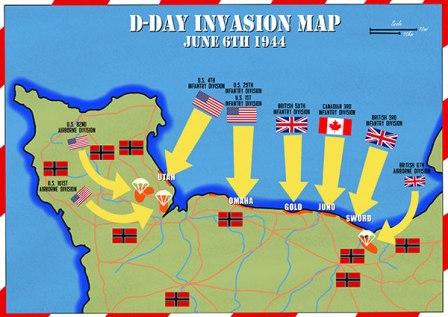
D-Day invasion map. The Canadians landed on Juno Beach in Normandy, France. (Map source: https://www.ddaylepe.org.uk/index.php/overlord-neptune/)

On the morning of D-Day, ground troops landed across five assault beaches –Juno, Sword, Gold, Utah, and Omaha.  Canadian soldiers landed at Juno on the outskirts of Bernières.  British forces landed at Sword and Gold, while the Americans landed at Utah and Omaha.

Want to know a bit more about D-Day?  See https://news.sky.com/story/eleven-things-you-might-not-know-about-d-day-13132330  My favourite tidbit is how Hitler slept through the D-Day landings.  Even after he woke up in the late morning he believed it was just a diversionary tactic – and so no reserve troops were immediately sent to Normandy!

….11 servicemen who survived D-Day have been featured on this blog….

Over the past years, we have featured stories of 11 servicemen who were present in Normandy on June 6, 1944. All survived D-Day, but only 1 survived WWII and returned home – Airman Lorne MACFARLANE flew a night mission that coincided with the early morning hours of D-Day and realized afterwards what a lucky escape he and his crew had.  “Our mission was completed.   As we crossed the Channel on the way back, we could see through breaks in the cloud, the wakes of hundreds of ships…” heading towards the French coast.  You can read Lorne’s story here:  https://onthewarmemorialtrail.com/2021/10/20/on-the-war-memorial-trail-the-ww2-pilot-from-pei-who-flew-40-missions-overseas-and-returned-home/

The other 10 are buried in a Canadian War Cemetery in France, The Netherlands, or Belgium.  These men are:

….The actions of D-Day helped shorten WWII….

For a very brief overview of the significance of D-Day, watch this 3 minute CTV video prepared for the 75th anniversary:

….Upcoming Event at the Borden-Carleton Legion….

To commemorate the 80th anniversary of D-Day, the Borden-Carleton Legion will have a wreath laying ceremony by the Cenotaph at 3:00 pm on June 6, 2024.  Pieter and I will be there. All are welcome to attend in honour of those who fought on that day.  The wreath laying ceremony will be followed by a light lunch of hamburgers and hot dogs.

Do you have photos or information to share? Email Pieter at memorialtrail@gmail.com, comment on the blog, or tweet to @researchmemori1.

© Daria Valkenburg

….Want to follow our research?….

If you are reading this posting, but aren’t following our research, you are welcome to do so.  Our blog address: https://onthewarmemorialtrail.com/

Front cover OnTheWarMememorialTrailinEurope4 countries, 6 weeks, 7,000 km – an unforgettable war memorial journey in Europe…. Daria’s book ‘No Soldier Buried Overseas Should Ever Be Forgotten‘ is available in print and e-book formats.  Net proceeds of book sales help support research costs and the cost of maintaining this blog. For more information see https://nosoldierforgotten.com/ 

You are also invited to subscribe to our YouTube Channel: On The War Memorial Trail With Pieter Valkenburg: https://www.youtube.com/channel/UCJ591TyjSheOR-Cb_Gs_5Kw

Never miss a posting!  Subscribe below to have each new story from the war memorial trail delivered to your inbox.
On The War Memorial Trail….. Part 2: The WWII Letters Of Edison Reynolds Smith

20220903_190017 Wayne and Angela Leighton in Annapolis Valley

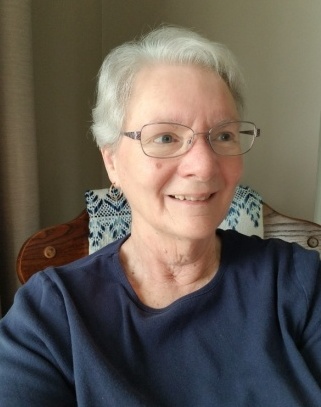
Angela Leighton and her husband Wayne at the Lookoff (Blomidon) in Nova Scotia’s Annapolis Valley. (Photo submitted by Angela Leighton)

December 12, 2023. In Part 1 of the WWII letters of Edison Reynolds SMITH, which had been shared by his niece, Angela Leighton, Edison had enlisted and was in France.  Meanwhile, his family was dealing with the death of Edison’s younger brother Wesley – which Edison was as yet unaware of – and had received a telegram stating that Edison had been wounded.  (See https://onthewarmemorialtrail.com/2023/12/07/on-the-war-memorial-trail-part-1-the-wwii-letters-of-edison-reynolds-smith/)

The telegram had been sent to Edison’s brother, Wesley Smith in Cooks Cove, Nova Scotia, stating that Edison had been wounded on June 9, 1944, but remained on duty with his unit.  However, Wesley did not receive the telegram – he had drowned on May 27, 1944.

Now, Edison’s story continues in Part 2…..

Edison Reynolds Smith

Edison Reynolds Smith.  (Photo courtesy of Angela Leighton)

… Edison was transferred to the Canadian Scottish Regiment…

According to his service file, Edison was in the hospital until June 11, 1944, after which he was transferred to the 1st Battalion, Canadian Scottish Regiment, British Western European Forces (BWEF)In his letters, Edison didn’t mention being wounded.

His first letter from France, dated June 14, 1944 letter to his aunt, Elsie Myers, confirmed he was in the 1st Battalion, Cdn Scottish Regiment, ‘A’ Company. …I am in France now.  I’ve been here a few days.  The last letter I wrote was before I left the docks in England…. The French people are very nice to us… I am with the Canadian Scottish Regiment and with a pretty good bunch of men.  George is over here too somewhere, I suppose, but he’d be with the North Nova Scotia Highlanders...”  Sgt George MYERS was a nephew of Edison’s uncle, Roland Myers.

On June 26, 1944, Edison wrote to his brother Wesley, still unaware that his brother had died on May 27, 1944.  “…Just a line or two to let you know I am still kicking….It’s pretty noisy here at times. Most of the fellows I’m with are from British Columbia….The days seem pretty long over here longer than they did in England.  I never got any leave or anything when I was in England… There are quite a few cattle over here. They are around our trenches every day….I might be able to get in the North Nova Scotia Highlanders, the same as George is in.  My name is gone in for them anyway…” 

On July 1, 1944, Edison got his wish and was transferred back to the North Nova Scotia Highlanders. 

… Edison was heartbroken to learn that his brother Wesley had died…

In a July 2, 1944 letter to his Aunt Elsie, Edison mentions he was now in ‘C’ Company of the North Nova Scotia Highlanders.  He was shocked to learn about his brother’s death. “…I was just over to see George and Percy.  I just arrived at this unit yesterday and I went to look George up this afternoon and found him, and I also saw Percy….”  Angela believes that Percy referred to Percy LUMSDEN.

 …I was shocked when George told me about Wes.  Cold chills came over me when he handed me a piece that was cut out of the newspaper telling about the terrible thing that that happened to him. How did it happen?  I can hardly believe it.  I just trembled when I read it. I suppose you sent me the news but I haven’t received it yet because I have been moved around so much. I bet there was a large funeral. I suppose the reserve army was there too….It’s going to be hard on me for a while and all of us…Wes was a friend of everybody’s and was a smart boy too. He died a good soldier….

Edison then wrote to his sister Dorothy on July 4, 1944. “…It’s hard for me to believe that Wes has been drowned. Charlie MacKenzie was drowned too…”  

… Edison related some of what he was experiencing …

In a July 12, 1944 to his Aunt Elsie, Edison carefully mentioned troop losses. “…We are moving deeper into France all the time.  We have lost a lot of the fellows I came overseas with.…I’ll be glad when we get to Paris…

On July 15, 1944, he wrote to his cousin Abbie. “…I was down to the beach yesterday for a bath and I saw Percy there…. We are back of the lines now, having a rest after being in the front lines for over a month.  It’s a lot quieter back here and we can have a night’s sleep in peace.  My nerves were getting kind of shook up and a good rest will do a fellow good…

It was Percy Lumsden who told him that the family had been informed that he was wounded, which he addressed in the letter to Abbie. “…Percy said he got a letter from Ruth and she said it was in the paper that that I was wounded.  I haven’t got a scratch on me.  It must be a mistake I guess…I hope you can make my writing out.  My hand is shakier than it was….

It’s unclear whether Edison was simply sparing his family, as his service file clearly notes that he had been wounded and briefly hospitalized.

… Edison longed for the war to end …

Edison wondered if he’d made the right decision to enlist in his July 24, 1944 letter to his sister Dorothy. “…War is awful…and you don’t realize it until you get in the thick of it… I wish I had of stayed home and helped Uncle Rollie.  I might have been able to if I had of put in for farming leave early enough, but I was so anxious to get over here and get a crack at Jerry.  I’m not quite so anxious now though…

Around the same date, he wrote more frankly to his cousin Abbie. “…I’m right in the front line.  I’ve been in the front line since D-Day, the day I landed in Normandy….The only pleasure we get here is getting letters.  We have it pretty tough of course, you can expect that in a place like this.….

… Edison delighted in getting a care package from home …

Mail and care packages were morale boosters.  Edison’s August 2, 1944 letter to his sister Dorothy reflects this.  “…I got the box you sent me for my birthday. The oranges were rotten, but I found a couple that were fit to eat. The chocolates were in good shape though and so was the cake.  I enjoyed it very much. I gave some of the boys some chocolates and some of the cake…It was a treat for me to get those chocolates because it’s something you don’t see very often over here…

 … Edison felt the tide of war was turning …

On September 2, 1944, in a letter to his sister Dorothy, Edison noted that France was nearly liberated.  “…We have been moving so fast that I don’t get much time to write.  The weather over here is terrible, wet, raining every day, but I imagine there will be a dry spell after a while… The war looks pretty good now.  Paris has fallen and we are nearing the borders of Germany and Belgium. It makes you feel good when we go into a town and see the streets lined with cheering Frenchmen.  They are certainly glad to see us coming….

Edison related a close call in a September 7, 1944 letter to his cousin Abbie. “…I’ve had some close calls, but I’m still on the go.  I had a bullet go through my pant leg and a piece of shrapnel hit my steel helmet, so I think that’s close enough .

The last letter written by Edison was on October 6, 1944 to his uncle, Roland Myers. “…I am in Belgium now and we are having pretty good weather these last few days, nice and warm.….”   

What Edison was unable to explain was that he was in the midst of the Battle of the Scheldt, which had begun on October 2, 1944. (See https://en.wikipedia.org/wiki/Battle_of_the_Scheldt and https://www.thecanadianencyclopedia.ca/en/article/canada-and-the-battle-of-the-scheldt)

On October 6, 1944, Operation Switchback, the second main operation of the Battle of the Scheldt began, with the goal of clearing the ‘Breskens Pocket’ – the German defences around Breskens in The Netherlands. (See https://www.canadiansoldiers.com/history/battlehonours/northwesteurope/breskenspocket.htm)

….How Edison Lost His Life….

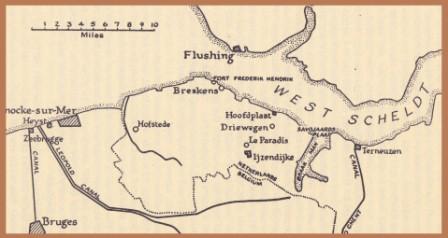
Map showing where Edison lost his life

Edison was initially buried between Hoofdplaat and Terneuzen, The Netherlands.  (Map source: ‘No Retreating Footsteps’ by Will R. Bird)

On October 16, 1944, the North Nova Scotia Regiment was in The Netherlands, tasked with attacking a heavily defended dyke.  Sadly, it was the day that Edison lost his life, as was related in a November 17, 1944 letter to his aunt from Captain L.C. Niuhold, ‘C’ Company, North Nova Scotia Highlanders:  “…As second-in-command of the company in which your nephew served, I was present on the 16th of October in the battle in which he was killed. …

It was part of the campaign in the Scheldt in Holland which eventually opened the great port of Antwerp.  On the 16th of October the company was leading the battalion in an attack along a stubbornly defended dyke.  The going was slow and difficult but owing to the courage and determination of your nephew and his pals, the position was eventually taken. 

It was after we had reached our first objective and your nephew was bringing in some prisoners, that a burst of machine-gun fire from another direction hit him and instantly killed him.  The same burst of fire killed his platoon officer and another one of his pals who were with him.

Your nephew was buried, along with the other boys who died that day, in a pretty orchard in Southern Holland, with a funeral service held by our battalion padre.

I wish to extend my heartfelt sympathy to you in the loss of your nephew.  He is missed by everyone in the company as he was one of our best soldiers…

… Edison is buried in the Canadian War Cemetery in Adegem…

Edison was initially buried between the towns of Hoofdplaat and Terneuzen, The Netherlands. After the war ended, Edison was reburied in the Canadian War Cemetery in Adegem, Belgium.  Pieter’s cousin, François Breugelmans visited Edison’s grave with his wife, Mieke de Bie, and ensured a Canadian flag was placed by his headstone.

SMITH and Francois from Mieke

François Breugelmans by the grave of Edison Reynolds Smith at the Canadian War Cemetery in Adegem.  (Photo credit: Mieke de Bie)

Thank you to Angela Leighton for providing photos, Edison’s letters, and information.  Thank you also to François Breugelmans and Mieke de Bie for visiting Edison’s grave at the cemetery in Adegem. Do you have a story to tell? Email Pieter at memorialtrail@gmail.com, or comment on the blog.  

© Daria Valkenburg

….Want to follow our research?….

If you are reading this posting, but aren’t following our research, you are welcome to do so.  Our blog address: https://onthewarmemorialtrail.com/

Front cover OnTheWarMememorialTrailinEurope4 countries, 6 weeks, 7,000 km – an unforgettable war memorial journey in Europe…. Daria’s book ‘No Soldier Buried Overseas Should Ever Be Forgotten‘ is available in print and e-book formats.  Net proceeds of book sales help support research costs and the cost of maintaining this blog. For more information see https://nosoldierforgotten.com/ 

You are also invited to subscribe to our YouTube Channel: On The War Memorial Trail With Pieter Valkenburg: https://www.youtube.com/channel/UCJ591TyjSheOR-Cb_Gs_5Kw

Never miss a posting!  Subscribe below to have each new story from the war memorial trail delivered to your inbox.

On The War Memorial Trail….. Part 1: The WWII Letters Of Edison Reynolds Smith

December 7, 2023. Whenever Pieter researches someone who has served in the military, we ask if there is any correspondence that the families might have. Sometimes a letter or postcard survives, which is wonderful.

In 2021, in the Atlantic Canada Remembers series, Angela Leighton submitted a photo of her uncle, Edison Reynolds SMITH, who was killed in action in The Netherlands on October 16, 1944, during the Battle of the Scheldt, while serving with the North Nova Scotia Highlanders.  He’s buried in the Canadian War Cemetery in Adegem, Belgium.  (See https://onthewarmemorialtrail.com/2021/01/07/on-the-war-memorial-trail-atlantic-canada-remembers-part-1/)

Edison Reynolds Smith

Edison Reynolds Smith.  (Photo courtesy of Angela Leighton)

After the article was posted, Angela wrote us with more information.  “Edison Reynolds Smith was born May 11, 1924 on Port Hood Island, Cape Breton, Nova Scotia to parents Guy and Grace (nee Watts) Smith.  After his parents passed, Edison and his siblings were taken in by their aunt and uncle, Elsie and Roland Myers, and lived in Cooks Cove, Guysborough County, Nova Scotia from 1929 until 1944….

Edison’s sense of duty was strong, and he enrolled in the 2nd (Reserve) Battalion of the Pictou Highlanders on August 24, 1942.  “…Edison joined the Militia in August 1942 and worked as a lumberman for his uncle until he enrolled in the Canadian Army on August 30, 1943….”  He enlisted at the No. 6 District Depot in Halifax, Nova Scotia.

20230616_085605_resized Angela Leighton

Angela Leighton, whose mother Dorothy was the younger sister of Edison Reynolds Smith, kept the letters he wrote to family.  (Photo submitted by Angela Leighton)

Angela then mentioned that she had letters that Edison had written during the time of his military service!  The letters reveal an engaging man who had suffered much tragedy in his young life, but never lost his optimistic spirit, even when he encountered more loss.  He was deeply interested in his family and friends, and kept up an active correspondence.  As time went on, he yearned to be back in Nova Scotia, surrounded by those he loved.

This was confirmed by Angela, whose mother Dorothy (Dot) was Edison’s sister.  “…His mother (my grandmother) died on January 11, 1928.  Her husband (my grandfather) died January 30, 1929. …It is no wonder Edison had such a love of family after such tragedy in those years before and really wanted to come back home….

1943 Edison Smith with Dot and Wesley

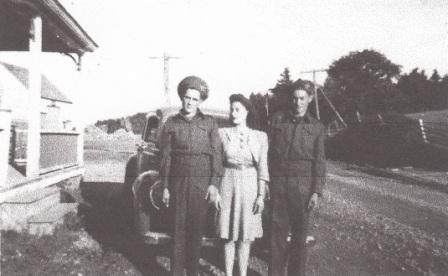
Edison (left) with his sister Dorothy and younger brother Wesley in 1943.  (Photo courtesy of Angela Leighton)

… Edison began his army training in September 1943…

After enlisting, Edison was sent to No. 60 Canadian Army Basic Training Centre (CABTC) in Yarmouth, Nova Scotia on September 17, 1943.

On November 19, 1943, he was sent to A14 Canadian Infantry Training Centre (CITC) in Aldershot, Nova Scotia for further training.  He received embarkation leave, from January 22 to February 4, 1944, the last chance he had to see his family.

After returning from leave, Edison remained in Aldershot until February 20, 1944, when he was transferred to the No.1 Training Brigade in Debert, Nova Scotia for final training and preparation for overseas service.

In a March 15, 1944 letter to his sister Dorothy, written from No 2 Temporary Transit Camp in Debert, Edison related one of the experiences and mentioned a friend from back home: “…We just got back off of our three day scheme.  We slept out in the woods two nights and we marched about 26 miles altogether.  I didn’t mind it though. It was a change from sleeping in the barracks…I saw Victor Shea up here the other day, he just came here about three or four days ago….It was terrible cold here right after I came back off of my weekend.  It was about 20 below zero one night.  But it’s a lot warmer now.  We moved today to a different part of the camp…

An April 1, 1944 letter to Dorothy, also written from Debert, noted that: “…my eyes have been paining me a little lately….I went on sick parade, but they only gave me a few tablets.…

… Edison left Canada for overseas service in April 1944…

Not mentioned in the letter was that Edison was on his way to the United Kingdom.  On April 6, 1944 he left Canada, arriving in the United Kingdom on April 12, 1944, where he was assigned to No 4 Canadian Infantry Reinforcement Unit (CIRU).

Edison’s initial impression of England was positive, as he related in an April 14, 1944 letter to his sister Dorothy, written from No 4 CIRU: “…It’s lovely weather over here except it rains once in a while…I spent Easter in the middle of the Atlantic.  It was a nice place to spend Easter, wasn’t it?….I had a good trip coming across but it was a little crowded….

Not long afterwards, Edison was sent to No 10 Battalion, Canadian Base Reinforcement Group (CBRG), but was still in England.  A poignant May 11, 1944 letter to his aunt, Elsie Myers, reflected that “…Today is my birthday. I hope I will be home my next birthday…

… Edison loved getting mail from back home…

In a May 25, 1944 letter, written from No 10 Battalion CBRG in England, Edison answered his sister Dorothy’s query about Victor Shea. “…I got two letters today and both from you. There’s nothing cheers me up any more than getting letters…..I haven’t seen Vic for a while.  He is not with me at all now.  He was with me all the time coming across on the ship from Canada and he ate and slept right where I did all the way coming across… 

Victor SHEA had joined the Canadian Parachute Battalion in 1942.  When more soldiers were needed for battle on the beaches of Normandy after D-Day, he transferred to infantry and was on the front lines, joining the North Nova Scotia Highlanders.   He received France’s Croix de Guerre (Medal of Valour) for his bravery in the liberation of France.

Before ending his letter, Edison assured his sister that he appreciated a parcel she’d sent. “…Thank you so much for the box you sent me.  We get lots to eat but it’s nice to have a change from army grub…

Dorothy wasn’t the only one to inquire about Victor Shea and other soldiers from their area.  In a May 25, 1944 letter to his cousin Abbie, daughter of his uncle Roland and aunt Elsie Myers, Edison explained that “…Vic Shea isn’t where I am at all now so there isn’t any one from home with me now….They are about the only ones anyways handy from home.  But I know a lot of the boys here by now because I went through all my training in Canada with them….If they send me a box from home, tell them to send me a few apples because I never tasted a bit of fruit of any kind since I came over here…

… Edison leaves for France and the D-Day invasion with the North Nova Scotia Highlanders…

On June 2, 1944, Edison was assigned to the North Nova Scotia Highlanders, as they prepared to leave the United Kingdom for France as part of the 21st Army Group.

The war diary for the North Nova Scotia Highlanders for June 3, 1944 noted that they … embarked from G1 Hard, Stokes Bay…..” and were “…lying out in the Southampton waters just outside Netley…” while awaiting clearance to cross the English Channel.

There was a delay in leaving due to heavy winds on June 4, so it wasn’t until June 5, 1944 that the crossing began.  “…At 1400 hours the flotilla moved out to the open sea and formed up with the other craft taking part in the invasion…”  This, of course, was to be what we know as D-Day.

On June 6, 1944, the war diary recorded that “…by 1400 hours all our troops were ashore, but as the Eighth Canadian Infantry Brigade had not found the going as easy as expected, we were unable to get through the town and were unable to assemble at ‘ELDER’, near Beny-Sur-Mer, as planned, and the Commanding Officer decided to assemble in a field….

D-Day was Edison’s first experience of fighting, but he survived.

… Tragedy strikes but Edison was not yet aware of another loss…

In early June, 1944, a telegram was sent to Edison’s brother, Wesley Smith in Cooks Cove, Nova Scotia, stating that Edison had been wounded on June 9, 1944, but remained on duty with his unit.  A notice of his being wounded is also recorded in Edison’s service file.  However, Edison later stated to his family that he was not wounded.

Edison and Wesley Smith better res

Edison (left) and Wesley Smith. (Photo courtesy of Angela Leighton)

What Edison didn’t know – and apparently neither did the military who sent the telegram – was that his younger brother Wesley, who was in the Reserves, had drowned on May 27, 1944.  He was only 16 years old.

….Coming up in Part 2…

In Part 2, Edison sees active service in France, Belgium, and The Netherlands and learns about the loss of his younger brother.   

Thank you to Angela Leighton for sharing photos and letters written by her uncle.  Do you have information to share about Canadian soldiers, please email us at memorialtrail@gmail.com, or comment on the blog.  

© Daria Valkenburg

….Want to follow our research?….

If you are reading this posting, but aren’t following our research, you are welcome to do so.  Our blog address: https://onthewarmemorialtrail.com/

Front cover OnTheWarMememorialTrailinEurope4 countries, 6 weeks, 7,000 km – an unforgettable war memorial journey in Europe…. Daria’s book ‘No Soldier Buried Overseas Should Ever Be Forgotten‘ is available in print and e-book formats.  Net proceeds of book sales help support research costs and the cost of maintaining this blog. For more information see https://nosoldierforgotten.com/ 

You are also invited to subscribe to our YouTube Channel: On The War Memorial Trail With Pieter Valkenburg: https://www.youtube.com/channel/UCJ591TyjSheOR-Cb_Gs_5Kw

Never miss a posting!  Subscribe below to have each new story from the war memorial trail delivered to your inbox.
On The War Memorial Trail….. Atlantic Canada Remembers – Part 1

No soldier buried overseas should be forgotten.

January 7, 2021.  “No soldier buried overseas should be forgotten.” This statement by Pieter in a news clip on CTV’s Atlantic Live At 5 touched many people who watched it, and many photos and stories were subsequently emailed to him.   Since the broadcast, Pieter has been working to ensure every email is acknowledged, and that the photos of soldiers buried in The Netherlands are forwarded to the appropriate cemetery for their digital archives. (See https://onthewarmemorialtrail.com/2021/01/05/on-the-war-memorial-trail-the-search-for-ww2-soldiers-buried-in-the-netherlands-featured-on-ctvs-atlantic-live-at-5/)

This posting will feature some of the photos submitted. There were too many submissions for one posting so more will be featured in subsequent postings.

Soldiers buried at the Canadian War Cemetery in Holten, The Netherlands

James Grant Anningson

James Grant Anningson. (Photo submitted by Brenda Budd)

Brenda Budd submitted a photo of James Grant ANNINGSON, saying “My husband’s uncle is buried there.  His name was James Grant Anningson but the family called him Grant.  He was the only one in the family that didn’t return…”  Sgt Anningson was with the New Brunswick Rangers and lost his life on April 27, 1945, at the age of 23.

image002 John Angus Beaton

John Angus Beaton. (Photo submitted by Alexander Beaton)

Alexander Beaton submitted a photo of his uncle John Angus BEATON from Mabou Ridge, Cape Breton, Nova Scotia.  Alexander’s brother Daniel wrote that his uncle  made it through the war but due to the amount of soldiers that had to return to Canada, he and other soldiers were waiting their turn to be flown home.  While waiting one Sunday morning in January 1946, He was fatally shot by a Canadian soldier suffering from a mental illness. This soldier was later charged with his murder…

The shooting occurred in Oldenburg, Germany, where there was a large Canadian base.  Daniel continued by telling us that “…I was told that John Angus’s parents, my grandparents, were happy and waiting for John Angus to return home, but were informed later that he would never return. He was 32 years old when he died, and was the son of Mary and Alex Tailor Beaton…

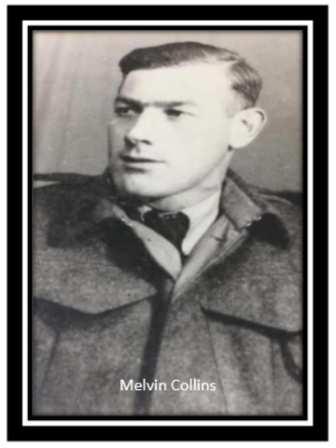
Melvin Collins

Melvin Collins.  (Photo courtesy of Phyllis Kelly)

Phyllis Kelly submitted a photo of her uncle, Melvin COLLINS, from South Kouchibouguac, New Brunswick.  He served with the New Brunswick Rangers and died on April 12, 1945 in Papenburg, Germany, age 26, when he accidentally tripped a hidden high-incendiary booby trap. 

Goldwin Marven Pollick

Goldwin Marven Pollick pushing his brother Ralph on a bike. (Photo courtesy of Gary Pollick and Family of Goldwin Pollick)

On behalf of the Goldwin Pollick family, Gary Pollick submitted a photo of his uncle, Goldwin Marven POLLICK, and explained that “We remember him as always being referred to as Goldy.  I don’t know a lot about him as I was not born yet and no one in my family spoke much about the war.  My father was in The Netherlands at the same time, and he was able to view his brother’s body before it was taken away for burial…

Goldwin Pollick was born in Minto, New Brunswick, and served with the Carleton and York Regiment.  He lost his life on April 13, 1945 in Wilp-Achterhoek. This date was familiar to us as in 2017 we visited a windmill in the nearby village of Posterenk, in which 6 members of the Carlton and York Regiment are listed as having died between April 13 and 15.  Unfortunately, this listing does not include every soldier who was killed in the area.

Ford Hilton Spidle

Ford Hilton Spidle (Photo submitted by Dawn (Spidle) Coldwell)

Dawn (Spidle) Coldwell submitted a photo of her uncle, Ford Hilton SPIDLE, explaining that “…He was a member of the Cape Breton Highlanders. I’ve been told that he was killed by a sniper bullet the day the war was declared over. He was the young age of 32.  Apparently, the information hadn’t been received that the war was over….” The war in The Netherlands ended on May 5 and Ford Hilton died on May 1, 1945 during the Battle of the Delfzijl Pocket, which lasted from April 23 to May 2.  20 soldiers from the Cape Breton Highlanders were killed in action during that battle.

Dawn went on to share a personal experience.  “…I was fortunate enough to have attended the Memorial Day Service in Holten, in 2009. While I was there the Dutch people treated me like I was royalty. I have stayed in close contact with the people over there who made my trip possible. Uncle Ford was my Dad’s only brother. I have a brother who was named after Uncle Ford.  I wasn’t even born when Uncle Ford was killed but my Dad always kept his memory alive.…

Charles Borden Tuplin

Charles Borden Tuplin. (Photo submitted by Gary Richard Perry)

Gary Richard Perry of Nova Scotia submitted a photo of Charles Borden TUPLIN of the Black Watch (Royal Highland Regiment), and explained that “…My maternal grandfather Charles Borden Tuplin of Indian River, PEI is buried at Holten. He was shot on December 7, 1944, was taken as a POW but died the next day…

Soldiers buried at the Canadian War Cemetery in Groesbeek, The Netherlands

William Francis Stewart

William Francis Stewart.  (Photo courtesy of the Stewart Family)

Phyllis Kelly submitted a photo of William Francis STEWART on behalf of the Stewart family, and explained that “…He was born in Claire Fontaine, New Brunswick (this community doesn’t exist now, it was expropriated and became part of Kouchibouguac National Park.) He was the son of John and Katherine (Butler) Stewart. He was married to Audrey Savoie and they had three daughters, Gloria, Bernetta, and Margaret. …”  He lost his life on July 8, 1945 when he fell out of a window in Amersfoort, The Netherlands in the early morning. 

Benjamin James Witherall

Benjamin James Witherall (Photo submitted by Jacqueline Inder)

Jacqueline Inder submitted a photo of Benjamin James WITHERALL of Nova Scotia, and wrote that “I would like to share with you the only picture my mother’s family had of their brother in uniform.  His name is Benjamin James Witherall who was a private with the Highland Light Infantry in WW2.  He was killed in action on December 27th, 1944 at the age of 20…

The Highland Light Infantry was based on the front line on a ridge between Nijmegen and Arnhem during that time. (See https://pipesforfreedom.com/webtxt/0502THE_HIGHLAND_LIGHT_INFANTRY_OF_CANADA.htm)

Soldiers Buried In Adegem Canadian War Cemetery in Belgium

Edison Reynolds Smith

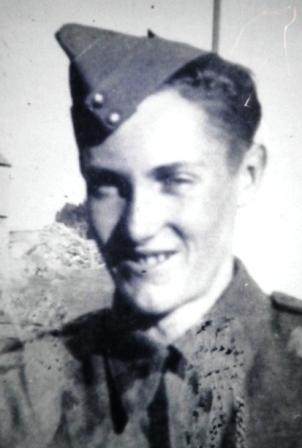
Edison Reynolds Smith.  (Photo courtesy of Angela Leighton)

Angela Leighton submitted a photo of Edison Reynolds SMITH, explaining that “…I wish to advise that my uncle, Private Edison Reynolds Smith of the North Nova Scotia Highlanders, Service #F/57514 (date of birth May 11, 1924) was killed in action in Holland on October 16, 1944, at the age of 20…” He lost his life during the Battle of the Scheldt and was initially buried in the province of Zeeland, The Netherlands.  (See https://www.veterans.gc.ca/eng/remembrance/history/second-world-war/scheldt) Angela ended her email with the statement: “None of these heroes should ever be forgotten….”  She is correct!

Thank you to Alexander and Daniel Beaton, Brenda Budd, Dawn (Spidle) Coldwell, Jacqueline Inder, Phyllis Kelly, Angela Leighton, Gary Richard Perry, and Gary Pollick for sharing photos and anecdotes. Thank you again to CTV’s Atlantic Live At 5 for helping to get the word out on this quest of remembrance. Atlantic Canadians remember their loved ones who are buried overseas.

More photos and stories in Atlantic Canada Remembers – Part 2! If you have photos or information to share, please email Pieter at memorialtrail@gmail.com, or comment on the blog. 

© Daria Valkenburg

….Want to follow our research?….

If you are reading this posting, but aren’t following our research, you are welcome to do so.  Our blog address: https://onthewarmemorialtrail.com/

Front cover OnTheWarMememorialTrailinEurope4 countries, 6 weeks, 7,000 km – an unforgettable war memorial journey in Europe…. Daria’s book ‘No Soldier Buried Overseas Should Ever Be Forgotten‘ is available in print and e-book formats.  Net proceeds of book sales help support research costs and the cost of maintaining this blog. For more information see https://nosoldierforgotten.com/ 

You are also invited to subscribe to our YouTube Channel: On The War Memorial Trail With Pieter Valkenburg: https://www.youtube.com/channel/UCJ591TyjSheOR-Cb_Gs_5Kw

Never miss a posting!  Subscribe below to have each new story from the war memorial trail delivered to your inbox.