The WWII Soldier From Emerald Junction Who Lost His Life In Italy

March 10, 2020. Among the names listed on the Cenotaph outside of the Borden-Carleton Legion are 4 that died in Italy during WWII.  One of these men was Ernest Murray NORTON (see The Last Valentine From A WWII Soldier).  This posting is about a young man who lost his life during the Battle of Moro.

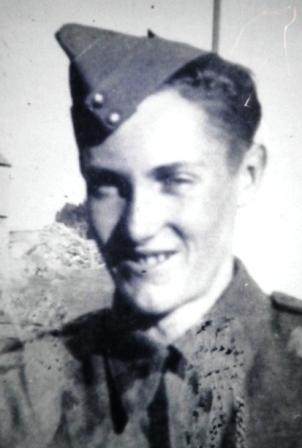
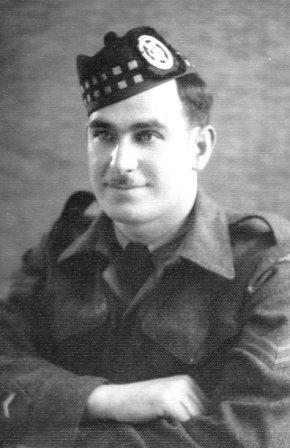
George Alfred DUNN was born February 11, 1915 in Roseville, the son of Joseph J. Dunn and Mary Ellen Jones.  Dunn didn’t have an easy life.  His mother died when he was six.  His father died when Dunn was only 9 years old, and he was brought up by his uncle, William Dunn, of Emerald Junction.

A woodsman before enlisting with the Carleton & York Regiment in St. Stephen, New Brunswick on September 8, 1939, he received training in Woodstock, New Brunswick and then went to Europe with the first Canadian contingent, sailing to England on December 8, 1939 aboard the S.S. ‘Monarch of Bermuda’, and arriving on December 17.

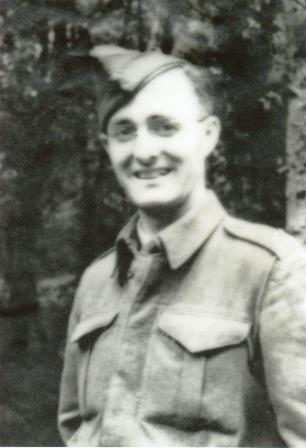
Alfred Dunn

George Alfred Dunn. (Photo source: http://www.ancestry.com. Photo colourization: Pieter Valkenburg)

On May 8, 1941, he was temporarily attached for a month to the Guards Depot while at a Drill Instructors Course. Upon completion, he was sent to No.1 AFW RCOC in Aldershot for a few weeks while he completed a PT No. 32 Course. On October 18, 1941 he was promoted to Acting Lance Corporal. (NOTE: RCOC refers to Royal Canadian Ordnance Corps, a unit provisioning troops with the means to fight, such as uniforms, weapons and equipment.  AFW refers to Army Field Workshop.)

On May 16, 1942, he was promoted to Corporal, then on November 1942 he received another promotion, to Lance Sergeant, and was sent for more training.  On June 16, 1943 he was sent to Italy, and then, on August 25, 1943, he was promoted to Sergeant.

On December 6, 1943, Canadian forces, along with British, Indian, and New Zealand infantry divisions, began a series of large-scale assaults on major crossing points along the Moro River in Eastern Italy, with the objective of securing a large bridgehead along the defensive line. The intention was to breach the German Army’s Winter Line defensive system and advance to Pescara—and eventually Rome. (For more information see https://en.wikipedia.org/wiki/Moro_River_Campaign)

According to the War Diary of the Carleton & York Regiment for January 1944, the unit was in Ortona, Italy on January 1.  The weather was “dull and cloudy all day with rain during the evening” the report read, which went on to summarize what happened on December 31, 1943.  “The transport finds the going pretty heavy on account of the mud.  ‘A’ Company, who suffered the greatest during the Battle of Point 59 was brought back to a rear position where ‘B’ Company was and ‘B’ Company was placed at the front.” One of those wounded on December 31, 1943 was Sgt Dunn.  According to the casualty report, he received “shrapnel wounds to the right leg and multiple wounds to the face” while in action.

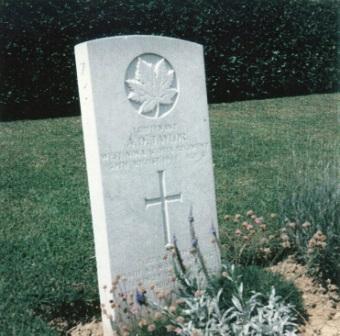
On January 2, 1944, Dunn died of injuries received in action during the Battle of Moro (Point 59). He’s buried at Moro River Canadian War Cemetery in Italy.

grave stone Sgt. G.A. Dunn (find a grave)

Grave of George Alfred Dunn at Moro River Canadian War Cemetery.  (Photo source: http://www.findagrave.com)

According to his obituary in the ‘Charlottetown Guardian’ of February 3, 1944, page 5, Dunn was part of a family that was in service, with a brother who had died a few months earlier.  “…He was a true friend and had a kind word and a cheerful countenance for every one…” it said.

Obituary G.A. Dunn, Charlottetown Guardian 03 february 1944 page 5

Obituary from the Charlottetown Guardian of February 3, 1944.

No family of George Alfred Dunn has been found as yet, unfortunately.  If you have information or photos to share please contact Pieter at memorialtrail@gmail.com, or comment on the blog. 

© Daria Valkenburg

….Want to follow our research?….

If you are reading this posting, but aren’t following our research, you are welcome to do so.  Our blog address: https://onthewarmemorialtrail.com/
Front cover OnTheWarMememorialTrailinEurope4 countries, 6 weeks, 7,000 km – an unforgettable war memorial journey in Europe…. Daria’s book ‘No Soldier Buried Overseas Should Ever Be Forgotten‘ is available in print and e-book formats.  Net proceeds of book sales help support research costs and the cost of maintaining this blog. For more information see https://nosoldierforgotten.com/ 

You are also invited to subscribe to our YouTube Channel: On The War Memorial Trail With Pieter Valkenburg: https://www.youtube.com/channel/UCJ591TyjSheOR-Cb_Gs_5Kw

Never miss a posting!  Subscribe below to have each new story from the war memorial trail delivered to your inbox.
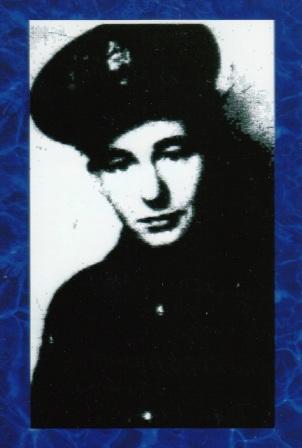
On The War Memorial Trail…..The WWII Able Seaman Who Died Of Peritonitis

March 4, 2020. On the Cenotaph outside the Borden-Carleton Legion a few men lost their lives during wartime due to illness and are buried on home ground here on Prince Edward Island.  One of these men was John Daniel ‘Jack’ FERGUSON.  He was born October 27, 1922 in Borden (now Borden-Carleton), Prince Edward Island, the son of James Henry Ferguson and Margaret Ann Fraser.

When WWII broke out, Jack was anxious to serve and tried to enlist in Halifax but was refused due to his young age.  Instead he joined the Merchant Marines before successfully enlisting in the Royal Canadian Navy Reserve on May 5, 1941.  He was then placed on patrol duty out of Halifax, Nova Scotia.

Unfortunately, he became ill while serving aboard the patrol ship ‘Ross Norman’, and sent to Camp Hill Hospital in Halifax from the sick bay at H.M.C.S. ‘Stadacona’ on August 19, 1942.  His temperature kept spiking and lowering, with no known diagnosis able to be determined, even after blood tests. According to the medical report “….Each elevation in temperature was accompanied by a severe chill….

On August 30, 1942 he went into shock and at that point a diagnosis of peritonitis was made. (Per Wikipedia, peritonitis is inflammation of the lining of the inner wall of the abdomen and cover of the abdominal organs. Symptoms may include severe pain, swelling of the abdomen, fever, or weight loss.)  An operation was made, with two blood transfusions, and Jack appeared to improve over the next two days before worsening again.  Sadly, he died at 10:30 pm on September 6, 1942, just shy of his 20th birthday.

He was buried, with full naval honours, at St Peter’s Roman Catholic Cemetery in Seven Mile Bay.  A notice in the Summerside Journal, on 14 September 1942, page 2, recorded that “….A detachment from H.M.C.S. Queen Charlotte at Charlottetown attended and acted as pallbearers and guard of honor. Mr. Patrick Martin, president of the Summerside branch of the Canadian Legion, represented the veterans at the service….

OLYMPUS DIGITAL CAMERA

Gravestone for John Daniel “Jack” Ferguson at St. Peter’s Cemetery in Seven Mile Bay.  (Photo credit: Pieter Valkenburg)

Unfortunately, no photo or family of Ferguson has been found as yet.  If you have information or photos to share about John Daniel ‘Jack’ Ferguson please contact Pieter at memorialtrail@gmail.com or comment on the blog.

© Daria Valkenburg

….Want to follow our research?…

If you are reading this posting, but aren’t following our research, you are welcome to do so.  Our blog address: https://onthewarmemorialtrail.com/

4 countries, 6 weeks, 7,000 km – an unforgettable war memorial journey in Europe…. Daria’s book ‘No Soldier Buried Overseas Should Ever Be Forgotten‘ is available in print and e-book formats.  Net proceeds of book sales help support research costs and the cost of maintaining this blog. For more information see https://nosoldierforgotten.com/

Subscribe to our YouTube Channel: On The War Memorial Trail With Pieter Valkenburg: https://www.youtube.com/channel/UCJ591TyjSheOR-Cb_Gs_5Kw

Never miss a posting!  Subscribe below to have each new story from the war memorial trail delivered to your inbox.

The WWII Mariner From Kinkora Whose Ship Was Torpedoed In The Caribbean

February 20, 2020. On the Cenotaph outside the Borden-Carleton Legion there are 3 men who lost their lives due to being on ships that were torpedoed.  Two of these stories have already been told….

In WWI, mariner James Graham FARROW (FARRAR) lost his life when the ship he was working on was torpedoed in the English Channel on March 19, 1916.  The steamer, ‘Port Dalhousie, had been ferrying needed supplies from Britain to troops in France, while using the cover of being a fishing vessel. (See https://onthewarmemorialtrail.com/2019/01/20/the-mariner-whose-ship-was-torpedoed-in-the-english-channel/)

In WWII, Everett Samuel FRANCIS had the misfortune of being a passenger on the ferry S.S. Caribou when it was torpedoed off the coast of Newfoundland on Wednesday, October 14, 1942.  He was on his way back to his unit in Gander, and to meet his three week old daughter Greta, after being in Ontario for weapons training. Unfortunately, he was not one of the survivors. (See https://bordencarletonresearchproject.wordpress.com/2018/03/25/the-face-of-everett-samuel-francis/)

color photo Hughes, James Emmet

James Emmet Hughes. (Photo credit: courtesy “Around Kinkora Area” by G.K. Farmer.  Photo colourization by Pieter Valkenburg.)

Like James Graham FARROW (FARRAR), James Emmet HUGHES was a seaman in the Canadian Merchant Navy, not in the military.  Born in Kinkora on April 7, 1911, he was the son of Emmet Hughes and Mary Ann McKenna.

After joining the Waterman Steamship Agency of Mobile, Alabama, he was a trimmer aboard the Panamanian registered S.S. Ramapo, travelling between North America and England with badly needed supplies.  A trimmer works in the engine room on a coal-fired ship, such as the steamship Ramapo, responsible for loading of coal into the ship and delivering coal to the stoker or fireman. (See https://en.wikipedia.org/wiki/Coal_trimmer)

SS Ramapo under her former name Baron Wemyss.Courtesu of naviearmatori.net

S.S. Ramapo under her original name of Baron Wemyss. (Photo courtesy of http://www.naviearmatori.net)

Hughes made two successful runs to England but then on a routing of London-Bermuda-Philadelphia, it was torpedoed by German U-Boat 108, captained by Klaus SCHOLTZ, 180 miles north of Bermuda. While Canadian Merchant Navy records list the event as having occurred on ‘approximately February 12, 1942’, the date it had arrived in Bermuda, German records of ships torpedoed by U-boats record the date as being February 16, 1942.

According to German records, as transcribed into English on https://www.uboat.net/allies/merchants/ship/1338.html, the ship had an international crew complement of 40, none of whom survived. “At 15.56 hours on 16 February 1942 the unescorted Ramapo (Master Johan Magnus Ørn Lorentzen) was hit on port side amidships by one G7e torpedo from U-108, broke in two after a boiler explosion and sank 11 minutes later about 180 miles north of Bermuda. The U-boat surfaced and questioned 34 men in lifeboats, but the survivors were never found. The master, 37 crew members and two gunners were lost.

Screenshot_2020-02-18 Ramapo (Panamanian Steam merchant) - Ships hit by German U-boats during WWII - uboat net

Map showing location of sinking of Ramapo.  (Map courtesy of http://www.uboat.net)

As you can imagine, in that time period, it was a long time before families learned that something had gone wrong.  On March 31, 1942, six weeks after the incident, The Guardian reported that the Hughes family had received a message from the steamship company, advising that it believed the ship had been sunk and all hands lost.

J.E. Hughes Guardian 31 march 1942 page 1

Source: Page 1 article in the March 31, 1942 edition of The Guardian.

Aboard the S.S. Ramapo on February 16, 1942 were the following crew members, per www.uboat.net:

Nationality Name Age Position
Greek Artavanis, Marios, Merchant Marine 29 Oiler
British Bailey, Mills Sandilands, Merchant Marine 44 Third Engineer
British Birch, John, Merchant Marine 50 Trimmer
Canadian Boyd, Fred, Merchant Marine 35 Messman
Canadian Boyer, Clarence, Merchant Marine 41 Fireman/Wiper
Canadian Brackenbury, Walter, Merchant Marine 22 Fireman/Wiper
Canadian Courville, Roland, Merchant Marine 18 Trimmer
Chilean Delano, Miguel, Merchant Marine 31 Second Mate
British Finch, Thomas, Merchant Marine 20 Messman
Dutch Glimmerveen, Albertus, Merchant Marine 38 Chief Cook
Canadian Green, William, Merchant Marine 29 Oiler
Norwegian Gustavsen, Karl Gustav, Merchant Marine 50 Chief Steward
Swedish Haggberg, Eric, Merchant Marine 22 Able Seaman
Norwegian Hansen, Bernhard, Merchant Marine 23 Fireman/Wiper
British Harris, William John, RN 24 Able Seaman (DEMS gunner)
Norwegian Helmers, Thorleif Gärtner, Merchant Marine 43 Chief Mate
British Hendry, Frederick William, Merchant Marine 52 First Engineer
Argentinian Hernandes, P., Merchant Marine 26 Fireman/Wiper
Canadian Hughes, James Emmet, Merchant Marine 31 Trimmer
Norwegian Kjennerud, Jul, Merchant Marine 24 Able Seaman
Canadian Knickle, Fred, Merchant Marine 39 Able Seaman
Norwegian Kristensen, Toralf, Merchant Marine 21 Able Seaman
Canadian Lalonde, Germain, Merchant Marine 20 Able Seaman
French Lawrence, Felix, Merchant Marine 30 Messman
British Leary, Vincent, Merchant Marine 35 Second Engineer
Norwegian Lie, Hans Kristian Jensen, Merchant Marine 20 Able Seamn
Canadian Lord, Ian McLean, Merchant Marine 18 Radio Operator
Norwegian Lorentzen, Johan Magnus Ørn, Merchant Marine 35 Master
Canadian Manoff, Paul, Merchant Marine 23 Ordinary Seaman
American McAdoo, John Cornelius, Merchant Marine 37 Messman
Canadian McDonald, Charlie, Merchant Marine 25 Fireman/Wiper
British Nicholson, William, Merchant Marine 36 Boatswain (Bosun)
Norwegian Olsen, Andreas, Merchant Marine 50 Chief Engineer
Irish Reynolds, William, Merchant Marine 28 Fireman/Wiper
British Sinclair, Leslie, Merchant Marine 20 Ordinary Seaman
Norwegian Vesterhus, Nils Andreas, Merchant Marine 38 Third Mate
American Vitalis, Vasilios, Merchant Marine 29 Cook
Canadian Waddell, Wesley, Merchant Marine 23 Oiler
Canadian Wilson, Edgar John, Merchant Marine 23 Ordinary Seaman
British Winder, Harry, Royal Navy 22 Able Seaman (DEMS gunner)
       

James Emmet Hughes is listed on the Halifax Memorial in Point Pleasant Park in Halifax, Nova Scotia, along with other Canadian mariners whose bodies were never recovered.

Halifax Memorial

Halifax Memorial in Point Pleasant Park in Halifax, Nova Scotia. (Photo credit: Pieter Valkenburg)

Research continues on this and other stories.  If you have information or photos to share about James Emmet Hughes, the sinking of the Ramapo, or any of the crew members, please contact Pieter at memorialtrail@gmail.com or comment on the blog.

© Daria Valkenburg

….Want to follow our research?….

If you are reading this posting, but aren’t following our research, you are welcome to do so.  Our blog address: https://onthewarmemorialtrail.com/

4 countries, 6 weeks, 7,000 km – an unforgettable war memorial journey in Europe…. Daria’s book ‘No Soldier Buried Overseas Should Ever Be Forgotten‘ is available in print and e-book formats.  Net proceeds of book sales help support research costs and the cost of maintaining this blog. For more information see https://nosoldierforgotten.com/

You are also invited to subscribe to our YouTube Channel: On The War Memorial Trail With Pieter Valkenburg: https://www.youtube.com/channel/UCJ591TyjSheOR-Cb_Gs_5Kw

Never miss a posting!  Subscribe below to have each new story from the war memorial trail delivered to your inbox.
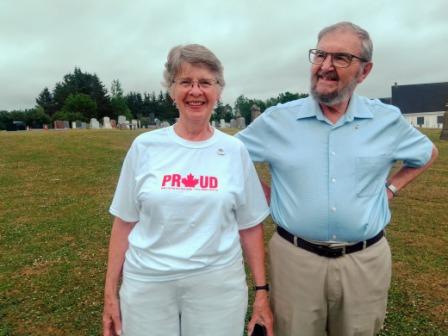
The WWI Names On The Cenotaph Have Stories Of Their Own

February 8, 2020. Recently, Pieter and a friend went to see the British WW1 movie ‘1917’, which is nominated for several Oscars and has a Canadian connection due to a map used in the film.  (For that story see https://www.cbc.ca/news/entertainment/1917-canadian-contribution-1.5450608)  The story takes place in France on April 6, 1917, and is about two men tasked with delivering a message to another unit to warn of a German ambush.  The men go through several towns and villages in France’s Western Front.  Canadians may remember this period as being the lead up to the Battle of Vimy Ridge on April 9, 1917.

Pieter found the movie of great interest for several reasons. It was a depiction of the horrors of war… without being overly gory.  After being through the trenches and tunnels in Vimy Ridge a few years ago, he was intrigued to see the way soldiers sat on either side of a trench while waiting to go up into battle.   But the main reason he liked the movie is that it told the story of two people.

Contrary to what we learn in history books and classes, in the end all history is the cumulative stories of individuals.  A list of names on a cenotaph, such as the one outside the Borden-Carleton Legion, is meaningless without knowing who those people were and what happened to them.  This is what started Pieter on the journey to uncover the stories behind the names on the Cenotaph.

Over the years, the stories of those from WWI have been told in this blog.  24 are listed on the Cenotaph and half of them died in France…. Patrick Raymond ARSENAULT and John Lymon ‘Ly’ WOOD are listed on the Vimy Memorial as their bodies were never identified.    Also killed in France were Kenneth John Martin BELL, James CAIRNS, James Ambrose CAIRNS, Arthur Leigh COLLETT, Bazil CORMIER, Patrick Phillip DEEGAN (DEIGHAN), Joseph Arthur DESROCHES, Percy Earl FARROW (FARRAR), Ellis Moyse HOOPER, and Charles W. LOWTHER.  We were at the Vimy Memorial and visited each grave.

Five men died in Belgium. Two are listed on the Menin Gate Memorial in Ypres, as their bodies were never identified: Charles Benjamin Murray BUXTON and George Albert CAMPBELL.  We visited Menin Gate and the area where they died.  We also visited the graves of James Lymon CAMERON, Vincent Earl CARR, and Arthur Clinton ROBINSON.

Vincent Carr, who died during the Battle of Passchendaele on October 30, 1918, was initially buried in a trench with 4 others – two Canadian and two British soldiers.  Decades later, when they were reburied in a Commonwealth War Graves Commission cemetery, all three Canadians were still identifiable.  The British Army’s cardboard identity ‘tags’ had disintegrated, leaving the two British soldiers as unidentified.  Today, DNA testing can be done to help with identity, but decades ago this was impossible.

Two men died in England.  John Goodwill HOWATT was wounded in France, and died in a British hospital.  Bruce Sutherland McKAY had gotten ill during the transport from Canada to England and also died in a British hospital.

Henry Warburton STEWART survived the war, only to fall ill while in Germany as part of the occupation forces.  He’s buried in a German cemetery in Cologne, which we visited.

James Graham FARROW (FARRAR) was not a soldier, but in the Merchant Navy, transporting vital supplies between England and France, when his ship was torpedoed by a U-boat.

Three men died on Canadian soil.  Leigh Hunt CAMERON died of illness, while Harry ROBINSON died from blood poisoning.  William Galen CAMPBELL was poisoned with mustard gas on May 28, 1918, a few months before the end of the war, but was able to return home.  And yes, we’ve visited those graves as well.

We were also able to tell you parallel stories, such as that of Clifford Almon WELLS, who had many of the same experiences as John Lymon Wood, and also died in France. Another story was that of George BRUCKER, of the German Army, who was taken prisoner during the Battle of Vimy Ridge, and survived the war, never forgetting the two ‘tall’ Canadians who didn’t shoot him.  Decades later his son, now in his 80s, is still hoping to thank the families of those two unknown men.

Thanks to Pieter’s curiosity in trying to find out why one Commonwealth War Graves Commission gravestone in a cemetery in Cape Traverse was not recorded on the Cenotaph, we were able to tell you the story of Elmyr KRUGER, a soldier from Saskatchewan who died of illness while guarding German prisoners of war from a POW camp in Amherst.

We’ve told the stories of each man, and shared our visits to the various cemeteries and war memorials.  As photos and letters came in, we shared those experiences as well.

We are still missing photos of several of these soldiers, so the quest to put a face to every name and story is still ongoing.  Who are we missing?  Take a look and see if you can help:

Slide6

Slide8

Slide9

Slide10

Slide13

Slide15

Slide16

Slide20

Slide22

Slide23

UPDATE:  Photos of James Cairns, Joseph Arthur Desroches, and Harry Robinson have been found!

It’s great to watch a movie about fictional characters, but let’s not forget the stories of real life people! There won’t be any Academy Awards given out, but they will be remembered. Research continues to uncover more stories.  If you have a story or photo to share about any of the names mentioned in this posting, please contact Pieter at memorialtrail@gmail.com or comment on the blog.

© Daria Valkenburg

....Want to follow our research?…

If you are reading this posting, but aren’t following our research, you are welcome to do so.  Our blog address: https://onthewarmemorialtrail.com/

4 countries, 6 weeks, 7,000 km – an unforgettable war memorial journey in Europe…. Daria’s book ‘No Soldier Buried Overseas Should Ever Be Forgotten‘ is available in print and e-book formats.  Net proceeds of book sales help support research costs and the cost of maintaining this blog. For more information see https://nosoldierforgotten.com/

Subscribe to our YouTube Channel: On The War Memorial Trail With Pieter Valkenburg: https://www.youtube.com/channel/UCJ591TyjSheOR-Cb_Gs_5Kw

Never miss a posting!  Subscribe below to have each new story from the war memorial trail delivered to your inbox.

“He Died That We Might Live” Documentary Is Now On YouTube

January 31, 2020. Over the past few years, readers of this blog will be familiar with the story of one name on the Cenotaph outside the Borden-Carleton Legion – that of WWII pilot Elmer Bagnall MUTTART, who lost his life on October 12, 1941 when the bomber he was piloting was shot down over Wons, The Netherlands. Muttart was the only casualty, as he was able to keep the plane in the air and steady long enough for the crew of Halifax L9561 to parachute out, and to avoid the village of Wons.  On October 12, 2019, a memorial panel to honour the crew on their last flight together was unveiled in Wons.  (See On The War Memorial Trail…..The Memorial Panel In Wons Is Unveiled!)

Pieter had brought his video camera for the events of October 12, 2019 to document the events. His cousin François Breugelmans took over the filming whenever Pieter was engaged in one of the events.  Several of us took photos.

Wendy Nattress

Wendy Nattress.  (Photo credit: Graeme Nattress)

All this footage was turned over to post-production editor Wendy Nattress, a volunteer who spent countless hours editing our raw material and turned it into a short documentary, which can be seen on YouTube.  Wendy told us that “It has been a real honour working on this project.  Thank you for the work you are doing and for letting me be a part of it!

Wendy’s young son Oli did several illustrations depicting the events of the night of October 12, 1941, and volunteered his time and talent for this documentary.

Oli Nattress

Oli Nattress painting one of the illustrations used in the video.  (Photo credit: Wendy Nattress)

We would not have been able to produce the video “He Died That We Might Live … the story of Halifax L9561” without the goodwill and support of volunteers like Wendy and Oli for this project.  We hope you enjoy the video which commemorates one event during WWII that changed the lives of so many people.

For a short video of the story behind the memorial panel see:

If anyone has a story or photo to share about any of the names on the Cenotaph outside the Borden-Carleton Legion, please contact Pieter at memorialtrail@gmail.com or comment on the blog.

© Daria Valkenburg

….Want to follow our research?…

If you are reading this posting, but aren’t following our research, you are welcome to do so.  Our blog address: https://onthewarmemorialtrail.com/

4 countries, 6 weeks, 7,000 km – an unforgettable war memorial journey in Europe…. Daria’s book ‘No Soldier Buried Overseas Should Ever Be Forgotten‘ is available in print and e-book formats.  Net proceeds of book sales help support research costs and the cost of maintaining this blog. For more information see https://nosoldierforgotten.com/

Subscribe to our YouTube Channel: On The War Memorial Trail With Pieter Valkenburg: https://www.youtube.com/channel/UCJ591TyjSheOR-Cb_Gs_5Kw

Never miss a posting!  Subscribe below to have each new story from the war memorial trail delivered to your inbox.

“He Died That We Might Live” Pamphlet Presented To Tryon & Area Historical Society

December 23, 2019.  The Tryon & Area Historical Society helped us to raise funds in Canada towards the Halifax L9561 Memorial Panel that was unveiled in the Dutch village of Wons on October 12, 2019.  (See On The War Memorial Trail…..The Memorial Panel In Wons Is Unveiled!)

Pieter presented Jack Sorensen, Chair of the Tryon & Area Historical Society with a copy of the pamphlet, prepared by the Missing Airmen Memorial Foundation of Friesland in The Netherlands. The pamphlet describes the last flight of Halifax L9561, a WWII bomber piloted by Flight Sgt Elmer Bagnall MUTTART of Cape Traverse, which was shot down on October 12, 1941.

IMG_20191223_110251297_HDR Dec 23 2019 Pamphlet to TAHS

Jack Sorensen, left, and Pieter Valkenburg, right, with the Dutch and English versions of the pamphlet commemorating the last flight of Halifax L9561 on October 12, 1941. (Photo credit: Daria Valkenburg)

With 2019 almost at an end, Pieter and I wish all of you the very happiest of holidays as we prepare for new stories and continued research related to the Borden-Carleton Cenotaph Research Project, part of the On The War Memorial Trail Research Project.

Happy Holidays from Daria and Pieter

If anyone has a story or photo to share about any of the names on the Cenotaph outside the Borden-Carleton Legion, please contact Pieter at memorialtrail@gmail.com or comment on the blog.

© Daria Valkenburg

….Want to follow our research?…

If you are reading this posting, but aren’t following our research, you are welcome to do so.  Our blog address: https://onthewarmemorialtrail.com/

4 countries, 6 weeks, 7,000 km – an unforgettable war memorial journey in Europe…. Daria’s book ‘No Soldier Buried Overseas Should Ever Be Forgotten‘ is available in print and e-book formats.  Net proceeds of book sales help support research costs and the cost of maintaining this blog. For more information see https://nosoldierforgotten.com/

Subscribe to our YouTube Channel: On The War Memorial Trail With Pieter Valkenburg: https://www.youtube.com/channel/UCJ591TyjSheOR-Cb_Gs_5Kw

Never miss a posting!  Subscribe below to have each new story from the war memorial trail delivered to your inbox.

On The War Memorial Trail……Canadian Troops Helped Sinterklaas Visit Dutch Children During WWII

December 16, 2019.  As part of the upcoming Liberation 75 Celebrations, commemorating the liberation of The Netherlands in 1945, Dutch journalists have been going through their archives and featuring stories and film clips around this momentous period in the lives of the Dutch.  One of the film clips uncovered shows how Canadian troops helped Sinterklaas visit Dutch children in 1944.

As you may be wondering who Sinterklaas is, and why this was an important event for Dutch children, Pieter has given some background information to put it in context.  “If you are a kid in The Netherlands, my home country, Sinterklaas is a very important person …. whether you are naughty or nice.  If you are nice, you get goodies.  If you are naughty, there may be no goodies.”  Hmmm ….. doesn’t this sound like someone we already know?

Pieter explains that “You may be surprised to learn that from our Sinterklaas comes the term Santa Claus as you know it here in Canada.  In The Netherlands we celebrate Sinterklaas on the evening of December 5.  In Dutch “Sint” means “Saint”, and “Klaas” is an abbreviation for Nicholas.  So Sinterklaas in English is St. Nicholas.

The Feast of St. Nicholas is celebrated on December 6, but Pieter explained that “We Dutch try to be first in many things, and so we celebrate a bit early.  Our tradition is that Sinterklaas comes to Holland, in the third week of November, by boat from his home in Spain, and visits the Dutch towns and villages on his white horse Amerigo.

#4 dec 2011 La Paz Sinterklaas travels on Amerigo

Sinterklaas on Amerigo travels to visit Dutch children in Bolivia!  (Photo credit: Pieter Valkenburg)

No North Pole, but Spain, and a horse rather than a sleigh and reindeer. Interesting!  Pieter notes that “It was the custom for Dutch children to put one shoe in front of the fireplace from the day Sinterklaas arrives in the Netherlands, sing Sinterklaas songs and go to bed. When I grew up in the late forties and early fifties, I remember putting my shoe out at night, filled with a carrot for his white horse, and going to bed, with the hope of finding something in my shoe from Sinterklaas.  You never knew what to expect.  If you had been naughty, Sinterklaas’s helpers might not put anything in your shoe.”

Pieter recollects what happened when he was a small child in the late 1940s.  “Sinterklaas always carried a big red book with all the names of the children and knew if you behaved well or not.  He sat down in the living room.  I and my two brothers were called, one by one, to approach him and we were told all about our behaviour over the past year.  It was amazing how much he knew about us! Luckily, we all got off without any punishment and didn’t get taken away to Spain. After he left, my father came in with a big sack of presents, which Sinterklaas had left in the hallway.  So while Canadian children had to wait until December 25, we had our goodies already.

#12 Dec 2000 La Paz Bolivia Sinterklaas checks whether Pieter is in the good book or bad book

While posted to La Paz in Bolivia, Pieter was called up before Sinterklaas who decided whether he was naughty or nice by the entries in his book! (Photo credit: Daria Valkenburg)

According to tradition, Sinterklaas has its origin in the 4th century where Nicholas, at the age of 19, became the Greek Bishop of Myra in present day Turkey, famous for giving gifts to the poor.  After his death on the 6th of December in the year 343, he became Saint Nicholas, a patron saint of children, merchants and sailors.  The Netherlands is a maritime country seven times larger in size than Prince Edward Island, with many sailors and merchants involved in international trade from its earliest days.  So his influence was especially strong in The Netherlands.

In the 17th century the Dutch settled in what is now New York and the Hudson valley, and they brought the tradition of Sinterklaas with them.  In the English speaking world, Sinterklaas and Santa Claus merged with the British Father Christmas.  

When Henry Clement Moore wrote his poem “Twas the night before Christmas” in 1823, Sinterklaas took on a new identity as Santa Claus who is stationed on the North Pole, has elves to help him, and drives a team of reindeer. In The Netherlands, however, Sinterklaas never became Santa Claus.

During the years of Nazi occupation during WWII, and in a country where people were being starved to death, there were no visits from Sinterklaas…..until December 5, 1944, when Canadian troops helped Sinterklaas visit Dutch children.  Can you imagine the reaction of those children?

In the spirit of the season, we hope you enjoy this small film clip from the Canadian Army Film Unit, issue #51. (The film clip is from an article found on https://amersfoort.nieuws.nl/nieuws/17759/canadese-soldaten-hielpen-sinterklaas-in-1944/ for those who can read Dutch.)

Link to the film clip: https://drive.google.com/open?id=150xm9BfndYvEHHQUGXN-lK4-fnuesb5j

If anyone has a story or photo to share, please contact Pieter at memorialtrail@gmail.com or comment on the blog.

© Daria Valkenburg

….Want to follow our research?…

If you are reading this posting, but aren’t following our research, you are welcome to do so.  Our blog address: https://onthewarmemorialtrail.com/

4 countries, 6 weeks, 7,000 km – an unforgettable war memorial journey in Europe…. Daria’s book ‘No Soldier Buried Overseas Should Ever Be Forgotten‘ is available in print and e-book formats.  Net proceeds of book sales help support research costs and the cost of maintaining this blog. For more information see https://nosoldierforgotten.com/

Subscribe to our YouTube Channel: On The War Memorial Trail With Pieter Valkenburg: https://www.youtube.com/channel/UCJ591TyjSheOR-Cb_Gs_5Kw

Never miss a posting!  Subscribe below to have each new story from the war memorial trail delivered to your inbox.

On The War Memorial Trail…..The WWII Soldier Who Drowned In Quebec

December 14, 2019.  In uncovering the stories of the names on the Cenotaph outside the Borden-Carleton Legion, perhaps one surprise has been how often an accident or illness can take the life of a soldier.  Being based in Canada during wartime was no guarantee of safety!   An accidental drowning in Quebec took the life of one WWII soldier from Prince Edward Island, Frank Lewis ARSENAULT.

OLYMPUS DIGITAL CAMERA

Frank Lewis Arsenault.  (Source: ‘Around Kinkora Area’ by G. K. Farmer)

Born on August 14, 1913 in Kinkora, Frank Lewis (baptized as Francis Louis) was the son of John Hubert Arsenault and Elizabeth Jane, the husband of Grace Elizabeth Gaudet, and the father of four children: George Edmund, Mary Elisabeth, Martha Marie, and Joseph Henry.

A farm labourer before enlisting with the 8th Heavy Anti-Aircraft Battery Artillery Unit on June 13, 1941 in Charlottetown, he was transferred a week later to the 2nd Heavy Anti-Aircraft Battery Artillery Unit and sent to Petawawa, Ontario.  However, two and a half years before he enlisted, Frank Lewis had rheumatic fever, which left him with joint pains that made it difficult to do many activities, such as standing on his feet or carrying a rifle for long periods of time.  This led to him being reclassified within a few weeks of arrival in Petawawa, and transferred to the Royal Canadian Army Medical Corps, Home War Establishment Unit, on September 7, 1941, and based at the Petawawa Military Hospital.

On September 30, 1942, Frank Lewis, along with two other soldiers, R. Marino and E. J. Arsenault, received a pass from the Petawawa Military Camp where they were stationed.  They went by car to Le Passe, and then by ferry to Fort-Coulonge and had dinner at Bascheau’s Restaurant, where they were last seen alive.  Pte Marino’s body was found the next day in the Ottawa River.  Their car was found in the river on October 20 in the area of the dock on the Quebec side of the river.  The bodies of E. J. and Frank Lewis Arsenault were found in the Ottawa River on October 25.  However,  death was determined to have occurred on September 30 and this was the date listed on Frank Lewis’s death certificate.

Screenshot_2019-12-14 fort coulonge to petawawa map - Google Search

The distance between Petawawa and Fort-Coulonge is about 69 km.  Source:  Google maps https://www.google.ca/maps

Frank Lewis was buried at St. Peter’s Roman Catholic Cemetery, Seven Mile Bay in Prince Edward Island.  His father was still alive and living in Kinkora, but his mother was deceased.  His wife and children were living in Pembroke, Ontario at the time.

gravestone-frank-l.-arsenault-1.jpg

Gravestone of Frank Lewis Arsenault at St. Peter’s Roman Catholic Cemetery in Seven Mile Bay. (Photo credit: Pieter Valkenburg)

It’s unknown how the accident happened, but most likely the car went off the road in the dark and went into the river.  If anyone has more information or photos to share for Frank Lewis Arsenault, please contact Pieter at memorialtrail@gmail.com or comment on the blog.

© Daria Valkenburg

….Want to follow our research?…

If you are reading this posting, but aren’t following our research, you are welcome to do so.  Our blog address: https://onthewarmemorialtrail.com/

4 countries, 6 weeks, 7,000 km – an unforgettable war memorial journey in Europe…. Daria’s book ‘No Soldier Buried Overseas Should Ever Be Forgotten‘ is available in print and e-book formats.  Net proceeds of book sales help support research costs and the cost of maintaining this blog. For more information see https://nosoldierforgotten.com/

Subscribe to our YouTube Channel: On The War Memorial Trail With Pieter Valkenburg: https://www.youtube.com/channel/UCJ591TyjSheOR-Cb_Gs_5Kw

Never miss a posting!  Subscribe below to have each new story from the war memorial trail delivered to your inbox.
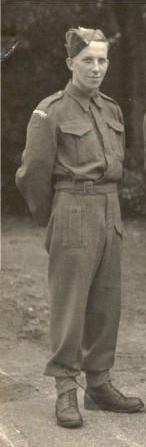
On The War Memorial Trail…..The WWII Soldier Who Was Accidentally Shot

November 26, 2019. Sometimes a tragic accident takes the life of a young soldier, even from the relative safety of being based in Canada during wartime.  This is what happened to Leonard Stephen AVERY, born March 20, 1924 in Bedeque, son of John Avery and Mary Ellen Arsenault.  Leonard’s father died in 1926, leaving his mother a widow with two young sons – Leonard Stephen and his older brother John Austin.  In 1930 his mother remarried, to Horace Melvin Gaudet, and had 8 children with her second husband.

On January 12, 1943, Leonard enlisted at the #6 District Depot, General List in Charlottetown, and was transferred to the 1st Garrison Battalion of the Canadian Army, and stationed in Niagara-on-the-Lake, Ontario. He was on guard duty at the Chippewa Power Canal in Welland County on the evening of August 23, 1943 when for some unexplained reason he was accidentally shot through the head while examining a rifle, causing a massive destruction of his brain and multiple skull fractures.

OLYMPUS DIGITAL CAMERA

Gravestone of Leonard Stephen Avery, in St. Peter’s Roman Catholic Cemetery, Seven Mile Bay, PEI.  (Photo credit: Pieter Valkenburg)

The Charlottetown Guardian of August 31, 1943 reported that “Mrs.  Horace Gaudet of Bedeque received a telegram yesterday afternoon advising that her son, Pte Leonard Avery of the First Garrison Regiment, had been accidentally shot and killed.

The Summerside Journal of September 2, 1943 recorded that: P.E.I. Soldier Killed in Ont. Pte. Leonard Avery, 18, of Bedeque, P.E.Island, stationed at Camp Niagara with the 1st Garrison Regiment under command of Lt. Col. Carmichael, was killed shortly after seven o’clock on Sunday night when a rifle he and his fellow soldiers were examining was said to have accidentally discharged, Headquarters of Military District No. 2 said.

The article also noted that his brother John Austin Avery and his stepfather Horace Gaudet were serving with the Canadian Forestry Corps in Scotland. On September 3, 1943 he was buried in St. Peter’s Roman Catholic Cemetery in Seven Mile Bay, Prince Edward Island.

Although Leonard came from a large family, no photo of him has yet been found.  In addition to his brother John Austin, his Gaudet half-siblings were: Walter, Frederick, Edwin, Albert, Ivan, Lillian, and Ruby.  One child, Mary Blanche, died in childhood.  If you have a photo or stories to share about Leonard Stephen Avery, please contact Pieter at memorialtrail@gmail.com or comment on the blog.  UPDATE: A photo was found in 2022!

© Daria Valkenburg

….Want to follow our research?…

If you are reading this posting, but aren’t following our research, you are welcome to do so.  Our blog address: https://onthewarmemorialtrail.com/

4 countries, 6 weeks, 7,000 km – an unforgettable war memorial journey in Europe…. Daria’s book ‘No Soldier Buried Overseas Should Ever Be Forgotten‘ is available in print and e-book formats.  Net proceeds of book sales help support research costs and the cost of maintaining this blog. For more information see https://nosoldierforgotten.com/

Subscribe to our YouTube Channel: On The War Memorial Trail With Pieter Valkenburg: https://www.youtube.com/channel/UCJ591TyjSheOR-Cb_Gs_5Kw

Never miss a posting!  Subscribe below to have each new story from the war memorial trail delivered to your inbox.
On The War Memorial Trail…..The Farewell Dinner In Makkum To End The Halifax L9561 Commemoration Events

November 24, 2019. On October 12, 2019, the events that led to the memorial panel in The Netherlands to honour the crew of Halifax L9561 being unveiled ended with a farewell dinner at  ‘Gasterij Hennie fan Rijcht’ in Makkum, located 2 kms from Wons.

With the narrow streets in Makkum, we had a long walk to the restaurant, but once we were inside, the restaurant was very picturesque, with a warm, cosy atmosphere, and delicious food.

IMG_6440 Oct 12 2019 Walking to the restaurant in Makkum

Walking to the restaurant in Makkum. Left to right: Pieter, Ralph and Valerie Muttart. Behind them, the family of Halifax L9561 crew member David Cotsell. (Photo credit: Sikko Drijver)

20191012_180317 Oct 12 2019 Outside the restaurant in Makkum

The Canadian flag was flying when we arrived at the restaurant in Makkum for our farewell dinner! Left to right: Annie Lee MacDonald, Elmer MacDonald, Daria Valkenburg, Don Coutts. (Photo credit: François Breugelmans)

CIMG3541 Oct 12 2019 Dinner in Makkum

Inside the restaurant in Makkum. (Photo credit: Daria Valkenburg)

CIMG3544 Oct 12 2019 Dinner in Makkum

Pam Alexander gave a heartfelt thank you, on behalf of everyone, to the Missing Airmen Memorial Foundation for organizing the day’s events, and to Pieter Valkenburg for uncovering the story of Elmer Muttart’s final actions. (Photo credit: Daria Valkenburg)

IMG_6458 Oct 12 2019 Dinner in Makkum

A buffet like no other! How do you choose? (Photo credit: Sikko Drijver)

CIMG3543 Oct 12 2019 Dinner in Makkum

After 3 years of research on the events around Halifax L9561’s last flight, and giving presentations to help fundraising efforts for the memorial panel in Wons, Pieter can now relax… until the next memorial project on his radar. (Photo credit: François Breugelmans)

No one wanted this day to end, but it eventually did, and the bus brought us safely back to the hotel in Leeuwarden.  The hard working volunteers of the Missing Airmen Memorial Foundation gave all of us a day to remember, with special thanks to Douwe Drijver and Alexander Tuinhout. A big thank you goes to our bus driver, Bernard Bruning, who was so friendly and helpful throughout the day. Bernard, a taxi driver by profession, was one of the many volunteers who helped the Missing Airmen Memorial Foundation make this day such a success.

If you have stories or photos to share about the crew or the events of October 12, 2019, please contact Pieter at memorialtrail@gmail.com or comment on the blog.

© Daria Valkenburg

….Want to follow our research?…

If you are reading this posting, but aren’t following our research, you are welcome to do so.  Our blog address: https://onthewarmemorialtrail.com/

4 countries, 6 weeks, 7,000 km – an unforgettable war memorial journey in Europe…. Daria’s book ‘No Soldier Buried Overseas Should Ever Be Forgotten‘ is available in print and e-book formats.  Net proceeds of book sales help support research costs and the cost of maintaining this blog. For more information see https://nosoldierforgotten.com/

Subscribe to our YouTube Channel: On The War Memorial Trail With Pieter Valkenburg: https://www.youtube.com/channel/UCJ591TyjSheOR-Cb_Gs_5Kw

Never miss a posting!  Subscribe below to have each new story from the war memorial trail delivered to your inbox.