On The War Memorial Trail…..The WWII Soldier Who Had An Allergic Reaction

September 22, 2019.  How many of you have an allergy, perhaps to a food, insect, or medication?  These days, people can be treated with the aid of an EpiPen, or by avoiding the item causing an allergic reaction. During WWII, when antibiotics first came into use, researchers and medical personnel soon learned that they were not the miracle drug for all. Adverse reactions to pain medication and anesthesia also happened.

While researching the names on the Cenotaph outside the Borden-Carleton Legion, Pieter learned of a few instances where soldiers on active duty died, not as a result of war, but due to a medical condition.  Such was the case for Harrison William CRAIG, born January 3, 1909 in Cape Traverse, Prince Edward Island, the son of John Russell Craig and Mary Ellen Howatt.  Unlike most of the servicemen listed on the Cenotaph, Craig was married and a father.

blog color photo Graig

Harrison William Craig. (Source:https://www.findagrave.com/memorial/29137050/harrison-william-craig. Photo colourization: Pieter Valkenburg)

A farm labourer before enlisting with the PEI Highlanders in Summerside on February 23, 1940, Craig spent several months in a military hospital in Dartmouth, Nova Scotia before being sent to Valcartier, Quebec for training on June 3, 1941. In July 1941 he ended up in a military hospital again for several weeks, before leaving for Newfoundland on July 31, 1941.

Unfortunately, he again landed in and out of hospital in Botwood and Gander, with a final admission to the RCAF Hospital in Gander on December 1, 1942.  While being prepared for a tonsillectomy operation, he suffered an anaphylactic reaction and died a day later, leaving behind his widow, Mildred Smith, and four children, who were living in Central Bedeque.  The youngest child had been born 8 months earlier, on April 2, while the oldest was only 7 years old. Craig was buried in Gander Military Cemetery, Newfoundland.

An obituary in the ‘Summerside Journal’ of December 17, 1942, page 4, column 1 noted that:

The community of Bedeque was deeply saddened by the news that on Wednesday, Dec. 2nd, Pte. Harrison Wm. Craig of the P.E.I. Highlanders, had passed away in the Military Hospital at St. John’s, Newfoundland, while on active service there. He was buried with full military honors in the Protestant Cemetery at St. John’s on Friday afternoon at 2 p.m., December 4. Pte. Craig joined the P.E.I Highlanders in March, 1940, and trained at Dartmouth, N.S. and in July 1941 went on active service to Newfoundland.

He is survived by his wife, Mrs. Mildred Craig, and their four children at Central Bedeque, P.E.I., his father and brother Heath at Chelton, P.E.I., and five sisters: Mrs. Stanley Jack, Glace Bay, C.B.; Mrs. Wm. Heckbert, Summerside, P.E.I.; Mrs. Charles Robertson, Carleton, P.E.I.; Mrs. Simpson Affleck, Halifax, N.S.; and Mrs. Alfred Waite of Sherbrooke, P.E.I. His Commanding Officer, Col. C. C. Thompson, wrote of his faithfulness and fidelity to duty and his splendid record of service.

The sympathy of the whole community goes out to the family in their sorrow and loss.

Craig’s death left the family in financial straits, as stated in a declaration made by his widow on January 4, 1943 before magistrate Earle. D. Leard.  Mrs. Craig wrote “I have a small house and lot on a quarter acre of land.  My husband had no insurance.  I have been paying for this place since he joined up and have no money.  I want to give my children an education.  I had quite a bill of expense when the last child was born and have no money at all laid aside.  I have to buy everything, including fuel.”  Craig’s military service record does not indicate if the declaration resulted in financial assistance.

If anyone can provide more information on Harrison William Craig, please contact Pieter at memorialtrail@gmail.com or comment on the blog.

© Daria Valkenburg
….Want to follow our research?….

If you are reading this posting, but aren’t following our research, you are welcome to do so.  Our blog address: https://onthewarmemorialtrail.com/

Front cover OnTheWarMememorialTrailinEurope4 countries, 6 weeks, 7,000 km – an unforgettable war memorial journey in Europe…. Daria’s book ‘No Soldier Buried Overseas Should Ever Be Forgotten‘ is available in print and e-book formats.  Net proceeds of book sales help support research costs and the cost of maintaining this blog. For more information see https://nosoldierforgotten.com/ 

You are also invited to subscribe to our YouTube Channel: On The War Memorial Trail With Pieter Valkenburg: https://www.youtube.com/channel/UCJ591TyjSheOR-Cb_Gs_5Kw

Never miss a posting!  Subscribe below to have each new story from the war memorial trail delivered to your inbox.

CBC Radio Interview With Pieter Valkenburg & Elmer MacDonald

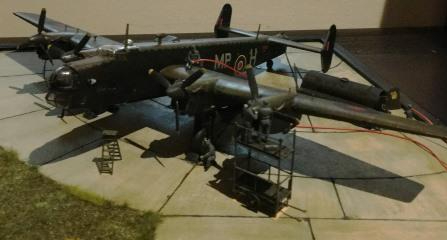
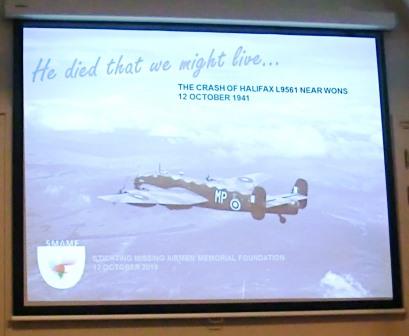
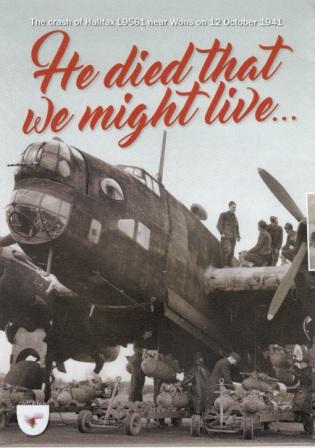
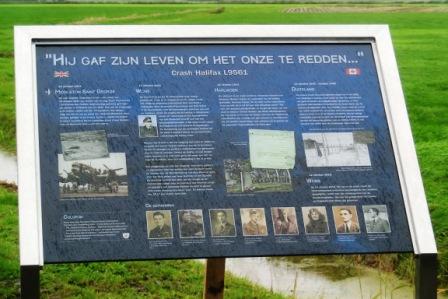
September 20, 2019. Regular readers of this blog are aware of the project to put up a memorial panel in Wons, The Netherlands, to honour WW2 pilot from Cape Traverse, Elmer Bagnall MUTTART, and the crew of Halifax L9561.  (See The Elmer Bagnall Muttart Story and On the War Memorial Trail ….. At Harlingen General Cemetery and On the War Memorial Trail ….. At The Politiek Farm In Wons)

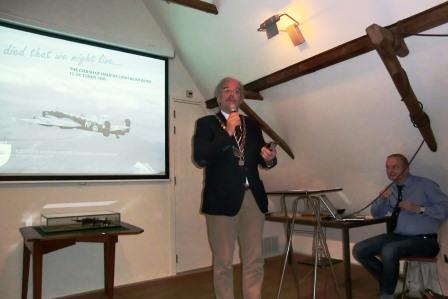
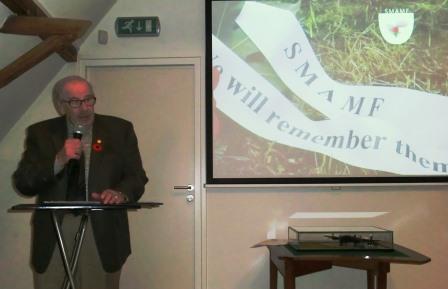
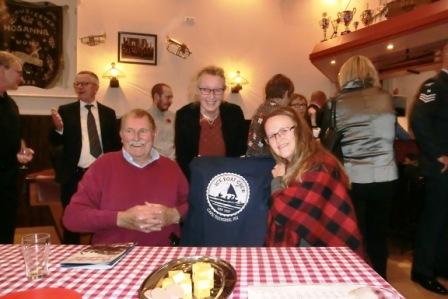
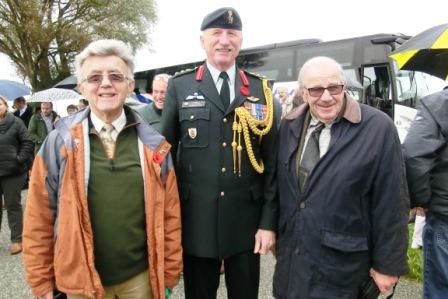
This special commemoration event will occur on October 12 of this year. A radio interview with Pieter and Elmer MacDonald, one of the Islanders who will be travelling to The Netherlands and whose parents were close friends of Elmer Muttart, recently ran on CBC Radio’s Mainstreet PEI with interviewer Matt Rainnie.

CIMG3145 Sep 12 2019 Matt Elmer Pieter

At the CBC PEI studio in Charlottetown. Left to right: Interviewer Matt Rainnie, Elmer MacDonald, Pieter Valkenburg. Pieter is holding the invitation issued by the Stichting Missing Airmen Memorial Foundation. (Photo credit: Daria Valkenburg)

From the CBC Mainstreet PEI website:

Two Islanders are travelling to the Netherlands next month for the unveiling of a memorial panel in honour of World War 2 Flight Sergeant Elmer Muttart of Cape Traverse. The memorial came about because of Pieter Valkenburg’s extensive research and Elmer MacDonald i Muttart’s namesake.

https://www.cbc.ca/listen/live-radio/1-130-mainstreet-pei/clip/15737113-war-memorial

Thank you to CBC PEI for forwarding the link to this broadcast so that it can be shared.  If you have a story to share about a WW2 soldier buried in The Netherlands, please contact Pieter at dariadv@yahoo.ca or comment on the blog.

 © Daria Valkenburg
Liberation 75 Commemoration Event At Province House

Logo

September 17, 2019. The Netherlands was fully liberated in 1945 (part was liberated in 1944), and next year marks their 75th year of commemoration.  In recognition of the role Canadians had in their liberation during WW2, the Dutch are donating 1.1 million ‘Liberation 75’ tulips to remember the 1.1 million Canadians who served in WW2. 750 bulbs will go to each Lieutenant Governor, the Governor General, and the Territorial Commissioners.  In addition, 1,100 schools will receive 75 bulbs each, plus an educational program to explain the role Canada played in liberating The Netherlands.

The first stop on this cross-country launch was in Prince Edward Island, when Ambassador of The Kingdom of the Netherlands to Canada, His Excellency Henk van der Zwan, presented Her Honour The Honourable Antoinette Perry, Lieutenant Governor of Prince Edward Island, with a box of tulips at a special event at Province House.  Invitees included WW2 veterans, and members of PEI Command of the Royal Canadian Legion, and Branch #1 Charlottetown Legion.  As a retired member of the Dutch Diplomatic Service and the Dutch Air Force, Pieter was also invited.  He was honoured to be included, given the work he is doing with the Borden-Carleton Cenotaph Research Project.

Invite

One of the WW2 veterans we spoke to before the event began was 95 year old Blanche Bennett, who we had met two years earlier, at the Senate of Canada 150 Medal Ceremony.  (See Recognition)  Mrs. Bennett quickly reminded us of that prior meeting, and told us about her trips to The Netherlands.  She explained that during the war, she had joined the Canadian Army and was stationed in Halifax, working as a switchboard operator.  “I’d do it again if I could” she said.

CIMG3157 Sep 16 2019 Liberation 75 Blanche Bennett Barbara Spence with Pieter

Blanche Bennett, seated, with her daughter Barbara Spence, and Pieter. (Photo credit: Daria Valkenburg)

In his remarks, Ambassador Van der Zwan explained that “the people of The Netherlands wanted to commemorate the role Canada played in liberating The Netherlands and in providing the Dutch Royal Family a safe haven in Ottawa.”  Crown Princess Juliana stayed in Ottawa with her children during the war.   Why Ottawa? Dutch Queen Wilhelmina and the wife of the Governor General of Canada were cousins.  After the war ended in 1945, the Dutch Royal Family donated 100,000 tulip bulbs to Canada as a thank you gift.  Since then, The Netherlands has presented Canada with 20,000 bulbs annually.

CIMG3162 Sep 16 2019 Liberation 75 Ceremonial Planting

Ceremonial planting at Province House with Lt Gov Antoinette Perry, Ambassador Van der Zwan, WW2 veterans, and Legion members. (Photo credit: Pieter Valkenburg)

After a ceremonial planting at Province House, Lt Governor Perry explained that the new bed for the Liberation 75 tulips was carefully chosen so that it pointed towards The Netherlands!

Ambassador Van der Zwan shared a story about his mother’s experience with Canadian troops on April 15, 1945.  “My mother was born in 1933 in Leeuwarden, and remembered Canadian troops driving through the city.  It’s when she had her first taste of chocolate and chewing gum!”  Leeuwarden, in the province of Friesland, was liberated by the Royal Canadian Dragoons.  (See https://www.intelligencer.ca/news/local-news/royal-canadian-dragoons-celebrate-liberation-of-leeuwarden-with-dutch-ambassador-to-canada/wcm/7dea7e30-e6bd-42c4-9491-ae5552e497ae and http://www.petawawapostlive.ca/stories_site/april2019/april18/leeuwarden.html#)

The official part of the event over, everyone had time to visit and chat with each other.

CIMG3169 Sep 16 2019 Liberation 75 Pieter John Ambassador Duane

Left to right: Pieter, John Yeo Chair of PEI Command Royal Canadian Legion, Dutch Ambassador Henk van der Zwan, Duane MacEwen President of PEI Command Royal Canadian Legion. (Photo credit: Daria Valkenburg)

CIMG3172 Sep 16 2019 Liberation 75 Pieter with Lt Gov Perry

Pieter with Lt Governor Antoinette Perry. (Photo credit: Daria Valkenburg)

If you have a story to share about the Liberation of Holland, please contact Pieter at dariadv@yahoo.ca or comment on the blog.   Please note that we are still looking for photos of 10 names listed on the Cenotaph from WW1.  See Appeal For Relatives Of These WW1 Casualties! for more information.

 © Daria Valkenburg

The Parallel WW1 Experiences of John Lymon Wood & Clifford Almon Wells

September 16, 2019.  Sometimes we learn more about a particular soldier’s experience by reading about a soldier in a similar situation.  This was the case when I read “From Montreal To Vimy Ridge and Beyond: The Correspondence of Lt Clifford Almon Wells”, edited by his step-father, Pastor G.G.S. Wallace of a Baptist Church in Montreal, and published in 1917.  Wells was not an Islander, but he enlisted in the Princess Patricia Canadian Light Infantry 4th University Company, as did John Lymon WOOD, whose story has been told previously in blog postings.  (See WWI Soldier John Lyman Wood’s Connection With Acadia University and Learning About The Two Names On The Vimy Memorial)

Wells enlisted in September 1915, Wood on October 12, 1915.  At the time of enlistment, Wells was doing graduate work towards his PhD in archeology at John Hopkins University in Baltimore, Maryland while Wood was a second year engineering student at Acadia University in Wolfville, Nova Scotia.

Photo Lyman Wood

Photo: John Lyman Wood shortly after enlistment in October 1915. (Photo courtesy of Gene Rogerson collection)

Lt Clifford Almon Wells in 1916

Clifford Almon Wells in summer 1916. (Photo courtesy of “From Montreal To Vimy Ridge and Beyond: The Correspondence of Lt Clifford Almon Wells”)

On October 19, 1915, in a letter to his brother, Wood explained that he was packing his trunk in preparation for leaving Wolfville for Montreal. Like so many university educated men, an officer’s commission had been suggested by the recruitment office. “….I wish I had gone in the heavy artillery at Charlottetown now, but I’ll get a commission as Lieutenant if I can.  A man stands a far better chance of coming back if he goes in the artillery, but I suppose that is not the right way to look at it though.  The men are needed more in the Infantry, so I suppose it is only right to go where you are the most needed and where you can do the most good….I never hated to leave a place so bad as I do Wolfville this time.  But I must be doing what is right for there seems no other way out of it.” (Excerpt of a letter on page 157 of ‘Remember Yesterday: A History of North Tryon Prince Edward Island 1769-1992 Volume 1’, published in 1993)

Both Wells and Wood were in Montreal, preparing for being sent abroad.  In a November 2, 1915 letter, Wells wrote that “… the 4th University Company, bring recruited overstrength already, has received orders to be ready to sail on the 11th. Thousands of troops sail from Montreal every month without anyone being any the wiser.  Trains come in at night, stop on the wharf alongside the transports and by daybreak the men are on the way.  So it will be with us… The city just swarms with soldiers at present, as two full battalions have been sent back from the camp at Valcartier, which is closed for the winter…

There was a delay in leaving Montreal, as in the end they didn’t leave until November 26, 1915, by train enroute to Halifax.  In a November 26, 1915 letter, Wells noted that “… We did not leave Montreal until nearly 11 o’clock, as we waited for several carloads of troops from Winnipeg to join us.”  He explained that sentries were posted at the train doors, and no one except officers and platoon sergeants were allowed to pass from car to car without special permission.

They arrived in Halifax in the afternoon of November 27, 1915, and Wells sent a brief letter to his mother, saying that “...We reached Halifax two hours ago, and came aboard the ‘Lapland’ almost immediately.

On November 28, 1915 the SS Lapland, which had arrived from New York, sailed from Halifax, arriving in Plymouth, England on December 7.  During the voyage, Wells wrote several letters.  On December 3, 1915, he made the observation that “….There are about 2,000 other troops aboard.  The 37th Battalion from the West, the 92nd Highlanders, units of the A.S.C. Cyclists, etc.”  Wells went on to explain that they had to be alert for U-boats.  “Today we are fairly in the danger zone.  Our company’s machine gun is mounted aft, while other guns are mounted forward.  The decks are lined with men armed with rifles.  So we are all ready for submarines.  Tonight every man must sleep on deck by the life-boat or raft to which he has been assigned.  All portholes are darkened at night and every precaution is taken to render the ship invisible.

Upon arrival, they were both sent to the 11th Reserve Battalion, stationed at St. Martin’s Plain in Shorncliffe, near Folkestone, for infantry training for needed reinforcements to the Canadian Corps in the field.  In a December 9, 1915 letter, Wells wrote about the culture shock he’d experienced.  “It has rained steadily, with an intermission yesterday, ever since we reached Plymouth Sunday morning until now.  The camp is one sea of mud – such mud as I never dreamed of before.  I never shine my shoes now, as the first step out of the hut buries them in 3 or 4 inches of slime.  We are quartered in huts which hold about 40 men each….

He then explained that “The streets in Shorncliffe are very dimly lighted by night on account of the danger from Zepps, and every window in every hut is covered with a blanket when the lights are switched on.  Outside it is pitch dark and one wallows in mud and water when compelled to go out at night.

Like Wood, Wells soon found out that while the British were interested in troops as ‘cannon fodder’, a system of discrimination already existed to prevent them from becoming officers, contrary to what they were told when they signed up.  He discussed this in a continuation of his December 9 letter:  “I have bad news in one respect.  An order has been passed by which no more Canadian soldiers are given commissions in the Imperial Army except when a Colonel applies to have a certain man as an officer in his command.  There is consequently a good deal of dissatisfaction in our company, as many of us were practically promised commissions when we enlisted.”  Wells began working his contacts to get a commission.

In a December 29, 1915 letter, Wells wrote that “…It is reported that a carload of Christmas mail for soldiers was accidentally burned….”  He wondered if this could be why he had not received mail.  On January 7, 1916, he wrote that he’d heard that “two carloads of mail from Canada were accidentally burned.”  One can imagine the disappointment that he and his fellow Canadians felt when no letters or parcels arrived for Christmas!

Still trying to figure out how to get a commission, in the same letter, Wells explained that if he wasn’t successful in his quest while in England “…. I may go to the front as a Corporal or even a private, as I understand that NCOs like myself, who have never seen active service, lose one or more of their stripes when they first go to the trenches.  I should expect, of course, to regain them in a short time, but I do not like the idea of making any retrogressive steps...

In January 1916, Wells did become a Lieutenant, and on January 16, wrote to his mother that “I have been wonderfully lucky in being commissioned with the Canadian and not the Imperial Army.  This is how it happened.  A sudden shortage of officers occurred in the division, and the various battalions were asked to recommend for promotion NCOs not below the rank of Sergeant. The 11th Reserve Battalion was asked to recommend four.  I was one of the four.”  Like so many other Canadian soldiers, Wood never got promoted beyond Private.

While Wells stayed healthy and went to the Canadian Military School for a Bombing Course, Wood ended up in hospital as of January 21, 1916 with appendicitis, then gastritis, and measles. In a March 4, 1916 letter, Wells mentioned the measles outbreak.  “There are a number of cases of measles in the camp, and as soon as one hut is released from quarantine, one or two more have to be quarantined.

Wood was discharged on April 15, 1916 to the 39th Battalion, where he was sent for training as a Signaller.  In August 1916, Wells was transferred to the 8th Battalion of the 1st Canadian Division and sent to France.  Wood arrived in France on December 22, 1916, as part of the Second Infantry Battalion.

Both men survived the Battle of Vimy Ridge, with Wells describing the day in an April 20, 1917 letter to his mother: “The Huns were completely surprised, and made little resistance.  Our artillery barrage was wonderful beyond description, lifting forward from objective to objective with clocklike precision, and practically obliterating the German trenches as it passed them.  The men followed the barrage steadily and fearlessly, and prisoners were streaming back five minutes after we went ‘over the top’.  Most of the prisoners were entirely cowed, and thankful to be prisoners….  I came through it without a scratch.”  Unfortunately, before his mother received the letter, she was officially notified of his death on April 28, 1917, at the age of 25.

Wood’s luck ran out on May 3, 1917, when he was killed in action during the Battle of Arras, in the third battle of the Scarpe near Fresnoy, at the age of 19.  In “Hell Upon Earth: A Personal Account of Prince Edward Island Soldiers in the Great War, 1914-1918”, published in 1995, author J. Clinton Morrison, Jr. explained that Wood, a Signaller, “was killed in the Fresnoy darkness while repairing telephone communications during the pre-dawn attack.”  His body was never recovered and his name is engraved on the Vimy Memorial in France.

While it’s not known if Wells and Wood ever met each other, their military lives had many parallels and they died within 5 days of each other in France.  If anyone has more information, please contact Pieter at memorialtrail@gmail.com or comment on the blog.   Please note that we are still looking for photos of 10 names listed on the Cenotaph from WW1.  See Appeal For Relatives Of These WW1 Casualties! for more information.

 © Daria Valkenburg

The Three WWI Soldiers Who Were Buried Together At Passchendaele

September 1, 2019.  The very first story uncovered by Pieter, when he began researching the names on the Cenotaph outside the Borden-Carleton Legion, was that of WWI soldier Vincent Earl CARR, who lost his life on October 30, 1917 during the Battle of Passchendaele in Belgium.  (See The Cenotaph Research Project Begins)  Why Vincent Carr?  His was the first photo provided for the project by Vincent’s nephew, Delbert Carr of Tryon, and his wife Helen.

CIMG3083 Aug 31 2019 Pieter with Helen & Delbert Carr

Pieter with Helen and Delbert (seated) Carr of Tryon. (Photo credit: Daria Valkenburg)

Vincent was born May 3, 1894 in North Tryon, the son of Robert Carr and Catherine McLeod.  On June 2, 1914, he enlisted in the 55th Battalion in Sussex, New Brunswick, and recorded his trade as labourer.  On October 30, 1915 his unit sailed to England aboard the S.S. Corsican, arriving on November 9, 1915.

shorter photo of vincent carr

Photo: Vincent Carr in 1915, in the uniform of the 55th Battalion. (Photo courtesy of Delbert Carr collection. Photo colourization: Pieter Valkenburg)

On April 6, 1916 he was transferred to the 36th Battalion, and then 2 months later, on June 23, 1916, he was sent for training at the 86th Machine Gun Battalion, later re-designated as the Canadian Machine Gun Depot.  On July 28, 1916 he became part of the 1st (also called “A”) Canadian Motor Machine Gun Battery and arrived in France with his unit the next day.

In an excerpt from the November 1, 1917 Operation Report for October 28-31, 1917 by Lt C.P. Gilman, Acting Officer in Charge, of the “A” Battery of the First Canadian Motor Machine Gun Brigade wrote:  … “On the evening of the 29th ….were in position to fire on targets given for the Zero hour, which was 5:50 am morning of the 30th.  As soon as we opened fire, we were subjected to an intense bombardment of our positions, and we were forced to retire 6 hours later, after sustaining 28 casualties…..

Vincent was one on those casualties, and is buried in Cement House Cemetery.  When we visited it in 2017, Pieter noticed that the graves on either side of him were Canadians from the same Canadian Motor Machine Gun Brigade unit as Carr, and that they died on the same day.  We took a photo of all three graves: R. Bellas, our Vincent Carr, and J. B. Willson.  (See On The War Memorial Trail of Passchendaele and Surrounding Area)

While we were in Passchendaele, we picked up a brochure ‘Did Your Granddad Fight in Passchendaele 1917?’ from the Memorial Museum Passchendaele 1917, inviting people to submit names and photos. The brochure went on to say that “in return for your cooperation you will receive a copy of a trench map with the approximate place where he was killed.  With this comes a short report based on the war diaries of his unit.”  We already had the war diary report, but a trench map was something unique, so we sent in the information, along with the observation that Bellas and Willson were buried near Carr.  Maybe they were in the same trench?

We waited for the trench map with great anticipation and ….. nothing happened.  Almost two years later, though, long after we’d forgotten about the inquiry we’d made, we received an email from the Memorial Museum Passchendaele 1917, with the long promised trench map and more information on what happened on October 30, 1917.

On that fateful day, researchers discovered that Vincent Carr, Jack Bingham WILLSON, and Robert BELLAS were all killed by the same high explosive shell on Abraham Heights. This is what we had expected after seeing the graves side by side in Cement House Cemetery, but to our surprise we learned that they had been buried in the same grave on Abraham Heights.

CarrVincent

Trench map showing the coordinates where Carr, Willson, and Bellas were originally buried on Abraham Heights. (Map: courtesy of Memorial Museum Passchendaele 1917)

map of passchendaele showing abraham heights

You can see Abraham Heights towards the bottom left corner of the map. (Map: courtesy http://www.darrellduthie.com/maps/)

The Memorial Museum Passchendaele 1917 wrote us that: “According to the War Diary of the 1st Canadian Motor Machine Gun Brigade, three machine gun companies were in the field around October 30. ‘A’-Battery from the 28th till the 31st of October, ‘B’-Battery from the 29th till the 31st of October and the ‘Eaton’-Battery from the 30th October till the 1st of November. Although the positions on Abraham Heights (28.D.15.b.7.4.) were abandoned on the 29th to take up new positions just north of Tyne Cot Cemetery (28.D.16.b.6.9.), many runners were sent to the supply stores behind the front to resupply the machine guns on the front line. It’s likely that the men were killed by shellfire while hauling equipment between the gun positions and the back areas.” (Note: The numbers and letters you see in brackets beside Abraham Heights and Tyne Cot Cemetery are the GPS coordinates.)

Private Jack Bingham Willson was born January 17, 1897 in Plattsville, Ontario.  Sgt Robert Bellas was born August 1, 1886 in Morland, Cumbria, England, but had immigrated to Canada.  Both Willson and Bellas enlisted in Toronto.

A 1939 report of exhumation and reburial to Cement House Cemetery confirmed that Carr, Willson, and Bellas were recovered from one grave.  Unlike many soldiers who were never identified, they were identified by the ‘titles’ on the shoulder of their uniform identifying them as Canadian, and the identifying discs that they were still wearing.  The report indicates that two unknown British soldiers had been recovered from the same grave at Abraham Heights.

CWM_SupplyLine_CanadaShoulderTitle_EN_FINAL_20140922_Page_1

A metal shoulder title was worn by Canadian soldiers on both shoulder straps of the khaki service dress uniform. (Photo credit: courtesy of https://www.warmuseum.ca)

We thank the Memorial Museum Passchendaele 1917 for the information they sent. If anyone can provide a photo or more information on Vincent Carr, Jack Bingham Willson, or Robert Bellas, please contact Pieter at memorialtrail@gmail.com or comment on the blog.   Please note that we are still looking for photos of 10 names listed on the Cenotaph from WWI.  See Appeal For Relatives Of These WW1 Casualties! for more information.

 © Daria Valkenburg

….Want to follow our research?…

If you are reading this posting, but aren’t following our research, you are welcome to do so.  Our blog address: https://onthewarmemorialtrail.com/

4 countries, 6 weeks, 7,000 km – an unforgettable war memorial journey in Europe…. Daria’s book ‘No Soldier Buried Overseas Should Ever Be Forgotten‘ is available in print and e-book formats.  Net proceeds of book sales help support research costs and the cost of maintaining this blog. For more information see https://nosoldierforgotten.com/
Subscribe to our YouTube Channel: On The War Memorial Trail With Pieter Valkenburg: https://www.youtube.com/channel/UCJ591TyjSheOR-Cb_Gs_5Kw

Never miss a posting!  Subscribe below to have each new story from the war memorial trail delivered to your inbox.

The WW2 Soldier Who Drove On The Wrong Side Of The Road

August 28, 2019.  Many years ago, while on the North island of New Zealand, I drove to a meeting with a colleague from the South Island.  Driving in New Zealand means driving on the side of the road opposite to the way we are used to driving.  Usually I did well with remembering which side of the road to drive on, but sometimes the brain cells reverted to their default setting.  That happened one evening after we stopped at a gas station.  After pulling back out onto the road, we were listening to music and having a great conversation when all of a sudden I noticed a big truck coming towards us.  “What is he doing?” I asked my passenger.  He didn’t reply.  A quick glance showed him looking terrified and gripping the door handle.  “What’s wrong?” I asked.  Finally, he very quietly whispered, “In this country, we drive on the other side of the road.” Oops!  I quickly switched lanes and the truck safely passed us, but not without a few angry toots on the horn.  An angel was sitting on our shoulders that evening!

x-default

Austin Boulter. (Photo credit: Augustine Cove Women’s Institute 1800-1973 Centennial history project)

I remembered this event after learning from Pieter’s research what happened to WW2 soldier Austin Harry BOULTER, whose driving experience didn’t end as happily.  According to his attestation papers, Boulter was born on October 4, 1920 in Freetown, the son of Roy Boulter and Blanche Leard.  There is a discrepancy as the Military Service Record’s Declaration and Statement of Relatives records his date of birth as October 4, 1922 in Tryon. A check of the June 1921 census does not record him, indicating that he wasn’t yet born.  It’s pretty clear that he fudged his attestation paper during his enlistment on May 27, 1940 in Woodstock, New Brunswick to make sure he wouldn’t be rejected as being too young!  At the time of enlistment the family lived in Cape Traverse, but Boulter was working as a lumberman for J. Craig in Stanley, New Brunswick.

While Boulter enlisted with the Carleton and York Regiment, he was transferred to the Canadian Signal Training Corps on September 9, 1940.  On May 18, 1941 he was transferred to the 3rd Canadian Division Signals and sent to Debert Camp, Nova Scotia. It was with that group that he left Halifax for England, arriving in Avonmouth on July 31, 1941.  The unit was in England to train for deployment to Western Europe.  (This was the first Canadian division to fight in the Normandy Campaign, landing at Juno Beach on D-Day on June 6, 1944.)

Boulter never left England, as around 10 pm on January 14, 1943, while not on duty, he borrowed a motorcycle ‘without authority’, according to a court of inquiry into his death.  He was “carrying a civilian passenger on the back of the motorcycle”.  Unfortunately, he forgot which side of the road to drive on, and crashed into a 4X4 Ford driven by Private M J. O’Grady, between Storrington and the Royal Winnipeg Rifle Lines.

At the court of inquiry, O’Grady stated that after seeing the motorcycle in his lane, O’Grady started to pull over to the left, but Boulter “came straight on, striking his front right bumper and fender and catching on the corner of the box directly behind the cab.”  O’Grady stopped immediately and he and his passengers jumped out.  He stated that he “saw a soldier on the ground a short distance beyond the bike and saw a lady further away on the ground.” Boulter was dead, but his passenger was hurt.  O’Grady “posted a guard on the truck and told the other two men to take over while he ran into Storrington to get help.”  O’Grady testified that he was “travelling about 15 mph” and that the motorcycle “appeared to be travelling too fast”.

The finding of the court indicated that Boulter “was not wearing a crash helmet”.  The registry of death noted that he died instantly from severe head injuries incurred during the crash.

It’s unknown why Boulter was with a civilian passenger so late at night, and why he took a motorcycle without permission.  No testimony by the passenger was recorded in the court of inquiry and she was not identified. He was buried at Brookwood Military Cemetery, Sussex, England.

The Summerside Journal of January 18, 1943 recorded his obituary:

Bedeque Soldier Dies Overseas

A Prince Edward Island soldier, Sigmn. Austin Harry Boulter of Bedeque, was listed under died overseas in the 252nd Canadian (Active) Army overseas casualty list last night. His next-of-kin was given as his mother, Mrs. Blanche Boulter of Bedeque.

If anyone can provide a photo or more information on Austin Harry Boulter, please contact Pieter at dariadv@yahoo.ca or comment on the blog.

© Daria Valkenburg


On The War Memorial Trail…..Appeal For Relatives Of These WWI Casualties!

August 18, 2019.  Over the past few years, Pieter has been diligently researching the 48 names on the Cenotaph outside the Borden-Carleton Legion here on Prince Edward Island.  Along the way he’s met many family members of these men, and we’ve visited a number of the graves.  However, in some cases, either no family members have come forward, or the family members themselves have no photos and little information.

In an attempt to achieve the goal of putting a face to each name on the Cenotaph, we’re asking for your help with these WWI casualties for whom no photo has been found as yet.

Please see the attached PDF which provides information on the person’s name, service number, place of birth, unit served in at the time of death, and date of death.  (See Appeal For Relatives of Soldiers)  As well, the names are summarized below.

Can you help with photos????

Names still without faces from WWI

  • James CAIRNS, born in Kinkora  UPDATE: Photo found!
  • Leigh Hunt CAMERON, born in Albany
  • James Lymon CAMERON, born in Victoria
  • William Galen CAMPBELL, born in Wellington
  • Bazil CORMIER, born in Tignish
  • Joseph Arthur DESROCHES, born in Miscouche  UPDATE: Photo found!
  • ames Graham FARROW, born in Argyle Shore
  • Charles LOWTHER, born in North Carleton
  • Arthur Clinton ROBINSON, born in Tryon
  • Harry ROBINSON, born in Augustine Cove  UPDATE: Photo found!

If you have information and photos to share on any of these names listed on the Cenotaph, please contact Pieter at memorialtrail@gmail.com or comment on the blog.

© Daria Valkenburg

….Want to follow our research?…

If you are reading this posting, but aren’t following our research, you are welcome to do so.  Our blog address: https://onthewarmemorialtrail.com/

4 countries, 6 weeks, 7,000 km – an unforgettable war memorial journey in Europe…. Daria’s book ‘No Soldier Buried Overseas Should Ever Be Forgotten‘ is available in print and e-book formats.  Net proceeds of book sales help support research costs and the cost of maintaining this blog. For more information see https://nosoldierforgotten.com/
Subscribe to our YouTube Channel: On The War Memorial Trail With Pieter Valkenburg: https://www.youtube.com/channel/UCJ591TyjSheOR-Cb_Gs_5Kw

Never miss a posting!  Subscribe below to have each new story from the war memorial trail delivered to your inbox.

The WWII Flight Officer Whose Plane Went Down While On Patrol Near The Arctic Circle

August 17, 2019.  In researching the names on the Cenotaph outside the Borden-Carleton Legion, normally Pieter encounters one of four situations:

  • family members who have a photo but know little or nothing else about the soldier.
  • family members who are aware of the soldier but have no photo and little or no information.
  • family members who know nothing about the soldier, have no photo, and aren’t at all interested. This situation tends to occur with WW1 soldiers, who died at a young age, with no spouse or children. “It happened over 100 years ago! That’s ancient history!” one woman told Pieter.
  • family members who have a photo and have saved letters or cards written by the soldier or about him, and may have his medals. These family members have a general idea of what happened to the soldier and may have visited his grave or a memorial listing his name.

In researching the story of Flight Officer Joseph “Joe” Charles MCIVER of Kinkora, Pieter encountered a fifth situation …… family members so dedicated to preserving his memory that they did extensive research on their own!  Not only were there photos and documents, but one nephew, Alan A. McIvor of Kelowna, BC, wrote a book on his uncle called ‘United In Effort..Flying Officer Joseph Charles McIver…Royal Canadian Air Force…1940-1944’ and was kind enough to send it to Pieter.

Cover of Alan McIvors book

Cover of Alan McIvor’s book.

But the story begins here on Prince Edward Island with Alan McIvor’s sister-in-law Joyce Philips and her husband Gordon, who invited us to visit them at their home.

CIMG2545 Aug 28 2018 Pieter with Gordon & Joyce Philips

Left to right: Gordon Philips, Joyce Philips, Pieter Valkenburg. (Photo credit: Daria Valkenburg)

Joseph Charles McIver was born July 26, 1916 in Kinkora, the son of Peter D McIver and Margaret Anne McKenna, “the sixth of fourteen children” as noted in Alan McIvor’s book ‘United In Effort’. Before enlisting with the Royal Canadian Air Force in Charlottetown on November 15, 1940, he was a warehouse foreman for the PEI Potato Growers Association.  McIvor goes on to explain in his book that his uncle enlisted “as an Aircraftsman 2nd Class.  In the area on his application form where it asked for the reason he wanted to join he declared ‘Wanted to help Win the War.’

Joseph Charles McIver

Joseph Charles McIver. (Photo: The Canadian Virtual War Memorial – Veterans Affairs Canada)

McIver didn’t qualify as a pilot, but was trained for the position of Observer/Navigator in Ontario.  On June 16, 1941 he married Helen Elizabeth McNeill, “a nurse from Summerside”, in Trenton, Ontario.

UNCLE JOE & HELEN McIvor from Alan McIvor

Helen and Joseph Charles McIver. (Photo courtesy A. McIvor family collection)

In January 1942, McIver was posted to England to train with the British Royal Air Force in Coastal Command.  RAF Coastal Command, a formation with the Royal Air Force (RAF) had a mandate to protect convoys from German U-boats and Allied shipping from aerial threats from the German Air Forces.  Squadrons operated from various bases and McIver soon found himself in the Arctic Circle. (For more information on Coastal Command see https://en.wikipedia.org/wiki/RAF_Coastal_Command_during_World_War_II)

On September 4, 1942, McIver was in the Royal Australian Air Force’s (RAAF) 455 Squadron with a group flying to the Soviet Union as part of ‘Operation Orator’, a search and strike force to operate over the Barents Sea.  The plan was to fly on a course to reach Norway, cross the mountains in the dark, overfly northern Sweden, in violation of Swedish neutrality, Finland and land at Afrikanda air base, at the southern end of Murmansk Oblast (an oblast is similar to a province). The flight to Afrikanda was expected to take five to eight hours, depending on the weather and German opposition. After refuelling, the group McIver was in was to fly the remaining 190 km to Vayenga, following the Kandalaksha–Murmansk railway northwards.  (See https://en.wikipedia.org/wiki/Operation_Orator for more information on Operation Orator and https://en.wikipedia.org/wiki/Afrikanda_(air_base) for more information on Afrikanda.)

1024px-Barents_Sea_map

Map shows the location of the Barents Sea north of Russia and Norway, and the surrounding seas and islands. (Map created by Norman Einstein, 2005. Courtesy of https://en.wikipedia.org/wiki/Operation_Orator#/media/File:Barents_Sea_map.png)

McIvor’s ‘United In Effort’ explains what happened to his uncle’s plane after making it to Afrikanda…. “after several attempts at landing in the mist their fuel position became critical.”  The pilot flew towards Kandalaksha to find an emergency landing spot.  “All he could find was an area where the silver birch trees had been cut down, leaving tall thin stumps.

The plane landed intact and no one was hurt, but containers of tools brought by a ground crew passenger “were strewn along the crash path as the bomb bay had been torn open.”  In trying to retrieve the containers, “a bullet smashed into the ground at his feet.”  The ground crew passenger returned to the plane very quickly!  “Eventually a troop of Soviet soldiers arrived and thinking the crew were the hated Nazis, treated them roughly.  They were taken to an underground interview room where an English speaking Soviet Commissar was able to understand they were allies.”  They were then reunited with the rest of the Squadron at Afrikanda and the next day escorted to Vayenga.  Over the next months McIver and his crewmates flew 35 flights, 30 of them Operational Patrols.

In September 1943, McIver was promoted to Temporary Flying Officer, transferred to No. 1 Torpedo Training Unit, and sent to the United Kingdom for further training, followed by a stint as an instructor.  In May 1944 he was given Special Leave and allowed 30 days back in Canada with his wife and relatives before returning to the United Kingdom.

In August 1944, McIver was transferred to RAF No. 53 Squadron, which flew Liberator planes.  These planes were important in the war effort as they “doubled the reach of Britain’s maritime reconnaissance force.  This added range enabled Coastal Command patrols to cover the Mid-Atlantic gap, where U-boats had operated with near impunity.

Liberator No. 53 Squadron RAF Coast Command Credit Australian War Memorial

A B24 Liberator MkVIII, aircraft of 53 Squadron, RAF, Coastal Command, on the runway at the airfield at Reykjavik, Iceland. (Photo courtesy of Australian War Memorial https://www.awm.gov.au)

In September 1944, the Squadron, along with McIver, was posted to Reykjavik, Iceland. At 1:10 am on November 18, 1944 he was part of the crew of aircraft EV895 that took off on anti-submarine patrol looking for a suspected U-boat off Gardskagi, Iceland ….. and “were never heard from again.” When the plane was overdue back at base, a search began, with wreckage and floating debris seen at sea.  “A surface vessel is dispatched and recovers a nose wheel that appears to be from a Liberator and other flotsam floating on the surface.

Among the items recovered were clothing identified as belonging to the pilot,  wireless operator, and gunner, suggesting that the plane had sunk.  “There were no surface ships reported missing or overdue from that time frame.  No German U-boats operating in the area were reported missing.

A fire spotted at 2:47 am by another aircraft in the Squadron “was not very far from Iceland and EV895 was very early into its patrol.  It would have been loaded with enough fuel for 14 hours of flying. It would take some time for that amount of fuel to burn off and it would create quite a heat.  It was not uncommon for some Liberators to fly into the water.  It was a big heavy aircraft and flying at night 100 feet above the ocean was potentially risky business.

No one to this day knows what happened, but the likeliest explanation is that the plane flew too close to the ocean and couldn’t pull back up.  The B-24 Liberator was nicknamed ‘The Flying Coffin’ because the only entry and exit from the bomber was in the rear, making it almost impossible for the flight crew and nose gunner to get from the flight deck to the rear when wearing parachutes. Plus, the roller-type bomb bay doors retracted into the fuselage, creating a minimum of aerodynamic drag to keep speed high over a target area.  (See https://sites.google.com/site/willowrunvillage/b-24-bombers)

Reported missing in action were:

  • Captain W.C. PAYNE
  • 2nd Pilot L. A. WINDRESS
  • 1st Navigator J. C. MCIVER
  • 2nd Navigator A. PALMER
  • Warrant Officer R.A. SCOTT
  • Warrant Officer J. G. CHAMBERLAIN
  • Warrant Officer H.A. STEPHEN
  • Warrant Officer Mechanical K. J. SPACKMAN
  • Air Gunner J. BASSETT
  • Flight Engineer G. M. COCKBURN

Although McIver’s plane disappeared on November 18, 1944 he was not officially declared dead until September 1945.  At the time of the disappearance his wife Helen was pregnant, and gave birth to a son Peter Joseph Charles in March 1945.  Helen died in 1978 and son Peter passed away in 2007.

While there is no memorial to the crew in Iceland, there is one in Runnymede, England. As well, McIver has a commemorative stone at the Air Force Heritage Park in Summerside, located at the entrance to the former Canadian Armed Forces Base.

IMG_20190807_101038750 McIver Commemorative Stone Summerside

Commemorative Stone at Air Force Heritage Park, Summerside, Prince Edward Island. (Photo credit: Pieter Valkenburg)

Today, McIver’s medals are on display at the community centre in Kinkora since 2014.  Unfortunately, the whereabouts of the original medals are unknown.  As explained in ‘United In Effort’, “In 2013, through the combined efforts of Joe McIver’s last remaining sibling, Mary Ita Smith and the author, we have had all his medals reissued, including a new one called The Arctic Star for his time spent in the Arctic Circle with RAAF Squadron 455.

OLYMPUS DIGITAL CAMERA

Shadow box with medal of Flight Officer Joseph Charles McIver in the community centre in Kinkora, Prince Edward Island. (Photo credit: Pieter Valkenburg)

Thank you to Alan McIvor and Gordon and Joyce Philips for sharing so much information.  If you have information and photos to share on Flight Officer Joe McIver, the other crew members on that last flight, or any of the other names on the Cenotaph, please contact Pieter at memorialtrail@gmail.com or comment on the blog.

© Daria Valkenburg

….Want to follow our research?….

If you are reading this posting, but aren’t following our research, you are welcome to do so.  Our blog address: https://onthewarmemorialtrail.com/

Front cover OnTheWarMememorialTrailinEurope4 countries, 6 weeks, 7,000 km – an unforgettable war memorial journey in Europe…. Daria’s book ‘No Soldier Buried Overseas Should Ever Be Forgotten‘ is available in print and e-book formats.  Net proceeds of book sales help support research costs and the cost of maintaining this blog. For more information see https://nosoldierforgotten.com/ 
You are also invited to subscribe to our YouTube Channel: On The War Memorial Trail With Pieter Valkenburg: https://www.youtube.com/channel/UCJ591TyjSheOR-Cb_Gs_5Kw

Never miss a posting!  Subscribe below to have each new story from the war memorial trail delivered to your inbox.

In Memoriam

In_memoriam

August 14, 2019.  Over the past years, the Borden-Carleton Cenotaph Research Project has been telling the stories of the soldiers listed on the cenotaph.  Along the way, we’ve also introduced you to the families who have contributed photos and stories of these men.

Sadly this summer, three participants in the project have passed away.  We’d like to acknowledge their help and support by honouring their memories.

Harry Norton & Pieter

Harry Norton, left, with Pieter Valkenburg. (Photo credit: Daria Valkenburg)

On May 18, 2019, Harry Norton, brother of WW2 soldier Ernest Murray NORTON, passed away in Charlottetown, Prince Edward Island. (See link to obituary: https://www.theguardian.pe.ca/obituaries/harry-hv-norton-24050/) The poignant story of Ernest Murray Norton, who was killed in Italy, was told in the blog posting The Last Valentine From A WWII Soldier.

CIMG9470 Oct 24 2017 Follet home in Ajax Terry Greta Pieter

Terry and Greta Follett with Pieter. (Photo credit: Daria Valkenburg)

On July 17, 2019, Greta Follett, daughter of WW2 soldier  Everett Samuel FRANCIS, passed away in British Columbia.  The story of how her father, on his way to meet baby Greta for the first time, lost his life when his ship, the SS Caribou, was torpedoed off the coast of Newfoundland, was one of the first that Pieter researched.  (See The Cenotaph Research Project Begins)  At the time of that first article, we didn’t have a photo of Everett Samuel Francis. That changed once Greta learned about the project, and later we were able to visit and meet her and husband Terry.  (See The Face of Everett Samuel Francis)

CIMG9481 Oct 25 2017 Pieter with Helen Elgin & Don Coutts in Toronto

Pieter (standing left) with Elgin Coutts (seated), Elgin’s wife Helen (centre) and son Donald (standing right) during a visit in 2017. (Photo credit: Daria Valkenburg)

On August 7, 2019, Elgin Coutts, brother-in-law of WW2 pilot Elmer Bagnall MUTTART, passed away in Toronto, Ontario. (See link to obituary: https://www.theguardian.pe.ca/obituaries/elgin-coutts-24809/) The story of Elmer Bagnall Muttart, who died after his plane was shot down over The Netherlands, has unfolded over the years, and began with this posting: The Elmer Bagnall Muttart StoryThis October, a memorial panel to honour Muttart and his crew will be placed near the crash site in Wons, The Netherlands.  (See Update For Those Intending To Go To The Netherlands For The Memorial Panel Unveiling In Wons To Honour the Crew of Halifax L9561)

We extend our condolences to the families of Harry Norton, Greta Follett, and Elgin Coutts, and thank them for their participation in and contributions to the Borden-Carleton Cenotaph Research Project.  If you have information and photos to share on the names on the Cenotaph, please contact Pieter at dariadv@yahoo.ca or comment on the blog.

© Daria Valkenburg


Photos and Info Requested For WWII Soldiers From PEI Buried In The Netherlands

June 27, 2019.  As blog readers know, Pieter has been researching the names on the Cenotaph outside the Borden-Carleton Legion over the last few years.  As well, he’s been asked by the three Canadian War Cemeteries in The Netherlands for help in getting photos and personal information on Island soldiers buried in their cemeteries.  This is part of their Faces To Graves project, where they are working towards a digital memorial archive on all Canadian soldiers buried on Dutch soil.

Recently, Dutch researchers have identified more soldiers from PEI.  CBC PEI’s Angela Walker interviewed Pieter on a few of these names, and the interview ran on June 21, 2019 during the program Mainstreet PEI.  We thank CBC for sending us the audio clip of the interview, and Jane Scott for turning the clip into a web link so that we can post it on this blog.  To listen to the interview, click here:  https://drive.google.com/file/d/1lcLHurGAsgmYpk9pGBZHj-dzX7WOc7I1/view

Here is the complete list given by the three cemeteries:

CANADIAN WAR CEMETERY IN BERGEN OP ZOOM

Bergen Op Zoom, not far from the Belgian border, identified 6 soldiers, all of whom died in 1944:

Hugh Allister MACDONALD, born in Georgetown, son of H. Allister and Elizabeth (Bessie) MacDonald, was with the Royal Canadian Artillery – 02 Anti Tank Unit. He died on October 10, 1944, aged 31.

Lawrence Adolphus SWEENEY, born in Souris, son of Ralph and Celina Sweeney, was with the Lincoln and Welland Regiment. He died on October 27, 1944, aged 23. UPDATE: Photo subsequently found.

Milton Evangeline LIVINGSTONE, born in Gladstone, son of Joseph and Agnes Livingstone of Murray River, and husband of Mae Isabel Livingstone, was with the Lincoln and Welland Regiment. He died on November 6, 1944, aged 26. UPDATE: Photo subsequently found.

Alvah Ray LEARD, born in Alberton, son of Lloyd and Margaret Leard of Northam, was with the Sherbrooke Fusiliers Regiment – 27th Armed Regiment. He died on September 26, 1944, aged 23.

Roy SMITH, born in O’Leary, son of James and Clara Smith, was with the Black Watch (Royal Highland Regiment) of Canada. He died on September 30, 1944, aged 24.

James Walter AULD, born in Glenwood, son of James and Margaret Auld of O’Leary Station, was with the Algonquin Regiment. He died on November 1, 1944, aged 21. UPDATE: Photo subsequently found.

CANADIAN WAR CEMETERY IN GROESBEEK

The cemetery in Groesbeek identified 5 soldiers for whom they are missing photos or other information, and who all died in 1945:

Joseph Edmond HENNEBERY, born in Morell, was with the Royal Canadian Engineers -33rd Field Company. He died on April 20, 1945, aged 25. UPDATE: Photo subsequently found.

Barney Ruben MCGUIGAN, born in St. Peter’s, son of Thomas and Sadie McGuigan, was with the North Shore (New Brunswick) Regiment. He died on February 26, 1945, aged 16. UPDATE: Photo subsequently found.

Stephen Augustine MCKINNON, born in St. Peter’s Bay, was with the Royal Hamilton Light Infantry. He died on March 2, 1945, aged 27. UPDATE: Photo subsequently found.

Ralph Kenneth SILLIKER, born in O’Leary, was with the Lake Superior Regiment (Motor). He died March 2, 1945, aged 27. UPDATE: Photo subsequently found.

William Leo WEATHERBIE, born in Charlottetown, was with the Royal Regiment of Canada. He died on March 8, 1945, aged 18. UPDATE: Photo subsequently found.

CANADIAN WAR CEMETERY IN HOLTEN

The Canadian War Cemetery in Holten identified 1 soldier:

Maurice James HUGHES, F/26373 served with Royal Canadian Corps, killed on May 2, 1945 in Leer, Germany. He was 27 years old and came from Charlottetown. UPDATE: Photo subsequently found.

Did you know that most soldiers who died in Germany during WWII were later reburied in The Netherlands? The only time a soldier wasn’t reburied was if the family specifically requested the body not be disinterred.

All three cemeteries have put in a request for photos, personal stories, letters or postcards, etc.  Can you help the Dutch to remember these men buried on their soil?  Perhaps you know family or friends of these men?  If so, please contact them.  Information and photos can be emailed to Pieter at memorialtrail@gmail.com who will forward to the appropriate cemetery.

We will be in The Netherlands this fall and Pieter will visit each of these graves and place flags.  Pieter notes that “It means so much more when I’m standing at a grave if I know what the soldier looked like and a bit about him.”

© Daria Valkenburg

….Want to follow our research?….

If you are reading this posting, but aren’t following our research, you are welcome to do so.  Our blog address: https://onthewarmemorialtrail.com/

Front cover OnTheWarMememorialTrailinEurope4 countries, 6 weeks, 7,000 km – an unforgettable war memorial journey in Europe…. Daria’s book ‘No Soldier Buried Overseas Should Ever Be Forgotten‘ is available in print and e-book formats.  Net proceeds of book sales help support research costs and the cost of maintaining this blog. For more information see https://nosoldierforgotten.com/ 
You are also invited to subscribe to our YouTube Channel: On The War Memorial Trail With Pieter Valkenburg: https://www.youtube.com/channel/UCJ591TyjSheOR-Cb_Gs_5Kw

Never miss a posting!  Subscribe below to have each new story from the war memorial trail delivered to your inbox.