On The War Memorial Trail….. The WWI Letters of Lawrence Ivy Marshall – Part 3: In The Trenches

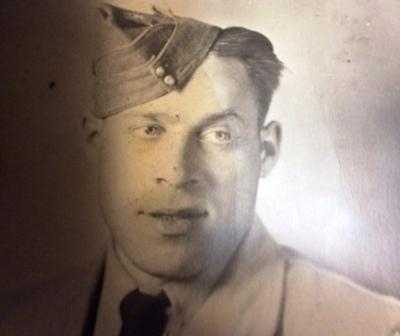
20230530_100207 Laurie Marshall from Connie taken in 1916

Lawrence Ivy Marshall. (Photo courtesy of Connie Birt Paynter)

March 15, 2024. In Part 1 of the WWI letters of Lawrence Ivy MARSHALL, of Covehead, Prince Edward Island, which had been shared by his granddaughter, Connie Birt Paynter, Lawrence was among the first Canadians to volunteer for WWI in 1914.  After his initial training in Valcartier, Quebec, he informed his family that he was about to go overseas. (See https://onthewarmemorialtrail.com/2024/03/02/on-the-war-memorial-trail-the-wwi-letters-of-lawrence-ivy-marshall-part-1-valcartier-camp/)

In Part 2, Lawrence described his experiences aboard one of the first troop ships to England. (See https://onthewarmemorialtrail.com/2024/03/08/on-the-war-memorial-trail-the-wwi-letters-of-lawrence-ivy-marshall-part-2-the-voyage-to-england/)

Now, in Part 3, Lawrence spent a cold and wet winter on the Salisbury Plain before being sent into battle in France and Belgium in the spring of 1915.

….A cold and wet winter on the Salisbury Plain….

After arriving in England in late October 1914, the first contingent of Canadian troops received basic training on the Salisbury Plain for the next months – during a cold and wet winter.  Much of the time the soldiers were mired in mud as England experienced one of its wettest winters in decades.

In the article ‘Evolution of Canada’s Shock Troops’, Tim Cook wrote that they “…marched, fired their Canadian-manufactured Ross rifles at targets, and practiced bayonet fighting against straw-filled dummies. And they did it during one of the most miserable winters in British history, when it rained 89 out of 120 days. The parade grounds were reduced to a muddy bog, but the Canadians kept up their spirits with beer, song, and camaraderie…”  (See www.thecanadianencyclopedia.ca/en/article/evolution-of-canadas-shock-troops)

…. “The Germans call us the ‘Women From Hell’…”….

The first Canadians went to France in February 1915, but Lawrence was still in England, waiting to be sent over.  In an April 27, 1915 letter to his father, he writes that “…things have taken a quick change around here in a few days.  They are sending us boys all off to the front in drafts now.  There were two lots went last night.  We are all on the next one.  That is all of the Island boys, but four or five.  We expect to leave any minute now.  We have all our ammunition ready, one hundred and fifty rounds per man. Jim is going on the same draft as I am and Parker Crockett too….”  Jim referred to James Lawrence MARSHALL.  Neither he nor Parker Hooper CROCKETT would return home.

… We are all in great cheer at going away.  You would think we are all going on a picnic to hear us when we got word of it.  We are good and tired of hanging around here now…

Screenshot 2024-02-28 at 16-21-40 Bailleul at DuckDuckGo

Lawrence joined the 15th Battery in Bailleul, France, just over the border with Belgium.  (Map source: Wikipedia)

A few days later, Lawrence arrived in France, assigned to No. 3 Canadian 15 Battery 3rd Brigade, First Canadian Expeditionary Force.  The Battery had just been moved near Bailleul, France after fighting in the Second Battle of Ypres in Belgium.  (See https://www.thecanadianencyclopedia.ca/en/article/battle-of-ypres)

The War Diary for May 4, 1915 noted that at 6:30 pm the Battalion “…paraded in full marching order and went into billets near Bailleul….”  They experienced heavy rain over the next several days.

On May 15, 1915 the Battalion moved further south to Robecq, France.  Two days later, they moved even further south, this time into trenches near Richebourg, France, in preparation for battle.

Lawrence missed this as he succumbed to dysentery and ended up in a field hospital, as he explained in a May 23, 1915 letter to his father.

 “…I have been in the hospital for over a week now.  It was from the effects of drinking bad water.  The water is awful here….. I expect to go back out of here any day now.  I have had a great rest while I have been in here and have been fed well.  The sisters are awful good to us here too…. The Germans did not get me yet.  I am going back to have another crack at the beggars soon…

After being discharged, Lawrence gave an update in a May 28, 1915 letter to his father.  “…Our Battery has been in action again since I left them, so I missed that.…” Lawrence missed a trench battle in Festubert, France. “…They will be about coming out of the trenches when I get back to them so I will be in with them the next time alright.  The Germans call us ‘The Women From Hell’ – some name ain’t it? …

…. Lawrence was on the front line in the trenches….

By July 1915, Lawrence was in Belgium, with the Battalion settled in a temporary camp called Camp Aldershot.  On July 13, 1915 Lawrence wrote to his mother that he was on guard duty.  “…Here I am in the second line of trenches and having a good time too.  Nothing to do but four hours guard out of twelve.  We were in the firing line four days and in here four days more so I think we are going out today for a while.  Everything is pretty quiet, only for a few shells and bullets that the Germans send over once in a while, but they don’t land very handy to us, and I am glad that they don’t either….

Lawrence gave a lighthearted account of what was happening for his mother’s peace of mind. “… We had a very good time in the front line of trenches.  We could not see the German trenches because there was a field of rye and clover between us but they were only two hundred yards away. We used to send an odd rifle shot over at them for fun to let them know we were there. They used to send a few over at us too but did not hit any of us. …

July 22, 1915 letter from Lawrence to his mother, written from France:  “…We just came out of the trenches last night.  We were in sixteen days.  This time we had quite a spell of it too.  We did not lose many men this time. We were pretty lucky.  We had it pretty wet and muddy for awhile.  ….  I was out one night putting up barbed wire in front of the firing line.  It rained all of the time we were out.  I had my overcoat on.  You could not tell what it was in the morning, an overcoat or mud …

…. Lawrence was injured playing football….

While with his unit in Messines, France, Lawrence was admitted to a field hospital in Etaples, France on August 24, 1915, with a dislocated elbow received while playing football.  On August 31, 1915, he was admitted to No. 3 General Hospital in Camiers, France, where it was decided to send him to England for further treatment.  On September 6, 1915, he was admitted to North Evington War Hospital in Leicester. 

North Evington War Hospital

North Evington War Hospital in Leicester, England. (Photo source: leicestermercury.co.uk)

Lawrence believed he was sent to England thanks to a nurse from Charlottetown, Prince Edward Island, as he explained in a September 7, 1915 letter to his father.  “…I am in the hospital in England and am doing well.  I can’t straighten my arm yet, but I hope to soon now.  It is pretty painful at times.  I dislocated and fractured the bone of my left elbow.  I never expected to get over to England with it, but I guess it was Miss McLeod the nurse who was in the hospital I was in, in France. She must have put a good word in for me…. She belongs to Charlottetown…

…. Lawrence had a ‘close shave’ at the front….

In his letter, Lawrence briefly wrote about his experiences at the front, since his letters were not censored while in England. “The letters don’t have to be censored over here so I suppose you would like to hear a little of what I have seen of this war….Them Germans are sure good shots and about them having no ammunition, that is all lies.  They certainly have lots of it…You should see them send over their big shells when they start. You should see some of the holes that they make when they explode. Some of the holes are forty feet across and ten feet deep….

He acknowledged his luck up to this point. “…  I have lived a charmed life through it so far but I have had some close shaves….  I remember one day …. some of us got out of the trenches to get some platforms for the trenches.  We were no sooner out than … they sent their shells over.  I was just in the act of putting one of the platforms on my back when six shells burst right over my head. The knocked me and the old platform down ….  I was just in the act of crawling away when I heard one of the boys shout God’s sake lay flat and keep still.  He had no sooner said it when the bugger opened their machine guns on us …  We laid there for half an hour with them going about six inches over our heads, some of them hitting the ground alongside of us.… The six of us that went out all managed to get back again.…

…. Lawrence was grateful to be out of the trenches….

In a September 10, 1915 letter to his mother, written while still in hospital, Lawrence shared more observations.  “…It is a treat to get away from the trenches and France.  I have seen all I want to of France. The trenches are getting pretty bad now. The last time we went in the water was above my knees.  When you get wet you have to stay wet until you dry and that is a good while….

Lawrence’s letter continued. “…  We don’t get all we want to eat either of course, when we are there we can’t write anything but that we get plenty to eat or they would not let the letters go home…..The officers don’t care how you do as long as they have plenty for themselves to eat… 

Like many soldiers, Lawrence felt that officers were not concerned about the safety of the men they were responsible for.  “…We are like a lot of prisoners more than soldiers.  It ain’t like a real war, it is more like murder.  Our officers will put us right into danger instead of keeping out of it. I remember one night our officers lined up fifty of us to take an orchard with about five hundred Germans in it.  We started across on the run with bayonets fixed but never got there.  The Germans turned their machine guns on us.  There was only twenty got back alive.  I thought my time had come but I got back alive.  The air was full of bullets…

Lawrence was safe in England, but faced a long recovery period before returning back to the front line.  In Part 4, Lawrence’s story continues as he found himself again on the front line and is wounded.

Thank you to Connie Paynter for providing photos and sharing letters written by her grandfather. Do you have photos or information to share? Email Pieter at memorialtrail@gmail.com, comment on the blog, or tweet to @researchmemori1.

© Daria Valkenburg

….Want to follow our research?….

If you are reading this posting, but aren’t following our research, you are welcome to do so.  Our blog address: https://onthewarmemorialtrail.com/
Front cover OnTheWarMememorialTrailinEurope4 countries, 6 weeks, 7,000 km – an unforgettable war memorial journey in Europe…. Daria’s book ‘No Soldier Buried Overseas Should Ever Be Forgotten‘ is available in print and e-book formats.  Net proceeds of book sales help support research costs and the cost of maintaining this blog. For more information see https://nosoldierforgotten.com/ 

You are also invited to subscribe to our YouTube Channel: On The War Memorial Trail With Pieter Valkenburg: https://www.youtube.com/channel/UCJ591TyjSheOR-Cb_Gs_5Kw

Never miss a posting!  Subscribe below to have each new story from the war memorial trail delivered to your inbox.

On The War Memorial Trail….. The WWI Letters of Lawrence Ivy Marshall – Part 2: The Voyage To England

20230530_102553 Pieter and Connie

Pieter with Connie Paynter. (Photo credit: Daria Valkenburg)

March 8, 2024.  In Part 1 of the WWI letters of Lawrence Ivy MARSHALL, of Covehead, Prince Edward Island, which had been shared by his granddaughter, Connie Birt Paynter, Lawrence was among the first Canadians to volunteer for WWI in 1914.  After his initial training in Valcartier, Quebec, he informed his family that he was about to go overseas.  (See https://onthewarmemorialtrail.com/2024/03/02/on-the-war-memorial-trail-the-wwi-letters-of-lawrence-ivy-marshall-part-1-valcartier-camp/)

Now, in Part 2, Lawrence described his experiences aboard one of the first troop ships that went to England.

20230530_100207 Laurie Marshall from Connie taken in 1916

Lawrence Ivy Marshall. (Photo courtesy of Connie Birt Paynter)

….Troops marched from Valcartier to Quebec City….

On September 26, 1914, Lawrence and the first contingent of around 30,000 Canadian troops began their journey to the United Kingdom. The trip began by marching to Quebec City from Valcartier, where they then waited to board one of 30 ships – former luxury liners that had been painted grey. 

On September 29, 1914, while still in Quebec City, Quebec, Lawrence wrote to his father.  “…We are having not too bad a time at all, but we are not allowed to go into Quebec.  We have to stay here in this building.  They put us here until we go on board the steamer this afternoon.  I will be glad when we do.  There are good accommodations on board… nice bed to sleep in, quite a difference from sleeping on the ground for 6 weeks….” In Valcartier, Lawrence had slept in a tent.

….Lawrence sailed to England aboard HMT Scotian….

HMT_Scotian

Lawrence travelled to the UK aboard the HMT Scotian.  (Photo source: https://birtwistlewiki.com.au/wiki/HMT_Scotian#Remarks)

Lawrence travelled aboard the HMT Scotian, which had begun as the Holland American Line‘s Statendam, and used for its Rotterdam – New York route. When the Allen Line in 1911 bought the ship in 1911, it was renamed Scotian. In 1914, it became a troop ship.

It wasn’t until October 3, 1914 that the ships left the port in Quebec City for England.  They added a ship of 537 Newfoundlanders to their convoy, and then crossed the Atlantic with a Royal Navy escort that watched for German U-boats.

By the time the Atlantic had been crossed, troops just wanted to get back on land, as Lawrence wrote to his father, while still aboard HMT Scotian: “…Well, we are still on board of this old ship….I am getting pretty tired of it by this time.  This is 18 days on her…We are anchored in an awful pretty place. The grass and trees are as green as summer yet. They stay that way all winter, so they say. When we land we are going to camp outside of London…” The place ‘outside of London’ was the Salisbury Plain, where training would continue.

….Lawrence counted himself lucky not to get seasick….

On October 13, 1914, Lawrence wrote to his mother.  “…We are still on board the boat but expect to land tomorrow night some time.  I tell you we had some trip alright. We are going to land at Southampton, England….. I am good and tired of it by this time…We had a very good trip.  Not so awful rough at all for the time of year.  It is very rough tonight though, the sea is going right over the deck tonight and the wind is blowing a hurricane.  You go out on deck and you would get blown overboard for sure.  Some of the boys were pretty sea sick some times when the old boat began to roll.  I was lucky.  I was never a bit sick, only had a headache one day.  All of the boys are writing home tonight. We just got word that we can mail them in the morning, that there is going to be a mail steamer come up to us and get the mail for us…

On October 17, 1914, while still aboard HMT Scotian, Lawrence wrote to his brother Merrill.  “…We are still on board of this old ship yet.  I can tell you that I am getting good and tired of it.  ….It is no fun, I tell you, to stay on this old ship, day after day, with land only a few yards away, and can’t get to it.  We expect to be on board of her until the last of next week. That is nearly a week yet…

….Troops marched from the train station to the Salisbury Plain….

salisbury

Lawrence wrote from Pond Farm Camp on Salisbury Plain.  (Map source: https://www.parl.ns.ca)

After finally docking, Lawrence and his fellow soldiers disembarked and boarded trains for Salisbury Plain.  Shortly after arrival, Lawrence wrote to his mother, giving his address as 12 Battery, 82 Regiment, E Company 3rd Brigade, Pond Farm Camp, Salisbury Plain, England:  “…. Just three weeks on board of that old ship.  I tell you it was great to get on land once more.  We arrived at camp last night or this morning rather. It was twelve o’clock when we got off the train.  Then we had to walk about six miles.  It seemed more like sixty to me and it was as dark as pitch…

Salisbury was quite different from Covehead, Prince Edward Island “ Well, this is some old fashioned place alright.  The houses are all made of brick and stone.  Little narrow streets with a Public Inn every here and there…” 

Lawrence noted that lice had been an unwelcome infestation aboard ship.  “…We had a great time every night on board of the ship, picking lice out of our clothes. We got good and lousy on board that old ship.  She was great and buggy…”  Lice would turn out to be a challenge faced by troops throughout the war.

Lawrence was on land, and no longer aboard a ship, but he soon would find himself living in cold and wet conditions on the Salisbury Plain as winter set in. 

In Part 3, Lawrence’s story continues as training in England is cut short and he finds himself on the front line in France and Belgium.

Thank you to Connie Paynter for providing photos and sharing letters written by her great-uncle and grandfather. Do you have photos or information to share? Email Pieter at memorialtrail@gmail.com, comment on the blog, or tweet to @researchmemori1.

© Daria Valkenburg

….Want to follow our research?….

If you are reading this posting, but aren’t following our research, you are welcome to do so.  Our blog address: https://onthewarmemorialtrail.com/

Front cover OnTheWarMememorialTrailinEurope4 countries, 6 weeks, 7,000 km – an unforgettable war memorial journey in Europe…. Daria’s book ‘No Soldier Buried Overseas Should Ever Be Forgotten‘ is available in print and e-book formats.  Net proceeds of book sales help support research costs and the cost of maintaining this blog. For more information see https://nosoldierforgotten.com/ 

You are also invited to subscribe to our YouTube Channel: On The War Memorial Trail With Pieter Valkenburg: https://www.youtube.com/channel/UCJ591TyjSheOR-Cb_Gs_5Kw

Never miss a posting!  Subscribe below to have each new story from the war memorial trail delivered to your inbox.

On The War Memorial Trail….. The WWI Letters of Lawrence Ivy Marshall – Part 1: Valcartier Camp

20230530_102553 Pieter and Connie

Pieter with Connie Paynter. (Photo credit: Daria Valkenburg)

March 2, 2024. One of the joys of meeting family members of soldiers who have served is that often we come away with more information than we first expected.  Sometimes it’s more personal information about the soldier, other times we learn that more than one family member in the family served at the same time. 

In one family from Covehead, Prince Edward Island, two brothers served in WWI, and the family not only had photos, but also letters that the brothers had written.

…Two brothers from Covehead enlisted …

But it wasn’t until after Connie Paynter of Summerside, Prince Edward Island, contacted us about her 20 year old great-uncle, who was killed in action at Vimy, that we learned that her grandfather also served in WWI. “…My grandfather and my great-uncle, who lived in Covehead, both served in WWI.  Only my grandfather, Lawrence Ivy Marshall, returned home…” she said.

Connie’s great-uncle, Merrill Augustus MARSHALL, lost his life on Easter Monday, April 9, 1917, during the Battle of Vimy Ridge, killed during the advance on the Ridge.  (See https://onthewarmemorialtrail.com/2023/06/14/on-the-war-memorial-trail-the-wwi-signaller-from-covehead-killed-during-the-battle-of-vimy-ridge/)

Merrill’s older brother, Lawrence Ivy MARSHALL, was born December 22, 1892 in Charlottetown, Prince Edward Island, the son of James Lawrence and Hattie Lillian (nee Carr) Marshall. 

…Lawrence was among the first recruits at Valcartier in 1914 …

Valcartier.8 map

Map shows location of Valcartier, Quebec.  (Map source: http://www.weather-forecast.com)

After completing his initial training, Lawrence officially enlisted in the Canadian Overseas Expeditionary Force on September 23, 1914 at Valcartier Camp, Quebec. He had arrived in Valcartier as part of the 82nd Regiment Abegweit Light Infantry, and had been a carpenter in his civilian life. (See https://en.wikipedia.org/wiki/Prince_Edward_Island_Highlanders)

… Valcartier was the only training camp in 1914 …

A military training camp in Valcartier, not far from Quebec City, began in August 1914 to prepare recruits for the mobilization of the Canadian Expeditionary Force, shortly after World War I was declared.  As men, including Lawrence, enlisted across the country, they arrived at the camp in Valcartier for equipment, training, and preparation for war. In 1914, Valcartier was the ONLY training camp for Canada’s Overseas Expeditionary Force.

Valcartier_-_Section_of_the_Camp

Postcard shows tents at Valcartier for recruits in training. (Photo source: Wikipedia)

Men had to live in tents and conditions were basic.  In a September 16, 1914 letter that Lawrence wrote to his mother, he confirmed he was in 12 Battalion E Company, 82 Regiment, Valcartier, Quebec: “…We are having very good weather up here now. Nice and warm in the day, but awful cold in the evening and mornings.  I don’t know when we will leave here….We cannot stay here much longer or we will freeze to death in bed some night…. 

… A short video on Valcartier camp in 1914 …

A short video, ‘Valcartier – First World War Soldier Factory’, gives an overview of this period.  The video is in French, with English subtitles, and runs 6:35 minutes…..

… Lawrence was soon to go overseas …

20230530_100207 Laurie Marshall from Connie taken in 1916

Lawrence Ivy Marshall. (Photo courtesy of Connie Birt Paynter)

Lawrence knew that he would be leaving soon to travel overseas as his September 16, 1914 letter went on to explain that “We got our new suits last night and boots.  We are some soldiers now. I am glad that we are clear of red coats anyway. I got my hair all clipped off short all over.  I look pretty funny now…” 

Lawrence’s reference to ‘red coats’ refers to the scarlet tunics worn by infantry prior to 1903, when a Canadian uniform of khaki serge tunics and trousers, and peaked caps with maple-leaf badges, replaced the brightly coloured full dress uniforms previously worn.

On September 23, 1914, Lawrence officially enlisted, and then wrote to his brother Merrill on September 25, 1914.  “…This will be my last letter to you for a good while because we leave in the morning.  Have to be up at 3 o’clock in the morning to leave for England…” 

Lawrence and the first Canadian troops were on their way to the United Kingdom on a three week voyage aboard the HMT Scotian.  In Part 2, Lawrence’s story continues with his observations about the voyage.

Thank you to Connie Paynter for providing photos and sharing letters written by her great-uncle and grandfather. Do you have photos or information to share? Email Pieter at memorialtrail@gmail.com, comment on the blog, or tweet to @researchmemori1.

© Daria Valkenburg

….Want to follow our research?….

If you are reading this posting, but aren’t following our research, you are welcome to do so.  Our blog address: https://onthewarmemorialtrail.com/

Front cover OnTheWarMememorialTrailinEurope4 countries, 6 weeks, 7,000 km – an unforgettable war memorial journey in Europe…. Daria’s book ‘No Soldier Buried Overseas Should Ever Be Forgotten‘ is available in print and e-book formats.  Net proceeds of book sales help support research costs and the cost of maintaining this blog. For more information see https://nosoldierforgotten.com/ 

You are also invited to subscribe to our YouTube Channel: On The War Memorial Trail With Pieter Valkenburg: https://www.youtube.com/channel/UCJ591TyjSheOR-Cb_Gs_5Kw

Never miss a posting!  Subscribe below to have each new story from the war memorial trail delivered to your inbox.

On The War Memorial Trail….. The WWII Soldier From Manitoba Who Died Shortly After Being Liberated From Stalag VII-A

February 18, 2024.  A few years ago, we translated ‘Holtense Canadezen’, Jan Braakman’s book about some of the soldiers buried in the Canadian War Cemetery in Holten, The Netherlands, which was published in English in October 2023 as  ‘Holten Heroes: Stories from a Canadian Field of Honour’.  (See https://onthewarmemorialtrail.com/2023/11/01/new-book-about-soldiers-buried-in-the-canadian-war-cemetery-in-holten-the-netherlands/)

One very sad story related how 6 newly liberated prisoners of war – 5 Canadians, 1 Australian – died after accepting what turned out to be alcohol containing methanol from liberated Soviet prisoners of war.

The story resonated as my father, who had been in a displaced persons camp in Post-WWII Germany, had told me of similar stories. Refugees who had survived the war, many under brutal conditions, died or became blind after drinking alcohol that contained methanol (methyl alcohol) or alcohol made in containers that had once held gasoline, oil, and other substances.  Only a few sips could result in death or permanent disability.

One of the six soldiers, whose story was not told in ‘Holtense Canadezen’, was on the photo wish list from Holten James ‘Jimmy’ Oliver THOMAS, born July 4, 1912 in St. Peters, Manitoba, the son of Henry ‘Harry’ Curtis James and Margaret Thomas.

Screenshot 2024-02-15 at 12-28-03 St. Peters

Map shows location of St. Peters and Hodgson in Manitoba.  (Map source: http://www.mapcarta.com)

St. Peters was an area familiar to me as childhood summers were spent in Grand Beach on Lake Winnipeg and we travelled often in that direction from Winnipeg, which was just a bit further south.

Jimmy’s parents left St. Peters in the fall of 1912 and moved to Hodgson, where Jimmy grew up with his siblings – 7 brothers and 1 sister.

The Peguis First Nation, whose members are of Ojibway (Saulteaux) and Swampy Cree (Maškēkowak) descent, is nearby, and the Thomas family has its roots here. (See https://en.wikipedia.org/wiki/Peguis_First_Nation)

….Jimmy’s niece provided a photo….

James Oliver Thomas

James ‘Jimmy’ Oliver Thomas. (Photo courtesy of the Thomas Family)

In the search for a photo, Pieter was in contact with Theresa Cooper, daughter of Jimmy’s brother, Rodney Thomas, one of two brothers who also served in the Canadian Army during WWII in addition to Jimmy.  The photo was emailed to us by Theresa’s son, Rodd Cooper. “Thank you for your work and recognition in honouring him and the other Canadian soldiers….” Rodd wrote.

….Jimmy was hard-working and versatile….

After his father died in 1925, Jimmy left school at the age of thirteen to help out at home.  He spent 6 years working on the family farm, 2 years as a mechanic in a garage in Virden, Manitoba, 6 years in a hard rock quarry in Ontario and Manitoba, plus casual labour wherever he could find work.  In his Estate Form, his mother noted that he “…would look for a job anywhere he could make good money…

By the time Jimmy enlisted at the No. XI District Depot in Vancouver, British Columbia on May 21, 1943, he was working as a plumber’s helper for a plumbing and heating company based in Prince Rupert, British Columbia, in a wartime housing project.

The interviewer for Jimmy’s Personnel Selection Record noted that he had “…above average learning ability….” and that his “…occupational background indicates versatility and adaptability.  Has been farmer, garage mechanic, fisherman, and latterly miner…

The Record went on to describe Jimmy as having a “….robust appearance…” and that he was “…of quiet nature but self-confident and unhurried…

Among his hobbies and interests, Jimmy “…played hockey.  Enjoys hunting and fishing.  Can swim.  Doesn’t dance.  Reads true detective stories. Attends movies…

….Jimmy’s military career began in British Columbia….

On June 3, 1943, Jimmy was sent for basic training at No. 110 Canadian Army Basic Training Camp (CABTC) in Vernon, British Columbia.   After completing basic training, he was transferred to A16 Canadian Infantry Training Camp (CITC) in Calgary, Alberta on August 4, 1943.

At the beginning of October 1943, Jimmy was given a week’s embarkation leave, the last chance he had to visit his family before being sent overseas.

On November 3, 1943, he left Calgary when he was transferred to No. 1 Training Brigade in Debert, Nova Scotia.

On December 15, 1943, Jimmy left Canada for the United Kingdom, arriving on December 21, 1943.  He most likely had been on the same ship as Eli Ambrose SNAKE. (See https://onthewarmemorialtrail.com/2021/12/13/on-the-war-memorial-trail-remembering-ww2-soldier-eli-ambrose-snake/)  While Jimmy was assigned to No. 1 Canadian Infantry Reinforcement Unit (CIRU), Eli was sent to No. 3 CIRU. 

…Jimmy joined the Seaforth Highlanders of Canada in Italy….

On February 19, 1943, Jimmy was sent to Italy as part of the Allied Armies In Italy (AAI) and assigned to the 2 Battalion X-4 Reinforcement.  Then, on May 5, 1944, he was transferred to the Seaforth Highlanders of Canada.

The Regiment had finished in Ortona and continued to move north, fighting through the Liri Valley.  Next, the Regiment received orders to work with other Regiments to break through the Hitler Line, the Germans’ second defensive line.  (See https://en.m.wikipedia.org/wiki/Hitler_Line and https://liri-valley.project44.ca/)

Screenshot 2024-02-18 at 09-56-04 Liri Valley

Placement of troops for breaching the Hitler Line on May 23, 1944. (Map source: https://liri-valley.project44.ca/)

On May 22, 1943, the War Diary for the Seaforth Highlanders of Canada recorded that at 4 pm, “…the Commanding Officer received orders from 2 Canadian Infantry Brigade that Seaforth Highlanders of Canada would attack the Adolph Hitler Line… The attack was ordered for 0600 hours 23 May 1944.  The PPCLI to attack on right, Seaforths on left, Edmonton Regiment reserve to exploit through PPCLI….”  (PPCLI refers to Princess Patricia Canadian Light Infantry.) 

A fierce battle occurred the following day.  The War Diary recorded that by 7:30 pm “…it was now apparent that the Adolph Hitler Line had been broken. The enemy were in full retreat, jamming the roads with his transport, which provided a good target for our Air Force…”   

…Jimmy became a POW during the breaking of the Hitler Line….

The war diary noted that there were many casualties: 51 killed, 110 wounded, and 72 missing.   Among the missing was Jimmy Thomas, who became a prisoner of war and taken to Stalag VII-A in Moosburg, Germany, where he was recorded as POW number 131885. (See https://en.wikipedia.org/wiki/Stalag_VII-A and https://www.pegasusarchive.org/pow/S7A/cSt_7A_Description.htm)

32898f4eaba6b4904152e84b63f6f18e--bavaria-vii

Entrance to Stalag VII-A.  (Photo source: Moosburg Online)

Stalag VII-A was captured on April 29, 1945 by Combat Command A of the 14th Armored Division of the US Army. (See https://www.moosburg.org/info/stalag/14theng.html)  Jimmy and his fellow POWs couldn’t believe how lucky they were, after all the hardships they had experienced.  Reports stated that 110,000 Allied POWs were freed from that camp alone.

The POWs were now free, but with the war still ongoing, it was impossible to evacuate all of them immediately.  They were instead moved west in large groups and placed in temporary transit camps while they waited impatiently to be transported out of Germany. 

Unfortunately, there were not enough planes to quickly transport them to Reims, France, and from there to England.  So they waited for their turn.

…A drink containing methanol proved fatal….

On May 1, 1945, Jimmy was in a temporary camp in Ettringen, Bavaria, Germany, along with other former prisoners of war.   A translated excerpt from Jan Braakman’s ‘Holtense Canadezen’ related what happened that day.  “Canadians John Decoine, Robert Consterdine, Joe Giguire, Steven Motkaluk, James Thomas, and Australian Joe Brydon could not believe their luck when they were liberated by the Americans ….. The six met a group of Russian prisoners of war near Ettringen (Bavaria), who apparently had a large amount of liquor at their disposal…. 

The men were unaware that they were being offered liquor that contained methanol, which was fatal for all six.  “…Captain C.T. Sutherland wrote a report for the Department of National Defence about the incident …. According to him, on May 1, on the street in Ettringen, the Canadians had been given alcohol by members of a Russian labour command. (The prisoner of war camp had numerous labour commands, consisting of prisoners of war of different nationalities)…. 

Most likely, the Russians were not aware that the alcohol had been poisoned. “…British prisoner of war Tom Tate, who was captured in Germany in early 1945 after his Royal Air Force bomber was downed, said that Russian prisoners of war had found and binged on methylated spirits on the estate (Ost-Ettringen). He recalled two Russian prisoners of war who died of it and more who had severe symptoms of poisoning….

…Jimmy died on May 2, 1945….

Captain Sutherland’s report did not include the names of Steve Motkaluk and James ‘Jimmy’ Oliver Thomas, who had both been in Stalag VII-A in Moosburg.  They had been taken to the US Hospital in Thannhausen, Germany.  Both men died on May 2, 1945.  

A medical report for Steven Motkaluk stated that the amount of alcohol he’d drunk was only 1 pint (2 cups).  Likely Jimmy had drunk the same amount or less. 

The other 4 men had been under the care of British physician John “Sandy” Rutherford, a former prisoner of war himself. 

It was a sad ending to soldiers who had endured so much during the war and their time in a POW camp. During the investigation into this incident and others involving the poisoning of Allied soldiers, the Canadian Intelligence Service …managed to obtain an October 1944 document from the Kriminaltechnisches Institut der Sicherheitspolizei (Forensic Institute of the Security Police), describing the various possibilities of deliberate poisoning. One of these was the addition of methyl alcohol (methanol) to bottled drinks. It is conceivable that the prisoners of war were victims of this practice….

…The other 5 victims of methanol poisoning….

In addition to Jimmy, the other 5 victims of methanol poisoning were: 

·         Robert James CONSTERDINE of Vancouver, British Columbia, died May 2, 1945

·         John DECOINE of Wabaska, Alberta, died May 1, 1945

·         Joseph ‘Joe’ August GIGUIRE of Conklin, Alberta, died May 3, 1945

·         Steven MOTKALUK, of Toronto, Ontario, but born in Lviv, Ukraine, died May 2, 1945

·         Joseph ‘Joe’ William BRYDON of Tenterfield, New South Wales, Australia, died May 2, 1945 

….Jimmy is buried in the Canadian War Cemetery in Holten….

Along with Steven Motkaluk, Jimmy was initially buried in the US Military Cemetery in Reutti, Germany, before being reburied in the British Military Cemetery in Durnbach, Germany.  Then, on June 4, 1948, they were reburied in the Canadian War Cemetery in Holten, The Netherlands.

Thomas JO James Oliver K51503

Grave of James ‘Jimmy’ Oliver Thomas in the Canadian War Cemetery in Holten, The Netherlands.  (Photo source: Canadian Virtual War Memorial)

…..Jimmy is listed on the National Métis Veterans Memorial Monument….

Jimmy is listed on the National Métis Veterans Memorial Monument just outside of Batoche, Saskatchewan.  (See https://www.metismuseum.ca/metisveteransmonument/)

His name can be found on Column 8 on the outside, Row 67. (https://www.metismuseum.ca/metisveteransmonument/column.php?v=XCHRVC)

….Thomas Esker in northern Manitoba is named in Jimmy’s honour…..

Screenshot 2024-02-21 at 08-38-47 Thomas Esker

Thomas Esker is named in honour of James ‘Jimmy Oliver Thomas. (Map source: http://www.mapcarta.com)

Thomas Esker in northern Manitoba, east of Tadoule Lake, was named after Jimmy in 1995.  This mountain has an elevation of 246 metres (807 feet).  (See https://mapcarta.com/24676318)

Thank you to Theresa and Rodd Cooper for providing a photo of James ‘Jimmy’ Oliver Thomas, to Shawn Rainville for helping with the initial newspaper search for family and information, to Judie Klassen for finding the geographic commemoration in ‘A Place Of Honour’, and to Jan Braakman for researching the May 1, 1945 incident in which 6 men lost their lives. 

Do you have photos or information to share? Email Pieter at memorialtrail@gmail.com, or comment on the blog.

© Daria Valkenburg

….Want to follow our research?….

If you are reading this posting, but aren’t following our research, you are welcome to do so.  Our blog address: https://onthewarmemorialtrail.com/

Front cover OnTheWarMememorialTrailinEurope4 countries, 6 weeks, 7,000 km – an unforgettable war memorial journey in Europe…. Daria’s book ‘No Soldier Buried Overseas Should Ever Be Forgotten‘ is available in print and e-book formats.  Net proceeds of book sales help support research costs and the cost of maintaining this blog. For more information see https://nosoldierforgotten.com/ 

You are also invited to subscribe to our YouTube Channel: On The War Memorial Trail With Pieter Valkenburg: https://www.youtube.com/channel/UCJ591TyjSheOR-Cb_Gs_5Kw

Never miss a posting! Subscribe below to have each new story from the war memorial trail delivered to your inbox.
On The War Memorial Trail…..The WWII Trooper From Rexton Who Lost His Life Three Days Before His Birthday

20230918_094802 Sep 18 2023 Rexton village sign

Stanley McBeath’s family lives in Rexton, New Brunswick.  (Photo credit: Daria Valkenburg)

February 3, 2024. When Pieter looks for family of a soldier whose name is on a photo wish list for one of the Canadian War Cemeteries in The Netherlands, he never knows what to expect.  After he decided to research Stanley Leigh MCBEATH, whose family lived in Rexton, New Brunswick, Pieter wrote to St. Andrews United Church in Rexton and also called the minister.  He did that after finding a newspaper article about a Memorial Service held in August 1945 for Stanley and another WWII soldier from Rexton, James Edward SULLIVAN

Shortly after his inquiry, Pieter received a call from Janice Little, who explained that she was Stanley’s niece, daughter of his sister Audrey, and yes, she had a photo.

…Stanley enlisted in 1939….

Stanley McBeath Coloured improved_photo(27)

Stanley Leigh McBeath. (Photo courtesy of the McBeath Family. Photo colourization by Pieter Valkenburg)

Born April 24, 1916 in Peter’s Mill, Kent County, New Brunswick, Stanley was the eldest son of Richmond Noble and Lilly Victoria (nee Peters) McBeath. Before enlisting with the 15th Heavy Battery of the 3rd (New Brunswick) Coast Brigade in St. John, New Brunswick on September 12, 1939, Stanley had been working for two years for H. Gauvin, who owned a garage in Rexton.  He also helped his parents on their farm. In his Occupational History Form, he indicated an interest in remaining in the army after the war ended.

After completing his basic training in St. John, Stanley was sent to Halifax to complete a Range Finders course.  A Range Finder was a key piece of equipment, used in machine guns, to measure distances to remote objects, and required expertise and skill to operate.  Soldiers selected for this specialist training were machine gunners, or mortarmen, with good eyesight and an elementary knowledge of mathematics.  Stanley completed this course on April 20, 1941.

…Stanley served with the 108th Battery as part of Atlantic Command….

On May 15, 1942, Stanley was transferred to the 108th Battery and posted to Ives Point, Nova Scotia.  The battery was part of Atlantic Command, whose role was to strengthen and administer home defence facilities on Canada’s Atlantic Coast.

Screenshot 2024-01-30 at 12-44-04 Ives Point

Location of Ives Point. (Map source: https://mapcarta.com)

…Stanley was in Goose Bay as a gunner with an anti-aircraft battery….

On October 15, 1942, Stanley was posted to Goose Bay, Labrador, temporarily attached to 30th Anti-Aircraft Battery.  (NOTE: Newfoundland and Labrador became part of Canada on March 31, 1949.)

Canada had built a massive air base at Goose Bay, Labrador as an alternative to Gander for transatlantic operations. This base became operational in late 1941. (See https://www.heritage.nf.ca/articles/politics/goose-bay-base.php) The bases at Gander and Goose Bay were vital links in the ferrying of military aircraft to Britain.  Anti-aircraft crews were part of coastal defence. 

Stanley remained in Goose Bay until July 23, 1943 when he was posted to Gaspe, Quebec, and reassigned back to the 108th Battery.  On November 26, 1943 he was sent to Shelburne, Nova Scotia for further training.

…Stanley qualified as a Canadian Armoured Corps Operator….

On April 18, 1944 Stanley was transferred to No. 1 Transit Camp in Windsor, Nova Scotia. Not long after that, on May 17, 1944, he was posted to No. 1 Canadian Armoured Corps Training Regiment (CACTR) in Borden, Ontario for additional training.  On October 7, 1944 he was qualified as a Canadian Armoured Corps (CAC) Operator.

Then, in preparation for overseas service, Stanley was assigned to No. 1 Canadian Armoured Corps Trained Soldiers Regiment (CACTSR), still in Borden, Ontario.

…Stanley left Canada for overseas service….

On November 25, 1944 Stanley left Canada, arriving in the United Kingdom on December 5, 1944, where he was assigned to No. 3 Canadian Armoured Corps Reinforcement Unit (CACRU).

On December 10, 1944, Stanley wrote a letter to his Aunt Janie McBeath, the sister of his father, who was a nurse in New York.  He gave his impression of England and noted the differences he saw for Christmas, which would be in two weeks. 

…Suppose that over in the US and Canada everything is taking on the holiday season, but here there is nothing at all.  But considering what this country has been through, I suppose it is a wonder it still exists. What has impressed me most is the sense of great age and changelessness (if there is such a word) – wars may come and go and times may have great changes, but this island goes on undisturbed by it all…

While in the United Kingdom, Stanley was temporarily attached to No. 2 Canadian Armoured Corps Reinforcement Unit (CACRU) while he took a gunnery course, which he completed on January 9, 1945.

…Stanley left the United Kingdom for Northwest Europe….

On March 24, 1945, Stanley was assigned to the X-4 Reinforcement list of the Canadian Armoured Corps as a Gunner Operator ‘C’ of the 9th Battalion and sent to North Western Europe.

On April 1, 1945 he was assigned to the 28th Canadian Armoured (British Columbia) Regiment, joining the Regiment in Germany as it travelled along the road between Calcar and Kleve, and crossed the Rhine River.    

By April 3, 1945 the Regiment had crossed the border back into The Netherlands, near Lochem, for a few days before returning to Germany. 

In a letter to his Aunt Janie, written on April 7, 1945, Stanley mentioned an experience in The Netherlands. “….Seen a show under kind of odd surroundings the other nite (sic.. night) – it was put on with a Dutch cow barn used as a theatre. But the cattle didn’t seem to mind…. At any rate the smell was familiar to me….

Stanley went on to explain that he was in a Regiment.  “…Belong to a unit now – not a bad outfit but don’t know any of them.  It’s taken a long, long time to get this far but am getting nearer the goal of ’39 all the time…”  Stanley was referring to 1939 when he enlisted for active service.

The Regiment reached Oldenburg, Germany on April 10, 1945 and the war diary daily reported encountering fierce resistance from the Germans.

The Battle for the Küsten Canal near Friesoythe and the advance slightly northwards towards Edewecht resulted in many casualties. Just after midnight on April 17, 1945, Stanley was in ‘B’ Squadron as the Regiment’s tanks supported the Algonquin Regiment during the first crossing of the Küsten Canal in assault boats. (See https://www.canadiansoldiers.com/history/battlehonours/northwesteurope/kustencanal.htm)

On Friday, April 20, 1945, the war diary entry for the 28th Canadian Armoured (British Columbia) Regiment noted that “… ‘B’ Squadron was still under command of the Algonquin Regiment…” and had moved to the location of the Regimental Headquarters between Friesoythe and Edewecht.

…Stanley lost his life on the road between Friesoythe and Edewecht….

Screenshot 2024-02-01 at 13-05-30 The Coordinate Translator

Map shows the location where Stanley McBeath lost his life, using the coordinates from the war diary of the 28th Canadian Armoured (British Columbia) Regiment.  (Map source: Google maps)

The war diary entry for Saturday, April 21, 1945 for the 28th Canadian Armoured (British Columbia) Regiment:  “…Weather mild and warm….. ‘A’ Squadron remained under command of Argyll and Sutherland Highlanders of Canada and worked troops up with the forward infantry…. Lt Warmald was wounded and only two tanks of his troop reached their objective.  Another tank of ‘A’ Squadron was bazooked…”  Troops were sent to “…assist infantry in the evacuation of the wounded…

Somehow, in the confusion Stanley was initially reported missing, but later it was confirmed that he had been mortally wounded and died on  April 21, 1945, three days before his 29th birthday.

Stanley’s parents received a telegram from the Department of Defence on April 30, 1945, informing them that Stanley was missing.  This was followed up with a May 3, 1945 telegram saying he was ‘officially killed in action on April 21, 1945’. 

…An error by the Director of Records left Stanley’s family with false hope….

However, on May 7, 1945 the Moncton Times newspaper published a list of soldiers from New Brunswick who had been liberated from prisoner of war camps, and among the names was Stanley Leigh McBeath! 

You can imagine the confusion, mixed with hope, for the McBeath family. Richmond McBeath, Stanley’s father, wrote to the newspaper and asked where the information came from.  In a May 10, 1945 letter to the Department of Defence’s Director of Records, Richmond noted the response he got from the Moncton Times, saying that “…in their reply, they said ‘The Canadian Press’ which got the information from the Director of Records…

Richmond quite correctly stated that “…we do not understand this and ask for prompt confirmation or denial of your telegram of May 3…

On May 14, 1945, Richmond received a telegram from the Director of Records, confirming that Stanley had died on April 21, 1945, as per the May 3, 1945 telegram.  “…Trooper McBeath’s name was erroneously released to the press as a liberated prisoner of war, but appeared on the official casualty list dated 10th May as killed in action…”  

An apology was also provided. “…Sincerely regret the anxiety caused by the release of your son’s name as a liberated prisoner of war in error…”  It was small comfort for a family left in limbo for several days, hoping to hear that Stanley was alive.

….Stanley is buried in the Canadian War Cemetery in Holten….

Stanley was initially buried in the Temporary Canadian Military Cemetery in Friesoythe, Germany before being reburied on March 9, 1946 in the Canadian War Cemetery in Holten, The Netherlands.

Grave of Stanley McBeath from CVWM

Grave of Stanley Leigh McBeath in the Canadian War Cemetery in Holten, The Netherlands.  (Photo source: Canadian Virtual War Memorial)

….We met Stanley’s nieces….

20230918_104650 Sep 18 2023 Pieter with Janice Little & Gail McBeath

Janice Little (left), Pieter, Gayle McBeath (right).  (Photo credit: Daria Valkenburg)

In researching Stanley’s story, we were delighted to have the opportunity to meet Janice Little and her cousin, Gayle McBeath, who is the daughter of Stanley’s brother Harold.

In both of his surviving letters to his Aunt Janie, Stanley had mentioned that he hadn’t seen his brother Harold, who was with the North Shore (New Brunswick) Regiment.  Janice and Gayle told us that they did have a chance to talk to each other – two days before Stanley passed away.

20230918_100300 siblings of Stanley McBeath from Janice Little

Stanley’s surviving siblings. Standing left to right:  Helen, Audrey.  Seated, left to right:  Harold, Dorothy.  (Photo courtesy of the McBeath Family)

Janice and Gayle shared a photo of Stanley’s surviving siblings, and explained that the houses they themselves live in were part of the family farm where Stanley had grown up.

20230918_111450 Sep 18 2023 View from the street Stanley McBeath grew up on in Rexton

View from the street where Stanley grew up.  (Photo credit: Daria Valkenburg)

Stanley’s parents never forgot their son, ensuring his name was engraved on their gravestone.  Janice and Gayle took us to visit the grave at the St. Andrews United Church Cemetery in Rexton.

20230918_112949 Sep 18 2023 Stanley is listed on his parents grave at St Andrews United Church Cemetery in Rexton NB

Stanley is listed on his parents’ grave at St Andrews United Church Cemetery in Rexton, New Brunswick.  (Photo credit: Daria Valkenburg)

Thank you to Janice Little and Gayle McBeath for sharing photos and information.  Do you have photos or information to share? Email Pieter at memorialtrail@gmail.com, comment on the blog, or tweet to @researchmemori1.

© Daria Valkenburg

….Want to follow our research?….

If you are reading this posting, but aren’t following our research, you are welcome to do so.  Our blog address: https://onthewarmemorialtrail.com/

Front cover OnTheWarMememorialTrailinEurope4 countries, 6 weeks, 7,000 km – an unforgettable war memorial journey in Europe…. Daria’s book ‘No Soldier Buried Overseas Should Ever Be Forgotten‘ is available in print and e-book formats.  Net proceeds of book sales help support research costs and the cost of maintaining this blog. For more information see https://nosoldierforgotten.com/ 

You are also invited to subscribe to our YouTube Channel: On The War Memorial Trail With Pieter Valkenburg: https://www.youtube.com/channel/UCJ591TyjSheOR-Cb_Gs_5Kw

Never miss a posting!  Subscribe below to have each new story from the war memorial trail delivered to your inbox.

On The War Memorial Trail….. The Successful Search For A Photo Of WWII Soldier Thomas Alfred Brown Left Us With A Mystery

January 25, 2024. Even when Pieter needs a break from extensive research, he still likes to test his detective skills. Last year he decided to help the Canadian War Cemetery in Groesbeek, The Netherlands find photos of a few soldiers for which research had already been done, but no photo had been found.  A relatively simple project, you might think – but although he has now nudged past 319 successful photo searches, we’ve learned that it isn’t. 

One of the soldiers whose photo search he undertook was that of Thomas ‘Tom’ Alfred BROWN of Altario, Alberta.  Born October 20, 1924, Thomas was the son of George Stuart and Alice Brown. (You can read Tom’s story here: https://www.facestograves.nl/LifeStories/BROWN%20Thomas%20Alfred-JLE-bio-EN.pdf )

….Tom lost his life during the Battle of Moyland Wood….

Thomas Alfred Brown Find a Grave

Grave of Thomas Alfred Brown at the Canadian War Cemetery in Groesbeek. (Photo source: http://www.findagrave.com)

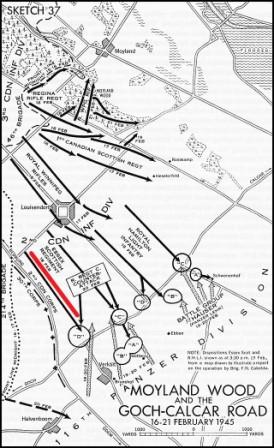
While serving with the Royal Winnipeg Rifles, Tom lost his life on February 17, 1945 during the Battle of Moyland Wood in Germany. He was 20 years old. (See https://legionmagazine.com/clearing-moyland-wood/

Norman Victor Holgate BUCHANAN, whose photo search story was told last year, had lost his life one day earlier in the same battle, while also serving with the Royal Winnipeg Rifles.  (See https://onthewarmemorialtrail.com/2023/11/08/on-the-war-memorial-trail-a-monument-in-st-claude-led-to-a-photo-of-a-wwii-soldier/)

….The search for a photo of Tom began with a Letter To The Editor….

When no family could be readily found, Pieter submitted a Letter To The Editor in a newspaper covering the Altario area – the East Central Alberta Review – and his letter was published on April 27, 2023.

Letter to Editor ECA Review

The very same day that the newspaper was published, we received an email from Eleanor Kreiser, with an attached document, explaining that “…. I saw your request in the paper. This is the Brown info in the Pioneer Heritage history book. Book 2, 1981. My husband used to live in Altario. My husband’s mother and six siblings were also born in Altario….

Brown brothers, Altario 2 corrected by Pieter

Tom Brown with his sister Mary.  (Photo source: Pioneer Heritage Book 2. Pioneer Heritage of Altario, Compeer, Kirriemuir and Burnbrae, Published by Wheatsheaf Women’s Institute, 1981)

The book excerpt included a photo of Tom and his sister Mary, along with a short writeup contributed by Mrs L. H. Walker.  “….Thomas Alfred Brown was born in Altario on November 20, 1924.  He took all of his schooling in Altario. After leaving school he worked for Bob Kewley and for Bert Caldwell.  Tom was a great lover of horses. One of the things I remember about him the most was his coming home at night on his horse, singing one of Wilf Carter’s songs….

The excerpt ended with a bit of family history.  “….Tom’s father died when Tom was still very young, and his step-father, Lester Walker, passed away in August of 1975.  Thomas has one sister, Mrs. Alice Mary Robbins (nee Brown) of Flatbush, and a half-sister, Mrs. Marion Stewart (nee Walker) of Ohaton….

…. Tom’s family provided photos and information….

Pieter was next in contact with June Beier, whose mother was Tom’s sister Mary, and with Ken Stewart, whose grandmother was Tom’s mother.  Both provided more information and photos.

IMG-3254 Photo of Tom Brown from Ken Stewart

Thomas Alfred Brown.  (Photo credit: Courtesy of the Family of Thomas Alfred Brown)

…. Tom’s last letter was written two days before his death….

With the help of her granddaughter, Shaylyn Beier, June shared the last letter received from Tom, written on February 15, 1945, two days before he lost his life, and which arrived after his death.

Feb 15 1945 letter from Tom Brown ENVELOPE

Envelope poignantly marked as ‘Tom’s last letter’.  (Letter courtesy of the Family of Thomas Alfred Brown)

In the February 15, 1945 letter to his mother, Tom noted that he was in ‘D’ Company of the Royal Winnipeg Rifles.  “…I guess it is about time I wrote to you. I have been pretty busy in the last few days and so I did not get time to do any writing at all….”  Left unsaid was that Tom and his Regiment had been heavily involved in Operation Veritable in Germany, part of a pincer movement to cut into Germany in order for Allied troops to advance towards Berlin. The Regiment had just moved into Kleve, Germany.  (See https://en.wikipedia.org/wiki/Operation_Veritable)

Tom wrote that he had sent some money home in previous letters, and after asking about his mother’s health, assured her that he is “…nothing but the best and aim to stay that way…”  He explained that he had received a parcel from his aunt and advised that “…all I mostly need is writing paper and envelopes…” 

Sadly, Tom lost his life two days later, and was temporarily buried around Calcar, Germany before being reburied in the Canadian War Cemetery in Groesbeek, The Netherlands a year later.

A March 8, 1945 letter to Tom’s mother was written by Major Latimer Hugh DENISON, his commanding officer. “…Corporal Brown’s presence is missed by the entire company.  He was a fine and gallant soldier and you may well be proud of him, as we are, for the man’s part he has played in helping to win this war….

He went on to write “…please rest assured that you are not alone in your hour of trial – gallant comrades once known are never forgotten…” Major Denison lost his own life on March 30, 1945, during the battle for Emmerich, at the age of 24, and is also buried in Groesbeek.

…. A September 1947 letter left us with an unsolved mystery…

image_6487327(1) man at Tom Browns original gravestone in Groesbeek

Man believed to be H. P. J. van Loon at Tom Brown’s original grave in Groesbeek. (Photo courtesy of the Family of Thomas Alfred Brown)

We thought this would be the end of Tom’s story, but there was another mystery, which up to now we have been unable to solve.  June shared another letter, written in September 1947 by an unidentified relative still in the Army, who signed his letter as Tom. He wrote that he had visited Tom Brown’s grave in Groesbeek.  Tom’s letter was written on the stationery of a schoolteacher (onderwijzer) from Groesbeek, H. P. J. van Loon, and he explained that Mr. Van Loon had taken photos of graves at the cemetery.

Ken Stewart had a photo of a man beside Tom Brown’s grave, and as the man was in a suit, not in a military uniform, it’s believed this is Mr. Van Loon.  When we asked Ken if he knew anything more, he said that “….My grandmother said Thomas stayed with a Dutch family in Holland when he had time off and was planning to marry one of the daughters when the war was over. So this may be the father of that family.  I do not know for sure…

We sent the letter and photo to friends who live in Groesbeek, in the hope that they might be able to find out more, but up to now, they too have been stymied.  If you recognize the man in the 1947 picture by Tom Brown’s grave, please let us know. 

June and Edward Beier

June Beier with her husband Edward. (Photo credit: Courtesy of June Beier)

Thank you to Joyce Webster, Publisher of ECA Review, for publishing Pieter’s Letter to the Editor, and to the family of Thomas Brown for sending photos and information – June Beier, Shaylyn Beier, and Ken Stewart. Thank you to Eleanor Kreiser for sending the Brown family information from the Pioneer Heritage book.

Do you have photos or information to share? Email Pieter at memorialtrail@gmail.com, comment on the blog, or tweet to @researchmemori1.

© Daria Valkenburg

….Want to follow our research?….

If you are reading this posting, but aren’t following our research, you are welcome to do so.  Our blog address: https://onthewarmemorialtrail.com/

Front cover OnTheWarMememorialTrailinEurope4 countries, 6 weeks, 7,000 km – an unforgettable war memorial journey in Europe…. Daria’s book ‘No Soldier Buried Overseas Should Ever Be Forgotten‘ is available in print and e-book formats.  Net proceeds of book sales help support research costs and the cost of maintaining this blog. For more information see https://nosoldierforgotten.com/ 

You are also invited to subscribe to our YouTube Channel: On The War Memorial Trail With Pieter Valkenburg: https://www.youtube.com/channel/UCJ591TyjSheOR-Cb_Gs_5Kw

Never miss a posting!  Subscribe below to have each new story from the war memorial trail delivered to your inbox.

On The War Memorial Trail….. The WWII Soldier From Feltzen South Killed During The Attack On Weener

January 21, 2024. After Pieter noticed that four names on the photo wish lists from the Canadian War Cemetery in Holten had lost their lives on April 24, 1945, and that all four were with the North Shore (New Brunswick) Regiment – 2 from New Brunswick and 2 from Nova Scotia – he began to investigate what had happened that day.

Nine men from the Regiment died during the Attack On Weener in Germany.  Pieter decided to research all four soldiers and was able to find family and photos for two.  Unfortunately, while family was found for the other two soldiers, there were no photos.  Those two soldiers ended up on our Cold Case List when all other research possibilities were exhausted. (See https://onthewarmemorialtrail.com/our-cold-cases/

In the last blog posting, the story of FrançoisFrank’ GUIMOND was told.  See https://onthewarmemorialtrail.com/2024/01/13/on-the-war-memorial-trail-the-wwii-soldier-from-st-louis-killed-during-the-attack-on-weener/

….The search for a photo of Sydney was successful….

The photo search for Sydney Guy MOSHER of Nova Scotia was ultimately successful. After quite a bit of research, Pieter was able to get in contact with Shirley McIlmoyl and John Gosling, the children of Sydney’s sister Myrtle Gosling, and it was John who had a photo of their uncle.  John’s son John sent us a photo.

Sydney Guy Mosher from John Gosling

Sydney Guy Mosher. (Photo courtesy of the Gosling Family)

Sydney was born August 22, 1914 in Feltzen South, Lunenburg County, Nova Scotia, the son of James Roger and Ida Selena (nee Spindler) Mosher.  He was one of four children, and had a brother and two sisters.

…. Sydney enlisted in the fall of 1943….

On August 9, 1941 he married Olive Sarah Copeland in Mahone Bay, Nova Scotia.  When he enlisted on October 19, 1943 at the No. 6 District Depot in Halifax, Nova Scotia, he was working as a meat cutter for J. A. Leaman Co. Ltd., a wholesale business, in Halifax. 

Sydney was sent to No. 60 Canadian Army Basic Training Centre (CABTC) in Yarmouth, Nova Scotia for basic training on November 19, 1943.  Then, on January 23, 1944, he was assigned to A14 Canadian Infantry Training Centre (CITC) in Aldershot, Nova Scotia.

On March 25, 1944, Sydney had embarkation leave until April 7, the last time he would see his family before leaving Canada.

He sailed to England on April 30, 1944, and upon arriving on May 7 was assigned to No 4 Canadian Infantry Reinforcement Unit (CIRU). Coincidentally, he arrived there on the same day as James ‘Jim’ Andrew MACLEOD of New Brunswick, whose story was previously told.  (See https://onthewarmemorialtrail.com/2023/11/29/on-the-war-memorial-trail-the-wwii-soldier-killed-by-mortar-fire-when-his-brother-was-two-years-old/)

On June 1, 1944 he was transferred to the 12th Battalion, Canadian Base Reinforcement Group (CBRG) for a very short period before being sent to the 11th Battalion of the 21st Army Group and the unallocated list for the North Nova Scotia Highlanders on June 12. 

…. Sydney left the United Kingdom in July 1944….

On July 22, 1944, he left for France, joining the Regiment as part of a reinforcement group.  He remained with the North Nova Scotia Highlanders until October 20, 1944, when he was transferred to the North Shore (New Brunswick) Regiment.  Both Regiments were in Mollekot, a rural area on the Belgium/Dutch border at the time, for the tail end of the Battle of the Scheldt. (See https://en.wikipedia.org/wiki/Battle_of_the_Scheldt)

The War Diary for the North Shore (New Brunswick) Regiment for October 19, 1944 noted that at 5 pm they were ordered to replace the North Nova Scotia Highlanders of 9th Brigade.  “…We were to take charge at first light.  The Battalion moved to IJzendijke for the night…” 

Sydney was with the Regiment as they moved deeper into The Netherlands, fighting near the Bergsche Maas River at Kapelsche Veer. In February 1945, the Regiment moved into Germany, fighting in the Rhineland, the Hochwald, before returning to The Netherlands.

On April 3, 1945, the Regiment was back in The Netherlands for the liberation of Zutphen, on the east bank of the IJssel River, an attack that began on April 6, 1945 and ended on April 8.  Canadian and Polish troops then worked until April 19, 1945 to liberate the Dutch towns of Heino, Meppel, and Makkum.

…. Sydney’s Regiment was ordered near Weener to relieve Polish troops….

On April 20, 1945, the Regiment’s war diary reported new orders, requiring them to advance 140 km (87 miles) back into Germany, to relieve a Polish Armoured Division near Weener.  …We are to take over from the Poles on the night of April 21…

On April 23, 1945, the Regiment’s war diary reported that the “…plan is for North Shore to capture Weener….”  The Attack on Weener began.  “At 1045 hours C Company reported sniper fire was bothering them and the road was cratered. The tanks were trying to get around the crater. At 1100 hours enemy were reported … and a heavy gun was firing… At 1245 hours C Company and the tanks were moved back a short distance to allow the artillery to engage a road block which was now holding up our progress …

After encountering quite a bit of resistance, the Regiment noted that “….by 1800 hours all companies were on objectives and were taking prisoners of war from houses and cellars…. A total of 103 prisoners of war were taken from the town. These were identified as Kriegsmarine fighting as infantry…”  Kriegsmarine was the navy of Nazi Germany.

…. Sydney lost his life on April 24, 1945 ….

Screenshot 2024-01-16 at 18-10-13 The Coordinate Translator

The distance between Weener and Leer is 11 km (7 miles). The red marker shows where the carriers were attacked, according to the map coordinates provided in the war diary.  They were 3 km from Weener and 8 km from Leer. (Map source: Google maps)

The war diary entry for April 24, 1945 was not as positive.  The Battalion was unsure if the bridge over the Ems River to Leer was intact and sent out a reconnaissance party to check it out.  This was important information needed for the upcoming push to Leer a few days later. 

…This morning at 0900 hours a battle group consisting of A Company mounted on the Carrier platoon were sent to recce the bridge to see if it was intact, but ran into heavy enemy fire… It was found the enemy was using a new device for mining the roads, which had not been encountered before…The first two carriers passed over the mined area, but the third was blown up and created a crater approximately 40 feet by 20 feet…

All on board of that third troop carrier were casualties. Things got worse as two German self-propelled guns then opened fire and a second carrier took a direct hit.  Among the casualties was Sydney Guy Mosher, dead at age 30.

…. It turned out the bridge to Leer no longer existed ….

In ‘Fields of Valour’ by Ken Smith, it was noted that soldiers had been killed trying to locate a bridge that was no longer there. Lives might have been saved if information from air surveillance had been received.

Smith wrote that “….the attack on Weener was supposed to be an easy affair using ‘A’ Company, but ‘C’ Company had to be brought in to outflank the enemy, as ‘A’ Company was attempting to take the Leer bridge when a carrier was lost to a mine with casualties. At the same time several dreaded 88 guns began firing. The men were pinned and Typhoons had to be called in to finally silence the big guns.

The whole affair was useless as the Leer Bridge was already out of commission, with the attack costing the lives of men, mostly by mines or shelling….

Either an Allied strike took out the bridge or the Germans had blown it. Given that the area was mined, it suggests that it was the Germans who had blown up the bridge to delay the Allied advance.

….Other soldiers from the North Shore (New Brunswick) Regiment who lost their lives on April 24, 1945….

Besides Sydney Guy Mosher and Frank Guimond, those who were killed on April 24, 1945 included:

  • Private Emile Joseph ARSENEAULT of Lewisville, New Brunswick, age 22
  • Private Ronald Burton DOHERTY of St. John, New Brunswick, age 19
  • Private Wallace Herbert LARLEE of Perth, New Brunswick, age 19  (on our Cold Case List)
  • Private Andrew MEEHAN of Hammondvale, New Brunswick, but born in Ireland, age 21
  • Private Owen Burton MILLER of Deseronto, Ontario, age 21
  • Private Francis Leslie MULCAHY of Halifax, Nova Scotia, age 21 (on our Cold Case List)
  • Private Edmund SAMPSON of Cannes, Nova Scotia, age 30

….Sydney is buried in the Canadian War Cemetery in Holten….

Sydeny was initially buried on April 26, 1945 “…in front of the school…” in Niew Schans, “…about 4 miles southwest of Weener…” before being reburied the following year in the Canadian War Cemetery in Holten, The Netherlands.

mosher find a grave

Grave of Sydney Guy Mosher in the Canadian War Cemetery in Holten, The Netherlands.  (Photo source: http://www.findagrave.com)

Thank you to John Gosling Sr, John Gosling Jr, and Shirley McIlmoyl for ensuring we received a photo of Sydney Guy Mosher.

If you can help with photos for two other soldiers killed on April 24, 1945 who are currently on the Cold Case List, please let us know.  The names: Wallace Herbert LARLEE of Perth, New Brunswick, and Francis Leslie MULCAHY of Halifax, Nova Scotia.

Do you have photos or information to share? Email Pieter at memorialtrail@gmail.com, comment on the blog, or tweet to @researchmemori1.

© Daria Valkenburg

….Want to follow our research?….

If you are reading this posting, but aren’t following our research, you are welcome to do so.  Our blog address: https://onthewarmemorialtrail.com/

Front cover OnTheWarMememorialTrailinEurope4 countries, 6 weeks, 7,000 km – an unforgettable war memorial journey in Europe…. Daria’s book ‘No Soldier Buried Overseas Should Ever Be Forgotten‘ is available in print and e-book formats.  Net proceeds of book sales help support research costs and the cost of maintaining this blog. For more information see https://nosoldierforgotten.com/ 

You are also invited to subscribe to our YouTube Channel: On The War Memorial Trail With Pieter Valkenburg: https://www.youtube.com/channel/UCJ591TyjSheOR-Cb_Gs_5Kw

Never miss a posting!  Subscribe below to have each new story from the war memorial trail delivered to your inbox.

On The War Memorial Trail…..The WWII Soldier From St Louis Killed During The Attack On Weener

January 13, 2024. This past summer, Pieter noticed that four names on the photo wish lists from the Canadian War Cemetery in Holten had lost their lives on April 24, 1945, and all four were with the North Shore (New Brunswick) Regiment – 2 from New Brunswick and 2 from Nova Scotia.  What had happened that day?

We soon learned that nine men from the Regiment died during the Attack On Weener in Germany.  Pieter decided to research all four soldiers and was able to find family and photos for two.  Family was found for the other two, but, as occasionally happens, there were no photos.  Those two soldiers ended up on our Cold Case List when all other research possibilities were exhausted. (See https://onthewarmemorialtrail.com/our-cold-cases/)

Thanks to the efforts of two cousins, Irene Caissie and Maria Mazerolle, the first photo found was that of François ‘Frank’ GUIMOND, born April 15, 1919 in St. Louis, Kent County, New Brunswick.  He was the son of Théodore and Marie Leona (nee Doucet) Guimond.  Frank had 5 brothers and 5 sisters, which helped in finding living family members who might have a photo.

…. Frank’s niece provided a photo….

Frank’s photo was delivered in person by his niece, Maria Mazerolle (nee Guimond), who stopped by while on her way to the Sea Glass Festival in Souris, Prince Edward Island.  She explained that she was ….the eldest daughter of Frank’s brother Alcide, who served in Italy during WWII and died at the age of 52….”  Alcide and his wife Margaret (nee Leblanc) had 11 children. 

CIMG6436 Jul 29 2023 Pieter with Maria Mazerolle & photo of Frank Guimond

Maria Mazerolle and Pieter with a photo of Frank Guimond.  (Photo credit: Daria Valkenburg)

Maria explained that Delore, another of brother of Frank’s, “….was in England during WWII and married a lady from London.  One of his daughters is still alive at the age of 80….

Like in so many families, …his two brothers, Alcide and Delore had left to go to war, so Frank wanted to go too…

…. Frank enlisted in June 1941….

Frank Guimond from Maria Mazerolle photo circa Dec 1941 improved colourized _photo

Frank Guimond, circa December 1941. (Photo courtesy of Maria Mazerolle. Photo restoration and colourization: Pieter Valkenburg)

When he enlisted at the No. 7A District Depot in Richibucto, New Brunswick, on June 18, 1941, Frank was working with his father at Harry O’Leary’s sawmill in Richibucto, a job he’d held for six years already. His personnel file stated that Frank was fluent in French and English, and that he’d spent 30 days training in Fredericton with the New Brunswick Rangers militia.

On July 31, 1941, Frank was sent to No. 70 Canadian Army Basic Training Camp (CABTC) in Fredericton, New Brunswick for basic training.  After completing his basic training Frank was assigned to No A14 Infantry Training Camp in Aldershot, Nova Scotia on August 1, 1941.

…. Frank left Canada for service overseas in December 1941 ….

Frank’s training in Canada was not long, as by December 12, 1941, he was on his way to the United Kingdom, arriving on December 26, 1941, where he was assigned to No. 1 Canadian Divisional Infantry Reinforcement Unit (CDIRU).

While in the United Kingdom, Frank, along with other Canadian soldiers, undertook further training, as well as being tasked with defending the coastal regions of the United Kingdom, particularly Sussex, until early in 1944.

On January 16, 1944, Frank was sent for an educational course at 3 Wing Canadian Training School (CTS), remaining there until November 10, 1944 when he was assigned to No. 3 Canadian Infantry Training Regiment (CITR), in preparation for being sent to Continental Europe. 

…. Frank was transferred to the North Shore (New Brunswick) Regiment….

On December 27, 1944, he left the United Kingdom as part of the unallocated reinforcement troops needed in Northwestern Europe.   On February 14, 1945, he was transferred to the North Shore (New Brunswick) Regiment, joining them in Nijmegen, The Netherlands as they prepared to go across the border into Germany for the Battle of Keppeln, followed by the Battle of the Balberger Wald, and then for the push across the Rhine River.

On April 3, 1945, the Regiment was back in The Netherlands for the liberation of Zutphen, on the east bank of the IJssel River, an attack that began on April 6, 1945 and ended on April 8.  Canadian and Polish troops then worked until April 19, 1945 to liberate the Dutch towns of Heino, Meppel, and Makkum.

Screenshot 2024-01-10 at 08-52-00 weener germany map at DuckDuckGo

Map shows location of Weener, Germany where several soldiers from the North Shore (New Brunswick) Regiment lost their lives on April 24, 1945.  Below Weener is Stapelmoor, where the soldiers were initially buried. The dotted line shows the border between The Netherlands and Germany.  (Map source: http://www.viamichelin.com)

On April 20, 1945, the Regiment’s war diary reported new orders, requiring them to advance 140 km (87 miles) back into Germany, to relieve a Polish Armoured Division near Weener.  …We are to take over from the Poles on the night of April 21…

On April 23, 1945, the Regiment’s war diary reported that the …plan is for North Shore to capture Weener….”  After encountering resistance, the Regiment noted that ….by 1800 hours all companies were on objectives and were taking prisoners of war from houses and cellars…. A total of 103 prisoners of war were taken from the town. These were identified as Kriegsmarine fighting as infantry…”  Kriegsmarine was the navy of Nazi Germany.

…. Frank lost his life on April 24, 1945 ….

The war diary entry for April 24, 1945 was not as positive. The Battalion was unsure if the bridge over the Ems River to Leer was intact and sent out a reconnaissance party to check it out.  This was important information needed for the upcoming push to Leer a few days later. 

…This morning at 0900 hours a battle group consisting of A Company mounted on the Carrier platoon were sent to recce the bridge … over the Ems River at Leer “…to see if it was intact, but ran into heavy enemy fire… It was found the enemy was using a new device for mining the roads, which had not been encountered before…The first two carriers passed over the mined area, but the third was blown up and created a crater approximately 40 feet by 20 feet…

All on board of that third troop carrier were casualties. Things got worse as two German self-propelled guns then opened fire and a second carrier took a direct hit. 

Among the casualties was Frank Guimond, dead at age 26.

In ‘Fields of Valour’ by Ken Smith, it was noted that soldiers had been killed trying to locate a bridge that was no longer there. Lives might have been saved if information from air surveillance had been received.

Smith wrote that “….the attack on Weener was supposed to be an easy affair using ‘A’ Company, but ‘C’ Company had to be brought in to outflank the enemy, as ‘A’ Company was attempting to take the Leer bridge when a carrier was lost to a mine with casualties. At the same time several dreaded 88 guns began firing. The men were pinned and Typhoons had to be called in to finally silence the big guns.

The whole affair was useless as the Leer Bridge was already out of commission, with the attack costing the lives of men, mostly by mines or shelling….

Either an Allied strike took out the bridge or the Germans had blown it. Given that the area was mined, it suggests that it was the Germans who had blown up the bridge to delay the Allied advance.

….Other soldiers from the North Shore (New Brunswick) Regiment who lost their lives on April 24, 1945….

Besides Frank Guimond, those who were killed on April 24, 1945 included:

  • Private Emile Joseph ARSENEAULT of Lewisville, New Brunswick, age 22
  • Private Ronald Burton DOHERTY of St. John, New Brunswick, age 19
  • Private Wallace Herbert LARLEE of Perth, New Brunswick, age 19  (on our Cold Case List)
  • Private Andrew MEEHAN of Hammondvale, New Brunswick, but born in Ireland, age 21
  • Private Owen Burton MILLER of Deseronto, Ontario, age 21
  • Corporal Sydney Guy MOSHER of Bridgewater, Nova Scotia, age 30 (upcoming story)
  • Private Francis Leslie MULCAHY of Halifax, Nova Scotia, age 21 (on our Cold Case List)
  • Private Edmund SAMPSON of Cannes, Nova Scotia, age 30

….Frank is buried in the Canadian War Cemetery in Holten….

Frank was initially buried on April 26, 1945 “…in front of the school…” near the German village of Staplemoor, before being reburied the following year in the Canadian War Cemetery in Holten, The Netherlands.

guimond, frank gravestone

Grave of Frank Guimond in the Canadian War Cemetery in Holten, The Netherlands.  (Photo courtesy of the Information Centre Canadian Cemetery Holten)

On January 3, 1948 a letter from Mrs. A. C. Alberts-Fredricks of Deventer, The Netherlands, was sent to the Department of Veterans Affairs, in which she explained that she had adopted Frank’s grave and asked if her letter could be forwarded to the family.  A note at the bottom of the letter verified that it had been forwarded to Frank’s mother.

…. We met another niece in Richibucto….

It’s not often that we get to meet more than one group of family members, but a few months after meeting Maria Mazerolle, we met her cousin, Irene Caissie, along with Irene’s husband Rheal in Richibucto.  Irene explained that Frank’s brother, Edgar, was her father.

20230918_120957 Sep 18 2023 Pieter with Irene and Rheal Caissie

Pieter with Irene and Rheal Caissie.  (Photo credit: Daria Valkenburg)

Thank you to Irene Caissie and Maria Mazerolle for ensuring we received a photo of Frank Guimond.

Sydney Guy MOSHER’s story will be coming up.  If you can help with photos for two other soldiers killed on April 24, 1945 who are currently on the Cold Case List, please let us know.  The names: Wallace Herbert LARLEE of Perth, New Brunswick, and Francis Leslie MULCAHY of Halifax, Nova Scotia.

Do you have photos or information to share? Email Pieter at memorialtrail@gmail.com, comment on the blog, or tweet to @researchmemori1.

© Daria Valkenburg

….Want to follow our research?….

If you are reading this posting, but aren’t following our research, you are welcome to do so.  Our blog address: https://onthewarmemorialtrail.com/

Front cover OnTheWarMememorialTrailinEurope4 countries, 6 weeks, 7,000 km – an unforgettable war memorial journey in Europe…. Daria’s book ‘No Soldier Buried Overseas Should Ever Be Forgotten‘ is available in print and e-book formats.  Net proceeds of book sales help support research costs and the cost of maintaining this blog. For more information see https://nosoldierforgotten.com/ 

You are also invited to subscribe to our YouTube Channel: On The War Memorial Trail With Pieter Valkenburg: https://www.youtube.com/channel/UCJ591TyjSheOR-Cb_Gs_5Kw

Never miss a posting!  Subscribe below to have each new story from the war memorial trail delivered to your inbox.

On The War Memorial Trail…..The WWII Soldier From Liscomb Who Lost His Life Due To Sniper Fire In Germany

January 6, 2024. In going through the photo wish lists for soldiers buried in The Netherlands, Pieter often picks a name based on location – especially if we are planning to visit that area – or by name.  Lawrence Arthur RUDOLPH, listed as being from Guysborough, got his attention for both reasons.  We’d had very good luck with soldiers from Guysborough, and the surname Rudolph was one he thought might be easier to trace.

Pieter was in luck as he was soon in contact with Elsie Hartling, whose mother, Lillian M. Rudolph, was Lawrence’s sister, and she had a photo, which was kindly sent to us by her nephew Andrew Hartling. 

Born December 31, 1923 in Liscomb, Guysborough County in Nova Scotia, Lawrence was the son of Basil Melbourn and Elsie Rudolph. Before enlisting with the No. 6 District Depot on April 21, 1943 in Halifax, Nova Scotia, he was employed as a pipe fitter.

Lawrence Arthur Rudolph

Lawrence Arthur Rudolph.  (Photo courtesy of Elsie Hartling)

On April 30, 1943, Lawrence was sent to No. 60 Canadian Army Basic Training Centre (CABTC) in Yarmouth, Nova Scotia for initial training.  After completing his basic training, he was assigned to A2 Canadian Artillery Training Centre (CATC) in Petawawa, Ontario for training as a gunner.

On November 1, 1943, Lawrence was transferred to No. 1 Training Brigade in Debert, Nova Scotia, in preparation for overseas service.

… Lawrence left Canada for overseas service in December 1943…

On December 15, 1943 Lawrence left Canada for the United Kingdom.  Upon arriving on December 21, 1943 he was assigned to 2nd Canadian Artillery Reinforcement Unit (CARU).

Then, on January 14, 1944, Lawrence was transferred to the 5th Canadian Anti-Tank Regiment, Royal Canadian Artillery, and underwent further training, qualifying as a Driver i/c (Wheeled) on May 9, 1944.  (The term ‘Driver i/c’ refers to ‘Driver, internal combustion’. Wheeled refers to wheeled vehicles.)

Preparations for going to the front were ongoing, but, as noted in ‘The History of the 5th Anti-Tank Regiment’, a compilation edited by John P. Claxton, “….at first light on 18th July 1944, the Regiment moved off in convoy, destination was Tilbury Docks, and the trip to the Marshalling Area was made without incident….” 

It took time to load vehicles and equipment onto the ships, but “…in due course and with numerous pauses for tea, civilian longshoremen completed the task of loading vehicles into the holds of ships….

… Lawrence left for France in July 1944 with his Regiment…

…After a couple of days at anchor at South End…” Lawrence left for France with his Regiment on July 21, 1944 when “…the convoy moved out of the Thames Estuary and through the channel under cover of darkness and a light mist…” 

Screenshot 2024-01-05 at 09-00-49 courcelles sur mer at DuckDuckGo

The 5th Canadian Anti-Tank Regiment arrived at Courceulles-Sur-Mer and then travelled down towards Caen and Falaise.  (Map source: Wikipedia)

They arrived “…off the beaches at Courceulles-sur-Mer, Normandy in a blaze of anti-aircraft fire…Further delay was caused by rough weather and scarcity of landing craft…..

Finally, after several days, all personnel and equipment reached land, and “…the Regiment proceeded through pulverized villages and over the remains of country roads to our concentration area near Graye-sur-Mer….

The Regiment fought its way across France, going past Caen to the Falaise Gap, into the Somme.  By September 1944 they reached Belgium, and began the push towards Antwerp, and then, in mid-October, into The Netherlands.

… Lawrence lost his life during Operation Blockbuster…

Screenshot 2024-01-05 at 09-09-05 kleve germany at DuckDuckGo

The 5th Canadian Anti-Tank Regiment left The Netherlands for Germany.  On February 27, 1945 Lawrence Rudolph lost his life near present day Bedburg-Hau, Germany, during Operation Blockbuster.  (Map source: Wikipedia)

The Regiment’s time in The Netherlands ended on February 22, 1945, “… when the Regiment moved to concentration areas south of Cleve in Germany….” to participate in Operation Blockbuster. (See https://en.wikipedia.org/wiki/Operation_Blockbuster)

…..Operation Blockbuster began at dawn on the 26th February, in abominable weather. The state of the ground precluded use of towed 17-pounder guns, but our Crusader Towers did outstanding work.  Loaned with drivers to the assaulting formation, they were used as armoured troop carriers to get the infantry through heavy fire on their objectives, and then were employed to move casualties and supplies….” 

Crusader Tower from WW2 TV

A Crusader Tower was a tracked vehicle with room for a gun crew.  (Photo source: YouTube WW2TV Crusader Gun Tractor)

Casualties were heavy, due to “…high velocity gun, artillery, and extensive minefields…” The weather deteriorated.  By February 27, 1945, “…continuous deluges of rain with occasional wet snow, combined with the volume and weight of traffic, were rapidly converting roads into impassable masses of mud and dislodged cobblestones…

Lawrence was in the midst of this, as the Crusader Towers were needed “….to move ammunition to the field guns…” followed by moving “….the guns themselves which were up to their muzzles in bog…

At some point on the morning of February 27, 1945, Lawrence lost his life due to sniper fire.  The War Diary entry for February 27, 1945 for the 14th Battery of the 5th Canadian Anti-Tank Regiment recorded that at 9 am the battery was …. ordered to proceed further …. towards Keppeln. …Half-track, while being towed, struck a carrier. Captain Gerla, Sergeant Carmicheal take Lt Sheid’s carrier to lead convoy.  Lt Sheid proceeded back to Ech at Hau with carrier. On route to battery area, convoy fired on by snipers. Gunner Rudolph was killed and died instantly….”  Hau is present-day Bedburg-Hau, just a few km from Kleve.

… Lawrence is buried in the Canadian War Cemetery in Groesbeek…

Lawrence was initially buried in a temporary cemetery 4.8 km (3 miles) south of Kleve, Germany.  In 1946, he was reburied in the Canadian War Cemetery in Groesbeek, The Netherlands.

Grave of Lawrence Arthur Rudolph Find a grave

Grave of Lawrence Arthur Rudolph at the Canadian War Cemetery in Groesbeek.  (Photo source: Find A Grave)

Thank you to Elsie and Andrew Hartling for sharing a photo of Lawrence Arthur Rudolph, and to the contributors at WW2Talk for information on the Crusader Tower. Do you have photos or information to share? Email Pieter at memorialtrail@gmail.com, comment on the blog, or tweet to @researchmemori1.

© Daria Valkenburg

….Want to follow our research?….

If you are reading this posting, but aren’t following our research, you are welcome to do so.  Our blog address: https://onthewarmemorialtrail.com/

Front cover OnTheWarMememorialTrailinEurope4 countries, 6 weeks, 7,000 km – an unforgettable war memorial journey in Europe…. Daria’s book ‘No Soldier Buried Overseas Should Ever Be Forgotten‘ is available in print and e-book formats.  Net proceeds of book sales help support research costs and the cost of maintaining this blog. For more information see https://nosoldierforgotten.com/ 

You are also invited to subscribe to our YouTube Channel: On The War Memorial Trail With Pieter Valkenburg: https://www.youtube.com/channel/UCJ591TyjSheOR-Cb_Gs_5Kw

Never miss a posting!  Subscribe below to have each new story from the war memorial trail delivered to your inbox.

2023 Christmas Eve Candle Lighting In The Netherlands

christmas-red-candles-header

December 31, 2023.  For over 30 years, it’s been a Christmas Eve tradition in The Netherlands to light candles by the graves of Allied soldiers and Dutch resistance fighters who are buried in War Cemeteries, including all three Canadian War Cemeteries, or in a municipal cemetery.
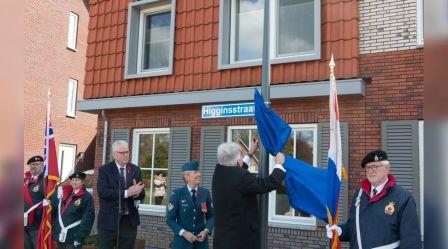
These candles are funded by various non-profit groups at each cemetery participating in the candle-lighting ceremony.  In many of the cemeteries, children are active participants, placing candles at each grave. On a day when many of us in Canada are thinking of presents, a visit by Santa, and preparations for our Christmas Day meal, Dutch volunteers spend their day in an act of commemoration across the country.

This year, we include photos from two municipal cemeteries – Donia Protestant Church Cemetery in Makkum, and Eindhoven General Cemetery in Eindhoven – and a short video from the Canadian War Cemetery in Holten.

The weather was not cooperative on Christmas Eve, with rain and strong winds, but it didn’t deter the volunteers.

….Donia Protestant Church Cemetery in Makkum….

Remko de Jong, a resident of Makkum, coordinates the candle lighting ceremony in his village. Candles were placed at the graves at 38 airmen who are buried in the Donia Protestant Church Cemetery in Makkum, located by Lake IJsselmeer in the province of Friesland.

Every year, he is kind enough to send a few photos. There was a lot of rain and strong winds this Christmas Eve, and Remko went back to the cemetery early on Christmas morning to relight the candles, accompanied by his wife Barbara, seen in the photo below, wearing the Santa hat.

Lichtjes op oorlogsgraven 2023. Foto`s Remko de Jong (5)

Candles were placed at the graves of airmen buried in the Donia Protestant Church Cemetery in Makkum. This year candles were relit on Christmas morning. (Photo credit: Remko de Jong)

Tabor Lichtjes op oorlogsgraven 2023. Foto`s Remko de Jong (6)

Candle placed at the grave of John Francis Edward Tabor.  (Photo credit: Remko de Jong)

One of the airmen buried in Makkum is RCAF Flying Officer John Francis Edward TABOR of Ottawa, Ontario, who lost his life when the plane he was in, Halifax LK879 crashed at sea on the night of December 16, 1944 into December 17, 1944.

Nisbet Lichtjes op oorlogsgraven 2023. Foto`s Remko de Jong (7)

Candle placed at the grave of George David Nisbet. (Photo credit: Remko de Jong)

Another of the Canadian airmen buried in Makkum is RCAF Air Gunner Sgt George David NISBET of Conquest, Saskatchewan, whose body was recovered from the sea on June 7, 1944, after being reported missing on May 24.  He was aboard flight Halifax W1217 which was shot down by a nightfighter.

…Eindhoven General Cemetery in Eindhoven…

Grave WA Hood in Eindhoven with candle Noella Rehwald

Grave of William Andrew Hood with a Christmas Eve candle.  (Photo credit: Noella Rehwald)

Remko arranged for a photo of the grave of William Andrew HOOD of Little Bras D’or, Cape Breton Island, Nova Scotia, an airman with the RCAF, who lost his life on June 29, 1943 when the plane he was in, flight Halifax JD215, was shot down over The Netherlands. (See https://onthewarmemorialtrail.com/2023/09/19/on-the-war-memorial-trail-the-wwii-airman-from-bras-dor-who-was-aboard-the-last-flight-of-halifax-jd215/)

….Children placed candles at the graves in Holten…

Henk Vincent, a volunteer at the Canadian War Cemetery in Holten, confirmed that the weather was harsh on Christmas Eve…”   he explained that in Holten, the ceremony is organized by the SVNF (National Holiday Celebration Foundation) and sponsored by Holten’s carnival association and the municipality of Rijssen-Holten.  It’s not funded by the Commonwealth War Graves Commission.

After the candles have been lit, all the volunteers are thanked and the sacrifices of those buried in the cemetery are acknowledged in a commemoration ceremony held at dusk.

Henk sent a short video of children placing candles at the graves.  Take a look:

….Over 7,600 Canadian soldiers are buried in The Netherlands!…

Kudos to the Dutch, who never forget the sacrifices made by Allied soldiers! Over 7,600 Canadian soldiers are buried in The Netherlands and they are not forgotten.  Pieter gets emotional each year at this time. “…It makes me proud that the Dutch never forget the sacrifices made by Allied soldiers and Dutch resistance fighters that liberated them. By involving the children, this helps ensure that they will continue to be remembered…

Thank you to Remko de Jong for sharing photos from Makkum, to Noella Rehwald for the photo from Eindhoven, and to Henk Vincent for sharing the video from Holten

If you have a story or photo to share about Canadian military personnel buried in The Netherlands, please contact Pieter at memorialtrail@gmail.com, or comment on the blog. 

© Daria Valkenburg

…Previous postings about Christmas Eve Candle Lighting…

…Want to follow our research?….

If you are reading this posting, but aren’t following our research, you are welcome to do so.  Our blog address: https://onthewarmemorialtrail.com/

Front cover OnTheWarMememorialTrailinEurope4 countries, 6 weeks, 7,000 km – an unforgettable war memorial journey in Europe…. Daria’s book ‘No Soldier Buried Overseas Should Ever Be Forgotten‘ is available in print and e-book formats.  Net proceeds of book sales help support research costs and the cost of maintaining this blog. For more information see https://nosoldierforgotten.com/

You are also invited to subscribe to our YouTube Channel: On The War Memorial Trail With Pieter Valkenburg: https://www.youtube.com/channel/UCJ591TyjSheOR-Cb_Gs_5Kw

Never miss a posting!  Subscribe below to have each new story from the war memorial trail delivered to your inbox.