On The War Memorial Trail…..The Continuing Search For A Photo of WWI Soldier Joseph Arthur Desroches

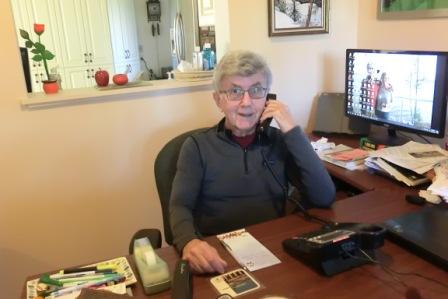
CIMG4888 Nov 10 2020 Pieter being interviewed by Radio Canada Acadie

Pieter during a phone interview with CBC Radio-Canada Acadie. (Photo credit: Daria Valkenburg)

November 15, 2020. In the fall of 2017, when we visited the graves of WWI soldiers buried in France, who are listed on the Cenotaph outside the Borden-Carleton Legion, it was always more meaningful for Pieter if he had a photo of the soldier and knew what he looked like.

After returning home, Pieter became more determined than ever to find a photo and family for every WWI and WWII soldier he researches.  “… I do not believe that there are Canadian soldiers buried overseas who are forgotten.  Family is out there somewhere...” he maintains.

….Finding a photo of Arthur Desroches has been a challenge….

One of the WWI soldiers he’s had no luck with finding a photo or family was Joseph ‘Arthur’ DESROCHES, whose story was told over 3 years ago, when we visited the cemetery he is buried in.  (See https://onthewarmemorialtrail.com/2017/09/23/paying-our-respects-to-private-joseph-arthur-desroches/)

Born August 8, 1891 in Miscouche, Prince Edward Island, he was the son of Zephirim Desroches and Priscilla Gaudet.  Unlike many WW1 soldiers, Desroches was married, to Mary Ann Wedge of Fernwood, and had four children: Elizabeth Eileen, Joseph Alfred, Lucy Priscilla, and Charles Arthur. With a wife and four children, it doesn’t seem possible that Desroches would not have sent a photo of himself home.

Many archives and researchers were contacted over the years, particularly those researching Acadian history.  An article was published last year in the County Line Courier. (See CLC Jul 10 2019 p11 WW1 Soldier Incorrectly Recorded on Gravestone)  Still no luck.

Since Desroches was of Acadian descent, maybe we needed to ask the French language media for help?

.CBC Radio-Canada Acadie helped publicize the search for a photo….

CBC’s Radio-Canada Acadie in Moncton was approached, and reporter Anne-Marie Parenteau interviewed Pieter for a Remembrance Day broadcast.  The reporter and the radio station showed a deep commitment to this story as Pieter was interviewed in English, and then his interview was translated into French.  Both Anne-Marie and the translator did an incredible job, resulting in an excellent interview.

If you understand French, you’ll want to listen to it:  “La quête d’un homme de l’Î.-P.-É. pour retrouver des photos d’un soldat acadien” … See http://www.radio-canada.ca/util/postier/suggerer-go.asp?nID=4582099

Unfortunately, up to today, no one has come forward in response to the appeal for a photo or family of Joseph Arthur Desroches. UPDATE: A photo was received in 2023.

UPDATE: In last month’s posting about photos of soldiers that Pieter is searching for, he has been successful with two soldiers:  Vernon James NIXON and Philip Hubert LONG.

You can read the original posting and the follow-up on Philip Hubert Long at:

Thank you to the County Line Courier for featuring the ‘On The War Memorial Trail’ stories, and an enormous Merci Beaucoup to Anne-Marie Parenteau and CBC’s Radio-Canada Acadie.  If you have photos or information to share, please email Pieter at memorialtrail@gmail.com or comment on the blog.

© Daria Valkenburg

….Want to follow our research?….

If you are reading this posting, but aren’t following our research, you are welcome to do so.  Our blog address: https://onthewarmemorialtrail.com/
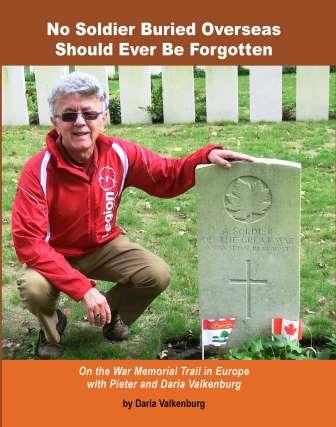
Front cover OnTheWarMememorialTrailinEurope4 countries, 6 weeks, 7,000 km – an unforgettable war memorial journey in Europe…. Daria’s book ‘No Soldier Buried Overseas Should Ever Be Forgotten‘ is available in print and e-book formats.  Net proceeds of book sales help support research costs and the cost of maintaining this blog. For more information see https://nosoldierforgotten.com/ 

You are also invited to subscribe to our YouTube Channel: On The War Memorial Trail With Pieter Valkenburg: https://www.youtube.com/channel/UCJ591TyjSheOR-Cb_Gs_5Kw

Never miss a posting!  Subscribe below to have each new story from the war memorial trail delivered to your inbox.

On The War Memorial Trail….. Remembering WWI Soldier William Earle Davison

Remembrance-Day-2019-Images-1024x520

November 8, 2020.  If you have a family member who lost his life in war, this is a poignant time of year of remembrance.  Recently Earle Davison of Kensington wrote us that “….As November 11 comes around, I start to think about my uncle, William Earle Davison, who was killed in the First World War.  He was attending Mount Allison University and he enlisted in St John, New Brunswick. He was with the Sixth Canadian Siege Battery in France and Belgium…

Coloured photo Davison

William Earle ‘Davy’ Davison.  (Photo courtesy of Earle Davison & Family. Photo restoration and colourization by Pieter Valkenburg)

Earle explained that “…My father always kept a box about the size of a chocolate box in one of his desk drawers.  It contained the last possessions of Earle, most of it must have been sent back from Europe.  Every fall getting near November 11th he would take it out and we would look through it….

The original box is long gone, but it’s a tradition that Earle and his wife Irene keep up with a replacement box.

CIMG4858 Oct 28 2020 Irene & Earle Davison

Irene and Earle Davison with a chocolate box containing mementos of his uncle, WW1 soldier William Earle Davison. (Photo credit: Daria Valkenburg)

According to his attestation document, William Earle DAVISON was born March 7, 1897 in Kensington, the son of Joseph and Annie Davison. Before enlisting on May 3, 1916 as a gunner with the No. 7 Overseas Siege Battery Artillery in St. John, he was a theology student at Mount Allison.

Earle Davison explained that he had a group photo from the No. 7 Siege Battery and wondered why, as he had only known his uncle to be in the 6th Siege Battery.  This was explained by a series of changes in designation.  ‘No. 7 “Overseas” Battery Siege Artillery, CEF’ was re-designated as ‘167th (Canadian) Siege Battery’ on 10 June 1916, and as ‘No. 6 Canadian Siege Battery, CEF’ on 24 January 1917. (For more information, see https://www.canada.ca/en/department-national-defence/services/military-history/history-heritage/official-military-history-lineages/lineages/artillery-regiments/3rd-field-artillery-regiment.html)

CIMG4792 Oct 28 2020 Pieter & Earl Davison with group photo No 7 Siege Battery

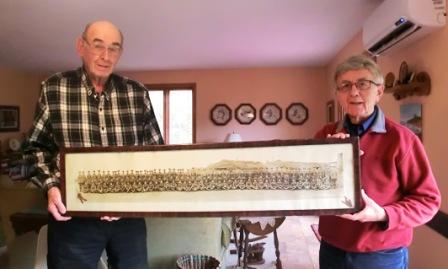
Earle Davison shows Pieter the group photo of the No 7 Siege Battery that was taken May 23, 1916.  (Photo credit: Daria Valkenburg)

From St. John, Davison was sent to Halifax, Nova Scotia.  With his Battery he left for Britain on September 18, 1916, arriving in Bristol on September 26, 1916.  A day later they were in France to provide siege artillery support as part of the 2nd Brigade, CGA, CEF in France and Flanders until the end of the war.  (NOTE: CGA refers to Canadian Garrison Artillery, and CEF refers to Canadian Expeditionary Force.)

On September 18, 1918, he was wounded in an early afternoon bombardment while they were in the area of Villers-lès-Cagnicourt, 24.1 km southeast of Arras.  A letter written by Fred KILLEN of St. John to Davison’s father on September 19, 1918 from France explained what happened to his friend, known as ‘Davy’: … There were five of us went up to the forward section to run the telephone exchange. There was Davy, Fowler, Simpson, Bomb Yeomans, and myself….”  The additional men mentioned in Killen’s letter were H. E. FOWLER of St. John, H. L. SIMPSON of Springhill, and H. L. YEOMANS of St. John.

Killen then explained that “…Davy, Fowler, Simpson, and I all lived together like 4 brothers. We always had a dugout of our own and got along well.  But we all went forward to do our exchange work under Bomb Yeomans. We had been up there for about 6 days and we were going to be relieved the next morning….

While waiting to be relieved they had a bit of time to relax, as Killen wrote “.… on the afternoon of the casualties we were all playing crib at the time….” Crib refers to the game of cribbage.

Then the shelling by the Germans, referred to as Fritz by Killen, began.  “…Fritz started to put a few shells around. The first one went about 100 yards from us.  We did not mind it.  About five minutes later another one came and lit about 20 yards behind us….

At first the men thought they were under a gas attack.  “… It did not make much noise when it exploded and we all thought it was gas. So we started to look for our gas masks.  The place was small and it was pretty well crowded when we all got in there.  Fowler handed me mine and I got outside the door to look at the explosion of the last one…. when all of a sudden I heard an explosion and jumped clear of the dugout…

Killen was the only one outside at the time of the third explosion.  “… The other four were inside at the time, and Davy got a slight wound in the side of the head, Fowler got it in the back, and Yeomans got it in the leg and hand and a bruised shoulder, and Simpson got a few burns about his face. I fell as soon as I jumped and when I got up I saw Davy and Yeomans running….

Killen relates what happened next.  “…We dressed them up and sent them all to a Field Ambulance. They told us then they were all right and need not to worry.  They are all clean cuts and they should all make Blighty on them….”  Blighty referred to being sent back to England.

No 22 General Hopsital Camiers

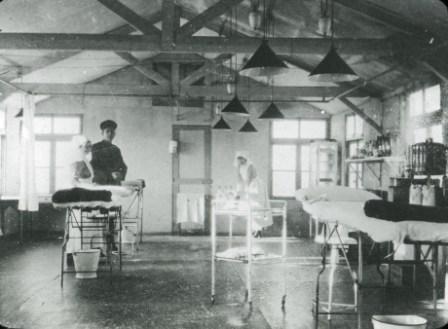
Glass lantern slide of interior of ward at No. 22 General Hospital, Camiers. (Source: Photographer unknown, “Interior of ward at No. 22 General Hospital” OnView: Digital Collections & Exhibits, https://collections.countway.harvard.edu/onview/items/show/17961)

It seems clear that no one was aware that the injury to Davison would prove fatal, as he was treated for a gunshot wound at a field hospital, No. 22 General Hospital in Camiers, France.  He was not sent to England.  “… Davy was in the best of spirits after he was hit, although it was paining him a bit.  But he stuck it well. I will only be too glad to let you know of any further particulars that we receive here.  But likely you will hear from Davy yourself. But I thought I would drop you these few lines so as you won’t worry too much about him as I know how Mothers and Fathers worry about their boys.  Hoping you have received good news by the time this letter reaches you. And hoping he will recover soon…

On September 23, 1918 Davison’s service record recorded him as being ‘dangerously ill’ and on October 5, 1918 he ‘died of wounds’.  He was buried in Étaples, France. This is located near Boulogne on the north-west coast of France.

Earle Davison noted that of the men in the 6th Siege Battery killed in action, his uncle was the only Islander. The other men who were wounded with him on September 18, 1918 survived the war.

Among the mementos in the chocolate box were photos and a pipe.  One of the photos was of a group of men, likely taken in France. The back of the photo had most of the men thoughtfully identified!

CIMG4821 group photo

Photo of men from the 6th Siege Battery, identified as 1: D. Daley (killed in action), 2: Sgt W. A. McLaggan, 3: Sgt unknown, 4: Gunner E. O. Jennings, 5: Gunner R. A. Redmond, 6: Gunner William Earle Davison. (Photo courtesy of Earle Davison & Family)

Thank you to Earle and Irene Davison for sharing information about Earle’s uncle, William Earle Davison, and how they ensure his memory is never forgotten.  If you have information to share about him, or any of the other men mentioned, please contact Pieter at memorialtrail@gmail.com or comment on the blog.

© Daria Valkenburg

….Want to follow our research?…

If you are reading this posting, but aren’t following our research, you are welcome to do so.  Our blog address: https://onthewarmemorialtrail.com/

4 countries, 6 weeks, 7,000 km – an unforgettable war memorial journey in Europe…. Daria’s book ‘No Soldier Buried Overseas Should Ever Be Forgotten‘ is available in print and e-book formats.  Net proceeds of book sales help support research costs and the cost of maintaining this blog. For more information see https://nosoldierforgotten.com/

Subscribe to our YouTube Channel: On The War Memorial Trail With Pieter Valkenburg: https://www.youtube.com/channel/UCJ591TyjSheOR-Cb_Gs_5Kw

Never miss a posting!  Subscribe below to have each new story from the war memorial trail delivered to your inbox.

On The War Memorial Trail…..A PEI Soldier In The Devil’s Brigade

1st_Special_Service_Force.patch

First Special Services Force patch.  (Image courtesy of  https://en.wikipedia.org/wiki/First_Special_Service_Force)

October 26, 2020.  The spark to inspire research into a Canadian soldier tends to happen in the most innocuous of circumstances.  For Pieter, it was while standing at the Cenotaph outside the Borden-Carleton Legion on a blustery November 11 several years ago.  Unlike many of us, he looked at the names and wondered who they were.  Had any of them been in The Netherlands, the country of his birth, and helped liberate it?   That moment sent him on a quest that has involved lots of research, many visits to archives, cemeteries, and monuments in several provinces and four European countries.  And he’s not finished.

For North Rustico resident Paul Keleher, that moment happened at Michael’s picture framing counter in Charlottetown.  “… A clerk brought out a Devils Brigade poster and I noticed a name from North Rustico… Keleher said.  “…Until then, I had no idea there were Canadians in the Devils Brigade, let alone any from Prince Edward Island!…”  The name he noticed on the poster was Joseph Robert GAUTHIER.

That was the spark that initially piqued Paul’s interest, and then  “…I bumped into a relative who mentioned where he was buried and said that his widow was still alive and living in Drummondville, Quebec….

Paul found the grave in the St Augustine Cemetery in South Rustico and decided he wanted to learn more.  Like Pieter, who served in the Dutch Air Force, Paul Keleher is also a veteran, having served in the British Army. “I was in the Royal Green Jackets and served in Malaya and then Borneo on active service 1963 to 66.  I was later posted to Berlin.  This was shortly after the wall went up...

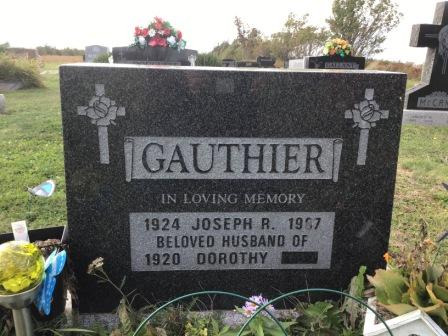
IMG_1680 Cemetery photo from Paul Keleher

Grave of Joseph Robert Gauthier. (Photo credit: Paul Keleher)

After speaking to Gauthier’s widow Dorothy, a British war bride from the southern part of England, he contacted us for a bit of advice from Pieter on how to proceed with further research.  “I enjoy your articles on local Canadian Soldiers so when I heard about Joey I thought of you...

CIMG4448 Sep 20 2020 meeting with Paul Keleher

Pieter (standing) with Paul Keleher and his wife Hasmah. (Photo credit: Daria Valkenburg)

….Origins Of The First Special Service Force aka The Devil’s Brigade….

So, what was the Devil’s Brigade?  Officially known as First Special Service Force (FSSF), this was an American-Canadian commando unit, formed in 1942, and commanded by the US Army’s Fifth Army. The unit trained in Helena, Montana and served in the Aleutian Islands, then fought in Italy and France before being disbanded in December 1944.  (See https://en.wikipedia.org/wiki/First_Special_Service_Force)

In Canada, the Minister of Defence approved sending soldiers to the unit, but decided to say they were forming the 1st Canadian Parachute Battalion.  Volunteers were recruited under that name, and were also known as the ‘2nd Canadian Parachute Battalion’.  No mention was made of ‘First Special Service Force’ or that it was to be an international unit at the time.  However, in April–May 1943 they received the designation 1st Canadian Special Service Battalion.

Peter Layton Cottingham, author of ‘Once Upon A Wartime: A Canadian Who Survived the Devil’s Brigade’ noted that all the men wore the same uniform.  “…we were issued American Army clothing which was ‘space age’ compared to the ‘King’s Burlap’ we had all worn in the Canadian Army…

The name ‘Devil’s Brigade’ came after a diary was found on the body of a German lieutenant in Italy, according to an account in ‘The Devil’s Brigade’ by Robert H. Adelman and George Walton:  “…In it was written ‘The Black Devils are all around us every time we come into the line, and we never hear them come’….” 

Adelman and Walton go on to explain that the reference to Black Devils came from an initiative by the unit’s commander.  “...He had ordered a printed supply of paper stickers upon which was reproduced the insignia of his Brigade and, underneath, was a statement in German to the effect that ‘The Worst Is Yet To Come’.  The Forcemen, after killing a German, would paste one of these stickers on the German’s forehead or helmet, and then go on.  This tactic, executed by a band of blackfaced guerrillas moving soundlessly through the night, not only frightened the enemy, it also produced a mighty effect on the other beachhead soldiers and war correspondents…

….Joseph Robert Gauthier Was In The Devil’s Brigade….

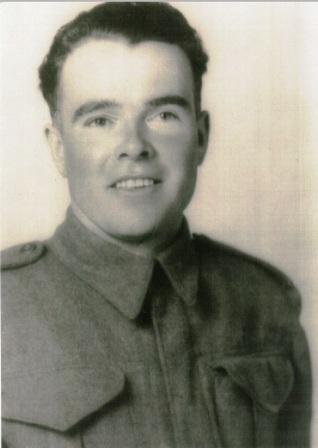
cfl_1876 Joseph Robert Gauthier

Joseph Robert Gauthier in his First Special Service Force uniform.  (Photo courtesy of Linda Craig Family Collection)

Born on February 24, 1924 in Rusticoville, Prince Edward Island, Joseph Robert Gauthier enlisted with the Carleton & York Regiment, before going into the FSSF.  He was a T4, a technical ranking which paid the same as a sergeant, but without the authority of a sergeant.  As seen on the sleeve of his uniform, a T4 wore 3 stripes with a T under the stripes. 

….The Devil’s Brigade Was Disbanded On December 5, 1944….

The unit was disbanded on December 5, 1944 near the village of Villeneuve-Loubet, France. In Cottingham’s memoir, he explained that they then travelled by boat from Marseille to Naples.   “…At Avellino we were divested of our American uniforms, being allowed to keep only our treasured and distinctive parachute boots.  We spent a few hours every day being reintroduced to Canadian Army commands and drill.  We also needed to have our new Canadian uniforms adjusted and decked out with our various insignia and chevrons of rank.  It was quite a transition. One small compensation was that we were issued the cherry berets of the Airborne regiments….

After spending Christmas in Avellino, Italy, the Canadians returned to England in January 1945.  Cottingham noted that “…Those of us who were not sent to officers training were absorbed into the First Canadian Parachute Battalion and, following a brief course in Canadian weaponry and parachute drill, were dispatched to join the regiment already in contact with the enemy near the Rhine River…”  Family members told Paul Keleher that Gauthier joined the Black Watch after the FSSF disbanded.

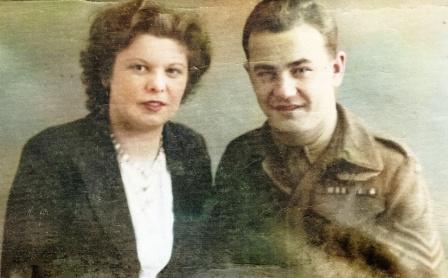
In his research, Paul learned that Gauthier met his wife Dorothy Howard at a dance in Aldershot, England in 1945, and they married on December 12, 1945 in Cathedral Church of St. Michael and St. George, a Catholic church in Aldershot.

improved_photo-1 Gauthier and wife

Dorothy and Joseph Gauthier.  (Photo courtesy of Linda Craig Family Collection.  Photo restoration and colourization by Pieter Valkenburg)

In January 1946 Gauthier was discharged and returned to Canada.   War Bride Dorothy was able to follow him to Canada in July 1946. Gauthier became a fisherman, but after a few years he rejoined the Armed Forces, and served for an additional 32 years.  As part of a peacekeeping force he was in Korea in 1951 and later in Egypt.  He and Dorothy had 6 children:  3 daughters, 1 son Raymond, and 2 who have passed away.

Gauthier passed away on February 27, 1987 in Montreal and was returned back to the Island for burial. 

….Other Islanders Who Served In The Devil’s Brigade….

In addition to Joseph Robert Gauthier, Paul wrote down the names of other Islanders who served in this special unit that had been identified on the poster he saw in Michael’s.  They are:

  • Lieutenant Colonel R. W. (Bill) BECKETT of  Charlottetown
  • Private L. E. (Lawrence ‘Junior’) DURANT of  Charlottetown
  • Warrant Officer Class 2 Wilfred MACDONALD of Glenwilliam
  • Sergeant E. L. (‘Tiny’) MACLEAN of Ocean View
  • Private J. H. MCINNIS of Morrel
  • Private C. W. (Charlie) DEIGHAN of Summerside
  • Private J. F. CHAPPEL of Charlottetown
  • Private A. J. BURDETTE of Charlottetown
  • Private F. C. MCCORMICK of Ebbsfleet
  • Private C. W. (Clarence)THOMPSON of Summerside
  • Private J. (Joe) JAMIESON of North Rustico
  • Private R. E. TRAINOR of Charlottetown
  • Private W.F. (William) DOUGLAS of Mount Stewart
  • Private E. J. (‘Ping Pong’) GALLANT of Summerside
  • Private W. P. (Wilfred) DOWLING of Charlottetown
  • Private R. J. (Ray) DURANT of Summerside

William Douglas of Mount Stewart was the only Islander killed in action while serving with the First Special Service Force.

Rememberance-Day-2020-Canada-5

Thank you to Paul Keleher for letting us know about the Island connection to the Devil’s Brigade, and the service of Joseph Robert Gauthier.  This Remembrance Day, if you find yourself in St Augustine Cemetery in South Rustico, lay a flag down by his grave as a thank you for his service.

If you have information to share about Joseph Robert Gauthier, or any of the other Islanders who were in the Devil’s Brigade, please contact Pieter at memorialtrail@gmail.com or comment on the blog. 

© Daria Valkenburg

….Want to follow our research?….

If you are reading this posting, but aren’t following our research, you are welcome to do so.  Our blog address: https://onthewarmemorialtrail.com/

Front cover OnTheWarMememorialTrailinEurope4 countries, 6 weeks, 7,000 km – an unforgettable war memorial journey in Europe…. Daria’s book ‘No Soldier Buried Overseas Should Ever Be Forgotten‘ is available in print and e-book formats.  Net proceeds of book sales help support research costs and the cost of maintaining this blog. For more information see https://nosoldierforgotten.com/ 

You are also invited to subscribe to our YouTube Channel: On The War Memorial Trail With Pieter Valkenburg: https://www.youtube.com/channel/UCJ591TyjSheOR-Cb_Gs_5Kw

Never miss a posting!  Subscribe below to have each new story from the war memorial trail delivered to your inbox.
On The War Memorial Trail…..A Face For WWII Soldier James Walter Auld

July 7, 2020.  Last year, a request was made for photos and information on PEI soldiers from WWII who were buried in The Netherlands.  (See Photos and Info Requested For WW2 Soldiers From PEI Buried In The Netherlands)

It’s been a slow and difficult quest, but in the past few months two photos have been found, one for Joseph Edmund HENNEBERY (See On The War Memorial Trail…..A Face For Joseph Hennebery!) and now one for James ‘Walter’ AULD.

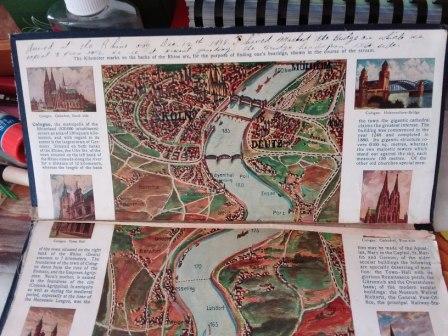
The story of how Walter’s photo was found has several twists and turns.  Pieter had zero luck in finding anyone related to this WWII soldier, who is buried in the Canadian War Cemetery in Bergen Op Zoom in The Netherlands, until we met Helen MacEwen, who had invited us to see a WWI era map her father-in-law had sent to the Island in 1918.  (See The WW1 Era ‘Course Of The Rhine’ Map of Germany)

We brought along a ‘wish list’ of photos and after looking at the list, Helen suggested that Pieter contact Allison Ellis, as his wife Melba came from the same area as Walter.  “…Allison is a retired politician…” Helen explained, “...and knows a lot of people…”  (See http://www.peildo.ca/fedora/repository/leg:27520)

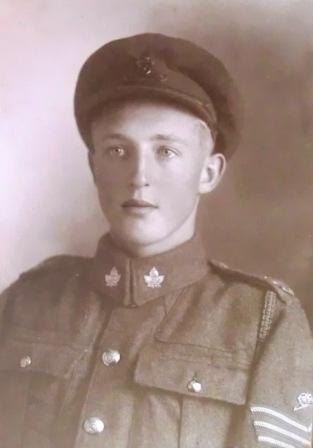
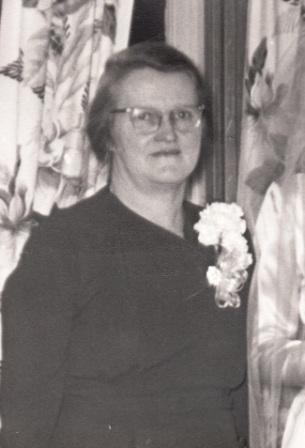
It was a long shot. Lots of people over the years have suggested names, which turned out to be a fruitless exercise, but this time Pieter found a kindred spirit.  Allison remembered a Walter Auld and it was soon determined that this was the same person.  “…. I’ve been to his grave in The Netherlands….” Pieter was told. Allison didn’t have a photo, but thought he knew who to ask.  “…Leave it with me…” he said. A week later, we were sitting in the home of Allison and Melba, and Pieter had a photo that Walter’s niece, Judy Bartlett, had provided.

CIMG4156 Jun 23 2020 Pieter with Melba & Allison Ellis

Left to right: Melba Ellis, Pieter, Allison Ellis.  (Photo credit: Daria Valkenburg)

James Walter Auld

Walter Auld. (Photo courtesy of Judy Bartlett Family Collection)

James ‘Walter’ AULD was born October 21, 1923 in Glenwood, the son of James and Margaret Auld of O’Leary Station, and was a garage mechanic with Corney Brothers in Summerside.  After enlisting in Charlottetown on February 20, 1942, he was sent for basic training as a rifleman.

A note in his service file indicates he was unhappy with this placement and noted he had been promised a position as a driver or mechanic when he enlisted.  His mechanical knowledge was assessed as ‘superior’ and the recommendation was made that he be transferred to a position where his skills could be used.

In May 1942 he was transferred to the Princess Louise Fusiliers (Motor Division), and by October 1942 he was on his way to England. In August 1943 he was transferred to the Algonquin Regiment.  In July 1944 he was with his unit, first in France and then as they moved into The Netherlands.

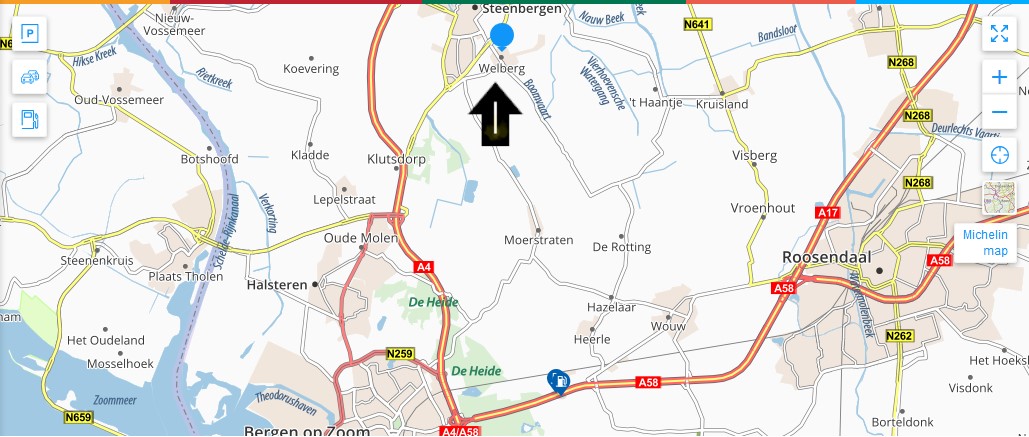
According to the War Diary for the Algonquin Regiment, on November 1, 1944 they were under the command of the 10th Canadian Infantry Brigade, 4th Canadian Armoured Division, and in action to try and take the town of Welberg, The Netherlands.   This was part of Operation Suitcase, which began on October 20, 1944, and as part of the bigger Battle of the Scheldt operation.  (See https://canadianbattlefieldtours.ca/operation-suitcase/)

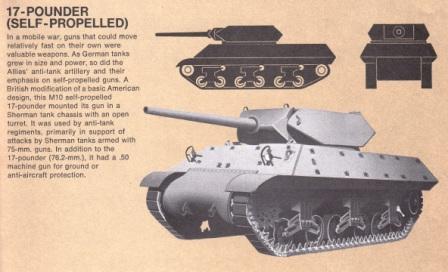
self propelled tank p49

The war diary entry for November 1, 1944 recorded that “… Zero hour was at 19:00 hours…. We had 17 SP (self-propelled) tanks in support to deal with the enemy SP tanks…. Shortly after the kick-off, ‘A’ Company reported that one SP had bogged down and was holding the Company up  and before they got going again ‘D’ Company reported they were 300 yards from Welberg.  At 20:45 hours ‘A’ Company reported that one of the SPs had been hit and was burning.  At 21:00 hours ‘A’ Company reported another SP burning and that the situation was very confused due to heavy shelling of their positions by enemy SPs….

At some point in this battle on November 1, 1944, Walter lost his life, aged 21. On November 6, 1944, he was buried in a cemetery in Steenbergen, not far from where he died.

Map where Auld died with arrow

Map with a black arrow showing the approximate location where Auld lost his life near Welberg. The unit had come from the area of Moerstaten. He was initially buried in Steenbergen, then later in Bergen Op Zoom. (Map courtesy of Michelin)

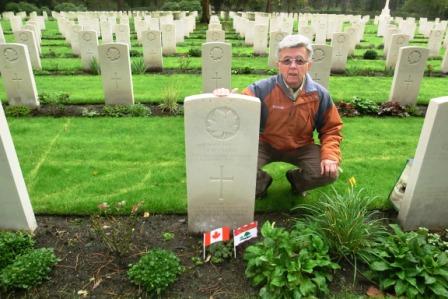
In October 1946 Walter was reburied in the Canadian War Cemetery in Bergen Op Zoom.  We were there in October 2019 and Pieter placed Canadian and PEI flags by his grave.  (See On The War Memorial Trail…..Our 2019 Visit To The Canadian War Cemetery In Bergen Op Zoom for an account of our visit.)

CIMG3388 Oct 7 2019 Bergen Op Zoom James Auld

Pieter by the grave of Walter Auld at the Canadian War Cemetery in Bergen Op Zoom.  (Photo credit: Daria Valkenburg)

Thanks to the combined efforts of Allison and Melba Ellis, Judy Bartlett, and Helen MacEwen, a photo of James ‘Walter’ Auld is on its way to the researchers at the Canadian War Cemetery in Bergen Op Zoom. If you have information to share about Canadian soldiers buried in The Netherlands, please contact Pieter at memorialtrail@gmail.com or comment on the blog.

© Daria Valkenburg

….Want to follow our research?….

If you are reading this posting, but aren’t following our research, you are welcome to do so.  Our blog address: https://onthewarmemorialtrail.com/

4 countries, 6 weeks, 7,000 km – an unforgettable war memorial journey in Europe…. Daria’s book ‘No Soldier Buried Overseas Should Ever Be Forgotten‘ is available in print and e-book formats.  Net proceeds of book sales help support research costs and the cost of maintaining this blog. For more information see https://nosoldierforgotten.com/

You are also invited to subscribe to our YouTube Channel: On The War Memorial Trail With Pieter Valkenburg: https://www.youtube.com/channel/UCJ591TyjSheOR-Cb_Gs_5Kw

Never miss a posting!  Subscribe below to have each new story from the war memorial trail delivered to your inbox.
On The War Memorial Trail…..The WWI Era ‘Course Of The Rhine’ Map of Germany

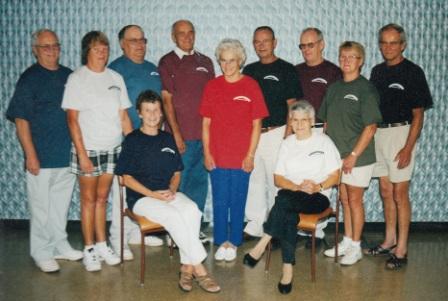
July 3, 2020.  It’s always a pleasure to hear from readers.  After reading about Harold Keith Howatt’s travels to WWI Germany as part of the post-occupation forces, Helen MacEwen contacted us about a map that her father-in-law sent to his future wife in 1918.  “I have been reading with interest your reports about the WWI Veterans and wondered if I could bring further information about my father-in-law’s last tour after the German surrender. His name was Sgt. Herbert ‘Herb’ S. MACEWEN from Stanley Bridge…

Helen went on to describe the map.  “…I have a copy of the ‘COURSE OF THE RHINE: From Mayence to Cologne’. It is a fold-out map of the Rhine River within a hard-cover. It is very fragile but does mention the different towns that you mentioned in your stories…” (You can read Howatt’s account at The WW1 Soldier Who Went To Post WW1 Germany)  Today we know Mayence as Mainz.

CIMG4111 Jun 14 2020 Herbert MacEwan in uniform

Herbert MacEwen.  (Photo courtesy of Helen MacEwen collection)

Howatt was in the 8th Canadian Siege Battery during WWI, while MacEwen was in the 2nd Canadian Siege Battery.  Both batteries were later attached to the 2nd Brigade, the only Canadian Heavy Artillery Brigade that went to Germany.

We were intrigued and made arrangements to meet Helen and see the map.  It turned out to be a surprise, as it was a foldable, panoramic map in full colour, showing the area along the Rhine River between Mainz and Cologne.  To complete the surprise, the map was written in English, but published in Germany.  It was clear that this had to be a map that pre-dated WWI and was designed for tourists!

20200614_144359 Jun 14 2020 Pieter & Helen MacEwan with panoramic map of Rhine River

Pieter and Helen MacEwen with the foldable, panoramic map. (Photo credit: Daria Valkenburg)

Ralf Gräfenstein, a historian in Berlin, found a document that might explain why a map published in Germany over 100 years ago would be in English. “These maps were made in English for tourists from Britain and Overseas, who came before the beginning of WWI and after the war to the German Rhine area…” he explained.

Ralf referred me to a 2006 dissertation written by Thilo Nowack of the University of Bonn, entitled ‘Rhein, Romantik, Reisen. Der Ausflugs- und Erholungsreiseverkehr im Mittelrheintal im Kontext gesellschaftlichen Wandels (1890 bis 1970)’ and gave a reference to the chapters that would be of interest. (Translation of the dissertation: ‘Rhine, romance, travel. Excursion and recreational travel in the Middle Rhine Valley in the context of social change (1890 to 1970)’).

In the dissertation, it was explained that “… the Tourism Society of the Rhine Area was founded in 1904… with the goal “to promote and make traveling and the stay on the Rhine and its side valleys pleasant’…” in response to the view that “… the Rhineland had lost its attraction as a travel destination since the late 19th century…”  As part of the tourism promotion effort, “… posters, brochures and other booklets were used to advertise in German, English, French and Dutch…” and placed “…in train stations at home and abroad…”  Tourist promotion was economically important as “… the invention and expansion of steam shipping and railroads enabled an enormous increase in travel on the Rhine…

It seems likely that Herbert MacEwen could have found the map in a shop or train station someplace in Germany, most likely Cologne.  It’s clearly a tourist map, with key destinations identified along the Rhine, with brief explanations and diagrams.

20200614_144505 EXCERPT Jun 14 2020 Portion of map between Cologne & Mehlem - Copy

An excerpt from the map, showing illustrations and descriptions.  (Photo credit: Daria Valkenburg)

Helen noted that “…Herb had sent this map to his girlfriend in Stanley Bridge. They married in 1921.  He states that they stayed near Mehlem-on-Rhine…

At the top of the map Herb had written “… Arrived at the Rhine on December 12th, 1918.  I have marked the bridge on which we expect to pass over. We are at present guarding the bridgehead from this site…”  This confirms the entry in Harold Howatt’s account, which stated that they had arrived in Cologne on December 12.

20200614_143410 Jun 14 2020 note on map saying unit was guarding bridge head

Herb MacEwen’s note at the top of the map.  (Photo credit: Pieter Valkenburg)

A bridgehead is the strategically important area of ground around the end of a bridge over a body of water.  (For more information, see https://en.wikipedia.org/wiki/Bridgehead)

On December 13, Harold Howatt had noted that “….the Canadian troops marched across the Rhine, reviewed as they crossed the bridge by General Plumer and General Currie…” The bridge crossed was the Hohenzollern Bridge in Cologne. (See https://en.wikipedia.org/wiki/Hohenzollern_Bridge)

To our amazement, Pieter found a video from the Imperial War Museum of this march across the Hohenzollern Bridge: https://www.iwm.org.uk/collections/item/object/1060008233.

Herb MacEwen was discharged on May 18, 1919.   His daughter-in-law Helen told us that “…he would be 21 years old.  He apparently, ‘conveniently,’ put his birthdate down as older than fact when he joined the Army…

The individual stories of our soldiers enrich the sometimes dry facts of history, and it was wonderful to learn of the shared history of Herb MacEwen and Harold Howatt.

For more information on the post WWI occupation of the Rhineland, see https://en.wikipedia.org/wiki/Occupation_of_the_Rhineland

For more information on General Sir Herbert Plumer, who commanded the Army of Occupation, see https://en.wikipedia.org/wiki/Herbert_Plumer,_1st_Viscount_Plumer

For more information on General Sir Arthur Currie, see https://en.wikipedia.org/wiki/Arthur_Currie

Thank you to Helen MacEwen for sharing the story of Herb MacEwen and Course Of The Rhine Map from the early 20th Century.  If you have a story to share, please contact Pieter at memorialtrail@gmail.com or comment on the blog.

© Daria Valkenburg

….Want to follow our research?….

If you are reading this posting, but aren’t following our research, you are welcome to do so.  Our blog address: https://onthewarmemorialtrail.com/

4 countries, 6 weeks, 7,000 km – an unforgettable war memorial journey in Europe…. Daria’s book ‘No Soldier Buried Overseas Should Ever Be Forgotten‘ is available in print and e-book formats.  Net proceeds of book sales help support research costs and the cost of maintaining this blog. For more information see https://nosoldierforgotten.com/

You are also invited to subscribe to our YouTube Channel: On The War Memorial Trail With Pieter Valkenburg: https://www.youtube.com/channel/UCJ591TyjSheOR-Cb_Gs_5Kw

Never miss a posting!  Subscribe below to have each new story from the war memorial trail delivered to your inbox.
 

On The War Memorial Trail…..A Face For WWII Soldier Joseph Hennebery!

May 31, 2020.  Last year, a request was made for photos and information on PEI soldiers from WWII who were buried in The Netherlands.  (See Photos and Info Requested For WW2 Soldiers From PEI Buried In The Netherlands)  One of these soldiers, buried in the Canadian War Cemetery in Groesbeek, was Joseph ‘Joe’ Edmund HENNEBERY. 

He was born in Morell on July 7, 1919, the son of Edmund Joseph and Mary ‘May’ Hennebery, and was a sapper with the Royal Canadian Engineers – 33rd Field Company, and served in the UK, France, and The Netherlands.  He died in The Netherlands on April 20, 1945, aged 25, along with two other men, Pte L. A. CROSS, a cook in the platoon, and Sapper A. COLVIN, following an accident on April 18 while off duty.

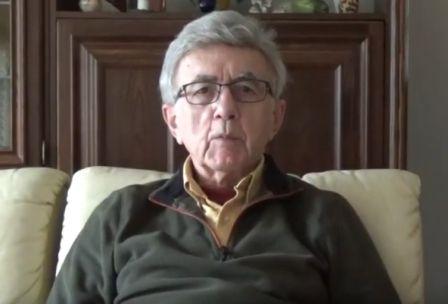
When we were in The Netherlands last fall, Pieter placed flags at his grave.  “It’s always much more meaningful when I’m standing at a grave and have an idea what the person looked like.”  After our return, a chance encounter with Hennebery’s niece, Teresa Hennebery, resulted in a photo of her uncle, finally giving a face to the name listed on the grave.  “He looks exactly like my father” Teresa explained. “Joe is my father’s brother.

improved colour photo Joseph Hennebery

Joseph ‘Joe’ E. Henneberry.  (Photo courtesy Hennebery Family Collection.  Photo restoration and colourization by Pieter Valkenburg)

The Hennebery Family from Morell Rear (now called Green Meadows) was very committed to the World War II war effort.  At one point seven of the twelve children in the family were serving in the Canadian Army or Air Force.  Sadly, Joe was the only one of the Hennebery siblings that did not come home.

In 2000, Teresa visited his grave with family members.  “…That was the first time anyone from the Hennebery family visited Joe Hennebery’s grave.  It was a very emotional and impactful trip…

20200529_184532 Hennebery family visiting grave

In 2000, Joe Hennebery’s sister-in-law Mary visited his grave, and posed for a photo with her sisters. Left to right: Laura Brazel, Mary Hennebery, Evelyn McAliney.  (Photo courtesy Hennebery Family Collection)

20200529_185216 Teresa ahd Mary Hennebery

Teresa and Mary Hennebery at Joe Hennebery’s grave in 2000.  (Photo courtesy Hennebery Family Collection)

On behalf of the Hennebery family, Teresa wrote that “The family appreciates the efforts of the Dutch people to commemorate and remember those Islanders and Canadians who gave their lives for our freedom. ‘Dying for freedom is not the worst thing that could happen; being forgotten is.’…

Joe Hennebery is not the only family member buried in a Dutch cemetery.  Michael Joseph ‘Joe’ MCKENNA, the brother of Teresa’s mother Mary, is buried in the Canadian War Cemetery in Holten. “My mother and I were in Holland in May 2000 for a commemoration ceremony for her brother (also named Joe) who was killed in Rha a couple of weeks before my other Uncle Joe died.  It was so beautiful and the people of Rha treated us like Royalty...

Thank you to Teresa Hennebery for sharing her family photos, which will be forwarded by Pieter to the researchers at the Canadian War Cemetery in Groesbeek.  If you have information to share about Canadian soldiers buried in The Netherlands, please contact Pieter at memorialtrail@gmail.com or comment on the blog.

© Daria Valkenburg

….Want to follow our research?….

If you are reading this posting, but aren’t following our research, you are welcome to do so.  Our blog address: https://onthewarmemorialtrail.com/

4 countries, 6 weeks, 7,000 km – an unforgettable war memorial journey in Europe…. Daria’s book ‘No Soldier Buried Overseas Should Ever Be Forgotten‘ is available in print and e-book formats.  Net proceeds of book sales help support research costs and the cost of maintaining this blog. For more information see https://nosoldierforgotten.com/

You are also invited to subscribe to our YouTube Channel: On The War Memorial Trail With Pieter Valkenburg: https://www.youtube.com/channel/UCJ591TyjSheOR-Cb_Gs_5Kw

Never miss a posting!  Subscribe below to have each new story from the war memorial trail delivered to your inbox.

Dutch Kings Day Is A Reminder Of The Upcoming Liberation Of The Netherlands Anniversary

kings day

April 27, 2020.  Today is Kings Day (Koningsdag) in The Netherlands, the national holiday in that country, equivalent to our Canada Day on July 1.  It celebrates the birthday of the Dutch King Willem-Alexander.  Normally there are lots of activities, but with social distancing due to the coronavirus, events have been cancelled, and people have been asked to celebrate at home.

20200427_124326 Apr 27 2020 Pieter with Dutch flag

On a windy Island, Pieter has to hang on to the Dutch flag for dear life! (Photo credit: Daria Valkenburg)

Here on the Island, a proud Dutch-born Pieter put out the Dutch flag by our garage and held on to it long enough to take a photo before the wind whipped it around the pole.  The day is a reminder of next week’s 75th Liberation of The Netherlands on May 5.  Most events have been cancelled or curtailed, but the day will still be marked.

NFA03_dou-201-1_W

Cartoon found on geheugenvannederland.nl

Alice van Bekkum, Chair of the Face To Graves Foundation Groesbeek, has advised that stories and photos collected on those buried at the Canadian War Cemetery in Groesbeek are now online at www.facestograves.nl. She will be interviewed by CBC Calgary reporter Erin Collins on May 5.  (For more information see: Press Release Digital Monument May 2020)

Readers of this blog are aware of Pieter’s efforts to help the Foundation and other researchers with photos and stories about Prince Edward Island soldiers buried in The Netherlands. (See Photos and Info Requested For WW2 Soldiers From PEI Buried In The Netherlands)

Of the Islanders buried in Groesbeek, photos for all but two have been found.  Still missing photos are two who lost their lives in 1945:

  1. Joseph Edmond HENNEBERY, born in Morell, was with the Royal Canadian Engineers -33rd Field Company. He died on April 20, 1945, aged 25.  UPDATE: Photo found!
  2. Barney Ruben MCGUIGAN, born in St. Peter’s, son of Thomas and Sadie McGuigan, was with the North Shore (New Brunswick) Regiment. He died on February 26, 1945, aged 17.  UPDATE: Photo found!

If you have photos or information to share about Henneberry, McGuigan, or other Canadian soldiers buried in The Netherlands, please contact Pieter at memorialtrail@gmail.com or comment on the blog.

© Daria Valkenburg

….Want to follow our research?….

If you are reading this posting, but aren’t following our research, you are welcome to do so.  Our blog address: https://onthewarmemorialtrail.com/

4 countries, 6 weeks, 7,000 km – an unforgettable war memorial journey in Europe…. Daria’s book ‘No Soldier Buried Overseas Should Ever Be Forgotten‘ is available in print and e-book formats.  Net proceeds of book sales help support research costs and the cost of maintaining this blog. For more information see https://nosoldierforgotten.com/

You are also invited to subscribe to our YouTube Channel: On The War Memorial Trail With Pieter Valkenburg: https://www.youtube.com/channel/UCJ591TyjSheOR-Cb_Gs_5Kw

Never miss a posting!  Subscribe below to have each new story from the war memorial trail delivered to your inbox.

On The War Memorial Trail…..The WWII Seaman Who Was Hit By A Tram

April 5, 2020. Sometimes strange mishaps happen.  You’d expect that a seaman serving in Halifax, Nova Scotia would either be safe or, at worst, lose his life at sea.  But that’s not what happened to Singleton Charles JEFFERY!

20191221_154309 Singelton Jeffery newspaper from Mitch MacDonald

Singleton Charles Jeffery.  (Photo courtesy of May 17, 1941 edition of The Charlottetown Guardian, submitted by Mitch MacDonald. )

Jeffery was born on May 13, 1917 in Bayfield, New Brunswick, the son of Stephen and Alice Jeffery, and grew up in Cape Traverse.  After his father died, his mother remarried, to James Campbell.  A fisherman on the Island in pre-war years, he also worked as a seaman for Imperial Oil in Halifax, transporting oil, before enlisting with the Royal Canadian Naval Reserve in Halifax on May 5, 1940, Jeffery was also one of the few servicemen listed on the Cenotaph outside the Borden-Carleton Legion who was married and had children.  He married a few months after enlistment and, with his wife Mildred Catharina, had two children: Betty Patricia and Diane May.

While Jeffery served aboard Navy ships in the Atlantic Ocean, his family lived in Halifax, where he was based.  On the evening of December 1, 1943, while stationed at the H.M.C.S. ‘Stadacona’ navy base as a patrolman, he was fatally hit by a tram in Halifax.  (For more information on H.M.C.S. ‘Stadacona’, see https://en.wikipedia.org/wiki/CFB_Halifax#Stadacona)

A Board of Inquiry on December 27, 1943 found that: “…There was contributory negligence on part of the street car operator and the deceased.  The operator was negligent in that he did not bring the street car to a full stop or slow down to a minimum speed and ring his bell to indicate to the would-be passengers that he was not making the regular stop…

The Board noted that Jeffery was negligent in “…that he crowded so close to the street car tracks at a point twenty to thirty feet south of the regular stop that he was struck…”  The Board found that although Jeffery had “…consumed a considerable quantity of beer (ten glasses)…” he was not found to be drunk, but his “…judgment may have been impaired by effects of the beverage..”  An autopsy showed that he had a full stomach, indicating that he had eaten, and not just been drinking.

On December 29, 1943, during the Board of Inquiry, a witness who had been on the tram at the time of the accident testified that he did NOT hear the conductor sound the bell as the tram approached the stop. According to the customary practice, the tram operator was supposed to ring a bell if he was NOT going to stop and pick up passengers.  In his opinion, he believed that Jeffery “…thought the street car was going to stop and he started to go in front of it in order to cross the street….

Another witness at the December 29, 1943 Board of Inquiry testified that he and another sailor had also been hit by the tram, but were not seriously injured.  He too explained that he was of the opinion that since the tram operator was slowing down “…we had the idea that he was stopping…” When asked if the tram operator had rung his bell to indicate he was not stopping, the answer was no.

A colleague of Jeffery had been with him at the Canteen testified that although both of them had drunk beer, neither was drunk.  He explained that after leaving the Canteen, Jeffery “…intended going to the Nova Scotian to a dance…

In response to the inquiry by the Department of National Defence into the incident, on February 2, 1944, the Nova Scotia Light and Power Company, which operated the tram, wrote that according to the tram operator: “…when approaching the Navy entrance to the Wet Canteen, he noticed a group of sailors out on the streets and about the tracks. He sounded the gong and slowed down; the sailors cleared away for the passing of the tram, and he continued at slow speed.  When approximately 20 feet south of the point where the main group of sailors were standing, a man stumbled forward and struck the side of the right front corner post of the tram.  He was spun around and fell to the pavement on the western side of the tram tracks. Another sailor standing alongside the party who was struck attempted to grab him as he stumbled, but failed to reach him in time….

While the Board of Inquiry had multiple witnesses testify that the tram operator’s actions gave the impression that he was going to stop and pick up the waiting servicemen, the final opinion by the District Pensions Advocate of the Department of Pensions and National Health of the Veterans Bureau concluded that “…I am of the opinion that the injuries sustained by Jeffery were due to his own negligence in either standing too close to the tram track and failing to remove himself when he should have seen the tram proceeding towards him, or in stepping closer to the track after the front of the tram had safely passed him.  I think it is significant that the front of the tram did not hit Jeffery.

A victim of a tragic accident, Jeffery is buried at the Bedford Gate of Heaven cemetery in Nova Scotia, which we visited.

CIMG7699 Jul 10 2017 Pieter by Jeffery gravestone

Pieter by the grave of Singleton Charles Jeffery at the Bedford Gate Of Heaven Cemetery. (Photo credit: Daria Valkenburg)

Pieter is still looking for a better photo of Singleton Charles Jeffery, as well as photos and information on the names listed on the Cenotaph outside the Borden-Carleton Legion.  If you have an item to share please contact Pieter at memorialtrail@gmail.com or comment on the blog.

© Daria Valkenburg

….Want to follow our research?…

If you are reading this posting, but aren’t following our research, you are welcome to do so.  Our blog address: https://onthewarmemorialtrail.com/

4 countries, 6 weeks, 7,000 km – an unforgettable war memorial journey in Europe…. Daria’s book ‘No Soldier Buried Overseas Should Ever Be Forgotten‘ is available in print and e-book formats.  Net proceeds of book sales help support research costs and the cost of maintaining this blog. For more information see https://nosoldierforgotten.com/

Subscribe to our YouTube Channel: On The War Memorial Trail With Pieter Valkenburg: https://www.youtube.com/channel/UCJ591TyjSheOR-Cb_Gs_5Kw

Never miss a posting!  Subscribe below to have each new story from the war memorial trail delivered to your inbox.
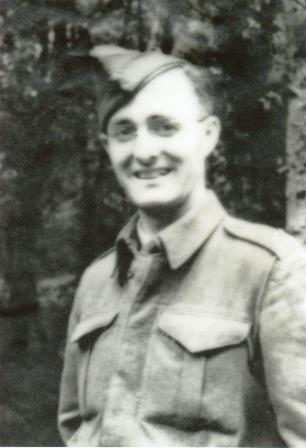
On The War Memorial Trail…..The WWII Able Seaman Who Died Of Peritonitis

March 4, 2020. On the Cenotaph outside the Borden-Carleton Legion a few men lost their lives during wartime due to illness and are buried on home ground here on Prince Edward Island.  One of these men was John Daniel ‘Jack’ FERGUSON.  He was born October 27, 1922 in Borden (now Borden-Carleton), Prince Edward Island, the son of James Henry Ferguson and Margaret Ann Fraser.

When WWII broke out, Jack was anxious to serve and tried to enlist in Halifax but was refused due to his young age.  Instead he joined the Merchant Marines before successfully enlisting in the Royal Canadian Navy Reserve on May 5, 1941.  He was then placed on patrol duty out of Halifax, Nova Scotia.

Unfortunately, he became ill while serving aboard the patrol ship ‘Ross Norman’, and sent to Camp Hill Hospital in Halifax from the sick bay at H.M.C.S. ‘Stadacona’ on August 19, 1942.  His temperature kept spiking and lowering, with no known diagnosis able to be determined, even after blood tests. According to the medical report “….Each elevation in temperature was accompanied by a severe chill….

On August 30, 1942 he went into shock and at that point a diagnosis of peritonitis was made. (Per Wikipedia, peritonitis is inflammation of the lining of the inner wall of the abdomen and cover of the abdominal organs. Symptoms may include severe pain, swelling of the abdomen, fever, or weight loss.)  An operation was made, with two blood transfusions, and Jack appeared to improve over the next two days before worsening again.  Sadly, he died at 10:30 pm on September 6, 1942, just shy of his 20th birthday.

He was buried, with full naval honours, at St Peter’s Roman Catholic Cemetery in Seven Mile Bay.  A notice in the Summerside Journal, on 14 September 1942, page 2, recorded that “….A detachment from H.M.C.S. Queen Charlotte at Charlottetown attended and acted as pallbearers and guard of honor. Mr. Patrick Martin, president of the Summerside branch of the Canadian Legion, represented the veterans at the service….

OLYMPUS DIGITAL CAMERA

Gravestone for John Daniel “Jack” Ferguson at St. Peter’s Cemetery in Seven Mile Bay.  (Photo credit: Pieter Valkenburg)

Unfortunately, no photo or family of Ferguson has been found as yet.  If you have information or photos to share about John Daniel ‘Jack’ Ferguson please contact Pieter at memorialtrail@gmail.com or comment on the blog.

© Daria Valkenburg

….Want to follow our research?…

If you are reading this posting, but aren’t following our research, you are welcome to do so.  Our blog address: https://onthewarmemorialtrail.com/

4 countries, 6 weeks, 7,000 km – an unforgettable war memorial journey in Europe…. Daria’s book ‘No Soldier Buried Overseas Should Ever Be Forgotten‘ is available in print and e-book formats.  Net proceeds of book sales help support research costs and the cost of maintaining this blog. For more information see https://nosoldierforgotten.com/

Subscribe to our YouTube Channel: On The War Memorial Trail With Pieter Valkenburg: https://www.youtube.com/channel/UCJ591TyjSheOR-Cb_Gs_5Kw

Never miss a posting!  Subscribe below to have each new story from the war memorial trail delivered to your inbox.
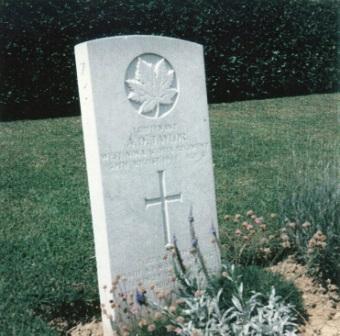
The WWII Mariner From Kinkora Whose Ship Was Torpedoed In The Caribbean

February 20, 2020. On the Cenotaph outside the Borden-Carleton Legion there are 3 men who lost their lives due to being on ships that were torpedoed.  Two of these stories have already been told….

In WWI, mariner James Graham FARROW (FARRAR) lost his life when the ship he was working on was torpedoed in the English Channel on March 19, 1916.  The steamer, ‘Port Dalhousie, had been ferrying needed supplies from Britain to troops in France, while using the cover of being a fishing vessel. (See https://onthewarmemorialtrail.com/2019/01/20/the-mariner-whose-ship-was-torpedoed-in-the-english-channel/)

In WWII, Everett Samuel FRANCIS had the misfortune of being a passenger on the ferry S.S. Caribou when it was torpedoed off the coast of Newfoundland on Wednesday, October 14, 1942.  He was on his way back to his unit in Gander, and to meet his three week old daughter Greta, after being in Ontario for weapons training. Unfortunately, he was not one of the survivors. (See https://bordencarletonresearchproject.wordpress.com/2018/03/25/the-face-of-everett-samuel-francis/)

color photo Hughes, James Emmet

James Emmet Hughes. (Photo credit: courtesy “Around Kinkora Area” by G.K. Farmer.  Photo colourization by Pieter Valkenburg.)

Like James Graham FARROW (FARRAR), James Emmet HUGHES was a seaman in the Canadian Merchant Navy, not in the military.  Born in Kinkora on April 7, 1911, he was the son of Emmet Hughes and Mary Ann McKenna.

After joining the Waterman Steamship Agency of Mobile, Alabama, he was a trimmer aboard the Panamanian registered S.S. Ramapo, travelling between North America and England with badly needed supplies.  A trimmer works in the engine room on a coal-fired ship, such as the steamship Ramapo, responsible for loading of coal into the ship and delivering coal to the stoker or fireman. (See https://en.wikipedia.org/wiki/Coal_trimmer)

SS Ramapo under her former name Baron Wemyss.Courtesu of naviearmatori.net

S.S. Ramapo under her original name of Baron Wemyss. (Photo courtesy of http://www.naviearmatori.net)

Hughes made two successful runs to England but then on a routing of London-Bermuda-Philadelphia, it was torpedoed by German U-Boat 108, captained by Klaus SCHOLTZ, 180 miles north of Bermuda. While Canadian Merchant Navy records list the event as having occurred on ‘approximately February 12, 1942’, the date it had arrived in Bermuda, German records of ships torpedoed by U-boats record the date as being February 16, 1942.

According to German records, as transcribed into English on https://www.uboat.net/allies/merchants/ship/1338.html, the ship had an international crew complement of 40, none of whom survived. “At 15.56 hours on 16 February 1942 the unescorted Ramapo (Master Johan Magnus Ørn Lorentzen) was hit on port side amidships by one G7e torpedo from U-108, broke in two after a boiler explosion and sank 11 minutes later about 180 miles north of Bermuda. The U-boat surfaced and questioned 34 men in lifeboats, but the survivors were never found. The master, 37 crew members and two gunners were lost.

Screenshot_2020-02-18 Ramapo (Panamanian Steam merchant) - Ships hit by German U-boats during WWII - uboat net

Map showing location of sinking of Ramapo.  (Map courtesy of http://www.uboat.net)

As you can imagine, in that time period, it was a long time before families learned that something had gone wrong.  On March 31, 1942, six weeks after the incident, The Guardian reported that the Hughes family had received a message from the steamship company, advising that it believed the ship had been sunk and all hands lost.

J.E. Hughes Guardian 31 march 1942 page 1

Source: Page 1 article in the March 31, 1942 edition of The Guardian.

Aboard the S.S. Ramapo on February 16, 1942 were the following crew members, per www.uboat.net:

Nationality Name Age Position
Greek Artavanis, Marios, Merchant Marine 29 Oiler
British Bailey, Mills Sandilands, Merchant Marine 44 Third Engineer
British Birch, John, Merchant Marine 50 Trimmer
Canadian Boyd, Fred, Merchant Marine 35 Messman
Canadian Boyer, Clarence, Merchant Marine 41 Fireman/Wiper
Canadian Brackenbury, Walter, Merchant Marine 22 Fireman/Wiper
Canadian Courville, Roland, Merchant Marine 18 Trimmer
Chilean Delano, Miguel, Merchant Marine 31 Second Mate
British Finch, Thomas, Merchant Marine 20 Messman
Dutch Glimmerveen, Albertus, Merchant Marine 38 Chief Cook
Canadian Green, William, Merchant Marine 29 Oiler
Norwegian Gustavsen, Karl Gustav, Merchant Marine 50 Chief Steward
Swedish Haggberg, Eric, Merchant Marine 22 Able Seaman
Norwegian Hansen, Bernhard, Merchant Marine 23 Fireman/Wiper
British Harris, William John, RN 24 Able Seaman (DEMS gunner)
Norwegian Helmers, Thorleif Gärtner, Merchant Marine 43 Chief Mate
British Hendry, Frederick William, Merchant Marine 52 First Engineer
Argentinian Hernandes, P., Merchant Marine 26 Fireman/Wiper
Canadian Hughes, James Emmet, Merchant Marine 31 Trimmer
Norwegian Kjennerud, Jul, Merchant Marine 24 Able Seaman
Canadian Knickle, Fred, Merchant Marine 39 Able Seaman
Norwegian Kristensen, Toralf, Merchant Marine 21 Able Seaman
Canadian Lalonde, Germain, Merchant Marine 20 Able Seaman
French Lawrence, Felix, Merchant Marine 30 Messman
British Leary, Vincent, Merchant Marine 35 Second Engineer
Norwegian Lie, Hans Kristian Jensen, Merchant Marine 20 Able Seamn
Canadian Lord, Ian McLean, Merchant Marine 18 Radio Operator
Norwegian Lorentzen, Johan Magnus Ørn, Merchant Marine 35 Master
Canadian Manoff, Paul, Merchant Marine 23 Ordinary Seaman
American McAdoo, John Cornelius, Merchant Marine 37 Messman
Canadian McDonald, Charlie, Merchant Marine 25 Fireman/Wiper
British Nicholson, William, Merchant Marine 36 Boatswain (Bosun)
Norwegian Olsen, Andreas, Merchant Marine 50 Chief Engineer
Irish Reynolds, William, Merchant Marine 28 Fireman/Wiper
British Sinclair, Leslie, Merchant Marine 20 Ordinary Seaman
Norwegian Vesterhus, Nils Andreas, Merchant Marine 38 Third Mate
American Vitalis, Vasilios, Merchant Marine 29 Cook
Canadian Waddell, Wesley, Merchant Marine 23 Oiler
Canadian Wilson, Edgar John, Merchant Marine 23 Ordinary Seaman
British Winder, Harry, Royal Navy 22 Able Seaman (DEMS gunner)
       

James Emmet Hughes is listed on the Halifax Memorial in Point Pleasant Park in Halifax, Nova Scotia, along with other Canadian mariners whose bodies were never recovered.

Halifax Memorial

Halifax Memorial in Point Pleasant Park in Halifax, Nova Scotia. (Photo credit: Pieter Valkenburg)

Research continues on this and other stories.  If you have information or photos to share about James Emmet Hughes, the sinking of the Ramapo, or any of the crew members, please contact Pieter at memorialtrail@gmail.com or comment on the blog.

© Daria Valkenburg

….Want to follow our research?….

If you are reading this posting, but aren’t following our research, you are welcome to do so.  Our blog address: https://onthewarmemorialtrail.com/

4 countries, 6 weeks, 7,000 km – an unforgettable war memorial journey in Europe…. Daria’s book ‘No Soldier Buried Overseas Should Ever Be Forgotten‘ is available in print and e-book formats.  Net proceeds of book sales help support research costs and the cost of maintaining this blog. For more information see https://nosoldierforgotten.com/

You are also invited to subscribe to our YouTube Channel: On The War Memorial Trail With Pieter Valkenburg: https://www.youtube.com/channel/UCJ591TyjSheOR-Cb_Gs_5Kw

Never miss a posting!  Subscribe below to have each new story from the war memorial trail delivered to your inbox.