On The War Memorial Trail…..Media Coverage On The Memorial Panel In Wons

November 28, 2019. On October 12, 2019, the memorial panel in The Netherlands to honour the crew of Halifax L9561 was unveiled.  (See On The War Memorial Trail…..The Memorial Panel In Wons Is Unveiled!) Two regional Dutch newspapers reported on the event in their October 16, 2019 publications: ‘Bolswarder Niewsblad’ and ‘Makkumer Belboei’.

Pieter has provided a translation of both articles:

goo-translate-widget

Bolswarder Niewsblad’  (See a PDF of the article in Dutch Bolswarder Nieuwsblad – 16-10-2019-1)

Unveiling of a Panel about a Plane Crash Near Wons

Wons.  On Saturday, October 12, 2019, it was 78 years ago that a witness in the area of Wons saw the Halifax L9561, which was ‘on fire, come gliding and zigzagging though the clouds.’ The bomber, with a crew of 8, had departed one and a half hours earlier from the English airport, Middleton Saint George, for a bombing mission on the port city of Bremen, but it never reached its target. On Saturday, an information panel was unveiled at the site of the crash. 

The plane had been spotted above the North Sea by the German radar station ‘Tiger’ at Terschelling.  A short time later, the experienced fighter pilot, Leopold ‘Poldi’ Fellerer, succeeded in shooting down the Halifax.  The plane crashed near the Weersterweg, just outside Wons, at 22 hours 17 minutes.

The next morning, it became clear that the 23 year old pilot, Elmer Bagnall Muttart, did not survive the crash. Later, co-pilot Norman Trayler said about Muttart that ‘He was a gallant captain and he died that we might live’.  The fact that the pilot was able to control the damaged plane long enough gave the remaining 7 crew members the chance to escape out of the burning bomber.  All survivors ended up in German prisoner of war camps and got their freedom back in 1945.

Exceptional is the story of rear gunner John Duffield of Oxford, who was hospitalized with severe injuries in the German section of the Boniface Hospital in Leeuwarden.  He was regularly visited by Poldi Fellerer and his gunner, Georg Lotze.  In 1955, 14 years after the crash of L9561, Lotze made an attempt from Germany to get in touch again with Duffield.

In his homeland, the deceased pilot Elmer Muttart has never been forgotten.  His name is mentioned on the Borden-Carleton Cenotaph, a monument close to his birthplace of Cape Traverse on Prince Edward Island.  For a long time, the exact story behind Muttart’s death was not known.  In Canada, Dutchman Pieter Valkenburg, who resides there, has delved into the history of all the deceased names on the monument, and as of 2016 also researched the life of Sgt Muttart.  Very quickly, collaboration began with the Frisian Stichting Missing Airmen Memorial Foundation (SMAMF), which has done research into the aerial war above the province since the 1970s. 

The idea of Valkenburg and SMAMF to honour, in perpetuity, Muttart’s last flight with an information panel at the crash site was realized on the 12th of October, thanks to the cooperation of Dorpsbelang Wons and financial support from within and outside The Netherlands.

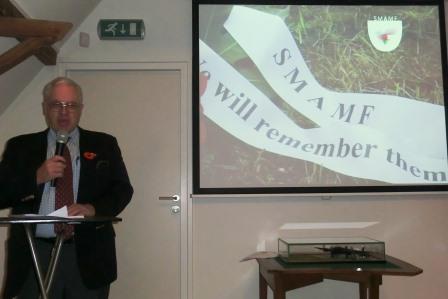
About 30 relatives were present, as well as Deputy Mayor Maarten Offinga. Before the unveiling there was a reception at the museum Het Hannemahuis in Harlingen, where a short presentation about the history of Halifax L9561 was given.

goo-translate-widget

Makkumer Belboei’ (See a PDF of the article in Dutch Makkumer Belboei – 16-10-2019-1) by Sjoukje Steinhouden.

Information Panel on 1941 Crash Unveiled

On the evening of the 12th of October 1941, the Canadian pilot Elmer Muttart, with 7 British crew members, was on his way in Halifax L9561 towards Bremen, Germany, to take part in an aerial attack.  However, over Harlingen, they were shot at and hit by a German nightfighter and the plane caught fire.  Muttart quickly came to the conclusion that he couldn’t save the plane, and while holding the plane level, he ordered his crew out.  Thanks to him, they survived the crash.  The plane crashed just outside Wons and the 23 year old pilot was killed by the crash.  One of his crew members later said ‘he gave his life so that we might live’.

Exactly 78 years later, there again were Canadians and British in and around Wons.  This time they were relatives of the afore-mentioned crew.  They were invited for the unveiling of an information panel on the Weersterweg that will ensure that this event will never be forgotten.  The idea for this panel was made possible by collaboration between the Frisian Stichting Missing Airmen Memorial Foundation (SMAMF, see https://www.luchtoorlogfriesland.nl/) and Pieter Valkenburg, a Dutchman residing in Canada.  Already for years he has been doing research on Canadians who were killed during the Second World War. 

Under the billowing flags of Canada, Great Britain, and The Netherlands, Councillor Offinga from Súdwest Fryslân, Mr. Elgersma from Dorpsbelang Wons, and Mr. Pieter Valkenburg unveiled the panel with information about what happened on that autumn evening in 1941.  After that, the ‘Last Post’ was played, followed by a respectful minute of silence.  Wreaths and flowers were laid by local and international organizations, such as the Canadian and British embassies in The Netherlands.  Families were then invited to be the first to view the panel.  A daughter-in-law and grandson of one of the crew members reacted with the words ‘You know the stories about what happened.  Now it’s become real.’

After everybody had taken in the information and surroundings, the group left for Wons and stopped, for a few moments, at the war memorial there.  The SMAMF had put together a nice, informative program for them.  Earlier that day, they visited Het Hannemahuis in Harlingen where, according to one guest, a great presentation was given.  Of course, they also had visited the grave of the deceased Elmer Muttart in Harlingen. According to Sietse Kuiper of the SMAMF, ‘They were honoured that we have remembered, and therefore they made the trip’.

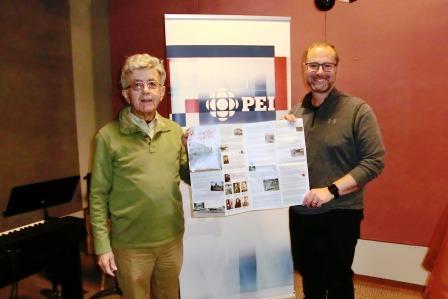
CIMG3634 Nov 6 2019 With Matt Rainie at CBC

Pieter (left) with CBC PEI’s Matt Rainnie at the CBC studio in Charlottetown. They are holding up a copy of the English language transcript of the “He Died That We Might Live’ booklet. (Photo credit: Daria Valkenburg)

Pieter was interviewed by Jonna Brewer of CBC Moncton for the special regional Maritime Remembrance Day broadcast on November 11, 2019.  The interview about the events in Wons was suggested and organized by Matt Rainnie of CBC PEI and was done in the CBC studio in Charlottetown.  You can listen to this interview here: https://drive.google.com/file/d/1ho24lfnzhfhyjxmpW4qUo00p1IjyiwJ-/view?usp=sharing

A big thank you to Pieter for taking the time to translate the articles!  Thank you also to the Missing Airmen Memorial Foundation for sending us the articles, to Matt Rainnie and Jonna Brewer for featuring the Halifax L9561 story and memorial panel for the Remembrance Day broadcast, and thank you to Jane Scott for converting the MP3 file that CBC sent us into a link for this blog.  If you know of any more media stories, or have stories or photos to share about the crew or the events of October 12, 2019, please contact Pieter at dariadv@yahoo.ca or comment on the blog.

© Daria Valkenburg

On The War Memorial Trail…..The Memorial Panel In Wons Is Unveiled!

November 18, 2019. On October 12, 2019, the day of the unveiling of the memorial panel in The Netherlands to honour the crew of Halifax L9561 finally arrived, with a series of events organized by the Stichting Missing Airmen Memorial Foundation, a non-profit volunteer organization based in the province of Friesland. In the last posting about the events, we had a brief introduction to the crew members of Halifax L9561 at Het Hannemahuis Museum in Harlingen (See On The War Memorial Trail…..The Halifax L9561 Crew).

When we walked out of the Het Hannemahuis Museum in Harlingen, the dry but cloudy skies we had at the Harlingen General Cemetery had changed to rain.  Out came the umbrellas as we made the long walk to the bus for the trip to Wons.   We were keeping our fingers crossed that this was just a shower, but it wasn’t to be.  Instead it rained even harder, meaning the memorial panel was to be unveiled in the rain.  It didn’t dampen anyone’s spirits though.

IMG_6364 Oct 12 2019 Memorial plaque Wons

Waiting for the unveiling of the memorial plaque in Wons. You can see the flags of the United Kingdom, The Netherlands, and Canada flying. (Photo credit: Sikko Drijver)

IMG_6355 Oct 12 2019 Memorial plaque Wons flag of Wons

The memorial panel was hidden from view by the flag of Wons when we first arrived. (Photo credit: Sikko Drijver)

The memorial panel is located along a bicycle path and overlooking a field on the Politiek farm where Halifax L9561 came down.  In addition to our Canadian and British group and volunteers from the Missing Airmen Memorial Foundation, we were joined by dignitaries and citizens from the village of Wons and nearby communities.

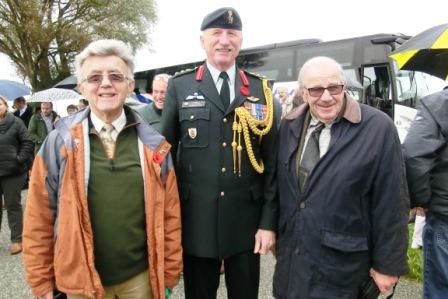
One of the dignitaries was Colonel Timothy Young, Canadian Defence Attaché to The Netherlands, Belgium, and Luxembourg, based at the Canadian Embassy in The Hague, who attended the day’s events with his wife Michelle.

CIMG3484 Oct 12 2019 Pieter Col Young Elmer in Wons

Three proud Canadians… Pieter Valkenburg, Colonel Timothy Young, Elmer MacDonald. (Photo credit: Daria Valkenburg)

Finally the moment to unveil the memorial panel arrived, and the unveilers represented organizations that had provided funding towards the memorial panel.  The unveilers were:

  • Knilles Elgersma, on behalf of Dorpsbelang Wons
  • Maarten Offinga, on behalf of the municipality of Súdwest Fryslân (Southwest Friesland)
  • Pieter Valkenburg, on behalf of the Tryon & Area Historical Society
  • Hans Groeneweg, on behalf of the Missing Airmen Memorial Foundation
CIMG3489 Oct 12 2019 Wons

Unveiling of the memorial panel. Left to right: Maarten Offinga, Knilles Elgersma, Hans Groeneweg, Pieter Valkenburg. (Photo credit: Daria Valkenburg)

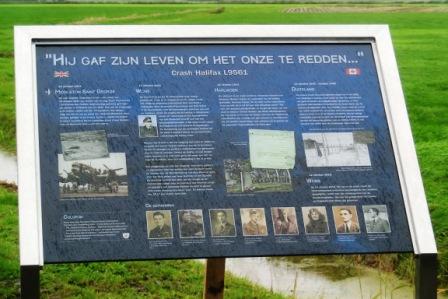
The memorial panel was highly anticipated and didn’t disappoint.  The title was a quote from Halifax L9561 Co-Pilot Norman Frank Trayler “He died that we might live”.  The story of Flight Halifax L9561 on October 12, 1941 was briefly told, from when it left Middleton St. George airbase, how it was attacked by a German nightfighter, the burial of Elmer Muttart in Harlingen General Cemetery on October 16, 1941, the fate of the rest of the crew in POW camps in Germany, and ends with the unveiling of the memorial panel in Wons on October 12, 2019.  At the bottom of the panel are photos of each crew member.

CIMG3496 Oct 12 2019 Wons

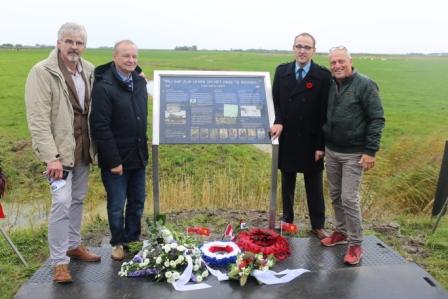
The memorial panel in Wons, overlooking the field on the Politiek farm where Halifax L9561 came down. The title translates to “He died that we might live…”, a quote from co-pilot Norman Frank Trayler. (Photo credit: Daria Valkenburg)

The memorial panel unveiled, the remembrance ceremony began, with the playing of the Last Post by Sgt Major Piet Bergsma of the Dutch Air Force, followed by a minute of silence and then the playing of the Reveille.  Next came the laying of wreaths by:

  • Maarten Offinga, on behalf of the municipality of Súdwest Fryslân (Southwest Friesland).
  • Cor Politiek, grandson of eyewitness to the crash Cor Politiek, on behalf of Dorpsbelang Wons.
  • Colonel Timothy Young, Canadian Defence Attaché to The Netherlands, Belgium, and Luxembourg, on behalf of the Government of Canada. He was accompanied by Elmer MacDonald.
  • Shane Aldridge, grandson of Halifax L9561 crew member David Cotsell, on behalf of the Embassy of Great Britain.
  • Fred Jackson, on behalf of the Middleton Saint George Memorial Association.
  • Douwe Drijver and Alexander Tuinhout, on behalf of the Stichting Missing Airmen Memorial Foundation.
20191012_154132 Oct 12 2019 Wreath laid by Canada

Wreath laid by Colonel Timothy Young, Canadian Defence Attaché to The Netherlands, Belgium, and Luxembourg. (Photo credit: François Breugelmans)

IMG_6397 Oct 12 2019 Memorial plaque Wons

Colonel Timothy Young, left, who laid the wreath on behalf of the Government of Canada. On the right, Shane Aldridge, grandson of David Cotsell, laid a wreath on behalf of the Embassy of Great Britain. (Photo credit: Sikko Drijver)

CIMG3509 Oct 12 2019 Wons

Some of the wreaths and flags laid by the memorial panel in Wons. (Photo credit: Daria Valkenburg)

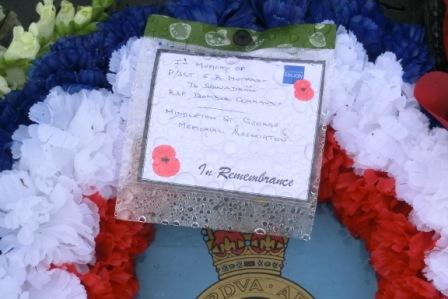
CIMG3553 Oct 13 2019 Memorial panel in Wons message from Middleton St George

Card with the wreath placed by the Middleton Saint George Memorial Association. (Photo credit: Daria Valkenburg)

After the official ceremony was finished, family members were invited to get a closer look at the memorial panel.

20191012_154121 Oct 12 2019 Memorial plaque Wons

Pam Alexander, daughter of Halifax L9561 Navigator Reg Alexander, at the memorial panel. (Photo credit: François Breugelmans)

The Missing Airmen Memorial Foundation volunteers are commended for the wonderful job they did in designing the memorial panel.

IMG_6402 Oct 12 2019 Memorial plaque Wons

Members of the Missing Airmen Memorial Foundation by the memorial panel in Wons. Left to right: Hans Groeneweg, Douwe Drijver, Alexander Tuinhout, Sietse Kuiper. (Photo credit: Sikko Drijver)

CIMG3565 Oct 13 2019 Pieter by memorial panel

A remembrance project that has come full circle for Pieter with the permanent recognition given to the crew of Halifax L9561. (Photo credit: Daria Valkenburg)

Once everyone had a chance to see the memorial panel, we were invited to the community hall in Wons for a small reception.  Back on the bus we went!

Thank you to François Breugelmans and Sikko Drijver for sharing their photos.  If you have stories or photos to share about the crew or the events of October 12, 2019, please contact Pieter at dariadv@yahoo.ca or comment on the blog.

© Daria Valkenburg

On The War Memorial Trail…..The Halifax L9561 Crew

November 9, 2019. On October 12, 2019, the day of the unveiling of the memorial panel Netherlands to honour WW2 pilot Flight Sgt Elmer Bagnall MUTTART and the crew of Halifax L9561 arrived, with a series of events organized by the Stichting Missing Airmen Memorial Foundation, a non-profit volunteer organization based in the province of Friesland. (See Unveiling of the Memorial Panel for Downed WW2 Plane Halifax L9561 in Wons) In the last posting, our group visited the Het Hannemahuis museum for lunch and presentations. (See On The War Memorial Trail…..The Presentations At Het Hannemahuis in Harlingen)

An excellent presentation by Alexander Tuinhout and Douwe Drijver of the Missing Airmen Memorial Foundation gave everyone an idea of the events that led up to the crash on October 12, 1941 and what happened to the surviving crew members.

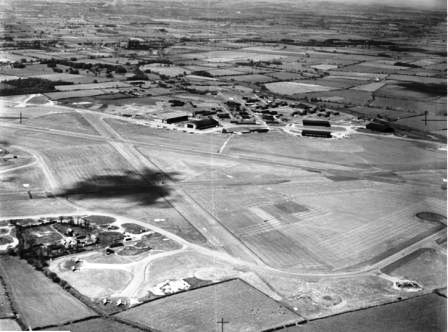
In the presentation, Alexander Tuinhout explained that “The story of this Halifax begins at the aerodrome of Middleton Saint George, which is about 3 miles east of Darlington in the county of Durham.  The airbase was the most northern of Bomber Command during the Second World War….

Middleton Saint George (1)

Middleton Saint George Aerodrome. (Photo courtesy of Stichting Missing Airmen Memorial Foundation)

Middleton became the home base of 78 Squadron, flying with twin-engine Whitley bombers in April 1941 and three months later, in June, 76 Squadron also commenced flying operations from Middleton Saint George. It was no coincidence that 76 Squadron became stationed at the airfield as the Squadron was the second in the RAF flying with the new Handley Page Halifax bombers.  These modern planes were so heavy that they required long and paved runways for their takeoffs, runways that were present at Middleton.

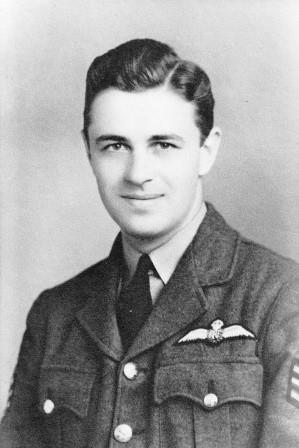
Elmer Bagnall Muttart (2)

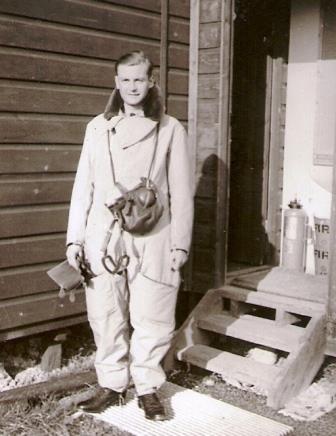
Elmer Bagnall Muttart (Photo from Canadian Virtual War Memorial at http://www.veterans.gc.ca)

One of the pilots who switched from flying Whitleys to Halifax bombers and from 78 Squadron to 76 Squadron was Elmer Muttart, who received a promotion from Sgt to Flight Sgt in October 1941, shortly before his last flight on October 12, 1941.  Muttart’s story has been extensively covered in this blog as he was one of the names on the Cenotaph outside the Borden-Carleton Legion.  (See The Elmer Bagnall Muttart Story)

Of the crew members who were on the Halifax L9561, only Sgt Reg ALEXANDER had flown with Muttart before, as his navigator.  Tuinhout explained further that “Sergeant Reg Alexander, an Observer who had already flown 12 missions with Elmer Muttart, also switched from 78 to 76 Squadron.  Alexander had volunteered for the Royal Air Force in the spring of 1939.  He was born in 1919 in Finchley, near London, but the family moved to Belfast, Northern Ireland before the war.

Reg Alexander

Sgt Reg Alexander. (Photo courtesy of Stichting Missing Airmen Memorial Foundation)

The October 12, 1941 crew of Halifax L9561 was composed of:

  • Pilot Flight Sgt Elmer Bagnall MUTTART
  • Co-Pilot Flight Sgt Norman Frank TRAYLER
  • Flight Engineer Sgt David COTSELL
  • Flight Engineer Sgt Leslie Albert ROBERTS
  • Navigator Sgt Reg ALEXANDER
  • Wireless Operator Sgt William Herbert HUNT
  • Gunner Sgt George Henry PATTERSON
  • Gunner Sgt John William DUFFIELD.

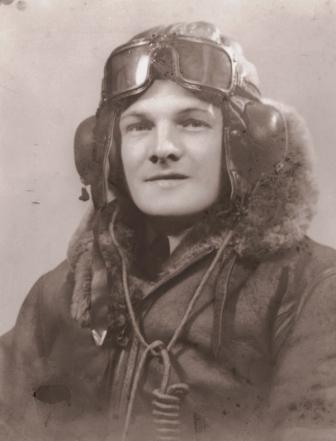
Tuinhout continued his report on the Halifax L9561 crew… “Sitting in the seat next to Muttart was the 21 year old Co-pilot Norman Frank TRAYLER, a married man from Basingstoke.  He was an accountancy clerk before the war but volunteered, like so many young men in those days, for the Royal Air Force in July 1940.”  Trayler’s son Robert had been in touch with us last year, and shared information about his father, which was summarized in a blog posting.  (See Family of Crew Member of WWII Pilot Elmer Muttart’s Final Flight Found)

Norman Frank Trayler

Flight Sergeant Norman Frank Trayler. (Photo courtesy of Stichting Missing Airmen Memorial Foundation)

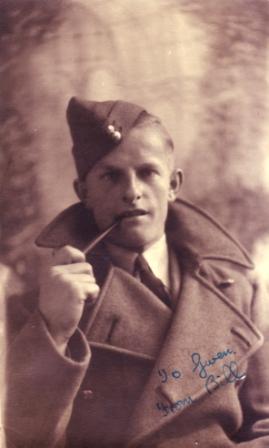
The roll call of crew members continued in Tuinhout’s presentation…. “Bill HUNT, the plane’s first Wireless Operator and Air Gunner, had enlisted in January 1940.  He was born in Dublin in 1919, but lived in Mitcham, Surrey when he entered the service...

Bill Hunt

Sergeant William “Bill” Herbert Hunt. (Photo courtesy of Stichting Missing Airmen Memorial Foundation)

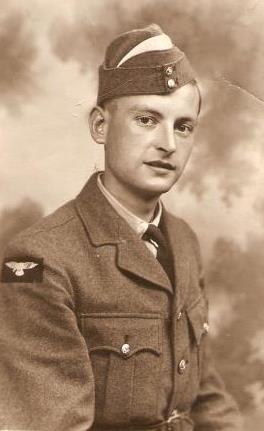
Tuinhout’s presentation continued…. “Hunt’s backup was George Henry PATTERSON from Doncaster, the second Wireless Operator and Air Gunner.  Patterson had worked as a gas and electricity repairman before he entered the RAF in November 1939, shortly after the outbreak of war….

George Henry Patterson

Sergeant George Henry Patterson. (Photo courtesy of Stichting Missing Airmen Memorial Foundation)

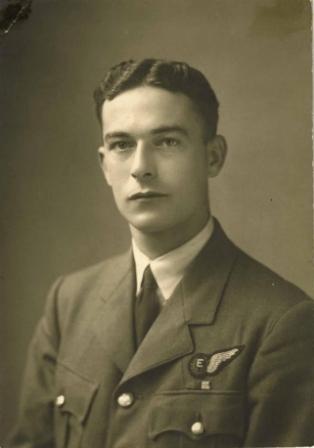
Next, Tuinhout mentioned the two Flight Engineers….  “Both of the Flight Engineers of L9561 had long careers in the Royal Air Force.  Sergeant Leslie Albert ROBERTS from Romford, Essex, became an apprentice in 1931, at the age of 15.  The second Flight Engineer, David COTSELL from Chatham, Kent, was also the same age when he joined in 1935.

Leslie Roberts

Sergeant Leslie Albert Roberts. (Photo courtesy of Stichting Missing Airmen Memorial Foundation)

David Cotsell

Sergeant David Cotsell. (Photo courtesy of Stichting Missing Airmen Memorial Foundation)

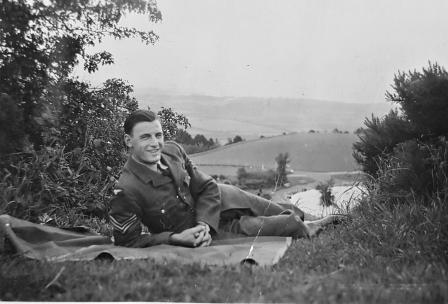
Tuinhout then discussed the last crew member…  “The last man on board Halifax L9561 was 20 year old John William DUFFIELD from Oxford, who manned the tail guns.” Like Trayler, family of Duffield had been in contact with Pieter, and several letters about the events that happened on October 12 were shared.  (See On the War Memorial Trail ….. At The Politiek Farm In Wons and On the War Memorial Trail ….. At Harlingen General Cemetery) Duffield had written that the plane had three extra people – himself, Roberts, and Hunt – to help with the flight as the Wireless Operator, Engineer, and Rear Gunner were inexperienced.  He also noted that, unfortunately, a key position was left unmanned – a gunner in the front turret – and he always wondered if events would have turned out differently had this position been filled.

scan0005 john duffield portrait

John William Duffield. (Photo courtesy of Lesley Newland)

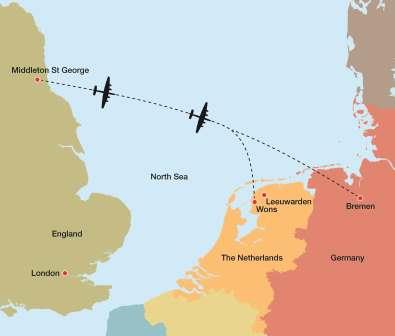
Tuinhout then related details of the flight of Halifax L9561 on October 12, 1941…. “Shortly after 7 o’clock on the evening of the 12th of October, five of 76 Squadron Halifax bombers set course to the east.  Four planes flew to Nuremburg and took part in an air raid against the Siemens factory.  L9561 left the runway of Middleton Saint George just after half past seven and was the only plane of the Squadron that flew a more northerly route towards Bremen.

map of route taken by Halifax L9561

Map of route taken by Halifax L9561. (Map courtesy of Stichting Missing Airmen Memorial Foundation)

Unfortunately, that evening RAF planes were observed by a night fighter base in Leeuwarden.  Halifax L9561 was one of 4 bombers that were shot down.  Tuinhout explained that “Two Wellingtons crashed near Blankenham and Westergeest and a Hampden was lost over the IJsselmeer.”  The fourth plane was Halifax L9561.

Tuinhout quoted a description made by Co-pilot Norman Trayler, about “what happened shortly after the aircraft passed the Dutch coast.  He said that ‘We were unfortunate enough to bump into a couple of night fighters.  They immediately opened up at us with all they had, and I can say their aim was good – too good for my liking.Muttart’s plane was intercepted at an altitude of 3200 metres and attacked twice.”  (For more on the night fighter attack see Halifax L9561 Flight Mentioned In ‘The Night Hunter’s Prey’ and On the War Memorial Trail ….. At Harlingen General Cemetery)

Muttart gave the order for the crew to evacuate and all were able to parachute out, except for Muttart himself.  During a meet and greet on October 11, 2019, family members of some of the British crew members explained that the order to leave the plane struck the crew with terror as they had never jumped out of a plane before, let alone one that was on fire, under enemy attack, and in the dark in an unknown country!  Their only practice had been to jump from the roof of a building in England.

Tuinhout explained that “As befits a good Captain, Elmer Muttart stayed at the controls of the crippled Halifax.  Norman Trayler said ‘Elmer was still at the controls when the last chap went through the hatch. He must have tried a crash landing then…The machine must have been well on fire by this time and Elmer was either burned to death or killed when the machine blew up.  He was a gallant captain and he died that we might live. It was only his efforts that kept the disabled machine from crashing with all of us inside.’ At about 10:15 pm, local people witnessed a bright red glow in the cloudy sky.  The Halifax approached the village of Wons sliding and zigzagging when bombs came down in a meadow.  The plane lost a wing and eventually crashed about 100 metres past the farm of Johannes Politiek and his family….”  (For an eyewitness account from the 9 year old son of Johannes Politiek, see On the War Memorial Trail ….. At The Politiek Farm In Wons)

All of the surviving crew members spent the rest of the war years, in difficult conditions, in prisoner of war camps before returning to Great Britain to pick up their interrupted lives.  Tuinhout explained that on October 13, 1941, Elmer Muttart’s “body was brought to the nearby town of Harlingen, where a German physician could easily identify him, because his Royal Canadian Air Force identity papers were still in his pocket.  Muttart was laid to rest, with military honours, in the Harlingen General Cemetery on Thursday, the 16th of October.

Present at these commemoration events were family members of British crew members Reg Alexander, David Cotsell, Bill Hunt, and Leslie Roberts.  With an introduction to all crew members, we next made our way to Wons, for the unveiling of the memorial panel.

If you have stories or photos to share about the crew or the events of October 12, 2019, please contact Pieter at dariadv@yahoo.ca or comment on the blog.

© Daria Valkenburg
On The War Memorial Trail…..The Presentations At Het Hannemahuis in Harlingen

October 17, 2019. On October 12, 2019, the day of the unveiling of the memorial panel Netherlands to honour WW2 pilot Flight Sgt Elmer Bagnall MUTTART and the crew of Halifax L9561 finally arrived, with a series of events organized by the Stichting Missing Airmen Memorial Foundation, a non-profit volunteer organization based in the province of Friesland. (See Unveiling of the Memorial Panel for Downed WW2 Plane Halifax L9561 in Wons) In the last posting, our group visited the Harlingen General Cemetery where Muttart is buried. (See On The War Memorial Trail…..The Visit To Harlingen General Cemetery)

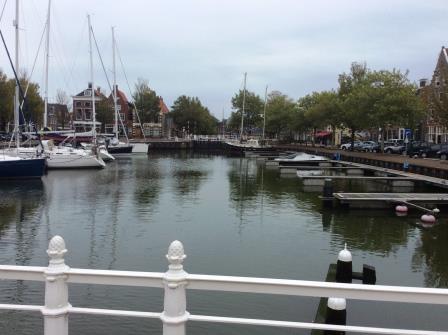
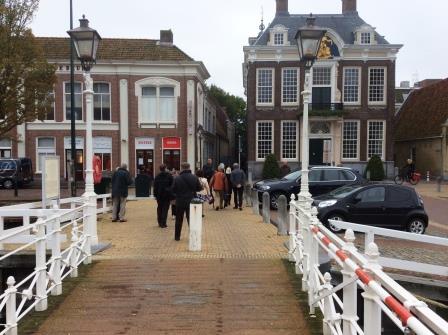
From the cemetery, we were invited for lunch and presentations at Het Hannemahuis, a museum in Harlingen.  Our bus was too big to navigate the narrow streets of this maritime city, and we had to walk across the canal to the other side of the canal where the museum is located in the centre of the city, and reached through a very narrow street.

IMG_2702 Oct 12 2019 Harlingen

Boats line the canal in Harlingen. (Photo credit: Annie Lee MacDonald)

IMG_2703 Oct 12 2019 Harlingen

We cross the canal and walk through a narrow street towards Het Hannemahuis in Harlingen. (Photo credit: Annie Lee MacDonald)

We were treated to a much appreciated warm cup of coffee or tea, cookies and sandwiches for lunch, and had a chance to meet and visit with the Dutch guests invited for the official commemoration events.

CIMG3470 Oct 12 2019 Harlingen Hannemahuis

Harlingen Mayor Roel Sluiter (right) chats with Elmer MacDonald. (Photo credit: Daria Valkenburg)

CIMG3468 Oct 12 2019 Harlingen Hannemahuis

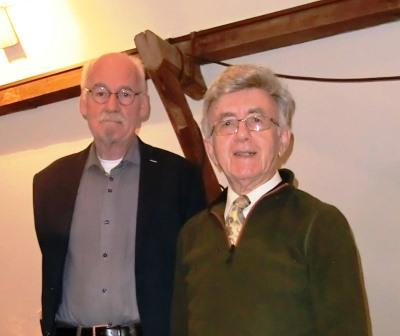
Museum volunteer Bauke Posthuma, who researched the men buried in the Commonwealth War Graves section of Harlingen General Cemetery, including Elmer Bagnall Muttart, chats with Pieter and gives an update on the publication of his book. (Photo credit: Daria Valkenburg)

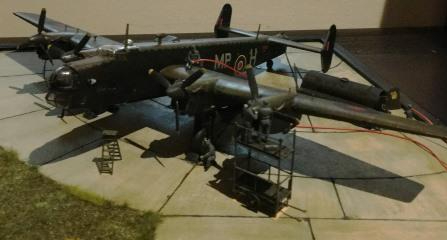
Everyone had a chance to see a model of the type of Halifax plane flown on the night of October 12, 1941, made by Lex Bosma.

IMG_0266 Replica of Halifax plane made by Lex Bosma

Model of Halifax plane made by Lex Bosma. (Photo credit: Ralph & Valerie Muttart)

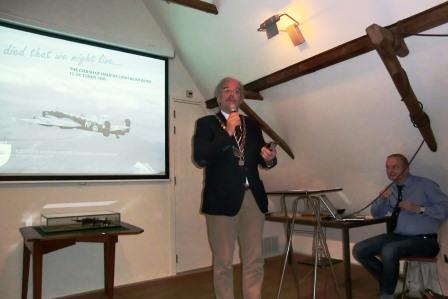
The master of ceremonies for the presentations was Hans Groeneweg, President of the Stichting Missing Airmen Memorial Foundation, who introduced the speakers.

CIMG3472 Oct 12 2019 Harlingen Hannemahuis

Harlingen Mayor Roel Sluiter gives a greeting. On the right, Douwe Drijver manages the slide presentation. (Photo credit: Daria Valkenburg)

Mayor of Harlingen, His Worship Roel Sluiter, gave a warm welcome to all of us:

Welcome in Harlingen!  Very nice to have you here on this occasion on which you can look with mixed feelings.

On the one hand: we are celebrating our liberation, 75 years ago, every day now, since the liberation of our country started in the south of the Netherlands in early September 1944.

On the other hand: we remember these days also all the sacrifices that were made and all the losses we suffered, before our liberation was a fact. Mixed emotions; joy, gratitude and also sadness by the ancestors of the liberators that were killed in action.

Our attention this afternoon is concentrated on the tragic adventure of the Halifax L9561 that was attacked by a German fighter plane and crashed near the village of Wons in October 1941.

Seven crewmembers of the Halifax rescued themselves by parachute, the pilot, Elmer Muttart, however, did not survive. You just visited his grave, here in Harlingen.

That we are here today in remembrance of the events of that dark night of 12 October 1941 is also to be seen as a great “thank you” for all the efforts that were needed to eventually liberate our country! I hope you will have a very pleasant afternoon!

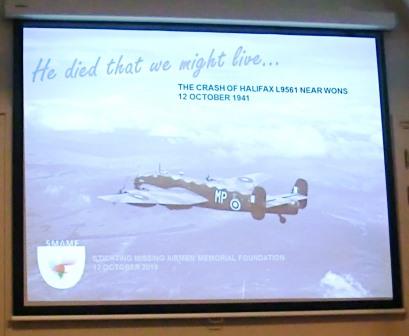
The main event was an excellent presentation by Alexander Tuinhout and Douwe Drijver, who gave a summary of the events that led to the crash on the night of October 12, 1941 and what happened to the crew members in the aftermath.  The quote “He died that we might live….” had been made by co-pilot Norman Frank TRAYLER.

CIMG3474 Oct 12 2019 Harlingen Hannemahuis

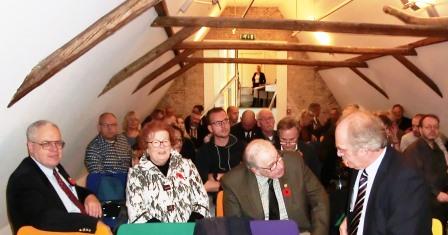
A presentation about the crew of Halifax L9561 was made by Alexander Tuinhout and Douwe Drijver at Het Hannemahuis. (Photo credit: Daria Valkenburg)

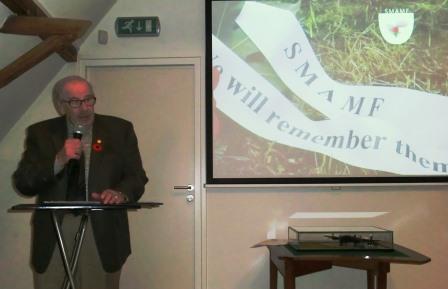
Following the presentation, Elmer MacDonald and Donald Coutts were invited to give remarks about Flight Sgt Elmer Muttart.

CIMG3476 Oct 12 2019 Harlingen Hannemahuis

Elmer MacDonald gave heartfelt remarks about Flight Sgt Elmer Muttart. (Photo credit: Daria Valkenburg)

Your Worship, the mayor of Harlingen; Colonel Timothy Young, Canadian Defence Attaché to The Netherlands, Belgium, and Luxembourg; Mr. Shane Aldridge, representative of the British Embassy and a grandson, I understand, of one of Muttart’s crew; distinguished guests, including the families of Muttart’s crew aboard  the Halifax L9561 on that fateful day; members of the Missing Airmen Memorial Foundation who organized this event and Mr. Pieter Valkenburg of the Borden-Carleton Cenotaph Research Project of Prince Edward Island, Canada.

My name is Roderick Elmer MacDonald. I have come from Prince Edward Island, Canada for this very special occasion. We owe a debt of gratitude to Mr. Pieter Valkenburg, who took a special interest in Elmer Bagnall Muttart’s name that was inscribed on the War Memorial outside the Borden-Carleton Legion in Prince Edward Island. He researched his role in World War Two. He learned and shared the events that unfolded in this area that led to him sacrificing his life for the sake of a village.  Only through Pieter did we learn the details and only now can we truly appreciate his sacrifice. We are most appreciative, also, to the Missing Airmen Memorial Foundation for their work in providing us with this opportunity.

It is especially meaningful for me to be here today because I have a special connection. You see the Muttarts and the MacDonalds on Prince Edward Island were close family friends. On March 20,1940, when my parents were married,  Elmer was Best Man for my father. On October 12,1941, the Halifax L9561 plane was shot down and the only fatality was the pilot Elmer Muttart. This news was devastating to the families. In 1943 I was born and I was named after him in his memory. I always treasured the fact I was called after him but only through Pieter’s research did I come to realize the sacrifice he made and to learn what an extraordinary Canadian he was.

 I want to introduce you now to Elmer Bagnall Muttart’s close relative, who is here today, his only sister Helen’s son, Mr. Don Coutts from North Bay, Ontario, Canada.

CIMG3479 Oct 12 2019 Harlingen Hannemahuis

Don Coutts, nephew of Elmer Muttart, addresses the audience. (Photo credit: Daria Valkenburg)

Your Worship, the Mayor of Harlingen, distinguished dignitaries and guests, including the families of Elmer Bagnall Muttart’s crew aboard the HALIFAX L9561, members of the Missing Airmen Memorial Foundation who has organized today’s ceremonies and activities…my name is Don Coutts.

On behalf of my mother, Helen Muttart Coutts, my late father Elgin Coutts who died just over two (2) months ago who knew that I would be coming to Holland for these ceremonies, my brother Peter, and our families, we thank you for being here and for today’s ceremonies.

The Coutts, the Muttart families, and relatives would like to thank Mr. Pieter Valkenburg for taking the interest in the names on the Borden-Carleton, Prince Edward Island Cenotaph. We are indebted to him for his research into Elmer Muttart and his crew on that fateful day—–October12th, 1941. A special thanks to Daria, Pieter’s wife for her assistance in this project.

As mentioned, my Mother is Helen Muttart Coutts.  Her brother was the late Elmer Bagnall Muttart. Their parents were Annie Bagnall and Louis Muttart of Cape Traverse, Prince Edward Island, Canada. Mom and Elmer’s father, Louis was a farmer in Cape Traverse, Prince Edward Island.

Elmer was named after his uncle Elmer Bagnall who had looked after the Bagnall Farm in Hazelgrove, Prince Edward Island during WORLD WAR 1 and died quite suddenly in August 1917 at a very young age. Elmer Bagnall Muttart was born on March 14TH, 1918—–just seven (7) months after his uncle had died.

Elmer had three (3) uncles who fought in WORLD WAR 1. They were Gordon Bagnall, Harold Bagnall, and Fred Bagnall who was wounded at Sanctuary Wood, in France.

Elmer graduated from Acadia University in Wolfville, Nova Scotia, Canada with a Bachelor’s Degree in Science (Engineering) in 1939. Elmer had enlisted in the Royal Canadian Air Force in June 1940. He had started the process to enlist in the RCAF in the fall of 1939 but it took some time for the paperwork to be completed.

Shortly after Elmer had been shot down, my grandparents had received a cablegram that he was missing in action. On New Year’s Eve, December 31st, 1941 my grandparents received a cablegram that Elmer had been buried in the Harlingen General Cemetery on October 16TH, 1941. My Family has visited Elmer’s grave on two (2) previous occasions.

I never met my Uncle as I was not born until October 1950, some nine (9) years after he died. My grandparents always had a framed picture of Elmer in his pilot’s uniform in their house in Cape Traverse, in their house in Bedeque, Prince Edward Island where they moved to in 1949, and in Toronto, Ontario, Canada where they moved to in 1965 to be closer to my Mother and our family.

My mother has a framed picture of Elmer in her Retirement Residence in Toronto, and previously it was displayed in our homes in Toronto.

Once again, thank you for today’s ceremonies.

Thank you to Het Hannemahuis for hosting us.  Enormous thanks to Alexander Tuinhout and Douwe Drijver for their presentation.  An overview of the crew of Halifax L9561 will be the subject of the next blog posting before we move on to the unveiling of the memorial panel in Wons.  If you have stories or photos to share about the crew or the events of October 12, 2019, please contact Pieter at dariadv@yahoo.ca or comment on the blog.

© Daria Valkenburg


Unveiling of the Memorial Panel for Downed WWII Plane Halifax L9561 in Wons

October 6, 2019.  Next week, the long journey to providing a memorial panel to honour Flight Sgt Elmer Bagnall MUTTART and the crew of Halifax L9561 will end with its unveiling in Wons on October 12.  (See Update For Those Intending To Go To The Netherlands For The Memorial Panel Unveiling In Wons To Honour the Crew of Halifax L9561)

This project, initiated by Pieter in 2017 after researching what happened to Muttart, one of the names on the Cenotaph outside the Borden-Carleton Legion, became possible with the help and support of the Missing Airmen Memorial Foundation, the Tryon & Area Historical Society that coordinated donations, and the many people who generously donated towards the preparation and installation of a memorial panel.  This project was given ongoing media coverage by the County Line Courier newspaper and CBC PEI, making it possible to tell the story of Elmer Muttart to Islanders.

Recently we met with the organizers from the Missing Airmen Memorial Foundation in Leeuwarden, who gave us a few hints about what to expect on October 12.

CIMG3185 Sep 30 2019 Leeuwarden with Pieter Daria Douwe Alexander

We get a few hints on what to expect on October 12! Left to right: Alexander Tuinhout, Pieter Valkenburg, Daria Valkenburg, Douwe Drijver.

Family of the crew of Halifax L9561 will meet in Leeuwarden before going to commemorative events in Harlingen and Wons. Representatives from the Dutch municipal government, the Canadian and British embassies, the Royal Canadian Legion in The Netherlands and Canada, the citizens of Wons, and the many researchers who worked so hard on this project will attend these special events that have been organized by the Missing Airmen Memorial Foundation, a non-profit organization of volunteers in Friesland dedicated to remembering the Allied flights that crashed in the province.

As so many Canadians are not aware of the efforts of the Missing Airmen Memorial Foundation, we invited them to explain a bit about their organization in a video clip about the story behind this upcoming event:

Excerpted translation of an article from the press release from the Missing Airmen Memorial Foundation:

On Saturday, October 12, 2019, it will be 78 years ago that an eyewitness in the Wons area saw Halifax L9561 “burning, sliding and zigzagging through the cloud cover”. The bomber with a crew of eight people left the English airport in Middleton Saint George an hour and a half earlier for a bombing of the port city of Bremen, but it never reached its target.

Above the North Sea the aircraft was already noticed by the German radar station “Tiger” on the island of Terschelling. Experienced fighter pilot Leopold “Poldi” Fellerer succeeded in shooting the Halifax shortly afterwards. The plane crashed just outside Wons at 10:17 p.m.

Elmer Bagnall Muttart (2)

Elmer Bagnall Muttart (Photo from Canadian Virtual War Memorial at http://www.veterans.gc.ca)

The next morning it became clear that 23-year-old Canadian pilot Elmer Bagnall Muttart did not survive the crash. “He was a gallant Captain and he died that we might live …” co-pilot Norman Trayler would later say about Muttart. The fact that the pilot was able to keep the damaged aircraft under control for a long time gave the remaining seven crew members the chance to escape from the burning bomber. All survivors fell into German captivity and only got their freedom back in 1945.

John Duffield from Oxford, a tail gunner, was admitted with serious injuries in the German section of Leeuwarden’s Boniface Hospital. He received regular visits to his sickbed from Poldi Fellerer and from Fellerer’s gunner Georg Lotze. In 1955 – fourteen years after the crash of the L9561 – Lotze, from Germany, even made an attempt to come into contact with Duffield again.

In his home country of Canada, fallen pilot Elmer Muttart has never been forgotten. His name is on the Borden-Carleton Cenotaph, a monument near his birthplace of Cape Traverse on Prince Edward Island. For a long time, the exact story behind Muttart’s death was unknown.  Dutch born Canadian Pieter Valkenburg, who lives on Prince Edward Island, delved into the history of all fallen soldiers on the Cenotaph and, as of 2016, delved into the life of Muttart. He soon joined forces with the Frisian based Missing Airmen Memorial Foundation (SMAMF), which has been investigating the air war over the province since the 1970s.

The initiative of Valkenburg and the Missing Airmen Memorial Foundation to permanently remember Elmer Muttart’s last flight with a memorial panel at the crash location becomes a reality on 12 October.

Halifax No. 76 Squadron

Halifax Bomber used by No. 76 Squadron. (Photo courtesy of Missing Airmen Memorial Foundation)

For those who wish to read the original Dutch, please see ( Onthulling informatiepaneel vliegtuigcrash Halifax L9561 in Wons )

Thank you to the Missing Airmen Memorial Foundation for sharing this article from their press release and allowing it to be translated into English.  An enormous thank you goes to Wendy Nattress, who graciously volunteered to do the post-production work on the short video explaining how the effort to place a memorial panel began. If anyone has more information to share on the Halifax L9561 crew, please contact Pieter at memorialtrail@gmail.com or comment on the blog.

© Daria Valkenburg
….Want to follow our research?….

If you are reading this posting, but aren’t following our research, you are welcome to do so.  Our blog address: https://onthewarmemorialtrail.com/

Front cover OnTheWarMememorialTrailinEurope4 countries, 6 weeks, 7,000 km – an unforgettable war memorial journey in Europe…. Daria’s book ‘No Soldier Buried Overseas Should Ever Be Forgotten‘ is available in print and e-book formats.  Net proceeds of book sales help support research costs and the cost of maintaining this blog. For more information see https://nosoldierforgotten.com/ 
You are also invited to subscribe to our YouTube Channel: On The War Memorial Trail With Pieter Valkenburg: https://www.youtube.com/channel/UCJ591TyjSheOR-Cb_Gs_5Kw

Never miss a posting!  Subscribe below to have each new story from the war memorial trail delivered to your inbox.

On the War Memorial Trail …..Family of Crew Member of WWII Pilot Elmer Muttart’s Final Flight Found

April 25, 2018.  The story of WWII pilot Elmer Bagnall MUTTART, from Cape Traverse, is unusual in that information keeps coming in, almost 77 years after his death on October 12, 1941.  Over several blog entries, you’ve learned about the events of the plane crash just past the village of Wons, The Netherlands, and read an account offered by Sgt John William DUFFIELD, who was the gunner on the flight.  We’ve also told you about a visit made to Muttart’s grave in Harlingen by his navigator, Sgt Reg ALEXANDER, and his daughter Pam Alexander.

On October 12, 1941, with his regular navigator Reg Alexander and six other crew members, Muttart began his 21st mission into enemy territory, a bombing raid on Bremen, Germany. 

…The air crew aboard the last flight of Halifax L9561….

The crew members of Halifax L9561 were:

  • Pilot – F/S Elmer Bagnall MUTTART (age 23)
  • Co-Pilot – P/O Norman Frank TRAYLER (age 21)
  • Flight Engineer – Sgt David COTSELL (age 21)
  • Flight Engineer – Sgt Leslie Albert ROBERTS (age 25) (previously recorded as bomb aimer)
  • Navigator – Sgt Reginald ‘Reg’ William Purchase ALEXANDER (age 22)
  • Wireless Operator – Sgt William Herbert HUNT (age 22)
  • Gunner – Sgt George Henry PATTERSON (age 28)
  • Gunner – Sgt John William DUFFIELD (age 20)

The plane was shot down and crashed just past the village of Wons, but not before all of the crew members, except for Muttart, had parachuted out.  The crew members, all British, spent the rest of the war in various prisoner of war camps.  The only casualty of that night was Elmer Muttart.

Elmer Bagnall Muttart (2)

Elmer Bagnall Muttart (Photo from Canadian Virtual War Memorial at http://www.veterans.gc.ca)

…The son of Norman Frank Trayler has been in contact ….

Over the past year, preparations have been underway for a planned Memorial Panel in Wons to honour the entire crew.  Outreach efforts to locate family members of the crew have met with some success, as the family of Reg Alexander and John William Duffield have been in contact.  Now, most recently, Robert Trayler, who lives in France, has been in contact regarding his father, Pilot Officer Norman Frank TRAYLER, who was the co-pilot on the flight. Trayler had gotten married on September 20, 1941, just a few weeks before the ill-fated flight that would separate him from his bride for the rest of the war.

Trayler wedding photo

Centre couple: Norman Trayler with his wife Daphne Jefferd on their wedding day in Basingstoke, England. (Photo: courtesy Robert Trayer family collection)

… Norman Frank Trayler was a POW in Stalag Luft III ….

After the plane crash in Wons, Trayler spent 4 years at Stalag Luft III prisoner of war camp in present day Poland, where he was a member of the prison camp orchestra and was able to write his intermediate accountancy exams, with papers sent over from London.  His son Robert recalled that “Dad was elected barrack room cook and centralized all the Red Cross parcels to make something edible every day.

After his return to England, Trayler moved to Bognor, where he began an accountancy practice, and took up cricket.  He passed away on June 19, 2009 at the age of 88.  Son Robert explained that “Although I am obviously very proud of what he did during the war, as a family, we always added a dash of humour. As I said at his funeral, he was at least partly responsible for the destruction of three aircraft: A Tiger Moth which couldn’t be persuaded to come out of a spin, a Whitley which while taxiing went up the back of the one in front, chewing off the (happily unoccupied) tail turret, and finally the Halifax.

Trayler’s obituary noted that his back had been badly injured in a Royal Air Force training accident in a Tiger Moth, and he had taken up cricket to alleviate the pain and keep moving.

We thank Robert Trayler for his recollections about his father, and hope to hear from more family of the crew of the Halifax L9561 flight.

In the next blog entry, we’ll share an excerpt from a 2016 book describing the events of the Halifax L9561 flight.

Photos and stories are still needed for many of the names on the Cenotaph outside the Borden-Carleton Legion. You can email us at memorialtrail@gmail.com, comment on the blog, or send a tweet to @researchmemori1.  

UPDATE:  This project was completed in October 2019!

Donations are still being collected towards the ‘Muttart Memorial Fund’ for a memorial panel in Wons, The Netherlands.  If you would like to donate, cheques may be written out to TAHS and mailed to Tryon & Area Historical Society (TAHS), PO Box 38, Crapaud PE C0A 1J0.  In the subject line, identify your cheque as being for the “Muttart Memorial Fund”.  A charitable donation receipt will be sent to all donors. 

If you wish to donate and you live in Europe:  Bank transfers may be made to Stichting Missing Airmen Memorial Foundation, Bank Account # (IBAN) NL35ABNA0569579856, and state in the subject line “Attn D.S. Drijver for Halifax L9561”.

© Daria Valkenburg

…Want to follow our research?….

If you are reading this posting, but aren’t following the blog, you are welcome to do so.  Our blog address: https://onthewarmemorialtrail.com/

Front cover OnTheWarMememorialTrailinEurope4 countries, 6 weeks, 7,000 km – an unforgettable war memorial journey in Europe…. Daria’s book ‘No Soldier Buried Overseas Should Ever Be Forgotten‘ is available in print and e-book formats.  Net proceeds of book sales help support research costs and the cost of maintaining this blog. For more information on the book, please see https://nosoldierforgotten.com/
You are also invited to subscribe to our YouTube Channel: On The War Memorial Trail With Pieter Valkenburg: https://www.youtube.com/channel/UCJ591TyjSheOR-Cb_Gs_5Kw

Never miss a posting!  Subscribe below to have each new story from the war memorial trail delivered to your inbox.

On the War Memorial Trail ….. At The Politiek Farm In Wons

February 6, 2018. The basic story of PEI WWII pilot Elmer Bagnall MUTTART, whose name is listed on the Cenotaph outside the Borden-Carleton Legion, was told previously in this blog.  In the last blog entry, we visited Harlingen General Cemetery where Muttart is buried, and met with two volunteers from the Missing Airmen Memorial Foundation (See On the War Memorial Trail ….. At Harlingen General Cemetery).

Elmer Bagnall Muttart (2)

Elmer Bagnall Muttart (Photo from Canadian Virtual War Memorial at http://www.veterans.gc.ca)

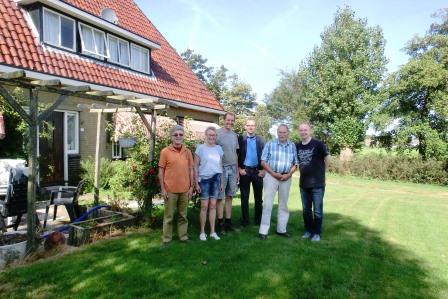
With the previous soldiers whose graves we had visited, the cemetery or memorial was the last stop on the war memorial trail for that person.  In the case of Muttart, the journey continued.  The Missing Airmen Memorial Foundation had received an invitation for us to visit the Politiek farm, the first farm outside of the village of Wons, where Halifax L9561 crashed after being shot down.  The farm is still owned by the Politiek family and we were welcomed by Johannis Politiek and his wife Jantina.  Johannis’ father Cor, who was 9 years old in 1941 when the plane crashed on his parents’ dairy farm, was also present and gave his recollection of that fateful evening.

CIMG8032 Aug 28 2017 Politiek farm in Wons Pieter Jantina Johannes Alexander Cor Douwe

At the Politiek farm in Wons. From left to right: Pieter, Jantina Politiek, Johannis Politiek, Alexander Tuinhout, Cor Politiek, Douwe Drijver. (Photo credit: Daria Valkenburg)

Cor lived on the farm with his parents and siblings.  He was the youngest.  Everyone was in bed when they heard the commotion and saw that the plane was on fire as it was coming down, flying about 40 metres over the farmhouse roof.  Pieces of the plane were flying off until the plane crashed in the field a few hundred metres from the farmhouse, making a deep hole in the ground.  Due to the burning plane, no one could get to it until the next day, when the German authorities arrived.

When asked if anyone from the family had tried to approach the plane, Cor shook his head, explaining that the Dutch population were not allowed to approach, under threat of reprisals from their Nazi occupiers.

CIMG8038 Aug 28 2017 Politiek farm in Wons

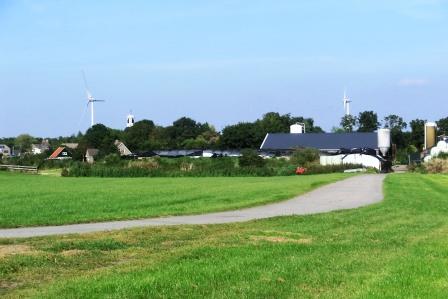
Halifax L9561 crashed in the field to the right of the foreground of this photo. One can see the Politiek barn on the far right, and towards the far left one can see the houses and church steeple of the village of Wons. (Photo credit: Pieter Valkenburg)

Cor recalled that one of the survivors from the plane crash was on their farm, but unfortunately the Dutch Resistance had no means to safely evacuate anyone.  (Note: We do not know who this was.) Allied airmen had been instructed by the British government to surrender to the authorities, and that’s what they did.  As prisoners of war they were first brought to Leeuwarden, then to a prison in Amsterdam, and from there sent in groups to Frankfurt for interrogation before being transferred to the various prisoner of war camps.  Injured prisoners of war, such as John William DUFFIELD, were sent to the hospital in Leeuwarden, which was next to the German air base and quarters for German pilots.

scan0005 john duffield portrait

John William Duffield. (Photo courtesy of Lesley Newland)

In Duffield’s November 11, 2000 letter to Peter Hinchcliffe, who was researching German night fighters, he explained that “Muttart had arrived back at Middleton St. George after a conversion course at Linton on Ouse a few days prior to 12th October.  His crew were down for an operation to Bremen.  It was then found that three members of the crew were very inexperienced.  They were the W/OP (wireless operator), Engineer, and Rear Gunner. As a result Hunt (W/OP), Roberts (Engineer), and myself flew with the crew. Those we were replacing travelled as passengers for experience.  Trayler was second pilot and Alexander navigator.

We had just crossed the Dutch coast when there was a loud bang and the inner port engine caught fire.  My microphone was smashed.  Muttart gave orders to prepare to abandon.  Shortly after this I could hear nothing, but saw parachutes opening below.  I then decided I had better leave and as I could not make it up the fuselage decided to get out of the turret...

In a December 22, 2000 letter to Peter Hinchcliffe, Duffield continued with the events of that night, saying what he had learned many years afterward.  “The night of the 12th October was a complete shambles, flying to Germany with no one in the front turret.  I only found this out after the war at a reunion.  After we had been hit I opened the turret door and leaned out as far as I could but could see nothing.  I then assumed that we must have been directly over the fighter.  Had there been someone in the front turret this situation could have been avoided….”  We’ll never know if this is true, as it was wartime and anything could change in a second.

Duffield’s January 2, 1946 letter to Louis Muttart, father of Elmer Muttart, gave a secondhand account of what happened after Duffield lost contact with the cockpit when his microphone was destroyed, and then he lost consciousness after being injured when the plane was attacked on October 12, 1941.  “On my discharge from hospital I was unable to meet any others of the crew, but whilst on a ‘medical rehabilitation course’ some six months ago I met the wireless operator….”  The wireless operator was William Herbert HUNT.  All of the surviving crew had spent the remainder of the war in prisoner of war camps, and it was likely after returning to England that the crew were sent to the medical rehabilitation course that Duffield refers to.

Duffield continues his letter with what Hunt told him.  “Evidently he was the last man to leave the machine alive.  Before jumping he noticed that the machine was only 800 feet up.  Happy (Muttart’s nickname) was quite all right and said that he would stick to the aircraft and make a crash land.  True to the rules of air and sea, the skipper remained.  Happy, however, marvellous pilot that he was, was unable to pull the machine out of the dive and crashed with it.  He died instantly….

The crew members of Halifax L9561 were:

  • Pilot – F/S Elmer Bagnall MUTTART (age 23)
  • Co-Pilot – P/O Norman Frank TRAYLER (age 21)
  • Flight Engineer – Sgt David COTSELL (age 21)
  • Flight Engineer – Sgt Leslie Albert ROBERTS (age 25) (previously recorded as bomb aimer)
  • Navigator – Sgt Reginald William Purchase ALEXANDER (age 22)
  • Wireless Operator – Sgt William Herbert HUNT (age 22)
  • Gunner – Sgt George Henry PATTERSON (age 28)
  • Gunner – Sgt John William DUFFIELD (age 20)

Our thanks go to the families of Elmer Muttart and John Duffield for sharing the correspondence and allowing us to quote from the letters in this blog entry, and the previous one.  These first hand memories are so important in telling the stories of what happened during wartime.

Do you have a story or photos about Halifax L9561, its crew members, John Duffield, or Elmer Muttart?  You can share your comments and stories by emailing us at memorialtrail@gmail.com or by commenting on this blog.

UPDATE:  This project was completed in October 2019!

If you would like to make a donation in support of the commemoration plaque for Halifax L9561, which is being planned for placement in Wons, the information is below:

In Canada:  Cheques may be written out to TAHS and mailed to Tryon & Area Historical Society (TAHS), PO Box 38, Crapaud PE C0A 1J0.  In the subject line, identify your cheque as being for the “Muttart Memorial Fund”.  A charitable donation receipt will be sent to all donors.

In Europe: Bank transfers may be made to Stichting Missing Airmen Memorial Foundation, Bank Account # (IBAN) NL35ABNA0569579856, and state in the subject line “Attn D.S. Drijver for Halifax L9561”.

We’d now visited the graves of all the names listed on the Cenotaph outside the Borden-Carleton Legion who were buried in The Netherlands.  In our next blog entry, we visit a cemetery in Cologne, Germany and the grave of WWI soldier Lt. Henry Warburton STEWART.

© Daria Valkenburg

….Want to follow our research?….

If you are reading this posting, but aren’t following our research, you are welcome to do so.  Our blog address: https://onthewarmemorialtrail.com/

Front cover OnTheWarMememorialTrailinEurope4 countries, 6 weeks, 7,000 km – an unforgettable war memorial journey in Europe…. Daria’s book ‘No Soldier Buried Overseas Should Ever Be Forgotten‘ is available in print and e-book formats.  Net proceeds of book sales help support research costs and the cost of maintaining this blog. For more information see https://nosoldierforgotten.com/ 
You are also invited to subscribe to our YouTube Channel: On The War Memorial Trail With Pieter Valkenburg: https://www.youtube.com/channel/UCJ591TyjSheOR-Cb_Gs_5Kw

Never miss a posting!  Subscribe below to have each new story from the war memorial trail delivered to your inbox.

On the War Memorial Trail ….. At Harlingen General Cemetery

February 3, 2018.  In July 2017, the County Line Courier published a story about PEI Pilot Elmer Bagnall Muttart (See CLC July 19 p20 WWII Pilot Saved Dutch Village), whose name is listed on the Cenotaph outside the Borden-Carleton Legion. This blog had two previous entries about him.  (See The Elmer Bagnall Muttart Story and The Media Interview With CBC ).  This blog entry is about our visit to his grave at Harlingen General Cemetery in The Netherlands.

Elmer Bagnall Muttart (2)

Elmer Bagnall Muttart (Photo from Canadian Virtual War Memorial at http://www.veterans.gc.ca)

Elmer Bagnall MUTTART, born March 14, 1918 in Cape Traverse, son of Louis (Lewis) Muttart and Annie Bagnall, was an RCAF pilot assigned to the 10th Operational Training Unit in England in March 1941, where he trained to fly a Whitley, a twin-engine medium bomber.  On May 19, 1941 he was transferred to the 78th Squadron at the air base in Middleton St. George and had 20 successful flights in enemy territory as either co-pilot or pilot.  On September 24, 1941 he transferred to the 76th Squadron for retraining to fly the new four engine Halifax plane, a heavy bomber.

On October 12, 1941, with his regular navigator Reg ALEXANDER and six other crew members, Muttart began his 21st mission into enemy territory.  The crew members of Halifax L9561 were:

  • Pilot – F/S Elmer Bagnall MUTTART (age 23)
  • Co-Pilot – P/O Norman Frank TRAYLER (age 21)
  • Flight Engineer – Sgt David COTSELL (age 21)
  • Bomb Aimer – Sgt Leslie Albert ROBERTS (age 25)
  • Navigator – Sgt Reginald William Purchase ALEXANDER (age 22)
  • Wireless Operator – Sgt William Herbert HUNT (age 22)
  • Gunner – Sgt George Henry PATTERSON (age 28)
  • Gunner – Sgt John William DUFFIELD (age 20)

Flying Halifax L9561 as part of a group of 100 bombers, they left England at 7:30 pm and headed towards their target – a bombing raid on Bremen, Germany.  At 10:15 pm, Muttart’s plane was shot upon.  He managed to steer the plane south, passing over the town of Harlingen, where the plane was shot a second time.  Just past the village of Wons, the plane crashed, but not before all of the crew members, except for Muttart, had parachuted out.  The crew members, all British, spent the rest of the war in various prisoner of war camps.

Muttart was buried in Harlingen General Cemetery, in the province of Friesland, on October 16, 1941 by the German military. This is a public cemetery with 67 Commonwealth burials from WW II, most of them airmen. 22 are unidentified. In addition, there are four unidentified war graves of other nationalities.

CIMG8076 Aug 28 2017 Harlingen Cemetery entrance gate

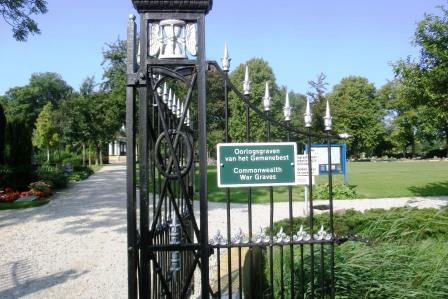
Entrance to Harlingen General Cemetery. (Photo credit: Daria Valkenburg)

When we went to pay our respects at Muttart’s grave with flags and a bouquet of flowers, we were joined by two members of the Missing Airmen Memorial Foundation, a non-profit organization dedicated to preserving the history of Allied planes shot down in The Netherlands during WW II.  The Foundation plans to honour the Halifax L9561 crew with a memorial plaque to be placed in Wons, near the site of the plane crash, and is raising funds for an event planned for October 2018.

We thought a Canadian contribution towards this would be a fitting tribute to honour Muttart, and the Tryon and Area Historical Association in Prince Edward Island agreed to help with a fundraising project, “Muttart Memorial Fund” for donations made within Canada.  Funds raised will be transferred to the Missing Airmen Memorial Foundation.

The Tryon & Area Historical Society is pleased to sponsor Pieter and Daria Valkenburg for carrying out the Elmer Bagnall Muttart Memorial Project. The Society will also administer the receiving of donations to go toward the cost of the Memorial. Registered Charity tax receipts will be issued…, says Jack Sorensen, Chair of the Tryon & Area Historical Society Inc.

Meeting with Alexander Tuinhout, Secretary for the Foundation, and Douwe Drijver, Treasurer for the Foundation, at Harlingen General Cemetery at Muttart’s grave was a fitting way to get acquainted as we begin to work on this joint project.

CIMG8019 Aug 28 2017 Harlingen Cemetery Pieter Alexander Douwe by Muttarts grave

Pieter on the left with Alexander Tuinhout, centre, and Douwe Drijver on the right, at Elmer Muttart’s grave in Harlingen General Cemetery. We had brought along a Canadian flag for the Foundation to use in their commemoration services. (Photo credit: Daria Valkenburg)

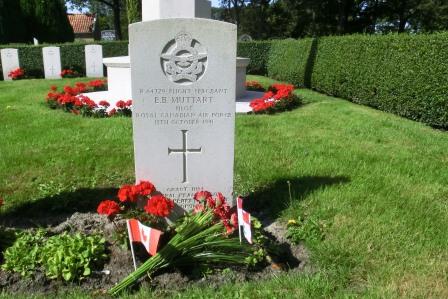
CIMG8014 Aug 28 2017 Harlingen Cemetery Muttarts grave

Grave of Elmer Bagnall Muttart in Harlingen General Cemetery. (Photo credit: Pieter Valkenburg)

One of the stories we had heard about Muttart’s burial is that he was buried with “full military honours” by the German military.  We had no idea if that was true, until we received a copy of a letter written by Gunner Sgt John William DUFFIELD, one of Muttart’s crew members.  Duffield was injured during the plane crash and ended up in a hospital.

John Duffield in uniform

John Duffield in his flight suit. (Photo courtesy of Lesley Newland)

In a January 2, 1946 letter to Muttart’s father, Louis Muttart, Duffield wrote what happened:

Elmer, better known as ‘Happy’ on the squadron, was not my skipper, but for the fateful night of October 12th, I was loaned to his crew to fulfill my duties as a rear gunner.  He was my own skipper’s friend, and as he was such a good pilot, I was glad to be flying with him although it was only for the night.

We were on our way to Bremen and just over the Dutch coast when we were attacked from underneath.  I had my oxygen mask and microphone blown off my face and was hit on the left leg, hand, and body.  From this time onwards, I was out of communication with the crew.

We finally had two fighters attacking us and I managed to get one of them.  Our inner port engine caught fire, but by wonderful flying, Happy managed to keep the machine from spinning, but was unable to keep it from diving.  As a result he told us to jump from it.

Halifax_L9561_Wons-2

Estimated path taken by Halifax L9561 on October 12, 1941 after they were hit and diverted towards Wons. (Drawing courtesy of the Missing Airmen Memorial Foundation)

Duffield continued in his 1946 letter, “By this time I was paralyzed up the left side of my body and in trying to jump from the rear turret, my right leg became jammed.  It was only when I pulled my ‘chute that I freed myself.  I then became unconscious.

In a November 11, 2000 letter to Peter Hinchcliffe, who was researching German night fighters of WW II, Duffield wrote that “I came to lying on the ground, surrounded by German officers and Dutch civilians.  An ambulance soon arrived and I was on my way to hospital.  The following day, a tall, good looking German officer arrived and introduced himself as Helmut Lent.” The hospital was in nearby Leeuwarden.  Major Helmut LENT was the commander of 4./NJG 1 squadron, stationed at the airfield in  Leeuwarden.   A member of Lent’s squadron, Lt. Leopold FELLERER was responsible for shooting down the plane.

Duffield wrote about Lent in his 1946 letter to Muttart’s father, saying that Lent “later became the crack night fighter ace of the German Air Force.  He met his death in June 1944.  He asked me to send you his deepest sympathy for your son’s death.  Although he was our enemy, I can assure you that he meant it.  Happy was given a full military funeral and all arrangements were made by this pilot.  He bought a wreath for me on behalf of the crew in red, white, and blue flowers.

Alexander Tuinhout and Douwe Drijver told us that over 400 Allied planes crashed in Friesland and surrounding water, plus 150 German planes.  Most of the time, there were no survivors of plane crashes, making the 7 survivors of Halifax L9561 unusual.

In the next blog entry, we visit the Politiek farm in Wons, site of the plane crash, and speak with Cor Politiek, who was 9 years old in 1941 when the plane crashed on his parents’ dairy farm.

Do you have a story or photos about Halifax L9561, its crew members, John Duffield, or Elmer Muttart?  You can share your comments and stories by emailing us at memorialtrail@gmail.com  or by commenting on this blog.

UPDATE:  This project was completed in October 2019!

If you would like to make a donation in support of the commemoration plaque for Halifax L9561, the information follows below:

In Canada:  Cheques may be written out to TAHS and mailed to Tryon & Area Historical Society (TAHS), PO Box 38, Crapaud PE C0A 1J0.  In the subject line, identify your cheque as being for the “Muttart Memorial Fund”.  A charitable donation receipt will be sent to all donors.

In Europe: Bank transfers may be made to Stichting Missing Airmen Memorial Foundation, Bank Account # (IBAN) NL35ABNA0569579856, and state in the subject line “Attn D.S. Drijver for Halifax L9561”.

© Daria Valkenburg

….Want to follow our research?….

If you are reading this posting, but aren’t following our research, you are welcome to do so.  Our blog address: https://onthewarmemorialtrail.com/

Front cover OnTheWarMememorialTrailinEurope4 countries, 6 weeks, 7,000 km – an unforgettable war memorial journey in Europe…. Daria’s book ‘No Soldier Buried Overseas Should Ever Be Forgotten‘ is available in print and e-book formats.  Net proceeds of book sales help support research costs and the cost of maintaining this blog. For more information see https://nosoldierforgotten.com/ 

You are also invited to subscribe to our YouTube Channel: On The War Memorial Trail With Pieter Valkenburg: https://www.youtube.com/channel/UCJ591TyjSheOR-Cb_Gs_5Kw

Never miss a posting!  Subscribe below to have each new story from the war memorial trail delivered to your inbox.