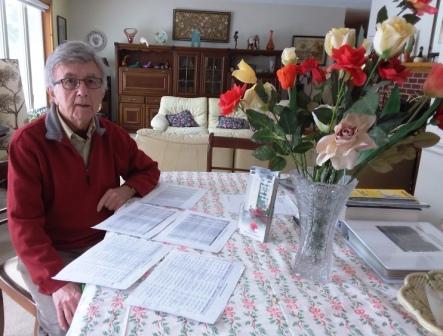
On The War Memorial Trail….. The WWII Soldier From Central Blissville Killed Along The Goch-Calcar Road

June 9, 2024. Most of the time, Pieter has good success in finding photos of soldiers named on photo wish lists from the three Canadian War Cemeteries in The Netherlands.  This past winter, however, he ran into one frustration after another.  In most cases, while family of soldiers were found, no one had photos. A few times, family members were found, but did not respond to inquiries. 

..…An old TV program inspired one photo search …..

Pieter was getting a bit discouraged.  It didn’t help that I was not well for much of the winter and spent most of the time reading and watching comedies on TV.  Since we’d been doing research on airmen who had been POWs I began watching Hogan’s Heroes, a comedy about POWs assigned to form a special operations unit in a POW camp run by the Luftwaffe to help prisoners escape and to perform acts of sabotage against the German war effort. A very funny satire and I’m sure that laughing over the antics these men got up to helped me recover more quickly. 

So, when Pieter began looking at his photo wish lists again, he asked if I had any thoughts on which soldier to research.  I didn’t until I noticed a soldier named Carter, who came from a place named Central Blissville.  That’s the guy, I told Pieter.  When he asked why, I told him there was a character on the show named Sgt Carter and who could resist a place named Blissville? Pieter shook his head, but went with my suggestion and within a day had a photo!

Before telling the story of the Canadian soldier named Carter, take a look at this excerpt from Hogan’s Heroes, featuring the fictional American soldier named Carter, portrayed by Larry Hovis, impersonating the German commandant of the POW camp… 

..…The non-fictional Private Carter enlisted in 1941…..

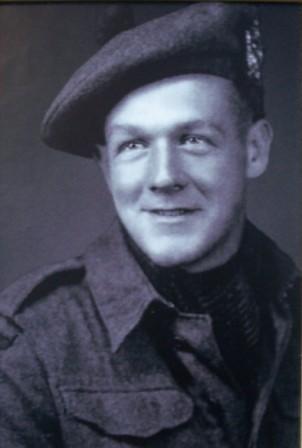
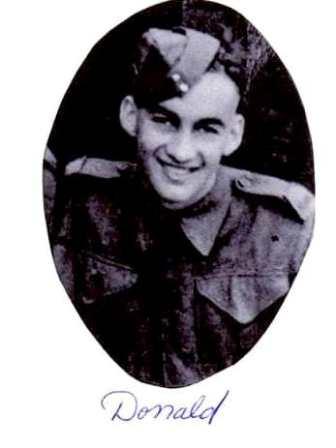
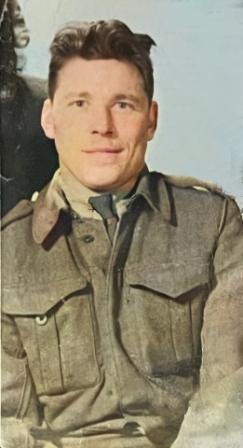
Donald Roy Carter from facebook page Jeremy Carter

Donald Roy Carter.  (Source: Jeremy Carter)

The non-fictional Donald Roy CARTER was born August 4, 1923 in Central Blissville, Sunbury County, New Brunswick, son of Roy William and Josephine ‘Ina’ Helen Carter.  However, when he enlisted at the No. 7 District Depot in Fredericton, New Brunswick, on May 3, 1941, he stated that his birthdate was May 27, 1922.  Since a soldier in active service needed to be 19 years old, Donald fudged his date of birth.

On May 22, 1941, Donald was sent to No. 70 Canadian Army (Basic) Training Camp (CABTC) in Fredericton, New Brunswick for basic training. After completing his basic training, he was transferred to the A22 Canadian Army Medical Corps Training Centre at Camp Borden in Ontario.  Here Donald received advanced training to prepare him as a stretcher bearer, with three key responsibilities when dealing with the wounded in a war zone: stop the bleeding, treat for shock, and evacuate. 

….Donald left Canada for overseas service….

On September 6, 1941, Donald was given embarkation leave of just over a week, and then he found himself on his way to the United Kingdom on October 9, 1941. Upon arrival in Greenock, Scotland on October 19, 1941, he was assigned to No. 1 General Holding Unit.

A Holding Unit was a reinforcement pool where soldiers brought over from Canada received additional training.

On December 13, 1941, Donald was transferred to the 11th Field Ambulance, Royal Canadian Army Medical Corps (RCAMC). A field ambulance was a mobile medical unit which was usually found serving with an infantry division during WWII.

….Donald survived Operation Jubilee – the Dieppe Raid….

Allied Forces had plans for an amphibious attack on the German-controlled port of Dieppe in Normandy, France in 1942, in what would become known as Operation Jubilee, also called the Dieppe Raid.  (See https://en.wikipedia.org/wiki/Dieppe_Raid)

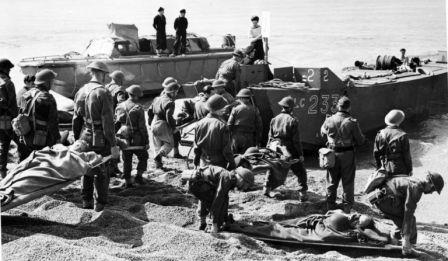
Loading-wounded-on-landing-craft.-Source-Global-News-768x447

Royal Canadian Army Medical Corps personnel treating casualties during rehearsal in England for raid on Dieppe. (Photo Source: Global News)

As part of the preparations, the 11th Field Ambulance underwent training on the Isle of Wight. An exercise on June 4, 1942 included practice in moving casualties from an assault landing craft to an advanced dressing station. They also practiced opposed and unopposed beach landings. Two final, large, exercises took place along the Dorset Coast on June 11-12, 1942 and June 22-24, 1942.

On August 18, 1942, Donald was among the members of the 11th Field Ambulance that assembled at Newhaven, with one bearer section (1 Medical Officer and 18 other ranks) detached to the Royal Regiment of Canada at Portsmouth. They all sailed toward Dieppe at about 9:30 pm. 

Unfortunately, Operation Jubilee was a disaster, particularly for the Canadian soldiers, and the medical unit attached to the Royal Regiment of Canada. 3,623 of the 6,086 Allied forces who landed were killed, wounded, or taken prisoner of war. This included 5,000 Canadians, who suffered a 68 percent casualty rate, with 3,367 killed, wounded, or taken prisoner.

Donald, however, survived and safely returned to the United Kingdom on August 19, 1942, where he remained until shortly after D-Day.

….Donald returned to Normandy in July 1944….

On July 3, 1944, Donald and the 11th Field Ambulance, now part of the 21st Army Group, returned to Normandy, France as the Battle of Normandy continued following the advances made on D-Day on June 6, 1944. 

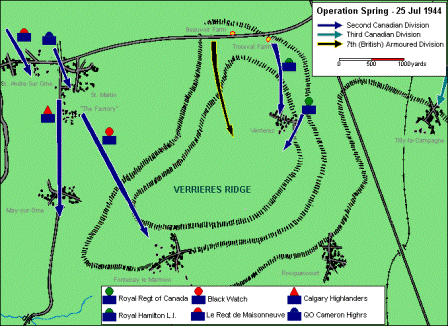
As the 2nd Canadian Corps advanced in July, the 11th Field Ambulance moved along with them, as part of the 2nd Canadian Infantry Division (along with other medical units).  11th Field Ambulance was tasked with providing support to the 4th Canadian Brigade. During battle on July 18-19, 1944 they treated casualties, before making preparations to move forward on July 20, 1944 for Operation Spring at Verrieres Ridge on July 25, 1944.

normandymapspring

Map shows troop locations for Operation Spring.  (Map source: http://www.canadiansoldiers.com)

Donald survived the fight along the Verrieres Ridge, most likely because the 11th Field Ambulance was not at the front, but was held in reserve in Caen for the 2nd Canadian Motor Ambulance Convoy. (See https://www.canadiansoldiers.com/history/battlehonours/northwesteurope/verrieresridge.htm)

Then, during Operation Totalize on August 7-11, 1944, an offensive designed to break through the German defences south of Caen and toward Falaise, the 11th Field Ambulance was under command of the 2nd Canadian Armoured Brigade.  (See https://en.wikipedia.org/wiki/Operation_Totalize)

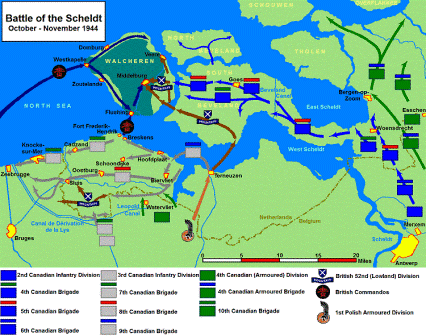
….Donald had limited participation in the Battle of the Scheldt….

scheldt2

Map shows location of South Beveland, The Netherlands.  (Map source: http://www.canadiansoldiers.com)

As the Allied forces moved from Normandy into Belgium, and then into The Netherlands for the Battle of the Scheldt,  three Field Ambulances of the 2nd Canadian Division were used in Operation Vitality, the battles for South Beveland for a month from October 2, 1944. 

Each Field Ambulance unit operated an advanced dressing station and a casualty collection post. 11th Field Ambulance evacuated casualties directly to No. 6 Canadian General Hospital in Antwerp, Belgium. (See https://en.wikipedia.org/wiki/Battle_of_the_Scheldt and https://www.oorlogzeeland.nl/index.php/slag-om-de-schelde/scheldeslag-information-in-english)

However, Donald missed much of the action as he was not on active service between October 16 and November 12, 1944.  This effectively ended his time with the 11th Field Ambulance.

….Donald was transferred into the Infantry….

On November 24, 1944 Donald was transferred to the Canadian Infantry Corps, as part of the X4 Reinforcement for the 13th Battalion.  Then, on December 4, 1944 he was assigned to the Essex Scottish Regiment, joining them in Mook, The Netherlands.

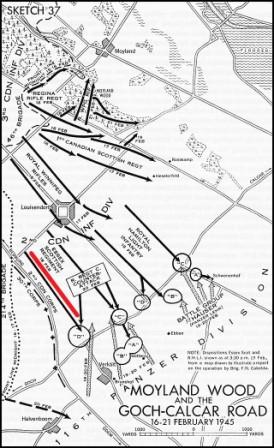
On February 16, 1945, the Essex Scottish Regiment left The Netherlands and crossed the border into Germany, at Kleve.  The following day, the war diary reported that the battalion “…moved off to an assembly area between Kleve and Calcar….” in preparation for an attack on the Goch-Calcar Road, which was subsequently delayed until February 19, 1945.

….Heavy fighting along the Goch-Calcar Road proved deadly….

Victory-37 Map Moyland Wood and the Goch Calcar Rd

Moyland Wood and the Goch-Calcar Road, 16-21 February 1945 (Map source: HyperWar: The Victory Campaign [Chapter 18] ibiblio.org)

The war diary for February 19, 1945 noted that the attack on the Goch-Calcar Road resulted in the Regiment fighting “….under a heavy hail of shrapnel and small arms fire. Casualties were fairly heavy….Communications were difficult. Vehicles became bogged in the soft mud, casualties were difficult to evacuate, and guns and ammunition could not get up where they were required….

The battle raged on into the night and then after midnight communications were lost.  The war diary entry for February 20, 1945 continued with an account of the battle.  “… The early hours of the morning were grim ones. Isolated company groups fought on, short of ammunition, burdened with casualties which could not be easily evacuated, and lacking the support of the anti-tank weapons with which to deal with the Mark IV tanks the enemy had marshalled for his counter-attack….

The casualties for the battle numbered “…13 officers and 235 other ranks…” of which about 50 were fatalities.  Among those killed on February 20, 1945 was Private Donald Roy Carter, who lost his life at the age of 21.

 ..…Donald is buried in Groesbeek …..

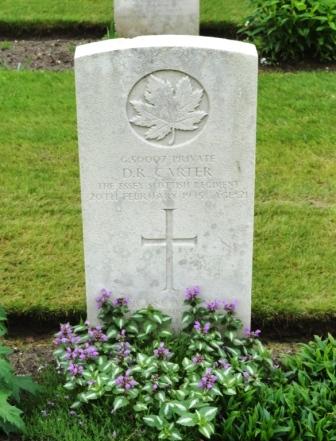
Donald was temporarily buried near Calcar, Germany, before being reburied the following year in the Canadian War Cemetery in Groesbeek, The Netherlands.

grave stone donald carter from find a grave

Grave of Donald Roy Carter in the Canadian War Cemetery in Groesbeek, The Netherlands.  (Photo source: http://www.findagrave.com)

Do you have photos or information to share? Email Pieter at memorialtrail@gmail.com, or comment on the blog.

© Daria Valkenburg

….Want to follow our research?….

If you are reading this posting, but aren’t following our research, you are welcome to do so.  Our blog address: https://onthewarmemorialtrail.com/

Front cover OnTheWarMememorialTrailinEurope4 countries, 6 weeks, 7,000 km – an unforgettable war memorial journey in Europe…. Daria’s book ‘No Soldier Buried Overseas Should Ever Be Forgotten‘ is available in print and e-book formats.  Net proceeds of book sales help support research costs and the cost of maintaining this blog. For more information see https://nosoldierforgotten.com/ 

You are also invited to subscribe to our YouTube Channel: On The War Memorial Trail With Pieter Valkenburg: https://www.youtube.com/channel/UCJ591TyjSheOR-Cb_Gs_5Kw

Never miss a posting!  Subscribe below to have each new story from the war memorial trail delivered to your inbox.

On The War Memorial Trail….. Commemorating The 80th Anniversary Of D-Day

Screenshot 2024-05-28 at 10-34-30 D-Day 80th Anniversary Banner Decoration - 1.2m

June 1, 2024.  June 6, 2024 marks the 80th anniversary of Operation Overlord (the larger Normandy invasion) and Operation Neptune (the English Channel-crossing portion of Operation Overlord) – what we refer to as D-Day.

….What does D-Day mean?….

Did you know that the ‘D’ in D-Day was a military codeword referring to ‘Departure Day’?  U.S. General Dwight D. Eisenhower, Supreme Commander of the Allied Expeditionary Force in Europe,  noted, through his executive assistant, Brigadier General Robert Schultz: “Be advised that any amphibious operation has a ‘departed date;’ therefore the shortened term ‘D-Day’ is used….

While there were several other D-Days during the war, the invasion of Normandy was the biggest and most well-known. 

…..D-Day was an international effort….

Most people consider D-Day to have been solely a joint British, Canadian, and American effort.  However, it’s important to recognize that over 2 million troops from over 12 countries were in Britain in preparation for the invasion. While Allied forces consisted mainly of American, British, and Canadian troops, smaller contingents included Australian, Belgian, Czech, Dutch, French, Greek, New Zealand, Norwegian, Rhodesian, and Polish naval, air, or ground support!

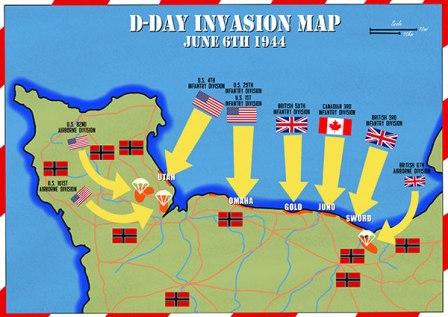
Dday Invasion-map

D-Day invasion map. The Canadians landed on Juno Beach in Normandy, France. (Map source: https://www.ddaylepe.org.uk/index.php/overlord-neptune/)

On the morning of D-Day, ground troops landed across five assault beaches –Juno, Sword, Gold, Utah, and Omaha.  Canadian soldiers landed at Juno on the outskirts of Bernières.  British forces landed at Sword and Gold, while the Americans landed at Utah and Omaha.

Want to know a bit more about D-Day?  See https://news.sky.com/story/eleven-things-you-might-not-know-about-d-day-13132330  My favourite tidbit is how Hitler slept through the D-Day landings.  Even after he woke up in the late morning he believed it was just a diversionary tactic – and so no reserve troops were immediately sent to Normandy!

….11 servicemen who survived D-Day have been featured on this blog….

Over the past years, we have featured stories of 11 servicemen who were present in Normandy on June 6, 1944. All survived D-Day, but only 1 survived WWII and returned home – Airman Lorne MACFARLANE flew a night mission that coincided with the early morning hours of D-Day and realized afterwards what a lucky escape he and his crew had.  “Our mission was completed.   As we crossed the Channel on the way back, we could see through breaks in the cloud, the wakes of hundreds of ships…” heading towards the French coast.  You can read Lorne’s story here:  https://onthewarmemorialtrail.com/2021/10/20/on-the-war-memorial-trail-the-ww2-pilot-from-pei-who-flew-40-missions-overseas-and-returned-home/

The other 10 are buried in a Canadian War Cemetery in France, The Netherlands, or Belgium.  These men are:

….The actions of D-Day helped shorten WWII….

For a very brief overview of the significance of D-Day, watch this 3 minute CTV video prepared for the 75th anniversary:

….Upcoming Event at the Borden-Carleton Legion….

To commemorate the 80th anniversary of D-Day, the Borden-Carleton Legion will have a wreath laying ceremony by the Cenotaph at 3:00 pm on June 6, 2024.  Pieter and I will be there. All are welcome to attend in honour of those who fought on that day.  The wreath laying ceremony will be followed by a light lunch of hamburgers and hot dogs.

Do you have photos or information to share? Email Pieter at memorialtrail@gmail.com, comment on the blog, or tweet to @researchmemori1.

© Daria Valkenburg

….Want to follow our research?….

If you are reading this posting, but aren’t following our research, you are welcome to do so.  Our blog address: https://onthewarmemorialtrail.com/

Front cover OnTheWarMememorialTrailinEurope4 countries, 6 weeks, 7,000 km – an unforgettable war memorial journey in Europe…. Daria’s book ‘No Soldier Buried Overseas Should Ever Be Forgotten‘ is available in print and e-book formats.  Net proceeds of book sales help support research costs and the cost of maintaining this blog. For more information see https://nosoldierforgotten.com/ 

You are also invited to subscribe to our YouTube Channel: On The War Memorial Trail With Pieter Valkenburg: https://www.youtube.com/channel/UCJ591TyjSheOR-Cb_Gs_5Kw

Never miss a posting!  Subscribe below to have each new story from the war memorial trail delivered to your inbox.

On The War Memorial Trail…..The WWII Soldier From O’Leary Who Lost His Life During Operation Churchill

April 18, 2024.  In August 2019, Alice van Bekkum, Chair of the Faces To Graves Foundation Groesbeek, sent Pieter a list of soldiers from Prince Edward Island who are buried in the Canadian War Cemetery in Groesbeek, The Netherlands.

One of the names for which a photo was missing was that of Ralph Kenneth SILLIKER, born October 16, 1917 in O’Leary, Prince Edward Island, the son of Watson and Ruth Silliker.

Pieter began his research and within a few weeks received a photo from Watson Silliker, Ralph’s nephew.

cropped colourized photo Silliker

Ralph Kenneth Silliker. (Photo courtesy of Watson Silliker. Photo colourization by Pieter Valkenburg)

….Ralph’s working life began in childhood….

It soon became clear that Ralph’s working life began in childhood.  His father Watson had began the first oil delivery business in 1922, according to ‘Threads of the past: a history of O’Leary, Prince Edward Island, 1837-1922’, published by the O’Leary Women’s Institute.

…The Silliker family – Watson, Ruth, and their children Ralph, Iva, Lloyd, and Lorne – manually pumped the kerosene and gasoline from the railway tank cars, which held over 8,000 gallons each, into the storage tanks….

This was not an easy business to be in!  “….By truck in summer and sleigh in winter, sparse quantities of gasoline and liberal quantities of kerosene in 45 gallon drums were delivered to stores and homes around the countryside….” 

The entry in the O’Leary history went on to note that “….when Ralph was eight years old, he drove a team of horses to places such as Portage, Glenwood, Campbelltown, and Bloomfield...

….Ralph enlisted in 1943….

When he enlisted with the No. 6 District Depot in Charlottetown, Prince Edward Island on May 13, 1943, Ralph was working as a truck driver in O’Leary, and was married.  He and his wife Ada Blanche were the parents of two daughters, Sylvia Ruth and Opal Irene.

Ralph was sent for basic training at No. 62 Canadian Army Basic Training Centre (CABTC) in Charlottetown, Prince Edward Island. On August 14, 1943, he was seconded to the A27 Canadian Reconnaissance Training Centre – Camp Dundurn, in Dundurn, Saskatchewan. This was a major training centre and transit point for personnel going overseas.

However, not long after arriving at Camp Dundurn, he returned to Prince Edward Island after being granted ‘compassionate family leave’ on September 7, 1943 – without pay and allowance – until December 14, 1943.  In October 1943 he had been transferred to ‘P’ Wing at the No. 6 District Depot in Halifax, Nova Scotia, but due to the compassionate family leave being extended twice he was not on duty in Halifax until his leave ended.

Ralph returned to A27 Canadian Reconnaissance Training Centre in Camp Dundurn on January 11, 1944, where his training resumed.  On March 31, 1944 he qualified as a Driver Wheeled Class III. This meant he was qualified to drive heavy trucks and armoured cars.

….Ralph left Canada for overseas service….

In May 1944 Ralph was given embarkation leave, the last time he would see his family, as on June 27, 1944 he was on his way to the United Kingdom.  Upon arrival on July 3, 1944, he was assigned to No. 1 Canadian Armoured Corps Reinforcement Unit (CACRU).

On August 12, 1944, Ralph was assigned to the Canadian Infantry Corps (CIC) as part of the Canadian Fusiliers and his position changed from trooper to fusilier.  On September 17, 1944, Ralph embarked for France as part of X-4 Reinforcement list of the Canadian Infantry Corps.

….Ralph was assigned to the Lake Superior Regiment….

On October 7, 1944 he was transferred to the Lake Superior Regiment (Motor), part of the 21st Army Group, joining them as the Regiment advanced through France, Belgium and the south of the Netherlands.  

Ralph was in the Regiment at the same time as Harry DAVIS of Yukon Territory, whose story has previously been told.  See https://onthewarmemorialtrail.com/2023/09/30/on-the-war-memorial-trail-the-only-yukon-territory-soldier-buried-in-holten/

Henk Vincent, one of the research volunteers at the Cemetery Information Centre in Holten, The Netherlands, explained that during the “… the winter of 44/45, the Lake Superior Regiment, together with other Canadian regiments, was tasked with guarding the northern front line, in this case the Maas River. ….” 

Most of February saw the Regiment based in the ‘s-Hertogenbosch area as they continued their patrols in the surrounding area. 

….The Battle of Hochwald Gap was a fierce tank battle….

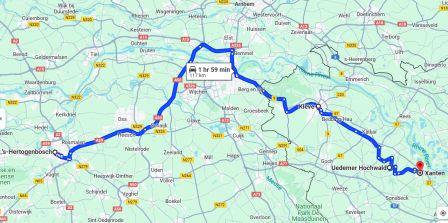
Screenshot 2024-04-16 at 11-06-16 Google Maps

Map shows location of ‘s-Hertogenbosch, Kleve, Hochwald, Xanten, and Groesbeek. (Map source: https://www.google.ca)

On February 21, 1945, the Regiment began moving towards Germany for the upcoming Operation Blockbuster, which would begin at dawn on February 26, 1945. (See https://en.wikipedia.org/wiki/Operation_Blockbuster)

The February 21, 1945 war diary entry noted that “…in the afternoon the men were told of our future role and intentions in Ops Blockbuster….

On February 22, 1945, the war diary recorded that “…the companies spent the day making final preparations for the move into Germany tonight…”  By 2:00 am in the early morning of February 23, 1945 the Regiment had arrived at their initial position in the Reichswald Forest, just over the border from The Netherlands.  The next afternoon the Regiment moved to Kleve.

On March 1, 1945, the war diary for the Lake Superior Regiment recorded that instructions had been received for “…the assault on the Hochwald Forest Gap….” This attack was codenamed Operation Churchill.

Clearing the very narrow Hochwald Gap was a difficult task, given that the weather was anything but cooperative. An early thaw meant that the tanks got bogged down in mud, making them ‘sitting ducks’ for German troops who were positioned to pick them off, one by one. Troops had no choice but to press on, as the Battle of Hochwald Gap, part of Operation Blockbuster, was the final push towards the Rhine River. (See https://the-hochwald-gap.project44.ca/)

….A video shows how the Battle of Hochwald Gap was fought….

A 46 minute YouTube video on the Battle of Hochwald Gap explained the fierce battle that took place. Watching it made it clear to us that it was a miracle that anyone survived at all, a testament to the determination and courage of those who were in the midst of it.

….Ralph lost his life during Operation Churchill….

March 2, 1945 was a “…cold, blustery day with several snow flurries…” according to the war diary. The after-action report on Operation Churchill noted that the Regiment “…had been fighting already since the 26th of February. Little sleep was had and the Motor Companies had been holding the general line for 24 hours without food….

They’d last eaten on February 28 due to the ground being “…impassable to all vehicles…” and “…incessant shelling by the enemy….

The men may have been tired, cold, and hungry, but there was still a battle to be fought.  By the end of the day, “…the south of the Gap bore the signs of intense shellfire – the ground pitted, scarred, and torn by fire of all kinds. The trees in the gully were cut to ribbons.  The houses were heaps of rubble….

A burial party the following day went out onto the battlefield to look for casualties, and recorded how they were found. “…Further back where two Kangaroos had been knocked out as they lunged across an enemy trench, two more Lake Superior men lay dead. Pte Carriere, F. had been shot through the head as he was de-bussing. Another, Pte Silliker, R. K. was killed as he raced to take up the first position…..”  Dutiful and responsible to the end, Ralph lost his life at the age of 27 during the March 2, 1945 battle.

Private Frank CARRIERE was the son of Emma Carriere of Elm Creek, Manitoba, and the brother of Rifleman William Joseph CARRIERE, who had lost his life on June 8, 1944 while serving with the Royal Winnipeg Rifles.

NOTE: Kangaroo is the nickname given to a Canadian armoured personnel carrier (APC) during the WWII, which was created by converting a tank chassis. (See https://en.wikipedia.org/wiki/Kangaroo_(armoured_personnel_carrier))

….Ralph is buried in the Canadian War Cemetery in Groesbeek….

Ralph was temporarily buried on March 6, 1945 in Xanten, Germany before being reburied in the Canadian War Cemetery in Groesbeek, The Netherlands.

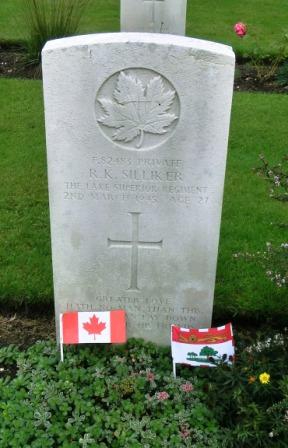
CIMG9016 Sep 16 2017 Groesbeek Cemetery grave of RK Silliker by Daria

Grave of Ralph Kenneth Silliker in the Canadian War Cemetery in Groesbeek, The Netherlands. (Photo credit: Daria Valkenburg)

Thank you to Watson Silliker for sharing a photo. Thank you also to Henk Vincent for additional information on the patrols made along the Maas River. Do you have photos or information to share? Email Pieter at memorialtrail@gmail.com, comment on the blog, or tweet to @researchmemori1.

© Daria Valkenburg

….Want to follow our research?….

If you are reading this posting, but aren’t following our research, you are welcome to do so.  Our blog address: https://onthewarmemorialtrail.com/
Front cover OnTheWarMememorialTrailinEurope4 countries, 6 weeks, 7,000 km – an unforgettable war memorial journey in Europe…. Daria’s book ‘No Soldier Buried Overseas Should Ever Be Forgotten‘ is available in print and e-book formats.  Net proceeds of book sales help support research costs and the cost of maintaining this blog. For more information see https://nosoldierforgotten.com/ 

You are also invited to subscribe to our YouTube Channel: On The War Memorial Trail With Pieter Valkenburg: https://www.youtube.com/channel/UCJ591TyjSheOR-Cb_Gs_5Kw

Never miss a posting!  Subscribe below to have each new story from the war memorial trail delivered to your inbox.
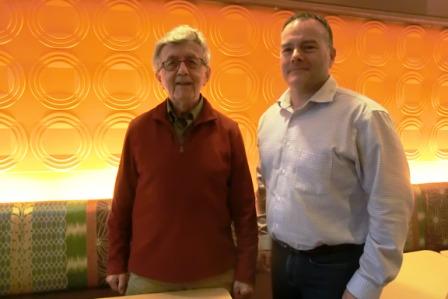
On The War Memorial Trail….. The Successful Search For A Photo Of WWII Soldier Thomas Alfred Brown Left Us With A Mystery

January 25, 2024. Even when Pieter needs a break from extensive research, he still likes to test his detective skills. Last year he decided to help the Canadian War Cemetery in Groesbeek, The Netherlands find photos of a few soldiers for which research had already been done, but no photo had been found.  A relatively simple project, you might think – but although he has now nudged past 319 successful photo searches, we’ve learned that it isn’t. 

One of the soldiers whose photo search he undertook was that of Thomas ‘Tom’ Alfred BROWN of Altario, Alberta.  Born October 20, 1924, Thomas was the son of George Stuart and Alice Brown. (You can read Tom’s story here: https://www.facestograves.nl/LifeStories/BROWN%20Thomas%20Alfred-JLE-bio-EN.pdf )

….Tom lost his life during the Battle of Moyland Wood….

Thomas Alfred Brown Find a Grave

Grave of Thomas Alfred Brown at the Canadian War Cemetery in Groesbeek. (Photo source: http://www.findagrave.com)

While serving with the Royal Winnipeg Rifles, Tom lost his life on February 17, 1945 during the Battle of Moyland Wood in Germany. He was 20 years old. (See https://legionmagazine.com/clearing-moyland-wood/

Norman Victor Holgate BUCHANAN, whose photo search story was told last year, had lost his life one day earlier in the same battle, while also serving with the Royal Winnipeg Rifles.  (See https://onthewarmemorialtrail.com/2023/11/08/on-the-war-memorial-trail-a-monument-in-st-claude-led-to-a-photo-of-a-wwii-soldier/)

….The search for a photo of Tom began with a Letter To The Editor….

When no family could be readily found, Pieter submitted a Letter To The Editor in a newspaper covering the Altario area – the East Central Alberta Review – and his letter was published on April 27, 2023.

Letter to Editor ECA Review

The very same day that the newspaper was published, we received an email from Eleanor Kreiser, with an attached document, explaining that “…. I saw your request in the paper. This is the Brown info in the Pioneer Heritage history book. Book 2, 1981. My husband used to live in Altario. My husband’s mother and six siblings were also born in Altario….

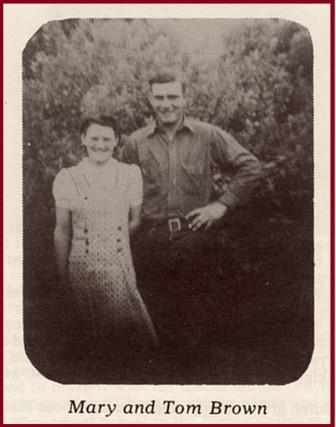
Brown brothers, Altario 2 corrected by Pieter

Tom Brown with his sister Mary.  (Photo source: Pioneer Heritage Book 2. Pioneer Heritage of Altario, Compeer, Kirriemuir and Burnbrae, Published by Wheatsheaf Women’s Institute, 1981)

The book excerpt included a photo of Tom and his sister Mary, along with a short writeup contributed by Mrs L. H. Walker.  “….Thomas Alfred Brown was born in Altario on November 20, 1924.  He took all of his schooling in Altario. After leaving school he worked for Bob Kewley and for Bert Caldwell.  Tom was a great lover of horses. One of the things I remember about him the most was his coming home at night on his horse, singing one of Wilf Carter’s songs….

The excerpt ended with a bit of family history.  “….Tom’s father died when Tom was still very young, and his step-father, Lester Walker, passed away in August of 1975.  Thomas has one sister, Mrs. Alice Mary Robbins (nee Brown) of Flatbush, and a half-sister, Mrs. Marion Stewart (nee Walker) of Ohaton….

…. Tom’s family provided photos and information….

Pieter was next in contact with June Beier, whose mother was Tom’s sister Mary, and with Ken Stewart, whose grandmother was Tom’s mother.  Both provided more information and photos.

IMG-3254 Photo of Tom Brown from Ken Stewart

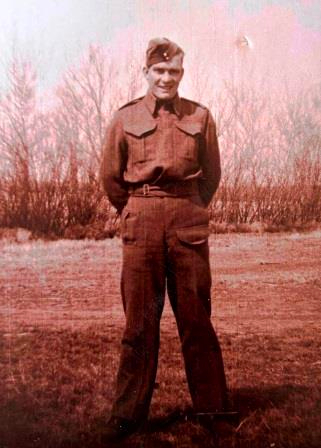
Thomas Alfred Brown.  (Photo credit: Courtesy of the Family of Thomas Alfred Brown)

…. Tom’s last letter was written two days before his death….

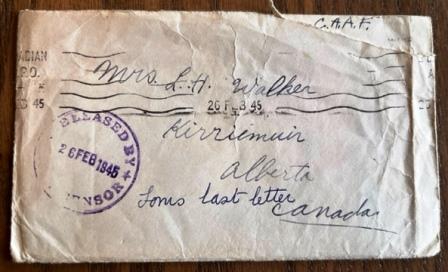
With the help of her granddaughter, Shaylyn Beier, June shared the last letter received from Tom, written on February 15, 1945, two days before he lost his life, and which arrived after his death.

Feb 15 1945 letter from Tom Brown ENVELOPE

Envelope poignantly marked as ‘Tom’s last letter’.  (Letter courtesy of the Family of Thomas Alfred Brown)

In the February 15, 1945 letter to his mother, Tom noted that he was in ‘D’ Company of the Royal Winnipeg Rifles.  “…I guess it is about time I wrote to you. I have been pretty busy in the last few days and so I did not get time to do any writing at all….”  Left unsaid was that Tom and his Regiment had been heavily involved in Operation Veritable in Germany, part of a pincer movement to cut into Germany in order for Allied troops to advance towards Berlin. The Regiment had just moved into Kleve, Germany.  (See https://en.wikipedia.org/wiki/Operation_Veritable)

Tom wrote that he had sent some money home in previous letters, and after asking about his mother’s health, assured her that he is “…nothing but the best and aim to stay that way…”  He explained that he had received a parcel from his aunt and advised that “…all I mostly need is writing paper and envelopes…” 

Sadly, Tom lost his life two days later, and was temporarily buried around Calcar, Germany before being reburied in the Canadian War Cemetery in Groesbeek, The Netherlands a year later.

A March 8, 1945 letter to Tom’s mother was written by Major Latimer Hugh DENISON, his commanding officer. “…Corporal Brown’s presence is missed by the entire company.  He was a fine and gallant soldier and you may well be proud of him, as we are, for the man’s part he has played in helping to win this war….

He went on to write “…please rest assured that you are not alone in your hour of trial – gallant comrades once known are never forgotten…” Major Denison lost his own life on March 30, 1945, during the battle for Emmerich, at the age of 24, and is also buried in Groesbeek.

…. A September 1947 letter left us with an unsolved mystery…

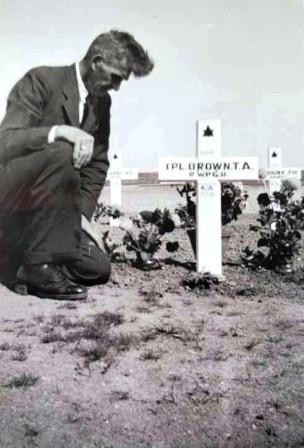
image_6487327(1) man at Tom Browns original gravestone in Groesbeek

Man believed to be H. P. J. van Loon at Tom Brown’s original grave in Groesbeek. (Photo courtesy of the Family of Thomas Alfred Brown)

We thought this would be the end of Tom’s story, but there was another mystery, which up to now we have been unable to solve.  June shared another letter, written in September 1947 by an unidentified relative still in the Army, who signed his letter as Tom. He wrote that he had visited Tom Brown’s grave in Groesbeek.  Tom’s letter was written on the stationery of a schoolteacher (onderwijzer) from Groesbeek, H. P. J. van Loon, and he explained that Mr. Van Loon had taken photos of graves at the cemetery.

Ken Stewart had a photo of a man beside Tom Brown’s grave, and as the man was in a suit, not in a military uniform, it’s believed this is Mr. Van Loon.  When we asked Ken if he knew anything more, he said that “….My grandmother said Thomas stayed with a Dutch family in Holland when he had time off and was planning to marry one of the daughters when the war was over. So this may be the father of that family.  I do not know for sure…

We sent the letter and photo to friends who live in Groesbeek, in the hope that they might be able to find out more, but up to now, they too have been stymied.  If you recognize the man in the 1947 picture by Tom Brown’s grave, please let us know. 

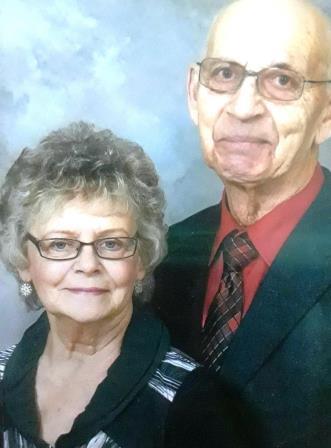
June and Edward Beier

June Beier with her husband Edward. (Photo credit: Courtesy of June Beier)

Thank you to Joyce Webster, Publisher of ECA Review, for publishing Pieter’s Letter to the Editor, and to the family of Thomas Brown for sending photos and information – June Beier, Shaylyn Beier, and Ken Stewart. Thank you to Eleanor Kreiser for sending the Brown family information from the Pioneer Heritage book.

Do you have photos or information to share? Email Pieter at memorialtrail@gmail.com, comment on the blog, or tweet to @researchmemori1.

© Daria Valkenburg

….Want to follow our research?….

If you are reading this posting, but aren’t following our research, you are welcome to do so.  Our blog address: https://onthewarmemorialtrail.com/

Front cover OnTheWarMememorialTrailinEurope4 countries, 6 weeks, 7,000 km – an unforgettable war memorial journey in Europe…. Daria’s book ‘No Soldier Buried Overseas Should Ever Be Forgotten‘ is available in print and e-book formats.  Net proceeds of book sales help support research costs and the cost of maintaining this blog. For more information see https://nosoldierforgotten.com/ 

You are also invited to subscribe to our YouTube Channel: On The War Memorial Trail With Pieter Valkenburg: https://www.youtube.com/channel/UCJ591TyjSheOR-Cb_Gs_5Kw

Never miss a posting!  Subscribe below to have each new story from the war memorial trail delivered to your inbox.
On The War Memorial Trail…..The WWII Soldier From Liscomb Who Lost His Life Due To Sniper Fire In Germany

January 6, 2024. In going through the photo wish lists for soldiers buried in The Netherlands, Pieter often picks a name based on location – especially if we are planning to visit that area – or by name.  Lawrence Arthur RUDOLPH, listed as being from Guysborough, got his attention for both reasons.  We’d had very good luck with soldiers from Guysborough, and the surname Rudolph was one he thought might be easier to trace.

Pieter was in luck as he was soon in contact with Elsie Hartling, whose mother, Lillian M. Rudolph, was Lawrence’s sister, and she had a photo, which was kindly sent to us by her nephew Andrew Hartling. 

Born December 31, 1923 in Liscomb, Guysborough County in Nova Scotia, Lawrence was the son of Basil Melbourn and Elsie Rudolph. Before enlisting with the No. 6 District Depot on April 21, 1943 in Halifax, Nova Scotia, he was employed as a pipe fitter.

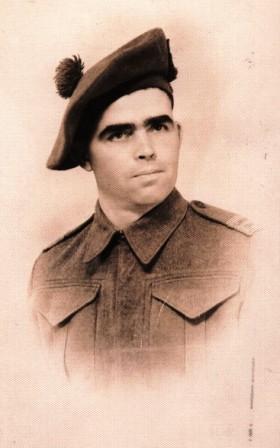
Lawrence Arthur Rudolph

Lawrence Arthur Rudolph.  (Photo courtesy of Elsie Hartling)

On April 30, 1943, Lawrence was sent to No. 60 Canadian Army Basic Training Centre (CABTC) in Yarmouth, Nova Scotia for initial training.  After completing his basic training, he was assigned to A2 Canadian Artillery Training Centre (CATC) in Petawawa, Ontario for training as a gunner.

On November 1, 1943, Lawrence was transferred to No. 1 Training Brigade in Debert, Nova Scotia, in preparation for overseas service.

… Lawrence left Canada for overseas service in December 1943…

On December 15, 1943 Lawrence left Canada for the United Kingdom.  Upon arriving on December 21, 1943 he was assigned to 2nd Canadian Artillery Reinforcement Unit (CARU).

Then, on January 14, 1944, Lawrence was transferred to the 5th Canadian Anti-Tank Regiment, Royal Canadian Artillery, and underwent further training, qualifying as a Driver i/c (Wheeled) on May 9, 1944.  (The term ‘Driver i/c’ refers to ‘Driver, internal combustion’. Wheeled refers to wheeled vehicles.)

Preparations for going to the front were ongoing, but, as noted in ‘The History of the 5th Anti-Tank Regiment’, a compilation edited by John P. Claxton, “….at first light on 18th July 1944, the Regiment moved off in convoy, destination was Tilbury Docks, and the trip to the Marshalling Area was made without incident….” 

It took time to load vehicles and equipment onto the ships, but “…in due course and with numerous pauses for tea, civilian longshoremen completed the task of loading vehicles into the holds of ships….

… Lawrence left for France in July 1944 with his Regiment…

…After a couple of days at anchor at South End…” Lawrence left for France with his Regiment on July 21, 1944 when “…the convoy moved out of the Thames Estuary and through the channel under cover of darkness and a light mist…” 

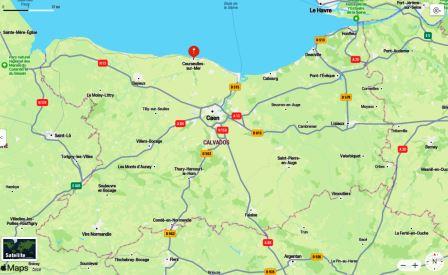
Screenshot 2024-01-05 at 09-00-49 courcelles sur mer at DuckDuckGo

The 5th Canadian Anti-Tank Regiment arrived at Courceulles-Sur-Mer and then travelled down towards Caen and Falaise.  (Map source: Wikipedia)

They arrived “…off the beaches at Courceulles-sur-Mer, Normandy in a blaze of anti-aircraft fire…Further delay was caused by rough weather and scarcity of landing craft…..

Finally, after several days, all personnel and equipment reached land, and “…the Regiment proceeded through pulverized villages and over the remains of country roads to our concentration area near Graye-sur-Mer….

The Regiment fought its way across France, going past Caen to the Falaise Gap, into the Somme.  By September 1944 they reached Belgium, and began the push towards Antwerp, and then, in mid-October, into The Netherlands.

… Lawrence lost his life during Operation Blockbuster…

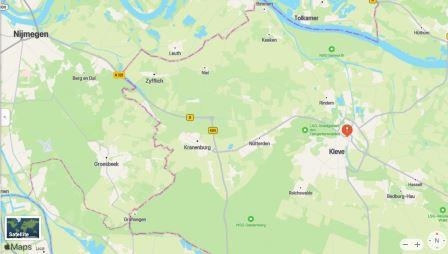
Screenshot 2024-01-05 at 09-09-05 kleve germany at DuckDuckGo

The 5th Canadian Anti-Tank Regiment left The Netherlands for Germany.  On February 27, 1945 Lawrence Rudolph lost his life near present day Bedburg-Hau, Germany, during Operation Blockbuster.  (Map source: Wikipedia)

The Regiment’s time in The Netherlands ended on February 22, 1945, “… when the Regiment moved to concentration areas south of Cleve in Germany….” to participate in Operation Blockbuster. (See https://en.wikipedia.org/wiki/Operation_Blockbuster)

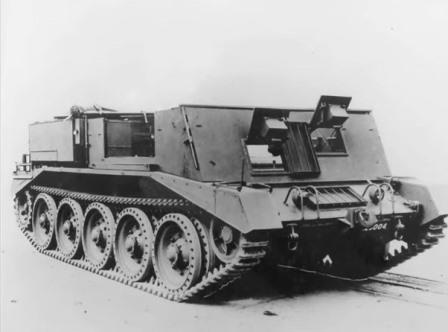
…..Operation Blockbuster began at dawn on the 26th February, in abominable weather. The state of the ground precluded use of towed 17-pounder guns, but our Crusader Towers did outstanding work.  Loaned with drivers to the assaulting formation, they were used as armoured troop carriers to get the infantry through heavy fire on their objectives, and then were employed to move casualties and supplies….” 

Crusader Tower from WW2 TV

A Crusader Tower was a tracked vehicle with room for a gun crew.  (Photo source: YouTube WW2TV Crusader Gun Tractor)

Casualties were heavy, due to “…high velocity gun, artillery, and extensive minefields…” The weather deteriorated.  By February 27, 1945, “…continuous deluges of rain with occasional wet snow, combined with the volume and weight of traffic, were rapidly converting roads into impassable masses of mud and dislodged cobblestones…

Lawrence was in the midst of this, as the Crusader Towers were needed “….to move ammunition to the field guns…” followed by moving “….the guns themselves which were up to their muzzles in bog…

At some point on the morning of February 27, 1945, Lawrence lost his life due to sniper fire.  The War Diary entry for February 27, 1945 for the 14th Battery of the 5th Canadian Anti-Tank Regiment recorded that at 9 am the battery was …. ordered to proceed further …. towards Keppeln. …Half-track, while being towed, struck a carrier. Captain Gerla, Sergeant Carmicheal take Lt Sheid’s carrier to lead convoy.  Lt Sheid proceeded back to Ech at Hau with carrier. On route to battery area, convoy fired on by snipers. Gunner Rudolph was killed and died instantly….”  Hau is present-day Bedburg-Hau, just a few km from Kleve.

… Lawrence is buried in the Canadian War Cemetery in Groesbeek…

Lawrence was initially buried in a temporary cemetery 4.8 km (3 miles) south of Kleve, Germany.  In 1946, he was reburied in the Canadian War Cemetery in Groesbeek, The Netherlands.

Grave of Lawrence Arthur Rudolph Find a grave

Grave of Lawrence Arthur Rudolph at the Canadian War Cemetery in Groesbeek.  (Photo source: Find A Grave)

Thank you to Elsie and Andrew Hartling for sharing a photo of Lawrence Arthur Rudolph, and to the contributors at WW2Talk for information on the Crusader Tower. Do you have photos or information to share? Email Pieter at memorialtrail@gmail.com, comment on the blog, or tweet to @researchmemori1.

© Daria Valkenburg

….Want to follow our research?….

If you are reading this posting, but aren’t following our research, you are welcome to do so.  Our blog address: https://onthewarmemorialtrail.com/

Front cover OnTheWarMememorialTrailinEurope4 countries, 6 weeks, 7,000 km – an unforgettable war memorial journey in Europe…. Daria’s book ‘No Soldier Buried Overseas Should Ever Be Forgotten‘ is available in print and e-book formats.  Net proceeds of book sales help support research costs and the cost of maintaining this blog. For more information see https://nosoldierforgotten.com/ 

You are also invited to subscribe to our YouTube Channel: On The War Memorial Trail With Pieter Valkenburg: https://www.youtube.com/channel/UCJ591TyjSheOR-Cb_Gs_5Kw

Never miss a posting!  Subscribe below to have each new story from the war memorial trail delivered to your inbox.
Happy Holidays From The Valkenburgs – And Our Year In Review!

160616-decoration-template-16x9

December 23, 2023.  2023 has simply raced by, and Pieter is currently preparing his research plan for 2024. 

It was another busy year and yes, Pieter remains committed to this research project.  While several long-standing searches for photos were successful, allowing Pieter to complete his files for those soldiers, many files still remain open.  In most cases, family members were found, but no photo was available for one reason or another. 

A number of these files have been carried over from year to year, with no luck in finding photos, and so we now have a Cold Case Files page on the On The War Memorial Trail website.  Hopefully, by featuring a list of the cold cases, someone will see a name and realize that they have a photo.  (See https://onthewarmemorialtrail.com/our-cold-cases/)

A research project that began in the fall of 2022 to find photos and family of several soldiers from the North Nova Scotia Highlanders Regiment that died on March 25, 1945 during the Battle of Bienen in Germany, and who are buried in the Canadian War Cemetery in Groesbeek, The Netherlands was completed, with the stories told in a 12 part series that ran between March and May.

New research files were added, and Pieter was able to finish his research for many of the unfinished files from 2022.  As always, there is a lag between him completing his work and me getting a chance to document his research, but that is on my ‘to do’ list for this winter.

He began a new project this fall, to upload photos to the Canadian Virtual War Memorial website, and has earmarked this as his winter project.

This year, we were able to meet several more families, which we very much appreciated.  We were grateful that so many families came forward to share photos and information, and were thankful for continued media interest in helping to find photos.  What follows in the rest of this posting is a summary of what happened in 2023 with this research project.

…Book ‘Holten Heroes: Stories from a Canadian Field of Honour’….

Book cover front and back

Daria and Pieter were the translators for ‘Holten Heroes: Stories from a Canadian Field of Honour’ by Jan Braakman, translated from the original Dutch book ‘Holtense Canadezen’.  For more information, see the press package prepared by the author: https://janbraakman.nl/press-package-holten-heroes/ or the Amazon Canada entry: https://www.amazon.ca/Holten-Heroes-Stories-Canadian-Honour/dp/B0CM25LRD3/ref=sr_1_1?crid=QEQCI0LBFLPK&keywords=holten+heroes&qid=1698840141&sprefix=holten+heroes%2Caps%2C207&sr=8-1

We received  a 2023 Heritage Recognition Award from the PEI Museum and Heritage Foundation….

A February 9, 2023 letter offered Congratulations and notified us that “… the Board of Governors of the Prince Edward Island Museum and Heritage Foundation has selected you for a Heritage Recognition Award for your powerful research project, ‘On The War Memorial Trail’….”   (See https://www.peimuseum.ca/pieter-and-daria-valkenburg-heritage-recognition-award)

The Heritage Awards ceremony, which celebrates the Island’s heritage and recognition of those who preserve and share it, was held on Sunday, March 12, 2023 at Beaconsfield Carriage House in Charlottetown. Unfortunately we were unable to attend as we were not on the Island at the time.  Jack Sorensen, Chair of the Tryon and Area Historical Society, accepted the award on our behalf.  (See https://onthewarmemorialtrail.com/2023/05/15/we-receive-a-2023-pei-heritage-recognition-award/)

We received a Legionnaire of the Year Award ….

On June 10, 2023, we received a Legionnaire of the Year award from the Royal Canadian Legion Branch No. 10 in Borden-Carleton, Prince Edward Island.

CIMG6369 Jun 10 2023 Cropped - Daria and Pieter receive Legionnaire of the Year Award

Pieter and Daria receive a Legionnaire of the Year Award. (Photo credit: Kathy Henry)

PresentationUp Close With A Halifax Bomber….

Crapaud Hall Nov 7 2023 Presentation title page

On November 7, 2023, we gave a presentation at Crapaud Hall in Crapaud, Prince Edward Island, ‘Up Close With A Halifax Bomber’ about our tour of a Halifax bomber and a summary of two Island airmen who lost their lives in one. (See https://onthewarmemorialtrail.com/2023/11/09/on-the-war-memorial-trail-presentation-up-close-with-a-halifax-bomber/)

…. Soldiers Listed On The Cenotaph Outside Borden-Carleton Legion …….

This year we added more information on soldiers whose stories had previously been told:

  • We updated the story of the battle in which WW1 soldier Arthur Clinton ROBINSON lost his life on March 27, 1916 and how the burials in La Laiterie Military Cemetery, where he was buried, included a message in a bottle.
  • We shared a September 23, 1942 letter that WWII airman Joseph ‘Joe’ Charles MCIVER wrote while posted in northern Russia near the Arctic Circle, while serving in RAF Coastal Command.
  • After an 8 year search we received a photo for WWI soldier Joseph ‘Arthur’ DESROCHES of Miscouche, Prince Edward Island, who died after receiving a gunshot wound to the head and is buried in France.

 … WWI Related Stories….

  • We updated the story of what happened when we repatriated to Nova Scotia the portrait of WW1 soldier Lloyd Clifton SHORTLIFF of Barton, Nova Scotia, whose name is inscribed on the Canadian National Vimy Memorial in France.

 … WWII Related Stories….

  • We shared a story about the 2022 candle lighting at graves of Canadian soldiers in The Netherlands.
  • We did a multi-part series about The Faces Of Groesbeek Exhibition – 36 photo tributes by the graves of soldiers at the Canadian War Cemetery in Groesbeek, The Netherlands. The Exhibition ran from April 30 to May 21, 2023.  Part 1 featured 5 soldiers from Prince Edward Island.  Part 2 featured 4 Indigenous soldiers.  Part 3 featured 8 soldiers from Nova Scotia whose stories were told in 2021’s Atlantic Canada Remembers series. Part 4 featured 6 soldiers from New Brunswick whose stories were told in 2021’s Atlantic Canada Remembers series. Part 5 featured 7 soldiers from the Battle of Bienen series.  Part 6 featured 6 soldiers from photo wish lists.  We also shared some of the feedback received from families whose relatives were featured in the photo tributes.
  • We updated the 2022 story about the search for WWII soldier Wilfred GIROUX who was in Gilze Rijen, The Netherlands in December 1944 and befriended a Dutch couple whose daughter wished to repatriate a photo and two Christmas cards to the Giroux family. This story had a successful conclusion with the photo and cards going to Wilfred’s niece.
  • We did an update to the Battle of Bienen series with a brief feature on the Bienen Memorial and shared the short video we made to honour those North Novies whose stories we told this spring (S4E1 Battle of Bienen on our YouTube Channel).
  • We shared an account of our visit to the National Air Force Museum of Canada in Trenton, Ontario, to tour a Halifax Mark VII Bomber.
  • We shared the story of how a letter written from the POW camp Stalag Luft III by WWII pilot John ‘Hubert’ HALL impacted not only his family, but the family of WWII pilot Elmer Bagnall MUTTART. Both men were from Prince Edward Island.
  • We shared the story about the successful search for a photo of WWII soldier Norman Victor Holgate BUCHANAN, from Manitoba, who lost his life in Germany on February 16, 1945, during the Battle of Moyland Wood, while serving with the Royal Winnipeg Rifles.
  • In a two-part series, we shared excerpts from the WWII letters of Edison Reynolds SMITH, who lost his life in The Netherlands on October 16, 1944 during the Battle of the Scheldt.

…Indigenous Soldiers….

We were able to tell the stories of the service by these WWII Indigenous soldiers:

  • WWII Indigenous soldier John CULBERTSON from Ontario, who was killed in Germany on April 30, 1944 during the Battle of Edewecht.
  • WWII Indigenous soldier Harry Henry DAVIS from Yukon Territory, who died in The Netherlands on January 15, 1945 from wounds received the day before after being shot while on patrol.
  • WWII Indigenous soldier Sanford Steven SAULIS from New Brunswick, who died of a brain hemorrhage in The Netherlands on August 10, 1945.
  • WWII Indigenous soldier George TAYLOR from Ontario, who died accidentally in his sleep in The Netherlands on June 17, 1945.

…. Stories About Servicemen From The Maritimes…

We also featured stories about servicemen from The Maritimes:

  • WWII soldier Ralph Schurman BOULTER from Prince Edward Island, who was killed in action during the Battle of Bienen in Germany on March 25, 1945.
  • WWII soldier Charles ‘Marshall’ CARSON from New Brunswick, who was killed in action during the Battle of Bienen in Germany on March 25, 1945.
  • WWII airman John ‘Hubert’ HALL from Prince Edward Island, who was aboard the last flight of Wellington Z1203 when it crashed over The Netherlands on March 29, 1942. All crew members survived, and Hubert spent the remainder of the war years as a POW in Stalag Luft III.
  • WWII airman William Andrew HOOD from Nova Scotia, who was aboard the last flight of Halifax JD215 when it was shot down over The Netherlands on June 29, 1943, with no survivors.
  • WWII soldier Kitchener ‘Kitty’ LANGILLE from Nova Scotia, who was killed in action during the Battle of Bienen in Germany on March 25, 1945.
  • WWII soldier Lawrence Edward LUCAS from Nova Scotia, who was killed in action in Germany on April 23, 1945.
  • WWI soldier Angus Clayton MACDONALD from Prince Edward Island, who served with the 85th Battalion (Nova Scotia Highlanders), and was injured in Belgium during the Passage of the Grande Honnelle Battle.
  • WWII soldier Daniel ‘Dan’ Peter MACKENZIE from Prince Edward Island, who died from wounds received on April 13, 1945 during the liberation of Posterenk in The Netherlands, part of Operation Cannonshot.
  • WWII soldier James ‘Jim’ Andrew MACLEOD from New Brunswick, who was killed in action in Belgium on October 23, 1944.
  • WWII soldier Archibald Phillip ‘Archie’ MCLEAN from New Brunswick, who died from wounds received on April 13, 1945 during Operation Cannonshot in The Netherlands.
  • WWI soldier Merrill Augustus MARSHALL from Prince Edward Island, who was killed in action during the Battle of Vimy Ridge in France on April 9, 1917.
  • WWII soldier Austin Havelock MUNROE from Nova Scotia, who was killed in action during the Battle of Bienen in Germany on March 25, 1945.
  • WWII soldier Leonard William PORTER from New Brunswick, who was killed in action during the Battle of Walcheren Causeway in The Netherlands on November 1, 1944.
  • WWII soldier Joseph ‘Edmond’ ROBICHEAU from Nova Scotia, who was killed in action during the Battle of Five Woods in The Netherlands on April 14, 1945.
  • WWII soldier Edison Alexander SMITH from Prince Edward Island, who was killed in action during the Battle of Bienen in Germany on March 25, 1945.
  • WWII soldier John Lewis ‘Ducky’ WALLACE from Nova Scotia, who was killed in action during the Battle of Bienen in Germany on March 25, 1945.

…. Stories About Servicemen From Outside The Maritimes…

  • WWII soldier Clifford BATEMAN from Newfoundland, who was killed in action during the Battle of Bienen in Germany on March 25, 1945.
  • WWII soldier John Joseph BOHON, from Ontario, who was killed in action during the Battle of Bienen in Germany on March 25, 1945.
  • WWII soldier Clive Elbert Steele GEROW, from Ontario, who was killed in action during the liberation of Deventer in The Netherlands on April 10, 1945.
  • WWII soldier Theodor ‘Ted’ HENSCHEL, born in Manitoba, but from British Columbia, who was killed in action during the Battle for Wagenborgen in The Netherlands on April 22, 1945.
  • WWII soldier Adam KLEIN, from Saskatchewan, who died in The Netherlands while crossing the Maas River in January 1945.
  • WWII pilot Jack ‘Douglas’ MACKENZIE, from Manitoba, who died at the controls of his plane, Halifax DT630, after being attacked on February 3, 1943 over The Netherlands.
  • WWII soldier Harold Edward Roy MARTIN, from Ontario, who was killed in The Netherlands during the Battle of the Scheldt on October 14, 1944.
  • WWII pilot George Glenn ‘Dusty’ MILLAR, from Manitoba, who died on September 28, 1944 in The Netherlands.
  • WWII soldier Joseph Hudson PALLISTER, from Alberta, who was killed in action during the Battle of the Leopold Canal on October 6, 1944.
  • WWII soldier Wilfred ‘Willy’ Joseph POWER, from British Columbia, who was killed in action during the Battle of Bienen in Germany on March 25, 1945.
  • WWII soldier Louis Allan SEXTON, from Quebec, who was killed in action during the Battle of Bienen in Germany on March 25, 1945.
  • WWII soldier Harry Elwood WRIGHT, from Nova Scotia, who was killed in action in The Netherlands on April 17, 1945.

…In Conversation And More….

  • We shared our condolences on the passing of Helen Coutts, sister of WWII pilot Elmer Bagnall MUTTART, in July 2023 at the age of 101.
  • We shared our condolences on the passing of Delbert Carr, nephew of WWI soldier Vincent CARR, in July 2023, and on the passing in April 2023 of Pam Alexander, whose father Reg Alexander was part of the Halifax L9561 crew in which WWII pilot Elmer Bagnall MUTTART lost his life.
  • We shared our condolences on the passing of John Robinson, nephew of WWI soldier Arthur Clinton ROBINSON in November 2023, and on the passing, also in November 2023 of Donald Moore, nephew of WWII soldier Archibald Phillip ‘Archie’ MCLEAN.
  • As part of our Remembrance Week 2023 feature, we shared updates on previous stories and about our visit to the Springhill Cenotaph in Springhill, Nova Scotia.
  • We wrote about the Remembrance Day ceremonies we attended in Borden-Carleton and Kinkora, two Prince Edward Island communities.

…. Interviews To Highlight Search For Photos….

Pieter did the following interviews:

  • Kevin Rollason of the Winnipeg Free Press wrote about Pieter’s search for photos and featured the story of WWII Medic John Lewis HUGHES, of Eriksdale, Manitoba, who died during the Battle of the Scheldt on November 2, 1944, and is buried in the Canadian War Cemetery in Holten, The Netherlands. The article, ‘A Picture Of Compassion’, ran online and in the print edition on Friday, November 10, 2023.  See https://www.winnipegfreepress.com/local/2023/11/10/a-picture-of-compassion
  • Pieter was interviewed by Fraser Needham of APTN’s Nation To Nation program, about the search for photos of WWII Indigenous soldiers, Benjamin Roy ASHKEWE, from Cape Croker, Ontario, and Charles NANIBUSH, from Shawanaga, Ontario. Both are buried in the Canadian War Cemetery in Groesbeek, The Netherlands.  The interview ran on Thursday, November 9, 2023 and was subsequently posted on APTN’s YouTube Channel as Their sacrifice should never ever be forgotten’: Extended interview with Pieter Valkenburg | N2N‘ To watch the 8:24 minute interview:

…. Letters To The Editor For Photo Searches….

Letters to the Editor in various newspapers were written in the quest for a photo for:

  • WWII soldier Austin Havelock MUNROE, who is buried in The Netherlands.  A letter to the editor was published in the Guysborough Journal on November 2, 2022. This search was successful.
  • WWII soldier Thomas Alfred BROWN, who is buried in The Netherlands.  A letter to the editor was published in The Consort Enterprise on April 26, 2023 and on ECA Review on April 27, 2023. This search was successful. (See https://ecareview.com/looking-for-photo-of-ww2-soldier/)

… Successful Search For Photos …..

Many WWII soldiers are buried in cemeteries in Europe.  Pieter continues to work with photo wish lists from Canadian War Cemeteries for WWII soldiers buried in The Netherlands.  This year we also received photos and information on soldiers buried in Belgium. 

Photos of soldiers buried in Dutch cemeteries were forwarded to researchers there for their digital archive. Whenever possible, stories are featured on the blog but there is a backlog due to the success of Pieter’s research.  I can’t keep up! This year, photos were found for:

Buried in Holten Canadian War Cemetery in The Netherlands:

  1. Percy Joseph BARRY
  2. Archibald BUNGAY
  3. Harry Henry DAVIS
  4. Theophile DUPERE
  5. Gerald Edward FERGUSON
  6. Arthur G. FLIEGER
  7. Clive Elbert Steele GEROW
  8. Frank GUIMOND
  9. Merle Vincent HAMILTON
  10. Lawrence Edward LUCAS
  11. Neil Roderick MACLEAN
  12. Joseph Taylor MACLEOD
  13. Joseph ‘Felicien’ MALLEY
  14. Stanley Leigh MCBEATH
  15. Archibald ‘Archie’ Phillip MCLEAN
  16. Ralph Foster MCLENAHAN
  17. Sydney Guy MOSHER
  18. Frank Eugene MUNROE
  19. James ‘Gordon’ MURPHY
  20. Seth Everett MURRAY
  21. Herbert ‘Murray’ RAFUSE
  22. Roslyn Ernest SANDS
  23. Sanford Steven SAULIS
  24. George Edward SHERWOOD
  25. Ronald Eugene SMITH
  26. James Edward SULLIVAN
  27. James Oliver THOMAS
  28. Gustav Evald ‘Ernie’ WINSA

Buried in Groesbeek Canadian War Cemetery in The Netherlands:

  1. Walter Conrad BENJAMIN
  2. Thomas Alfred BROWN
  3. Norman Victor BUCHANAN
  4. Alexander Parke CALDWELL
  5. Cyrille CAISSIE
  6. Tom CHASKE
  7. Henri CORMIER
  8. Raymond Stavely ELLIOTT
  9. John ‘Jack’ Charles FORWARD
  10. Jean FRIGAULT
  11. Edgar M. GUITARD
  12. Lester L. HANLEY
  13. Raymond Arthur HOSSACK
  14. Maxwell KING
  15. Albert Noel LAMONTAGNE
  16. Gordon Archibald MACCALLUM
  17. Leo Alexander MACDOUGALL
  18. Neale Warren MERRITT
  19. Reginald Vincent MOOERS
  20. Austin Havelock MUNROE
  21. Delphis ROY
  22. Lawrence Arthur RUDOLPH
  23. Oxaird J. SAVOIE
  24. Thomas ‘Tom’ Hector SUTHERLAND
  25. George TAYLOR
  26. John Lewis WALLACE
  27. Harry WRIGHT

Buried in Bergen Op Zoom Canadian War Cemetery in The Netherlands:

  1. Earl AGNEW
  2. Robert Oswald BLAKE
  3. Gerald Joseph BOUCHER
  4. James Burnes CARRUTHERS
  5. Donald Whitman COOK
  6. Adam KLEIN
  7. Denis Joseph LANDRY
  8. Harold Edward Roy MARTIN
  9. James A. ‘Jim’ MACLEOD
  10. Joseph Edmond NOELAN (NOWLAN)
  11. Ernest Patrick OWENS
  12. John Colin (Jack) POND
  13. Peter William PORTER
  14. Orville ‘Skip’ REEVES
  15. Elmer Daniel SCHOFIELD
  16. Leopold THERIAULT

 Buried in Rotterdam (Crooswijk) General Cemetery in The Netherlands:

  • John PALMER

Buried in Sleen General Cemetery in The Netherlands:

  1. Jack ‘Douglas’ MACKENZIE
  2. Raymond Hepton ‘Ray’ HILL

 Buried in Uden War Cemetery in The Netherlands:

  • George Glenn ‘Dusty’ MILLAR

 Buried in Adegem Canadian War Cemetery in Belgium:

  • Joseph Hudson PALLISTER

 Buried in Ligny St. Flochel British Cemetery in France:

  • Joseph ‘Arthur’ DESROCHES

 Listed On The Canadian National Vimy Memorial in France:

  • Merrill Augustus MARSHALL

Buried in Coriano Ridge War Cemetery in Italy:

  • Millard Emery ALLEN

 Photo Search For Airmen For Air Research Drenthe Foundation in The Netherlands:

One of the projects of the Air Research Drenthe Foundation in The Netherlands is to install information panels near WWII air crash sites. While many of the airmen lost their lives and are buried in The Netherlands or just across the border in Germany, other airmen survived the crash and were in prisoner of war camps until the war ended.  It can be difficult to find photos and families of airmen that survived, but Pieter took up the challenge.  Photos were found for:

  • Barry Matthews GODDEN, of Harbour Breton, Newfoundland, Flight Sergeant on Lancaster ED916, which crashed June 13, 1943. He died December 1, 2002 in Sydney, Nova Scotia.
  • Raymond ‘Ray’ Hepton HILL, of Montreal, Quebec, Air Gunner on Halifax DT630, which crashed February 3, 1943. He died in the crash and is buried at Sleen General Cemetery in Sleen, The Netherlands.
  • André Jean Jules HISETTE, of Cornwallis, Nova Scotia, Air Bomber on Halifax LW461, which crashed January 16, 1945. He died in the crash and is buried at Becklingen War Cemetery in Wietzendorf, Germany.
  • Eric ‘Raymond’ MARQUAND, of Winnipeg, Manitoba, Bomb Aimer on Halifax DT630, which crashed February 3, 1943. He died April 25, 2006 in Winnipeg, Manitoba.
  • Henry ‘Hank’ PANKRATZ, of Ottawa, Ontario, Wireless Operator on Halifax NP945, which crashed December 6, 1944.

Unsuccessful Search For Photos …..

Not all searches have been successful, for one reason or another.  Below is a listing of some of the outstanding files for which research has been done, but no photo has been found.  If you can help with a photo, please let us know.

  1. John Frederick BARTLETT of Moreton’s Harbour, Newfoundland, son of Alfred and Jessie Bartlett, died February 27, 1945, aged 47, while serving with the South Alberta Regiment.
  2. Douglas Gordon BLACK of Amherst, Nova Scotia, son of Sherman and Alice Black, died March 3, 1945, while serving with the Algonquin Regiment.
  3. Clifford Alexander BLAKE of Toronto, Ontario, son of William C. and Sarah L. Blake, husband of Ferne E. Blake, died February 16, 1945, aged 23, while serving with the Royal Winnipeg Rifles.
  4. James Lyman CAMERON, born in Victoria-By-The-Sea, Prince Edward Island, son of Edward H. and Susan (Harrington) Cameron, died July 24, 1916, aged 23, while serving with the 7th Canadian Infantry Battalion (1st British Columbia). (Listed on the Borden-Carleton Cenotaph)
  5. Leigh Hunt CAMERON, born in Albany, Prince Edward Island, son of Anna Cameron, died May 5, 1916, aged 17, shortly after enlisting with the 105th Battalion, C Company. (Listed on the Borden-Carleton Cenotaph)
  6. William Galen CAMPBELL, born in Wellington, Prince Edward Island, son of John G. and Grace Emma Campbell, died April 24, 1953, aged 55, many years after being discharged from the 8th Siege Battery of the 3rd Brigade Canadian Garrison Artillery. (Listed on the Borden-Carleton Cenotaph)
  7. Karl CHRISTENSEN, from Alberta, but born in Starheim, Nordfjord, Norway, son of Kristian Kristiansen Hafsas and Marie K. Hafsas, died April 10, 1945, aged 41, while serving with the 8th Field Squadron, Royal Canadian Engineers.
  8. John Edward COLEMAN of Moncton, New Brunswick, son of Edward J. and Florence Coleman, husband of Della Coleman, died June 17, 1945, aged 32, while serving with the Royal Canadian Electrical and Mechanical Engineers.
  9. Lorne Mart COLFORD of Dartmouth, Nova Scotia, but born in Chezzetcook, Nova Scotia, son of Howard and Jeanette Colford, died April 14, 1945, aged 22, while serving with the Royal Hamilton Light Infantry.
  10. Bazil CORMIER, born in Tignish, Prince Edward Island, son of Joseph Cormier and Mary Arsenault, died August 12, 1918, aged 20, while serving with the 26th (New Brunswick) Battalion. (Listed on the Borden-Carleton Cenotaph)
  11. Eric John CRUE of Moncton, New Brunswick, son of John and Margaret Crue, died April 6, 1945, aged 23, while serving with the Algonquin Regiment.
  12. James Frank DOLMAN of Flatlands, New Brunswick, son of Frank Dolman and Lydia Thompson, husband of Henriette Gertrude Lyons, died April 14, 1945, aged 32, while serving with the New Brunswick Rangers -10th Ind. Machine Gun Company.
  13. Samuel George ENGEN of The Pas, Manitoba, died April 23, 1945, aged 27, while serving with the Lake Superior Regiment.
  14. Douglas Bernard FARROW of Amherst, Nova Scotia, died April 26, 1945, aged 27, while serving with the Algonquin Regiment.
  15. Clifford Glen FORSYTH born in Brandon, Manitoba, son of Alexander ‘Sandy’ Forsyth and Margaret McDougall, died April 11, 1945, aged 20, while serving with the Lake Superior Regiment.
  16. Ernest Ramey GALLANT, born in Borden (now Borden-Carleton), Prince Edward Island, son of John P. and Mary Blanche Gallant, died May 20, 1943, aged 27, while with the North Nova Scotia Highlanders Regiment. (Listed on the Borden-Carleton Cenotaph)
  17. William James ‘Jimmy’ Sutherland HOLE born in Carman, Manitoba, son of William and Eva Alise Hole, died April 22, 1945, aged 20, while serving with the Royal Winnipeg Rifles.
  18. Claude Pearley HUBLEY of Chipman, New Brunswick, son of Joshua and Adelia Hubley, husband of Agnes Myrtle Hubley, died April 25, 1945, aged 29, while serving with the Royal Hamilton Light Infantry.
  19. John Lewis HUGHES born in Eriksdale, Manitoba, son of Ebenezer George and Ellen (nee Rogan) Hughes, husband of Irene (nee Goodwin) Hughes of Winnipeg, Manitoba, died November 2, 1944, aged 28, while serving with the Royal Canadian Army Medical Corp – 10th Field Dressing Station.
  20. George Mcdonald JOHNSTON of Toronto, Ontario, son of William and Annie Johnston, died April 2, 1945, aged 27, while serving with the Lake Superior Regiment.
  21. Lloyd Edward KITCHING of Winnipeg, Manitoba, son of Robert Burns Lloyd Kitching, and stepson of Eva L. Kitching, died May 1, 1945, aged 25, while serving with the Royal Canadian Artillery – 6th Field Regiment.
  22. Wallace Herbert LARLEE of Perth, New Brunswick, died April 24, 1945, aged 19, while serving with the North Shore (New Brunswick) Regiment.
  23. Logan Elwood LESLIE, born in Oxford, Nova Scotia, died April 9, 1945, son of John J. and Georgie Mary Leslie of Moncton, New Brunswick, while serving with the Royal Hamilton Light Infantry.
  24. Charles W. LOWTHER, born in North Carleton, Prince Edward Island, son of Bessie Lowther, died September 25, 1918, aged 21, while serving with the 25th Battalion, Canadian Infantry. (Listed on the Borden-Carleton Cenotaph)
  25. John Redmond MAHONEY, born in Port Elgin, New Brunswick, son of John J. and Gertrude C. Mahoney, died April 12, 1945, aged 30, while serving with the New Brunswick Rangers-10th Independent Machine Gun Company.
  26. Francis Leslie MULCAHY of Halifax, Nova Scotia, son of Daniel and Mary Mulcahy, died April 24, 1945, aged 21, while serving with the North Shore (New Brunswick) Regiment.
  27. Archibald Henry NELSON born in Charlottetown, Prince Edward Island, son of William Henry and Winnifred Frances Nelson, died April 18, 1945, aged 34, while serving with the North Nova Scotia Highlanders Regiment.
  28. Arthur Clinton ROBINSON, born in Tryon, Prince Edward Island, son of Albert J. and Flora P. Scruton Robinson, died March 27, 1916, aged 19, while serving with the 26th (New Brunswick) Battalion. (Listed on the Borden-Carleton Cenotaph)
  29. Harry ROBINSON, born in Augustine Cove, Prince Edward Island, son of Thomas and Sarah Robinson, husband of Clara J. Robinson, died June 27, 1916, aged 34, while serving with the 105th Battalion, C Company. (Listed on the Borden-Carleton Cenotaph)
  30. Charles Patrick SHEFFIED of Sundridge, Ontario, son of Charles and Mrs Sheffield, husband of Bessie Alice Butler from Botwood, Newfoundland, and father of Patrick William Wallace Sheffield, died May 4, 1945, aged 24, while serving with the Algonquin Regiment.
  31. Charles Bernard STAFFORD of Halifax, Nova Scotia, son of Charles Bernard and Blanche Stafford, husband of Winifred Leitha Stafford of Intake, Sheffield, England, died April 18, 1945, aged 28, while serving with the Royal Canadian Army Medical Corps – 9th Field Ambulance.
  32. Harry WHITE of Halifax, Nova Scotia, son of Wilfred and Mary White, died May 19, 1945, aged 27, while serving with the West Nova Scotia Regiment.

The YouTube Channel….

In 2023 the following videos were posted on the YouTube channel:  On The War Memorial Trail With Pieter Valkenburg: https://www.youtube.com/channel/UCJ591TyjSheOR-Cb_Gs_5Kw

  • S4E1 Battle Of Bienen
  • S4E2 The Last Flight Of Halifax JD215

Thank you for your support and encouragement of this research project!

As 2023 comes to an end, we would like to thank all who helped with researching these stories and contributed photos. We also thank readers of this blog, and the On The War Memorial Trail column in The County Line Courier, who suggested some of stories you’ve read.  A big thank you goes to Mike and Isabel Smith, owners of The County Line Courier. 

Thank you to all the families that contributed photos and stories. Thank you to Judie Klassen and Shawn Rainville who volunteered their time to help find families of soldiers through newspaper and online searches.  Thank you to Don Smith for answering any aircraft and military flight questions we’ve had. Thank you to Etienne Gaudet for visiting New Brunswick families on our behalf. 

Thank you to the media who helped publicize the search for photos and information – APTN, CBC Radio’s Maritime Noon, ECA Review, Guysborough Journal, The Consort Enterprise, and the Winnipeg Free Press.

Last, but not least, the YouTube channel and videos would not be possible without the invaluable support of post-production editor Wendy Nattress.  Wendy also designed and manages the book website: https://nosoldierforgotten.com/

….Happy Holidays

Pieter and I wish you all the best for the holidays and in 2024. May we never forget those who gave their lives for our freedom.

Xmas greetings from Pieter and Daria

Pieter’s research work continues. If you have photos or information to share, please email Pieter at memorialtrail@gmail.com, or comment on the blog.  

© Daria Valkenburg

…Want to follow our research?…

If you are reading this posting, but aren’t following our research, you are welcome to do so.  Our blog address: https://onthewarmemorialtrail.com/

Front cover OnTheWarMememorialTrailinEurope4 countries, 6 weeks, 7,000 km – an unforgettable war memorial journey in Europe…. Daria’s book ‘No Soldier Buried Overseas Should Ever Be Forgotten‘ is available in print and e-book formats.  Net proceeds of book sales help support research costs and the cost of maintaining this blog. For more information see https://nosoldierforgotten.com/

Subscribe to our YouTube Channel: On The War Memorial Trail With Pieter Valkenburg: https://www.youtube.com/channel/UCJ591TyjSheOR-Cb_Gs_5Kw

Never miss a posting!  Subscribe below to have each new story from the war memorial trail delivered to your inbox.
On The War Memorial Trail….. A Monument In St Claude Led To A Photo Of A WWII Soldier

November 8, 2023.  Sometimes Pieter needs a break from extensive research. This past winter he decided to help the Canadian War Cemetery in Groesbeek, The Netherlands find photos of a few soldiers for which research had already been done, but no photo could be found.  It seemed like a relatively simple project, but there was a reason no photos were available – they were hard to find!

One of the soldiers whose photo search he undertook was that of Norman Victor Holgate BUCHANAN of Miami, Manitoba.  Born October 25, 1914, Norman was the son of Elizabeth ‘Lizzie’ Oakes and his birth certificate was registered with the surname Oakes. He received the surname Buchanan after Lizzie married Jim Buchanan, who adopted him. (You can read Norman’s story here: https://www.facestograves.nl/LifeStories/BUCHANAN%20Norman%20Victor%20Holgate-JLE-bio-EN.pdf)

N. Buchanan 3 from Gordon Warren

Grave of Norman Victor Holgate Buchanan at the Canadian War Cemetery in Groesbeek. (Photo courtesy of Gordon Warren)

….The search for a photo of Norman Buchanan had many roadblocks….

Norman had many half-siblings – Jeff, Archie, Cliff, Tom, Barney, and Hazel – and it was a reasonable assumption that somewhere in that extensive family a photo of Norman would be found.  Unfortunately, every descendant of Norman’s family that was contacted did not have a photo. 

Pieter then began to look at Norman’s wife, Lillian Warren, from St Claude, Manitoba.  They had married on Christmas Eve in 1941, while Norman was on furlough.  They were not long together as Norman left Manitoba in March 1942 for further training, and then, following a brief leave in November, was sent to the United Kingdom for overseas service in December 1942. 

While serving with the Royal Winnipeg Rifles, Norman lost his life on February 16, 1945, after receiving a gunshot to his head during the Battle of Moyland Wood in Germany. (See https://legionmagazine.com/clearing-moyland-wood/

Lillian and Norman had no children, and research showed that Lillian never remarried.  Pieter was at a standstill where to look next and so we asked Judie Klassen, who has helped with really tough cases in the past, if she could take a look. 

…. A monument in St Claude led to a photo….

Judie ran into the same roadblocks, but did find a poor resolution photo of Norman from a March 3, 1945 Winnipeg Free Press announcement of his death. But Judie didn’t give up!  She let us know that she had “….contacted the St. Claude library about a photo for Norman Buchanan, wondering if they could connect me to a museum/historian in the area….

She received a note from Robert De Smet of the Societe Historique St Claude.  “…I am a member of the St Claude Historical society, which also cares for our veterans monument here. We unfortunately don’t have any photo of Norman. In fact we were not even aware that Norman had lived in St Claude. Norman’s story is quite remarkable, all the way from losing his father at 2, assumedly a Mr Brissenden, all the way up to his heroic service  during the war.….

He went on to explain that “….Lillian was well known in St Claude, and that Norman and Lillian were married on Christmas Eve, 1941 in Rathwell, Manitoba while he was on furlough….”  He explained that Lillian had a son. “….Gordon Warren was born in 1936…” 

Then Robert continued, saying “…I have worked with Gordon Warren at the veterans monument in St Claude…

I called Robert De Smet, who said he would speak with Gordon Warren and ask if there was a wedding photo, or perhaps other photos, of Norman Buchanan.  He explained that Gordon was the contractor who had renovated the war memorial in St Claude! (See http://www.mhs.mb.ca/docs/sites/stclaudewarmemorial.shtml)

 “…Gordon is still working (at 86 years) with his son at Portage Memorials in Portage la Prairie…” Robert noted.  (See https://portagememorials.ca/about/)  He visited Gordon, who did have a photo! Success! 

N. Buchanan 2 from Gordon Warren

Norman Victor Holgate Buchanan. (Photo courtesy of Gordon Warren)

We invited Gordon to also send a photo of himself, which he kindly did.

Gordon Warren

Gordon Warren.  (Photo courtesy of Gordon Warren)

Thank you to Judie Klassen and Robert De Smet for helping in the search for a photo.  Many thanks go to Gordon Warren for sharing photos. Norman’s photo will be included in the 2025 Faces of Groesbeek Exhibition, where for 3 weeks in May photos of soldiers are placed by their graves.

Do you have a story to share?  Please contact Pieter at memorialtrail@gmail.com, or comment on the blog. 

© Daria Valkenburg

….Previous story about a soldier who lost his life during the Battle of Moyland Wood….

Another soldier who lost his life during the Battle of Moyland Wood, and whose story was previously told on this blog, was Alfred Louis PITAWANAKWAT (PITWANAKWAT).  You can read his story at: https://onthewarmemorialtrail.com/2021/09/06/on-the-war-memorial-trail-remembering-ww2-soldier-alfred-louis-pitawanakwat-pitwanakwat/

….Want to follow our research?….

If you are reading this posting, but aren’t following our research, you are welcome to do so.  Our blog address: https://onthewarmemorialtrail.com/

Front cover OnTheWarMememorialTrailinEurope4 countries, 6 weeks, 7,000 km – an unforgettable war memorial journey in Europe…. Daria’s book ‘No Soldier Buried Overseas Should Ever Be Forgotten‘ is available in print and e-book formats.  Net proceeds of book sales help support research costs and the cost of maintaining this blog. For more information see https://nosoldierforgotten.com/ 

You are also invited to subscribe to our YouTube Channel: On The War Memorial Trail With Pieter Valkenburg: https://www.youtube.com/channel/UCJ591TyjSheOR-Cb_Gs_5Kw

Never miss a posting!  Subscribe below to have each new story from the war memorial trail delivered to your inbox.
On The War Memorial Trail….. Honouring The Memories Of The North Novies Who Lost Their Lives During The Battle of Bienen

20210220_111030 Feb 20 2021 Pieter with photo wish lists

Pieter surrounded by some of the photo wish lists from the Canadian War Cemeteries in The Netherlands.  (Photo credit: Daria Valkenburg)

September 2, 2023. When Pieter decided to research the names of a number of soldiers from the North Nova Scotia Highlanders Regiment that lost their lives during the Battle of Bienen on March 25, 1945 last year, he undertook a mammoth challenge.

40 North Novies died in that battle, with 39 buried in the Canadian War Cemetery in Groesbeek, The Netherlands.  We told the stories of 13 of them this spring. Several of the names were on the cemetery’s photo wish list, and Pieter was successful in finding all the photos. 

The research took months and spanned the country, with help from other researchers, Legion branches, and the media in trying to track down families and photos.  We heard a lot of heartfelt stories about loss of a loved one and met – virtually – many wonderful people.

As summer days start turning into autumn and we begin to think ahead to Remembrance Week activities, it’s a good time to reflect on almost a year’s work of research to honour and remember these men.

…Battle of Bienen video on our YouTube Channel….

A short tribute to honour some of the soldiers from the North Nova Scotia Highlanders Regiment that lost their lives during the Battle of Bienen can be seen here:

….A monument in Bienen commemorates those who died in battle….

Screenshot 2023-09-02 at 08-56-31 Bienen · 46459 Rees Germany

Map shows route between Bienen and Groesbeek.  (Map source: Google maps)

In 2000 a monument to honour the Allied soldiers that lost their lives in the Battle of Bienen was placed in Bienen by surviving veterans. 

SONY DSC

Bienen Memorial. (Photo courtesy of Faces To Graves Foundation. Photo by Kim Huvenaars)

The English version of the German text reads as follows:

 ‘BIENEN TABLET
This tablet has been placed by a group of surviving Canadian veterans of the North Nova Scotia Highlanders, 3 Canadian Infantry Division, in proud and grateful memory of those forty members of their regiment who fell in battle at Bienen, Germany on Sunday, March 25, 1945 and in memory of those fellow combatants of 9 Canadian Infantry (Highland) Brigade and 51 British Highland Division who died in the same battle and in the same cause and as well, in respectful memory of those adversaries in the German army who died on that fateful day.

At the going down of the sun
And in the morning
We will remember them.

Erected at Bienen on the 55th Anniversary of the event in the year 2000.

….Stories about North Novies killed during the Battle of Bienen and buried in Groesbeek….

Did you miss the stories we told about 13 of these soldiers?

Thank you to all who provided photos and information that allowed these stories to be told this spring.  Each individual story identifies them. Thank you to post-production editor Wendy Nattress, who made the Battle of Bienen (S4E1) YouTube video a reality.

If you have a story to tell, please let Pieter know. You can email him at memorialtrail@gmail.com, comment on the blog, or send a tweet to @researchmemori1.  

© Daria Valkenburg

…Want to follow our research?….

If you are reading this posting, but aren’t following the blog, you are welcome to do so.  Our blog address: https://onthewarmemorialtrail.com/

Front cover OnTheWarMememorialTrailinEurope4 countries, 6 weeks, 7,000 km – an unforgettable war memorial journey in Europe…. Daria’s book ‘No Soldier Buried Overseas Should Ever Be Forgotten‘ is available in print and e-book formats.  Net proceeds of book sales help support research costs and the cost of maintaining this blog. For more information see https://nosoldierforgotten.com/

Subscribe to our YouTube Channel: On The War Memorial Trail With Pieter Valkenburg: https://www.youtube.com/channel/UCJ591TyjSheOR-Cb_Gs_5Kw

Never miss a posting!  Subscribe below to have each new story from the war memorial trail delivered to your inbox.
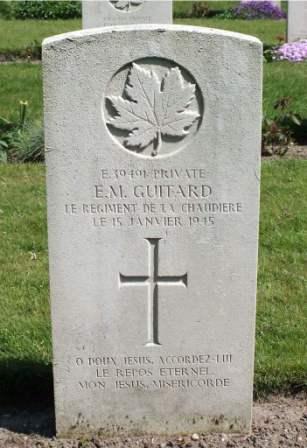
On The War Memorial Trail…..The WWII Trooper From Clementsvale Who Lost His Life During The Liberation Of The Netherlands

August 20, 2023. After seeing Pieter in a TV interview last fall, Debbie Cook contacted us. “I saw the episode on ATV/CTV … of what you are doing, and I say a huge ‘thank you’ to you both. I have 4 sons who are First Responders and I hold dear to my heart all those individuals in the Wars and all other First Responders who allow me to live free & happy as I have. My sons have a great-uncle who was killed overseas in WWII. His name was Harry Wright – do you have any information on him?…”  (Link to the interview that Debbie saw: https://atlantic.ctvnews.ca/maritime-man-appealing-to-public-for-help-identifying-lost-canadian-soldiers-1.6143236)

It was a wide-ranging question as there wasn’t a lot of detailed information, but after checking, we found a Harry WRIGHT from Nova Scotia who was a trooper in the Lord Strathcona’s Horse (Royal Canadians) Regiment.  He was buried in the Canadian War Cemetery in The Netherlands, and was on the cemetery’s photo wish list. 

We asked Debbie if this could be her Harry Wright.  “He was in the army and yes from Nova Scotia. Harry was the uncle of my ex-husband. I believe we have a photo….”  We had the right soldier and so the research began.

IMG_3767 Harry Wright

Harry Elwood Wright.  (Photo courtesy of the Wright Family)

…Harry was born in Clementsvale, Nova Scotia…

Born in Clementsvale, Nova Scotia on September 2, 1916, Harry Elwood WRIGHT was the son of John Everett and Florence May Wright. 

Screenshot 2023-08-15 at 18-36-53 Clementsvale

Map shows location of Clementsvale, Nova Scotia, where Harry was born, and the communities of Clementsport and Princedale. All three places are near Digby, Nova Scotia. (Map source: https://mapcarta.com/)

…Harry was an experienced mechanic….

When he enlisted at the No. 6 District Depot in Kentville, Nova Scotia on August 5, 1942, he had worked as a sawyer in a mill for 3 ½ years in Princedale, Nova Scotia, and drove a truck and worked in a garage for over 4 years. He was working for Mills Motors in Annapolis Royal as a mechanic and driver at the time of his enlistment.

His Personnel Selection Record noted that Harry was “…strong and robust…” with an “… aggressive, mature manner….”  Although he had only a Grade 7 education, he had “…superior learning ability and mechanical aptitude…”  The record went on to say that he had “…significant experience as truck driver and garage worker.  Is able to do many minor repairs and has good knowledge of related theory…

On August 15, 1942, Harry was sent to No. 60 Canadian Army Basic Training Centre (CABTC) in Yarmouth, Nova Scotia.

…Harry became a Canadian Armoured Corps Driver….

Once he completed his basic training, Harry was transferred to the A9- Canadian Armoured Corps (Advanced) Training Centre (CACATC) in Borden, Ontario on October 15, 1942.   He arrived there just a few weeks ahead of another soldier living in Nova Scotia – Ronald Sidney WATERHOUSE (See https://onthewarmemorialtrail.com/2021/11/03/on-the-war-memorial-trail-remembering-ww2-soldier-ronald-sidney-waterhouse/)

By November 16, 1942, Harry qualified as a Class III Driver Wheeled, which meant he was qualified to drive heavy trucks and armoured cars.  On December 12, 1942, he qualified as a Class II Driver Tracked, which meant he was trained to drive tracked vehicles, such as tanks. (See https://www.canadiansoldiers.com/vehicles/tanks/mainbattletanks.htm for an idea of the type of equipment Harry would have driven.)

…Harry left Canada for overseas service….

On March 9, 1943, he left Canada for the United Kingdom, arriving on March 17, 1943, where he was transferred to the No. 3 Canadian Armoured Corps Reinforcement Unit (CACRU).

Harry was sent for further training, successfully completing several courses for qualifying as a Driver Mechanic (MV) C and Driver Mechanic TK C. This meant that in addition to being a driver, Harry would also be responsible for minor vehicle repairs on vehicles in his unit.

On October 1, 1943, Harry was transferred to the 2nd Armoured Regiment – Lord Strathcona’s Horse (Royal Canadian).   With the Regiment, Harry’s training continued in England with Canadian built Ram tanks, in preparation for the Italian Campaign. (See https://en.m.wikipedia.org/wiki/Italian_campaign_(World_War_II))

…The Regiment moved to the Mediterranean for service in November 1943…. One of the Regiment’s most noteworthy battles in Italy was at the Melfa Crossing, where the reconnaissance troop established a bridgehead on the Melfa River and held it against determined German tank and infantry attacks until reinforcements could arrive….” (See https://www.canadiansoldiers.com/regiments/armoured/lordstrathconashorse.htm)

…Harry and his Regiment left Italy for northern Europe…

On February 19, 1945, the Regiment left Italy as part of Operation Goldflake, arriving in Marseilles, France two days later.  Operation Goldflake was the codename for moving troops from Italy to North-West Europe.  (See https://en.wikipedia.org/wiki/Operation_Goldflake)

The Regiment moved through France as far as Iseghem, Belgium.  The war diary summary for the month of March 1945 explained that it was “…quiet because of the lack of shells, exciting because we remained the entire month in the town of Iseghem, which was an entire change to our past Italian memories, which was not at all 100% pleasant…” 

During the month “…a great deal of maintenance was done on vehicles…” and soldiers had opportunities to take leave.  Harry was granted 9 days leave to the United Kingdom on March 28, 1945, returning back to his Regiment on April 7, 1945.

The stay in Iseghem was a prelude to what lay ahead.  “…The end of March found the Regiment preparing its tanks for a proposed move…”  By the time Harry returned from leave, the Regiment was in Malden, The Netherlands, south of Nijmegen.

On April 8, 1945, the war diary recorded that the Regiment “…passed through a part of Germany and back into Holland. Passed through flattened Cleve and Emmerich…

Screenshot 2023-08-19 at 09-35-12 Barneveld · Netherlands

Map shows movement of the Lord Strathcona’s Horse Regiment from Otterlo to Barneveld towards Nijkerk.  (Map source: Google maps)

Over the next few days, the Regiment encountered artillery fire as they moved to a staging area in Arnhem.  The April 15, 1945 war diary entry noted that the “… Regiment fought from Arnhem to Otterlo…

On April 16, 1945 the war diary reported that the Regiment was on the move.  “…Rolling was good to Barneveld area where ‘A’ Squadron ran into a bit of trouble…

The war diary entry for April 17, 1945 recorded that as they moved towards Nijkerk, their “…advance continued at a slower pace due to anti-tank guns, road blocks, and shelling…”  5 non-commissioned soldiers were reported killed in action.  Among those killed was Harry Wright.

…Harry is buried at the Canadian War Cemetery in Groesbeek….

Harry was temporarily buried in Barneveld before being reburied the following year in the Canadian War Cemetery in Groesbeek, The Netherlands.

IMG_2844 Grave of Harry Wright from Alice

Grave of Harry Elwood Wright at the Canadian War Cemetery in Groesbeek. (Photo courtesy of Faces To Graves Groesbeek)

Thank you to Debbie Cook for contacting us and ensuring that a photo of Harry Wright was provided.

If you have a story to tell, please let Pieter know. You can email him at memorialtrail@gmail.com, or comment on the blog.  

© Daria Valkenburg

…Want to follow our research?….

If you are reading this posting, but aren’t following our research, you are welcome to do so.  Our blog address: https://onthewarmemorialtrail.com/

Front cover OnTheWarMememorialTrailinEurope4 countries, 6 weeks, 7,000 km – an unforgettable war memorial journey in Europe…. Daria’s book ‘No Soldier Buried Overseas Should Ever Be Forgotten‘ is available in print and e-book formats.  Net proceeds of book sales help support research costs and the cost of maintaining this blog. For more information on the book, please see https://nosoldierforgotten.com/

Subscribe to our YouTube Channel: On The War Memorial Trail With Pieter Valkenburg: https://www.youtube.com/channel/UCJ591TyjSheOR-Cb_Gs_5Kw

Never miss a posting!  Subscribe below to have each new posting delivered to your inbox.
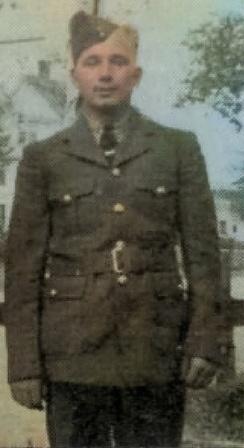
On The War Memorial Trail….. Remembering WWII Soldier George Taylor

August 10, 2023. The search for a photo of a soldier often involves many people.  When Pieter begins an investigation, he looks for family members or organizations that might be able to help.  This can take him n a journey in which we are reminded of just how many people care about remembering those who’ve served.

The search for a photo of George TAYLOR of the Curve Lake First Nation began with an inquiry to Chief Keith Knott and Councillor Arnold Taylor.  Pieter’s request was sent to Mae Whetung-Derrick, who explained that she had been given Pieter’s name “.…by the Curve Lake First Nation, as I have done some research on Curve Lake veterans and created a slide show for the Remembrance Day luncheon that is held every year after the services (other than COVID years)….

After contacting Pieter, Mae spoke to Jocelyn Taylor Watson, “…the daughter of Benjamin Taylor, and the niece of Gunner Taylor. Benjamin also served in World War 2….

Pieter then spoke with Jocelyn who explained that her father, Benjamin, “…was the baby of the family, born two years after George.  He served during WWII but did not go overseas, and died in 2001 at the age of 78….

Shortly afterwards, Jocelyn’s daughter Autumn Watson got in contact. “…First, I would like to say Chi-Miigwetch (Thank-You) for reaching out to our Chief Keith Knott and Councillor Arnold Taylor, with respect to my great-uncle George Taylor. My mother (Jocelyn Taylor) had mentioned that you spoke with her. As a family we appreciate your dedication to breathing life and respect to our fallen soldiers!…

improved_photo(19) Taylor coloured

George Taylor.  (Photo submitted by Mae Whetung-Derrick, originally published in the Peterborough Examiner.  Photo restoration by Duane MacEwen.  Photo colourization by Pieter Valkenburg)

…George was a member of the Curve Lake First Nation…

curve lake first nation logoBorn April 28, 1920, George TAYLOR was the son of Lorenzo ‘Dow’ and Eva Taylor, members of the Curve Lake First Nation, a Mississauga Ojibway First Nation located in Peterborough County, Ontario.  (See https://curvelakefirstnation.ca/history/ and https://en.wikipedia.org/wiki/Curve_Lake_First_Nation)

When George enlisted in Peterborough, Ontario on July 9, 1941 with the No. 3 ‘A’ District Depot, it was noted that he could speak Chippewa (Anishinaabemowin), as well as being fluent in English.  (See http://www.native-languages.org/ojibwe.htm)

He had worked as a trapper and hunter since 1935, and also worked for a mixed farming operation. His sports interests included swimming, fishing, and playing softball.

…George trained as a gunner…

George began his basic training on July 12, 1941, at No. 32 Canadian Army Basic Training Centre (CABTC) in Peterborough.  He was then sent to No. 3 ‘A’ District Depot’s home base in Kingston, Ontario for additional training.

On August 27, 1941, he was transferred to the 3rd Field Battery, Royal Canadian Artillery for further training as a gunner in Gananoque, Ontario.

George was on the move again on December 1, 1941, this time to Sussex, New Brunswick, when he was attached to the 18th Field Regiment, Royal Canadian Artillery.  A few months later, on February 17, 1942, George was transferred to the 2nd Medium Regiment and sent to Petawawa, Ontario, in preparation for going overseas.

During his training as a gunner, George would have learned to use equipment such as 18/25 Pounders, 25 Pounders, and self-propelled 25 Pounder Sextons.  Gunners in a Medium Artillery Regiment would be trained in weapons such as 6-Inch Howitzers, 4.5-Inch Howitzers, or 5.5-Inch Howitzers.

…George left Canada for overseas service…

On March 20, 1942, George left Canada for the United Kingdom aboard the SS Aorangi, sailing from Halifax, Nova Scotia and arriving in Glasgow, Scotland 9 days later.

The Regiment was assigned to No. 3 Canadian Army Reinforcement Unit (CARU) for a month, while awaiting the arrival of their equipment.

From August 28 to 30, 1943, 2 Medium Regiment participated in Exercise Handspike, as training for the upcoming battles in Italy.

…George was in the Italian Campaign….

SS Argentina

Artist drawing of SS Argentina. (Photo source: By Boston Public Library Fred J Hoertz & Harry H Baumann – The Good Neighbor liners Argentina and Brazil, operated by Moore-McCormack Lines, sailing from New York to the East Coast of South America, CC BY 2.0, https://commons.wikimedia.org/w/index.php?curid=26243707)

On October 24, 1943, George was with his Regiment when they left Liverpool, England aboard USAT Argentina for Sicily, arriving on November 8, 1943, several months after Sicily had been deemed Allied territory in August 1943.  (See https://en.wikipedia.org/wiki/SS_Argentina_(1929))  Their first camp was based in Ionia.

For an idea of what weaponry George used and the conditions encountered, a short YouTube video about Royal Canadian Artillery members travelling to Italy to commemorate their time in Sicily may be of interest:

In March 1944, the Regiment was in Ortona, Italy, as part of the Allied Armies in Italy (AAI) for what became known as the Italian Campaign. (See https://en.m.wikipedia.org/wiki/Italian_campaign_(World_War_II)).  May 1944 found the Regiment in Cassino, Italy.  Over the next months the Regiment participated in fighting the Gustav, Hitler, and Gothic Line battles.

On June 21, 1944, George was hospitalized near Rome, Italy with prepatellar bursitis (inflammation of the bursa in front the kneecap), but discharged from hospital on July 4, 1944, when he returned to his Regiment.  (See https://en.wikipedia.org/wiki/Prepatellar_bursitis)

…George and his Regiment left Italy for northern Europe…

On March 11, 1945, the Regiment left Italy as part of Operation Goldflake, arriving in Marseilles, France two days later.  Operation Goldflake was the codename for moving troops from Italy to North-West Europe.  (See https://en.wikipedia.org/wiki/Operation_Goldflake)

Now part of the 21st Army Group, troops were moved from France up to the Belgian front, into The Netherlands, through the Reichswald Forest in Germany, and then back into The Netherlands.

The war ended in Europe on May 8, 1945, and the Regiment was in the Den Helder area of The Netherlands. The war diary for the Regiment noted that “…we were occupying our last gun position when hostilities ceased and almost immediately swung into a new role, that of disarming and despatching Germans back to their own country….

…George died accidentally while in The Netherlands…

In June 1945, the Regiment was based at Arnhem, The Netherlands.  The war diary entry for June 17, 1945 recorded that …Gunner Taylor…” of ‘Q’ Battery “… had taken sick and died of suffocation…”  A medical report noted that while asleep in his army tent, he had fallen ill and vomited.  Unfortunately, this had caused him to suffocate.  A military court of inquiry ruled his death accidental.

20211016_155710 Jocelyn Taylor at Groesbeek

Jocelyn Taylor Watson at the entrance to the Canadian War Cemetery in Groesbeek.  (Photo courtesy of the Taylor family)

George was buried at the Nijmegen Canadian Military Temporary Cemetery the following morning, on June 18, 1945. He was 25 years old.  Later he was reburied in the Canadian War Cemetery in Groesbeek, The Netherlands.

20211016_161144 Jocelyn Taylor, at Groesbeek

Jocelyn Taylor Watson at George Taylor’s grave. (Photo courtesy of the Taylor family)

Jocelyn visited the cemetery in 2021 with her daughter Autumn and son-in-law.  “…I sang at his grave and my daughter drummed…” Jocelyn explained during a phone call with Pieter. What a wonderful tribute to George!

Autumn wrote that they found the cemetery a “…beautiful resting place, but emotional to say the least”  Autumn also included a link to the Lakefield War Veterans, in which George is featured: https://lakefieldwarvets.ca/taylor-george/

…George’s father planted a pine tree…

Jocelyn told us that George is always remembered as her grandfather – George’s father Dow – planted a pine tree when George left to serve in the Canadian Army. Over 80 years later it is still standing, a living remembrance of this well-loved soldier.

Resized_20210606_195838_6246001 Pine tree re George Taylor

Pine tree planted by George’s father Dow. (Photo courtesy of the Taylor family)

Thank you to Jocelyn Taylor and Autumn Watson for sharing photos and information about George Taylor, and to Mae Whetung-Derrick for helping to find family.

If you have a story to tell, please let Pieter know. Email him at memorialtrail@gmail.com, comment on the blog, or tweet to @researchmemori1.

© Daria Valkenburg

…Want to follow our research?….

If you are reading this posting, but aren’t following our research, you are welcome to do so.  Our blog address: https://onthewarmemorialtrail.com/

Front cover OnTheWarMememorialTrailinEurope4 countries, 6 weeks, 7,000 km – an unforgettable war memorial journey in Europe…. Daria’s book ‘No Soldier Buried Overseas Should Ever Be Forgotten‘ is available in print and e-book formats.  For more information see https://nosoldierforgotten.com/

Subscribe to our YouTube Channel: On The War Memorial Trail With Pieter Valkenburg: https://www.youtube.com/channel/UCJ591TyjSheOR-Cb_Gs_5Kw.

Never miss a posting!  Subscribe below to have each new story from the war memorial trail delivered to your inbox.