On The War Memorial Trail….The WWII Soldier From Toronto Who Lost His Life In France When Battalion Head Quarters Was Hit By Shell Fire

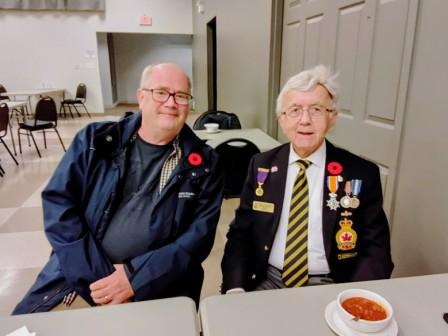
Mike Johnston, left, with Pieter after the 2025 Remembrance Day service in Kinkora.  (Photo credit: Daria Valkenburg)

November 4, 2026.  Following the 2025 Remembrance Day Service held outdoors on a chilly afternoon in Kinkora, Prince Edward Island, everyone was invited inside the community hall for a bowl of chile or chicken corn chowder, and a much needed cup of coffee or tea.

We were joined by our North Tryon neighbour Mike Johnston, who asked about doing a story on his great-uncle, Albert Joseph LAROSE, who lost his life on September 13, 1944, while serving with the Black Watch (Royal Highland Regiment) of Canada.

It seems fitting, as we near another Remembrance Day, to honour Albert’s memory.

Born December 27, 1916 in Toronto, Ontario, the son of Ernest and Catherine (nee Campbell) LaRose, Albert was one of 10 children, having 5 brothers and 4 sisters.  After leaving school, he worked 6 years as a knitting machine mechanic at a textile plant, and then joined Ontario Hydro Electric Commission as a plant operator.

….Albert enlisted in 1942 under NRMA…
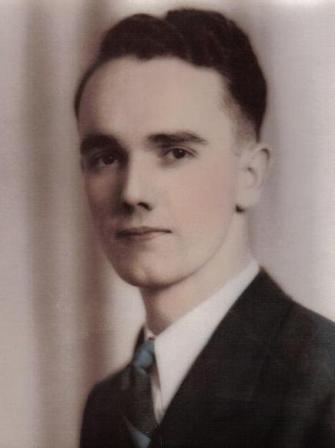
Albert Joseph LaRose. (Photo source: Canadian Virtual War Memorial)

On June 11, 1942, Albert enlisted under the National Resources Mobilization Act (NRMA) at No. 2 NRMA Clearing Depot in Newmarket, Ontario. (See https://en.wikipedia.org/wiki/National_Resources_Mobilization_Act)

At the time of his enlistment, Albert had been working for 2 years at Ontario Hydro Electric Commission.  An interviewer described him as “…a good looking, attractive, bright lad – is definitely interested in radio and electricity and wants to get into Signal Platoon. Single hobby is singing – belongs to choir – healthy – should do well….”

He took his basic training at No. 23 Canadian Army (Basic) Training Centre in Newmarket, and then was sent to the A11 Canadian Infantry Training Centre at Camp Borden, Ontario on May 14, 1942.

On June 15, 1942, Albert was transferred to the Prince of Wales Rangers and sent to the Temporary Basic Training Centre (TBTC) ‘B’ Company at Camp Niagara, located in Niagara-on-the-Lake, Ontario.  Albert would have undergone two months of rigorous physical conditioning, small arms training, tactical manoeuvres, and drills.

Soldiers stationed at Camp Niagara were on guard duty to protect local infrastructure, such as the nearby Welland Canal and regional hydro-electric plants, against potential enemy sabotage.

….Albert was transferred to Prince George as a member of the Prince of Wales Rangers…

With his basic training completed, Albert was sent to Prince George, British Columbia on September 23, 1942.  Still with the Prince of Wales Rangers, he was now part of Canada’s Home Defence.  The Prince of Wales Rangers were part of the 16th Infantry Brigade, which in turn was under the 8th Canadian Division, tasked with Pacific coastal defence and protecting Canada’s West Coast from potential enemy threats.

On December 15, 1942, Albert married Loretta Marie Bowyer, and received leave to do so.

Albert continued to receive additional training, and after completing a signallers course, received the qualification of Classified Regimental Signallers on June 20, 1943. This qualification meant he’d received training in military communications for the purpose of maintaining links between front-line units and headquarters.  He was next sent to Wainwright, Alberta for additional training in manoeuvres and battle courses.

….Albert was sent for a mountaineering course…

On July 8, 1943, Albert was sent on another training course – to the Little Yoho Mountaineering School run by the Alpine Club of Canada, located in Little Yoho Valley in Yoho National Park near Field, British Columbia.  He took an intensive course in climbing with equipment, rescue work in ice and snow, and using ropes under a simulated night attack.  He did so well in the course, which he completed on July 29, 1943, that he was selected to be an Assistant Instructor for the next course.  Albert was described as “…capable and conscientious…”

As Assistant Instructor for the course that ran August 8 to 30, 1943, he was assessed as “…very helpful at all times. Has capable working knowledge of basic principles involved and able to impart instruction…”

On August 1, 1943, Albert had received a promotion to Lance Corporal, but on September 14, 1943, he asked to revert to the rank of Private.  In the meantime, he had returned to the Prince of Wales Rangers as of August 31, 1943.

….Albert was an instructor at the Winter Training School in Jasper…

By November 9, 1943, he was in Port Alberni, British Columbia, and requested to attend a Mountaineering Instructors Course.  This was approved and he successfully completed the course in Terrace, British Columbia.  As of November 16, 1943, he was attached to the Winter Training School in Jasper National Park, Alberta where he was to be an instructor in a course that began in January 1944. On January 15, 1944, he was promoted to Acting Corporal.

Jasper National Park in the Canadian Rocky Mountains became a high-altitude winter and mountain warfare training centre for the British Army’s Lovat Scouts (Scottish Highlanders) and Canadian Army personnel, who trained in preparation for an Allied-led invasion of Nazi-occupied Norway and to combat Axis mountain specialist units.

In a course that ran from January 9, 1944 until the final group left on April 22, 1944, they were instructed in military skiing, snowshoeing, ice climbing, glacier travel, crevasse rescue, survival camping in temperatures down to -45°C (-49oF), and carrying full gear with rifles.

A short film by the National Film Board of Canada, ‘Ordeal By Ice’ (10:44 minutes) documents the extreme winter conditions faced by members of the Canadian Army and British Army’s Lovat Scouts who trained at the Winter Training School…..


….Albert joined the Active Army…

On April 8, 1944, Albert’s assignment at the Winter Training School ended. He returned to the Prince of Wales Rangers in Terrace, British Columbia….and reverted back to the rank of private.  A week later, on April 15, 1944, he enlisted in the Active Army with the Prince of Wales Rangers.

Then, on April 19, 1944, he was transferred to the 1st Battalion of the Canadian Fusiliers, which was under Pacific Command as part of the 6th Canadian Infantry Division’s Home Defence.  However, the Battalion was preparing to go the United Kingdom and become a training battalion.

Albert received 10 days of embarkation leave starting on May 5, 1944, in what turned out to be the last chance he had to see his family.  Upon returning from leave, he was transferred to No. 1 Transit Camp in Windsor, Nova Scotia.  This was a final staging, preparation, and administrative processing area before being sent overseas.

….Albert left Canada for overseas service ……

With others in the 1st Battalion, Canadian Fusiliers, Albert boarded a ship on May 25, 1944 that left the following day from Halifax, Nova Scotia, arriving in the United Kingdom on June 2, 1944.

Then, in a strange twist, instead of remaining with the Canadian Fusiliers and continuing as an Instructor, Albert was transferred to the X-4 Reinforcement List of the Black Watch of Canada (Royal Highland Regiment), part of the 21st Army Group, joining the unit in Folkestone, England.

On July 13, 1944, Albert left England for France, arriving the following day, where, due to his Classified Regimental Signallers qualification, he was assigned to the Signal Platoon, Headquarters Company of the Black Watch, joining the Regiment in Franqueville in the midst of the Battle of Caen, part of the ongoing Battle of Normandy. (See https://en.wikipedia.org/wiki/Battle_for_Caen)

From July 18 to 21, 1944, the Regiment was involved in Operation Atlantic, with the goal of clearing German forces from the southern and eastern sectors of Caen, cross the Orne River, and seize Verrières Ridge in an attempt to block enemy reinforcements.  (See https://en.wikipedia.org/wiki/Operation_Atlantic)

This was immediately followed by a disaster on July 25, 1944, with Operation Spring, when the Regiment launched an assault on Verrières Ridge to capture Fontenay-le-Marmion. Out of 325 soldiers who launched the attack, there were 307 casualties, with 118 killed in just under four hours—a near 94% casualty rate. (See https://en.wikipedia.org/wiki/Operation_Spring)

In a July 29, 1944 letter to his sister Grace, Albert wrote that he was not at the front, but at Battalion Head Quarters.  “…About me being in France….I can’t say much about things here, except that I am still in the best of health and I haven’t been in action up to now and I don’t expect to be going up to the front for some time yet. It wouldn’t hurt my feelings at all if I never got up there, but I guess the war won’t end that soon….”

The letter was written over a few days. “…Incidentally, I started this letter a few days ago, but never got it finished. Right now I am on duty at the Telephone Exchange and I get a chance to write here…”

….Albert lost his life on September 13, 1944 ……

Over the next 6 weeks, the Black Watch, as part of the 5th Canadian Infantry Brigade, 2nd Canadian Infantry Division, advanced along the French coast, participating in operations to clear coastal areas, cross canals, and secure vital infrastructure against retreating German forces.

On Wednesday, September 13, 1944, the Regiment was positioned at Spycker in northern France near the coastal town of Bourbourg, securing the village and bridgeheads around Bourbourgville and Grand Millebrugge, and very close to the Belgian border. (See https://www.europeremembers.com/en/pois/2436/the-black-watch-at-grand-millebrugge)

Albert lost his life on that day, but the war diary entry for that day gave no information on what happened.  “…Heavy shelling on Grand Millebrugge commenced at Reveille this morning.  Battalion Head Quarters received five direct hits and the Regimental Aid Post one direct hit and two near misses. During the morning the shelling did not let up and by noon, when it began to slacken off, eight vehicles had been destroyed and six motor cycles burned….”

The war diary went on to report that there were no fatalities, and none missing or taken as prisoners of war, but this wasn’t true.  Six men were missing, and had died that day… one of them Albert, who likely was in Battalion Head Quarters when it was hit by German shellfire.

In addition to Albert, the following soldiers from the Black Watch were killed on September 13, 1944:

  • A/Cpl Alfred Alexander ANDERSON, born in Innisfeil, Alberta, aged 32
  • L/Sgt Robert BURNSIDE, from Montreal, Quebec, but born in Glasgow, Scotland, aged 33
  • Pte Michael DOBRENSKY, of Toronto, Ontario, aged 21
  • A/Cpl Gordon Edward GORMAN, of Ottawa, Ontario, aged 20
  • A/Cpl Vernon Andrew JOHNSTON, of Pine Creek, Manitoba, aged 21

Several families of the soldiers were aware that 6 of them were missing. The family of Gordon Edward GORMAN persisted in asking what happened to him, and eventually a letter in the service file indicated what may have happened to him. “…He was making his way across open field after very heavy shelling and a counter attack by the Germans. A German machine gun fired from the house on the left flank and he fell to the ground. Two German soldiers came out of the house, picked him up and took him into the house….” where he died of his wounds. “… This action took place in the small town of Spycker, east of Dunkirk, France…”

All 6 men were eventually buried in November, almost two months after their deaths. At the age of 27, Albert left his wife, parents, 5 brothers and 4 sisters to mourn his loss.

….Albert is buried in Calais Canadian War Cemetery…
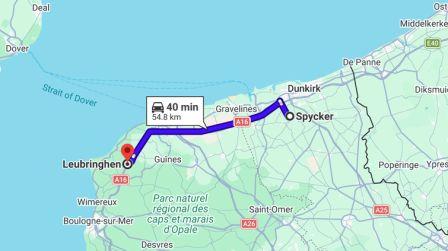
Albert LaRose was initially buried in Spycker before being reburied in the Calais Canadian War Cemetery in Leubringhen. (Map source: Google Maps)

On November 6, 1944, Albert was initially buried in a church cemetery in nearby Spycker, before being reburied in the Calais Canadian War Cemetery in Leubringhen on August 5, 1945.
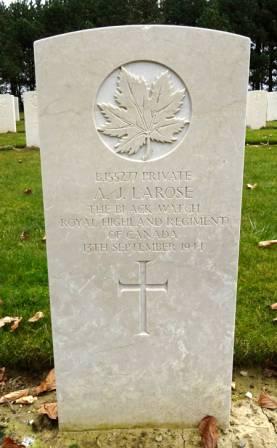
Grave of Albert Joseph LaRose in the Calais Canadian War Cemetery in Leubringhen, France.  (Photo source: Find A Grave)

Leubringhen is a village in the Department of the Pas-de-Calais, halfway between Calais and Boulogne. The Calais Canadian War Cemetery is in Leubringhen, 14 kms (8.7 miles) from Calais.

Sign off of the highway exit directing us to Calais Canadian War Cemetery. (Photo credit: Daria Valkenburg)
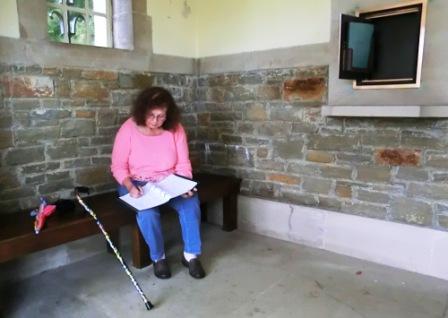
Daria writing in the Visitors Book at Calais Canadian War Cemetery during our 2017 visit. (Photo credit: Pieter Valkenburg)

We’d visited this cemetery in September 2017, where we had placed flags down at the grave of James Arthur AFFLECK from Bedeque, Prince Edward Island, who died a few days after Albert.  (See https://onthewarmemorialtrail.com/2017/10/08/the-calais-canadian-war-cemetery/)

Thank you to Mike Johnston for sharing the letter written by his great-uncle, and to Shawn Rainville for newspaper research.

Pieter’s research efforts to find photos and families of soldiers continue. Do you have a story to tell? Email Pieter at memorialtrail@gmail.com, or comment on the blog.

© Daria Valkenburg

….Want to follow our research?…

If you are reading this posting, but aren’t following our research, you are welcome to do so.  Our blog address: https://onthewarmemorialtrail.com/
4 countries, 6 weeks, 7,000 km – an unforgettable war memorial journey in Europe…. Daria’s book ‘No Soldier Buried Overseas Should Ever Be Forgotten‘ is available in print and e-book formats.  Net proceeds of book sales help support research costs and the cost of maintaining this blog. For more information see https://nosoldierforgotten.com/

Subscribe to our YouTube Channel: On The War Memorial Trail With Pieter Valkenburg: https://www.youtube.com/channel/UCJ591TyjSheOR-Cb_Gs_5Kw.

Never miss a posting!  Subscribe below to have each new story from the war memorial trail delivered to your inbox.
On The War Memorial Trail…. Remembrance Week 2024 – Reflections and Updates

1200x600-remembrance-day-1-1024x512

November 10, 2024.  When we write a story on the blog, we often receive additional information, sometimes about the soldiers we’ve written about, sometimes about other soldiers buried in the same cemetery or who served in the same unit. Occasionally we have a chance to meet families who’ve contributed photos and information on soldiers.  Each year we also try to visit a war memorial featuring a soldier. In this posting we feature a visit to the Sagkeeng War Memorial in Fort Alexander, Manitoba.

…Richard Reeves visited the grave of WWII soldier Everett Samuel Francis….

gravestone Everett Francis photo taken by Richard Reeves

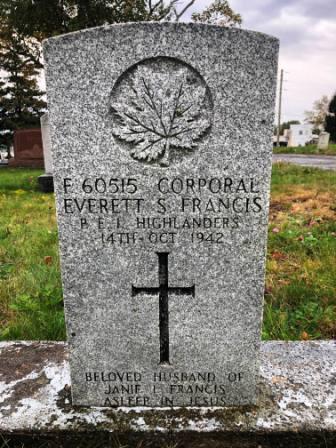
Grave of Everett Samuel Francis in St. Matthew’s Presbyterian Cemetery in Grand Falls, Newfoundland.  (Photo credit: Richard Reeves)

One of the very first stories that Pieter researched of the names listed on the Cenotaph outside the Borden-Carleton Legion was that of WWII soldier Everett Samuel FRANCIS of Albany, Prince Edward Island.

On September 13, 1942, Everett was sent from Gander, Newfoundland, where his unit was based, to Long Branch, Ontario for a small arms training course.  He was on his way back to Gander aboard the railway ferry S.S. Caribou when it was torpedoed by German U-Boat 69 off the coast of Newfoundland on Wednesday, October 14, 1942.  101 survivors were rescued, but the captain, 30 crew, 57 service personnel, and 48 passengers were lost, including Everett. 

Everett and his wife, Janie Louise Mercer of Grand Falls, Newfoundland, were the parents of Greta, who had been born a few weeks earlier.  He was on his way home to meet his new-born daughter, who was to be christened in church on the Sunday after he was scheduled to return home, but never made it. He’s buried in St. Matthew’s Presbyterian Cemetery in Grand Falls, Newfoundland. 

In one of those interesting twists of fates, when Pieter was searching for a photo of Orville ‘Skip’ James REEVES, who was born in North Bay, Ontario, but was married to Mamie Thomas of Grand Falls, his nephew Richard Reeves not only provided a photo, but visited Everett’s grave on our behalf!  Watch for Skip’s story in a future posting.

You can read Everett’s story at:

….Nephew of WWII soldier Lt Arthur Affleck shared a memory of his last Sunday at church on Prince Edward Island…

Percy Affleck shared the following story about his uncle, Lt James ‘Arthur’ AFFLECK of Bedeque, Prince Edward Island:  “….The Affleck families of the Bedeque area were adherents of the United Church at Bedeque. (With a history dating back to the Methodist Church when part of the Affleck clan moved to Searletown from the Mt. Stewart area around 1858.)

According to Eldon Wright of Middleton, on his last Sunday at Church before shipping out for England, Arthur stood in full uniform on the church steps after the service and shook hands with everyone as they departed. At that era the Congregation would number in excess of 150 people and one can visualize the enthusiasm of the occasion, complete with good wishes. Arthur would have been fifth generation on the family tree dating to a marriage in Scotland in 1810…”

Arthur was killed in action by artillery shells on September 17, 1944, during the first day of the Battle of Boulogne (Operation Wellhit), a 5 day battle to take the port of Boulogne from German control. He’s buried in the Calais Canadian War Cemetery in Leubringhen, France, 14 km from Calais.

You can read Arthur’s story at:

….Family of WWII Pilot Elmer Bagnall Muttart donated medals to the Borden-Carleton Legion…

20241022_185910 medals for Elmer Muttart at Borden-Carleton Legion

Shadow box with a photo of WWII Pilot Elmer Bagnall Muttart and his medals.  (Photo credit: Kathy Henry)

Don Coutts, nephew of WWII Pilot Elmer Bagnall MUTTART of Cape Traverse, Prince Edward Island wrote us, saying that his brother Peter  “…has come across some of Elmer’s War Medals….” while going through their late mother’s boxes.  “…Do you think the Borden-Carleton Royal Canadian Legion would like them to display?…” 

The answer was yes, and a shadow box with a photo of Elmer and his medals is now on display on the Wall of Remembrance at the Borden-Carleton Legion.

Elmer was the pilot aboard Halifax L9561 when it was shot twice by German night fighters on October 12, 1941, while the plane was on its way to a bombing raid on Bremen, Germany.  After ordering the crew to bail out, Elmer managed to steer the burning plane away from the Dutch village of Wons, in the province of Friesland, before it crashed in a farmer’s field, just outside the village.  He was the only casualty and is buried in Harlingen General Cemetery in The Netherlands.

You can read Elmer’s story at:

….We visited the Sagkeeng War Memorial in Fort Alexander, Manitoba…

CIMG6783 May 9 2024 Pieter at Sagkeeng War Memorial re P Laforte

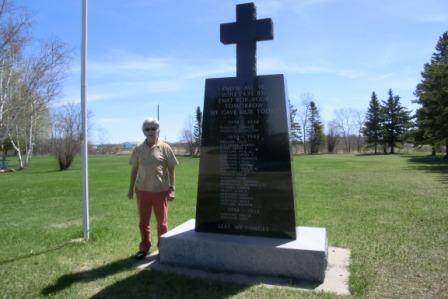
Pieter by the Sagkeeng War Memorial in Fort Alexander, Manitoba.  (Photo credit: Daria Valkenburg)

This past May we were in Winnipeg, and took a drive to the village of Fort Alexander on the Sagkeeng First Nation to visit the Sagkeeng War Memorial.  WWII Métis soldier Philip LAFORTE, who was born in Lac du Bonnet, Manitoba, is listed on this memorial.  

CIMG6785 May 9 2024 Sagkeeng War Memorial re P Laforte

WWII soldier Philip Laforte is listed on the Sagkeeng War Memorial in Fort Alexander, Manitoba.  (Photo credit: Daria Valkenburg)

While serving with the Royal Winnipeg Rifles, Philip lost his life on April 7, 1945 during the crossing of the Schipbeek Canal in The Netherlands.  He’s buried in the Canadian War Cemetery in Holten, The Netherlands.

You can read Philip’s story at:

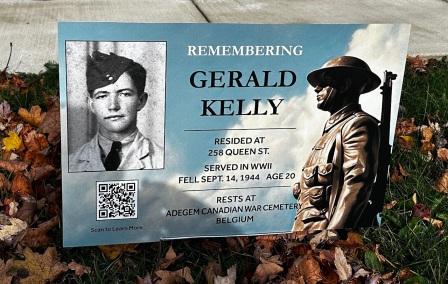
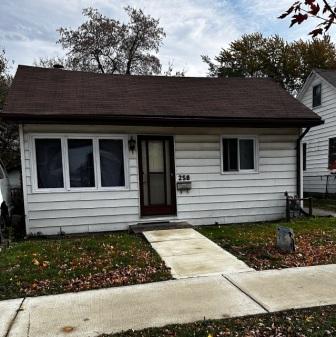
…. A Remembrance Plaque for WWII soldier Gerald Reginald Kelly was placed outside his former home in Sarnia …

Within a few hours one day we received two emails, both with a Sarnia, Ontario connection.  First, Don Coutts let us know about a memorial project in Sarnia, where Remembrance Plaques of soldiers would be placed outside their former homes during Remembrance Week. 

Then, Patrick Michiels of Belgium wrote to let us know that his family had adopted the grave of Private Gerald Reginald KELLY, who was from Sarnia, and is buried in the Canadian War Cemetery in Adegem, Belgium.  

What were the odds that this was a coincidence?  Since our friend Sandra Wallis lives in Sarnia, an email immediately went out to her, asking if she could find out if Gerald was one of the soldiers who had a Remembrance Plaque. 

IMG_8744 Gerald Kelly remembrance plaque in front of his house from Sandra

Remembrance Plaque honouring Gerald Kelly outside his former home in Sarnia. (Photo credit: Sandra Wallis)

IMG_8743 Nov 4 2024 Kellys house in Sarnia from Sandra

Gerald Kelly’s former home in Sarnia. You can see the Remembrance Plaque on the right.  (Photo credit: Sandra Wallis)

Sandra got in contact with Tom Slater and Tom St. Amand, two retired teachers, who spearheaded the Remembrance Plaque project, and learned that a plaque had been made for Gerald. Once it was in place at his former residence, she took photos of the house and the plaque.  These photos were shared with Patrick, and the two retired teachers are now in contact with him.

Gerald was serving with the Algonquin Regiment when he lost his life on September 14, 1944 during the Battle of the Leopold Canal.  He was killed as he tried to re-cross the Leopold Canal while trying to rescue a wounded sergeant.

Here are two articles about Sarnia’s Remembrance Plaque project:

…. Meeting families of two airmen from Halifax DT630 …

CIMG6764 May 8 2024 May 8 2024 Jamie Don Craig Pieter Sue Daria at Courtyard Marriott Winnipeg

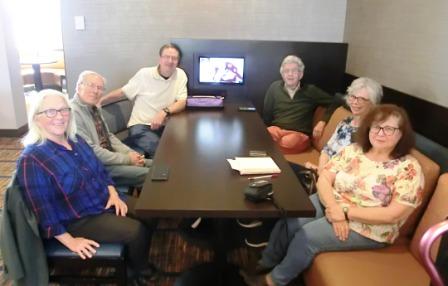
Left to right: Jamie Nelson-Dixon, Don Dixon, Craig MacKenzie, Pieter, Sue MacKenzie, Daria. (Photo courtesy of Valkenburg Family)

After we wrote the story about Jack ‘Douglas’ MACKENZIE, of Winnipeg, Manitoba, the pilot of Halifax DT630 that was shot down by a night fighter over the province of Drenthe in The Netherlands on February 3, 1943, we were contacted by Yannic Wethly of Stichting Luchtoorlog Onderzoek Drenthe (Air Research Drenthe Foundation) in The Netherlands. “….We are still searching for the pictures of Warrant Officer Second Class Raymond Hepton ‘Ray’ Hill and Sergeant Eric ‘Raymond’ Marquand, both crew members of Halifax DT630….” he wrote.

Four men died when the plane went down, including Douglas and Ray, and all are buried in Sleen General Cemetery in The Netherlands. 

We were successful in finding a photo of Raymond Hepton ‘Ray’ HILL, who was from Montreal, Quebec, but did not find any surviving family. Both Ray and his brother died during WWII, there were no other siblings, and neither man was married. 

Like Douglas MacKenzie, Eric ‘Raymond’ MARQUAND, the bomb aimer on that flight, was from Winnipeg.  He had survived the crash and spent the remaining war years in prisoner of war camps before being liberated.  We were very happy when his niece, Jamie Nelson-Dixon, got in contact and provided a photo. 

When we were in Winnipeg this past May, we asked if Jamie, and Doug MacKenzie’s nephew, Craig MacKenzie, would like to meet us and each other.  They did, and we spent a wonderful afternoon together with Jamie’s husband Don and Craig’s wife Sue.

Raymond’s story will be coming up in a future posting, but you can read Douglas’ story at:

Thank you to Percy Affleck, Don Coutts, Don Dixon, Craig and Sue MacKenzie, Jamie Nelson-Dixon, Patrick Michiels, Richard Reeves, Tom Slater, and Sandra Wallis.  The work of remembrance of those who served continues. 

If you have a story to tell, please let Pieter know. You can email him at memorialtrail@gmail.com, or comment on the blog.  

© Daria Valkenburg

….Want to follow our research?….

If you are reading this posting, but aren’t following our research, you are welcome to do so.  Our blog address: https://onthewarmemorialtrail.com/

Front cover OnTheWarMememorialTrailinEurope4 countries, 6 weeks, 7,000 km – an unforgettable war memorial journey in Europe…. Daria’s book ‘No Soldier Buried Overseas Should Ever Be Forgotten‘ is available in print and e-book formats.  Net proceeds of book sales help support research costs and the cost of maintaining this blog. For more information see https://nosoldierforgotten.com/ 

You are also invited to subscribe to our YouTube Channel: On The War Memorial Trail With Pieter Valkenburg: https://www.youtube.com/channel/UCJ591TyjSheOR-Cb_Gs_5Kw. 

Never miss a posting!  Subscribe below to have each new story from the war memorial trail delivered to your inbox.
On The War Memorial Trail….The Calais Canadian War Cemetery

October 8, 2017.  Following a restful night in Caen, we made our way to the final cemetery we were visiting in France, the Calais Canadian War Cemetery in Leubringhen, 14 km from Calais, where Lt. James Arthur AFFLECK is buried.  This is the second WWII grave we visited in France.

Calais was liberated by the Canadian 1st Army early in September 1944 as they advanced up the French coast into Belgium, in pursuit of retreating German forces.  Most of the burials in the Calais Canadian War Cemetery are from this period of fighting.  There are 704 Commonwealth burials from WWII, of which 30 are unidentified.  594 of these burials are of Canadian soldiers. There also are 6 Czech and 19 Polish war graves.

After the earlier struggles we had getting to the Commonwealth War Cemeteries in France, this cemetery was surprisingly easy to find.  It was the first one we were at that had a sign on the highway, and it was conveniently located right off of the highway exit to Leubringhen, a village that’s halfway between Calais and Boulogne.  There was even a parking area!

CIMG8630 Sep 8 2017 sign for Calais Cdn War Cemetery

Sign off of the highway exit directing us to Calais Canadian War Cemetery. (Photo credit: Daria Valkenburg)

James Arthur Affleck was born April 15, 1920 in Bedeque, Prince Edward Island, the son of Robert Bruce Affleck and Mary Eliza MacCallum.  A farmer before he enlisted with the North Nova Scotia Highlanders on March 3, 1942, he was killed in action by artillery shells on September 17, 1944, during the first day of the Battle of Boulogne (Operation Wellhit), in a 5 day battle to take the port of Boulogne from German control.

Arthur Affleck

Lt. James Arthur Affleck. (Photo courtesy of Percy Affleck Family Collection)

In ‘No Retreating Footsteps: The Story of the North Nova Scotia Highlanders’, published in 1954, author Will Bird tells what happened on September 17, 1944 on pages 222 and 223:

“… L/Cpl K. L. Miller was with Sgt. P. J. Whalen as A Company went up to attack.  They rode almost over the crest of the first hill, then began crawling inside a hedge and used it for cover until they came to a gap and some large craters.  There was barbed wire around a number of buildings, and a far one seemed to have been used for a garage.  Direct bomb hits had crashed the first two buildings to wreckage.  The next was a pillbox but heavy mortar fire descended and forced everyone to take shelter in the craters.  Sgt. Whalen was killed and before the barrage let up three others had lost their lives. Miller worked along a distance toward the pillbox and was told the officer, too, had been killed…. The officer killed during the heavy shelling was Lt. Affleck and it was his first battle….”

The path from the parking area to the cemetery is lined with trees and is hauntingly beautiful and gives the appearance of the peace that those who died in battle deserve – well, except for the fierce wind.  It was a reminder of the windy areas back on Prince Edward Island!

CIMG8629 Sep 8 2017 walkway to Calais Cdn War Cemetery

Grassy walkway from the parking lot to Calais Canadian War Cemetery. (Photo credit: Daria Valkenburg)

CIMG8617 Sep 8 2017 Pieter outside Calais Cdn War Cemetery

Pieter at the entrance to Calais Canadian War Cemetery. We were taking bets on how long the rain would hold off. (Photo credit: Daria Valkenburg)

The sky was black but the rain held off long enough for Pieter to plant flags by Lt. Affleck’s grave.

CIMG8621 Sep 8 2017 Pieter at Afflecks grave at Calais Cdn War Cemetery

Pieter at the grave of Lt. James Arthur Affleck in Calais Canadian War Cemetery. (Photo credit: Daria Valkenburg)

As we were going back to the car, however, the downpour began!   Luckily, we were only 74 km from our destination of De Panne, a coastal town that would be our base in Belgium.

In the next blog entry we return to the WWI war memorial trail, this time in the area around Ypres, Belgium. Do you have photo or info on James Arthur Affleck?  Comments or stories?  You can share them by emailing us at  memorialtrail@gmail.com or by commenting on this blog.

© Daria Valkenburg

….Want to follow our research?….

If you are reading this posting, but aren’t following our research, you are welcome to do so.  Our blog address: https://onthewarmemorialtrail.com/

Front cover OnTheWarMememorialTrailinEurope4 countries, 6 weeks, 7,000 km – an unforgettable war memorial journey in Europe…. Daria’s book ‘No Soldier Buried Overseas Should Ever Be Forgotten‘ is available in print and e-book formats.  Net proceeds of book sales help support research costs and the cost of maintaining this blog. For more information see https://nosoldierforgotten.com/ 

You are also invited to subscribe to our YouTube Channel: On The War Memorial Trail With Pieter Valkenburg: https://www.youtube.com/channel/UCJ591TyjSheOR-Cb_Gs_5Kw. 

Never miss a posting!  Subscribe below to have each new story from the war memorial trail delivered to your inbox.