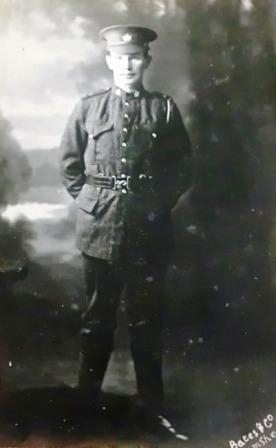
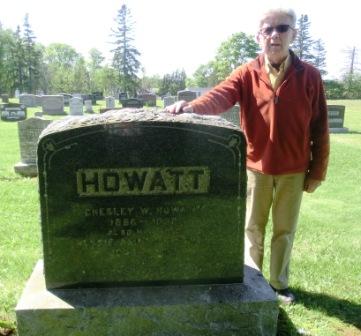
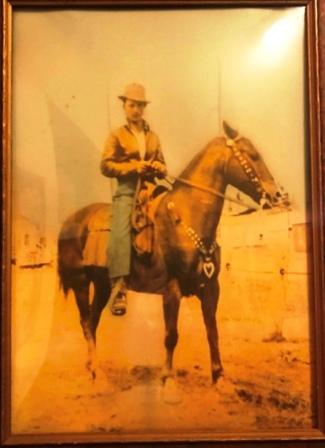
May 29, 2022. Some Prince Edward Island soldiers who served in WW1 seem to disappear into history, in spite of the many inter-relationships between Island families. Chesley William HOWATT, who is buried in the North Tryon Presbyterian Church Cemetery, appears to be one of these, as up to now no surviving family member has been found.
Chesley Howatt. (Photo courtesy of South Shore United Church)
Born in Tryon, Prince Edward Island, Chesley was the son of Robert Newton and Elizabeth (nee Wilson) Howatt. When he enlisted with the Canadian Overseas Expeditionary Force in Calgary, Alberta on June 2, 1915, he said he was born July 24, 1888. According to his baptismal certificate, he was born in 1886, so it may be that he shaved off a few years in order to be eligible to serve. At the time of enlistment, he was a farmer.
On October 24, 1915 he left Halifax, Nova Scotia aboard H.M.S. Oduna with the 50th Battalion Canadian Expeditionary Force, and arrived in Plymouth, England on November 4, 1915.
…Wounded at Vimy Ridge….
On August 10, 1916 he was sent to France. Troops were training and preparing for the spring offensive that began on April 9, 1917 that became known as the Battle of Vimy Ridge. There were many skirmishes before that battle, and the artillery spent a lot of time rehearsing. Nightly raids helped pinpoint and knock out the location of German batteries.
On February 3, 1917 Chesley received a gunshot wound to the face at Vimy Ridge, with fine metal particles from the blast entering his eyes.
According to the report on what happened, “… at 8:45 pm on the night of February 3, 1917….” Chesley was “…going ‘over the top’ and after arriving in the enemies trench a rifle grenade exploded near him and fragments of shrapnel entered his eyes. From then until 30 days later he was not able to use his eyes…”
After initial treatment in Etaples, France, he was sent back to England for treatment and recuperation at 3rd London General Hospital. On May 10, 1917 he was transferred to the West Cliff Canadian Eye and Ear Hospital in Folkestone, from which he was discharged from care on May 14, 1917.
For Chesley, the war in mainland Europe was over. On May 21, 1917 he was transferred to the 21st Reserve Battalion and posted to Bramshott in England.
…A medical discharge and reenlistment….
On February 4, 1918 he was transferred to the Canadian Discharge Depot in Buxton and was sent home to Canada via Liverpool a few weeks later. On March 31, 1918 he received his formal discharge in Halifax, Nova Scotia, due to being unfit for service due to defective vision as a result of the gunshot wound.
This wasn’t the end of Chesley’s military service, however! On September 2, 1918, he reenlisted in Charlottetown, this time stating that he was born in 1887. He did note that he had previously served in the 50th Battalion.
By the time of his second discharge on July 17, 1919, he had married Bessie Anne Falconer on December 3, 1918, and was living in Charlottetown.
The family moved to Tryon following his second discharge. Sadly, their only son, Alexander ‘Falconer’ Howatt, who had been born September 4, 1919, died on July 23, 1934 at the age of 14. Chesley died a few years later, on January 22, 1938, in Tryon.
Pieter beside the grave of Chesley Howatt at the North Tryon Presbyterian Cemetery in North Tryon, Prince Edward Island. (Photo credit: Daria Valkenburg)
Do you have photos or information to share? Email Pieter at memorialtrail@gmail.com, comment on the blog, or tweet to @researchmemori1.
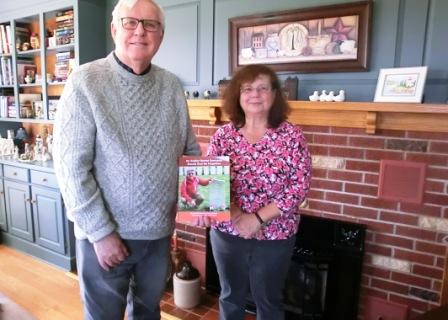
Daria’s book ‘No Soldier Buried Overseas Should Ever Be Forgotten‘ is available in print and e-book formats. For more information seehttps://nosoldierforgotten.com/
May 24, 2022. In 2017, Pieter received a photo wish list from researchers at the Canadian War Cemetery in Holten, The Netherlands. There were 6 names, all serving with the North Nova Scotia Highlanders when they lost their lives.
One of these men, Allan ‘Gordon’ COUTTS, was born January 11, 1923 in Kerrobert, Saskatchewan, the son of Benjamin and Susan Coutts. During his childhood, the family moved to Olds, Alberta, where his father was a firefighter on a government experimental farm. On May 11, 1945, while monitoring the unloading of ammunition at the Sports Field in Norden, Germany, an explosion cost him his life.
Months later, in December 2021, we received an email from Gordon Kenneth ‘Ken’ Coutts in Saskatchewan, saying “…I came across your request for photos or information on family members…” of Gordon Coutts. “… I was named after him. The last of his siblings, Norman, passed away in November 2021. All that remain are 3 generations of nieces and nephews….”
Allan ‘Gordon’ Coutts shortly before enlistment in 1943. (Photo submitted by Ken Coutts and courtesy of The Coutts Family)
….Letter from Captain A. M. Harper….
Ken shared the only photo he had of his uncle, along with a letter that Captain A. M. HARPER of the North Nova Scotia Highlanders sent to Gordon’s father upon his death.
“…It is with the deepest sympathy that I write to you on the loss of your son, Sergeant Allan Gordon Coutts, who died of accidental wounds received at Norden, Germany on 11 May, 1945. Words could not express my feelings when I received the news as your son was one of the best fellows we had here in ‘C’ Company.
I can recall your son’s record with this unit quite plainly. On the seventh of September he came to us as Private Coutts….” This would have been September 7, 1944.
“…As a private, he played his part in no small way in battles that have great significance – Mount Lambert, Bavlogne, the Scheldt estuary landing – and proved his mettle so well that he received the appointment of Lance Corporal on the twelfth of October during the water and mud operation on the Scheldt.
On the fifth of November, the now well known 3rd Canadian Infantry Division N.C.O.’s School opened. Lance Corporal Coutts was one of the first ones to be recommended for the course and he did very well and received an excellent report. As a result of the school’s recommendation, your son was promoted to corporal on the 8th of January 1945.
As a corporal, he did an excellent job in Nijmegen, in the clearing operation up the Rhine and then in the crossing of the Rhine. I can remember one situation in particular that ensured the young corporal’s promotion to the rank of Sergeant. It was the crossing of the Rhine. Our task was the taking of the strongpoint of Bienen.
Casualties were extremely heavy during the attack and when we gained the first buildings, Cpl Coutts was the only NCO left with the company commander and myself. He did an excellent job there in the face of heavy odds and was promoted to Sergeant that day.
In that quiet, efficient way of his, your son carried on throughout the remainder of the campaign until the end of hostilities on May 7/8. At that time we were assigned the task of rounding up the remnants of the German armed forces, disarming them and concentrating them in specific areas.
Sgt Coutts was supervising the removal of ammunition from one when a freak accident occurred, mortally wounding him. A court of inquiry was held, but no blame can be attached to anyone because it definitely was a freak accident.
Your son never regained consciousness from the time of his accident until his death several hours later. All possible treatment was given him by our own medical officers, those at the Field Dressing Station and also those at the Casualty Clearing Station, but even modern medicine could not revive him. He died as he lived – a man well-liked, respected, and trusted by everyone.
Your son was buried in the Canadian plot of the Lutheran Cemetery at Leer, Germany, with full military honours by the H/Capt G. Cox, Protestant chaplain of the Casualty Clearing Station.…..
On behalf of the entire unit, I wish to express our sympathy in your bereavement. We have lost a tried and true friend, and a good soldier, but our loss is small compared to your loss of a son.
Sincerely yours,
A.M. Harper…”
What a wonderful tribute and summary of service for a valued soldier and friend!
….The North Nova Scotia Highlanders Wish List….
In addition to Allan ‘Gordon’ COUTTS, the other North Nova Scotia Highlanders on that 2017 photo wish list from the researchers at the Canadian War Cemetery in Holten, for which photos were found, were:
Archibald Henry NELSON, born in Charlottetown, Prince Edward Island, son of William Henry and Winnifred Frances Nelson, who lost his life on April 18, 1945, aged 32.
Thank you to Ken Coutts for sharing a photo of his uncle and the letter from Captain Harper. Do you have photos or information to share? Email Pieter at memorialtrail@gmail.com, comment on the blog, or tweet to @researchmemori1.
If you are reading this posting, but aren’t following our research, you are welcome to do so. Our blog address: https://onthewarmemorialtrail.com/
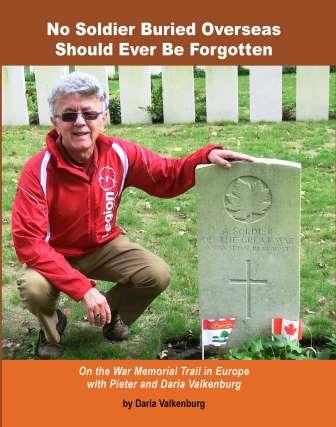
4 countries, 6 weeks, 7,000 km – an unforgettable war memorial journey in Europe…. Daria’s book ‘No Soldier Buried Overseas Should Ever Be Forgotten‘ is available in print and e-book formats. Net proceeds of book sales help support research costs and the cost of maintaining this blog. For more information seehttps://nosoldierforgotten.com/
May 15, 2022. We very much appreciate the feedback from ‘No Soldier Buried Overseas Overseas Should Ever Be Forgotten’, and enjoy seeing the photos sent in and the opportunity to meet some of you in person. We’re back on the war memorial trail…. this time in North Bay, Ontario.
…Upcoming Author Talks In North Bay….
Invitations have been received and accepted for two ‘Author Talks’:
Thursday, May 19, 2022 – North Bay, Ontario, presentation at Rotary Club of North Bay-Nipissing. Time noon.
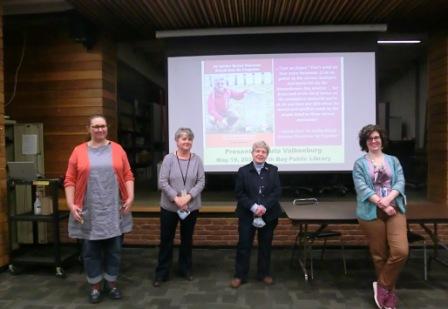
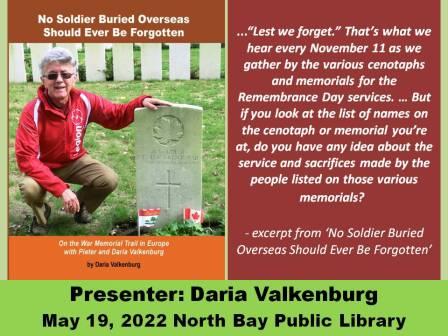
Thursday, May 19, 2022 – North Bay, Ontario, hosted by the North Bay Public Library. Time 7:00 pm.
If you are in the North Bay area, we hope to see you!
….North Bay Area Soldiers Buried In The Netherlands….
We received lists of soldiers from the North Bay area who are buried in the Canadian War Cemeteries in The Netherlands, including a few for which no photo had been found. With the help of Don Coutts, Judie Klassen, and Shawn Rainville, headway has been made in researching these names from the photo wish lists, and families for 3 have been found.
Thank you also to Helen Vaillancourt of the Nipissing Chapter of the Ontario Genealogical Society and North Bay Public Library staff who delved into research after reading about the search for photos and families of soldiers buried in the Canadian War Cemeteries in The Netherlands.
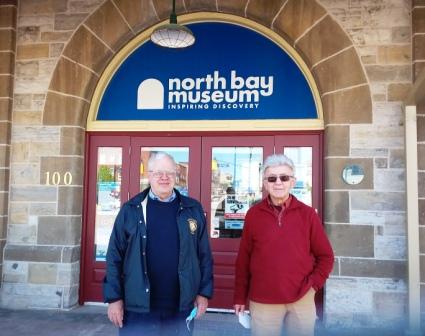
Shawn Rainville and Pieter Valkenburg had a chance to meet in person. (Photo credit: Daria Valkenburg)
…Buried in the Canadian War Cemetery in Holten…
APOSTLE of 12th Manitoba Dragoons – 18th Armoured Car Regiment. KIA 1945-Apr-16, aged 21
Albert JosephCOTE of The Algonquin Regiment. KIA 1944-Oct-05, aged 24
Herbert P. CROOME of Royal Canadian Artillery – 2nd Anti-Tank Regiment. KIA 1945-May-1, aged 27
Theodore S.DUNN of The Algonquin Regiment. KIA 1945-Apr-11, aged 30
William H. K. LOCKE of Royal Canadian Artillery – 4 Field Regiment. KIA 1945-Apr-03, aged 19
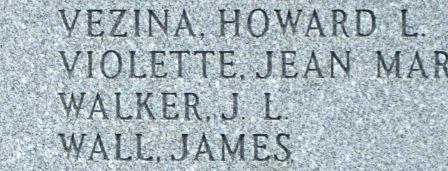
John Langford ‘Jack’WALKER of Governor General’s Foot Guards-21st Armoured Regiment. KIA 1945-May-1, aged 20
…Buried in the Canadian War Cemetery in Groesbeek…
Zave BROWN of Royal Hamilton Light Infantry. KIA 1945-Mar-9, aged 19
Leopold DanielBRULE of Essex Scottish Regiment. KIA 1945-Feb-19, aged 22
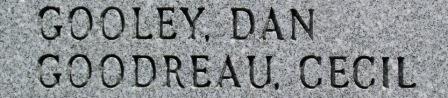
Cecil EdwardGOODREAU of Elgin Regiment, 25th Armoured Delivery Regiment. KIA 1945-Feb 26, aged 22
Donald O.GUERTIN of Royal Hamilton Light Infantry. KIA 1945-Mar-2 aged 27
Clifford StanleyJOHNSTON of Royal Canadian Air Force 419 Squadron. KIA 1944-Jun-17, aged 21
John Richard ‘Jack’MARACLE of 1st Hussars, 6th Armoured Regiment. KIA 1945-Mar-12, aged 19 (Maternal grandfather T. Marshall lived in North Bay)
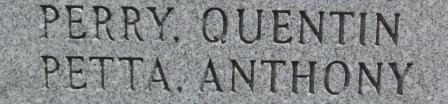
Anthony PETTA of the Algonquin Regiment. KIA 1945-Mar-3, aged 29
…Buried in the Canadian War Cemetery in Bergen Op Zoom…:
Cleo Adelard SEGUIN of The Royal Regiment of Canada. KIA 1944-Sep-28, aged 24 (Wife Georgette Brousseau was from North Bay)
If you know of any other soldiers from the North Bay area that are buried in The Netherlands please let Pieter know. You can mail him at memorialtrail@gmail.com, comment on the blog, or send a tweet to @researchmemori1.
Bloyce McLellan and Daria with book. (Photo credit: Pieter Valkenburg)
May 10, 2022. We very much appreciate the feedback from ‘No Soldier Buried Overseas Overseas Should Ever Be Forgotten’, and love seeing the photos sent in and having the opportunity to meet some of you.
…Some additional feedback we’ve received….
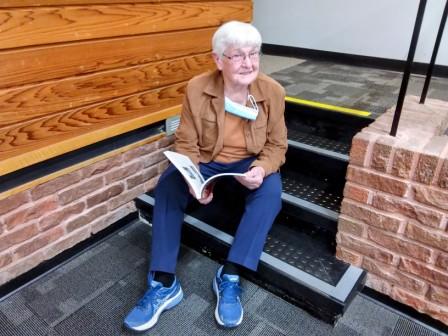
Burnie Reynaert with book. (Photo courtesy of B. Reynaert)
Burnie Reynaert wrote that “… I always feel comforted when I read what you have both accomplished. Wishing you success on your European memorial tour book. I did buy your book, and liked it very much. It sits on my coffee table...”
Bloyce McLellan wrote “...I really have my nose into your book. You both did a real wonderful job and what a gift to all the families of these Veterans. Both of you deserve enormous credit and need to take a bow. Awesome work….”
Susan Choi wrote us to say “…Just finished your book! It was a great read. Thank you both for what you have done to honor and remember the Canadian soldiers and the sacrifices they made for all of us in WWI and WWII. Your book was particularly special to me because of the personal friendship I have with both of you. Daria, you have a gift for writing. You write the way you speak. As I read your book, it was as though you were sitting next to me, telling me about this wonderful war memorial trip. Your wit and humor were intact and offered a much needed relief to a serious and somber subject. Thank you both again for all that you have done and continue to do in the name of the fallen soldiers who gave up everything for all of us…”
Thank you to Susan Choi, Bloyce McLellan, and Burnie Reynaert for taking the time to send in comments and photos in support of this research project. Thank you also to Cody McEachern for the interview in The Guardian.
Photos or information to share? Email Pieter at memorialtrail@gmail.com, comment on the blog, or tweet to @researchmemori1.
If you are reading this posting, but aren’t following our research, you are welcome to do so. Our blog address: https://onthewarmemorialtrail.com/
4 countries, 6 weeks, 7,000 km – an unforgettable war memorial journey in Europe….Daria’s book ‘No Soldier Buried Overseas Should Ever Be Forgotten‘ is now available in print and e-book formats. Net proceeds of book sales help support research costs and the cost of maintaining this blog.. For more information seehttps://nosoldierforgotten.com/
Pieter by the Dutch flag which was put out for Liberation Day on May 5, 2022. (Photo credit: Daria Valkenburg)
May 9, 2022. Last year, stories of two WWII soldiers who lost their lives in this area on March 30, 1945, were told. Both Edmond COULOMBE of Manitoba and Alphonse ROBERT of New Brunswick served with Les Fusiliers Montreal and were killed on the same day.
We learned about the Gendringen connection when we were contacted by Maarten Koudijs, a volunteer researcher in this Dutch village along the German border with eyewitness accounts of how Robert and several members of his Regiment, including Coulombe, lost their lives when a shell exploded.
Missed the stories about Edmond COULOMBE and Alphonse ROBERT? See:
The Gendringen Monument was unveiled on May 6, 2022. Translation of the Dutch text: So that we never forget. (Photo submitted by and courtesy of Maarten Koudijs)
On May 6, 2022, a monument was unveiled in Gendringen, The Netherlands. Maarten Koudijs was kind enough to share some photos, and explained that “… Nearly 500 people are commemorated on this memorial.
· 23 Dutch Soldiers (from Genkoppen and Wisch) during the raid in May 1940
· 41 Canadian military personnel and Air Force crew members
· 44 English soldiers and Air Force crew members
· 167 German soldiers who fell in the former municipality of Gendringen en Wisch (now Oude IJsselstreek)
· 1 Irish aircrew member flying for the RAF
· 1 Australian aircrew member flying for the RAF
· 2 New Zealand crew members flying for RAF
· 1 American Spitfire pilot flying for RCAF….”
Note: RAF refers to Royal Air Force. RCAF refers to Royal Canadian Air Force.
Panels by the monument have QR codes which provide information, plus buttons for audio descriptions in Dutch, English, and German. (Photo submitted by and courtesy of Maarten Koudijs)
…Einar Victor Isfeld’s Son Attended the Unveiling…
Dennis Isfeld, son of Einar Victor ISFELD of the Queen’s Own Highlanders, attended the unveiling. In a short video (under 3 minutes in both Dutch and English), he was interviewed with an eyewitness, who was 11 years old in 1945.
… Canadians commemorated on the Gendringen Memorial….
Maarten identified the names of 41 Canadians, including the Regiment they were serving in at the time of death and their final resting place. “…The following Canadian soldiers were killed near the former municipality of Genkoppen. The former municipality of Genkoppen en Wisch is now OUDE IJsselstreek Achterhoek….”
Queen’s Own Cameron Highlanders Of Canada:
Harry Gregory BOZAK, died March 30, 1945, aged 20, buried in Groesbeek Canadian War Cemetery
Francis Walter Andrew GLOSSOP, died March 30, 1945, aged 28, buried in Groesbeek Canadian War Cemetery
Einar Victor ISFELD, died of wounds April 6, 1945, aged 30, buried in Groesbeek Canadian War Cemetery
Anton W. KOHLRUSS, died March 31, 1945, buried in Groesbeek Canadian War Cemetery
Frederick LISSOWAY, died March 30, 1945, aged 37, buried in Groesbeek Canadian War Cemetery
John Graham MACFIE, died March 30, 1945, buried in Groesbeek Canadian War Cemetery
Vincent Albert MOORE, died March 30, 1945, aged 29, buried in Groesbeek Canadian War Cemetery
Edward Oliver OBERG, died March 30, 1945, aged 19, buried in Groesbeek Canadian War Cemetery
William PROW, died March 30, 1945, aged 24, buried in Holten Canadian War Cemetery
Rocco Andrew SPEZIALI, died March 30, 1945, aged 26, buried in Groesbeek Canadian War Cemetery
Bert J. THOMAS, died March 30, 1945, buried in Groesbeek Canadian War Cemetery
Charles Joseph YOUNES, died March 30, 1945, aged 33, buried in Groesbeek Canadian War Cemetery
Les Fusiliers Mont-Royal:
Roland A. BARRY, died March 30, 1945, buried in Groesbeek Canadian War Cemetery
Joseph Paul Roland CARON, died of wounds April 5, 1945, buried in Groesbeek Canadian War Cemetery
Edmond COULOMBE, died March 30, 1945, aged 22, buried in Groesbeek Canadian War Cemetery
Jacques FORTIN, died March 30, 19455, aged 21, buried in Groesbeek Canadian War Cemetery
Bernard Gaston PILON, died March 30, 1945, aged 19, buried in Groesbeek Canadian War Cemetery
Alphonse ROBERT, died March 30, 1945, aged 21, buried in Groesbeek Canadian War Cemetery
South Saskatchewan Regiment:
Peter HYDICHUK, died March 31, 1945, buried in Groesbeek Canadian War Cemetery
James Joseph MALONEY, died March 31, 1945, buried in Holten Canadian War Cemetery
Michael Joseph MCDERMOTT, died of wounds August 5, 1945, buried in Kilgobbin Burial Ground, Ireland
William SERNOWSKI, died March 31, 1945, buried in Groesbeek Canadian War Cemetery
8th Canadian Recce Regiment (14th Canadian Hussars):
Laurenzo DUBE, died March 30, 1945, aged 26, buried in Holten Canadian War Cemetery
Leslie Albert DUCKETT, died March 30, 1945, aged 24, buried in Groesbeek Canadian War Cemetery
William LAWRYSYN, died March 30, 1945, aged 27, buried in Groesbeek Canadian War Cemetery
Wilfred Charters STEWART, died March 29, 1945, aged 22, buried in Groesbeek Canadian War Cemetery
Royal Canadian Artillery:
Ivan RayburnNILSSON, died April 1, 1945, aged 21, buried in Groesbeek Canadian War Cemetery
Black Watch Of Canada:
Ernest George GRAHAM, died April 1, 1945, aged 29, buried in Groesbeek Canadian War Cemetery
Robert WALKER, died of wounds April 1, 1945, aged 19, buried in Groesbeek Canadian War Cemetery
Royal Canadian Air Force:
Duncan Eric CAMPBELL, died June 12, 1943, aged 28, buried in Wisch (Varsseveld) General Cemetery
Ralph Perry DAVIES, died June 12, 1943, aged 24, buried in Wisch (Varsseveld) General Cemetery
James HEATH, died June 17, 1944, aged 35, buried in Wisch (Varsseveld) General Cemetery
Allan Lockwood HOME, died May 13, 1943, aged 26, buried in Gendringen Roman Catholic Cemetery
Albert James MACLACHLAN, died June 12, 1943, aged 21, buried in Wisch (Varsseveld) General Cemetery
Hugh Columba MACNEIL, died May 13, 1943, aged 24, buried in Gendringen Roman Catholic Cemetery
James Edward MCDONALD, died June 2, 1942, aged 26, buried in Gendringen Roman Catholic Cemetery
Henry Augustin SHEEHAN, died May 13, 1943, aged 21, buried in Gendringen Roman Catholic Cemetery
Frederick John SMITH, died October 31, 1942, aged 21, buried in Gendringen Roman Catholic Cemetery
Louis-Phillipe Roma TAILLEFER, died June 12, 1943, aged 24, listed on the Runnymede Memorial in Surrey, England
Milford Glen THOMAS, died May 13, 1943, aged 26, buried in Gendringen Roman Catholic Cemetery
Rudolph ZEIDEL, died June 12, 1943, aged 21, listed on the Runnymede Memorial in Surrey, England
Thank you to Maarten Koudijs for letting us know about this commemoration event. Do you have photos or information to share? Email Pieter at memorialtrail@gmail.com, or comment on the blog.
If you are reading this posting, but aren’t following our research, you are welcome to do so. Our blog address: https://onthewarmemorialtrail.com/
4 countries, 6 weeks, 7,000 km – an unforgettable war memorial journey in Europe…. Daria’s book ‘No Soldier Buried Overseas Should Ever Be Forgotten‘ is available in print and e-book formats. Net proceeds of book sales help support research costs and the cost of maintaining this blog. For more information see https://nosoldierforgotten.com/
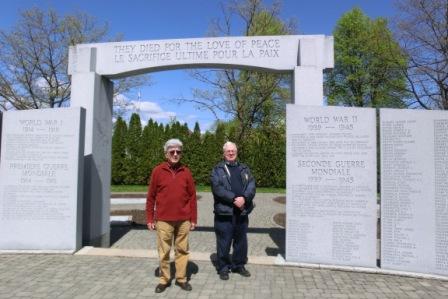
May 5, 2022. Those of us of a certain age…. pre-internet days… may remember the admonition when travelling to ‘send us a postcard’. This request came particularly from parents and grandparents. If you were having a good time, writing out cards was the last thing on your mind.
But there was a solution – pre-filled postcards where all you had to do was check the appropriate boxes and fill in the address the card should be sent to. It let the receiver know you had safely arrived, and gave a chance to make a few comments or observations by ticking a series of boxes. During a trip to New Zealand, I remember ticking a box that said ‘there are more sheep here than people’. At the time there were 3 million people and 9 million sheep!
…A Field Post Card was an easy way to say I’m still alive….
During WWI, soldiers were kept busy trying to stay alive. Not all had the time or inclination to write extensive letters, and so the Field Post Card came in handy, especially to let loved ones know when a letter or parcel arrived, or to give a brief update on the soldier’s well-being.
The Field Post Card, known as an f.s.p. or a ‘whizz bang’, allowed soldiers to strike out messages that didn’t apply. No extra notes were allowed, except for dates, or the card would be destroyed.
Harold Keith Howatt. (Photo courtesy of South Shore United Church)
Even WWI soldier Harold Keith HOWATT of Augustine Cove, an active correspondent, sent these Field Post Cards when he received a letter or parcel while serving with the 8th Canadian Siege Battery.
Field post card dated October 18, 1917 from Harold Howatt, advising he received a parcel. (Courtesy of the H. Howatt collection)
The Field Post Card of October 18, 1917 from Harold Howatt was mailed a day later. (Courtesy of the H. Howatt collection)
Harold Howatt noted in his October 18, 1917 Field Post Card that he had received a parcel that had been sent a month earlier, that a letter would be coming soon, and that he was ‘quite well’.
…What Harold Howatt couldn’t say in his Field Post Card….
What he wasn’t able to say was where his unit was stationed – La Bassée, France, located southwest of Lille and about 16 km (ten miles) from the Belgian border.
Map showing La Bassée, where the 8th Siege Battery was located at the time Harold Howatt send his Field Post Card. (Map source: http://www.google.ca)
In ‘The Secret History Of Soldiers’ historian Tim Cook noted that the Field Post Cards allowed soldiers to communicate at a time when it was difficult to explain the horrors that they were experiencing. A prewritten card with no information that might help the enemy, such as location, was also quicker than regular mail as it bypassed censors. “… The cards were a stopgap measure in between letters and they were commonly sent after a battle by exhausted soldiers...”
“…The phrase ‘I am quite well’ serves as an ironic comment on the difficulty soldiers had in finding the words to describe their unique experiences...”
Howatt recorded in his notes what he didn’t include in his Field Post Card….
On Monday, September 24, 1917 he wrote “…Slept in a straw loft last night, did not sleep very well as there was a rat running around through the straw all night…”
After this sleepless night he wrote that they “…. started to shoot at 2:30 pm. Ranged in 12 rounds, then we stopped firing until aviator ranged another battery. Started in again and fired pretty steady until 9:50 pm….”
On Tuesday, October 2, 1917 he noted that they had been woken up at midnight. “…All of a sudden, a terrific racket started. The Germans were pouring H. E. and gas shells into the village in front of the Fosse. About a thousand shells came in altogether….We did not bother putting our gas masks on as we were so high up. The bombardment lasted about one hour…” H.E. referred to high explosives.
On Thursday, October 18, 1917, Howatt recorded that “… we expect to hand over guns, stories, and everything to another battery…..”
On October 30, 1917 he wrote it was “…the date of leaving for the real war…” Indeed they did. They set up base in Poperinghe, Belgium, to participate in the latter part of the Third Battle of Ypres – which we know as the Battle of Passchendaele – a battle that ended on November 17, 1917. (See https://en.wikipedia.org/wiki/Battle_of_Passchendaele)
So, if you have WWI postcards in your possession take a look and see if you have any Field Post Cards! Photos or information to share? Email Pieter at memorialtrail@gmail.com, comment on the blog, or tweet to @researchmemori1.
If you are reading this posting, but aren’t following our research, you are welcome to do so. Our blog address: https://onthewarmemorialtrail.com/
4 countries, 6 weeks, 7,000 km – an unforgettable war memorial journey in Europe…. Daria’s book ‘No Soldier Buried Overseas Should Ever Be Forgotten‘ is available in print and e-book formats. Net proceeds of book sales help support research costs and the cost of maintaining this blog. For more information see https://nosoldierforgotten.com/
Caption in De Telegraaf: Pieter Valkenburg: “No soldier who died abroad during war should be forgotten.” OWN PHOTO (Photo credit: Daria Valkenburg)
May 4, 2022. Sometimes the unexpected happens. Last month, a search for family and photos of WWII soldiers Albert Joseph COTE and John Langford WALKER, who are buried in the Canadian War Cemetery in Holten, The Netherlands, began.
Shortly afterwards, Pieter was contacted by Marcel Vink of De Telegraaf, a newspaper in The Netherlands. He’d read the letter to the editor. Would Pieter be willing to do an interview? Pieter agreed, and the article was published today, May 4, 2022 – which is Dodenherdenking (Remembrance Day) in The Netherlands. This day commemorates Dutch civilians and military who have died in war since the beginning of WWII. (See https://en.wikipedia.org/wiki/Remembrance_of_the_Dead)
Pieter Valkenburg is fully committed to fallen Canadians
by Marcel Vink
PRINCE EDWARD ISLAND • It started as a helping hand, but grew into a true mission. Pieter Valkenburg has been passionately committed to giving fallen war heroes from Canada a face for years. The 78-year-old Dutchman, who lives in Canada, realizes how important it is emotionally for relatives to get clarity about their deceased loved ones, even 77 years after the Second World War.
Valkenburg worked for the Ministry of Foreign Affairs for many years and was posted to various locations around the world, including in Ottawa.
After his retirement, he decided to continue living in the North American country with his Canadian wife Daria, where he discovered that many families often no longer know in detail what happened to relatives that didn’t come back during the Second World War. About 7600 Canadians are buried in the Netherlands who fought for our freedom.
“At the beginning of 2014 I read an article about the Canadian war cemetery in Holten, one of the military cemeteries in The Netherlands,” says Valkenburg.
“There are 1,355 Canadians lying there, and not much was known about some of them at the time. Therefore, around that time, a project was started that strived to literally find the face for every name. I find that very important myself. No soldier who died abroad in war should be forgotten.” (NOTE: there are 1,394, not 1,355.)
‘Reactions from next of kin are priceless’
Background
The native of Leerdam was captivated by the subject and delved into the matter. First in the background with only a few names, but then more and more.
Over the past five years, I have helped researchers at Canadian war cemeteries in the Netherlands in their quest to give each grave a face, and thus also a story. It is quite a puzzle, but the reactions of relatives when it succeeds are priceless. Those involved really appreciate it when they realize that they have never been forgotten. They gave their lives in the struggle for our freedom, in a country foreign to them. It’s much more meaningful when you stand by a grave to pay your respects if you know what the person looked like.”
Investigative Work
While his search was initially limited to the fallen from Prince Edward Island – the western province where he lives – he now focuses on many more areas in Canada. Valkenburg uses the old-fashioned manual search, but also uses many digital sources. (NOTE: Prince Edward Island is on the east coast of Canada!)
Relatives are often emotional about it, he noticed. After he found the family of Lieutenant Norman James Nixon – killed in the Battle of Delfzijl in April 1945, in which twenty Canadians of his regiment were killed, his son called this ‘a total surprise’. “I am immensely grateful,” said the man, who named his own son after his dead father, in tears. (See https://onthewarmemorialtrail.com/2021/03/07/on-the-war-memorial-trail-the-ww2-soldier-from-st-stephens/)
The work of Pieter and his wife Daria is highly appreciated in the Netherlands as well as in Canada. He has already received several awards. Sometimes he finds new ‘assignments’ in a miraculous way.
“Once we were at a hotel in New Brunswick Province, when a receptionist asked what we were doing. After I told about our searches, he indicated that his great-uncle had also died in the war, and that his grave should be in The Netherlands. Other than that he had no idea. I immediately got to work and found him at the cemetery in Groesbeek. I also found a photo on the Canadian Virtual War Memorial.” (See https://onthewarmemorialtrail.com/2021/08/02/on-the-war-memorial-trail-the-ww2-soldier-killed-while-lining-up-to-attend-church/)
In this way, this man also got his face back. “With these results, I say, Canadian-style: this makes my day. I’m 78 now, but as long as I can keep up with this, I will. Because there is still a lot of work to be done.”
This very proud wife thanks Marcel Vink for writing the article about Pieter and De Telegraaf for publishing it on this day of remembrance and commemoration.
If you have photos or information to share, please let Pieter know. Email him at memorialtrail@gmail.com, comment on the blog, or tweet to @researchmemori1.
If you are reading this posting, but aren’t following our research, you are welcome to do so. Our blog address: https://onthewarmemorialtrail.com/
4 countries, 6 weeks, 7,000 km – an unforgettable war memorial journey in Europe…. Daria’s book ‘No Soldier Buried Overseas Should Ever Be Forgotten‘ is available in print and e-book formats. Net proceeds of book sales help support research costs and the cost of maintaining this blog. For more information see https://nosoldierforgotten.com/
April 17, 2022. In September 2017, Pieter and I visited the village of Posterenk in The Netherlands with Edwin van der Wolf. Edwin told us how the Carleton and York Regiment came from Italy to Marseilles, France, and then made their way to The Netherlands. On April 13, 1945, they liberated Posterenk. In the process several soldiers lost their lives and were temporarily buried in the vicinity.
April 13, 2022. Posterenk windmill. (Photo submitted by Edwin van der Wolf. Photo credit: Anneke Poppenk)
The village never forgot the sacrifices and placed a memorial stone on its windmill.
Translation of memorial stone on the windmill: Posterenk freed by the Carleton & York Regiment of Canada on April 13, 1945. (Photo credit: Daria Valkenburg)
…8 known soldiers who lost their lives in the liberation of Posterenk….
The village also prepared a list of 6 Carleton & York Regiment soldiers, who had been buried in the area, to commemorate. Unfortunately, not all soldiers who died were included.
Pieter holds the list of 6 Carleton & York Regiment soldiers temporarily buried in Posterenk in 1945. (Photo credit: Daria Valkenburg)
Over the past few years, two more soldiers were identified: Goldwin Marven POLLICK of Minto, New Brunswick, and Daniel Peter MACKENZIE of Victoria Cross, Prince Edward Island.
…Sacrifice of Goldwin Pollick and Daniel MacKenzie commemorated in 2022….
On April 13, 2022, the commemoration of the 6 soldiers of the Carleton & York Regiment who had been buried near Posterenk was held. This year, Edwin “….read out for the first time the stories of Pte Goldwin Pollick and Cpl Daniel MacKenzie of this regiment, who were temporarily buried in Lochem because they had previously died in a Canadian hospital there….”
Edwin van der Wolf reads out the stories of Goldwin Pollick and Daniel MacKenzie. Above him, you can see the photos, left to right, of Samuel Glazier Porter, Goldwin Marven Pollick, and Frederick Joseph Tait. (Photo submitted by Edwin van der Wolf. Photo credit: Anneke Poppenk)
Members of the Royal Canadian Legion in The Netherlands and the City of Apeldoorn Pipes and Drums Band joined officials and the public for the commemoration event in Posterenk. (Photo submitted by Edwin van der Wolf. Photo credit: Anneke Poppenk)
The City of Apeldoorn Pipes and Drums Band attended the commemoration event in Posterenk. (Photo submitted by Edwin van der Wolf. Photo credit: Anneke Poppenk)
…Two soldiers commemorated in Posterenk are without photos….
Edwin advised that photos of the soldiers have been hung on the Posterenk windmill, but photos of two soldiers have yet to be found. He has asked for help to “…look for the two missing photos of Pte James Mossey and Sgt Harold Sabean for the working group in Posterenk...” Both men are buried in the Canadian War Cemetery in Holten, The Netherlands.
James Frank MOSSEY was born on April 20, 1919 in Souris, Prince Edward Island, son of William and Mary Mossey. Killed in action on April 14, 1945, aged 25.
Harold Gordon SABEAN was born on March 19 1918 in Port Lorne, Nova Scotia, the son of Saul and Susan Sabean. He was married to Josephine Marie Sabean and lived in St John, New Brunswick. Killed in action on April 13 1945, aged 27.
UPDATE: Photos of these two soldiers have been found….
Thank you to Edwin van der Wolf for sharing photos about the commemoration event in Posterenk. If you have photos or information to share, please let Pieter know. Email him at memorialtrail@gmail.com, comment on the blog, or tweet to @researchmemori1.
If you are reading this posting, but aren’t following our research, you are welcome to do so. Our blog address: https://onthewarmemorialtrail.com/
4 countries, 6 weeks, 7,000 km – an unforgettable war memorial journey in Europe…. Daria’s book ‘No Soldier Buried Overseas Should Ever Be Forgotten‘ is available in print and e-book formats. Net proceeds of book sales help support research costs and the cost of maintaining this blog. For more information see https://nosoldierforgotten.com/
March 24, 2022. Pieter and I would like to thank everyone who contacted us about our book, ‘No Soldier Buried Overseas Should Ever Be Forgotten’, about our 2017 war memorial tour in Europe. We appreciate the comments and photos you’ve sent of yourselves with the book. Please keep them coming!
When the book was first published in January 2022, it was available in print format only. Now, thanks to Wendy Nattress, it is now available in e-book format for Kindle, Kobo, and other reader format. Please visit https://nosoldierforgotten.com/for links to where it is available.
Wendy has ensured that both the Table of Contents and the Index have hyperlinks to the appropriate places in the e-book, making for a more user-friendly reading experience.
Invitations have been received and accepted for these ‘Author Talks’:
Thursday, May 19, 2022 – North Bay, Ontario, hosted by the North Bay Public Library. Time 7:00 pm.
Thursday, August 11, 2022 – Victoria-By-The-Sea, Prince Edward Island, part of the ‘Our Island Talks’ series, and hosted by Victoria Playhouse and Victoria Historical Association. Time: 3:00 pm.
If you are reading this posting, but aren’t following our research, you are welcome to do so. Our blog address: https://onthewarmemorialtrail.com/
4 countries, 6 weeks, 7,000 km – an unforgettable war memorial journey in Europe…. Daria’s book ‘No Soldier Buried Overseas Should Ever Be Forgotten‘ is available in print and e-book formats. Net proceeds of book sales help support research costs and the cost of maintaining this blog. For more information see https://nosoldierforgotten.com/
One soldier, who came from an area near where Edmond Coloumbe lived, was Philip LAFORTE. With the help Philip’s niece Michelle Wazny, Diane Dube of the Winnipeg River Heritage Museum in St.-Georges, and genealogy researcher Judie Klassen, a photo was found, as was information on his Métis roots.
Philip was born September 12, 1911 in Lac du Bonnet, Manitoba, the son of Napoleon and Rosalie (nee Mainville) LaForte. His mother’s Métis status meant that Philip too was Métis.
A trapper before he enlisted in Winnipeg with the Royal Winnipeg Rifles on July 31, 1941, Philip was married to Eva Jane (nee Johnston) and they had one son, Felix Joseph. Another son, Donald Philip, was born shortly after he enlisted. Philip had previously been married to Sarah Louise Bird, who had died of tuberculosis. Their son Leon was brought up by his grandparents, Mr and Mrs Joseph Daniels, of Sagkeeng First Nation.
Philip Laforte. (Photo courtesy of the Laforte family)
Philip’s service file noted that he was fluent in English, French, and Cree, and had trapped furs for the Hudson’s Bay Company, and worked as a bush labourer for Brown and Rutherford.
As a new recruit, Philip was sent to Fort William (now part of Thunder Bay), Ontario for two months of basic training. Then he was attached to the Infantry Advanced Training Centre (Rifle) in Winnipeg, Manitoba..
On December 12, 1941, he became part of the 3rd Division Infantry Reinforcement Unit (DIRU) as a Rifleman, and was on his way to the United Kingdom, arriving on December 23, 1941.
On May 28, 1942, Philip was transferred to the Royal Winnipeg Rifles. Still in the United Kingdom, he was taken on strength to the #1 Educational Company on November 1, 1942, and stayed in that unit until February 1943, when he was transferred to the #2 Canadian Infantry Reinforcement Unit (CIRU).
…. Philip is involved in the liberation of North-West Europe….
On April 12, 1943, Philip was reassigned to the Royal Winnipeg Rifles. On September 1, 1944 he arrived in France as reinforcement for troops lost during the Battle of Caen and the Battle of Falaise Gap.
He participated in the fight to clear the Scheldt Estuary to allow the re-opening of the Antwerp harbour. (See https://en.wikipedia.org/wiki/Battle_of_the_Scheldt) By January 1945 the Royal Winnipeg Rifles were in The Netherlands, and spent the New Year in ‘s-Hertogenbosch.
On February 1, 1945, the war diary recorded that the Regiment was informed of the part that the men “…would play in Operation Veritable…” This would take them into Germany. (See https://en.wikipedia.org/wiki/Operation_Veritable) The Regiment arrived in Millingen, Germany on February 9, 1945.
By February 16, 1945 the Regiment was based in Essen, Germany, as they cleared German positions in flooded areas of the Rhine flood plain and the Reichswald forest, which is close to the Dutch-German border.
On March 11, 1945 the Regiment began moving back towards ‘s-Hertogenbosch, The Netherlands and the greater battle towards liberating the country.
A short video produced by the Canadian Army gives an idea of what troops faced in this period:
….The battle for Deventer involved crossing the Schipbeek ….
Movement of Canadian troops towards Deventer. Note that all first had to cross the Schipbeek. (Map provided by Edwin van der Wolf)
On April 7, 1945 the Royal Winnipeg Rifles were ordered to cross the Schipbeek and establish a bridgehead as preparation for an assault on the city of Deventer by the 7th Canadian Brigade.
Crossing the Schipbeek was vital to the success of the bridge operation, not an easy feat as the Bridge was strongly defended by the Germans.
Unfortunately, one of the casualties during the events of April 7, 1945 was Philip Laforte, and it seems most likely that he lost his life during the crossing of the Schipbeek.
Along with 45 other soldiers, he was temporarily buried beside an estate in Oxe, which had been the site of the murder of Dutch resistance fighters.
On April 6, 1945, just before the Schipbeek, Royal Winnipeg Rifles troops arrived at an estate in Oxe (Oxerhof). This had been taken over as Gestapo Headquarters, but had been hastily vacated ahead of the Regiment.
In January 1946, all 46 Canadian soldiers were reburied in the Canadian War Cemetery in Holten, The Netherlands.
Grave of Philip Laforte in the Canadian War Cemetery in Holten, The Netherlands. (Photo courtesy of the Information Centre Canadian Cemetery Holten)
…The Colmschate Memorial commemorates 46 Canadians….
On April 8, 2015, a memorial was placed in Colmschate to commemorate the 46 Canadians who had been temporarily buried on the Oxe estate.
Memorial in Colmschate, commemorating 46 Canadians, including Philip Laforte. (Photo courtesy of Edwin van der Wolf)
Text of Memorial in Colmschate, commemorating 46 Canadians, including Philip Laforte. (Photo courtesy of Edwin van der Wolf)
Translation of the Dutch text was prepared by Pieter Valkenburg:
They Gave Their Lives
The liberation of Colmschate
During their advance from the Achterhoek, the Royal Winnipeg Rifles, the Regina Rifle Regiment, and the Canadian Scottish Regiment, led by Brigadier General T G Gibson reached the neighborhood of Oxe on Friday April 6, 1945. Next to the house on the Oxe estate (Oxerhof), the liberators discovered the bodies of ten Dutchmen who had been murdered in cold blood by the occupiers the day before. The Canadians passed the Schipbeek via a quickly struck bailey bridge, which replaced the destroyed Swormertoren Bridge.
Despite heavy German resistance, they continued north. Many farms went up in flames and houses were badly damaged. Many families sought refuge in the already liberated Oxe. Some residents lost their lives.
On April 8, 1945, the liberators captured (a small part of) the Snippeling, Colmschate, and the Bannink. Via the Vijfhoek they reached the Crödden Bridge over the Overijssels Canal. Schalkhaar and Deventer were then liberated and with the help of the Queen’s Own Rifles the remaining part of the Snippeling.
Many Canadians lost their lives in the battle in this area. In April 1945, the bodies of 46 fallen Canadians were buried in a temporary resting place opposite the Oxerhof house. In January 1946 they were transferred to the Canadian Cemetery in Holten (Plot I and II).
…..Philip is listed on the National Métis Veterans Memorial Monument….
Thank you to Philip’s niece Michelle Wazny, Diane Dube of the Winnipeg River Heritage Museum in St.-Georges, and genealogy researcher Judie Klassen. It can be a challenge to find family and photos, and we appreciate the help we receive! If you have photos or information to share, please let Pieter know. Email him at memorialtrail@gmail.com, or comment on the blog.
If you are reading this posting, but aren’t following the blog, you are welcome to do so. Our blog address: https://onthewarmemorialtrail.com/
4 countries, 6 weeks, 7,000 km – an unforgettable war memorial journey in Europe….Daria’s book ‘No Soldier Buried Overseas Should Ever Be Forgotten‘ is available in print and e-book formats. Net proceeds of book sales help support research costs and the cost of maintaining this blog. For more information seehttps://nosoldierforgotten.com/