On The War Memorial Trail…. Remembrance Week 2026 -Remembrance Service At Crapaud Community Hall

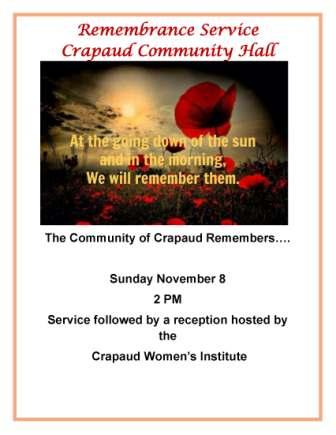
November 15, 2026. On Sunday, November 8, 2026, the Annual Remembrance Service was held at Crapaud Community Hall in Crapaud, Prince Edward Island.
Pieter was invited by Connie MacKinnon, on behalf of the village of Crapaud, to be the guest speaker again this year.  (See the posting about the 2025 Remembrance Service at https://onthewarmemorialtrail.com/2025/11/12/on-the-war-memorial-trail-remembrance-week-2025-remembrance-service-at-crapaud-community-hall/)
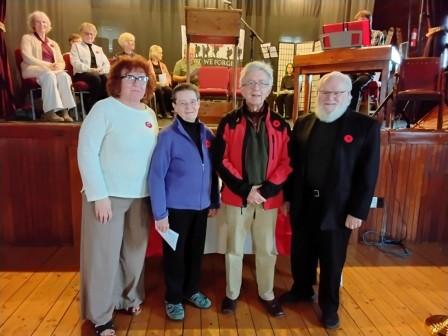
3 of the participants at the November 8, 2026 Remembrance Service at Crapaud Hall with Joanne Harvey, Mayor of Crapaud (far left):  The Rev Margaret Collins (Anglican), guest speaker Pieter Valkenburg, and The Rev Eric Lynk (United Church).  (Photo credit: Daria Valkenburg)

The service, led by Rev. Margaret Collins and Rev. Eric Lynk, included an honour guard from the Kingston Legion Branch No. 30, cadets from the Royal Canadian Sea Cadet Corps No. 85 Summerside and No. 1231 Kensington Army Cadets Corps, and pianist Quixote Froese.  Eva Sabota, student at Bluefield High School, played ‘The Last Post’ and ‘Rouse’ on her trumpet. 
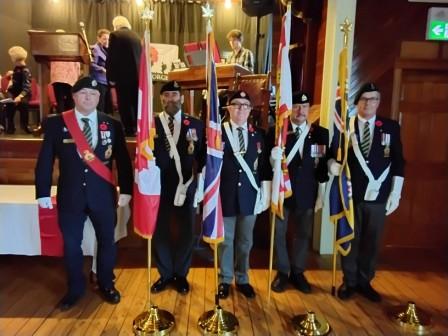
Honour Guard provided by Kingston Legion Branch No. 30. Left to right: Sgt At Arms Wade Campbell, Terence McGauphey, Darren Rea, Greg Gallant, Branch President Alan Crane. (Photo credit: Daria Valkenburg)

….Pieter was introduced by Reverend Eric Lynk….

Pieter was introduced by Reverend Eric Lynk….

“…To introduce our guest speaker for today, we are pleased to welcome someone who’s well known throughout this community, and throughout The Maritimes, and well beyond The Maritimes.… Mr Pieter Valkenburg. 

Born in The Netherlands in 1944, Pieter Valkenburg had a most interesting and varied career.  Pieter served 4 years in the Royal Netherlands Air Force.  Following his military service, he spent  years with the diplomatic service, during which time he had postings, 2 in the US, 2 in South America, in India, several throughout Europe,  and the last in Montreal.  We’re so glad he decided that would be his last and that he’d stay in Canada.

Pieter began his work, which became very much a passion, searching the names of PEI members of the Canadian Forces who had been killed in action, but whose burial places had not yet been graced by their photo….”

Rev Lynk summarized several projects that Pieter has been involved in, before ending his introduction…

“…For his dedication to his efforts on behalf of others, Pieter has been duly honoured with the Veterans Affairs Commendation, the Governor General’s Sovereign Medal for Volunteers, and last year, Pieter was appointed a Knight in the Order of Orange-Nassau for his extensive work identifying and honouring Canadian soldiers buried in The Netherlands. And this of course was the gift of the King of The Netherlands.

So it is that I am pleased to introduce Pieter to all of you and ask you to welcome him here….”

….Pieter’s presentation was built around 4 words…

Pieter’s presentation began by saying “…Today I’d like to talk to you about Remembrance Day …. through four words that seem to have the same meaning but are really different ways in which we remember. 

These four words are Remembrance….Memory…..Recollection… and Commemoration….” 

Here are a few excerpts from his presentation about the four words:

“…Remembrance is the act of keeping someone in mind or honouring them… what we do each year as we take the time to attend a Remembrance service such as today…

Memory is the ability to remember an event or a fact….

Recollection brings a past event back to mind, often with effort….” Most of us present had been born after WWII ended, and our knowledge of the past came from photos and stories. Pieter noted that he was only a year old when The Netherlands was liberated and so, of course, had no recollection of it.  “…It was my parents who explained how   Allied soldiers liberated us from Nazi rule, and saved us from starvation…and told us to never forget.

That brings me to Commemoration….the act of honouring a person or event….and that is what we are doing each Remembrance Day, as we honour those who served….”

Pieter then went on to explain how the work of the Commonwealth War Graves Commission is an ongoing act of commemoration, caring for 1.7 MILLION graves worldwide….

“…Commemoration….that’s such an important part of Remembrance Day, isn’t it? Anyone who visits a War Graves Cemetery managed by the Commonwealth War Graves Commission, such as Daria and I have, sees how well the graves are cared for, with flowers and small shrubs planted in each row of graves….” 

18,900 Canadian casualties from WWI and WWII are buried in Canada, 185 of them buried in Prince Edward Island in 77 cemeteries.  85 of these graves are from WWI and are in 50 cemeteries.  100 are from WWII and are in 44 cemeteries.  Several cemeteries on the Island have both WWI and WWII war graves.

….Pieter briefly mentioned his role as a volunteer….

Pieter then briefly mentioned his role as a volunteer with the Commonwealth War Graves Commission.  “….Since 2025, as one of the volunteers across Canada who are part of the National Volunteer Program, I’m tasked with inspecting the Commonwealth graves in 4 cemeteries in the South Shore area, reporting on their condition, and cleaning where necessary. You might have seen me at one of them, wearing a green vest identifying me as a volunteer….”
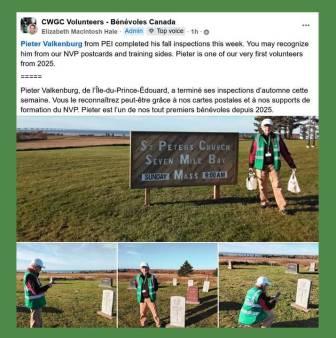
Facebook posting by Elizabeth MacIntosh Hale on the CWGC Volunteers page, with photos by Daria Valkenburg

“….The 4 cemeteries I visit twice a year are:

  • Cape Traverse Community Cemetery
  • Tryon People’s Cemetery
  • St Joseph Parish Cemetery in Kelly’s Cross
  • St Peter’s Roman Catholic Cemetery in Seven Mile Bay…”

 ….Pieter referenced the writer Rudyard Kipling in his closing remarks….

Pieter expressed how important it was to him to know what a soldier looked like when he stood at a grave.  “…Whenever I stand at a grave, and have no idea what that soldier looked like, I’m reminded of the all too many graves of unidentified soldiers whose headstones simply read ‘Known Unto God’, a phrase selected by the writer Rudyard Kipling back in 1917…”
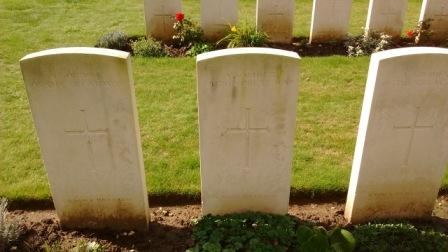
Three of the many graves of unidentified soldiers, with the phrase ‘Known Unto God’ at the bottom of the headstones, in Sanctuary Wood Sanctuary in Belgium, which we visited during our 2017 European War Memorial Tour. (Photo credit: Daria Valkenburg)

“…Kipling’s son John went missing during a battle in France in the fall of 1915….” This was the Battle of Loos.

“…Like so many families, the Kiplings never knew exactly what happened. After the war ended, Kipling would visit the battlefields of France, looking for his son, but never found him….

Ironically, it turned out that John Kipling had been buried in 1919, in a cemetery in Pas de Calais in France, as an unidentified soldier, with his father’s phrase on the headstone. It wasn’t until 1989 that the Commonwealth War Graves Commission was able to verify that this was his grave.

His story is a reminder that remembrance of those who gave their lives for our continued freedom is important to keep in our memories and recollections, and that we must continue to commemorate all those who served. Thank you….”

….The service was followed by a chance to socialize….

Following his speech, Pieter was thanked by Joanne Harvey, Mayor of Crapaud.  The audience was also informed that postcards provided by the Commonwealth War Graves Commission were available for anyone interested in learning more.

After the wreaths were laid, and the closing prayers were said, it was a time to chance to socialize. Among those in attendance were Olivia MacKinnon and Jack Sanders of Summerside.  Olivia is a distant relation of WWII airman Vincent Sanford MACCAUSLAND of Tyne Valley, Prince Edward Island, whose story will be told in the near future.

Vincent had been the bomb aimer aboard the last flight of Lancaster ED887 of RAF 617 Squadron, which was shot down and crashed near Castricum, The Netherlands on the night of May 16-17, 1943, while returning back to England after taking part in Operation Chastise….what we know more commonly as The Dambusters Raid.  Olivia and Jack have been researching Vincent’s life and service, and it was a pleasure to meet them.
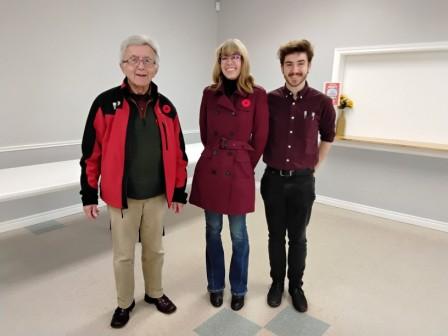
Pieter with Olivia MacKinnon and Jack Sanders. (Photo credit: Daria Valkenburg)

Thank you to Connie MacKinnon for inviting Pieter to speak.  Thank you to Rev. Eric Lynk for his introduction at the Remembrance Service. Thank you to Wendy Nattress for her help with the audio recording of Pieter’s speech.  Thank you also to Katrielle Ethier of the Commonwealth War Graves Commission for sending postcards about the Commission.

The work of remembrance of those who served continues.  More Remembrance Week stories to come.

If you have a story to tell, please let Pieter know. You can email him at memorialtrail@gmail.com, or comment on the blog.

© Daria Valkenburg

….Want to follow our research?….


If you are reading this posting, but aren’t following our research, you are welcome to do so.  Our blog address: https://onthewarmemorialtrail.com/
4 countries, 6 weeks, 7,000 km – an unforgettable war memorial journey in Europe…. Daria’s book ‘No Soldier Buried Overseas Should Ever Be Forgotten‘ is available in print and e-book formats.  Net proceeds of book sales help support research costs and the cost of maintaining this blog. For more information see https://nosoldierforgotten.com/

You are also invited to subscribe to our YouTube Channel: On The War Memorial Trail With Pieter Valkenburg: https://www.youtube.com/channel/UCJ591TyjSheOR-Cb_Gs_5Kw.

Never miss a posting!  Subscribe below to have each new story from the war memorial trail delivered to your inbox.
 

On The War Memorial Trail….The WWII Soldier From Toronto Who Lost His Life In France When Battalion Head Quarters Was Hit By Shell Fire

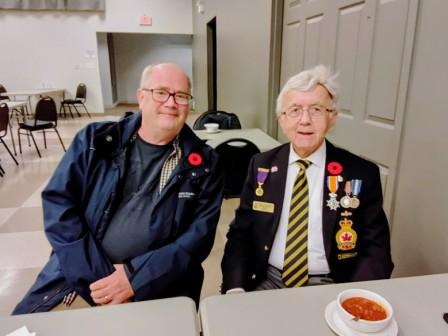
Mike Johnston, left, with Pieter after the 2025 Remembrance Day service in Kinkora.  (Photo credit: Daria Valkenburg)

November 4, 2026.  Following the 2025 Remembrance Day Service held outdoors on a chilly afternoon in Kinkora, Prince Edward Island, everyone was invited inside the community hall for a bowl of chile or chicken corn chowder, and a much needed cup of coffee or tea.

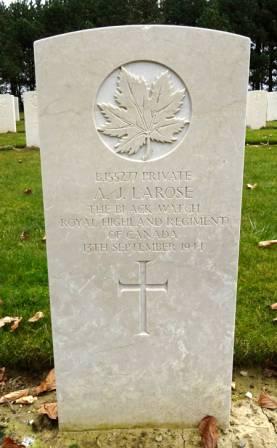
We were joined by our North Tryon neighbour Mike Johnston, who asked about doing a story on his great-uncle, Albert Joseph LAROSE, who lost his life on September 13, 1944, while serving with the Black Watch (Royal Highland Regiment) of Canada.

It seems fitting, as we near another Remembrance Day, to honour Albert’s memory.

Born December 27, 1916 in Toronto, Ontario, the son of Ernest and Catherine (nee Campbell) LaRose, Albert was one of 10 children, having 5 brothers and 4 sisters.  After leaving school, he worked 6 years as a knitting machine mechanic at a textile plant, and then joined Ontario Hydro Electric Commission as a plant operator.

….Albert enlisted in 1942 under NRMA…

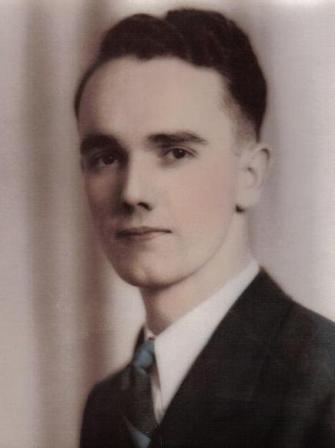
Albert Joseph LaRose. (Photo source: Canadian Virtual War Memorial)

On June 11, 1942, Albert enlisted under the National Resources Mobilization Act (NRMA) at No. 2 NRMA Clearing Depot in Newmarket, Ontario. (See https://en.wikipedia.org/wiki/National_Resources_Mobilization_Act)

At the time of his enlistment, Albert had been working for 2 years at Ontario Hydro Electric Commission.  An interviewer described him as “…a good looking, attractive, bright lad – is definitely interested in radio and electricity and wants to get into Signal Platoon. Single hobby is singing – belongs to choir – healthy – should do well….”

He took his basic training at No. 23 Canadian Army (Basic) Training Centre in Newmarket, and then was sent to the A11 Canadian Infantry Training Centre at Camp Borden, Ontario on May 14, 1942.

On June 15, 1942, Albert was transferred to the Prince of Wales Rangers and sent to the Temporary Basic Training Centre (TBTC) ‘B’ Company at Camp Niagara, located in Niagara-on-the-Lake, Ontario.  Albert would have undergone two months of rigorous physical conditioning, small arms training, tactical manoeuvres, and drills.

Soldiers stationed at Camp Niagara were on guard duty to protect local infrastructure, such as the nearby Welland Canal and regional hydro-electric plants, against potential enemy sabotage.

….Albert was transferred to Prince George as a member of the Prince of Wales Rangers…

With his basic training completed, Albert was sent to Prince George, British Columbia on September 23, 1942.  Still with the Prince of Wales Rangers, he was now part of Canada’s Home Defence.  The Prince of Wales Rangers were part of the 16th Infantry Brigade, which in turn was under the 8th Canadian Division, tasked with Pacific coastal defence and protecting Canada’s West Coast from potential enemy threats.

On December 15, 1942, Albert married Loretta Marie Bowyer, and received leave to do so.

Albert continued to receive additional training, and after completing a signallers course, received the qualification of Classified Regimental Signallers on June 20, 1943. This qualification meant he’d received training in military communications for the purpose of maintaining links between front-line units and headquarters.  He was next sent to Wainwright, Alberta for additional training in manoeuvres and battle courses.

….Albert was sent for a mountaineering course…

On July 8, 1943, Albert was sent on another training course – to the Little Yoho Mountaineering School run by the Alpine Club of Canada, located in Little Yoho Valley in Yoho National Park near Field, British Columbia.  He took an intensive course in climbing with equipment, rescue work in ice and snow, and using ropes under a simulated night attack.  He did so well in the course, which he completed on July 29, 1943, that he was selected to be an Assistant Instructor for the next course.  Albert was described as “…capable and conscientious…”

As Assistant Instructor for the course that ran August 8 to 30, 1943, he was assessed as “…very helpful at all times. Has capable working knowledge of basic principles involved and able to impart instruction…”

On August 1, 1943, Albert had received a promotion to Lance Corporal, but on September 14, 1943, he asked to revert to the rank of Private.  In the meantime, he had returned to the Prince of Wales Rangers as of August 31, 1943.

….Albert was an instructor at the Winter Training School in Jasper…

By November 9, 1943, he was in Port Alberni, British Columbia, and requested to attend a Mountaineering Instructors Course.  This was approved and he successfully completed the course in Terrace, British Columbia.  As of November 16, 1943, he was attached to the Winter Training School in Jasper National Park, Alberta where he was to be an instructor in a course that began in January 1944. On January 15, 1944, he was promoted to Acting Corporal.

Jasper National Park in the Canadian Rocky Mountains became a high-altitude winter and mountain warfare training centre for the British Army’s Lovat Scouts (Scottish Highlanders) and Canadian Army personnel, who trained in preparation for an Allied-led invasion of Nazi-occupied Norway and to combat Axis mountain specialist units.

In a course that ran from January 9, 1944 until the final group left on April 22, 1944, they were instructed in military skiing, snowshoeing, ice climbing, glacier travel, crevasse rescue, survival camping in temperatures down to -45°C (-49oF), and carrying full gear with rifles.

A short film by the National Film Board of Canada, ‘Ordeal By Ice’ (10:44 minutes) documents the extreme winter conditions faced by members of the Canadian Army and British Army’s Lovat Scouts who trained at the Winter Training School…..


….Albert joined the Active Army…

On April 8, 1944, Albert’s assignment at the Winter Training School ended. He returned to the Prince of Wales Rangers in Terrace, British Columbia….and reverted back to the rank of private.  A week later, on April 15, 1944, he enlisted in the Active Army with the Prince of Wales Rangers.

Then, on April 19, 1944, he was transferred to the 1st Battalion of the Canadian Fusiliers, which was under Pacific Command as part of the 6th Canadian Infantry Division’s Home Defence.  However, the Battalion was preparing to go the United Kingdom and become a training battalion.

Albert received 10 days of embarkation leave starting on May 5, 1944, in what turned out to be the last chance he had to see his family.  Upon returning from leave, he was transferred to No. 1 Transit Camp in Windsor, Nova Scotia.  This was a final staging, preparation, and administrative processing area before being sent overseas.

….Albert left Canada for overseas service ……

With others in the 1st Battalion, Canadian Fusiliers, Albert boarded a ship on May 25, 1944 that left the following day from Halifax, Nova Scotia, arriving in the United Kingdom on June 2, 1944.

Then, in a strange twist, instead of remaining with the Canadian Fusiliers and continuing as an Instructor, Albert was transferred to the X-4 Reinforcement List of the Black Watch of Canada (Royal Highland Regiment), part of the 21st Army Group, joining the unit in Folkestone, England.

On July 13, 1944, Albert left England for France, arriving the following day, where, due to his Classified Regimental Signallers qualification, he was assigned to the Signal Platoon, Headquarters Company of the Black Watch, joining the Regiment in Franqueville in the midst of the Battle of Caen, part of the ongoing Battle of Normandy. (See https://en.wikipedia.org/wiki/Battle_for_Caen)

From July 18 to 21, 1944, the Regiment was involved in Operation Atlantic, with the goal of clearing German forces from the southern and eastern sectors of Caen, cross the Orne River, and seize Verrières Ridge in an attempt to block enemy reinforcements.  (See https://en.wikipedia.org/wiki/Operation_Atlantic)

This was immediately followed by a disaster on July 25, 1944, with Operation Spring, when the Regiment launched an assault on Verrières Ridge to capture Fontenay-le-Marmion. Out of 325 soldiers who launched the attack, there were 307 casualties, with 118 killed in just under four hours—a near 94% casualty rate. (See https://en.wikipedia.org/wiki/Operation_Spring)

In a July 29, 1944 letter to his sister Grace, Albert wrote that he was not at the front, but at Battalion Head Quarters.  “…About me being in France….I can’t say much about things here, except that I am still in the best of health and I haven’t been in action up to now and I don’t expect to be going up to the front for some time yet. It wouldn’t hurt my feelings at all if I never got up there, but I guess the war won’t end that soon….”

The letter was written over a few days. “…Incidentally, I started this letter a few days ago, but never got it finished. Right now I am on duty at the Telephone Exchange and I get a chance to write here…”

….Albert lost his life on September 13, 1944 ……

Over the next 6 weeks, the Black Watch, as part of the 5th Canadian Infantry Brigade, 2nd Canadian Infantry Division, advanced along the French coast, participating in operations to clear coastal areas, cross canals, and secure vital infrastructure against retreating German forces.

On Wednesday, September 13, 1944, the Regiment was positioned at Spycker in northern France near the coastal town of Bourbourg, securing the village and bridgeheads around Bourbourgville and Grand Millebrugge, and very close to the Belgian border. (See https://www.europeremembers.com/en/pois/2436/the-black-watch-at-grand-millebrugge)

Albert lost his life on that day, but the war diary entry for that day gave no information on what happened.  “…Heavy shelling on Grand Millebrugge commenced at Reveille this morning.  Battalion Head Quarters received five direct hits and the Regimental Aid Post one direct hit and two near misses. During the morning the shelling did not let up and by noon, when it began to slacken off, eight vehicles had been destroyed and six motor cycles burned….”

The war diary went on to report that there were no fatalities, and none missing or taken as prisoners of war, but this wasn’t true.  Six men were missing, and had died that day… one of them Albert, who likely was in Battalion Head Quarters when it was hit by German shellfire.

In addition to Albert, the following soldiers from the Black Watch were killed on September 13, 1944:

  • A/Cpl Alfred Alexander ANDERSON, born in Innisfeil, Alberta, aged 32
  • L/Sgt Robert BURNSIDE, from Montreal, Quebec, but born in Glasgow, Scotland, aged 33
  • Pte Michael DOBRENSKY, of Toronto, Ontario, aged 21
  • A/Cpl Gordon Edward GORMAN, of Ottawa, Ontario, aged 20
  • A/Cpl Vernon Andrew JOHNSTON, of Pine Creek, Manitoba, aged 21

Several families of the soldiers were aware that 6 of them were missing. The family of Gordon Edward GORMAN persisted in asking what happened to him, and eventually a letter in the service file indicated what may have happened to him. “…He was making his way across open field after very heavy shelling and a counter attack by the Germans. A German machine gun fired from the house on the left flank and he fell to the ground. Two German soldiers came out of the house, picked him up and took him into the house….” where he died of his wounds. “… This action took place in the small town of Spycker, east of Dunkirk, France…”

All 6 men were eventually buried in November, almost two months after their deaths. At the age of 27, Albert left his wife, parents, 5 brothers and 4 sisters to mourn his loss.

….Albert is buried in Calais Canadian War Cemetery…

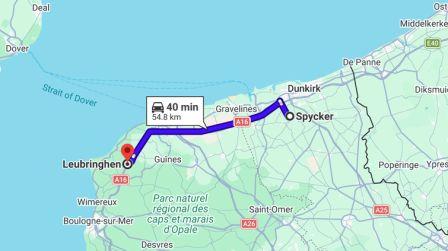
Albert LaRose was initially buried in Spycker before being reburied in the Calais Canadian War Cemetery in Leubringhen. (Map source: Google Maps)

On November 6, 1944, Albert was initially buried in a church cemetery in nearby Spycker, before being reburied in the Calais Canadian War Cemetery in Leubringhen on August 5, 1945.

Grave of Albert Joseph LaRose in the Calais Canadian War Cemetery in Leubringhen, France.  (Photo source: Find A Grave)

Leubringhen is a village in the Department of the Pas-de-Calais, halfway between Calais and Boulogne. The Calais Canadian War Cemetery is in Leubringhen, 14 kms (8.7 miles) from Calais.

Sign off of the highway exit directing us to Calais Canadian War Cemetery. (Photo credit: Daria Valkenburg)

Daria writing in the Visitors Book at Calais Canadian War Cemetery during our 2017 visit. (Photo credit: Pieter Valkenburg)

We’d visited this cemetery in September 2017, where we had placed flags down at the grave of James Arthur AFFLECK from Bedeque, Prince Edward Island, who died a few days after Albert.  (See https://onthewarmemorialtrail.com/2017/10/08/the-calais-canadian-war-cemetery/)

Thank you to Mike Johnston for sharing the letter written by his great-uncle, and to Shawn Rainville for newspaper research.

Pieter’s research efforts to find photos and families of soldiers continue. Do you have a story to tell? Email Pieter at memorialtrail@gmail.com, or comment on the blog.

© Daria Valkenburg

….Want to follow our research?…

If you are reading this posting, but aren’t following our research, you are welcome to do so.  Our blog address: https://onthewarmemorialtrail.com/

4 countries, 6 weeks, 7,000 km – an unforgettable war memorial journey in Europe…. Daria’s book ‘No Soldier Buried Overseas Should Ever Be Forgotten‘ is available in print and e-book formats.  Net proceeds of book sales help support research costs and the cost of maintaining this blog. For more information see https://nosoldierforgotten.com/

Subscribe to our YouTube Channel: On The War Memorial Trail With Pieter Valkenburg: https://www.youtube.com/channel/UCJ591TyjSheOR-Cb_Gs_5Kw.

Never miss a posting!  Subscribe below to have each new story from the war memorial trail delivered to your inbox.
On The War Memorial Trail….The Canadian National Vimy Memorial Is 90!

Canadian National Vimy Memorial from a distance. (Photo credit: Daria Valkenburg)

July 28, 2026.  On July 26, 1936 the Canadian National Vimy Memorial, designed by Walter Allward, was officially unveiled – 90 years ago. In September 2017, we visited Vimy Ridge during our 6 week, 7,000 km (4,350 miles) war memorial journey in Europe that took us through 4 countries. Pieter placed flags at the known graves of men listed on the Cenotaph outside the Borden-Carleton Legion in Borden-Carleton, Prince Edward Island, and we stopped at many memorials during our visit.

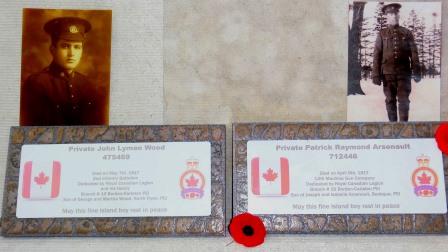
I was reminded of the 90th anniversary as the most anticipated stop in 2017 was Vimy Ridge in France, where two WWI soldiers listed on the Cenotaph are also named on the Canadian National Vimy Memorial: John ‘Lymon’ WOOD and Patrick Raymond ARSENAULT.  (See https://onthewarmemorialtrail.com/2017/07/28/learning-about-the-two-names-on-the-vimy-memorial/)

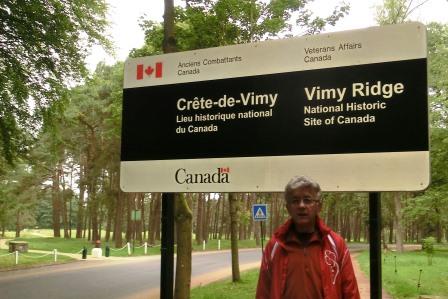
Pieter at the entrance to Vimy Ridge in France. (Photo credit: Daria Valkenburg)

The turn-off to the Vimy Ridge memorial and visitors centre is a tree-lined public road, with jogging and walking paths, that leads to the nearby villages of Givenchy and Vimy.

….The Canadian National Vimy Memorial took 11 years to build….

Although we were familiar with the memorial from seeing it on TV, it’s much larger and beautiful when seen in person.  While we knew that the land around Vimy Ridge was gifted to Canada by the French government in December 1922 as a mark of gratitude for Canada’s involvement in the defence of France during WWI, it wasn’t until we were there in 2017 that we understood why it took so many years to build.

The memorial sits on the highest point of Vimy Ridge, known during WWI as Hill 145.  The ground was littered with unexploded shells and grenades, rusted weapons and wire, and 91,440 metres (100,000 yards) of earth had to be removed by hand to prepare for the monument’s base.

Nearby dugouts and tunnels had to be emptied of explosives that were still stored there, and filled with wet chalk or concrete. Finding underground caverns hidden beneath the monument’s base was crucial, as the memorial weighs more than 50,000 tons.

Work on the monument itself finally began in 1925, took 11 years to build and cost 1.5 million dollars. The white limestone used for the memorial came from an ancient Roman quarry in Seget, Croatia, and didn’t arrive on site until 1927.

The familiar two tall columns represent Canada and France. The pillars together and the horizontal base also form the top half of a cross. The monument includes 20 figures representing honour, justice and peace.

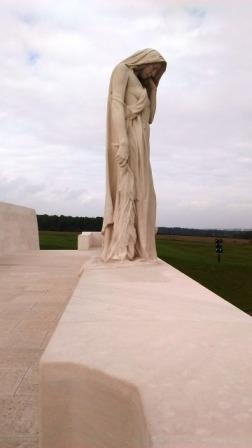
‘Canada Bereft’.  (Photo credit: Pieter Valkenburg)

One female figure, known as ‘Canada Bereft’, stands alone looking out over the slopes of the ridge. The base of the monument is engraved with the 11,285 names of Canadians who have no known grave in France.

….Previous stories about WWI soldiers listed on the Canadian National Vimy Memorial….

In 2017, we were aware of only the two names previously mentioned: John ‘Lymon’ WOOD of North Tryon, Prince Edward Island, and Patrick Raymond ARSENAULT of Bedeque, Prince Edward Island.   Since then, we’ve also told the stories of two more soldiers whose names are engraved on the monument:  Merrill Augustus MARSHALL of Covehead, Prince Edward Island, and Lloyd Clifton SHORTLIFF of Barton, Nova Scotia.  Here below are links to their stories:

….Stories about our 2017 visit to Vimy Ridge….

Missed our stories about our 2017 visit?  You can read them here:

Our visit to Vimy Ridge will never be forgotten.  Meanwhile, Pieter’s research efforts to find photos and families of soldiers continue. Do you have a story to tell? Email Pieter at memorialtrail@gmail.com, or comment on the blog.

© Daria Valkenburg

….Want to follow our research?….

If you are reading this posting, but aren’t following our research, you are welcome to do so.  Our blog address: https://onthewarmemorialtrail.com/

4 countries, 6 weeks, 7,000 km – an unforgettable war memorial journey in Europe…. Daria’s book ‘No Soldier Buried Overseas Should Ever Be Forgotten‘ is available in print and e-book formats.  Net proceeds of book sales help support research costs and the cost of maintaining this blog. For more information see https://nosoldierforgotten.com/

You are also invited to subscribe to our YouTube Channel: On The War Memorial Trail With Pieter Valkenburg: https://www.youtube.com/channel/UCJ591TyjSheOR-Cb_Gs_5Kw.

Never miss a posting!  Subscribe below to have each new story from the war memorial trail delivered to your inbox.
On The War Memorial Trail….Visiting The Canadian National Vimy Memorial

September 18, 2017.  After the tour of the Vimy Memorial Visitors’ Centre and the tunnels, we went to visit the Canadian National Vimy Memorial. Although familiar to us from seeing it on TV, the memorial is much larger and majestic in person.

CIMG8468 Sep 6 2017 Mother Canada memorial at Vimy Ridge

Canadian National Vimy Memorial from a distance. (Photo credit: Daria Valkenburg)

CIMG8295 Sep 5 2017 Canadian National Vimy Memorial closer up with twin white pylons

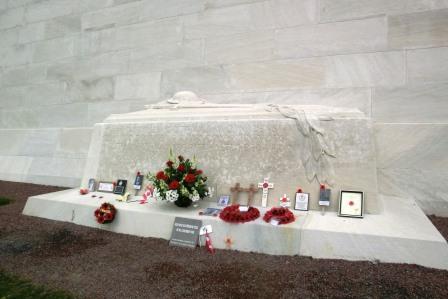
Canadian National Vimy Memorial showing the twin white pylons, one bearing the maple leaves of Canada, the other the fleurs-de-lys of France, to symbolize the sacrifices of both countries. Beside one of the pylons is the statue Canada Bereft. Below the pylons is The Tomb. (Photo credit: Daria Valkenburg)

Site manager Johanne Gagné noted that “this monument is special because it focuses on values the soldiers shared and ultimately gave their lives for.”  11,285 names are inscribed on the memorial, two of them who also are on the Cenotaph outside the Borden-Carleton Legion:  John Lymon Wood and Patrick Raymond Arsenault.  Pieter immediately went to search out these two names.

IMG_20170905_114855242 Sep 5 2017 Vimy Memorial Inscription Arsenault

Patrick Raymond Arsenault inscribed on Vimy Memorial. (Photo credit: Pieter Valkenburg)

IMG_20170905_115420984 Sep 5 2017 Vimy Memorial Inscription Wood

John Lymon Wood inscribed on Vimy Memorial. (Photo credit: Pieter Valkenburg)

After finding the inscriptions, Pieter next looked for two plaques brought to the memorial in April by the students of Kinkora Regional High School and teacher Kevin Bustard.  Kevin had the plaques made after reading about Wood and Arsenault in an April 2017 article in the County Line Courier. (See CLC Apr 5 2017 p9 Two Unsung Heroes of Vimy Ridge)

To everyone’s surprise, the plaques were still at the Memorial. Arsenault’s was on The Tomb, and Wood’s was by his inscription.

CIMG8294 Sep 5 2017 tributes on The Tomb

Tributes left on The Tomb at the Vimy Canadian National Memorial. You can see the plaque for Patrick Raymond Arsenault on the far left. (Photo credit: Daria Valkenburg)

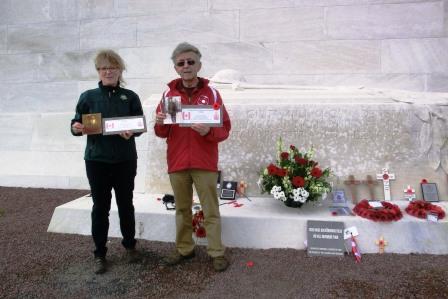
Pieter reunited both plaques with photos of the two soldiers.

CIMG8299 Sep 5 2017 Wood & Arsenault Plaques

Plaques and photos of John Lymon Wood and Patrick Raymond Arsenault. (Photo credit: Daria Valkenburg)

While the plaques were left at the Memorial, the photos and information about Wood and Arsenault were given to Johanne Gagné, who told us that “the French are still welcoming and grateful for the sacrifices made by Canadians and say thank you.  They are grateful to Canada for keeping the memory alive after 100 years.  It’s humbling.”

CIMG8301 Sep 5 2017 Sep 5 2017 Johanne Gagne with Wood and Pieter with Arsenault

Johanne Gagné with plaque and photo of John Lymon Wood while Pieter holds plaque and photo of Patrick Raymond Arsenault. (Photo credit: Daria Valkenburg)

This was the end of our tour of Vimy Ridge and the Memorial.  It had been a special day and we salute Johanne Gagné for the time she spent giving us a wonderful tour and patiently answering our many questions.  Merci beaucoup Johanne!

In the next blog entry we explore two of the memorials in the Thélus area.  Comments or stories?  You can share them by emailing us at memorialtrail@gmail.com or by commenting on this blog.

© Daria Valkenburg

….Want to follow our research?….

If you are reading this posting, but aren’t following our research, you are welcome to do so.  Our blog address: https://onthewarmemorialtrail.com/

Front cover OnTheWarMememorialTrailinEurope4 countries, 6 weeks, 7,000 km – an unforgettable war memorial journey in Europe…. Daria’s book ‘No Soldier Buried Overseas Should Ever Be Forgotten‘ is available in print and e-book formats.  Net proceeds of book sales help support research costs and the cost of maintaining this blog. For more information see https://nosoldierforgotten.com/ 

You are also invited to subscribe to our YouTube Channel: On The War Memorial Trail With Pieter Valkenburg: https://www.youtube.com/channel/UCJ591TyjSheOR-Cb_Gs_5Kw. 

Never miss a posting!  Subscribe below to have each new story from the war memorial trail delivered to your inbox.
On The War Memorial Trail….Visiting the Tunnels at Vimy Ridge

September 14, 2017.  After the tour of the Vimy Memorial Visitors’ Centre, Pieter and site manager Johanne Gagné went to explore the tunnels.  Pieter was in second heaven!  They saw two of the many tunnel systems, one used by the Black Watch, and one used by the Princess Patricia Light Infantry.

IMG_20170905_103810241 Entrance to a Vimy Tunnel used by Princess Pats

Photo: Entrance to a tunnel used by the Princess Patricia Light Infantry. (Photo credit: Pieter Valkenburg)

Some of the main tunnels at Vimy Ridge have been restored to make them safer and reinforced with concrete floors, as well as some of the walls.  All of the tunnels were named by the WWI soldiers so that they would know where they were.

Tunnels were used for two main purposes: to safeguard troops from enemy fire, and for transportation of materials such as bombs and mines that could be used to blow up German tunnels.  A narrow gauge railway system was installed as whatever materials were dug out to make the tunnels had to be transported out and then covered so that enemy observation planes couldn’t spot mounds of earth and be aware of where digging was going on.

Using the material transported into the tunnels, Allied forces tried to undermine the trenches of the Germans by blowing them up from inside the tunnels.  This had the advantage of allowing Allied forces to safely advance without being exposed to enemy fire.

IMG_20170905_105716402

Pieter by the as yet unrestored tunnel used by the Black Watch. Note the wagon in the background. (Photo credit: Johanne Gagné)

IMG_20170905_104523941 Tunnel used by Black Watch

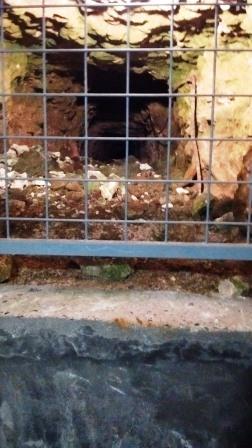
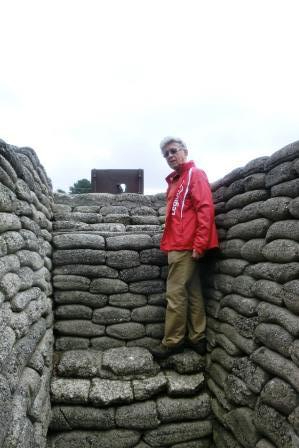
An as yet unrestored portion of the Grange tunnel. (Photo credit: Pieter Valkenburg)

IMG_20170905_104540988 Pieter in a reinforced part of the tunnel

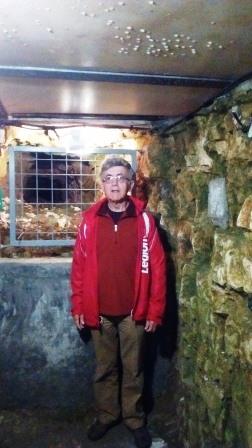
Pieter in a reinforced part of the Grange tunnel. (Photo credit: Johanne Gagné)

Some tunnels were designed for living quarters and as command centres.  Messages were passed along from the command centre by runners to the troops.  There were ways out of the tunnels into the trenches.

An interesting and surprising fact Pieter learned was that electricity was in the tunnels.  They had electric lights in the Vimy tunnels! As Johanne Gagné noted, “…So modern!..”

Near Vimy was a tunnel called the Maison Blanche (“The White House”), so named because the outside building was white in colour.  That tunnel used candles for lighting.

In Pieter’s opinion, the unrestored tunnels gave a better picture of what had gone on at the time.  The restored tunnels give you a safer impression of what happened, but doesn’t have the impact of the dire conditions the men worked in. “…I was amazed by how many tunnels there were, going in all directions…” Pieter explained.  “…It was a real maze…”

From the observation post, you can still see a big crater where Allied troops blew up a trench.

CIMG8287 Sep 5 2017 Pieter & Johanne by observation post at Vimy Ridge

Pieter and Johanne Gagné by the observation post overlooking ‘no man’s land’ – territory that was not held by either the Germans or the Allies. (Photo credit: Daria Valkenburg)

We were very interested in the observation post as Gunner Harold Keith HOWATT of the 8th Siege Battery spent a lot of World War I in an observation post, and we had wondered what one looked like.  So Pieter went into one and took a look.

CIMG8289 Sep 5 2017 Pieter in observation post at Vimy Ridge

Pieter in an observation post at Vimy Ridge. (Photo credit: Daria Valkenburg)

Howatt participated in the Battle of Vimy Ridge in April 2017, and survived.  In fact, he survived the war and came back home to Augustine Cove and had a career as a teacher.

But back in February 1918, his unit was back at Vimy Ridge.   In his diary entry of Saturday, February 16, 1918, he recorded the following observations:

“….In the afternoon I took a walk up to the top of Vimy Ridge.  It is some place, never yet have I seen a place so battle scarred.  There are shell holes everywhere, hardly two square yards of level ground on the ridge.  And the mine craters, they are tremendous.  Some must be from 40 to 50 feet deep and from 40 to 50 yards across. 

There is a large monument on the top to the 44th Battalion, with the names of all the officers and men, who were killed during the attack on the ridge on April 9, inscribed on it.  There is also a monument to the 78th Battalion, and one to a sergeant of the Winnipeg Grenadiers who set off an enemy mine and lost his life in the act.  The crater is called the ‘Winnipeg Grenadier’.  There is also a monument to a major and to Lieutenant Gass of the 5th Canadian Siege Battery, who was killed in an O. P. (note:  Observation Post) the day before Vimy was taken.

There was a party of English labour tourists on the top of the ridge while I was up there.  Was talking to one fellow for a few minutes, pointing out Lens, Avion, and place within our own lines, to him….”

We weren’t sure if the crater referred to by Howatt is the same one to be seen from the observation post outside the Visitors Centre.  We did not see the monuments described by Howatt and guess they are no longer there.  And Vimy Ridge is now filled with trees, a barren landscape no more.

CIMG8286 Sep 5 2017 Vimy Ridge today is tree lined again

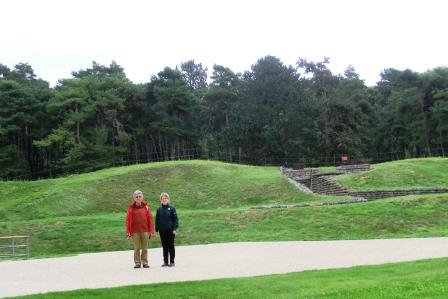
Vimy Ridge is now filled with trees. (Photo credit: Daria Valkenburg)

Johanne Gagné had given us a fantastic tour so far, but there was more.  In the next blog entry we visit the Canadian National Vimy Memorial, and bring along the photos of John Lymon Wood and Patrick Raymond Arsenault, whose names are inscribed on the memorial.

Comments or stories?  You can share them by emailing us at memorialtrail@gmail.com or by commenting on this blog.

© Daria Valkenburg

….Want to follow our research?….

If you are reading this posting, but aren’t following our research, you are welcome to do so.  Our blog address: https://onthewarmemorialtrail.com/

Front cover OnTheWarMememorialTrailinEurope4 countries, 6 weeks, 7,000 km – an unforgettable war memorial journey in Europe…. Daria’s book ‘No Soldier Buried Overseas Should Ever Be Forgotten‘ is available in print and e-book formats.  Net proceeds of book sales help support research costs and the cost of maintaining this blog. For more information see https://nosoldierforgotten.com/ 

You are also invited to subscribe to our YouTube Channel: On The War Memorial Trail With Pieter Valkenburg: https://www.youtube.com/channel/UCJ591TyjSheOR-Cb_Gs_5Kw. 

Never miss a posting!  Subscribe below to have each new story from the war memorial trail delivered to your inbox.

On The War Memorial Trail….A Visit To Vimy Ridge

September 12, 2017.  After a few hectic days when there was no time to do any writing as we were on the go from early morning until quite late in the evening, we now are settled for a few days in a quiet cottage in a forested area, and hopefully can catch up with all of the memorable days we’ve just experienced.

The most anticipated stop on our memorial trail of honouring the men listed on the Borden-Carleton Cenotaph was Vimy Ridge.  Two WWI soldiers are listed on the Canadian National Vimy Memorial, John ‘Lymon’ WOOD and Patrick Raymond ARSENAULT.

Our hotel was in Arras, and Vimy Ridge was a 20 minute drive from there.  Just before the turn-off to Vimy Ridge we passed through the town of Thélus.  There is one stop light in town.  To the left are signs directing you to cemeteries and memorials.  To the right are signs directing you to more memorials.

Right by the stop light is the Canadian Artillery Memorial, built to remember the sacrifice of Canadians from Artillery battalions who died in the battle for Vimy Ridge and the surrounding area.

CIMG8309 Sep 5 2017 Cdn Artillery Memorial in Thelus with sign posts

The Canadian Artillery Memorial in Thélus was built during WW1 by the Canadian Corps. (Photo credit: Daria Valkenburg)

It’s daunting to see how many reminders of war there are in France.  Everywhere you go, you see memorials and cemeteries – both civilian and military.  It’s a grim reminder of how many people lost their lives.  It’s impossible to ignore or forget.  And it’s a very big reminder of how many countries came to help in the Allied cause during World War I.  It truly became an international war.  Every one of them has at least one memorial and the war cemeteries are filled with Allied and German lives lost.

CIMG8270 Sep 2017 Pieter at entrance to Vimy Memorial Park

Pieter at the entrance to Vimy Ridge in France. (Photo credit: Daria Valkenburg)

The turn-off to the Vimy Ridge memorial and visitors centre is a tree-lined road, with jogging and walking paths, well used by citizens of the area.  It’s a public road that goes to the nearby villages of Givenchy and Vimy.

We were very lucky to have been given a guided tour of the Vimy Ridge Visitors Centre, which opened in April 2017, by site manager Johanne Gagné.

CIMG8275 Sep 5 2017 Pieter with site manager Johanne Gagne

Pieter with Johanne Gagné, Senior Manager, European Operations at the Canadian National Vimy Memorial, who gave us a guided tour. (Photo credit: Daria Valkenburg)

Among the many exhibits in the Visitors Centre is one that replicates the graffiti found in the tunnels of Vimy Ridge.  Using 3-D technology, exact replicas of the graffiti have been made, and researchers have tried, where possible, to provide a face and story to the men who made the graffiti.

Ms. Gagné noted that this graffiti display will be on tour in various places in Canada after leaving Vimy Ridge.  If it comes to your area, you won’t want to miss it!

We certainly had the right person to give us a tour, as Ms. Gagné worked for two years in Canada in developing the visitors centre before coming to France for two years as part of an interchange agreement with Parks Canada.  Hailing from Coteau-du-Lac, Quebec, she has a background in museology, exhibit design, and developing visitors programming.  Our interest was certainly caught, and this was from one exhibit only.

IMG_20170905_093513986 Sep 5 2017 Graffiti at Vimy Ridge by Kines & Holmes

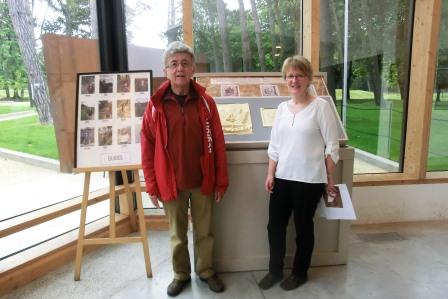
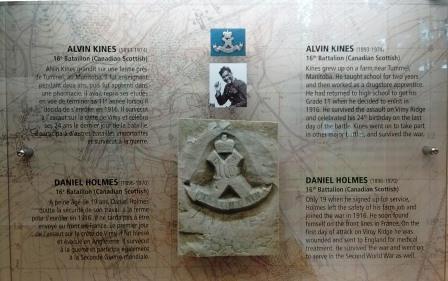
Graffiti replicas of the 15th Battalion and a photo and short bio of two names inscribed below the insignia, that of Alvin Kines and Daniel Holmes. (Photo credit: Pieter Valkenburg)

The Visitors Centre has many interactive displays, in three languages (English, French, German), and one of the displays is very personal.  It tells the story of World War I from the perspectives of a young girl, a soldier, a nurse, etc, and all the stories are based on letters and diaries of real life people.

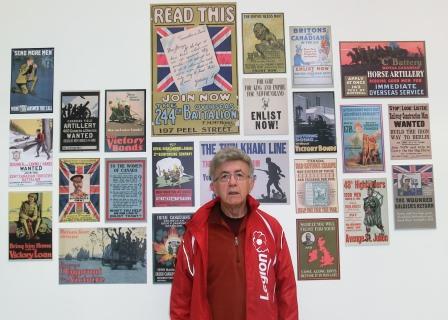
We were fascinated by a wall of patriotic signs, urging support for the war.

CIMG8277 Sep 5 2017 Vimy Ridge Visitors Centre Pieter by patriotic signs

Pieter by one of the displays of patriotic signs. (Photo credit: Daria Valkenburg)

An interactive display explained the troop movements during the Battle of Vimy Ridge on April 8, 1917.  Another interactive display gave a tour of the tunnels below Vimy Ridge. This was a marvellous solution to see the tunnels, especially if you were not physically capable of entering the tunnels yourself.

CIMG8283 Sep 5 2017 Daria by interactive displays in Vimy Ridge Visitors Centre

Daria by the interactive display of the Vimy Ridge tunnels. Behind are the displays of stories of WW1 by individuals. (Photo credit: Johanne Gagné)

We asked Ms. Gagné her perspective of the Vimy Ridge Visitors Centre and Memorial.  “…Most of the time, people come and say that they came to honour the sacrifices made.  I asked myself, what does it mean to me?  Why have I spent three years on this project?  I’m giving the soldiers a voice.  I hope that through the exhibits, that we can show the public how the soldiers lived, what they saw, what they did, and close the loop by telling their stories…”  The exhibits certainly do that.  They are interesting and well done.

The tour of the Visitors Centre over, it was time to see the rest of Vimy Ridge.  On Pieter’s bucket list was a tour of the tunnels, a wish that was granted, and discussed in the next blog.  While he and Ms. Gagné prepared themselves for the tunnels, I took a look at the tunnels from the comfort and safety of the Visitors Centre.

Comments or stories?  You can share them by emailing us at memorialtrail@gmail.com or by commenting on this blog.

© Daria Valkenburg

….Want to follow our research?….

If you are reading this posting, but aren’t following our research, you are welcome to do so.  Our blog address: https://onthewarmemorialtrail.com/

Front cover OnTheWarMememorialTrailinEurope4 countries, 6 weeks, 7,000 km – an unforgettable war memorial journey in Europe…. Daria’s book ‘No Soldier Buried Overseas Should Ever Be Forgotten‘ is available in print and e-book formats.  Net proceeds of book sales help support research costs and the cost of maintaining this blog. For more information see https://nosoldierforgotten.com/ 

You are also invited to subscribe to our YouTube Channel: On The War Memorial Trail With Pieter Valkenburg: https://www.youtube.com/channel/UCJ591TyjSheOR-Cb_Gs_5Kw. 

Never miss a posting!  Subscribe below to have each new story from the war memorial trail delivered to your inbox.