The Halifax L9561 Crew Remembered In Wons

speldje bevrijding

May 15, 2020.  On October 12, 2019 a memorial panel to honour the crew of Halifax L9561 was placed in Wons, near the crash site where Flight Sgt Elmer Bagnall MUTTART lost his life. (See On The War Memorial Trail…..The Memorial Panel In Wons Is Unveiled!)

IMG_0655 Oct 12 2019 unveiling of memorial panel in Wons

The memorial panel to honour the crew of Halifax L9561 in Wons was unveiled on October 12, 2019. (Photo courtesy of http://www.dorpwons.nl)

On May 4, 2020, the village of Wons remembered the victims of WW2 in their community.  Due to the coronavirus (Covid-19) restrictions on social gatherings, it was not a public ceremony.

cc0b5104-e875-4f98-bb39-b34e24e78baf May 4 2020 Wons Photo van den berg

Memorial panel in Wons on May 4, 2020. (Photo credit: Dooitze van den Berg)

Bottje Tilstra, the village secretary, was kind enough to send a video taken of the memorial ceremony in Wons.  You can watch the ceremony by the memorial panel at this link:  http://www.dorpwons.nl/assets/img/gallerij/2020/VID-20200513-WA0000.mp4. People in the video are:

  • Knilles Elgersma (presenting bouquet), Chair of the village council
  • Bugler is Boukje Elgersma, 1st trumpeter of the village music ensemble Hosanna
  • Dirk Stoffels (with beard) – member of the May 4 Committee
  • Dooitze van den Berg – photographer
812dc531-6925-4ea3-b2a3-28ab0c88707a May 4 2020 Wons Photo van den berg

May 4, 2020 ceremony at the memorial panel in Wons. Left to right: Dirk Stoffels, Knilles Elgersma, Boukje Elgersma. (Photo credit: Dooitze van den Berg)

ec1d4c36-ec2d-4992-b4cf-959db802fc04 May 4 2020 Wons Photo van den berg

May 4, 2020. Memorial panel overlooks the site of the plane crash on October 12, 1941. (Photo credit: Dooitze van den Berg)

How wonderful that the village included the Halifax L9561 memorial panel in their annual May 4 Remembrance of the War Dead ceremonies! (For more information on this annual event in The Netherlands see   https://en.wikipedia.org/wiki/Remembrance_of_the_Dead.)

If you haven’t seen our video about Halifax L9561, “He Died That We Might Live“, you can watch it here:

Pieter is still busy with researching Canadian soldiers.  If you have photos or information to share, please contact him at dariadv@yahoo.ca or comment on the blog.

On The War Memorial Trail…..Commemorative Coins From West Nova Scotia Regimental Association

May 12, 2020.  Two names on the Cenotaph outside the Borden-Carleton Legion were in the West Nova Scotia Regiment during WWII:  Ernest Murray NORTON and Arnold Dudley TAYLOR.  Both lost their lives in Italy.  Norton’s story has been previously told in this blog (See The Last Valentine From A WWII Soldier), Taylor’s is still being researched.

Left: Ernest Murray Norton (Photo courtesy Harry Norton family collection) Right: Arnold Dudley Taylor (Photo courtesy Barbara Simester family collection)

Recently, Ron Stonier, President of the West Nova Scotia Regimental Association, let us know about a commemorative coin produced “for each of the 359 West Nova soldiers killed overseas. When someone joins the Regimental Association and pays their annual dues, we give one of our coins as a symbol of membership. On the front is our cap badge, and on the back is an image of our monument in Camp Aldershot, NS, flanked by the badges of the two regiments which were amalgamated in 1936 to form the West Nova Scotia Regiment. Below the monument is the name, rank, serial number, date of death, and age at death if available.

Stonier went to note that “We attempt to find the families of the soldiers who died to give them the coin representing their loved one. So far, we have been able to connect 40 coins with family members, and it’s a very satisfying feeling to do so.  We have fewer than 100 coins left, but we do have one for each of for Lt Taylor and Pte Norton.”  He kindly sent images of the coins.

Lt AD Taylor

Commemorative coin for Arnold Dudley Taylor.  (Photo courtesy West Nova Scotia Regimental Association)

Pte EM Norton

Commemorative coin for Ernest Murray Norton.  (Photo courtesy West Nova Scotia Regimental Association)

We have contacted the families of Norton and Taylor to let them know about the coins.  If you have a relative who was in the West Nova Scotia Regiment, and would like more information on the commemorative coin or joining the association, please visit their website at https://www.wnsr.ca/ra.

We’re delighted to hear from various archives and regimental associations, and thank Ron Stonier for letting us know about the commemorative coins. Pieter continues to research Islanders who served in WWI and WWII. If you have photos or information to share on Ernest Murray Norton or Arnold Dudley Taylor, please contact Pieter at memorialtrail@gmail.com, comment on the blog, or tweet to @researchmemori1

© Daria Valkenburg

….Want to follow our research?….

If you are reading this posting, but aren’t following our research, you are welcome to do so.  Our blog address: https://onthewarmemorialtrail.com/
Front cover OnTheWarMememorialTrailinEurope4 countries, 6 weeks, 7,000 km – an unforgettable war memorial journey in Europe…. Daria’s book ‘No Soldier Buried Overseas Should Ever Be Forgotten‘ is available in print and e-book formats.  Net proceeds of book sales help support research costs and the cost of maintaining this blog. For more information see https://nosoldierforgotten.com/ 

You are also invited to subscribe to our YouTube Channel: On The War Memorial Trail With Pieter Valkenburg: https://www.youtube.com/channel/UCJ591TyjSheOR-Cb_Gs_5Kw

Never miss a posting!  Subscribe below to have each new story from the war memorial trail delivered to your inbox.

A Taste Of The Netherlands In A Cookie

CIMG3185 Sep 30 2019 Leeuwarden with Pieter Daria Douwe Alexander

Enjoying a Frisian cookie and  coffee in Leeuwarden, The Netherlands! Left to right: Alexander Tuinhout, Pieter and Daria Valkenburg, Douwe Drijver.

May 11, 2020.  Note:  This posting has NOTHING to do with military research, but as we are still at home due to Covid-19, I thought you might find it of interest. 

Last fall, while in The Netherlands, we were in a restaurant in the province of Friesland with two men from the Missing Airmen Memorial Foundation.  In The Netherlands, when you order a cup of coffee or tea, it ALWAYS comes accompanied with a cookie.  In this restaurant it came with a traditional Frisian cookie.  After I raved about it, we went to a bakery near the restaurant, and the cookies were pointed out to me.  Naturally I bought a bag.

speldje bevrijding

Once we came home, Pieter found a recipe, made these delicious treats, and translated the recipe into English.  In honour of the 75th Anniversary of the Liberation of The Netherlands, here is the recipe, which you may wish to try for yourselves:

Fryse Dumkes

  • 250 grams (1 1/4 cups) all-purpose flour
  • 150 grams (3/4 cup) golden yellow sugar
  • 150 grams (3/4 cup) unsalted butter, at room temperature
  • 1 egg
  • 100 grams (1/2 cup) finely chopped hazelnuts (not ground)
  • ½ tsp cinnamon
  • ½ tsp powdered ginger
  • ¾ tsp anise seed
  • Pinch of salt

Mix together flour, sugar, hazelnuts, spices, and salt in a large bowl.

Make a well in the centre and add the butter and egg.

Mix thoroughly until you get a ball of dough.

Cover dough with plastic or a plate and refrigerate for ½ hour.

After ½ hour, sprinkle some flour on a surface and roll out dough into a rectangular shape that is 1 cm (slightly less than ½ inch) thick.

Cut out shapes about the size of your thumb (such as in little sticks).

Prepare cookie tin with parchment paper and place cookies on tin.  Makes about 35 cookies.

Bake in a preheated 320oF (160oC) oven for 20 to 25 minutes.  Remove from oven.

Let cool, and then enjoy!  If any cookies are left, store in a tin.

Happy Baking!

20200503_150233 Frisian cookies

Fryske Dumkes ready to be enjoyed.  (Photo credit: Daria Valkenburg)

Rest assured….Pieter is still busy with researching Canadian soldiers, so if you have information to share, please contact him at dariadv@yahoo.ca or comment on the blog.

© Daria Valkenburg


3 Short Videos About The Liberation Of The Netherlands

speldje bevrijding

May 6, 2020.  In the last blog posting, photos about the tulips that were placed in the Canadian War Cemetery in Groesbeek were featured.  (See Tulips Placed At Each Grave At The Canadian War Cemetery In Groesbeek)

Alice van Bekkum, Chair of Faces To Graves, sent us a short YouTube video “Er zijn duizenden tulpen op de Canadese Erebegraafplaats geplaatst” (“Thousands of tulips have been placed in the Canadian War Cemetery”) that shows tulips being placed on the graves at the Canadian War Cemetery in Groesbeek by volunteers.  You can watch it here:

Historica Canada has produced a short video,  “Liberation of The Netherlands in their Heritage Minutes series.


Think Like A Historian, another Historica Canada production, also has a YouTube video on the Liberation of The Netherlands.


Happy Viewing!  If you have information to share about Canadian soldiers buried in The Netherlands, please contact Pieter at dariadv@yahoo.ca or comment on the blog.

© Daria Valkenburg

Tulips Placed At Each Grave At The Canadian War Cemetery In Groesbeek

speldje bevrijding

May 5, 2020.  While events planned for the 75th Anniversary of the Liberation of The Netherlands were cancelled due to social distancing to prevent further outbreaks of coronavirus, organizations and individuals have found ways to mark the occasion.  One group from BC, the Dutch Canadian Liberation 2020 Society, planned many commemorative events.  (See https://www.dutchcanada2020.com/about-us/ )

When these had to be cancelled, the Society decided to pay for tulips to be placed at the graves at the Canadian War Cemetery in Groesbeek, The Netherlands.  Most of the soldiers buried in this cemetery fell during the fighting on the Lower Rhine between February 8 and March 26, 1945.  In addition, the names of 1,103 soldiers reported missing between August 1944 and May 1945 are listed on the Groesbeek Memorial, with only a few found since the memorial was put up.  The rest are still listed as MIA (Missing In Action).

The Cemetery was closed on the first two days in May while volunteers placed tulips in vases beside each grave.

Tulips arriving at groesbeek on may 1st spanjers

Tulips arrive at the Cemetery on May 1.  (Photo credit: Piet Spanjers)

close up of tulip by grave in groesbeek spanjers

Each grave had a vase of tulips placed by volunteers.  (Photo credit: Piet Spanjers)

Memorial Wall scheepers

Vases of tulips line the bench along the Memorial Wall.  (Photo credit:  Scheepers family)

DCIM100GOPROGOPR0102.JPG

Grave of L/Cpl Ralph Schurman BOULTER, North Nova Scotia Highlanders, from West Point. (Photo credit:  Scheepers family)

heneberry 1 scheepers

Grave of PEI soldier Sapper Joseph Edmond HENNEBERY, Corps of Royal Canadian Engineers, from Morrell. (Photo credit: Scheepers family)

DCIM100GOPROGOPR0100.JPG

Grave of L/Cpl Frank Edward MCGOVERN, North Shore Regiment, born in Chipman. (Photo credit:  Scheepers family)

Our thanks to Ad and Noor Scheepers for taking photos, including those of the graves of:

  • Ralph Schurman BOULTER, who came from West Point, Prince Edward Island
  • Joseph Edmond HENNEBERY, who came from Morrell, Prince Edward Island
  • Frank Edward MCGOVERN, born in Chipman, New Brunswick

You can read (or re-read!) about our 2019 and 2017 War Memorial tour visits to the cemetery here:

·       https://onthewarmemorialtrail.com/2019/12/04/on-the-war-memorial-trail-our-2019-visit-to-the-canadian-war-cemetery-in-groesbeek/

·     https://onthewarmemorialtrail.com/2017/12/30/on-the-war-memorial-trail-pei-soldiers-buried-in-the-canadian-war-cemetery-in-groesbeek/

·        https://onthewarmemorialtrail.com/2017/12/25/on-the-war-memorial-trail-at-the-canadian-war-cemetery-in-groesbeek/

In an unrelated commemorative gesture, a group of Dutch farmers used tractors to spell out ’75 Jaar Vrijheid’ (75 Years of Freedom) in the shape of a torch. They were given a citation by Dutch authorities for not respecting social distancing rules! (Watch them make this tribute in a 42 second video at https://www.nu.nl/280619/video/boeren-vormen-fakkel-met-trekkers-in-wei-en-ontsteken-vrijheidsvuur.html?jwsource=em)

No photos have yet been found for Joseph Edmond HENNEBERY and Frank Edward MCGOVERN. Can you help? If you have information to share about any Canadian soldiers buried in The Netherlands, please contact Pieter at memorialtrail@gmail.com or comment on the blog.  UPDATE:  A photo of Joseph Edmond Hennebery was subsequently submitted.

© Daria Valkenburg

….Want to follow our research?….

If you are reading this posting, but aren’t following our research, you are welcome to do so.  Our blog address: https://onthewarmemorialtrail.com/

Front cover OnTheWarMememorialTrailinEurope4 countries, 6 weeks, 7,000 km – an unforgettable war memorial journey in Europe…. Daria’s book ‘No Soldier Buried Overseas Should Ever Be Forgotten‘ is available in print and e-book formats.  Net proceeds of book sales help support research costs and the cost of maintaining this blog. For more information see https://nosoldierforgotten.com/ 

You are also invited to subscribe to our YouTube Channel: On The War Memorial Trail With Pieter Valkenburg: https://www.youtube.com/channel/UCJ591TyjSheOR-Cb_Gs_5Kw

Never miss a posting!  Subscribe below to have each new story from the war memorial trail delivered to your inbox.
New Website On Canadian Scottish Regiment During WW2

   speldje bevrijdingMay 4, 2020.  As the Dutch remember the 75th Anniversary of the Liberation of The Netherlands, this year without any public gatherings and events cancelled due to social distancing to prevent further outbreaks of coronavirus, Edwin van der Wolf of Hattem, The Netherlands, notified us about a website he’s begun.  This labour of love is about the 394 fallen soldiers of the Canadian Scottish Regiment during WW 2, a regiment from Victoria, BC.

The website is in Dutch and English, and includes maps, war diaries, a brief history of the regiment, photos, brief biographies of the fallen soldiers, and the cemeteries they are buried in. You can access the website at https://www.csri.nl/.

We first met Edwin on our 2017 War Memorial Tour, when we visited the graves and monuments of most of the names listed on the Cenotaph outside the Borden-Carleton Legion.  In addition to his research into the Canadian Scottish Regiment, Edwin is an active researcher at the Holten Information Centre based at the Canadian War Cemetery in Holten.  (See https://bordencarletonresearchproject.wordpress.com/2018/01/17/on-the-war-memorial-trail-at-the-information-centre-at-holten-canadian-war-cemetery/ for an account of our visit there.)

Back in 2017, we asked him about his interest in Canadian soldiers and he told us that he feels a special bond with Canada.  He explained that his grandfather lived in an area of Deventer that was liberated by Canadians. “My grandfather lived in a house in a corner of the street, and he could see a hospital fence 100 metres away.  Canadian soldiers climbed the iron gate and, in a crouching position, walked past a couple of Germans who were on the roof and firing at the Canadians who’d climbed over the gate.  The Germans withdrew as the Canadians advanced.  Grandfather told this story every Sunday!”  This story captured a young Edwin’s imagination.  “So many Canadians came from thousands of kms away to help liberate the Dutch!

CIMG9320 Edwin van der Wolf and Pieter in Schalkhaar

Edwin van der Wolf (left) with Pieter in Schalkhaar beside a panel commemorating Lt. Clayton Leroy MITCHELL of the Canadian Scottish Regiment, who lost his life on April 10, 1945.  The panel was placed at Edwin’s initiative.  (Photo credit: Daria Valkenburg)

One of the places where the Canadian Scottish Regiment fought was in Schalkhaar, near Deventer.  Edwin took us on a tour of the village and told us one story about what happened there on April 10, 1945…

The Canadians were in a villa in Schalkhaar and saw Germans coming up the road, crawling through ditches.  After the Canadians shot at them from the villa, about 25 Germans came with a white flag and surrendered themselves as prisoners of war.  The Canadians thought that was the end of the incident, but then three tanks of Germans came and shot at them right through the villa.  Corporal Frank Arthur CHERRY was killed in that villa.

You can find more about Lt Mitchell and Cpl Cherry on the website, along with 392 more soldiers.  Both men were killed during the Battle of Deventer and are buried at the Canadian War Cemetery in Holten. Kudos to Edwin for this initiative!

If you have information to share about any Canadian soldiers buried in The Netherlands, please contact Pieter at dariadv@yahoo.ca or comment on the blog.

© Daria Valkenburg

75th Anniversary Memories From Friesland

speldje bevrijding

May 1, 2020.  In commemoration of the 75th Anniversary of the Liberation of The Netherlands, a few projects from the Dutch province of Friesland will be featured in this posting.

Remco de Jong, a volunteer at the Commonwealth War Graves Protestant Churchyard cemetery in Makkum (See https://bordencarletonresearchproject.wordpress.com/2019/12/26/the-christmas-eve-candle-lighting-ceremonies-in-the-netherlands/) was moved by the story of the last flight of Halifax L9561 in October 1941, in which Flight Sgt Elmer Bagnall MUTTART lost his life, and prepared a photo tribute.  (To learn more about the last flight and the 2019 memorial panel commemoration ceremonies, see https://bordencarletonresearchproject.wordpress.com/2020/01/31/he-died-that-we-might-live-video-is-now-on-youtube/)

Vliegtuigen haar bemanning Muttart

Tribute prepared by Remco de Jong from photos provided to Stichting Missing Airmen Memorial Foundation by families of the aircrew of Halifax L9561.

Bauke Posthuma, a volunteer at Het Hannemahuis Museum in Harlingen, let us know about a YouTube video filmed in 1945, shortly after the war ended, which has a brief clip of the Harlingen General Cemetery where Muttart and other Allied soldiers are buried.  While we placed flags at the graves of known Canadian soldiers in the cemetery on October 12, 2019, there are more than Canadians buried there. (For an account of our visit to Harlingen General Cemetery, see https://bordencarletonresearchproject.wordpress.com/2019/10/15/on-the-war-memorial-trail-the-visit-to-harlingen-general-cemetery/)

Screenshot Harlingen General Cemetery

Screenshot showing Harlingen General Cemetery in 1945 from the video ‘Friesland vlak na de bevrijding in 1945’.  Muttart’s grave is at the very far right, first row.  The wooden crosses were placed during the German occupation and replaced with stone gravestones afterwards. (Screenshot courtesy of Wendy Nattress.)

If you would like to see the short video ‘Friesland vlak na de bevrijding in 1945’ (Friesland after the war in 1945) here is the link:  https://www.youtube.com/watch?v=oo5AKt92d1s. The video is less than 9 minutes and is in the Frisian language, but is interesting.  Some of the highlights include Canadian troops in the area, and farmers pulling items that had been hidden from the German occupiers out of haystacks.  You’ll see a car being pulled by horses… it’s not clear whether the car was out of gas or didn’t have a battery.  German soldiers are put to work clearing mines.  Bridges over canals are being repaired.

CIMG3468 Oct 12 2019 Harlingen Hannemahuis Pieter and Bauke Posthuma

Bauke Posthuma (left) with Pieter at Het Hannemahuis Museum in Harlingen on October 12, 2019.  (Photo credit: Daria Valkenburg)

Bauke Posthuma’s book about the Allied soldiers buried in Harlingen and surrounding areas has recently been published.  Written in Dutch, the book is available for purchase at https://www.flevomedia.nl/boekenwinkel?prod_id=862970/boek-862970-tussen-de-eerste-en-laatste-saluutschoten-1940-1945.

Front and back covers of the recently published book by Bauke Posthuma. (Photo credits: B. Posthuma)

Thank you to Remco de Jong and Bauke Posthuma for letting us know about these projects, and to Wendy Nattress for capturing the screenshot.  If you have information to share about Canadian soldiers buried in The Netherlands, please contact Pieter at dariadv@yahoo.ca or comment on the blog.

© Daria Valkenburg


The WW1 Soldier Who Went To Post WW1 Germany

April 29, 2020.  In an earlier posting, the observations made by Harold Keith HOWATT of Augustine Cove towards the end of WW1 were recorded.  (See One Soldier Records His Observations During The Last Few Days Of World War I) Howatt was in the 8th Canadian Siege Battery during WW1 and came home after the war.

8th Siege Battery photo

On October 30, 1918, as Howatt’s unit travelled towards Belgium from France in the last days of the war, the Brigade was inspected by Lt-General Sir Arthur  Currie.  (Harold Howatt collection.  Photo from ‘Purely Personal’ issue of November 30, 1918.)

After the official hostilities ended on November 11, Howatt was in Belgium with his unit, and hoped he could go to Germany with the Army of Occupation.  He got his wish.

On November 17, 1918, Howatt’s unit was informed it would be attached to the 2nd Brigade, the only Canadian Heavy Artillery Brigade going to Germany.

Before the march into Germany, however, Howatt wrote, on November 19, 1918, how happy he was to have a real bath… “...Wonderful to relate, we had a bath parade to the bath at one of the mines. It was a rather long walk but a great bath when we got there, a shower bath with lots of warm water…

Screenshot Map of route to Germany at DuckDuckGo

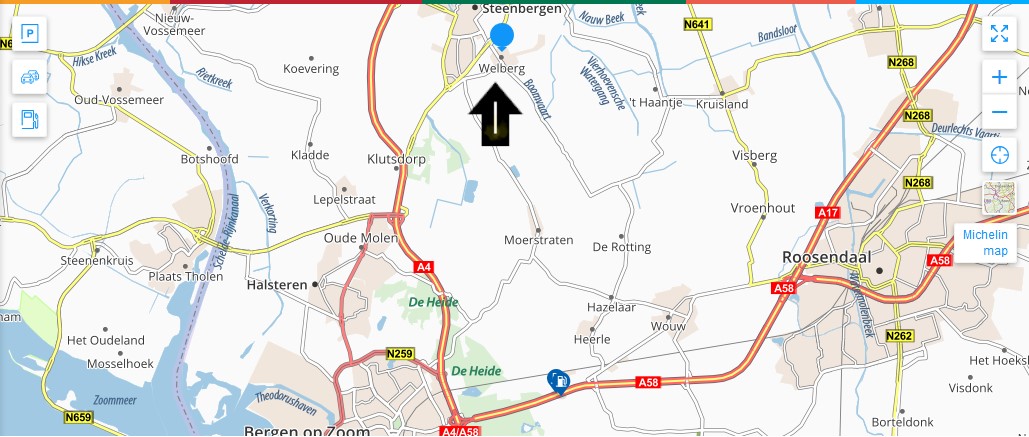
Route from Mons, Belgium to Mehlem (near Bonn), Germany taken by Howatt’s unit. (Map courtesy of http://www.duckduckgo.com)

On November 20, the unit was on the move. “…Breakfast at 5 o’clock this morning, then we fell in at 6:30 and marched up to the square.  Here we formed up and started for Germany, the lorries ahead, then the signallers and B.C.A.s, then the guns with the gun crews walking behind….” (B.C.A. is an acronym for Battery Commander Assistant, the position held by Howatt.) “...We stopped at a town called Jemappes, about four kms west of Mons.  We were billeted in a big factory, away up in the top story...”  The unit stayed there for a week.

On November 28, 1918, Howatt and his unit were on their way again.  “…Up this morning at 5:30, had two cups of coffee, then breakfast, and away.  We travelled in the lorries through town after town.  Had great fun waving our hands to all the pretty girls as we passed…”  Pretty girls weren’t all that caught Howatt’s interest. “…We stopped in one town for a few minutes and we were talking to a Canadian infantry corporal.  His company was guarding trainloads of munitions left by the Germans.  They had big munitions works in the town, and there were over 300 cars of shells and high explosives in the railway yards…”  Howatt didn’t identify this town, but mentioned that they stopped overnight in Ligny, and he was billeted in a farmhouse with a Belgian family.

The next day, November 29, Howatt continued his account.  “…Left Ligny this morning at about eight o’clock and arrived here in Namur about twelve.  All along the road are abandoned German lorries, tractors, and motorcars.  They must have left hundreds and hundreds behind them.  I don’t know whether these cars have broken down or whether the petrol gave out.  I saw one yard full of lorries….

Namur postcard

Postcard showing the citadel in Namur. (Harold Howatt collection.)

The unit stopped in Namur for a rest break, giving Howatt time to explore the town.  “…Namur is quite a place.  The forts are on a high cliff or hill behind the town.  The town has been badly smashed up in some places….

On December 1, the unit was moving ahead again.  “…We started about seven.   The road ran along the bank of the Meuse, and on the other side are enormous cliffs towering high in the air…..”  While Howatt, as part of the advance party, arrived in Huy around noon to secure accommodations “….the guns did not get in until nearly dark.  Just as we were waiting around for supper Mr. Goodwin came around and said that the B.C.A.s and signallers had to clear the mud off the wheels…”  Howatt, along with a small group, cleared off one gun, but noted that a number of men disappeared, rather than going out in the dark to tackle this task!

The next day, rather than continuing on, the unit was put to work cleaning the guns. On December 4, the unit moved further along to Hamoir, where they stopped for another few days.  On December 8, the unit travelled as far as Petit-Thier “…only 3 kms from the border.  It is a very small place…

On December 9, Howatt recorded that “…At last we are where we have been trying to get for over four years.  ‘In Germany’ This morning, at about eight o’clock we crossed the frontier, the first Canadian Siege Battery to enter Germany….

He noted that the mood in Germany was not the same as in Belgium.  “…About the only difference we noted on crossing the frontier was the absence of flags and any demonstrations on the part of the people.  They still came out when we passed and just looked at us without a word or smile.  One or two we met on the road saluted us.  The people do not seem to fear us, in fact I think they welcome us, hoping the presence of the troops will restore order, and result in a more even distribution of food. The country we passed through today was desolate….” That night they stopped in a small village, Mirfeld, where Howatt was “…billeted in a schoolroom...

On December 10, while trying to find a place to stay in Büllingen, the unit ran into opposition.  “…At first they were going to put us in the station house, but the old station master kicked about it, saying he had a telegram from a conference in Aix-la-Chapelle saying that station houses were not to be used for billeting troops...”  The Canadians found other accommodation.

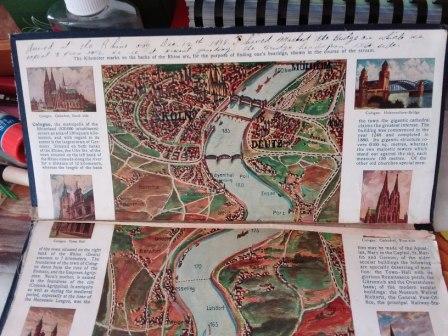
By December 12, they had reached Cologne, and the next day, December 13, “….the Canadian troops marched across the Rhine, reviewed as they crossed the bridge by General Plumer and General Currie.  It was an inspiring sight to see the Canadians cross to the east bank of the Rhine….. The people here do not seem to be very hostile, in fact many are quite friendly but it must have been a bitter pill for these proud Prussians to swallow to have to witness the occupation of their city by the hated Canadians….

On December 16, the unit travelled to its final destination in Germany.  “….We started about 1:30 pm for Bonn or somewhere near.  We passed through Bonn…. and arrived about dusk in a little town called Mehlem.  We are billeted in an old theatre….

The 2nd Canadian Brigade stayed in Mehlem until January 28, 1919, when the Canadian Army of Occupation was relieved by the British 84th Brigade Royal Garrison Artillery.  Canadian troops moved back to Belgium and then onwards towards demobilization and home. Howatt was discharged on May 18, 1919.

There is an Island link between the Canadian Brigade, which Howatt was part of, and the British Brigade! One of the members of the British Army of Occupation was Lt. Henry “Harry” Warburton STEWART, one of the names listed on the Cenotaph outside the Borden-Carleton Legion.  Stewart died in hospital while in Germany and is buried in Cologne.  (For an account of our visit to the cemetery and his story, see On the War Memorial Trail ….. In Cologne)

Henry Warburton Stewart

Henry “Harry” Warburton Stewart. (Photo courtesy B. Stewart family collection)

At the time we visited Cologne we did not have access to the war diaries for Stewart’s unit.  Thanks to the coronavirus pandemic we got a lucky break.  The National Archives in the United Kingdom has offered free access to its digitized records while the Archives are closed to the public. Pieter was able to get the war diaries, so we now have confirmation why Stewart was in Germany.

His unit, the 77th Siege Battery Royal Garrison Artillery, became part of the 84th Brigade Royal Garrison Artillery, sent to relieve the Canadians.  According to the war diary, on January 29, 1919 “….a party of the 77th Siege Battery arrived in Namur…”  Unlike Howatt’s unit, which travelled by road, this unit “…. travelled to Mehlem by train...”  No mention is made of where in Mehlem the 77th Siege Battery was billeted.  Stewart must have fallen ill shortly after arriving in Mehlem as he ended up in hospital in nearby Bonn and died on February 11.

Unfortunately, as yet, we have not yet found a photo of Harold Howatt.  As well, the service file for Henry Warburton Stewart has not yet been digitized by the National Archives and is not available online. Can you help?  If so, please let Pieter know.  You can email him at dariadv@yahoo.ca or comment on the blog.

© Daria Valkenburg

Dutch Kings Day Is A Reminder Of The Upcoming Liberation Of The Netherlands Anniversary

kings day

April 27, 2020.  Today is Kings Day (Koningsdag) in The Netherlands, the national holiday in that country, equivalent to our Canada Day on July 1.  It celebrates the birthday of the Dutch King Willem-Alexander.  Normally there are lots of activities, but with social distancing due to the coronavirus, events have been cancelled, and people have been asked to celebrate at home.

20200427_124326 Apr 27 2020 Pieter with Dutch flag

On a windy Island, Pieter has to hang on to the Dutch flag for dear life! (Photo credit: Daria Valkenburg)

Here on the Island, a proud Dutch-born Pieter put out the Dutch flag by our garage and held on to it long enough to take a photo before the wind whipped it around the pole.  The day is a reminder of next week’s 75th Liberation of The Netherlands on May 5.  Most events have been cancelled or curtailed, but the day will still be marked.

NFA03_dou-201-1_W

Cartoon found on geheugenvannederland.nl

Alice van Bekkum, Chair of the Face To Graves Foundation Groesbeek, has advised that stories and photos collected on those buried at the Canadian War Cemetery in Groesbeek are now online at www.facestograves.nl. She will be interviewed by CBC Calgary reporter Erin Collins on May 5.  (For more information see: Press Release Digital Monument May 2020)

Readers of this blog are aware of Pieter’s efforts to help the Foundation and other researchers with photos and stories about Prince Edward Island soldiers buried in The Netherlands. (See Photos and Info Requested For WW2 Soldiers From PEI Buried In The Netherlands)

Of the Islanders buried in Groesbeek, photos for all but two have been found.  Still missing photos are two who lost their lives in 1945:

  1. Joseph Edmond HENNEBERY, born in Morell, was with the Royal Canadian Engineers -33rd Field Company. He died on April 20, 1945, aged 25.  UPDATE: Photo found!
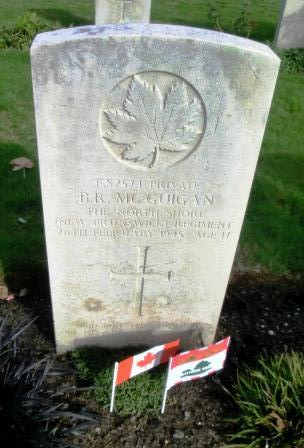
  2. Barney Ruben MCGUIGAN, born in St. Peter’s, son of Thomas and Sadie McGuigan, was with the North Shore (New Brunswick) Regiment. He died on February 26, 1945, aged 17.  UPDATE: Photo found!

If you have photos or information to share about Henneberry, McGuigan, or other Canadian soldiers buried in The Netherlands, please contact Pieter at memorialtrail@gmail.com or comment on the blog.

© Daria Valkenburg

….Want to follow our research?….

If you are reading this posting, but aren’t following our research, you are welcome to do so.  Our blog address: https://onthewarmemorialtrail.com/

4 countries, 6 weeks, 7,000 km – an unforgettable war memorial journey in Europe…. Daria’s book ‘No Soldier Buried Overseas Should Ever Be Forgotten‘ is available in print and e-book formats.  Net proceeds of book sales help support research costs and the cost of maintaining this blog. For more information see https://nosoldierforgotten.com/

You are also invited to subscribe to our YouTube Channel: On The War Memorial Trail With Pieter Valkenburg: https://www.youtube.com/channel/UCJ591TyjSheOR-Cb_Gs_5Kw

Never miss a posting!  Subscribe below to have each new story from the war memorial trail delivered to your inbox.
One Soldier Records His Observations During The Last Few Days Of World War I

April 20, 2020.  As we stay in social isolation during the Coronavirus (Covid-19) pandemic, many people are wondering how we will react once the restrictions are lifted, how they will be lifted, and when they will be lifted.  At the moment there are no clear answers.  But there are examples in the past about how people reacted when major events came to an end.  One of these was the reaction of WW1 soldiers when they learned that the war would end on the 11th hour of the 11th month in 1918.  Some didn’t believe it would happen, others wondered why wait when a ceasefire was already in the works.  Some thought to reduce the loss of life by not actively pursuing the soon to be ex-enemy, while others strove to aggressively take out as many enemies out as possible.  George Lawrence PRICE, the Canadian soldier who was shot by a German sniper and died two minutes before the 11 am ceasefire comes to mind as an example of the latter. (See https://en.wikipedia.org/wiki/George_Lawrence_Price)

Harold Keith HOWATT, of Augustine Cove, was in the 8th Canadian Siege Battery during WW1 and survived the war.  With this year’s pandemic in mind, we looked through his writings to see if there was any mention of what later became known as the Spanish flu among the troops.  To our surprise, only one mention was made of flu, and it had nothing to do with soldiers!  On October 29, 1918 he wrote that “….I received three letters from PEI and in one of them was the news that Morley Newsome had died of influenza.  It was quite a blow to me, we had always been such good friends….” (Newsome, the son of Samuel Newsome and Charlotte Dawson, died on October 8, 1918, and is buried in Charlottetown.)

Next we wondered what he wrote once the news of an upcoming ceasefire was announced.  The first mention is of a rumour on November 5, 1918, while he was in Hérin, France, not that far from the Belgian border. “…The Allied Army is going strong all along the line, the Belgians are reported to be in Ghent, the Americans have captured Sedan, and the French are going strong.  There are rumours of an armistice…

Wikipedia Western_front_1918_allied

Orange star is the approximate location of Hérin, France where Howatt was located in early November.  Brown arrow is the location of Sedan, Belgium. (Map source: https://en.wikipedia.org/wiki/Hundred_Days_Offensive)

On November 6, 1918, he wrote that “…Peace rumours growing stronger.  It is reported that Mons is captured, also that the Germans have asked the Allied Command if they will receive a peace delegation…” Mons is in Belgium.

The next day, November 7, he recorded that it was “….officially reported that Turkey and Austria have unconditionally surrendered, that the Allied Fleet is in the Black Sea, and that Austria has to allow the Allies to march through their territory to attack Germany from the south…

On November 8, he sounds a hopeful note.  “…It is official that Germany is sending a peace delegation across the lines.  No one knows where the Germans are in front of here, somewhere beyond Mons.  There is great expectation of peace….

On November 9, he writes about going into the nearby town of Denain for a concert and later to visit a canteen where he met Canadians who recently arrived from England. “… There were a great number of Canadians in Denain today, two or three thousand reinforcements who have just come over from Blighty.  The rumour tonight is that the Allies have given Germany until Monday at 11:00 hours to agree to the terms of the armistice….”  All these rumours in the days before social media indicate the keen interest in what was happening!

Google Maps Cambrai

Hérin is circled in purple.  Denain is circled in orange. (Source: Google map for area around Cambrai, France.)

On November 10, Howatt’s unit was woken up at 5 am and told they would be on the move to Boussu, Belgium, a small town 10 kms west of Mons.  Then nothing happened all morning!  Hurry up and wait?  Finally, after dinner, Howatt was part of an advance party that left in a truck with “several signallers, two cooks, and Lutly and I…

Google maps Boussu

Howatt’s advance party travelled through Valenciennes to Boussu.  (Map source: Google)

When they arrived in Boussu, Howatt recorded that “…There are a large number of civilians in the town, and there was great excitement among the civilians, the band started to play, and the civilians flocked around, and started to dance, sing, and shout ‘La guerre est fini’.  The general impression seems to be that the war is about over…..

The first entry for Monday, November 11, 1918 was in quotes and underlined.  “Hostilities have ceased.”  Howatt then gave an account of the reaction.  “….At eleven o’clock this morning fighting ceased, the Germans have evidently accepted the terms of the armistice.  There was not much excitement today, the fellows hardly believe that it is true.  There is just a quiet undertone of gladness…

With fighting over, the rest of Howatt’s unit came to Boussu and they were billeted in a chateau built in 1539 and belonging to the Marquisse de Charbonne, a Parisian who used the chateau as a summer home.  Howatt mentions that the chateau had been “used by Fritz as billets. When we got over there to hold the billets we found about twenty Belgian girls here cleaning out the place.  It was in an awful mess….. We certainly had a circus here this morning with those girls, they would work for a while, then they would have a dance. I laughed more than I have for ages….

The end of fighting didn’t mean that soldiers were free to leave. On November 12, Howatt reports that “…Gun crews went down to clean the guns and signallers and B.C.A.s to clean their stores…” (B.C.A. is an acronym for Battery Commander Assistant, the position held by Howatt.)

On November 13, Howatt mentions more rumours going through his unit.  “...There are all sorts of rumours going around today, some say that we are going up into Germany, others say we are going right back to Canada.  I wouldn’t mind going into Germany at all….”  Not long afterwards, Howatt did go to Germany as part of the Army of Occupation.

We think of major events as having a beginning and an end.  They do, but the timing is staggered and never crystal clear.  Not only are there rumours, but there is a time lag when people begin to believe that what they have been told is true.  It must have been an enormous shock, mixed with relief, to learn that fighting was over, and then came the uncertainty while waiting to hear what would happen next. This is a lesson for us with the pandemic.

After returning home, Howatt married Louise Wright, and died on October 15, 1985, aged 93.  Does anyone have a photo of Harold Howatt? If so, please let Pieter know.  You can email him at dariadv@yahoo.ca or comment on the blog.

© Daria Valkenburg