On The War Memorial Trail…..The WWII Sapper From Moncton Who Lost His Life During Operation Berlin

Headline of an October 1945 article from ‘The Times Transcript’

November 6, 2025.  While searching for a photo of WWII soldier Eric John CRUE of Moncton, New Brunswick, who lost his life on April 6, 1945 while serving with the Algonquin Regiment, Pieter found an October 1945 newspaper article from ‘The Times Transcript’ about a memorial service in the First United Baptist Church in Moncton to honour the memories of Crue, John Edward COLEMAN of the Royal Canadian Electrical and Mechanical Engineers, George Temple DOYLE of the RCAF, and David ‘Lloyd’ George HOPE of the Royal Canadian Engineers…. all from Moncton.

Pieter knew that Coleman was on a photo wish list from the Canadian War Cemetery in Groesbeek, but Doyle and Hope were unknown to him.  He began an investigation and quickly found that no photo was available for Hope, who is buried in Rhenen General Cemetery in Rhenen, The Netherlands.  There was a photo available for Doyle, and a newspaper photo was found for Coleman by Etienne Gaudet.  No photo was ever found for Crue, who is now on our Cold Case List. (See https://onthewarmemorialtrail.com/our-cold-cases/)

Pieter began the search for a photo of Hope….

….A family member got in contact…

Pieter made contact with Susan ‘Sue’ Hope through Ancestry and she explained that the soldier, who went by ‘Lloyd’, was one of three brothers who served during WWII.  “….Russell, Douglas, and DLG Hope were my grandfather’s cousins. My grandfather was Wesley William Hope.   David Lloyd, Douglas, and Russell Hope were brothers.  They were all from Moncton, their parents were Frank D. Hope and Lottie F Jones…”  Both of Lloyd’s parents died in the early 1930s.  In addition to his brothers, he also had three sisters: Kay, Mildred Greta, and Marguerite.

Born June 30, 1919 in Moncton, New Brunswick, Lloyd worked as an iron moulder at an iron foundry, Record Stove and Furnace Company prior to enlisting in the militia on October 9, 1940 under the National Resources Mobilization Act (NRMA) and began basic infantry training at No. 70 Non-Permanent Active Militia (NPAM) Centre in Fredericton, New Brunswick.  After completing that course on November 7, 1940, he was assigned to the New Brunswick Regiment. (See https://en.wikipedia.org/wiki/National_Resources_Mobilization_Act)

….Lloyd enlisted in the Active Army in August 1941…

He enlisted in the Active Army on August 8, 1941 at No. 7 District Depot in Moncton, stating in an interview that his reason for joining the army was for “….adventure…” He expressed an interest in taking a blacksmiths course. He was described as “…cheerful, neat, with good conduct and military efficiency….” While his mechanical knowledge was listed as “…below average….” it was remarked that his skill on the rifle range was “…above average…” He had written that he enjoyed hunting, fishing, and swimming, so skill with a gun would not have been a surprise.     

Lloyd returned to No. 70 Canadian Army (Basic) Training Centre in Fredericton for his basic training, which was completed on October 2, 1941.  He was transferred to No. 7 District Depot in Moncton on October 20, 1941, and began a Fitters Course the following day, returning to No. 70 Canadian Army (Basic) Training Centre on February 6, 1942. 

On April 8, 1942, Lloyd was transferred to A5 Canadian Engineer Training Centre (CETC) in Camp Petawawa, Ontario for Engineer Training.  After completing his training on May 13, 1942, he was given embarkation leave, for what turned out to be the last chance he would have to see his family.

….Lloyd left Canada for overseas service….
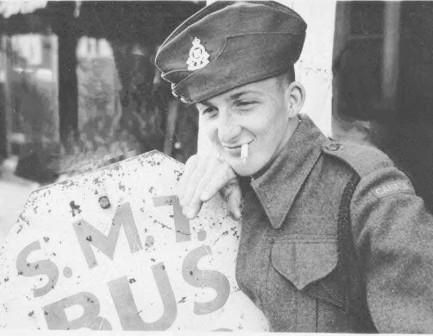
David ‘Lloyd’ George Hope. (Photo courtesy of Susan Hope)

On June 3, 1942, Lloyd sailed from Halifax, Nova Scotia to the United Kingdom, arriving in Liverpool, England on June, 1942. Upon arrival, he was assigned to No. 1 Canadian Engineers Reinforcement Unit (CERU). 

While in the United Kingdom, Lloyd’s training continued.  On September 29, 1942, he was transferred to No. 1 Canadian Ordnance Reinforcement Unit (CORU), qualifying as a Pioneer ‘C’ on October 19, 1942. 

On December 4, 1942, Lloyd was transferred to the Royal Canadian Engineers, 18th Field Company.  While remaining with the 18th Field Company, he was attached, for all purposes, to the Headquarters of the Royal Canadian Engineers, 3rd Canadian Division, from February 19, 1943 until August 13, 1943.

Then, on December 14, 1943, he was transferred to the Royal Canadian Engineers, 23rd Field Company.  In ‘The Twenty-Third Story’ by Major Michael Lovett TUCKER, the entry for December 19, 1943 explained that training was ongoing.  “…We are doing considerable practice in night convoy work…” using old trucks. …We are still working on Bailey Bridge training on Headley Common….” and “….today we start work on a 110 foot T.T. bridge with one storey underslung….”  T.T. refers to Tracked-Transport.  Bridge load effects and capacity ratings needed to be evaluated to determine appropriate load factors for military vehicles crossing various bridges.

….Lloyd and the 23rd Field Company left the UK for France…..

On July 6, 1944, Lloyd and the 23rd Field Company boarded a ship that was to leave the United Kingdom for France, part of the 21st Army Group.  The July 7, 1944 entry in ‘The Twenty-Third Story’ recorded that “…we sail from Tilbury at six-thirty in the morning and anchor off Southend, where we lie for the balance of the day.  Then at ten o’clock the following evening we fall in with the other thirty-three ships in our convoy, and head down the Thames Estuary to the English Channel…

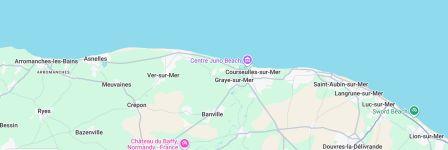
Map showing the location of Graye-sur-Mer and Juno Beach.  (Map source: Google maps)

The entry for July 9, 1944 noted their arrival off the coast of France. “…Late in the afternoon we come in sight of the Normandy coast, and shortly before midnight come to anchor off Juno Beach, off Graye-sur-Mer.  There are so many ships that it is difficult to find a suitable anchorage…

….Lloyd and his brother Douglas help to clear up debris in Caen…..

Troops left the ship the following day, and by July 13, 1944 had moved to their new bivouac area in a orchard near Cairon. Their immediate task was to “…clear debris and open streets in Caen…” as stated in the July 14, 1944 entry.  “…In the centre of town, every street is choked with rubble, and in many places it’s impossible to tell where streets have been. The Germans are mortaring and shelling steadily….”  

Work continued, in spite of German activity, and by July 25, 1944, an entry recorded that “… an entirely new street is run from Boulevard des Allies to the river through the ruins of demolished buildings.  It is named ‘Andy’s Alley’….” 
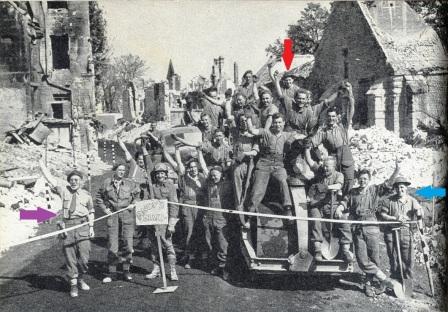
Opening of Andy’s Alley in Caen, July 1944. Lloyd Hope identified by red arrow. His brother Douglas Hope is identified by blue arrow.  The purple arrow identifies Major M. L. Tucker, author of ‘The Twenty-Third Story’. (Photo courtesy of Alice van Bekkum Collection)

The opening of Andy’s Alley was captured in a photo, with the caption noting that the road was ‘a half-mile long’ (.8 km), and that the proud Canadian engineers posed by the steamroller breaking the tape for supplies to move forward.  The source of the photo and the magazine in which it was published is unknown, and was provided by Alice van Bekkum, Chair of the Faces To Graves Foundation.  Both Lloyd and his brother Douglas are in this iconic photo!

….The 23rd Field Company made its way into The Netherlands….

After painstakingly working their way through France and Belgium to clear roads and build bridges, the 23rd Field Company received new orders. The September 16, 1944 entry in ‘The Twenty-Third Story’ recorded that “…something is in the air!  Our advance is moving very fast through Belgium up into Holland…

Operation Market Garden was an Allied military operation, from September 17-25, 1944 that succeeded in liberating Nijmegen and Eindhoven, but failed in liberating the last bridge held in Arnhem, which would enable troops to the Rhine into Germany.  If you’ve seen the movie ‘A Bridge Too Far’ (See https://en.wikipedia.org/wiki/A_Bridge_Too_Far_(film)), then you may be familiar with what happened.  (For an idea of the gliders used, see https://onthewarmemorialtrail.com/2018/01/06/on-the-war-memorial-trail-the-liberation-route/)

There was excitement in the September 18, 1944 entry.  “…We hear that Airborne troops have landed in Northern Holland and have captured the bridges at Grave, Nijmegen and Arnhem over the Maas, Waal and Neder Rijn rivers, respectively….We are the only Canadian troops taking part in the push into Holland….but our ground troops are having difficulty getting beyond Nijmegen and so are unable to join up with the Airborne troops in Arnhem…”  This description was about Operation Market Garden, which failed to capture the bridge at Arnhem, as was noted two days later in the September 20, 1944 entry.

While British troops got across the river at Nijmegen and were able to hold the bridge, they had “…difficulty in getting on to Arnhem, and 1st British Airborne is having a very sticky time there. The Germans have retaken the bridge….

….The 23 Field Company was tasked with rescuing the 1st British Airborne during Operation Berlin….

The 23rd Field Company was “….ordered forward to Nijmegen...”  On September 24, 1944, the entry recorded that they were to help rescue the 1st British Airborne, using storm boats to ferry survivors from the German held side of the Neder Rijn River (Lower Rhine River in English) to Allied safety. Operation Berlin was the rescue attempt to save survivors of the British 1st Airborne after the disastrous Operation Market Garden and at the end of the Battle of Arnhem/Oosterbeek

Example of a storm boat: Storm boats manned by the 34th Field Company, R.C.E., carry Regina Rifles Regiment’s 7th Brigade over the Seine River in 1944.  (Photo Credit: Donald I. Grant/Canada. Dept. of National Defence/Library and Archives Canada/PA-136016)

The following day “…at six o’clock we learn that we are to operate from a site on the river, just east of Driel.  We are to have fourteen boats, and these will be off-loaded in an orchard which comes up to the back of the winter dyke...

The first storm boat was launched at 9:30 pm, but as it had been damaged while being pushed down the bank into the water, it started to leak and had to be abandoned.  A second boat was readied. “….Corporal Ryan, W.D., and Sappers Magnusson, H.C., and Roherty, L.J., are the crew…It is pitch dark and pouring rain….Lt Martin asks to go with this boat so that he may contact our friends and lend a hand in organizing the loading of boats for them…..” 

 It set off at 9:45 pm, closely followed by “…another, which has Corporal Smith, S. F., and Sappers Hope, D.L.G., and Thompson, N.A. as crew.  Neither of these boats returns.  One is seen to receive a direct mortar hit. There is a direct flash from the explosion, and then nothing can be seen in the darkness …” 

The boat with Ryan, Magnusson, Roherty, and Martin was hit by mortar fire. None of the men survived.

….Lloyd was in the storm boat that capsized during Operation Berlin….

The boat with Smith, Hope, and Thompson was on its way back after picking up survivors, but was “…heavily overloaded with Airborne survivors…” The boat “….went under when a mortar fell close beside it and everyone instinctively threw himself to the other side of the boat and capsized it...” 

Of the crew, only Corporal Smith survived.  He recorded in a report on the incident that he was riding in the bow to help land the boat.  While heading for the south (home) shore, the boat was swamped and sank about 46 metres (50 yards) from the north shore.  As his “…greatcoat was open it helped me to float, and although I am not a swimmer I reached shore on the north side of the river along with four of the British Airborne men. I was taken back to the home side of the river in an assault boat…

….Lloyd is buried in Rhenen General Cemetery…

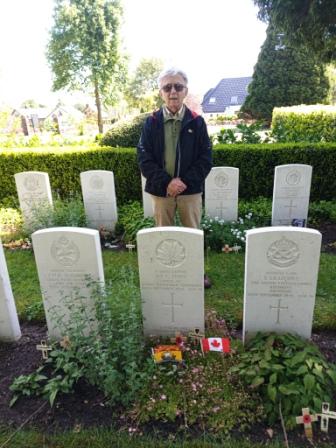
Pieter by the grave of David ‘Lloyd’ George Hope. (Photo credit: Daria Valkenburg)

25 year old Lloyd lost his life due to drowning on September 26, 1944, when the storm boat he was in capsized.  He was buried in Rhenen General Cemetery, which we visited this past May.  Pieter placed a Canadian and New Brunswick flag at Lloyd’s grave. (See https://onthewarmemorialtrail.com/2025/11/03/on-the-war-memorial-trail-a-visit-to-rhenen-general-cemetery/)

Although 7 men from the 23rd Field Company lost their lives during Operation Berlin, it was a success. The Royal Canadian Engineers rescued most of the 2,400 evacuees in one night, using storm boats propelled by 50 horse power outboard motors! (See https://www.strijdbewijs.nl/donald/operation.htm)

….A visit with Sue Hope…

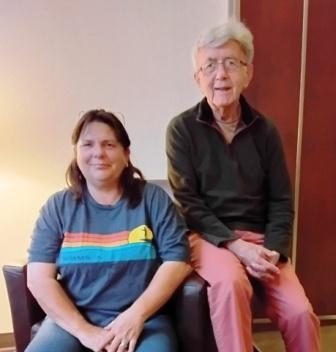
Susan ‘Sue’ Hope and Pieter.  (Photo credit: Daria Valkenburg)

We were delighted to have a chance to meet Sue Hope in Moncton after we returned from our 2025 European War Memorial Tour.  “….Thank you for the project you are doing to preserve history of all these young men!…” she wrote.

The flags placed at the graves for David ‘Lloyd’ George Hope were donated.  Our thanks go to: 

  • Alan Waddell, Constituent Assistant, on behalf of Heath MacDonald, MP for Malpeque, for the Canadian flags.
  • Jean-Claude D’Amours, MLA for Edmundston-Madawaska Centre, Minister responsible for Military Affairs, with the help of Cécile LePage, Province of New Brunswick, for the New Brunswick flag. 

Thank you to Sue Hope for providing photos and information about her grandfather’s cousin, and to Alice van Bekkum for providing information on the 23rd Field Company and Major Tucker’s book, as well as the photograph taken at Andy’s Alley.  Thank you to John Sliz, author of ‘Storm Boat Kings’, for sharing the storm boat photo.

Our adventures continue as we share the highlights of our adventures on the 2025 European War Memorial Tour.

If you have a story or photo to share, please contact Pieter at memorialtrail@gmail.com or comment on the blog. 

© Daria Valkenburg

….Want to follow our research?…

If you are reading this posting, but aren’t following our research, you are welcome to do so.  Our blog address: https://onthewarmemorialtrail.com/

4 countries, 6 weeks, 7,000 km – an unforgettable war memorial journey in Europe…. Daria’s book ‘No Soldier Buried Overseas Should Ever Be Forgotten‘ is available in print and e-book formats.  Net proceeds of book sales help support research costs and the cost of maintaining this blog. For more information see https://nosoldierforgotten.com/

Subscribe to our YouTube Channel: On The War Memorial Trail With Pieter Valkenburg: https://www.youtube.com/channel/UCJ591TyjSheOR-Cb_Gs_5Kw

Never miss a posting!  Subscribe below to have each new story from the war memorial trail delivered to your inbox.

On The War Memorial Trail….. A Visit To Rhenen General Cemetery

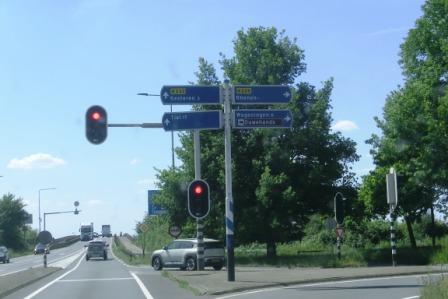
Sign directing us to Rhenen, The Netherlands.  (Photo credit: Daria Valkenburg)

November 3, 2025. While in Europe this spring for the 80th Anniversary of Liberation Commemoration events, we visited 14 cemeteries to place flags at the graves of 383 soldiers that Pieter has researched since 2014, with the stories of many of these soldiers previously told on this blog. 

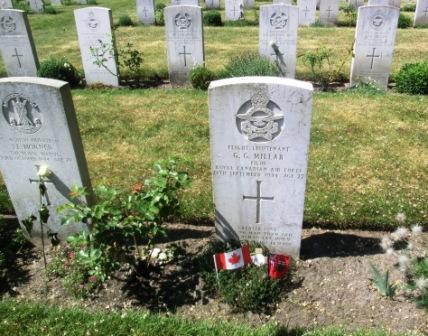
On our way towards Zaltbommel for a family visit before going on to Belgium, we visited two cemeteries. The previous posting featured our visit to Uden War Cemetery, where George Glenn ‘Dusty’ MILLAR, of Winnipeg, Manitoba, is buried. (See https://onthewarmemorialtrail.com/2025/10/29/on-the-war-memorial-trail-paying-our-respects-to-spitfire-pilot-dusty-millar-at-uden-war-cemetery/)

This posting features our visit to Rhenen General Cemetery, where David ‘Lloyd’ George HOPE, of Moncton, New Brunswick, is buried.  The village of Rhenen is in the province of Utrecht, 26 kms (16 miles) from Arnhem and 47 kms (29 miles) from Utrecht.

….The Commonwealth War Graves were tucked away in a small section of the cemetery….

Pieter at the entrance to Rhenen General Cemetery.  (Photo credit: Daria Valkenburg)

This is a beautiful cemetery, with the Commonwealth War Graves in its own hedged section.  There are 23 WWII Commonwealth burials here, 3 of which are unidentified. In addition, there is 1 unidentified Polish soldier buried here.

The hedged area of Rhenen General Cemetery with the Commonwealth War Graves are located.  (Photo credit: Daria Valkenburg)

The war graves are located in a hedged part of Rhenen General Cemetery.  (Photo credit: Daria Valkenburg)

….Hope was one of 7 Royal Canadian Engineers from the 23rd Field Company killed during Operation Berlin….

Pieter by the grave of David ‘Lloyd’ George Hope. (Photo credit: Daria Valkenburg)

David ‘Lloyd’ George Hope was serving with the Royal Canadian Engineers, 23rd Field Company, when he lost his life on September 26, 1944, aged 25.  He had drowned while trying to save glider pilots during the disastrous Operation Market Garden, one of 7 men from the 23rd Field Company who lost their lives in Operation Berlin – the evacuation of survivors of the British 1st Airborne at the end of the Battle of Arnhem/Oosterbeek.  

Pieter placed a Canadian and New Brunswick flag at Lloyd’s grave, and reminded me that his story had to be told in an upcoming posting.

….Ryan was another Royal Canadian Engineer from the 23rd Field Company killed during Operation Berlin….

Grave of Daniel William Ryan.  Behind his grave you can see the Polish flag at the grave of the unknown Polish soldier. (Photo credit: Pieter Valkenburg)

While looking at the graves, most of them of airmen, we noticed another Canadian grave!  Daniel William RYAN was also from the Royal Canadian Engineers.  Of course we placed a Canadian flag at his grave, but it wasn’t until later that evening that we learned he was from Sydney Mines, Nova Scotia, and had also been in the 23rd Field Company. 

We wondered if he’d been in the same boat as Lloyd Hope, but he was in a different boat, and had died when the boat he was in was hit by mortar fire.

….Royal Canadian Engineers from 23rd Field Company who were killed during Operation Berlin….

The Royal Canadian Engineers rescued most of the 2,400 evacuees in one night, using storm boats propelled by 50 horse power outboard motors! Unfortunately, 7 men from the 23rd Field Company lost their lives during Operation Berlin. (See https://www.strijdbewijs.nl/donald/operation.htm)

Killed in Boat I:

  • James Russell MARTIN, of Kingston, Ontario, aged 26, buried in the Canadian War Cemetery in Holten  
  • Sapper Harold Cecil MAGNUSSON, of St. John, New Brunswick, aged 22, buried in Gorinchem General Cemetery  
  • L/ Sapper Leslie Joseph ROHERTY, of Belledune River, New Brunswick, aged 22, listed on the Missing Memorial at the Canadian War Cemetery in Groesbeek
  • Daniel William RYAN, of Sydney Mines, Nova Scotia, aged 27, buried in Rhenen General Cemetery

Killed in Boat III:

  • Sapper David ‘Lloyd’ George HOPE, of Moncton, New Brunswick, aged 25, buried in Rhenen General Cemetery
  • Sapper Neil Arthur THOMPSON, born in Halifax, Nova Scotia, aged 23, buried in the Canadian War Cemetery in Groesbeek                       

Killed In An Orchard:

  • Sapper Ronald Tracy ‘Buck’ MCKEE, of St. Martin’s, New Brunswick, aged 36, buried in Arnhem Oosterbeek War Cemetery

The flags placed at the graves for David ‘Lloyd’ George Hope and Daniel William Ryan were donated.  Our thanks go to: 

  • Alan Waddell, Constituent Assistant, on behalf of Heath MacDonald, MP for Malpeque, for the Canadian flags.
  • Jean-Claude D’Amours, MLA for Edmundston-Madawaska Centre, Minister responsible for Military Affairs, with the help of Cécile LePage, Province of New Brunswick, for the New Brunswick flag. 

Our adventures continue as we share the highlights of our adventures on the 2025 European War Memorial Tour.

If you have a story or photo to share, please contact Pieter at memorialtrail@gmail.com or comment on the blog. 

© Daria Valkenburg

….Want to follow our research?…

If you are reading this posting, but aren’t following our research, you are welcome to do so.  Our blog address: https://onthewarmemorialtrail.com/
4 countries, 6 weeks, 7,000 km – an unforgettable war memorial journey in Europe…. Daria’s book ‘No Soldier Buried Overseas Should Ever Be Forgotten‘ is available in print and e-book formats.  Net proceeds of book sales help support research costs and the cost of maintaining this blog. For more information see https://nosoldierforgotten.com/

Subscribe to our YouTube Channel: On The War Memorial Trail With Pieter Valkenburg: https://www.youtube.com/channel/UCJ591TyjSheOR-Cb_Gs_5Kw

Never miss a posting!  Subscribe below to have each new story from the war memorial trail delivered to your inbox.
On The War Memorial Trail….Borden-Carleton Legion Honours Veterans By Placing Flags At Their Graves

November 2, 2025.  In preparation for Remembrance Day, Mario Henry and George Palmer, two veterans from Prince Edward Island’s Borden-Carleton Branch #10, and Mario’s son Laurie, visited cemeteries and cenotaphs in the area on October 30.  They ensured that veterans buried at 9 cemeteries, and whose names are listed on 4 cenotaphs, received a Canadian flag in 2025. 

George Palmer (left) and Mario Henry (right) at St. Peter’s Roman Catholic Cemetery in Seven Mile Bay.  (Photo credit: Laurie Henry)

The graves of two soldiers, whose military service the Legion had not been aware of, were added to the list this year:  WWII soldier John Peter ‘JP’ WHITE, who is buried in St. Peter’s Roman Catholic Cemetery in Seven Mile Bay, and WWI soldier John Anthony STORDY, who is buried in St. Malachy’s Roman Catholic Cemetery in Kinkora.  (To read JP White’s story, see https://onthewarmemorialtrail.com/2025/09/28/on-the-war-memorial-trailthe-wwii-carpenter-buried-in-seven-mile-bay-who-does-not-have-a-cwgc-headstone/)

The cemeteries covered by the area served by the Borden-Carleton Branch are:

  • Cape Traverse – Cape Traverse Community Cemetery
  • Cape Traverse – Cape Traverse Community Cemetery
  • Central Bedeque – Central Bedeque Baptist Cemetery
  • Kinkora – St. Malachy’s Roman Catholic Cemetery
  • Lower Bedeque – Lower Bedeque Cemetery
  • North Tryon – North Tryon Presbyterian Cemetery
  • Searletown – Searletown United Cemetery
  • Seven Mile Bay – St. Peter’s Roman Catholic Cemetery
  • Tryon – Tryon People’s Cemetery

Flags were also placed at these Cenotaphs:

  • Augustine Cove Cenotaph (4 flags)
  • Borden-Carleton Cenotaph (1 flag)
  • Searletown United Cemetery Cenotaph (4 flags)
  • Tryon Cenotaph (4 flags)

The placing of flags at graves and cenotaphs has been done annually for well over 21 years. If you see Canadian flags by graves, please do not disturb them. They are a mark of respect for a veteran’s service to Canada, and will be picked up about a week after November 11.

Mario Henry asks that if a veteran’s grave was missed, or if a veteran has recently passed away, please contact the Legion, so that flags can be placed for next year. The Legion branch can be contacted by phone at 902-855-2660 (after 4 pm) or on its Facebook page.

If you have a story or photo to share, please contact Pieter at memorialtrail@gmail.com or comment on the blog. 

© Daria Valkenburg

….Want to follow our research?…

If you are reading this posting, but aren’t following our research, you are welcome to do so.  Our blog address: https://onthewarmemorialtrail.com/

4 countries, 6 weeks, 7,000 km – an unforgettable war memorial journey in Europe…. Daria’s book ‘No Soldier Buried Overseas Should Ever Be Forgotten‘ is available in print and e-book formats.  Net proceeds of book sales help support research costs and the cost of maintaining this blog. For more information see https://nosoldierforgotten.com/

Subscribe to our YouTube Channel: On The War Memorial Trail With Pieter Valkenburg: https://www.youtube.com/channel/UCJ591TyjSheOR-Cb_Gs_5Kw

Never miss a posting!  Subscribe below to have each new story from the war memorial trail delivered to your inbox.

On The War Memorial Trail….. Paying Our Respects To Spitfire Pilot Dusty Millar At Uden War Cemetery

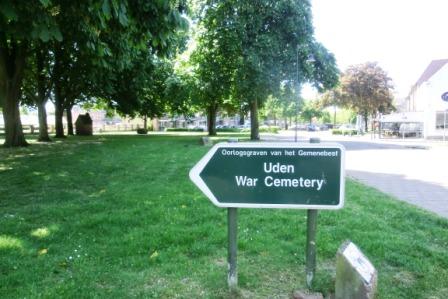
Sign directing us to Uden War Cemetery. (Photo credit: Daria Valkenburg)

October 29, 2025. While in Europe this spring for the 80th Anniversary of Liberation Commemoration events, we visited 14 cemeteries to place flags at the graves of 383 soldiers that Pieter has researched since 2014, with the stories of many of these soldiers previously told on this blog. 

For the first part of our trip, we were based in Holten. All too soon, it was time to slowly make our way towards Zaltbommel for a short stay there to visit family before going on to Belgium.  On the way to Zaltbommel, we visited Uden War Cemetery, where George Glenn ‘Dusty’ MILLAR, of Winnipeg, Manitoba, is buried.

Map showing location of Uden, The Netherlands. (Map source: http://www.gosur.com)

… Pilot Dusty Millar’s spitfire ran out of fuel and crashed…

‘Dusty’ was killed on September 28, 1944 while flying a Spitfire Mark IX on patrol with his squadron over Nijmegen, The Netherlands. After he reported on his radio that the plane was low in fuel, it crashed southeast of Weibosch near Schijndel, in the Dutch province of Noord-BrabantYou can read his story at https://onthewarmemorialtrail.com/2023/01/25/on-the-war-memorial-trail-the-wwii-pilot-whose-spitfire-ran-out-of-fuel/

… Uden War Cemetery was behind a church and in a residential area…

Pieter at the entrance to Uden War Cemetery. (Photo credit: Daria Valkenburg)

We initially had difficulty finding the cemetery once we arrived in Uden, as the car’s GPS led us on a merry dance and we were both frustrated by the time we finally found it.  We later learned that there was a direct route from the highway, with signs indicating where the cemetery was located, but somehow that option never registered with whoever designed the GPS maps!

The cemetery itself was located behind a church and in a residential area.  We expected it to be a small cemetery, and so were surprised to find that there are 437 soldiers and 259 airmen buried here.  According to the cemetery information, the airmen “….lost their lives in strategic bombing operations or in support of land forces…

Pieter placed flags of Canada and Manitoba at Dusty Millar’s grave in Uden War Cemetery.  (Photo credit: Daria Valkenburg)

….53 Canadians are buried in Uden…

The cemetery register at Uden War Cemetery. (Photo credit: Daria Valkenburg)

Since this was a war cemetery, there was a visitors’ book located in the cemetery register box, in which I wrote that we paid our respects at Dusty’s grave and that he was a spitfire pilot from Manitoba.

We wrote that we visited Dusty Millar’s grave in the visitors’ book.  (Photo credit: Daria Valkenburg)

We thought that there would be more Canadians than Dusty buried here, so Pieter brought a few extra Canadian flags, but it turned out that there are 53 Canadians buried in Uden…. and we didn’t have enough flags. 

….A cafe was within walking distance of the cemetery…

I’m never without a camera!  (Photo credit: Pieter Valkenburg)

One of the advantages of visiting a war cemetery in a residential area is that there is more than a cemetery!  As we walked from the cemetery back towards the car, Pieter noticed a cafe within walking distance, so we went there, thinking to have something to drink and a much needed rest.  It was a Turkish bakery and cafe called Nfes.  We happily sat down and ordered red lentil soup (linzensoep) for lunch. The soup was delicious, the cafe an oasis of relaxation, and the service was very friendly…..just the break we needed before going on to Zaltbommel.

The flags placed at Dusty Millar’s grave were donated.  Our thanks go to: 

  • Alan Waddell, Constituent Assistant, on behalf of Heath MacDonald, MP for Malpeque, for the Canadian flag.
  • Brad Robertson, Chief of Protocol, Government of Manitoba, on behalf of Wab Kinew, Premier of Manitoba, for the Manitoba flag. 

Our adventures continue as we share the highlights of our adventures on the 2025 European War Memorial Tour. Coming up on our journey of remembrance is a visit to Rhenen General Cemetery.

If you have a story or photo to share, please contact Pieter at memorialtrail@gmail.com or comment on the blog. 

© Daria Valkenburg

….Want to follow our research?…

If you are reading this posting, but aren’t following our research, you are welcome to do so.  Our blog address: https://onthewarmemorialtrail.com/

4 countries, 6 weeks, 7,000 km – an unforgettable war memorial journey in Europe…. Daria’s book ‘No Soldier Buried Overseas Should Ever Be Forgotten‘ is available in print and e-book formats.  Net proceeds of book sales help support research costs and the cost of maintaining this blog. For more information see https://nosoldierforgotten.com/

Subscribe to our YouTube Channel: On The War Memorial Trail With Pieter Valkenburg: https://www.youtube.com/channel/UCJ591TyjSheOR-Cb_Gs_5Kw

Never miss a posting!  Subscribe below to have each new story from the war memorial trail delivered to your inbox.


A Loss For Canadian History

Dr Tim Cook (left) with Pieter (right) at the Canadian War Museum in Ottawa.  (Photo credit: Daria Valkenburg)

October 27, 2025.  Pieter and I were deeply saddened yesterday to learn of the passing of Dr. Tim Cook, Chief Historian at the Canadian War Museum in Ottawa, Canada, and the author of several books and articles about Canadian history.  (See https://www.newswire.ca/news-releases/war-museum-announces-passing-of-chief-historian-dr-tim-cook-832395381.html and https://www.cbc.ca/news/canada/ottawa/canadian-war-museum-tim-cook-dies-9.6954386)

We knew Dr. Cook as a gracious and friendly person, who was always willing to share his knowledge.  A previous blog posting recounted a conversation that we had with him at the Canadian War Museum during the Covid years, about the need to remember our history.  (See https://onthewarmemorialtrail.com/2021/09/20/on-the-war-memorial-trail-in-conversation-with-historian-dr-tim-cook/)

When we first met and I initially called him Dr. Cook, he immediately corrected me!  He referred to himself simply as ‘Tim’, and we were ‘Daria and Pieter’ to him.  

Over the years, we found that if you asked Dr. Cook a question, he answered promptly….and if he didn’t know the answer, he found someone who did.  Just one example:  In the summer of 2024, we received a query from a small Manitoba museum asking how to display WWI trench maps.  The request came to us, but we aren’t experts in preservation, so I emailed Dr. Cook and asked if he could forward the query to someone at the museum that could help.  He did, and the small Manitoba museum got the expert advice and help needed to display the maps.

He’d been very ill in 2023, and in June of that year, he wrote us that “…I’m doing better, although it was another full-on battle with cancer. Sigh. I’m a four-time survivor, but I didn’t think I was going to make it through this one. I did, and I’m not complaining….” Indeed he didn’t complain, but went on to write another book, ‘The Good Allies’, about the relationship between Canada and the United States during WWII.

Dr. Cook’s passing, at the age of 54, is a great loss to Canadian history, to his family, friends, colleagues, and to all of us who learned about our nation’s history through his books and articles.

Pieter’s research into Canadian soldiers continues.  If you have a story or photos to share, please contact Pieter at memorialtrail@gmail.com or comment on the blog. 

© Daria Valkenburg

….Want to follow our research?…

If you are reading this posting, but aren’t following our research, you are welcome to do so.  Our blog address: https://onthewarmemorialtrail.com/

4 countries, 6 weeks, 7,000 km – an unforgettable war memorial journey in Europe…. Daria’s book ‘No Soldier Buried Overseas Should Ever Be Forgotten‘ is available in print and e-book formats.  Net proceeds of book sales help support research costs and the cost of maintaining this blog. For more information see https://nosoldierforgotten.com/

Subscribe to our YouTube Channel: On The War Memorial Trail With Pieter Valkenburg: https://www.youtube.com/channel/UCJ591TyjSheOR-Cb_Gs_5Kw

Never miss a posting!  Subscribe below to have each new story from the war memorial trail delivered to your inbox.

On The War Memorial Trail…. Visit To Bathmen And The Schipbeek Canal

October 26, 2025. While in Europe this spring for the 80th Anniversary of Liberation Commemoration events, we visited 14 cemeteries to place flags at the graves of 383 soldiers that Pieter has researched since 2014, with the stories of many of these soldiers previously told on this blog. 

On our ‘wish list’ of places to see was the Schipbeek Canal, the location where several soldiers whose stories we told lost their lives.  The Schipbeek is a tributary of the IJssel River.

When I mentioned Schipbeek Canal to a few Dutch colleagues, I was kindly told that Schipbeek was a canal, that to add the word Canal was an oxymoron.  But, who outside of the Dutch would know that?  So, I continue to say Schipbeek Canal, which is located outside of the town of Bathmen, not too far from where we were staying near Holten.  We had been so busy that we never got there, and I’d regretfully crossed it off the list.

After the exhausting day on the Battlefield Tour with Joël Stoppels, all that was planned for the following day was rest, packing our suitcases for the move further south towards Belgium, and laundry.  Pieter had other ideas, however, just as I settled on the couch to read a book. “…Let’s go to Bathmen…” he said in mid-morning. 

…No!..” I said. Anyone who has met Pieter knows he doesn’t give up easily. 

...C’mon, let’s get it over with….”  I didn’t have the energy to argue, so just got dressed and, just like that, we were back on the war memorial trail!  Luckily, Bathmen was only a few exits down the highway from where we were staying.

….We arrived in Bathmen…

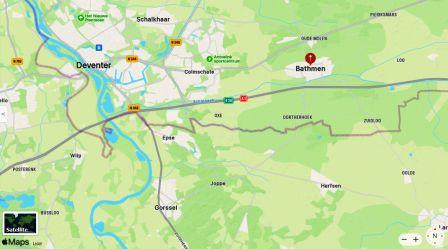
Map shows location of Bathmen and Gorssel. (Map source: DuckDuckGo)

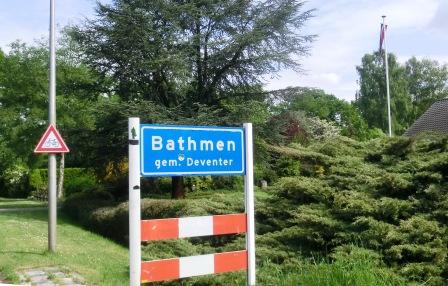
The village sign for Bathmen.  (Photo credit: Daria Valkenburg)

Once we arrived in Bathmen, it was to find that the Schipbeek Canal went through the village.  The challenge became to find where exactly the Canadians were as they fought to establish a bridgehead over the canal.  It wasn’t long before Pieter figured out that we needed to follow a road called Gorsselseweg!

…. Gorsselseweg was where the bridgehead over the Schipbeek was established…

The South Saskatchewan Regiment marched 8 km from Gorssel towards Bathmen.  (Photo credit: Daria Valkenburg)

Troops from the South Saskatchewan Regiment, the Regiment in which Leo Francis TONEY was in, marched 8 km (5 miles) from Gorssel towards Bathmen on April 7, 1945, but had to cross the Schipbeek Canal before reaching the village. 

The bridge over the canal located on the Gorsselseweg was the scene of so much fighting, before a bridgehead was established by the North Nova Scotia Highlanders, who then went on to liberate Bathmen on April 8, 1945.

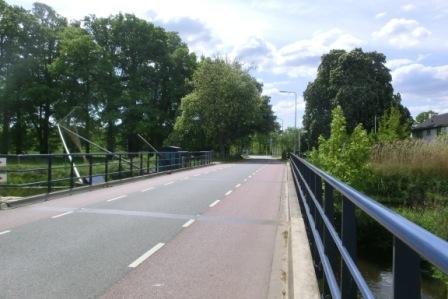
How the bridge over the Schipbeek Canal looks today on the Gorsselseweg.  (Photo credit: Daria Valkenburg)

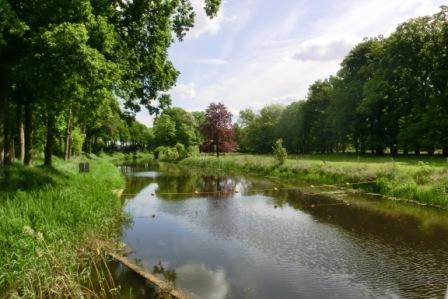
Today, the bridge and the canal are peaceful and beautiful spots, and it’s difficult to imagine how hard troops had to fight back in April 1945.  Crossing the Schipbeek was difficult as the area was strongly defended by German troops.

The Schipbeek Canal, as seen from the bridge on the Gorsselseweg.  (Photo credit: Daria Valkenburg)

The Schipbeek Canal, as seen from the bridge on the Gorsselseweg.  (Photo credit: Daria Valkenburg)

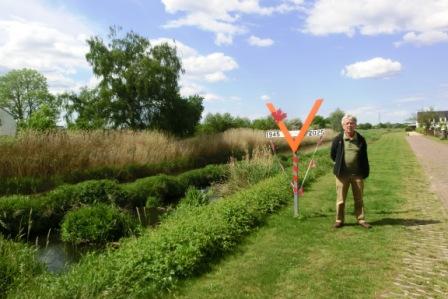
The maple leaf and V for Victory were present on the Gorsselseweg! (Photo credit: Daria Valkenburg)

….4 soldiers whose stories were previously told were at the Schipbeek…

Four soldiers, whose stories were previously told on this blog, were involved in the crossing of the Schipbeek and liberation of Bathmen…..

  • Philip LAFORTE, born in Lac du Bonnet, Manitoba, was serving with the Royal Winnipeg Rifles when he was killed on April 7, 1945 in The Netherlands, aged 33, as the Regiment crossed the Schipbeek, in order to establish a bridgehead as preparation for an assault on the city of Deventer by the 7th Canadian Brigade. You can read his story at https://onthewarmemorialtrail.com/2022/03/22/on-the-war-memorial-trail-remembering-ww2-soldier-philip-laforte/
  • Donald Charles MACKENZIE of Springhill, Nova Scotia, was serving with the Royal Winnipeg Rifles when they were ordered to cross the Schipbeek Canal on April 7, 1945, and establish a bridgehead as preparation for an assault on the city of Deventer by the 7th Canadian Brigade. He was in command of the unit Pioneers attached to ‘D’ Company, which had the responsibility of bridging the canal. In spite of heavy fire, he managed to crawl out onto the Bridge, dragging a couple of planks, which he placed in position, allowing the company to cross quickly and secure a solid bridgehead. He received a Military Medal for his actions.  Sadly, a few weeks later, he lost his life on April 22, 1945. He had been wounded during heavy fighting at the railway bridge near Appingedam, and placed in a house temporarily to rest. However, he was fatally hit by shrapnel by German shelling of the house.  You can read his story at https://onthewarmemorialtrail.com/2022/01/23/on-the-war-memorial-trail-the-ww2-soldier-from-springhill-who-received-a-memorial-cross/
  •  Richard Joseph RANEY, born in Point Michaud, Richmond County, Nova Scotia, was serving with the North Nova Scotia Highlanders, when he was killed on April 8, 1945, aged 18, during the fight to secure the bridge over the Schipbeek and enter the village of Bathmen. You can read his story at https://onthewarmemorialtrail.com/2021/01/16/on-the-war-memorial-trail-atlantic-canada-remembers-part-3/
  • Leo Francis TONEY, born in Wolfville, Nova Scotia, was serving with the South Saskatchewan Regiment, when he was killed on Saturday, April 7, 1945, aged 21, while trying to cross the Schipbeek in The Netherlands at  a bridgehead that had been formed at a weir on the border of the municipalities of Bathmen and Holten. You can read his story at https://onthewarmemorialtrail.com/2021/05/22/on-the-war-memorial-trail-remembering-ww2-soldier-leo-francis-toney/

….We learned that a solider from Prince Edward Island received a posthumous Dutch medal…

Pieter at an information panel beside the Schipbeek along the Gorsselseweg.  (Photo credit: Daria Valkenburg)

While we were taking photos of the Schipbeek Canal, we saw an information panel, and to our surprise, learned of a Prince Edward Island connection to what happened during the crossing of the Canal and the liberation of Bathmen!

Joseph William CAMPBELL, of Newport, Prince Edward Island, was serving with the North Nova Scotia Highlanders, was killed on April 8, 1945, aged 22, during the securing of the bridge over the Schipbeek. (See https://www.veterans.gc.ca/en/remembrance/memorials/canadian-virtual-war-memorial/detail/2226998?Joseph%20William%20Campbell)

On December 8, 1945, he was posthumously awarded the Knight of the Fourth Class, Military Willems Order by Queen Wilhelmina of The Netherlands. This honour is the oldest and highest honour of the Kingdom of The Netherlands. (See https://en.wikipedia.org/wiki/Military_Order_of_William)

….Two monuments in Bathmen…

From the Gorsselseweg we made our way into Bathmen itself, to a small area dedicated to honouring those who lost their lives in April 1945. 

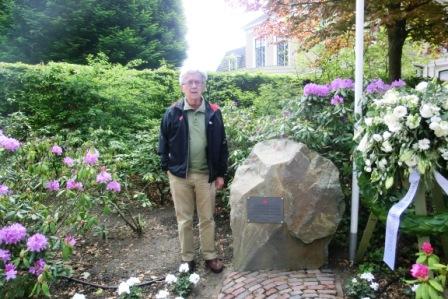
There was a memorial stone honouring Joseph William Campbell, and Pieter made sure he placed flags of Canada and Prince Edward Island beside this marker.

Pieter by the memorial stone honouring Joseph William Campbell from Newport, Prince Edward Island, after he’d placed flags of Canada and Prince Edward Island. (Photo credit: Daria Valkenburg)

Memorial stone honouring Joseph William Campbell from Newport, Prince Edward Island. (Photo credit: Daria Valkenburg)

Beside the memorial stone honouring Joseph William Campbell is a monument in memory of Bathmen’s liberation by the Canadians in April 1945. A plaque on a large stone says ‘In grateful memory of our Canadian liberators’ and was placed here in 1995, 50 years after Bathmen was liberated.

Pieter by the monument honouring the Canadians who liberated Bathmen. (Photo credit: Daria Valkenburg)

This ended our visit to Bathmen and Schipbeek.  Although it had been an effort to leave our cosy cottage, I’m glad that Pieter persisted, as we now had seen with our own eyes the Schipbeek Canal, which we had read so much about in war diaries. 

The flags placed at the memorial stone were donated.  Our thanks go to: 

  • Alan Waddell, Constituent Assistant, on behalf of Heath MacDonald, MP for Malpeque, for the Canadian flag.
  • Matt MacFarlane, MLA for District 19, Borden-Kinkora, for the Prince Edward Island flag. 

Our adventures continue as we share the highlights of our adventures on the 2025 European War Memorial Tour.  Coming up on our journey of remembrance is a visit to Uden War Cemetery.

If you have a story or photos to share, please contact Pieter at memorialtrail@gmail.com or comment on the blog. 

© Daria Valkenburg

….Want to follow our research?…

If you are reading this posting, but aren’t following our research, you are welcome to do so.  Our blog address: https://onthewarmemorialtrail.com/

4 countries, 6 weeks, 7,000 km – an unforgettable war memorial journey in Europe…. Daria’s book ‘No Soldier Buried Overseas Should Ever Be Forgotten‘ is available in print and e-book formats.  Net proceeds of book sales help support research costs and the cost of maintaining this blog. For more information see https://nosoldierforgotten.com/

Subscribe to our YouTube Channel: On The War Memorial Trail With Pieter Valkenburg: https://www.youtube.com/channel/UCJ591TyjSheOR-Cb_Gs_5Kw

Never miss a posting!  Subscribe below to have each new story from the war memorial trail delivered to your inbox.

Daria Honoured With PEI Senior Islander Of The Year Award

PEI Seniors Secretariat slide

October 23, 2025.  On October 1, 2025, I received the Prince Edward Island Senior Islander of the Year Award from the Prince Edward Island Seniors Secretariat of Prince Edward Island, for my involvement with Hear PEI, a volunteer organization that works to build awareness of hearing loss issues, and in the ongoing research and writing of stories connected to the On The War Memorial Trail Research Project, sharing the untold stories of brave Canadians who served in the two World Wars, all based on Pieter’s research. (See https://theauralreport.wordpress.com/)

…The awards ceremony was held in Charlottetown…

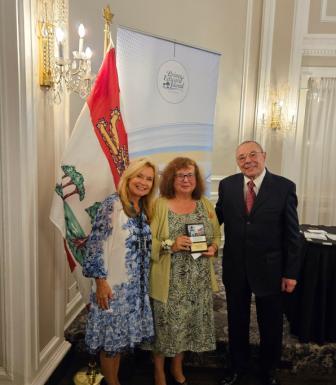
Left to right: Annie Lee MacDonald, Barbara Bain, Matt MacFarlane, Daria and Pieter Valkenburg.  (Photo credit: Evan Ceretti, Provincial Government Photographer)

The luncheon and award ceremony was held at the Rodd Charlottetown Hotel in Charlottetown.  My guests were Hear PEI Co-President Annie Lee MacDonald, Hear PEI member Barbara Bain, and my husband Pieter.  The Honourable Matt MacFarlane, MLA for District 19 Borden-Kinkora, who represents the area where Pieter and I live, also sat at our table.

Left to right: Hon. Barb Ramsay, Daria, Peter Holman. (Photo credit: Matt MacFarlane)

The plaque was presented by the Honourable Barb Ramsay, Minister for the Department of Social Development and Seniors, and Peter Holman, Chairperson, PEI Seniors Secretariat.   (See https://www.princeedwardisland.ca/en/news/older-islanders-celebrated-with-senior-islander-of-the-year-award)

Wrist corsage and plaque presented to me.  (Photo credit: Daria Valkenburg)

…The citation…

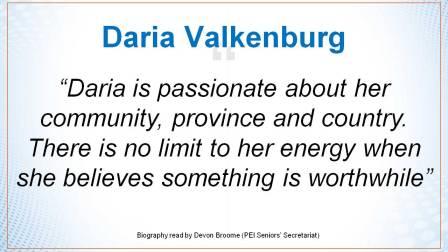
PEI Seniors Secretariat slide shown during the readout of Daria’s biography

Below is the short biography, prepared by Melanie Melanson, Seniors Policy Advisor, Division of Strategy, Policy and Seniors, Department of Social Development and Seniors for the Government of Prince Edward Island, that was read out in outlining the reason for the award being presented: 

….Daria’s involvement with Hear PEI, a volunteer organization that works to build awareness of hearing loss issues, is endless.  She is the co-president of this group and volunteers tirelessly to make public places more accessible for the hard of hearing through technology.

She was instrumental in coordinating the training of 2 installers for the hearing loop technology which is installed in 4 Access PEI’s and six churches across the Island, Prince County Hospital, Queen Elizabeth Hospital, Charlottetown City Hall, and the South Shore Pharmacy.  Through her advocacy work with Hear PEI, the group was instrumental in introducing pocket talkers to Island lawyers, hospitals, clinics and their clients.

Her dedication to this group has led to podcasts and videos that address topics of interest to individuals experiencing hearing loss and to the publishing of a booklet entitled, “Pardon me, What did you say?”  Her blog ‘The Aural Report’ as well as the ‘Hearing Challenges’ column in the County Line Courier newspaper help to reach an even wider audience. 

Daria was instrumental in the research connected to the On The War Memorial Trail Research Project, along with her husband, which included putting a face on every name on the cenotaph at the Borden-Carleton Legion. Her book ‘No Soldier Buried Overseas Should Ever Be Forgotten’ documented a war memorial tour in Europe to visit the graves and memorials of these men, a trip that took them through 4 countries over 6 weeks and 7,000 km.

She has also dedicated her time to writing, in the On The War Memorial Trail blog and newspaper column, about the untold stories of brave Canadians who served in the two World Wars, all based on her husband’s research. 

These stories have not only brought families together but have also served to educate many generations to the courageous sacrifices of these brave Canadians. Over the past years, her efforts have been recognized both here at home and in The Netherlands.

As one person said, “Daria is passionate about her community, province and country.  There is no limit to her energy when she believes something is worthwhile”….

…Our local MLA also spoke …

Matt MacFarlane with Daria and Pieter.  (Photo credit: Carolyn Simpson)

Matt MacFarlane also spoke a few words about me during the luncheon, and later posted the following comment on his Facebook page, along with photos from the ceremony:

…What a pleasure it was to attend yesterday’s Senior Islander of the Year Ceremony and meet this year’s recipients who are each so deserving. Among them, I was honoured to have the opportunity to say a few words on behalf of award recipient, friend and neighbour Daria Valkenburg, who has dedicated years of her life to building awareness, promoting hearing accessibility, and advocating on behalf of those experiencing hearing loss. Daria has also contributed countless hours to genealogical, historical and military research to ensure that no fallen soldier is forgotten, and has written books, articles, blogs and so much more on these and many other subjects. Congratulations Daria, so well deserved. Thank you for all that you have done and continue to do for our community and beyond….

I was deeply touched by Matt’s words, and thank everyone who was involved in the nomination process for the Senior Islander of the Year Award, and who wrote letters supporting the nomination.

The research continues. If you have a story or photo to share, please contact Pieter at memorialtrail@gmail.com or comment on the blog. 

© Daria Valkenburg

….Want to follow our research?…

If you are reading this posting, but aren’t following our research, you are welcome to do so.  Our blog address: https://onthewarmemorialtrail.com/

4 countries, 6 weeks, 7,000 km – an unforgettable war memorial journey in Europe…. Daria’s book ‘No Soldier Buried Overseas Should Ever Be Forgotten‘ is available in print and e-book formats.  Net proceeds of book sales help support research costs and the cost of maintaining this blog. For more information see https://nosoldierforgotten.com/

Subscribe to our YouTube Channel: On The War Memorial Trail With Pieter Valkenburg: https://www.youtube.com/channel/UCJ591TyjSheOR-Cb_Gs_5Kw

Never miss a posting!  Subscribe below to have each new story from the war memorial trail delivered to your inbox.

On The War Memorial Trail…. Battlefields Tour With Joël Stoppels Part 4: From Nansum To Delfzijl And Wirdum

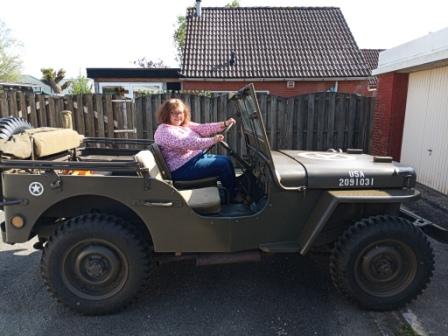
A life’s ambition realized! Daria in the driver’s seat of a jeep! Spoiler alert – our battlefield tour was in an SUV, not the jeep! (Photo credit: Joël Stoppels)

October 19, 2025.  While in Europe this spring for the 80th Anniversary of Liberation Commemoration events, we visited 14 cemeteries to place flags at the graves of 383 soldiers that Pieter has researched since 2014, with the stories of many of these soldiers previously told on this blog. 

On the wish list for our 2025 European War Memorial Tour was to tour some of the battlefields in which these soldiers lost their lives in order to have a better appreciation of what they had faced. 

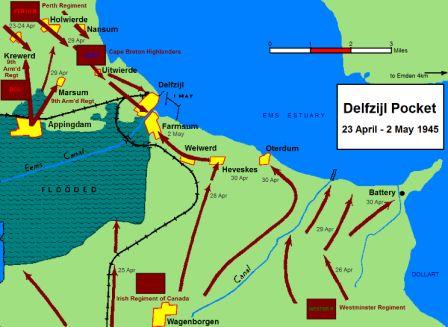
Battlefields guide Joël Stoppels, of Groningen, The Netherlands, offered to spend a day showing us locations where the various battles that comprised the Battle of the Delfzijl Pocket took place.  Over the years, we’ve featured stories of many soldiers who lost their lives in the last weeks of the North-West Europe campaign during WWII, and we eagerly anticipated learning more. (See https://www.canadiansoldiers.com/history/battlehonours/northwesteurope/delfzijlpocket.htm)

Map showing the locations during the Battle of the Delfzijl Pocket. (Map source: http://www.canadiansoldiers.com)

…. Recap…

In Part 1, our battlefield tour began at a field where 19 Canadians lost their lives during the Battle for Wagenborgen, the preliminary battle before the Battle of the Delfzijl Pocket. (See https://onthewarmemorialtrail.com/2025/10/01/on-the-war-memorial-trail-battlefields-tour-with-joel-stoppels-part-1-battle-for-wagenborgen/)

In Part 2, we travelled to Appingedam, the town where the Battle of the Delfzijl Pocket began. (See https://onthewarmemorialtrail.com/2025/10/05/on-the-war-memorial-trail-battlefields-tour-with-joel-stoppels-part-2-the-battle-of-the-delfzijl-pocket-began-in-appingedam/)

In Part 3, we left Appingedam and travelled to Holwierde, to see the plaque at Stefanuskerk that commemorated many of the Canadian soldiers who died during the Battle of the Delfzijl Pocket. (See https://onthewarmemorialtrail.com/2025/10/10/on-the-war-memorial-trail-battlefields-tour-with-joel-stoppels-part-3-visit-to-stefanuskerk-in-holwierde/)

Now, in Part 4, our battlefields tour concludes as we travel from Nansum to Delfzijl and Wirdum…..

….The Cape Breton Highlanders marched from Nansum to Delfzijl…

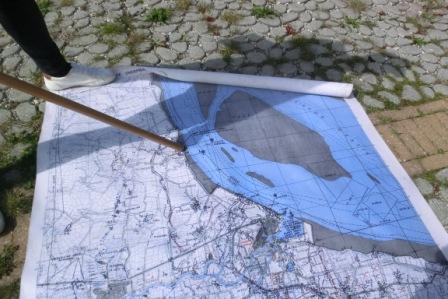
Delfzijl pointed out on Joël’s map.  (Photo credit: Daria Valkenburg)

From Nansum we followed the route taken by the Cape Breton Highlanders to Delfzijl.  Joël noted that “.…the Perth Regiment had been decimated by losses and were pulled back behind the front line, and replaced by the Cape Breton Highlanders who came from Loppersum….

The Cape Breton Highlanders “…started marching from Nansum on April 29, 1945, reaching Delfzijl on May 2, taking two routes…..” 

This was reflected in the war diary for the Cape Breton Highlanders.  The diary entry for April 28, 1945 stated that “…we received word from Brigade this morning that the Perth Regiment did not do so well last night on account of mines. We will likely relieve them tonight so we are to move to another concentration area this afternoon….” 

By late afternoon, the headquarters and ‘B’ Company were in Bierum, while the rest of the Regiment was in Spijk. While the evening itself was quiet, at 8 pm “…the Observation Post reported very dense smoke coming from the town of Delfzijl which is our objective. This could be caused by either demolitions by the enemy or our artillery which has been firing on that area….

April 29, 1945 was a cold and wet day, with the war diary reporting thatour pioneers worked with the sappers clearing mines off the road to ‘A’ Company and also repairing the road. But the night will be a busy one for all. ‘C’ and ‘D’ Companies are to relieve the two forward companies of the Perth and when that is completed ‘A’ and ‘B’ companies will pass through them and advance over a mile to their objectives….

…. ‘D’ Company travelled along the coast…

….‘D’ Company….” of the Cape Breton Highlanders “…travelled along the coast and had the most casualties as the Germans were heavily entrenched.  The other companies came via inland….” Joël said. 

The war diary for May 1, 1945 verified Joël’s account. “….The beginning of this month finds us continuing with the battle for Delfzijl…” The day was “…cold with showers throughout the day...” and “…visibility poor…” 

‘D’ Company did indeed run into difficulties. ….Flares were reported firing from the vicinity of D Company’s objective and a shoot was laid on….”  Then, as ‘D’ Company advanced they “…had to leave the carriers …as the road beyond was impassable for them. They proceeded from there without them....

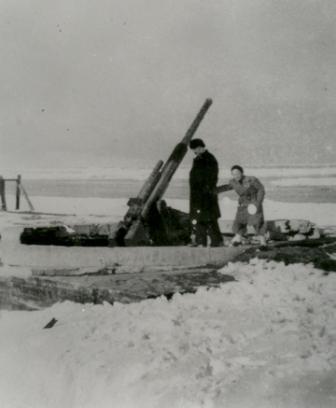
German 88 mm gun: A 10.5 cm FLAK cannon, captured by the Canadians in the Delfzijl Pocket. (Photo Courtesy of Joël Stoppels / Battlefield Tours)

The men from ‘D’ Company were now on foot, and as they advanced towards ‘C’ Company’s position, “…they were pinned down by mortars, shells and small arms fire….”  After receiving artillery support “…the advance was then continued and one platoon reached a position 100 yards short of objective where they were pinned down in a Jerry trench. D Company then reported they were running short of ammunition …

‘C’ Company was ordered totake ammunition from D Company’s carrier to their forward positions....” but they were held back by small arms and mortar fire. A second try was made, but without ammunition “…D Company at this time was in a very critical situation. The whole company was pinned down by bazookas and Spandaus. They were unable to send a guide back to bring in the party from C Company. The platoon, which had holed up in a Jerry trench, came under fire from hand-grenades from the top of the dyke, where the enemy had another trench system….

Train station in Delfzijl today.  (Photo credit: Pieter Valkenburg)

Finally the ammunition arrived, along with the other Companies.  By the early afternoon, the area around the train station in Delfzijl was cleared andone platoon was taking a firm hold along the canal, which split the town in two….

Two unidentified soldiers from the Cape Breton Highlanders Regiment in Delfzijl.  (Photo Courtesy of Joël Stoppels / Battlefield Tours.  Photo colourization by Pieter Valkenburg.)

….Retreating Germans tried to escape by boat…

A welcome report soon came from … D Company that the enemy fire had slackened …. They reported that the enemy was retreating over the dyke and pushing off in boats heading across the estuary towards Germany, Emden area. At 1106 D Company reported everything was under control and they were firm, sending contact patrols to B Company which arrived there at 1125 hours….

Not all of the Germans escaped.  “...On hearing that the enemy were leaving Delfzijl by boat, the Commanding Officer ordered the artillery to engage them. The result was that some of the boats occupied by the enemy did not reach the shores of Germany across the estuary….

Port of Delfzijl after the Canadian capture. (Photo Courtesy of Joël Stoppels / Battlefield Tours)

….The German commander surrendered on May 2, 1945…

On May 2, 1945, the war diary reported that At 0845 hours, brigade informed us that the commander of the Delfzijl pocket had surrendered to the Irish Regiment….

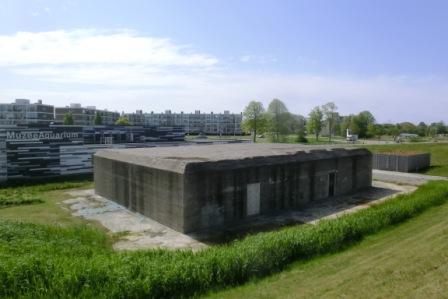
Remains of a German bunker near the Ems Estuary in Delfzijl.  (Photo credit: Daria Valkenburg)

Today, the remains of a German bunker still sits in its original location near the Ems Estuary in Delfzijl.  An aquarium sits behind it, and in front there is a hotel overlooking the Ems. 

….Our final stop was in Wirdum…

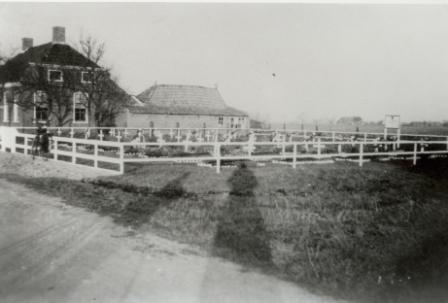
Our final stop on the Battlefields Tour was in Wirdum to look at the original field where casualties from this last battle were temporarily buried, at what was the 5th Divisional Cemetery.

5th Divisional Cemetery in Wirdum in 1945. (Photo Courtesy of Joël Stoppels / Battlefield Tours)

The war diary for May 3, 1945 for the Cape Breton Highlanders noted that burial services were held close to noon at the 5th Divisional Cemetery in Wirdum.  Among those buried here were:

All except Louis Graham Richard, who served with the 9th Armoured Regiment (BC Dragoons), were with the Cape Breton Highlanders.  

In 1946, all of these men were reburied in the Canadian War Cemetery in Holten. 

After all that the Cape Breton Highlanders had gone through in capturing Delfizjl, the war diary for May 3 expressed the Regiment’s disgust at not being given credit for what they achieved in the ‘Maple Leaf’, a newspaper for the Canadian Forces in Europe, with a 4-page format highlighting the advance of Canadian forces.

…Today there was one disgusted battalion in the Canadian Army, namely, The Cape Breton Highlanders. Today’s edition of the ‘Maple Leaf’, which up till now, was considered a fairly reliable paper, has let the battalion down horribly. The first thing which struck the eye, in fairly large print, was the capture of the town of Delfzijl by the PERTH Regt. This write up was a terrific let down to the boys who fought hard to capture the town and lost many of their comrades in killed and wounded during the struggle...

Pieter and Joël by the field in Wirdum where the 5th Divisional Cemetery once was located. (Photo credit: Daria Valkenburg)

Today, the location of the 5th Divisional Cemetery is back to being a field, with a plaque as a reminder that it was once the resting place of Canadians who lost their lives in the battle to capture Delfzijl.

Plaque in Wirdum across the field where the 5th Divisional Cemetery once was located. (Photo credit: Daria Valkenburg)

This ended our Battlefields Tour.  All that was left was to realize a life’s ambition for me….to sit in a WWII era jeep!  After a photo was taken, Pieter was invited to sit in the passenger seat for another photo. 

Daria in the driver’s seat of Joël’s jeep!  (Photo credit: Pieter Valkenburg)

Joël presented Pieter with a Dutch language copy of his newly published book ‘Operation Cannonshot’ which was gratefully received. 

Pieter and Joël with Joël’s book ‘Operation Cannonshot’.  (Photo credit: Daria Valkenburg)

Thank you to Joël Stoppels, guide and founder of Battlefield Tours, for a wonderful and informative tour with a friendly guide. (See www.battlefieldtours.nu) We were grateful for the chance to see the various places where the Battle of the Delfzijl Pocket was fought. We’re so glad we were able to take the tour as it’s almost impossible to imagine what the people and troops went through, until you can see it for yourself.

The Battlefield Tour ended, but our adventures continued as we went on with the next portion of our 2025 European War Memorial Tour.

If you have a story or photo to share, or are able to identify either of the two Cape Breton Highlanders in the photo taken in Delfzijl, please contact Pieter at memorialtrail@gmail.com or comment on the blog. 

© Daria Valkenburg

….Want to follow our research?…

If you are reading this posting, but aren’t following our research, you are welcome to do so.  Our blog address: https://onthewarmemorialtrail.com/

4 countries, 6 weeks, 7,000 km – an unforgettable war memorial journey in Europe…. Daria’s book ‘No Soldier Buried Overseas Should Ever Be Forgotten‘ is available in print and e-book formats.  Net proceeds of book sales help support research costs and the cost of maintaining this blog. For more information see https://nosoldierforgotten.com/

Subscribe to our YouTube Channel: On The War Memorial Trail With Pieter Valkenburg: https://www.youtube.com/channel/UCJ591TyjSheOR-Cb_Gs_5Kw

Never miss a posting!  Subscribe below to have each new story from the war memorial trail delivered to your inbox.

On The War Memorial Trail…. Battlefields Tour With Joël Stoppels Part 3: Visit To Stefanuskerk in Holwierde

A life’s ambition realized! Daria in the driver’s seat of a jeep! Spoiler alert – our battlefield tour was in an SUV, not the jeep! (Photo credit: Joël Stoppels)

October 10, 2025.  While in Europe this spring for the 80th Anniversary of Liberation Commemoration events, we visited 14 cemeteries to place flags at the graves of 383 soldiers that Pieter has researched since 2014, with the stories of many of these soldiers previously told on this blog. 

On the wish list for our 2025 European War Memorial Tour was to tour some of the battlefields in which these soldiers lost their lives in order to have a better appreciation of what they had faced. 

Battlefields guide Joël Stoppels, of Groningen, The Netherlands, offered to spend a day showing us locations where the various battles that comprised the Battle of the Delfzijl Pocket took place.  Over the years, we’ve featured stories of many soldiers who lost their lives in the last weeks of the North-West Europe campaign during WWII, and we eagerly anticipated learning more. (See https://www.canadiansoldiers.com/history/battlehonours/northwesteurope/delfzijlpocket.htm)

Map showing the locations during the Battle of the Delfzijl Pocket. (Map source: http://www.canadiansoldiers.com)

In Part 1, our battlefield tour began at a field where 19 Canadians lost their lives during the Battle for Wagenborgen, the preliminary battle before the Battle of the Delfzijl Pocket. (See https://onthewarmemorialtrail.com/2025/10/01/on-the-war-memorial-trail-battlefields-tour-with-joel-stoppels-part-1-battle-for-wagenborgen/)

In Part 2, we travelled to Appingedam, the town where the Battle of the Delfzijl Pocket began. (See https://onthewarmemorialtrail.com/2025/10/05/on-the-war-memorial-trail-battlefields-tour-with-joel-stoppels-part-2-the-battle-of-the-delfzijl-pocket-began-in-appingedam/)

Now, in Part 3, we left Appingedam and travelled to Holwierde, where our first stop was at the Canada Memorial.

…. The Canada Memorial in Holwierde…

Pieter and Joël at the Canada Memorial in Holwierde. (Photo credit: Daria Valkenburg)

Front view of the Canada Memorial in Holwierde.  (Photo credit: Daria Valkenburg)

We knew that there was a plaque at the church in Holwierde that commemorated the Canadians who lost their lives during the Battle of Delfzijl Pocket, but had no idea there was also a monument in the town itself…. with houses on either side of the main road where it’s located.

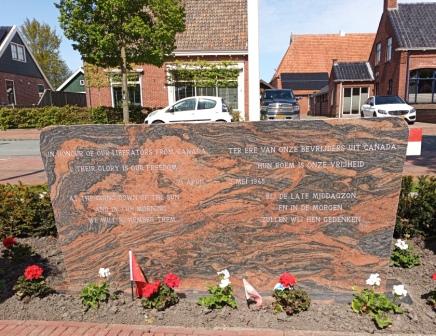
Called the Canada Memorial, with red and white flowering plants around it, the stone plaque simply states ‘In honour of our liberators from Canada. Their glory is our freedom. 21 April – 2 May 1945

Closeup of stone plaque at the Canada Memorial in Holwierde.  (Photo credit: Pieter Valkenburg)

…. Canadian soldiers called Holwierde ‘a killing ground’…

Battlefields Tour poster describing Howierde as a ‘Killing ground’.

As we walked through this quiet and picturesque town towards the Stefanuskerk, we asked Joël about his poster describing Holwierde as a ‘Killing ground’.  He explained that ….Holwierde was one of the most heavily contested villages during the Battle of the Delfzijl Pocket in April 1945. The Perth Regiment fought intense house-to-house combat here, as German paratroopers and naval infantry had fortified nearly every building.  Many Canadian soldiers referred to the village as ‘a killing ground’ due to the high casualties on both sides…..

Holwierde in April 1945, with a temporary bailey bridge, leading towards the Stefanuskerk. (Photo Courtesy of Joël Stoppels / Battlefield Tours)

Holwierde in April 1945.  A temporary bailey bridge allowed residents and troops to cross the canal.  The Stefanuskerk is on the right. (Photo Courtesy of Joël Stoppels / Battlefield Tours)

…The Stefanuskerk, although spared from destruction, stood right in the middle of the battlefield and witnessed days of shelling and close-quarters fighting….  

Holwierde in 2025, 80 years after its liberation.  The bailey bridge from 1945 is now a permanent bridge over the canal! (Photo credit: Daria Valkenburg)

 …. We found a banner for one soldier whose story was previously told…

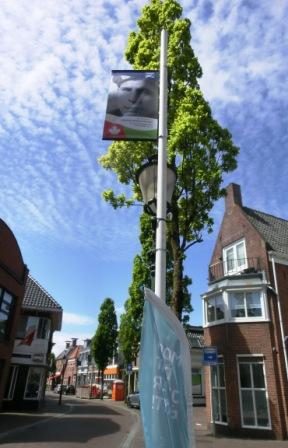
Banner for Joseph ‘Gerald’ Fougere in Holwierde. (Photo credit: Pieter Valkenburg)

As we walked down the street towards the Stefanuskerk, the main reason for our visit to Holwierde, we saw a banner for Joseph ‘Gerald’ FOUGERE, who was serving with the Perth Regiment. He was wounded on April 24, 1945, during the Battle of the Delfzijl Pocket, and died on April 26, 1945, one month before his 29th birthday. (See https://onthewarmemorialtrail.com/2021/01/27/on-the-war-memorial-trail-atlantic-canada-remembers-part-5/)

Joseph ‘Gerald’ Fougere’s banner was by the canal in Holwierde, but this wasn’t where he died.  (Photo credit: Daria Valkenburg)

The banner was by the canal, and while I was busy snapping photos, thinking this is where he died, Joël said “…no, he actually died in nearby Nansum.  Since Nansum is such a small village, his banner was placed in Holwierde for greater visibility...” He then kindly pointed out that “…the bridge over the canal had been blown up by the Germans on April 25, 1945.

Never mind…Nansum was quickly added as our next stop after Holwierde!

…. A solemn few moments at Stefanuskerk…

Entrance to Stefanuskerk in Holwierde. (Photo credit: Pieter Valkenburg)

We continued walking down the road until we got to the Stefanuskerk.  A plaque near the door noted that the church dates to the 11th century!  In the 13th century the church was enlarged.  It was severely damaged in April 1945, but restored by 1950, to give the appearance as to how the church would have looked before 1830.

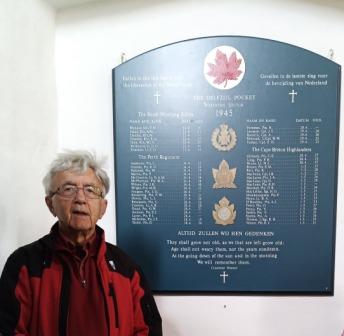
Pieter by the plaque in Stefanuskerk that commemorates Canadian soldiers who died during the Battle of the Delfzijl Pocket.  (Photo credit:  Joël Stoppels)

We wanted to visit the church in order to see the plaque that commemorates many of the Canadian soldiers who died during the Battle of the Delfzijl Pocket.  It was a very solemn few moments for us, as we looked over the names, many of them of soldiers that Pieter had researched over the past years.

From the Royal Winnipeg Rifles:

From the Perth Regiment:

From the Cape Breton Highlanders:

Not mentioned on the plaque:

From the 9th Armoured Regiment (BC Dragoons), who is commemorated on a plaque in Appingedam:

…. We couldn’t miss seeing Nansum…

We left Stefanuskerk in a reflective mood after looking at the names on the plaque, and quietly got back in the car for the short drive to Nansum, which is indeed a tiny place, near the coast.   Joël didn’t know exactly where Joseph ‘Gerald’ FOUGERE was killed, unfortunately.  What remained of a German bunker was still visible, so he likely died of shrapnel wounds. 

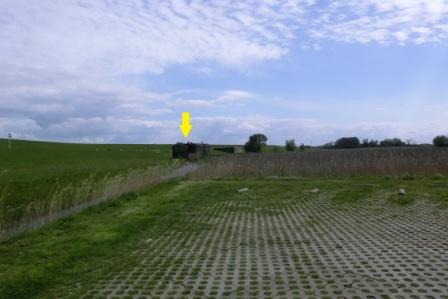
Yellow arrow indicates the remains of a German bunker in Nansum.  (Photo credit: Daria Valkenburg)

Joël noted that 177 Kriegsmarine were captured here. The Kriegsmarine was Nazi Germany’s Navy from 1939-1945.  By 1945, as the war progressed, the Kriegsmarine formed infantry units from its personnel, who were re-trained as infantry to fight on land, all in an attempt to alleviate the strain on the German Army.

From Nansum we continued on the last leg of our battlefields tour, as we followed the route taken by the Cape Breton Highlanders to Delfzijl. Coming up in Battlefields Tour With Joël Stoppels Part 4: From Nansum To Delfzijl And Wirdum.

Thank you to Joël Stoppels, guide and founder of Battlefield Tours, for a wonderful and informative tour. (See www.battlefieldtours.nu)  If you have a story or photo to share, please contact Pieter at memorialtrail@gmail.com or comment on the blog. 

© Daria Valkenburg

….Want to follow our research?…

If you are reading this posting, but aren’t following our research, you are welcome to do so.  Our blog address: https://onthewarmemorialtrail.com/

4 countries, 6 weeks, 7,000 km – an unforgettable war memorial journey in Europe…. Daria’s book ‘No Soldier Buried Overseas Should Ever Be Forgotten‘ is available in print and e-book formats.  Net proceeds of book sales help support research costs and the cost of maintaining this blog. For more information see https://nosoldierforgotten.com/

Subscribe to our YouTube Channel: On The War Memorial Trail With Pieter Valkenburg: https://www.youtube.com/channel/UCJ591TyjSheOR-Cb_Gs_5Kw

Never miss a posting!  Subscribe below to have each new story from the war memorial trail delivered to your inbox.
On The War Memorial Trail…. Battlefields Tour With Joël Stoppels Part 2: The Battle of the Delfzijl Pocket Began In Appingedam

A life’s ambition realized! Daria in the driver’s seat of a jeep! Spoiler alert – our battlefield tour was in an SUV, not the jeep! (Photo credit: Joël Stoppels)

October 5, 2025.  While in Europe this spring for the 80th Anniversary of Liberation Commemoration events, we visited 14 cemeteries to place flags at the graves of 383 soldiers that Pieter has researched since 2014.  The stories of many soldiers have been told on this blog. 

On our wish list for this trip was to tour some of the battlefields in which these soldiers lost their lives in order to have a better appreciation of what they had faced. 

Battlefields guide Joël Stoppels, of Groningen, The Netherlands, offered to spend a day showing us locations where the various battles that comprised the Battle of the Delfzijl Pocket took place.  Over the years, we’ve featured stories of many soldiers who lost their lives in the last weeks of the North-West Europe campaign during WWII, and we eagerly anticipated learning more. (See https://www.canadiansoldiers.com/history/battlehonours/northwesteurope/delfzijlpocket.htm)

Map showing the locations during the Battle of the Delfzijl Pocket. (Map source: http://www.canadiansoldiers.com)

In Part 1, our battlefield tour began at a field where 19 Canadians lost their lives during the Battle for Wagenborgen, the preliminary battle before the Battle of the Delfzijl Pocket. (See https://onthewarmemorialtrail.com/2025/10/01/on-the-war-memorial-trail-battlefields-tour-with-joel-stoppels-part-1-battle-for-wagenborgen/)

Now, in Part 2, we travelled to Appingedam, the town where the Battle of the Delfzijl Pocket began…. 

From Wagenborgen, we made our way towards Appingedam, the location of the beginning of the Battle of the Delfzijl PocketWilliam ‘Willie’ DANIELS, Donald Charles MACKENZIE, whose stories were previously told on this blog, along with William James ‘Jimmy’ Sutherland HOLE, who Pieter also researched, lost their lives here.

…. We found banners for two soldiers whose stories were previously told…

We found the banners for Daniels and MacKenzie, but no banner was made for Hole as up to now no photo has been found of him. 

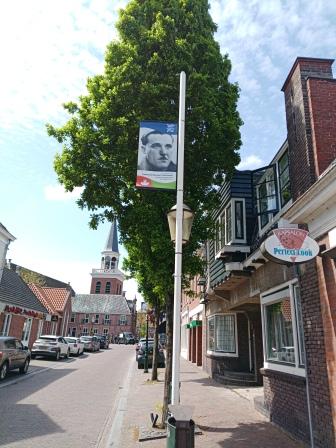
Banner for William ‘Willie’ Daniels in Appingedam. (Photo credit: Daria Valkenburg)

The banner for William ‘Willie’ Daniels was quite high up and it was hard for me to get a good angle, but thankfully Joël was kind enough to send us a better photo of the banner. 

Banner for William ‘Willie’ Daniels. (Photo courtesy of Joël Stoppels/ Battlefield Tours)

William ‘Willie’ DANIELS, from the Big River Reserve in Depton, Saskatchewan, was serving with the Royal Winnipeg Rifles when he was killed, aged 20, on April 22, 1945 as troops moved through Appingedam in The Netherlands at the very beginning of the Battle of the Delfzijl Pocket. You can read his story at https://onthewarmemorialtrail.com/2021/07/23/on-the-war-memorial-trail-remembering-ww2-soldier-william-willie-daniels/

Banner for Donald Charles MacKenzie in Appingedam. (Photo credit: Pieter Valkenburg)

Donald Charles MACKENZIE of Springhill, Nova Scotia, was serving with the Royal Winnipeg Rifles when he was killed, aged 30, on Sunday, April 22, 1945. He had been wounded during heavy fighting at the railway bridge near Appingedam, and placed in a house temporarily to rest. However, he was fatally hit by shrapnel by German shelling of the house.  You can read his story at https://onthewarmemorialtrail.com/2022/01/23/on-the-war-memorial-trail-the-ww2-soldier-from-springhill-who-received-a-memorial-cross/

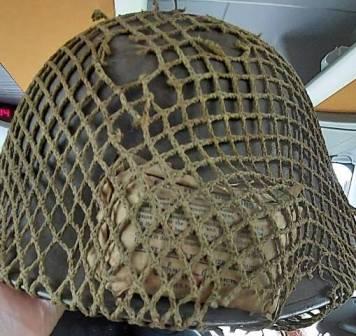
Helmet that had belonged to Donald Charles MacKenzie. (Photo Courtesy of Joël Stoppels / Battlefield Tours)

Joël told us that he has Donald Charles MacKenzie’s helmet in his private collection, and was kind enough to share a photo…a link of the past with the present! 

…. The Royal Winnipeg Rifles were in Appingedam as of April 21, 1945…

Map helped explain what happened in Appingedam in 1945.  (Photo credit: Daria Valkenburg)

In setting the scene on what unfolded in Appingedam back in 1945, Joël referred to a map that he had brought along for the battlefields tour.  “….Two roads led into Appingedam in 1945, both heavily mined by the defending Kriegsmarine…” he explained. The Kriegsmarine was Nazi Germany’s Navy from 1939-1945.  By 1945, as the war progressed, the Kriegsmarine formed infantry units from its personnel, who were re-trained as infantry to fight on land, all in an attempt to alleviate the strain on the German Army.

…The Canadians were aware of the mines…” Joël noted, and on “…April 21, 1945, the Royal Winnipeg Rifles attacked.  Heavy fighting ensued but the town was partially liberated on April 23, 1945….” allowing “….the Royal Winnipeg Rifles to move back into Wirdum….

The Regimental history, ‘Little Black Devils: a history of the Royal Winnipeg Rifles’, by Bruce Tascona and Eric Wells, describes what happened at Appingedam. “…..Beginning on April 21….the Rifles attacked with the 7th Reconnaissance Regiment, and several of the armoured cars were knocked out by anti-tank guns.  The Germans then blew up the bridge which the Rifles intended to cross…

In trying to find another plan of attack, patrols had discovered a small bridge.  …The bridge, deemed too feeble to carry motor transport, was still intact and patrols affirmed that it would carry the weight of jeeps.  With that information, the Rifles shifted position on a new start line during the night…

The plan in place, “…in the early hours of April 22, A Company….went over the bridge, followed closely by C Company.  They were met by heavy machine gun fire but the worst problem they faced were the minefields….

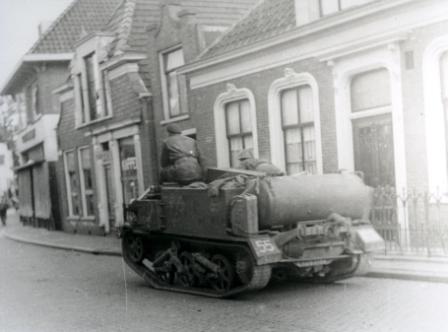
A WASP carrier with 2 soldiers from the Royal Winnipeg Rifles on a street in Appingedam in April 1945.  (Photo Courtesy of Joël Stoppels / Battlefield Tours)

In spite of the challenges, during the day “… the Battalion consolidated its position in front of the town…”  Then, a surprise attack during the night meant that…by dawn the Rifles were inside Appingedam and by mid-morning of April 23, they were mopping up. On April 24, the Rifles were replaced by the Perth Regiment….

The 9th Armoured Regiment (British Columbia Dragoons) were assigned to support the Perth Regiment.  The war diary for the BC Dragoons for April 22, 1945 explained the orders. …Lt Col Angle liaised with Commander Perth Regiment as BCD will form one portion of the 5 CAB Battle Group…” (CAB referred to Canadian Armoured Brigade)

The Situation Report for ‘A’ Squadron of the BC Dragoons noted that “…troops moved forward and positions taken over from Winnipeg Rifles before last light.  Approach to town heavily shelled by enemy heavy calibre guns…

…. Appingedam was evacuated on the night of April 23, 1945…

Per the war diary for the BC Dragoons for April 23, 1945, it was overcast and orders had been received at 2 am from HQ CAB that the Regiment was to relieve the Royal Winnipeg Rifles at 12:30 pm, and that troops from ‘A’ and ‘B’ squadrons were to be temporarily reorganized into one infantry squadron.  The tanks were parked in an area away from the town, with ….one crew member per tank to remain in the tanks and perform necessary maintenance and act as guards….”….all in preparation for the upcoming battle.

Appingedam had a population of 7,000, who were about to be in the midst of a heavy fight.  Joël told us that after “…a Dutch resistance fighter named Leugs went to Battalion HQ and offered to help, he was tasked with evacuating the town.  With the aid of Canadian trucks, this was done on the night of April 23, 1945…

On April 24, 1945, the Situation Report for ‘A’ Squadron of the BC Dragoons recorded that …the troop of tanks under Lt Gamlin, ‘C’ Squadron, took up positions at first light, spasmodic shelling throughout the day.  Underground contacted and reliable information was received concerning enemy positions….Enemy continued heavy shelling…. 

The Germans surrendered on May 2, 1945, and residents were able to return home and assess the damage to their properties.

…. Plaques to commemorate the RWR and BC Dragoons are in Appingedam…

Daria and Joël in Appingedam’s town square. The commemorative plaques are on a wall in the passageway to the right. (Photo credit: Pieter Valkenburg)

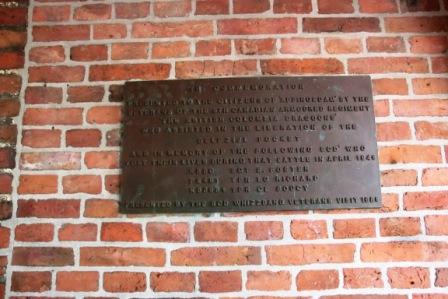
We learned about all that happened in Appingedam while standing in the town square, and next went to see two plaques placed nearby – one for the Royal Winnipeg Rifles, and the other for the British Columbia Dragoons.  We could still see shrapnel in the bricks of the buildings!

Commemorative plaque for the Royal Winnipeg Rifles.  (Photo credit: Daria Valkenburg)

Commemorative plaque for the BC Dragoons.  (Photo credit: Daria Valkenburg)

Three soldiers from the BC Dragoons are remembered on the plaque:

  • Sgt Stanley FOSTER, aged 24, died April 30, 1945
  • Trooper Louis Graham RICHARD, aged 27, died April 26, 1945
  • Trooper Charles Ernest SOUCY, aged 30, died April 30, 1945

Sgt Foster is buried in the Canadian War Cemetery in Groesbeek.  Troopers Richard and Soucy are buried in the Canadian War Cemetery in Holten.  You can read Richard’s story at https://onthewarmemorialtrail.com/2021/02/22/on-the-war-memorial-trail-atlantic-canada-remembers-part-7/

…. ‘The best stroopwafel I ever ate!’…

Pieter, Daria, and Joél having a much needed break in Appingedam.  (Photo courtesy of Valkenburg Family)

After digesting all the history from Wagenborgen and Appingedam, we desperately needed a break, so were very receptive to Joël’s suggestion that we go for coffee at ‘Stroopwoafeltje, Koffie & Meer’, a café in the town square.

Joël recommended the homemade stroopwafels made by the lady running the café, and both he and Pieter ordered one.  After Pieter told me “…this is the best stroopwafel I ever ate!!!!..” I tried a piece of his, and he was right.  It was much nicer than the syrupy, overly chewy ones you get commercially! 

In case you’ve never tried this treat, a stroopwafel is a traditional Dutch cookie made from two thin waffle layers sandwiched around a warm caramel filling.  I’m only sorry that I didn’t think to take a photo of Pieter’s stroopwafel before he ate it all up!

Our stay in Appingedam ended once we finished our coffee break.  It was time to move on and continue our battlefields tour as part of our 2025 European War Memorial Tour. Coming up in Battlefields Tour With Joël Stoppels Part 3: Visit To Stefanuskerk In Holwierde.

Thank you to Joël Stoppels, guide and founder of Battlefield Tours, for a wonderful and informative tour. (See www.battlefieldtours.nu)  If you have a story or photo to share, please contact Pieter at memorialtrail@gmail.com or comment on the blog. 

© Daria Valkenburg

….Want to follow our research?…

If you are reading this posting, but aren’t following our research, you are welcome to do so.  Our blog address: https://onthewarmemorialtrail.com/

4 countries, 6 weeks, 7,000 km – an unforgettable war memorial journey in Europe…. Daria’s book ‘No Soldier Buried Overseas Should Ever Be Forgotten‘ is available in print and e-book formats.  Net proceeds of book sales help support research costs and the cost of maintaining this blog. For more information see https://nosoldierforgotten.com/

Subscribe to our YouTube Channel: On The War Memorial Trail With Pieter Valkenburg: https://www.youtube.com/channel/UCJ591TyjSheOR-Cb_Gs_5Kw

Never miss a posting!  Subscribe below to have each new story from the war memorial trail delivered to your inbox.