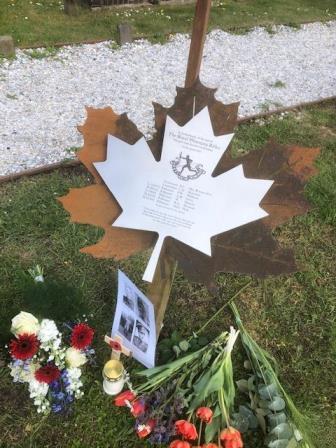
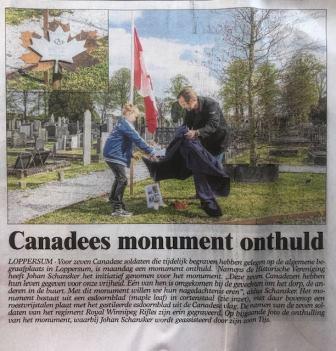
On The War Memorial Trail….The WWII Soldier From Piusville Killed During The Battle Of The Leopold Canal

December 10, 2025. In the course of his research into WWII soldiers buried in The Netherlands, Pieter soon learned that many Canadians who lost their lives during the Battle of the Scheldt are not only buried in the Canadian War Cemetery in Bergen Op Zoom in The Netherlands, but are also buried at the Canadian War Cemetery in Adegem, Belgium.

While most of the men buried in Adegem died during the operations for the clearance of the south bank of the Scheldt, many Canadians who lost their lives elsewhere in Belgium were also brought here for burial. Out of 848 Canadians buried here, 12 are from Prince Edward Island, and this spring an appeal went out in the local media for photos and information on the soldiers.

Pieter’s research results are faster than I can keep up with, and so several of the graves we visited during our 2025 European War Memorial Tour were for soldiers whose stories have yet to be told.  One of these is the subject of this posting….

….Steve Gallant’s niece had a photo of her uncle….

After reading about the appeal for photos in the County Line Courier newspaper, Pauline Stewart of New Annan, Prince Edward Island contacted us, writing that “we follow your memorial trail column.  In the last edition my uncle was mentioned….  Her uncle was Joseph Stephen ‘Steve’ GALLANT, of Piusville, who was serving with the Royal Winnipeg Rifles when he lost his life on October 11, 1944 at the age of 29.

At the time of Pauline’s email, we were still in Europe.  We sent her a photo taken of her uncle’s grave, and explained that Pieter would give her a call once we were home again.  She replied with a surprise. By the way the Two Bulger Boys from Foxley River are my husband’s uncles…” 

Last year, a two-part series on Harold ‘Hal’ Gabriel BULGER, who is buried in Adegem, and his brother Lawrence William BULGER, who is buried in the Canadian War Cemetery in Groesbeek, was published. (You can read Lawrence’s story at https://onthewarmemorialtrail.com/2024/08/19/on-the-war-memorial-trail-the-bulger-brothers-part-2-the-wwii-stretcher-bearer-from-foxley-river-killed-during-the-battle-of-bienen/ and Hal’s at https://onthewarmemorialtrail.com/2024/08/05/on-the-war-memorial-trail-the-bulger-brothers-part-i-the-wwii-soldier-from-foxley-river-killed-during-the-battle-of-moerbrugge/)

Pauline and Charles Stewart with Pieter. (Photo credit: Daria Valkenburg)

A few months later, we had a chance to meet with Pauline and her husband Charles.  Pauline explained that her father, John P. Gallant, was Steve’s brother. Another brother, Vincent, also served during WWII, but survived. “…Steve was the groomsman at the marriage of my parents….

She recalled that “….Steve was on leave right after I was born in August 1944, and he died a few months later….

Born in Piusville, Prince Edward Island on July 31, 1915, Joseph Stephen ‘Steve’ GALLANT was the son of Archie and Jannie Gallant.  He had 5 brothers and 1 sister.

….Steve enlisted in 1942…

Joseph Stephen ‘Steve’ Gallant.  (Photo Courtesy of Pauline and Charles Stewart On Behalf Of The Gallant Family)

Steve originally enlisted under the National Resources Mobilization Act (NRMA) at the No. 6a NRMA Clearing Depot in Charlottetown, Prince Edward Island on May 15, 1942 and began basic training at No. 62 Canadian Army Basic Training Centre in Charlottetown. At the time, he stated that he’d left school at the age of 12 after completing Grade 5, that he was working on his father’s farm in Piusville, and that he was fluent in both French and English.   (See https://en.wikipedia.org/wiki/National_Resources_Mobilization_Act)

….Steve transferred to the 5th SMAA S/L Troop…

After completing basic training on July 11, 1942, Steve was transferred to the 5th Special Mobile Anti-Aircraft Search Light Troop (5th SMAA S/L Troop) and was stationed at various airports, beginning with Ives Point, Nova Scotia, near Halifax. As explained in a Government of Canada history of the Royal Canadian Air Force during WWII, the main task of this unit was “…to provide realistic training to aircrews – the terrifying experience of being ‘coned’ by enemy anti-Aircraft battery searchlights….” (See https://www.canada.ca/en/air-force/corporate/wings/14-wing/history.html)

On October 5, 1942, Steve enlisted in the Active Army in Halifax, Nova Scotia, and remained with the 5th SMAA S/L Troop.  A few days later, on October 8, 1942, he was attached to No. 6 Detachment, Royal Canadian Ordnance Corps (RCOC) in Debert, Nova Scotia, for a month.

He was next attached to No. 34 Operational Training Unit (OTU) of the Royal Air Force in Pennfield, New Brunswick.  An airport had been built in 1940 to train Air Observers as part of the British Commonwealth Air Training Plan (BCATP). The Operational Training Unit at the airport was used to train four crew members for World War II action: Pilot, Navigator, Wireless Air Gunner and Air Gunner. (See https://en.wikipedia.org/wiki/British_Commonwealth_Air_Training_Plan)

A month later, Steve was attached to No. 36 Operational Training Unit (OTU) of the Royal Air Force in Greenwood, Nova Scotia.  The site for RAF Station Greenwood, which opened in 1942, had been chosen by the Royal Canadian Air Force (RCAF) and Royal Air Force for an airfield as part of the British Commonwealth Air Training Plan (BCATP) due to the area having a relatively fog-free climate.

On February 2, 1943, Steve was again attached to No. 6 Detachment, Royal Canadian Ordnance Corps (RCOC) in Debert, Nova Scotia, for a few months.  Then, on May 8, 1943, he was again attached to No. 36 Operational Training Unit (OTU) in Greenwood, Nova Scotia.

A month later, he was attached again to No. 34 Operational Training Unit (OTU) in Pennfield, New Brunswick for 2 months before returning to No. 36 Operational Training Unit (OTU) in Greenwood, Nova Scotia. While in Greenwood, Steve was sent ‘On Command’ to Winnipeg, Manitoba, on October 10, 1943.

….Steve left Canada for overseas service….

On March 27, 1944, Steve was transferred to the 21st Anti-Aircraft Regiment of the Royal Canadian Artillery, and posted to 1st Anti-Aircraft Searchlight (AA S/L) Battery in Halifax, Nova Scotia, for additional training as a gunner. A few weeks later, on April 22, 1944, he was sent to No. 1 Transit Camp in Windsor, Nova Scotia in preparation for overseas duty.

Steve was granted embarkation leave from May 5 to 9, 1944. It must have been a bittersweet time as he didn’t return back until May 12, 1944, resulting in the forfeiture of 3 days pay and allowance and being confined to barracks for 4 days. 

On May 20, 1944, Steve was sent to the No. 1 Training Battalion of the Canadian Infantry Corps in Debert, Nova Scotia for final training and preparation for overseas service.  On July 21, 1944, he was transferred to the Training Brigade Group in Debert.  He was granted another leave from August 3 to 15, 1944, in what turned out to be the last time he would ever see his family again.

On August 29, 1944, Steve left Canada for the United Kingdom.  Upon arriving on September 4, 1944 he was assigned to No. 4 Canadian Infantry Reinforcement Unit (CIRU). 

He wasn’t in the United Kingdom even a month when he was transferred to the X4 Reinforcement List for the Canadian Base Reinforcement Group (CBRG), part of the 13th Battalion, 21st Army Group, on October 1, 1944 and sent to Northwest Europe, arriving a day later.

….Steve lost his life during the Battle of the Leopold Canal….
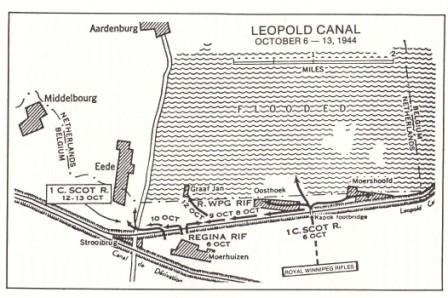
Map showing the Battle for the Leopold Canal.  (Map source: Little Black Devils: A History of the Royal Winnipeg Rifles)

On October 10, 1944, Steve was transferred to the Royal Winnipeg Rifles, joining the Regiment in the vicinity of the dike by Graaf Jan, The Netherlands, where they were engaged in fierce fighting during the Battle of the Leopold Canal on the border between The Netherlands and Belgium.   

The War Diary for October 10, 1944 for the Royal Winnipeg Rifles stated that the Commanding Officer had “… received orders to occupy the Southern approaches to the village of GRAAF JAN. With A Company giving covering fire, B Company succeeded in reaching the objectives at 1500 hrs. Superior enemy forces in the village forced the company to withdraw when ammunition was getting low….

The War Diary for October 11, 1944 noted numerous casualties.  “…Cloudy and cool with slight rain in the afternoon. Visibility poor. During the morning A Company assisted the Regina Rifles in destroying an enemy held pill box. Another C Company patrol to GRAAF JAN failed to contact the enemy…. Enemy shelling was slightly less intense than during the first three days. Small Arms fire continued to make it extremely difficult and dangerous to move about. Supplies and casualties were still ferried across the Canal. Capt H.C. Chadderton of C Company and Lt L. Mendels of B Company were among the numerous casualties for the day….” 

Unfortunately, Steve was one of the ‘numerous casualties’ referred to in the war diary.  He was 29 years old.

….Steve is buried in the Canadian War Cemetery in Adegem….

Steve is buried in the Canadian War Cemetery in Adegem, Belgium. We visited his grave on a very hot Sunday this past May, where Pieter placed Acadian, Prince Edward Island, and Canadian flags in remembrance.
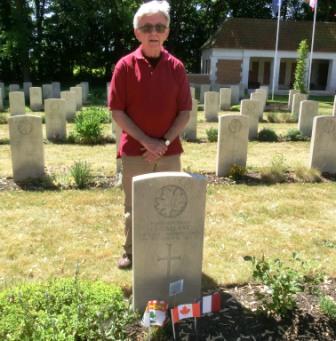
Pieter by the grave of Joseph Stephen ‘Steve’ Gallant. (Photo credit: Daria Valkenburg)

….Steve’s mother wanted answers….

On November 13, 1944, a distraught and upset Jannie Gallant – Steve’s mother – wrote to the Department of National Defence, asking questions that so many mothers of soldiers must have had.  “….I received a telegram on October 20 stating that …” Steve had been killed on October 11. “…We haven’t received any more news since.  It makes a very sad house. My husband has been in ill health since 1933. It was a great shock to him and also to me...

She explained that they had received two letters from him once he left Canada.  “…We received a letter from him on the 29th of September and he was still in England, and we received one that was written on October the 7th and he was already in Belgium…” 

Then came the hard question and a query as to whether he was really dead.  “…I want to know how much training that boy had to be sent that soon to Belgium as a rifleman with no training as a rifleman.  I hope that the boy is still living as he was a great help to his father and also to myself….” 

She ended by saying that “…I want to know the particulars of him if he is dead or living….

Mrs Gallant did receive a reply from Lt Cameron, Military Secretary, on November 18, 1944, offering sympathies and explaining that Steve had “…received careful training during the period he was in England and that he would not have been permitted to proceed until he was declared trained…

The reality was that training couldn’t fully prepare a soldier for actual combat. To make things worse, Steve had been sent to the Royal Winnipeg Rifles in the midst of a battle, with not even the chance to get to know the men in the Company he was assigned to.

Thank you to Pauline and Charles Stewart for providing photos and information on Pauline’s uncle. If you have a story to tell, or can provide a photo of one of the soldiers from Prince Edward Island buried in Adegem, please email Pieter at memorialtrail@gmail.com or comment on the blog. 

© Daria Valkenburg

….The 12 soldiers from Prince Edward Island who are buried in Adegem….

  1. Harold ‘Hal’ Gabriel BULGER of Foxley River was serving with the Algonquin Regiment when he was killed during the Battle of Moerbrugge in Belgium on September 10, 1944, at the age of 26.  
  2. Charles John ACORN of Peters Road was serving with the North Nova Scotia Highlanders when he lost his life on October 15, 1944 at the age of 22. A poor quality newspaper photo was found.
  3. William Henry DEVEAUX of Dundee was serving with the North Nova Scotia Highlanders when he lost his life on October 16, 1944 at the age of 23.
  4. Joseph Stephen GALLANT of Piusville was serving with the Royal Winnipeg Rifles when he lost his life on October 11, 1944 at the age of 29.
  5. Cecil Aneas MACDONALD of Glencoe was serving with the North Shore (New Brunswick) Regiment when he lost his life on October 15, 1944 at the age of 23. NOTE: The Belgian family that adopted his grave would like to be in contact with a family member.
  6. Joseph ‘Joe’ Augustine MACKENNA of Newton Cross was serving with Auxiliary Service as a member of the Knights of Columbus when he drowned in Belgium on June 21, 1945 at the age of 41. 
  7. Adolphus Peter MCCORMACK of New Zealand was serving with the Regina Rifle Regiment when he lost his life on October 30, 1944 at the age of 25.
  8. James Hector MUNN of New Zealand was serving with the Regina Rifle Regiment, 1st Battalion, when he lost his life on October 30, 1944 at the age of 28.
  9. Valmont PERRY of St. Louis was serving with the Stormont, Dundas and Glengarry Highlanders when he lost his life on October 21, 1944 at the age of 26. No photo has been found of him to date.
  10. Allan Rattenbury READ of Read’s Corner was serving with the Regina Rifle Regiment when he lost his life on October 27, 1944 at the age of 21. A poor quality newspaper photo was found.
  11. John James SAUNDERS of Bloomfield was serving with the South Saskatchewan Regiment when he lost his life on September 22, 1944 at the age of 27. No photo has been found of him to date.
  12. Joseph Roy SILLIPHANT of Summerside was serving with the North Nova Scotia Highlanders when he lost his life on October 27, 1944 at the age of 28. A poor quality newspaper photo was found.

….Want to follow our research?…

If you are reading this posting, but aren’t following our research, you are welcome to do so.  Our blog address: https://onthewarmemorialtrail.com/
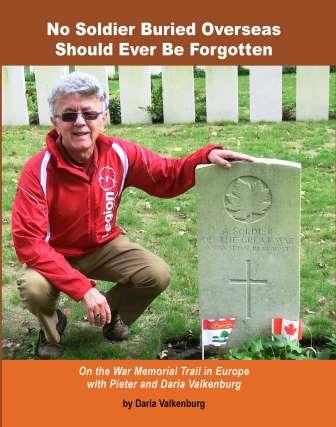
4 countries, 6 weeks, 7,000 km – an unforgettable war memorial journey in Europe…. Daria’s book ‘No Soldier Buried Overseas Should Ever Be Forgotten‘ is available in print and e-book formats.  Net proceeds of book sales help support research costs and the cost of maintaining this blog. For more information see https://nosoldierforgotten.com/

Subscribe to our YouTube Channel: On The War Memorial Trail With Pieter Valkenburg: https://www.youtube.com/channel/UCJ591TyjSheOR-Cb_Gs_5Kw

Never miss a posting!  Subscribe below to have each new story from the war memorial trail delivered to your inbox.
On The War Memorial Trail…. Visit To Bathmen And The Schipbeek Canal

October 26, 2025. While in Europe this spring for the 80th Anniversary of Liberation Commemoration events, we visited 14 cemeteries to place flags at the graves of 383 soldiers that Pieter has researched since 2014, with the stories of many of these soldiers previously told on this blog. 

On our ‘wish list’ of places to see was the Schipbeek Canal, the location where several soldiers whose stories we told lost their lives.  The Schipbeek is a tributary of the IJssel River.

When I mentioned Schipbeek Canal to a few Dutch colleagues, I was kindly told that Schipbeek was a canal, that to add the word Canal was an oxymoron.  But, who outside of the Dutch would know that?  So, I continue to say Schipbeek Canal, which is located outside of the town of Bathmen, not too far from where we were staying near Holten.  We had been so busy that we never got there, and I’d regretfully crossed it off the list.

After the exhausting day on the Battlefield Tour with Joël Stoppels, all that was planned for the following day was rest, packing our suitcases for the move further south towards Belgium, and laundry.  Pieter had other ideas, however, just as I settled on the couch to read a book. “…Let’s go to Bathmen…” he said in mid-morning. 

…No!..” I said. Anyone who has met Pieter knows he doesn’t give up easily. 

...C’mon, let’s get it over with….”  I didn’t have the energy to argue, so just got dressed and, just like that, we were back on the war memorial trail!  Luckily, Bathmen was only a few exits down the highway from where we were staying.

….We arrived in Bathmen…

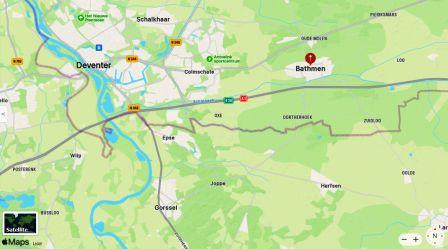
Map shows location of Bathmen and Gorssel. (Map source: DuckDuckGo)

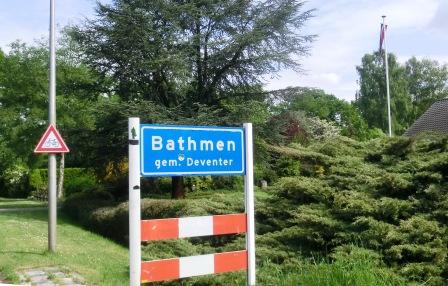
The village sign for Bathmen.  (Photo credit: Daria Valkenburg)

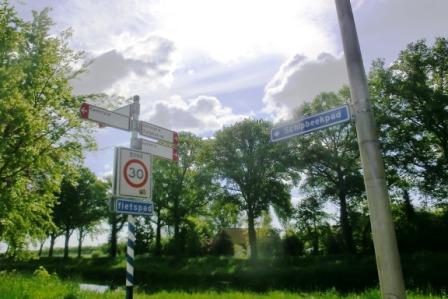
Once we arrived in Bathmen, it was to find that the Schipbeek Canal went through the village.  The challenge became to find where exactly the Canadians were as they fought to establish a bridgehead over the canal.  It wasn’t long before Pieter figured out that we needed to follow a road called Gorsselseweg!

…. Gorsselseweg was where the bridgehead over the Schipbeek was established…

The South Saskatchewan Regiment marched 8 km from Gorssel towards Bathmen.  (Photo credit: Daria Valkenburg)

Troops from the South Saskatchewan Regiment, the Regiment in which Leo Francis TONEY was in, marched 8 km (5 miles) from Gorssel towards Bathmen on April 7, 1945, but had to cross the Schipbeek Canal before reaching the village. 

The bridge over the canal located on the Gorsselseweg was the scene of so much fighting, before a bridgehead was established by the North Nova Scotia Highlanders, who then went on to liberate Bathmen on April 8, 1945.

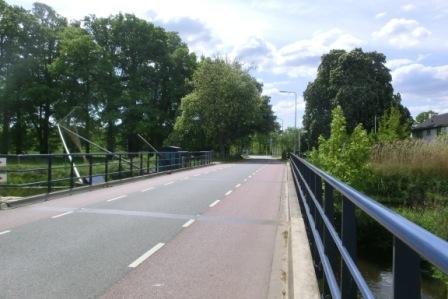
How the bridge over the Schipbeek Canal looks today on the Gorsselseweg.  (Photo credit: Daria Valkenburg)

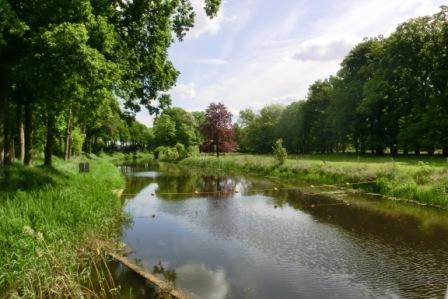
Today, the bridge and the canal are peaceful and beautiful spots, and it’s difficult to imagine how hard troops had to fight back in April 1945.  Crossing the Schipbeek was difficult as the area was strongly defended by German troops.

The Schipbeek Canal, as seen from the bridge on the Gorsselseweg.  (Photo credit: Daria Valkenburg)

The Schipbeek Canal, as seen from the bridge on the Gorsselseweg.  (Photo credit: Daria Valkenburg)

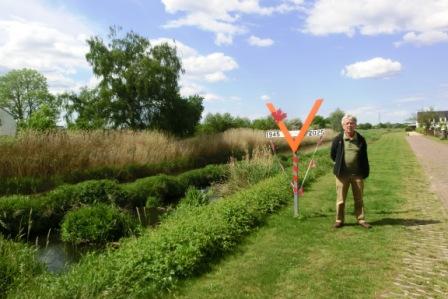
The maple leaf and V for Victory were present on the Gorsselseweg! (Photo credit: Daria Valkenburg)

….4 soldiers whose stories were previously told were at the Schipbeek…

Four soldiers, whose stories were previously told on this blog, were involved in the crossing of the Schipbeek and liberation of Bathmen…..

  • Philip LAFORTE, born in Lac du Bonnet, Manitoba, was serving with the Royal Winnipeg Rifles when he was killed on April 7, 1945 in The Netherlands, aged 33, as the Regiment crossed the Schipbeek, in order to establish a bridgehead as preparation for an assault on the city of Deventer by the 7th Canadian Brigade. You can read his story at https://onthewarmemorialtrail.com/2022/03/22/on-the-war-memorial-trail-remembering-ww2-soldier-philip-laforte/
  • Donald Charles MACKENZIE of Springhill, Nova Scotia, was serving with the Royal Winnipeg Rifles when they were ordered to cross the Schipbeek Canal on April 7, 1945, and establish a bridgehead as preparation for an assault on the city of Deventer by the 7th Canadian Brigade. He was in command of the unit Pioneers attached to ‘D’ Company, which had the responsibility of bridging the canal. In spite of heavy fire, he managed to crawl out onto the Bridge, dragging a couple of planks, which he placed in position, allowing the company to cross quickly and secure a solid bridgehead. He received a Military Medal for his actions.  Sadly, a few weeks later, he lost his life on April 22, 1945. He had been wounded during heavy fighting at the railway bridge near Appingedam, and placed in a house temporarily to rest. However, he was fatally hit by shrapnel by German shelling of the house.  You can read his story at https://onthewarmemorialtrail.com/2022/01/23/on-the-war-memorial-trail-the-ww2-soldier-from-springhill-who-received-a-memorial-cross/
  •  Richard Joseph RANEY, born in Point Michaud, Richmond County, Nova Scotia, was serving with the North Nova Scotia Highlanders, when he was killed on April 8, 1945, aged 18, during the fight to secure the bridge over the Schipbeek and enter the village of Bathmen. You can read his story at https://onthewarmemorialtrail.com/2021/01/16/on-the-war-memorial-trail-atlantic-canada-remembers-part-3/
  • Leo Francis TONEY, born in Wolfville, Nova Scotia, was serving with the South Saskatchewan Regiment, when he was killed on Saturday, April 7, 1945, aged 21, while trying to cross the Schipbeek in The Netherlands at  a bridgehead that had been formed at a weir on the border of the municipalities of Bathmen and Holten. You can read his story at https://onthewarmemorialtrail.com/2021/05/22/on-the-war-memorial-trail-remembering-ww2-soldier-leo-francis-toney/

….We learned that a solider from Prince Edward Island received a posthumous Dutch medal…

Pieter at an information panel beside the Schipbeek along the Gorsselseweg.  (Photo credit: Daria Valkenburg)

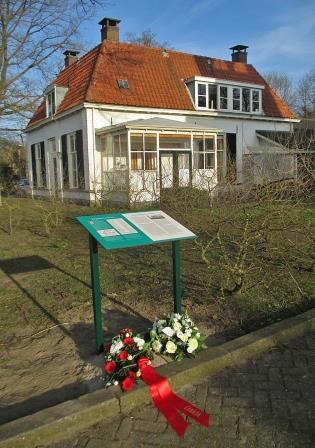
While we were taking photos of the Schipbeek Canal, we saw an information panel, and to our surprise, learned of a Prince Edward Island connection to what happened during the crossing of the Canal and the liberation of Bathmen!

Joseph William CAMPBELL, of Newport, Prince Edward Island, was serving with the North Nova Scotia Highlanders, was killed on April 8, 1945, aged 22, during the securing of the bridge over the Schipbeek. (See https://www.veterans.gc.ca/en/remembrance/memorials/canadian-virtual-war-memorial/detail/2226998?Joseph%20William%20Campbell)

On December 8, 1945, he was posthumously awarded the Knight of the Fourth Class, Military Willems Order by Queen Wilhelmina of The Netherlands. This honour is the oldest and highest honour of the Kingdom of The Netherlands. (See https://en.wikipedia.org/wiki/Military_Order_of_William)

….Two monuments in Bathmen…

From the Gorsselseweg we made our way into Bathmen itself, to a small area dedicated to honouring those who lost their lives in April 1945. 

There was a memorial stone honouring Joseph William Campbell, and Pieter made sure he placed flags of Canada and Prince Edward Island beside this marker.

Pieter by the memorial stone honouring Joseph William Campbell from Newport, Prince Edward Island, after he’d placed flags of Canada and Prince Edward Island. (Photo credit: Daria Valkenburg)

Memorial stone honouring Joseph William Campbell from Newport, Prince Edward Island. (Photo credit: Daria Valkenburg)

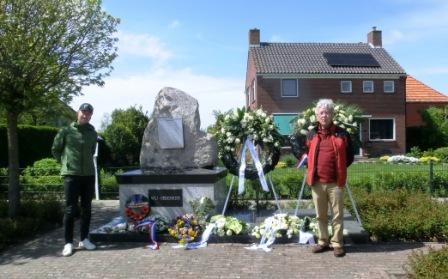
Beside the memorial stone honouring Joseph William Campbell is a monument in memory of Bathmen’s liberation by the Canadians in April 1945. A plaque on a large stone says ‘In grateful memory of our Canadian liberators’ and was placed here in 1995, 50 years after Bathmen was liberated.

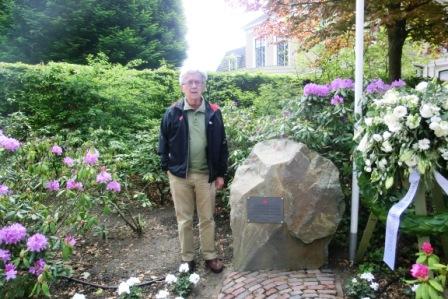
Pieter by the monument honouring the Canadians who liberated Bathmen. (Photo credit: Daria Valkenburg)

This ended our visit to Bathmen and Schipbeek.  Although it had been an effort to leave our cosy cottage, I’m glad that Pieter persisted, as we now had seen with our own eyes the Schipbeek Canal, which we had read so much about in war diaries. 

The flags placed at the memorial stone were donated.  Our thanks go to: 

  • Alan Waddell, Constituent Assistant, on behalf of Heath MacDonald, MP for Malpeque, for the Canadian flag.
  • Matt MacFarlane, MLA for District 19, Borden-Kinkora, for the Prince Edward Island flag. 

Our adventures continue as we share the highlights of our adventures on the 2025 European War Memorial Tour.  Coming up on our journey of remembrance is a visit to Uden War Cemetery.

If you have a story or photos to share, please contact Pieter at memorialtrail@gmail.com or comment on the blog. 

© Daria Valkenburg

….Want to follow our research?…

If you are reading this posting, but aren’t following our research, you are welcome to do so.  Our blog address: https://onthewarmemorialtrail.com/

4 countries, 6 weeks, 7,000 km – an unforgettable war memorial journey in Europe…. Daria’s book ‘No Soldier Buried Overseas Should Ever Be Forgotten‘ is available in print and e-book formats.  Net proceeds of book sales help support research costs and the cost of maintaining this blog. For more information see https://nosoldierforgotten.com/

Subscribe to our YouTube Channel: On The War Memorial Trail With Pieter Valkenburg: https://www.youtube.com/channel/UCJ591TyjSheOR-Cb_Gs_5Kw

Never miss a posting!  Subscribe below to have each new story from the war memorial trail delivered to your inbox.
On The War Memorial Trail…. Battlefields Tour With Joël Stoppels Part 3: Visit To Stefanuskerk in Holwierde

A life’s ambition realized! Daria in the driver’s seat of a jeep! Spoiler alert – our battlefield tour was in an SUV, not the jeep! (Photo credit: Joël Stoppels)

October 10, 2025.  While in Europe this spring for the 80th Anniversary of Liberation Commemoration events, we visited 14 cemeteries to place flags at the graves of 383 soldiers that Pieter has researched since 2014, with the stories of many of these soldiers previously told on this blog. 

On the wish list for our 2025 European War Memorial Tour was to tour some of the battlefields in which these soldiers lost their lives in order to have a better appreciation of what they had faced. 

Battlefields guide Joël Stoppels, of Groningen, The Netherlands, offered to spend a day showing us locations where the various battles that comprised the Battle of the Delfzijl Pocket took place.  Over the years, we’ve featured stories of many soldiers who lost their lives in the last weeks of the North-West Europe campaign during WWII, and we eagerly anticipated learning more. (See https://www.canadiansoldiers.com/history/battlehonours/northwesteurope/delfzijlpocket.htm)

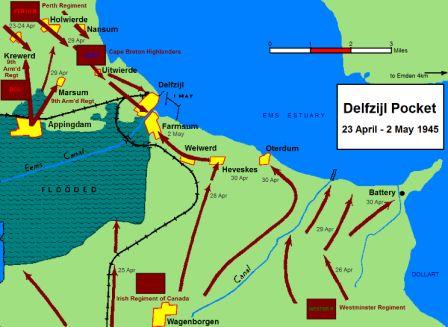
Map showing the locations during the Battle of the Delfzijl Pocket. (Map source: http://www.canadiansoldiers.com)

In Part 1, our battlefield tour began at a field where 19 Canadians lost their lives during the Battle for Wagenborgen, the preliminary battle before the Battle of the Delfzijl Pocket. (See https://onthewarmemorialtrail.com/2025/10/01/on-the-war-memorial-trail-battlefields-tour-with-joel-stoppels-part-1-battle-for-wagenborgen/)

In Part 2, we travelled to Appingedam, the town where the Battle of the Delfzijl Pocket began. (See https://onthewarmemorialtrail.com/2025/10/05/on-the-war-memorial-trail-battlefields-tour-with-joel-stoppels-part-2-the-battle-of-the-delfzijl-pocket-began-in-appingedam/)

Now, in Part 3, we left Appingedam and travelled to Holwierde, where our first stop was at the Canada Memorial.

…. The Canada Memorial in Holwierde…

Pieter and Joël at the Canada Memorial in Holwierde. (Photo credit: Daria Valkenburg)

Front view of the Canada Memorial in Holwierde.  (Photo credit: Daria Valkenburg)

We knew that there was a plaque at the church in Holwierde that commemorated the Canadians who lost their lives during the Battle of Delfzijl Pocket, but had no idea there was also a monument in the town itself…. with houses on either side of the main road where it’s located.

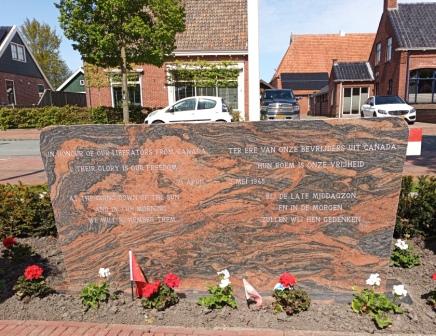
Called the Canada Memorial, with red and white flowering plants around it, the stone plaque simply states ‘In honour of our liberators from Canada. Their glory is our freedom. 21 April – 2 May 1945

Closeup of stone plaque at the Canada Memorial in Holwierde.  (Photo credit: Pieter Valkenburg)

…. Canadian soldiers called Holwierde ‘a killing ground’…

Battlefields Tour poster describing Howierde as a ‘Killing ground’.

As we walked through this quiet and picturesque town towards the Stefanuskerk, we asked Joël about his poster describing Holwierde as a ‘Killing ground’.  He explained that ….Holwierde was one of the most heavily contested villages during the Battle of the Delfzijl Pocket in April 1945. The Perth Regiment fought intense house-to-house combat here, as German paratroopers and naval infantry had fortified nearly every building.  Many Canadian soldiers referred to the village as ‘a killing ground’ due to the high casualties on both sides…..

Holwierde in April 1945, with a temporary bailey bridge, leading towards the Stefanuskerk. (Photo Courtesy of Joël Stoppels / Battlefield Tours)

Holwierde in April 1945.  A temporary bailey bridge allowed residents and troops to cross the canal.  The Stefanuskerk is on the right. (Photo Courtesy of Joël Stoppels / Battlefield Tours)

…The Stefanuskerk, although spared from destruction, stood right in the middle of the battlefield and witnessed days of shelling and close-quarters fighting….  

Holwierde in 2025, 80 years after its liberation.  The bailey bridge from 1945 is now a permanent bridge over the canal! (Photo credit: Daria Valkenburg)

 …. We found a banner for one soldier whose story was previously told…

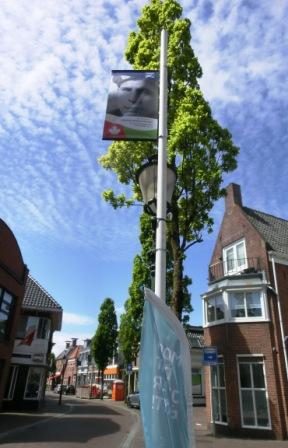
Banner for Joseph ‘Gerald’ Fougere in Holwierde. (Photo credit: Pieter Valkenburg)

As we walked down the street towards the Stefanuskerk, the main reason for our visit to Holwierde, we saw a banner for Joseph ‘Gerald’ FOUGERE, who was serving with the Perth Regiment. He was wounded on April 24, 1945, during the Battle of the Delfzijl Pocket, and died on April 26, 1945, one month before his 29th birthday. (See https://onthewarmemorialtrail.com/2021/01/27/on-the-war-memorial-trail-atlantic-canada-remembers-part-5/)

Joseph ‘Gerald’ Fougere’s banner was by the canal in Holwierde, but this wasn’t where he died.  (Photo credit: Daria Valkenburg)

The banner was by the canal, and while I was busy snapping photos, thinking this is where he died, Joël said “…no, he actually died in nearby Nansum.  Since Nansum is such a small village, his banner was placed in Holwierde for greater visibility...” He then kindly pointed out that “…the bridge over the canal had been blown up by the Germans on April 25, 1945.

Never mind…Nansum was quickly added as our next stop after Holwierde!

…. A solemn few moments at Stefanuskerk…

Entrance to Stefanuskerk in Holwierde. (Photo credit: Pieter Valkenburg)

We continued walking down the road until we got to the Stefanuskerk.  A plaque near the door noted that the church dates to the 11th century!  In the 13th century the church was enlarged.  It was severely damaged in April 1945, but restored by 1950, to give the appearance as to how the church would have looked before 1830.

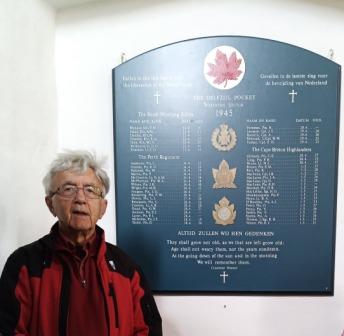
Pieter by the plaque in Stefanuskerk that commemorates Canadian soldiers who died during the Battle of the Delfzijl Pocket.  (Photo credit:  Joël Stoppels)

We wanted to visit the church in order to see the plaque that commemorates many of the Canadian soldiers who died during the Battle of the Delfzijl Pocket.  It was a very solemn few moments for us, as we looked over the names, many of them of soldiers that Pieter had researched over the past years.

From the Royal Winnipeg Rifles:

From the Perth Regiment:

From the Cape Breton Highlanders:

Not mentioned on the plaque:

From the 9th Armoured Regiment (BC Dragoons), who is commemorated on a plaque in Appingedam:

…. We couldn’t miss seeing Nansum…

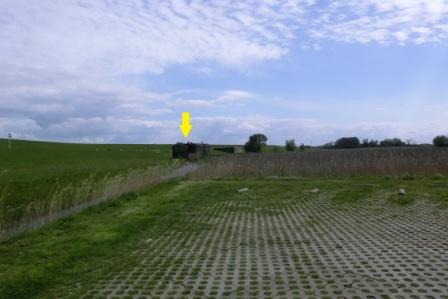
We left Stefanuskerk in a reflective mood after looking at the names on the plaque, and quietly got back in the car for the short drive to Nansum, which is indeed a tiny place, near the coast.   Joël didn’t know exactly where Joseph ‘Gerald’ FOUGERE was killed, unfortunately.  What remained of a German bunker was still visible, so he likely died of shrapnel wounds. 

Yellow arrow indicates the remains of a German bunker in Nansum.  (Photo credit: Daria Valkenburg)

Joël noted that 177 Kriegsmarine were captured here. The Kriegsmarine was Nazi Germany’s Navy from 1939-1945.  By 1945, as the war progressed, the Kriegsmarine formed infantry units from its personnel, who were re-trained as infantry to fight on land, all in an attempt to alleviate the strain on the German Army.

From Nansum we continued on the last leg of our battlefields tour, as we followed the route taken by the Cape Breton Highlanders to Delfzijl. Coming up in Battlefields Tour With Joël Stoppels Part 4: From Nansum To Delfzijl And Wirdum.

Thank you to Joël Stoppels, guide and founder of Battlefield Tours, for a wonderful and informative tour. (See www.battlefieldtours.nu)  If you have a story or photo to share, please contact Pieter at memorialtrail@gmail.com or comment on the blog. 

© Daria Valkenburg

….Want to follow our research?…

If you are reading this posting, but aren’t following our research, you are welcome to do so.  Our blog address: https://onthewarmemorialtrail.com/

4 countries, 6 weeks, 7,000 km – an unforgettable war memorial journey in Europe…. Daria’s book ‘No Soldier Buried Overseas Should Ever Be Forgotten‘ is available in print and e-book formats.  Net proceeds of book sales help support research costs and the cost of maintaining this blog. For more information see https://nosoldierforgotten.com/

Subscribe to our YouTube Channel: On The War Memorial Trail With Pieter Valkenburg: https://www.youtube.com/channel/UCJ591TyjSheOR-Cb_Gs_5Kw

Never miss a posting!  Subscribe below to have each new story from the war memorial trail delivered to your inbox.
On The War Memorial Trail…. Battlefields Tour With Joël Stoppels Part 2: The Battle of the Delfzijl Pocket Began In Appingedam

A life’s ambition realized! Daria in the driver’s seat of a jeep! Spoiler alert – our battlefield tour was in an SUV, not the jeep! (Photo credit: Joël Stoppels)

October 5, 2025.  While in Europe this spring for the 80th Anniversary of Liberation Commemoration events, we visited 14 cemeteries to place flags at the graves of 383 soldiers that Pieter has researched since 2014.  The stories of many soldiers have been told on this blog. 

On our wish list for this trip was to tour some of the battlefields in which these soldiers lost their lives in order to have a better appreciation of what they had faced. 

Battlefields guide Joël Stoppels, of Groningen, The Netherlands, offered to spend a day showing us locations where the various battles that comprised the Battle of the Delfzijl Pocket took place.  Over the years, we’ve featured stories of many soldiers who lost their lives in the last weeks of the North-West Europe campaign during WWII, and we eagerly anticipated learning more. (See https://www.canadiansoldiers.com/history/battlehonours/northwesteurope/delfzijlpocket.htm)

Map showing the locations during the Battle of the Delfzijl Pocket. (Map source: http://www.canadiansoldiers.com)

In Part 1, our battlefield tour began at a field where 19 Canadians lost their lives during the Battle for Wagenborgen, the preliminary battle before the Battle of the Delfzijl Pocket. (See https://onthewarmemorialtrail.com/2025/10/01/on-the-war-memorial-trail-battlefields-tour-with-joel-stoppels-part-1-battle-for-wagenborgen/)

Now, in Part 2, we travelled to Appingedam, the town where the Battle of the Delfzijl Pocket began…. 

From Wagenborgen, we made our way towards Appingedam, the location of the beginning of the Battle of the Delfzijl PocketWilliam ‘Willie’ DANIELS, Donald Charles MACKENZIE, whose stories were previously told on this blog, along with William James ‘Jimmy’ Sutherland HOLE, who Pieter also researched, lost their lives here.

…. We found banners for two soldiers whose stories were previously told…

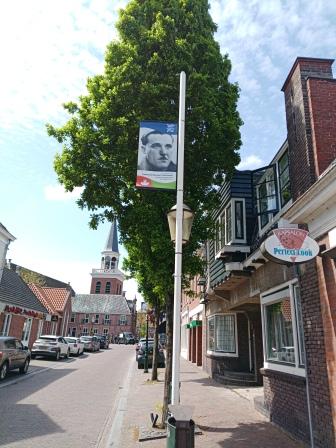
We found the banners for Daniels and MacKenzie, but no banner was made for Hole as up to now no photo has been found of him. 

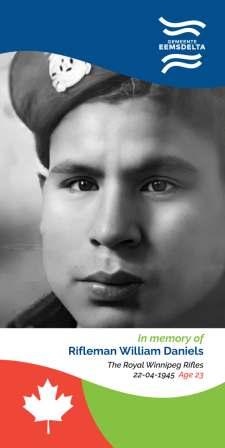
Banner for William ‘Willie’ Daniels in Appingedam. (Photo credit: Daria Valkenburg)

The banner for William ‘Willie’ Daniels was quite high up and it was hard for me to get a good angle, but thankfully Joël was kind enough to send us a better photo of the banner. 

Banner for William ‘Willie’ Daniels. (Photo courtesy of Joël Stoppels/ Battlefield Tours)

William ‘Willie’ DANIELS, from the Big River Reserve in Depton, Saskatchewan, was serving with the Royal Winnipeg Rifles when he was killed, aged 20, on April 22, 1945 as troops moved through Appingedam in The Netherlands at the very beginning of the Battle of the Delfzijl Pocket. You can read his story at https://onthewarmemorialtrail.com/2021/07/23/on-the-war-memorial-trail-remembering-ww2-soldier-william-willie-daniels/

Banner for Donald Charles MacKenzie in Appingedam. (Photo credit: Pieter Valkenburg)

Donald Charles MACKENZIE of Springhill, Nova Scotia, was serving with the Royal Winnipeg Rifles when he was killed, aged 30, on Sunday, April 22, 1945. He had been wounded during heavy fighting at the railway bridge near Appingedam, and placed in a house temporarily to rest. However, he was fatally hit by shrapnel by German shelling of the house.  You can read his story at https://onthewarmemorialtrail.com/2022/01/23/on-the-war-memorial-trail-the-ww2-soldier-from-springhill-who-received-a-memorial-cross/

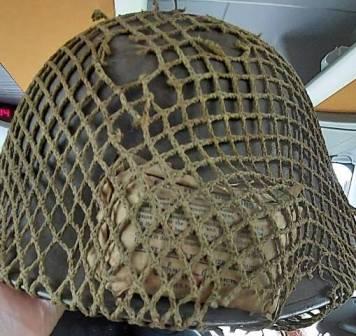
Helmet that had belonged to Donald Charles MacKenzie. (Photo Courtesy of Joël Stoppels / Battlefield Tours)

Joël told us that he has Donald Charles MacKenzie’s helmet in his private collection, and was kind enough to share a photo…a link of the past with the present! 

…. The Royal Winnipeg Rifles were in Appingedam as of April 21, 1945…

Map helped explain what happened in Appingedam in 1945.  (Photo credit: Daria Valkenburg)

In setting the scene on what unfolded in Appingedam back in 1945, Joël referred to a map that he had brought along for the battlefields tour.  “….Two roads led into Appingedam in 1945, both heavily mined by the defending Kriegsmarine…” he explained. The Kriegsmarine was Nazi Germany’s Navy from 1939-1945.  By 1945, as the war progressed, the Kriegsmarine formed infantry units from its personnel, who were re-trained as infantry to fight on land, all in an attempt to alleviate the strain on the German Army.

…The Canadians were aware of the mines…” Joël noted, and on “…April 21, 1945, the Royal Winnipeg Rifles attacked.  Heavy fighting ensued but the town was partially liberated on April 23, 1945….” allowing “….the Royal Winnipeg Rifles to move back into Wirdum….

The Regimental history, ‘Little Black Devils: a history of the Royal Winnipeg Rifles’, by Bruce Tascona and Eric Wells, describes what happened at Appingedam. “…..Beginning on April 21….the Rifles attacked with the 7th Reconnaissance Regiment, and several of the armoured cars were knocked out by anti-tank guns.  The Germans then blew up the bridge which the Rifles intended to cross…

In trying to find another plan of attack, patrols had discovered a small bridge.  …The bridge, deemed too feeble to carry motor transport, was still intact and patrols affirmed that it would carry the weight of jeeps.  With that information, the Rifles shifted position on a new start line during the night…

The plan in place, “…in the early hours of April 22, A Company….went over the bridge, followed closely by C Company.  They were met by heavy machine gun fire but the worst problem they faced were the minefields….

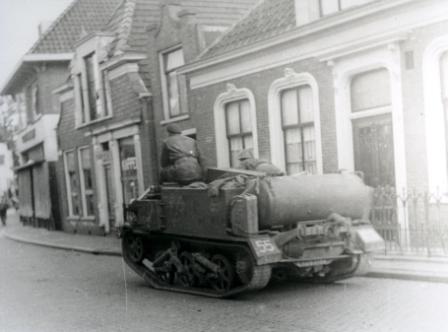
A WASP carrier with 2 soldiers from the Royal Winnipeg Rifles on a street in Appingedam in April 1945.  (Photo Courtesy of Joël Stoppels / Battlefield Tours)

In spite of the challenges, during the day “… the Battalion consolidated its position in front of the town…”  Then, a surprise attack during the night meant that…by dawn the Rifles were inside Appingedam and by mid-morning of April 23, they were mopping up. On April 24, the Rifles were replaced by the Perth Regiment….

The 9th Armoured Regiment (British Columbia Dragoons) were assigned to support the Perth Regiment.  The war diary for the BC Dragoons for April 22, 1945 explained the orders. …Lt Col Angle liaised with Commander Perth Regiment as BCD will form one portion of the 5 CAB Battle Group…” (CAB referred to Canadian Armoured Brigade)

The Situation Report for ‘A’ Squadron of the BC Dragoons noted that “…troops moved forward and positions taken over from Winnipeg Rifles before last light.  Approach to town heavily shelled by enemy heavy calibre guns…

…. Appingedam was evacuated on the night of April 23, 1945…

Per the war diary for the BC Dragoons for April 23, 1945, it was overcast and orders had been received at 2 am from HQ CAB that the Regiment was to relieve the Royal Winnipeg Rifles at 12:30 pm, and that troops from ‘A’ and ‘B’ squadrons were to be temporarily reorganized into one infantry squadron.  The tanks were parked in an area away from the town, with ….one crew member per tank to remain in the tanks and perform necessary maintenance and act as guards….”….all in preparation for the upcoming battle.

Appingedam had a population of 7,000, who were about to be in the midst of a heavy fight.  Joël told us that after “…a Dutch resistance fighter named Leugs went to Battalion HQ and offered to help, he was tasked with evacuating the town.  With the aid of Canadian trucks, this was done on the night of April 23, 1945…

On April 24, 1945, the Situation Report for ‘A’ Squadron of the BC Dragoons recorded that …the troop of tanks under Lt Gamlin, ‘C’ Squadron, took up positions at first light, spasmodic shelling throughout the day.  Underground contacted and reliable information was received concerning enemy positions….Enemy continued heavy shelling…. 

The Germans surrendered on May 2, 1945, and residents were able to return home and assess the damage to their properties.

…. Plaques to commemorate the RWR and BC Dragoons are in Appingedam…

Daria and Joël in Appingedam’s town square. The commemorative plaques are on a wall in the passageway to the right. (Photo credit: Pieter Valkenburg)

We learned about all that happened in Appingedam while standing in the town square, and next went to see two plaques placed nearby – one for the Royal Winnipeg Rifles, and the other for the British Columbia Dragoons.  We could still see shrapnel in the bricks of the buildings!

Commemorative plaque for the Royal Winnipeg Rifles.  (Photo credit: Daria Valkenburg)

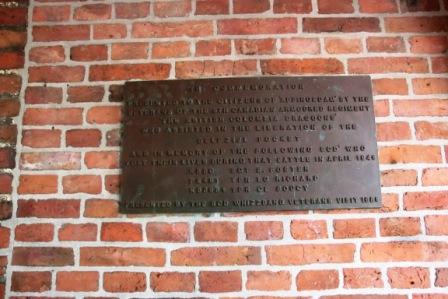
Commemorative plaque for the BC Dragoons.  (Photo credit: Daria Valkenburg)

Three soldiers from the BC Dragoons are remembered on the plaque:

  • Sgt Stanley FOSTER, aged 24, died April 30, 1945
  • Trooper Louis Graham RICHARD, aged 27, died April 26, 1945
  • Trooper Charles Ernest SOUCY, aged 30, died April 30, 1945

Sgt Foster is buried in the Canadian War Cemetery in Groesbeek.  Troopers Richard and Soucy are buried in the Canadian War Cemetery in Holten.  You can read Richard’s story at https://onthewarmemorialtrail.com/2021/02/22/on-the-war-memorial-trail-atlantic-canada-remembers-part-7/

…. ‘The best stroopwafel I ever ate!’…

Pieter, Daria, and Joél having a much needed break in Appingedam.  (Photo courtesy of Valkenburg Family)

After digesting all the history from Wagenborgen and Appingedam, we desperately needed a break, so were very receptive to Joël’s suggestion that we go for coffee at ‘Stroopwoafeltje, Koffie & Meer’, a café in the town square.

Joël recommended the homemade stroopwafels made by the lady running the café, and both he and Pieter ordered one.  After Pieter told me “…this is the best stroopwafel I ever ate!!!!..” I tried a piece of his, and he was right.  It was much nicer than the syrupy, overly chewy ones you get commercially! 

In case you’ve never tried this treat, a stroopwafel is a traditional Dutch cookie made from two thin waffle layers sandwiched around a warm caramel filling.  I’m only sorry that I didn’t think to take a photo of Pieter’s stroopwafel before he ate it all up!

Our stay in Appingedam ended once we finished our coffee break.  It was time to move on and continue our battlefields tour as part of our 2025 European War Memorial Tour. Coming up in Battlefields Tour With Joël Stoppels Part 3: Visit To Stefanuskerk In Holwierde.

Thank you to Joël Stoppels, guide and founder of Battlefield Tours, for a wonderful and informative tour. (See www.battlefieldtours.nu)  If you have a story or photo to share, please contact Pieter at memorialtrail@gmail.com or comment on the blog. 

© Daria Valkenburg

….Want to follow our research?…

If you are reading this posting, but aren’t following our research, you are welcome to do so.  Our blog address: https://onthewarmemorialtrail.com/

4 countries, 6 weeks, 7,000 km – an unforgettable war memorial journey in Europe…. Daria’s book ‘No Soldier Buried Overseas Should Ever Be Forgotten‘ is available in print and e-book formats.  Net proceeds of book sales help support research costs and the cost of maintaining this blog. For more information see https://nosoldierforgotten.com/

Subscribe to our YouTube Channel: On The War Memorial Trail With Pieter Valkenburg: https://www.youtube.com/channel/UCJ591TyjSheOR-Cb_Gs_5Kw

Never miss a posting!  Subscribe below to have each new story from the war memorial trail delivered to your inbox.
On The War Memorial Trail…. Battlefields Tour With Joël Stoppels Part 1: Battle For Wagenborgen

A life’s ambition realized! Daria in the driver’s seat of a jeep! Spoiler alert – our battlefield tour was in an SUV, not the jeep! (Photo credit: Joël Stoppels)

October 1, 2025.  Pieter has been involved in finding photos of Canadians who are buried in all three Canadian War Cemeteries in The Netherlands since 2014, with stories of many soldiers told on this blog. 

While in Europe on our 2025 European War Memorial Tour this spring, for the 80th Anniversary of Liberation Commemoration events, he not only placed flags at the graves of 383 soldiers in 14 cemeteries, but we wanted to tour some of the battlefields in order to have a better appreciation of what soldiers faced. 

Battlefields Tours guide Joël Stoppels, of Groningen, The Netherlands, offered to spend a day showing us locations where the various battles that comprised the Battle of the Delfzijl Pocket took place. The term ‘Delfzijl Pocket’ refers “….to the entire area around Delfzijl that was held by German forces and cleared by the Canadians in late April and early May 1945…”Joël explained.

Over the years, we’ve featured stories of many soldiers who lost their lives in the last weeks of the North-West Europe campaign during WWII, and we eagerly anticipated learning more. (See https://www.canadiansoldiers.com/history/battlehonours/northwesteurope/delfzijlpocket.htm)

Map showing the locations during the Battle of the Delfzijl Pocket. (Map source: http://www.canadiansoldiers.com)

…. 19 Canadians lost their lives on a field just outside Wagenborgen…

Our day touring battlefields began very early, with a two hour drive from our cottage near Holten to Groningen, where we’d arranged to meet Joël. 

Our first stop on the battlefield tour was at a field outside Wagenborgen, where 19 Canadians lost their lives during the Battle for Wagenborgen.  This was the preliminary battle before the Battle of the Delfzijl Pocket. (See  https://www.canadiansoldiers.com/history/battlehonours/northwesteurope/wagenborgen.htm)

Joël Stoppels and Pieter stand across the road from the field outside Wagenborgen.  (Photo credit: Daria Valkenburg)

Joël began by saying that “….‘D’ Company of the Canadian Scottish Regiment, under the command of Major Anthony Compton-Lundie, were ordered by Battalion Command based in Groningen to undergo a dangerous mission across open fields with no rises or trees for cover…..” 

Patrols from the 7th Canadian Reconnaissance Regiment had determined that Wagenborgen, a short distance from the centre of the battalion’s line, was held by an unknown number of Germans.

‘D’ Company received orders to take the village of Wagenborgen in a one-company attack in the early hours of April 21, 1945.  “….Compton-Lundie was based at the Schmidt farm at the end of the field.  When the phone rang with orders to attack, he protested.  ‘Are you crazy?’ he said.  Orders were orders, however, and Compton-Lundie was not one to disobey…

The attack began on April 21, 1945.  By the time it was over, Anthony COMPTON-LUNDIE was dead, as was his lieutenant, Dennis George HUSCROFT, and 17 more men.

…. How did the battle go so badly for the Canadian Scottish?…

How did it go so wrong?  ... A Polish division had been in the area before the Canadian Scottish arrived and told Compton-Lundie that they believed only 100 Germans remained.  This was faulty intelligence as there were over 1500 Germans, just waiting to pick off soldiers in the open field of very flat land….”  Joël reflected that “…perhaps if Battalion Command had listened to Compton-Lundie, who had a view of the landscape, that there would have been fewer casualties….

Field outside Wagenborgen where 19 men lost their lives.  Yellow arrow indicates Schmidt Farm, where Major Compton-Lundie of the Canadian Scottish Regiment had been based. At the far right is a monument commemorating those who died. (Photo credit: Daria Valkenburg)

…. A monument by the field honours the 19 men who died…

Monument by the open field where 19 men lost their lives on April 19, 1945. (Photo credit: Daria Valkenburg)

A small monument sits beside the open field where 19 men fought and lost their lives.  A translation of the Dutch text reads as follows:  Stand still for a moment at the maple leaf. On April 21, 1945, 19 Canadian men died for our freedom here at ‘Stolderij’. Stolderij refers to the hamlet where the open field is located.

The men were temporarily buried in Siddeburen before being reburied in 1946 in the Canadian War Cemetery in Holten, The Netherlands.

…. Banners were placed in Wagenborgen to commemorate fallen soldiers…

Once we finished taking photos of the field where so many men lost their lives, we drove into the town of Wagenborgen itself, where banners of the deceased soldiers had been placed, as close as possible to the location where they fell. 

Two soldiers from the Canadian Scottish Regiment who had fought in Wagenborgen have had their stories previously told on this blog.  One survived the battle, but one died, and we looked for his banner.

Banner for Theodor ‘Ted’ Henschel in Wagenborgen.  (Photo credit: Daria Valkenburg)

Joël by the banner for Anthony Compton-Lundie, who was from Oakbank, Manitoba. (Photo credit: Daria Valkenburg)

After being told about the impossible situation that Major Anthony Compton-Lundie faced, we wanted to see his banner, and took a photo of Joël beside it.

…. Canadian soldiers who lost their lives during the Battle for Wagenborgen…

Joël and Pieter at the War Memorial in Wagenborgen.  ‘Wij gedenken’ translates to ‘We commemorate’. (Photo credit: Daria Valkenburg)

The War Memorial in Wagenborgen commemorates the residents of Wagenborgen who died in WWII, and 27 fallen Canadian soldiers – 23 of them from the Canadian Scottish Regiment, 1 from the Royal Winnipeg Rifles, and 3 from the Royal Canadian Artillery. 

From the Canadian Scottish Regiment:

  • Pte Albert George BOUMA, aged 21, died April 23, 1945
  • Pte John BRANSCOMB, aged 32, died April 23, 1945
  • Pte Robert Stewart BULLOCK, aged 39, died April 23, 1945
  • Pte Leslie Keith BUTTERICK, aged 19, died April 21, 1945
  • L/Cpl Carmen Christie CAPONERO, aged 30, died April 21, 1945
  • Sgt Allen CLEMENTS, aged 32, died April 21, 1945
  • Major Anthony COMPTON-LUNDIE, aged 30, died April 21, 1945
  • Pte Louis Silverius DAUTREMONT, aged 25, died April 21, 1945
  • Pte Edwin Levi EMERY, aged 22, died April 21, 1945
  • Pte Peter HARASYMCHUK, aged 24, died April 23, 1945
  • Pte Theodor ‘Ted’ HENSCHEL, aged 28, died April 223, 1945
  • Pte John Charles HUGHES, aged 28, died April 23, 1945
  • Lt Denis George HUSCROFT, aged 24, died April 21, 1945
  • L/Cpl John Albert MASLIN, aged 24, died April 21, 1945
  • Pte John Raymond PATRICK, aged 29, died April 21, 1945
  • Pte James Robert POWER, aged 21, died April 21, 1945
  • Pte Robert John Wilson REID, aged 38, died April 21, 1945
  • Pte Henry Oscar RENNER, aged 24, died April 21, 1945
  • Martin George VAN SANDVOORD, aged 28, died April 22, 1945
  • Pte Emile Joseph SOENS, aged 24, April 21, 1945
  • Pte John William WILSON, aged 37, died April 23, 1945
  • Pte Fred WIRTH, aged 38 , died April 23, 1945
  • A/Cpl Gordon Scarth WOOD, aged 21, died April 21, 1945

From the Royal Winnipeg Rifles:

  • Rifleman Theodore OLENICK, aged 19, died April 21, 1945

From the Royal Canadian Artillery:

  • Captain Donald George INNES, aged 23, died April 21, 1945
  • Gunner Joseph Paul MOULINS, aged 23, died April 21, 1945
  • Gunner Arthur John MUELLER, aged 20, died April 21, 1945

From Wagenborgen, we continued our tour, with our next stop in Appingedam, coming up in Battlefields Tour With Joël Stoppels Part 2: The Battle of the Delfzijl Pocket Began In Appingedam.

Thank you to Joël Stoppels, guide and founder of Battlefield Tours, for a wonderful and informative tour. (See www.battlefieldtours.nu)  If you have a story or photo to share, please contact Pieter at memorialtrail@gmail.com or comment on the blog. 

© Daria Valkenburg

….Want to follow our research?…

If you are reading this posting, but aren’t following our research, you are welcome to do so.  Our blog address: https://onthewarmemorialtrail.com/

4 countries, 6 weeks, 7,000 km – an unforgettable war memorial journey in Europe…. Daria’s bookNo Soldier Buried Overseas Should Ever Be Forgotten is available in print and e-book formats.  Net proceeds of book sales help support research costs and the cost of maintaining this blog. For more information see https://nosoldierforgotten.com/

Subscribe to our YouTube Channel: On The War Memorial Trail With Pieter Valkenburg: https://www.youtube.com/channel/UCJ591TyjSheOR-Cb_Gs_5Kw

Never miss a posting!  Subscribe below to have each new story from the war memorial trail delivered to your inbox.
On The War Memorial Trail….2025 Faces of Holten Exhibition Part 5: Indigenous Soldiers

September 10, 2025.  Pieter Valkenburg has been involved in finding photos of Canadians who are buried in all three Canadian War Cemeteries in The Netherlands since 2014, with stories of many soldiers told on this blog. 

While in The Netherlands and Belgium for the 80th Anniversary of Liberation Commemoration events, he placed flags at the graves of 383 soldiers in 14 cemeteries. At the Canadian War Cemetery in Holten, The Netherlands, flags were placed at 156 graves. Our visit coincided with The 2025 Faces Of Holten Exhibition, which ran for three weeks in May.

—-Recap…..

In Part 1, the graves and photos of soldiers who were killed near Posterenk in April 1945 were featured. (See https://onthewarmemorialtrail.com/2025/08/24/on-the-war-memorial-trail-2025-faces-of-holten-exhibition-part-1-soldiers-killed-near-posterenk/)

In Part 2, the graves and photos of two soldiers whose names are listed on the Cenotaph outside the Borden-Carleton Legion were featured. (See https://onthewarmemorialtrail.com/2025/08/29/on-the-war-memorial-trail-2025-faces-of-holten-exhibition-part-2-the-soldiers-listed-on-the-cenotaph-in-borden-carleton/)

In Part 3, the graves and photos of soldiers killed in vehicle accidents were featured. (See https://onthewarmemorialtrail.com/2025/09/01/on-the-war-memorial-trail-2025-faces-of-holten-exhibition-part-3-soldiers-killed-while-travelling-in-vehicles/)

In Part 4, the graves and photos of soldiers who lost their lives in the Battle of Leer during Operation Duck were featured. (See https://onthewarmemorialtrail.com/2025/09/04/on-the-war-memorial-trail-2025-faces-of-holten-exhibition-part-4-soldiers-who-drowned-during-operation-duck/)

…8 Indigenous soldiers are commemorated…

Now, in Part 5, the graves and photos of 8 Indigenous soldiers, whose stories have previously been told on this blog, are featured.

Grave of John Culbertson. (Photo credit: Daria Valkenburg)

John CULBERTSON was born in Oshawa, Ontario, and grew up on the Tyendinaga Mohawk Territory near Belleville, Ontario. While serving with the Royal Canadian Engineers, he was killed in Germany on April 30, 1944 during the Battle of Edewecht, aged 33. You can read his story at https://onthewarmemorialtrail.com/2023/02/04/on-the-war-memorial-trail-remembering-ww2-sapper-john-culbertson/

Grave of William ‘Willie’ Daniels.  (Photo credit: Daria Valkenburg)

William ‘Willie’ DANIELS, from the Big River Reserve in Depton, Saskatchewan, was serving with the Royal Winnipeg Rifles when he was killed, aged 20, on April 22, 1945 as troops moved through Appingedam in The Netherlands at the very beginning of the Battle of the Delfzijl Pocket. You can read his story at https://onthewarmemorialtrail.com/2021/07/23/on-the-war-memorial-trail-remembering-ww2-soldier-william-willie-daniels/

Pieter by the grave of Harry Henry Davis. (Photo credit: Daria Valkenburg)

Harry Henry DAVIS, from Selkirk, Yukon Territory, was serving with the Lake Superior Regiment (Motor) when he died in The Netherlands, aged 23, on January 15, 1945 from wounds received the day before after being shot while on patrol east of Kerkdriel.  You can read his story at https://onthewarmemorialtrail.com/2023/09/30/on-the-war-memorial-trail-the-only-yukon-territory-soldier-buried-in-holten/

Grave of Stanley Owen Jones. (Photo credit: Daria Valkenburg)

Stanley Owen JONES, from Massett, British Columbia, drowned on September 8, 1945 in Germany when the carrier he was in overturned in a ditch, while serving with the Canadian Scottish Regiment, aged 20. You can read his story at https://onthewarmemorialtrail.com/2022/09/05/on-the-war-memorial-trail-remembering-wwii-soldier-stanley-owen-jones/

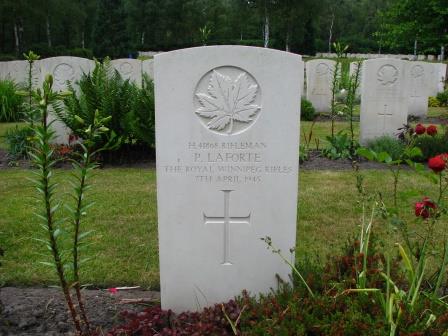
Grave of Philip Laforte. (Photo credit: Daria Valkenburg)

Philip LAFORTE, born in Lac du Bonnet, Manitoba, was serving with the Royal Winnipeg Rifles when he was killed on April 7, 1945 in The Netherlands, aged 33, as the Regiment crossed the Schipbeek, in order to establish a bridgehead as preparation for an assault on the city of Deventer by the 7th Canadian Brigade. You can read his story at https://onthewarmemorialtrail.com/2022/03/22/on-the-war-memorial-trail-remembering-ww2-soldier-philip-laforte/

Grave of Sanford Steven Saulis.  (Photo credit: Pieter Valkenburg)

Sanford Steven SAULIS, from Maliseet, New Brunswick, died of a brain hemorrhage in The Netherlands on August 10, 1945, aged 30, while serving with the 16th Field Company of the Royal Canadian Engineers. You can read his story at https://onthewarmemorialtrail.com/2023/02/27/on-the-war-memorial-trail-remembering-sanford-steven-saulis/

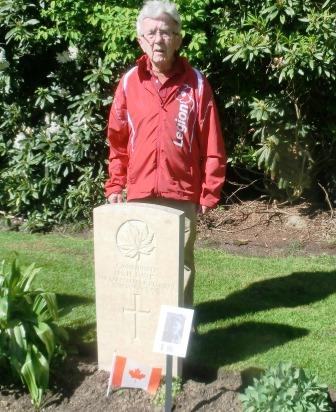
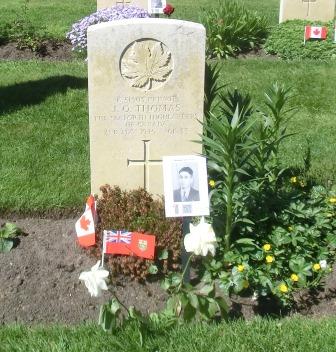
Grave of James ‘Jimmy’ Oliver Thomas. (Photo credit: Daria Valkenburg)

James ‘Jimmy’ Oliver THOMAS, born in St. Peters, Manitoba, died in Germany on May 2, 1945, aged 33, a few days after being liberated from the Stalag VII-A POW Camp in Moosburg, Germany. He had been taken prisoner of war on May 22, 1943, while serving with the Seaforth Highlanders of Canada, during the breaking of the Hitler Line. You can read his story at https://onthewarmemorialtrail.com/2024/02/18/on-the-war-memorial-trail-the-wwii-soldier-from-manitoba-who-died-shortly-after-being-liberated-from-stalag-vii-a/

After sending photos of the grave to Rodd Cooper, great-nephew of Jimmy Thomas, he wrote us to say “  I just wanted to express my infinite gratitude to you and your family on behalf of myself and my family for the work and the time you have invested in gathering the information not only for my resting family member but for the numerous others as well. 

The honour and respect you have brought and given to these men cannot be measured.  The gift that you have given my family and I is profound and we truly can’t thank you enough.  

Because of your work and dedication, my family and the future generations of my family, will be able to pay the respect to my Great Uncle Jimmy for his service and sacrifice by remembering him and telling his story.  

The gift you have given us is immeasurable.

On behalf of myself and the Thomas Family, Thank You….” 

We were immeasurably touched by his kind words. Pieter replied, saying that “…it’s important that we never forget the soldiers….and the families… who sacrificed so much for our ongoing freedom.  I’m grateful that the country of my birth continues to remember and honour their Allied liberators….” 

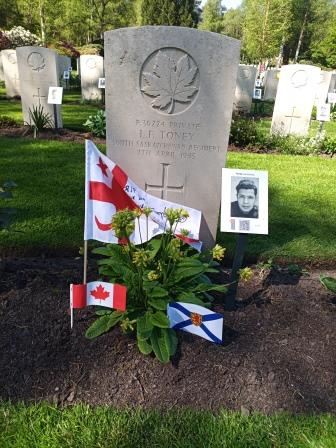
Grave of Leo Francis Toney. (Photo credit: Pieter Valkenburg)

Leo Francis TONEY, born in Wolfville, Nova Scotia, was serving with the South Saskatchewan Regiment, when he was killed on Saturday, April 7, 1945, aged 21, while trying to cross the Schipbeek in The Netherlands at  a bridgehead that had been formed at a weir on the border of the municipalities of Bathmen and Holten. You can read his story at https://onthewarmemorialtrail.com/2021/05/22/on-the-war-memorial-trail-remembering-ww2-soldier-leo-francis-toney/

After sending a photo of the grave to Della Maguire, niece of Leo Toney, she wrote to say “…thank you so much, I looked at that picture all day. I am so grateful…

Pieter holds onto the personalized Lnu flag from the Toney family at the grave of Leo Francis Toney. (Photo credit: Daria Valkenburg)

….All of the flags placed at graves were donated…

All of the flags placed at graves were donated.  Our thanks go to: 

  • Alan Waddell, Constituent Assistant, on behalf of Heath MacDonald, MP for Malpeque, for the Canadian flags.
  • Armel ‘Mel’ Lanteigne, President of the Caraquet Legion in New Brunswick for the New Brunswick flag.
  • Kyle Graham, Research Officer, Military Relations, Nova Scotia Intergovernmental Affairs, on behalf of Premier Tim Houston, Province of Nova Scotia, for the Nova Scotia flag.
  • Don Coutts on behalf of the Muttart and Coutts families in memory of Flight Sergeant Elmer Bagnall Muttart for the Ontario flag.
  • Wayne Ewasko, MLA for Lac Du Bonnet, Manitoba, Interim Leader of the Official Opposition, Province of Manitoba, for the Manitoba flag.
  • Della Maguire on behalf of the Toney/Smith Family in memory of Pte Leo Toney for the Lnu (Mi’kmaw) flag.
  • Conrad Saulis in memory of Sapper Sanford Steven Saulis, courtesy of Grand Chief Ron Tremblay, for the Wolastoqey Nation flag

Thank you to Rodd Cooper and Della Maguire for their heartfelt and kind words.  The comments we’ve received from families as we’ve shared photos showing how their loved ones were honoured during the commemoration events made all the hard work of visiting the cemeteries and placing flags worthwhile.

The 2025 Faces of Holten Exhibition concludes with Part 6, where the graves of a few of the many soldiers killed in The Netherlands and Germany will be featured as we continue with our 2025 European War Memorial Tour.

Pieter encourages readers with photos to come forward so that eventually all the known graves of Canadians buried in Holten will have a photo displayed by their grave. Email him at memorialtrail@gmail.com.

© Daria Valkenburg

….Want to follow our research?…

If you are reading this posting, but aren’t following our research, you are welcome to do so.  Our blog address: https://onthewarmemorialtrail.com/

4 countries, 6 weeks, 7,000 km – an unforgettable war memorial journey in Europe…. Daria’s book ‘No Soldier Buried Overseas Should Ever Be Forgotten‘ is available in print and e-book formats.  Net proceeds of book sales help support research costs and the cost of maintaining this blog. For more information see https://nosoldierforgotten.com/

Subscribe to our YouTube Channel: On The War Memorial Trail With Pieter Valkenburg: https://www.youtube.com/channel/UCJ591TyjSheOR-Cb_Gs_5Kw

Never miss a posting!  Subscribe below to have each new story from the war memorial trail delivered to your inbox.

On The War Memorial Trail….. The Successful Search For A Photo Of WWII Soldier Thomas Alfred Brown Left Us With A Mystery

January 25, 2024. Even when Pieter needs a break from extensive research, he still likes to test his detective skills. Last year he decided to help the Canadian War Cemetery in Groesbeek, The Netherlands find photos of a few soldiers for which research had already been done, but no photo had been found.  A relatively simple project, you might think – but although he has now nudged past 319 successful photo searches, we’ve learned that it isn’t. 

One of the soldiers whose photo search he undertook was that of Thomas ‘Tom’ Alfred BROWN of Altario, Alberta.  Born October 20, 1924, Thomas was the son of George Stuart and Alice Brown. (You can read Tom’s story here: https://www.facestograves.nl/LifeStories/BROWN%20Thomas%20Alfred-JLE-bio-EN.pdf )

….Tom lost his life during the Battle of Moyland Wood….

Thomas Alfred Brown Find a Grave

Grave of Thomas Alfred Brown at the Canadian War Cemetery in Groesbeek. (Photo source: http://www.findagrave.com)

While serving with the Royal Winnipeg Rifles, Tom lost his life on February 17, 1945 during the Battle of Moyland Wood in Germany. He was 20 years old. (See https://legionmagazine.com/clearing-moyland-wood/

Norman Victor Holgate BUCHANAN, whose photo search story was told last year, had lost his life one day earlier in the same battle, while also serving with the Royal Winnipeg Rifles.  (See https://onthewarmemorialtrail.com/2023/11/08/on-the-war-memorial-trail-a-monument-in-st-claude-led-to-a-photo-of-a-wwii-soldier/)

….The search for a photo of Tom began with a Letter To The Editor….

When no family could be readily found, Pieter submitted a Letter To The Editor in a newspaper covering the Altario area – the East Central Alberta Review – and his letter was published on April 27, 2023.

Letter to Editor ECA Review

The very same day that the newspaper was published, we received an email from Eleanor Kreiser, with an attached document, explaining that “…. I saw your request in the paper. This is the Brown info in the Pioneer Heritage history book. Book 2, 1981. My husband used to live in Altario. My husband’s mother and six siblings were also born in Altario….

Brown brothers, Altario 2 corrected by Pieter

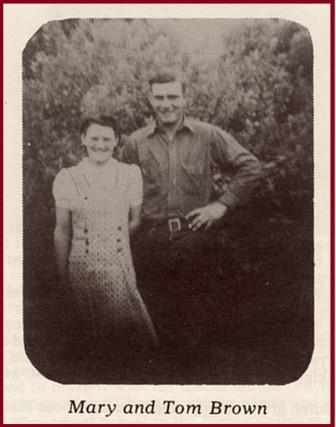
Tom Brown with his sister Mary.  (Photo source: Pioneer Heritage Book 2. Pioneer Heritage of Altario, Compeer, Kirriemuir and Burnbrae, Published by Wheatsheaf Women’s Institute, 1981)

The book excerpt included a photo of Tom and his sister Mary, along with a short writeup contributed by Mrs L. H. Walker.  “….Thomas Alfred Brown was born in Altario on November 20, 1924.  He took all of his schooling in Altario. After leaving school he worked for Bob Kewley and for Bert Caldwell.  Tom was a great lover of horses. One of the things I remember about him the most was his coming home at night on his horse, singing one of Wilf Carter’s songs….

The excerpt ended with a bit of family history.  “….Tom’s father died when Tom was still very young, and his step-father, Lester Walker, passed away in August of 1975.  Thomas has one sister, Mrs. Alice Mary Robbins (nee Brown) of Flatbush, and a half-sister, Mrs. Marion Stewart (nee Walker) of Ohaton….

…. Tom’s family provided photos and information….

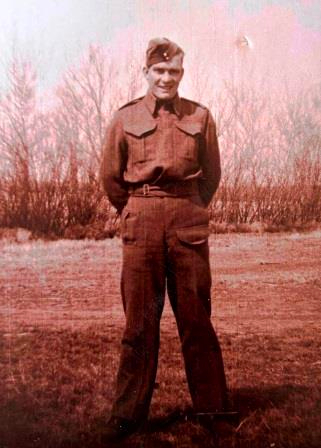
Pieter was next in contact with June Beier, whose mother was Tom’s sister Mary, and with Ken Stewart, whose grandmother was Tom’s mother.  Both provided more information and photos.

IMG-3254 Photo of Tom Brown from Ken Stewart

Thomas Alfred Brown.  (Photo credit: Courtesy of the Family of Thomas Alfred Brown)

…. Tom’s last letter was written two days before his death….

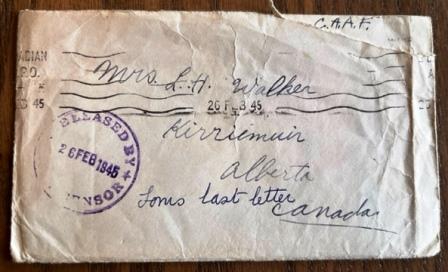
With the help of her granddaughter, Shaylyn Beier, June shared the last letter received from Tom, written on February 15, 1945, two days before he lost his life, and which arrived after his death.

Feb 15 1945 letter from Tom Brown ENVELOPE

Envelope poignantly marked as ‘Tom’s last letter’.  (Letter courtesy of the Family of Thomas Alfred Brown)

In the February 15, 1945 letter to his mother, Tom noted that he was in ‘D’ Company of the Royal Winnipeg Rifles.  “…I guess it is about time I wrote to you. I have been pretty busy in the last few days and so I did not get time to do any writing at all….”  Left unsaid was that Tom and his Regiment had been heavily involved in Operation Veritable in Germany, part of a pincer movement to cut into Germany in order for Allied troops to advance towards Berlin. The Regiment had just moved into Kleve, Germany.  (See https://en.wikipedia.org/wiki/Operation_Veritable)

Tom wrote that he had sent some money home in previous letters, and after asking about his mother’s health, assured her that he is “…nothing but the best and aim to stay that way…”  He explained that he had received a parcel from his aunt and advised that “…all I mostly need is writing paper and envelopes…” 

Sadly, Tom lost his life two days later, and was temporarily buried around Calcar, Germany before being reburied in the Canadian War Cemetery in Groesbeek, The Netherlands a year later.

A March 8, 1945 letter to Tom’s mother was written by Major Latimer Hugh DENISON, his commanding officer. “…Corporal Brown’s presence is missed by the entire company.  He was a fine and gallant soldier and you may well be proud of him, as we are, for the man’s part he has played in helping to win this war….

He went on to write “…please rest assured that you are not alone in your hour of trial – gallant comrades once known are never forgotten…” Major Denison lost his own life on March 30, 1945, during the battle for Emmerich, at the age of 24, and is also buried in Groesbeek.

…. A September 1947 letter left us with an unsolved mystery…

image_6487327(1) man at Tom Browns original gravestone in Groesbeek

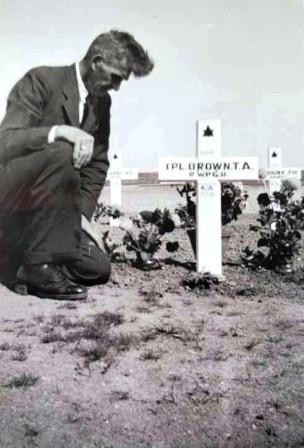
Man believed to be H. P. J. van Loon at Tom Brown’s original grave in Groesbeek. (Photo courtesy of the Family of Thomas Alfred Brown)

We thought this would be the end of Tom’s story, but there was another mystery, which up to now we have been unable to solve.  June shared another letter, written in September 1947 by an unidentified relative still in the Army, who signed his letter as Tom. He wrote that he had visited Tom Brown’s grave in Groesbeek.  Tom’s letter was written on the stationery of a schoolteacher (onderwijzer) from Groesbeek, H. P. J. van Loon, and he explained that Mr. Van Loon had taken photos of graves at the cemetery.

Ken Stewart had a photo of a man beside Tom Brown’s grave, and as the man was in a suit, not in a military uniform, it’s believed this is Mr. Van Loon.  When we asked Ken if he knew anything more, he said that “….My grandmother said Thomas stayed with a Dutch family in Holland when he had time off and was planning to marry one of the daughters when the war was over. So this may be the father of that family.  I do not know for sure…

We sent the letter and photo to friends who live in Groesbeek, in the hope that they might be able to find out more, but up to now, they too have been stymied.  If you recognize the man in the 1947 picture by Tom Brown’s grave, please let us know. 

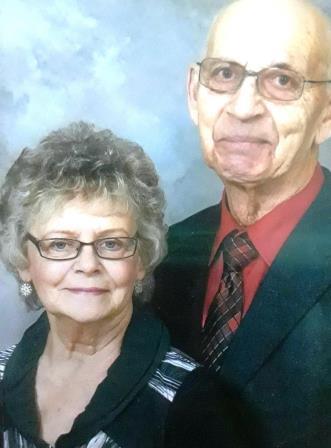
June and Edward Beier

June Beier with her husband Edward. (Photo credit: Courtesy of June Beier)

Thank you to Joyce Webster, Publisher of ECA Review, for publishing Pieter’s Letter to the Editor, and to the family of Thomas Brown for sending photos and information – June Beier, Shaylyn Beier, and Ken Stewart. Thank you to Eleanor Kreiser for sending the Brown family information from the Pioneer Heritage book.

Do you have photos or information to share? Email Pieter at memorialtrail@gmail.com, comment on the blog, or tweet to @researchmemori1.

© Daria Valkenburg

….Want to follow our research?….

If you are reading this posting, but aren’t following our research, you are welcome to do so.  Our blog address: https://onthewarmemorialtrail.com/

Front cover OnTheWarMememorialTrailinEurope4 countries, 6 weeks, 7,000 km – an unforgettable war memorial journey in Europe…. Daria’s book ‘No Soldier Buried Overseas Should Ever Be Forgotten‘ is available in print and e-book formats.  Net proceeds of book sales help support research costs and the cost of maintaining this blog. For more information see https://nosoldierforgotten.com/ 

You are also invited to subscribe to our YouTube Channel: On The War Memorial Trail With Pieter Valkenburg: https://www.youtube.com/channel/UCJ591TyjSheOR-Cb_Gs_5Kw

Never miss a posting!  Subscribe below to have each new story from the war memorial trail delivered to your inbox.
On The War Memorial Trail….. A Photo For WWI Soldier James Cairns

December 4, 2022. When Pieter began researching the names on the Cenotaph outside the Borden-Carleton Legion in 2015, he hoped to be able to put a face and story to each of the 48 names.  Over the years he was able to research each name, and we’ve told the story of each one, plus shared our visits made to the graves or memorials for many of them.

Unfortunately, up to now, photos for several have never been found.  The Cenotaph Wall of Remembrance in the Borden-Carleton Legion, which displays the photos of the men listed on the Cenotaph, has empty frames for those photos waiting to be found.

…The 7 year search for a photo of WWI soldier James Cairns…

20221130_194445 Empty Frame

Empty frame awaiting a photo of WWI soldier James Cairns.  (Photo credit: Kathy Henry)

One of those for which a photo was missing was James CAIRNS, born February 22, 1897 in Kinkora, the son of Thomas Cairns and Mary Jane MacDonald.  He later went to Manitoba to work, joining his brother Edward, a farmer, in Cartwright, Manitoba.

While living in Manitoba, WWI broke out, and James he enlisted in July 1916 with the 190th Battalion Manitoba Regiment (which later became what we know as the Royal Winnipeg Rifles). He was killed on August 9, 1918 in France during the Battle of Amiens, and is buried in Manitoba Cemetery in Caix, France.  We visited this cemetery in 2017. (See https://onthewarmemorialtrail.com/2017/09/30/the-search-for-manitoba-cemetery/)

CIMG8561 Pte James Cairns

The grave of James Cairns at Manitoba Cemetery in Caix, France. (Photo credit: Daria Valkenburg)

…Various media appeals were not successful…

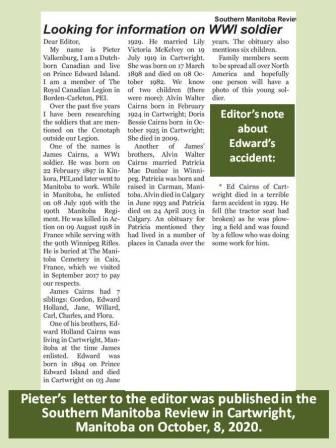
Inquiries and appeals for a photo were unsuccessful. Although James had 7 siblings, Pieter ran into one dead end after another.  On October 8, 2020, Vicki Wallace, editor of the Southern Manitoba Review in Cartwright, Manitoba, published Pieter’s letter to the editor.  (Unfortunately, this publication ceased publication at the end of 2021.)

Letter to the editor re James Cairns

While no photo of James Cairns resulted from the letter, Vicki Wallace did some research on Edward Cairns, the brother of James. Edward died on June 3, 1929 in a tragic farming accident, leaving behind a widow, Lily Victoria nee McKelvey, and several children, the youngest just 16 months old at the time of Edward’s death.

On November 11, 2021, Kevin Rollason of the Winnipeg Free Press put out an appeal for a photo at the end of an article about a very successful photo search for WWII soldier Edmond Coulombe, but we weren’t lucky twice.  (See https://onthewarmemorialtrail.com/2021/12/24/on-the-war-memorial-trail-the-successful-search-for-a-photo-of-ww2-soldier-edmond-coulombe/)

We even tried a YouTube video appeal. (See https://onthewarmemorialtrail.com/2020/12/17/the-search-for-a-photo-of-james-cairns-moves-to-youtube/)

…Success when the grandchildren of Edward Cairns sent a photo…

Then, with the help of Judie Klassen, family members of Edward’s son Alvin were found.  Sisters Kelly Slade and Shannon Cairns Zemp got in contact, and Shannon sent a photo of James and their grandfather Edward.  “…Our brother Patrick had the photo…” she explained.

Her father Alvin received it from a family member on a trip made to the Island with an 18 year old Shannon in 1990. “...My dad, Alvin Walter and my Mom, Patricia, were searching for members of the Cairns Family – which is how we have the picture that we have of James and Edward. I want to thank you Pieter for remembering James and I thank you for your hard work…

Coloured photo James and Edward Cairns

James Cairns (left) with his older brother Edward. (Photo courtesy of the Cairns Family.  Photo colourization: Pieter Valkenburg)

…10 photos are still to be found for the names on the Cenotaph outside the Borden-Carleton Legion….

The photo of James Cairns will soon be in that empty frame on the Legion wall, and Pieter hopes that more of the empty frames will be filled over the coming year. “…Unfortunately, photos for 8 from WWI and 2 from WWII have yet to be found….” he said.  Can YOU help with this photo wish list?

Names still without faces from WWI

  • Leigh Hunt CAMERON, born in Albany
  • James Lymon CAMERON, born in Victoria
  • William Galen CAMPBELL, born in Wellington
  • Bazil CORMIER, born in Tignish
  • Joseph Arthur DESROCHES, born in Miscouche   UPDATE: photo found
  • Charles LOWTHER, born in North Carleton
  • Arthur Clinton ROBINSON, born in Tryon
  • Harry ROBINSON, born in Augustine Cove UPDATE: photo found

Names still without faces from WWII

  • Leonard Stephen AVERY, born in Bedeque   UPDATE: photo found
  • Ernest Ramey GALLANT, born in Borden

A huge thank you goes out to Shannon Cairns Zemp for providing a photo on behalf of the family, to Vicki Wallace for publishing the letter to the editor in the Southern Manitoba Review and researching what happened to Edward Cairns, and to Judie Klassen for researching Edward’s descendants. If you can help with the photo search request or have a story to tell, please let Pieter know. Email him at memorialtrail@gmail.com, or comment on the blog.   

© Daria Valkenburg

…Want to follow our research?….

If you are reading this posting, but aren’t following our research, you are welcome to do so.  Our blog address: https://onthewarmemorialtrail.com/

Front cover OnTheWarMememorialTrailinEurope4 countries, 6 weeks, 7,000 km – an unforgettable war memorial journey in Europe…. Daria’s book ‘No Soldier Buried Overseas Should Ever Be Forgotten‘ is available in print and e-book formats.  Net proceeds of book sales help support research costs and the cost of maintaining this blog. For more information on the book, please see https://nosoldierforgotten.com/

You are also invited to subscribe to our YouTube Channel: On The War Memorial Trail With Pieter Valkenburg: https://www.youtube.com/channel/UCJ591TyjSheOR-Cb_Gs_5Kw

Never miss a posting!  Subscribe below to have each new story from the war memorial trail delivered to your inbox.

On The War Memorial Trail….. Remembering WWII Soldier Philip Laforte

March 22, 2022. Sometimes a story takes you in directions that you never expected.  After the success in finding a photo of WWII soldier Edmond COULOMBE of Manitoba (See https://onthewarmemorialtrail.com/2021/12/24/on-the-war-memorial-trail-the-successful-search-for-a-photo-of-ww2-soldier-edmond-coulombe/), we hoped to have similar success with a photo wish list of WW2 soldiers from Manitoba who are buried in the Canadian War Cemetery in Holten, The Netherlands.

One soldier, who came from an area near where Edmond Coloumbe lived, was Philip LAFORTE.  With the help Philip’s niece Michelle Wazny, Diane Dube of the Winnipeg River Heritage Museum in St.-Georges, and genealogy researcher Judie Klassen, a photo was found, as was information on his Métis roots.

Philip was born September 12, 1911 in Lac du Bonnet, Manitoba, the son of Napoleon and Rosalie (nee Mainville) LaForte.  His mother’s Métis status meant that Philip too was Métis.

A trapper before he enlisted in Winnipeg with the Royal Winnipeg Rifles on July 31, 1941, Philip was married to Eva Jane (nee Johnston) and they had one son, Felix Joseph.  Another son, Donald Philip, was born shortly after he enlisted. Philip had previously been married to Sarah Louise Bird, who had died of tuberculosis.  Their son Leon was brought up by his grandparents, Mr and Mrs Joseph Daniels, of Sagkeeng First Nation.

Philip Laforte 3

Philip Laforte. (Photo courtesy of the Laforte family)

Philip’s service file noted that he was fluent in English, French, and Cree, and had trapped furs for the Hudson’s Bay Company, and worked as a bush labourer for Brown and Rutherford.

As a new recruit, Philip was sent to Fort William (now part of Thunder Bay), Ontario for two months of basic training.  Then he was attached to the Infantry Advanced Training Centre (Rifle) in Winnipeg, Manitoba..

On December 12, 1941, he became part of the 3rd Division Infantry Reinforcement Unit (DIRU) as a Rifleman, and was on his way to the United Kingdom, arriving on December 23, 1941.

On May 28, 1942, Philip was transferred to the Royal Winnipeg Rifles.  Still in the United Kingdom, he was taken on strength to the #1 Educational Company on November 1, 1942, and stayed in that unit until February 1943, when he was transferred to the #2 Canadian Infantry Reinforcement Unit (CIRU).

…. Philip is involved in the liberation of North-West Europe….

On April 12, 1943, Philip was reassigned to the Royal Winnipeg Rifles. On September 1, 1944 he arrived in France as reinforcement for troops lost during the Battle of Caen and the Battle of Falaise Gap.

He participated in the fight to clear the Scheldt Estuary to allow the re-opening of the Antwerp harbour. (See https://en.wikipedia.org/wiki/Battle_of_the_Scheldt) By January 1945 the Royal Winnipeg Rifles were in The Netherlands, and spent the New Year in ‘s-Hertogenbosch.

On February 1, 1945, the war diary recorded that the Regiment was informed of the part that the men “…would play in Operation Veritable…” This would take them into Germany. (See https://en.wikipedia.org/wiki/Operation_Veritable)  The Regiment arrived in Millingen, Germany on February 9, 1945.

By February 16, 1945 the Regiment was based in Essen, Germany, as they cleared German positions in flooded areas of the Rhine flood plain and the Reichswald forest, which is close to the Dutch-German border.

On March 11, 1945 the Regiment began moving back towards ‘s-Hertogenbosch, The Netherlands and the greater battle towards liberating the country.

A short video produced by the Canadian Army gives an idea of what troops faced in this period:

….The battle for Deventer involved crossing the Schipbeek ….

CIMG9306 Sep 25 2017 map of Deventer liberation from Edwin

Movement of Canadian troops towards Deventer.  Note that all first had to cross the Schipbeek.  (Map provided by Edwin van der Wolf)

On April 7, 1945 the Royal Winnipeg Rifles were ordered to cross the Schipbeek and establish a bridgehead as preparation for an assault on the city of Deventer by the 7th Canadian Brigade.

Crossing the Schipbeek was vital to the success of the bridge operation, not an easy feat as the Bridge was strongly defended by the Germans.

Lt Donald Charles MACKENZIE of Springhill, Nova Scotia received a Military Cross for his actions in ensuring the bridgehead was secured.  The citation explained how the Regiment was surrounded by enemy troops and soldiers faced intense fire. (See https://onthewarmemorialtrail.com/2022/01/23/on-the-war-memorial-trail-the-ww2-soldier-from-springhill-who-received-a-memorial-cross/)

Unfortunately, one of the casualties during the events of April 7, 1945 was Philip Laforte, and it seems most likely that he lost his life during the crossing of the Schipbeek.

Along with 45 other soldiers, he was temporarily buried beside an estate in Oxe, which had been the site of the murder of Dutch resistance fighters.

On April 6, 1945, just before the Schipbeek, Royal Winnipeg Rifles troops arrived at an estate in Oxe (Oxerhof). This had been taken over as Gestapo Headquarters, but had been hastily vacated ahead of the Regiment.

To the horror of the Canadian soldier who first approached, he found the graves of ten Dutch resistance fighters, who had been shot just before the Gestapo withdrew. (For more information on De Oxerhof and the murder of 10 Dutch prisoners, see https://www.tracesofwar.com/articles/5041/Estate-The-Oxerhof-in-Deventer.htm and https://www.tracesofwar.com/sights/56914/Memorial-Execution-5-April-1945.htm)

In January 1946, all 46 Canadian soldiers were reburied in the Canadian War Cemetery in Holten, The Netherlands.

laforte, philip gravestone

Grave of Philip Laforte in the Canadian War Cemetery in Holten, The Netherlands. (Photo courtesy of the Information Centre Canadian Cemetery Holten)

…The Colmschate Memorial commemorates 46 Canadians….

On April 8, 2015, a memorial was placed in Colmschate to commemorate the 46 Canadians who had been temporarily buried on the Oxe estate.

Gedenkbord Colmschate, 8-04-2015

Memorial in Colmschate, commemorating 46 Canadians, including Philip Laforte. (Photo courtesy of Edwin van der Wolf)

Memorial plaque placed Apr 8 2015 Colmschate

Text of Memorial in Colmschate, commemorating 46 Canadians, including Philip Laforte.  (Photo courtesy of Edwin van der Wolf)

Translation of the Dutch text was prepared by Pieter Valkenburg:

They Gave Their Lives

The liberation of Colmschate

During their advance from the Achterhoek, the Royal Winnipeg Rifles, the Regina Rifle Regiment, and the Canadian Scottish Regiment, led by Brigadier General T G Gibson reached the neighborhood of Oxe on Friday April 6, 1945. Next to the house on the Oxe estate (Oxerhof), the liberators discovered the bodies of ten Dutchmen who had been murdered in cold blood by the occupiers the day before. The Canadians passed the Schipbeek via a quickly struck bailey bridge, which replaced the destroyed Swormertoren Bridge.

Despite heavy German resistance, they continued north. Many farms went up in flames and houses were badly damaged. Many families sought refuge in the already liberated Oxe. Some residents lost their lives.

On April 8, 1945, the liberators captured (a small part of) the Snippeling, Colmschate, and the Bannink. Via the Vijfhoek they reached the Crödden Bridge over the Overijssels Canal. Schalkhaar and Deventer were then liberated and with the help of the Queen’s Own Rifles the remaining part of the Snippeling.

Many Canadians lost their lives in the battle in this area. In April 1945, the bodies of 46 fallen Canadians were buried in a temporary resting place opposite the Oxerhof house. In January 1946 they were transferred to the Canadian Cemetery in Holten (Plot I and II).

…..Philip is listed on the National Métis Veterans Memorial Monument….

Judie Klassen let us know that Philip is listed on the National Métis Veterans Memorial Monument just outside of Batoche, Saskatchewan.  (See https://www.metismuseum.ca/metisveteransmonument/)

His name can be found on Column 4 on the inside.  Row 58 https://www.metismuseum.ca/metisveteransmonument/column.php?c=4&s=i

Judie also noted that Philip and his father Napoleon (a WW1 veteran) are listed on the Sagkeeng First Nation website (see http://www.sagkeeng.ca/our-veterans/) and on their memorial in Fort Alexander (see http://www.mhs.mb.ca/docs/sites/sagkeengwarmemorial.shtml)

Thank you to Philip’s niece Michelle Wazny, Diane Dube of the Winnipeg River Heritage Museum in St.-Georges, and genealogy researcher Judie Klassen. It can be a challenge to find family and photos, and we appreciate the help we receive!  If you have photos or information to share, please let Pieter know. Email him at memorialtrail@gmail.com, or comment on the blog.

© Daria Valkenburg

…Want to follow our research?….

If you are reading this posting, but aren’t following the blog, you are welcome to do so.  Our blog address: https://onthewarmemorialtrail.com/

Front cover OnTheWarMememorialTrailinEurope

goodreads-badge-add-plus-71eae69ca0307d077df66a58ec0688984 countries, 6 weeks, 7,000 km – an unforgettable war memorial journey in Europe…. Daria’s book ‘No Soldier Buried Overseas Should Ever Be Forgotten‘ is available in print and e-book formats.  Net proceeds of book sales help support research costs and the cost of maintaining this blog. For more information see https://nosoldierforgotten.com/

You are also invited to subscribe to our YouTube Channel:On The War Memorial Trail With Pieter Valkenburg: https://www.youtube.com/channel/UCJ591TyjSheOR-Cb_Gs_5Kw.

Never miss a posting!  Subscribe below to have each new story from the war memorial trail delivered to your inbox.
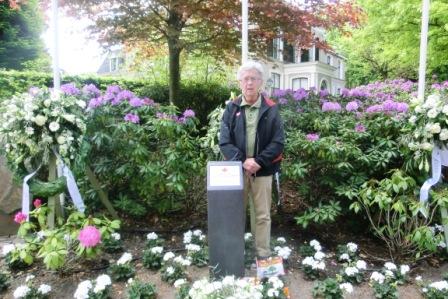
On The War Memorial Trail….. The Loppersum Memorial Honours 7 Royal Winnipeg Rifles Soldiers

February 23, 2022. One of the wonderful things about this blog is hearing from readers and receiving additional information on stories that have been previously posted.  After a YouTube video in which a photo of Donald Charles MACKENZIE of Springhill, Nova Scotia was included, we received an email from Bruce MacEachern.

The video ‘In Remembrance’ that Bruce referred to was done by Pieter to thank those who contributed photos and stories of WW2 soldiers who are buried overseas in 2021.  You can watch it here:

Bruce wrote us that “…Lt Donald MacKenzie is my uncle on my mother’s side. Uncle Donald’s wife, my Aunt Mary, was my Mom’s sister. I was very glad to see the picture of Uncle Donald in your video. I sent a copy of the picture, and video link, to Johan Schansker, who raised a memorial in his town of Loppersum, The Netherlands, to Uncle Donald and 6 other Canadians who fell, fighting to liberate his village….

….The Loppersum Memorial….

D C MacKenzie 1 Loppersum memorial

The Loppersum Memorial.  (Photo submitted by Bruce MacEachern)


D C MacKenzie 3 Loppersum memorial with 7 names

The 7 names listed on the Loppersum Memorial.  (Photo submitted by Bruce MacEachern)

The Loppersum memorial, unveiled in May 2020, honours 7 soldiers from the Royal Winnipeg Rifles who were initially buried in the General Cemetery in Loppersum in April 1945.  All 7 were subsequently reburied in the Canadian War Cemetery in Holten.

Lt Donald MacKenzie and Rifleman Willie DANIELS, both of whose stories have been told on this blog, are 2 of these 7 men.  Both served with the Royal Winnipeg Rifles and lost their lives on April 22, 1945 near Appingedam, The Netherlands at the very beginning of the Battle of the Delfzijl Pocket. (For more information on the Battle of the Delfzijl Pocket, see https://www.canadiansoldiers.com/history/battlehonours/northwesteurope/delfzijlpocket.htm)

….Newspaper article about the Loppersum Memorial…..

Bruce sent us a newspaper article, in Dutch, about the unveiling of the moment in May 2020.  The article is included below in Dutch, along with an English translation provided by Pieter.

D C MacKenzie 2 Loppersum newspaper article

Article about the Loppersum Memorial.  (Article submitted by Bruce MacEachern)

Translation of Dutch newspaper article by Pieter Valkenburg:

Canadian Monument Unveiled

On Monday a memorial was unveiled for seven Canadian soldiers who were temporarily buried in the General Cemetery in Loppersum.

On behalf of the historical society, Johan Schansker took the initiative for the monument. 

These 7 Canadians gave their lives for our freedom.  One was killed during the battle to liberate the village, the others were killed in the surrounding area.

With this monument we want to honour their memories, according to Schansker.

The monument is a maple leaf made of weathering steel, on top of which is attached a stainless steel plate with the stylized maple leaf of the Canadian flag,  The names of the seven soldiers from the Royal Winnipeg Rifles have been engraved on this plate. (For a description of weathering steel, see https://en.wikipedia.org/wiki/Weathering_steel)

The picture shows the unveiling of the monument by Johan Schansker, assisted by his son Tijs.

The memorial is a wonderful tribute.  Kudos to Johan Schansker for initiating it.

Bruce noted that “….My family and friends very much appreciate the efforts of yourself, Johan and others in remembering our Canadian soldiers. Thank You so much…

…Missed the postings of two soldiers listed on the Loppersum Memorial?…

…The other 5 names on the Loppersum Memorial…

Here are the names of the other 5 men from the Royal Winnipeg Rifles that are listed on the Loppersum Memorial….

  • Rifleman Raymond Arthur HEAMAN, son of Jerry and Ellen E. Heaman, of Hargrave, Manitoba. Died April 22, 1945, age 27.
  • Rifleman William James ‘Jimmy’ Sutherland HOLE, grandson of William and Eva Alice Hole, of St. James, Manitoba.  Died April 22, 1945, age 18. 
  • Rifleman Anton Michael SALMI, son of Jacob and Maria Salmi, of Nolalu, Ontario. Died April 21, 1945, age 31.
  • Lt Cyril Douglas SHARMAN, son of Henry and Gertrude Sharman, of St. Vital, Manitoba; husband of Ada M. Sharman, of Winnipeg, Manitoba. Died April 23, 1945, age 33. 
  • Rifleman Francis William WELBURN, son of Charles and Winnifred Welburn, of Winnipegosis, Manitoba. Died April 20, 1945, age 20.

Thank you to Bruce MacEachern for letting us know about the Loppersum Memorial.   Do you have photos or stories to share?  Email Pieter at memorialtrail@gmail.com, comment on the blog, or tweet to @researchmemori1.

© Daria Valkenburg

…Want to follow our research?….

If you are reading this posting, but aren’t following the blog, you are welcome to do so. Our blog address: https://onthewarmemorialtrail.com/

Front cover OnTheWarMememorialTrailinEurope4 countries, 6 weeks, 7,000 km – an unforgettable war memorial journey in Europe…. Daria’s book ‘No Soldier Buried Overseas Should Ever Be Forgotten‘ is available in print and e-book formats.  Net proceeds of book sales help support research costs and the cost of maintaining this blog. For more information see https://nosoldierforgotten.com/ 

You are also invited to subscribe to our YouTube Channel: On The War Memorial Trail With Pieter Valkenburg: https://www.youtube.com/channel/UCJ591TyjSheOR-Cb_Gs_5Kw.

Never miss a posting!  Subscribe below to have each new story from the war memorial trail delivered to your inbox.