On The War Memorial Trail….. Paying Our Respects To Spitfire Pilot Dusty Millar At Uden War Cemetery

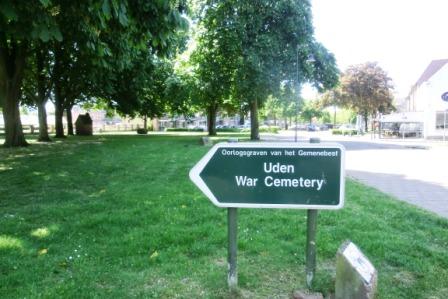
Sign directing us to Uden War Cemetery. (Photo credit: Daria Valkenburg)

October 29, 2025. While in Europe this spring for the 80th Anniversary of Liberation Commemoration events, we visited 14 cemeteries to place flags at the graves of 383 soldiers that Pieter has researched since 2014, with the stories of many of these soldiers previously told on this blog. 

For the first part of our trip, we were based in Holten. All too soon, it was time to slowly make our way towards Zaltbommel for a short stay there to visit family before going on to Belgium.  On the way to Zaltbommel, we visited Uden War Cemetery, where George Glenn ‘Dusty’ MILLAR, of Winnipeg, Manitoba, is buried.

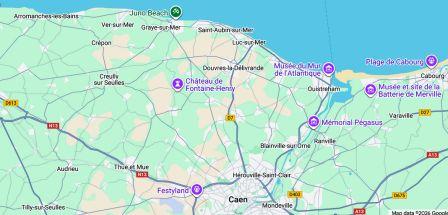
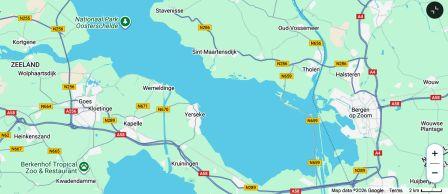
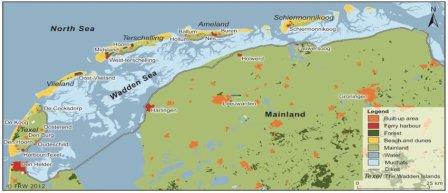
Map showing location of Uden, The Netherlands. (Map source: http://www.gosur.com)

… Pilot Dusty Millar’s spitfire ran out of fuel and crashed…

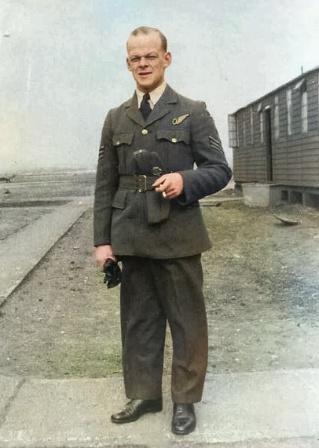
‘Dusty’ was killed on September 28, 1944 while flying a Spitfire Mark IX on patrol with his squadron over Nijmegen, The Netherlands. After he reported on his radio that the plane was low in fuel, it crashed southeast of Weibosch near Schijndel, in the Dutch province of Noord-BrabantYou can read his story at https://onthewarmemorialtrail.com/2023/01/25/on-the-war-memorial-trail-the-wwii-pilot-whose-spitfire-ran-out-of-fuel/

… Uden War Cemetery was behind a church and in a residential area…

Pieter at the entrance to Uden War Cemetery. (Photo credit: Daria Valkenburg)

We initially had difficulty finding the cemetery once we arrived in Uden, as the car’s GPS led us on a merry dance and we were both frustrated by the time we finally found it.  We later learned that there was a direct route from the highway, with signs indicating where the cemetery was located, but somehow that option never registered with whoever designed the GPS maps!

The cemetery itself was located behind a church and in a residential area.  We expected it to be a small cemetery, and so were surprised to find that there are 437 soldiers and 259 airmen buried here.  According to the cemetery information, the airmen “….lost their lives in strategic bombing operations or in support of land forces…

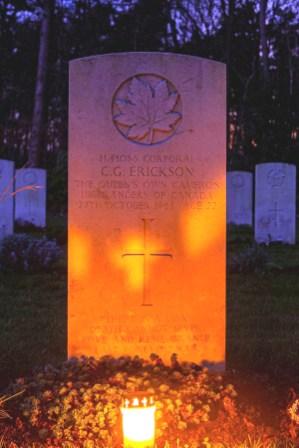
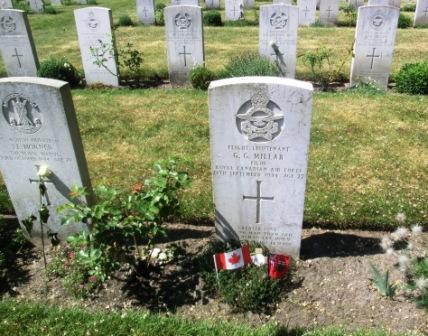
Pieter placed flags of Canada and Manitoba at Dusty Millar’s grave in Uden War Cemetery.  (Photo credit: Daria Valkenburg)

….53 Canadians are buried in Uden…

The cemetery register at Uden War Cemetery. (Photo credit: Daria Valkenburg)

Since this was a war cemetery, there was a visitors’ book located in the cemetery register box, in which I wrote that we paid our respects at Dusty’s grave and that he was a spitfire pilot from Manitoba.

We wrote that we visited Dusty Millar’s grave in the visitors’ book.  (Photo credit: Daria Valkenburg)

We thought that there would be more Canadians than Dusty buried here, so Pieter brought a few extra Canadian flags, but it turned out that there are 53 Canadians buried in Uden…. and we didn’t have enough flags. 

….A cafe was within walking distance of the cemetery…

I’m never without a camera!  (Photo credit: Pieter Valkenburg)

One of the advantages of visiting a war cemetery in a residential area is that there is more than a cemetery!  As we walked from the cemetery back towards the car, Pieter noticed a cafe within walking distance, so we went there, thinking to have something to drink and a much needed rest.  It was a Turkish bakery and cafe called Nfes.  We happily sat down and ordered red lentil soup (linzensoep) for lunch. The soup was delicious, the cafe an oasis of relaxation, and the service was very friendly…..just the break we needed before going on to Zaltbommel.

The flags placed at Dusty Millar’s grave were donated.  Our thanks go to: 

  • Alan Waddell, Constituent Assistant, on behalf of Heath MacDonald, MP for Malpeque, for the Canadian flag.
  • Brad Robertson, Chief of Protocol, Government of Manitoba, on behalf of Wab Kinew, Premier of Manitoba, for the Manitoba flag. 

Our adventures continue as we share the highlights of our adventures on the 2025 European War Memorial Tour. Coming up on our journey of remembrance is a visit to Rhenen General Cemetery.

If you have a story or photo to share, please contact Pieter at memorialtrail@gmail.com or comment on the blog. 

© Daria Valkenburg

….Want to follow our research?…

If you are reading this posting, but aren’t following our research, you are welcome to do so.  Our blog address: https://onthewarmemorialtrail.com/
4 countries, 6 weeks, 7,000 km – an unforgettable war memorial journey in Europe…. Daria’s book ‘No Soldier Buried Overseas Should Ever Be Forgotten‘ is available in print and e-book formats.  Net proceeds of book sales help support research costs and the cost of maintaining this blog. For more information see https://nosoldierforgotten.com/

Subscribe to our YouTube Channel: On The War Memorial Trail With Pieter Valkenburg: https://www.youtube.com/channel/UCJ591TyjSheOR-Cb_Gs_5Kw

Never miss a posting!  Subscribe below to have each new story from the war memorial trail delivered to your inbox.
 

On The War Memorial Trail…. Remembrance Week 2024 –Remembering Those Who Served In The RCAF During WWII

Remembrance_Day_2024_3840x2160

November 7, 2024.  As we reflect on the service and sacrifices made by so many who have served, both during conflicts and in peacetime, I took a look back at previous stories told over the years.  2024 commemorates 100 years of service for the Royal Canadian Air Force (RCAF) as a distinct military element, and so it seemed appropriate to dedicate this posting to stories previously told of those who served in the RCAF during WWII. 

…The Air Force Heritage Park in Summerside has a commemorative stone honouring Flight Officer Joe McIver….

IMG_20190807_101837076 Entrance to Air Force Heritage Park Summerside

Entrance to Air Force Heritage Park in Summerside. (Photo credit: Daria Valkenburg)

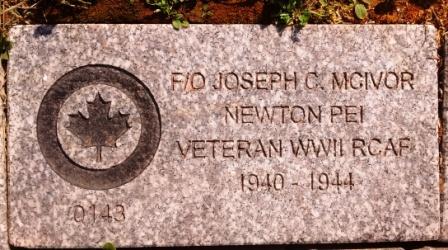
Several years ago we visited the Air Force Heritage Park in Summerside to look at the commemorative stone honouring Flight Officer Joseph ‘Joe’ Charles MCIVER of Kinkora, Prince Edward Island.  Joe was the navigator aboard B24 Liberator MkVIII EV895 on November 18, 1944, when it went down near the Arctic Circle while on anti-submarine patrol looking for a suspected U-boat off Gardskagi, Iceland.  There were no survivors.

You can read his story at:

IMG_20190807_101038750 McIver Commemorative Stone Summerside

Commemorative Stone at Air Force Heritage Park, Summerside, Prince Edward Island. (Photo credit: Pieter Valkenburg)

 … Pilot Elmer Muttart saved his crew and the Dutch village of Wons but sacrificed his own life to do so ….

The very first airman whose story was researched by Pieter was that of Elmer Bagnall MUTTART of Cape Traverse, Prince Edward Island, whose name is listed on the Cenotaph outside the Borden-Carleton Legion.  Elmer was the pilot aboard Halifax L9561 when it was shot twice by German night fighters on October 12, 1941, while the plane was on its way to a bombing raid on Bremen, Germany. 

After ordering the crew to bail out, Elmer managed to steer the burning plane away from the Dutch village of Wons, in the province of Friesland, before it crashed in a farmer’s field, just outside the village. He was the only casualty and is buried in Harlingen General Cemetery in The Netherlands.  The rest of the crew spent the war years in prisoner of war camps before being liberated. On October 12, 2019, a memorial panel was placed near the crash site in Wons to honour Elmer and his crew, an emotional journey for all of us who attended.

You can read his story here:

 … Pilot Hubert Hall was a prisoner of war after his plane was shot down in 1942 ….

John ‘Hubert’ HALL of Summerside, Prince Edward Island, was the pilot aboard Wellington Z1203, which crashed in The Netherlands near Mijdrecht on the night of March 28/29, 1942.  Hubert spent the remainder of the war years as a prisoner of war in POW camp Stalag Luft III, located in present-day Żagań, Poland, before returning home to Canada.

You can read his story at:

… Navigator Bunky FitzGerald is in an unmarked grave after Halifax W1175 crashed off the Dutch coast….

Rowan Charles ‘Bunky’ FITZGERALD, of Charlottetown, Prince Edward Island, was the navigator aboard Halifax W1175 of the 405th Vancouver Squadron RCAF when it was hit by shellfire (flak) as the plane was returning from Bremen, Germany on the morning of June 28, 1942. 

The plane crashed into a sandbank in the Wadden Sea, off the Dutch coast between the Island of Texel and the mainland, 15.5 km from Harlingen, in the province of Friesland.  There were no survivors. Only one crew member’s body was identified, and was buried in Harlingen General Cemetery in The Netherlands. His grave is between 3 unknown graves, one of which may just contain the remains of Bunky FitzGerald. 

You can read his story at:

… Pilot Lorne MacFarlane survived all his flights and returned home…

Pilot Lorne MACFARLANE, of Fernwood, Prince Edward Island, successfully flew 40 missions overseas and was then assigned to fly dignitaries, mail, and personnel between England and the front lines until the war ended.  After returning safely back to Canada, he was the Officer In Charge at RCAF No 1 Radio and Navigation School in Summerside, Prince Edward Island.

You can read his story at:

… Wireless operator Bob Dickie almost made it safely back to England…

Robert ‘Bob’ James DICKIE, of Carlton (now Borden-Carleton), Prince Edward Island, was the wireless operator aboard Lancaster JB312 on February 21, 1944 when it collided with another plane during a bombing sortie in Stuttgart, Germany.  Although badly damaged, the plane was able make it back to England, but then crashed as it approached the runway. There were no survivors. Bob is buried at Cambridge City Cemetery in England.

You can read his story at:

… Pilot Leonard Unwin’s plane crashed on Christmas Eve…

Pilot Leonard Arthur UNWIN, of Windsor, Ontario, was a flying instructor in Summerside, Prince Edward Island and Moncton, New Brunswick, before going overseas in May 1943.  On December 24, 1944, he left from his base in Belgium, one of the pilots in a section of 4 Typhoon planes on an armed reconnaissance in the Utrecht area in The Netherlands. While attacking a convoy of three German trucks in Woudenberg, the plane’s tailpiece broke off, the plane destabilized, and crashed. He’s buried in Woudenberg Municipal Cemetery in The Netherlands.

You can read his story at:

… Flight student Ralph McCutcheon lost his life in a training accident…

Flight student Ralph Gordon MCCUTCHEON, of Toronto, Ontario, but who was born in Buffalo, New York, USA, lost his life in a tragic accident that happened during his training at the No. 9 Service Flying Training School RCAF in Summerside, Prince Edward Island on the morning of June 11, 1942.  While training in a Harvard MK2 plane, it crashed in a farm field in North Tryon, Prince Edward Island.

You can read his story at:

… Gunner William Andrew Hood was aboard the last flight of Halifax JD215…

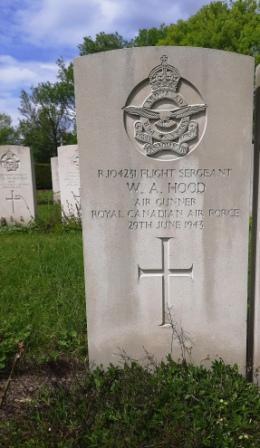
William Andrew HOOD, of Little Bras D’or, Cape Breton Island, Nova Scotia, was the mid-upper gunner aboard Halifax JD215 when it was shot down over The Netherlands on June 29, 1943.  None of the crew survived. He’s buried in Eindhoven General Cemetery in Eindhoven, The Netherlands.

You can read his story at:

… Navigator Arnold Hupman was aboard Lancaster X KB728 VR-V when it exploded over Arnhem, The Netherlands…

Navigator Arnold Freeman HUPMAN, of East Side of Ragged Island, Shelburne County, Nova Scotia, lost his life when the Lancaster bomber he was in, Lancaster X KB728 VR-V, was attacked by a German night fighter and exploded on the outskirts of Arnhem, The Netherlands as it was returning from a bombing operation against the synthetic oil plant at Sterkrade in Germany on the night of June 16 to 17, 1944. There were no survivors, and all 7 crew members are now buried in the Canadian War Cemetery in Groesbeek, The Netherlands.

You can read his story at:

… Pilot Douglas MacKenzie did not survive the last flight of Halifax DT630…

Jack ‘Douglas’ MACKENZIE,  of Winnipeg, Manitoba, was the pilot of Halifax DT630 (call sign VR-T), one of 8 heavy Halifax bombers sent on a night raid to Hamburg, Germany on February 3, 1943.  It was shot down by a night fighter over the province of Drenthe in The Netherlands. 4 men died, including Douglas, while 3 survived and spent the remainder of the war in prisoner of war camps.  He’s buried in Sleen General Cemetery in The Netherlands, along with the other 3 casualties of that flight.

You can read his story at:

… Pilot Dusty Millar’s spitfire ran out of fuel and crashed…

George Glenn ‘Dusty’ MILLAR, of Winnipeg, Manitoba, was killed on September 28, 1944 while flying a Spitfire Mark IX on patrol with his squadron over Nijmegen, The Netherlands. After Dusty reported on his radio that the plane was low in fuel, it crashed southeast of Weibosch near Schijndel, in the Dutch province of Noord-BrabantHe is buried in Uden War Cemetery in The Netherlands.

You can read his story at:

May we never forget the sacrifices made by these airmen, and their families, during WWII.  Unfortunately, while we live free in Canada, so many people today live in a war zone and are experiencing death, uncertainty, and insecurity in not knowing what will happen next.  Lest we forget is never more appropriate.

If you have a story to tell, please let Pieter know. You can email him at memorialtrail@gmail.com, comment on the blog, or send a tweet to @researchmemori1.  

© Daria Valkenburg

….Want to follow our research?….

If you are reading this posting, but aren’t following our research, you are welcome to do so.  Our blog address: https://onthewarmemorialtrail.com/

Front cover OnTheWarMememorialTrailinEurope4 countries, 6 weeks, 7,000 km – an unforgettable war memorial journey in Europe…. Daria’s book ‘No Soldier Buried Overseas Should Ever Be Forgotten‘ is available in print and e-book formats.  Net proceeds of book sales help support research costs and the cost of maintaining this blog. For more information see https://nosoldierforgotten.com/ 

You are also invited to subscribe to our YouTube Channel: On The War Memorial Trail With Pieter Valkenburg: https://www.youtube.com/channel/UCJ591TyjSheOR-Cb_Gs_5Kw

Never miss a posting!  Subscribe below to have each new story from the war memorial trail delivered to your inbox.

On The War Memorial Trail… An Island Airman In Stalag Luft III Part 2: Escape From The POW Camp

October 30, 2023. In Part 1, Pieter’s research revealed how a small postcard-sized letter, written in September 1942 from POW camp Stalag Luft III, impacted two families from Prince Edward Island. (See https://onthewarmemorialtrail.com/2023/10/23/on-the-war-memorial-trail-an-island-airman-in-stalag-luft-iii-part-1-2-families-connected-by-1-letter-from-a-pow-camp/)

The letter was found by Don Coutts, nephew of WWII pilot Elmer Bagnall MUTTART of Cape Traverse, who lost his life on October 12, 1941.  It was written by John ‘Hubert’ HALL of Summerside, the pilot aboard Wellington Z1203, which crashed in The Netherlands near Mijdrecht on the night of March 28/29, 1942. 

The camp was near the town of Sagan, Lower Silesia, in what was then Nazi Germany (but now Żagań, Poland), 160 kilometres (100 miles) south-east of Berlin.  The movie ‘The Great Escape’ was based on an incident that happened in this camp in 1944. (See https://en.wikipedia.org/wiki/Stalag_Luft_III)

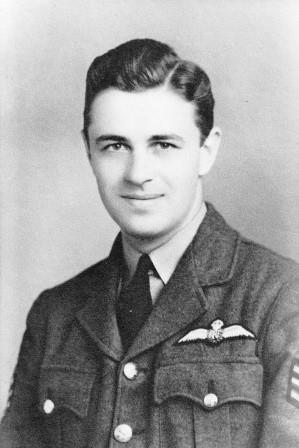
CIMG6475 Hubert Hall with mustache cropped and sharpened

John ‘Hubert’ Hall. (Photo courtesy of the Hall Family)

After meeting Hubert’s son, Robert ‘Bob’ Hall, and his wife Joanne Sheen, we came away with a wealth of information about Hubert, who sadly died young, at the age of 39.

CIMG6521 Oct 14 2023 Daria with Joanne Sheen & Bob Hall

Left to right: Joanne Sheen, Bob Hall, Daria Valkenburg (Photo credit: Pieter Valkenburg)

Now, in Part 2, more on Hubert’s story and his long march to freedom after leaving Stalag Luft III…..

Hubert was born January 4, 1915 in Summerside, Prince Edward Island, the son of Franklin and Marion (nee Howatt) Hall.  As a child, he and his brother Paddy went with their parents to Western Canada, and he attended school in Camrose, Alberta. Unfortunately, the family’s hope for a better economic future was disrupted by the Depression, and Mrs Hall returned to the Island with her sons.  Then, after WWII began, both sons enlisted in the RCAF.

Hubert enlisted at the RCAF Recruiting Centre in Moncton on June 26, 1940.  He took his initial flight training at No. 11 Elementary Flying Training School (EFTS) RCAF Station Cap de la Madeleine, in Trois-Rivières, Quebec.  He received primary pilot training, including solo flying of a basic training aircraft, and graduated on December 9, 1940.

In December 1940, he was sent to No. 2 Service Flying Training School (SFTS) RCAF Station Uplands in Ottawa, Ontario for continued pilot training on an advanced single or multi engine training aircraft.

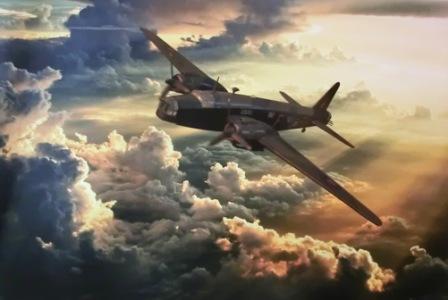
CIMG6471 Print of Wellington bomber

Print of a Wellington bomber displayed in Bob Hall’s home office.  (Photo credit: D Valkenburg)

After receiving his wings, he left Canada for the United Kingdom and by May 1941 was training on a Wellington bomber at No. 12 Operational Training Unit (OTU) at RAF Benson, England.  

On June 19, 1941, Hubert began flying while attached to 142 Squadron of the RAF.  He was second pilot for 10 operations, and then pilot for 7 operations.  Wellington Z1203 turned out to be his 7th and final operation…..

…The air crew aboard the last flight of Wellington Z1203….

  • Pilot – Pilot Officer John ‘Hubert’ HALL, of the RCAF
  • Second Pilot – Flight Sgt Lawrence Hugh HOUGHTON, of the RAF
  • Navigator – Flight Sgt John Edward HARRITT, of the RAF
  • Wireless Operator/Air Gunner – Flight Sgt Arthur Richard TIDDER, of the RAF
  • Front Gunner – Sgt Geoffrey Peter WADSWORTH, of the RAF
  • Rear Gunner – Sgt Ernest Joseph PETTITT, of the RAF

….The last flight of Wellington Z1203….

GrimsbytoLubecktoMidrechtREV

Map shows the plane’s path from England towards Lübeck.  On the return to England, the plane was hit by flak near Kiel and diverted to The Netherlands where it crashed near Mijdrecht.  (Map prepared by Wendy Nattress)

According to the records, Wellington Z1203 departed RAF Grimsby at 21:28 pm on March 28, 1942 on a bombing operation to Lübeck, Germany. During the return to base in the early hours of March 29, the plane was hit by German flak as it crossed the coast near Kiel.  A fuel line was damaged, causing fuel loss. With insufficient fuel to return to England, the pilot – Hubert Hall – diverted the plane, turning inwards towards The Netherlands.

All six crew members were able to bail out and became prisoners of war for the duration of the war. The airplane dove into the ground and crashed in Mijdrecht, near Amsterdam Schiphol Airport.

…The long march to freedom….

According to Hubert’s Liberated Prisoner of War form, following the crash, he was first taken to Frankfurt, Germany, to Dulag Luft Frankfurt, a POW transit camp, for interrogation.  He was there from April 1, 1942 to May 7, 1942.  (See https://en.wikipedia.org/wiki/Dulag_Luft)

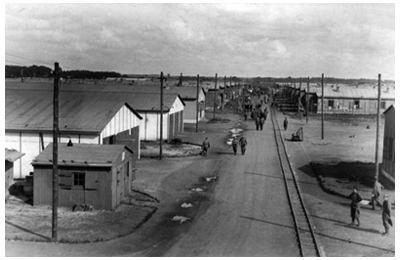
Hubert then was sent to POW camp Stalag Luft III in Sagan, Lower Silesia (Żagań, Poland).  He was there from May 9, 1942 until January 27, 1945.

As Russian forces advanced to less than 20 kilometres (12.4 miles) of Stalag Luft III, the POWs felt that liberation was only a matter of days away. Their hopes were dashed as on the evening of January 27, 1945, word came that Hitler had ordered the immediate evacuation of the camp. The POWs in all six compounds were instructed to prepare to march that very night. (See https://www.stalagluft3.com/long-march/)

The march began in the early hours of January 28, 1945, with the POWs trudging through heavy snow, cold weather, and even a blizzard.

march_map from Stalag Luft III

The long march from Stalag Luft III to Tarmstedt in the winter of 1945. (Map source: https://www.stalagluft3.com/long-march/)

Stuart Bruce Keith ‘Brack’ BRACKENBURY, an RCAF pilot from Ontario, was Hubert’s roommate in the Stalag, according to an account his daughter Ana Brickley gave to the Hall family. Brack was the pilot aboard the last flight of Hampden P1165, on an operation to Hüls, Germany, which was shot down and crashed at Winterswijk, Gelderland, The Netherlands on December 28, 1941. He was the only survivor of that crash.

Per her father’s recollection, Ana explained that they “…marched west away from the Russians and walked to a glass factory halfway to Hamburg, and stayed there a few months as they were too weak to walk further….”  This may be Marlag und Milag Nord in Tarmstedt, Germany, as Hubert’s Liberated Prisoner of War form stated he was there from February 4, 1945 until April 10, 1945.

marlag_und_milag_nord

Marlag und Milag Nord in Tarmstedt, Germany.  (Photo source: https://www.stalagluft3.com/long-march/)

Ana’s account noted that the men later “...went into boxcars….” by train “…to Hamburg and then walked to the Baltic Sea…”  They were eventually “…liberated in Lübeck... which is a Baltic port.  Hubert’s Liberated Prisoner of War Form noted that they were liberated on May 2, 1945 in Trenthorst, a small settlement on the estate of German business magnate Philipp F. Reemtsma.

Their ordeal wasn’t quite over as Ana recounted that “…the army was going to drive the liberated men in trucks back to France.  They objected. Winston Churchill heard about it and said ‘they flew in, and they’ll fly out’.  And they did…..

Hubert received his official discharge on July 27, 1945 in Halifax, Nova Scotia.

….Back on Prince Edward Island….

During his time as a POW, Hubert had contracted tuberculosis, and when he returned back to the Island, he …was in the sanatorium in Charlottetown…” Bob explained. 

Once he left the sanatorium, Hubert worked at Hall Manufacturing, and then became the Sheriff of Prince County on July 15, 1947.  In Canada, a sheriff is a law enforcement officer, but not a police officer, as in the USA.  Sheriffs’ offices in Canada are primarily concerned with court services such as security in and around the courts, post-arrest prisoner transfer, serving legal processes, fine collection.

Bob explained that his father met his mother, Audrey ‘Forrona’ England when he became Sheriff.  “…She worked at the Bank of Nova Scotia in Summerside, and most likely that’s where they met…” 

Bob shared a story about his parents’ first date.  “…My father had a gorgeous black Rover with red leather seats.  On their first date, they went for a drive. When they stopped, my mother opened the door, and a heavy wind gust blew the door off!...

Unfortunately, Hubert died in December 1954, leaving behind his wife Forrona and their two sons, Robert and Brenton. He’s buried at the People’s Cemetery in Summerside, Prince Edward Island, alongside his wife Forrona, who died in 2009.

Joanne Sheen wrote us, saying “….thank you so much for your visit. The tireless work and passion you both have for your project is amazing….Bob and I were very touched by the conversation….the visit brought Hubert to life.  Sad that it was a life cut short but Hubert was luckier than many in that he did get to return home and for a time, a happy life with his wife Forrona and two little boys….” 

Thank you to Bob Hall and Joanne Sheen for providing information about Hubert Hall. Thank you to Wendy Nattress, who prepared the map showing the flight path for Wellington Z1203, and to Yannic Wethly for sending Hubert’s Liberated Prisoner Of War Form.

Do you have a story to tell? Email Pieter Valkenburg at memorialtrail@gmail.com, comment on the blog, or send a tweet to @researchmemori1.  

© Daria Valkenburg

…Want to follow our research?….

If you are reading this posting, but aren’t following the blog, you are welcome to do so.  Our blog address: https://onthewarmemorialtrail.com/

Front cover OnTheWarMememorialTrailinEurope4 countries, 6 weeks, 7,000 km – an unforgettable war memorial journey in Europe…. Daria’s book ‘No Soldier Buried Overseas Should Ever Be Forgotten‘ is available in print and e-book formats.  Net proceeds of book sales help support research costs and the cost of maintaining this blog. For more information on the book, please see https://nosoldierforgotten.com/

You are also invited to subscribe to our YouTube Channel: On The War Memorial Trail With Pieter Valkenburg: https://www.youtube.com/channel/UCJ591TyjSheOR-Cb_Gs_5Kw

Never miss a posting!  Subscribe below to have each new story from the war memorial trail delivered to your inbox.

On The War Memorial Trail… An Island Airman In Stalag Luft III Part 1: 2 Families Connected By 1 Letter From A POW Camp

October 23, 2023. If you found a letter, written by someone you didn’t know, about your long-deceased uncle who died during WWII, what would your reaction be?  If you received a message saying that a 1942 letter from your long-deceased father was found, how would you react?   

….2 families…1 letter….

Two families were impacted by one small postcard-sized letter, written in September 1942 from POW camp Stalag Luft III.  The camp was near the town of Sagan, Lower Silesia, in what was then Nazi Germany (but now Żagań, Poland), 160 kilometres (100 miles) south-east of Berlin.  The movie ‘The Great Escape’ was based on an incident that happened in this camp in 1944. (See https://en.wikipedia.org/wiki/Stalag_Luft_III)

The letter was found by Don Coutts, nephew of WWII pilot Elmer Bagnall MUTTART of Cape Traverse, who lost his life on October 12, 1941.  Don found it amongst his mother’s effects after she died a few months ago.  He asked if we could “play detective in deciphering the handwriting and as well which prisoner of war camp it came from….”  Pieter was up for the challenge.

….The letter came from Stalag Luft III….

CIMG6475 Hubert Hall with mustache cropped and sharpened

John ‘Hubert’ Hall. (Photo courtesy of the Hall Family)

The letter was sent to Mrs.  Frank H. Hall in Summerside, and was written by John ‘Hubert’ HALL, the pilot aboard Wellington Z1203, which crashed in The Netherlands near Mijdrecht on the night of March 28/29,1942. Everyone on board that flight survived and spent the remainder of the war years in POW camps. 

Hubert was in Stalag Luft III, as was Geoffrey Douglas LEYLAND of the Royal Air Force, the Squadron Leader mentioned in the letter.  Pieter’s research found that Leyland had flown three times with Elmer Muttart as second pilot! (https://aviation-safety.net/wikibase/52841)  Leyland returned to England after the war and passed away in 1970.

Hubert Hall POW Letter p2

September 6, 1942 letter from Hubert Hall to his mother Marion Hall.

The text of the letter, from Hubert to his mother, reads “…Dear Mother, How are you dear? I’m quite well and managing all right, I hate washing clothes. A few days ago I happened to mention on parade PEI and Squadron Leader overheard me and asked me if I knew Elmer Muttart. At one time Squadron Leader was Elmer’s second pilot and his praise for Elmer’s capabilities as a pilot and the work he did was very high. He says he owes his life to Elmer’s flying one night before Elmer was missing. Mrs. Muttart might like to know of this…Lots of love, Hube…

One can imagine the relief that Mrs Hall felt in knowing that her son was alive and safe, but what she did next was a testament to her empathy for Annie Bagnall Muttart, whose son Elmer had died a year earlier.  She gave this precious letter to the Muttart family, and it was passed down to her daughter, Helen Coutts. (See https://onthewarmemorialtrail.com/2020/01/31/he-died-that-we-might-live-video-is-now-on-youtube/)

Elmer Bagnall Muttart (2)

Elmer Bagnall Muttart (Photo from Canadian Virtual War Memorial at http://www.veterans.gc.ca)

….The letter writer’s son was found….

The letter writer identified, Pieter’s next challenge was finding the family of Hubert and Mrs Frank Hall. The search led him to Robert ‘Bob’ Hall, who soon received a phone message from our intrepid detective! 

Bob was very surprised but called back immediately, confirming that Hubert was his father, and that his grandmother was Marion (nee Howatt) Hall. We met with him and his wife Joanne Sheen to learn more.

CIMG6521 Oct 14 2023 Daria with Joanne Sheen & Bob Hall

Left to right: Joanne Sheen, Bob Hall, Daria Valkenburg (Photo credit: Pieter Valkenburg)

Born January 4, 1915 in Summerside, Hubert enlisted at the RCAF Recruiting Centre in Moncton on June 26, 1940.  After receiving his wings, he left Canada for the United Kingdom and by May 1941 was sent for training on a Wellington bomber.

During his time as a POW, Hubert contracted tuberculosis, and when he returned back to the Island, he “…was in the sanatorium in Charlottetown…” Bob explained. 

Once he left the sanatorium, he worked at Hall Manufacturing, and then became the Sheriff of Prince County.  “…That’s when he met my mother, Forrona England. She worked at the Bank of Nova Scotia in Summerside, and most likely that’s where they met…” 

Bob noted that “…I was only three years old when my father died…” at age 39.  “…My mother was 29 when he died and she never got over it…

Joanne Sheen was excited to learn about the letter.  Bob agreed. “…It’s the only letter that we’ve seen from the POW camp…”  Written on very thin and flimsy paper, it’s not surprising that letters from POW camps might not have survived.  That made the 1942 letter a special remembrance.

Thank you to Don Coutts for sharing the letter from the POW camp, and to Bob Hall and Joanne Sheen for providing information about Hubert Hall. In Part 2: more on Hubert Hall’s story and his long march to freedom that began on January 27, 1945.

Do you have a story to tell? Email Pieter Valkenburg at memorialtrail@gmail.com, comment on the blog, or send a tweet to @researchmemori1.  

© Daria Valkenburg

…Want to follow our research?….

If you are reading this posting, but aren’t following the blog, you are welcome to do so.  Our blog address: https://onthewarmemorialtrail.com/

Front cover OnTheWarMememorialTrailinEurope4 countries, 6 weeks, 7,000 km – an unforgettable war memorial journey in Europe…. Daria’s book ‘No Soldier Buried Overseas Should Ever Be Forgotten‘ is available in print and e-book formats.  Net proceeds of book sales help support research costs and the cost of maintaining this blog. For more information on the book, please see https://nosoldierforgotten.com/

You are also invited to subscribe to our YouTube Channel: On The War Memorial Trail With Pieter Valkenburg: https://www.youtube.com/channel/UCJ591TyjSheOR-Cb_Gs_5Kw

Never miss a posting!  Subscribe below to have each new story from the war memorial trail delivered to your inbox.
On The War Memorial Trail…..The WWII Airman From Bras d’Or Who Was Aboard The Last Flight Of Halifax JD215

September 19, 2023. In November 2021, following a CTV Atlantic interview with Pieter, he received an email from Linda Hood Jobe.  “I read your story with interest. I have a great-uncle who died in the war…”  (See Forever grateful: Dutch Canadian tries to put faces to names of soldiers who fell liberating the Netherlands: https://atlantic.ctvnews.ca/forever-grateful-dutch-canadian-tries-to-put-faces-to-names-of-soldiers-who-fell-liberating-the-netherlands-1.5659567)

E5516B6AB48B433F86A9DE70197C45C3 Linda Jobe

Linda Hood Jobe on a trip to Isle of Skye (Isle of Raasay) in September 2019. (Photo courtesy of Linda Hood Jobe)

Linda’s great-uncle, William Andrew HOOD, of Little Bras D’or, Cape Breton Island, Nova Scotia, was in the Royal Canadian Air Force (RCAF), and lost his life on June 29, 1943 when the plane he was in was shot down over The Netherlands.  He’s buried in Eindhoven General Cemetery, The Netherlands.

…My father was only a baby when William died, but I know that his death affected my grandfather very much. He was greatly missed by his sisters and brothers…” Linda explained.

Born on May 22, 1921, William was the son of Wilson and Maria (nee Ross) Hood.  At the time of his enlistment on July 8, 1941 in Halifax, Nova Scotia, he was working for Lloyd Johnstone, a farmer in Bras d’Or.  His application to the RCAF was sent to No. 1 Manning Depot in Toronto, Ontario.

Among the special skills that would be useful to the RCAF, William noted that he could swim and skate.  He listed hockey, softball, and bowling as sports he participated in. 

…William enlisted in the RCAF with a preference for ground duty….

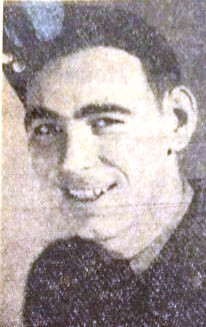
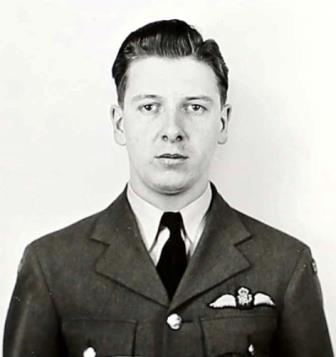
6A89D893483A45939CC3320E521725B3 newspaper clipping

William Andrew Hood. (Photo submitted by Linda Hood Jobe)

When asked for his preference in enlisting, he said it was for ground duty – not flying duty – but that did not happen.

William was transferred to the RCAF’s No. 4 Repair Depot in Dartmouth, Nova Scotia on July 20, 1941.  He was assigned to General Duties, which covered anything from guard duty to cleaning latrines.

On October 28, 1941, he was transferred to the No. 4 Repair Depot in Scoudouc, New Brunswick.  The Scoudouc airfield was a repair depot used to service aircraft employed on long range anti-submarine patrols, including Liberators or B-24s, American built four engine bombers.  It was used for aircraft testing and also served as an auxiliary landing field for #8 Service Flying School at Moncton.

…William trained as an air gunner….

In a June 23, 1942 interview at the No. 15 Recruiting Centre in Moncton, New Brunswick, William was assessed as “…frank and sincere…Good material for air gunner…” 

On August 30, 1942 he was sent to the No. 9 Bombing & Gunnery School in Mont Joli, Quebec, located about 322 km (200 miles) east of Quebec City.  In the 6 week course, William would have learned about the construction and fusing of bombs and the factors affecting bomb trajectories, how to take a gun apart and put it back together again, and participated in practice bombing exercises.

On December 19, 1942, William was awarded his Air Gunners Badge, and given 14 days embarkation leave.

…William left Canada for overseas service….

William left Canada on January 25, 1943, arriving in the United Kingdom on February 4, 1943, where he was assigned to No. 3 Personnel Reception Centre (PRC) in Bournemouth, England.  This was the arrival point for thousands of aircrew after training in Canada.

On March 3, 1943, William was sent for further training at the No. 7 Air Gunnery School (AGS) at Stormy Down, a Royal Air Force station near Pyle, Brigend in Wales.

On March 23, 1943, he was sent to No. 22 Operational Training Unit (OTU) at Wellesbourne for 10 weeks of further training as a member of a bomber crew.

On May 18, 1943 William was briefly sent to No. 1659 Heavy Conversion Unit at Topcliffe in Yorkshire. This was a 5 week course to familiarize crews with the four-engined Halifaxes or Lancasters on which they would be flying on operations when they were posted to a squadron. The May 18, 1943 war diary noted that “…ten crews from 427 Squadron and four from 22 OTU reported in for Conversion Training…

On June 10, 1943, having completed his training, William was posted to 419 Squadron, part of the No. 6 RCAF Group. He would not have participated in many operations as part of the Squadron before what would be his last flight – Halifax JD215.

…William was aboard the last flight of Halifax JD215….

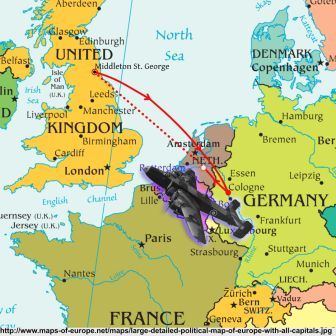
Middleton St George to Colognemap from Wendy

Map shows the plane’s path from England towards Cologne.  It was shot down over The Netherlands on its return to England.  (Map prepared by Wendy Nattress)

Just after 11:04 pm, on the evening of June 28, 1943, the crew of Halifax JD215 left Middleton St. George in England for a bombing raid over Cologne, Germany. 

Halifax_Bomber_2_ExCC

A Halifax Mark II bomber, similar to the one flown by Halifax JD215. (Photo credit: George Woodbine, Public domain, via Wikimedia Commons)

Halifax JD215 was among 608 Allied aircraft that participated in the raid over Cologne – 267 Lancasters, 169 Halifaxes, 85 Wellingtons, 75 Stirlings, and 12 Mosquitos.  Unfortunately, 25 planes never made it back to England.  According to a report on Canadian airmen lost in WWII in 1943, an “… intense Aurora Borealis display over the cloud base…” may have “…illuminated the bombers…” thereby contributing to the loss of aircraft by making them easier to spot.

Halifax JD215 successfully reached Cologne, but on its return to England, the plane was shot down over The Netherlands by Luftwaffe Major Günther Radusch in his German nightfighter.  It was just after 2:13 am.  Radusch claimed to have shot down 3 other Halifaxes that night.

… Halifax JD215 came down in a farmer’s field near Loon….

20230521_151545 Waalre Town Sign on bicycle path

The plane came down over Waalre, located 5 km from Eindhoven. (Photo credit: Robert van der Ende)

The plane crashed near Loon in the municipality of Waalre, in a farmer’s field close to where a watermill, the Loondermolen, on the Dommel River, once stood.  Waalre is just 5 km from Eindhoven.  The mill was destroyed in 1940. (You can see a photo of the mill at https://www.molendatabase.org/molendb.php?step=details&nummer=5094)

20230522_124021Loondermolen in Waalre

The plane came down in a farmer’s field near Loon, near where a watermill, the Loondermolen, on the Dommel River, once stood. (Photo credit: Robert van der Ende)

A. Hendrikx, the mother of a friend of Robert van der Ende, remembers the crash. Born in December 1933, she lived in Waalre at the time, and told Robert that “… everybody had to take cover in shelters….

Robert explained that “…during the war there were of course much fewer buildings and since the plane was shot down at night, it must have given a frightening sound. Incidentally, another plane was shot down not much later. That plane ended up in Aalst (nowadays also the municipality of Waalre)….”  This was Lancaster ED979 of 619 Squadron, with a crew of 6 British and 1 Canadian.  The Canadian was one of the two Air Gunners, Flight Sgt John Harvey William WALKER of Sunny Brae, New Brunswick. All were killed.  This plane was also shot down by Major Radusch.

There were no survivors from Halifax JD215.  All 7 crew members are buried in The Netherlands, but in 3 different cemeteries.

…The crew of Halifax JD215….

  • Pilot – Flight Officer Harry Wilfred FOWLER of the RCAF – buried Mierlo War Cemetery. From St. Thomas, Ontario.
  • Flight Engineer – Sgt John Edwin DICKSON of the RAF – buried Eindhoven General Cemetery.
  • Navigator – Pilot Officer Warren Bretall MAYES of the RCAF – buried Canadian War Cemetery in Groesbeek. From Bellwood, Illinois, USA.
  • Bomb Aimer – Pilot Officer David Renwick AGNEW of the RCAF – buried Canadian War Cemetery in Groesbeek.  From Weyburn, Saskatchewan.
  • Wireless Operator/Air Gunner – Flight Lt Almer Clement RAINE of the RCAF – buried Eindhoven General Cemetery. From Brampton, Ontario.
  • Mid Upper Gunner – Sgt William Andrew HOOD of the RCAF – buried Eindhoven General Cemetery.  From Little Bras D’or, Nova Scotia.
  • Rear Gunner – Sgt William George OTTERHOLM of the RCAF – buried Canadian War Cemetery in Groesbeek. From Dixonville, Alberta.

…William is buried in Eindhoven General Cemetery….

After Linda, Sgt Hood’s great-niece, contacted us, Robert van der Ende visited his grave at Eindhoven General Cemetery. 

20230520_140435_001 Grave of WA Hood

Grave of William Andrew Hood at Eindhoven General Cemetery.  (Photo credit: Robert van der Ende)

John Edwin DICKSON and Almer Clement RAINE were originally buried in Woensel Cemetery as unidentified airmen.  After their remains were identified, they were reburied in Eindhoven General Cemetery, but not beside William Andrew HOOD

Harry Wilfred FOWLER’s body was not found until 1949, during the excavation of the aircraft wreckage.  He is buried in Mierlo War Cemetery.

Warren Bretall MAYES, David Renwick AGNEW, and William George OTTERHOLM are buried in the Canadian War Cemetery in Groesbeek.

…A short video on The Last Flight Of Halifax JD215….

You can watch a short video summarizing the last flight of Halifax JD215:

Thank you to Linda Hood Jobe for telling us about her great-uncle. Thank you to Robert van der Ende for visiting the crash site and Eindhoven General Cemetery on our behalf.  Thank you to post-production editor Wendy Nattress, who made the The Last Flight Of Halifax JD215 (S4E2) YouTube video a reality, and for preparing the map showing the flight path for Halifax JD215.

If you have a story to tell, please let Pieter know. You can email him at memorialtrail@gmail.com, comment on the blog, or send a tweet to @researchmemori1.  

© Daria Valkenburg

…Want to follow our research?….

If you are reading this posting, but aren’t following the blog, you are welcome to do so.  Our blog address: https://onthewarmemorialtrail.com/

Front cover OnTheWarMememorialTrailinEurope4 countries, 6 weeks, 7,000 km – an unforgettable war memorial journey in Europe…. Daria’s book ‘No Soldier Buried Overseas Should Ever Be Forgotten‘ is available in print and e-book formats.  Net proceeds of book sales help support research costs and the cost of maintaining this blog. For more information see https://nosoldierforgotten.com/

Subscribe to our YouTube Channel: On The War Memorial Trail With Pieter Valkenburg: https://www.youtube.com/channel/UCJ591TyjSheOR-Cb_Gs_5Kw

Never miss a posting!  Subscribe below to have each new story from the war memorial trail delivered to your inbox.

On The War Memorial Trail….. The WWII Pilot Killed At The Controls Of His Halifax Bomber

February 19, 2023. Whenever Pieter is interviewed, we are delighted when we hear from viewers or readers.  After an interview with Kevin Rollason ran in the Winnipeg Free Press, Craig MacKenzie contacted us about his uncle.

On reading the Saturday Free Press article on your quest to learn about Canadian soldiers who gave their lives during WW II and who were laid to rest in The Netherlands I thought that you might be interested in a story I put together about my uncle, P/O Douglas Mackenzie….”  Of course we were interested.  Pieter set to work to learn more.

Jack ‘Douglas’ MACKENZIE was born in Winnipeg, Manitoba on April 27, 1921, the son of Charles Bellamy and Annie Elizabeth (nee Acheson) MacKenzie.  After graduating from high school in 1937, and attending Success Business College, Douglas worked as a clerk in Winnipeg at the T. Eaton Company Department Store, then at the Canadian Wheat Board, and lastly at the #7 Equipment Department of the Royal Canadian Air Force (RCAF).

He left his last position on May 9, 1941 when he enlisted in the RCAF in Winnipeg, stressing his interest in flying duties and in becoming a pilot.

Douglas listed a number of sports he played – hockey, swimming, basketball, rugby, baseball, skiing, and handball.

….Douglas trained as an RCAF pilot….

POJDMACKENZIESilverCross from Craig MacKenzie

Jack ‘Douglas’ MacKenzie. (Photo courtesy of Craig MacKenzie)

After a few weeks basic training at No. 2 Manning Depot in Brandon, Manitoba, Douglas was sent to the No. 1 Service Flying Training School in Yorkton, Saskatchewan.  He was then sent to No. 4 Initial Flying School (ITS) in Edmonton, Alberta for 4 weeks of training in navigation, theory of flight, meteorology, duties of an officer, air force administration, algebra, and trigonometry, plus tests that included physical and psychological exams, a session in a decompression chamber, and a simulated flight.

After passing the initial training, on July 27, 1941 he was sent to No. 18 Elementary Flying Training School in Boundary Bay, British Columbia, where he was given 50 hours of basic flying instruction over the next two months.

On September 12, 1941 Douglas was placed as a trainee in the bomber, coastal or transport pilot stream and sent to No. 15 Service Flying Training School in Claresholm, Alberta, for training on an Avro Anson.    (For more information on flight training schools, see https://en.wikipedia.org/wiki/List_of_British_Commonwealth_Air_Training_Plan_facilities_in_Canada)

….Douglas was posted overseas in 1942….

On December 5, 1941 Douglas received his Pilots Flying Badge.  A few days later he was posted to No. 1 ‘Y’ Depot in Halifax, Nova Scotia, an embarkation depot for Air Force personnel soon heading overseas.

Douglas left Canada on February 9, 1942 and posted to No. 3 Personnel Reception Centre in Bournemouth, England.   (See https://www.birtwistlewiki.com.au/wiki/No._3_Personnel_Reception_Centre_RAF)

On April 27, 1942 he was transferred to 14 Advanced Flying Unit for training in different aircraft such as Wellingtons.  The next stage came on June 7, 1942, when Douglas was sent to No. 22 Operational Training Unit (OTU) at RAF Wellesbourne Mountford. This was part of No. 6 Group RAF Bomber Command to train night bomber crews with the Vickers Wellington.

On September 9, 1942 he joined No. 419 (Moose) Squadron RCAF, which was based at Leeming until the end of September, and then at Croft until November 9, 1942, followed by its final move during the war to Middleton St. George.

Formed in December 1941, No. 419 Squadron was the third RCAF overseas bomber squadron.  It was originally in No. 3 Group of Bomber Command, but became part of No. 6 (RCAF) Group when it was formed on January 1, 1943.

….The last flight of Halifax DT630….

Halifax-mk3(1)

Halifax Mark 3 bomber.  Photo source: http://www.raf.mod.uk Public Domain, https://commons.wikimedia.org/w/index.php?curid=751869)

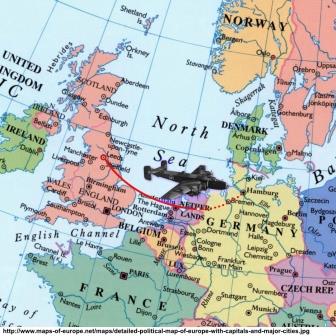
On February 3, 1943, Douglas was the pilot of Halifax DT630 (call sign VR-T), one of 8 heavy Halifax bombers sent on a night raid to Hamburg, Germany.  They took off at 6:34 pm from the airbase at Middleton St. George, England. (See https://aviation-safety.net/wikibase/52181)

LeedstoHamburgviaNoordSleen

Map shows the plane’s path from England towards Hamburg.  It was shot down over The Netherlands before reaching its target.  (Map prepared by Wendy Nattress)

Craig MacKenzie documented what happened that night in ‘A Jump In The Night’, the title and story adapted from a March 28, 1970 Dutch article ‘Een sprong in de nacht’ by A. Jansen, originally published in the newspaper Drentsche en Asser Courant.

…Flying conditions were less than ideal. There was a strong wind from the southwest and, in spite of the protection of the low clouds, they encountered severe icing as they crossed the North Sea.  This made the Halifax difficult to keep airborne. Ice accumulated on the wings and fuselage, adding to weight and reducing the lift of the wings.

The crew had discussed turning back, but as they had aborted their previous mission, they decided against it.  They arrived at the Dutch coast ten minutes behind the main bomber stream and as a result had lost the protection of the surrounding bombers….

An account on the website http://www.419squadron.com/DT630.html states that “Being late and behind the main force was not the only problem that was facing the pilot.  He had lost contact with the rear gunner. The whole intercom system had stopped working. MacKenzie had to make a decision to turn back or keep going a little further to see if the intercom would return to normal.

Now some twenty-five minutes from the target area the Halifax was attacked … from astern and slightly below.  The turns to escape the attacking fighter did not help.  The whole length of the aircraft’s fuselage was racked by cannon fire, killing MacKenzie, and most likely Sgt. Gonnett in the Middle Upper turret. The heavy cannon shells also set off the incendiaries in the bomb-bay, severing lines to engines and other vital controls.

Sgt. Duthie worked at putting the fire out but was unable to because of the nature of the incendiary devices. The Navigator would later report he gave the bail out command via a pre-arranged call light series of flashes.….

….Guests at a Dutch birthday party were eyewitnesses….

Craig MacKenzie’s article included what was observed on the ground on the Cremers farm near Nord Sleen, The Netherlands.  “…It was the third year of the war, yet some rare spirits had been hoarded for special occasions…”  The Netherlands had been under Nazi occupation since May 1940.

On the evening of February 3, 1943, the Cremers family had planned a birthday celebration. “…The first drinks were about to be shared when the family and their guests heard the sound of an airplane, an airplane that was in trouble. A few peeked out the darkened windows. Others went to the doorway.  Several lightning like flashes appeared in the distance. These were soon followed by a ball of fire that plummeted from the heavens.  A deafening explosion accompanied another blinding flash.  It was 7:30 pm…” This was the end for Halifax DT630.

According to the Aviation Safety Network Wikibase report on Occurrence # 52181, the Halifax bomber was shot down by night fighter pilot Oberfeldwebel Karl-Heinz Scherfling of the 10./NJG 1, flying a Bf 110 F-4 from Leeuwarden airfield.  Leeuwarden is in the province of Friesland in The Netherlands.

….Four died, three survived….

Sgt. Marquand was first out, followed by Garnett, who took time to check what was happening to the others in the crew in the front section. He noted that Sgt. Hill was still at his Wireless position and Sgt. Duthie still at the F/E position, but both were preparing to leave the out of control aircraft. At this point the enemy fighter returned and attacked the falling Halifax.

It is unknown for sure what happened to WOII Hill and Sgt. Duthie and why they did not escape. The second pass of the fighter may have caught them both before they had time to leave the aircraft….

In the end “…only Sgt. Marquand, Sgt. Garnett, and F/S Milton managed to bail out. All were captured and became PoWs…”  The other 4 crew members were buried in Sleen General Cemetery.

Dec 24 2022 J.D Mackenzie Begraafplaats Sleen (Drenthe) Hans Buis

Candle placed at the grave of Jack ‘Douglas’ MacKenzie. (Photo credit: Hans Buis)

On December 24, 2022, during the Christmas Eve Candle Lighting Ceremony, candles were placed at the graves of these 4 airmen, with photos sent to us by Hans Buls.  (See https://onthewarmemorialtrail.com/2022/12/26/2022-christmas-eve-candle-lighting-in-the-netherlands/)

In a February 14, 1943 letter to Douglas’ mother, No. 419 Squadron’s Wing Commander, Mervyn Matthew FLEMING, wrote that her son “…was a pilot of such qualities that the Service as a whole and this Squadron in particular can ill-afford to lose him.  He was exceptionally keen and capable at all times, and his loss is a blow to his comrades, with whom he was at all times popular…

….The crew of Halifax DT630….

  • Pilot P/O Jack Douglas MACKENZIE of Winnipeg, Manitoba, RCAF, killed
  • Flight Engineer Sgt. William Peter DUTHIE of Winnipeg, Manitoba, RCAF, killed
  • Navigator Sgt. William Nelson GARNETT, RCAF, survived
  • Bomb Aimer Sgt. Eric Raymond MARQUAND, RCAF, survived
  • Air Gunner W/O II Raymond Hepton HILL of Montreal, Quebec, RCAF, killed
  • Rear Air Gunner F/Sgt. Alexander Henry MILTON, RAF, survived
  • Air Gunner W/O II Lennox Alwin GONNETT of Westmount, Quebec, RCAF, killed

Thank you to Craig MacKenzie for sharing information about his uncle. Craig’s father was a navigator with Bomber Command and survived the war.  “‘Dumb Luck’ was a term that my Dad had used for why he had survived. Congratulate your husband on his valuable work”  Craig has posted a short musical tribute to Bomber Command, which you can watch:

Thank you also to Wendy Nattress for preparing the map showing the flight path for Halifax DT630. If you have a story to share, please contact Pieter at memorialtrail@gmail.com, comment on the blog, or tweet to @researchmemori1.

© Daria Valkenburg

…Want to follow our research?….

If you are reading this posting, but aren’t following the blog, you are welcome to do so. Our blog address: https://onthewarmemorialtrail.com/

Front cover OnTheWarMememorialTrailinEurope4 countries, 6 weeks, 7,000 km – an unforgettable war memorial journey in Europe…. Daria’s book ‘No Soldier Buried Overseas Should Ever Be Forgotten’ is available in print and e-book formats.  Net proceeds of book sales help support research costs and the cost of maintaining this blog. For more information on the book, please see https://nosoldierforgotten.com/

You are also invited to subscribe to our YouTube Channel: On The War Memorial Trail With Pieter Valkenburg: https://www.youtube.com/channel/UCJ591TyjSheOR-Cb_Gs_5Kw.

Never miss a posting!  Subscribe below to have each new story from the war memorial trail delivered to your inbox.

On The War Memorial Trail…..The WWII Pilot Whose Spitfire Ran Out Of Fuel

January 25, 2023.  After seeing an interview on CTV National News about Pieter’s research into WWII soldiers and airmen buried in The Netherlands, Pieter received an email from Dave Montgomery.  

Dave Montgomery 1

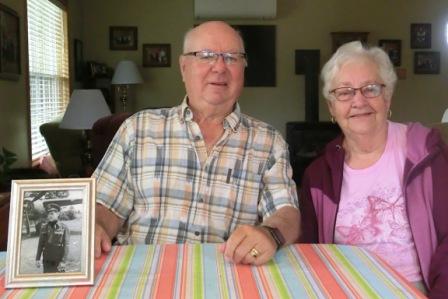
Dave Montgomery, whose father’s best friend was RCAF Pilot George Glenn Millar. (Photo courtesy of Dave Montgomery)

Dave wrote that “…I became aware of your project of identifying Canadians killed in WW2 to liberate Holland when I saw your interview with CTV News recently.  

My father’s best friend, George Glenn Millar, nicknamed ‘Dusty’, was killed on September 28, 1944 in combat while flying a Spitfire Mark IX over Nijmegen, Holland.  He is buried at the Uden War Cemetery in North Brabant, Holland. He was from Winnipeg, Manitoba and was serving with 442 Squadron of the RCAF when killed. …  My father survived the war and lived a full life back in Canada and passed away in January 2013.  He never forgot his friend…

20220911_161454 Miller and Montgomery

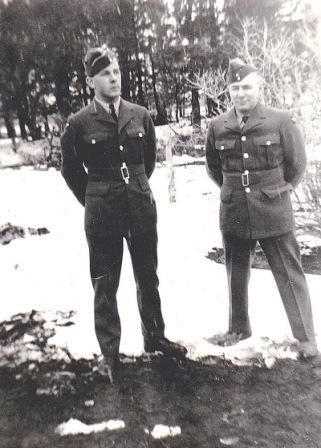
George Glenn ‘Dusty’ Millar, left, with Thomas Richard Montgomery. (Photo courtesy of Dave Montgomery)

Dave included a photo, explaining that “… G. G. Millar is on the left.  My father, Thomas Richard Montgomery, is on the right….

….George Glenn attended university for one year before enlistment….

Millar G.G. foto 2

George Glenn ‘Dusty’ Millar.  (Photo courtesy of the Information Centre, Holten)

Born November 21, 1921 in Winnipeg, Manitoba, George Glenn MILLAR was the son of George Sawers and Janet Smith (nee Wilson) Millar. While a first-year student at the University of Manitoba, George joined the University’s Canadian Officers’ Training Corps (COTC) on April 7, 1941, part of the Non-Permanent Active Militia. In his attestation form, he stated that he had served 110 hours in the University of Manitoba Training Unit (UMTU). (See https://en.wikipedia.org/wiki/Canadian_Officers%27_Training_Corps)

In July 1941, he enlisted in the Royal Canadian Air Force (RCAF) in Winnipeg.  Asked about hobbies and sports, he wrote that he played golf extensively, occasionally played hockey, rugby, and baseball.  He was very clear in his goal – he wanted to enlist for flying duties and to be a pilot.

….George Glenn realized his goal of becoming a pilot….

In October 1941 he was sent to Edmonton, Alberta and then a few weeks later to Calgary, Alberta to #3 Service Flying Training School for flight training.  On December 12, 1941 he was sent back to Edmonton, to #16 Flight Training School, where he remained until April 25, 1942.  By the time he left he had put in 73 hours and 35 minutes into flying a Tiger Moth.

He was next posted to #1 Service Flying Training School in Camp Borden, Ontario on April 26, 1942, receiving his Pilot Flying Badge on August 14, 1942.   He had also learned to fly a Yale and a Harvard MK II.

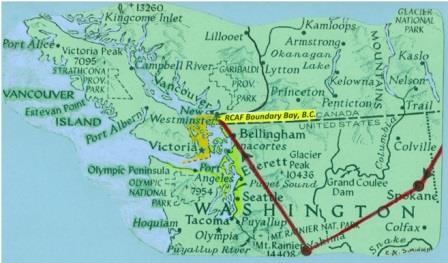
In August 1942 he was posted to No. 133 (F) Squadron in Lethbridge, Alberta, where he gained more experience in flying a Harvard MK II and learned to fly a Hurricane II B.  The Squadron moved to Boundary Bay, British Columbia at the beginning of October 1942.  (Note: the ‘F’ stood for ‘Fighter’)

Map RCAF Boundary Bay

Patrol path of No. 133 (F) Squadron included the Canadian section [orange] and the area in the United States from Bellingham to Tacoma, Washington, [yellow]. (Map source: https://clarencesimonsen.wordpress.com/category/rcaf-133-squadron/)

On October 5, 1942, George Glenn received a promotion to Pilot Officer, and then another promotion, to Flight Officer, on February 13, 1943. He remained with No. 133 (F) Squadron until May 15, 1943, when he was sent to No. 111 Squadron in Anchorage, Alaska.

Don Smith, an Associate Historian with the RCAF, explained that George Glenn “….arrived at No. 111 Squadron as a replacement pilot.  Millar was at No. 111 Squadron to get checked out in a new (for him) fighter type, the Curtis P-40K Kittyhawk.  He had been flying the Hawker Hurricane with No. 133 Squadron….

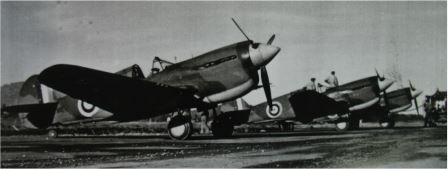
P-40 Kittyhawk Aircraft

P-40 Kittyhawk. (Photo credit: Department of National Defence (DND) PGB-1436)

….George Glenn’s Squadron participates in the Aleutian Islands Campaign in 1943 ….

Don went on to explain that “Millar did not remain long with No. 111 Squadron after he soloed in the Kittyhawk in late May 1943. By the end of August he was flying with No. 14 Squadron at Umnak Island, in the Aleutians, where he spent a one-week rotation at the forward assembly airfield on Amchitka Island the same month…

Dave Montgomery had done some research on George’s time in Alaska, and explained that “…. No. 14 Squadron and No. 111 Squadron were ordered to Alaska in 1943 to fight alongside the Americans fighting the Japanese who had landed at Kiska and Attu Islands in the Aleutian Islands of Alaska in June of 1942.   

These RCAF squadrons served at Anchorage, Kodiak Island, and Umnak Island bases with short postings to Adak Island and Amchitka Island when flying missions against the Japanese, who were dug in on Kiska Island. 

Several were killed there as the weather was atrocious, especially in the Aleutians.  Weather was the biggest killer of pilots in Alaska, not enemy guns.   

G.G. Millar flew with both 111 Squadron (briefly) and then 14 Squadron and flew missions with the US fliers to Kiska Island bombing and strafing the Japanese there  under overall command of Jack Chennault, the son of Claire Chennault who was the US Colonel (later General) who commanded the famous Flying Tigers in China!

No. 14 and 111 Squadrons returned to Patricia Bay in September of 1943 after the 5,000 Japanese on Kiska Island managed to escape under cover of fog and darkness in late July 1943 on Japanese naval destroyers sent there to evacuate them after the defeat of the Japanese forces on Attu Island by the US…..”   RCAF Patricia Bay was in Victoria, British Columbia.  (For more information on the Aleutian Islands Campaign, see https://en.wikipedia.org/wiki/Aleutian_Islands_campaign)

Don Smith explained that “Millar remained with No. 14 Squadron, going overseas with them, where the Squadron was renumbered from No. 14 Squadron to No. 442 (F) Squadron…

Dave Montgomery noted that “….No. 14 and 111 Squadrons sailed to England between January 20 to 27, 1944 on the SS Pasteur (a French passenger liner completed in 1939 and converted to a fast troop ship).  The Pasteur made the crossing alone rather than in a convoy since she could sail at up to 26 Knots.

On February 8, 1944, No. 14 Squadron was renumbered as 442 Squadron (equipped with Spitfire Mark IX fighters) and No. 111 Squadron was renumbered as No. 440 Squadron (equipped with Hawker Typhoon fighter bombers)….

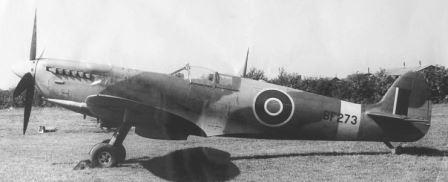
Spitfire Mk. IX

Spitfire Mark  IX.  (Photo source: Google image, from ‘Spitfire Mk IX Performance Testing, Aeroplane and Armament Experimental Establishment, Boscombe Down, 21 October, 1942.’)

….George Glenn’s Spitfire failed to return from a patrol near Nijmegen….

On August 14, 1944, George Glenn received his final promotion, to Flight Lieutenant.  Just over a month later, he had his final flight.  Don Smith explained that from September 20 to October 1, 1944, Base 68 at Le Culot/Beauvechain in Belgium “was occupied by 126 Wing, Group 83, 2nd Tactical Air Force (Canadian Fighter Wing), to provide air cover over the Arnhem/Nijmegen areas for Operation Market Garden….

NOTE: Operation Market Garden was an Allied military operation, from September 17 to 27, 1944, that succeeded in liberating Nijmegen and Eindhoven but failed in liberating the last bridge held in Arnhem, which would enable troops to the Rhine into Germany.  The movie ‘A Bridge Too Far’ dramatized this event. (See https://en.wikipedia.org/wiki/A_Bridge_Too_Far_(film))

It was from Base 68 at Le Culot/Beauvechain that George Glenn’s Squadron operated during that period. “….On September 28, 1944, while on a patrol over enemy territory in Spitfire PL490, his aircraft apparently ran out of fuel. F/L Millar was last seen over Nijmegen, Holland. While the record indicates F/L Millar’s aircraft ran out of fuel, the record for Spitfire PL490 suggests on 28 September, 1944, this aircraft, flown by F/L G.G. Millar, RCAF, was in aerial combat with Fw190s of the German Luftwaffe before the fuel shortage was reported….

This summary was similar to what was written in a September 30, 1944 letter to George Glenn’s mother by his Commanding Officer in No. 442 Squadron, Flight Lieutenant W A Olmstead.  “…On the morning of September 28th, Glen took off with the Squadron on a Patrol over enemy territory in Holland.  During this operation the Squadron were chasing some German aircraft when Glen reported on his radio that he was getting low in fuel and would have to return to friendly territory which he started out to do.

Later during the operation, Flight Lieutenant W.A. Olmstead, who was leading the Squadron, heard Glen on his radio saying that his engine was cutting and he would have to bail out or crash land. He was not seen at this point by any member of the Squadron, but it is believed he bailed out or crash landed somewhere in Holland at approximately 0945 hours….

The aircraft crashed 3 km (1.86 miles) southeast of Weibosch near Schijndel, in the Dutch province of Noord-Brabant.

….Why did the plane run out of fuel?….

We asked Don Smith why the Spitfire would have run out of fuel.  He said that although it was possible that the Spitfire “…PL490 suffered battle damage if involved in aerial combat with Fw190s, this cannot be confirmed…

Don went on to explain that ….the Merlin-powered Spitfire Mk IX was also known to have problems with vapour-lock in the fuel system, especially if the aircraft had been sitting in the sun prior to take-off. If the Spitfire PL490 was carrying an external belly-mounted auxiliary fuel tank at the time of its loss, this could create failure of the engine when switching from main tanks to external, or from external back to the main fuel tanks. The latter was more serious, since this would usually take place over enemy territory, as was the case on September 28, 1944.

As an example of this particular problem, No. 401 Squadron (RCAF) reported almost one quarter of pilots lost were due to this cause. These incidents were not mentioned as ‘tank problems’, but referred to such incidents as ‘engine failure’ or ‘engine trouble’.  

The actual cause of the loss of Spitfire PL490 will probably never be known. The Spitfire Mk IX had two tanks in front of the cockpit, one upper and one lower. Later models had another fuel tank added behind the cockpit. It is possible that the lower front tank could have been holed in combat, or the rear tank, depending on the age of PL490. In either case, F/L Millar would not have noticed the fuel leak….

….George Glenn Millar was buried in Uden War Cemetery….

Edwin van der Wolf, a volunteer researcher at the Canadian War Cemetery in Holten, wrote that George Glenn was temporarily buried in Weibosch before being reburied on July 23, 1946 at Uden War Cemetery in Uden, The Netherlands.  (See https://www.cwgc.org/visit-us/find-cemeteries-memorials/cemetery-details/2082100/uden-war-cemetery/)

Millar G.G. graffoto

George Glen Millar is buried in Uden War Cemetery.  (Photo courtesy Information Centre, Canadian Cemetery Holten)

Thank you to Dave Montgomery for sharing information about his father’s best friend, George Glenn Millar.  He is not forgotten!  Thank you to Don Smith for help with the aviation specifics and history, and to Edwin van der Wolf for sending photos and confirming burial information. If you have a story to share, please contact Pieter at memorialtrail@gmail.com, or comment on the blog.

© Daria Valkenburg

…Want to follow our research?….

If you are reading this posting, but aren’t following the blog, you are welcome to do so. Our blog address: https://onthewarmemorialtrail.com/.

Front cover OnTheWarMememorialTrailinEurope4 countries, 6 weeks, 7,000 km – an unforgettable war memorial journey in Europe…. Daria’s book ‘No Soldier Buried Overseas Should Ever Be Forgotten’ is available in print and e-book formats.  Net proceeds of book sales help support research costs and the cost of maintaining this blog. For more information on the book, please see https://nosoldierforgotten.com/

You are also invited to subscribe to our YouTube Channel: On The War Memorial Trail With Pieter Valkenburg: https://www.youtube.com/channel/UCJ591TyjSheOR-Cb_Gs_5Kw.

Never miss a posting!  Subscribe below to have each new story from the war memorial trail delivered to your inbox.

On The War Memorial Trail….. ‘We’ll Never Forget Uncle Bunky’

October 12, 2022. Recently, Douwe Drijver, a researcher at the Stichting Missing Airmen Memorial Foundation, a non-profit volunteer organization based in Leeuwarden, The Netherlands, asked if Pieter could help find family of a WWII airman from Prince Edward Island. (For more information – in Dutch – on the Foundation, see www.luchtoorlogfriesland.nl )

This organization organized the unveiling of a memorial panel in Wons, The Netherlands to honour WWII pilot Elmer Bagnall MUTTART of Cape Traverse, Prince Edward Island, who is buried in Harlingen General Cemetery, and the crew of Halifax L9561.  (See https://onthewarmemorialtrail.com/2019/10/06/unveiling-of-the-memorial-panel-for-downed-ww2-plane-halifax-l9561-in-wons/)

Douwe asked if Pieter could find family of Rowan Charles FITZGERALD….who was born in Charlottetown on July 12, 1915 and has been missing since June 28, 1942….”  The plane he was on, “… Halifax W1175 of the 405th Vancouver Squadron RCAF came down in the Wadden Sea at 03:00 that morning. Only one crew member has a known grave….

Then Douwe surprised us by saying that the crew member with a known grave, Murray Ralph KLEISDORFF of Australia, “…. found his final resting place in Harlingen….” His grave is between 3 unknown graves, one of which may just contain the remains of Rowan Charles FitzGerald.  All four graves are in the row right behind Elmer Muttart!

…We meet family of Rowan Charles ‘Bunky’ FitzGerald….

Shortly after this request came in, retired music teacher Rowan FitzGerald got in contact, explaining that Rowan Charles, known in the family as ‘Bunky’, was his uncle.  Rowan’s sister Janet was visiting from Alberta and the two of them would like to meet to share photos and stories of their uncle.

CIMG5743 Aug 7 2022 Rowan Janet Fitzgerald Pieter

Pieter, left, with Janet FitzGerald and her brother Rowan FitzGerald.  (Photo credit: Daria Valkenburg)

… ‘Bunky’ was born in Charlottetown….

Janet had prepared a summary of her uncle’s life. “Rowan Charles FitzGerald was the middle son of Geoffrey David FitzGerald and Flora Hope Wiggins.  He was born on July 12, 1915 in Charlottetown, Prince Edward Island, where he attended West Kent School and Prince of Wales College.  Rowan was active in sports. He played football, was a competitive speed skater, and played hockey with the Charlottetown Abbies and with a farm team in Colorado…..

Bunky Fitzgerald hockey picture

Bunky played hockey before enlistment.  (Photo courtesy of the FitzGerald Family)

… Bunky’s true character shone through in an anecdote….

In addition to hockey, Bunky was a keen speed skater.  Janet shared an anecdote that showed the true character of her uncle.  “The FitzGerald family loved competitive sports, but winning was never the most important thing.  I remember our father, T. L. ‘Babs’ FitzGerald, illustrating this with a story about his brother Bunky.  He was in a speed skating championship race.  He and one other contender were way out in front of the pack, neck in neck, as they rounded the turn beginning their last lap. 

The other man fell, and instead of skating on to victory, Uncle Bunky stopped, waited for his opponent to get back up on his skates, and then raced him to the finish line, winning by only a few strides.  When asked why he stopped when his opponent fell, he replied that he wanted to win fairly because he was the faster skater, not because his competition had an accident….

… Bunky enlisted with the RCAF in 1940….

From 1934 to 1935, Bunky was a signaller with the 8th Medium Battery Militia in Charlottetown. He later moved to Ontario, where he worked as a prospector for Kirkland Hudson Bay Mining in New Liskeard, an area rich in cobalt.

On July 1, 1940, Bunky enlisted with the Royal Canadian Air Force (RCAF) in Toronto, Ontario.  Janet noted that he “….began training in July 1940 ...

From January 5, 1941 to March 31, 1941 he attended an Air Observers course in Malton, Ontario.

Rowan Charles Fitzgerald in uniform in snow in Malton ON 1941

Bunky beside an Avro Anson plane in Malton, Ontario while attending an Air Observers course in 1941.  (Photo courtesy of the FitzGerald Family)

Once the Air Observers course was completed, Bunky was sent to the No. 1 Bombing and Gunnery School in Jarvis, Ontario where he took the AB Initio Bombing and AB Initio Gunnery courses.  Both were completed on May 12, 1941.

From Jarvis, Bunky went to the No. 1 Air Navigation School in Rivers, Manitoba for an Air Observers Advanced Navigation Course, which he completed on June 9, 1941.

improved_photo Bunky Fitzgerald

Bunky in uniform after receiving his Air Observer wings. (Photo courtesy of the FitzGerald Family.  Photo colourization by Pieter Valkenburg)

… Bunky was sent overseas and joined the RAF pool….

On June 29, 1941 Bunky left for the United Kingdom, and was ‘attached to the RAF from the RCAF’ as of July 28, 1941.  (RAF referred to Royal Air Force.)

Janet recorded that Bunky was “first with the 77th Squadron and in March 1942 was assigned to the 405 Squadron at Pocklington Air Force Base near York, England…

… Bunky’s father and brother also served ….

Among the treasures that Janet shared were letters that Bunky’s mother had saved.  In a May 9, 1942 letter written from Pocklington, Bunky wrote about a reunion with his father and brother Babs, who were both in the army and in England at the time.

… Dear Mother,

As you probably guessed from our telegram the three of us have finally gotten together.  In my last letter I told you about missing them when I was on leave.  Well, they got leave when they came back from their maneuvers and came up to see me.  I parked them in York and got to see them for the last three nights.  They left for London this morning.  We had a lot of fun.  It was sure good to get together again…

Unfortunately, it was the last time they met.

 … The last flight of Halifax W1175 LQ-Q ….

Janet’s account noted that “On June 27, 1942, flight W1175 LQ-Q left RAF Pocklington, piloted by Canadian F/Sgt William Field, at 23:32 hours on a mission to Bremen, Germany. Rowan FitzGerald was the navigator on the flight….

As the plane was returning from Bremen in the morning of June 28, 1942, it was hit by shellfire (flak) and crashed into a sandbank called ‘De Waard’ in the Wadden Sea, off the Dutch coast between the Island of Texel and the mainland, 15.5 km from Harlingen, in the province of Friesland.  There were no survivors.

The-Dutch-Wadden-Sea-Area

The Wadden Sea off the Dutch coast near Harlingen.  (Map source: https://www.researchgate.net/figure/The-Dutch-Wadden-Sea-Area_fig3_309826242)

The crew members were 3 Canadians, 1 Australian, and 3 British:

  • RCAF Flt Sgt W E N FIELD Captain (Pilot) – Canadian
  • RAF Sgt R F ANSELL (Flight Engineer) – British
  • RCAF Rowan Charles FITZGERALD (Navigator) – Canadian
  • RAAF Flt Sgt Murray Ralph KLEISDORFF (Air Bomber) – Australian
  • RAF Sgt E O SMITH (Wireless Air Gunner) – British
  • RCAF Flt Sgt J D AILEY (Air Gunner) – Canadian
  • RAF Sgt A DANBY (Air Gunner) – British

Douwe Drijver had explained in his request that only one crew member had been identified – Murray Ralph Kleisdorff of Australia.  For the next part of the story we had to look at records in the National Archives of Australia.

….Four bodies were buried in Harlingen General Cemetery…

The trail had run out for the information in Bunky’s service file, but reports related to the Australian crew member were available at the National Archives of Australia in Canberra.  The reports were not digitized, but when we asked Phillip Shovk of Sydney for help, he contacted Rod Covell, who lived in Canberra.  Rod and his wife Kaylene agreed to look into the files.

An investigation into the crash, based on German records, verified that a Halifax bomber matching the serial number of the plane used by W1175 crashed into the Wadden Sea on the night of June 27 into June 28, 1942.  “…Two days later, 4 corpses were recovered and as they possessed no identity, they were buried as unknown in Harlingen General Cemetery, Plot E, Row 1, Graves 3, 4, 5, 6...

After the war, the four graves were opened.  A December 29, 1948 report stated that “…only one of these could be identified….The six remaining crew members were therefore either lost at sea or at Harlingen as unidentified airmen in graves 3, 5, and 6….

What about Grave 4?  A June 22, 1948 report noted that “…the presence of RAAF dark blue material in Grave 4 indicates that ….Sgt M. R. Kleisdorff is buried there….”  Murray Kleisdorff’s headstone was amended.  The other 3 burials remain unknown.  Perhaps one holds Bunky’s remains?

Foto`s genomen op de begraafplaats van Harlingen (Harns) Prov Friesland (Fryslân). Door Remko de Jong (7)(1)

Harlingen General Cemetery in Harlingen, The Netherlands.  Murray Ralph Kleisdorff is second from the left in the front row.  The other 3 headstones are unmarked graves of airmen believed to be from the same flight.  (Photo credit: Remco de Jong)

The 6 men with no known grave are listed on the Runnymede Memorial, situated at Englefield Green, near Egham, 32 kms west of London, England. The memorial lists 20,450 members of the Air Forces of the British Commonwealth with no known grave.  (See https://www.veterans.gc.ca/eng/remembrance/memorials/overseas/second-world-war/england/runnymede)

Janet ended her summary about her uncle’s life with “…Rowan Charles FitzGerald died 2 weeks prior to his 27th birthday. His descendants still hope to gain closure by locating his final resting place and ensuring his memory is preserved…

A few weeks after we met, Janet wrote us to say “…Rowan and I are so very grateful for your interest and time spent in piecing together Uncle Bunky’s story.  Thank you for all you are doing for our fallen boys and ensuring they are never forgotten….

Thank you to Rowan FitzGerald and Janet FitzGerald for sharing photos and information on their uncle, Remco de Jong for the photo from Harlingen General Cemetery, Angela Walker for contacting the FitzGerald family, Don Smith for identifying the Avro Anson plane in the photo of Bunky in Malton, Phillip Shovk for contacting Rod Covell, and Rod and Kaylene Covell for researching the crash report in the National Archives in Canberra, Australia.

If you have a story to tell, please let Pieter know. You can email him at memorialtrail@gmail.com, comment on the blog, or send a tweet to @researchmemori1.

© Daria Valkenburg

…Want to follow our research?….

If you are reading this posting, but aren’t following the blog, you are welcome to do so.  Our blog address: https://onthewarmemorialtrail.com/

Front cover OnTheWarMememorialTrailinEurope4 countries, 6 weeks, 7,000 km – an unforgettable war memorial journey in Europe…. Daria’s book ‘No Soldier Buried Overseas Should Ever Be Forgotten‘ is available in print and e-book formats.  Net proceeds of book sales help support research costs and the cost of maintaining this blog. For more information see https://nosoldierforgotten.com/ 

You are also invited to subscribe to our YouTube Channel: On The War Memorial Trail With Pieter Valkenburg: https://www.youtube.com/channel/UCJ591TyjSheOR-Cb_Gs_5Kw.

Never miss a posting!  Subscribe below to have each new story from the war memorial trail delivered to your inbox.
On The War Memorial Trail…..The WWII Pilot From PEI Who Flew 40 Missions Overseas …. And Returned Home

October 20, 2021.  Recently, we heard from Jim MacFarlane of Fernwood, Prince Edward Island.  “ I have been reading with interest your war time stories and thought you may be interested in my family’s participation in the Second World War. My father, as well as my two oldest brothers, all served in the war at that same time. All are now deceased

Jim went on to explain that “My father, Herman, was an LAC in the air force and my oldest brother, F/L Lorne, was a Mitchell bomber pilot who flew 40 missions overseas. My second oldest brother George was in the navy and was just about to be shipped overseas when the ended…” LAC refers to ‘leading aircraft man’ and Herman, an air engine mechanic, was stationed at the air base in Summerside.

F/L refers to Flight Lieutenant.  We visited Jim and his wife Fernande to learn more about Lorne, who survived 40 overseas missions.

CIMG5292 Aug 31 2021 Jim & Fernande MacFarlane

Jim and Fernande MacMacFarlane.  (Photo credit:  Daria Valkenburg)

Lorne MACFARLANE was born May 23, 1923 in Fernwood, Prince Edward Island, son of Herman and Belle (nee Williams) MacFarlane.  “…When he was 18 years old, after graduating from Prince of Wales College in Charlottetown, Lorne enlisted with the RCAF…” Jim explained.  Lorne arrived at Manning Depot in Toronto on August 2, 1941. “…He was then posted to Trenton as a security guard and did mostly night duty for 5 to 6 weeks…”  RCAF is the Royal Canadian Air Force.

….Lorne began pilot training….

From Trenton, Lorne was posted to the #1 Initial Training School in Toronto for initial training, and then sent for pilot training at No 22 Elementary Flying Training School at Ancienne Lorette outside of Quebec City.   “…You needed to be able to distinguish certain colours to be a pilot….” Jim said.

….Lorne’s wings were presented by his father….

From Quebec, Lorne was posted to the No 9 Summerside Flying Training School in Summerside, Prince Edward Island where he learned to fly a Harvard plane.  “…My father was also stationed in Summerside, and when Lorne received his wings in May 1942, they allowed my father to present it to him…

IMG_0698 Lorne and Herman MacFarlane in Fernwood

Lorne MacFarlane with his father Herman at their home in Fernwood. (Photo courtesy of Jim MacFarlane Collection)

Lorne was now 19 years old, and two weeks after receiving his wings he was posted back to Trenton.  But before he left, Jim chuckled as he recalled that “…Lorne did spins and acrobatics over our house in Fernwood.  My mother was pregnant with me at the time….

Lorne became a flying instructor in Trenton, and then at No 5 Service Flying Training School in Brantford, where he met his future wife, June Turner.  From Brantford, Lorne was sent to complete his Operational Training Unit at #34 Pennfield Ridge in New Brunswick.  “…While in New Brunswick, Lorne flew over the Island and threw rocks out the window near our home, but up to now, no one has found them….

In 1943, Lorne went by train to New York City and then travelled to Great Britain aboard the Queen Mary, which had been converted to a troop ship.  “…Lorne told me that there were no escort ships, so they were all on watch duty…” Jim said.

Although he had his wings, Lorne was sent to various flight training schools in England to learn skills such as how to fly in smog, and then to #13 Operational Training Unit Finmere Bucks, where he learned to fly the B-25 Mitchell plane. (See https://en.wikipedia.org/wiki/North_American_B-25_Mitchell)

….The first of 40 missions began in May 1944….

He then was assigned to #98 Squadron, Royal Air Force (RAF) in Dunsfold. (See https://en.m.wikipedia.org/wiki/No._98_Squadron_RAF)  Lorne’s written account of his service noted that “…My first Operation was on May 19, 1944 as 2nd Pilot…. when we flew a daylight raid on gun positions at Houlgatte.  No Flak was encountered…” Houlgatte is in Normany, France.

He was the Captain on his second mission, a day later.  This time, and in most of his subsequent flights, he and his crew encountered ‘flak’ – anti-aircraft fire.

20210831_101655~2 Lorne MacFarlane

Lorne MacFarlane by his B-25 Mitchell II in Dunsfold, England in 1944. (Photo courtesy of Jim MacFarlane Collection)

 ….A night mission coincided with D-Day!….

The first 13 missions were flown during the day.  His 14th mission, the first done at night, coincided with D-Day – although he and his crew were unaware of it at the time.  Lorne’s account recorded that at 2 am on June 6, 1944, with a news reporter identified as Cpl Fairbairn plus eight 500-pound bombs on board,  “…our target is a bridge south of Caen over the River Orne.  Our flight is two hours and we ran into heavy accurate to light flak at Caen…”  Caen is in Normandy, France.

Long after the event, Lorne recounted what happened on that fateful night, and the lucky escape the crew had.  “…Our mission was completed and as we crossed the coast on the way back, the enemy seemed to throw everything they had at us. We didn’t even realize it was D-Day – but as we crossed the Channel we could see through breaks in the cloud the wakes of hundreds of ships – so we knew something big was up….

 ….Lorne was transferred to Belgium….

Lorne’s next flight was on June 7, so he was not part of the air support for D-Day.  He completed his 40th mission on August 12, 1944, and given a much needed leave before his next posting, which began on September 15, 1944 in London, at RAF Station Northolt. From there he was sent to “…2nd Tactical Air Force Communication Squadron, Brussels.  We were the first air force to be located here…”  The Squadron was based at ‘Evere’, now Haren Airport. (See https://en.wikipedia.org/wiki/Haren_Airport)

Lorne flew a variety of planes and noted that “…our duty was to fly passengers to England, take mail, either pick-up or deliver personnel to the Front Lines – Colonels, Generals, or what have you….

Among the dignitaries Lorne transported, Pieter found it interesting that Lorne flew Prince Bernhard of The Netherlands to Antwerp.  At the time Prince Bernhard was Commander of the Dutch Armed Forces.  (See https://en.wikipedia.org/wiki/Prince_Bernhard_of_Lippe-Biesterfeld#Second_World_War)

Lorne was not dropping bombs any longer, but war was still nearby, as per his account of what happened on January 1, 1945.  “…While stationed at Evere I experienced the ‘Battle of the Bulge’ for on New Year’s Day our Station was attacked…by the Germans’ last ‘Hurrah’.  They attacked our Airfield with many planes and destroyed about everything on the ground. We had a ‘Fighter Squadron’ located on our field and only very few….Spitfires got off the ground – some were shot down as they were taking off…”  (See https://en.wikipedia.org/wiki/Battle_of_the_Bulge)

During his time in Brussels, Lorne caught what was believed to be a cold and was hospitalized for a week.  When he later was diagnosed with tuberculosis after returning to Canada, he wondered if that hospital stay was where he caught it.

….A new posting in Canada took Lorne back to the Island….

On February 15, 1945 Lorne learned he was on his way back to Canada.  “…We sailed on the ‘Louis Pasteur’, arriving in Lachine, Quebec.  During my leave I was married….on April 28, 1945, then my posting was to RCAF No 1 Radio and Navigation School in Summerside…

Between May and October 1945, Lorne was the Officer in Charge.  Jim found it ironic that now that Lorne was in charge “…Dad reported to him!…

Lorne wrote that “…While here I had the chance to take my father on flights as he was in Maintenance and in reality had to check out his own work…

Lorne was discharged from the RCAF on October 10, 1945 and moved to Ontario, where he and June lived in Burlington.  Lorne went into the insurance business.  He passed away on February 3, 2004.

Thank you to Jim MacFarlane for contacting us about his brother Lorne, and for sharing photos and stories about his brother’s war service.

Remembrance-Day-2019-Images-1024x520

With Remembrance Week coming up, please take a look through your photo albums and in your attics in case you have a photo or information to share about Canadian soldiers.  There are many more stories still to be told!

Pieter encourages blog readers to contact him if they have a story to share about Canadians who served. You can email him at memorialtrail@gmail.com, comment on the blog, or send a tweet to @researchmemori1.

© Daria Valkenburg

….Want to follow our research?….

If you are reading this posting, but aren’t following our research, you are welcome to do so.  Our blog address: https://onthewarmemorialtrail.com/

Front cover OnTheWarMememorialTrailinEurope4 countries, 6 weeks, 7,000 km – an unforgettable war memorial journey in Europe…. Daria’s book ‘No Soldier Buried Overseas Should Ever Be Forgotten‘ is available in print and e-book formats.  Net proceeds of book sales help support research costs and the cost of maintaining this blog. For more information see https://nosoldierforgotten.com/ 

Screenshot_2021-02-27 On The War Memorial Trail With Pieter Valkenburg

You are also invited to subscribe to our YouTube Channel: On The War Memorial Trail With Pieter Valkenburg: https://www.youtube.com/channel/UCJ591TyjSheOR-Cb_Gs_5Kw.

Never miss a posting!  Subscribe below to have each new story from the war memorial trail delivered to your inbox.
On The War Memorial Trail…..In Conversation With RCAF Pilot Captain Scott Nantes

August 14, 2021. In researching the service of many courageous air crew who lost their lives during WW2, Pieter Valkenburg, who served in the Dutch Air Force, thought how much he would have liked to talk to them.  So, Pieter was pleased when a trip to Kinkora for ice cream and a visit with Bonnie Rogerson of Chez Shez Inn led to us meeting RCAF pilot Captain Scott NANTES. (RCAF is the acronym for Royal Canadian Air Force.)
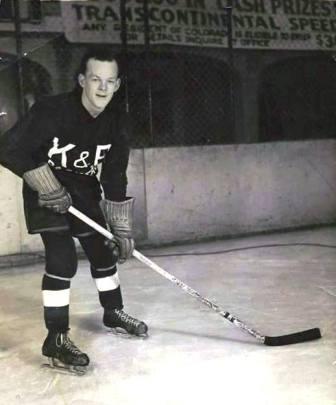
Scott was on the Island with his husband Felix Belzile for a short family visit, and told us that “…My mother Rhonda is from Kinkora and still lives here with my stepfather, Damien Coyle….”  His father, Michael Croken, lives in Moncton, New Brunswick.

CIMG5278 Aug 10 2021 Felix and Scott Chez Shea Kinkora

Felix Belzile (left) and Scott Nantes (right).  (Photo credit: Daria Valkenburg)

Growing up in Kinkora, Scott was a member of the Royal Canadian Air Cadet Program 53 Squadron in Summerside.  “…It was through the Air Cadets that I received my glider and private pilot’s licence…” he said.

….The military covered the cost of tuition….

For the best chance of having a career in flying, he applied to the ROTP (Regular Officers Training Plan), a program that would give him an opportunity to earn a fully paid university degree and an officer’s commission in the Canadian Armed Forces, in return for a commitment to serve for a set period. (For more information, see https://www.rmc-cmr.ca/en/registrars-office/regular-officer-training-plan-rotp)

Scott was accepted into the program and began his first year of studies at the Royal Military College Saint-Jean (Collège militaire royal de Saint-Jean) in Saint-Jean-sur-Richelieu, Quebec, 40 km south of Montreal. (See https://en.wikipedia.org/wiki/Royal_Military_College_Saint-Jean)

After the first year in Quebec, Scott continued his studies at the Royal Military College in Kingston, majoring in Political Science.  (See https://en.wikipedia.org/wiki/Royal_Military_College_of_Canada) This is where he met Felix, who majored in Computer Engineering.  Both men were enlisted in the RCAF.

….Basic Flight Training gives an indication of who has the ‘right stuff’….

After receiving his Bachelor of Arts, Scott was sent to Moose Jaw, Saskatchewan for 1 year of Basic Flight Training, even though he already had a private pilot’s licence. “…This is an RCAF requirement, even for commercial pilots, as there are differences from non-military pilot training. You are trained in formation flying, low level navigation, and aerobatics” he explained.

While operational skills are essential, this period is where trainees are assessed on other characteristics that make a good military pilot.  “…Decision making is key…” Scott noted.  “…You can’t freeze up, as you must think quickly.  Training sorts out who can handle stress…

Following this basic training, pilots are chosen for one of three streams: fighter pilot, helicopter pilot, or multi-engine pilot.  Scott’s first choice of multi-engine pilot was accepted, and he spent a further 5 months in Portage La Prairie, Manitoba, for multi-engine training on a King Air C90. “…Here we learned to deal with a 2 person crew.  I received my wings in February 2015….

….Flying the Airbus A310 …. even into a war zone….

DSC_1834(1) Scott Nantes in front of Airbus A310 at 2018 Summerside Air Show

Scott Nantes in front of an Airbus A310 at the 2018 Air Show Atlantic in Summerside.  (Photo courtesy Scott Nantes)

After receiving his wings, Scott was selected to fly the Airbus A310 (which has the military designation Polaris CC150) and was based in Trenton, Ontario.  This plane is used for three main functions: VIP transport, air to air refueling, and regular troop transport.

Scott gave examples of his experience with VIP transport.  “…I flew Prime Minister Trudeau to the first meeting with former US President Trump in Washington in 2017, and took former Governor General David Johnson on his last flight to China…

Regular troop transport included flying troops to and from bases in Edmonton or Quebec City and overseas bases in Kuwait, Latvia, and Ukraine.

KW05-2016-00780

Scott Nantes in the cockpit of an Airbus A310 in Kuwait.  (Photo courtesy Scott Nantes)

Scott had three deployments to Kuwait as an air to air refueling pilot, flying into Iraq and Northern Syria during the ISIS Coalition.  Each deployment lasted 2 months.  Air to air refueling has been described as a ‘gas station in the sky’, where a plane with the fuel must connect with a plane requiring fuel, through a probe that attaches to each plane.  It’s like something out of a science fiction movie!  As someone who finds threading a sewing needle a challenge, I could only marvel at the skill required.

During this period, he and Felix had a long-distance relationship.  Felix explained that …I was posted to Ottawa after receiving my Computer Engineering degree, and then started a software business on the side.  This turned into a full-time business after leaving the RCAF in 2017 and I was able to follow Scott to Trenton….

….A new challenge in flying the Challenger….

In 2020, Scott received a new assignment and was posted to Ottawa, where he and Felix currently live.  “…Now I’m flying the Challenger 604 and the new Challenger 650 planes, which are used for VIP and Medivac transport…

A passion for flying led Scott Nantes to a rewarding career serving our country and we thank him for sharing his story. If you have a story or photos to share, please contact Pieter at dariadv@yahoo.ca, comment on the blog, or send a tweet to @researchmemori1.

….Want to follow our research?….

If you are reading this posting, but aren’t following the blog, you are welcome to do so.  See https://bordencarletonresearchproject.wordpress.com or email me at dariadv@yahoo.ca and ask for an invitation to the blog.

Screenshot_2021-02-27 On The War Memorial Trail With Pieter Valkenburg

You are also invited to subscribe to our YouTube Channel: On The War Memorial Trail With Pieter Valkenburg: https://www.youtube.com/channel/UCJ591TyjSheOR-Cb_Gs_5Kw.

© Daria Valkenburg