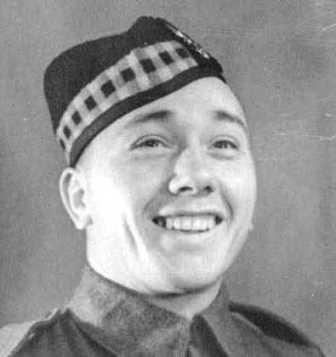
On The War Memorial Trail… An Island Airman In Stalag Luft III Part 1: 2 Families Connected By 1 Letter From A POW Camp

October 23, 2023. If you found a letter, written by someone you didn’t know, about your long-deceased uncle who died during WWII, what would your reaction be?  If you received a message saying that a 1942 letter from your long-deceased father was found, how would you react?   

….2 families…1 letter….

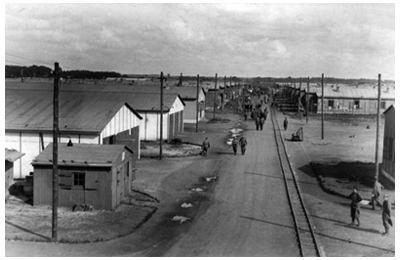
Two families were impacted by one small postcard-sized letter, written in September 1942 from POW camp Stalag Luft III.  The camp was near the town of Sagan, Lower Silesia, in what was then Nazi Germany (but now Żagań, Poland), 160 kilometres (100 miles) south-east of Berlin.  The movie ‘The Great Escape’ was based on an incident that happened in this camp in 1944. (See https://en.wikipedia.org/wiki/Stalag_Luft_III)

The letter was found by Don Coutts, nephew of WWII pilot Elmer Bagnall MUTTART of Cape Traverse, who lost his life on October 12, 1941.  Don found it amongst his mother’s effects after she died a few months ago.  He asked if we could “play detective in deciphering the handwriting and as well which prisoner of war camp it came from….”  Pieter was up for the challenge.

….The letter came from Stalag Luft III….

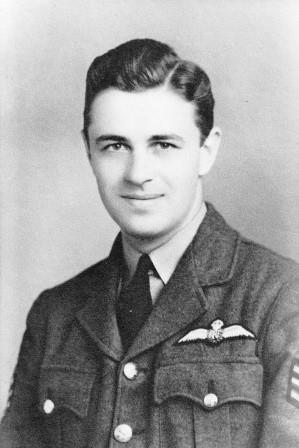
CIMG6475 Hubert Hall with mustache cropped and sharpened

John ‘Hubert’ Hall. (Photo courtesy of the Hall Family)

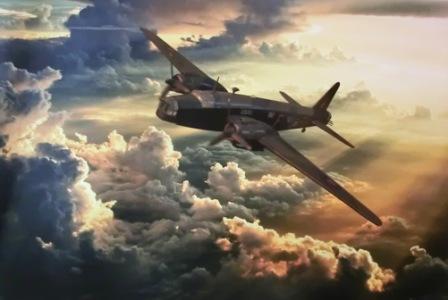
The letter was sent to Mrs.  Frank H. Hall in Summerside, and was written by John ‘Hubert’ HALL, the pilot aboard Wellington Z1203, which crashed in The Netherlands near Mijdrecht on the night of March 28/29,1942. Everyone on board that flight survived and spent the remainder of the war years in POW camps. 

Hubert was in Stalag Luft III, as was Geoffrey Douglas LEYLAND of the Royal Air Force, the Squadron Leader mentioned in the letter.  Pieter’s research found that Leyland had flown three times with Elmer Muttart as second pilot! (https://aviation-safety.net/wikibase/52841)  Leyland returned to England after the war and passed away in 1970.

Hubert Hall POW Letter p2

September 6, 1942 letter from Hubert Hall to his mother Marion Hall.

The text of the letter, from Hubert to his mother, reads “…Dear Mother, How are you dear? I’m quite well and managing all right, I hate washing clothes. A few days ago I happened to mention on parade PEI and Squadron Leader overheard me and asked me if I knew Elmer Muttart. At one time Squadron Leader was Elmer’s second pilot and his praise for Elmer’s capabilities as a pilot and the work he did was very high. He says he owes his life to Elmer’s flying one night before Elmer was missing. Mrs. Muttart might like to know of this…Lots of love, Hube…

One can imagine the relief that Mrs Hall felt in knowing that her son was alive and safe, but what she did next was a testament to her empathy for Annie Bagnall Muttart, whose son Elmer had died a year earlier.  She gave this precious letter to the Muttart family, and it was passed down to her daughter, Helen Coutts. (See https://onthewarmemorialtrail.com/2020/01/31/he-died-that-we-might-live-video-is-now-on-youtube/)

Elmer Bagnall Muttart (2)

Elmer Bagnall Muttart (Photo from Canadian Virtual War Memorial at http://www.veterans.gc.ca)

….The letter writer’s son was found….

The letter writer identified, Pieter’s next challenge was finding the family of Hubert and Mrs Frank Hall. The search led him to Robert ‘Bob’ Hall, who soon received a phone message from our intrepid detective! 

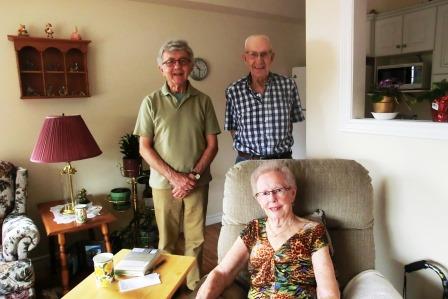
Bob was very surprised but called back immediately, confirming that Hubert was his father, and that his grandmother was Marion (nee Howatt) Hall. We met with him and his wife Joanne Sheen to learn more.

CIMG6521 Oct 14 2023 Daria with Joanne Sheen & Bob Hall

Left to right: Joanne Sheen, Bob Hall, Daria Valkenburg (Photo credit: Pieter Valkenburg)

Born January 4, 1915 in Summerside, Hubert enlisted at the RCAF Recruiting Centre in Moncton on June 26, 1940.  After receiving his wings, he left Canada for the United Kingdom and by May 1941 was sent for training on a Wellington bomber.

During his time as a POW, Hubert contracted tuberculosis, and when he returned back to the Island, he “…was in the sanatorium in Charlottetown…” Bob explained. 

Once he left the sanatorium, he worked at Hall Manufacturing, and then became the Sheriff of Prince County.  “…That’s when he met my mother, Forrona England. She worked at the Bank of Nova Scotia in Summerside, and most likely that’s where they met…” 

Bob noted that “…I was only three years old when my father died…” at age 39.  “…My mother was 29 when he died and she never got over it…

Joanne Sheen was excited to learn about the letter.  Bob agreed. “…It’s the only letter that we’ve seen from the POW camp…”  Written on very thin and flimsy paper, it’s not surprising that letters from POW camps might not have survived.  That made the 1942 letter a special remembrance.

Thank you to Don Coutts for sharing the letter from the POW camp, and to Bob Hall and Joanne Sheen for providing information about Hubert Hall. In Part 2: more on Hubert Hall’s story and his long march to freedom that began on January 27, 1945.

Do you have a story to tell? Email Pieter Valkenburg at memorialtrail@gmail.com, comment on the blog, or send a tweet to @researchmemori1.  

© Daria Valkenburg

…Want to follow our research?….

If you are reading this posting, but aren’t following the blog, you are welcome to do so.  Our blog address: https://onthewarmemorialtrail.com/

Front cover OnTheWarMememorialTrailinEurope4 countries, 6 weeks, 7,000 km – an unforgettable war memorial journey in Europe…. Daria’s book ‘No Soldier Buried Overseas Should Ever Be Forgotten‘ is available in print and e-book formats.  Net proceeds of book sales help support research costs and the cost of maintaining this blog. For more information on the book, please see https://nosoldierforgotten.com/

You are also invited to subscribe to our YouTube Channel: On The War Memorial Trail With Pieter Valkenburg: https://www.youtube.com/channel/UCJ591TyjSheOR-Cb_Gs_5Kw

Never miss a posting!  Subscribe below to have each new story from the war memorial trail delivered to your inbox.

On The War Memorial Trail….. The WWII Soldier Who Died While Reading A Dutch-English Dictionary

August 5, 2023.  When we planned a visit to the Canadian War Cemetery in Bergen Op Zoom, The Netherlands in October 2019, Pieter asked for a list of soldiers from Prince Edward Island from Caroline Raaijmakers of the Faces To Graves Bergen Op Zoom Project. (See https://onthewarmemorialtrail.com/2019/12/07/on-the-war-memorial-trail-our-2019-visit-to-the-canadian-war-cemetery-in-bergen-op-zoom/)

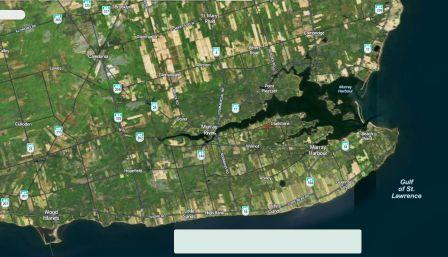
One of the soldiers whose grave we visited and placed flags at was that of Milton Evangeline LIVINGSTONE, born August 21, 1918 in Gladstone, Prince Edward Island, the only child of Joseph Henry and Agnes Lettie Livingstone of Murray Harbour, Prince Edward Island. 

Screenshot 2023-08-01 at 11-09-35 Murray River map satellite __ Canada Prince Edward Island

Map shows how close Gladstone, Murray Harbour, and Murray River are in Prince Edward Island. (Map source: https://satellites.pro)

… Milton made three attempts to actively serve…

After leaving school at the age of 17, Milton had various jobs, including on a farm, as a truck driver, and in a wholesale warehouse.  In 1940 he tried to enlist in the Canadian Army but was unsuccessful, as was his application to join the Royal Canadian Air Force.  Therefore, on April 6, 1942 he joined the 17th Armoured Regiment Reserve in Murray Harbour.  In the fall of 1942 he transferred to the Reserve in Charlottetown.

On March 2, 1943, he successfully enlisted with the No. 6 District Depot in Charlottetown.  By this time, he was married – to Mae Isabel Stymeist – and the father of Carol Christine, who had been born two months earlier, on December 31, 1942.

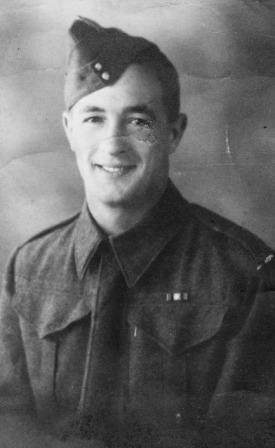
private livingstone Lincolns from Robert Catsburg

Milton Evangeline Livingstone. (Photo courtesy of Robert Catsburg, who had received it from the son of Marie van Elzakker-De Jong)

Milton was in Halifax, Nova Scotia he day after enlistment. The interviewer for his Personnel Selection Record noted that he “…seems to be a friendly and cheerful person….”  He “…plays softball, and reads a bit – mostly newspapers.  In his spare time he tinkers with machines…”  It was recommended that he be assigned to an infantry regiment.

On April 2, 1943, Milton was sent to No. 61 Canadian Army Basic Training Centre (CABTC) in New Glasgow, Nova Scotia.  His Personnel Selection Record was updated after he completed his basic training.  “…His progress was outstanding and he was therefore held over for two months as assistant instructor.  During this period he has done good and conscientious work and is recommended as capable and with NCO indications…”  (NCO refers to Non-Commissioned Officer.)

… Milton qualified as a Driver i/c and Driver Mechanic…

On August 6, 1943, Milton was transferred to No. 14 Infantry Training Centre (ITC) in Aldershot, Nova Scotia, remaining there until December 3, 1943 when he was sent to the S-5 Canadian Driving and Maintenance School (CD & M School) in Woodstock, Ontario, where he successfully completed a 6 week driving course to qualify as a Driver i/c Class III Wheeled Vehicles. (The term ‘Driver i/c’ refers to ‘Driver, internal combustion’.  Class III meant he was qualified to drive heavy trucks and armoured cars.)

After completing the driving course, Milton remained in Woodstock to take a Driver Mechanic I course, which he completed on March 15, 1944.  In addition to being a driver, he would also be responsible for minor vehicle repairs on vehicles in his unit.

… Milton left Canada for overseas service…

Milton returned to No. 14 Infantry Training Centre (ITC) in Aldershot on April 6, 1944 for final training and preparation before going overseas.

On May 1, 1944, he was on his way to the United Kingdom, arriving on May 7, 1944 and assigned to No 4 Canadian Infantry Reinforcement Unit (CIRU).  He was sent for more training, resulting in a reclassification to Driver Mechanic MV ‘C’ on June 8, 1944.

On September 10, 1944 Milton was sent to France with the X-4 reinforcement troops of No. 2 Canadian Base Reinforcement Group (CBRG), part of the 13th Battalion.  On September 23, 1944 he was transferred to ‘C’ Company of the Lincoln & Welland Regiment, joining them while the Regiment was in the area of Maldegem, Belgium. 

… Milton rejoined the Regiment after being released from the field hospital…

Milton was sent to a Field Hospital on September 25, 1944.  There was no record of casualties that day and he was not on the wounded list, so perhaps he had an accident.  On October 14, 1944 he returned to ‘C’ Company of the Lincoln & Welland Regiment, which was in the area of Middeldorp, Belgium.

By the beginning of November, the Regiment had entered The Netherlands, moving from Bergen Op Zoom and towards the capture of Steenbergen.

The Regiment’s war diary for November 4, 1944 reported that “…The Argyll & Sutherland Highlanders of Canada took over Steenbergen and reported the town clear…”  The Regiment was given a chance to take a well-deserved rest.

The last entry in Milton’s service record is on November 6, 1944 with the notation ‘Deceased. Believed Killed In Action’. However, the war diary for that day reported “… everything quiet…”  Similarly, no report of fighting was recorded in ‘History of the Lincoln and Welland Regiment’ by Robert Louis Rogers. 

The mystery of what happened to Milton was finally solved in an account in ‘Five Days In November –The Liberation of Welberg and Steenbergen in WWII’ by Robert Catsburg, and translated from the original Dutch by Ineke Hardy.

… An eyewitness account of what happened on November 6, 1944…

Robert Catsburg explained to us that the account of what happened that day came from Lies de Jong, one of the daughters of the De Jong family.

…On 6 November, a fatal accident took place at the home of the De Jong family on Oudlandsestraat. On their return, the De Jongs had found their house filled with Canadians of the Lincoln and Welland Regiment…  

 …The men were very well-behaved, and most of them slept in a small abandoned house at the back. During the day, they relaxed or carried out maintenance on the large tank parked beside the De Jong residence. A few men shared the house with the De Jongs…

…During the day, the officer slept in Grandpa’s box bed and at night, Grandpa took his place. The older De Jong daughters basked in the attention from the young soldiers. Daughter Marie had formed a friendship with one of them, Private Milton E. Livingstone…

…On 6 November, the two were sitting side by side at the table, looking up words in a dictionary in an effort to learn a little of each other’s language. A soldier of American origin (in the interview, Lies de Jong called him ‘the Texas man’) sat across from Marie and Milton, cleaning his weapon. Without warning, the weapon went off, and Milton Livingstone collapsed with a muffled groan. He was fatally injured….

…Marie watched in horror as her friend’s body was wrapped in a grey blanket, taken outside through the window, and removed by a truck. The chaplain of the regiment tried to counsel the family, but the language barrier defied his efforts. Marie kept the picture Milton Livingstone had given her until the day she died, in 2008…

… Milton’s cause of death was not investigated or recorded…

It’s not difficult to imagine the effect this incident had on Marie and her family. What is difficult to understand is why a soldier would be cleaning a loaded gun in the house of civilians with young daughters, and not outside. Even more difficult to understand is why no court of inquiry was made, or even a reference to what happened in the war diary, regimental history, or Milton’s service file. 

The war diaries for the Regiment recorded soldiers who were absent without leave, who had accidentally hurt themselves while on duty, who disobeyed officers.  Shooting of a soldier?  Nothing.

We have come across other accidental shootings over the years, which have been documented in the war diaries of other Regiments. It appears that the handling of this incident was not standard practice.

A note in the December 1944 war diary for the Lincoln & Welland Regiment suggested that such shootings were not unusual:  “…serious disciplinary action will be taken in the case of personnel who are injured as a result of our own or enemy weapons.  Carelessness in this respect is causing a great wastage of personnel…” 

… Milton is buried in the Canadian War Cemetery in Bergen Op Zoom…

CIMG3398 Oct 7 2019 Bergen Op Zoom Milton Livingstone

Pieter beside the grave of Milton Evangeline Livingstone. (Photo credit: Daria Valkenburg)

Milton was temporarily buried in Bergen Op Zoom before being reburied in the Canadian War Cemetery in Bergen Op Zoom in 1946. 

Thank you to Robert Catsburg for allowing us to quote from his book and for sharing the photo of Milton Livingstone.

Do you have a story to tell? Pieter encourages you to email him at memorialtrail@gmail.com, or comment on the blog.    

© Daria Valkenburg

…Want to follow our research?…

If you are reading this posting, but aren’t following our research, you are welcome to do so.  Our blog address: https://onthewarmemorialtrail.com/
Front cover OnTheWarMememorialTrailinEurope4 countries, 6 weeks, 7,000 km – an unforgettable war memorial journey in Europe…. Daria’s book ‘No Soldier Buried Overseas Should Ever Be Forgotten‘ is available in print and e-book formats.  Net proceeds of book sales help support research costs and the cost of maintaining this blog. For more information see https://nosoldierforgotten.com/

Subscribe to our YouTube Channel: On The War Memorial Trail With Pieter Valkenburg: https://www.youtube.com/channel/UCJ591TyjSheOR-Cb_Gs_5Kw

Never miss a posting!  Subscribe below to have each new story from the war memorial trail delivered to your inbox.

On The War Memorial Trail….. The WWI Soldier From Tryon Who Was Raised By His Grandparents

July 24, 2023.  When Pieter was contacted by Ivan MacDonald about Ivan’s father, we initially thought we would be researching a WWII soldier from Prince Edward Island.  We were wrong. Ivan’s father, Angus Clayton MACDONALD, served in WWI!

CIMG6416 Jul 4 2023 Pieter Ivan & Edna MacDonald

Pieter with Ivan MacDonald and Ivan’s wife Edna. (Photo credit: Daria Valkenburg)

…He was brought up by his grandparents in Mount Tryon” Ivan explained. 

Ivan’s nephew, Philip MacDonald, sent us the Service Regimental Number for Angus, which meant Pieter could easily find the WWI Service File.  “…Angus MacDonald was my grandfather. He was born on May 2, 1896 to a single mom, Alice MacDonald, who later married John Heatly (aka Hately) from Tryon. Grampy was raised by Donald and Christy MacDonald so this is how as a boy he learned to speak Gaelic….

…Angus enlisted in Charlottetown…

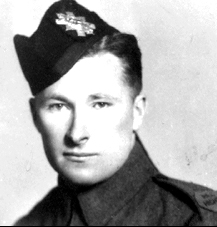
colourized Angus Clayton MacDonald

Angus Clayton MacDonald. (Photo courtesy of the MacDonald Family. Photo colourization by Pieter Valkenburg)

On August 29, 1917, the Military Service Act came into effect, stating that all males between 20 and 45 were subject to conscription until the end of the war.  (See https://www.thecanadianencyclopedia.ca/en/article/military-service-act)

The enlistment form for Angus noted that he had been drafted when he enlisted with H Company, 1st Depot Battalion, Nova Scotia Regiment, in Charlottetown, Prince Edward Island, on March 21, 1918.  In the form, he stated that he was born on May 2, 1897 in Tryon, Prince Edward Island, and was a farmer.  (This was a year later than other records stated.)

We asked Ivan if Angus had enlisted at the same time as any relatives or friends, and he said he didn’t know.  We found that Bruce Sutherland MCKAY, who grew up not far from Angus, enlisted on the same day in the same Regiment. (See https://onthewarmemorialtrail.com/2019/04/22/the-ww1-soldier-who-never-made-it-to-the-front/

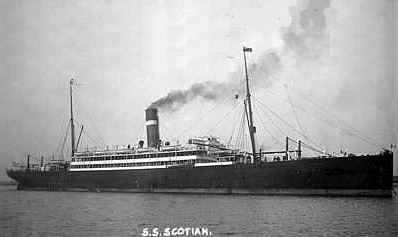
…Angus sailed to England aboard the SS Scotian…

HMT_Scotian

Angus Clayton MacDonald and Bruce Sutherland McKay travelled to England on the same voyage aboard the troopship Scotian. (Photo source: https://birtwistlewiki.com.au/wiki/HMT_Scotian)

Within a few weeks of enlistment Angus was on his way to the United Kingdom, aboard the troopship SS Scotian, arriving in Liverpool, England on April 28, 1918. 

Upon arrival, Angus was sent to Segregation Camp, Frensham Pond, in Bramshott. This was a prudent measure as the first wave of infectious diseases had already affected men held in crowded conditions.  In April 1918, senior military officials had set up segregation camps to hold arrivals from Canada for 28 days before joining their units.

Bruce Sutherland McKay was on the same voyage, but once they docked in England, their paths diverged as McKay had developed scarlet fever during the journey.

On May 5, 1918, Angus was admitted to the 12th General Hospital in Bramshott with mumps.  It wasn’t until July 10, 1918 that he was discharged, assigned to the 2nd Canadian Convalescent Depot (CCD) and sent to the Nova Scotia Regimental Depot (NSRD), which was at Bramshott.   This was the facility behind the front used to assemble men and to store and administer equipment and materials. 

On August 10, 1918, he was deemed fully recovered and transferred to the 17th Canadian Reserve Battalion in Bramshott for training and preparation for the fighting at the front.

…Angus qualified as a marksman…

Philip had wondered if the crossed rifles on the sleeve of his grandfather’s uniform had any significance.  It meant that he had successfully passed a marksman course, which entitled him to wear crossed rifles on his uniform.  A marksman was not a sniper, which required further training.  (See https://en.wikipedia.org/wiki/Marksman)

On October 26, 1918, Angus was transferred to the 85th Battalion (Nova Scotia Highlanders) and sent to France.  (For more information, see https://en.wikipedia.org/wiki/85th_Battalion_(Nova_Scotia_Highlanders),_CEF)

The war was nearing its end, with much of the German Army in retreat following the Battle of Valenciennes on November 1, 1918.  (See https://en.wikipedia.org/wiki/Battle_of_Valenciennes_(1918))

Allied troops kept up the pressure with a general advance, and on November 4, 1918, the 3rd and 4th Canadian Divisions arrived on both sides of the Valenciennes-Mons road.  The Allied objective?  Cross the French border into Belgium and forge a passage through the parallel rivers of the Grand Honnelle and Petite Honnelle, moving the battlefront towards the line between Mons on the left and Aulnois on the right.

…Angus was wounded in the last week of WWI…

On November 5, 1918, the Passage of the Grande Honnelle Battle began around Honnelles, and lasted until November 7, 1918.  Located in Belgium, Honnelles is a small village near the French border, located near the Petite Honnelle river. (See https://en.wikipedia.org/wiki/Passage_of_the_Grande_Honnelle)

The 85th Battalion was part of the 4th Canadian Division, which initially stayed on the French side of the border before crossing the border into Belgium.  On November 6, 1918 Angus received gunshot wounds to both arms and was sent to the 23rd Casualty Clearing Station. 

On November 10, 1918, Angus was transferred to the No.  22 General Hospital in Camiers, France before being transported back to England on November 27, 1918. He was hospitalized at Clandon Park House until January 30, 1919.  (See https://en.wikipedia.org/wiki/Clandon_Park_House)

From Clandon Park, he was transferred to Woodcote Park Military Convalescent Hospital in Epsom, until he was discharged on February 19, 1919.   (See  https://wartimememoriesproject.com/greatwar/hospitals/hospital.php?pid=18196)

Upon discharge he returned to the 17th Reserve Battalion camp, located in Ripon in North Yorkshire, before being sent on March 19, 1919 to Kinmel Park Camp in Wales, about 48 km from Liverpool, where he and other soldiers waited their turn to board a ship back to Canada.

Competition for shipping among the Allied powers, labour disruption due to strikes by dockworkers, seamen, miners and police, and shortages of food and coal made for miserable conditions. 

Luckily, Angus didn’t have to wait long before he boarded the SS Megantic, returning to Canada and receiving his discharge certificate on April 16, 1919 in Charlottetown, Prince Edward Island.

…Civilian life with a wife and children…

Upon returning to civilian life, Angus worked in fishing for Harry Crossman in Cape Traverse, Prince Edward Island.  He bought a motorcycle, and on a trip to visit his aunt in Lower Bedeque, he met Ruby Frances Rose of nearby Chelton.  They married on October 27, 1921 and raised 3 sons and a daughter.

Angus Ruby and Eldon 1924 photo from Ivan cropped and restored

Ruby and Angus MacDonald with son Eldon in 1922. (Photo courtesy of the MacDonald family)

…Eldon was the oldest, born in 1922.  I was born in 1930.  Herbert, who was Philip’s father, was born in 1933…” Ivan told us.

…In the 1930s he sold Plymouth cars in Summerside, but times were very tough due to the Depression…” Ivan recalled.  “…He was very smart, and could do mechanical work, carpentry, build a flue, just as a few examples. He had a small workshop and made axe handles….” 

…Angus died in 1979 following a stroke…

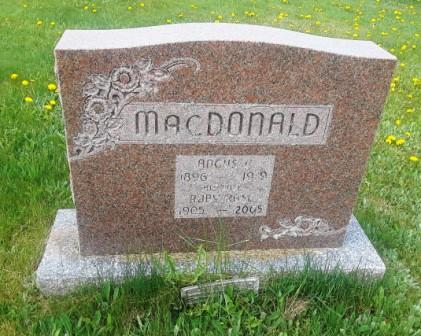
After suffering a stroke, Angus died a few months later, on April 30, 1979 at Prince County Hospital in Summerside, Prince Edward Island.  He was buried at the Lower Bedque Cemetery.

grave stone Angus C MacDonald Lower Bedeque

Grave of Angus Clayton MacDonald at Lower Bedeque Cemetery. (Photo source: http://www.findagrave.com)

Philip MacDonald wrote Pieter to say “… I very much enjoy the stories of all the veterans you and your wife have written for the County Line Courier.  I feel it is important to recognize that these men had a life and family they left behind because their country asked them to do so.  I’m not sure this is something many of us really consider when we hear the names being read once a year on Remembrance Day…” 

Thank you to Ivan and Edna MacDonald for sharing information about Ivan’s father, and to Philip MacDonald for sharing information and finding his grandfather’s Service Regimental Number.

Do you have a story to tell? Pieter encourages you to email him at memorialtrail@gmail.com, comment on the blog, or tweet to @researchmemori1.    

© Daria Valkenburg

…Want to follow our research?…

Follow our blog

If you are reading this posting, but aren’t following our research, you are welcome to do so.  Our blog address: https://onthewarmemorialtrail.com/

Front cover OnTheWarMememorialTrailinEurope4 countries, 6 weeks, 7,000 km – an unforgettable war memorial journey in Europe…. Daria’s book ‘No Soldier Buried Overseas Should Ever Be Forgotten‘ is available in print and e-book formats.  Net proceeds of book sales help support research costs and the cost of maintaining this blog. For more information see https://nosoldierforgotten.com/

Subscribe to our YouTube Channel: On The War Memorial Trail With Pieter Valkenburg: https://www.youtube.com/channel/UCJ591TyjSheOR-Cb_Gs_5Kw

Never miss a posting!  Subscribe below to have each new story from the war memorial trail delivered to your inbox.

On The War Memorial Trail…..The WWII Soldier From Victoria Cross Fatally Wounded During The Liberation Of Posterenk

June 29, 2023.  In 2017, Pieter and I visited the village of Posterenk in The Netherlands with Edwin van der Wolf, one of the research volunteers at the Canadian War Cemetery in Holten.

CIMG9295 Sep 25 2017 Posterenk windmill

Windmill in Posterenk, which has a memorial stone inscribed on the wall.  (Photo credit: Daria Valkenburg)

….The Island connection to Posterenk…..

Edwin wanted us to visit the village because it had an Island connection.  Frank GALLANT, son of Anthony and Eleanor Gallant of Mount Carmel, Prince Edward Island, who was with the Carleton & York Regiment, died during there on April 13, 1945 at the age of 32.

The village had a list of 6 soldiers to commemorate from the Carleton & York Regiment, who had all been buried in the area.  In addition to Frank Gallant, the list named another Islander, James ‘Frank’ MOSSEY, of Souris.

Unfortunately, not all soldiers who died are included on this list, but Edwin worked towards including two more, who were not buried near Posterenk, but “were temporarily buried in Lochem because they had previously died in a Canadian hospital there….

These two additional soldiers were: Goldwin Marven POLLICK of Minto, New Brunswick, and Daniel Peter MACKENZIE of Victoria Cross, Prince Edward Island. 

Born March 22, 1918 in Victoria Cross, Daniel ‘Dan’ Peter MACKENZIE was the son of John and Rachael MacKenzie.  His niece, Carol Burke, provided more information on his life when she contacted Pieter in 2015:  “Dan MacKenzie grew up on a farm in Victoria Cross, Prince Edward Island, and attended Victoria Cross school.  He had 3 brothers Johnny, Billy, and Angus, all deceased, and 3 sisters: Florence Rodgerson, Mabel MacNeill, and Edna Campbell, all living in Prince Edward Island. Dan enjoyed playing hockey and ball with his siblings and working on the farm with his father…” 

….Dan MacKenzie enlisted in 1940…..

Before enlisting with the PEI Highlanders in Charlottetown, Prince Edward Island on May 15, 1940, Dan had served in the militia with the PEI Light Horse Regiment (17th Reserve Armoured Regiment) since 1937.  He had been working as a farm labourer for Gavin Read of Montague, Prince Edward Island, and hoped to have a dairy farm of his own.

MacKenzie-Daniel-P (2)

Daniel ‘Dan’ Peter MacKenzie. (Photo courtesy of Carol Burke)

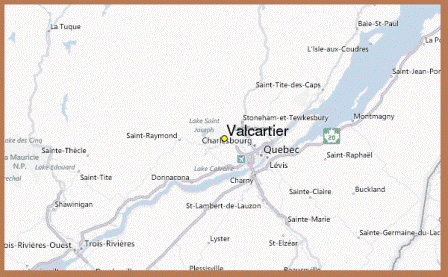
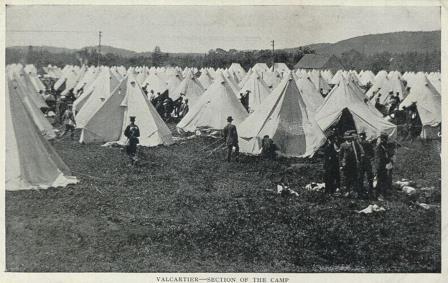
He went to Dartmouth, Nova Scotia for basic training, and remained there until June 3, 1941, when he was sent to Valcartier, Quebec in preparation for guard duty in Newfoundland. 

… Dan was sent to Newfoundland….

NFLD Map shows Botwood

Location of Botwood Military Base in Newfoundland. (Map source: http://postalhistorycorner.blogspot.com/2012/12/wwii-canadian-forces-in-newfoundland.html)

After France was occupied by the Germans in 1940, Newfoundland’s defensive position became more precarious. That same year, Canada assumed responsibility for the defence of Newfoundland with the establishment of ‘W Force’, a Canadian garrison force responsible for defending Newfoundland against enemy incursions and providing security for existing and proposed defence facilities during WWII. It included infantry, artillery, and anti-aircraft units. (See https://en.wikipedia.org/wiki/Military_history_of_Newfoundland_during_World_War_II)

On July 23, 1941, as part of ‘W Force’, Dan was sent to Botwood, Newfoundland.  In addition to the PEI Highlanders, troops from the Black Watch of Canada, Royal Rifles of Canada, The Algonguin Regiment, Queens Own Rifles, also served at various times. While an RCAF base in Botwood had aircraft patrolling the east coast of the Atlantic, Canadian Army personnel based at Botwood were charged with protection of military facilities that had been installed there, as well as in Gander. (See https://www.heritage.nf.ca/articles/politics/botwood-base.php)

…..Three other soldiers were in Botwood…..

Dan was in Botwood at the same time as three other soldiers whose stories have been told on this blog:

Dan remained in Newfoundland until March 20, 1943, when he was sent to Sussex, New Brunswick.  On June 2, 1943, Dan was transferred to the No. 1 Transit Camp in Debert, Nova Scotia, for final preparation and training before being sent overseas. 

…Dan was in the Italian Campaign….

He left Canada on June 10, 1943, arriving in the United Kingdom on June 18, 1943 and posted to No. 7 Canadian Infantry Reinforcement Unit (CIRU).  On October 25, 1943 he participated in Hot Dog, an exercise to prepare troops who would be part of the Central Mediterranean Force (CMF) and travelled on to mainland Europe with the CMF and the Allied Army in Italy (AAI).  Not long afterwards, he was transferred to the Carleton & York Regiment on December 23, 1943, fighting in the Italian Campaign. (See https://en.m.wikipedia.org/wiki/Italian_campaign_(World_War_II))

Carol Burke had noted that Dan’s “… regiment fought just north of Ortona, Italy…. and was in the forefront of the assaulting Infantry that bitterly fought Gustav, Hitler and Gothic Line battles....”

On December 31, 1944 Dan was attached to Allied Forces Headquarters (AFHQ), which controlled all Allied operational forces in the Mediterranean Theatre of Operations until the end of the war.  AFHQ was based in Caserta, Italy after the capture of Sicily and invasion of Italy.

On March 19, 1945 he left Italy as part of Operation Goldflake, arriving in Marseilles, France two days later.  Operation Goldflake was the codename for moving troops from Italy to North-West Europe.  (See https://en.wikipedia.org/wiki/Operation_Goldflake)

The Carleton & York Regiment was now part of the 21st Army Group. From France, troops were moved up to the Belgian front, into The Netherlands, through the Reichswald Forest in Germany, and then back into The Netherlands.

…The Liberation of Posterenk…

On April 12, 1945 the Regiment was part of Operation Cannonshot, which led to the crossing of the IJssel River between the villages of Gorssel and Wilp in the eastern part of The Netherlands. (See https://www.liberationroute.com/stories/190/operation-cannonshot)

Map western holland showing Posterenk

According to the April 12, 1945 war diary entry of the Carleton & York Regiment, they “…moved across the Ijssel River at 14:30 hours….” to relieve the Seaforth Highlanders of Canada.

On April 13, 1945, the war diary entry noted that …‘D’ Company’s objective is Posterenk…The Regiment didn’t expect much opposition, but they “met with stiff resistance just after starting at 11:25 hrs…

With the help of a tank troop, they were able to move forward.  According to the war diary entry, “at 13:37 hrs ‘D’ Company reported that POSTERENK was clear of the enemy, having had one officer killed (Lt. R.B. Savage) and two other ranks wounded but a total of 50 POWs. ‘D’ Company were ordered to push on up the road which they did at once and came under enemy fire…

Dan was one of those wounded. The medical file stated he received gunshot wounds to his abdomen and left hip.  He was taken to a Canadian hospital in Lochem, where he died at 7:30 pm, despite heroic efforts to save him.  He was 26 years old.

…Dan is buried in the Canadian War Cemetery in Holten…

Dan was initially buried in the Lochem Civil Cemetery, before being reburied on February 1, 1946 in the Canadian War Cemetery in Holten.

We visited his grave in 2017 and 2019.  See: https://onthewarmemorialtrail.com/2018/01/20/on-the-war-memorial-trail-at-holten-canadian-war-cemetery/

CIMG9112 Sep 18 2017 Holten Cemetery Pieter by grave of D MacKenzie

Pieter by the grave of Daniel ‘Dan’ Peter MacKenzie at the Canadian War Cemetery in Holten.  (Photo credit: Daria Valkenburg)

Thank you to Carol Burke for sharing a photo and information. “The fact that Cpl MacKenzie’s death came so close to the end of the war and after such a long period of action only added to the sorrow of his loved ones…” she wrote.

If you have a story to tell, Pieter encourages you to email him at memorialtrail@gmail.com, comment on the blog, or tweet to @researchmemori1.    

© Daria Valkenburg

…Previous stories about soldiers commemorated in Posterenk….

…Want to follow our research?…

Follow our blog

If you are reading this posting, but aren’t following the blog, you are welcome to do so. Our blog address: https://onthewarmemorialtrail.com/

Front cover OnTheWarMememorialTrailinEurope4 countries, 6 weeks, 7,000 km – an unforgettable war memorial journey in Europe…. Daria’s book ‘No Soldier Buried Overseas Should Ever Be Forgotten‘ is available in print and e-book formats.  Net proceeds of book sales help support research costs and the cost of maintaining this blog. For more information see https://nosoldierforgotten.com/

You are also invited to subscribe to our YouTube Channel: On The War Memorial Trail With Pieter Valkenburg: https://www.youtube.com/channel/UCJ591TyjSheOR-Cb_Gs_5Kw

Never miss a posting!  Subscribe below to have each new story from the war memorial trail delivered to your inbox.

On The War Memorial Trail…. The Faces Of Groesbeek Exhibition Part 1: The Soldiers From Prince Edward Island

CIMG6201 Apr 27 2023 Dutch flag by garage

The Dutch flag flew proudly at the Valkenburg household on Liberation Day.   (Photo credit: Pieter Valkenburg)

May 16, 2023.  One of the events planned for the 75th Anniversary of the Liberation of The Netherlands in May 2020 was to place photos by the graves of soldiers at the Canadian War Cemetery in Groesbeek, The Netherlands.  Unfortunately, due to social distancing measures from Covid, this was postponed for a year.

In 2021, photos were placed at more than 1,600 graves for three weeks.  The event was so successful that the Commonwealth War Graves Commission, which oversees the cemetery, gave permission for photos to be placed by the graves every two years.

…The Faces Of Groesbeek Exhibition 2023 includes almost 2,000 photos…

This year, The Faces Of Groesbeek Exhibition runs from April 30 to May 21, 2023, with almost 2,000 photos, just over 350 more than 2 years ago!  Photos are printed onto an aluminum backing, making them impervious to rain, and reusable.

CIMG8927 Sep 15 2017 Entrance to Groesbeek cemetery

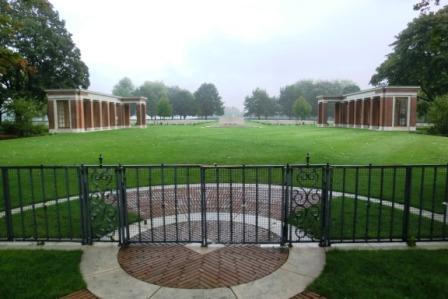
View as you enter the Canadian War Cemetery in Groesbeek – before the photo exhibition.  (Photo credit: Daria Valkenburg)

Volunteers from Faces To Graves Foundation Groesbeek, of which Alice van Bekkum is the Chair, worked tirelessly to make this exhibition possible, and to organize the Liberation Day commemoration events.

Pieter has been involved in finding photos of Canadians who are buried in all three Canadian War Cemeteries in The Netherlands since 2014, with many of their stories told on this blog.

…5 Islanders Commemorated…

In this posting, the graves and photos of five soldiers from Prince Edward Island, whose stories have previously been told, are featured.

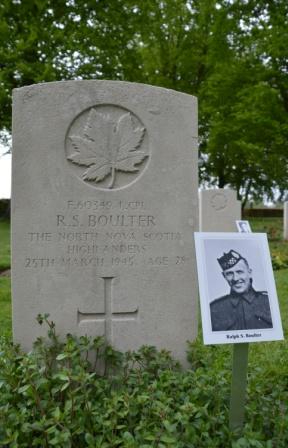
BOULTER Ralph Schurman - XIX C 01(1)

Ralph Schurman Boulter. (Photo courtesy of Faces To Graves Groesbeek)

Ralph Schurman BOULTER of O’Leary was serving with the North Nova Scotia Highlanders when he was killed on March 25, 1945, during the Battle of Bienen in Germany, at the age of 27. You can read his story at https://onthewarmemorialtrail.com/2023/03/07/on-the-war-memorial-trail-the-battle-of-bienen-part-2-the-wwii-battle-drill-instructor-from-oleary/

IMG_8925 George Ivan MacKinnon

Grave of George ‘Ivan’ MacKinnon.  (Photo courtesy of Ad Scheepers)

George ‘Ivan’ MACKINNON of Albion was serving with the North Nova Scotia Highlanders when he was killed on December 4, 1944, during the defence of the Nijmegen Salient in The Netherlands, at the age of 27. You can read his story at https://onthewarmemorialtrail.com/2022/11/02/on-the-war-memorial-trail-the-wwii-soldier-from-albion-who-died-during-the-defence-of-the-nijmegen-salient/

IMG_8941 Barney McGuigan

Grave of Bernard ‘Barney’ Reuben McGuigan.  (Photo courtesy of Alice van Bekkum)

Bernard ‘Barney’ Reuben MCGUIGAN of Sturgeon was serving with the North Shore (New Brunswick) Regiment when he was killed on February 26, 1945, during Operation Blockbuster in Germany, at the age of 16. You can read his story at https://onthewarmemorialtrail.com/2020/08/07/on-the-war-memorial-trail-the-search-for-barney-reuben-mcguigan/ and https://onthewarmemorialtrail.com/2021/12/23/on-the-war-memorial-trail-the-photo-search-for-barney-mcguigan-is-successful/

IMG_8935 John Clifford Rogers

Grave of John ‘Clifford’ Rogers. (Photo courtesy of Alice van Bekkum)

John ‘Clifford’ ROGERS of Hope River was a sapper with the North Shore (New Brunswick) Regiment when he and six other soldiers died on March 3, 1945 in the Balburger Wald, Germany.  He was 19 years old.  You can read his story at https://onthewarmemorialtrail.com/2021/08/24/on-the-war-memorial-trail-the-search-for-a-photo-of-john-clifford-rogers-is-successful/

SMITH Edison Alexander - V H 13

Edison Alexander Smith. (Photo courtesy of Faces To Graves Groesbeek)

Edison Alexander SMITH of West Point was serving with the North Nova Scotia Highlanders when he was killed on March 25, 1945, during the Battle of Bienen in Germany, at the age of 32. You can read his story at https://onthewarmemorialtrail.com/2023/03/04/on-the-war-memorial-trail-the-battle-of-bienen-part-1-the-wwii-soldier-whose-body-shielded-a-wounded-major/

…The search for photos continues…

What is striking is how many photos have been found! Out of 2,619 graves in the cemetery, 2,338 are Canadian, with 103 in graves marked ‘unknown’.  Wouldn’t it be wonderful if photos for all of the known graves of Canadians buried in Groesbeek will be found for The Faces Of Groesbeek Exhibition in 2025?

Thank you to Alice van Bekkum and Ad and Noor Scheepers for taking these photos. The Dutch continue to stress the importance of remembrance to the next generation so they can continue to remember those who lost their lives in WWII.

In Part 2, the graves and photos of Indigenous soldiers whose families contacted us will be featured.

If you have a photo of a soldier buried at the Canadian War Cemetery in Groesbeek or one of the other cemeteries in The Netherlands, Pieter encourages you to email him at memorialtrail@gmail.com, comment on the blog, or tweet to @researchmemori1.

© Daria Valkenburg

…Previous postings about The Faces Of Groesbeek Exhibition at the Canadian War Cemetery in Groesbeek…

…Want to follow our research?…

Follow our blog

If you are reading this posting, but aren’t following the blog, you are welcome to do so. Our blog address: https://onthewarmemorialtrail.com/.

Front cover OnTheWarMememorialTrailinEurope4 countries, 6 weeks, 7,000 km – an unforgettable war memorial journey in Europe…. Daria’s book ‘No Soldier Buried Overseas Should Ever Be Forgotten‘ is available in print and e-book formats.  Net proceeds of book sales help support research costs and the cost of maintaining this blog. For more information see https://nosoldierforgotten.com/

You are also invited to subscribe to our YouTube Channel: On The War Memorial Trail With Pieter Valkenburg: https://www.youtube.com/channel/UCJ591TyjSheOR-Cb_Gs_5Kw.

Never miss a posting!  Subscribe below to have each new story from the war memorial trail delivered to your inbox.

On The War Memorial Trail….. The Battle of Bienen – Part 2: The WWII Battle Drill Instructor From O’Leary

March 7, 2023. After Alice van Bekkum, Chair of the Groesbeek Cemetery Faces To Graves Foundation, sent Pieter a list of 39 soldiers from the North Nova Scotia Highlanders Regiment who were killed during the Battle of Bienen in Germany on March 25, 1945, we realized that we had attended a graveside commemoration at the Canadian War Cemetery in Groesbeek, The Netherlands in 2017 for two soldiers from this list:  Ralph Schurman BOULTER and Edison Alexander SMITH, both from Prince Edward Island.

CIMG9004 Sep 15 2017 sign giving directions to Groesbeek Cemetery

Directional sign to the Canadian War Cemetery in Groesbeek, The Netherlands. (Photo credit: Daria Valkenburg)

….The 2017 Commemoration at Groesbeek…..

On September 15, 2017, we were invited by Alice van Bekkum to be present when Nova Scotia resident Harriet Jenereux, the daughter of Smith, came to visit her father’s grave plus the grave of Boulter, her mother’s brother.   We accepted the invitation and made sure we placed flags at the graves of both men, as well as on the graves of several men who were on our list. (See the original posting at https://onthewarmemorialtrail.com/2017/12/25/on-the-war-memorial-trail-at-the-canadian-war-cemetery-in-groesbeek/)

CIMG8944 Sep 15 2017 Groesbeek cemetery grave of Ralph Schurman Boulter

Grave of Ralph Schurman Boulter at Groesbeek Canadian War Cemetery. (Photo credit: Daria Valkenburg)

….Ralph enlisted with the PEI Highlanders in 1940…..

A Christmas baby, Ralph Schurman BOULTER was born December 25, 1917 in O’Leary, Prince Edward Island, the son of Mcneil ‘Neil’ Amos and Ella May (nee Schurman) Boulter.  When he enlisted with the PEI Highlanders in Charlottetown, Prince Edward Island on July 10, 1940, he stated he was born in 1917. 

However, upon his death, his mother stated he was born in 1918 in the Estate Form.  This would be incorrect, as when Ralph married Mary Catherine MacEachern in Armdale, Nova Scotia on February 7, 1942, he was 24 years old – consistent with a birth year of 1917.

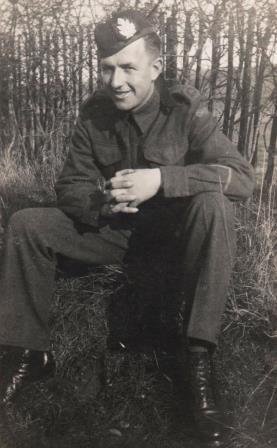
Boulter from CVMM

Ralph Schurman Boulter.  (Photo courtesy of Canadian Virtual War Memorial)

After enlisting, Ralph remained with the PEI Highlanders for basic training, before being transferred to No. 6 Depot in Halifax, Nova Scotia on October 15, 1941. 

He applied for permission to marry, which was granted.  Unfortunately, the couple didn’t have a long time together, as Ralph was sent overseas two months later, leaving Halifax on April 9, 1942 and arriving in the United Kingdom on April 19, 1942.

….Ralph was a Battle Drill instructor in the UK…..

Upon arrival in the United Kingdom he was allocated to the Cape Breton Highlanders for a week, before transferring to No. 5 Canadian Infantry Reinforcement Unit (CIRU) Armoured Division. 

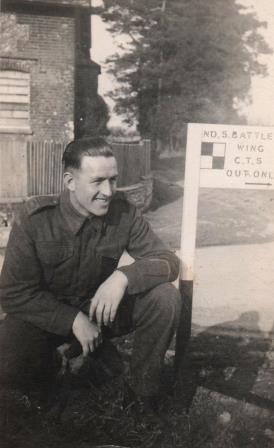
Boulter from Van Virt war mem

Ralph at No. 5 (Battle) Wing Canadian Training School in the UK.  ((Photo courtesy of Canadian Virtual War Memorial)

On May 1, 1942 he was seconded as a Battle Drill instructor to No. 5 (Battle) Wing Canadian Training School at Rowland’s Castle, Hampshire, England, which trained Canadian soldiers in Battle Drill, a course which taught men how to react when coming under enemy fire.

The course tried to mimic combat conditions, using obstacle courses and simulated battlefields, live rounds fired over the heads of students, controlled explosions, target practice, and dummies to bayonet.

a132776-v6 Battle WIng drill

Unidentified infantrymen taking part in a training exercise, No.5 (Battle) Wing, Canadian Training School (Canadian Army Training Centres and Schools), Rowland’s Castle, England, 8 June 1943. (Photo source:  Library and Archives Canada/Department of National Defence fonds/a132776)

Ralph remained there until November 9, 1944, when he was transferred to No. 3 Canadian Infantry Training Regiment (CITR). 

….Ralph went from Battle Drill instructor to actual combat…..

He left the United Kingdom for Northwest Europe on December 31, 1944, arriving the following day.  On February 13, 1945 he was transferred to the North Nova Scotia Highlanders, joining the Regiment in Germany, where he would have been reunited with his brother-in-law, Edison Alexander Smith.

On February 12, the Regiment had reached Kellen, Germany near Kleve, just on the other side of the border with The Netherlands.  On February 14, using amphibious vehicles, the North Novies evacuated Warbergen as they made their way to Emmerich.

Next, the Regiment participated in Operation Blockbuster.  (See https://en.wikipedia.org/wiki/Operation_Blockbuster). 

On March 6, 1945, Ralph received a promotion to Lance Corporal.  Meanwhile, the Regiment prepared for Operation Plunder, which began March 21, 1945 and ended April 1, 1945, and involved the crossing of the Rhine River to the north of the Ruhr industrial region in western Germany. With aerial and military support, this took place on the night of March 23, 1945 near Rees, a town situated on the right bank of the Rhine River, approximately 20 km (12.4 miles) east of Kleve. (See https://en.wikipedia.org/wiki/Operation_Plunder)

…Ralph lost his life in the Battle of Bienen ….

On the next afternoon, March 24, 1945, they encountered fierce German resistance near the village of Bienen. On March 25, 1945, the North Nova Scotia Highlanders were in Bienen, Germany for the climax of 9 Canadian Infantry Brigade’s role in Operation Plunder. The one day battle proved devastating in terms of casualties, both dead and wounded, as they fought in a deadly battle on open ground.  

Plunder 015 Aerial of Bienen from 23 March 45, just prior to the Rhine Crossing (Courtesy Becker) ww2talk

Aerial view of Bienen taken on March 23, 1945, just prior to the Rhine Crossing (Map source: http://www.WW2Talk.com and identified as ‘Courtesy Becker’)

It was Palm Sunday, one week before Easter.  The war diary for March 25, 1945 noted the challenges the North Novies faced.  “….The weather – sunny and clear.  The day of the battle, 25 March 1945. …. The battalion objective was to be the town of BIENEN… code name ASTOR, which was formerly the objective of the 7th Argyll and Sutherland Highlanders. They had penetrated as far as farm buildings … but had had two attacks on BIENEN beaten off with heavy casualties.

BIENEN was of tremendous importance to the Germans because it was the focal point of a narrow bottleneck controlling two main roads, the one to EMMERICH… and the other to MILLINGEN.  Secondly, it was of extreme importance that the narrow bridgehead was expanded quickly North and North-East to protect it from enemy mortaring and shelling and allow bridging to be put up.

The enemy were strongly dug in around and in BIENEN itself. They were fresh troops of the 115 Panzer Grenadier Regiment, and fighting fanatically to hold this vital objective. The approach was over 300 yards of flat open country with only a dyke running from the Start Line up the left hand edge of the town….

Right from the start, troops were pinned down, …suffering heavy casualties…”  Worse, in terms of communications, “….contact between platoons was next to impossible because of the murderous fire and heavy mortaring….

During the heavy fighting, Ralph lost his life.  He was temporarily buried the next day in the military cemetery in Rees, Germany before being reburied the following year in the Canadian War Cemetery in Groesbeek, The Netherlands.

Out of the 39 North Nova Scotia Highlanders killed on March 25, 1945 during the Battle of Bienen that are buried in Groesbeek, 12 were on a photo wish list. Pieter has been successfully working his way through this list and we hope to tell each of their stories in upcoming postings. Coming up in Part 3: Charles ‘Marshall’ Carson.

If you have a story to tell, please let Pieter know. Email him at memorialtrail@gmail.com, comment on the blog, or tweet to @researchmemori1

© Daria Valkenburg

….Previous stories about North Novies killed during the Battle of Bienen and buried in Groesbeek….

…Want to follow our research?….

If you are reading this posting, but aren’t following the blog, you are welcome to do so. Our blog address: https://onthewarmemorialtrail.com/

Front cover OnTheWarMememorialTrailinEurope4 countries, 6 weeks, 7,000 km – an unforgettable war memorial journey in Europe…. Daria’s book ‘No Soldier Buried Overseas Should Ever Be Forgotten‘ is available in print and e-book formats.  Net proceeds of book sales help support research costs and the cost of maintaining this blog. For more information see https://nosoldierforgotten.com/

You are also invited to subscribe to our YouTube Channel: On The War Memorial Trail With Pieter Valkenburg: https://www.youtube.com/channel/UCJ591TyjSheOR-Cb_Gs_5Kw

Never miss a posting!  Subscribe below to have each new story from the war memorial trail delivered to your inbox.

On The War Memorial Trail….. The Battle of Bienen – Part 1: The WWII Soldier Whose Body Shielded A Wounded Major

March 4, 2023. Last fall, Alice van Bekkum, Chair of the Groesbeek Cemetery Faces To Graves Foundation, sent Pieter a list of 39 soldiers from the North Nova Scotia Highlanders Regiment who were killed during the Battle of Bienen in Germany on March 25, 1945. Although there were more casualties from this battle, the list was of North Novies buried in the Canadian War Cemetery in Groesbeek, The Netherlands.

Not only were we were astonished at the number of casualties, but the date of the battle was very meaningful.  “…They died on my birthday! I was just one year old!…” Pieter exclaimed. 

In looking over the list, we realized that we had already briefly told the story of one – Harry William DOUCETTE of Yarmouth, Nova Scotia – and we had attended a graveside commemoration at the Canadian War Cemetery in Groesbeek, The Netherlands in 2017 for two other soldiers:  Ralph Schurman BOULTER and Edison Alexander SMITH, both from Prince Edward Island.

….The 2017 Commemoration at Groesbeek…..

On September 15, 2017, we were invited by Alice van Bekkum to be present at the commemoration for two soldiers from the Island.  The reason?  Nova Scotia resident Harriet Jenereux, the daughter of Smith, was coming to visit her father’s grave for the first time.  She would also visit the grave of Boulter, who was her mother’s brother.  

Harriet’s trip had been sponsored by Wish Of A Lifetime Canada (see https://wishofalifetime.ca/), an organization that fulfills seniors’ dreams and shares their stories to inspire those of all ages. Phillips was the sponsor for this program in The Netherlands. (See the original posting at https://onthewarmemorialtrail.com/2017/12/25/on-the-war-memorial-trail-at-the-canadian-war-cemetery-in-groesbeek/)

CIMG8961 Sep 15 2017 Groesbeek Cemetery grave of Edison Alexander Smith

Grave of Edison Alexander Smith in the Canadian War Cemetery in Groesbeek.  (Photo credit: Daria Valkenburg)

We had come earlier that day to place flags at graves, and of course included Smith and Boulter on the list.  Alice brought a photo of Edison Alexander Smith to place by his grave for the commemoration, as well as a candle for Harriet.

CIMG8950 Sep 15 2017 Groesbeek cemetery Harriet Jenereux at her fathers grave

Harriet Jenereaux kneels at her father’s grave. (Photo credit: Daria Valkenburg)

CIMG8953 Sep 15 2017 Groesbeek cemetery Harriet Jenereux and Pieter

Pieter chats with Harriet Jenereux after the commemoration. (Photo credit: Daria Valkenburg)

In 2017, we only knew that Smith, aged 32, and Boulter, aged 28, were in the North Nova Scotia Highlanders, and were both killed in battle in Germany on March 25, 1945. With the Battle of Bienen firmly on Pieter’s radar, he began his research.

…Edison Alexander Smith enlisted in 1940….

Born October 7, 1912 in West Point, Prince Edward Island to Samuel Dumville and Bertha Burrows (nee MacDonald) Smith, Edison Alexander SMITH was a fisherman before enlisting with the North Nova Scotia Highlanders on July 2, 1940 in Charlottetown, Prince Edward Island. 

In his Occupational History Form, he stated that he had worked as a lobster buyer for W. A. Broidy in Pictou, Nova Scotia for the past 13 years.  He also helped his father, a lobster fisherman, during the summer, and worked as a lumberman in the winter.

He had married Helen Angeline, nee Boulter, on April 10, 1940, a few months before his enlistment.  A few weeks after his enlistment, on July 20, 1940, their son Douglas Scott was born.

Edison A Smith from CVWM

Edison Alexander Smith.  (Photo courtesy of Canadian Virtual War Memorial)

After completing basic training in Amherst, Nova Scotia, he was sent to Debert, Nova Scotia in preparation for overseas service.

On July 20, 1941 he left Halifax, Nova Scotia for the United Kingdom, arriving in Avonmouth on July 31, 1941.   A few months later, on December 21, 1941, his daughter Harriet Elaine was born.

Edison was temporarily transferred to the Signals Relief Unit on August 28, 1942, before rejoining the North Nova Scotia Highlanders on December 18, 1942.

On June 6, 1944, he was with his Regiment for D-Day in France.  He was wounded on July 25, 1944 with a fractured right femur, and sent to 21 Canadian General Hospital in Bramshott, England.  He returned to duty in France a month later, on August 25, 1944.

While the Regiment was engaged in the Battle of the Scheldt, Edison ended up in hospital again on October 8, 1944, this time due to cellulitis on his leg, but was discharged on October 19, 1944.

He was again hospitalized on December 14, 1944, and discharged on January 7, 1945. 

On February 19, 1945 Edison was promoted to Acting Sergeant.  This was changed to Sergeant upon his death.

…Edison lost his life in the Battle of Bienen ….

By March 20, 1945, Allied troops were on the banks of the Rhine River for Operation Plunder, a military operation to cross the Rhine on the night of March 23, 1945. (See https://en.wikipedia.org/wiki/Operation_Plunder)

On March 25, 1945 the North Nova Scotia Highlanders were in Bienen, Germany for the climax of 9 Canadian Infantry Brigade’s role in that Operation. The one day battle proved devastating in terms of casualties, both dead and wounded.

Map Bienen Mar 25 1945 Project '44

Map shows position of North Novies on March 25, 1945, near Bienen.  (Map source: Project ’44)

In ‘No Retreating Footsteps’ by Will Bird, he reported that during the battle, Major Dave DICKSON and his platoon commanders, including Lt Lorne MONKLEY, “…arranged that the company would advance eastward beside the dyke which ran past the north side of the nearer buildings of the town…During the action, Major Dickson “…was struck down by a bullet at the climax of the dyke crossing….

In the article ‘Too Close To The Guns!’ in Canadian Military History, Volume 12, Numbers 1& 2, Winter/Spring 2003, pp.5-28, author Lee Windsor recorded that …One of Monkley’s section commanders, Sergeant Edison Smith, ran back over the dyke to contact the tanks and Wasps back at the … firebase. A mortar bomb exploded as he reached the top of the dyke, heaving his broken body on top of Dickson and then down the slope….” Edison lost his life, but his body shielded Major Dickson, who survived. 

He was temporarily buried in the Canadian Military Cemetery in Bedburg, Germany before being reburied in the Canadian War Cemetery in Groesbeek, The Netherlands in 1947.

…What happened to Edison’s photos?….

This would normally be the end of Edison’s story, except for a November 1, 1945 letter written to the Estates Branch of the Canadian Army by Edison’s widow.  She inquired about the photos she had sent over the years to her husband, which had not been returned with his effects.

In her letter she explained that her husband “…had a very close friend …. Sgt Johnson, also of ‘D’ Company. When my husband died, Lt Lorne Monkley of Summerside, PEI, wrote me, saying Sgt Johnson would write me as when my husband was wounded he had given Sgt Johnson mine and the childrens’ photos and snapshots and other articles to keep for him until he was back in the Unit again…”  She was aware that Sgt Johnson died shortly after her husband, and wondered if her husband’s effects had been sent to Sgt Johnson’s family.

Edison was wounded in July 1944, and his last hospitalization was in December 1944.  There is no record of any other hospitalizations or injuries recorded in his service file.  It seems unlikely that Sgt Johnson would still have Edison’s photos in March 1945.

In a remarkable coincidence, Pieter knew who Sgt Johnson was, as his story had been told in this blog in 2021. Sgt Gordon Frederick ‘Geordie’ JOHNSON, of Truro, Nova Scotia lost his life on April 8, 1945, two weeks after Edison died, and is buried in the Canadian War Cemetery in Holten, The Netherlands. (See https://onthewarmemorialtrail.com/2021/07/17/on-the-war-memorial-trail-the-search-for-a-photo-of-gordon-frederick-johnson-is-over/)

An inquiry has been made to the family of Geordie Johnson, inquiring if by some chance they knew of any ‘mystery’ photos that had been received with his effects.

Out of the 39 North Nova Scotia Highlanders killed on March 25, 1945 during the Battle of Bienen that are buried in Groesbeek, 12 were on a photo wish list. Pieter has been successfully working his way through this list and we hope to tell each of their stories in upcoming postings. Coming up in Part 2: Ralph Schurman Boulter.

If you have a story to tell, please let Pieter know. Email him at memorialtrail@gmail.com, comment on the blog, or tweet to @researchmemori1

© Daria Valkenburg

….Previous stories about North Novies killed during the Battle of Bienen and buried in Groesbeek….

…Want to follow our research?….

If you are reading this posting, but aren’t following the blog, you are welcome to do so. Our blog address: https://onthewarmemorialtrail.com/

Front cover OnTheWarMememorialTrailinEurope4 countries, 6 weeks, 7,000 km – an unforgettable war memorial journey in Europe…. Daria’s book ‘No Soldier Buried Overseas Should Ever Be Forgotten‘ is available in print and e-book formats.  Net proceeds of book sales help support research costs and the cost of maintaining this blog. For more information see https://nosoldierforgotten.com/

You are also invited to subscribe to our YouTube Channel: On The War Memorial Trail With Pieter Valkenburg: https://www.youtube.com/channel/UCJ591TyjSheOR-Cb_Gs_5Kw

Never miss a posting!  Subscribe below to have each new story from the war memorial trail delivered to your inbox.
On The War Memorial Trail….. A WWII Letter From ‘Somewhere In North Russia’

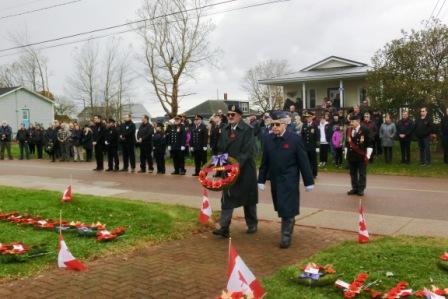
January 14, 2023.  Several years ago, when Pieter was researching the names listed on the Cenotaph outside the Borden-Carleton Legion, the story of WWII Flight Officer Joseph “Joe” Charles MCIVER of Kinkora, Prince Edward Island, was told.

Joe was posted to RAF Coastal Command, a formation with the Royal Air Force (RAF), which had a mandate to protect convoys from German U-boats and Allied shipping from aerial threats from the German Air Forces.  Squadrons operated from various bases, including in the Arctic Circle.

Joseph Charles McIver

Joseph Charles McIver. (Photo: The Canadian Virtual War Memorial – Veterans Affairs Canada)

Joe’s nephew, Alan A. McIvor, wrote a book on his uncle called ‘United In Effort…Flying Officer Joseph Charles McIver…Royal Canadian Air Force…1940-1944’. One of the documents in the book was a letter Joe wrote to his wife Helen from the far north of the Soviet Union (now Russia) on September 23, 1942.  Joe’s actual location in the letter was erased by censors, but his heading ‘Somewhere In North Russia’ was left intact.

We were reminded of the letter when we met Lorna Johnston, Alan’s cousin, and she gave us a copy of the same letter.

…Joe McIver’s Squadron participates in Operation Orator ….

1024px-Barents_Sea_map

Map shows the location of the Barents Sea north of Russia and Norway, and the surrounding seas and islands. (Map created by Norman Einstein, 2005. Courtesy of https://en.wikipedia.org/wiki/Operation_Orator#/media/File:Barents_Sea_map.png)

On September 4, 1942, Joe McIver was in the Royal Australian Air Force’s (RAAF) 455 Squadron with a group flying to the Soviet Union as part of ‘Operation Orator, a search and strike force to operate over the Barents Sea.  The plan was to fly on a course to reach Norway, cross the mountains in the dark, overfly northern Sweden and Finland, and land at Afrikanda air base, at the southern end of Murmansk Oblast (an oblast is similar to a province). (See https://en.wikipedia.org/wiki/Operation_Orator for more information on Operation Orator and https://en.wikipedia.org/wiki/Afrikanda_(air_base) for more information on Afrikanda.)

…Joe’s plane ran out of fuel and crashed ….

As Joe explained in his September 23, 1942 letter “…we were at 8,000 feet and below us were solid clouds and not a break in them. We couldn’t come down for fear of crashing into a mountain.  So we decided to fly to the White Sea and follow it up, which we did, and finally came to our destination….but there was no aerodome in sight...

Then they realized they were running out of fuel! “…Our fuel was getting very low and we started to look for a half decent paddy to set down on.  We spotted a marshy field and were running up to it when both motors cut out of gas, and down we went in a woods…

All five crew members got out safely, thankful that the plane “…didn’t go up in flames as we expected…Nobody said much for five minutes….

They were soon met by 15 Soviet soldiers who at first mistook them for Germans.  “…This was the first time I was scared, knowing we were close to the front line and that they couldn’t understand us. It was the first time for me to put my hands up while I was being searched and I put them up good and high!…

After establishing that they were Allied airmen, the Soviets “…got a truck and took us to a Military Camp and gave us a bang up dinner…”  After dinner, they were taken to where the rest of the Squadron were housed.

They stayed for a few days and were allowed to look for their personal belongings on the downed plane.  Then, with the aid of an interpreter, they travelled by train and truck “…for the drome from which we are going to operate.  We have no aircraft so there’ll be no operations for us unless somebody gets sick or hurt….

Their journey took them 190 km to Vayenga, located on the coast of the Barents Sea along the Kola Bay 25 kilometers (16 miles) northeast of Murmansk.

Vayenga, now called Severomorsk, is the main administrative base of the Russian Northern Fleet.  During WWII, a naval airfield built in a neighbouring bay was used by the British, namely No. 151 Wing RAF, to protect the Arctic.

…Joe’s letter from the Arctic Circle ….

Joe’s Squadron was in Vayenga for just over a month. In his letter, he included his impressions of life in the far north.  “…Up here we are eating RAF supplies and not Russian food.  We spend most of our time reading, cutting wood.  We’re in the Arctic Circle and it’s getting fairly cool!…

Joe hoped they would be sent back to England soon.  “…We expect to get back soon.  If we don’t soon go, I think I’ll get into a dugout.  I’ll be glad to get back to get some letters, English papers, radio, etc.  Everybody’s in uniform here! No leave until Victory!….

Although they got an allowance from the Soviets, “…there’s absolutely nothing to buy.  One can spend a few roubles for a shave now and again…

Of course, no trip to the Soviet Union would be complete without trying what their Soviet colleagues drank to keep warm. “…I’ve had one drink of vodka and it’s sudden death!  Summerside’s screech is mild compared to it….” Vodka’s high alcohol content can warm the body, helpful when temperatures are below freezing point!

Joe and his Squadron may have been in the far north, but they were still subject to enemy attacks.  “…I have spent quite a few hours in the air raid shelters.  I never thought I could run so fast.  I can pass anybody on the way to the shelter…

The day before he wrote his letter, he noted that “…during a dog fight yesterday over the aerodome, an aircraft was shot up.  The pilot bailed out and the aircraft came down and crashed in the building. There were no people in it at the time.  Lots of excitement every day!…

Joe summarized the trip by saying “…this trip has been a great experience, one that I wouldn’t have missed for the world, but I wouldn’t want to do it again.  That crash landing, the first meeting with the Ruskies, and the first Russian meal are incidents I’ll always remember…

…Joe did not survive WWII….

In October 1942 Joe’s Squadron returned to England, but it wasn’t long before Joe found himself back in the Arctic Circle.  On November 18, 1944, Joe was part of the crew of Liberator MK VA EV-895, which took off on anti-submarine patrol looking for a suspected U-boat off Gardskagi, Iceland.

Unfortunately, the plane disappeared over the Arctic Ocean and was never seen again.  (See https://onthewarmemorialtrail.com/2019/08/17/the-ww2-flight-officer-whose-plane-went-down-while-on-patrol-near-the-arctic-circle/)

Thank you to the Alan McIvor and Lorna Johnston for sharing Joe McIver’s letter from Russia, which provided a glimpse into what he experienced in his own words. If you have a story to share, please contact Pieter at memorialtrail@gmail.com, comment on the blog, or tweet to @researchmemori1.

© Daria Valkenburg

…Want to follow our research?….

If you are reading this posting, but aren’t following the blog, you are welcome to do so. Our blog address: https://onthewarmemorialtrail.com/.

Front cover OnTheWarMememorialTrailinEurope4 countries, 6 weeks, 7,000 km – an unforgettable war memorial journey in Europe…. Daria’s book ‘No Soldier Buried Overseas Should Ever Be Forgotten‘ is available in print and e-book formats.  Net proceeds of book sales help support research costs and the cost of maintaining this blog. For more information on the book, please see https://nosoldierforgotten.com/

You are also invited to subscribe to our YouTube Channel: On The War Memorial Trail With Pieter Valkenburg: https://www.youtube.com/channel/UCJ591TyjSheOR-Cb_Gs_5Kw.

Never miss a posting!  Subscribe below to have each new story from the war memorial trail delivered to your inbox.
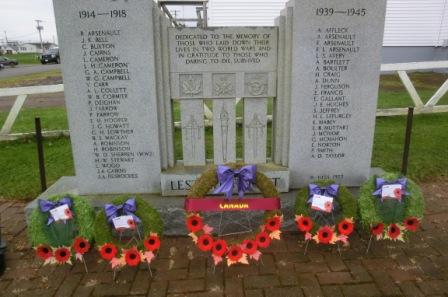
On The War Memorial Trail….. The WWI Soldier From Tryon Buried With A Message In A Bottle

CIMG8651 Sep 9 2017 Pieter at the grave of Arthur Clinton Robinson in La Laiterie cemetery

September 2017. Pieter by the grave of Arthur Clinton Robinson, La Laiterie Military Cemetery in Belgium.  (Photo credit: Daria Valkenburg)

January 10, 2023.   In 2017, we visited La Laiterie Military Cemetery in Belgium, where WW1 soldier Arthur Clinton ROBINSON is buried. Born July 20, 1896 in the USA, but moved as a child to Tryon, Prince Edward Island, Arthur enlisted in the 26th (New Brunswick) Battalion on November 20, 1914 and remained with the Regiment until his death.

…Arthur lost his life on the first day of the Actions of St Eloi Craters Battle….

On March 27, 1916, he was killed in action during the Actions of St Eloi Craters when shell fire hit the trenches southeast of Kemmel. The battle lasted from March 27 until April 16, 1916. Sint-Elooi (the French St Eloi is also used in English) is a village about 5 km (3.1 miles) south of Ypres in Belgium.

1919 photo of St Eloi Craters

The British had dug tunnels in No Man’s Land, then placed large explosive charges under the German defences, and blew them at 4:15 a.m. on March 27. The plan was for the 2nd Canadian Division, which Arthur’s Battalion was part of, to take over and hold the line.  (NOTE: ‘No Man’s Land’ was a WWI term used to describe the area between opposing armies and trench lines.)

The plan was a disaster as Canadian troops were sent to the battlefield before they had time to prepare for the attack. (For more information, see https://www.thecanadianencyclopedia.ca/en/article/battle-of-st-eloi-craters and https://en.wikipedia.org/wiki/Actions_of_St_Eloi_Craters)

St_Eloi_near_Ypres_-_mine_plan_27_March_1916

Map of St Eloi with the six mines fired on 27 March 1916. (Map Source: By ViennaUK – Own work, CC BY-SA 4.0, https://commons.wikimedia.org/w/index.php?curid=53210386)

In ‘A Family Of Brothers’, author J. Brent Wilson explains that “…during the German retaliation for the attack, the 26th faced a heavy pounding that killed seven men and wounded another eighteen…”  One of these casualties was Arthur.

…. La Laiterie Military Cemetery was chosen by the Battalion…

After visiting La Laiterie Military Cemetery, it was interesting to read in ‘A Family Of Brothers’ that a section of the cemetery was chosen by soldiers in the 26th (New Brunswick) Battalion as a “…. focus for their remembrance….”  The section set aside for the Battalion’s 67 burials was “…marked by a large board bearing the battalion’s name….

The cemetery is located “…about a kilometre behind the front trenches on the road between Kemmel and Vierstraat.  The area surrounding the cemetery had once featured groves of trees and fine residences, but since had been blasted by shellfire….

…. The Battalion didn’t want the identity of a buried soldier to be lost…

One of the most intriguing things read in ‘A Family Of Brothers’ was the care taken with burials, with one soldier buried per grave, with  “…. small white crosses at the head of each burial mound…”  On each cross was “…nailed an aluminum metal plate with the name, number, and battalion…” of the deceased.

But the Battalion went further, a smart move in a war where battlefront cemeteries could come under crossfire.  “…To ensure that the identity of the soldier in the grave was not lost if something happened to the cross, the man’s name was inserted into bottles that were placed at the head of the grave and beneath the body….” It would be interesting to know if that bottle is still there!

….Previous stories about Arthur Clinton Robinson…

Arthur Clinton Robinson is one of the names listed on the Cenotaph outside the Borden-Carleton Legion.  Unfortunately, a photo of him has yet to be found by either us, or his family.  Can you help put a face to this name?  Do you have a story to tell? Email Pieter at memorialtrail@gmail.com, comment on the blog, or tweet to @researchmemori1.

© Daria Valkenburg

…Want to follow our research?….

If you are reading this posting, but aren’t following the blog, you are welcome to do so. Our blog address: https://onthewarmemorialtrail.com/.

Front cover OnTheWarMememorialTrailinEurope4 countries, 6 weeks, 7,000 km – an unforgettable war memorial journey in Europe…. Daria’s book ‘No Soldier Buried Overseas Should Ever Be Forgotten‘ is available in print and e-book formats.  Net proceeds of book sales help support research costs and the cost of maintaining this blog. For more information see https://nosoldierforgotten.com/

You are also invited to subscribe to our YouTube Channel: On The War Memorial Trail With Pieter Valkenburg: https://www.youtube.com/channel/UCJ591TyjSheOR-Cb_Gs_5Kw.

Never miss a posting!  Subscribe below to have each new story from the war memorial trail delivered to your inbox.

On The War Memorial Trail…..A Photo For WWII Soldier Leonard Stephen Avery

December 17, 2022. When Pieter began researching the names on the Cenotaph outside the Borden-Carleton Legion in 2015, he hoped to put a face and story to each of the 48 names.  Over the years he’s researched each name, and we’ve told the story of each one, plus shared our visits made to the graves or memorials for many of them.

The Cenotaph Wall of Remembrance in the Borden-Carleton Legion, which displays the photos of the men listed on the Cenotaph, has empty frames for those photos still waiting to be found.

A few weeks ago a photo of WWI soldier James CAIRNS was submitted, ending a 7 year search.  (See https://onthewarmemorialtrail.com/2022/12/04/on-the-war-memorial-trail-a-photo-for-wwi-soldier-james-cairns/)

…The 7 year search for a photo of WWII soldier Leonard Stephen Avery…

CIMG6065 Empty frame for Avery

Empty frame patiently awaiting a photo of WWII soldier Leonard Stephen Avery.  (Photo credit: Pieter Valkenburg)

Not long after the photo of James Cairns was sent, Pieter was overjoyed to receive a photo of WWII soldier Leonard Stephen AVERY, born March 20, 1924 in Bedeque to John Avery and Mary Ellen Arsenault. 

Leonard died accidentally in Ontario while on guard duty at the Chippewa Power Canal in Welland County on the evening of August 23, 1943.  For some unexplained reason, he was accidentally shot through the head while examining a rifle, causing a massive destruction of his brain and multiple skull fractures.  (See https://onthewarmemorialtrail.com/2019/11/26/on-the-war-memorial-trail-the-ww2-soldier-who-was-accidentally-shot/)

No family came forward with a photo, and we thought perhaps the 7 year ongoing search would go on for many more years.  But then, we heard from Judie Klassen, who has helped with difficult searches in the past. 

…How a photo of Avery was found…

Judie wrote that “…I noticed a number of very recent postings on the Borden-Carleton Through the Years Facebook page that were from Mike Gaudet.  One discussion mentioned Lena Avery (Mrs. Gilbert Arsenault) who was Leonard’s aunt. It appears Lena got married the same day as her brother John and wife Mary (Leonard’s parents)….” 

Judie included a link to the Facebook page:  https://www.facebook.com/photo/?fbid=1564604580644445&set=gm.5454416931343343&idorvanity=281593188625769

With this clue, Pieter contacted Mike Gaudet, who checked and did have a photo. Pieter asked Mike if he was a relative, and was told “….Not directly related.  The old albums I have came from a lady who died this year and whose mother was an Avery who married a Wedge...

The photo sent by Mike was of Leonard in uniform with a little girl on his lap.  Pieter realized that this was Leonard’s sister Ruby.

Avery from Mike Gaudet restoration Duane MacEwen

Leonard Stephen Avery with his sister Ruby.  (Photo courtesy of Mike Gaudet.  Photo restoration and colourization: Duane MacEwen)

Another 7 year search that has been successfully concluded!

…9 photos are still to be found for the names on the Cenotaph outside the Borden-Carleton Legion….

The photo of Leonard Stephen Avery is now on the Legion wall, and Pieter hopes that more of the empty frames will be filled over the coming year. “…Unfortunately, photos for 8 from WWI and 1 from WWII are still missing on the wall….” he said.  Can YOU help with this photo wish list?

Names still without faces from WWI

  • Leigh Hunt CAMERON, born in Albany
  • James Lymon CAMERON, born in Victoria
  • William Galen CAMPBELL, born in Wellington
  • Bazil CORMIER, born in Tignish
  • Joseph Arthur DESROCHES, born in Miscouche UPDATE: Photo found
  • Charles LOWTHER, born in North Carleton
  • Arthur Clinton ROBINSON, born in Tryon
  • Harry ROBINSON, born in Augustine Cove UPDATE: Photo found

Name still without a face from WWII

  • Ernest Ramey GALLANT, born in Borden

A huge thank you goes out to Mike Gaudet and to Judie Klassen for their help in obtaining a photo, and to Duane MacEwen for help in photo restoration. If you can help with the photo search request or have a story to tell, please let Pieter know. Email him at memorialtrail@gmail.com, or comment on the blog.   

© Daria Valkenburg

…Want to follow our research?….

If you are reading this posting, but aren’t following our research, you are welcome to do so.  Our blog address: https://onthewarmemorialtrail.com/

Front cover OnTheWarMememorialTrailinEurope4 countries, 6 weeks, 7,000 km – an unforgettable war memorial journey in Europe…. Daria’s book ‘No Soldier Buried Overseas Should Ever Be Forgotten‘ is available in print and e-book formats.  Net proceeds of book sales help support research costs and the cost of maintaining this blog. For more information see https://nosoldierforgotten.com/

You are also invited to subscribe to our YouTube Channel: On The War Memorial Trail With Pieter Valkenburg: https://www.youtube.com/channel/UCJ591TyjSheOR-Cb_Gs_5Kw

Never miss a posting!  Subscribe below to have each new story from the war memorial trail delivered to your inbox.