On The War Memorial Trail….. The Battle of Bienen – Part 5: The WWII Soldier Whose Parents Immigrated To Save Their Family From War

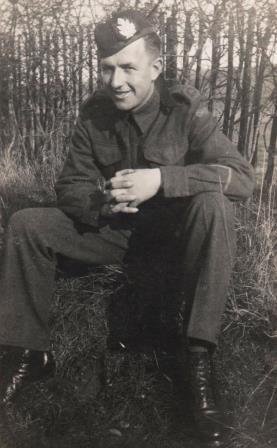
March 18, 2023. Last fall, after Alice van Bekkum, Chair of the Groesbeek Cemetery Faces To Graves Foundation, sent Pieter a list of 39 soldiers from the North Nova Scotia Highlanders Regiment who were killed during the Battle of Bienen in Germany on March 25, 1945 and are buried in the Canadian War Cemetery in Groesbeek, The Netherlands, Pieter saw that photos were missing for 12.  One of these was John Joseph BOHON.

…Bohon?  Isn’t that a Ukrainian name?…” Pieter asked.  “…Maybe, in a shortened form…” I replied.

That short conversation ultimately led to successfully unlocking a search for family. After finding no family named Bohon who could be related, Pieter finally discovered that when he enlisted, this soldier shortened his surname from BOHONKO to BOHON!

Searching for Bohonko led to obituaries of John’s brother and sister-in-law, which finally led Pieter to Debbie Mierau of Prince Rupert, British Columbia.

….John was born in present-day Ukraine….
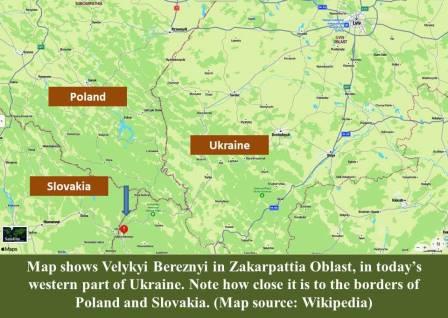
Map Velykyi Bereznyi

Debbie confirmed that the family was of Ukrainian heritage, with roots in the Zakarpattia (Sub-Carpathian) region in Czechoslovakia, but now part of Ukraine. (See https://en.wikipedia.org/wiki/Zakarpattia_Oblast)

 “My grandparents, John Bohonko and Nanca Kohut (who I called Dido and Baba) were from the village of Velykyi Bereznyi in Ukraine where they were born, raised and married….” Debbie explained. A literal translation of the village name is Big Birch. (See https://en.wikipedia.org/wiki/Velykyi_Bereznyi)

Debbie wrote that after the birth of their son Johnny “…Dido made a decision to go to Canada so his son would know a life without wars and rumours of wars….”  John was born February 12, 1925 in Velykyi Berznyi.

….He left in 1927 and spent … long, hard years away from his family trying to make a life for them. He rode the rails from one side of the country to the other looking for a good job (almost freezing to death in Weyburn, Saskatchewan) to make a home for them in Canada. Finally … he sent for Nanca and Johnny. Baba, who had never been out of her village, made the trek with young Johnny in tow … to catch a ship to Canada…. 

PC-NI04 SS Nieuw Amsterdam

S.S. Nieuw Amsterdam.  (Photo source: https://greatships.net/nieuwamsterdam)

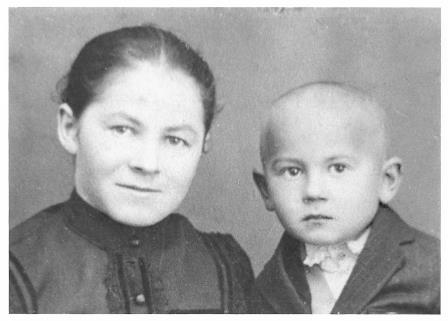
John and his mother Nanca sailed from Rotterdam, The Netherlands aboard the S.S. Nieuw Amsterdam, and arrived as landed immigrants in Halifax, Nova Scotia on December 29, 1929.
Baba_UncleJohn

John with his mother Nanca in 1929.  (Photo courtesy of Debbie Mierau)

John’s mother, who became known as Ann in Canada, “… did not speak English but managed to make her way by train to Toronto where Dido was waiting for her at the station. He proudly took them to the house he had constructed and where they lived until the 1970s. Baba grew much of her own food and Dido worked hard for CN Rail, supporting his family throughout the Depression.  Five more children joined the brood. Dido never looked back. He loved Canada so much and insisted his children be raised as Canadians. Baba always missed her family and country very much but understood her family was much safer in Canada….

After finishing Grade 9 and a year in high school, John studied art for a year at the Ontario College of Art.   “He … painted murals on his bedroom walls…” but art was not his career at this point.

….John enlisted in Halifax….

He did bush, forestry, and carpentry work for 2 years before enlisting with No. 6 District Depot in Halifax, Nova Scotia on December 13, 1943.  At the time, he had been employed for two years by Foundation Maritime in Bridgewater, Nova Scotia as a carpenter’s helper. (See https://hazegray.org/navhist/canada/fm/)

In an interview for his Personnel Selection Record, John was described as having “…a neat, pleasing appearance…”  An adventurous soul, he “….left home and has done considerable wandering, taking whatever jobs he could find….

His enthusiasm and artistic talent were noted.  “…Enthusiastic and aggressive… Having a natural talent for Art he has made this his hobby…

John made a good impression.  “…As this recruit is keen and willing, has a good physique, and is anxious to see action, he should be suitable for Infantry training….”  However, as John was under 19 years of age – and therefore ineligible to be sent overseas – he was recommended for “…enriched training during basic training…

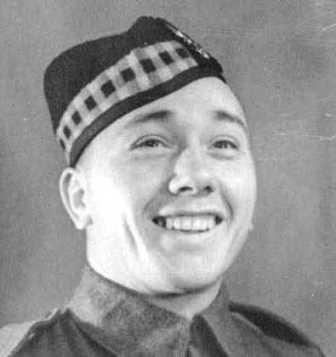
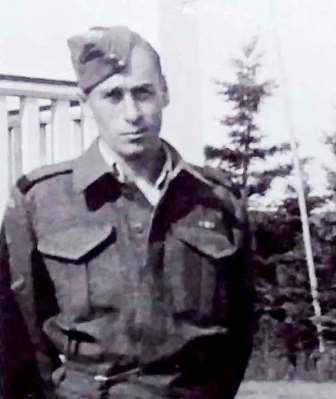
John Bohonko

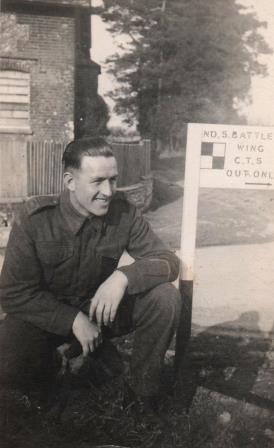
Portrait of John Joseph Bohon.  (Image courtesy of Debbie Mierau)

Just as John turned 19 in February 1944, he was transferred to No. 60 Canadian Infantry Basic Training Centre (CI (B) TC) in Yarmouth, Nova Scotia.

On July 2, 1944, he was sent to A14 Canadian Infantry Training Centre (CITC) in Aldershot, Nova Scotia for further ordnance training in 3 inch mortars. (See https://en.wikipedia.org/wiki/ML_3-inch_mortar)  As he was there at the same time as Clifford BATEMAN, perhaps they trained together.

After passing the mortar course he was attached to S-5 Canadian Driving and Maintenance School (CD & M School) in Woodstock, Ontario on September 8, 1944, for a 3 week carrier driving course for 3 inch mortarmen.

After successfully completing the course, John was rated suitable “…for overseas operational duty in Canadian Infantry Corps as specialist to armoury…

He was reassigned back to A14 CITC in Aldershot in preparation for overseas service, but first allowed special leave of 96 hours before leaving Ontario to travel back to Nova Scotia.  Per Debbie, John “went home to visit his family before being sent to Europe. My mother remembers him walking down the road with his gear and rifle on his back. He turned and waved to his little sister, who adored him, and she watched him walk away….

….John was sent overseas….

John returned to Aldershot, but was not there long.  On November 7, 1944 he was sent to No. 2 Training Camp in Debert, Nova Scotia in preparation for going overseas.  He left Canada for the United Kingdom on November 21, 1944 – from Halifax, the same city in which he arrived in Canada at the end of 1929.

Upon arrival in the United Kingdom on November 28, 1944 he was assigned to No. 3 Canadian Infantry Reinforcement Unit (CIRU).

On January 8, 1945 he was sent to Northwest Europe as part of 21 Army Group, and then on January 26, 1945, was assigned to the North Nova Scotia Highlanders, joining them in Holthurnsche, The Netherlands, located near Berg en Dal, and very close to the German border.

The Regiment reached Kellen, Germany near Kleve, just on the other side of the border with The Netherlands, on February 12, 1945.  On February 14, using amphibious vehicles, the North Novies evacuated Warbergen as they made their way to Emmerich.

Next, the Regiment participated in Operation Blockbuster.  (See https://en.wikipedia.org/wiki/Operation_Blockbuster).

…John lost his life in the Battle of Bienen ….

By March 20, 1945, Allied troops were on the banks of the Rhine River for Operation Plunder, a military operation to cross the Rhine on the night of March 23, 1945. (See https://en.wikipedia.org/wiki/Operation_Plunder) They got as far as Bienen, when troop movement stopped due to blown bridges across the Rhine in that area.

In ‘No Retreating Footsteps’ by Will Bird, he noted that the 7th Argyll and Sutherland Highlanders had made “three attempts …. to capture the village, but they were turned back by very heavy machine gun fire from the front of the village, supported by heavy mortar fire…

On March 25, 1945 the North Nova Scotia Highlanders were tasked with passing through the 7th Argyll and Sutherland Highlanders who had been stopped in front of Bienen during the night.

Mar 24 1945 Position showing Rosau farm

Map shows position of North Novies on March 24, 1945, as they made their way towards Bienen, with the Battalion HQ set up at Rosau Farm just outside the village.  (Map source: Project ’44)

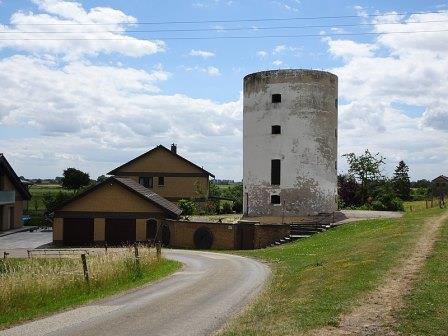
In the article ‘Too Close To The Guns!’ in Canadian Military History, Volume 12, Numbers 1& 2, Winter/Spring 2003, pp.5-28, author Lee Windsor recorded that “At 7:45 am, Lt Colonel Forbes established his tactical headquarters near a great windmill at Rosau Farmon the outskirts of Bienen.

…The battalion’s 3 inch mortar platoon and attached Cameron heavy mortars set up behind the farm while the rifle companies formed up to advance….” A and B Companies moved up to their start line at what became known as Argyll Farm.  Cameron referred to the Cameron Highlanders of Ottawa Regiment.
Rees-Bienen_Zur_Rosau_PM19-01

Former windmill at Rosau farm. (Photo source: Pieter Delicaat, CC BY-SA 4.0 , via Wikimedia Commons)

The war diary for the North Nova Scotia Highlanders for March 25, 1945, explained the plan of attack.  The Plan adopted was to use a fire plan of a series of concs and stonks, with one gun per troop firing smoke. Thus the whole open approach was hoped to be shielded from the enemy. As the troops reached initial objectives, the guns were to lift onto further stonks in the rear covering the approaches along the EMMERICH road and MILLINGEN road. The platoon of medium machine guns of the Cameron Highlanders of Ottawa was to take on targets …. of the medium machine gun attack…”  ‘Concs and stonks’ referred to concentrated artillery.

What Debbie wrote mirrored the war diary information. “….Johnny’s platoon was assigned to relieve an exhausted Scottish platoon trapped and under fire in a farmhouse near Bienen, Germany. On the way to the farm, the North Novies came under German machine gun fire. Johnny was killed on March 25th, 1945 – one month away from liberation….” The Scottish platoon she refers to would be the 7th Argyll and Sutherland Highlanders, a Canadian Regiment.

A war casualty never ends with the death of a soldier.  “My mother remembers when the telegram came to the house to tell Baba and Dido of the loss of their first born child.…” Their pain was felt by so many families in similar circumstances.

…John is buried in the Canadian War Cemetery in Groesbeek ….

Like Clifford BATEMAN, Ralph Schurman BOULTER, and Charles ‘Marshall’ CARSON, John was temporarily buried on March 26, 1945 in the military cemetery in Rees, Germany before being reburied the following year in the Canadian War Cemetery in Groesbeek, The Netherlands.

Bohon Gravestone

Grave of John Joseph Bohon (Bohonko) at the Canadian War Cemetery in Groesbeek, The Netherlands.  (Photo source: http://www.findagrave.com)

…Reflections by John’s niece ….

John’s niece Debbie shared her reflections.  “…It has always been a wonder to me how much my grandparents had been through to save my Uncle Johnny from wars only to have a war reach across the ocean to take him anyway. Although I never met him and he died nine years before I was born, I have always felt a connection to him and wish I had met him. I grew up in a family dedicated to sports. I was an artist and creative. War had taken away a mentor to myself and my children, who inherited his talents.

This is only one story of the 104,685 Canadians who died in the 20th century wars. One of them may have cured cancer. One of them might have found a cure for Covid. All of them would probably tell you that war is cruel and destructive. That being said, I am proud that my Uncle John died fighting Nazis, but he is missed by all who knew him and some that didn’t….

Thank you to Debbie Mierau for providing photos and information on her uncle, plus her thoughtful reflections. Thank you to Shawn Rainville for researching the newspaper archives that provided the lead to find living family members.

Pieter has been successfully working his way through the list of soldiers from the North Nova Scotia Highlanders killed in Bienen whose photos were missing. Coming up in Part 6: Kitchener Langille.

If you have a story to tell, please let Pieter know. Email him at memorialtrail@gmail.com, comment on the blog, or tweet to @researchmemori1.

© Daria Valkenburg

….Previous stories about North Novies killed during the Battle of Bienen and buried in Groesbeek….

…Want to follow our research?….

If you are reading this posting, but aren’t following the blog, you are welcome to do so.  Our blog address: https://onthewarmemorialtrail.com/.
Front cover OnTheWarMememorialTrailinEurope4 countries, 6 weeks, 7,000 km – an unforgettable war memorial journey in Europe…. Daria’s book ‘No Soldier Buried Overseas Should Ever Be Forgotten‘ is available in print and e-book formats.  Net proceeds of book sales help support research costs and the cost of maintaining this blog. For more information see https://nosoldierforgotten.com/

You are also invited to subscribe to our YouTube Channel: On The War Memorial Trail With Pieter Valkenburg: https://www.youtube.com/channel/UCJ591TyjSheOR-Cb_Gs_5Kw.

Never miss a posting!  Subscribe below to have each new story from the war memorial trail delivered to your inbox.
On The War Memorial Trail….. The Battle of Bienen – Part 4: The WWII Soldier From A Small Fishing Village In Newfoundland Who Lost His Life In Germany

March 16, 2023. Last fall, Alice van Bekkum, Chair of the Groesbeek Cemetery Faces To Graves Foundation, sent Pieter a list of 39 soldiers from the North Nova Scotia Highlanders Regiment who were killed during the Battle of Bienen in Germany on March 25, 1945 and are buried in the Canadian War Cemetery in Groesbeek, The Netherlands.  Pieter noted that photos were missing for 12.  One of these was Clifford BATEMAN.

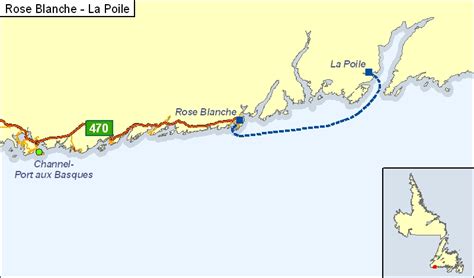
th-399703060 Map Rose Blanche to La Poile

Map showing location of La Poile, Newfoundland. (Map source: https://www.gov.nl.ca)

Born June 4, 1924 in La Poile, Newfoundland, Clifford BATEMAN, was the foster son of Thomas and Julia Bateman.  Located on La Poile Bay, La Poile, a small fishing village on the south coast, is inaccessible by road and is served by a ferry via a port in Rose Blanche.

….Serendipity led to a photo of Clifford….

Pieter thought he might have difficulty with finding a photo of Clifford, given that the community he came from was small, and he was a foster son.  A search of Batemans led to Glenn Bateman, an engineer from Rose Blanche.

Sometimes, research leads to a moment of serendipity.  Pieter called him. Glenn answered the phone call from a number unknown to him. After Pieter explained why he was calling, Glenn said “…I’m not related….” Pieter’s heart sank.  Then Glenn went on to say “…but I have a picture of him…” Ten minutes later, the photo was emailed to us.

Clifford Bateman

Clifford Bateman.  (Photo courtesy of Glenn Bateman)

After leaving school at age 14, Clifford worked as a fish cutter in Newfoundland and Nova Scotia for several years before enlisting with the No. 6 District Depot in Halifax, Nova Scotia on January 25, 1944.  Prior to enlistment, he had worked at Leonard Brothers in North Sydney, Nova Scotia.

An interviewer for his Personnel Selection Record in Halifax noted that Clifford was “…a friendly Newfoundlander of good build and fair appearance…”   and that he “…likes to read, play games, etc…

While Clifford’s lack of education was noted, the interviewer found that “…he is a surprising man in some ways.  He is very quick at some simple problems and is poor at doing others…

Clifford made a good impression as a “…steady, dependable youth, used to hard work, and capable of sustained determined effort. He states that he will make good if given a chance in the army. In view of his good motivation, ambition, and determination….” it was recommended that Clifford be sent to the Canadian Army Engineer Basic Training Centre (CAE (B)TC) in North Bay, Ontario.

…. Clifford was sent to North Bay for basic training ….

On February 9, 1944, Clifford was transferred to North Bay for training, where he thrived.  After 16 weeks of training, he was re-interviewed for an update to his Personnel Selection Record.  The Army Examiner noted that in Clifford’s “…home community in a sparsely settled part of Newfoundland, educational advantages were very meagre, and he did not attend school regularly…

The report went on to say that Clifford “…entered into all training with enthusiasm and showed stamina in physical activities.  His platoon officer qualified him in all subjects…

However, “…he seemed nervous with the Bren gun…” Clifford felt this was due to “…weak eyes, especially when fixed on any object for any length of time….

In spite of the challenge he faced with weaponry, Clifford was considered “…suitable for general overseas duty in the Canadian Infantry Corps….

On July 1, 1944, Clifford was transferred to A-14 Canadian Infantry Training Centre (CITC) in Aldershot, Nova Scotia for ordnance training.

On October 4, 1944, he was on his way to the United Kingdom, arriving on October 12, 1944, where he was assigned to No. 4 Canadian Infantry Reinforcement Unit (CIRU).

On November 10, 1944, Clifford left the United Kingdom for Northwest Europe, where he was transferred to the North Nova Scotia Highlanders, joining the Regiment in Graves, The Netherlands as some battalions prepared to enter Germany for the upcoming battles there.

The Regiment reached Kellen, Germany near Kleve, just on the other side of the border with The Netherlands, on February 12, 1945.  On February 14, using amphibious vehicles, the North Novies evacuated Warbergen as they made their way to Emmerich.

Next, the Regiment participated in Operation Blockbuster.  (See https://en.wikipedia.org/wiki/Operation_Blockbuster).

…Clifford lost his life in the Battle of Bienen ….

By March 20, 1945, Allied troops were on the banks of the Rhine River for Operation Plunder, a military operation to cross the Rhine on the night of March 23, 1945. (See https://en.wikipedia.org/wiki/Operation_Plunder) They got as far as Bienen, when troop movement stopped due to blown bridges across the Rhine in that area.

In ‘No Retreating Footsteps’ by Will Bird, he noted that the 7th Argyll and Sutherland Highlanders had made “ three attempts …. to capture the village, but they were turned back by very heavy machine gun fire from the front of the village, supported by heavy mortar fire…

On March 25, 1945 the North Nova Scotia Highlanders were in Bienen, Germany for the climax of 9 Canadian Infantry Brigade’s role in that Operation.

Aerial Bienen post-war

Post-war aerial of Bienen (view to the southeast towards Rees). The aerial clearly demonstrates the tactical importance of Bienen, laying astride the narrow neck of land. The main road from Rees to Emmerich (nowadays Emmericher Strasse) runs straight through Bienen. (Photo source: http://www.WW2Talk.com and identified as ‘Courtesy Becker’)

The Regiment’s task was to pass through the 7th Argyll and Sutherland Highlanders who had been stopped in front of Bienen during the night.  The problem with Bienen was that the road through it was the only access point, “… an isthmus of solid land about half a mile wide with one road, the main Rees-Emmerich highway, which passed through Bienen exactly at the narrowest point…

There was a dyke which led to the left side of the village.  However, “…inside the dyke there was a series of farms from 400 to 800 yards apart, and between these farms and the highway there was no cover of any sort…”  For this reason, capturing Bienen was vital, the task now assigned to the North Novies.

The one day battle was devastating in terms of casualties, both dead and wounded.  Among those who lost their lives was Clifford Bateman.

…Clifford is buried in the Canadian War Cemetery in Groesbeek ….

Like Ralph Schurman BOULTER and Charles ‘Marshall’ CARSON, Clifford was temporarily buried on March 26, 1945 in the military cemetery in Rees, Germany before being reburied the following year in the Canadian War Cemetery in Groesbeek, The Netherlands.

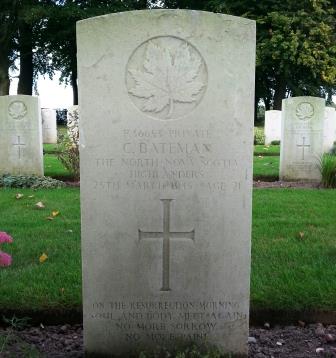
Clifford Bateman find a grave

Grave of Clifford Bateman at the Canadian War Cemetery in Groesbeek.  (Photo source: https://www.findagrave.com)

Thank you to Glen Bateman for providing a photo of Clifford Bateman. Pieter has been successfully working his way through this list and we hope to tell the stories of a few more in upcoming postings. Coming up in Part 5: John Joseph Bohon.

If you have a story to tell, please let Pieter know. Email him at memorialtrail@gmail.com, comment on the blog, or tweet to @researchmemori1.

© Daria Valkenburg

….Previous stories about North Novies killed during the Battle of Bienen and buried in Groesbeek….

…Want to follow our research?….

If you are reading this posting, but aren’t following the blog, you are welcome to do so.  Our blog address:  https://onthewarmemorialtrail.com/.

Front cover OnTheWarMememorialTrailinEurope4 countries, 6 weeks, 7,000 km – an unforgettable war memorial journey in Europe…. Daria’s book ‘No Soldier Buried Overseas Should Ever Be Forgotten‘ is available in print and e-book formats.  Net proceeds of book sales help support research costs and the cost of maintaining this blog. For more information see https://nosoldierforgotten.com/

You are also invited to subscribe to our YouTube Channel: On The War Memorial Trail With Pieter Valkenburg: https://www.youtube.com/channel/UCJ591TyjSheOR-Cb_Gs_5Kw.

Never miss a posting!  Subscribe below to have each new story from the war memorial trail delivered to your inbox.

On The War Memorial Trail….. The Battle of Bienen – Part 3: The WWII Soldier From Cape Tormentine Who Lost His Life In Germany

March 12, 2023. Sometimes uncovering a photo of a soldier leads to a much larger investigation. That’s what happened when Pieter looked into the service file of Charles ‘Marshall’ CARSON, one of the names on the photo wish list from the Canadian War Cemetery in Groesbeek, The Netherlands. He was from Cape Tormentine, New Brunswick, which is just across the Northumberland Strait from where we live on Prince Edward Island.

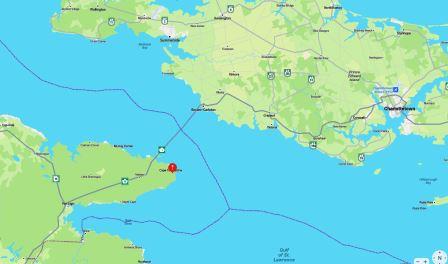
Screenshot 2023-03-05 at 10-18-15 cape tormentine map

Red marker identifies Cape Tormentine, New Brunswick. Prince Edward Island is across the Strait. (Map source: Wikipedia)

…He died on my birthday! I was just one year old!…” Pieter exclaimed after reading that Carson died during the Battle of Bienen in Germany on March 25, 1945. He soon learned that 39 soldiers from the North Nova Scotia Highlanders Regiment who were killed during the battle are buried in the Canadian War Cemetery in Groesbeek. 

Pieter was determined to find a photo and contacted the Cape Tormentine Legion.  Perhaps they had a photo or knew of family members?  Sonny McCarron wrote back that there was a photo in a memorial book in the Legion but it would take him a few days to get there and digitize it.  We just happened to be in Nova Scotia and on our way home would be driving right past the exit to Cape Tormentine.  Perhaps we could stop by?

The answer was yes.  Sonny was unable to be there, but Joe Simpson would let us into the Legion and show us the memorial book.   That’s exactly what happened! 

…The Cape Tormentine Legion had a photo of Charles ‘Marshall’ Carson…

Charles Marshall Carson

Charles ‘Marshall’ Carson. (Photo courtesy of Royal Canadian Legion Branch 81 in Cape Tormentine, New Brunswick)

We got a photo of Pte Charles ‘Marshall’ Carson, and learned that his brother Vance, who died in 2005, served in the Canadian Infantry Corps during the war, but survived and returned home.

Born in Cape Tormentine on October 29, 1921, Marshall was the son of Charles J. and Clara Frances (nee McGlashing) Carson.  His father, who came from Newfoundland, unfortunately died in 1930, leaving Clara to bring up three children – Marshall, his younger brother Ira Vance, and a sister Beverly.

…Marshall wanted to be a paratrooper….

Marshall enlisted with the 1st Anti-Aircraft Battery in Dartmouth, Nova Scotia on June 19, 1940 at the age of 18.  After leaving school at the age of 16, he’d worked at Fundy Construction Company in Halifax, Nova Scotia for a year, until just before his enlistment date.

After basic training, Marshall was sent on an anti-aircraft course and was a gunner on an anti-aircraft crew in various anti-aircraft units.  In a December 14, 1942 interview his interest in paratrooper training was mentioned, but he was not selected for this specialized training.

It was noted that his spare time was spent studying and he liked to read detective stories.  He enjoyed sports, especially hockey.    He had a pleasant, friendly manner, and was soft spoken. 

…Marshall spent a year in Goose Bay as a gunner with an anti-aircraft battery….

Marshall remained with an anti-aircraft battery.  On July 2, 1943 he was transferred back to the 1st Anti-Aircraft Battery and sent to Goose Bay, Labrador for a year, returning to Dartmouth, Nova Scotia on July 6, 1944. (NOTE: Newfoundland and Labrador became part of Canada on March 31, 1949.)

Canada had built a massive air base at Goose Bay, Labrador as an alternative to Gander for transatlantic operations. This base became operational in late 1941. (See https://www.heritage.nf.ca/articles/politics/goose-bay-base.php) The bases at Gander and Goose Bay were vital links in the ferrying of military aircraft to Britain.  Anti-aircraft crews were part of coastal defence. 

On August 19, 1944, Marshall was sent to No. 1 Transit Camp in Windsor, Nova Scotia in preparation for going overseas.  Then, on August 30, 1944, he was transferred to the No. 1 Infantry Training Brigade Group in Debert, Nova Scotia.

…Marshall left Canada for overseas service in November 1944….

He left Canada on November 21, 1944, arriving in the United Kingdom on November 28, 1944 and posted to No. 3 Canadian Infantry Training Regiment (CITR).

On January 8, 1945 he left the United Kingdom for Northwest Europe, and was transferred to the 10th Battalion for a few weeks, before receiving his final transfer – to the North Nova Scotia Highlanders – on January 25, 1945.

The Regiment had reached Kellen, Germany near Kleve, just on the other side of the border with The Netherlands, on February 12, 1945.  On February 14, using amphibious vehicles, the North Novies evacuated Warbergen as they made their way to Emmerich.

Next, the Regiment participated in Operation Blockbuster.  (See https://en.wikipedia.org/wiki/Operation_Blockbuster). 

In March, the Regiment prepared for Operation Plunder, which began March 21, and involved crossing the Rhine River to the north of the Ruhr industrial region in western Germany. With aerial and military support, this took place on the night of March 23, 1945 near Rees, a town situated on the right bank of the Rhine River, approximately 20 km (12.4 miles) east of Kleve. (See https://en.wikipedia.org/wiki/Operation_Plunder)

…Marshall lost his life in the Battle of Bienen ….

On the next afternoon, March 24, 1945, they encountered fierce German resistance near the village of Bienen. On March 25, 1945, the North Nova Scotia Highlanders were in Bienen, Germany for the climax of 9 Canadian Infantry Brigade’s role in Operation Plunder. The one day battle proved devastating in terms of casualties, both dead and wounded, as they fought in a deadly battle on open ground.  

Aerial Bienen post-war

Post-war aerial of Bienen (view to the southeast towards Rees). The aerial clearly demonstrates the tactical importance of Bienen, laying astride the narrow neck of land. The main road from Rees to Emmerich (nowadays Emmericher Strasse) runs straight through Bienen. (Photo source: http://www.WW2Talk.com and identified as ‘Courtesy Becker’)

March 25, 1945 was Palm Sunday – one week before Easter.  The war diary for March 25, 1945 noted the fierce challenges faced by the North Novies.  “….The first hint of trouble came when ‘A’ Company reported at 0825 hours to be pinned down along dyke, under machine gun fire, snipers and moderate mortaring. Shortly after, ‘B’ Company reported to be under fire but close to Start Line. Both ‘A’ and ‘B’ Companies were suffering casualties. However, the fire plan was to start at 0845 hours with smoke and ‘A’ and ‘B’ Companies were ordered to proceed quickly to Start Line under its protection and form up and attack. At 0905 hours ‘B’ Company reported being pinned down in front of Start Line, with two platoons out of contact and suffering fairly heavy casualties. ‘A’ Company also reported being pinned down with a platoon out of contact and suffering severe losses….

During the heavy fighting, Marshall lost his life.  Like Ralph Schurman BOULTER, Marshall was temporarily buried the next day in the military cemetery in Rees, Germany before being reburied the following year in the Canadian War Cemetery in Groesbeek, The Netherlands.

carson, charles m. - 17 g 12_img_8404(1)

Grave of Charles ‘Marshall’ Carson at the Canadian War Cemetery in Groesbeek, The Netherlands.  (Photo courtesy of Groesbeek Cemetery Faces To Graves Foundation, taken by Frans van Cappellen)

Thank you to Sonny McCarron and Joe Simpson of the Royal Canadian Legion in Cape Tormentine for providing a photo.  When Pieter thanked Sonny for arranging the visit, he was told “…thanks for taking an interest in our veterans…”  Pieter’s reply? “…We sure do.  Their sacrifice will never be forgotten!…

Out of the 39 North Nova Scotia Highlanders killed on March 25, 1945 during the Battle of Bienen that are buried in Groesbeek, 12 were on a photo wish list. Pieter has been successfully working his way through this list and we hope to tell the stories of those he’s found in upcoming postings. Coming up in Part 4: Clifford Bateman.

If you have a story to tell, please let Pieter know. Email him at memorialtrail@gmail.com, comment on the blog, or tweet to @researchmemori1

© Daria Valkenburg

….Previous stories about North Novies killed during the Battle of Bienen and buried in Groesbeek….

…Want to follow our research?….

If you are reading this posting, but aren’t following the blog, you are welcome to do so. Our blog address: https://onthewarmemorialtrail.com/

Front cover OnTheWarMememorialTrailinEurope4 countries, 6 weeks, 7,000 km – an unforgettable war memorial journey in Europe…. Daria’s book ‘No Soldier Buried Overseas Should Ever Be Forgotten‘ is available in print and e-book formats.  Net proceeds of book sales help support research costs and the cost of maintaining this blog. For more information see https://nosoldierforgotten.com/

You are also invited to subscribe to our YouTube Channel: On The War Memorial Trail With Pieter Valkenburg: https://www.youtube.com/channel/UCJ591TyjSheOR-Cb_Gs_5Kw

Never miss a posting!  Subscribe below to have each new story from the war memorial trail delivered to your inbox.

On The War Memorial Trail….. The Battle of Bienen – Part 2: The WWII Battle Drill Instructor From O’Leary

March 7, 2023. After Alice van Bekkum, Chair of the Groesbeek Cemetery Faces To Graves Foundation, sent Pieter a list of 39 soldiers from the North Nova Scotia Highlanders Regiment who were killed during the Battle of Bienen in Germany on March 25, 1945, we realized that we had attended a graveside commemoration at the Canadian War Cemetery in Groesbeek, The Netherlands in 2017 for two soldiers from this list:  Ralph Schurman BOULTER and Edison Alexander SMITH, both from Prince Edward Island.

CIMG9004 Sep 15 2017 sign giving directions to Groesbeek Cemetery

Directional sign to the Canadian War Cemetery in Groesbeek, The Netherlands. (Photo credit: Daria Valkenburg)

….The 2017 Commemoration at Groesbeek…..

On September 15, 2017, we were invited by Alice van Bekkum to be present when Nova Scotia resident Harriet Jenereux, the daughter of Smith, came to visit her father’s grave plus the grave of Boulter, her mother’s brother.   We accepted the invitation and made sure we placed flags at the graves of both men, as well as on the graves of several men who were on our list. (See the original posting at https://onthewarmemorialtrail.com/2017/12/25/on-the-war-memorial-trail-at-the-canadian-war-cemetery-in-groesbeek/)

CIMG8944 Sep 15 2017 Groesbeek cemetery grave of Ralph Schurman Boulter

Grave of Ralph Schurman Boulter at Groesbeek Canadian War Cemetery. (Photo credit: Daria Valkenburg)

….Ralph enlisted with the PEI Highlanders in 1940…..

A Christmas baby, Ralph Schurman BOULTER was born December 25, 1917 in O’Leary, Prince Edward Island, the son of Mcneil ‘Neil’ Amos and Ella May (nee Schurman) Boulter.  When he enlisted with the PEI Highlanders in Charlottetown, Prince Edward Island on July 10, 1940, he stated he was born in 1917. 

However, upon his death, his mother stated he was born in 1918 in the Estate Form.  This would be incorrect, as when Ralph married Mary Catherine MacEachern in Armdale, Nova Scotia on February 7, 1942, he was 24 years old – consistent with a birth year of 1917.

Boulter from CVMM

Ralph Schurman Boulter.  (Photo courtesy of Canadian Virtual War Memorial)

After enlisting, Ralph remained with the PEI Highlanders for basic training, before being transferred to No. 6 Depot in Halifax, Nova Scotia on October 15, 1941. 

He applied for permission to marry, which was granted.  Unfortunately, the couple didn’t have a long time together, as Ralph was sent overseas two months later, leaving Halifax on April 9, 1942 and arriving in the United Kingdom on April 19, 1942.

….Ralph was a Battle Drill instructor in the UK…..

Upon arrival in the United Kingdom he was allocated to the Cape Breton Highlanders for a week, before transferring to No. 5 Canadian Infantry Reinforcement Unit (CIRU) Armoured Division. 

Boulter from Van Virt war mem

Ralph at No. 5 (Battle) Wing Canadian Training School in the UK.  ((Photo courtesy of Canadian Virtual War Memorial)

On May 1, 1942 he was seconded as a Battle Drill instructor to No. 5 (Battle) Wing Canadian Training School at Rowland’s Castle, Hampshire, England, which trained Canadian soldiers in Battle Drill, a course which taught men how to react when coming under enemy fire.

The course tried to mimic combat conditions, using obstacle courses and simulated battlefields, live rounds fired over the heads of students, controlled explosions, target practice, and dummies to bayonet.

a132776-v6 Battle WIng drill

Unidentified infantrymen taking part in a training exercise, No.5 (Battle) Wing, Canadian Training School (Canadian Army Training Centres and Schools), Rowland’s Castle, England, 8 June 1943. (Photo source:  Library and Archives Canada/Department of National Defence fonds/a132776)

Ralph remained there until November 9, 1944, when he was transferred to No. 3 Canadian Infantry Training Regiment (CITR). 

….Ralph went from Battle Drill instructor to actual combat…..

He left the United Kingdom for Northwest Europe on December 31, 1944, arriving the following day.  On February 13, 1945 he was transferred to the North Nova Scotia Highlanders, joining the Regiment in Germany, where he would have been reunited with his brother-in-law, Edison Alexander Smith.

On February 12, the Regiment had reached Kellen, Germany near Kleve, just on the other side of the border with The Netherlands.  On February 14, using amphibious vehicles, the North Novies evacuated Warbergen as they made their way to Emmerich.

Next, the Regiment participated in Operation Blockbuster.  (See https://en.wikipedia.org/wiki/Operation_Blockbuster). 

On March 6, 1945, Ralph received a promotion to Lance Corporal.  Meanwhile, the Regiment prepared for Operation Plunder, which began March 21, 1945 and ended April 1, 1945, and involved the crossing of the Rhine River to the north of the Ruhr industrial region in western Germany. With aerial and military support, this took place on the night of March 23, 1945 near Rees, a town situated on the right bank of the Rhine River, approximately 20 km (12.4 miles) east of Kleve. (See https://en.wikipedia.org/wiki/Operation_Plunder)

…Ralph lost his life in the Battle of Bienen ….

On the next afternoon, March 24, 1945, they encountered fierce German resistance near the village of Bienen. On March 25, 1945, the North Nova Scotia Highlanders were in Bienen, Germany for the climax of 9 Canadian Infantry Brigade’s role in Operation Plunder. The one day battle proved devastating in terms of casualties, both dead and wounded, as they fought in a deadly battle on open ground.  

Plunder 015 Aerial of Bienen from 23 March 45, just prior to the Rhine Crossing (Courtesy Becker) ww2talk

Aerial view of Bienen taken on March 23, 1945, just prior to the Rhine Crossing (Map source: http://www.WW2Talk.com and identified as ‘Courtesy Becker’)

It was Palm Sunday, one week before Easter.  The war diary for March 25, 1945 noted the challenges the North Novies faced.  “….The weather – sunny and clear.  The day of the battle, 25 March 1945. …. The battalion objective was to be the town of BIENEN… code name ASTOR, which was formerly the objective of the 7th Argyll and Sutherland Highlanders. They had penetrated as far as farm buildings … but had had two attacks on BIENEN beaten off with heavy casualties.

BIENEN was of tremendous importance to the Germans because it was the focal point of a narrow bottleneck controlling two main roads, the one to EMMERICH… and the other to MILLINGEN.  Secondly, it was of extreme importance that the narrow bridgehead was expanded quickly North and North-East to protect it from enemy mortaring and shelling and allow bridging to be put up.

The enemy were strongly dug in around and in BIENEN itself. They were fresh troops of the 115 Panzer Grenadier Regiment, and fighting fanatically to hold this vital objective. The approach was over 300 yards of flat open country with only a dyke running from the Start Line up the left hand edge of the town….

Right from the start, troops were pinned down, …suffering heavy casualties…”  Worse, in terms of communications, “….contact between platoons was next to impossible because of the murderous fire and heavy mortaring….

During the heavy fighting, Ralph lost his life.  He was temporarily buried the next day in the military cemetery in Rees, Germany before being reburied the following year in the Canadian War Cemetery in Groesbeek, The Netherlands.

Out of the 39 North Nova Scotia Highlanders killed on March 25, 1945 during the Battle of Bienen that are buried in Groesbeek, 12 were on a photo wish list. Pieter has been successfully working his way through this list and we hope to tell each of their stories in upcoming postings. Coming up in Part 3: Charles ‘Marshall’ Carson.

If you have a story to tell, please let Pieter know. Email him at memorialtrail@gmail.com, comment on the blog, or tweet to @researchmemori1

© Daria Valkenburg

….Previous stories about North Novies killed during the Battle of Bienen and buried in Groesbeek….

…Want to follow our research?….

If you are reading this posting, but aren’t following the blog, you are welcome to do so. Our blog address: https://onthewarmemorialtrail.com/

Front cover OnTheWarMememorialTrailinEurope4 countries, 6 weeks, 7,000 km – an unforgettable war memorial journey in Europe…. Daria’s book ‘No Soldier Buried Overseas Should Ever Be Forgotten‘ is available in print and e-book formats.  Net proceeds of book sales help support research costs and the cost of maintaining this blog. For more information see https://nosoldierforgotten.com/

You are also invited to subscribe to our YouTube Channel: On The War Memorial Trail With Pieter Valkenburg: https://www.youtube.com/channel/UCJ591TyjSheOR-Cb_Gs_5Kw

Never miss a posting!  Subscribe below to have each new story from the war memorial trail delivered to your inbox.
On The War Memorial Trail….. The Battle of Bienen – Part 1: The WWII Soldier Whose Body Shielded A Wounded Major

March 4, 2023. Last fall, Alice van Bekkum, Chair of the Groesbeek Cemetery Faces To Graves Foundation, sent Pieter a list of 39 soldiers from the North Nova Scotia Highlanders Regiment who were killed during the Battle of Bienen in Germany on March 25, 1945. Although there were more casualties from this battle, the list was of North Novies buried in the Canadian War Cemetery in Groesbeek, The Netherlands.

Not only were we were astonished at the number of casualties, but the date of the battle was very meaningful.  “…They died on my birthday! I was just one year old!…” Pieter exclaimed. 

In looking over the list, we realized that we had already briefly told the story of one – Harry William DOUCETTE of Yarmouth, Nova Scotia – and we had attended a graveside commemoration at the Canadian War Cemetery in Groesbeek, The Netherlands in 2017 for two other soldiers:  Ralph Schurman BOULTER and Edison Alexander SMITH, both from Prince Edward Island.

….The 2017 Commemoration at Groesbeek…..

On September 15, 2017, we were invited by Alice van Bekkum to be present at the commemoration for two soldiers from the Island.  The reason?  Nova Scotia resident Harriet Jenereux, the daughter of Smith, was coming to visit her father’s grave for the first time.  She would also visit the grave of Boulter, who was her mother’s brother.  

Harriet’s trip had been sponsored by Wish Of A Lifetime Canada (see https://wishofalifetime.ca/), an organization that fulfills seniors’ dreams and shares their stories to inspire those of all ages. Phillips was the sponsor for this program in The Netherlands. (See the original posting at https://onthewarmemorialtrail.com/2017/12/25/on-the-war-memorial-trail-at-the-canadian-war-cemetery-in-groesbeek/)

CIMG8961 Sep 15 2017 Groesbeek Cemetery grave of Edison Alexander Smith

Grave of Edison Alexander Smith in the Canadian War Cemetery in Groesbeek.  (Photo credit: Daria Valkenburg)

We had come earlier that day to place flags at graves, and of course included Smith and Boulter on the list.  Alice brought a photo of Edison Alexander Smith to place by his grave for the commemoration, as well as a candle for Harriet.

CIMG8950 Sep 15 2017 Groesbeek cemetery Harriet Jenereux at her fathers grave

Harriet Jenereaux kneels at her father’s grave. (Photo credit: Daria Valkenburg)

CIMG8953 Sep 15 2017 Groesbeek cemetery Harriet Jenereux and Pieter

Pieter chats with Harriet Jenereux after the commemoration. (Photo credit: Daria Valkenburg)

In 2017, we only knew that Smith, aged 32, and Boulter, aged 28, were in the North Nova Scotia Highlanders, and were both killed in battle in Germany on March 25, 1945. With the Battle of Bienen firmly on Pieter’s radar, he began his research.

…Edison Alexander Smith enlisted in 1940….

Born October 7, 1912 in West Point, Prince Edward Island to Samuel Dumville and Bertha Burrows (nee MacDonald) Smith, Edison Alexander SMITH was a fisherman before enlisting with the North Nova Scotia Highlanders on July 2, 1940 in Charlottetown, Prince Edward Island. 

In his Occupational History Form, he stated that he had worked as a lobster buyer for W. A. Broidy in Pictou, Nova Scotia for the past 13 years.  He also helped his father, a lobster fisherman, during the summer, and worked as a lumberman in the winter.

He had married Helen Angeline, nee Boulter, on April 10, 1940, a few months before his enlistment.  A few weeks after his enlistment, on July 20, 1940, their son Douglas Scott was born.

Edison A Smith from CVWM

Edison Alexander Smith.  (Photo courtesy of Canadian Virtual War Memorial)

After completing basic training in Amherst, Nova Scotia, he was sent to Debert, Nova Scotia in preparation for overseas service.

On July 20, 1941 he left Halifax, Nova Scotia for the United Kingdom, arriving in Avonmouth on July 31, 1941.   A few months later, on December 21, 1941, his daughter Harriet Elaine was born.

Edison was temporarily transferred to the Signals Relief Unit on August 28, 1942, before rejoining the North Nova Scotia Highlanders on December 18, 1942.

On June 6, 1944, he was with his Regiment for D-Day in France.  He was wounded on July 25, 1944 with a fractured right femur, and sent to 21 Canadian General Hospital in Bramshott, England.  He returned to duty in France a month later, on August 25, 1944.

While the Regiment was engaged in the Battle of the Scheldt, Edison ended up in hospital again on October 8, 1944, this time due to cellulitis on his leg, but was discharged on October 19, 1944.

He was again hospitalized on December 14, 1944, and discharged on January 7, 1945. 

On February 19, 1945 Edison was promoted to Acting Sergeant.  This was changed to Sergeant upon his death.

…Edison lost his life in the Battle of Bienen ….

By March 20, 1945, Allied troops were on the banks of the Rhine River for Operation Plunder, a military operation to cross the Rhine on the night of March 23, 1945. (See https://en.wikipedia.org/wiki/Operation_Plunder)

On March 25, 1945 the North Nova Scotia Highlanders were in Bienen, Germany for the climax of 9 Canadian Infantry Brigade’s role in that Operation. The one day battle proved devastating in terms of casualties, both dead and wounded.

Map Bienen Mar 25 1945 Project '44

Map shows position of North Novies on March 25, 1945, near Bienen.  (Map source: Project ’44)

In ‘No Retreating Footsteps’ by Will Bird, he reported that during the battle, Major Dave DICKSON and his platoon commanders, including Lt Lorne MONKLEY, “…arranged that the company would advance eastward beside the dyke which ran past the north side of the nearer buildings of the town…During the action, Major Dickson “…was struck down by a bullet at the climax of the dyke crossing….

In the article ‘Too Close To The Guns!’ in Canadian Military History, Volume 12, Numbers 1& 2, Winter/Spring 2003, pp.5-28, author Lee Windsor recorded that …One of Monkley’s section commanders, Sergeant Edison Smith, ran back over the dyke to contact the tanks and Wasps back at the … firebase. A mortar bomb exploded as he reached the top of the dyke, heaving his broken body on top of Dickson and then down the slope….” Edison lost his life, but his body shielded Major Dickson, who survived. 

He was temporarily buried in the Canadian Military Cemetery in Bedburg, Germany before being reburied in the Canadian War Cemetery in Groesbeek, The Netherlands in 1947.

…What happened to Edison’s photos?….

This would normally be the end of Edison’s story, except for a November 1, 1945 letter written to the Estates Branch of the Canadian Army by Edison’s widow.  She inquired about the photos she had sent over the years to her husband, which had not been returned with his effects.

In her letter she explained that her husband “…had a very close friend …. Sgt Johnson, also of ‘D’ Company. When my husband died, Lt Lorne Monkley of Summerside, PEI, wrote me, saying Sgt Johnson would write me as when my husband was wounded he had given Sgt Johnson mine and the childrens’ photos and snapshots and other articles to keep for him until he was back in the Unit again…”  She was aware that Sgt Johnson died shortly after her husband, and wondered if her husband’s effects had been sent to Sgt Johnson’s family.

Edison was wounded in July 1944, and his last hospitalization was in December 1944.  There is no record of any other hospitalizations or injuries recorded in his service file.  It seems unlikely that Sgt Johnson would still have Edison’s photos in March 1945.

In a remarkable coincidence, Pieter knew who Sgt Johnson was, as his story had been told in this blog in 2021. Sgt Gordon Frederick ‘Geordie’ JOHNSON, of Truro, Nova Scotia lost his life on April 8, 1945, two weeks after Edison died, and is buried in the Canadian War Cemetery in Holten, The Netherlands. (See https://onthewarmemorialtrail.com/2021/07/17/on-the-war-memorial-trail-the-search-for-a-photo-of-gordon-frederick-johnson-is-over/)

An inquiry has been made to the family of Geordie Johnson, inquiring if by some chance they knew of any ‘mystery’ photos that had been received with his effects.

Out of the 39 North Nova Scotia Highlanders killed on March 25, 1945 during the Battle of Bienen that are buried in Groesbeek, 12 were on a photo wish list. Pieter has been successfully working his way through this list and we hope to tell each of their stories in upcoming postings. Coming up in Part 2: Ralph Schurman Boulter.

If you have a story to tell, please let Pieter know. Email him at memorialtrail@gmail.com, comment on the blog, or tweet to @researchmemori1

© Daria Valkenburg

….Previous stories about North Novies killed during the Battle of Bienen and buried in Groesbeek….

…Want to follow our research?….

If you are reading this posting, but aren’t following the blog, you are welcome to do so. Our blog address: https://onthewarmemorialtrail.com/

Front cover OnTheWarMememorialTrailinEurope4 countries, 6 weeks, 7,000 km – an unforgettable war memorial journey in Europe…. Daria’s book ‘No Soldier Buried Overseas Should Ever Be Forgotten‘ is available in print and e-book formats.  Net proceeds of book sales help support research costs and the cost of maintaining this blog. For more information see https://nosoldierforgotten.com/

You are also invited to subscribe to our YouTube Channel: On The War Memorial Trail With Pieter Valkenburg: https://www.youtube.com/channel/UCJ591TyjSheOR-Cb_Gs_5Kw

Never miss a posting!  Subscribe below to have each new story from the war memorial trail delivered to your inbox.
On The War Memorial Trail….. The Search For A Photo Of Austin Havelock Munroe Is On YouTube

November 29, 2022. Sometimes uncovering a photo of a soldier leads to a much larger investigation. That’s what happened when Pieter looked into the service file of Charles Marshall CARSON of Cape Tormentine, New Brunswick, one of the names on the photo wish list from the Canadian War Cemetery in Groesbeek, The Netherlands.

…Pieter was astonished to learn that 39 North Novies lost their lives on his 1st birthday….

…He died on my birthday! I was just one year old!…” Pieter exclaimed.  When he learned that Carson died during the Battle of Bienen in Germany on March 25, 1945, he wondered if there were more Canadian soldiers who had lost their lives that day.

Pieter contacted Alice van Bekkum, Chair of the Groesbeek Cemetery Faces To Graves project and asked if there were more casualties.  To his surprise, Alice sent a list of 38 more soldiers from the North Nova Scotia Highlanders Regiment.  12 of these soldiers were on the cemetery’s photo wish list.

Over the past months, Pieter managed to find families of 11 of these soldiers, and has already received photos of 10.  One family is in the process of preparing a copy of a treasured photo.  In March 2023 a special series on several of these soldiers will be featured on this blog, in the lead up to March 25.

…One soldier’s photo still has not been found…

One soldier’s photo is still outstanding – Austin Havelock MUNROE.  Austin was born on December 2, 1919 in Little Dover, Nova Scotia, the son of Edward and Minnie Munroe.  He was married to Anna Elizabeth Munroe, nee Barry.

In the hope of reaching as many people as possible, Pieter sat down to help feature this photo quest on our YouTube Channel.  You can watch Photo Search-WW2 Soldier Austin Havelock Munroe (S3E2) here:

Pieters saying

…Pieter’s interview on CTV Atlantic News At 5 was successful….

In addition to the YouTube video, on Monday, November 7, 2022, Pieter was interviewed by Ceilidh Millar of CTV Atlantic News At 5 about the search for 4 soldiers of the North Nova Scotia Highlanders Regiment who died during the Battle of Bienen on March 25, 2022.

You can read the article and watch the video.  See P.E.I. man identifying Canadian soldiers in the Netherlands | CTV News https://atlantic.ctvnews.ca/maritime-man-appealing-to-public-for-help-identifying-lost-canadian-soldiers-1.6143236

Following this interview, family of one soldier immediately came forward with a photo.  Families of two other soldiers subsequently got in contact.

Thank you to post-production editor Wendy Nattress, who made this YouTube video a reality.  Thank you also to Ceilidh Millar, Jayson Baxter, Maria Panopalis, and CTV Atlantic News At 5 for publicizing the photo search of soldiers killed in Bienen, Germany.

If you have photos or information to share about Austin Havelock Munroe – or any of the soldiers killed during the Battle of Bienen – please let Pieter know. You can email him at memorialtrail@gmail.com, comment on the blog, or send a tweet to @researchmemori1.

© Daria Valkenburg

….The 38 Other North Novies Buried in Groesbeek….

  • Clifford BATEMAN of La Poile, Newfoundland
  • Vilhelm Kruuse BOGGILD of Lockeport, Nova Scotia
  • John Joseph BOHON (BOHONKO) of Montreal, Quebec
  • Ralph Schurman BOULTER of West Point, Prince Edward Island
  • Herbert Malcolm BRANNEN of Stony Island, Nova Scotia
  • Lawrence William BULGER of Foxley River, Prince Edward Island
  • Charles Marshall CARSON of Cape Tormentine, New Brunswick
  • Hugh Patterson CHRISTIE of English Town, Nova Scotia
  • Walter George COLEBOURNE of Vancouver, British Columbia
  • Roy Williams COLLINS of North Sydney, Nova Scotia
  • George Mitchell DASH of Sable River West, Nova Scotia
  • Harry William DOUCETTE of Yarmouth, Nova Scotia
  • Charles Benjamin HAGERTY of Port Williams, Nova Scotia
  • Marven Glenroy HARVEY of North Noel Road, Nova Scotia
  • Granville Murray HEARABOUT of Truro, Nova Scotia
  • Gordon HENRY of North Sydney, Nova Scotia
  • Harold Charles JAMES of Springhill, Nova Scotia
  • Harold Lawrence KEDDY of Port Williams, Nova Scotia
  • Kitchener LANGILLE of North Glasgow, Nova Scotia
  • Stewart Rindress MACDONALD of Cape Dauphin, Nova Scotia
  • Norbert James MACINTYRE of Reserve Mines, Nova Scotia
  • Donald John MACKINNON of Sydney, Nova Scotia
  • Leo Joseph MACMULLAN of Glace Bay, Nova Scotia
  • Robert Bruce MACNEILL of Charlottetown, Prince Edward Island
  • Marvin William MCGREGOR of West Jeddore, Nova Scotia
  • Gordon Robert MCLEOD of Toronto, Ontario
  • Harland Evender MITCHELL of East Jeddore, Nova Scotia
  • Edward John MUNRO of Quebec City, Quebec
  • Austin Havelock MUNROE of Little Dover, Nova Scotia
  • Laurie Douglas PAGE of Rawdon, Nova Scotia
  • Wilfred Joseph POWER of New Westminster, British Columbia
  • Wesley Levi ROBINSON of South Maitland, Nova Scotia
  • Louis Allan SEXTON of Saint-Jules, Quebec
  • Norman Alexander SHAW of Lochside, Nova Scotia
  • Edison Alexander SMITH of West Point, Prince Edward Island
  • William THOMPSON of Campbelltown, New Brunswick
  • Eric Herman THOMSON of Halifax, Nova Scotia
  • John Lewis WALLACE of Canning, Nova Scotia
  • Theodore George WARNELL of Jeddore, Nova Scotia

NOTE: These are not the only casualties from the Battle of Bienen, only the ones identified as being in the Canadian War Cemetery in Groesbeek, from the North Nova Scotia Highlanders Regiment.

…Want to follow our research?….

If you are reading this posting, but aren’t following the blog, you are welcome to do so. Our blog address: https://onthewarmemorialtrail.com/

Front cover OnTheWarMememorialTrailinEurope4 countries, 6 weeks, 7,000 km – an unforgettable war memorial journey in Europe…. Daria’s book ‘No Soldier Buried Overseas Should Ever Be Forgotten‘ is available in print and e-book formats.  Net proceeds of book sales help support research costs and the cost of maintaining this blog. For more information see https://nosoldierforgotten.com/ 

You are also invited to subscribe to our YouTube Channel: On The War Memorial Trail With Pieter Valkenburg: https://www.youtube.com/channel/UCJ591TyjSheOR-Cb_Gs_5Kw.

Never miss a posting!  Subscribe below to have each new story from the war memorial trail delivered to your inbox.
On The War Memorial Trail….. The Importance Of Remembrance

RemembranceDayHeader

November 9, 2022. On November 11, we will remember the memories and sacrifices made by those who did their best to answer the call to fight for freedom.

Those who sacrificed their lives in war are not just names on a Cenotaph or buried in a war grave.  They were children, siblings, spouses, parents, friends… Each one has a story that can be told and they should not be forgotten. That’s been the goal of this research blog over the years.

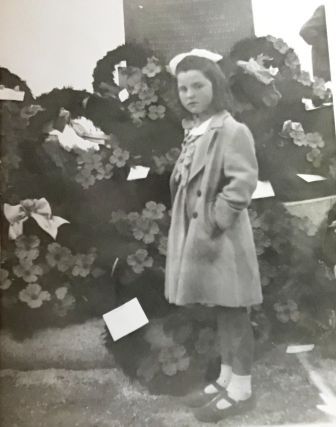
…Burnie Reynaert still remembers laying a wreath as a young girl….field-of-poppies300

Burnie Reynaert still remembers her uncle Lewis Wilkieson MARSH of Sydney Mines, Nova Scotia, one of 5 soldiers from the North Nova Scotia Highlanders Regiment who drowned in a tragic accident on the Leda River during the Battle of Leer in Germany on April 28, 1945. (See https://onthewarmemorialtrail.com/2021/05/18/on-the-war-memorial-trail-a-tragic-drowning-on-the-leda-river-in-germany-part-4/)

Last year, Burnie shared the telegrams her grandmother received, first saying that Lewis was believed to have drowned, and then the awful confirmation that he had died.  (See https://onthewarmemorialtrail.com/2021/11/10/on-the-war-memorial-trail-linking-the-past-with-the-present/)

This year, Burnie shared a photo of herself as a young girl, placing a wreath in honour of her uncle.

IMG_9994 Burnie Reynaert re Lewis Wilkieson Marsh

A very young Burnie placed a wreath in honour of her uncle, Lewis Wilkieson Marsh.  (Photo courtesy of B. Reynaert)

Even today, Burnie has not forgotten her uncle’s sacrifice.

IMG_0348 Burnie Reynaert with book

Burnie Reynaert with book.  (Photo courtesy of B.  Reynaert)

field-of-poppies300…We visited the memorial in Saulnierville, Nova Scotia…

20220912_123247 Sep 12 2022 Pieter beside Saulnierville Memorial

Pieter beside the memorial in Saulnierville, Nova Scotia.  (Photo credit: Daria Valkenburg)

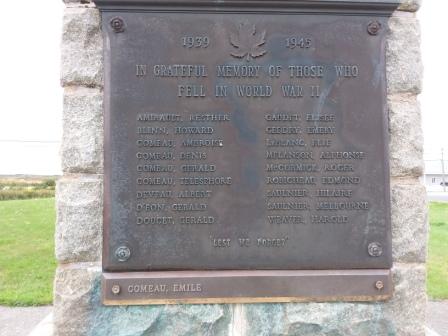
This fall, while in Nova Scotia, we visited the memorial in Saulnierville.  Two soldiers that Pieter researched are listed on this monument.  Both are buried in the Canadian War Cemetery in Holten.

Joseph ‘Ambroise’ COMEAU, from Lower Saulnierville, Nova Scotia, was one of 5 soldiers from the North Nova Scotia Highlanders Regiment who drowned in a tragic accident on the Leda River during the Battle of Leer in Germany on April 28, 1945.  (See https://onthewarmemorialtrail.com/2021/05/17/on-the-war-memorial-trail-a-tragic-drowning-on-the-leda-river-in-germany-part-3/ and https://onthewarmemorialtrail.com/2021/11/10/on-the-war-memorial-trail-linking-the-past-with-the-present/)

Joseph Edmond  ROBICHEAU, from Meteghan, Nova Scotia, lost his life on April 14, 1945 near Deventer, The Netherlands, while serving with the Royal 22nd Regiment.  His story will be told in an upcoming posting.

20220912_123347 Sep 12 2022 Saulnierville Memorial WW2 soldiers inc Comeau & Robichau

The WWII tribute on the memorial in Saulnierville, Nova Scotia. (Photo credit: Daria Valkenburg)

…Pieter interviewed by the Winnipeg Free Press….field-of-poppies300

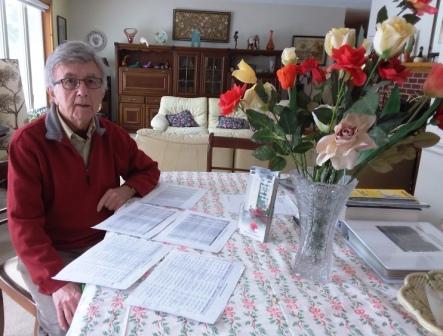
20210220_111030 Feb 20 2021 Pieter with photo wish lists

Pieter surrounded by some of the photo wish lists from the Canadian War Cemeteries in The Netherlands.  (Photo credit: Daria Valkenburg)

Pieter was interviewed by Kevin Rollason of the Winnipeg Free Press, about his request for help in finding photos of 12 soldiers from Manitoba who are buried in The Netherlands.  The article, ‘A name without a face’, ran online on November 4, 2022 and in the print edition on November 5, 2022. As of the date of this posting, the photo wish list remains unfulfilled. Here is the link in case you can help:  https://www.winnipegfreepress.com/local/2022/11/04/a-name-without-a-face

field-of-poppies300…Pieter interviewed on CTV Atlantic News At 5….

On Monday, November 7, 2022, Pieter was interviewed by Ceilidh Millar of CTV Atlantic News At 5 about the search for 4 soldiers of the North Nova Scotia Highlanders Regiment who died during the Battle of Bienen on March 25, 1945.

You can read the article and watch the video.  See P.E.I. man identifying Canadian soldiers in the Netherlands | CTV News  https://www.ctvnews.ca/atlantic/article/maritime-man-appeals-to-public-for-help-in-identifying-lost-canadian-soldiers-overseas/

The names of the soldiers mentioned in the interview were:

  1. Donald John MACKINNON, born October 8, 1925 in Sydney, Nova Scotia, son of Joseph and Catherine ( nee MacNeil) MacKinnon.
  2. Austin Havelock MUNROE, born December 2, 1919 in Little Dover, Nova Scotia, son of Edward and Minnie Munroe. He was married to Ana Elizabeth (nee Barry) Munroe.
  3. John Lewis WALLACE, born June 1, 1921 in Canning, Nova Scotia., son of William Edward and Amy Louise Wallace. He was married to Doris Avanelle (nee Crowe) Wallace. They had one son, William Lewis Wallace.
  4. Louis Allan SEXTON, son of  James E. and Ethel Sexton of Maria Est, Bonaventure County in Quebec, is also still on the photo wish list.

Incredibly, shortly after the broadcast we were contacted by Irene Doyle of Campbelltown, New Brunswick, who sent us a photo of Louis Sexton, which came from the Bay Chaleur Military Museum website.  The three soldiers from Nova Scotia are still on the photo wish list!

UPDATE: Photos of the three soldiers from Nova Scotia were subsequently received!

… ‘Il Silenzio’ to remember the fallen….field-of-poppies300

It seems fitting to end this Remembrance Week posting with music.  In a Dutch Liberation Day concert in Maastricht, The Netherlands, 13-year-old Melissa Venema, backed by André Rieu and his orchestra (the Royal Orchestra of the Netherlands), was the trumpet soloist in a haunting rendition of ‘Il Silenzio’ (The Silence). This piece, by Italian composer Nino Rossi, is based upon what we know as The Last Post. Watch

Thank you to Burnie Reynaert for sharing a childhood photo, Irene Doyle for sending the photo of Louis Sexton, Kevin Rollason and the Winnipeg Free Press for publicizing the photo search request of soldiers from Manitoba, and to Ceilidh Millar, Jayson Baxter, and CTV Atlantic News At 5 for publicizing the photo search of soldiers killed in Bienen, Germany.

If you can help with these photo requests, or have a story to tell, please let Pieter know. You can email him at memorialtrail@gmail.com, or comment on the blog.

© Daria Valkenburg

field-of-poppies300…Want to follow our research?….

If you are reading this posting, but aren’t following the blog, you are welcome to do so. Our blog address: https://onthewarmemorialtrail.com/

Front cover OnTheWarMememorialTrailinEurope4 countries, 6 weeks, 7,000 km – an unforgettable war memorial journey in Europe…. Daria’s book ‘No Soldier Buried Overseas Should Ever Be Forgotten‘ is available in print and e-book formats.  Net proceeds of book sales help support research costs and the cost of maintaining this blog. For more information on the book, please see https://nosoldierforgotten.com/

You are also invited to subscribe to our YouTube Channel: On The War Memorial Trail With Pieter Valkenburg: https://www.youtube.com/channel/UCJ591TyjSheOR-Cb_Gs_5Kw.

Never miss a posting!  Subscribe below to have each new story from the war memorial trail delivered to your inbox.
On The War Memorial Trail….. The WWII Soldier From Albion Who Died During The Defence Of The Nijmegen Salient

November 2, 2022. Once you visit a Canadian War Cemetery and place down a flag by the grave of a soldier from the province where you live, it stays with you, and makes you wonder about the young man who is buried there.  Over the years, Pieter has researched several of the soldiers from Prince Edward Island who are buried in The Netherlands, and he continues to do so. 

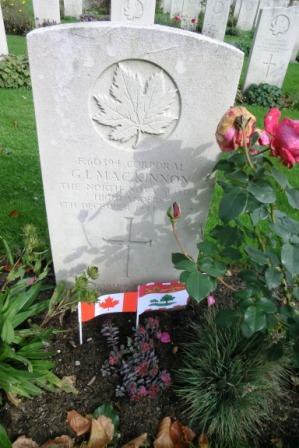
One of these WWII soldiers was George ‘Ivan’ MACKINNON, who was born September 16, 1917 in Albion, Prince Edward Island, the son of Wilbert and Catherine ‘Kattie’ (nee Acorn) MacKinnon (also spelled McKinnon).  Ivan’s birth record says he was born on September 16, but he recorded September 26 on his attestation form.

…The photo search began with media help….

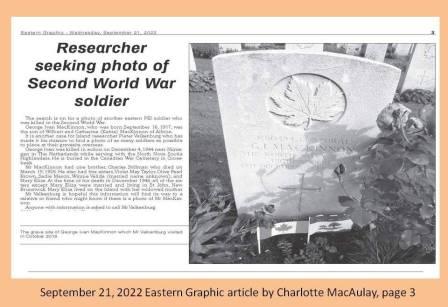
In his quest to find a photo, Pieter contacted Charlotte MacAulay of the Eastern Graphic newspaper for help in publicizing his quest.  The article ran on September 21, 2022 and shortly afterwards, Pieter was contacted by Sandra Stephens, who explained that she had a photo.

EAG-A03-092122-K Eastern Graphic George Ivan MacKinnon with border

20221019_102847 Oct 19 2022 Pieter and Sandra Stephens

Sandra Stephens with Pieter. (Photo credit: Daria Valkenburg)

When we met, Sandra explained that “… Dad’s Aunt Chris married Nathaniel MacKinnon, Ivan’s uncle.  Their place was just up the road and we visited there…

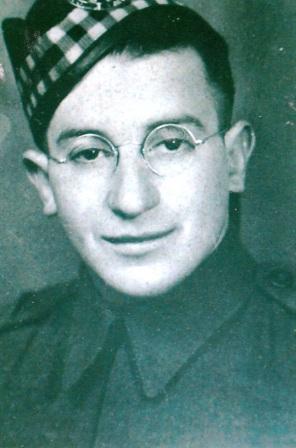
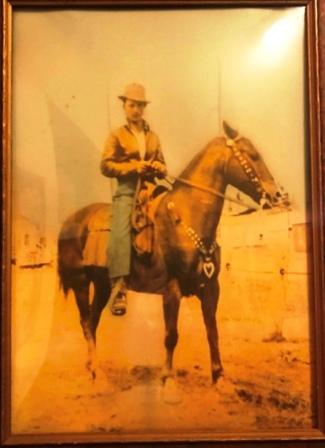
George Ivan MacKinnon

George ‘Ivan’ MacKinnon. (Photo courtesy of Sandra Stephens)

When Ivan enlisted with the North Nova Scotia Highlanders in Charlottetown on August 15, 1940, he was living in Montague, Prince Edward Island, and had worked on his family’s mixed farm operation for the past 10 years.

After completing his basic training, Ivan travelled to the United Kingdom with the Regiment, boarding the ship ‘Orion’ in Halifax, Nova Scotia on July 18, 1941.  The ship left Halifax the next day, arriving in Bristol on July 29, 1941. Intensive training followed, in preparation for the upcoming battles in Normandy in 1944.

…Ivan survived D-Day….

The North Nova Scotia Highlanders left England for Normandy, France on June 6, 1944, after waiting in place in the English Channel on landing craft earlier.   The war diary for Sunday, June 4, 1944 noted that “…We are tied up with two other landing craft tank.   The Padre is on one, so he had a church service at 10:30 hours on the quarter deck of the middle craft…

On June 5, 1944 the war diary recorded that “…At 14:00 hours the flotilla moved out to the open sea and formed up with the other craft taking part in the invasion…

After landing on the beaches of Normandy on June 6, 1944, the war diary noted that the Regiment had 10 casualties – 4 killed, 6 wounded.  Ivan had survived D-Day.

…The Regiment arrived near Nijmegen…

The North Nova Scotia Highlanders fought their way through Normandy.  On July 25, 1944, during ‘Operation Spring’, a battle in Tilly-La-Campagne, France, Ivan was slightly wounded by shell fragments to his face, legs, and neck.  (See https://www.dday-overlord.com/en/battle-of-normandy/cities/tilly-la-campagne)

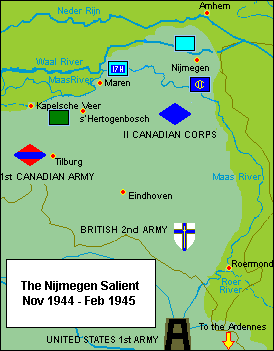
From France, the Regiment travelled through Belgium, and then to The Netherlands for the Battle of the Scheldt. By November 1944 they had advanced to an area near Nijmegen.

Nijmegensalient

The North Nova Scotia Highlanders were posted near Nijmegen.  (Map source: http://www.canadiansoldiers.com)

In ‘No Retreating Footsteps’ by Will Bird, he noted that on November 19, 1944, the North Novies would “…relieve the 7th Recce Regiment at Nijmegen Bridge…”  This was the bridge across the Waal River, a vital link to the Rhine River and into Germany.

The area known as the Nijmegen Salient had been established in September 1944, and was defended by Allied troops since then.  The First Canadian Army, of which the North Nova Scotia Highlanders were part of, was responsible for its defence between November 1944 and February 1945, when the advance into Germany began.  (See https://www.canadiansoldiers.com/history/campaigns/northwesteurope/nijmegensalient.htm)

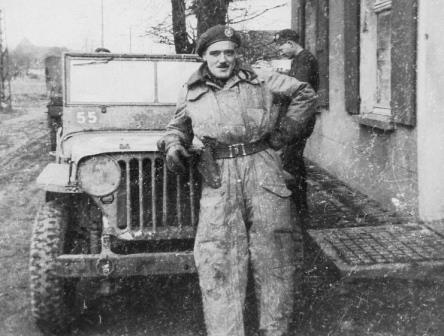
Skirmishes with German troops were ongoing, with casualties on both sides.  On December 3, 1944, Will Bird recorded that “…temporary quarters was in the cellar of a smashed house.  Sgt Arnold Piers was in command, and along with him were Sgt Bud Tibbetts, Cpl I MacKinnon, Ptes Bill Smith, Conners, Scott, Campbell and Lantagan as well as four or five others. There was a German village 1000 yards ahead and until dark the carrier men fired at anyone who moved in the village….”  

When the men noticed activity in the nighttime and flares being sent up by the Germans, they reported it to officers at Artillery Headquarters, who ignored their observations.  Bird noted that “… the general feeling was that the carrier men, unused to such duties, were jittery…

…Ivan lost his life during a firefight…

It turned out that the officers were wrong and the men were right to be concerned.  There were several casualties, with two who paid with their lives, in the early hours of December 4, 1944.  “…Sentries were relieved at 2:00 am…” 

Six men were resting when Sgt Piers woke them up.  “…He had sighted a raiding party of the enemy coming toward the post. Pte A. J. Campbell rushed out with a Bren gun, and fell back dead, target for a dozen bullets…” 

In the firefight that followed, the Germans “… threw grenades and overwhelmed the … small garrison as the Brens on the parapet had been left on cock and would not fire.  Daylight came shortly after…

Ivan did not survive the attack. “…Cpl Ivan MacKinnon was seen lying out in front about 50 yards.  Pte Connors crawled out and dragged him back, but he had died, having been shot ….” 

The other casualty was Allan Joseph CAMPBELL, aged 24, son of Alex T. and Annie Campbell, of Centennial, Inverness County, Nova Scotia.

…Ivan is buried in the Canadian War Cemetery in Groesbeek….

Ivan was initially buried in the Jonkers Bosch Temporary Military Cemetery in Nijmegen, before being reburied in the Canadian War Cemetery in Groesbeek, The Netherlands.

CIMG3317 Oct 5 2019 Groesbeek George MacKinnon

Grave of George ‘Ivan’ MacKinnon in the Canadian War Cemetery in Groesbeek, The Netherlands.  (Photo credit: Daria Valkenburg)

Thank you to Sandra Stephens for providing a photo, and to Charlotte MacAulay and the Eastern Graphic for publicizing the photo search request. If you have a story to tell, please let Pieter know. You can email him at memorialtrail@gmail.com, comment on the blog, or send a tweet to @researchmemori1.  

© Daria Valkenburg

…Want to follow our research?….

If you are reading this posting, but aren’t following our research, you are welcome to do so.  Our blog address: https://onthewarmemorialtrail.com/

Front cover OnTheWarMememorialTrailinEurope4 countries, 6 weeks, 7,000 km – an unforgettable war memorial journey in Europe…. Daria’s book ‘No Soldier Buried Overseas Should Ever Be Forgotten‘ is available in print and e-book formats.  Net proceeds of book sales help support research costs and the cost of maintaining this blog. For more information see https://nosoldierforgotten.com/ 

You are also invited to subscribe to our YouTube Channel: On The War Memorial Trail With Pieter Valkenburg: https://www.youtube.com/channel/UCJ591TyjSheOR-Cb_Gs_5Kw

Never miss a posting!  Subscribe below to have each new story from the war memorial trail delivered to your inbox.

On The War Memorial Trail….. A Photo Found For WWII Soldier Allan ‘Gordon’ Coutts

May 24, 2022.  In 2017, Pieter received a photo wish list from researchers at the Canadian War Cemetery in Holten, The Netherlands.  There were 6 names, all serving with the North Nova Scotia Highlanders when they lost their lives. 

One of these men, Allan ‘Gordon’ COUTTS, was born January 11, 1923 in Kerrobert, Saskatchewan, the son of Benjamin and Susan Coutts.  During his childhood, the family moved to Olds, Alberta, where his father was a firefighter on a government experimental farm. On May 11, 1945, while monitoring the unloading of ammunition at the Sports Field in Norden, Germany, an explosion cost him his life.

In July 2021, after being unsuccessful in finding family, Pieter did a radio interview with a station in Olds, Alberta, and we posted a story about the photo search. (See https://onthewarmemorialtrail.com/2021/08/20/on-the-war-memorial-trail-the-search-for-a-photo-of-ww2-soldier-allan-gordon-coutts/)

….A photo is found….

Months later, in December 2021, we received an email from Gordon Kenneth ‘Ken’ Coutts in Saskatchewan, saying “I came across your request for photos or information on family members…” of Gordon Coutts.  “… I was named after him. The last of his siblings, Norman, passed away in November 2021.  All that remain are 3 generations of nieces and nephews….

Photo Sgt Coutts from Ken Coutts

Allan ‘Gordon’ Coutts shortly before enlistment in 1943.  (Photo submitted by Ken Coutts and courtesy of The Coutts Family)

….Letter from Captain A. M. Harper….

Ken shared the only photo he had of his uncle, along with a letter that Captain A. M. HARPER of the North Nova Scotia Highlanders sent to Gordon’s father upon his death.

…It is with the deepest sympathy that I write to you on the loss of your son, Sergeant Allan Gordon Coutts, who died of accidental wounds received at Norden, Germany on 11 May, 1945.  Words could not express my feelings when I received the news as your son was one of the best fellows we had here in ‘C’ Company.

I can recall your son’s record with this unit quite plainly. On the seventh of September he came to us as Private Coutts….”  This would have been September 7, 1944.

…As a private, he played his part in no small way in battles that have great significance – Mount Lambert, Bavlogne, the Scheldt estuary landing – and proved his mettle so well that he received the appointment of Lance Corporal on the twelfth of October during the water and mud operation on the Scheldt.  

On the fifth of November, the now well known 3rd Canadian Infantry Division N.C.O.’s School opened. Lance Corporal Coutts was one of the first ones to be recommended for the course and he did very well and received an excellent report.  As a result of the school’s recommendation, your son was promoted to corporal on the 8th of January 1945.

As a corporal, he did an excellent job in Nijmegen, in the clearing operation up the Rhine and then in the crossing of the Rhine.  I can remember one situation in particular that ensured the young corporal’s promotion to the rank of Sergeant. It was the crossing of the Rhine.  Our task was the taking of the strongpoint of Bienen.

Casualties were extremely heavy during the attack and when we gained the first buildings, Cpl Coutts was the only NCO left with the company commander and myself.  He did an excellent job there in the face of heavy odds and was promoted to Sergeant that day.

In that quiet, efficient way of his, your son carried on throughout the remainder of the campaign until the end of hostilities on May 7/8.  At that time we were assigned the task of rounding up the remnants of the German armed forces, disarming them and concentrating them in specific areas.

Sgt Coutts was supervising the removal of ammunition from one when a freak accident occurred, mortally wounding him.  A court of inquiry was held, but no blame can be attached to anyone because it definitely was a freak accident.

Your son never regained consciousness from the time of his accident until his death several hours later.  All possible treatment was given him by our own medical officers, those at the Field Dressing Station and also those at the Casualty Clearing Station, but even modern medicine could not revive him. He died as he lived – a man well-liked, respected, and trusted by everyone.

Your son was buried in the Canadian plot of the Lutheran Cemetery at Leer, Germany, with full military honours by the H/Capt G. Cox, Protestant chaplain of the Casualty Clearing Station.…..

On behalf of the entire unit, I wish to express our sympathy in your bereavement.  We have lost a tried and true friend, and a good soldier, but our loss is small compared to your loss of a son.

Sincerely yours,

A.M. Harper…

What a wonderful tribute and summary of service for a valued soldier and friend! 

….The North Nova Scotia Highlanders Wish List….

In addition to Allan ‘Gordon’ COUTTS,  the other North Nova Scotia Highlanders on that 2017 photo wish list from the researchers at the Canadian War Cemetery in Holten, for which photos were found, were:

One more photo is yet to be found for:

  • Archibald Henry NELSON, born in Charlottetown, Prince Edward Island, son of William Henry and Winnifred Frances Nelson, who lost his life on April 18, 1945, aged 32.

Thank you to Ken Coutts for sharing a photo of his uncle and the letter from Captain Harper.  Do you have photos or information to share? Email Pieter at memorialtrail@gmail.com, comment on the blog, or tweet to @researchmemori1

© Daria Valkenburg

…Want to follow our research?….

If you are reading this posting, but aren’t following our research, you are welcome to do so.  Our blog address: https://onthewarmemorialtrail.com/

Front cover OnTheWarMememorialTrailinEurope4 countries, 6 weeks, 7,000 km – an unforgettable war memorial journey in Europe…. Daria’s book ‘No Soldier Buried Overseas Should Ever Be Forgotten‘ is available in print and e-book formats.  Net proceeds of book sales help support research costs and the cost of maintaining this blog.  For more information see https://nosoldierforgotten.com/

You are also invited to subscribe to our YouTube Channel: On The War Memorial Trail With Pieter Valkenburg: https://www.youtube.com/channel/UCJ591TyjSheOR-Cb_Gs_5Kw

Never miss a posting!  Subscribe below to have each new story from the war memorial trail delivered to your inbox.

On The War Memorial Trail….. The WWII Soldier From Springhill Who Received A Military Cross

January 23, 2022.  In the quest for a photo of Lt Donald Charles MACKENZIE of Springhill, Nova Scotia, Pieter placed a request on ‘THE SPECTATOR: A Little Good News from Springhill, NS’ Facebook page.  Pat Crowe submitted a newspaper photo and obituary shortly afterwards, explaining that “…Donald had 4 brothers and sisters but they are all gone now…

image0 Donald Charles MacKenzie

Donald Charles MacKenzie.  (Photo courtesy of Lydia Prange)

Pat then contacted Donald’s niece, Lydia Prange, who had a photo and explained that her mother, Lydia Jean Nelson, was Donald’s sister.  I was born in 1949 so never knew my uncle or grandmother….” Lydia wrote.

Born September 3, 1914 in Springhill, Nova Scotia, Donald was the son of Charles Tupper MacKenzie and Lydia MacKay.  Before enlisting for active duty with the North Nova Scotia Highlanders in Springhill on September 15, 1939, Donald was in the Cumberland Highlanders militia from June 11, 1936 until August 27, 1939.  He was employed as a road layer by Dominion Steel and Coal, a mining company.

Donald married …Mary MacSavaney on June 19, 1936.  Their son Gordon was born on March 15, 1940…

….Donald took a demotion in rank in order to serve overseas more quickly….

Upon enlistment, he was given the rank of Sergeant and sent to Halifax with the North Nova Scotia Highlanders.  However, in order to see active overseas service more quickly, he transferred to the Royal Canadian Engineers 6th Field Company on January 7, 1941, taking a demotion in rank to Private, and was transferred to Debert, Nova Scotia in preparation for going overseas.

On June 18, 1941 he was on his way to the United Kingdom.  On August 1, 1941 he was promoted to Lance Corporal, and later promoted to Corporal on July 6, 1943. On September 21, 1944 he received a further promotion, to Lieutenant, upon the successful completion of officer training at Sandhurst, in the United Kingdom.

…After receiving a promotion to Lieutenant he was transferred to the Royal Winnipeg Rifles…

He requested a transfer back to the North Nova Scotia Highlanders, but instead, in October 1944 he was sent to Belgium and assigned to the Royal Winnipeg Rifles.

image1 Donald Charles MacKenzie

Donald Charles MacKenzie.  (Photo courtesy of Lydia Prange)

On April 7, 1945 the Royal Winnipeg Rifles were in The Netherlands, and ordered to cross the Schipbeek Canal and establish a bridgehead as preparation for an assault on the city of Deventer by the 7th Canadian Brigade.  Crossing the Canal was vital to the success of the bridge operation, not an easy feat as the Bridge was strongly defended by the Germans.

…Courage and bravery led to a Military Cross recommendation…

Donald’s actions on that day resulted in a recommendation for a Military Cross.  The citation recorded that “…it was due only to the determination and boundless courage of Lt Douglas MacKenzie that a quick crossing was made possible without heavy casualties.

The enemy had a battle group dispersed around the bridge, making it impassable.  Lt MacKenzie, in command of the unit Pioneers attached to ‘D’ Company, had the responsibility of bridging the canal so that a bridgehead could be rapidly built up ready for a breakout.

The enemy fire was intense but with covering fire from ‘D’ Company, Lt MacKenzie succeeded in crawling out onto the Bridge, dragging a couple of planks. He was working well within grenade range of the enemy and at least six grenades exploded nearby, wounding him by shrapnel and blast.

With complete disregard for his own safety, he continued working until he had four planks in position, allowing the company to cross quickly and secure a solid bridgehead.

His dauntless spirit and untiring efforts inspired the men around him and resulted in the momentum of the advance being maintained…

…Appingedam was at the beginning of the Battle of the Delfzijl Pocket…

Screenshot 2022-01-21 at 10-19-20 appingedam ww2 at DuckDuckGo

Map showing Appingedam courtesy of Wikipedia.

On April 21, 1945, the Royal Winnipeg Rifles neared Appingedam, a small town of 7,000 in the northeastern corner of The Netherlands.  Along with the 7th Reconnaissance Regiment, they advanced, but the Germans blew up the bridge over the canal which the Rifles had intended to cross.

The movement of troops through Appingedam was the very beginning of the Battle of the Delfzijl Pocket.  (For more information on the Battle of the Delfzijl Pocket, see https://www.canadiansoldiers.com/history/battlehonours/northwesteurope/delfzijlpocket.htm)

A translated excerpt from a Dutch account, written by Joël Stoppels of Battlefield Tours and sent by the Informatiecentrum Canadese Begraafplaats Holten, gave an eye witness account.  “…On Sunday morning, April 22, the Royal Winnipeg Rifles travelled via the railway line at Tjamsweer to the level crossing. They came under fire from the bunkers on the south side of the rails, but these were soon defused. By six o’clock they reached the railway crossing, after which they continued along the railway towards Appingedam. They were noticed by the Germans, who started to fire on the Canadians. As a result, the entire area between Tjamsweer and Appingedam came under heavy machine-gun fire and shell fire. … 

It appears that the Germans were initially surprised as they expected troops to advance by the main road. “… There was heavy fighting at the railway bridge over the Kleine Heekt. The Germans withdrew, but not before blowing up the bridge. This was not an insurmountable problem for the Canadians. Partly to protect themselves against enemy fire, the Canadians continued dredging through the ditches. Fifteen Canadians thus reached the level crossing at Jukwerd, where they entered Mr H. Jongsma’s house, soaked and muddy, because of their platoon commander….”

The platoon commander was Lt Donald MacKenzie “…. who had suffered a gunshot wound to his right shoulder…He was placed on a bed to allow him to rest…”  In an unlucky twist of fate, this temporary resting place proved fatal.

….The Germans unleashed concentrated fire, with two shells hitting the house. When the residents later were able to check on the wounded soldier, it turned out that he had been fatally hit by shrapnel…

The Canadian soldiers who had brought him to the house … had moved to the home of Mr. P. Puisten (on the same street), and could no longer offer help. Red Cross soldiers moved his remains outside the line of fire….

Donald was 30 years old when he died in that house on April 22, 1945.  The Military Cross was awarded to him posthumously and presented to his widow.  Donald was initially buried in Loppersum General Cemetery in Groningen.  After the war he was reburied in the Canadian War Cemetery in Holten.

image2 Gravestone Donald Charles MacKenzie

Grave of Donald Charles MacKenzie in the Canadian War Cemetery in Holten.  (Photo courtesy of Informatiecentrum Canadese Begraafplaats Holten)

… A plaque commemorates Canadian soldiers who died during the Battle of the Delfzijl Pocket….

This is the second story told about a soldier with the Royal Winnipeg Rifles who lost his life near Appingedam.  William ‘Willie’ DANIELS, whose story was previously told, also lost his life on April 22, 1945.

In 1995, the Stefanus Church in Holwierde placed a plaque to commemorate Canadian soldiers who lost their lives during the Battle of the Delfzijl Pocket.  Donald MacKenzie and Willie Daniels are among those who are commemorated.

Plaque at Stefanus Church in Holwierde

Plaque at Stefanus Church in Holwierde, The Netherlands.  (Source: https://www.tracesofwar.nl/sights/40531/Herinneringsplaquette-Stefanus-Kerk.htm)

….. Other Soldiers Mentioned On The Plaque In The Church In Holwierde….

Thank you to Lydia Prange for sharing photos and information on Donald Charles MacKenzie and to Elaine Falconer, who manages the The Spectator Facebook page in Springhill, Nova Scotia.  This Canadian hero was featured in a Remembrance Week video entitled ‘In Remembrance’ on our YouTube Channel, which you can see here:

Do you have photos or stories to share?  Email Pieter at memorialtrail@gmail.com, or comment on the blog.

© Daria Valkenburg

…Want to follow our research?….

If you are reading this posting, but aren’t following the blog, you are welcome to do so. Our blog address: https://onthewarmemorialtrail.com/

Front cover OnTheWarMememorialTrailinEurope4 countries, 6 weeks, 7,000 km – an unforgettable war memorial journey in Europe…. Daria’s book ‘No Soldier Buried Overseas Should Ever Be Forgotten‘ is available in print and e-book formats.  Net proceeds of book sales help support research costs and the cost of maintaining this blog. For more information see https://nosoldierforgotten.com/

Screenshot_2021-02-27 On The War Memorial Trail With Pieter Valkenburg

You are also invited to subscribe to our YouTube Channel: On The War Memorial Trail With Pieter Valkenburg: https://www.youtube.com/channel/UCJ591TyjSheOR-Cb_Gs_5Kw.

Never miss a posting!  Subscribe below to have each new story from the war memorial trail delivered to your inbox.