On The War Memorial Trail…..The WWII Soldier From Prince Edward Island Who Lost His Life In Germany Two Days Before His 21st Birthday

February 12, 2025. Once you visit a Canadian War Cemetery and place down a flag by the grave of a soldier from the province where you live, it stays with you, and makes you wonder about the young man who is buried there. 

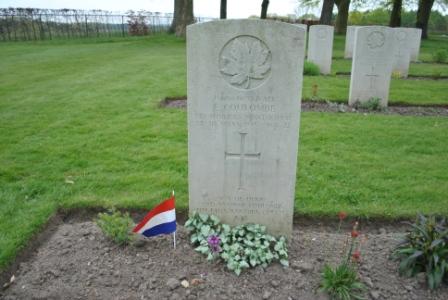
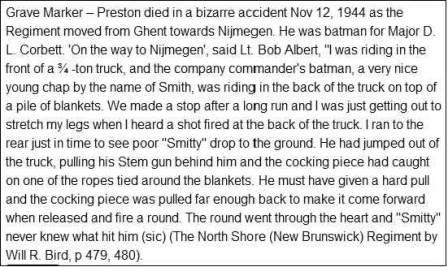
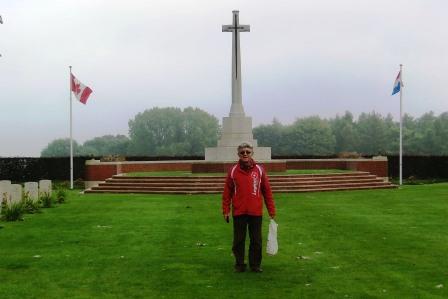
In 2017, when we visited the Canadian War Cemetery in Groesbeek, The Netherlands, with our friends Ad and Noor Scheepers, we had a list of soldiers from Prince Edward Island buried there, but only knew the story of one, George Preston SMITH, whose name is listed on the Cenotaph outside the Borden-Carleton Legion.  (See On the War Memorial Trail ….. At The Canadian War Cemetery in Groesbeek and On the War Memorial Trail ….. PEI Soldiers Buried In The Canadian War Cemetery in Groesbeek and https://onthewarmemorialtrail.com/2018/03/21/another-photo-for-wwii-soldier-george-preston-smith/)

Ad and Noor Scheepers with Pieter (right) by the grave of Arthur Gaudet at the Canadian War Cemetery in Groesbeek, The Netherlands.  (Photo credit: Daria Valkenburg)

Since then, Pieter has researched and we’ve told the stories of 12 more Islanders buried in that Dutch cemetery. Our 14th story is about Arthur GAUDET of Mount Carmel, Prince Edward Island.  While Arthur had been on the list of Islanders buried in Groesbeek, he was not on the cemetery’s photo wish list as they had a photo of him. 

15 Pointe is a cape not far from Mount Carmel, Prince Edward Island.  (Map source: https://www.geodata.us/canada_names_maps)

Born February 28, 1924 in 15 Pointe, near Mount Carmel, Prince Edward Island, Arthur was the son of Joseph Stanley and Mary Jacqueline Gaudet.  He was one of 10 children, 8 of them still alive at the time that he enlisted at the No. 5 District Depot in Quebec City, Quebec on July 24, 1942.  His three older brothers were also in the Canadian Army.
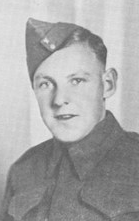
Arthur Gaudet. (Photo courtesy of Alice van Bekkum, Chair of the Faces To Graves Foundation Groesbeek)

According to his Personnel Selection Record, Arthur spoke English, not French, and had completed Grade 9.  He was working as a labourer for the PEI Bag Company. (See https://atlanticbusinessmagazine.ca/web-exclusives/89-years-in-the-bag-and-counting-for-p-e-i-bag-company/)

After completing his basic training, Arthur was sent to No. 22 Canadian Army Educational (Basic) Training Centre in North Bay, Ontario on September 19, 1942.

He remained there until December 2, 1942, when he was transferred to A1 Canadian Artillery Training Centre (CATC) in Camp Petawawa, Ontario, for training as a gunner.  While still at A1 CATC, he qualified as a Driver i/c Class III wheeled vehicles on January 29, 1943. (The term ‘Driver i/c’ refers to ‘Driver, internal combustion’.  Class III meant he was qualified to drive heavy trucks and armoured cars, but not tanks.)

On February 8, 1943, he was granted embarkation leave until February 21, 1943, the last chance he would have to see his family before going overseas.

….Arthur left Canada for overseas service….

On March 24, 1943, Arthur left Canada for the United Kingdom.  Upon arriving on March 31, 1943 he was assigned to No. 3 Canadian Artillery Reinforcement Unit (CARU). 

On June 18, 1943, Arthur was transferred to No. 3 Light Anti-Aircraft Regiment, Royal Canadian Artillery for Light Machine-Gun and Rifle training, and undertook various Tests of Elementary Training (TOET).

Arthur was allocated to the X-4 Reinforcement List of the Canadian Infantry Corps (CIC), part of the 10th Battalion, 21st Army Group, on June 21, 1944, in preparation for going to North West Europe.

….Arthur was transferred to Les Fusiliers Mont-Royal….
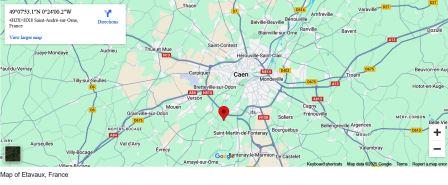
Arthur Gaudet joined Les Fusiliers Mont-Royal near Etavaux, France, indicated by the large red marker.  (Map source: Google maps)

On July 22, 1944 he left the United Kingdom for France, arriving a day later. On July 25, 1944, he was transferred to Les Fusiliers Mont-Royal, joining them in an area behind Etavaux in Normandy, France.

The Regiment remained in France until September 9, 1944 when it moved into Belgium.  Arthur received a promotion to Acting Corporal a few days later, on September 12, 1944.

.….Arthur was badly wounded during the Battle of the Scheldt ….

Map shows location of Kapellen and Brasschaat, not far from Antwerp in Belgium.  (Map source: DuckDuckGo)

On October 2, 1944, the Battle of the Scheldt began and involved Canadian forces advancing through northern Belgium, including areas like Kapellen, to clear German defenses and secure access to the port of Antwerp.

The municipality of Kapellen, in Belgium, was liberated on October 4, 1944 by Les Fusiliers Mont-Royal. The war diary entry for October 4, 1944 for Les Fusiliers Mont-Royal confirmed this.  “…Advance up to Brasschaat.  In the afternoon, advance towards Cappellan, which we taken, then sweep towards north-east of town.  Positions at night, anti-tank ditch 2 miles from Cappellan…”   Cappellan is the old spelling of Kapellen.

Arthur, who was in ‘A’ Company, was wounded by a bullet in the shoulder on October 5, 1944 and was evacuated to No. 9 Canadian General Hospital (CGH) in Horsham, England.  After a recuperation period of three months, Arthur left the United Kingdom on January 10, 1945, returning to Les Fusiliers Mont-Royal 2 days later.  He joined them in Mook, The Netherlands, which is near Nijmegen.

.….Arthur lost his life during Operation Blockbuster ….

By February 17, 1945, the Regiment was in Germany, in place for Operation Blockbuster, as part of the 6th Canadian Infantry Brigade, along with several other Canadian Regiments. The Operation was to begin at dawn on February 26, 1945. (See https://en.wikipedia.org/wiki/Operation_Blockbuster)

Arthur Gaudet lost his life during a battle near Kalkar, Germany.  (Map source: DuckDuckGo)

On February 25, 1945, the war diary for Les Fusiliers Mont-Royal recorded that during a briefing of troops for Operation Blockbuster, the brigade’s task was “to capture high ground west of Kalkar. The attack is to be made at night with troops mounted on tanks….”  Kalkar is a municipality in the district of Kleve, in North Rhine-Westphalia, Germany, and is located near the Rhine River.

The war diary for February 26, 1945 described what happened.  “….The attack commenced at 0400 hrs under cover of an artillery barrage. Camerons of Canada regiment on our right encountered mines a few hundred yards from the FDL’s which caused the Commander’s tank to be knocked out resulting in considerable confusion. South Saskatchewan regiment on our left and our Battalion reached the objective…”  FDL refers to the French acronym for Les Fusiliers Mont-Royal.

During the February 26, 1945 attack, Arthur was wounded and died later that day.  He was two days short of his 21st birthday!

Arthur lost his life about a week before another soldier in the same Regiment, Joseph ‘Albert Noel’ LAMONTAGNE, whose story was previously told, lost his on March 3, 1945. See https://onthewarmemorialtrail.com/2025/02/05/on-the-war-memorial-trail-the-wwii-soldier-from-saint-basile-who-lost-his-life-during-the-advance-towards-xanten/

.….11 other soldiers died on February 26, 1945….

Arthur was one of 12 members of Les Fusiliers Mont-Royal who lost their lives on February 26, 1945.  The other 11 were:

  • Private Rosaire BELLERIVE of Ste Flore, Quebec, aged 19
  • Private Romeo BENOIT of Montreal, Quebec, aged 41
  • Private Joseph Wilfrid Rheal GUERTIN of Moose Creek, Ontario, aged 19
  • Private Marcel LAVIGNE of Henri, Montreal, Quebec, aged 19
  • Private Maurice PAQUETTE of Sherbrooke, Quebec, aged 22
  • Lieutenant Ovide Joseph PAQUETTE of North Bay, Ontario, aged 24
  • Private Paul Eugene PARENT of St. Honore, Beauce County, Quebec, aged 24
  • Private Alphie Raymond PELTIER, born in Chatham, Ontario, aged 30
  • Private Jean Marie ST ONGE of Amqui, Quebec, aged 23
  • Lieutenant Robert TALBOT of Quebec City, Quebec, aged 25
  • Private Vincent THIBODEAU of Maria, Bonaventure County, Quebec, aged 24

.….Arthur is buried in Groesbeek….

Arthur was initially buried in the Canadian Military Cemetery in Bedburg, Germany, before being reburied in the Canadian War Cemetery in Groesbeek, The Netherlands. 
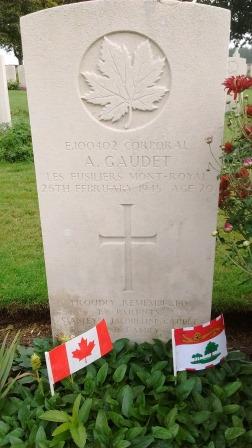
Grave of Arthur Gaudet in the Canadian War Cemetery in Groesbeek, The Netherlands.  (Photo credit: Daria Valkenburg)

Thank you to Alice van Bekkum, Chair of the Faces To Graves Foundation Groesbeek, for sending Pieter that initial list of soldiers from Prince Edward Island who are buried in the Canadian War Cemetery in Groesbeek, The Netherlands.  If you have a story or photo to share, please contact Pieter at memorialtrail@gmail.com or comment on the blog. 

© Daria Valkenburg

….Want to follow our research?….

If you are reading this posting, but aren’t following our research, you are welcome to do so.  Our blog address: https://onthewarmemorialtrail.com/
4 countries, 6 weeks, 7,000 km – an unforgettable war memorial journey in Europe…. Daria’s book ‘No Soldier Buried Overseas Should Ever Be Forgotten‘ is available in print and e-book formats.  Net proceeds of book sales help support research costs and the cost of maintaining this blog. For more information see https://nosoldierforgotten.com/

You are also invited to subscribe to our YouTube Channel: On The War Memorial Trail With Pieter Valkenburg: https://www.youtube.com/channel/UCJ591TyjSheOR-Cb_Gs_5Kw

Never miss a posting!  Subscribe below to have each new story from the war memorial trail delivered to your inbox.
On The War Memorial Trail….. The WWII Soldier From Saint-Basile Who Lost His Life During The Advance Towards Xanten

February 5, 2025. We never know what a photo search might lead to once Pieter begins researching a soldier. In the case of a WWII soldier listed as being from New Brunswick, the search led to his birth in the province of Quebec, to his enlistment in Ontario, to the widow of his nephew, and finally to a Legion in New Brunswick where a shadow box with photos had been donated.

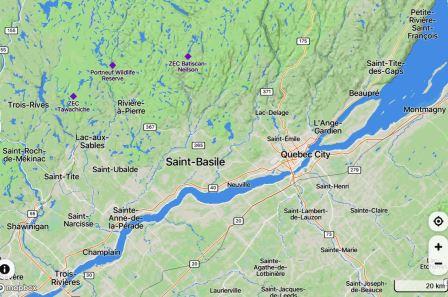
Joseph ‘Albert Noel’ LAMONTAGNE was born on December 25, 1918 in Saint-Basile, Quebec, the son of Joseph Lamontagne and Marie ‘Alexina’ Jacques. Saint-Basile is in Portneuf Regional County Municipality in Quebec, past Quebec City.  To our surprise, we realized we’d driven past the turn-off to Saint-Basile every time we travelled between our home in Prince Edward Island and Ottawa, Ontario!

Albert Noel Lamontagne was born in Saint-Basile, Quebec.  (Map source: Mapcarta)

…..Albert Noel enlisted under the NRMA in 1942….

Albert Noel originally enlisted under the National Resources Mobilization Act (NRMA) in North Bay, Ontario on January 8, 1942 and began basic training at No. 2 NRMA Clearing Depot, before joining the active army on January 20, 1942.   He took his basic training at No. 22 Canadian Army Basic Training Centre in North Bay. (See https://en.wikipedia.org/wiki/National_Resources_Mobilization_Act)

Albert Noel Lamontagne in training.  (Photo courtesy of the Albert Joseph Chevarie Family)

At the time of his enlistment, he had been working as a labourer, having left school after completing Grade 3 in Quebec City.  He spoke French and had a basic knowledge of English. His father had died in 1920, and his mother had remarried, in 1928, to Emilien Chevarie.  His brother, Paul-Emile, was also in the Canadian Army. As well, he had a sister Rose-Aimée, a half-brother George, and a half-sister Juliette.

  ….George Chevarie’s son was the key to finding a photo of Albert Noel….

It was through Albert Noel’s half-brother, George Chevarie, that a photo of Albert Noel was found.  George’s son, Albert Joseph, had died in 2020. However, after Pieter spoke to Joyce Chevarie, the widow of Albert Joseph Chevarie, she told him that her husband had donated a shadow box with a photo of Albert Noel, a letter, and his medals to the Royal Canadian Legion branch in Richibucto, New Brunswick.

Pieter then got in contact with the Legion in Richibucto.  Legion Branch president Malcolm John took everything out of the shadow box donated by the family of Albert Chevarie, photographed each item, and emailed the photos to Pieter!  The next time we were in New Brunswick, we visited the Legion and met Malcolm.

Pieter with Malcolm John (right), President of the Richibucto Legion in New Brunswick.  (Photo credit: Daria Valkenburg)

….Albert Noel served in Newfoundland….

On March 12, 1942, Albert Noel was sent to A23 Coast Defence and Anti-Aircraft Artillery Advanced Training Centre (CD & AA) in Halifax, Nova Scotia.  A23 was a Coast and Anti-Aircraft Artillery Training Centre established to train coast and anti-aircraft gunners.

Upon completing his training, Albert Noel was given embarkation leave on May 5, 1942, prior to being posted to Newfoundland with the 106th Coast Battery of the Royal Canadian Artillery (RCA) on June 1, 1942.  The Battery was part of Atlantic Command, tasked with strengthening and administering home defence facilities on Canada’s Atlantic Coast. 

Albert Noel was in Botwood, at a Royal Canadian Air Force (RCAF) base, which had aircraft patrolling the east coast of the Atlantic. Canadian Army personnel based at Botwood were charged with protection of military facilities that had been installed there. (See https://www.heritage.nf.ca/articles/politics/botwood-base.php)

Location of Botwood Military Base in Newfoundland. (Map source: http://postalhistorycorner.blogspot.com/2012/12/wwii-canadian-forces-in-newfoundland.html)

Albert Noel was in Newfoundland at the same time as two other soldiers whose stories have been told on this blog:

….Albert Noel volunteered for paratroop training….

In an interview for his Personnel Selection Record on September 30, 1943, while at Botwood, Albert Noel volunteered for Paratroop Training.  The interviewer recorded that Albert Noel “….has a good training record and seems a very dependable, reliable type, although badly handicapped by lack of education. Not suitable for Paratroops under present regulations which require Grade VI education…”  Albert Noel had only completed Grade 3.

On February 14, 1944, Albert Noel left Newfoundland for Shelburne, Nova Scotia and was transferred to the 104th Coast Battery of the Royal Canadian Artillery (RCA).

On May 1, 1944, Albert Noel was assigned to No. 1 Transit Camp in Windsor, Nova Scotia for final training and preparation before being sent overseas.  He then was transferred to No. 1 Infantry Training Battalion in Camp Debert, Nova Scotia on June 8, 1944.

While at No. 1 Infantry Training Battalion, he was re-interviewed on June 28, 1944 and again volunteered for Paratroop Training.  The response was the same: “…not suitable for Paratroops.  His education is lacking…

On July 21, 1944, Albert Noel was sent to the Training Brigade Group in Debert, and granted 2 weeks embarkation leave, the last chance he had to see his family again.

Albert Noel Lamontagne in dress uniform.  (Photo courtesy of the Albert Joseph Chevarie Family)

….Albert Noel’s mother tried to have him released….

The embarkation leave in July must have been bittersweet, as after the death of Albert Noel’s stepfather in April 1944, his mother, who was living in St. Charles, New Brunswick, had contacted the Military Authorities in June 1944, asking that her son be returned home. 

She was interviewed on June 21, 1944 and explained that “….I am left alone with two children, one boy George Chevarie, 14 years of age, and one girl Julia Chevarie, 11 years of age…..The reason I want my son to come home is because I am sick, suffering from liver trouble…

Although Mrs Chevarie had acute hepatitis and was unable to work, the military did not consider this grounds to release Albert Noel.  The report stated that her doctor was consulted, and in his opinion her son “…could not help her much, insofar as her sickness goes…” 

Therefore, the report concluded that “…if her son was home he could not help her very much, other than financial circumstances… It was further pointed out that Mrs Chevarie was already was receiving a Dependents’ Allowance. Albert Noel remained in the Canadian Army.

….Albert Noel left Canada for overseas service….

On September 2, 1944, Albert Noel left Canada for the United Kingdom. Upon arriving on September 6, 1944 he was assigned to No. 3 Canadian Infantry Reinforcement Unit (CIRU). 

He continued his training for a few weeks before being transferred to the X-4 reinforcement list of the Canadian Infantry Corps (CIC), part of the 10th Battalion, on October 7, 1944.  The next day he was on his way to Northwest Europe, disembarking on October 9, 1944.

….Albert Noel was transferred to Les Fusiliers Mont-Royal….

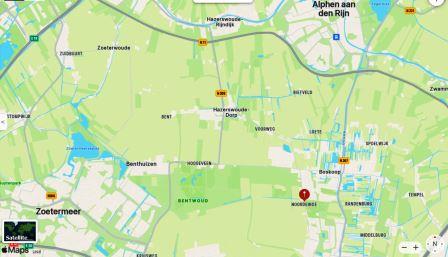
Albert Noel joined Les Fusiliers Mont-Royal in Noordeinde, The Netherlands. (Map source: DuckDuckGo)

On October 18, 1944, Albert Noel was transferred to ‘C’ Company of Les Fusiliers Mont-Royal, joining them in Noordeinde, The Netherlands.

Then, on December 14, 1944, Albert Noel received a promotion, from Private to Lance Corporal. On February 15, 1945, he was promoted again, to Acting Corporal.

.….The battle to clear Xanten began in early March 1945 ….

By February 17, 1945, the Regiment was in Germany, in place for the Battle of Hochwald Gap, part of Operation Blockbuster, as part of the 6th Canadian Infantry Brigade, along with several other Canadian Regiments.  This offensive began on February 28, 1945 to clear the Germans from the Reichswald, a heavily forested area between the Maas and the Rhine Rivers, driving them back over the Rhine, taking the fight well into German territory.

On March 1, 1945 the war diary for the 6th Canadian Infantry Brigade stated that “…the task of clearing the high ground south of Calcar was completed…..Relief of 10 Canadian Infantry Brigade commenced at 0400 hours. Some mortaring and shelling reported during the takeover but relief completed by first light…

This account matched the March 1, 1945 entry in the war diary for Les Fusiliers Mont-Royal. “….Battalion moves to a concentration …” near “….ESSEN to relieve 10 Cdn Inf Bde at first light 2 March 45…

An update in the March 2 1945 war diary explained that “6 Cdn Inf Bde relieves the Argyle and Sutherland Regiment which has been taking a severe beating by both small arms and gun fire which continue as we get in position with our companies…Enemy resistance is very stubborn and a screen of TIGERS and Self Propelled guns is reported….

Sharon Adams wrote in the March 2022 Legion Magazine’s articleThe Taking Of Xantenthat  “In early March, the Canadians were assigned to take Xanten, established by the Romans in about 15 B.C. and the place from which the German 256th Infantry Division launched its 1940 invasion of the Netherlands.

It began with opening approaches to the town by Les Fusiliers Mont-Royal. Resistance was stiff. On March 3, a direct hit took out the wireless radio set and operator in the lead company…

.….Albert Noel lost his life on March 3, 1945 ….

The war diary for March 3, 1945 for the 6th Canadian Infantry Brigade reported that it was raining as troops moved into position.  “…Going was very hard due to the rise in ground, heavy growth of trees, and the well dug in positions of the enemy.  The enemy within the forest is not strong in numbers but equipped with many automatic weapons….

The Fusiliers Mont-Royal started on their way at 1400 hours.  Going was very hard with the advance being hampered by heavy shelling and mortaring from the south east….

The March 3, 1945 war diary entry for Les Fusiliers Mont-Royal confirmed the challenges they faced. “….Enemy, although offering stubborn resistance in the gap, is reported to be withdrawing over the RHINE. Tac R reports the road Geldern – Wesel jammed with traffic moving north east and ferries at Wesel and Xanten very active. Enemy must hold line in front of Xanten until last possible moment to protect escape routes.

Muddy condition of country renders support task of tanks very difficult. Evacuation of wounded and transportation of rations to forward troops is a problem….

At some point during March 3, 1945, Albert Noel lost his life during the battle, aged 26, one of 8 fatal casualties of the Regiment.  The other 7 men who died that day were:

  • Lionel BEAUDOIN of Magog, Quebec, aged 20
  • Wilbert FIOLA of Verdun, Quebec, aged 19
  • Henry Edward LACELLE of Massey, Ontario, aged 27
  • Lucien Joseph MASSON of Callender, Ontario, aged 25
  • Gerard PAQUETTE of Montreal, Quebec, aged 22
  • Roger TAILLEFER of Montreal, Quebec, aged 18
  • Philias ZASTE of Rose du Lac, Manitoba, aged 21

.….Albert Noel is buried in Groesbeek….

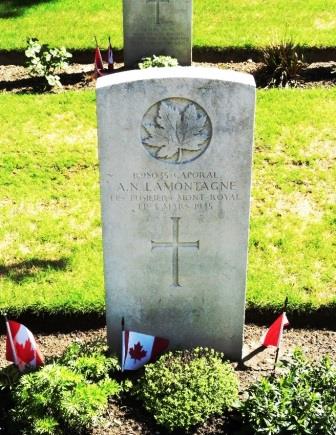
Albert Noel was initially buried in the Canadian Military Cemetery in Bedburg, Germany, before being reburied in the Canadian War Cemetery in Groesbeek, The Netherlands. 

The original grave for Albert Noel Lamontagne at the Canadian War Cemetery in Groesbeek. (Photo courtesy of the Albert Joseph Chevarie Family)

Grave of Albert Noel Lamontagne in the Canadian War Cemetery in Groesbeek, The Netherlands.  (Photo source: Find A Grave)

Thank you to Joyce Chevarie for letting us know where to find a photo, to Malcolm John, President of RCL 30 in Richibuto for sharing the photos of Albert Noel Lamontagne, and to Shawn Rainville for newspaper research. If you have a story or photo to share, please contact Pieter at memorialtrail@gmail.com or comment on the blog. 

© Daria Valkenburg

….Want to follow our research?….

If you are reading this posting, but aren’t following our research, you are welcome to do so.  Our blog address: https://onthewarmemorialtrail.com/

4 countries, 6 weeks, 7,000 km – an unforgettable war memorial journey in Europe…. Daria’s book ‘No Soldier Buried Overseas Should Ever Be Forgotten‘ is available in print and e-book formats.  Net proceeds of book sales help support research costs and the cost of maintaining this blog. For more information see https://nosoldierforgotten.com/

You are also invited to subscribe to our YouTube Channel: On The War Memorial Trail With Pieter Valkenburg: https://www.youtube.com/channel/UCJ591TyjSheOR-Cb_Gs_5Kw

Never miss a posting!  Subscribe below to have each new story from the war memorial trail delivered to your inbox.
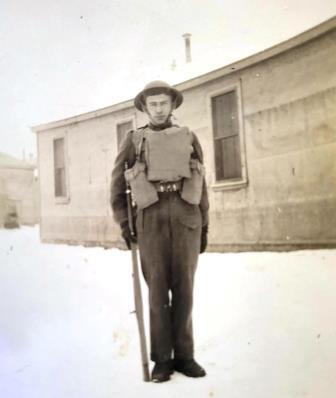
On The War Memorial Trail….. The Successful Search For A Photo Of WWII Soldier Edmond Coulombe

December 24, 2021. Occasionally, a posting on this blog leads to information that adds to the original story, giving a ripple effect.  This spring a story about a WWII soldier from New Brunswick, Alphonse ROBERT of Caraquet, New Brunswick, led a volunteer researcher in a small Dutch village along the German border to contact us with eyewitness accounts of how Robert and 4 other members of his Regiment lost their lives when a shell exploded. 

The soldiers were identified, and one of them was Edmond COULOMBE, listed as being from Pine Falls, Manitoba.  I’m from Manitoba and Pine Falls was very familiar to both Pieter and me, as it was near where my parents had lived. 

…We have to find a photo of this soldier…” we both decided, and that led us on a photo quest that soon proved that ‘Friendly Manitoba’ on the province’s licence plates was not just a slogan.

The first ‘surprise’ was when Pieter’s research found that Edmond was born on February 15, 1923, the son of Ulric and Yvonne Coulombe in Fannystelle, Manitoba, NOT in Pine Falls.  To Pieter’s amusement, I had a childhood memory of Fannystelle, a small community not far from Winnipeg.  My father travelled a lot in his business, and sometimes he had to work on weeknights and weekends.  Quite often all of us would be loaded in the car and travel with him.   I was in Fannystelle many times as a child.

Edmond’s father was from Quebec, his mother from Manitoba.  By 1943, Edmond was working at the paper mill in Pine Falls, and the family was living in nearby St.-Georges.  When he enlisted on May 7, 1943, his service file noted that he spoke both French and English.

On January 3, 1945, Edmond was sent overseas to the United Kingdom as part of the Oxford Rifles.  By March 3, 1945 he was in Northwest Europe and transferred to Les Fusiliers Mont-Royal.  He lost his life a few weeks later, at the age of 22.

…The Winnipeg Free Press publicizes the quest for a photo….

While Pieter could find information on Edmond’s military service, he had little luck finding family members or a photo.  So we asked ‘Winnipeg Free Press‘ reporter Kevin Rollason for help. 

On November 6, 2021, Kevin’s interview with Pieter ran in the ‘Winnipeg Free Press‘: https://www.winnipegfreepress.com/arts-and-life/life/hunting-for-photo-to-honour-manitoban-575687592.html  (If you can’t access the article, let me know and I’ll send a PDF.)

As soon as people began reading the newspaper, replies came in. Diane Dube of the Winnipeg River Heritage Museum in St.-Georges wrote: “…Good Morning. I am reading the Winnipeg Free Press and have just now come across the article that you are looking for photos of Coulombe. I will be looking in the archives this afternoon as I think I may have a photo of him visiting his family in Pine Falls during the war. These photos were donated to the museum last year…

By the afternoon, Diane had sent us 4 photos.  “We are very thankful for all of the work you have put into this project recognizing our fallen soldiers and very pleased that we had some photos to share….

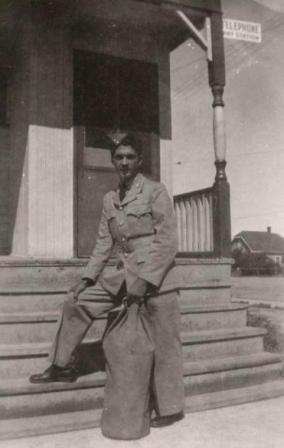
Edmond Coulombe with kit bag

Edmond Coulombe with his kit bag.  (Photo courtesy Winnipeg River Heritage Museum)

Kevin Rollason lost no time in interviewing Diane for a follow-up article, which ran on November 11, 2021, with the 4 photos: https://www.winnipegfreepress.com/local/photo-found-to-honour-manitoba-war-casualty-575714042.html   (If you can’t access the article, let me know and I’ll send a PDF.)

… Family of Edmond Coulombe contact us….

Family of Edmond also contacted us.  Niece Lauri Romaniuk explained that “ My Dad Lionel was one of the youngest of the 12 children of Ulric and Yvonne Coulombe and he was a child when Ed was killed in the war. None of the siblings are alive now….

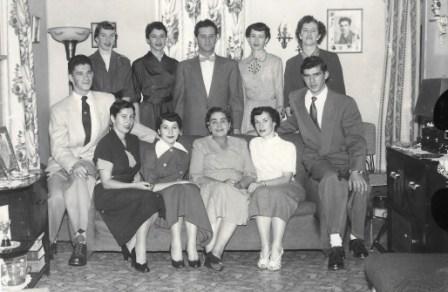
Edmond Coulombe siblings and parents from Lauri Romaniuk

The Coulombe family in the 1950s.  (Photo courtesy of Lauri Romaniuk)

Lauri shared a photo that she received from her mother of …. the siblings in the early 1950s. Edmond’s picture is on the wall behind the group. There was another brother missing that died as a child.  Mrs. Coulombe is in this picture but Mr. C already passed at this point. My Dad is the youngest male – on the far right. He passed in 1992 at age 57…”  Edmond’s father died in 1946.  It was wonderful to see that Edmond himself had not been forgotten.

Another niece, Linda Cyr, wrote “I’m beyond grateful for the work you both are doing to honour our Canadian soldiers especially my uncle Edmond Coulombe.  Edmond was my Mother’s brother…” 

Edmond Coulombe 2 from Linda Cyr cropped

Edmond Coulombe.  (Photo courtesy of Linda Cyr)

 .…Other reactions….

In addition to family of Edmond Coulombe, and the Winnipeg River Heritage Museum, we heard from interested readers, many offering help regarding the search for a photo and several sharing photos and stories of family members buried in The Netherlands. 

Vic Mollot wrote that he was researching the history of Fannystelle, which “was founded in 1889 by a French Countess by the name of ‘La Comtesse d’Albufera’ who was a Parisian philanthropist.

There were 3 waves of settlers who came to settle in Fannystelle, the 1st from France in 1892, the 2nd from Quebec in 1895 and the third from the British Isles and central Europe. The Coulombes were part of the second wave from Quebec…

Leah Boulet and Marcel Pitre let us know that Marcel’s 94 year old father Marcel put together a book of soldiers from the Pine Falls area, and sent the page about Edmond.  “…When the Royal Canadian Legion put together the books about the soldiers a number of years back, Dad did a lot of legwork gathering info and submitting it for their book.  He also put together his own version for this area…”  

…How 5 members of Les Fusiliers Mont-Royal lost their lives….

How did Edmond Coulombe lose his life?  Dutch researcher Maarten Koudijs, who initially wrote about Alphonse Robert, explained that 5 members of Les Fusiliers Mont-Royal died during an attack on Gendringen, The Netherlands on March 30, 1945.  Four of them, including Edmond Coulombe, were initially buried in Megchelen, The Netherlands, just across the border with Germany. 

Map Megchelen

Maarten explained that “…during the attack on Gendringen, a number of infantrymen were following a tank. A German shell exploded behind the tank and 5 infantry soldiers were killed.   

The soldiers who immediately lost their lives were Roland Alfred Barry, Edmond Coulombe, Jacques Fortin, and Alphonse Robert. They were temporarily buried, next to each other, in a field grave in Megchelen.  

Bernard Gaston Pilon was seriously injured and was transferred to Bedburg Military Hospital, where he died and was also temporarily buried there….”  Bedburg is in Germany. 

All 5 infantrymen from Les Fusiliers Mont-Royal were later reburied in the Canadian War Cemetery in Groesbeek, The Netherlands.

Grave of Edmonde Coulombe

Grave of Edmond Coulombe in Groesbeek, The Netherlands.  (Photo taken by Wouter van Dijken)

… We were overwhelmed and delighted at the response….

We are grateful to Kevin Rollason and the Winnipeg Free Press for publicizing the appeal for a photo of WWII soldier Edmond Coulombe. 

Diane Dube of the Winnipeg River Heritage Museum in St.-Georges went above and beyond to look in the archives on a Saturday afternoon, find photos, and forward them.  We are often successful with media appeals for photos, but Diane’s quick response was done with ‘supersonic speed’.  We are heartened by the interest and care she took, a true act of research kindness.

We thank family members Linda Cyr and Lauri Romaniuk for sharing photos, and Maarten Koudijs for providing the additional information on the 5 soldiers from Les Fusiliers Mont-Royal.

We also thank the many Winnipeg Free Press readers who submitted photos and stories of relatives buried in The Netherlands.  Pieter has his research projects for the winter months lined up and we look forward to sharing those stories. 

If you have photos and information to share about Canadian soldiers buried in The Netherlands please contact Pieter at memorialtrail@gmail.com, or comment on the blog. 

© Daria Valkenburg

… Alphonse Robert’s Story….

To read the postings about Alphonse Robert, see:

…Want to follow our research?….

If you are reading this posting, but aren’t following our research, you are welcome to do so.  Our blog address: https://onthewarmemorialtrail.com/

Front cover OnTheWarMememorialTrailinEurope4 countries, 6 weeks, 7,000 km – an unforgettable war memorial journey in Europe…. Daria’s book ‘No Soldier Buried Overseas Should Ever Be Forgotten‘ is available in print and e-book formats.  Net proceeds of book sales help support research costs and the cost of maintaining this blog. For more information see https://nosoldierforgotten.com/

You are also invited to subscribe to our YouTube Channel: On The War Memorial Trail With Pieter Valkenburg: https://www.youtube.com/channel/UCJ591TyjSheOR-Cb_Gs_5Kw

Never miss a posting!  Subscribe below to have each new story from the war memorial trail delivered to your inbox.
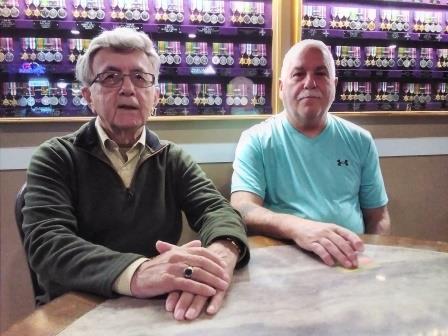
On The War Memorial Trail….. An Update On The Story Of WWII Soldier Alphonse Robert

October 12, 2021.   In April 2021, in Part 9 of the Atlantic Canada Remembers series, the story of Alphonse ROBERT of Caraquet, New Brunswick, was briefly told.  His service file had very little information on the circumstances of his death and noted that he died on March 30, 1945 in Germany while serving with Les Fusiliers Mont-Royal, and was buried in Germany. (See https://onthewarmemorialtrail.com/2021/04/15/on-the-war-memorial-trail-atlantic-canada-remembers-part-9/)

Alphonse Robert

Alphonse Robert.  (Photo courtesy of the Robert Family)

Recently we received an email from Maarten Koudijs, who wrote that Alphonse Robert died during an attack on Gendringen, The Netherlands, and was initially buried in Megchelen, The Netherlands, just across the border with Germany.  After additional research to verify what Maarten told us, we have more information on what happened on March 30, 1945.

…Was Alphonse Robert buried in The Netherlands or Germany?….

Map Megchelen

The first question we had was whether Alphonse Robert had been initially buried in Germany, as stated in the service file, or in The Netherlands.  Megchelen is a small village on a tiny hook of land surrounded on three sides by the German border.  It’s easy to understand how a mistake could have been made in the official records, but was Megchelen the correct location?

We contacted Alice van Bekkum, Chair of the Groesbeek Faces to Graves Committee, and asked if she could check the cemetery record and see where Alphonse Robert had been originally buried.

Alice confirmed it was Megchelen.  “I have a list from CWGC with the coordinates of the temporary burial site where the body was exhumed when it was transferred to Groesbeek. It says Megchelen…”  (CWGC refers to Commonwealth War Graves Commission.)  The service file record was incorrect.

…How 5 members of Les Fusiliers Mont-Royal lost their lives….

How did Alphonse Robert lose his life?  Maarten explained that “…during the attack on Gendringen, a number of infantrymen were following a tank. A German shell exploded behind the tank and 5 infantry soldiers were killed.   

The soldiers who immediately lost their lives were Roland Alfred Barry, Edmond Coulombe, Jacques Fortin, and Alphonse Robert. They were temporarily buried, next to each other, in a field grave in Megchelen.  

Bernard Gaston Pilon was seriously injured and was transferred to Bedburg Military Hospital, where he died and was also temporarily buried there….”  Bedburg is in Germany.

All 5 infantrymen from Les Fusiliers Mont-Royal were later reburied in the Canadian War Cemetery in Groesbeek.

Pieter then looked at the War Diary for Les Fusiliers Mont-Royal. On March 29, 1945, the diarist recorded being in the Reichswald Forest.  …Battalion with its F Echelon vehicles crosses the Rhine at night without incident...

On March 30, 1945, the diarist wrote the location as Germany.  “…In the morning troops proceed to positions…Light opposition with intermittent shelling and mortaring...

On March 31, 1945, the diarist still wrote Germany as the location.  “…Battalion sweeps north again against stiffening resistance this time.  Mortaring and shelling. The attack was supported by tanks.  Gendringen was entered…”   Gendringen is in The Netherlands, near Megchelen.

…Two eye-witnesses saw what happened….

In an interview in ‘De Ganzenveer’ (‘The Quill’), Hans Bresser and Rudie Grin, witnesses to the attack, stated that “…At Wieskamp’s house, between Striekwold and Giezen, a Canadian tank was firing. There were also a number of infantrymen. A German shell exploded in between, possibly killing five or more Canadian soldiers. The grenade was…fired from somewhere from the Pol near Ulft. The fallen soldiers were given a field grave in Megchelen on Friesen’s land on the Nieuweweg...”  (Account translated from the original Dutch)

…The other members of Les Fusiliers Mont-Royal who lost their lives….

  • Roland Alfred BARRY, son of Horace and Rose Alma Barry of Montreal, Quebec, died March 30, 1945, aged 20.
  • Edmond COULOMBE, son of Ulric and Yvonne Coulombe, of Pine Falls, Manitoba, died March 30, 1945, aged 22.
  • Jacques FORTIN, son of Henri and Yvonne Fortin, of Chicoutimi, Quebec, died March 30, 1945, aged 21.
  • Bernard Gaston PILON, son of Emile and Emilie Pilon, of Rockland East, Ontario, died March 30, 1945, aged 19.

Thank you to Maarten Koudijs for contacting us with the additional information on Alphonse Robert, and to Alice van Bekkum for verifying that he was previously buried in Megchelen, The Netherlands.

If you have further information to share about Alphonse Robert or the other Canadian soldiers mentioned here, please contact Pieter at memorialtrail@gmail.com or comment on the blog.

Remembrance-Day-2019-Images-1024x520

With Remembrance Week coming up, please take a look through your photo albums and in your attics in case you have a photo or information to share about Canadian soldiers.

© Daria Valkenburg

…..Want to follow our research?….

If you are reading this posting, but aren’t following our research, you are welcome to do so.  Our blog address: https://onthewarmemorialtrail.com/

4 countries, 6 weeks, 7,000 km – an unforgettable war memorial journey in Europe…. Daria’s book ‘No Soldier Buried Overseas Should Ever Be Forgotten‘ is available in print and e-book formats.  Net proceeds of book sales help support research costs and the cost of maintaining this blog. For more information see https://nosoldierforgotten.com/ 

Screenshot_2021-02-27 On The War Memorial Trail With Pieter Valkenburg

You are also invited to subscribe to our YouTube Channel: On The War Memorial Trail With Pieter Valkenburg: https://www.youtube.com/channel/UCJ591TyjSheOR-Cb_Gs_5Kw

Never miss a posting!  Subscribe below to have each new story from the war memorial trail delivered to your inbox.

On The War Memorial Trail….. Atlantic Canada Remembers – Part 9

April 15, 2021. More of the photos submitted by Atlantic Canadians of soldiers buried overseas are featured in Part 9. Pieter is ensuring that every email is acknowledged, and that the photos of soldiers buried in The Netherlands are forwarded to the appropriate cemetery for their digital archives.

Soldiers buried at the Canadian War Cemetery in Holten, The Netherlands

Alexis Daigle (Photo submitted by Gilberte Manuel)

After being contacted by Marc Comeau, President of Royal Canadian Legion Branch 45 in Tracadie, New Brunswick, Gilberte Manuel submitted a photo of Alexis D.  DAIGLE on behalf of “…Alfrida Richard, the niece of Alexis Daigle of Pointe-Sapin….

Born March 2, 1920 in Lower Spain, New Brunswick, the son of Dominique Daigle and Exelda Mazerolle, Alexis was a fisherman before enlisting in Fredericton on August 28, 1941.  After completing basic training, he was attached to the Canadian Army (Basic) Training Centre in Montmagny, Quebec on a Home War Established (HWE) basis as an engineer’s helper.

His service file noted that he was a “jack of all trades…” and could speak both French and English.  He was described as a “…quiet and non-talkative single young man of above average intelligence...”

In January 1945 he arrived in the United Kingdom and assigned to the Canadian Infantry Training Regiment (CITR).  A month later, on February 24, 1945, he was sent to continental Europe, and on March 1, 1945 transferred to Le Régiment de la Chaudière.

On April 6, 1945, while serving with Le Régiment de la Chaudière in The Netherlands, Alexis was killed in action (‘mort au champ d’honneur‘) near Zutphen, during the Battle of Zutphen.  (For more information on this battle, see https://www.canadiansoldiers.com/history/battlehonours/northwesteurope/zutphen.htm)

According to the Regiment’s war diary for April 1945, the Battalion had “…proceeded on foot to a concentrated area just past Almen, approximately 3 miles short of Zutphen…..”  where they rested until the start of an operation which began “…on the night 5-6 April…

The attack started at 4:30 am. “… Only slight opposition was encountered up to the outskirts of the town of Zutphen. The objective was C and D companies to seize the ground in between the main highway leading to town and the first row of houses….

Alexis was in D Company and it’s likely that he lost his life in what happened next.  “…. Between the starting line and the objective there was a canal on which both leading companies were stopped for almost two hours.  First opposition was then encountered from well-sited snipers, machine gun nests, and bazookas...

Alexis was one of 4 soldiers in the Regiment killed in that operation.  The others were:

  • V. PARE (D Company)
  • S. BOUCHARD (D Company)
  • E. PARADIS (C Company)

Alexis was temporarily buried in Almen, and later reburied in in the Canadian War Cemetery in Holten.

Mathieu Michaud. (Photo submitted by the Grand Falls branch of the Royal Canadian Legion)

Patrick Côté of the Royal Canadian Legion, Branch 21 in Grand Falls, New Brunswick, submitted a photo of Mathieu MICHAUD. Born November 11, 1921 in Drummond, New Brunswick, he was the son of Achille Michaud and Fébronie Laforest.

Patrick provided a translated excerpt from a book, ‘Military Heritage – The Greater Grand Falls Region’, by Jean-Guy Plourde, which explained that “….wanting to emulate his older brother Laurent, he enrolled in the army on December 3, 1942, and received training in Fredericton. From March 10 to July 24, 1943, he was in Valcartier, Quebec before becoming a gunner. The authorities assigned him to Goose Bay, Labrador from August 1, 1943 to June 30, 1944. From November 30, 1944, he made a two week stay in Sorel, Quebec before embarking for the great adventure. On January 10, 1945, he made the crossing to the United Kingdom where he was stationed until March 1, 1945….

In the UK he was assigned to the Canadian Infantry Training Regiment (CITR).  On March 2, 1945 he left for Northwest Europe, and then transferred to Le Régiment De La Chaudière on March 21, 1945.

He was killed in action (‘mort au champ d’honneur‘) in The Netherlands while part of the Regiment’s Company C and died on April 8, 1945.  According to the Regiment’s war diary, the Battle of Zutphen had ended on April 7 but continued to encounter sniper fire.  Mathieu was one of two soldiers from Company C that died that day.  The other soldier was H. A. MARCHAND.

Like Alexis Daigle, Mathieu was temporarily buried in Almen, before being reburied in the Canadian War Cemetery in Holten.

Soldiers buried at the Canadian War Cemetery in Groesbeek, The Netherlands

Elbridge Wellington Miller. (Photo courtesy of Elbridge Wellington Miller Family)

Wilmot Tompkins submitted a photo, explaining that “…This is Elbridge Wellington Miller, my great-uncle, buried in Groesbeek. My wife found your interview and your blog while searching for the place my great-uncle lost his life…” Wilmot had seen a list of 28 men listed as having lost their lives in Keppeln, in a posting about a video plea for a photo of Frank MCGOVERN.  (See https://bordencarletonresearchproject.wordpress.com/2020/12/09/the-search-for-a-photo-of-frank-edward-mcgovern-moves-to-youtube/)

Elbridge Wellington MILLER was born in Deerville, New Brunswick, the son of David W and Elizabeth Miller, and was a labourer before enlisting on December 3, 1942 in Fredericton.  By April 4, 1943 he was in the United Kingdom. On August 19, 1943 he was transferred to the North Shore (New Brunswick) Regiment.

Serving with the North Shore (New Brunswick) Regiment, he landed in France on D-Day (June 6, 1944) and was wounded by shrapnel in the left thigh and right ankle during the Battle of the Scheldt on October 13, 1944, resulting in a recovery period in England before rejoining his unit a month later.

He lost his life on February 26, 1945 in Germany during the Battle of Keppeln, during Operation Blockbuster, the last part of Operation Veritable. (For more information, see https://en.wikipedia.org/wiki/Operation_Blockbuster and https://en.wikipedia.org/wiki/Operation_Veritable)

Eldridge was one of 28 men killed in action that day, as was explained in the posting about Frank McGovern. Another of these soldiers was Barney MCGUIGAN. (For his story, please see https://onthewarmemorialtrail.com/2020/08/07/on-the-war-memorial-trail-the-search-for-barney-reuben-mcguigan/)

Like Frank McGovern and Barney McGuigan, Eldridge was temporarily buried in the Bedburg Military Cemetery, and then later reburied in the Canadian War Cemetery in Groesbeek.

Alphonse Robert.  (Photo courtesy of the Robert Family)

Armel ‘Mel’ Lanteigne, President of the Caraquet branch of the Royal Canadian Legion, submitted a photo of Alphonse ROBERT on behalf of the Robert family.  Alphonse came from a family of “…9 children…” Mel wrote, “…one died at an early age.  His father Amédée was a veteran of WW1 and after returning to Caraquet, his job was lighthouse keeper on Caraquet’s island, where he lived with his family….

Born October 23, 1923 in Caraquet, Alphonse was the son of Amédée and Alma Robert, and was a fisherman before enlisting on August 23, 1943.

In January 1945 he was in the United Kingdom, assigned to the Canadian Infantry Training Regiment (CITR).  On March 28, 1945 he was transferred to North West Europe and was serving with Les Fusiliers Mont-Royal when he lost his life on March 30, 1945 in Germany.

Alphonse was temporarily buried in Germany, and later reburied in the Canadian War Cemetery in Groesbeek.  NOTE:  For an update to this story, please see: https://onthewarmemorialtrail.com/2021/10/12/on-the-war-memorial-trail-an-update-on-the-story-of-ww2-soldier-alphonse-robert/

Thank you to Marc Comeau, Patrick Côté, Armel ‘Mel’ Lanteigne, Gilberte Manuel, Alfrida Richard, and Wilmot Tompkins for sharing photos and anecdotes.  Atlantic Canadians remember their loved ones who are buried overseas.

More photos and stories in Atlantic Canada Remembers – Part 10! To share photos or information, please email Pieter at memorialtrail@gmail.com, comment on the blog, or tweet to @researchmemori1.

© Daria Valkenburg

…..Previous postings in the Atlantic Canada Remembers series….

Missed the previous postings in this series? See:

…..Want to follow our research?….

If you are reading this posting, but aren’t following the blog, you are welcome to do so. Our blog address: https://onthewarmemorialtrail.com/

Front cover OnTheWarMememorialTrailinEurope4 countries, 6 weeks, 7,000 km – an unforgettable war memorial journey in Europe…. Daria’s book ‘No Soldier Buried Overseas Should Ever Be Forgotten‘ is available in print and e-book formats.  Net proceeds of book sales help support research costs and the cost of maintaining this blog. For more information see https://nosoldierforgotten.com/

You are also invited to subscribe to our YouTube Channel: On The War Memorial Trail With Pieter Valkenburg: https://www.youtube.com/channel/UCJ591TyjSheOR-Cb_Gs_5Kw.

Never miss a posting!  Subscribe below to have each new story from the war memorial trail delivered to your inbox.

On the War Memorial Trail ….. PEI Soldiers Buried In The Canadian War Cemetery in Groesbeek

December 30, 2017.  During our first visit to the Canadian War Cemetery in Groesbeek in The Netherlands, we were able to place flags at the graves of three PEI soldiers buried there.  In the last blog entry we told the story of George Preston SMITH of Kinkora, who was with the North Shore (New Brunswick) Regiment, and the accident in which he lost his life. (See On the War Memorial Trail ….. At The Canadian War Cemetery in Groesbeek)

Our thanks to Alice van Bekkum of the Faces to Graves Project, who shared an eye witness account that was recorded by Will Bird in his 1963 book about the North Shore (New Brunswick) Regiment. (See https://books.google.com/books/about North_Shore_New_Brunswick_Regiment.html?id=Iz7WAAAAMAAJ)

Will Bird account of what happened to George Preston Smith

Excerpt about George Preston Smith from Will Bird’s book about The North Shore (New Brunswick) Regiment.

Before returning to place flags at the rest of the known soldiers from PEI, we stopped by a memorial marking the route on February 8, 1945 where soldiers marched into Germany on their way from Groesbeek, as part of Operation Veritable.  This was the northern part of an Allied pincer movement that took place between February 8 and March 11, 1945 during the final stages of the Second World War.

The operation was conducted by Field Marshal Bernard Montgomery’s Anglo-Canadian 21st Army Group, primarily consisting of the First Canadian Army under Lieutenant-General Harry Crerar and the British XXX Corps under Lieutenant-General Brian Horrocks. Their objective was to clear German forces from the area between the Rhine and Maas rivers, east of the German/Dutch frontier, in the Rhineland.

CIMG8998 Sep 15 2017 Pieter by memorial showis where soldiers marched into Germany from Groesbeek operation veritable

Pieter at the memorial for Operation Veritable in Groesbeek. (Photo credit: Daria Valkenburg)

CIMG8996 Sep 15 2017 memorial shows where soldiers marched into Germany from Groesbeek operation veritable

Close-up view of the text on the memorial for Operation Veritable in Groesbeek. (Photo credit: Pieter Valkenburg)

On our second visit to the Canadian War Cemetery in Groesbeek we were joined by Pieter’s former colleague in the Dutch Foreign Service, Ad Scheepers, and his wife Noor, who live in Groesbeek.

CIMG9023 Sep 16 2017 Groesbeek Cemetery Ad & Noor Scheepers with Pieter by Gaudets grave

Ad and Noor Scheepers with Pieter by the grave of Cpl Arthur Gaudet. (Photo credit: Daria Valkenburg)

Ad was a fountain of information about the cemetery, and noted that it was along the Liberation Route, which one can take to visit the many monuments and memorials in this part of The Netherlands.  The cemetery, on a road called Zeven Heuvelenweg (Seven Hills Way), is the largest war cemetery of the Commonwealth Graves Commission in The Netherlands.

Most of the soldiers buried here fell during the fighting on the Lower Rhine between February 8 and March 26, 1945.  It’s called the Canadian War Cemetery and we’d always assumed all of the burials were Canadian, but it’s not true.  By number and nationality, the 2,617 soldiers buried here are from:

  • 2,399 from Canada
  • 267 from Great Britain
  • 3 from Belgium
  • 2 from Poland
  • 2 from Australia
  • 1 from New Zealand
  • 1 from Russia
  • 1 from Yugoslavia
  • 1 from The Netherlands

Inscribed on the Groesbeek Memorial in the cemetery are the names of 1,103 soldiers reported missing in action between August 1944 and May 1945. Only a few have been identified since the memorial was put up. Unfortunately, most are still listed as MIA (Missing In Action).

Ad told us he’d read that the Cross of Sacrifice in the cemetery was positioned where it was so it could be clearly seen from Germany, a stone’s throw away from the border.  It’s likely true, as one prerequisite that Canadian Officers had in selecting land for the cemetery was to have a view of Germany.

In a Dutch reference we read that construction on the cemetery began in 1945 by six Canadian soldiers. The location of the cemetery, on a hilltop, was chosen by Groesbeek Mayor Grotenhuis van Onstein for its view on the German border from the cemetery. The Cemetery was officially opened on May 4, 1947 by the Dutch Queen Wilhelmina. When the cemetery opened, the headstones were made from wood, as was the Cross of Sacrifice.  Later, the headstones were temporarily replaced by metal versions, and beginning in 1950 the headstones and Cross of Sacrifice were replaced by stone designs.

CIMG8945 Sep 15 2017 Groesbeek cemetery Pieter at Cross for remembrance

Pieter by the Cross of Sacrifice at the Canadian War Cemetery in Groesbeek. (Photo credit: Daria Valkenburg)

In alphabetical order, here are the known soldiers from PEI that are buried in the cemetery:

  • L/Cpl Ralph Schurman BOULTER, North Nova Scotia Highlanders, from West Point
  • Pte Lawrence BULGER, North Nova Scotia Highlanders, from Foxley River
  • Major John Weston CAMPBELL, North Nova Scotia Highlanders, from Clermont
  • Cpl Preston D. CAMPBELL, Algonquin Regiment, from Coleman
  • Rifleman William Alfred CANNON, Regina Rifle Regiment, from Pownal
  • Cpl Arthur GAUDET, Les Fusiliers Mont-Royal, from Mont Carmel
  • Sapper Joseph Edmond HENNEBERY, Corps of Royal Canadian Engineers, from Morrell
  • Cpl George Ivan MACKINNON, North Nova Scotia Highlanders, from Mt. Albion
  • Cpl Robert Bruce MACNEILLL, North Nova Scotia Highlanders, from Charlottetown
  • Pte Barney R. MCGUIGAN, North Shore (New Brunswick) Regiment, born in Souris
  • Cpl Stephen A. MCKINNON, Royal Hamilton Light Infantry, from St. Peter’s Bay
  • L/Cpl Edward Gabriel PERRY, Argyll & Sutherland Highlanders of Canada (Princess Louise), from St. Nicholas
  • Pte John Clifford ROGERS, North Shore (New Brunswick) Regiment, born in Hope River
  • Pte Ralph K. SILLIKER, Lake Superior Regiment, from O’Leary
  • Sgt Edison Alexander SMITH, North Nova Scotia Highlanders, from West Point
  • Pte George Preston SMITH, North Shore Regiment, from Kinkora
  • Pte William L. WEATHERBIE, Royal Regiment of Canada, from Charlottetown

Do you have photos or information on any of these soldiers?  If you know of other soldiers from PEI, please help the researchers at the Faces to Grave project by sharing that information. Photos and stories can be sent either through their website at http://facestograves.nl/index.html or by email to info@facestograves.nl.  Alternatively, you can contact us and we will forward your info for you.

Comments or stories?  You can share them by emailing us at memorialtrail@gmail.com, commenting on the blog, or tweet to @researchmemori1.    

© Daria Valkenburg

…Want to follow our research?…

If you are reading this posting, but aren’t following our research, you are welcome to do so.  Our blog address: https://onthewarmemorialtrail.com/

Front cover OnTheWarMememorialTrailinEurope4 countries, 6 weeks, 7,000 km – an unforgettable war memorial journey in Europe…. Daria’s book ‘No Soldier Buried Overseas Should Ever Be Forgotten‘ is available in print and e-book formats.  Net proceeds of book sales help support research costs and the cost of maintaining this blog. For more information see https://nosoldierforgotten.com/

Subscribe to our YouTube Channel: On The War Memorial Trail With Pieter Valkenburg: https://www.youtube.com/channel/UCJ591TyjSheOR-Cb_Gs_5Kw

Never miss a posting!  Subscribe below to have each new story from the war memorial trail delivered to your inbox.