On The War Memorial Trail….. Atlantic Canada Remembers – Part 4

January 20, 2021. Responses to the news clips on CTV’s Atlantic Live At 5 on January 4 and 13 continue to come in.  As mentioned in Parts 1, 2, and 3, Pieter is ensuring that every email is acknowledged, and that the photos of soldiers buried in The Netherlands are forwarded to the appropriate cemetery for their digital archives. 

This posting features more of the photos submitted…..      

Soldiers buried at the Canadian War Cemetery in Holten, The Netherlands
Nelson DesRoches Army

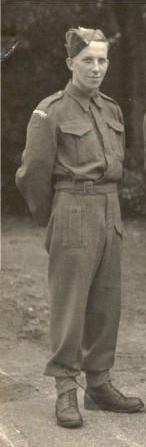
Nelson Desroches. (Photo courtesy of The Desroches Family)

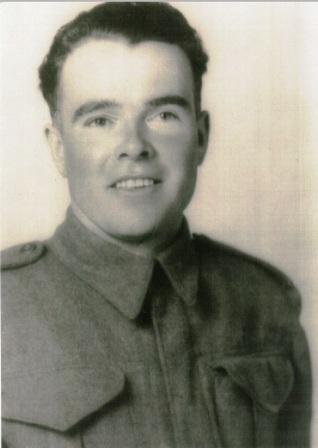
Leo Gaudet submitted a photo of Nelson DESROCHES, on behalf of the Desroches family, and wrote that “We have a vet buried at Holten from Tignish, whom my wife and I visited in 2014…

Born May 23, 1915 in Tignish, Prince Edward Island, the son of John Desroches and Elizabeth Doucette, Nelson followed his older brother Merrick into military service.  He was serving with the Royal Hamilton Light Infantry when he was killed in action on April 14, 1945.
Ernest Robert Haynes

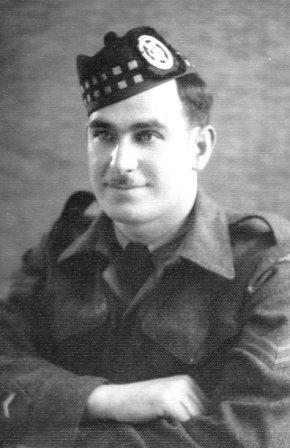
Ernest Robert Haynes.  (Photo courtesy of the Haynes Family)

On behalf of the Haynes family, Teri Haynes submitted a photo of her father-in-law, Ernest Robert HAYNES, and explained that “…my Ernie visited the grave many years ago when he was in his teens with his Mother…

Ernest Robert, born March 17, 1919 in St. John, New Brunswick, was the son of James Edward and Alice Beatrice Haynes.  A dyer in a laundromat before enlisting in 1939, he was married to Opal Bailey and the father of Teri’s late husband, Ernest David.

While serving with the North Shore (New Brunswick) Regiment, he was sent overseas to the United Kingdom in July 1944, and on June 1, 1945 to North West Europe. Unfortunately, due to a fatal accident with a passing Canadian Army truck near Soestdijk, he lost his life on July 5, 1945, age 26.  He was temporarily buried in the town of Hilversum before being reburied on March 29, 1946 in Holten.
Daniel Pearo

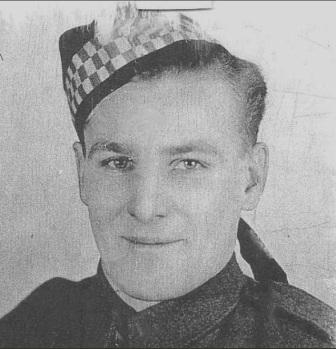
Daniel Pearo.  (Photo courtesy of the Pearo Family)

On behalf of the Pearo family, Colleen Hartling submitted a photo of her uncle, Daniel PEARO, and wrote that “Daniel was my mother’s brother. She looked up to him as a child and loved him dearly. She said that he was full of fun and you can see the twinkle in his kind eyes. I was born in the 60s so I did not know Daniel…

Daniel Pearo, son of Samuel and Dasie Pearo, served with the Cape Breton Highlanders and lost his life on May 1, 1945.  (A tribute to him can be found here: http://faculty.uccb.ca/highlanders/DANIEL%20PEARO.htm?fbclid=IwAR1ijEE5uz9tppYwN4dPcHA24DAGhDSAtVfQJUtRAEa21ZIY-zqRZwiUG9I)

Soldiers buried at the Canadian War Cemetery in Bergen Op Zoom, The Netherlands
Gordon Brewer 2

Gordon Thomas Brewer.  (Photo submitted by Stephen and Hazel Albert)

Stephen Albert submitted a photo of Gordon Thomas BREWER on behalf of himself and his mother Hazel, explaining that his uncle “… was 17 when he enlisted to serve his country.  Killed in action on his 21st birthday on October 25, 1944.  School children at that time adopted a grave. Willamina Proost, a young girl, adopted Gordon’s grave, corresponded with his parents for many years until she married, then stopped writing, so lost contact with her. Gordon’s medals and all letters to his parents were burned in a house fire several years ago, only few photos taken before going overseas still remain. Thank you for taking time to honour the men and women who gave their lives to protect others…

Hazel Albert, Gordon’s sister, wrote that she was the “…last remaining member of Gordon’s family….”  Gordon was born in Halifax on October 25, 1923, the son of Alonzo Wallace and Mary Ellen (nee Dean) Brewer.  

Gordon served with the Essex Scottish Regiment and lost his life during the Battle of the Scheldt.  (See https://www.veterans.gc.ca/eng/remembrance/history/second-world-war/scheldt)

Soldiers buried at the Montecchio War Cemetery in Italy
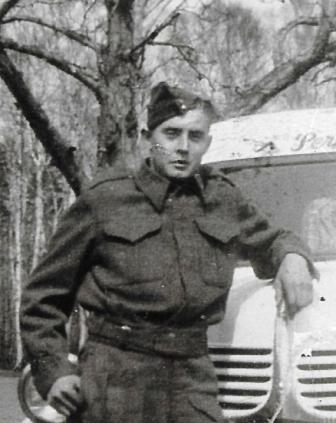
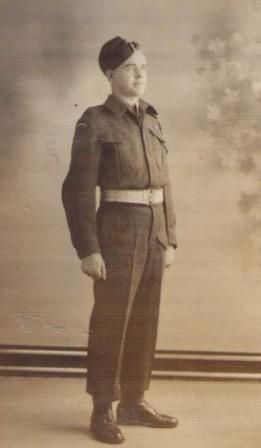
Felix Gaudet

Felix Gaudet.  (Photo submitted by Leo Gaudet)

Leo Gaudet submitted a photo of his uncle, Felix GAUDET, born May 30, 1923, son of Joseph J. and Mary Gaudet of Tignish, Prince Edward Island. After enlistment, he left Halifax for the United Kingdom in July 1943 and was transferred to the Canadian Infantry Reserve Unit a few days after his arrival.  On March 26, 1944 he was sent to Italy, and on May 13 transferred to the Cape Breton Highlanders.

On August 30, 1944 he lost his life during the battle to take a knoll on the Gothic Defence Line.  Another soldier from PEI, Albert Eugene Arsenault, also with the Cape Breton Highlanders, lost his life the same day.  (See https://bordencarletonresearchproject.wordpress.com/2020/10/09/the-ww2-soldier-killed-in-action-while-crossing-the-foglia-river-in-italy/)

The Allies began the day of August 30th with an air bombardment against German positions at dawn. At 5.30 p.m., the Perth Regiment attacked the end of a ridge northeast of Montecchio, while a knoll at the west end of the town and the high ground beyond were the objectives of the Cape Breton Highlanders. Both units faced incessant fire from the heights as well as minefields along the flat lands. The Perths managed to break through the line first, reaching and passing their objective. The Cape Breton troops had the support of tanks from the 8th Princess Louise’s (New Brunswick) Hussars, which helped three of their companies make it to the base of the knoll. After each attempt, however, they were driven back to the Foglia, with casualties totalling 19 members killed and 46 wounded. The Irish Regiment, which had been in reserve, was moved through the path of the Perths. Tanks and artillery guns were not yet available here and as a result the regiment lost 19 killed and 31 wounded.” (Source: https://www.veterans.gc.ca/eng/remembrance/memorials/overseas/second-world-war/italy/montecchio)

The Gaudet family made a tribute to Felix last year, on what would have been his 97th birthday.  It was so special that it’s shared here:
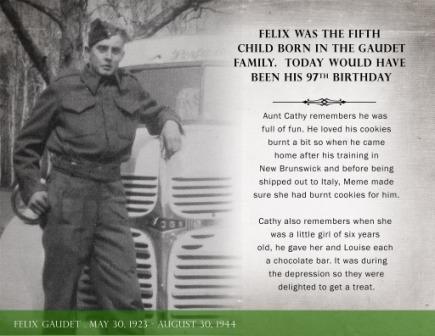
Felix Gaudet tribute by Aunt Cathy

Tribute to Felix Gaudet submitted by Leo Gaudet.

Thank you to Hazel Albert, Stephen Albert, Kent Caldwell, Colleen Hartling, Teri Haynes, and Leo Gaudet for sharing photos and anecdotes.  Kudos to CTV’s Atlantic Live At 5 for helping to get the word out on this quest of remembrance. Atlantic Canadians remember their loved ones who are buried overseas.

More photos and stories in Atlantic Canada Remembers – Part 5! If you have photos or information to share, please email Pieter at memorialtrail@gmail.com, or comment on the blog. 

Missed the previous postings in this series? See:

© Daria Valkenburg

….Want to follow our research?…

If you are reading this posting, but aren’t following our research, you are welcome to do so.  Our blog address: https://onthewarmemorialtrail.com/
4 countries, 6 weeks, 7,000 km – an unforgettable war memorial journey in Europe…. Daria’s book ‘No Soldier Buried Overseas Should Ever Be Forgotten‘ is available in print and e-book formats.  Net proceeds of book sales help support research costs and the cost of maintaining this blog. For more information see https://nosoldierforgotten.com/

Subscribe to our YouTube Channel: On The War Memorial Trail With Pieter Valkenburg: https://www.youtube.com/channel/UCJ591TyjSheOR-Cb_Gs_5Kw

Never miss a posting!  Subscribe below to have each new story from the war memorial trail delivered to your inbox.

On The War Memorial Trail….. Atlantic Canada Remembers – Part 1

No soldier buried overseas should be forgotten.

January 7, 2021.  “No soldier buried overseas should be forgotten.” This statement by Pieter in a news clip on CTV’s Atlantic Live At 5 touched many people who watched it, and many photos and stories were subsequently emailed to him.   Since the broadcast, Pieter has been working to ensure every email is acknowledged, and that the photos of soldiers buried in The Netherlands are forwarded to the appropriate cemetery for their digital archives. (See https://onthewarmemorialtrail.com/2021/01/05/on-the-war-memorial-trail-the-search-for-ww2-soldiers-buried-in-the-netherlands-featured-on-ctvs-atlantic-live-at-5/)

This posting will feature some of the photos submitted. There were too many submissions for one posting so more will be featured in subsequent postings.

Soldiers buried at the Canadian War Cemetery in Holten, The Netherlands

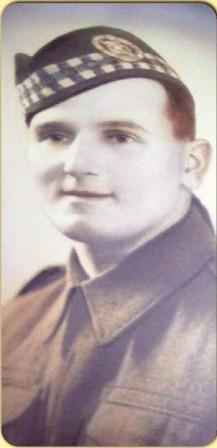
James Grant Anningson

James Grant Anningson. (Photo submitted by Brenda Budd)

Brenda Budd submitted a photo of James Grant ANNINGSON, saying “My husband’s uncle is buried there.  His name was James Grant Anningson but the family called him Grant.  He was the only one in the family that didn’t return…”  Sgt Anningson was with the New Brunswick Rangers and lost his life on April 27, 1945, at the age of 23.

image002 John Angus Beaton

John Angus Beaton. (Photo submitted by Alexander Beaton)

Alexander Beaton submitted a photo of his uncle John Angus BEATON from Mabou Ridge, Cape Breton, Nova Scotia.  Alexander’s brother Daniel wrote that his uncle  made it through the war but due to the amount of soldiers that had to return to Canada, he and other soldiers were waiting their turn to be flown home.  While waiting one Sunday morning in January 1946, He was fatally shot by a Canadian soldier suffering from a mental illness. This soldier was later charged with his murder…

The shooting occurred in Oldenburg, Germany, where there was a large Canadian base.  Daniel continued by telling us that “…I was told that John Angus’s parents, my grandparents, were happy and waiting for John Angus to return home, but were informed later that he would never return. He was 32 years old when he died, and was the son of Mary and Alex Tailor Beaton…

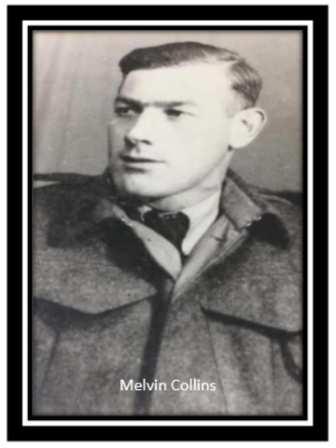
Melvin Collins

Melvin Collins.  (Photo courtesy of Phyllis Kelly)

Phyllis Kelly submitted a photo of her uncle, Melvin COLLINS, from South Kouchibouguac, New Brunswick.  He served with the New Brunswick Rangers and died on April 12, 1945 in Papenburg, Germany, age 26, when he accidentally tripped a hidden high-incendiary booby trap. 

Goldwin Marven Pollick

Goldwin Marven Pollick pushing his brother Ralph on a bike. (Photo courtesy of Gary Pollick and Family of Goldwin Pollick)

On behalf of the Goldwin Pollick family, Gary Pollick submitted a photo of his uncle, Goldwin Marven POLLICK, and explained that “We remember him as always being referred to as Goldy.  I don’t know a lot about him as I was not born yet and no one in my family spoke much about the war.  My father was in The Netherlands at the same time, and he was able to view his brother’s body before it was taken away for burial…

Goldwin Pollick was born in Minto, New Brunswick, and served with the Carleton and York Regiment.  He lost his life on April 13, 1945 in Wilp-Achterhoek. This date was familiar to us as in 2017 we visited a windmill in the nearby village of Posterenk, in which 6 members of the Carlton and York Regiment are listed as having died between April 13 and 15.  Unfortunately, this listing does not include every soldier who was killed in the area.

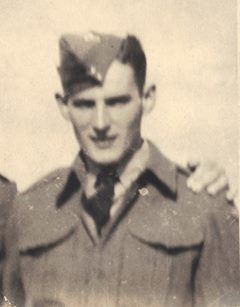
Ford Hilton Spidle

Ford Hilton Spidle (Photo submitted by Dawn (Spidle) Coldwell)

Dawn (Spidle) Coldwell submitted a photo of her uncle, Ford Hilton SPIDLE, explaining that “…He was a member of the Cape Breton Highlanders. I’ve been told that he was killed by a sniper bullet the day the war was declared over. He was the young age of 32.  Apparently, the information hadn’t been received that the war was over….” The war in The Netherlands ended on May 5 and Ford Hilton died on May 1, 1945 during the Battle of the Delfzijl Pocket, which lasted from April 23 to May 2.  20 soldiers from the Cape Breton Highlanders were killed in action during that battle.

Dawn went on to share a personal experience.  “…I was fortunate enough to have attended the Memorial Day Service in Holten, in 2009. While I was there the Dutch people treated me like I was royalty. I have stayed in close contact with the people over there who made my trip possible. Uncle Ford was my Dad’s only brother. I have a brother who was named after Uncle Ford.  I wasn’t even born when Uncle Ford was killed but my Dad always kept his memory alive.…

Charles Borden Tuplin

Charles Borden Tuplin. (Photo submitted by Gary Richard Perry)

Gary Richard Perry of Nova Scotia submitted a photo of Charles Borden TUPLIN of the Black Watch (Royal Highland Regiment), and explained that “…My maternal grandfather Charles Borden Tuplin of Indian River, PEI is buried at Holten. He was shot on December 7, 1944, was taken as a POW but died the next day…

Soldiers buried at the Canadian War Cemetery in Groesbeek, The Netherlands

William Francis Stewart

William Francis Stewart.  (Photo courtesy of the Stewart Family)

Phyllis Kelly submitted a photo of William Francis STEWART on behalf of the Stewart family, and explained that “…He was born in Claire Fontaine, New Brunswick (this community doesn’t exist now, it was expropriated and became part of Kouchibouguac National Park.) He was the son of John and Katherine (Butler) Stewart. He was married to Audrey Savoie and they had three daughters, Gloria, Bernetta, and Margaret. …”  He lost his life on July 8, 1945 when he fell out of a window in Amersfoort, The Netherlands in the early morning. 

Benjamin James Witherall

Benjamin James Witherall (Photo submitted by Jacqueline Inder)

Jacqueline Inder submitted a photo of Benjamin James WITHERALL of Nova Scotia, and wrote that “I would like to share with you the only picture my mother’s family had of their brother in uniform.  His name is Benjamin James Witherall who was a private with the Highland Light Infantry in WW2.  He was killed in action on December 27th, 1944 at the age of 20…

The Highland Light Infantry was based on the front line on a ridge between Nijmegen and Arnhem during that time. (See https://pipesforfreedom.com/webtxt/0502THE_HIGHLAND_LIGHT_INFANTRY_OF_CANADA.htm)

Soldiers Buried In Adegem Canadian War Cemetery in Belgium

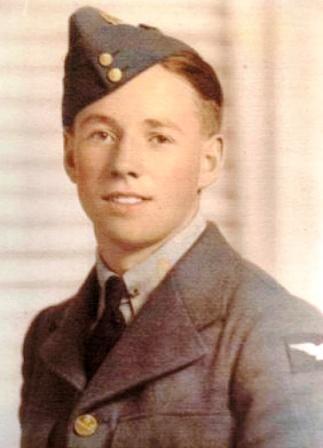
Edison Reynolds Smith

Edison Reynolds Smith.  (Photo courtesy of Angela Leighton)

Angela Leighton submitted a photo of Edison Reynolds SMITH, explaining that “…I wish to advise that my uncle, Private Edison Reynolds Smith of the North Nova Scotia Highlanders, Service #F/57514 (date of birth May 11, 1924) was killed in action in Holland on October 16, 1944, at the age of 20…” He lost his life during the Battle of the Scheldt and was initially buried in the province of Zeeland, The Netherlands.  (See https://www.veterans.gc.ca/eng/remembrance/history/second-world-war/scheldt) Angela ended her email with the statement: “None of these heroes should ever be forgotten….”  She is correct!

Thank you to Alexander and Daniel Beaton, Brenda Budd, Dawn (Spidle) Coldwell, Jacqueline Inder, Phyllis Kelly, Angela Leighton, Gary Richard Perry, and Gary Pollick for sharing photos and anecdotes. Thank you again to CTV’s Atlantic Live At 5 for helping to get the word out on this quest of remembrance. Atlantic Canadians remember their loved ones who are buried overseas.

More photos and stories in Atlantic Canada Remembers – Part 2! If you have photos or information to share, please email Pieter at memorialtrail@gmail.com, or comment on the blog. 

© Daria Valkenburg

….Want to follow our research?….

If you are reading this posting, but aren’t following our research, you are welcome to do so.  Our blog address: https://onthewarmemorialtrail.com/

Front cover OnTheWarMememorialTrailinEurope4 countries, 6 weeks, 7,000 km – an unforgettable war memorial journey in Europe…. Daria’s book ‘No Soldier Buried Overseas Should Ever Be Forgotten‘ is available in print and e-book formats.  Net proceeds of book sales help support research costs and the cost of maintaining this blog. For more information see https://nosoldierforgotten.com/ 

You are also invited to subscribe to our YouTube Channel: On The War Memorial Trail With Pieter Valkenburg: https://www.youtube.com/channel/UCJ591TyjSheOR-Cb_Gs_5Kw

Never miss a posting!  Subscribe below to have each new story from the war memorial trail delivered to your inbox.

On The War Memorial Trail….. The WWII Soldier Killed In Action While Trying To Break The Gothic Line In Italy

4452150 Happy New Year

This first posting for 2021 tells the last of the stories of the WWI and WWII servicemen listed on the Cenotaph outside the Borden-Carleton Legion.  This blog will continue to provide updates on their stories, and will also continue to tell stories of soldiers from the South Shore area of Prince Edward Island who returned home, and those who lost their lives in war but are not on the Cenotaph.  It will also feature more stories of WWII soldiers from Atlantic Canada who are buried in The Netherlands, a research project that Pieter is currently involved in.  Pieter and I thank you for your support as these stories have been researched, and hope that you continue with us on this expanded journey of remembrance along the war memorial trail….

January 2, 2021.  Four WWII soldiers on the Cenotaph outside the Borden-Carleton Legion lost their lives in Italy…. George Alfred DUNN of the Carleton & York Regiment, Albert Eugene ARSENAULT of the Cape Breton Highlanders, Ernest Murray NORTON of the West Nova Scotia Regiment, and Arnold Dudley TAYLOR, also of the West Nova Scotia Regiment, the subject of this posting.

Arnold Taylor photo from Barbara Simester

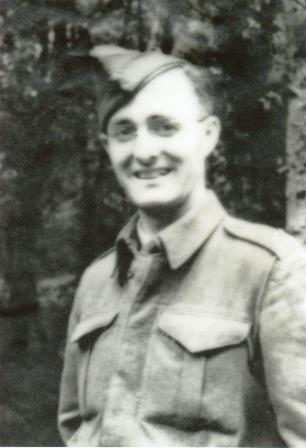
Arnold Dudley Taylor.  (Photo courtesy of Barbara Simester)

Arnold Dudley Taylor was born on July 13, 1913 in Charlottetown, the son of Wilfred F. Taylor and Beatrice Holbrook.  His father was a pharmacist and owned a pharmacy in Kensington, and Arnold Dudley followed in his footsteps, after graduating from Mount Allison University in New Brunswick. 

He was also an avid golfer, winner of Island Golf Championship at the age of 19. His daughter, Barbara Simester, noted that “… The Taylors were very athletic. Father won a lot of trophies and played at the Belvedere Club in Charlottetown….”  In addition to sports, Barbara explained that he was a member of the church choir. “… Father was a baritone in the United Church …

Beginning July 3, 1928 he was a member of the PEI Light Horse Militia, re-engaging every 3 years until his enlistment in Halifax with the West Nova Scotia Regiment for active duty service on July 13, 1940, with the rank of Lieutenant.  On May 3, 1941, he married Annalea MacDonald, a teacher in the North Tryon school.

In February 1942, daughter Barbara was born, and shortly afterwards Arnold Dudley was sent to the Debert Military Camp in Nova Scotia and transferred to the North Nova Scotia Highlanders.  By May 1942 he was in the United Kingdom.  In January 1943, he was transferred back to the West Nova Scotia Highlanders, while still in the United Kingdom.

Arnold Dudley was sent to Italy on October 27, 1943, part of the contingent of reinforcement troops.  The Regiment had landed in Sicily in June 1943, and had been in mainland Italy since September 3, 1943, as part of the 3rd Infantry Brigade, 1st Canadian Infantry Division. 

Like Albert Eugene ARSENAULT of the Cape Breton Highlanders, he was killed in action on August 30, 1944, during the Battle of the Gothic Line. The Gothic Line was a German defence line in Northern Italy. 

An article by Mark Zuelke in the Canadian Encyclopedia explains what happened that day…. “…on 30 August, two regiments of the 1st Infantry Division — the West Nova Scotias and the Princess Patricia’s Canadian Light Infantry (PPCLI) — attacked on the right, while 5th Division’s Perth Regiment and Cape Breton Highlanders struck to the left. The West Novas were caught in a minefield and suffered heavy casualties…”  (See https://www.thecanadianencyclopedia.ca/en/article/battle-of-the-gothic-line)

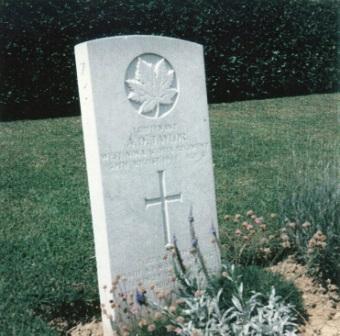
Arnold Dudley was buried in the Montecchio War Cemetery in Italy, as was Arsenault.

Grave of Arnold Taylor from Barbara Simester

Grave of Arnold Dudley Taylor in Montecchio War Cemetery.  (Photo courtesy of Barbara Simester)

When we met with Arnold Dudley’s daughter Barbara a few years ago, she explained that after her father’s death, she and her mother moved from Kensington to Crapaud, and later to Hampton. Barbara attended Grade 1 in Hampton and recalled that they lived next to the school with a family named Cameron.

Barbara and her mother later moved to Kingston, Ontario, where Barbara studied to be a nurse, and where she met her husband. 

In 1956 the pharmacy in Kensington had been sold to the Champion family and Arnold Dudley’s parents moved to Calgary. 

CIMG9464 Barbara Taylor with Pieter and Photo Arnold Taylor

Pieter with Barbara Simester in Ottawa. (Photo credit: Daria Valkenburg)

Thank you to Barbara Simester for sharing photos and anecdotes.  If you have recollections of Lt Arnold Dudley Taylor, please email Pieter at memorialtrail@gmail.com, or comment on the blog. 

© Daria Valkenburg

….Previous postings on Islanders killed in Italy….

To read the previous postings on George Alfred Dunn, Ernest Murray Norton, and Albert Eugene Arsenault, see:

George Alfred DUNN:

Ernest Murray NORTON:

Albert Eugene ARSENAULT:

….Want to follow our research?….

If you are reading this posting, but aren’t following our research, you are welcome to do so.  Our blog address: https://onthewarmemorialtrail.com/

4 countries, 6 weeks, 7,000 km – an unforgettable war memorial journey in Europe…. Daria’s book ‘No Soldier Buried Overseas Should Ever Be Forgotten‘ is available in print and e-book formats.  Net proceeds of book sales help support research costs and the cost of maintaining this blog. For more information see https://nosoldierforgotten.com/ 

You are also invited to subscribe to our YouTube Channel: On The War Memorial Trail With Pieter Valkenburg: https://www.youtube.com/channel/UCJ591TyjSheOR-Cb_Gs_5Kw

Never miss a posting!  Subscribe below to have each new story from the war memorial trail delivered to your inbox.
On The War Memorial Trail….. A Face For WWII Soldier Alderic Basque

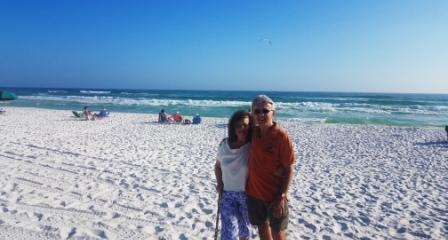
20180222_153507 Feb 22 2018 Daria & Pieter on beach by Whales Tail

A beach in Florida is just a distant memory this winter! More time for research! (Photo taken by Brien Robertston)

December 31, 2020.  One of the pluses of being socially distanced and not going away for a winter holiday is that Pieter can concentrate on his research rather than basking in the Florida sunshine.  Instead of snowbird get-togethers and running on a beach by the Gulf of Mexico, he has been digging into a list of WWII soldiers from New Brunswick and Nova Scotia that researchers at the Canadian War Cemetery in Holten, The Netherlands sent him.  The goal?  To find photos of 40 soldiers from New Brunswick and 26 from Nova Scotia who are buried in The Netherlands. 

Recently, with the help of Marc Comeau, President of the Royal Canadian Legion in Tracadie, New Brunswick and Marielle Arsenault, Executive Secretary at the Municipalité Régionale de Tracadie, the family of one soldier was found: Alderic BASQUE.

IMG_20201218_151124 cropped picture of Alderic Basque

Alderic Basque.  (Photo courtesy of Hermenegilde Basque and Dorina Basque-St-Coeur)

Alderic was born in St. Pons, New Brunswick on May 23, 1915, the son of Olivier and Tharzile Basque. A woodsman and farmer before enlistment in Fredericton, New Brunswick on January 15, 1945, he spoke both French and English. 

A few days after enlistment, he was on his way to the United Kingdom.  By March 31, 1945 he was in North West Europe with Le Régiment de Chaudière, which was part of the 8th Canadian Infantry Brigade.  (For more information, see https://www.canadiansoldiers.com/regiments/infantry/chaudiereregiment.htm)

….Alderic was killed during the Attack on Weener….

Screenshot_2020-12-31 Weener Map Germany Google Satellite Maps

Map showing The Netherlands on the left and Germany on the right.  Weener is indicated by the red mark.  (Map source: http://www.maplandia.com/germany/niedersachsen/weser-ems/leer/weener/)

On April 26, 1945, he was killed in action during a battle near the town of Weener, Germany, not far from the Dutch border.  He was temporarily buried near Heide, Germany, before reburial in the Canadian War Cemetery in Holten, The Netherlands on March 27, 1946.

grave of Alderic Basque

Grave of Alderic Basque at the Canadian War Cemetery in Holten.  (Photo courtesy of Canadian Virtual War Memorial https://www.veterans.gc.ca/eng/remembrance/memorials/canadian-virtual-war-memorial)

….Memories of Alderic were shared by his niece ….

Alderic’s sister, Dorina Basque-St-Coeur, shared a few memories of her brother with her daughter, Exodia Austin. 

Exodia was kind enough to share these with Pieter, giving us a picture of the man behind the uniform. “… My mother often told me that when her brother Alderic came for a visit he had a war medal on him. He was godfather to my oldest brother Denis who was just 1 or 2 years old. Denis liked to play with the medal and decoration when he sat on his knee. My Mother was so afraid that Alderic would be punished because nobody should touch the medal, but Alderic let my brother play with the medal….”  This would likely have been the Canadian Volunteer Service Medal and Clasp. 

Exodia explained that her mother talked about some of the skills and interests that her brother had.  “…Alderic was a good person. He made himself a pair of wooden skates. Imagine!  He also wanted to learn how to step dance. He practiced often in his room but never learned.  Probably he would have learned if he had survived the army…” 

An all too familiar tale of heartache that many soldiers experienced was also recalled.  “…. My mother also told me that Alderic had a girlfriend. But she saw another solder during that time. So when Alderic found out, he didn’t want to come back. And it was that year that he was killed….” 

Thank you to Exodia Austin, her mother Dorina Basque-St-Couer, and her cousin Hermenegilde Basque, for sharing a photo and memories of Alderic Basque.  And thank you to Marc Comeau and Marielle Arsenault for caring enough about the memory of a soldier to help find his family. 

….Photos sought….

While work continues on the list of New Brunswick and Nova Scotia soldiers, a reminder that photos of two soldiers from Prince Edward Island buried in The Netherlands have yet to be found:

UPDATE:  Photos for these two soldiers have been found since this posting was published!

If anyone has a story or photo to share about any Canadian military personnel buried in The Netherlands, please contact Pieter at memorialtrail@gmail.com, or comment on the blog. 

© Daria Valkenburg

….Want to follow our research?….

If you are reading this posting, but aren’t following our research, you are welcome to do so.  Our blog address: https://onthewarmemorialtrail.com/

Front cover OnTheWarMememorialTrailinEurope4 countries, 6 weeks, 7,000 km – an unforgettable war memorial journey in Europe…. Daria’s book ‘No Soldier Buried Overseas Should Ever Be Forgotten‘ is available in print and e-book formats.  Net proceeds of book sales help support research costs and the cost of maintaining this blog. For more information see https://nosoldierforgotten.com/ 

You are also invited to subscribe to our YouTube Channel: On The War Memorial Trail With Pieter Valkenburg: https://www.youtube.com/channel/UCJ591TyjSheOR-Cb_Gs_5Kw

Never miss a posting!  Subscribe below to have each new story from the war memorial trail delivered to your inbox.

On The War Memorial Trail….The Search For A Photo Of James Cairns Moves To YouTube

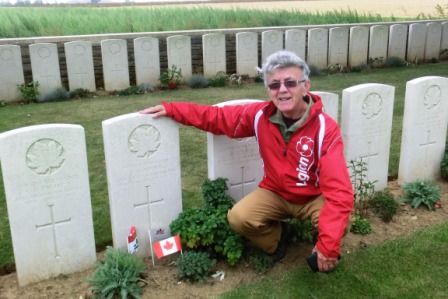
CIMG8559 Sep 6 2017 Pieter by grave of James Cairns at Manitoba Cemetery

Pieter by the grave of James Cairns at Manitoba Cemetery in Caix, France.  (Photo credit: Daria Valkenburg)

December 17, 2020.  When you look at a gravestone in a cemetery, particularly one filled with graves from soldiers who were killed, you can easily see them as a collection of graves, not individuals who had hopes and dreams of their own.

In 2017, when we visited cemeteries in France, Belgium, The Netherlands, and Germany to honour soldiers from WWI and WWII who are listed on the Cenotaph outside the Borden-Carleton Legion, Pieter tried to have a photo of each person whose grave or memorial we were visiting.

It wasn’t always possible, and one of those without a photo was WWI soldier James CAIRNS, who was born on February 22, 1897 in Kinkora, the son of Thomas Cairns and Mary Jane MacDonald.

Before WWI began, several members of the family moved to Manitoba from the Island, and so it was no surprise to learn that Cairns enlisted with the 190th Battalion Manitoba Regiment on July 8, 1916. This Regiment became part of the Winnipeg Rifles.  (See https://en.m.wikipedia.org/wiki/190th_Battalion_(Winnipeg_Rifles),_CEF#:~:text=The%20190th%20(Winnipeg%20Rifles)%20Battalion,that%20city%20and%20surrounding%20district)

James was killed in action during the Battle of Amiens on August 9, 1918 and is buried in the Manitoba Cemetery in Caix, France.

Appeals for a photo on the blog and in newspaper articles went nowhere, and neither did a letter to the editor in a Manitoba newspaper in the area where members of the Cairns family had lived.

Four years of an unsuccessful search later, Pieter has taken his appeal for a photo to YouTube, in the hope that a viewer might come forward:

Pieters saying

You can read more about James Cairns, our visit to the Manitoba Cemetery, and the appeal for a photo, here:

Thank you to post-production editor Wendy Nattress, who made this YouTube video a reality. If you have photos or information to share about James Cairns, please email Pieter at memorialtrail@gmail.com, or  comment on the blog.    

© Daria Valkenburg

..Want to follow our research?…

If you are reading this posting, but aren’t following our research, you are welcome to do so.  Our blog address: https://onthewarmemorialtrail.com/

Front cover OnTheWarMememorialTrailinEurope4 countries, 6 weeks, 7,000 km – an unforgettable war memorial journey in Europe…. Daria’s book ‘No Soldier Buried Overseas Should Ever Be Forgotten‘ is available in print and e-book formats.  Net proceeds of book sales help support research costs and the cost of maintaining this blog. For more information see https://nosoldierforgotten.com/

Subscribe to our YouTube Channel: On The War Memorial Trail With Pieter Valkenburg: https://www.youtube.com/channel/UCJ591TyjSheOR-Cb_Gs_5Kw

Never miss a posting!  Subscribe below to have each new story from the war memorial trail delivered to your inbox.
On The War Memorial Trail…..The Continuing Search For A Photo of WWI Soldier Joseph Arthur Desroches

CIMG4888 Nov 10 2020 Pieter being interviewed by Radio Canada Acadie

Pieter during a phone interview with CBC Radio-Canada Acadie. (Photo credit: Daria Valkenburg)

November 15, 2020. In the fall of 2017, when we visited the graves of WWI soldiers buried in France, who are listed on the Cenotaph outside the Borden-Carleton Legion, it was always more meaningful for Pieter if he had a photo of the soldier and knew what he looked like.

After returning home, Pieter became more determined than ever to find a photo and family for every WWI and WWII soldier he researches.  “… I do not believe that there are Canadian soldiers buried overseas who are forgotten.  Family is out there somewhere...” he maintains.

….Finding a photo of Arthur Desroches has been a challenge….

One of the WWI soldiers he’s had no luck with finding a photo or family was Joseph ‘Arthur’ DESROCHES, whose story was told over 3 years ago, when we visited the cemetery he is buried in.  (See https://onthewarmemorialtrail.com/2017/09/23/paying-our-respects-to-private-joseph-arthur-desroches/)

Born August 8, 1891 in Miscouche, Prince Edward Island, he was the son of Zephirim Desroches and Priscilla Gaudet.  Unlike many WW1 soldiers, Desroches was married, to Mary Ann Wedge of Fernwood, and had four children: Elizabeth Eileen, Joseph Alfred, Lucy Priscilla, and Charles Arthur. With a wife and four children, it doesn’t seem possible that Desroches would not have sent a photo of himself home.

Many archives and researchers were contacted over the years, particularly those researching Acadian history.  An article was published last year in the County Line Courier. (See CLC Jul 10 2019 p11 WW1 Soldier Incorrectly Recorded on Gravestone)  Still no luck.

Since Desroches was of Acadian descent, maybe we needed to ask the French language media for help?

.CBC Radio-Canada Acadie helped publicize the search for a photo….

CBC’s Radio-Canada Acadie in Moncton was approached, and reporter Anne-Marie Parenteau interviewed Pieter for a Remembrance Day broadcast.  The reporter and the radio station showed a deep commitment to this story as Pieter was interviewed in English, and then his interview was translated into French.  Both Anne-Marie and the translator did an incredible job, resulting in an excellent interview.

If you understand French, you’ll want to listen to it:  “La quête d’un homme de l’Î.-P.-É. pour retrouver des photos d’un soldat acadien” … See http://www.radio-canada.ca/util/postier/suggerer-go.asp?nID=4582099

Unfortunately, up to today, no one has come forward in response to the appeal for a photo or family of Joseph Arthur Desroches. UPDATE: A photo was received in 2023.

UPDATE: In last month’s posting about photos of soldiers that Pieter is searching for, he has been successful with two soldiers:  Vernon James NIXON and Philip Hubert LONG.

You can read the original posting and the follow-up on Philip Hubert Long at:

Thank you to the County Line Courier for featuring the ‘On The War Memorial Trail’ stories, and an enormous Merci Beaucoup to Anne-Marie Parenteau and CBC’s Radio-Canada Acadie.  If you have photos or information to share, please email Pieter at memorialtrail@gmail.com or comment on the blog.

© Daria Valkenburg

….Want to follow our research?….

If you are reading this posting, but aren’t following our research, you are welcome to do so.  Our blog address: https://onthewarmemorialtrail.com/

Front cover OnTheWarMememorialTrailinEurope4 countries, 6 weeks, 7,000 km – an unforgettable war memorial journey in Europe…. Daria’s book ‘No Soldier Buried Overseas Should Ever Be Forgotten‘ is available in print and e-book formats.  Net proceeds of book sales help support research costs and the cost of maintaining this blog. For more information see https://nosoldierforgotten.com/ 

You are also invited to subscribe to our YouTube Channel: On The War Memorial Trail With Pieter Valkenburg: https://www.youtube.com/channel/UCJ591TyjSheOR-Cb_Gs_5Kw

Never miss a posting!  Subscribe below to have each new story from the war memorial trail delivered to your inbox.

On The War Memorial Trail….. Remembering WWI Soldier William Earle Davison

Remembrance-Day-2019-Images-1024x520

November 8, 2020.  If you have a family member who lost his life in war, this is a poignant time of year of remembrance.  Recently Earle Davison of Kensington wrote us that “….As November 11 comes around, I start to think about my uncle, William Earle Davison, who was killed in the First World War.  He was attending Mount Allison University and he enlisted in St John, New Brunswick. He was with the Sixth Canadian Siege Battery in France and Belgium…

Coloured photo Davison

William Earle ‘Davy’ Davison.  (Photo courtesy of Earle Davison & Family. Photo restoration and colourization by Pieter Valkenburg)

Earle explained that “…My father always kept a box about the size of a chocolate box in one of his desk drawers.  It contained the last possessions of Earle, most of it must have been sent back from Europe.  Every fall getting near November 11th he would take it out and we would look through it….

The original box is long gone, but it’s a tradition that Earle and his wife Irene keep up with a replacement box.

CIMG4858 Oct 28 2020 Irene & Earle Davison

Irene and Earle Davison with a chocolate box containing mementos of his uncle, WW1 soldier William Earle Davison. (Photo credit: Daria Valkenburg)

According to his attestation document, William Earle DAVISON was born March 7, 1897 in Kensington, the son of Joseph and Annie Davison. Before enlisting on May 3, 1916 as a gunner with the No. 7 Overseas Siege Battery Artillery in St. John, he was a theology student at Mount Allison.

Earle Davison explained that he had a group photo from the No. 7 Siege Battery and wondered why, as he had only known his uncle to be in the 6th Siege Battery.  This was explained by a series of changes in designation.  ‘No. 7 “Overseas” Battery Siege Artillery, CEF’ was re-designated as ‘167th (Canadian) Siege Battery’ on 10 June 1916, and as ‘No. 6 Canadian Siege Battery, CEF’ on 24 January 1917. (For more information, see https://www.canada.ca/en/department-national-defence/services/military-history/history-heritage/official-military-history-lineages/lineages/artillery-regiments/3rd-field-artillery-regiment.html)

CIMG4792 Oct 28 2020 Pieter & Earl Davison with group photo No 7 Siege Battery

Earle Davison shows Pieter the group photo of the No 7 Siege Battery that was taken May 23, 1916.  (Photo credit: Daria Valkenburg)

From St. John, Davison was sent to Halifax, Nova Scotia.  With his Battery he left for Britain on September 18, 1916, arriving in Bristol on September 26, 1916.  A day later they were in France to provide siege artillery support as part of the 2nd Brigade, CGA, CEF in France and Flanders until the end of the war.  (NOTE: CGA refers to Canadian Garrison Artillery, and CEF refers to Canadian Expeditionary Force.)

On September 18, 1918, he was wounded in an early afternoon bombardment while they were in the area of Villers-lès-Cagnicourt, 24.1 km southeast of Arras.  A letter written by Fred KILLEN of St. John to Davison’s father on September 19, 1918 from France explained what happened to his friend, known as ‘Davy’: … There were five of us went up to the forward section to run the telephone exchange. There was Davy, Fowler, Simpson, Bomb Yeomans, and myself….”  The additional men mentioned in Killen’s letter were H. E. FOWLER of St. John, H. L. SIMPSON of Springhill, and H. L. YEOMANS of St. John.

Killen then explained that “…Davy, Fowler, Simpson, and I all lived together like 4 brothers. We always had a dugout of our own and got along well.  But we all went forward to do our exchange work under Bomb Yeomans. We had been up there for about 6 days and we were going to be relieved the next morning….

While waiting to be relieved they had a bit of time to relax, as Killen wrote “.… on the afternoon of the casualties we were all playing crib at the time….” Crib refers to the game of cribbage.

Then the shelling by the Germans, referred to as Fritz by Killen, began.  “…Fritz started to put a few shells around. The first one went about 100 yards from us.  We did not mind it.  About five minutes later another one came and lit about 20 yards behind us….

At first the men thought they were under a gas attack.  “… It did not make much noise when it exploded and we all thought it was gas. So we started to look for our gas masks.  The place was small and it was pretty well crowded when we all got in there.  Fowler handed me mine and I got outside the door to look at the explosion of the last one…. when all of a sudden I heard an explosion and jumped clear of the dugout…

Killen was the only one outside at the time of the third explosion.  “… The other four were inside at the time, and Davy got a slight wound in the side of the head, Fowler got it in the back, and Yeomans got it in the leg and hand and a bruised shoulder, and Simpson got a few burns about his face. I fell as soon as I jumped and when I got up I saw Davy and Yeomans running….

Killen relates what happened next.  “…We dressed them up and sent them all to a Field Ambulance. They told us then they were all right and need not to worry.  They are all clean cuts and they should all make Blighty on them….”  Blighty referred to being sent back to England.

No 22 General Hopsital Camiers

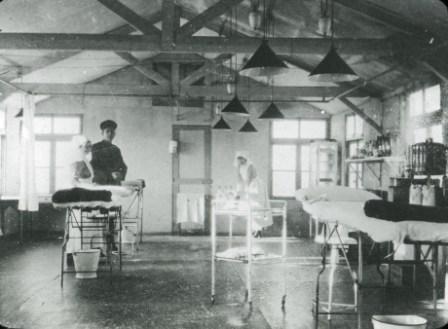
Glass lantern slide of interior of ward at No. 22 General Hospital, Camiers. (Source: Photographer unknown, “Interior of ward at No. 22 General Hospital” OnView: Digital Collections & Exhibits, https://collections.countway.harvard.edu/onview/items/show/17961)

It seems clear that no one was aware that the injury to Davison would prove fatal, as he was treated for a gunshot wound at a field hospital, No. 22 General Hospital in Camiers, France.  He was not sent to England.  “… Davy was in the best of spirits after he was hit, although it was paining him a bit.  But he stuck it well. I will only be too glad to let you know of any further particulars that we receive here.  But likely you will hear from Davy yourself. But I thought I would drop you these few lines so as you won’t worry too much about him as I know how Mothers and Fathers worry about their boys.  Hoping you have received good news by the time this letter reaches you. And hoping he will recover soon…

On September 23, 1918 Davison’s service record recorded him as being ‘dangerously ill’ and on October 5, 1918 he ‘died of wounds’.  He was buried in Étaples, France. This is located near Boulogne on the north-west coast of France.

Earle Davison noted that of the men in the 6th Siege Battery killed in action, his uncle was the only Islander. The other men who were wounded with him on September 18, 1918 survived the war.

Among the mementos in the chocolate box were photos and a pipe.  One of the photos was of a group of men, likely taken in France. The back of the photo had most of the men thoughtfully identified!

CIMG4821 group photo

Photo of men from the 6th Siege Battery, identified as 1: D. Daley (killed in action), 2: Sgt W. A. McLaggan, 3: Sgt unknown, 4: Gunner E. O. Jennings, 5: Gunner R. A. Redmond, 6: Gunner William Earle Davison. (Photo courtesy of Earle Davison & Family)

Thank you to Earle and Irene Davison for sharing information about Earle’s uncle, William Earle Davison, and how they ensure his memory is never forgotten.  If you have information to share about him, or any of the other men mentioned, please contact Pieter at memorialtrail@gmail.com or comment on the blog.

© Daria Valkenburg

….Want to follow our research?…

If you are reading this posting, but aren’t following our research, you are welcome to do so.  Our blog address: https://onthewarmemorialtrail.com/

4 countries, 6 weeks, 7,000 km – an unforgettable war memorial journey in Europe…. Daria’s book ‘No Soldier Buried Overseas Should Ever Be Forgotten‘ is available in print and e-book formats.  Net proceeds of book sales help support research costs and the cost of maintaining this blog. For more information see https://nosoldierforgotten.com/

Subscribe to our YouTube Channel: On The War Memorial Trail With Pieter Valkenburg: https://www.youtube.com/channel/UCJ591TyjSheOR-Cb_Gs_5Kw

Never miss a posting!  Subscribe below to have each new story from the war memorial trail delivered to your inbox.
On The War Memorial Trail…..A PEI Soldier In The Devil’s Brigade

1st_Special_Service_Force.patch

First Special Services Force patch.  (Image courtesy of  https://en.wikipedia.org/wiki/First_Special_Service_Force)

October 26, 2020.  The spark to inspire research into a Canadian soldier tends to happen in the most innocuous of circumstances.  For Pieter, it was while standing at the Cenotaph outside the Borden-Carleton Legion on a blustery November 11 several years ago.  Unlike many of us, he looked at the names and wondered who they were.  Had any of them been in The Netherlands, the country of his birth, and helped liberate it?   That moment sent him on a quest that has involved lots of research, many visits to archives, cemeteries, and monuments in several provinces and four European countries.  And he’s not finished.

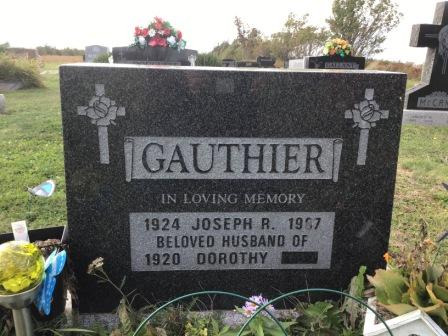
For North Rustico resident Paul Keleher, that moment happened at Michael’s picture framing counter in Charlottetown.  “… A clerk brought out a Devils Brigade poster and I noticed a name from North Rustico… Keleher said.  “…Until then, I had no idea there were Canadians in the Devils Brigade, let alone any from Prince Edward Island!…”  The name he noticed on the poster was Joseph Robert GAUTHIER.

That was the spark that initially piqued Paul’s interest, and then  “…I bumped into a relative who mentioned where he was buried and said that his widow was still alive and living in Drummondville, Quebec….

Paul found the grave in the St Augustine Cemetery in South Rustico and decided he wanted to learn more.  Like Pieter, who served in the Dutch Air Force, Paul Keleher is also a veteran, having served in the British Army. “I was in the Royal Green Jackets and served in Malaya and then Borneo on active service 1963 to 66.  I was later posted to Berlin.  This was shortly after the wall went up...

IMG_1680 Cemetery photo from Paul Keleher

Grave of Joseph Robert Gauthier. (Photo credit: Paul Keleher)

After speaking to Gauthier’s widow Dorothy, a British war bride from the southern part of England, he contacted us for a bit of advice from Pieter on how to proceed with further research.  “I enjoy your articles on local Canadian Soldiers so when I heard about Joey I thought of you...

CIMG4448 Sep 20 2020 meeting with Paul Keleher

Pieter (standing) with Paul Keleher and his wife Hasmah. (Photo credit: Daria Valkenburg)

….Origins Of The First Special Service Force aka The Devil’s Brigade….

So, what was the Devil’s Brigade?  Officially known as First Special Service Force (FSSF), this was an American-Canadian commando unit, formed in 1942, and commanded by the US Army’s Fifth Army. The unit trained in Helena, Montana and served in the Aleutian Islands, then fought in Italy and France before being disbanded in December 1944.  (See https://en.wikipedia.org/wiki/First_Special_Service_Force)

In Canada, the Minister of Defence approved sending soldiers to the unit, but decided to say they were forming the 1st Canadian Parachute Battalion.  Volunteers were recruited under that name, and were also known as the ‘2nd Canadian Parachute Battalion’.  No mention was made of ‘First Special Service Force’ or that it was to be an international unit at the time.  However, in April–May 1943 they received the designation 1st Canadian Special Service Battalion.

Peter Layton Cottingham, author of ‘Once Upon A Wartime: A Canadian Who Survived the Devil’s Brigade’ noted that all the men wore the same uniform.  “…we were issued American Army clothing which was ‘space age’ compared to the ‘King’s Burlap’ we had all worn in the Canadian Army…

The name ‘Devil’s Brigade’ came after a diary was found on the body of a German lieutenant in Italy, according to an account in ‘The Devil’s Brigade’ by Robert H. Adelman and George Walton:  “…In it was written ‘The Black Devils are all around us every time we come into the line, and we never hear them come’….” 

Adelman and Walton go on to explain that the reference to Black Devils came from an initiative by the unit’s commander.  “...He had ordered a printed supply of paper stickers upon which was reproduced the insignia of his Brigade and, underneath, was a statement in German to the effect that ‘The Worst Is Yet To Come’.  The Forcemen, after killing a German, would paste one of these stickers on the German’s forehead or helmet, and then go on.  This tactic, executed by a band of blackfaced guerrillas moving soundlessly through the night, not only frightened the enemy, it also produced a mighty effect on the other beachhead soldiers and war correspondents…

….Joseph Robert Gauthier Was In The Devil’s Brigade….

cfl_1876 Joseph Robert Gauthier

Joseph Robert Gauthier in his First Special Service Force uniform.  (Photo courtesy of Linda Craig Family Collection)

Born on February 24, 1924 in Rusticoville, Prince Edward Island, Joseph Robert Gauthier enlisted with the Carleton & York Regiment, before going into the FSSF.  He was a T4, a technical ranking which paid the same as a sergeant, but without the authority of a sergeant.  As seen on the sleeve of his uniform, a T4 wore 3 stripes with a T under the stripes. 

….The Devil’s Brigade Was Disbanded On December 5, 1944….

The unit was disbanded on December 5, 1944 near the village of Villeneuve-Loubet, France. In Cottingham’s memoir, he explained that they then travelled by boat from Marseille to Naples.   “…At Avellino we were divested of our American uniforms, being allowed to keep only our treasured and distinctive parachute boots.  We spent a few hours every day being reintroduced to Canadian Army commands and drill.  We also needed to have our new Canadian uniforms adjusted and decked out with our various insignia and chevrons of rank.  It was quite a transition. One small compensation was that we were issued the cherry berets of the Airborne regiments….

After spending Christmas in Avellino, Italy, the Canadians returned to England in January 1945.  Cottingham noted that “…Those of us who were not sent to officers training were absorbed into the First Canadian Parachute Battalion and, following a brief course in Canadian weaponry and parachute drill, were dispatched to join the regiment already in contact with the enemy near the Rhine River…”  Family members told Paul Keleher that Gauthier joined the Black Watch after the FSSF disbanded.

In his research, Paul learned that Gauthier met his wife Dorothy Howard at a dance in Aldershot, England in 1945, and they married on December 12, 1945 in Cathedral Church of St. Michael and St. George, a Catholic church in Aldershot.

improved_photo-1 Gauthier and wife

Dorothy and Joseph Gauthier.  (Photo courtesy of Linda Craig Family Collection.  Photo restoration and colourization by Pieter Valkenburg)

In January 1946 Gauthier was discharged and returned to Canada.   War Bride Dorothy was able to follow him to Canada in July 1946. Gauthier became a fisherman, but after a few years he rejoined the Armed Forces, and served for an additional 32 years.  As part of a peacekeeping force he was in Korea in 1951 and later in Egypt.  He and Dorothy had 6 children:  3 daughters, 1 son Raymond, and 2 who have passed away.

Gauthier passed away on February 27, 1987 in Montreal and was returned back to the Island for burial. 

….Other Islanders Who Served In The Devil’s Brigade….

In addition to Joseph Robert Gauthier, Paul wrote down the names of other Islanders who served in this special unit that had been identified on the poster he saw in Michael’s.  They are:

  • Lieutenant Colonel R. W. (Bill) BECKETT of  Charlottetown
  • Private L. E. (Lawrence ‘Junior’) DURANT of  Charlottetown
  • Warrant Officer Class 2 Wilfred MACDONALD of Glenwilliam
  • Sergeant E. L. (‘Tiny’) MACLEAN of Ocean View
  • Private J. H. MCINNIS of Morrel
  • Private C. W. (Charlie) DEIGHAN of Summerside
  • Private J. F. CHAPPEL of Charlottetown
  • Private A. J. BURDETTE of Charlottetown
  • Private F. C. MCCORMICK of Ebbsfleet
  • Private C. W. (Clarence)THOMPSON of Summerside
  • Private J. (Joe) JAMIESON of North Rustico
  • Private R. E. TRAINOR of Charlottetown
  • Private W.F. (William) DOUGLAS of Mount Stewart
  • Private E. J. (‘Ping Pong’) GALLANT of Summerside
  • Private W. P. (Wilfred) DOWLING of Charlottetown
  • Private R. J. (Ray) DURANT of Summerside

William Douglas of Mount Stewart was the only Islander killed in action while serving with the First Special Service Force.

Rememberance-Day-2020-Canada-5

Thank you to Paul Keleher for letting us know about the Island connection to the Devil’s Brigade, and the service of Joseph Robert Gauthier.  This Remembrance Day, if you find yourself in St Augustine Cemetery in South Rustico, lay a flag down by his grave as a thank you for his service.

If you have information to share about Joseph Robert Gauthier, or any of the other Islanders who were in the Devil’s Brigade, please contact Pieter at memorialtrail@gmail.com or comment on the blog. 

© Daria Valkenburg

….Want to follow our research?….

If you are reading this posting, but aren’t following our research, you are welcome to do so.  Our blog address: https://onthewarmemorialtrail.com/

Front cover OnTheWarMememorialTrailinEurope4 countries, 6 weeks, 7,000 km – an unforgettable war memorial journey in Europe…. Daria’s book ‘No Soldier Buried Overseas Should Ever Be Forgotten‘ is available in print and e-book formats.  Net proceeds of book sales help support research costs and the cost of maintaining this blog. For more information see https://nosoldierforgotten.com/ 

You are also invited to subscribe to our YouTube Channel: On The War Memorial Trail With Pieter Valkenburg: https://www.youtube.com/channel/UCJ591TyjSheOR-Cb_Gs_5Kw

Never miss a posting!  Subscribe below to have each new story from the war memorial trail delivered to your inbox.
The WWII Soldier Killed In Action While Crossing The Foglia River In Italy

October 9, 2020.  Four WWII soldiers on the Cenotaph outside the Borden-Carleton Legion lost their lives in Italy…. George Alfred DUNN of the Carleton & York Regiment, Ernest Murray NORTON of the West Nova Scotia Regiment, Arnold Dudley TAYLOR, also of the West Nova Scotia Regiment, and the subject of this posting, Albert Eugene ARSENAULT of the Cape Breton Highlanders.

Albert Eugene Arsenault

Albert Eugene Arsenault. (Photo courtesy of Borden-Carleton Legion Branch #10)

Albert was born on May 5, 1916 in Palmer Road, the son of Joseph and Philoman (Minnie) Arsenault, whose family later moved to Albany.  A farm labourer before the war, at the time of his enlistment he was working as a lumberman with the Canadian Lumber Company in Stewiacke, Nova Scotia.   On April 30, 1940, he enlisted with the PEI Highlanders in Dartmouth, Nova Scotia. The enlistment record indicated he spoke both English and French fluently.

Like so many soldiers, he served in several units.  One of the first was the North Nova Scotia Highlanders.  On September 25, 1942, he left for England, where he served as a military guard.  He left for Italy on February 19, 1944, arriving on March 3, 1944.  In May 1944 he was transferred to the Cape Breton Highlanders.

The Allies began the day of August 30th with an air bombardment against German positions at dawn. At 5.30 p.m., the Perth Regiment attacked the end of a ridge northeast of Montecchio, while a knoll at the west end of the town and the high ground beyond were the objectives of the Cape Breton Highlanders. Both units faced incessant fire from the heights as well as minefields along the flat lands. The Perths managed to break through the line first, reaching and passing their objective. The Cape Breton troops had the support of tanks from the 8th Princess Louise’s (New Brunswick) Hussars, which helped three of their companies make it to the base of the knoll. After each attempt, however, they were driven back to the Foglia, with casualties totalling 19 members killed and 46 wounded. The Irish Regiment, which had been in reserve, was moved through the path of the Perths. Tanks and artillery guns were not yet available here and as a result the regiment lost 19 killed and 31 wounded.” (Source: https://www.veterans.gc.ca/eng/remembrance/memorials/overseas/second-world-war/italy/montecchio)

One of those killed in action while crossing the Foglia River near Montecchio, during the battle to take a knoll on the Gothic defence line on August 30, 1944 was Albert Arsenault.  He was buried in the Montecchio War Cemetery in Italy. 582 Commonwealth soldiers, including 289 Canadians, who died in late August and September 1944 in the battle to break The Gothic Line, are buried here.

MONTECCHIO-WAR-CEMETERY~838-06_06_2019-13_23 CWGC

Montecchio War Cemetery, in the locality of Montecchio in the Commune of Montelabbate (Province of Pesaro).  (Photo source: https://www.cwgc.org)

To read the previous postings on George Alfred Dunn and Ernest Murray Norton, see:

Dunn:

Norton:

Pieter has not found family members who might have more information on Albert Eugene Arsenault.  If you can help, please email Pieter at memorialtrail@gmail.com or comment on the blog.

© Daria Valkenburg

….Want to follow our research?…

If you are reading this posting, but aren’t following our research, you are welcome to do so.  Our blog address: https://onthewarmemorialtrail.com/

4 countries, 6 weeks, 7,000 km – an unforgettable war memorial journey in Europe…. Daria’s book ‘No Soldier Buried Overseas Should Ever Be Forgotten‘ is available in print and e-book formats.  Net proceeds of book sales help support research costs and the cost of maintaining this blog. For more information see https://nosoldierforgotten.com/

Subscribe to our YouTube Channel: On The War Memorial Trail With Pieter Valkenburg: https://www.youtube.com/channel/UCJ591TyjSheOR-Cb_Gs_5Kw

Never miss a posting!  Subscribe below to have each new story from the war memorial trail delivered to your inbox.
On The War Memorial Trail…..A Face For WWII Soldier James Walter Auld

July 7, 2020.  Last year, a request was made for photos and information on PEI soldiers from WWII who were buried in The Netherlands.  (See Photos and Info Requested For WW2 Soldiers From PEI Buried In The Netherlands)
It’s been a slow and difficult quest, but in the past few months two photos have been found, one for Joseph Edmund HENNEBERY (See On The War Memorial Trail…..A Face For Joseph Hennebery!) and now one for James ‘Walter’ AULD.

The story of how Walter’s photo was found has several twists and turns.  Pieter had zero luck in finding anyone related to this WWII soldier, who is buried in the Canadian War Cemetery in Bergen Op Zoom in The Netherlands, until we met Helen MacEwen, who had invited us to see a WWI era map her father-in-law had sent to the Island in 1918.  (See The WW1 Era ‘Course Of The Rhine’ Map of Germany)

We brought along a ‘wish list’ of photos and after looking at the list, Helen suggested that Pieter contact Allison Ellis, as his wife Melba came from the same area as Walter.  “…Allison is a retired politician…” Helen explained, “...and knows a lot of people…”  (See http://www.peildo.ca/fedora/repository/leg:27520)

It was a long shot. Lots of people over the years have suggested names, which turned out to be a fruitless exercise, but this time Pieter found a kindred spirit.  Allison remembered a Walter Auld and it was soon determined that this was the same person.  “…. I’ve been to his grave in The Netherlands….” Pieter was told. Allison didn’t have a photo, but thought he knew who to ask.  “…Leave it with me…” he said. A week later, we were sitting in the home of Allison and Melba, and Pieter had a photo that Walter’s niece, Judy Bartlett, had provided.

CIMG4156 Jun 23 2020 Pieter with Melba & Allison Ellis

Left to right: Melba Ellis, Pieter, Allison Ellis.  (Photo credit: Daria Valkenburg)

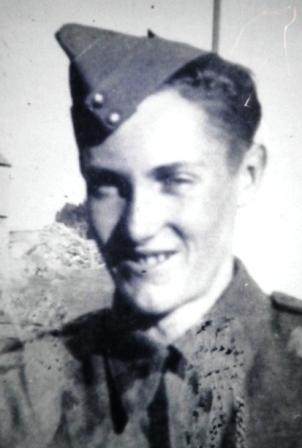
James Walter Auld

Walter Auld. (Photo courtesy of Judy Bartlett Family Collection)

James ‘Walter’ AULD was born October 21, 1923 in Glenwood, the son of James and Margaret Auld of O’Leary Station, and was a garage mechanic with Corney Brothers in Summerside.  After enlisting in Charlottetown on February 20, 1942, he was sent for basic training as a rifleman.

A note in his service file indicates he was unhappy with this placement and noted he had been promised a position as a driver or mechanic when he enlisted.  His mechanical knowledge was assessed as ‘superior’ and the recommendation was made that he be transferred to a position where his skills could be used.

In May 1942 he was transferred to the Princess Louise Fusiliers (Motor Division), and by October 1942 he was on his way to England. In August 1943 he was transferred to the Algonquin Regiment.  In July 1944 he was with his unit, first in France and then as they moved into The Netherlands.

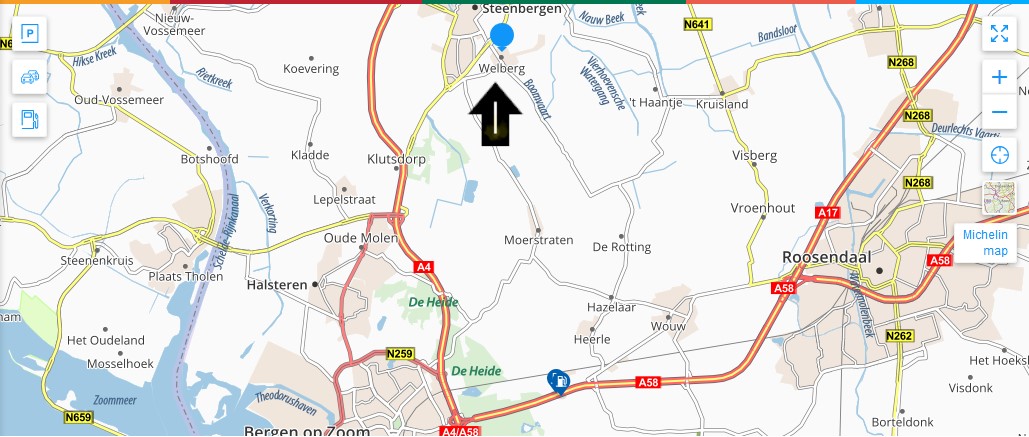
According to the War Diary for the Algonquin Regiment, on November 1, 1944 they were under the command of the 10th Canadian Infantry Brigade, 4th Canadian Armoured Division, and in action to try and take the town of Welberg, The Netherlands.   This was part of Operation Suitcase, which began on October 20, 1944, and as part of the bigger Battle of the Scheldt operation.  (See https://canadianbattlefieldtours.ca/operation-suitcase/)

self propelled tank p49

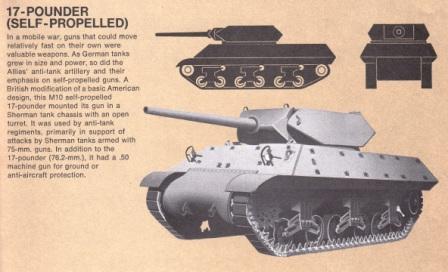
The war diary entry for November 1, 1944 recorded that “… Zero hour was at 19:00 hours…. We had 17 SP (self-propelled) tanks in support to deal with the enemy SP tanks…. Shortly after the kick-off, ‘A’ Company reported that one SP had bogged down and was holding the Company up  and before they got going again ‘D’ Company reported they were 300 yards from Welberg.  At 20:45 hours ‘A’ Company reported that one of the SPs had been hit and was burning.  At 21:00 hours ‘A’ Company reported another SP burning and that the situation was very confused due to heavy shelling of their positions by enemy SPs….

At some point in this battle on November 1, 1944, Walter lost his life, aged 21. On November 6, 1944, he was buried in a cemetery in Steenbergen, not far from where he died.

Map where Auld died with arrow

Map with a black arrow showing the approximate location where Auld lost his life near Welberg. The unit had come from the area of Moerstaten. He was initially buried in Steenbergen, then later in Bergen Op Zoom. (Map courtesy of Michelin)

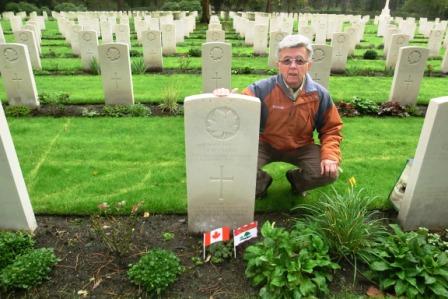
In October 1946 Walter was reburied in the Canadian War Cemetery in Bergen Op Zoom.  We were there in October 2019 and Pieter placed Canadian and PEI flags by his grave.  (See On The War Memorial Trail…..Our 2019 Visit To The Canadian War Cemetery In Bergen Op Zoom for an account of our visit.)

CIMG3388 Oct 7 2019 Bergen Op Zoom James Auld

Pieter by the grave of Walter Auld at the Canadian War Cemetery in Bergen Op Zoom.  (Photo credit: Daria Valkenburg)

Thanks to the combined efforts of Allison and Melba Ellis, Judy Bartlett, and Helen MacEwen, a photo of James ‘Walter’ Auld is on its way to the researchers at the Canadian War Cemetery in Bergen Op Zoom. If you have information to share about Canadian soldiers buried in The Netherlands, please contact Pieter at memorialtrail@gmail.com or comment on the blog.

© Daria Valkenburg

….Want to follow our research?….

If you are reading this posting, but aren’t following our research, you are welcome to do so.  Our blog address: https://onthewarmemorialtrail.com/

4 countries, 6 weeks, 7,000 km – an unforgettable war memorial journey in Europe…. Daria’s book ‘No Soldier Buried Overseas Should Ever Be Forgotten‘ is available in print and e-book formats.  Net proceeds of book sales help support research costs and the cost of maintaining this blog. For more information see https://nosoldierforgotten.com/

You are also invited to subscribe to our YouTube Channel: On The War Memorial Trail With Pieter Valkenburg: https://www.youtube.com/channel/UCJ591TyjSheOR-Cb_Gs_5Kw

Never miss a posting!  Subscribe below to have each new story from the war memorial trail delivered to your inbox.