On The War Memorial Trail….. Part 3 – Charlie Choi’s Childhood Memories of the Korean War

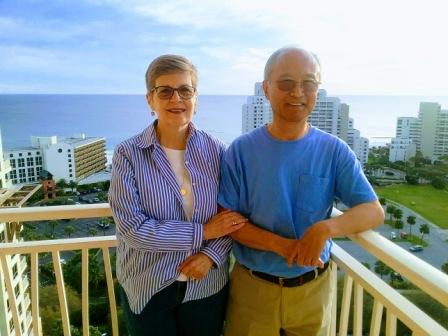
20190224_165811 Susan and Charlie Choi

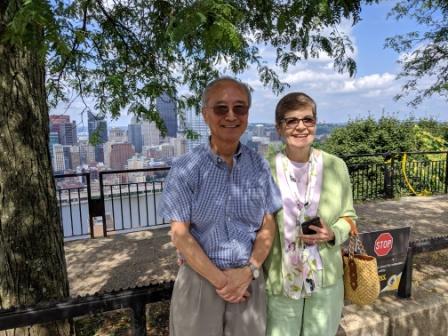
Retired engineer Charlie (Chi-Yong) Choi with his wife Susan.  (Photo credit: Brien Robertson)

October 2, 2021.  In Part 1 of the childhood wartime memories of Charlie Choi, who was 4 years old when the Korean War started in June 1950, his father had disappeared, leaving his mother to cope with 3 pre-schoolers and their maid.  As the situation worsened, the family left Seoul for the farm owned by her parents-in-law in Onyang, south of Seoul.  (See https://bordencarletonresearchproject.wordpress.com/2021/09/30/on-the-war-memorial-trail-part-1-charlie-chois-childhood-memories-of-the-korean-war/)

In Part 2, after a harrowing journey, they safely reached the farm. A few weeks later, however, soldiers from the North Korean Army arrived at the farm and announced that 21 members of the family were to be executed, including Charlie’s baby sister. (See https://bordencarletonresearchproject.wordpress.com/2021/10/01/on-the-war-memorial-trail-part-2-charlie-chois-childhood-memories-of-the-korean-war/)

Now for the conclusion to Charlie Choi’s story….

… ‘Mr. Kim and the villagers decided our fate’ ….

It’s funny how you remember the smallest details in times of great stress.  Charlie recalled that it “… was drizzling and we were all getting wet.  I was standing right next to my grandfather in front of the North Korean firing squad, waiting to be executed.  Their purpose was to kill large landowners and their families and then take over their assets.  The Captain asked my grandfather if there was anything that he wanted to say before the execution. My grandfather saw Mr. Kim standing behind the Captain.…

Charlie explained that “…Mr. Kim’s family had been long time farm caretakers on my grandfather’s farm.  Mr. Kim was the supervisor of all the farm caretakers and was a very knowledgeable man in many aspects of this region. He was hired by the North Korean Army as an informer/advisor and he joined the Communist party…

The story continued.  “… ‘Yes, Captain’ my grandfather replied. ‘I would like to have a few minutes with your Mr. Kim who is standing behind you.’  The Captain told Mr. Kim to hear what my grandfather wanted to say…. 

…My grandfather said to Mr. Kim ‘we took care of you and your family for many years.  You know that we shared our crops with the village people.  Ask the Captain to have us go through a ‘village trial’.  Let the people decide if we should be executed.’  Mr. Kim conveyed my grandfather’s wish to the Captain and he agreed.  The Captain ordered his soldiers to gather all the villagers in the front yard outside the farm gate house.  About 200 people gathered. 

 The Captain announced the purpose of the gathering and gave the people 3 choices:

  1. Execute all the family members on their list (total 21) and divide their entire assets among the village people.
  2. Let them live and keep this farm house only, dividing their other assets among the village people.
  3. Leave them alone…

I was surprised that the tribunal was allowed and that the villagers were allowed to decide the fate of the Chois.  Charlie continued.  “They all clapped very loudly as the Captain was announcing the third option.  We were saved, thanks to Mr. Kim and the people of the village.  The North Korean soldiers withdrew completely from the farm right away.  However, the Captain returned several hours later with 4 empty trucks and asked my grandfather for rice, wheat, corn, soap and some cash…..etc. …”  

… ‘Mother no longer felt safe at the farm’ ….

The family was spared but who knew how long before something else happened?  “…My mother no longer felt safe at the farm since the North Korean Army was further into the south. She wanted everyone to flee the area further into the south.  My grandparents wanted to stay put on their farm.  My mother decided to move us to Daejun City, just south of the farm.  It did not quite work out there either and we finally moved to Daegu City, the temporary location of the Central Government Center.  We were able to rent a small four room shack just across the street from the UN Military Headquarters in Daegu City….

Throughout their journey, Charlie’s father was missing, his whereabouts unknown.  “… We still did not have any information about my father.  He had told my mother to go to my grandfather’s farm when he fled our house in Seoul. He probably was searching for us and wondering what happened to us.  My mother finally got a break through the UN headquarters in Daegu City.  They conveyed our relevant information to the Korean military headquarters.  It took some time but somehow it got to my father….

… ‘My father is found’ ….

Charlie’s father found them.  “…One cold afternoon (probably early spring of 1951) a jeep with a trailer pulled up the very small and narrow alley where our rental shack was located.  A uniformed jeep driver asked me for my name and for my mother’s name, and then he went back to the jeep.  My father came out of the jeep and we were finally reunited.  He brought a trailer full of food items like K-rations, canned spam, canned beans, and Vienna sausage….etc.  I still love these foods to this day….” 
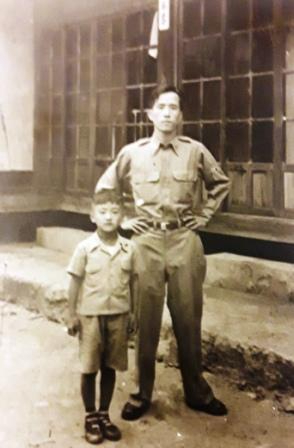
20210928_140907 1952 Charlie and his father

Circa 1952. Charlie with his father, Jae-Jin Choi, in the uniform of the Korean Air Force, at Charlie’s grandfather’s farm after the area was recaptured by the Allied Forces. (Photo courtesy Choi Family Collection)

At last the family found out what had happened to Charlie’s father.  “… When my father fled our home in June 1950 he joined a team of government officials to be trained in an accelerated program by the US Air Force to become Korean Air Force Officers.….

… What goes around comes around ….

Charlie’s family was spared, but his story had another chapter after South Korea was recaptured by Allied Forces.  “…Our Mr. Kim was one of the informers to be prosecuted. Needless to say, my family came to his aid because of what he did to save the 21 members of my family at my grandfather’s farm in August 1950.  He was saved and continued to work for my grandfather and later for my father.  He had a long and good life.  This story of Mr. Kim always reminds me of my grandfather’s favorite saying ‘What goes around comes around’. My grandfather always told us: be creditable, share your fortune, and always be fair.  I still miss him greatly….”  

… Traumatic childhood experiences stay forever in the mind ….

Charlie’s childhood experience was seared into his memory, and even at his very young age.  Susan explained that “…Charlie has experienced triggers which produce stress/anxiety since the war.  The sound of low flying planes and even the hum of lawn mowers and sometimes other similar noises could produce the feeling he had as a child of bombings and danger.  He also found the sound of crying babies another trigger.  It always reminded him of the bomb shelters, where, of course, the babies cried as the bombs fell.  These triggers have never gone away but have only recently eased slightly as a 75 year old man….”  As someone whose father lived through World War Two as a child, I know that the trauma experienced never fully goes away. 

Charlie ended his account by saying that “…I will be forever grateful to the Allied forces for their help and sacrifices. As regrettable as the war and the division of Korea has been, I’m so glad that the south was aligned with the US led UN forces. The help of these nations and the wartime sacrifices made it possible to lay the foundation for the ‘Miracle of the Han River’ which led to today’s Republic of Korea (South Korea)….

Charlie immigrated to the USA, where he became an engineer, and met his wife Susan.  It was not easy for him to relive his childhood experience in wartime Korea, and we thank him for doing so. 
holidays-1-e1460375295631

With Remembrance Week a month away, please take a look through your photo albums and in your attics in case you have a photo or information to share about Canadian soldiers.  You can email us at dariadv@yahoo.ca, comment on the blog, or send a tweet to @researchmemori1.  

…..Want to follow our research?….

If you are reading this posting, but aren’t following the blog, you are welcome to do so.  See https://bordencarletonresearchproject.wordpress.com or email me at dariadv@yahoo.ca and ask for an invitation to the blog. 
Screenshot_2021-02-27 On The War Memorial Trail With Pieter Valkenburg

You are also invited to subscribe to our YouTube Channel: On The War Memorial Trail With Pieter Valkenburg: https://www.youtube.com/channel/UCJ591TyjSheOR-Cb_Gs_5Kw

© Daria Valkenburg

On The War Memorial Trail….. Part 2 – Charlie Choi’s Childhood Memories of the Korean War

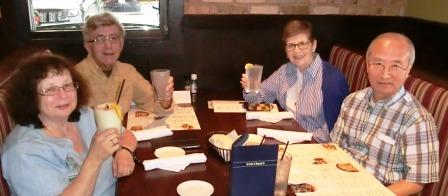
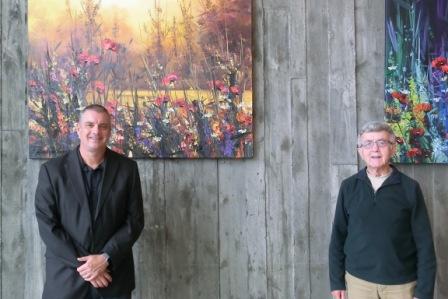
We meet with retired engineer Charlie (Chi-Yong) Choi and his wife Susan.  (Photo courtesy of Valkenburg Family)

October 1, 2021. In Part 1 of the childhood wartime memories of Charlie Choi, who was 4 years old when the Korean War started in June 1950, his father had disappeared, leaving his mother to cope with 3 pre-schoolers and their maid.  As the situation worsened, his mother made the difficult decision to leave Seoul and seek safety at the farm owned by her parents-in-law in Onyang, south of Seoul.  (See https://bordencarletonresearchproject.wordpress.com/2021/09/30/on-the-war-memorial-trail-part-1-charlie-chois-childhood-memories-of-the-korean-war/)

At the southern edge of Seoul, they ran into their first obstacle – a bridge over the Han River that had been destroyed in an attempt to stop the southern advance of the North Korean Army.  The river had to be crossed in order to get to the farm, and Charlie’s mother had to find a solution if they were to reach safety…..

… A farmer helped them cross the river and continue their journey….

Luckily, Charlie’s mother was able to keep a cool head.  “…In order to cross the river we literally ran for our lives under continual bombing.  We ran on the hot sandy river banks, searching for a way to cross the river.  Mother managed to get us all safely across by negotiating with a local melon farmer who had a small row boat and a cart for his melons.  The farmer was traveling with his young son.  The farmer and his son could no longer make a living by selling melons.  Mother negotiated with them to help us get to my grandfather’s farm….

The most harrowing part of the journey was just beginning. “….It took us 3 days and 2 nights to get to the farm.  We walked through mountain paths, bombed and damaged dirt roads, and narrow rice paddy banks.  We slept for a few hours when we were able to take shelter in a bomb-damaged shack that we ran into along the way….

… ‘I saw people getting shot’….

The journey got harder.  “… For the first time I saw people getting shot and killed, and for the first time I saw humans of a different race other than my own black haired Asians.  I saw blond and brown haired Americans during this journey.  We had two very close calls on the way to the farm.  One was on a flat stretch of dirt road….” 

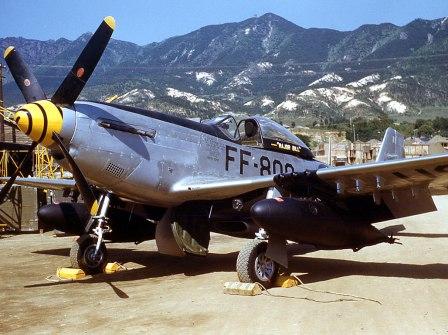
 …All of a sudden two fighter jets, Mustangs, appeared from nowhere and started shooting at people heading south.  My mother and the maid, with my baby sister, ran and took cover inside the road drain pipe.  The farmer and his son who pushed and pulled the cart that my brother and I were riding in also ran to take cover, leaving us in the cart.  I was able to get out of the cart but my brother was unable to get out.  We were crying for help.  I was trying to get him out but was unable to….

… ‘Mustang pilots spared my brother and me’….

That might have been the end of Charlie’s story, but then, “…the Mustang pilots saw two young boys struggling, crying, and scared to death.  They circled and came down very low many times to assess the situation and then finally flew away.  They circled around us so low that I could see their faces and they were not black haired Koreans….

Charlie later found out how lucky he and his brother were that the pilots didn’t see any adults by the cart.  “…. Much later we learned that the fighter jet pilots were ordered to shoot people dressed as civilians who were heading south, because the North Korean Army was infiltrating the south, disguised as civilians….” 

It was a challenge for UN pilots to distinguish friend from foe in these situations, and unfortunately there was collateral damage.  “…The other close call was near the final stretch to the farm.  The road split, onto a regular dirt road where the cart could go, but it was a longer distance.  The other route was a shortcut through rice paddy banks that were not wide enough for the cart.  Mother decided to take the shortcut with us only and told the farmer and his son to take the regular road and rejoin us where the two roads meet near the farm….

… Not all refugees were spared….

Disaster struck.  “…We were on our way through the banks of the rice paddy when we heard bicycle bells from behind.  5 or 6 men on bikes told my mother to take cover, yelling ‘here come the Mustangs’ as they were passing by us.  Sure enough, very soon we heard the Mustangs………..pop pop pop pop…….all the cyclists were shot and fell like dominoes into the rice fields….

….My mother was very calm.  She held our hands and said ‘this is it’, ‘don’t cry or be scared’, ‘just stay calm’ and then she closed her eyes and appeared to be praying.  Two Mustangs circled us a few times at a very low elevation, and once again they spared us and flew away….

The family finally made it to the farm “…in the late afternoon in early August 1950.  My grandparents, their maid and the farm workers, were so relieved to see us since there wasn’t any way to communicate during the war.  My grandfather thanked the melon farmer and his son and made the payment my mother had negotiated with them.  They stayed overnight and left the farm the next day.  We do not know what happened to them….

… ‘We were on the North Korean Army’s execution list’….

Unfortunately, the family’s safety was soon compromised.  “…Our joyful life at the farm did not last long.  The North Korean Army captured this area about 2 or 3 weeks after we arrived.  One rainy day in the early morning in August 1950 a truckload of North Korean soldiers came and ordered us to line up in the courtyard of the farm house…. 

…The Captain had a list of all our family members who were at the farm house.  He told us we were on the list of the shooting squad. When the names were read out, the list even included my baby sister….” 21 members of Charlie’s family were on the North Korean Army’s execution list. 

In Part 3, Charlie’s story continues as the family members await their fate….. 

Thank you to Charlie Choi for his courage in relating his childhood experience in wartime Korea.  If you have a story to share, please email us at dariadv@yahoo.ca, comment on the blog, or send a tweet to @researchmemori1.  

…..Want to follow our research?….

If you are reading this posting, but aren’t following the blog, you are welcome to do so.  See https://bordencarletonresearchproject.wordpress.com or email me at dariadv@yahoo.ca and ask for an invitation to the blog. 

You are also invited to subscribe to our YouTube Channel: On The War Memorial Trail With Pieter Valkenburg: https://www.youtube.com/channel/UCJ591TyjSheOR-Cb_Gs_5Kw

© Daria Valkenburg

On The War Memorial Trail….. Part 1 – Charlie Choi’s Childhood Memories of the Korean War

Charlie and Susan Choi

Retired engineer Charlie (Chi-Yong) Choi with his wife Susan.  (Photo credit: Brien Robertson)

September 30, 2021. Over the past years, Pieter has been researching the stories of Canadian soldiers.  It’s an honour to learn of their service and the hardships and sacrifices they endured. But, as we know from current news events, war also impacts civilians. 

Until we met our good friend Charlie (Chi-Yong) Choi, a retired engineer, most of what I knew about the Korean War came from watching M*A*S*H (see https://en.wikipedia.org/wiki/M*A*S*H_(TV_series)), and even then I must admit I wasn’t sure when or why the war took place.  But when Charlie, who was born in Korea, talked about how he and his family were impacted by the war, it was an eye-opener.

I was surprised to learn that more than 26,000 Canadians served on land, at sea, and in the air during this conflict as part of the United Nations Allied Forces. 516 died during the war. (See https://www.veterans.gc.ca/eng/remembrance/wars-and-conflicts/korean-war)

After reading about the recent Korean War Veterans Luncheon on Korean Thanksgiving, Charlie agreed to share his childhood memories of that traumatic period.  His wife Susan wrote that “A few tears were shed by both of us as he put his memories on paper….”  Once you read what he and his family endured, you’ll understand why.  (See https://bordencarletonresearchproject.wordpress.com/2021/09/24/pei-korean-war-veterans-luncheon-hosted-by-the-embassy-of-the-republic-of-korea/)

Charlie set the scene with some background information.  “…The war erupted on 6/25/1950 and ended with a cease fire under the ‘Korean Armistice Agreement’ on 7/27/1953.  This agreement created the ‘DMZ’ – a border dividing South and North Korea….”  DMZ refers to Demilitarized Zone.

Before the war began in 1950, 4 year old Charlie “…lived in a two story western style house with my parents, my 2 years and 6 month old brother, my 6 1/2 month old sister and a house maid.  We lived in the northern part of Seoul City just east of the capitol and the Presidential Palace known as the Blue House.  I remember being very happy and enjoyed daily tricycle rides with my younger brother in our neighborhood with my mother strolling behind us.  It was a very peaceful and comfortable life….

… Life as we knew it changed on June 25, 1950….

Then everything changed.  “…We woke up early on the morning of 6/25/1950 to earthquake-like vibrations and loud ground thumping noises.  We realized that the North Korean Army was coming down.  They were just north of the mountains behind our house.  There were explosions from tank artillery and bombardment that became louder and louder as they got closer….” 

That was scary enough, but then the situation worsened.  “…A few hours later, we heard a banging at the front gate of our house, yelling for us to open the gate.  About 10 uniformed North Korean soldiers with machine guns rushed into the house, looking for my father, who worked for the government.  Fortunately, my father had fled the house, to an unknown location, hours earlier.  The soldiers searched the house and the yard for several hours before retreating…

The family caught a lucky break, but then it was decision time.  Flee or stay?  Charlie’s mother was responsible for 3 pre-schoolers and a maid.  “…My mother decided to stay in our house in Seoul, hoping that the North Koreans would be pushed back soon.  About a month went by, but the situation got worse.  The North Korean Army was infiltrating more and more into the south.  Roads and bridges were being destroyed by bombs.  Grocery stores and vendors were disappearing, etc.  It was getting harder and harder to buy groceries…

….The agonizing decision was made to flee south…

Charlie’s mother decided it was time to flee.  “…Our destination was my paternal grandfather’s farm, where he had moved after retiring.  My grandparents had lived in Seoul until around 1939 when they moved to the farm.  The farm was south of Onyang, a hot springs resort region which was about 50 miles south of our house in Seoul….

Map Seoul to Onyang

The long and dangerous journey from Seoul to Onyang.  (Map source: http://www.mapquest.com)

Now refugees, the Chois began the journey to his grandfather’s farm in late July 1950.  “…We did not know how we would get to my grandfather’s, but just followed my mother’s lead.  Mother packed a few small bags for us to carry and the five of us (mother, brother, baby sister, maid and me) started our journey on foot….

They soon encountered their first obstacle.  “…When we arrived at the Han River bridge at the southern tip of Seoul City, the bridge had been destroyed by a bomb in order to stop the North Korean Army’s advance into the south.  Crossing the river was a must to get to the farm.  This was the first of many difficult hurdles we would have to overcome…” 

to be continued

In Part 2, Charlie’s story continues as his mother searches for a way to cross the Han River….. 

Thank you to Charlie Choi for his courage in relating his childhood experience in wartime Korea.  Do you have information to share about Canadian soldiers, please email us at memorialtrail@gmail.com, comment on the blog, or send a tweet to @researchmemori1.  

© Daria Valkenburg

…..Want to follow our research?….

If you are reading this posting, but aren’t following the blog, you are welcome to do so.  Our blog address: https://onthewarmemorialtrail.com/

Front cover OnTheWarMememorialTrailinEurope4 countries, 6 weeks, 7,000 km – an unforgettable war memorial journey in Europe…. Daria’s book ‘No Soldier Buried Overseas Should Ever Be Forgotten‘ is available in print and e-book formats.  Net proceeds of book sales help support research costs and the cost of maintaining this blog. For more information see https://nosoldierforgotten.com/ 

Screenshot_2021-02-27 On The War Memorial Trail With Pieter Valkenburg

You are also invited to subscribe to our YouTube Channel: On The War Memorial Trail With Pieter Valkenburg: https://www.youtube.com/channel/UCJ591TyjSheOR-Cb_Gs_5Kw

Never miss a posting!  Subscribe below to have each new story from the war memorial trail delivered to your inbox.

PEI Korean War Veterans Luncheon Hosted By The Embassy Of The Republic of Korea

IMG_20210920_113547 Sep 20 2021 Korean Vets welcome sign at Borden Carleton Legion

Welcome Korean Vets sign greeted visitors for the luncheon.  (Photo credit: Daria Valkenburg)

September 24, 2021. As summer ends and the lead-up to Remembrance Week begins, various events that honour our military veterans occur, and we were delighted to be able to participate in one special luncheon a few days ago….

On Tuesday, September 21, 2021, the Embassy of the Republic of Korea hosted a luncheon for Korean War Veterans.  The event was organized by PEI Command of the Royal Canadian Legion, and held at the Borden-Carleton Legion.

Branch volunteers prepared a delicious roast beef dinner for the honoured guests.

CIMG5301 Sep 21 2021 Korean vets luncheon volunteers who prepared lunch and hall

Branch volunteers for the luncheon, left to right:  Sharon Noonan, Arthur Ranahan, Keith Sigsworth, Alma Sigsworth.  Not in photo: Kathy Henry.  (Photo credit: Daria Valkenburg)

CIMG5298 Sep 21 2021 Korean vets luncheon table is set

The table setting.  (Photo credit: Daria Valkenburg)

….The Korean Delegation…

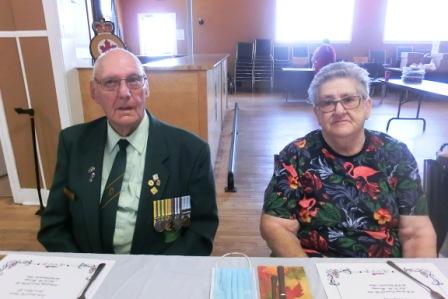
Representing the Embassy of the Republic of Korea were Col. Keun-sik MOON, the Defence Attaché, his wife Sun-ok BAN, and So-sun SUH, Assistant to the Defence Attaché.

CIMG5313 Sep 21 2021 Korean Embassy reps Korean vets luncheon

From left to right: So-sun Suh, Sun-ok Ban, and Col. Keun-sik Moon.  (Photo credit: Daria Valkenburg)

 ….The Korean War Veterans…

Korean War Veterans present were:

CIMG5305 Sep 21 2021 Arthur Hiscock Korean vets luncheon

Arthur Hiscock. (Photo credit: Daria Valkenburg)

  • Arthur ‘Art’ HISCOCK of Summerside.

CIMG5304 Sep 21 2021 Victor MacFadyen & daughter Paula MacFadyen Korean vets luncheon

Vic MacFadyen with his daughter Paula MacFadyen. (Photo credit: Daria Valkenburg)

  • Victor ‘Vic’ MACFADYEN, formerly of Canoe Cove and now living in Cornwall.

CIMG5308 Sep 21 2021 Elsie and Elwin Sherren Korean vets luncheon

Elwin Sherren, with his wife Elsie. (Photo credit: Daria Valkenburg)

  • Elwin SHERREN, formerly of Crapaud and now living in Cornwall.

CIMG5311 Sep 21 2021 Joyce and Blaine Taylor Korean vets luncheon

Blaine Taylor, with his wife Joyce. (Photo credit: Daria Valkenburg)

  • Blaine TAYLOR of Burlington.

CIMG5306 Sep 21 2021 David and June Vessey Korean vets luncheon

David Vessey with his wife June. (Photo credit: Daria Valkenburg)

  • David VESSEY of Summerside.

….The Royal Canadian Legion Members…

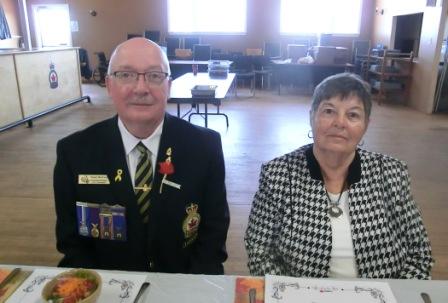
Representing the Royal Canadian Legion from PEI Command were Provincial President Duane MacEwen, with his wife Ann, and Chairperson/Public Relations officer John Yeo, with his wife Norma. The Borden-Carleton Branch was represented by Mario Henry, Sgt at Arms, and Pieter Valkenburg, Public Relations Officer.

CIMG5310 Sep 21 2021 Duane and Ann MacEwen Korean vets luncheon

Duane MacEwen with his wife Ann.  (Photo credit: Daria Valkenburg)

CIMG5315 Sep 21 2021 John and Norma Yeo Korean vets luncheon

John Yeo with his wife Norma.  (Photo credit: Daria Valkenburg)

The Korean War was a conflict fought between North and South Korea from June 25, 1950 to July 27, 1953.  Unfortunately, it has yet to be resolved.  During the welcome and greetings, John Yeo noted that “…it took a long time for the Canadian government to recognize Korean vets….” He explained that “…a dedicated monument was unveiled in Ottawa on September 28, 2003…

…Remarks by Col. Keun-sik Moon…

The Korean hosts told us that September 21, 2021 was Korean Thanksgiving, called ‘Chuseok’, a harvest festival. This three-day holiday is celebrated on the 15th day of the 8th month of the lunar calendar on the full moon.  Therefore, the date of the luncheon was particularly appropriate.

Col. Moon explained that he was “…here to express our gratitude to the veterans and their families, on behalf of the government and people of the Republic of Korea...

Addressing the veterans, he continued. “…70 years ago, under the banner of the United Nations, more than 26,000 Canadians bravely fought communism in distant Korea.  What made you take on this journey was your mission to protect the noble cause of freedom and peace and great humanitarianism…. Thanks to your sacrifice, Korea now enjoys freedom and economic prosperity…

Giving a brief summary of 1950s era Korea, Col. Moon told us that “…in 1950 Korea was a very poor, agrarian nation, where the fields were ploughed by oxen, the rice planted and reaped by hand, and where millions lived in small huts…

He assured the veterans that “…your blood shed in an unknown land and the tears of your families who endured the pains and grief from missing family were never in vain….”  Because of the peace that followed the conflict,…the Republic of Korea has achieved economic development and democratization….I sincerely hope the day will come when the veterans will see a peacefully reunified Republic of Korea…

Following the lunch and speeches, the Korean hosts surprised and charmed us by singing two songs: ‘Amazing Grace’ in English, and ‘Arirang’, a Korean folk song that speaks about leaving, reunion, sorrow, joy, and happiness.

…A Wreath Is Laid …

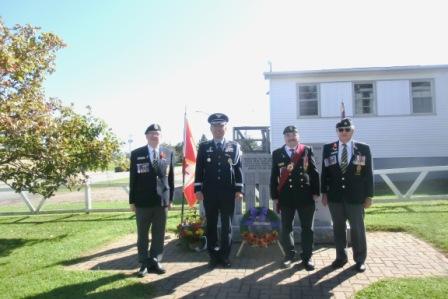
The official events over, and after gifts were presented to the veterans, everyone moved outside for the wreath laying ceremony by the Cenotaph.

CIMG5324 Sep 21 2021 Mario Henry & Col Moon with wreath outside Cenotaph Korean vets luncheon

Mario Henry with Col. Keun-sik Moon prepare to lay at wreath at the Cenotaph outside the Borden-Carleton Legion.  (Photo credit: Daria Valkenburg)

CIMG5327 Sep 21 2021 Duane Col Moon Mario John by Cenotaph Korean vets luncheon

Left to right: Duane MacEwen, Col. Keun-sik Moon, Mario Henry, John Yeo.  (Photo credit: Daria Valkenburg)

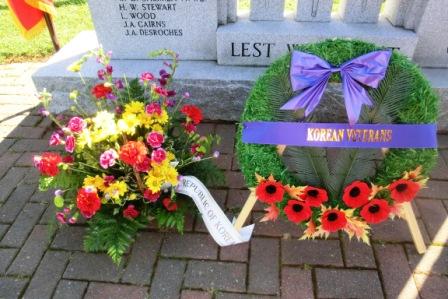
CIMG5330 Sep 21 2021 Flowers and wreath by Cenotaph Korean vets luncheon

Flowers and wreath laid by the Cenotaph outside the Borden-Carleton Legion. (Photo credit: Daria Valkenburg)

The luncheon and remembrance of their service was appreciated by the veterans and their family members.  Kudos go to the Borden-Carleton Legion, PEI Command of the Royal Canadian Legion, and the Embassy of the Republic of Korea for organizing this event.

Pieter encourages blog readers to contact him if they have a story to share about Canadians who served. You can email him at dariadv@yahoo.ca, comment on the blog, or send a tweet to @researchmemori1.

© Daria Valkenburg

On The War Memorial Trail….. In Conversation With Historian Dr. Tim Cook

CIMG5296 Sep 15 2021 Tim Cook & Pieter at Cdn War Museum

Dr Tim Cook (left) with Pieter Valkenburg (right) at the Canadian War Museum in Ottawa.  (Photo credit: Daria Valkenburg)

September 20, 2021.  Over the past years, Pieter has researched the stories behind the names on the Cenotaph outside the Borden-Carleton Legion.  As well, he’s researched the stories of other Island soldiers and veterans, and soldiers from across Canada buried in The Netherlands and Belgium. 

…It’s important to tell each individual story” Pieter always says.  “…The sacrifices made and the service in the cause of freedom should not be dismissed or forgotten, particularly if a soldier was not able to return home, but lies buried overseas….

On a recent trip to Ottawa, he met with historian Dr Tim Cook, Director of Research at the Canadian War Museum, and found that Dr Cook shares a similar point of view on the importance of remembrance.  “…In Canada, we have not done a good job in telling the stories of our veterans…” he said.

Dr Cook went on to explain that “….every community in Canada has a memorial for WWI soldiers, but generally, memorials for those who served in WWII were not done.  We didn’t create films and books at the time. We weren’t good at telling the stories….”

…. Canadian veterans at the 50th anniversary events in The Netherlands were treated like heroes…

I thought back to the films, novels, and memoirs that came out of WWII and Dr Cook is correct.  Much of what many of us know about WWII comes from American and British films and books.  Dr Cook agreed. “…It wasn’t until 1995, on the 50th anniversary of WWII, that people woke up after they saw the huge reception our Canadian veterans got in The Netherlands….

Pieter can’t understand why people in Canada didn’t realize how special the veterans were.  “…In The Netherlands, where I was born, they were our liberators, our heroes. Definitely they have never been forgotten….” 

….Many WWII veterans were reluctant to tell their stories when they returned….

Dr Cook thought that reluctance on the part of veterans to tell their stories, particularly in the aftermath of war, contributed to the silence.  Returning veterans simply got on with their lives and rarely spoke about what they experienced.  Pieter has found this to be the case for several of the soldiers he has researched. “…Many times, very little about the actual service of a soldier is known by the family….

20210919_100113 Sep 19 2021 Daria with Cook book

Looking forward to reading ‘The Fight For History’ by Tim Cook. (Photo credit: Pieter Valkenburg)

…There has been a change in sentiment over the past 75 years, helped by the research and participation of ‘champions of history’ like you and ever-increasing interest by the general public…” Dr Cook noted.   His most recent book The Fight For History: 75 Years of Forgetting, Remembering, and Remaking Canada’s Second World Warreflects on the way that WWII has been remembered, forgotten, and remade by Canada over the past 75 years.

Dr Cook told us that his “… newest project is in overseeing an oral history program to interview, record, and archive the stories of veterans, starting with the remaining Second World War veterans and reaching to the present with veterans of the Afghanistan War….

A dedicated and tireless researcher, he is also working on an edited book related to Canada’s involvement in the Korean War.  This war between North and South Korea was fought from June 25, 1950 to July 27, 1953, and has yet to be resolved.

We’re especially looking forward to Dr Cook’s upcoming book on war and medicine in the First World War, which will be published in September 2022. 

We very much enjoyed meeting Dr Tim Cook and thank him for taking the time to share his insights on not forgetting our Canadian military history. 

There are many more stories still to be told! Pieter encourages blog readers to contact him if they have a story to share about Canadians who served. You can email him at memorialtrail@gmail.com, or comment on the blog. 

© Daria Valkenburg

…More about Dr Tim Cook….

To watch a short video from TV Ontario about WWI and reflections 100 years later, see Tim Cook: Canada’s Great War | TVO.org: https://www.tvo.org/video/tim-cook-canadas-great-war

For a brief summary of the many books and articles published by Tim Cook, see https://en.wikipedia.org/wiki/Tim_Cook_(historian)

….Want to follow our research?….

If you are reading this posting, but aren’t following our research, you are welcome to do so.  Our blog address: https://onthewarmemorialtrail.com/

4 countries, 6 weeks, 7,000 km – an unforgettable war memorial journey in Europe…. Daria’s book ‘No Soldier Buried Overseas Should Ever Be Forgotten‘ is available in print and e-book formats.  Net proceeds of book sales help support research costs and the cost of maintaining this blog. For more information see https://nosoldierforgotten.com/

Subscribe to our YouTube Channel: On The War Memorial Trail With Pieter Valkenburg: https://www.youtube.com/channel/UCJ591TyjSheOR-Cb_Gs_5Kw

Never miss a posting!  Subscribe below to have each new story from the war memorial trail delivered to your inbox.

On The War Memorial Trail….. Remembering WWII Soldier Alfred Louis Pitawanakwat (Pitwanakwat)

September 6, 2021. After an interview about the photo quest for soldiers buried in the Canadian War Cemeteries in The Netherlands ran on APTN, Pieter was contacted by Joshua Manitowabi, who explained that Alfred Pitawanakwat’s “…brothers were Thomas Pitawanakwat and Valentine Pitawanakwat and all three fought in WW2. Two returned home, but Alfred is buried overseas in Holland. Alfred was my grandfather’s brother. He was my Great-Uncle on my mom’s side. ..

(To read the APTN article, see https://www.aptnnews.ca/national-news/dutch-born-p-e-i-man-on-a-mission-to-find-photos-of-first-nations-soldiers-killed-overseas-in-wwii/)

2232439_1 Alfred Pitwanakwat from Cdn Virtual War Memorial

Alfred Louis Pitawanakwat (Pitwanakwat) (Photo source: Canadian Virtual War Memorial)

Alfred Louis PITAWANAKWAT (PITWANAKWAT) was born September 12, 1924 in Little Current, Ontario, son of Samuel and Agatha Pitwanakwat, of Wikwemikong, Ontario. Like Clarence Wilfred WAKEGIJIG, he was from the Unceded Territory on Manitoulin Island, Ontario. (For more information on the Wiikwemkoong First Nation, see https://en.wikipedia.org/wiki/Wiikwemkoong_First_Nation. To read the posting on Clarence Wilfred Wakegijig see https://onthewarmemorialtrail.com/2021/08/09/on-the-war-memorial-trail-remembering-ww2-soldier-clarence-wilfred-wakegijig/.) 

….Alfred enlisted in 1943….

Alfred enlisted on August 23, 1943 in Toronto, Ontario.  At the time, he had been working for 2 months as a farmer’s helper for George McCluny of Caledonia, Ontario.  His two older brothers were already serving overseas with the Canadian Army.  Thomas was with the #14 Company of the Canadian Forestry Corps, and William ‘Valentine’ was with the #24 Anti-Tank Battery.

In an interview with the Personnel Selection Board, it was noted that he was “…able to express himself clearly….He gives the impression of being shy, but proved a very interesting character, when encouraged to talk about himself...”  The interviewer also remarked that Alfred was good with his hands as he was “…in the habit of carving miniature boats...

Someone in the recruitment office was paying attention as a note on his attestation form was stamped with the warning that he wouldn’t be 19 years old until September 12.  This was a caution as enlistees were not to be sent overseas before the age of 19.

Alfred’s service file also noted that as he was both underage and underweight at the time of enlistment he was sent to the Royal Canadian Army Medical Corps and took basic and advanced infantry training.

….Alfred left Canada for overseas service….

On June 6, 1944 he was sent to the No 1 Transit Camp in Windsor, Ontario for ‘rations and quarters’, in preparation for going overseas with #24 Canadian General Hospital.  By June 26, 1944 he was on board a ship bound for the United Kingdom, arriving in early July 1944.

He was a runner with the hospital, but in September 1944 Alfred requested a transfer to an anti-tank battery or the infantry, explaining that as he was now fit he wanted more active employment.

The transfer request was granted and Alfred joined the Royal Winnipeg Rifles as a rifleman.  He was wounded on October 23, 1944 by a gunshot wound during the Battle of the Breskens Pocket in Belgium, but returned to his Regiment after being discharged from hospital on November 15, 1944. (See https://www.canadiansoldiers.com/history/battlehonours/northwesteurope/breskenspocket.htm)

On November 2, 1944, the Regiment was sent to Ghent, Belgium for a rest period before the Rhineland Campaign began.  From Ghent they moved into The Netherlands, stopping near the Dutch-German border.

The Regimental history, ‘Little Black Devils: a history of the Royal Winnipeg Rifles’, by Bruce Tascona and Eric Wells, describes the movement of the Regiment as it moved from The Netherlands across the border into Germany, beginning on February 8, 1945.  “… After heavy artillery and bombardment, the tanks moved in, followed by infantry. Their assignment was to push south-east from the salient at Nijmegen, clearing a corridor between the Rhine and Maas Rivers…

A salient is a piece of land or section of fortification that juts out to form an angle. Nijmegen is in The Netherlands, not far from the German border.  This area had been cleared by December 1944.  Canadian troops were kept busy here, clearing the ice on the Waal River to protect bridges further downstream.

….Alfred lost his life during the Battle of Moyland Wood….

The Regimental history account continued as the Regiment moved into Germany, “… approaching the village of Louisendorf in ‘Kangaroos’, armoured personnel carriers converted from Ram tanks. Getting within 50 yards of the enemy, the Rifles charged the remaining distance, and in close combat took 240 prisoners and occupied the village. The next day the Regiment joined the Regina Rifles and the Canadian Scottish in the attack on Moyland Wood….

They advanced into an area “…beset with booby traps, mines, snipers, and machine guns….

Moyland Woods map from Little Black Devils

Map source: ‘Little Black Devils: a history of the Royal Winnipeg Rifles’ by Bruce Tascona and Eric Wells.

An account by Terry Copp in the article ‘Clearing Moyland Wood: Army Part 43’ in the November 2002 issue of Legion Magazine explained that: “…The Royal Winnipeg Rifles left their slit trenches near Louisendorf and moved into position south of Moyland Wood. Brig. E.R. Suttie, who had replaced Brig. Stanley Todd in command of the divisional artillery, prepared an elaborate fire plan involving medium and field artillery plus mortars, anti-tank guns, machine-guns and the tanks of the Fort Garry Horse….

Lt Col Alan Gregory, temporary commander of the Regina Rifles, “….and Lt.-Col. Lockie Fulton, the aggressive young commander of the Royal Winnipeg Rifles or Little Black Devils, devised a plan to clear the eastern end of the wood combining Wasps with tank support and air attacks. …

The plan was successful, but came at a cost. “…The Royal Winnipeg Rifles displayed outstanding skill as well as courage in the day-long battle that cost the battalion more than 100 casualties, 26 of them fatal….” (See https://legionmagazine.com/clearing-moyland-wood/) Alfred was one of the fatalities, losing his life on February 21, 1945.

Map

….Alfred is buried in the Canadian War Cemetery in Groesbeek….

Alfred was initially buried in Bedburg, Germany before being reburied in the Canadian War Cemetery in Groesbeek, The Netherlands.

Grave of Alfred Pitwanakwat

Grave of Alfred Louis Pitwanakat.  (Photo credit: Ad Scheepers)

Thank you to Joshua Manitowabi for contacting us about his great-uncle, and to Ad Scheepers for taking the photo of Alfred’s grave at the cemetery.  If you have information to share about Alfred Louis PITAWANAKWAT (PITWANAKWAT) or other Canadian soldiers, please contact Pieter at memorialtrail@gmail.com, or comment on the blog.

© Daria Valkenburg

….Want to follow our research?….

If you are reading this posting, but aren’t following our research, you are welcome to do so.  Our blog address: https://onthewarmemorialtrail.com/

Front cover OnTheWarMememorialTrailinEurope4 countries, 6 weeks, 7,000 km – an unforgettable war memorial journey in Europe…. Daria’s book ‘No Soldier Buried Overseas Should Ever Be Forgotten‘ is available in print and e-book formats.  Net proceeds of book sales help support research costs and the cost of maintaining this blog. For more information see https://nosoldierforgotten.com/ 
Screenshot_2021-02-27 On The War Memorial Trail With Pieter Valkenburg

You are also invited to subscribe to our YouTube Channel: On The War Memorial Trail With Pieter Valkenburg: https://www.youtube.com/channel/UCJ591TyjSheOR-Cb_Gs_5Kw.

Never miss a posting!  Subscribe below to have each new story from the war memorial trail delivered to your inbox.

On The War Memorial Trail….. Adopting A Grave In Adegem

August 29, 2021. After reading about the 7 Indigenous soldiers buried at the Canadian War Cemetery in Adegem, Belgium, Edwin van der Wolf, a volunteer researcher at the Canadian War Cemetery in Holten, The Netherlands contacted Pieter. (See https://bordencarletonresearchproject.wordpress.com/2021/08/18/on-the-war-memorial-trail-7-indigenous-soldiers-buried-in-adegem-canadian-war-cemetery/)

In a translation from the original Dutch, Edwin wrote that “On your interesting blog I read about the 7 First Nations, who are buried in the Canadian cemetery in Adegem, Belgium.

At the Canadian War Cemetery in Holten I also happen to have about 13 First Nations and three Métis, who are buried with us, as a focus area.….” 

Two of the Indigenous soldiers buried in Holten have been featured on this blog:

P1370203 Edwin by Pte Allan Trelford

Edwin van der Wolf by the grave of Allan Trelford in the Canadian War Cemetery in Adegem.  (Photo courtesy Edwin van der Wolf)

Edwin went on to say …In addition, I am also involved in the Canadian War Cemetery in Adegem, where 38 fallen / killed soldiers of the Canadian Scottish Regiment are buried and of which I have also adopted two with my son….”  Edwin has done extensive research into the Canadian Scottish Regiment and last year began a website on them.  (See https://bordencarletonresearchproject.wordpress.com/2020/05/04/new-website-on-canadian-scottish-regiment-during-ww2/)

P1370323 May 12 2018 of the certificate of Pte Allan Trelford

On May 12, 2018, Edwin van der Wolf received his certificate for adopting the grave of Allan Homer Trelford. (Photo courtesy Edwin van der Wolf)

Edwin adopted the grave of Allan Homer TRELFORD, son of Homer A. and Eleanora Jane Trelford, of Toronto, Ontario and husband of Mildred Verna Trelford, of Toronto, who died on October 18, 1944 at the age of 23. 

On May 11, 2019, Edwin’s son Breyten adopted the grave of Joseph H. PALLISTER, son of Guy and Evelyn M. Pallister, of Turner Valley, Alberta, who died on October 6, 1944 at the age of 21.

Adoptie Certifikaat J.H. Pallister, 11-5-019

The adoption certificate issued to Breyten van der Wolf.  (Photo courtesy Edwin van der Wolf)

I asked Edwin what was involved in adopting a grave, since the upkeep of the graves and cemeteries for our Canadian war dead is the responsibility of the Commonwealth War Graves Commission.  My guess was that it involved visiting the grave and perhaps being in contact with family members back in Canada.  Edwin confirmed this and went on to explain that “...You are supposed to lay flowers at the adopted grave now and then and I also ask my Belgian contact person there to do so for me sometimes. There can also be contact with family members….

Pieter and I have been to several cemeteries in Europe and in many of the smaller ones we were the only visitors in a long while, according to the visitors log book.  So, the adoption of graves is a great idea.  

No soldier buried overseas should be forgotten

Edwin explained that, unlike in The Netherlands, “If you adopt a grave at the Adegem Canadian War Cemetery you receive a certificate of this adoption during a yearly ceremony in May…  The Dutch War Graves Commission no longer issues certificates, “…not since the 1960s...” 

Thank you to Edwin van der Wolf for sharing photos and information about the grave adoption at the Canadian War Cemetery in Adegem.  If you have information to share about Canadian soldiers, please contact Pieter at  memorialtrail@gmail.com, comment on the blog, or send a tweet to @researchmemori1

© Daria Valkenburg

….Want to follow our research?….

If you are reading this posting, but aren’t following our research, you are welcome to do so.  Our blog address: https://onthewarmemorialtrail.com/

Front cover OnTheWarMememorialTrailinEurope4 countries, 6 weeks, 7,000 km – an unforgettable war memorial journey in Europe…. Daria’s book ‘No Soldier Buried Overseas Should Ever Be Forgotten‘ is available in print and e-book formats.  Net proceeds of book sales help support research costs and the cost of maintaining this blog. For more information see https://nosoldierforgotten.com/ 
Screenshot_2021-02-27 On The War Memorial Trail With Pieter Valkenburg

You are also invited to subscribe to our YouTube Channel: On The War Memorial Trail With Pieter Valkenburg: https://www.youtube.com/channel/UCJ591TyjSheOR-Cb_Gs_5Kw

Never miss a posting!  Subscribe below to have each new story from the war memorial trail delivered to your inbox.

On The War Memorial Trail….. The Search For A Photo Of John ‘Clifford’ Rogers Is Successful

August 24, 2021. A few months ago, a posting summarized an ongoing search for a photo of WW2 soldier John ‘Clifford’ ROGERS of Hope River, PEI, who is buried in the Canadian War Cemetery in Groesbeek, The Netherlands.  (See https://bordencarletonresearchproject.wordpress.com/2021/01/18/on-the-war-memorial-trail-the-continued-search-for-a-photo-of-john-clifford-rogers/)

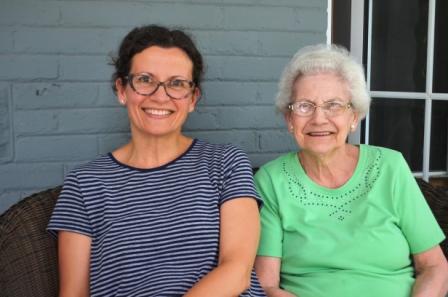
Nothing happened for several months, but then Pieter received an email from Janet ‘Jan’ O’Reilly, who wrote that “Clifford was my uncle, Gladys is my mom, and is still alive….”  Gladys is the sister of John ‘Clifford’ Rogers.

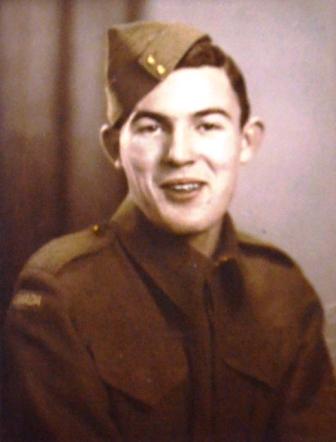
DSC_0547 john clifford rogers

John ‘Clifford’ Rogers. (Photo courtesy of Gladys O’Reilly)

Jan went on to explain that “We live in Ontario – my mom left the island in the late 1950s, I believe. Her Mom and Dad remained on the island, but her Dad died in the 1960s and my grandma later came to live with us here in Ontario. She died here in 1980 and Mom brought her home to be buried on the island. We all travelled to PEI that Christmas…” This explained why Pieter’s search on the Island was unsuccessful.

DSC_0242 janet o reilly and mother

Jan and Glady O’Reilly.  (Photo courtesy of Janet O’Reilly)

Clifford was born August 19, 1925 in Hope River, Prince Edward Island, the son of Andrew Rogers and Phoebe Gallant. The family later moved to Charlottetown.

On March 12, 1943, he enlisted in Charlottetown, and it was noted that he had served in the PEI Light Horse Regiment (17th Reserve Armoured Regiment) since 1942. At the beginning of April 1943 he was transferred to the Advanced Infantry Training Camp in Aldershot, Nova Scotia.

On October 30, 1943 he was transferred to the Advanced Driving and Maintenance School in Woodstock, Ontario, a facility where soldiers learned to drive and repair military vehicles, motorcycles, and trucks.

….4 Islanders trained together at Coldstream Ranch….

After receiving his qualification, he was transferred to the Canadian School of Infantry, located at Coldstream Ranch in Vernon, British Columbia, arriving on January 27, 1944.  Over 11,000 acres, the training area on the ranch included a log village for village fighting, an obstacle course, a bayonet assault course, a trench blasted from solid rock on the side of hill that gave trainees experience from being fired on from overhead, an ‘English’ type lane with hedges and gates, and a dam for river crossing drills.

When Pieter spoke with Gladys, she told him that 3 other Islanders were at the Coldstream Ranch at the same time as Clifford: 

Later, Jan reflected that “…Mom remembered him getting along with Pte Blanchard who was also from PEI. There were just four of them and I imagine that created a bond….

In September 1944 Clifford was sent to the transit camp at Camp Debert in Nova Scotia, in preparation for going overseas.  He arrived in the United Kingdom on November 28, 1944.  On January 8, 1945 he was in Northwest Europe as part of the contingent of reinforcement troops.

On January 26, 1945 he was transferred to the North Shore (New Brunswick) Regiment.  Not long after, the Regiment travelled just over the Dutch border into Germany for Operation Blockbuster, the last part of Operation Veritable, during the Battle of the Rhineland. (See https://en.wikipedia.org/wiki/Operation_Blockbuster)

….Action in Balberger Wald was fatal for Clifford….

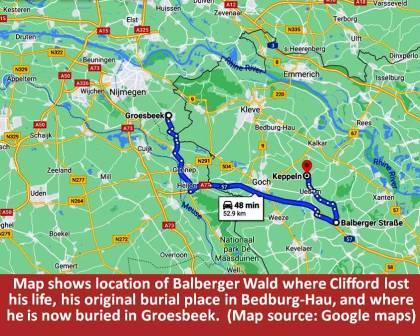
Clifford survived the Battle of Keppeln, in which fellow Islander Barney McGuigan lost his life, but his luck ran out a few days later in the Balberger Wald, a forested ridge southeast of Keppeln.  This area protected the approach to the Rhine with concrete fortifications.

Map

The North Shore (New Brunswick) Regiment moved into the area on March 1 to support other Regiments in an attempt to clear part of the forest on the eastern side, not easy in a thick forest where German snipers could easily hide. In addition to shells and grenades, many open areas were mined.  With such dense forest cover, it wasn’t difficult to get separated from the platoon.  By the time the area was cleared several days later, 6 members of the North Shore Regiment had lost their lives, including Clifford, who died on March 3, 1945.

The other 5 members of the North Shore (New Brunswick) Regiment who lost their lives in the Balberger Wald were:

  • Patrick Marshall BUCKLEY, of St. John, New Brunswick, died March 2, 1945.
  • Claude Wilber DERRICK, of Canterbury, New Brunswick, died March 2, 1945.
  • Royden Blake FOURNIER, of Perth, Ontario, died March 2, 1945.
  • Wilfred MELANSON, of Bathurst, New Brunswick, died March 2, 1945.
  • Harold Freeman STEVENS, died March 1, 1945.

Clifford was initially buried in a cemetery in present day Bedburg-Hau and later reburied at the Canadian War Cemetery in Groesbeek, The Netherlands. 

CIMG3331 Oct 5 2019 Groesbeek John Rogers

In 2019, we visited the grave of John Clifford Rogers at the Canadian War Cemetery in Groesbeek, The Netherlands. (Photo credit: Daria Valkenburg)

Jan was correct in saying that “Their family sacrificed so much…” Clifford and his brother Ferdinand (Ferdy) lost their lives in WW2 while a third brother, Walter, had a career in the military.

Gladys O’Reilly “…is the last of their immediate family….”  Walter “…left as a young man as well.  He served in Korea and later lived overseas with his family during his military service for a time in Germany. He eventually settled in Kingston and died there 10 years ago at the age of 82….

We thank Jan and Gladys O’Reilly for sharing family photos and information about John ‘Clifford’ Rogers.  If you have information to share about Canadian soldiers buried in The Netherlands, memories to share about John ‘Clifford’ Rogers, or the other soldiers mentioned, please email us at dariadv@yahoo.ca, comment on the blog, or send a tweet to @researchmemori1.  

….Want to follow our research?….

If you are reading this posting, but aren’t following the blog, you are welcome to do so.  See https://bordencarletonresearchproject.wordpress.com or email me at dariadv@yahoo.ca and ask for an invitation to the blog. 

Screenshot_2021-02-27 On The War Memorial Trail With Pieter Valkenburg

You are also invited to subscribe to our YouTube Channel: On The War Memorial Trail With Pieter Valkenburg: https://www.youtube.com/channel/UCJ591TyjSheOR-Cb_Gs_5Kw

© Daria Valkenburg

On The War Memorial Trail….. The Search For A Photo Of WWII Soldier Allan Gordon Coutts

No photo available

August 20, 2021. In 2017, Pieter received a photo wish list from researchers at the Canadian War Cemetery in Holten, The Netherlands.  There were 6 names, all serving with the North Nova Scotia Highlanders when they lost their lives.  How hard could that be?  Pieter thought.

Over the past years, families of 4 of the six have been found, along with photos of the soldiers.  Two remain elusive. One of these is Allan ‘Gordon’ COUTTS, born January 11, 1923 in Kerrobert, Saskatchewan, the son of Benjamin and Susan Coutts.  During his childhood, the family moved to Olds, Alberta, where his father was a firefighter on a government experimental farm.

After enlisting in Calgary, Alberta on January 15, 1943 with the #13 District Depot, he went to the Canadian Basic Training Centre in Camrose, Alberta on February 1, 1943. About 6 weeks later he caught mumps and was placed in isolation in the military hospital.

Once recovered from mumps, he was sent to the Canadian Infantry Training Centre (CITC) in Calgary, then on January 1944 he went to Camp Debert in Nova Scotia for final preparations before being sent overseas to the United Kingdom in March 1944.  In April 1944 he was transferred to the Canadian Scottish Regiment, then in June 1944 to the North Nova Scotia Highlanders.

On July 25, 1944 he was wounded by a gunshot wound in the right shoulder during an offensive called ‘Operation Spring’ in Tilly-la-Compagne, France, and was hospitalized for a few weeks before returning to duty.  (For more information on Operation Spring see https://en.wikipedia.org/wiki/Operation_Spring)

In early May, just before the end of the war, the Regiment went to Norden, Germany, …the first Recce party there...” according to ‘No Retreating Footsteps – the story of the North Novas’ by Will Bird.  Once they arrived, the German Commandant of the area was “...ordered to concentrate all his troops in the barracks area, to disarm them, and deliver all arms and ammunition to a selected arms dump, the Grattin Theda School….

However, Bird continued in his account, “….A German Army deserter reported the organization of Werewolves in the Novas area who wanted to destroy Norden because it had surrendered without a fight, and wanted to prevent German ammunition falling into Allied hands….” The ammunition dump was then moved away from the school to the Sports Field.

An Explosion in Norden was fatal

On May 11, 1945, Gordon was monitoring the unloading of ammunition at the Sports Field.  Around 4:30 pm, there was an explosion which cost him his life.  The witness testimony of Private J. J. JONES of the North Nova Scotia Highlanders confirmed that the sports field was used as a dumping ground for “…enemy ammunition and equipment…

As one of the drivers of these loads, his truck was parked at the dump and stated that he “… was standing by the tailboard of the truck, watching some German soldiers unloading a mixed load of ammunition and equipment.  I heard someone shout out a warning, and then I saw something come out the ground and land on the ground on the edge of the dump itself….

Pte Jones noted that “… the object made a hissing sound and gave off a cloud of orange smoke….” As he ran to take cover, “… a loud explosion went off….” As he returned to the dump, he saw “…a German Officer kick the smoking object away from the dump…”  When he reached the dump, he noticed “…one of our soldiers lying on the ground...” with a hole in his head.  He immediately went to get medical help.

Pte H. K. KEDDY of the Nova Scotia Highlanders was on guard duty at the German ammunition dump at the Norden Sports Field. He too heard a hissing noise and saw orange smoke and ran to safety.  After the explosion he testified that he “…went back to the scene of the explosion which was about 10 to 12 feet from the rear of the ….truck….”  He saw “…Sgt Coutts, AG lying on the ground quite near the truck….” and a wounded German soldier lying nearby.  He helped apply a bandage to the wounds while waiting for medical assistance to arrive.

Capt Alan E. DE FOREST of the North Nova Scotia Highlanders testified that the pile of ammunition contained “…all types of German mines, grenades, bazookas, small arms etc, which included several steel cases of German stick grenades (potato mashers)...”  It appeared that the explosion was caused by one of the stick grenades.  The explosion was ruled an accident and not an act of sabotage.

Gordon was temporarily buried in the Leer Lutheran Cemetery in Germany, before being reburied in the Canadian War Cemetery in Holten, The Netherlands.

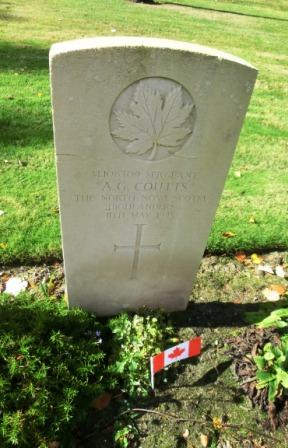
CIMG3228 Oct 3 2019 Holten Allan Coutts

We visited the grave of Allan Gordon Coutts at the Canadian War Cemetery in Holten, The Netherlands in 2019. (Photo credit: Daria Valkenburg)

In March 1948, Mr. G. F. Struik of Deventer, The Netherlands sent a letter to Veterans Affairs, asking that it be forwarded to the next of kin.  He wanted the family to know that he had adopted the grave, a volunteer program that was organized by the Netherlands War Graves Committee.

This was not an unusual occurrence. Many family members of soldiers that we have met over the years have explained that their families had been in contact with Dutch citizens who adopted a grave.

Unfortunately, although he’s tried since 2017 to find family of Allan Gordon Coutts, Pieter has been unsuccessful.  Earlier this month, he did an interview with Galen Hartviksen, News Director at 96.5 CKFM/ROCK 104.5 in Olds, Alberta, in the hope that someone will see the appeal and come forward.  Here is the link to the web article and interview: https://ckfm.ca/2021/08/09/11202/.  Up to now, no one has come forward, unfortunately.

Thank you to Galen Hartviksen at CKFM for helping to publicize the search for a photo. If you can help with a photo or information about Allan Gordon Coutts, please contact Pieter at memorialtrail@gmail.com, or comment on the blog. UPDATE:  A photo was subsequently found!

 The North Nova Scotia Highlanders Wish List

The other North Nova Scotia Highlanders on that 2017 photo wish list from the researchers at the Canadian War Cemetery in Holten, for which photos were found, were:

In addition to Allan Gordon COUTTS, one more photo is yet to be found for:

  • Archibald Henry NELSON, born in Charlottetown, Prince Edward Island, son of William Henry and Winnifred Frances Nelson, who lost his life on April 18, 1945, aged 32.

© Daria Valkenburg

….Want to follow our research?….

If you are reading this posting, but aren’t following our research, you are welcome to do so.  Our blog address: https://onthewarmemorialtrail.com/

4 countries, 6 weeks, 7,000 km – an unforgettable war memorial journey in Europe…. Daria’s book ‘No Soldier Buried Overseas Should Ever Be Forgotten‘ is available in print and e-book formats.  Net proceeds of book sales help support research costs and the cost of maintaining this blog. For more information see https://nosoldierforgotten.com/
Screenshot_2021-02-27 On The War Memorial Trail With Pieter Valkenburg

You are also invited to subscribe to our YouTube Channel: On The War Memorial Trail With Pieter Valkenburg: https://www.youtube.com/channel/UCJ591TyjSheOR-Cb_Gs_5Kw.

Never miss a posting!  Subscribe below to have each new story from the war memorial trail delivered to your inbox.

On The War Memorial Trail….. 7 Indigenous Soldiers Buried in Adegem Canadian War Cemetery

August 18, 2021. After reading the posting about WWII Soldier Clarence Wilfred Wakegijig, Pieter was contacted by Willy van Ee of Sas-van-Gent, The Netherlands, who explained that he is the son of Indigenous soldier Walter MEKAJI of the Sagamok Anishnawbek First Nation and Hendrike Herber of The Netherlands.  “My father also came from Wikwemikong and met my mother in Utrecht during the liberation of The Netherlands…

Willy’s compelling story has been extensively told.  See:

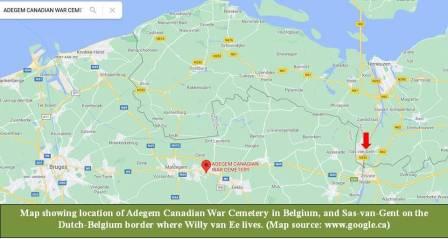
In a translation of Willy’s email exchange with Pieter, he wrote “…I live 20 km from the Adegem Canadian War Cemetery in Belgium.  Every year, on the second weekend of September, there is a ceremony with many VIPs, and a lot of people.  This year it’s on September 12. I’ve been going there for about 40 years, because of a veteran from Vancouver Island, Art BRIDGE, who has visited us a number of times.  His friend L MORGAN is buried there....”   Most likely, Willy is referring to Lionel Albert MORGAN, son of Reuben and Pearl Morgan, of Toronto, Ontario, who died on September 8, 1944 while serving with the Argyll and Sutherland Highlanders of Canada (Princess Louise’s).

Map showing Adegem Canadian War Cemetery

Willy wanted to let Pieter know that he believed that 7 Indigenous soldiers are buried in Adegem Canadian War Cemetery.  He visited the cemetery and sent the names:

No photo available

  • Maurice BELLEGARDE, son of Moise and Margaret Bellegarde, of Abernethy, Saskatchewan. Died November 3, 1944 while serving with the Regina Rifle Regiment.
Jacob Shelby Brant

Jacob Shelby Brant. (Photo source: Canadian Virtual War Memorial)

  • Jacob Shelby BRANT, born February 12, 1925 in Hagersville, Ontario, son of Austin and Bessie Brant.  Died September 11, 1944 while serving with the Lincoln and Welland Regiment, aged 19.
Harvey Dreaver

Harvey Dreaver. (Photo source: Canadian Virtual War Memorial)

  • Harvey DREAVER, born November 29, 1914 in Leask, Saskatchewan, son of Joseph and Evelyn Dreaver of Saskatoon, Saskatchewan. Husband of Mary Dreaver of Saskatoon, Saskatchewan. Died October 6, 1944 while serving with the Regina Rifle Regiment, aged 29.

No photo available

  • Joseph HENRY, son of Thomas and Philomene Henry. Husband of Alice Henry, of Roseau River Reserve, Manitoba.  Died October 2, 1944 while serving with the Algonquin Regiment, aged 22.
Roland David Riel

Roland David Riel. (Photo source: Canadian Virtual War Memorial)

  • Roland David RIEL, born December 8, 1925 in St Vital (now Winnipeg), Manitoba, son of Henry and Yvonne Mary Eugenie Riel.   Died October 15, 1944 while serving with the Regina Rifle Regiment, aged 18.
Kenneth Scribe

Kenneth Scribe. (Photo source: Canadian Virtual War Memorial)

  • Kenneth SCRIBE, son of John and Jessie Scribe, of Norway House, Manitoba. Died October 11, 1944 while serving with the Highland Light Infantry of Canada, aged 23.

No photo available

  • Charles William Myers ST GERMAINE, son of John and Lillian St. Germaine, of Rama, Ontario. Died September 16, 1944 while serving with the South Saskatchewan Regiment, aged 23.

Thank you to Willy van Ee for sharing his story and letting us know about the soldiers buried in Adegem Canadian War Cemetery.  If you have photo or information to share about any of the men mentioned in this posting, or other Canadian soldiers, please contact Pieter at memorialtrail@gmail.com, comment on the blog, or send a tweet to @researchmemori1.

© Daria Valkenburg

 ….Want to follow our research?….

If you are reading this posting, but aren’t following the blog, you are welcome to do so.  Our blog address: https://onthewarmemorialtrail.com/

Front cover OnTheWarMememorialTrailinEurope4 countries, 6 weeks, 7,000 km – an unforgettable war memorial journey in Europe…. Daria’s book ‘No Soldier Buried Overseas Should Ever Be Forgotten‘ is available in print and e-book formats.  Net proceeds of book sales help support research costs and the cost of maintaining this blog. For more information see https://nosoldierforgotten.com/
Screenshot_2021-02-27 On The War Memorial Trail With Pieter Valkenburg

You are also invited to subscribe to our YouTube Channel: On The War Memorial Trail With Pieter Valkenburg: https://www.youtube.com/channel/UCJ591TyjSheOR-Cb_Gs_5Kw.

Never miss a posting!  Subscribe below to have each new story from the war memorial trail delivered to your inbox.