May 14, 2023. On a list of 39 soldiers from the North Nova Scotia Highlanders Regiment who were killed during the Battle of Bienen in Germany on March 25, 1945 and are buried in the Canadian War Cemetery in Groesbeek, The Netherlands, photos were missing for several names.
As has been mentioned in previous postings in the Battle of Bienen series, the date of the battle was significant to Pieter as he was “…exactly one year old when this battle occurred….”
…The search for a photo of Austin Havelock Munroe….
Within a few months of beginning the search for photos, family members were found for all except one – Austin Havelock MUNROE, who was born on December 2, 1919 in Little Dover, Nova Scotia, the son of Edward and Minnie (nee Murphy) Munroe.
Austin’s parents had died when he was a child, and while he had a brother and two sisters, and had been married, we had no luck in finding family members who might have a photo. We then turned to social media, placing an appeal on Twitter and with a short YouTube video. (See https://onthewarmemorialtrail.com/2022/11/29/on-the-war-memorial-trail-the-search-for-a-photo-of-austin-havelock-munroe-is-on-youtube/)
As well, a Letter to the Editor was sent to the Guysborough Journal, which we later learned was published on November 2, 2022 …

It wasn’t until a few months later, that Pieter was contacted by Velda Myette of Little Dover, saying she had read the Letter to the Editor, and yes, she had a photo. Her maternal grandmother, Laura Richard (nee Munroe), was Austin’s sister. “…His nickname was Rusty because of his hair being red…” Velda explained. “…My mother’s hair was also red…”
… Austin enlisted in 1940….
When Austin applied to enlist with the Pictou Highlanders in Canso, Nova Scotia on July 13, 1940, Mulgrave, Nova Scotia, he was working for Alex Keefe in Little Dover as a lobster fisherman. Ten days later, on July 23, 1940, he formally attested with the Pictou Highlanders as a member of the Canadian Active Service Force in Mulgrave, Nova Scotia.
According to his Personnel Selection Record, Austin was functionally illiterate when he enlisted, having completed only up to Grade 3. It was noted that he “…lived far from school, seldom had a teacher, and made poor progress…”
Austin not only received army training but also some basic education, and in January 1944, the Personnel Selection Record noted that he had “…learned to read and write…” He was described as a “…cheerful, eager youth of likeable personality…”
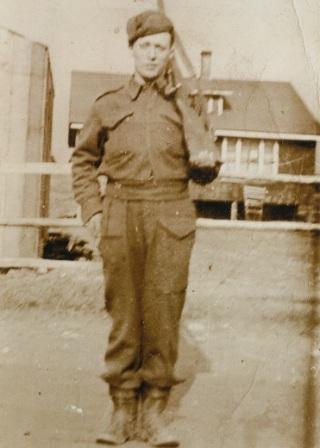
Austin Havelock Munroe. (Photo courtesy of Velda Myette)
… Austin was on garrison duty in the Strait of Canso….
Over the rest of the summer and into the fall of 1940, Austin was among the Pictou Highlanders assigned to garrison duty at two artillery batteries located at both entrances to the Strait of Canso. Today, a causeway links the Nova Scotia mainland with Cape Breton Island, but that was not the case during WWII.
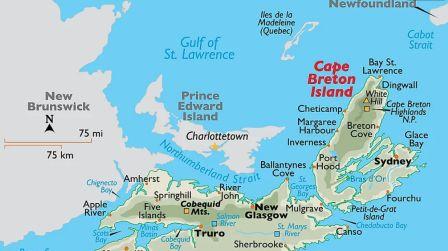
Map shows location of Mulgrave and the Strait of Canso. (Map source: https://www.worldatlas.com/maps/canada/nova-scotia)
In ‘The Canso Defence Area – The Second World War on the Home Front’, author Gerry Madigan explained why the artillery batteries were important. “…The Strait of Canso, a key strategic gateway, led all onto or off the island of Cape Breton. Everything passed through there on the railway ferry between Mulgrave and Port Hawkesbury.
But the Strait was important in other ways. The Strait was also an open gateway to marine traffic through which Canadian National Steamships and other marine interests passed on their way to the Caribbean, American ports or travels south….”
… Austin completed basic training…
After completing his duty assignment protecting the Strait of Canso, Austin was sent to Valcartier, Quebec for basic training.
At the end of January 1941, he was admitted to the Halifax Military Hospital in Dartmouth, Nova Scotia. After a 6 week hospital stay, he was discharged, and placed on sick furlough until August 22, 1941.
Upon his return to active duty, he was stationed in the Halifax area. On January 23, 1942, he was assigned to McNab’s Island, located in Halifax Harbour, for a few weeks, followed by an assignment at Devil’s Battery, a military installation at the mouth of Halifax Harbour in Hartlen Point on February 6, 1942. Both locations helped protect Halifax against German U-boats. (See https://en.wikipedia.org/wiki/McNabs_Island and https://en.wikipedia.org/wiki/Devils_Battery)
Unfortunately, on March 20, 1942, Austin was again admitted to the Halifax Military Hospital, and not discharged until April 13, 1942, when he returned to duty.
… Austin was part of ‘B’ Force that served in Bermuda…
(Sign source: http://www.bermuda-online.org/)
On October 2, 1942, Austin was assigned to ‘B’ Force of the Pictou Highlanders. This was a ‘Special Infantry Company’ mobilized on September 10, 1942 for garrison duty in Bermuda from November 12, 1942 to April 1, 1946.
Bermuda was important as it lay at the crossroads of the Atlantic and became an important rendezvous for wartime convoys. It was an excellent listening post for war censors – all mail flown on flying boats between North America and Europe stopped in Bermuda to refuel or wait out the weather. (See https://www.bermuda-online.org/history1939-1951.htm)
… Austin returned to Canada after a 15 month assignment in Bermuda…
Austin remained in Bermuda for 15 months. On January 16, 1944, he was transferred to No. 6 District Depot in Halifax, before being assigned to A-14 Canadian Infantry Training Corps (CITC) in Aldershot, Nova Scotia in March 1944. Per his Personnel Selection Record, Austin was “…on regular training with the unit…” and was “…pleasant and cooperative…”
On April 29, 1944, he was transferred to A-22 Canadian Army Medical Corps Training Centre (CAMC TC) in Camp Borden, Ontario. A few months later, on May 31, 1944, he was transferred to A32 Canadian Army Medical Corps Training Centre in Peterborough, Ontario.
He returned to A-22 CAMC TC in Camp Borden on July 30, 1944. His Personnel Selection Record recorded that he “…did Advanced Training with good efficiency and very good conduct…” and that he “…was suitable for overseas service...”
… Austin married just before going overseas…
Austin applied for permission to marry, and after it was granted, he married Annie Elizabeth Barry at St Agnes Church Roman Catholic Church in Little Dover, Nova Scotia on October 2, 1944. He had been granted 10 days of embarkation leave from September 24, 1944 to October 3, 1944, so the couple did not have very much time together!
On October 26, 1944, Austin was transferred to the No. 1 Training Brigade Group in Debert, Nova Scotia, for final preparation and training before being sent overseas.
…Austin left Canada for overseas service in November 1944….
He left Canada on November 25, 1944, arriving in the United Kingdom on December 6, 1944 and posted to No. 1 Canadian General Reinforcement Unit (CGRU). A note in his Personnel Selection Record indicated that he could be assigned to the “…Infantry Reinforcement if priority demands BUT not considered suitable combatant material…”
Given the large amount of losses of personnel from combat, it was inevitable that Austin would be reassigned to No 1 Canadian Infantry Training Regiment (CITR) a few days later on December 10, 1944.
On February 4, 1945 Austin left the United Kingdom for North West Europe, and the Canadian Infantry Reinforcement Camp in Ghent, Belgium.
On March 5, 1945 he was transferred to the North Nova Scotia Highlanders, joining the Regiment in the area near Xanten, Germany.
In March, the Regiment prepared for Operation Plunder, which began March 21, and involved Allied troops crossing the Rhine River to the north of the Ruhr industrial region in western Germany. With aerial and military support, this took place on the night of March 23, 1945 near Rees, a town situated on the right bank of the Rhine River, approximately 20 km (12.4 miles) east of Kleve. (See https://en.wikipedia.org/wiki/Operation_Plunder)
…Austin lost his life in the Battle of Bienen ….
On the next afternoon, March 24, 1945, Allied troops encountered fierce German resistance near the village of Bienen. They got as far as Bienen, when troop movement stopped due to blown bridges across the Rhine in that area.
In ‘No Retreating Footsteps’ by Will Bird, he noted that the 7th Argyll and Sutherland Highlanders had made “… three attempts …. to capture the village, but they were turned back by very heavy machine gun fire from the front of the village, supported by heavy mortar fire…”
On March 25, 1945, the North Nova Scotia Highlanders reached Bienen, Germany for the climax of 9 Canadian Infantry Brigade’s role in Operation Plunder. The Regiment was tasked with passing through the 7th Argyll and Sutherland Highlanders who had been stopped in front of Bienen during the night.
Bienen was a difficult challenge as the road through it was the only access point. In ‘No Retreating Footsteps’ author Will Bird explained that it was “… an isthmus of solid land about half a mile wide with one road, the main Rees-Emmerich highway, which passed through Bienen exactly at the narrowest point…”

Post-war aerial of Bienen (view to the southeast towards Rees). The aerial clearly demonstrates the tactical importance of Bienen, laying astride the narrow neck of land. The main road from Rees to Emmerich (nowadays Emmericher Strasse) runs straight through Bienen. (Photo source: http://www.WW2Talk.com and identified as ‘Courtesy Becker’)
March 25, 1945 was Palm Sunday – one week before Easter. The battle began in the morning and didn’t end until late that evening. Right from the start, troops were pinned down, “…suffering heavy casualties…” per the Regiment’s war diary for that day. Worse, in terms of communications, “….contact between platoons was next to impossible because of the murderous fire and heavy mortaring….”
The one day battle was devastating in terms of casualties, both dead and wounded, as they fought in a deadly battle on open ground. Among the casualties was Austin Havelock Munroe. As we don’t know which Company Austin was in, we don’t know the circumstances of his death.
The war diary for March 25, 1945 summarized the fierce challenges faced by the North Novies. “…It was a long, hard bitter fight against excellent troops who were determined to fight to the end. It cracked open the bottleneck which had restricted the bridgehead, and from then on expansion was much easier and more rapid. The road to Northern GERMANY and HOLLAND was established. Over 200 prisoners were taken and many killed. Our own casualty lists were high…”
…Austin is buried in the Canadian War Cemetery in Groesbeek ….
Like Clifford BATEMAN, John Joseph BOHON, Ralph Schurman BOULTER, and Charles ‘Marshall’ CARSON, Marven Glenroy HARVEY, Kitchener ‘Kitty’ LANGILLE, Marvin William MCGREGOR, Wilfred ‘Willy’ Joseph POWER, Louis Allan SEXTON, and John Lewis WALLACE, Austin was temporarily buried on Monday, March 26, 1945 in the military cemetery in Rees, Germany before being reburied the following year in the Canadian War Cemetery in Groesbeek, The Netherlands.
We noted that Austin stated that he was Roman Catholic in his attestation form when he enlisted. This suggested that Austin was one of the soldiers whose funeral on March 26, 1945 was one of 15 that had been presided over by Honorary Major Donald A. Kerr, Senior Chaplain (R.C.) in the 3rd Canadian Infantry Division.
In a letter to the parents of Louis Allan SEXTON, who also died that day, H/Major Kerr wrote that “…It was indeed a sad day for me to bury fifteen of my fine Catholic boys, some of whom I knew so well…”
A letter to the sister of Wilfred ‘Willy’ Joseph POWER, another Bienen casualty, by H/Major Kerr explained that Wilfred was buried “…with ten other Catholic lads of his own unit…” Out of the 15 Catholic soldiers buried that day, 4 must have been from another unit, perhaps from the 7th Argyll and Sutherland Highlanders.
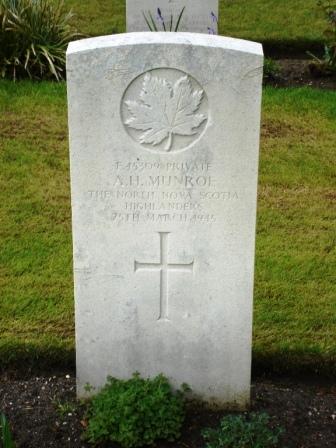
Grave of Austin Havelock Munroe in the Canadian War Cemetery in Groesbeek, The Netherlands. (Photo source: http://www.findagrave.com)
Thank you to Judie Klassen for helping Pieter in the search for family members, to the Guysborough Journal for publishing Pieter’s Letter to the Editor, and to Velda Myette for submitting a photo of her grand-uncle.
Thank you to all who have helped Pieter to find family members of North Novies killed in this battle. This concludes the Battle of Bienen series of postings.
If you have a story to tell, please let Pieter know. Email him at memorialtrail@gmail.com, comment on the blog, or tweet to @researchmemori1.
© Daria Valkenburg
….Previous stories about North Novies killed during the Battle of Bienen and buried in Groesbeek….
- Clifford BATEMAN: https://onthewarmemorialtrail.com/2023/03/16/on-the-war-memorial-trail-the-battle-of-bienen-part-4-the-wwii-soldier-from-a-small-fishing-village-in-newfoundland-who-lost-his-life-in-germany/
- John Joseph BOHON: https://onthewarmemorialtrail.com/2023/03/18/on-the-war-memorial-trail-the-battle-of-bienen-part-5-the-wwii-soldier-whose-parents-immigrated-to-save-their-family-from-war/
- Ralph Schurman BOULTER: https://onthewarmemorialtrail.com/2023/03/07/on-the-war-memorial-trail-the-battle-of-bienen-part-2-the-wwii-battle-drill-instructor-from-oleary/
- Charles ‘Marshall’ CARSON: https://onthewarmemorialtrail.com/2023/03/12/on-the-war-memorial-trail-the-battle-of-bienen-part-3-the-wwii-soldier-from-cape-tormentine-who-lost-his-life-in-germany/
- Harry William DOUCETTE: https://onthewarmemorialtrail.com/2021/02/09/on-the-war-memorial-trail-atlantic-canada-remembers-part-6/
- Marven Glenroy HARVEY: https://onthewarmemorialtrail.com/2023/03/26/on-the-war-memorial-trail-the-battle-of-bienen-part-8-the-wwii-soldier-with-7-brothers-who-also-served/
- Kitchener ‘Kitty’ LANGILLE:https://onthewarmemorialtrail.com/2023/03/21/on-the-war-memorial-trail-the-battle-of-bienen-part-6-the-wwii-soldier-from-new-glasgow-nicknamed-kitty/
- Marvin William MCGREGOR: https://onthewarmemorialtrail.com/2023/04/02/on-the-war-memorial-trail-the-battle-of-bienen-part-9-the-wwii-soldier-from-west-jeddore-killed-in-germany/
- Austin Havelock MUNROE, plus a list of the 39 soldiers: https://onthewarmemorialtrail.com/2022/11/29/on-the-war-memorial-trail-the-search-for-a-photo-of-austin-havelock-munroe-is-on-youtube/
- Wilfred ‘Willy’ Joseph POWER: https://onthewarmemorialtrail.com/2023/04/10/on-the-war-memorial-trail-the-battle-of-bienen-part-10-the-wwii-soldier-who-wanted-to-be-a-paratrooper/
- Louis Allan SEXTON: https://onthewarmemorialtrail.com/2023/03/23/on-the-war-memorial-trail-the-battle-of-bienen-part-7-the-wwii-soldier-from-quebec-who-has-never-been-forgotten-by-his-family/
- Edison Alexander SMITH: https://onthewarmemorialtrail.com/2023/03/04/on-the-war-memorial-trail-the-battle-of-bienen-part-1-the-wwii-soldier-whose-body-shielded-a-wounded-major/
- John Lewis WALLACE: https://onthewarmemorialtrail.com/2023/05/02/on-the-war-memorial-trail-the-battle-of-bienen-part-11-the-wwii-soldier-from-canning-who-lost-his-life-in-germany/
…Want to follow our research?….

If you are reading this posting, but aren’t following the blog, you are welcome to do so. Our blog address: https://onthewarmemorialtrail.com/.
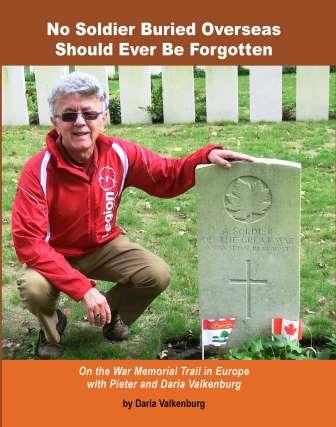 4 countries, 6 weeks, 7,000 km – an unforgettable war memorial journey in Europe…. Daria’s book ‘No Soldier Buried Overseas Should Ever Be Forgotten‘ is available in print and e-book formats. Net proceeds of book sales help support research costs and the cost of maintaining this blog. For more information see https://nosoldierforgotten.com/
You are also invited to subscribe to our YouTube Channel:On The War Memorial Trail With Pieter Valkenburg:https://www.youtube.com/channel/UCJ591TyjSheOR-Cb_Gs_5Kw.
Never miss a posting! Subscribe below to have each new story from the war memorial trail delivered to your inbox.

 On The War Memorial Trail Research Project........ with Pieter and Daria Valkenburg