On The War Memorial Trail…..Found – Engine Part From The Last Flight Of Halifax L9561

Politiek Farm on the left with the village of Wons on the right. (Photo courtesy of Remko de Jong)

July 29, 2025.  After visiting 4 cemeteries in Friesland on the last day of April during our 2025 European War Memorial Tour, we were hot and tired, and faced a long drive back to where we were staying.  (See https://onthewarmemorialtrail.com/2025/07/23/on-the-war-memorial-trail-our-visit-to-4-cemeteries-in-friesland/)

However, we continued on to the village of Bolsward, as Makkum resident Remko de Jong had been informed that part of the engine from the last flight of Halifax L9561, which had been found on the Politiek Farm in Wons, was being displayed at an exhibition in the De Tiid (The Times) Museum in Bolsward. 

Map shows the location of the Politiek farm, the crash site where Halifax L9561 came down, and location of the Memorial Panel placed in 2019 in Wons.  (Map courtesy of Remko de Jong)

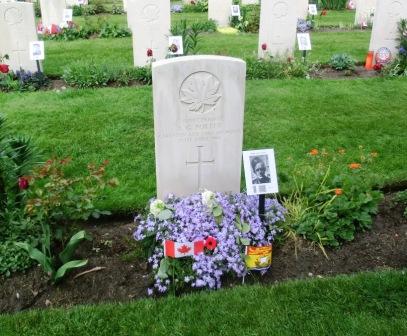
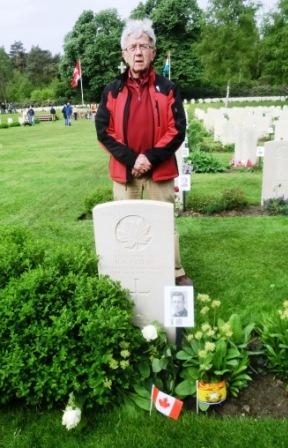
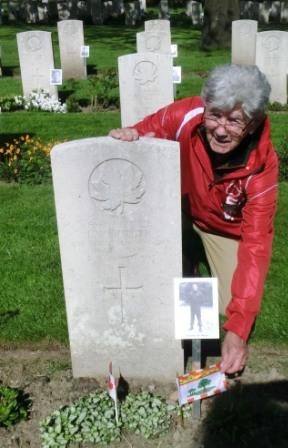
When we were at Harlingen General Cemetery earlier that day, we placed flags at the grave of RCAF Flight Sergeant Elmer Bagnall MUTTART of Cape Traverse, Prince Edward Island, who died on the night of October 12, 1941, at the age of 23, when the plane he was piloting was attacked by German nightfighters, and crashed near the village of Wons.  Elmer’s story has been well documented on this blog over the past years. (See https://onthewarmemorialtrail.com/2017/07/28/the-elmer-bagnall-muttart-story/)

The burning plane had crashed on the Politiek Farm, which we had visited in 2017. (See https://onthewarmemorialtrail.com/2018/02/07/on-the-war-memorial-trail-at-the-politiek-farm-in-wons/)

….Part of the engine from Halifax L9561 was found in 2023…

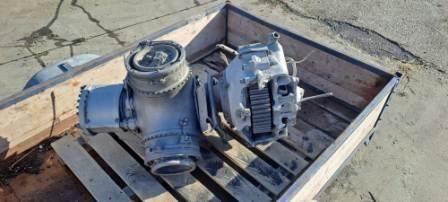
On October 22, 2023, Remko de Jong had sent photos, informing Pieter of a surprise discovery….. A piece of the engine from the last flight of Halifax L9561 had been found on the Politek farm in Wons. “… This is the front section attached to the main engine with the three propeller blades. … This engine was found five weeks ago on the land where Elmer Muttart’s Halifax crashed….I don’t yet know what will happen to it or where it will be displayed….”  (NOTE: Translation from the original Dutch)

Engine part from Halifax L9561 found on the Politiek farm in 2023.  (Photo courtesy of Remko de Jong)

On October 30, 2023, Douwe Drijver of the Missing Airmen Memorial Foundation informed Pieter that “Mr. Cor Politiek from Wons recently informed us that a part of the Halifax had been found….” After photos were received, they were able to “….determine what was pulled from the clay. It’s the transmission from the engine to one of the propellers. The three blades were attached to this….”  (NOTE: Translation from the original Dutch) 

Any excitement about the find was tempered by uncertainty as to what would happen next. “…. If these are found at a depth of more than 30 centimetres, they are considered archaeological finds. This means they must be reported to the municipality or province. Mr. Politiek has since arranged this. There is now a chance that the transmission will be confiscated. Because the municipality responded with understanding, I advised everyone to do business with them….”  (NOTE: 30 cm is 11.8 inches)

….The engine part was sent to a museum in Bolsward…

Remko explained that the part had been found while using a metal detector, and that it was “….buried 1 to ½ metres below the ground…” on the Politiek farm.  “…Because of the depth at which the engine part was found, it was deemed the property of the province and therefore had to be sent to the museum in Bolsward….”  (NOTE: Translation from the original Dutch)

We heard nothing more about the find until this year, when Remko was informed that the engine would be displayed in an air exhibition at the regional museum in Bolsward towards the end of April.  He made an appointment for the three of us to visit the museum and to meet with the curator, as it turned out that no one in the museum was aware of the heroism displayed by Elmer Muttart in saving his crew and the village of Wons …. at the expense of his own life. 

Before we left for our trip, we shared the short documentary we’d made about the events that led up to a memorial panel being placed in Wons…..and we brought newspaper articles for the museum to have in its collection. See ‘He Died That We Might Live …the story of Halifax L9561(S1E2)’ …..

….The engine part was not on display in Bolsward…

When we arrived at the De Tiid Museum in Bolsward, we were met with disappointment.  The Air Exhibition did not display the engine part, nor did we see the curator.  Instead, one of the archivists, Nena Huizinga, came and showed us the engine part – which was on the floor in a closet, and not on display.

Nena Huizinga with Remko de Jong and Pieter beside the engine part sitting on the floor of a closet in De Tiid Museum in Bolsward.  (Photo credit: Daria Valkenburg)

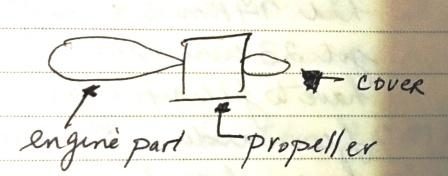
Sketch of the engine part from Halifax L9561, as drawn by Daria Valkenburg

Nena explained that she had watched the video, and was interested in the newspaper articles, as the story about Halifax L9561 was not one that the archivists at the museum were familiar with.  She didn’t know why the engine part was not part of the Air Exhibition, but said she would find out what happened.

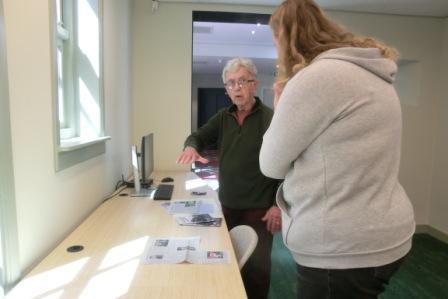
Pieter explaining to Nena Huizinga how the plane came down just outside Wons.  (Photo credit: Daria  Valkenburg)

….An explanation on why the engine part was not on display…

The next day, we received an email from Nena about the engine part and why it was sitting in a closet.  “….Today I asked the museum….why the engine block was not on display.” It had originally been part of the Air Exhibition, but “…apparently it was too heavy and the engine block had fallen through the museum furniture….” on which it had been displayed.  “….It was also leaking oil….”  (NOTE: Translation from the original Dutch) 

She went on to explain that “…next week they will look at it again, and hope to find a solution so that it can still be included in the exhibition….” Remko is actively following up on this story but unfortunately, almost 3 months after our visit, the engine part is still not on display. 

This concluded our visit to Friesland.  We’ll continue to share the highlights of our adventures on the 2025 European War Memorial Trail on our journey of remembrance. 

The research work continues for Pieter. If you have photos or information to share about soldiers buried in The Netherlands or Belgium, please email him at memorialtrail@gmail.com, or comment on the blog.    

© Daria Valkenburg

….Want to follow our research?…

If you are reading this posting, but aren’t following our research, you are welcome to do so.  Our blog address: https://onthewarmemorialtrail.com/

4 countries, 6 weeks, 7,000 km – an unforgettable war memorial journey in Europe…. Daria’s book ‘No Soldier Buried Overseas Should Ever Be Forgotten‘ is available in print and e-book formats.  Net proceeds of book sales help support research costs and the cost of maintaining this blog. For more information see https://nosoldierforgotten.com/

Subscribe to our YouTube Channel: On The War Memorial Trail With Pieter Valkenburg: https://www.youtube.com/channel/UCJ591TyjSheOR-Cb_Gs_5Kw

Never miss a posting!  Subscribe below to have each new story from the war memorial trail delivered to your inbox.

On The War Memorial Trail….2025 Faces of Groesbeek Exhibition Part 2: The Soldiers From Prince Edward Island

June 26, 2025. The 2025 Faces Of Groesbeek Exhibition, which ran from April 26 to May 18, 2025 at the Canadian War Cemetery in Groesbeek, featured photos of soldiers that were placed by their graves. Photos are printed onto an aluminum backing, making them impervious to rain, and reusable. This year, 80% of the graves had a photo of the soldier.

The many volunteers from Faces To Graves Foundation Groesbeek, of which Alice van Bekkum is the Chair, worked tirelessly to make this exhibition possible.  They also organized the Liberation Day commemoration events. 

Pieter has been involved in finding photos of Canadians who are buried in all three Canadian War Cemeteries in The Netherlands since 2014, with many of their stories told on this blog. 

We were in The Netherlands and Belgium for the 80th Anniversary of Liberation Commemoration events, and placed flags at the graves of 383 soldiers in 14 cemeteries. 120 of the graves visited were in the Canadian War Cemetery in Groesbeek alone, including the graves of 17 soldiers from Prince Edward Island. (See https://onthewarmemorialtrail.com/2025/06/23/on-the-war-memorial-trail-2025-faces-of-groesbeek-exhibition-part-1-flags-placed-at-120-graves/)

5 Soldiers From Prince Edward Island Commemorated…

In Part 1, an overview of our day of flag placing at 120 graves was provided.  Now, in Part 2, the graves and photos of five soldiers from Prince Edward Island, whose stories have previously been told, are featured.

Pieter by the grave of Lawrence William Bulger.  (Photo credit: Daria Valkenburg)

Lawrence William BULGER from Portage was serving with the North Nova Scotia Highlanders when he was killed during the Battle of Bienen in Germany on March 25, 1945. He was one of several stretcher bearers who lost their lives that day, killed by machine gun fire while attending to the wounded on the battlefield.  You can read his story at https://onthewarmemorialtrail.com/2024/08/19/on-the-war-memorial-trail-the-bulger-brothers-part-2-the-wwii-stretcher-bearer-from-foxley-river-killed-during-the-battle-of-bienen/

Grave of John ‘Weston’ Campbell.  (Photo credit: Daria Valkenburg)

John ‘Weston’ CAMPBELL from Clermont was killed while in command of ‘B’ Company of the North Nova Scotia Highlanders during Operation Veritable in Germany on February 14, 1945. You can read his story at https://onthewarmemorialtrail.com/2024/09/30/on-the-war-memorial-trail-the-wwii-soldier-from-clermont-killed-during-operation-veritable/

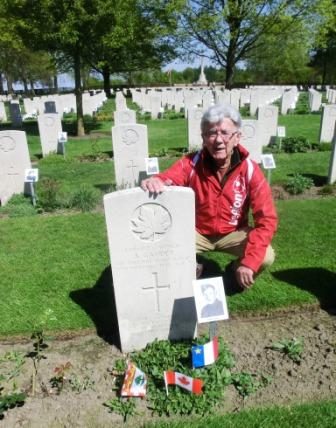
Pieter by the grave of Arthur Gaudet.  (Photo credit: Daria Valkenburg)

Arthur GAUDET from 5 Pointe, near Mount Carmel, was wounded during Operation Blockbuster in Germany on February 26, 1945, while serving with Les Fusiliers Mont-Royal, and died later that day.  He was two days short of his 21st birthday!  You can read his story at https://onthewarmemorialtrail.com/2025/02/12/on-the-war-memorial-trail-the-wwii-soldier-from-prince-edward-island-who-lost-his-life-in-germany-two-days-before-his-21st-birthday/

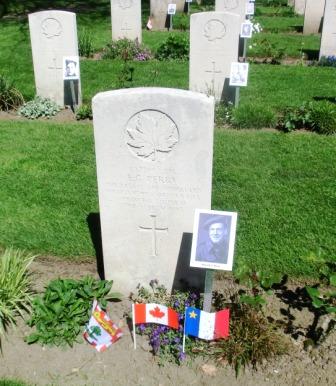
Grave of Edward Gabriel Perry.  (Photo credit: Daria Valkenburg)

Edward Gabriel PERRY from St Nicholas lost his life after being fatally wounded during the Battle of Hochwald Gap in Germany on March 1, 1945, while serving with the Argyll & Sutherland Highlanders (Princess Louise’s).  He was rushed to hospital but died in the early morning of March 2, 1945. You can read his story at https://onthewarmemorialtrail.com/2024/07/06/on-the-war-memorial-trail-the-wwii-soldier-from-st-nicholas-who-lost-his-life-during-the-battle-of-hochwald-gap/

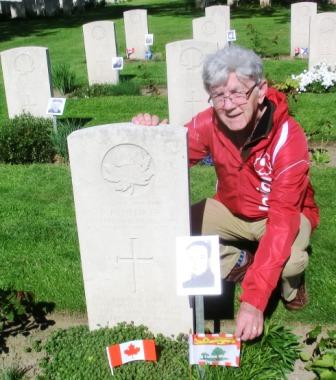
Pieter by the grave of Ralph Kenneth Silliker.  (Photo credit: Daria Valkenburg)

Ralph Kenneth SILLIKER from O’Leary was killed in action during Operation Churchill in Germany on March 2, 1945, while serving with the Lake Superior Regiment (Motor).  He was killed as his Kangaroo (armoured personnel carrier) tried to lunge across an enemy trench. You can read his story at https://onthewarmemorialtrail.com/2024/04/18/on-the-war-memorial-trail-the-wwii-soldier-from-oleary-who-lost-his-life-during-operation-churchill/

….All of the flags placed at graves were donated…

All of the flags placed at graves were donated.  For the flags placed at the graves of Islanders, our thanks go to:  Alan Waddell, Constituent Assistant, on behalf of Heath MacDonald, MP for Malpeque, for the Canadian flags. PEI flags were provided by Matt MacFarlane, MLA for District 19, Borden-Kinkora.  La Société acadienne de Clare in Nova Scotia donated Acadian flags.

May we never forget the sacrifices made by these soldiers.  Perhaps all of the known graves of Canadians buried in Groesbeek will have a photo displayed by their grave at the next Faces Of Groesbeek Exhibition in 2027.

In Part 3, the graves and photos of soldiers from Alberta, Manitoba, and Quebec, whose stories have previously been told, will be featured.

If you have a photo of a soldier buried at the Canadian War Cemetery in Groesbeek or one of the other cemeteries in The Netherlands, Pieter encourages you to email him at memorialtrail@gmail.com, or comment on the blog.

….Want to follow our research?…

If you are reading this posting, but aren’t following our research, you are welcome to do so.  Our blog address: https://onthewarmemorialtrail.com/

4 countries, 6 weeks, 7,000 km – an unforgettable war memorial journey in Europe…. Daria’s book ‘No Soldier Buried Overseas Should Ever Be Forgotten‘ is available in print and e-book formats.  Net proceeds of book sales help support research costs and the cost of maintaining this blog. For more information see https://nosoldierforgotten.com/

Subscribe to our YouTube Channel: On The War Memorial Trail With Pieter Valkenburg: https://www.youtube.com/channel/UCJ591TyjSheOR-Cb_Gs_5Kw

Never miss a posting!  Subscribe below to have each new story from the war memorial trail delivered to your inbox.

On The War Memorial Trail….Pieter and Daria Honoured By Faces To Graves Groesbeek Foundation

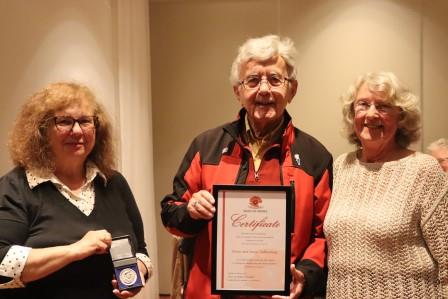
Daria and Pieter Valkenburg hold the Faces To Graves Coin and Certificate that was presented to them by Alice van Bekkum, Chair of Faces To Graves Groesbeek Foundation.  (Photo credit: Kim Huvenaars)

May 30, 2025.  On May 24, 2025, we were honoured by the Faces To Graves Groesbeek Foundation for their research into Canadian soldiers buried at the Canadian War Cemetery in Groesbeek, The Netherlands, finding families and sharing photos of over 100 of the soldiers.  We were presented with a Certificate and a Faces To Graves ‘coin’ by Alice van Bekkum, Chair of Faces To Graves Groesbeek Foundation.

Faces To Graves Groesbeek ‘coin’.

The image used on the ‘coin’ is that of Major Willard Bruce PARKER, born in Rothwell, New Brunswick, who was serving with the North Shore (New Brunswick) Regiment when he lost his life on February 26, 1945, aged 29.

….Flags placed at 383 graves visited at 14 cemeteries.…

We recently returned from Europe, where Pieter placed flags at 383 graves in 14 cemeteries in The Netherlands and Belgium. 

We attended the commemoration service for the 80th Anniversary of the Liberation of The Netherlands at the Canadian War Cemetery in Groesbeek. 

As well, we visited several memorials in The Netherlands and Germany, attended the grave re-dedication ceremony of a WWII soldier from Ontario, and, with the help of GPS coordinates on a trench map, we found the location of the original burial of a WWI soldier from Prince Edward Island who was killed during the Battle of Passchendaele in October 1917. 

Over the next several postings, we’ll share the highlights of our adventures on the 2025 European War Memorial Trail.

Text of Certificate presented to the Valkenburgs.

Thank you to Faces Of Graves Groesbeek Foundation for surprising us with this honour.  If you have photos or information to share about soldiers buried in Groesbeek, please email Pieter at memorialtrail@gmail.com, or comment on the blog.    

© Daria Valkenburg

….Want to follow our research?…

If you are reading this posting, but aren’t following our research, you are welcome to do so.  Our blog address: https://onthewarmemorialtrail.com/

4 countries, 6 weeks, 7,000 km – an unforgettable war memorial journey in Europe…. Daria’s book ‘No Soldier Buried Overseas Should Ever Be Forgotten‘ is available in print and e-book formats.  Net proceeds of book sales help support research costs and the cost of maintaining this blog. For more information see https://nosoldierforgotten.com/

Subscribe to our YouTube Channel: On The War Memorial Trail With Pieter Valkenburg: https://www.youtube.com/channel/UCJ591TyjSheOR-Cb_Gs_5Kw

Never miss a posting!  Subscribe below to have each new story from the war memorial trail delivered to your inbox.

On The War Memorial Trail….. The POW Who Raised Horses In PEI Part 3….Three Years In A DP Camp Before Finally Finding Freedom

Nikola Ostojic. (Photo courtesy of the Nikola Ostojic Family.  Photo colourization by Pieter Valkenburg)

February 28, 2025. In Part 1, the active WWI and WWII military service of Croatian-born Nikola ‘Nick’ OSTOJIC, grandfather of Bedeque resident Liz Hubert, came to a halt when the Royal Yugoslav Army surrendered on April 17, 1941 and Nikola became a prisoner of war in Germany. (See https://onthewarmemorialtrail.com/2025/02/20/on-the-war-memorial-trail-the-pow-who-raised-horses-in-pei-part-1-the-serbian-colonel-who-was-a-pow-in-oflag-xiii-b/)

In Part 2, Nikola spent 4 years in a German POW camp until he was among the POWs liberated on April 6, 1945 by American troops. (See https://onthewarmemorialtrail.com/2025/02/23/on-the-war-memorial-trail-the-pow-who-raised-horses-in-pei-part-2-four-years-as-a-pow-in-oflag-xiii-b/)

Now, in Part 3, Nikola’s story concludes with the long road ahead of him before finally finding freedom and a new life in Prince Edward Island, and later Ontario, in Canada. 

….Nikola became a Displaced Person in Austria….

After 4 years in a POW camp, Nikola had to make a decision once he was liberated – whether to return to Serbia – now part of Yugoslavia and under Communist rule, or refuse repatriation.  Nikola refused to be repatriated. 

Map shows location of Hammelburg where Oflag XIII B was located, Moosburg, where the liberated POWs marched towards, and St Johann im Pongau, where Nikola lived in a DP camp.  (Map source: Google maps)

After being liberated from the POW Camp Oflag XIII B on April 6, 1945, it appears that he went his own way, as many former POWs did.  According to a report on the Liberation of Stalag 7A in Moosburg, written by Col. Paul Goode, the Senior American Officer at Oflag XIII B, after liberation, the group of freed POWs “….stayed at Hammelburg about a week, and then was marched to Stalag A, Moosburg.  It took 15 days to cover about 90 miles. There was no particular attempt at control, and escape was extremely easy, and many officers did escape, and many more just wandered off to live in the country and were ultimately picked up by the SS…

Liz believed that Nikola was among the officers who escaped “….with another officer and was then taken by the British Army….”  No record is left of what his plans were, but perhaps he had intentions of travelling towards Serbia to find his family.  If that was the case, he never got there.

On June 23, 1945 he entered Austria, and 2 days later became a resident of the UNDP-led Camp XVIII C in Markt-Pongau, now known as Sankt Johann im Pongau, a small town south of Salzburg.  According to the information provided when Nikola entered the camp, he spoke Serbo-Croatian, English, German, and Russian. 

As a displaced persons camp in the American Zone, Pongau had a large number of Jewish refugees, as well as former POWs, like Nikola, who didn’t want to be repatriated.  During WWII, it had been Stalag 18 C, a prisoner of war camp. 

The Markt-Pongau POW Camp in May 1945. (Photo source: http://www.stalag18a.org)

After WWII ended, the former Nazi territories had been divided into British, American, and French Zones.  (See https://en.wikipedia.org/wiki/Allied-occupied_Austria)

Post WWII Austria Occupation Zones. Pongau fell under Salzburg.  (Map source:  https://commons.wikimedia.org/w/index.php?curid=95563608)

….Nikola left Continental Europe….

Nikola remained in the camp in Pongau until April 21, 1948, when he was deemed eligible to immigrate to the United Kingdom.

Nikola arrived in Halifax aboard the ‘Neptunia’.  (Photo source: www. http://ssmaritime.com)

On May 24, 1952 he immigrated again, leaving Southampton, England aboard the Greek Line T.S.S. ‘Neptunia’, and arriving in Halifax, Nova Scotia, Canada.  He was 55 years old. 

He most likely had been sponsored by Pero Bulat, who had been born in the same province of Banija, but immigrated to Canada in 1926, and became the publisher of ‘The Voice of Canadian Serbs’. On April 22, 1947, he’d visited Ottawa with Bishop Dionisije Milivojević to ask Canadian authorities to permit 10,000 out of the 80,000 displaced Serbs in Western Europe to enter Canada.  (See https://wikitia.com/wiki/Pero_Bulat)

….Nikola found peace of mind while raising horses….

Nikola (identified by red arrow) in St Peters Bay, Prince Edward Island.  (Photo courtesy of the Nikola Ostojic Family)

Once in Canada, Nikola moved to Prince Edward Island, where he settled on a farm in St Peters Bay, and raised horses. Liz explained that the quieter Island life and working with horses helped him find peace of mind.

He had never forgotten his wife and daughter.  He had “connected with them only after he arrived to England. Once he got to PEI he sent for them. They traveled via boat to Canada….” said Liz.  “….My mother said they landed in Montreal by boat…

While Nikola found peace of mind on the Island, his wife Marija found it too quiet. The family moved to Windsor, Ontario, where Pero Bulat lived.  “In 1962 he was in Windsor.  Pero was very influential and a great supporter of my grandfather…

Liz recalled that Nikola worked as a bartender into his early 70s, probably at Europe Tavern, one of the many businesses owned by Pero Bulat. Unfortunately, Nikola’s PTSD never left him.  “…Both my grandmother and mother said that his screaming at night never ceased….” 

Nikola died on September 17, 1972 at Hotel Dieu Hospital in Windsor, Ontario, aged 76, and is buried in the Windsor Memorial Gardens.  His 1972 obituary in the ‘Voice of Canadian Serbs’ summed up how so many felt about Nikola.  “….Everyone who knew him, thought that his zest for life, vitality, and physical endurance and strength were invincibleAt the cemetery, final words to the Colonel were given by the famous Nationalist Pero Bulat with heartwarming words of the man who arrived in Canada and his lifework: ‘this is how we lost another unbeatable national fighter’….

….Reflections from Nikola’s granddaughter….

Daria (standing) with Liz Hubert. (Photo credit: Pieter Valkenburg)

Researching the story of Nikola Ostojic was done with the active assistance of Liz Hubert and her brother Alexander.  Liz’s reaction was similar to that of what Pieter and I experienced when we researched my father’s WWII story.  “It was so difficult to see, it’s so real now I feel like I’m living it….” 

As we came to the end of Nikola’s story, Liz expressed her “…reflecting thoughts on this experience with my grandfather….As a child, the towering presence of my Grandfather shone over me like a guiding beacon, inspiring awe and reverence. Throughout this process of discovery of the man he truly was, as an adult, I came to appreciate the complexity, struggles, triumphs, and passions of his life. Understanding him allowed me to understand myself, instilling a sense of responsibility, empathy, and gratitude…” 

Thank you to Liz Hubert for sharing photos and information on her grandfather, and translating his obituary into English. If you have a story or photo to share, please contact Pieter at memorialtrail@gmail.com or comment on the blog. 

© Daria Valkenburg

 ….Previous stories about WWII POWs….

To read previous stories about WWII POWs see:

 ….Want to follow our research?….

If you are reading this posting, but aren’t following our research, you are welcome to do so.  Our blog address: https://onthewarmemorialtrail.com/

4 countries, 6 weeks, 7,000 km – an unforgettable war memorial journey in Europe…. Daria’s book ‘No Soldier Buried Overseas Should Ever Be Forgotten‘ is available in print and e-book formats.  Net proceeds of book sales help support research costs and the cost of maintaining this blog. For more information see https://nosoldierforgotten.com/

You are also invited to subscribe to our YouTube Channel: On The War Memorial Trail With Pieter Valkenburg: https://www.youtube.com/channel/UCJ591TyjSheOR-Cb_Gs_5Kw

Never miss a posting!  Subscribe below to have each new story from the war memorial trail delivered to your inbox.

On The War Memorial Trail….. The POW Who Raised Horses In PEI Part 2….Four Years As A POW In Oflag XIII B

Daria (standing) with Liz Hubert. (Photo credit: Pieter Valkenburg)

February 23, 2025. In Part 1, the active WWI and WWII military service of Croatian-born Nikola ‘Nick’ OSTOJIC, grandfather of Bedeque resident Liz Hubert, ended when the Royal Yugoslav Army surrendered on April 17, 1941. Nikola became a prisoner of war in Germany and had a long road ahead of him before finally finding freedom and a new life in Prince Edward Island, and later Ontario, in Canada. (See https://onthewarmemorialtrail.com/2025/02/20/on-the-war-memorial-trail-the-pow-who-raised-horses-in-pei-part-1-the-serbian-colonel-who-was-a-pow-in-oflag-xiii-b/)

Now, in Part 2, Nikola spent 4 years in a prisoner of war (POW) camp until he was among the POWs liberated on April 6, 1945 by American troops.

Nikola Ostojic. (Photo courtesy of the Nikola Ostojic Family.  Photo colourization by Pieter Valkenburg)

 ….Nikola was a POW in Oflag XIII B in Germany….

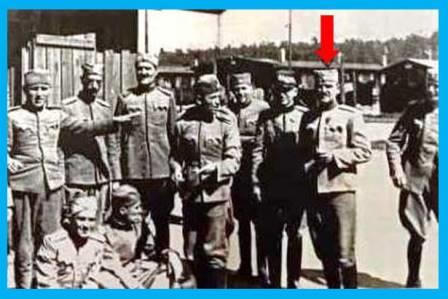
Nikola (identified by red arrow) with a group of fellow POWs at the Oflag in Nuremberg. (Photo source: https://krijgsgevangen.nl)

Oflag XIII B, the prisoner of war camp where Nikola spent the remainder of the war years, was originally in the Langwasser district of Nuremberg, Germany.

Oflag XIII B in Nuremberg, Germany, with barracks on either side of the road. (Photo source: https://krijgsgevangen.nl)

Conditions inside the Oflag were not luxurious, as can be seen in the photo below from inside one of the barracks.  The bunks were stacked 3 high, there was a small stove, and a wooden table. 

Inside one of the barracks in Oflag XIII B in Nuremberg, Germany.  (Photo source: https://krijgsgevangen.nl)

….Families of POWs generally received notification….

Liz explained that Nikola’s wife never knew that her husband was a POW.  “…She was told he was dead!…” It may be that she had received word that he was ‘missing and presumed dead’ and never got an update.  Perhaps, given that his homeland was occupied, Nikola did not feel it safe to contact his family.

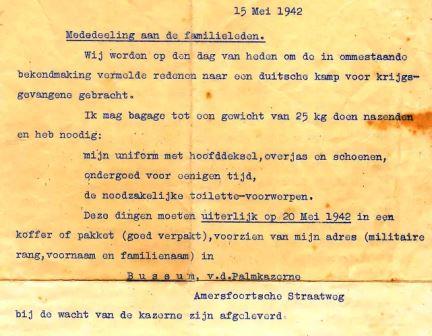
Normally, families of POWs received a notice, in the language of the prisoner’s nationality, informing that they had been captured, and prisoners were allowed to write to their families.  As an example, Maria Wilhelmina Siersema-van Erp, the wife of Klaas “Niek” Siersema, a Dutch POW in the same Oflag as Nikola, received several notices from her husband, including one dated May 15, 1942.   

The front side of this Dutch notice provided instructions of what should be sent to her husband, including his uniform, hat, overcoat, shoes, underwear, etc., the weight limit accepted, the date it should be sent by, and how to address the parcel. The letter was signed by the prisoner (not shown in the sample below).

Notice to the family of Klaas Siersema on what would be allowed in a package to be sent to him. (Source: https://digitalkinblog.wordpress.com)

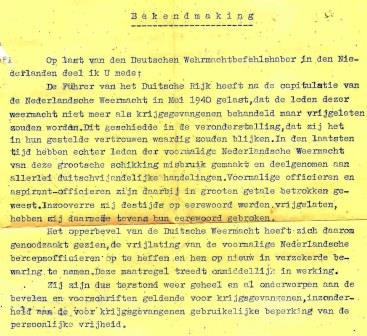
On the back side of the notice was an announcement that the Fuhrer of the German Empire had previously approved the release of officers in captivity, but that they were again being taken into custody because of their more recent actions against Nazi efforts.

Announcement with the justification for not releasing captive officers. (Source: https://digitalkinblog.wordpress.com)

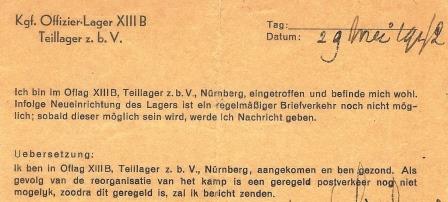
A May 29, 1942 postcard from Klaas Siersema, written in German and Dutch, informed his family that he was a POW at the camp, that he was in good health, and advised that mail was not being received on a regular basis due to a camp reorganization. 

May 29, 1942 postcard from Klaas Siersema advising that he was a POW. (Source: https://digitalkinblog.wordpress.com)

…. Oflag XIII B moved from Nuremberg to Hammelburg in April 1943….

Nikola (identified by red arrow) with a group of fellow POWs. (Photo courtesy of the Nikola Ostojic Family.

In April 1943, about 3,000 officers, many who had been, like Nikola, members of the Yugoslavian General Staff, were moved to a site 3 km (1.9 miles) south of the town of Hammelburg, just north of Schweinfurt in Bavaria, Germany.  (See https://en.wikipedia.org/wiki/Oflag_XIII-B)

Life in the POW camp was difficult, especially given the Nikola was 44 years old at the time of his imprisonment, and not a young man in his early 20s.  His 1972 obituary in the ‘Voice of Canadian Serbs’ noted that he “endured severe abuse that led to a physical and psychological breakdown. …

A March 25, 1945 report on conditions in the camp, prepared after a debriefing of the Senior American Officer at the camp, described the food allowed to prisoners: ….The German ration…consisted of coffee for breakfast, soup for lunch, made from barley, oatmeal, meat stock or dried vegetables, and at night the POWs were fed boiled potatoes and 1/10th of a loaf of bread, with a bit of margarine. They received a weekly issue of 4 or 5 tablespoons of sugar, and a small amount of jam once a week.  They were not issued any Red Cross parcels….

…. Nikola was among the POWs liberated on April 6, 1945….

On April 6, 1945, Nikola was one of 1,300 prisoners of war liberated by the US Army’s 14th Armored Division, 19th Armored Infantry battalion, and tanks from the 47th Medium Tank Battalion, Combat Command B (CCB). 

As troops approached the Oflag, they came under sporadic fire from German machine guns. Infantry from of the 19th found the prison gates and forced an opening into the Oflag where they found a large contingent of Serbian and American officer prisoners.

You can watch a short YouTube video on the liberation here: 

While Nikola had suffered in the POW camp, Nikola’s wife and daughter, who remained at home in Serbia, found themselves in peril when Hungarian troops came to the farm in 1943, raided the farm of supplies, and abused his wife.  It wasn’t until 1945 that they received a letter advising that Nikola had survived the war years.

After 4 years in a POW camp, Nikola had to make a decision once he was liberated – whether to return to Serbia, now part of Yugoslavia and under Communist rule – or refuse repatriation.  In Part 3, Nikola’s story continues as, in a bid for freedom, he next ended up in a displaced persons camp in Austria, before finally immigrating to Canada.

Thank you to Liz Hubert for sharing photos and information on her grandfather, and translating his obituary into English. If you have a story or photo to share, please contact Pieter at memorialtrail@gmail.com or comment on the blog. 

© Daria Valkenburg

….Want to follow our research?….

If you are reading this posting, but aren’t following our research, you are welcome to do so.  Our blog address: https://onthewarmemorialtrail.com/

4 countries, 6 weeks, 7,000 km – an unforgettable war memorial journey in Europe…. Daria’s book ‘No Soldier Buried Overseas Should Ever Be Forgotten‘ is available in print and e-book formats.  Net proceeds of book sales help support research costs and the cost of maintaining this blog. For more information see https://nosoldierforgotten.com/

You are also invited to subscribe to our YouTube Channel: On The War Memorial Trail With Pieter Valkenburg: https://www.youtube.com/channel/UCJ591TyjSheOR-Cb_Gs_5Kw

Never miss a posting!  Subscribe below to have each new story from the war memorial trail delivered to your inbox.

On The War Memorial Trail…..The POW Who Raised Horses In PEI Part 1….The Serbian Colonel Who Was A POW In Oflag XIII B

February 20, 2025. Living on Prince Edward Island, it’s unusual to not only meet someone who has a shared Eastern European heritage, but whose family history was impacted by WWII. My father was taken at age 14 from his home in Western Ukraine to work in Germany and over several years, Pieter and I ‘walked in his footsteps’ in an attempt to understand what he experienced, and documented our findings in a 4 part series that saw him go from Germany to England and then finally to Canada:

My father was in Germany at the same time as Nikola ‘Nick’ OSTOJIC, grandfather of Bedeque resident Liz Hubert. While my teenaged father was a labourer, Liz’s grandfather was a prisoner of war.  After WWII ended, both ended up in displaced persons’ camps before finally finding freedom and a new life in Canada….but neither man was ever freed of the memories of what they had experienced.  

Daria (standing) with Liz Hubert. (Photo credit: Pieter Valkenburg)

….Nikola was born in Croatia….

Zirovac (indicated by red marker) is in the Banija region of Croatia, not far from Bosnia and Herzegovina border. (Map source: DuckDuckGo)

Born in the Serbian village of Zirovac, in what is now Croatia, but was then part of Austria-Hungary, on November 1, 1896, Nikola was the son of Mladen and Maria (nee Momic) Ostojic.  His father was an Orthodox bishop and a senator in pre-WWI Croatia.  According to Nikola’s 1972 obituary in the publication ‘Voice of Canadian Serbs’, in a family that had “…produced priests for 300 years…Nikola was supposed to continue the episcopal tradition, but he loved medicine….” (Translation from the original Russian by Liz Hubert)

The oldest child, with 9 younger sisters, Nikola became the head of the family after his father died when he was 18, and his mother died a year later.  Liz proudly noted that her grandfather “…sent money home to his sisters after he joined the army…” and made sure that “…all of his sisters were educated…

….Nikola’s medical school training was interrupted by WWI….

The ‘Voice of Canadian Serbs’ obituary noted that 19 year old Nikola’s medical school training was interrupted in 1915 when he was “mobilized by the Austro-Hungarian military…” and sent to a “…school for Officers in the Reserves. Upon completion of training, he was immediately sent in 1916 to the Russian front.  He deserted the Austro-Hungarian Army in Russia and joined the volunteer corps in Odessa, destined for the Salonika Front….

Serbia had resisted the attacks of the Austro-Hungarian Army in the opening months of the First World War. But, in October 1915, the combined forces of Austria, Germany, and Bulgaria overwhelmed her armies and conquered the country.

As Serbia was an ally of Britain, a multi-national Allied force, under French command, with French, Serbian, British, Russian, and Italian troops, fought against the Bulgarians and their allies in what became known as The Salonika Campaign.

In 1918, when Nikola arrived in Salonika, he was “….deployed to the battle front. As a Major in the 6th division of the Drina Infantry, he participated in the breakthrough of the Salonika front, freeing his homeland…” 

Liz explained that Nikola received the Medal of Honour after being wounded during the rescue of soldiers trapped in trenches.   

The Salonika Campaign ended with an armistice signed by Bulgaria on September 28, 1918, and resulted in the defeat of Bulgaria, the liberation of Serbia and strategic exposure of Austria and Turkey. (For more information on The Salonika Campaign, see https://www.nam.ac.uk/explore/salonika-campaign)

Salonika, today known as Thessaloniki, is a port in the northern Greek region of Macedonia, and is a city I’d visited many decades ago after I graduated from university.

….Nikola remained in the military post WWI….

Nikola Ostojic. (Photo courtesy of the Nikola Ostojic Family.  Photo colourization by Pieter Valkenburg)

After WWI ended, Nikola remained in the military, in the Royal Yugoslav Army, which existed from the establishment of Yugoslavia in December 1918 until its surrender on April 17, 1941 to an invading force of Germans, Italians, and Hungarians. (See https://en.wikipedia.org/wiki/Royal_Yugoslav_Army#April_1941_Campaign)

Nikola Ostojic and Marija Lovas on their wedding day in 1938.  (Photo courtesy of the Nikola Ostojic Family)

Before that fateful day, Nikola had married Marija Lovas, who he’d met at a dance, in February 1938. Their daughter Radmilai, Liz’s mother, was born on July 28, 1939.  The family lived on a farm in Backi Petrovic in Serbia, near the Hungarian border.  Liz explained that the farm that Nikola grew up on had been sold prior to WWII after his sisters were no longer living there.

At the time of the surrender of the Royal Yugoslav Army, Nikola, now a Colonel, was, per the ‘Voice of Canadian Serbs’ obituary, on the “…main General Staff in Belgrade where he was serving as the head of a classified Intelligence unit…

….Nikola became a POW and was sent to Oflag XIII B….

Liz’s research unveiled a Red Cross document summarizing what happened to Nikola when the Royal Yugoslav Army surrendered.  “….The Red Cross filed my Grandfather as captured in Sarajevo on April 17, 1941 and sent to OFLAG XIII B, POW # 99104. At this time he ranked as Pukovnik, which translated into Colonel…. He was captured by the German-Italian Military in Sarajevo…” 

An Oflag was a Prisoner of War (POW) Camp for officers, as opposed to a Stalag, which held mostly enlisted men. Oflag XIII B, opened for Yugoslav officers, was originally in the Langwasser district of Nuremberg.

Oflag XIII B in Nuremberg, Germany. (Photo source: https://krijgsgevangen.nl)

In April 1943, about 3,000 officers, many who had been, like Nikola, members of the Yugoslavian General Staff, were moved to a site 3 km (1.9 miles) south of the town of Hammelburg, just north of Schweinfurt in Bavaria, Germany. (See https://en.wikipedia.org/wiki/Oflag_XIII-B)

Life in the POW camp was difficult, and one that Nikola endured for 4 years.  In Part 2, Nikola’s story continues with his time in the POW camp until the camp was liberated on April 6, 1945 by American troops.

Thank you to Liz Hubert for sharing photos and information on her grandfather, and translating his obituary into English.  If you have a story or photo to share, please contact Pieter at memorialtrail@gmail.com or comment on the blog. 

© Daria Valkenburg

….Want to follow our research?….

If you are reading this posting, but aren’t following our research, you are welcome to do so.  Our blog address: https://onthewarmemorialtrail.com/

4 countries, 6 weeks, 7,000 km – an unforgettable war memorial journey in Europe…. Daria’s book ‘No Soldier Buried Overseas Should Ever Be Forgotten‘ is available in print and e-book formats.  Net proceeds of book sales help support research costs and the cost of maintaining this blog. For more information see https://nosoldierforgotten.com/

You are also invited to subscribe to our YouTube Channel: On The War Memorial Trail With Pieter Valkenburg: https://www.youtube.com/channel/UCJ591TyjSheOR-Cb_Gs_5Kw

Never miss a posting!  Subscribe below to have each new story from the war memorial trail delivered to your inbox.

On The War Memorial Trail…..The WWII Soldier From Prince Edward Island Who Lost His Life In Germany Two Days Before His 21st Birthday

February 12, 2025. Once you visit a Canadian War Cemetery and place down a flag by the grave of a soldier from the province where you live, it stays with you, and makes you wonder about the young man who is buried there. 

In 2017, when we visited the Canadian War Cemetery in Groesbeek, The Netherlands, with our friends Ad and Noor Scheepers, we had a list of soldiers from Prince Edward Island buried there, but only knew the story of one, George Preston SMITH, whose name is listed on the Cenotaph outside the Borden-Carleton Legion.  (See On the War Memorial Trail ….. At The Canadian War Cemetery in Groesbeek and On the War Memorial Trail ….. PEI Soldiers Buried In The Canadian War Cemetery in Groesbeek and https://onthewarmemorialtrail.com/2018/03/21/another-photo-for-wwii-soldier-george-preston-smith/)

Ad and Noor Scheepers with Pieter (right) by the grave of Arthur Gaudet at the Canadian War Cemetery in Groesbeek, The Netherlands.  (Photo credit: Daria Valkenburg)

Since then, Pieter has researched and we’ve told the stories of 12 more Islanders buried in that Dutch cemetery. Our 14th story is about Arthur GAUDET of Mount Carmel, Prince Edward Island.  While Arthur had been on the list of Islanders buried in Groesbeek, he was not on the cemetery’s photo wish list as they had a photo of him. 

15 Pointe is a cape not far from Mount Carmel, Prince Edward Island.  (Map source: https://www.geodata.us/canada_names_maps)

Born February 28, 1924 in 15 Pointe, near Mount Carmel, Prince Edward Island, Arthur was the son of Joseph Stanley and Mary Jacqueline Gaudet.  He was one of 10 children, 8 of them still alive at the time that he enlisted at the No. 5 District Depot in Quebec City, Quebec on July 24, 1942.  His three older brothers were also in the Canadian Army.
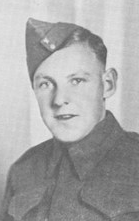
Arthur Gaudet. (Photo courtesy of Alice van Bekkum, Chair of the Faces To Graves Foundation Groesbeek)

According to his Personnel Selection Record, Arthur spoke English, not French, and had completed Grade 9.  He was working as a labourer for the PEI Bag Company. (See https://atlanticbusinessmagazine.ca/web-exclusives/89-years-in-the-bag-and-counting-for-p-e-i-bag-company/)

After completing his basic training, Arthur was sent to No. 22 Canadian Army Educational (Basic) Training Centre in North Bay, Ontario on September 19, 1942.

He remained there until December 2, 1942, when he was transferred to A1 Canadian Artillery Training Centre (CATC) in Camp Petawawa, Ontario, for training as a gunner.  While still at A1 CATC, he qualified as a Driver i/c Class III wheeled vehicles on January 29, 1943. (The term ‘Driver i/c’ refers to ‘Driver, internal combustion’.  Class III meant he was qualified to drive heavy trucks and armoured cars, but not tanks.)

On February 8, 1943, he was granted embarkation leave until February 21, 1943, the last chance he would have to see his family before going overseas.

….Arthur left Canada for overseas service….

On March 24, 1943, Arthur left Canada for the United Kingdom.  Upon arriving on March 31, 1943 he was assigned to No. 3 Canadian Artillery Reinforcement Unit (CARU). 

On June 18, 1943, Arthur was transferred to No. 3 Light Anti-Aircraft Regiment, Royal Canadian Artillery for Light Machine-Gun and Rifle training, and undertook various Tests of Elementary Training (TOET).

Arthur was allocated to the X-4 Reinforcement List of the Canadian Infantry Corps (CIC), part of the 10th Battalion, 21st Army Group, on June 21, 1944, in preparation for going to North West Europe.

….Arthur was transferred to Les Fusiliers Mont-Royal….
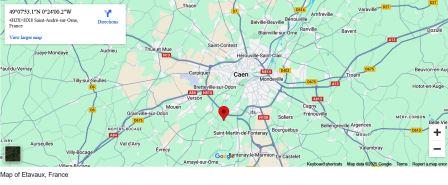
Arthur Gaudet joined Les Fusiliers Mont-Royal near Etavaux, France, indicated by the large red marker.  (Map source: Google maps)

On July 22, 1944 he left the United Kingdom for France, arriving a day later. On July 25, 1944, he was transferred to Les Fusiliers Mont-Royal, joining them in an area behind Etavaux in Normandy, France.

The Regiment remained in France until September 9, 1944 when it moved into Belgium.  Arthur received a promotion to Acting Corporal a few days later, on September 12, 1944.

.….Arthur was badly wounded during the Battle of the Scheldt ….

Map shows location of Kapellen and Brasschaat, not far from Antwerp in Belgium.  (Map source: DuckDuckGo)

On October 2, 1944, the Battle of the Scheldt began and involved Canadian forces advancing through northern Belgium, including areas like Kapellen, to clear German defenses and secure access to the port of Antwerp.

The municipality of Kapellen, in Belgium, was liberated on October 4, 1944 by Les Fusiliers Mont-Royal. The war diary entry for October 4, 1944 for Les Fusiliers Mont-Royal confirmed this.  “…Advance up to Brasschaat.  In the afternoon, advance towards Cappellan, which we taken, then sweep towards north-east of town.  Positions at night, anti-tank ditch 2 miles from Cappellan…”   Cappellan is the old spelling of Kapellen.

Arthur, who was in ‘A’ Company, was wounded by a bullet in the shoulder on October 5, 1944 and was evacuated to No. 9 Canadian General Hospital (CGH) in Horsham, England.  After a recuperation period of three months, Arthur left the United Kingdom on January 10, 1945, returning to Les Fusiliers Mont-Royal 2 days later.  He joined them in Mook, The Netherlands, which is near Nijmegen.

.….Arthur lost his life during Operation Blockbuster ….

By February 17, 1945, the Regiment was in Germany, in place for Operation Blockbuster, as part of the 6th Canadian Infantry Brigade, along with several other Canadian Regiments. The Operation was to begin at dawn on February 26, 1945. (See https://en.wikipedia.org/wiki/Operation_Blockbuster)

Arthur Gaudet lost his life during a battle near Kalkar, Germany.  (Map source: DuckDuckGo)

On February 25, 1945, the war diary for Les Fusiliers Mont-Royal recorded that during a briefing of troops for Operation Blockbuster, the brigade’s task was “to capture high ground west of Kalkar. The attack is to be made at night with troops mounted on tanks….”  Kalkar is a municipality in the district of Kleve, in North Rhine-Westphalia, Germany, and is located near the Rhine River.

The war diary for February 26, 1945 described what happened.  “….The attack commenced at 0400 hrs under cover of an artillery barrage. Camerons of Canada regiment on our right encountered mines a few hundred yards from the FDL’s which caused the Commander’s tank to be knocked out resulting in considerable confusion. South Saskatchewan regiment on our left and our Battalion reached the objective…”  FDL refers to the French acronym for Les Fusiliers Mont-Royal.

During the February 26, 1945 attack, Arthur was wounded and died later that day.  He was two days short of his 21st birthday!

Arthur lost his life about a week before another soldier in the same Regiment, Joseph ‘Albert Noel’ LAMONTAGNE, whose story was previously told, lost his on March 3, 1945. See https://onthewarmemorialtrail.com/2025/02/05/on-the-war-memorial-trail-the-wwii-soldier-from-saint-basile-who-lost-his-life-during-the-advance-towards-xanten/

.….11 other soldiers died on February 26, 1945….

Arthur was one of 12 members of Les Fusiliers Mont-Royal who lost their lives on February 26, 1945.  The other 11 were:

  • Private Rosaire BELLERIVE of Ste Flore, Quebec, aged 19
  • Private Romeo BENOIT of Montreal, Quebec, aged 41
  • Private Joseph Wilfrid Rheal GUERTIN of Moose Creek, Ontario, aged 19
  • Private Marcel LAVIGNE of Henri, Montreal, Quebec, aged 19
  • Private Maurice PAQUETTE of Sherbrooke, Quebec, aged 22
  • Lieutenant Ovide Joseph PAQUETTE of North Bay, Ontario, aged 24
  • Private Paul Eugene PARENT of St. Honore, Beauce County, Quebec, aged 24
  • Private Alphie Raymond PELTIER, born in Chatham, Ontario, aged 30
  • Private Jean Marie ST ONGE of Amqui, Quebec, aged 23
  • Lieutenant Robert TALBOT of Quebec City, Quebec, aged 25
  • Private Vincent THIBODEAU of Maria, Bonaventure County, Quebec, aged 24

.….Arthur is buried in Groesbeek….

Arthur was initially buried in the Canadian Military Cemetery in Bedburg, Germany, before being reburied in the Canadian War Cemetery in Groesbeek, The Netherlands. 
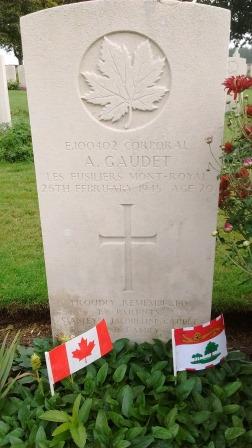
Grave of Arthur Gaudet in the Canadian War Cemetery in Groesbeek, The Netherlands.  (Photo credit: Daria Valkenburg)

Thank you to Alice van Bekkum, Chair of the Faces To Graves Foundation Groesbeek, for sending Pieter that initial list of soldiers from Prince Edward Island who are buried in the Canadian War Cemetery in Groesbeek, The Netherlands.  If you have a story or photo to share, please contact Pieter at memorialtrail@gmail.com or comment on the blog. 

© Daria Valkenburg

….Want to follow our research?….

If you are reading this posting, but aren’t following our research, you are welcome to do so.  Our blog address: https://onthewarmemorialtrail.com/
4 countries, 6 weeks, 7,000 km – an unforgettable war memorial journey in Europe…. Daria’s book ‘No Soldier Buried Overseas Should Ever Be Forgotten‘ is available in print and e-book formats.  Net proceeds of book sales help support research costs and the cost of maintaining this blog. For more information see https://nosoldierforgotten.com/

You are also invited to subscribe to our YouTube Channel: On The War Memorial Trail With Pieter Valkenburg: https://www.youtube.com/channel/UCJ591TyjSheOR-Cb_Gs_5Kw

Never miss a posting!  Subscribe below to have each new story from the war memorial trail delivered to your inbox.
On The War Memorial Trail…..The WWI Soldier From Tryon Who Became A Mailman In New Brunswick

January 7, 2025.  Several months ago, Pieter received a phone call from Carmen Ross, explaining that his granddaughter Lauren was doing a school project on his great-uncle, WWI soldier John Joseph FOY, who was born in Tryon, Prince Edward Island, very near to where we live. Could Pieter help with information about his great-uncle’s military service?

In 2021, we’d written about another WWI soldier from Tryon with the same surname, Maynard FOY.  Was he a relative? Pieter asked.  It turned out that the two families were distantly related.  (See https://onthewarmemorialtrail.com/2021/04/24/on-the-war-memorial-trail-the-ww1-soldier-who-returned-to-tryon/)

CIMG7040 Sep 4 2024 Pieter with Carmen and Margaret Ross

Pieter with Carmen and Margaret Ross.  (Photo credit: Daria Valkenburg)

Like Maynard, John Foy survived the war and returned to Canada.  As one of the goals of the ‘On The War Memorial Trail’ research project is the opportunity to tell the stories of Islanders who survived their war service, Pieter not only helped provide information for Lauren’s school project, we also met with Carmen and his wife Margaret. 

…My grandfather, Alfred Foy, known as Allie, was John’s brother…  Carmen explained.  He also recalled his mother Hilda telling him that John “…was such a nice man!…

….John enlisted in 1915….

John Joseph Foy

John Joseph Foy.  (Photo courtesy of Carmen Ross)

Born on October 25, 1882, John was the son of Philip Morris Callbeck and Rachel (nee Bynon) Foy.  A farmer at the time of his enlistment on September 25, 1915 in Charlottetown, Prince Edward Island, John had served in the No. 2 Heavy Battery Depot since July 1915, when it had been first organized in Prince Edward Island under the command of Major A. G. Peake, and which became No. 2 Overseas Battery, Canadian Siege Artillery, on September 29, 1915.

….John left Canada for overseas service shortly after enlistment….

File written by Adobe Photoshop? 4.0

SS Lapland.  (Photo source: https://www.wikitree.com)

With his Battery, John sailed aboard the SS Lapland, leaving Halifax, Nova Scotia on November 28, 1915, and arriving at Plymouth Sound, United Kingdom on December 7, 1915. 

The Battery was housed at Raffey Camp, at Horsham Siege Artillery School, in West Sussex.  As a gunner, John and the other members of his Battery underwent four months of training there. While in England, the Battery was re-designated as No. 98 (Canadian) Siege Battery, Canadian Siege Brigade.

He remained with No. 98 (Canadian) Siege Battery Artillery until January 19, 1916, when he was transferred to the 3rd Reserve Brigade, Canadian Field Artillery, which was at Shorncliffe, for further training, and as part of reinforcement troops.

….John was sent to France for the Battle of the Somme….

DAC_Pack_Ammo_Apr17

Ammunition Column Pack horses transporting ammunition to a brigade in France.  (Photo source: Library and Archives Canada, MIKAN no. 3194763)

On August 25, 1916 he left for France and was assigned to the 1st Divisional Ammunition Column (DAC), whose role was to bring ammunition forward to the gun positions of the 1st Division batteries for the Battle of the Somme. (See https://en.m.wikipedia.org/wiki/Battle_of_the_Somme)

Ammunition was moved by motor and horse drawn transport, heavy and light rail, and tramways.  From his service file, it appears that John worked in the stables and in the transport of ammunition by horses.

….John was reassigned to his artillery battery….

John remained with the 1st DAC until September 12, 1916, when he returned to the 2nd Brigade, and continued to work with horses, which were used in transporting the heavy guns and ammunition to the front lines, as the Battle of the Somme continued into the fall of 1916.  The Brigade served continuously behind the United Kingdom’s 4th Army’s front until December 1916, when troops were ordered to dig their guns out of the mud and move northward.

In January 1917, the battery became part of the Canadian Corps Heavy Artillery and was renamed No. 2 Canadian Siege Battery, Canadian Garrison Artillery (CGA).  On January 22, 1917, John was admitted to a field hospital in France with bronchitis and pneumonia, and remained there until January 27, 1917, when he rejoined his unit.

Preparations were underway for the Battle of Vimy Ridge, a three day battle from April 9 to 12, 1917, which John survived. (See https://en.m.wikipedia.org/wiki/Battle_of_Vimy_Ridge) Following Vimy Ridge, John’s unit was involved in the Battle of Hill 70, just east of Loos and north of Lens, which was fought between August 15 and 25, 1917. (See https://en.m.wikipedia.org/wiki/Battle_of_Hill_70)

On October 4, 1917, John was sent to a rest camp in Boulogne for 2 weeks, returning to his unit on October 19, 1917.  A few weeks later he was sent to England on leave for a few weeks, returning on November 30, 1917, where he and his unit were assigned to the 48th Battery, Canadian Field Artillery. 

….A handkerchief from Belgium remains in the family!….

LAC_BL_6-inch_26_cwt_Howitzer

Crew positioning a BL 6-inch howitzer. (Photo source: Library and Archives Canada MIKAN No. 3395353)

John’s battery was involved in the March 1918 German Spring Offensive in West Flanders, Belgium. (See https://en.m.wikipedia.org/wiki/German_spring_offensive) While in Belgium, he managed to buy an embroidered handkerchief, which was given to Carmen’s mother Hilda.

image0 Belgian hankie 2 from Jen Huber

Embroidered handkerchief from Belgium that John Foy brought back to Canada.  (Photo courtesy of Jen Huber)

As fighting continued, troops were involved in the Hundred Days Offensive, which began in August 1918 and continued until the end of the war. (See https://en.m.wikipedia.org/wiki/Hundred_Days_Offensive) They moved frequently, through the Hindenburg Line, and advancing north during the Battle of Cambrai in France, from October 8 to 10, 1918.  (See https://en.m.wikipedia.org/wiki/Hundred_Days_Offensive)

In December 1918, the battery moved briefly into Germany, positioned on the west bank of the Rhine at Cologne to protect the crossing of the 1st Canadian Division on December 13, 1918.  The battery returned to the United Kingdom, leaving France from Le Havre on March 30, 1919, and arriving in the United Kingdom at Weymouth.

….John was discharged from the army and returned to Canada….

By April 14, 1919, John was on his way back to Canada, leaving Southampton aboard the SS Olympic.  He was discharged from service on April 30, 1919 in Charlottetown, aged 36.

Screenshot 2025-01-07 at 09-48-24 Lewisville Map - Locality - Westmorland County New Brunswick Canada

John Foy lived in Turtle Creek and was a mailman in rural Lewisville, now part of Moncton.  (Map source: http://www.mapcarta.com)

John never married and moved to New Brunswick. He was involved in harness racing as a driver and worked as a rural mailman in Lewisville (now part of Moncton), while living in nearby Turtle Creek, before he retired due to ill health.

….John is buried in St. John, New Brunswick….

He died on July 1, 1964, aged 81, at the Lancaster Department of Veterans Affairs Hospital in Lancaster, New Brunswick, following a lengthy illness, and was buried in the Field of Honour at Cedar Hill Extension Cemetery in St. John.

cemetery where he is buried Find a Grave

Grave of John Joseph Foy in Cedar Hill Extension Cemetery in St. John, New Brunswick. (Photo courtesy of FindAGrave)

Thank you to Carmen and Margaret Ross, and Jen Huber, for sharing photos and information about John Foy, and to Shawn Rainville and Etienne Gaudet for newspaper research. If you have a story or photo to share, please contact Pieter at memorialtrail@gmail.com or comment on the blog. 

© Daria Valkenburg

….Want to follow our research?….

If you are reading this posting, but aren’t following our research, you are welcome to do so.  Our blog address: https://onthewarmemorialtrail.com/

Front cover OnTheWarMememorialTrailinEurope4 countries, 6 weeks, 7,000 km – an unforgettable war memorial journey in Europe…. Daria’s book ‘No Soldier Buried Overseas Should Ever Be Forgotten‘ is available in print and e-book formats.  Net proceeds of book sales help support research costs and the cost of maintaining this blog. For more information see https://nosoldierforgotten.com/

You are also invited to subscribe to our YouTube Channel: On The War Memorial Trail With Pieter Valkenburg: https://www.youtube.com/channel/UCJ591TyjSheOR-Cb_Gs_5Kw

Never miss a posting!  Subscribe below to have each new story from the war memorial trail delivered to your inbox.

On The War Memorial Trail…. Remembrance Week 2024 – Borden-Carleton Legion At South Shore Villa and Cenotaph For Remembrance Services

banner-remembrance with poppies

November 18, 2024.  After a day of school visits for Remembrance Services on November 6, 2024, members of the Borden-Carleton Legion in Prince Edward Island gathered for a Remembrance Service at South Shore Villa in Crapaud on November 8, 2024, and then for the Remembrance Day Service beside the Cenotaph outside the Legion in Borden-Carleton on November 11, 2024.

….Remembrance Service At South Shore Villa….

On the afternoon of November 8, 2024, members of the Borden-Carleton Legion were present for the annual Remembrance Service at the South Shore Villa, a retirement and nursing care home in Crapaud, Prince Edward Island.

CIMG7243 Nov 8 2024 South Shore Villa

The March On of Colours signaled the start of the Remembrance Service at South Shore Villa.  Left to right: Arthur Ranahan, Danny Bernard, and Sgt At Arms Mario Henry.  (Photo credit: Daria Valkenburg)

Pieter was the Master of Ceremonies at this service, while the Reverend Kent Compton of the Free Church of Scotland in Cape Traverse offered the Opening prayer and Blessing. 

CIMG7246 Nov 8 2024 South Shore Villa

Remembrance Service at South Shore Villa in Crapaud, Prince Edward Island. From left to right: Danny Bernard, Pieter Valkenburg, Rev Kent Compton of the Free Church of Scotland, Arthur Ranahan. (Photo credit: Daria Valkenburg)

 ….Remembrance Day Service At Borden-Carleton Legion….

A cold and rainy day on Monday, November 11, 2024 did not deter people from attending the Remembrance Day service at Borden-Carleton Legion.  In fact, it seemed as though there were more people in attendance than in previous years.

While most members of the public, including yours truly, stood outside while protected by an umbrella, this was not the case for the Legion members who were unprotected but remained at attention for over 45 minutes during the ceremony. 

CIMG7251 Nov 11 2024 Borden-Carleton Legion

The Reverend Barbara Cairns of the Bedeque United Church in Bedeque, Prince Edward Island, offered the Opening Prayer. (Photo credit: Daria Valkenburg)

CIMG7254 Nov 11 2024 Borden-Carleton Legion

The Legion flag was lowered during the playing of The Last Post by Arthur Ranahan.  Lucien Bourgoin held the Canadian flag.  (Photo credit: Daria Valkenburg)

CIMG7258 Nov 11 2024 Borden-Carleton Legion Govt of Cda wreath being laid

Danny Bernard (left) and Pieter stand at attention after laying the Government of Canada wreath on behalf of Heath MacDonald, MP for Malpeque. Flag bearer seen on right: Arthur Ranahan. (Photo credit: Daria Valkenburg)

CIMG7262 Nov 11 2024 Borden-Carleton Legion

Members of the Borden-Carleton Legion and the public honour the memories of those who’ve served, despite the inclement weather, at the November 11, 2024 service in Borden-Carleton. (Photo credit: Daria Valkenburg)

Following the Remembrance Day Service, everyone was invited inside the Legion for a light lunch and a much needed cup of coffee or tea.

Thank you to the South Shore Villa for organizing the Remembrance Day Service, and to all of the Legion members who participated in the various Remembrance Week events. May we never forget all those who served, and continue to serve!

If you have a story to tell, please let Pieter know. You can email him at memorialtrail@gmail.com, or comment on the blog.  

© Daria Valkenburg

….Want to follow our research?….

If you are reading this posting, but aren’t following our research, you are welcome to do so.  Our blog address: https://onthewarmemorialtrail.com/

Front cover OnTheWarMememorialTrailinEurope4 countries, 6 weeks, 7,000 km – an unforgettable war memorial journey in Europe…. Daria’s book ‘No Soldier Buried Overseas Should Ever Be Forgotten‘ is available in print and e-book formats.  Net proceeds of book sales help support research costs and the cost of maintaining this blog. For more information see https://nosoldierforgotten.com/ 

You are also invited to subscribe to our YouTube Channel: On The War Memorial Trail With Pieter Valkenburg: https://www.youtube.com/channel/UCJ591TyjSheOR-Cb_Gs_5Kw

Never miss a posting!  Subscribe below to have each new story from the war memorial trail delivered to your inbox.

On The War Memorial Trail…. Remembrance Week 2024 – Borden-Carleton Legion At 3 Schools For Remembrance Services
banner-remembrance with poppies

November 17, 2024.  On November 6, 2024, members of the Borden-Carleton Legion in Prince Edward Island were present for Remembrance Services at three schools:  Somerset Consolidated in Kinkora, Kinkora Regional High School in Kinkora, and Amherst Cove Consolidated School in Borden-Carleton.

…. Remembrance Service at Somerset Consolidated School….

The day of school visits began in the morning in Kinkora, at the Somerset Consolidated School.  As this is traditionally the first school visited each year, a group photo is always taken outside the school with all of the Legion members who participated.

CIMG7223 Nov 6 2024 Somerset Consolidated School

2024 photo taken at the school’s entrance. Left to right: Sgt At Arms Mario Henry, George Palmer, Danny Bernard, Pieter Valkenburg, Kathy Henry, Dawn Gradwell, Arthur Ranahan, Trish Taylor, Barry Bernard. (Photo credit: Daria Valkenburg)

School officials were careful to verify the Order of Service and to note down the names of all of the Legion members present.  The names were read out during the service, a mark of respect that all appreciated.

CIMG7215 Nov 6 2024 Somerset Consolidated School

The Order of Service was verified with Vice-Principal Ryan Casey.  Left to right: Kathy Henry, Mario Henry, Arthur Ranahan, Ryan Casey, Pieter Valkenburg.  (Photo credit: Daria Valkenburg)

Two cadets who are students at the school participated in the Remembrance Service.

CIMG7222 Nov 6 2024 Somerset Consolidated School cadets

Two cadets from the school participated in the service. Left to right: Amelia MacCausland (RCSCC Sea Cadets Summerside), Sgt At Arms Mario Henry, Thomas Palmer (PEI Regt 17th Recce Army Cadets). (Photo credit: Daria Valkenburg)

The flag bearers for the colour parade carried the Canadian flag and the Borden-Carleton Branch Legion flag.

CIMG7216 Nov 6 2024 Somerset Consolidated School flag bearers

This year’s flag bearers were: Arthur Ranahan (left) and Danny Bernard (right). (Photo credit: Daria Valkenburg)

 …. Remembrance Service at Kinkora Regional High School….

Following the service at Somerset Consolidated School, the Legion members made their way to Kinkora Regional High School, which is also in Kinkora. School officials let Pieter know that students from the school will be visiting the Canadian War Cemetery in Bergen Op Zoom in The Netherlands in May 2025.  We’re aware of 8 Islanders buried in the cemetery, whose graves hopefully will be visited by the students.

CIMG7226 Nov 6 2024 KRHS Principal & Vice Principal

Pieter (centre) flanked by Principal Ryan McAleer (left) and Vice Principal Matt Killeen. (Photo credit: Daria Valkenburg)

Two cadets who are students at the school participated in the Remembrance Service.

CIMG7228 Nov 6 2024 KRHS Parade participants

Parade participants, left to right: Sgt At Arms Mario Henry, Danny Bernard, Maika MacLean and Lucas Somers (both with the Royal Canadian Sea Cadets, RCSCC Summerside), Barry Bernard. (Photo credit: Daria Valkenburg)

Students at the school annually offer a light lunch to the Legion members after the Remembrance Service is concluded, a gesture that is much appreciated. This year, we were offered chile or corn chowder, as well as an assortment of squares and cookies, plus coffee or tea.  All the food was prepared by students, and Legion members unanimously agreed that both luncheon choices were delicious!

CIMG7229 Nov 6 2024 KRHS Lunch is served

Following the Remembrance Service at Kinkora Regional High School in Kinkora, members of the Borden-Carleton Legion were invited for a delicious lunch of either corn chowder or chile, prepared by students.  Left to right: Dawn Gradwell, Mario Henry, Kathy Henry, Arthur Ranahan. (Photo credit: Daria Valkenburg)

…. Remembrance Service at Amherst Cove Consolidated School….

In the afternoon, members of the Borden-Carleton Legion were present for a Remembrance Service at Amherst Cove Consolidated School in Borden-Carleton.  At this school, the two cadets from the school were siblings.

CIMG7231 Nov 6 2024 Amherst Cove Parade

Parade participants, left to right: Danny Bernard, Arthur Ranahan, Kaden MacPhee (PEI Regt 17th Recce), Alex MacPhee (cadet with PEI Regt 17th Recce), Pieter Valkenburg, Barry Bernard. (Photo credit: Daria Valkenburg)

Amherst Cove Consolidated was the only school on the tour this year that had a band…. and my goodness, were these students good!  As someone who played in a Youth Orchestra myself as a child, I could only marvel at how well the students played.  The students and their Band Director, Grainne Howman, are to be commended!  It was a pleasure to listen to them.

CIMG7235 Nov 6 2024 Amherst Cove School Band

The school band, under the direction of Band Director Grainne Howman, was inspirational. (Photo credit: Daria Valkenburg)

After the Remembrance Service, Principal Paul Quinlan and Vice-Principal Evan Killorn posed with two veterans from the Borden-Carleton Legion, George Palmer and Pieter.  Both men were born before D-day and both served in the Air Force – Pieter in the Royal Netherlands Air Force, and George in the Royal Canadian Air Force.

CIMG7238 Nov 6 2024 Amherst Cove Principal & Vice Principal

Vice Principal Evan Killorn (far left) and Principal Paul Quinlan (3rd from left) with two veterans from Borden-Carleton Legion – Pieter Valkenburg (2nd from left) and George Palmer (far right). (Photo credit: Daria Valkenburg)

Listening to the children at each school with their various programs of Remembrance – and the respect they showed to the members present from the Legion – offered hope that the next generations may be less selfish and filled with distrust towards others.

Thank you to the officials and students at all three schools for the work they put into the Remembrance Services. May we never forget all those who served, and continue to serve!

If you have a story to tell, please let Pieter know. You can email him at memorialtrail@gmail.com, or comment on the blog.  

© Daria Valkenburg

….Want to follow our research?….

If you are reading this posting, but aren’t following our research, you are welcome to do so.  Our blog address: https://onthewarmemorialtrail.com/

Front cover OnTheWarMememorialTrailinEurope4 countries, 6 weeks, 7,000 km – an unforgettable war memorial journey in Europe…. Daria’s book ‘No Soldier Buried Overseas Should Ever Be Forgotten‘ is available in print and e-book formats.  Net proceeds of book sales help support research costs and the cost of maintaining this blog. For more information see https://nosoldierforgotten.com/ 

You are also invited to subscribe to our YouTube Channel: On The War Memorial Trail With Pieter Valkenburg: https://www.youtube.com/channel/UCJ591TyjSheOR-Cb_Gs_5Kw

Never miss a posting!  Subscribe below to have each new story from the war memorial trail delivered to your inbox.