On The War Memorial Trail….2025 Faces of Holten Exhibition Part 5: Indigenous Soldiers

September 10, 2025.  Pieter Valkenburg has been involved in finding photos of Canadians who are buried in all three Canadian War Cemeteries in The Netherlands since 2014, with stories of many soldiers told on this blog. 

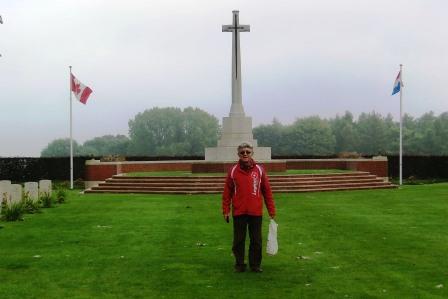
While in The Netherlands and Belgium for the 80th Anniversary of Liberation Commemoration events, he placed flags at the graves of 383 soldiers in 14 cemeteries. At the Canadian War Cemetery in Holten, The Netherlands, flags were placed at 156 graves. Our visit coincided with The 2025 Faces Of Holten Exhibition, which ran for three weeks in May.

—-Recap…..

In Part 1, the graves and photos of soldiers who were killed near Posterenk in April 1945 were featured. (See https://onthewarmemorialtrail.com/2025/08/24/on-the-war-memorial-trail-2025-faces-of-holten-exhibition-part-1-soldiers-killed-near-posterenk/)

In Part 2, the graves and photos of two soldiers whose names are listed on the Cenotaph outside the Borden-Carleton Legion were featured. (See https://onthewarmemorialtrail.com/2025/08/29/on-the-war-memorial-trail-2025-faces-of-holten-exhibition-part-2-the-soldiers-listed-on-the-cenotaph-in-borden-carleton/)

In Part 3, the graves and photos of soldiers killed in vehicle accidents were featured. (See https://onthewarmemorialtrail.com/2025/09/01/on-the-war-memorial-trail-2025-faces-of-holten-exhibition-part-3-soldiers-killed-while-travelling-in-vehicles/)

In Part 4, the graves and photos of soldiers who lost their lives in the Battle of Leer during Operation Duck were featured. (See https://onthewarmemorialtrail.com/2025/09/04/on-the-war-memorial-trail-2025-faces-of-holten-exhibition-part-4-soldiers-who-drowned-during-operation-duck/)

…8 Indigenous soldiers are commemorated…

Now, in Part 5, the graves and photos of 8 Indigenous soldiers, whose stories have previously been told on this blog, are featured.

Grave of John Culbertson. (Photo credit: Daria Valkenburg)

John CULBERTSON was born in Oshawa, Ontario, and grew up on the Tyendinaga Mohawk Territory near Belleville, Ontario. While serving with the Royal Canadian Engineers, he was killed in Germany on April 30, 1944 during the Battle of Edewecht, aged 33. You can read his story at https://onthewarmemorialtrail.com/2023/02/04/on-the-war-memorial-trail-remembering-ww2-sapper-john-culbertson/

Grave of William ‘Willie’ Daniels.  (Photo credit: Daria Valkenburg)

William ‘Willie’ DANIELS, from the Big River Reserve in Depton, Saskatchewan, was serving with the Royal Winnipeg Rifles when he was killed, aged 20, on April 22, 1945 as troops moved through Appingedam in The Netherlands at the very beginning of the Battle of the Delfzijl Pocket. You can read his story at https://onthewarmemorialtrail.com/2021/07/23/on-the-war-memorial-trail-remembering-ww2-soldier-william-willie-daniels/
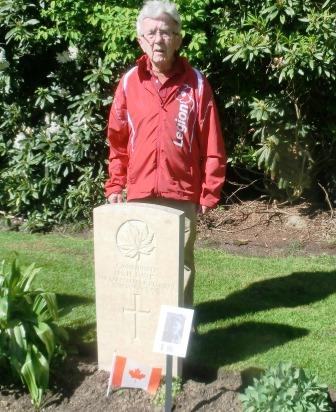
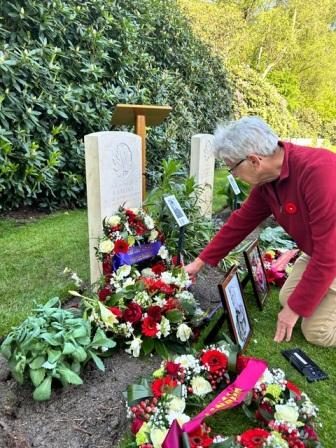
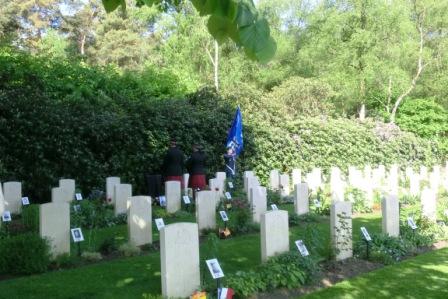
Pieter by the grave of Harry Henry Davis. (Photo credit: Daria Valkenburg)

Harry Henry DAVIS, from Selkirk, Yukon Territory, was serving with the Lake Superior Regiment (Motor) when he died in The Netherlands, aged 23, on January 15, 1945 from wounds received the day before after being shot while on patrol east of Kerkdriel.  You can read his story at https://onthewarmemorialtrail.com/2023/09/30/on-the-war-memorial-trail-the-only-yukon-territory-soldier-buried-in-holten/

Grave of Stanley Owen Jones. (Photo credit: Daria Valkenburg)

Stanley Owen JONES, from Massett, British Columbia, drowned on September 8, 1945 in Germany when the carrier he was in overturned in a ditch, while serving with the Canadian Scottish Regiment, aged 20. You can read his story at https://onthewarmemorialtrail.com/2022/09/05/on-the-war-memorial-trail-remembering-wwii-soldier-stanley-owen-jones/

Grave of Philip Laforte. (Photo credit: Daria Valkenburg)

Philip LAFORTE, born in Lac du Bonnet, Manitoba, was serving with the Royal Winnipeg Rifles when he was killed on April 7, 1945 in The Netherlands, aged 33, as the Regiment crossed the Schipbeek, in order to establish a bridgehead as preparation for an assault on the city of Deventer by the 7th Canadian Brigade. You can read his story at https://onthewarmemorialtrail.com/2022/03/22/on-the-war-memorial-trail-remembering-ww2-soldier-philip-laforte/

Grave of Sanford Steven Saulis.  (Photo credit: Pieter Valkenburg)

Sanford Steven SAULIS, from Maliseet, New Brunswick, died of a brain hemorrhage in The Netherlands on August 10, 1945, aged 30, while serving with the 16th Field Company of the Royal Canadian Engineers. You can read his story at https://onthewarmemorialtrail.com/2023/02/27/on-the-war-memorial-trail-remembering-sanford-steven-saulis/
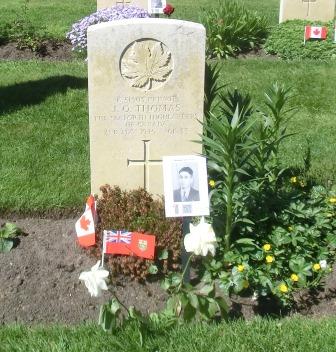
Grave of James ‘Jimmy’ Oliver Thomas. (Photo credit: Daria Valkenburg)

James ‘Jimmy’ Oliver THOMAS, born in St. Peters, Manitoba, died in Germany on May 2, 1945, aged 33, a few days after being liberated from the Stalag VII-A POW Camp in Moosburg, Germany. He had been taken prisoner of war on May 22, 1943, while serving with the Seaforth Highlanders of Canada, during the breaking of the Hitler Line. You can read his story at https://onthewarmemorialtrail.com/2024/02/18/on-the-war-memorial-trail-the-wwii-soldier-from-manitoba-who-died-shortly-after-being-liberated-from-stalag-vii-a/

After sending photos of the grave to Rodd Cooper, great-nephew of Jimmy Thomas, he wrote us to say “  I just wanted to express my infinite gratitude to you and your family on behalf of myself and my family for the work and the time you have invested in gathering the information not only for my resting family member but for the numerous others as well. 

The honour and respect you have brought and given to these men cannot be measured.  The gift that you have given my family and I is profound and we truly can’t thank you enough.  

Because of your work and dedication, my family and the future generations of my family, will be able to pay the respect to my Great Uncle Jimmy for his service and sacrifice by remembering him and telling his story.  

The gift you have given us is immeasurable.

On behalf of myself and the Thomas Family, Thank You….” 

We were immeasurably touched by his kind words. Pieter replied, saying that “…it’s important that we never forget the soldiers….and the families… who sacrificed so much for our ongoing freedom.  I’m grateful that the country of my birth continues to remember and honour their Allied liberators….” 
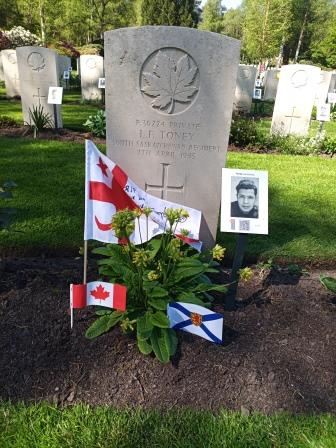
Grave of Leo Francis Toney. (Photo credit: Pieter Valkenburg)

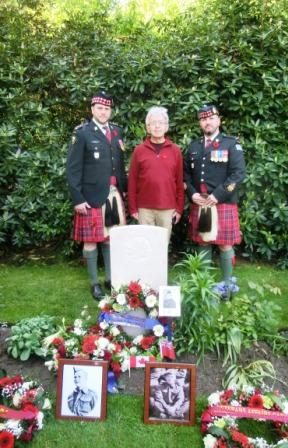
Leo Francis TONEY, born in Wolfville, Nova Scotia, was serving with the South Saskatchewan Regiment, when he was killed on Saturday, April 7, 1945, aged 21, while trying to cross the Schipbeek in The Netherlands at  a bridgehead that had been formed at a weir on the border of the municipalities of Bathmen and Holten. You can read his story at https://onthewarmemorialtrail.com/2021/05/22/on-the-war-memorial-trail-remembering-ww2-soldier-leo-francis-toney/

After sending a photo of the grave to Della Maguire, niece of Leo Toney, she wrote to say “…thank you so much, I looked at that picture all day. I am so grateful…

Pieter holds onto the personalized Lnu flag from the Toney family at the grave of Leo Francis Toney. (Photo credit: Daria Valkenburg)

….All of the flags placed at graves were donated…

All of the flags placed at graves were donated.  Our thanks go to: 

  • Alan Waddell, Constituent Assistant, on behalf of Heath MacDonald, MP for Malpeque, for the Canadian flags.
  • Armel ‘Mel’ Lanteigne, President of the Caraquet Legion in New Brunswick for the New Brunswick flag.
  • Kyle Graham, Research Officer, Military Relations, Nova Scotia Intergovernmental Affairs, on behalf of Premier Tim Houston, Province of Nova Scotia, for the Nova Scotia flag.
  • Don Coutts on behalf of the Muttart and Coutts families in memory of Flight Sergeant Elmer Bagnall Muttart for the Ontario flag.
  • Wayne Ewasko, MLA for Lac Du Bonnet, Manitoba, Interim Leader of the Official Opposition, Province of Manitoba, for the Manitoba flag.
  • Della Maguire on behalf of the Toney/Smith Family in memory of Pte Leo Toney for the Lnu (Mi’kmaw) flag.
  • Conrad Saulis in memory of Sapper Sanford Steven Saulis, courtesy of Grand Chief Ron Tremblay, for the Wolastoqey Nation flag

Thank you to Rodd Cooper and Della Maguire for their heartfelt and kind words.  The comments we’ve received from families as we’ve shared photos showing how their loved ones were honoured during the commemoration events made all the hard work of visiting the cemeteries and placing flags worthwhile.

The 2025 Faces of Holten Exhibition concludes with Part 6, where the graves of a few of the many soldiers killed in The Netherlands and Germany will be featured as we continue with our 2025 European War Memorial Tour.

Pieter encourages readers with photos to come forward so that eventually all the known graves of Canadians buried in Holten will have a photo displayed by their grave. Email him at memorialtrail@gmail.com.

© Daria Valkenburg

….Want to follow our research?…

If you are reading this posting, but aren’t following our research, you are welcome to do so.  Our blog address: https://onthewarmemorialtrail.com/
4 countries, 6 weeks, 7,000 km – an unforgettable war memorial journey in Europe…. Daria’s book ‘No Soldier Buried Overseas Should Ever Be Forgotten‘ is available in print and e-book formats.  Net proceeds of book sales help support research costs and the cost of maintaining this blog. For more information see https://nosoldierforgotten.com/

Subscribe to our YouTube Channel: On The War Memorial Trail With Pieter Valkenburg: https://www.youtube.com/channel/UCJ591TyjSheOR-Cb_Gs_5Kw

Never miss a posting!  Subscribe below to have each new story from the war memorial trail delivered to your inbox.

On The War Memorial Trail…..The WWII Soldier From Kenora Who Lay In An Unknown Grave For 80 Years…. Part 2: The Grave Re- dedication Ceremony

Arthur Vanance.  (Photo credit: Daria Valkenburg)

August 22, 2025. The research file for WWII soldier Arthur VANANCE of Kenora, Ontario, who lost his life on February 15, 1945 while serving with the Lake Superior Regiment, remained open for several years because of the uncertainty as to whether he lay buried in an unknown grave – Plot XI, Row H, Grave 5 – in the Canadian War Cemetery in Holten, The Netherlands. 

Part 1 explained how after his story was sent to Dr. Sarah Lockyer, Casualty Identification Coordinator, Directorate of History and Heritage, Department of National Defence of the Government of Canada, everyone involved had to wait to see what the verdict would be.   (See https://onthewarmemorialtrail.com/2025/08/19/on-the-war-memorial-trail-the-wwii-soldier-from-kenora-who-lay-in-an-unknown-grave-for-80-years-part-1-what-happened-to-arthur-vanance/)

On March 3, 2025 we were informed that Arthur was indeed buried in that unknown grave, and he would be receiving a new headstone. Now, in Part 2, we attended the grave re-dedication ceremony for Arthur Vanance on May 3, 2025, while on our 2025 European War Memorial Trail. 

….The new headstone for Arthur Vanance was waiting to be unveiled….

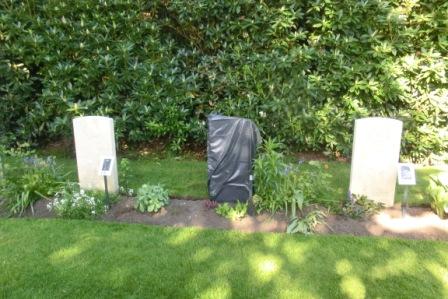
The new gravestone for Arthur Vanance was covered until the May 3, 2025 grave rededication ceremony.  The grave to the right is that of Harold Frederick Hilderley. (Photo credit: Daria Valkenburg)

On May 1, 2025, we were at the Canadian War Cemetery in Holten to begin placing flags at what turned out to be 156 graves of servicemen that Pieter has researched over the years.  When we saw the covered headstone at what was once an unknown grave, we couldn’t wait for the re-dedication ceremony on May 3!

Arthur is buried next to Harold Frederick HILDERLEY of Stratford, Ontario, with Earl Herbert CARLBOM of Sioux Lookout, Ontario lying in the grave beside Harold Hilderley.  All three men died on February 15, 1945.

….The grave re-dedication ceremony was dignified….

On Saturday, May 3, 2025 a number of us gathered at the Holten Information Centre in anticipation of the grave re-dedication ceremony.  Shortly after 10 am we made our way to the cemetery and briefly spoke with His Excellency, Hugh Adsett, the Canadian Ambassador to The Netherlands, who mentioned he was from Petitcodiac, New Brunswick.  Paul Ledwell, the Deputy Minister of Veterans Affairs, also stopped by to chat.  As well, Pieter spoke with a representative from the Commonwealth War Graves Commission in the United Kingdom. 

Pieter with Master Warrant Officer Brian Keene.  (Photo credit: Daria Valkenburg)

We had a chance to meet Master Warrant Officer Brian Keene of the Directorate History and Heritage (3-3) – Dress and Ceremonial, of the Canadian Armed Forces, who’d been our contact for the date and time of the ceremony.  He said he worked closely with Dr Sarah Lockyer, who we’d originally contacted regarding Arthur Vanance. 

Formation of soldiers for the re-dedication ceremony at the grave of Arthur Vanance.  (Photo credit: Daria Valkenburg)

No family members were present, but there was a large turnout of Canadian military, including members of the Lake Superior Regiment, the Canadian Armed Forces Band, as well as the dignitaries, volunteers from the Canadian War Cemetery in Holten, media….plus us.  We had expected a much smaller event!

Soldiers and the Canadian Armed Forces Band wait for the re-dedication ceremony to start. (Photo credit: Daria Valkenburg)

The Military Chaplain of the North Shore (New Brunswick) Regiment was the Master of Ceremonies for this very dignified event.  A biography of Arthur Vanance was read out by Captain Corey Nieminen of the Lake Superior Regiment. The poem ‘In Flanders Fields’ and the Act of Remembrance were read out by Chief Warrant Officer Jon O’Connor, also of the Lake Superior Regiment.  Paul Ledwell also said a few words.

Members of the Lake Superior Regiment by the grave of Arthur Vanance. (Photo credit: Daria Valkenburg)

Wreaths were laid, ‘O Canada’ and ‘God Save The King’ were played, as well as ‘The Last Post’ and ‘Reveille’.  After the ceremony, Pieter placed flags of Canada and Ontario at the grave.

Pieter placing flags of Canada and Ontario at the grave of Arthur Vanance. (Photo credit: Bastien Sjoerts)

Pieter with Captain Corey Nieminen (left) and Chief Warrant Officer Jon O’Connor (right) by the grave of Arthur Vanance.  (Photo credit: Daria Valkenburg)

Following the ceremony, we had a chance to meet and speak with other attendees, but were among the first to leave, as we had another commitment in another town, over 1 ½ hours away.

The following day, Mitch Banks, son of Lt George Calvin ‘Cal’ BANKS, was at the Canadian War Cemetery in Holten with his wife Linda, for the annual commemoration service.  ….The ceremony was very moving, especially when the young children laid white roses on each of the headstones. It brought tears to our eyes….

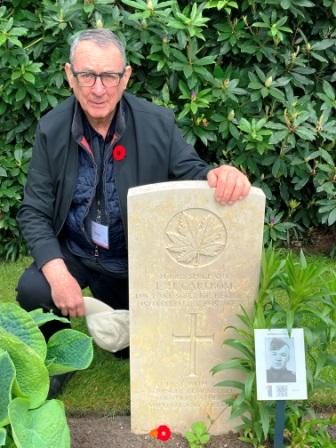
While in Holten, Mitch and Linda visited the graves of three members of his father’s platoon: Arthur VANANCE, Harold Frederick HILDERLEY, and his father’s close friend, Earl Herbert CARLBOM.

Mitch Banks by the grave of Earl Herbert Carlbom.  (Photo courtesy of Mitch Banks)

After 80 years of lying in a grave marked as unknown, Arthur Vanance has a headstone that identifies him.  His story has come full circle!

Thank you to Bastien Sjoerts for taking a photo of Pieter placing flags by Arthur Vanance’s grave, and to Mitch Banks for sharing photos about his visit to Holten.  As well, thank you to the following for donating the flags that were placed at Arthur’s grave:

  • Alan Waddell, Constituent Assistant, on behalf of Heath MacDonald, MP for Malpeque, Prince Edward Island, for the Canadian flag.
  • Don Coutts on behalf of the Muttart and Coutts families in memory of Flight Sergeant Elmer Bagnall MUTTART for the Ontario flag.

More highlights of our adventures on the 2025 European War Memorial Trail will be featured in upcoming postings.  If you have a story or photo to share, please contact Pieter at memorialtrail@gmail.com or comment on the blog. 

 © Daria Valkenburg

….Want to follow our research?….

If you are reading this posting, but aren’t following our research, you are welcome to do so.  Our blog address: https://onthewarmemorialtrail.com/

4 countries, 6 weeks, 7,000 km – an unforgettable war memorial journey in Europe…. Daria’s book ‘No Soldier Buried Overseas Should Ever Be Forgotten‘ is available in print and e-book formats.  Net proceeds of book sales help support research costs and the cost of maintaining this blog. For more information see https://nosoldierforgotten.com/

You are also invited to subscribe to our YouTube Channel: On The War Memorial Trail With Pieter Valkenburg: https://www.youtube.com/channel/UCJ591TyjSheOR-Cb_Gs_5Kw

Never miss a posting!  Subscribe below to have each new story from the war memorial trail delivered to your inbox.
On The War Memorial Trail…..The WWII Soldier From Kenora Who Lay In An Unknown Grave For 80 Years…. Part 1: What Happened To Arthur Vanance?

Arthur Vanance.  (Photo credit: Daria Valkenburg)

August 19, 2025.  Sometimes research into a soldier takes years to unfold before the file can be closed.  Often a file remains open while a photo is being sought, or additional information.  When it drags on for too many years, it’s often deemed a Cold Case File.  (See https://onthewarmemorialtrail.com/our-cold-cases/)

Other times, a file remains open because of special circumstances.  This happened in the case of WWII soldier Arthur VANANCE of Kenora, Ontario, whose story was written in ‘Holtense Canadezen’, Jan Braakman’s book (in Dutch) about some of the soldiers buried in the Canadian War Cemetery in Holten, The Netherlands, which we translated in 2021. 

….Arthur was in the Lake Superior Regiment….

Born January 5, 1919 in Kenora, Ontario, Arthur Vanance (surname also spelled Vanasse) was the son of Emmanuel Joseph and Annie Rosie (nee Halley) Vanance.  After his father died in April 1934, his mother remarried and moved to Powell River, British Columbia.

Before enlisting with the Lake Superior Regiment on July 11, 1940 in Kenora, Arthur worked as a truck driver.

On October 2, 1940, he married Rita Margaret Meservier in Port Arthur (now Thunder Bay), Ontario. Rita had a son, Allan Glenn McGuire, who had been born on July 21, 1939 in Winnipeg, Manitoba.  Rita and Arthur’s son, Arthur Henry Vanance, was born on December 27, 1941 in Thunder Bay.  (After Arthur’s death, Rita married Clayton (Mickey) McGuire, Allan’s father.)

By August 22, 1942, Arthur was in the United Kingdom with his Regiment, and remained there until July 21, 1944, when they were sent to Northwest Europe.  

Pieter in Bokhoven in 2010.  (Photo credit: Daria Valkenburg)

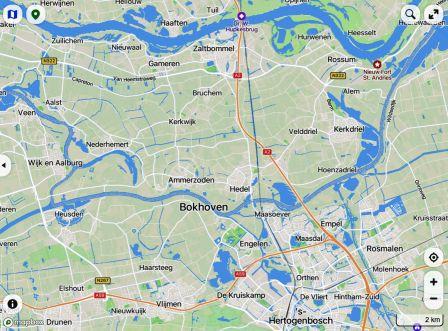
In February 1945, the Lake Superior Regiment was near Bokhoven, The Netherlands, a place we knew very well, as Pieter’s maternal ancestor, Willem Kremers, lived there and died, along with his daughter Maria Anna, on the night of February 21-22, 1799. Strong winds had pushed up ice floes from the Maas River, and caused the collapse of a barn near a castle, where Willem and Maria Anna had been sheltering, but ended up being buried under the rubble. 

246 years later, on February 15, 1945, the area also proved to be unlucky for Arthur and three other soldiers from the Lake Superior Regiment.

……Arthur lost his life on February 15, 1945…….

An excerpt from ‘Holten Heroes: Stories from a Canadian Field of Honour’, from the chapter ‘Mission across the Maas’ gave an account of what happened on February 15, 1945…..

Map showing location of Bokhoven, Hedel, Zaltbommel, and Ammerzoden. (Map source: Mapbox)

….In February 1945, his regiment was stationed near Bokhoven, on the south bank of the Maas, north of Hertogenbosch. And there he was deployed early in the morning for the fateful patrol on February 15, 1945. Such patrols were undertaken by both sides. The Germans tried to penetrate the Canadian lines on the Maas at Empel, Crevecoeur, and Gewande. Meanwhile, Canadians crossed the river to carry out reconnaissance of the north side and to check whether the Germans were still occupying their positions. Prisoners of war were captured by both sides during the skirmishes.

After the war, Lieutenant Colonel H.H.A. Parker of the Lake Superior Regiment explained what had happened to the patrol that Vanance was part of. “On the night of 14-15 February, B-Company had a patrol across the River Maas . . . ran into trouble on the way back with the result that only about half of the men got back to our side.” The patrol returned battered. One soldier (Walter Russell Lahoda) had been killed, ten were wounded, and three had fallen into the hands of the enemy. Among them – probably – was Arthur Vanance.

Parker stated in a letter to relatives of the deceased Earl Carlbom that a rescue operation was set up. ‘Sergeant Carlbom, along with Lieutenant Banks and Sergeant Boomhower decided to cross the river again and search for the missing men from their platoon. Unfortunately, they were ambushed, Lieutenant Banks and your son being wounded. Sergeant Boomhower managed to make his escape and he told us that there was little doubt that your son had been taken prisoner, but apparently, his wounds must have been more serious than they appeared. We have twice carried out a search of the whole area but have been unable to locate his grave.’

What happened to Arthur Vanance after that remains unclear. One of the soldiers, W.R. Marsh, later reported that Lance-Corporal Hilderley had been fatally wounded, and that they had been unable to recover his body due to intense enemy fire. But, said the same soldier, if they had had two stretchers, they could have picked up Hilderley and Vanance.

Banks told Marsh that another NCO, Carlbom, would take care of that. But Carlbom was also ambushed and killed. After the war it turned out that Carlbom had been buried by the Germans in the cemetery in Zaltbommel. Hilderley had been buried in occupied Ammerzoden, along with an unidentified Canadian soldier. Where Arthur Vanance had gone was unclear: he was missing. Hilderley’s body was exhumed after the war and reburied in Holten Canadian War Cemetery, in Plot XI, Row H, Grave 6. Carlbom was also reburied in Plot XI, Row H, Grave 7 in the same cemetery. The unidentified Canadian from Ammerzoden also ended up in Holten Canadian War Cemetery, in Plot XI, Row H, Grave 5….

……The other casualties ……

Private Arthur Vanance wasn’t the only casualty that night….

  • Sgt Earl Herbert CARLBOM of Sioux Lookout, Ontario, aged 27
  • Lance-Corporal Harold Frederick HILDERLEY of Stratford, Ontario, aged 19
  • Private Walter Russell LAHODA of Winnipeg, Manitoba, aged 27

Carlbom and Hilderley are buried in the Canadian War Cemetery in Holten.  Lahoda is buried in the Canadian War Cemetery in Groesbeek.

Lt. George Calvin ‘Cal’ Banks. (Photo courtesy of Mitch Banks)

Lt. George Calvin ‘Cal’ BANKS survived.  His son, Mitch Banks, wrote to let us know that “….Private Arthur Vanance is part of my Father’s story as he was his Platoon commander that fateful night on February 15th 1945 when Private Vanance and three others of Dad’s platoon were killed. My Dad was severely wounded and taken prisoner….

Mitch explained that “…having learned his friend Sergeant Carlbom was killed and Dad having lost a lot of blood, he would have been in a state of shock and probably not sure where he was initially taken….” 

In the Liberated Prisoner of War Questionnaire that was completed after the war ended, Cal stated that he had been captured near Hedel on February 15, 1945, then initially taken to a hospital in Apeldoorn until March 31, 1945, followed by a hospital in Haarlem, where he remained until May 8, 1945.  

……Was Arthur buried in that unknown grave? ……

Was Arthur Vanance in Plot XI, Row H, Grave 5 in the Canadian War Cemetery in Holten? (Photo courtesy of the Information Centre Canadian Cemetery Holten)

The account in Jan Braakman’s book ended with the belief that it was Arthur who lay buried in Plot XI, Row H, Grave 5 in the Canadian War Cemetery in Holten, and was so compelling that the translated excerpt was sent to Dr. Sarah Lockyer, Casualty Identification Coordinator, Directorate of History and Heritage, Department of National Defence of the Government of Canada. 

In a subsequent phone conversation, Dr Lockyer asked if a family member had been found, as that would be very helpful.  Pieter immediately began his research and it wasn’t long before he was in contact with Paulette Alcock of Alberta, who wrote to say that “…I can confirm that Arthur Vanance was my dad’s half-brother.  He spoke of him being missing in the war and remembers his mom receiving a medal. He was young, so it was tough, and my dad has also been gone for over 30 years. If I can help in the further steps, let me know.  It would be nice to have my uncle Arthur as a known soldier….”   Paulette agreed to have her contact information shared with Dr Lockyer, which was done.  

We heard nothing for several years, but did keep Dr Lockyer updated, such as when the translated book was published in English in October 2023 as ‘Holten Heroes: Stories from a Canadian Field of Honour’.  (See https://onthewarmemorialtrail.com/2023/11/01/new-book-about-soldiers-buried-in-the-canadian-war-cemetery-in-holten-the-netherlands/

In March 2024, Jan Braakman submitted the English language chapter about Arthur Vanance to the Commonwealth War Graves Commission (CWGC), which can be read at: https://www.cwgc.org/stories/stories/private-arthur-vanance-lake-superior-regiment-mission-across-the-river-maas/ 

….The Directorate of Heritage and History wrote to inform us that Arthur’s grave was no longer unknown ….

Then, a year later, on March 3, 2025, we received the following email from Dr. Lockyer:

….Good morning Mr. and Mrs. Valkenburg,

I am delighted to inform you that the Department of National Defence and the Canadian Armed Forces have publicly announced the identification of Private Arthur Vanance. His case was adjudicated and accepted at the December 2024 Casualty Identification Review Board and his next of kin was recently notified by the Canadian Armed Forces. I have attached a letter from the Acting Director of History and Heritage thanking you for your submission that ultimately made this happen.

The URLs for the News Release are found below….

ENGLISH: https://www.canada.ca/en/department-national-defence/news/2025/03/canadian-soldier-of-the-second-world-war-identified.html

FRENCH: https://www.canada.ca/fr/ministere-defense-nationale/nouvelles/2025/03/identification-dun-soldat-canadien-de-la-seconde-guerre-mondiale.html

The Canadian Armed Forces are aiming to conduct his rededication ceremony in early May to coincide with the 80th anniversary of the liberation of the Netherlands commemorative events hosted by Veterans Affairs Canada at Holten Cemetery.

Thank you for your help in making this happen. If you have any questions, please do not hesitate to ask.

Cheers,

Sarah

Sarah Lockyer, PhD….

The March 3, 2025 letter to us from Captain Ken Ingram, Acting Director of History and Heritage, Department of National Defence of the Government of Canada, provided the same information as Dr Lockyer, and thanked us for the small part we played in this story:

….We are pleased to inform you that following extensive research undertaken by both the CWGC and Directorate of History and Heritage (Canadian Armed Forces), the information you submitted was accepted in December 2024 by the Casualty Identification Review Board.

We sincerely thank you for submitting your report to the CWGC. Your excellent research helped to enable this incredible outcome.…

Media coverage picked up this wonderful outcome…. see https://www.ctvnews.ca/northern-ontario/article/grave-of-missing-northern-ont-solider-identified-after-80-years/

….The Re-dedication Ceremony was planned for May 3, 2025 …

Towards the end of March, we were informed by both Henk Vincent, volunteer at the Canadian War Cemetery in Holten, and by Adjum/MWO Brian Keene, Directorate History and Heritage (3-3) – Dress and Ceremonial, of the Canadian Armed Forces that the re-dedication ceremony for Arthur’s grave would be held on the morning of May 3, 2025.  As we would be in The Netherlands during the period, we were able to attend this special event.

Coming up in Part 2….we attend the grave re-dedication ceremony for Arthur Vanance, one of the highlights of our adventures on the 2025 European War Memorial Trail. 

Thank you to Mitch Banks for the information and photos about his father, Lt Banks, and to Yannic Wethly for sending us the Liberated POW Questionnaire.  Thank you to Jan Braakman for permission to quote from his book, with translation into English by Pieter and Daria Valkenburg

If you have a story or photo to share, please contact Pieter at memorialtrail@gmail.com or comment on the blog. 

 © Daria Valkenburg

….Want to follow our research?….

If you are reading this posting, but aren’t following our research, you are welcome to do so.  Our blog address: https://onthewarmemorialtrail.com/

4 countries, 6 weeks, 7,000 km – an unforgettable war memorial journey in Europe…. Daria’s book ‘No Soldier Buried Overseas Should Ever Be Forgotten‘ is available in print and e-book formats.  Net proceeds of book sales help support research costs and the cost of maintaining this blog. For more information see https://nosoldierforgotten.com/

You are also invited to subscribe to our YouTube Channel: On The War Memorial Trail With Pieter Valkenburg: https://www.youtube.com/channel/UCJ591TyjSheOR-Cb_Gs_5Kw

Never miss a posting!  Subscribe below to have each new story from the war memorial trail delivered to your inbox.
On The War Memorial Trail…..The WWII Soldier From O’Leary Who Lost His Life During Operation Churchill

April 18, 2024.  In August 2019, Alice van Bekkum, Chair of the Faces To Graves Foundation Groesbeek, sent Pieter a list of soldiers from Prince Edward Island who are buried in the Canadian War Cemetery in Groesbeek, The Netherlands.

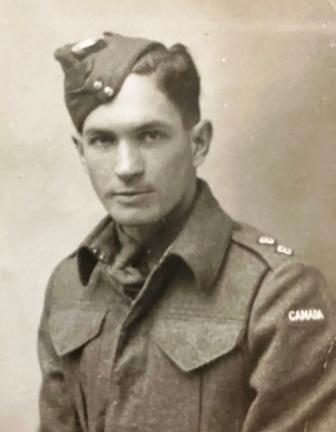
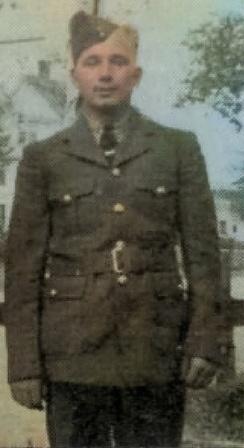
One of the names for which a photo was missing was that of Ralph Kenneth SILLIKER, born October 16, 1917 in O’Leary, Prince Edward Island, the son of Watson and Ruth Silliker.

Pieter began his research and within a few weeks received a photo from Watson Silliker, Ralph’s nephew.

cropped colourized photo Silliker

Ralph Kenneth Silliker. (Photo courtesy of Watson Silliker. Photo colourization by Pieter Valkenburg)

….Ralph’s working life began in childhood….

It soon became clear that Ralph’s working life began in childhood.  His father Watson had began the first oil delivery business in 1922, according to ‘Threads of the past: a history of O’Leary, Prince Edward Island, 1837-1922’, published by the O’Leary Women’s Institute.

…The Silliker family – Watson, Ruth, and their children Ralph, Iva, Lloyd, and Lorne – manually pumped the kerosene and gasoline from the railway tank cars, which held over 8,000 gallons each, into the storage tanks….

This was not an easy business to be in!  “….By truck in summer and sleigh in winter, sparse quantities of gasoline and liberal quantities of kerosene in 45 gallon drums were delivered to stores and homes around the countryside….” 

The entry in the O’Leary history went on to note that “….when Ralph was eight years old, he drove a team of horses to places such as Portage, Glenwood, Campbelltown, and Bloomfield...

….Ralph enlisted in 1943….

When he enlisted with the No. 6 District Depot in Charlottetown, Prince Edward Island on May 13, 1943, Ralph was working as a truck driver in O’Leary, and was married.  He and his wife Ada Blanche were the parents of two daughters, Sylvia Ruth and Opal Irene.

Ralph was sent for basic training at No. 62 Canadian Army Basic Training Centre (CABTC) in Charlottetown, Prince Edward Island. On August 14, 1943, he was seconded to the A27 Canadian Reconnaissance Training Centre – Camp Dundurn, in Dundurn, Saskatchewan. This was a major training centre and transit point for personnel going overseas.

However, not long after arriving at Camp Dundurn, he returned to Prince Edward Island after being granted ‘compassionate family leave’ on September 7, 1943 – without pay and allowance – until December 14, 1943.  In October 1943 he had been transferred to ‘P’ Wing at the No. 6 District Depot in Halifax, Nova Scotia, but due to the compassionate family leave being extended twice he was not on duty in Halifax until his leave ended.

Ralph returned to A27 Canadian Reconnaissance Training Centre in Camp Dundurn on January 11, 1944, where his training resumed.  On March 31, 1944 he qualified as a Driver Wheeled Class III. This meant he was qualified to drive heavy trucks and armoured cars.

….Ralph left Canada for overseas service….

In May 1944 Ralph was given embarkation leave, the last time he would see his family, as on June 27, 1944 he was on his way to the United Kingdom.  Upon arrival on July 3, 1944, he was assigned to No. 1 Canadian Armoured Corps Reinforcement Unit (CACRU).

On August 12, 1944, Ralph was assigned to the Canadian Infantry Corps (CIC) as part of the Canadian Fusiliers and his position changed from trooper to fusilier.  On September 17, 1944, Ralph embarked for France as part of X-4 Reinforcement list of the Canadian Infantry Corps.

….Ralph was assigned to the Lake Superior Regiment….

On October 7, 1944 he was transferred to the Lake Superior Regiment (Motor), part of the 21st Army Group, joining them as the Regiment advanced through France, Belgium and the south of the Netherlands.  

Ralph was in the Regiment at the same time as Harry DAVIS of Yukon Territory, whose story has previously been told.  See https://onthewarmemorialtrail.com/2023/09/30/on-the-war-memorial-trail-the-only-yukon-territory-soldier-buried-in-holten/

Henk Vincent, one of the research volunteers at the Cemetery Information Centre in Holten, The Netherlands, explained that during the “… the winter of 44/45, the Lake Superior Regiment, together with other Canadian regiments, was tasked with guarding the northern front line, in this case the Maas River. ….” 

Most of February saw the Regiment based in the ‘s-Hertogenbosch area as they continued their patrols in the surrounding area. 

….The Battle of Hochwald Gap was a fierce tank battle….

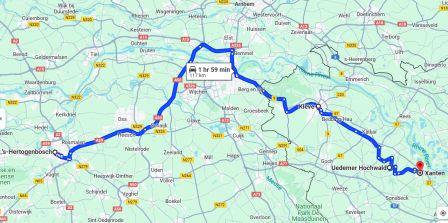
Screenshot 2024-04-16 at 11-06-16 Google Maps

Map shows location of ‘s-Hertogenbosch, Kleve, Hochwald, Xanten, and Groesbeek. (Map source: https://www.google.ca)

On February 21, 1945, the Regiment began moving towards Germany for the upcoming Operation Blockbuster, which would begin at dawn on February 26, 1945. (See https://en.wikipedia.org/wiki/Operation_Blockbuster)

The February 21, 1945 war diary entry noted that “…in the afternoon the men were told of our future role and intentions in Ops Blockbuster….

On February 22, 1945, the war diary recorded that “…the companies spent the day making final preparations for the move into Germany tonight…”  By 2:00 am in the early morning of February 23, 1945 the Regiment had arrived at their initial position in the Reichswald Forest, just over the border from The Netherlands.  The next afternoon the Regiment moved to Kleve.

On March 1, 1945, the war diary for the Lake Superior Regiment recorded that instructions had been received for “…the assault on the Hochwald Forest Gap….” This attack was codenamed Operation Churchill.

Clearing the very narrow Hochwald Gap was a difficult task, given that the weather was anything but cooperative. An early thaw meant that the tanks got bogged down in mud, making them ‘sitting ducks’ for German troops who were positioned to pick them off, one by one. Troops had no choice but to press on, as the Battle of Hochwald Gap, part of Operation Blockbuster, was the final push towards the Rhine River. (See https://the-hochwald-gap.project44.ca/)

….A video shows how the Battle of Hochwald Gap was fought….

A 46 minute YouTube video on the Battle of Hochwald Gap explained the fierce battle that took place. Watching it made it clear to us that it was a miracle that anyone survived at all, a testament to the determination and courage of those who were in the midst of it.

….Ralph lost his life during Operation Churchill….

March 2, 1945 was a “…cold, blustery day with several snow flurries…” according to the war diary. The after-action report on Operation Churchill noted that the Regiment “…had been fighting already since the 26th of February. Little sleep was had and the Motor Companies had been holding the general line for 24 hours without food….

They’d last eaten on February 28 due to the ground being “…impassable to all vehicles…” and “…incessant shelling by the enemy….

The men may have been tired, cold, and hungry, but there was still a battle to be fought.  By the end of the day, “…the south of the Gap bore the signs of intense shellfire – the ground pitted, scarred, and torn by fire of all kinds. The trees in the gully were cut to ribbons.  The houses were heaps of rubble….

A burial party the following day went out onto the battlefield to look for casualties, and recorded how they were found. “…Further back where two Kangaroos had been knocked out as they lunged across an enemy trench, two more Lake Superior men lay dead. Pte Carriere, F. had been shot through the head as he was de-bussing. Another, Pte Silliker, R. K. was killed as he raced to take up the first position…..”  Dutiful and responsible to the end, Ralph lost his life at the age of 27 during the March 2, 1945 battle.

Private Frank CARRIERE was the son of Emma Carriere of Elm Creek, Manitoba, and the brother of Rifleman William Joseph CARRIERE, who had lost his life on June 8, 1944 while serving with the Royal Winnipeg Rifles.

NOTE: Kangaroo is the nickname given to a Canadian armoured personnel carrier (APC) during the WWII, which was created by converting a tank chassis. (See https://en.wikipedia.org/wiki/Kangaroo_(armoured_personnel_carrier))

….Ralph is buried in the Canadian War Cemetery in Groesbeek….

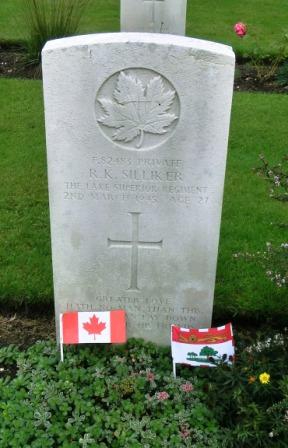
Ralph was temporarily buried on March 6, 1945 in Xanten, Germany before being reburied in the Canadian War Cemetery in Groesbeek, The Netherlands.

CIMG9016 Sep 16 2017 Groesbeek Cemetery grave of RK Silliker by Daria

Grave of Ralph Kenneth Silliker in the Canadian War Cemetery in Groesbeek, The Netherlands. (Photo credit: Daria Valkenburg)

Thank you to Watson Silliker for sharing a photo. Thank you also to Henk Vincent for additional information on the patrols made along the Maas River. Do you have photos or information to share? Email Pieter at memorialtrail@gmail.com, comment on the blog, or tweet to @researchmemori1.

© Daria Valkenburg

….Want to follow our research?….

If you are reading this posting, but aren’t following our research, you are welcome to do so.  Our blog address: https://onthewarmemorialtrail.com/

Front cover OnTheWarMememorialTrailinEurope4 countries, 6 weeks, 7,000 km – an unforgettable war memorial journey in Europe…. Daria’s book ‘No Soldier Buried Overseas Should Ever Be Forgotten‘ is available in print and e-book formats.  Net proceeds of book sales help support research costs and the cost of maintaining this blog. For more information see https://nosoldierforgotten.com/ 

You are also invited to subscribe to our YouTube Channel: On The War Memorial Trail With Pieter Valkenburg: https://www.youtube.com/channel/UCJ591TyjSheOR-Cb_Gs_5Kw

Never miss a posting!  Subscribe below to have each new story from the war memorial trail delivered to your inbox.

On The War Memorial Trail….. ‘The Only Yukon Territory Soldier Buried In Holten’

September 30, 2023. With an extensive photo wish list from the Canadian War Cemeteries in The Netherlands, it can be difficult for Pieter to determine who will be next in line for his research.  But when we learned there is one soldier from the Yukon Territory buried in the Canadian War Cemetery in Holten, and he was on the photo wish list, we knew he was a priority.

Henk Vincent, one of the research volunteers at the Information Centre in Holten, explained that “Harry Davis is the only Yukon Territory soldier buried in Holten, which is not surprising when you realize that although the Yukon Territory is about the size of Spain in terms of area, it had less than 10,000 inhabitants in 1945….

Map of Canada with border

Yukon is in northern Canada.  (Map source: http://www.babysits.ca)

Yukon is not only in the far northern part of Canada, but on the opposite coast from where we live in Prince Edward Island.

The search for a photo of Harry Henry DAVIS, born December 9, 1921 in Selkirk, Yukon Territory, son of Harry and Grace (nee Woods) Davis, began with an online search. 

…Chief Roberta Joseph from the Trʼondëk Hwëchʼin First Nation commemorated Harry

A CBC article from November 8, 2022 immediately came up: ‘Trʼondëk Hwëchʼin soldiers honoured at annual event in Dawson City’, in which Chief Roberta Joseph “shared a story that her grandmother would tell her every Remembrance Day when she was growing up.

She would always remember her cousin Harry Davis,’ Joseph said. ‘She would always talk about how he sacrificed his life for his platoon. He passed away in World War Two. He let his platoon go ahead so that they could escape the enemy and he stayed behind by throwing a grenade and got caught up in that.’…”  (See https://www.cbc.ca/news/canada/north/tr%CA%BCond%C3%ABk-hw%C3%ABch%CA%BCin-soldiers-honoured-at-annual-1.6644908)

image001 Band logoFrom this one article, we learned that Harry Davis was Indigenous. His mother was a member of the Tr’ondëk Hwëch’in (loosely translated as ‘people of the river’), a First Nation whose members are descendants of the Hän-speaking people who have lived along the Yukon River for millennia. (See https://en.wikipedia.org/wiki/Tr%CA%BCond%C3%ABk_Hw%C3%ABch%CA%BCin_First_Nation)

 …The Trʼondëk Hwëchʼin First Nation provided a photo of Harry

Chief Joseph was contacted, and shortly afterwards, a photo of Harry Davis was received from Sue Parsons, Collections Manager, Heritage, of the Tr’ondëk Hwëch’in Government.  “I received a request to forward the attached photograph of Harry Davis to you.  Mähsi” she wrote.  Sue explained that the photo was courtesy of Martha Kates private collection, “…a family member of Harry Davis….

harry-davis-600-kates-collection-2006-1_1_-restored-3

Harry Henry Davis.  (Photo courtesy of Martha Kates Private Collection)

Harry was orphaned young, as his father died in 1926, and his mother in 1927.  Henk noted that “Harry grew up in the First Nations Reservation of Fort Selkirk in the Yukon Territory, located on the Yukon River, a few hundred kilometres from the Arctic Circle….”  His half-sister, Mary Isabel Harriet, was listed as his only remaining direct relative on the Estate Form after his death.

…Harry enlisted in 1942…

After finishing school Harry worked in the Triangle Cafe in Dawson City, Yukon Territory.  At the time of his enlistment with the No. XI District Depot on February 19, 1942 in Dawson, he was working as a driver for Yukon Consolidated Gold Corporation.

On March 16, 1942, Harry was sent to No. 110 Canadian Army Basic Training Centre (CABTC) in Vernon, British Columbia for his basic training.  A few weeks later, however, he ended up in the Vernon Military Hospital for almost a month with measles, followed by mumps.

After being discharged from hospital on May 7, 1942, and completing his basic training, Harry was transferred to A-4 Canadian Artillery Training Centre (CATC) in Brandon, Manitoba on June 10, 1942, for training as a gunner.  

…Harry was sent overseas and assigned to the 8th LAA Regiment…

On July 22, 1942 Harry was on his way to the United Kingdom, on ‘Special Duty’, arriving a week later, and attached to No. 3 Canadian Artillery Reinforcement Unit (CARU), where he received more training.

On November 27, 1942, Harry was assigned to the 8th Canadian Light Anti-Aircraft Regiment, Royal Canadian Artillery.  On January 6, 1943 Harry qualified as a driver i/c (W), meaning he was qualified to drive heavy trucks and armoured cars. 

On July 20, 1944, Harry left with the 8th Canadian Light Anti-Aircraft Regiment for France aboard the Malayan Prince.  (See https://uboat.net/allies/merchants/ship/1768.html)

According to the war diary for July 26, 1944, “… we arrived at the anchorage at Juno Beach, off Courselles-Sur-Mer, at 1600 hours.  We don’t expect to get off ship until sometime tomorrow so everyone is taking advantage of the fine weather and sun bathing on the decks…

The interlude didn’t last, as the war diary for July 27, 1944 stated that “…during the early hours of the morning we were treated to quite an anti-aircraft barrage some miles inland…” After landing, the Regiment moved up through France.

…Allied patrols across the Maas River were dangerous …

On September 19, 1944, Harry was transferred to the Lake Superior Regiment (Motor), joining them as the Regiment advanced “through France, Belgium and the south of the Netherlands…

Henk noted that during “ the winter of 44/45, the Lake Superior Regiment, together with other Canadian regiments, was tasked with guarding the northern front line, in this case the Maas River. Patrols were also regularly deployed across the Maas to reconnoitre enemy positions. This often led to violent confrontations with the Germans….

Screenshot 2023-06-01 at 07-58-01 kerkdriel maps at DuckDuckGo

Harry Davis was badly wounded during a patrol near Kerkdriel.  (Map source: DuckDuckGo)

The Lake Superior Regiment was in the area of ‘s-Hertogenbosch, The Netherlands in January 1945.  The Regiment’s war diary for January 14, 1945 recorded that at 2:00 am “…a recce patrol under the command of Lt. D.A. Johnson left to cross the Maas in two boats.  The first boat contained a beach party of 1 N.C.O., 1 sergeant, and 6 men, the second boat contained the recce group of 1 officer, 1 sergeant, and 5 men…”    N.C.O. refers to non-commissioned officer.

…Due to a heavy fog on the river, the beach party became lost and returned to the start point after some difficulty with the strong current.…” The recce group landed, but the beach party was nowhere to be found. 

Lt Johnson decided to proceed with the patrol anyways.  As the group moved east towards the town of Kerkdriel, they “…heard an enemy patrol coming down the road toward them…”  The group moved to “the east side of a house in the hope that the enemy patrol would continue down the road, and could be engaged …

Instead, they were ambushed.  “…The enemy patrol, however, came through a copse to the left and rear of our patrol, who immediately engaged them, killing one and wounding two others…

…Harry was the patrol’s only casualty …

There was one casualty from the recce party.  “…One of our men K-76942 Pte DAVIS H.H., was killed and had to be left behind. Lt. Johnson and the remaining scout made a run for it and managed to escape and contacted the covering party. Artillery fire was called down and the patrol returned to our side without further mishap….

However, Harry hadn’t been killed.  He was badly wounded and taken prisoner of war.  Unfortunately, he died the following day, Monday, January 15, 1945.  He was 23 years old.

…Harry’s sister received a letter with a statement from Lt Johnson…

A February 26, 1945 letter from Colonel R.T.E. Hicks-Lyne, Acting Director of Records for Adjutant-General, to Harry’s sister Mary, quoted a statement from Lt Johnson: “…Private Davis received a burst of 9 m.m. automatic fire, which ignited a # 80  smoke Grenade, carried on his belt. I, the patrol commander, was approximately six feet away from him as at the time. After the explosion I attempted to engage the enemy from the opposite  side of the haystack; coming back Lance Sergeant Burrison said: ‘Davis is dead, a grenade is burning in his side.’ As it was an extremely dangerous situation we decided to get out as fast as possible…” 

Colonel Hicks-Lyne went on to note that “…This statement is also corroborated by Sergeant Burrison, who was also with your brother at the time…

…Harry is buried in the Canadian War Cemetery in Holten…

Harry was temporarily buried in the Catholic Cemetery in Kerkdriel. We had wondered who had initially buried him – the Canadians or the Germans.  Henk explained that “…since Harry Davis became a prisoner of war on January 14, 1945 and died on January 15, while Kerkdriel was only liberated on April 23, we can assume that he was buried by the Germans…

On August 2, 1946, Harry was reburied in the Canadian War Cemetery in Holten, The Netherlands.

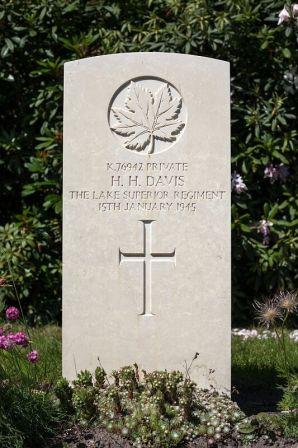
Grave of Harry Henry Davis in Holten from CVWM

Grave of Harry Henry Davis at the Canadian War Cemetery in Holten. (Photo courtesy of Canadian Virtual War Memorial)

….Davis Lake in Yukon Territory is named in Harry’s honour…..

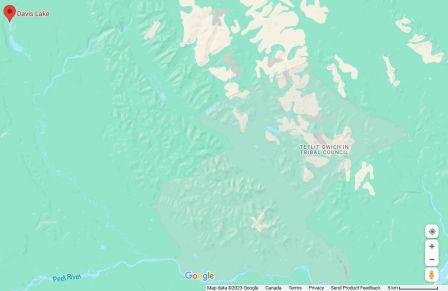
Screenshot 2023-09-29 at 17-00-29 Davis Lake · Yukon Y0B 1J0

Davis Lake in Yukon Territory is named after Harry Henry Davis.  (Map source:  Google maps)

Harry has been honoured by having Davis Lake in Yukon named after him. (116I01- 66° 10’ 37”- 136° 24’ 57”)

Thank you to Roberta Joseph and the Trʼondëk Hwëchʼin government for providing a photo of Harry. Thank you also to Henk Vincent for additional information on the patrols made along the Maas River and letting us know that Harry Davis was the only soldier from the Yukon buried in Holten.

Do you have a story to tell? Pieter encourages you to email him at memorialtrail@gmail.com, or comment on the blog.    

© Daria Valkenburg

…Want to follow our research?…

If you are reading this posting, but aren’t following our research, you are welcome to do so.  Our blog address: https://onthewarmemorialtrail.com/

Front cover OnTheWarMememorialTrailinEurope4 countries, 6 weeks, 7,000 km – an unforgettable war memorial journey in Europe…. Daria’s book ‘No Soldier Buried Overseas Should Ever Be Forgotten‘ is available in print and e-book formats.  Net proceeds of book sales help support research costs and the cost of maintaining this blog. For more information see https://nosoldierforgotten.com/

Subscribe to our YouTube Channel: On The War Memorial Trail With Pieter Valkenburg: https://www.youtube.com/channel/UCJ591TyjSheOR-Cb_Gs_5Kw

Never miss a posting!  Subscribe below to have each new story from the war memorial trail delivered to your inbox.

On The War Memorial Trail…..The Mystery Pennant Commemorating Dutch Royals

speldje bevrijding

June 21, 2020.  While we were in The Netherlands last fall, we received an intriguing email from fellow Islander G. Lawrence Smith:  “...I recall a story my father, Sgt. Earl F. Smith (The Kangaroos, 1st Canadian Armoured Carrier Regiment, only Regiment to be formed in Holland) told to an old friend of his.  During Queen Wilhelmina’s parade in Holland he removed a flag from her vehicle and he was surprised he wasn’t arrested or worse. I still have the flag…

Queen Wilhelmina was the Dutch queen during the WWII years.  After Germany invaded The Netherlands in 1940 she fled to England and spent the war years there in charge of the Dutch government-in-exile, returning in 1945 following liberation. (For more information see https://en.wikipedia.org/wiki/Wilhelmina_of_the_Netherlands)

A flag from a vehicle during one of the royal processions across the country? This was something we had to see!  Lawrence’s father, Sgt. Earl Francis Phinney SMITH, was born in Nova Scotia and enlisted at the No. 6 Depot of the Canadian Army in Halifax on July 22, 1943.  He had originally enlisted in 1940 and served three months with the 2nd Battalion of the North Nova Scotia Highlanders, but was released due to a medical condition.  In 1943 he re-enlisted successfully and was sent overseas on April 30, 1944.

CIMG3692 Dec 2 2019 Earl Smith

Sgt. Earl F. Smith.  (Photo courtesy of G. Lawrence Smith Family Collection)

In 1945, Earl Smith was posted to Hoffmeister Hall in Groningen, an Army School established in a building at the University of Groningen, where he was the Billetts Sergeant.

CIMG3701 Dec 2 2019 GL Smith Groningen Hoffmeister Hall 1945 photo 2

Staff in the front row, Earl Smith second from right. Back row, students and teachers of Hoffmeister Hall’s 5th Division High School in 1945.  (Photo courtesy of G. Lawrence Smith Family Collection)

CIMG3699 Dec 2 2019 GL Smith Groningen Hoffmeister Hall 1945 photo 1

Hoffmeister Hall 5th Division high school staff in 1945.  Front row, left to right: SSM Honsinger, S/Sgt Clark, L/Sgt Lund.  Back row, left to right: L/Sgt Marshall, Sgt Smith. (Photo courtesy of G. Lawrence Smith Family Collection)

Up until we met Lawrence, we were unaware that the Canadian Army had established a school in The Netherlands for Canadian soldiers.  This was fascinating information.  But… what about the flag?  That turned out to be a real mystery.

CIMG3695 Dec 2 2019 GL Smith car flag from 1945

Pieter, left, with G. Lawrence Smith, holding the car flag brought home by Sgt. Earl Smith.  (Photo credit: Daria Valkenburg)

As soon as he saw the flag, Pieter, retired from the Dutch Foreign Service, knew right away that this was not an official royal standard.  We determined that the ‘W’ enclosed in the heart stood for Wilhelmina, while the ‘JB’ at the top likely stood for Wilhelmina’s daughter Juliana, who became queen of The Netherlands in 1948, and Juliana’s husband Bernhard.  (See https://en.wikipedia.org/wiki/Juliana_of_the_Netherlands for more information.)

Nevertheless, Pieter contacted the  Protocol Office of The Dutch Royal House and sent them a photo of the flag, just in case someone recognized it.  No luck.  It was a handmade pennant, with no official recognition.  It would not have been on any vehicle in which Queen Wilhelmina was riding.

We looked through YouTube videos of the Queen during 1945, the year in which several parades took place throughout The Netherlands, just in case we could spot the pennant. Nothing. You can watch one here:

The mystery of the flag continues, unsolved at this point in time. Sgt Smith was discharged on March 9, 1946 and returned home.  His brother, George Laurie SMITH, of the Lake Superior Regiment, was not as lucky.  He died February 26, 1945 in Germany and is buried at the Canadian War Cemetery in Groesbeek, The Netherlands.

Thank you to G. Lawrence Smith for sharing his father’s war experience and the story of the flag.  If you attended Hoffmeister Hall’s Army School, recognize any of the men in the group photos, or can solve the mystery of the pennant with the initials of members of the Dutch Royal Family, please contact Pieter at memorialtrail@gmail.com or comment on the blog.

© Daria Valkenburg

….Want to follow our research?….

If you are reading this posting, but aren’t following our research, you are welcome to do so.  Our blog address: https://onthewarmemorialtrail.com/

4 countries, 6 weeks, 7,000 km – an unforgettable war memorial journey in Europe…. Daria’s book ‘No Soldier Buried Overseas Should Ever Be Forgotten‘ is available in print and e-book formats.  Net proceeds of book sales help support research costs and the cost of maintaining this blog. For more information see https://nosoldierforgotten.com/

You are also invited to subscribe to our YouTube Channel: On The War Memorial Trail With Pieter Valkenburg: https://www.youtube.com/channel/UCJ591TyjSheOR-Cb_Gs_5Kw.

Never miss a posting!  Subscribe below to have each new story from the war memorial trail delivered to your inbox.
On the War Memorial Trail ….. PEI Soldiers Buried In The Canadian War Cemetery in Groesbeek

December 30, 2017.  During our first visit to the Canadian War Cemetery in Groesbeek in The Netherlands, we were able to place flags at the graves of three PEI soldiers buried there.  In the last blog entry we told the story of George Preston SMITH of Kinkora, who was with the North Shore (New Brunswick) Regiment, and the accident in which he lost his life. (See On the War Memorial Trail ….. At The Canadian War Cemetery in Groesbeek)

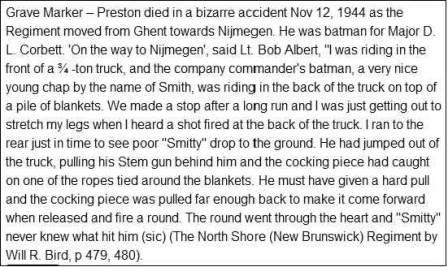
Our thanks to Alice van Bekkum of the Faces to Graves Project, who shared an eye witness account that was recorded by Will Bird in his 1963 book about the North Shore (New Brunswick) Regiment. (See https://books.google.com/books/about North_Shore_New_Brunswick_Regiment.html?id=Iz7WAAAAMAAJ)

Will Bird account of what happened to George Preston Smith

Excerpt about George Preston Smith from Will Bird’s book about The North Shore (New Brunswick) Regiment.

Before returning to place flags at the rest of the known soldiers from PEI, we stopped by a memorial marking the route on February 8, 1945 where soldiers marched into Germany on their way from Groesbeek, as part of Operation Veritable.  This was the northern part of an Allied pincer movement that took place between February 8 and March 11, 1945 during the final stages of the Second World War.

The operation was conducted by Field Marshal Bernard Montgomery’s Anglo-Canadian 21st Army Group, primarily consisting of the First Canadian Army under Lieutenant-General Harry Crerar and the British XXX Corps under Lieutenant-General Brian Horrocks. Their objective was to clear German forces from the area between the Rhine and Maas rivers, east of the German/Dutch frontier, in the Rhineland.

CIMG8998 Sep 15 2017 Pieter by memorial showis where soldiers marched into Germany from Groesbeek operation veritable

Pieter at the memorial for Operation Veritable in Groesbeek. (Photo credit: Daria Valkenburg)

CIMG8996 Sep 15 2017 memorial shows where soldiers marched into Germany from Groesbeek operation veritable

Close-up view of the text on the memorial for Operation Veritable in Groesbeek. (Photo credit: Pieter Valkenburg)

On our second visit to the Canadian War Cemetery in Groesbeek we were joined by Pieter’s former colleague in the Dutch Foreign Service, Ad Scheepers, and his wife Noor, who live in Groesbeek.

CIMG9023 Sep 16 2017 Groesbeek Cemetery Ad & Noor Scheepers with Pieter by Gaudets grave

Ad and Noor Scheepers with Pieter by the grave of Cpl Arthur Gaudet. (Photo credit: Daria Valkenburg)

Ad was a fountain of information about the cemetery, and noted that it was along the Liberation Route, which one can take to visit the many monuments and memorials in this part of The Netherlands.  The cemetery, on a road called Zeven Heuvelenweg (Seven Hills Way), is the largest war cemetery of the Commonwealth Graves Commission in The Netherlands.

Most of the soldiers buried here fell during the fighting on the Lower Rhine between February 8 and March 26, 1945.  It’s called the Canadian War Cemetery and we’d always assumed all of the burials were Canadian, but it’s not true.  By number and nationality, the 2,617 soldiers buried here are from:

  • 2,399 from Canada
  • 267 from Great Britain
  • 3 from Belgium
  • 2 from Poland
  • 2 from Australia
  • 1 from New Zealand
  • 1 from Russia
  • 1 from Yugoslavia
  • 1 from The Netherlands

Inscribed on the Groesbeek Memorial in the cemetery are the names of 1,103 soldiers reported missing in action between August 1944 and May 1945. Only a few have been identified since the memorial was put up. Unfortunately, most are still listed as MIA (Missing In Action).

Ad told us he’d read that the Cross of Sacrifice in the cemetery was positioned where it was so it could be clearly seen from Germany, a stone’s throw away from the border.  It’s likely true, as one prerequisite that Canadian Officers had in selecting land for the cemetery was to have a view of Germany.

In a Dutch reference we read that construction on the cemetery began in 1945 by six Canadian soldiers. The location of the cemetery, on a hilltop, was chosen by Groesbeek Mayor Grotenhuis van Onstein for its view on the German border from the cemetery. The Cemetery was officially opened on May 4, 1947 by the Dutch Queen Wilhelmina. When the cemetery opened, the headstones were made from wood, as was the Cross of Sacrifice.  Later, the headstones were temporarily replaced by metal versions, and beginning in 1950 the headstones and Cross of Sacrifice were replaced by stone designs.

CIMG8945 Sep 15 2017 Groesbeek cemetery Pieter at Cross for remembrance

Pieter by the Cross of Sacrifice at the Canadian War Cemetery in Groesbeek. (Photo credit: Daria Valkenburg)

In alphabetical order, here are the known soldiers from PEI that are buried in the cemetery:

  • L/Cpl Ralph Schurman BOULTER, North Nova Scotia Highlanders, from West Point
  • Pte Lawrence BULGER, North Nova Scotia Highlanders, from Foxley River
  • Major John Weston CAMPBELL, North Nova Scotia Highlanders, from Clermont
  • Cpl Preston D. CAMPBELL, Algonquin Regiment, from Coleman
  • Rifleman William Alfred CANNON, Regina Rifle Regiment, from Pownal
  • Cpl Arthur GAUDET, Les Fusiliers Mont-Royal, from Mont Carmel
  • Sapper Joseph Edmond HENNEBERY, Corps of Royal Canadian Engineers, from Morrell
  • Cpl George Ivan MACKINNON, North Nova Scotia Highlanders, from Mt. Albion
  • Cpl Robert Bruce MACNEILLL, North Nova Scotia Highlanders, from Charlottetown
  • Pte Barney R. MCGUIGAN, North Shore (New Brunswick) Regiment, born in Souris
  • Cpl Stephen A. MCKINNON, Royal Hamilton Light Infantry, from St. Peter’s Bay
  • L/Cpl Edward Gabriel PERRY, Argyll & Sutherland Highlanders of Canada (Princess Louise), from St. Nicholas
  • Pte John Clifford ROGERS, North Shore (New Brunswick) Regiment, born in Hope River
  • Pte Ralph K. SILLIKER, Lake Superior Regiment, from O’Leary
  • Sgt Edison Alexander SMITH, North Nova Scotia Highlanders, from West Point
  • Pte George Preston SMITH, North Shore Regiment, from Kinkora
  • Pte William L. WEATHERBIE, Royal Regiment of Canada, from Charlottetown

Do you have photos or information on any of these soldiers?  If you know of other soldiers from PEI, please help the researchers at the Faces to Grave project by sharing that information. Photos and stories can be sent either through their website at http://facestograves.nl/index.html or by email to info@facestograves.nl.  Alternatively, you can contact us and we will forward your info for you.

Comments or stories?  You can share them by emailing us at memorialtrail@gmail.com, commenting on the blog, or tweet to @researchmemori1.    

© Daria Valkenburg

…Want to follow our research?…

If you are reading this posting, but aren’t following our research, you are welcome to do so.  Our blog address: https://onthewarmemorialtrail.com/

Front cover OnTheWarMememorialTrailinEurope4 countries, 6 weeks, 7,000 km – an unforgettable war memorial journey in Europe…. Daria’s book ‘No Soldier Buried Overseas Should Ever Be Forgotten‘ is available in print and e-book formats.  Net proceeds of book sales help support research costs and the cost of maintaining this blog. For more information see https://nosoldierforgotten.com/

Subscribe to our YouTube Channel: On The War Memorial Trail With Pieter Valkenburg: https://www.youtube.com/channel/UCJ591TyjSheOR-Cb_Gs_5Kw

Never miss a posting!  Subscribe below to have each new story from the war memorial trail delivered to your inbox.