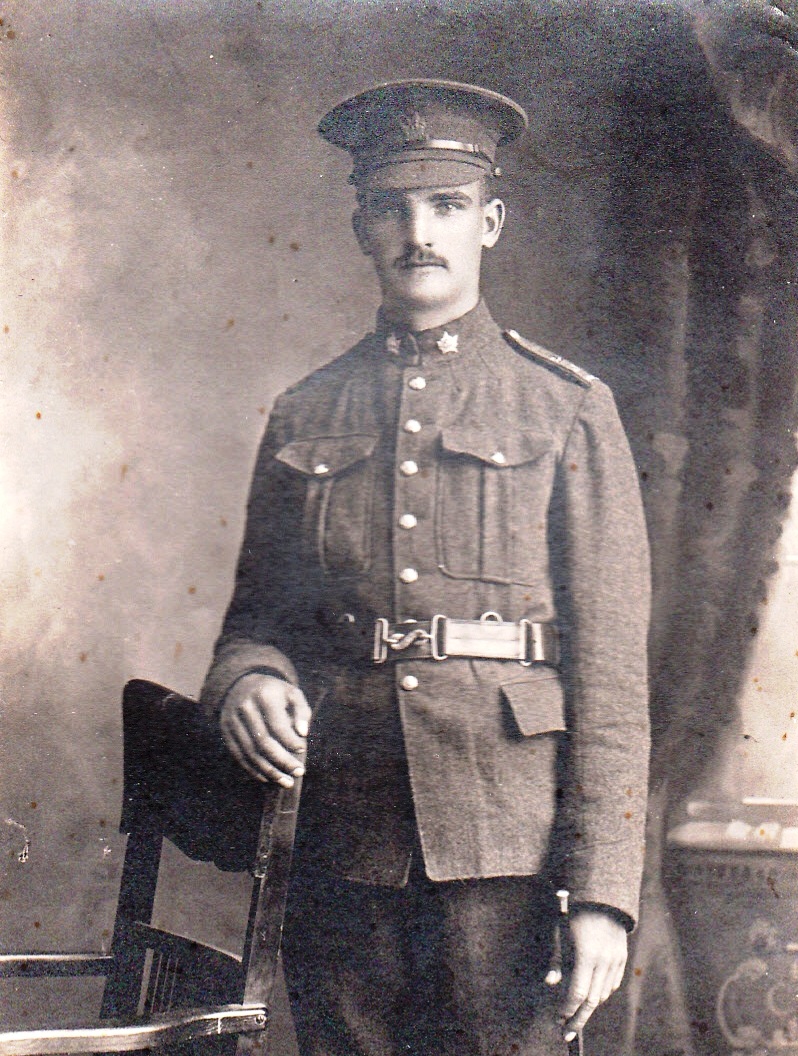
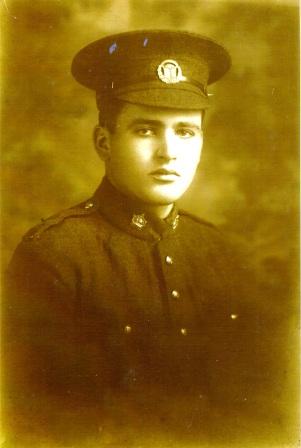
The WW1 Soldier Who Went To Post WW1 Germany

April 29, 2020.  In an earlier posting, the observations made by Harold Keith HOWATT of Augustine Cove towards the end of WW1 were recorded.  (See One Soldier Records His Observations During The Last Few Days Of World War I) Howatt was in the 8th Canadian Siege Battery during WW1 and came home after the war.

8th Siege Battery photo

On October 30, 1918, as Howatt’s unit travelled towards Belgium from France in the last days of the war, the Brigade was inspected by Lt-General Sir Arthur  Currie.  (Harold Howatt collection.  Photo from ‘Purely Personal’ issue of November 30, 1918.)

After the official hostilities ended on November 11, Howatt was in Belgium with his unit, and hoped he could go to Germany with the Army of Occupation.  He got his wish.

On November 17, 1918, Howatt’s unit was informed it would be attached to the 2nd Brigade, the only Canadian Heavy Artillery Brigade going to Germany.

Before the march into Germany, however, Howatt wrote, on November 19, 1918, how happy he was to have a real bath… “...Wonderful to relate, we had a bath parade to the bath at one of the mines. It was a rather long walk but a great bath when we got there, a shower bath with lots of warm water…

Screenshot Map of route to Germany at DuckDuckGo

Route from Mons, Belgium to Mehlem (near Bonn), Germany taken by Howatt’s unit. (Map courtesy of http://www.duckduckgo.com)

On November 20, the unit was on the move. “…Breakfast at 5 o’clock this morning, then we fell in at 6:30 and marched up to the square.  Here we formed up and started for Germany, the lorries ahead, then the signallers and B.C.A.s, then the guns with the gun crews walking behind….” (B.C.A. is an acronym for Battery Commander Assistant, the position held by Howatt.) “...We stopped at a town called Jemappes, about four kms west of Mons.  We were billeted in a big factory, away up in the top story...”  The unit stayed there for a week.

On November 28, 1918, Howatt and his unit were on their way again.  “…Up this morning at 5:30, had two cups of coffee, then breakfast, and away.  We travelled in the lorries through town after town.  Had great fun waving our hands to all the pretty girls as we passed…”  Pretty girls weren’t all that caught Howatt’s interest. “…We stopped in one town for a few minutes and we were talking to a Canadian infantry corporal.  His company was guarding trainloads of munitions left by the Germans.  They had big munitions works in the town, and there were over 300 cars of shells and high explosives in the railway yards…”  Howatt didn’t identify this town, but mentioned that they stopped overnight in Ligny, and he was billeted in a farmhouse with a Belgian family.

The next day, November 29, Howatt continued his account.  “…Left Ligny this morning at about eight o’clock and arrived here in Namur about twelve.  All along the road are abandoned German lorries, tractors, and motorcars.  They must have left hundreds and hundreds behind them.  I don’t know whether these cars have broken down or whether the petrol gave out.  I saw one yard full of lorries….

Namur postcard

Postcard showing the citadel in Namur. (Harold Howatt collection.)

The unit stopped in Namur for a rest break, giving Howatt time to explore the town.  “…Namur is quite a place.  The forts are on a high cliff or hill behind the town.  The town has been badly smashed up in some places….

On December 1, the unit was moving ahead again.  “…We started about seven.   The road ran along the bank of the Meuse, and on the other side are enormous cliffs towering high in the air…..”  While Howatt, as part of the advance party, arrived in Huy around noon to secure accommodations “….the guns did not get in until nearly dark.  Just as we were waiting around for supper Mr. Goodwin came around and said that the B.C.A.s and signallers had to clear the mud off the wheels…”  Howatt, along with a small group, cleared off one gun, but noted that a number of men disappeared, rather than going out in the dark to tackle this task!

The next day, rather than continuing on, the unit was put to work cleaning the guns. On December 4, the unit moved further along to Hamoir, where they stopped for another few days.  On December 8, the unit travelled as far as Petit-Thier “…only 3 kms from the border.  It is a very small place…

On December 9, Howatt recorded that “…At last we are where we have been trying to get for over four years.  ‘In Germany’ This morning, at about eight o’clock we crossed the frontier, the first Canadian Siege Battery to enter Germany….

He noted that the mood in Germany was not the same as in Belgium.  “…About the only difference we noted on crossing the frontier was the absence of flags and any demonstrations on the part of the people.  They still came out when we passed and just looked at us without a word or smile.  One or two we met on the road saluted us.  The people do not seem to fear us, in fact I think they welcome us, hoping the presence of the troops will restore order, and result in a more even distribution of food. The country we passed through today was desolate….” That night they stopped in a small village, Mirfeld, where Howatt was “…billeted in a schoolroom...

On December 10, while trying to find a place to stay in Büllingen, the unit ran into opposition.  “…At first they were going to put us in the station house, but the old station master kicked about it, saying he had a telegram from a conference in Aix-la-Chapelle saying that station houses were not to be used for billeting troops...”  The Canadians found other accommodation.

By December 12, they had reached Cologne, and the next day, December 13, “….the Canadian troops marched across the Rhine, reviewed as they crossed the bridge by General Plumer and General Currie.  It was an inspiring sight to see the Canadians cross to the east bank of the Rhine….. The people here do not seem to be very hostile, in fact many are quite friendly but it must have been a bitter pill for these proud Prussians to swallow to have to witness the occupation of their city by the hated Canadians….

On December 16, the unit travelled to its final destination in Germany.  “….We started about 1:30 pm for Bonn or somewhere near.  We passed through Bonn…. and arrived about dusk in a little town called Mehlem.  We are billeted in an old theatre….

The 2nd Canadian Brigade stayed in Mehlem until January 28, 1919, when the Canadian Army of Occupation was relieved by the British 84th Brigade Royal Garrison Artillery.  Canadian troops moved back to Belgium and then onwards towards demobilization and home. Howatt was discharged on May 18, 1919.

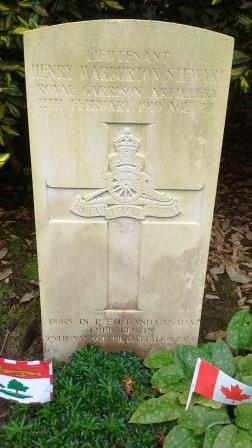
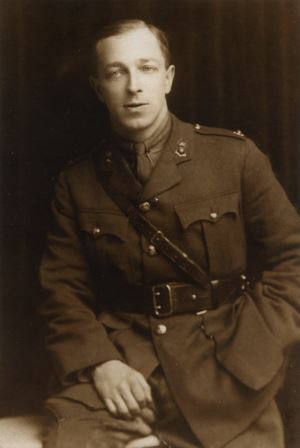
There is an Island link between the Canadian Brigade, which Howatt was part of, and the British Brigade! One of the members of the British Army of Occupation was Lt. Henry “Harry” Warburton STEWART, one of the names listed on the Cenotaph outside the Borden-Carleton Legion.  Stewart died in hospital while in Germany and is buried in Cologne.  (For an account of our visit to the cemetery and his story, see On the War Memorial Trail ….. In Cologne)

Henry Warburton Stewart

Henry “Harry” Warburton Stewart. (Photo courtesy B. Stewart family collection)

At the time we visited Cologne we did not have access to the war diaries for Stewart’s unit.  Thanks to the coronavirus pandemic we got a lucky break.  The National Archives in the United Kingdom has offered free access to its digitized records while the Archives are closed to the public. Pieter was able to get the war diaries, so we now have confirmation why Stewart was in Germany.

His unit, the 77th Siege Battery Royal Garrison Artillery, became part of the 84th Brigade Royal Garrison Artillery, sent to relieve the Canadians.  According to the war diary, on January 29, 1919 “….a party of the 77th Siege Battery arrived in Namur…”  Unlike Howatt’s unit, which travelled by road, this unit “…. travelled to Mehlem by train...”  No mention is made of where in Mehlem the 77th Siege Battery was billeted.  Stewart must have fallen ill shortly after arriving in Mehlem as he ended up in hospital in nearby Bonn and died on February 11.

Unfortunately, as yet, we have not yet found a photo of Harold Howatt.  As well, the service file for Henry Warburton Stewart has not yet been digitized by the National Archives and is not available online. Can you help?  If so, please let Pieter know.  You can email him at dariadv@yahoo.ca or comment on the blog.

© Daria Valkenburg

The WWI Names On The Cenotaph Have Stories Of Their Own

February 8, 2020. Recently, Pieter and a friend went to see the British WW1 movie ‘1917’, which is nominated for several Oscars and has a Canadian connection due to a map used in the film.  (For that story see https://www.cbc.ca/news/entertainment/1917-canadian-contribution-1.5450608)  The story takes place in France on April 6, 1917, and is about two men tasked with delivering a message to another unit to warn of a German ambush.  The men go through several towns and villages in France’s Western Front.  Canadians may remember this period as being the lead up to the Battle of Vimy Ridge on April 9, 1917.

Pieter found the movie of great interest for several reasons. It was a depiction of the horrors of war… without being overly gory.  After being through the trenches and tunnels in Vimy Ridge a few years ago, he was intrigued to see the way soldiers sat on either side of a trench while waiting to go up into battle.   But the main reason he liked the movie is that it told the story of two people.

Contrary to what we learn in history books and classes, in the end all history is the cumulative stories of individuals.  A list of names on a cenotaph, such as the one outside the Borden-Carleton Legion, is meaningless without knowing who those people were and what happened to them.  This is what started Pieter on the journey to uncover the stories behind the names on the Cenotaph.

Over the years, the stories of those from WWI have been told in this blog.  24 are listed on the Cenotaph and half of them died in France…. Patrick Raymond ARSENAULT and John Lymon ‘Ly’ WOOD are listed on the Vimy Memorial as their bodies were never identified.    Also killed in France were Kenneth John Martin BELL, James CAIRNS, James Ambrose CAIRNS, Arthur Leigh COLLETT, Bazil CORMIER, Patrick Phillip DEEGAN (DEIGHAN), Joseph Arthur DESROCHES, Percy Earl FARROW (FARRAR), Ellis Moyse HOOPER, and Charles W. LOWTHER.  We were at the Vimy Memorial and visited each grave.

Five men died in Belgium. Two are listed on the Menin Gate Memorial in Ypres, as their bodies were never identified: Charles Benjamin Murray BUXTON and George Albert CAMPBELL.  We visited Menin Gate and the area where they died.  We also visited the graves of James Lymon CAMERON, Vincent Earl CARR, and Arthur Clinton ROBINSON.

Vincent Carr, who died during the Battle of Passchendaele on October 30, 1918, was initially buried in a trench with 4 others – two Canadian and two British soldiers.  Decades later, when they were reburied in a Commonwealth War Graves Commission cemetery, all three Canadians were still identifiable.  The British Army’s cardboard identity ‘tags’ had disintegrated, leaving the two British soldiers as unidentified.  Today, DNA testing can be done to help with identity, but decades ago this was impossible.

Two men died in England.  John Goodwill HOWATT was wounded in France, and died in a British hospital.  Bruce Sutherland McKAY had gotten ill during the transport from Canada to England and also died in a British hospital.

Henry Warburton STEWART survived the war, only to fall ill while in Germany as part of the occupation forces.  He’s buried in a German cemetery in Cologne, which we visited.

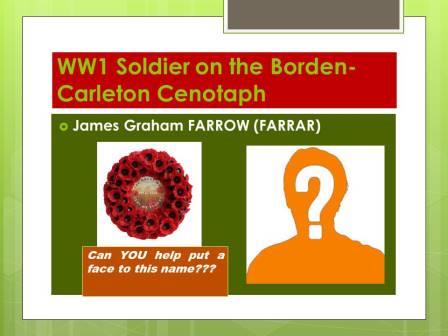
James Graham FARROW (FARRAR) was not a soldier, but in the Merchant Navy, transporting vital supplies between England and France, when his ship was torpedoed by a U-boat.

Three men died on Canadian soil.  Leigh Hunt CAMERON died of illness, while Harry ROBINSON died from blood poisoning.  William Galen CAMPBELL was poisoned with mustard gas on May 28, 1918, a few months before the end of the war, but was able to return home.  And yes, we’ve visited those graves as well.

We were also able to tell you parallel stories, such as that of Clifford Almon WELLS, who had many of the same experiences as John Lymon Wood, and also died in France. Another story was that of George BRUCKER, of the German Army, who was taken prisoner during the Battle of Vimy Ridge, and survived the war, never forgetting the two ‘tall’ Canadians who didn’t shoot him.  Decades later his son, now in his 80s, is still hoping to thank the families of those two unknown men.

Thanks to Pieter’s curiosity in trying to find out why one Commonwealth War Graves Commission gravestone in a cemetery in Cape Traverse was not recorded on the Cenotaph, we were able to tell you the story of Elmyr KRUGER, a soldier from Saskatchewan who died of illness while guarding German prisoners of war from a POW camp in Amherst.

We’ve told the stories of each man, and shared our visits to the various cemeteries and war memorials.  As photos and letters came in, we shared those experiences as well.

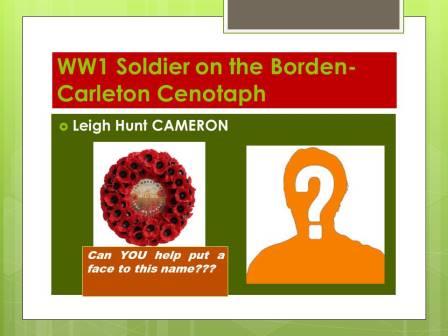
We are still missing photos of several of these soldiers, so the quest to put a face to every name and story is still ongoing.  Who are we missing?  Take a look and see if you can help:

Slide6

Slide8

Slide9

Slide10

Slide13

Slide15

Slide16

Slide20

Slide22

Slide23

UPDATE:  Photos of James Cairns, Joseph Arthur Desroches, and Harry Robinson have been found!

It’s great to watch a movie about fictional characters, but let’s not forget the stories of real life people! There won’t be any Academy Awards given out, but they will be remembered. Research continues to uncover more stories.  If you have a story or photo to share about any of the names mentioned in this posting, please contact Pieter at memorialtrail@gmail.com or comment on the blog.

© Daria Valkenburg
....Want to follow our research?…

If you are reading this posting, but aren’t following our research, you are welcome to do so.  Our blog address: https://onthewarmemorialtrail.com/

4 countries, 6 weeks, 7,000 km – an unforgettable war memorial journey in Europe…. Daria’s book ‘No Soldier Buried Overseas Should Ever Be Forgotten‘ is available in print and e-book formats.  Net proceeds of book sales help support research costs and the cost of maintaining this blog. For more information see https://nosoldierforgotten.com/
Subscribe to our YouTube Channel: On The War Memorial Trail With Pieter Valkenburg: https://www.youtube.com/channel/UCJ591TyjSheOR-Cb_Gs_5Kw

Never miss a posting!  Subscribe below to have each new story from the war memorial trail delivered to your inbox.

On the War Memorial Trail …..The Spirit of Remembrance Continues

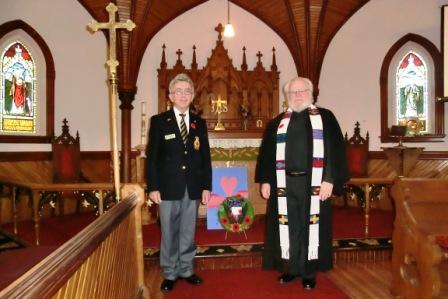
November 13, 2018.  This year, Pieter was invited to be the guest speaker at St John The Evangelist Anglican Church in Crapaud, during their Remembrance Day Service.  In his opening remarks, Pieter noted that: “This special Remembrance Day marks the end of the First World War.  It’s a day to remember the memories and sacrifices made by those who did their best to answer the call to fight for freedom. 

This church remembers those who served through the Honour Rolls that hang on the wall to my left.  Every Remembrance Day, the names are read out, as they were today.  Five of these men are listed on the Cenotaph outside the Borden-Carleton Legion, 3 from WWI and 2 from WWII.  I’d like to briefly tell you a bit about them…

CIMG2820 Nov 11 2018 Pieter with Rev Eric Lynk

Pieter with Rev Eric Lynk at St John the Evangelist Anglican Church in Crapaud. (Photo credit: Daria Valkenburg)

Pieter then talked about the following men: Arthur Leigh COLLETT, Percy Earl FARROW (FARRAR), Henry “Harry” Warburton STEWART, William Douglas SHERREN, and Ernest Murray NORTON.  One focus was on how they were remembered, as Pieter explained:  “When we think of soldiers in war, we picture them in trenches, facing an enemy.  But they were also people with hopes and dreams, just like you and me, who made the difficult choice to put aside their immediate futures and accept the duty thrust upon them…

Remembrance Day is now over for another year, but the Borden-Carleton Cenotaph Research Project continues in its quest to put a face and story to every name.  This posting is to thank the many people who have supported this project by providing information and photos, and in adding their own voices to the importance of remembrance.

The County Line Courier newspaper has supported this project from the beginning.  We thank Mike and Isabel Smith for helping to get the word out by publishing a story in almost every issue.

CBC PEI Radio has also been supportive in helping us reach a wider audience, with a special thank you to Angela Walker of CBC’s Mainstreet PEI.

We thank the three churches in the South Shore area that invited Pieter to come and speak about the Cenotaph Research Project:  Central Trinity United Church in Breadalbane, St John The Evangelist Anglican Church in Crapaud, and South Shore United Church in Tryon.

Several ministers referenced the project or some of the names on the Cenotaph in their sermons.  Rev Dr Karen MacLeod-Wilkie of South Shore United Church made mention of the project and PEI pilot Elmer Bagnall MUTTART in her November 4 sermon.  Our thanks to Jack Sorensen for sending us this sound clip:  https://soundcloud.com/user-756553111/rev-karens-remarks-about-elmer-muttart-november420182/s-uCEps.

We also thank Rev Kent Compton of the Church of Scotland in Cape Traverse.  We’ve been informed by neighbours that he mentioned the project in his remarks during the Remembrance Service organized by the Augustine Cove Women’s Institute.

We thank the Tryon & Area Historical Society here on PEI and the Missing Airmen Memorial Foundation in The Netherlands for their efforts to raise funds for a memorial panel in Wons to honour Elmer Muttart and the crew of Halifax L9561, and we thank all who donated to this project.  The ceremony to install the memorial panel is planned for October 12, 2019.

On November 1, 2018, PEI Senator Mike Duffy spoke about the Cenotaph Research Project in the Senate.  It’s now recorded in the official Hansard records, and we thank him for highlighting this project of remembrance. (See Hansard entry: 2018 Hansard Entry remarks by Mike Duffy ) Mr. Duffy went one step further, by submitting an article to the newspaper with his comments, a complete surprise to us when we opened up the newspaper.  (See article:  CLC Nov 7 2018 p15 article by Mike Duffy)

Meeting the families of the men listed on the Cenotaph is a particular honour.  We thank those who sent photos, letters, documents, and hope to meet more families in the coming year.

We also thank you, the readers of these postings.   Research continues, and we hope you will enjoy the stories in upcoming blog postings.

If you have photos or information to share on soldiers from the Cenotaph outside the Borden-Carleton Legion, please let us know. Send us an email to memorialtrail@gmail.com, comment on the blog, or tweet to @researchmemori1.

© Daria Valkenburg

….Want to follow our research?….

If you are reading this posting, but aren’t following our research, you are welcome to do so.  Our blog address: https://onthewarmemorialtrail.com/

Front cover OnTheWarMememorialTrailinEurope4 countries, 6 weeks, 7,000 km – an unforgettable war memorial journey in Europe…. Daria’s book ‘No Soldier Buried Overseas Should Ever Be Forgotten‘ is available in print and e-book formats.  Net proceeds of book sales help support research costs and the cost of maintaining this blog. For more information see https://nosoldierforgotten.com/ 

You are also invited to subscribe to our YouTube Channel: On The War Memorial Trail With Pieter Valkenburg: https://www.youtube.com/channel/UCJ591TyjSheOR-Cb_Gs_5Kw

Never miss a posting!  Subscribe below to have each new story from the war memorial trail delivered to your inbox.

On The War Memorial Trail….Honouring The Lives Of Soldiers From the Anglican Church in Crapaud

July 15, 2018.  On July 12, Pieter was invited to give a presentation about the Cenotaph Research Project at St. John the Evangelist Church in Crapaud.  As the families of a number of the names on the Cenotaph outside the Borden-Carleton Legion had been members of this church, we made sure that they were featured in the presentation.

These included:

  • Arthur Leigh COLLETT (WWI)
  • Henry Warburton STEWART (WWI)
  • Ernest Murray NORTON (WWII)
  • William Douglas SHERREN (WWII)

Reverend Margaret Collins introduced Pieter, tying in Pieter’s research to remembrance. Among the audience members were several families of the names on the Cenotaph, which made the event very special. Many brought photos and letters, which will increase our knowledge of the lives of these men.  Families in attendance represented the following men:

  • Arthur Leigh COLLETT  (WWI)
  • Elmer Allister MABEY (WWII)
  • Joseph Charles MCIVER (WWII)
  • Ernest Murray NORTON (WWII)
  • Arthur Clinton ROBINSON  (WWI)
  • William Douglas SHERREN (WWII)
  • George Preston SMITH (WWII)
  • John Lyman WOOD  (WWI)
CIMG1010 Jul 12 2018 Pieter at podium Presentation at Anglican Church in Crapaud

Pieter at the podium at St John the Evangelist Anglican Church in Crapaud. (Photo credit: Daria Valkenburg)

The presentation was well received, with refreshments provided by the Church afterwards, where people could speak with Pieter and each other. Hazel Robinson of the Tryon & Area Historical Society accepted donations to the “Muttart Memorial Fund”.

One person who attended commented afterwards that “I was there to hear more info on Lyman Wood, an ancestor. So pleased to see an interest, amazing to me to see someone speak of him 100 years on. Wood family is very proud of him. I did get to Vimy Ridge in 2007 for 90th, and found his name as well, pretty awesome.  I love Canadian military history, just love the stories, good and bad. Really enjoyed your presentation.  Thanks for all the amazing work that you have done!

CIMG1016 Jul 12 2018 With George Preston Smith family Presentation at Anglican Church in Crapaud

Pieter with the family of WW2 soldier George Preston Smith. (Photo credit: Daria Valkenburg)

CIMG1022 Jul 12 2018 With Reid & Bruce Norton Presentation at Anglican Church in Crapaud

Pieter with Reid (left) and Bruce (right) Norton, nephews of WW2 soldier Ernest Murray Norton. (Photo credit: Daria Valkenburg)

CIMG1023 Jul 12 2018 With Charlie Sherren Presentation at Anglican Church in Crapaud

Pieter with Charlie Sherren, nephew of WW2 soldier William Douglas Sherren. (Photo credit: Daria Valkenburg)

Our thanks to Reverend Margaret Collins and Connie MacKinnon of St. John the Evangelist Anglican Church for inviting Pieter to speak, and for their warm hospitality in making this event the success it was.

If you would like Pieter to come and speak about his research, he is open to receiving invitations.  Email him at memorialtrail@gmail.com.

Photos are still needed for many of the names on the Cenotaph outside the Borden-Carleton Legion, so please dig out those old albums and take a look.  You can share your photos, comments, or stories by emailing us at memorialtrail@gmail.com, comment on the blog, or send a tweet to @researchmemori1.

UPDATE:  This project was completed in October 2019!

Donations are still being collected towards the ‘Muttart Memorial Fund’ for a memorial panel in Wons, The Netherlands.  If you would like to donate, cheques may be written out to TAHS and mailed to Tryon & Area Historical Society (TAHS), PO Box 38, Crapaud PE C0A 1J0.  In the subject line, identify your cheque as being for the “Muttart Memorial Fund”.  A charitable donation receipt will be sent to all donors. 

If you wish to donate and you live in Europe:  Bank transfers may be made to Stichting Missing Airmen Memorial Foundation, Bank Account # (IBAN) NL35ABNA0569579856, and state in the subject line “Attn D.S. Drijver for Halifax L9561”.

© Daria Valkenburg

…Want to follow our research?….

If you are reading this posting, but aren’t following our research, you are welcome to do so.  Our blog address: https://onthewarmemorialtrail.com/

Front cover OnTheWarMememorialTrailinEurope4 countries, 6 weeks, 7,000 km – an unforgettable war memorial journey in Europe…. Daria’s book ‘No Soldier Buried Overseas Should Ever Be Forgotten‘ is available in print and e-book formats.  Net proceeds of book sales help support research costs and the cost of maintaining this blog. For more information see https://nosoldierforgotten.com/ 

You are also invited to subscribe to our YouTube Channel: On The War Memorial Trail With Pieter Valkenburg: https://www.youtube.com/channel/UCJ591TyjSheOR-Cb_Gs_5Kw

Never miss a posting!  Subscribe below to have each new story from the war memorial trail delivered to your inbox.

On the War Memorial Trail ….. In Cologne

February 26, 2018.  After visiting the graves of all the names listed on the Cenotaph outside the Borden-Carleton Legion who were buried or listed on monuments in France, Belgium, and The Netherlands, we had one visit and one country left for this trip… to the Cologne Southern Cemetery, located in the Südfriedhof Cemetery in Cologne, Germany, and the grave of WWI soldier Lt. Henry Warburton STEWART.

This trip almost proved to be my undoing.  After a long drive to Cologne, we finally found the cemetery, located at an intersection of tram lines in a busy part of Cologne.  Pieter was in a rush to get moving after the long car ride, and sprinted ahead to find the Commonwealth War Graves Cemetery.

Südfriedhof Cemetery is a very large public cemetery, the largest we’ve ever been in, with many paths and turns.  Only one small sign at the entrance indicates that there is a Commonwealth War Graves Cemetery located here.  Once inside the cemetery, we soon learned that there are no directional markers to it.

CIMG9274 Sep 24 2017 Cologne Pieter at entrance to Sudfriedhof cemetery

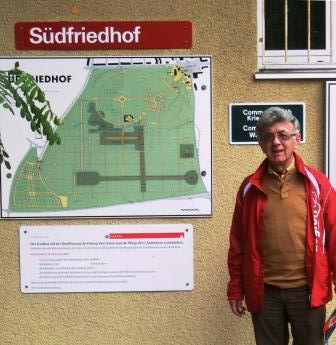
Sign at the entrance to Südfriedhof Cemetery with a map of the cemetery, and a very small sign behind Pieter’s head giving an indication that there is also a Commonwealth War Graves Cemetery located here. (Photo credit: Daria Valkenburg)

With Pieter long gone, I slowly hobbled my way on the gravel paths, trying to figure out where to go.  Most cemeteries are in clear lines, but this one was like a maze.  It was beautifully maintained, but quite dark and to my mind, a bit depressing.  As it was a Sunday, there were many people in the cemetery.  When we’d been in cemeteries in South America, many were like parks, with wide paths, park benches, and children laughing and playing.  People sat on benches and visited with each other. Outside the entrance, there were kiosks selling ice cream, balloons, and flowers.  Not this cemetery.  It was quiet and people talked very softly to each other.  Occasionally I saw people tending the graves of their family members.

It was very humid, and as I made my way, hoping not to get lost, I could feel my hair curling and frizzing.  My arthritic hip was aching and walking with a cane on gravel meant moving even more slowly than usual.  After close to a km of walking, I finally saw what I believed to be a sign to the Commonwealth War Graves Cemetery.  The sign said “Graves of the Victims of the War from 1914-1918”.

CIMG9284 Sep 24 2017 Cologne sign at Sudfriedhof cemetery directing one to the victims of WW1

Sign pointing to the graves of WWI victims. (Photo credit: Daria Valkenburg)

I took that path and came into an area of the cemetery surrounded by hedges, making a rather dark cemetery look even drearier.  To my surprise, however, the WW1 victims were German soldiers who had died during the war.  It took me a long time afterwards to realize that to their families, they were just as much victims as Allied soldiers.

Only one young man was in this part of the cemetery, planting flowers by a grave.  I hesitantly asked if he knew where the Commonwealth War Graves Cemetery was.  He looked at me for quite a few minutes and at first I thought he wasn’t going to answer, but then figured out that he was as surprised to find me in that part of the cemetery as I was.  “Just follow the path and you will come to the gate for the English soldiers” he said.  We wished each other a good day and I kept on.

Finally, I found the gate to the Cologne Southern Cemetery and discovered it was the back door gate, not the entrance.  Pieter was waiting by the grave of Henry Warburton Stewart, and had already put down the flags and written in the cemetery register.  He’d forgotten who had the camera, otherwise he probably would have already gone back to the car!

IMG_20170924_113711423 Sep 24 2017 grave of Henry Warburton Stewart at Cologne Southern Cemetery

Grave of Henry Warburton Stewart at Cologne Southern Cemetery. (Photo credit: Pieter Valkenburg)

The story of Henry Warburton Stewart is a sad one, as he survived WW1, only to die of pneumonia after contracting Spanish flu in Germany, far away from his comrades.  Born in Strathgartney on April 15, 1884, the son of Robert Bruce Stewart and Ann, nee Warburton, he was a civil engineer when he enlisted as a private with the 29th Battalion (Tobin’s Tigers) in Vancouver on November 30, 1914.

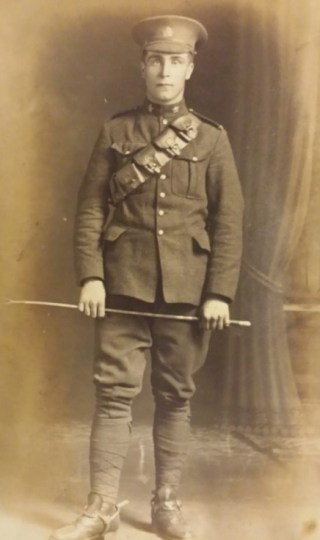
Henry Warburton Stewart

Henry Warburton Stewart. (Photo courtesy B. Stewart family collection)

After serving in the trenches of France for two years, he was discharged with excellent recommendations by the Canadian Army on March 9, 1917 in England and commissioned as a Lieutenant in the Imperial Army’s 77th Siege Battery Royal Garrison Artillery.  Since we have not been able to get access to the war diaries of this unit, we presume that he was sent to Germany as part of the post-occupation forces and there fell ill, dying on February 11, 1919 at No. 2 Canadian Field Hospital in Bonn.  He was buried with military honours at Poppelsdorf Cemetery in Bonn.

In 1922, it was decided that the graves of Commonwealth soldiers who had died in Germany should be brought together in one of four cemeteries within Germany.  Stewart was reburied in Cologne Southern Cemetery.

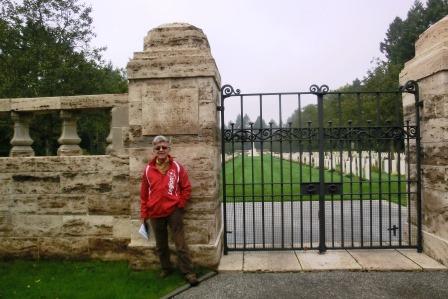
CIMG9281 Sep 24 2017 Cologne Pieter at entrance to Cologne Southern Cemetery in Sudfriedhof cemetery

Pieter at the entrance to Cologne Southern Cemetery, located in Südfriedhof Public Cemetery in Cologne. (Photo credit: Daria Valkenburg)

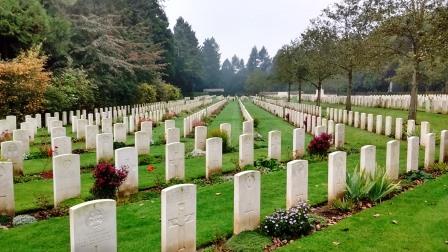
Unlike the portion of the cemetery where the German soldiers rest, Cologne Southern Cemetery is open and airy.

IMG_20170924_114611116_HDR Sep 24 2017 View of graves in Cologne Southern Cemetery

Commonwealth war graves in Cologne Southern Cemetery. (Photo credit: Pieter Valkenburg)

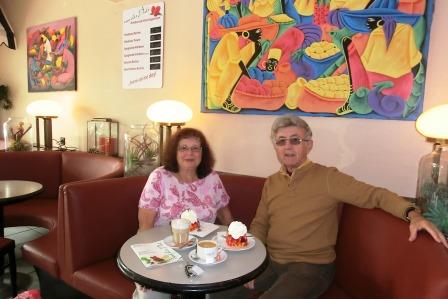
After paying our respects to Lt. Stewart, we slowly made our way back towards the car.  Pieter noticed a pastry shop across the road and suggested we mark the end of our war memorial tour with a piece of cake and a cup of coffee.

CIMG9286 Sep 24 2017 Cologne time for a fruit tart and coffee at Van der Put cafe after Sudfriedhof cemetery

Coffee break at Van der Put café in Cologne.

So, after four European countries and 7,000 km on the rental car, the research now continues on Canadian soil.  We had an amazing adventure and met many wonderful people dedicated to helping to remember the wartime sacrifices of Canadian and other Allied soldiers.  We are humbled and grateful to play a small part in this.

Unfortunately, we know little about Stewart’s service in the Imperial Army as those records are not digitized and are at The British National Archives.  If anyone has more information, please let us know.  As well, photos are still needed for many of the names on the Cenotaph outside the Borden-Carleton Legion.   Please share your photos, comments, or stories by emailing us at memorialtrail@gmail.com or by commenting on this blog.

© Daria Valkenburg

….Want to follow our research?….

If you are reading this posting, but aren’t following our research, you are welcome to do so.  Our blog address: https://onthewarmemorialtrail.com/

Front cover OnTheWarMememorialTrailinEurope4 countries, 6 weeks, 7,000 km – an unforgettable war memorial journey in Europe…. Daria’s book ‘No Soldier Buried Overseas Should Ever Be Forgotten‘ is available in print and e-book formats.  Net proceeds of book sales help support research costs and the cost of maintaining this blog. For more information see https://nosoldierforgotten.com/ 
You are also invited to subscribe to our YouTube Channel: On The War Memorial Trail With Pieter Valkenburg: https://www.youtube.com/channel/UCJ591TyjSheOR-Cb_Gs_5Kw

Never miss a posting!  Subscribe below to have each new story from the war memorial trail delivered to your inbox.

The WWI Names On The Cenotaph

July 28, 2017.  With a plan to have a book and photo memorial ready for the 100th anniversary of the end of WWI, Pieter wanted to publicize the names of the WWI war dead.  While we had quite a bit of luck with the names from WWII on the Cenotaph outside the Borden-Carleton Legion in Prince Edward Island, we weren’t so lucky with the WWI names.

In some cases, family couldn’t be found.  Sometimes we found family only to be told they either never heard of the person.  Most of the time, the family was aware of the person, but no photo survived, let alone other documents such as letters or postcards.

So here is what we know so far….

  • Patrick Raymond ARSENAULT, born October 14, 1896 in Bedeque to Joseph Arsenault and Isabella, nee Richard. No photo. UPDATE: PHOTO FOUND
  • enneth John Martin BELL, born March 28, 1896 in Cape Traverse to William Bell and Lucy, nee Rogerson. No photo. UPDATE: PHOTO FOUND
  • Charles Benjamin BUXTON, born December 8, 1893 in Cape Traverse to George Edward Buxton and Mary Jane (May), nee Webster. No photo. UPDATE: PHOTO FOUND
  • James Ambrose CAIRNS, born March 16, 1895 in Emerald to Terrence Cairns and Elisabeth, nee Hughes. No photo.
  • James CAIRNS, born February 22, 1897 in Kinkora to Thomas Cairns and Mary Jane, nee McDonald. No photo. UPDATE: PHOTO FOUND
  • James Lymon CAMERON, born December 30, 1892 in Victoria to Edward H. Cameron and Susan, nee Harrington. No photo.
  • Leigh Hunt CAMERON, born May 6, 1898 in Albany to Alexander Walter Cameron and Phoebe Ann, nee Murray. No photo.
  • GG.A. Campbell blogeorge Albert CAMPBELL, born July 8, 1895 in Wellington to John George Campbell and Grace Emma, nee Barlow.

Photo: George Albert Campbell.  (Photo courtesy of Gerald Tingley collection)

  • William Galen CAMPBELL, born June 16, 1897 in Wellington to John George Campbell and Grace Emma, nee Barlow. He married Ida May McNally in 1919.  No photo.
  • Vincent CARR, born May 3, 1894 in North Tryon to Robert Carr and Catherine. He married Bessie Carr of Summerside.

1915 Photo Vincent E Carr in uniform.jpgPhoto: Vincent Carr in 1915, in the uniform of the 55th Battalion.  (Photo courtesy of Delbert Carr collection)

  • Arthur Leigh COLLETT, born December 8, 1888 in Victoria to Ella May Simmons, and was adopted by William Henry Collett and Alice M., nee Moore.Arthur Collett blogPhoto: Arthur Leigh Collett.  (Photo courtesy of Paul and Heather Moore collection)
  • Bazil CORMIER, born January 8, 1897 in Tignish to Joseph Cormier and Marie, nee Arsenault. No photo.
  • Patrick Philip DEEGAN, born November 25, 1894 in Cape Traverse to Alexander Deegan and Margaret Ann, nee Tierney. No photo. UPDATE: PHOTO FOUND
  • Joseph Arthur DESROCHES, born August 8, 1891 in Miscouche to Zephirim Desroches and Priscilla, nee Gaudet. He married Mary Ann Wedge in 1910 and had 3 children: Elizabeth Eileen, Joseph Alfred, Lucy Priscilla, and Charles Arthur. No photo. UPDATE: PHOTO FOUND
  • James Graham FARROW, born April 4, 1856 to Henry Farrow and Jan Gouldrup, birthplace unknown. No photo.
  • Percy Earl FARROW (FARRAR), born July 30, 1895 in North Tryon to William Farrar and Margaret Jane, nee McKinnon.

Percy Farrar

Photo: Percy Farrar.  (Photo courtesy of South Shore United Church collection)

  • Ellis Moyse HOOPER, born October 20, 1895 in Central Bedeque to Charles Frederick Allison Hooper and Bessie Marie, nee Moyse.

Hooper, Ellis Moyse blogPhoto: Ellis Moyse Hooper.  (Photo courtesy of Lana Churchill collection)

  • John Goodwill HOWATT, born May 8, 1894 in Cape Traverse to Edward George Howatt and Emma May, nee Wood. No photo. UPDATE: PHOTO FOUND
  • Charles W. LOWTHER, born September 27, 1896 in North Carleton to Henry George Lowther and Bessie Cottrell, nee Wright. No photo.
  • Bruce Sutherland MCKAY, born April 15, 1897 in Albany to David McKay and Elmira (Almira), nee Harvey. No photo. UPDATE: PHOTO FOUND
  • Arthur Clinton ROBINSON, born July 20, 1896 in Tryon to Albert James Robinson and Flora P., nee Scruton. His step-mother was Mary Mooney. No photo.
  • Harry ROBINSON, born July 9, 1881 in Augustine Cove to Thomas Robinson and Sarah, nee Campbell. He married Clara J. Wadman in 1905 and had a daughter Merilla. No photo.
  • Henry Warburton STEWART, born April 15, 1884 in Strathgartney to Robert Bruce Stewart and Ann, nee Warburton. No photo. UPDATE: PHOTO FOUND
  • John Lymon WOOD, born July 8, 1897 in North Tryon to George William Wood and Martha, nee Heatly.
Photo Lyman Wood

Photo: John Lyman Wood shortly after enlistment in October 1915. (Photo courtesy of Gene Rogerson collection)

We hope you enjoy this third article that ran in July 2017, “Are You Related To These WWI Soldiers?” in the County Line Courier.    CLC July 5 2017 p4 Are you related to WW1 soldiers

If you have photos or documents you’d like to share, please email them to memorialtrail@gmail.com.  Comments or stories?  You can share them by email or by commenting on this blog.

© Daria Valkenburg

….Want to follow our research?….

If you are reading this posting, but aren’t following our research, you are welcome to do so.  Our blog address: https://onthewarmemorialtrail.com/

Front cover OnTheWarMememorialTrailinEurope4 countries, 6 weeks, 7,000 km – an unforgettable war memorial journey in Europe…. Daria’s book ‘No Soldier Buried Overseas Should Ever Be Forgotten‘ is available in print and e-book formats.  Net proceeds of book sales help support research costs and the cost of maintaining this blog. For more information see https://nosoldierforgotten.com/ 
You are also invited to subscribe to our YouTube Channel: On The War Memorial Trail With Pieter Valkenburg: https://www.youtube.com/channel/UCJ591TyjSheOR-Cb_Gs_5Kw

Never miss a posting!  Subscribe below to have each new story from the war memorial trail delivered to your inbox.