On The War Memorial Trail….. The WWI Soldier From Tryon Who Was Raised By His Grandparents

July 24, 2023.  When Pieter was contacted by Ivan MacDonald about Ivan’s father, we initially thought we would be researching a WWII soldier from Prince Edward Island.  We were wrong. Ivan’s father, Angus Clayton MACDONALD, served in WWI!
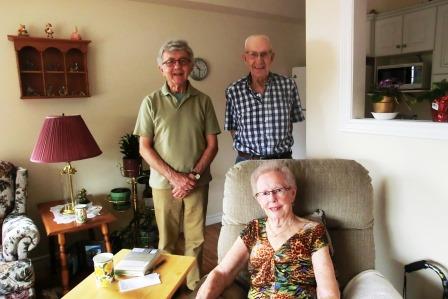
CIMG6416 Jul 4 2023 Pieter Ivan & Edna MacDonald

Pieter with Ivan MacDonald and Ivan’s wife Edna. (Photo credit: Daria Valkenburg)

…He was brought up by his grandparents in Mount Tryon” Ivan explained. 

Ivan’s nephew, Philip MacDonald, sent us the Service Regimental Number for Angus, which meant Pieter could easily find the WWI Service File.  “…Angus MacDonald was my grandfather. He was born on May 2, 1896 to a single mom, Alice MacDonald, who later married John Heatly (aka Hately) from Tryon. Grampy was raised by Donald and Christy MacDonald so this is how as a boy he learned to speak Gaelic….

…Angus enlisted in Charlottetown…

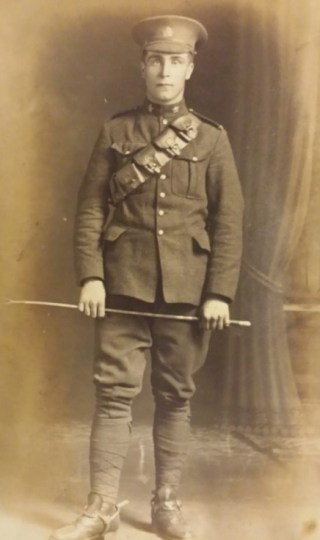
colourized Angus Clayton MacDonald

Angus Clayton MacDonald. (Photo courtesy of the MacDonald Family. Photo colourization by Pieter Valkenburg)

On August 29, 1917, the Military Service Act came into effect, stating that all males between 20 and 45 were subject to conscription until the end of the war.  (See https://www.thecanadianencyclopedia.ca/en/article/military-service-act)

The enlistment form for Angus noted that he had been drafted when he enlisted with H Company, 1st Depot Battalion, Nova Scotia Regiment, in Charlottetown, Prince Edward Island, on March 21, 1918.  In the form, he stated that he was born on May 2, 1897 in Tryon, Prince Edward Island, and was a farmer.  (This was a year later than other records stated.)

We asked Ivan if Angus had enlisted at the same time as any relatives or friends, and he said he didn’t know.  We found that Bruce Sutherland MCKAY, who grew up not far from Angus, enlisted on the same day in the same Regiment. (See https://onthewarmemorialtrail.com/2019/04/22/the-ww1-soldier-who-never-made-it-to-the-front/

…Angus sailed to England aboard the SS Scotian…
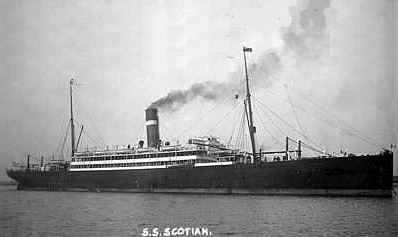
HMT_Scotian

Angus Clayton MacDonald and Bruce Sutherland McKay travelled to England on the same voyage aboard the troopship Scotian. (Photo source: https://birtwistlewiki.com.au/wiki/HMT_Scotian)

Within a few weeks of enlistment Angus was on his way to the United Kingdom, aboard the troopship SS Scotian, arriving in Liverpool, England on April 28, 1918. 

Upon arrival, Angus was sent to Segregation Camp, Frensham Pond, in Bramshott. This was a prudent measure as the first wave of infectious diseases had already affected men held in crowded conditions.  In April 1918, senior military officials had set up segregation camps to hold arrivals from Canada for 28 days before joining their units.

Bruce Sutherland McKay was on the same voyage, but once they docked in England, their paths diverged as McKay had developed scarlet fever during the journey.

On May 5, 1918, Angus was admitted to the 12th General Hospital in Bramshott with mumps.  It wasn’t until July 10, 1918 that he was discharged, assigned to the 2nd Canadian Convalescent Depot (CCD) and sent to the Nova Scotia Regimental Depot (NSRD), which was at Bramshott.   This was the facility behind the front used to assemble men and to store and administer equipment and materials. 

On August 10, 1918, he was deemed fully recovered and transferred to the 17th Canadian Reserve Battalion in Bramshott for training and preparation for the fighting at the front.

…Angus qualified as a marksman…

Philip had wondered if the crossed rifles on the sleeve of his grandfather’s uniform had any significance.  It meant that he had successfully passed a marksman course, which entitled him to wear crossed rifles on his uniform.  A marksman was not a sniper, which required further training.  (See https://en.wikipedia.org/wiki/Marksman)

On October 26, 1918, Angus was transferred to the 85th Battalion (Nova Scotia Highlanders) and sent to France.  (For more information, see https://en.wikipedia.org/wiki/85th_Battalion_(Nova_Scotia_Highlanders),_CEF)

The war was nearing its end, with much of the German Army in retreat following the Battle of Valenciennes on November 1, 1918.  (See https://en.wikipedia.org/wiki/Battle_of_Valenciennes_(1918))

Allied troops kept up the pressure with a general advance, and on November 4, 1918, the 3rd and 4th Canadian Divisions arrived on both sides of the Valenciennes-Mons road.  The Allied objective?  Cross the French border into Belgium and forge a passage through the parallel rivers of the Grand Honnelle and Petite Honnelle, moving the battlefront towards the line between Mons on the left and Aulnois on the right.

…Angus was wounded in the last week of WWI…

On November 5, 1918, the Passage of the Grande Honnelle Battle began around Honnelles, and lasted until November 7, 1918.  Located in Belgium, Honnelles is a small village near the French border, located near the Petite Honnelle river. (See https://en.wikipedia.org/wiki/Passage_of_the_Grande_Honnelle)

The 85th Battalion was part of the 4th Canadian Division, which initially stayed on the French side of the border before crossing the border into Belgium.  On November 6, 1918 Angus received gunshot wounds to both arms and was sent to the 23rd Casualty Clearing Station. 

On November 10, 1918, Angus was transferred to the No.  22 General Hospital in Camiers, France before being transported back to England on November 27, 1918. He was hospitalized at Clandon Park House until January 30, 1919.  (See https://en.wikipedia.org/wiki/Clandon_Park_House)

From Clandon Park, he was transferred to Woodcote Park Military Convalescent Hospital in Epsom, until he was discharged on February 19, 1919.   (See  https://wartimememoriesproject.com/greatwar/hospitals/hospital.php?pid=18196)

Upon discharge he returned to the 17th Reserve Battalion camp, located in Ripon in North Yorkshire, before being sent on March 19, 1919 to Kinmel Park Camp in Wales, about 48 km from Liverpool, where he and other soldiers waited their turn to board a ship back to Canada.

Competition for shipping among the Allied powers, labour disruption due to strikes by dockworkers, seamen, miners and police, and shortages of food and coal made for miserable conditions. 

Luckily, Angus didn’t have to wait long before he boarded the SS Megantic, returning to Canada and receiving his discharge certificate on April 16, 1919 in Charlottetown, Prince Edward Island.

…Civilian life with a wife and children…

Upon returning to civilian life, Angus worked in fishing for Harry Crossman in Cape Traverse, Prince Edward Island.  He bought a motorcycle, and on a trip to visit his aunt in Lower Bedeque, he met Ruby Frances Rose of nearby Chelton.  They married on October 27, 1921 and raised 3 sons and a daughter.

Angus Ruby and Eldon 1924 photo from Ivan cropped and restored

Ruby and Angus MacDonald with son Eldon in 1922. (Photo courtesy of the MacDonald family)

…Eldon was the oldest, born in 1922.  I was born in 1930.  Herbert, who was Philip’s father, was born in 1933…” Ivan told us.

…In the 1930s he sold Plymouth cars in Summerside, but times were very tough due to the Depression…” Ivan recalled.  “…He was very smart, and could do mechanical work, carpentry, build a flue, just as a few examples. He had a small workshop and made axe handles….” 

…Angus died in 1979 following a stroke…

After suffering a stroke, Angus died a few months later, on April 30, 1979 at Prince County Hospital in Summerside, Prince Edward Island.  He was buried at the Lower Bedque Cemetery.
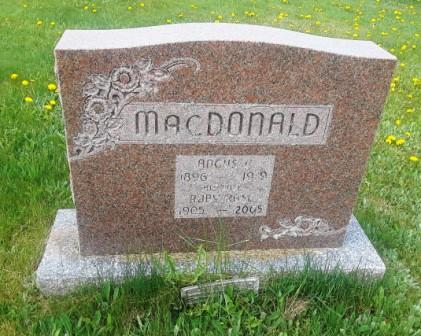
grave stone Angus C MacDonald Lower Bedeque

Grave of Angus Clayton MacDonald at Lower Bedeque Cemetery. (Photo source: http://www.findagrave.com)

Philip MacDonald wrote Pieter to say “… I very much enjoy the stories of all the veterans you and your wife have written for the County Line Courier.  I feel it is important to recognize that these men had a life and family they left behind because their country asked them to do so.  I’m not sure this is something many of us really consider when we hear the names being read once a year on Remembrance Day…” 

Thank you to Ivan and Edna MacDonald for sharing information about Ivan’s father, and to Philip MacDonald for sharing information and finding his grandfather’s Service Regimental Number.

Do you have a story to tell? Pieter encourages you to email him at memorialtrail@gmail.com, comment on the blog, or tweet to @researchmemori1.    

© Daria Valkenburg

…Want to follow our research?…

Follow our blog

If you are reading this posting, but aren’t following our research, you are welcome to do so.  Our blog address: https://onthewarmemorialtrail.com/
Front cover OnTheWarMememorialTrailinEurope4 countries, 6 weeks, 7,000 km – an unforgettable war memorial journey in Europe…. Daria’s book ‘No Soldier Buried Overseas Should Ever Be Forgotten‘ is available in print and e-book formats.  Net proceeds of book sales help support research costs and the cost of maintaining this blog. For more information see https://nosoldierforgotten.com/

Subscribe to our YouTube Channel: On The War Memorial Trail With Pieter Valkenburg: https://www.youtube.com/channel/UCJ591TyjSheOR-Cb_Gs_5Kw

Never miss a posting!  Subscribe below to have each new story from the war memorial trail delivered to your inbox.

The WWI Names On The Cenotaph Have Stories Of Their Own

February 8, 2020. Recently, Pieter and a friend went to see the British WW1 movie ‘1917’, which is nominated for several Oscars and has a Canadian connection due to a map used in the film.  (For that story see https://www.cbc.ca/news/entertainment/1917-canadian-contribution-1.5450608)  The story takes place in France on April 6, 1917, and is about two men tasked with delivering a message to another unit to warn of a German ambush.  The men go through several towns and villages in France’s Western Front.  Canadians may remember this period as being the lead up to the Battle of Vimy Ridge on April 9, 1917.

Pieter found the movie of great interest for several reasons. It was a depiction of the horrors of war… without being overly gory.  After being through the trenches and tunnels in Vimy Ridge a few years ago, he was intrigued to see the way soldiers sat on either side of a trench while waiting to go up into battle.   But the main reason he liked the movie is that it told the story of two people.

Contrary to what we learn in history books and classes, in the end all history is the cumulative stories of individuals.  A list of names on a cenotaph, such as the one outside the Borden-Carleton Legion, is meaningless without knowing who those people were and what happened to them.  This is what started Pieter on the journey to uncover the stories behind the names on the Cenotaph.

Over the years, the stories of those from WWI have been told in this blog.  24 are listed on the Cenotaph and half of them died in France…. Patrick Raymond ARSENAULT and John Lymon ‘Ly’ WOOD are listed on the Vimy Memorial as their bodies were never identified.    Also killed in France were Kenneth John Martin BELL, James CAIRNS, James Ambrose CAIRNS, Arthur Leigh COLLETT, Bazil CORMIER, Patrick Phillip DEEGAN (DEIGHAN), Joseph Arthur DESROCHES, Percy Earl FARROW (FARRAR), Ellis Moyse HOOPER, and Charles W. LOWTHER.  We were at the Vimy Memorial and visited each grave.

Five men died in Belgium. Two are listed on the Menin Gate Memorial in Ypres, as their bodies were never identified: Charles Benjamin Murray BUXTON and George Albert CAMPBELL.  We visited Menin Gate and the area where they died.  We also visited the graves of James Lymon CAMERON, Vincent Earl CARR, and Arthur Clinton ROBINSON.

Vincent Carr, who died during the Battle of Passchendaele on October 30, 1918, was initially buried in a trench with 4 others – two Canadian and two British soldiers.  Decades later, when they were reburied in a Commonwealth War Graves Commission cemetery, all three Canadians were still identifiable.  The British Army’s cardboard identity ‘tags’ had disintegrated, leaving the two British soldiers as unidentified.  Today, DNA testing can be done to help with identity, but decades ago this was impossible.

Two men died in England.  John Goodwill HOWATT was wounded in France, and died in a British hospital.  Bruce Sutherland McKAY had gotten ill during the transport from Canada to England and also died in a British hospital.

Henry Warburton STEWART survived the war, only to fall ill while in Germany as part of the occupation forces.  He’s buried in a German cemetery in Cologne, which we visited.

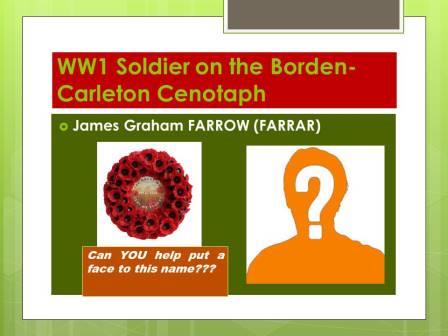
James Graham FARROW (FARRAR) was not a soldier, but in the Merchant Navy, transporting vital supplies between England and France, when his ship was torpedoed by a U-boat.

Three men died on Canadian soil.  Leigh Hunt CAMERON died of illness, while Harry ROBINSON died from blood poisoning.  William Galen CAMPBELL was poisoned with mustard gas on May 28, 1918, a few months before the end of the war, but was able to return home.  And yes, we’ve visited those graves as well.

We were also able to tell you parallel stories, such as that of Clifford Almon WELLS, who had many of the same experiences as John Lymon Wood, and also died in France. Another story was that of George BRUCKER, of the German Army, who was taken prisoner during the Battle of Vimy Ridge, and survived the war, never forgetting the two ‘tall’ Canadians who didn’t shoot him.  Decades later his son, now in his 80s, is still hoping to thank the families of those two unknown men.

Thanks to Pieter’s curiosity in trying to find out why one Commonwealth War Graves Commission gravestone in a cemetery in Cape Traverse was not recorded on the Cenotaph, we were able to tell you the story of Elmyr KRUGER, a soldier from Saskatchewan who died of illness while guarding German prisoners of war from a POW camp in Amherst.

We’ve told the stories of each man, and shared our visits to the various cemeteries and war memorials.  As photos and letters came in, we shared those experiences as well.

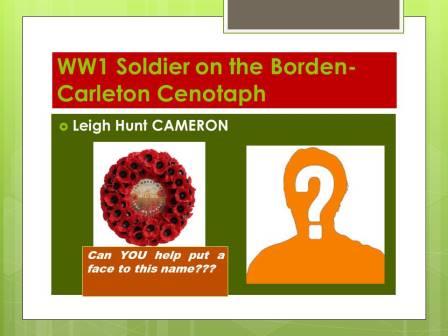
We are still missing photos of several of these soldiers, so the quest to put a face to every name and story is still ongoing.  Who are we missing?  Take a look and see if you can help:

Slide6

Slide8

Slide9

Slide10

Slide13

Slide15

Slide16

Slide20

Slide22

Slide23

UPDATE:  Photos of James Cairns, Joseph Arthur Desroches, and Harry Robinson have been found!

It’s great to watch a movie about fictional characters, but let’s not forget the stories of real life people! There won’t be any Academy Awards given out, but they will be remembered. Research continues to uncover more stories.  If you have a story or photo to share about any of the names mentioned in this posting, please contact Pieter at memorialtrail@gmail.com or comment on the blog.

© Daria Valkenburg

....Want to follow our research?…

If you are reading this posting, but aren’t following our research, you are welcome to do so.  Our blog address: https://onthewarmemorialtrail.com/

4 countries, 6 weeks, 7,000 km – an unforgettable war memorial journey in Europe…. Daria’s book ‘No Soldier Buried Overseas Should Ever Be Forgotten‘ is available in print and e-book formats.  Net proceeds of book sales help support research costs and the cost of maintaining this blog. For more information see https://nosoldierforgotten.com/

Subscribe to our YouTube Channel: On The War Memorial Trail With Pieter Valkenburg: https://www.youtube.com/channel/UCJ591TyjSheOR-Cb_Gs_5Kw

Never miss a posting!  Subscribe below to have each new story from the war memorial trail delivered to your inbox.
On The War Memorial Trail…..The WWI Soldier Who Never Made It To The Front

April 22, 2019.  In researching the stories behind the names on the Cenotaph outside the Borden-Carleton Legion, Pieter sometimes discovers that the soldier lost his life BEFORE ever getting a chance to make it into battle.  This is what happened to Private Bruce Sutherland MCKAY (MACKAY) of Albany, the son of David McKay and Almira (Elmira) Harvey.  Born April 16, 1897, according to his attestation papers, Bruce Sutherland, a farmer, enlisted with the 1st Depot Battalion, Nova Scotia Regiment, on March 21, 1918.

Bruce Sutherland McKay 1895-1918 photo from Roma McKay

Bruce Sutherland McKay. (Photo courtesy of Roma McKay collection)

On April 17, 1918 he left Halifax for England, aboard the S.S. Scotian, and arrived in Liverpool, England on April 28, 1918.  That same day, he was transferred to the 17th Reserve Battalion of the Canadian Infantry.  Unfortunately, he must have gotten ill during the voyage as the next day he was admitted to the Military Isolation Hospital in Aldershot, with a diagnosis of scarlet fever.

Things went from bad to worse for this poor soldier.  While in hospital he developed measles, pleurisy, and bronchial pneumonia.  It was too much for his system and he died in hospital on May 22, 1918.

In most cases, this would be nearly the end of the story.  However, Mrs McKay must have written a letter to the hospital, asking for details on what happened to her son. A letter received from his nurse, Ada Jones, was published in The Pioneer on August 10, 1918:

“Dear Mrs. McKay:

Your letter has been passed on to me, as I was in charge of the ward your poor son died in. First, let me express my deepest sympathy in your great sorrow; it must have been a great shock to you, and there are the times when one seems not able to turn to anyone for comfort or help to bear the burden, unless we know and can turn to Our Father above, and we know He understands and He loves. Now I will try to tell you just what I can. How I wish I could just do something to help your lonely heart.

Your poor boy came in here on the 29th April with scarlet fever. I don’t know if he was very strong at home, but we know camp life is not like home, so this may have weakened his chest, for he developed pneumonia and this eventually took him away from us on the 22nd May at two in the afternoon. I can assure you he was very good and patient. It was a pleasure to do anything for him. At first he was a bit reserved, but later used to speak of the farm he was coming back to. When the days were warm and fine he was carried outside in his bed and would say how some parts reminded him of home, and always spoke very tenderly of his dear mother.

The last three days were the worst he had for pain. The morning he went he often asked if we could help. I tried to tell him how there was One above who could. He said he knew his dear mother prayed for him. At one o’clock he said he felt much better. God was helping him through and was quite conscious till about ten minutes before the end, which was one of the most peaceful ends I have seen, so rest assured, dear mother, your dear son is with Jesus and is looking forward to meeting you there one day.

He was buried in a lovely spot just close to the Military Cemetery with full military honours, where there are a good many others who have sacrificed their lives in this terrible war.

It could not have been possible to have brought him home, for being infectious they would not be allowed to take him on a ship, and I am sure the memory of him in health would be far happier to you than when grim death had come on. Now I do hope this may be a little comfort to you. I just wish I could do something more. May our Father in Heaven put His loving arms around you and comfort and keep you.

Believe me yours very sincerely,

Ada Jones

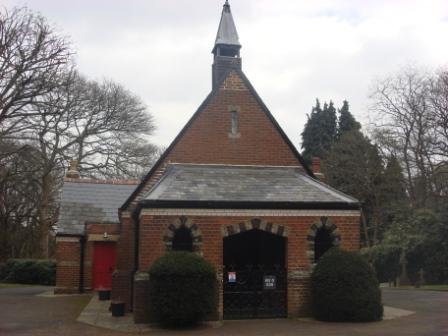
The cemetery mentioned in Nurse Ada Jones’ letter is the Aldershot Military Cemetery in Hampshire, England.  Graham and Jacqueline Hocking, who live near the cemetery, were kind enough to visit the grave and send photos.  Graham noted that the gravestone inscription lists Bruce Sutherland as MacKay not McKay.

Aldershot Military Cemetery Chapel

Chapel at Aldershot Military Cemetery. (Photo credit: Graham Hocking)

ghkneelingbygravestone.jpg

Graham Hocking by the grave of Bruce Sutherland McKay. (Photo credit: Jacqueline Hocking)

Our thanks to Roma McKay for providing a photo of Bruce Sutherland, and to Graham and Jacqueline Hocking for visiting the cemetery and taking photos.  If you have information or photos to share on Bruce Sutherland McKay, please send an email to memorialtrail@gmail.com or comment on this blog.

© Daria Valkenburg

….Want to follow our research?…

If you are reading this posting, but aren’t following our research, you are welcome to do so.  Our blog address: https://onthewarmemorialtrail.com/

4 countries, 6 weeks, 7,000 km – an unforgettable war memorial journey in Europe…. Daria’s book ‘No Soldier Buried Overseas Should Ever Be Forgotten‘ is available in print and e-book formats.  Net proceeds of book sales help support research costs and the cost of maintaining this blog. For more information see https://nosoldierforgotten.com/

Subscribe to our YouTube Channel: On The War Memorial Trail With Pieter Valkenburg: https://www.youtube.com/channel/UCJ591TyjSheOR-Cb_Gs_5Kw

Never miss a posting!  Subscribe below to have each new story from the war memorial trail delivered to your inbox.

The WWI Names On The Cenotaph

July 28, 2017.  With a plan to have a book and photo memorial ready for the 100th anniversary of the end of WWI, Pieter wanted to publicize the names of the WWI war dead.  While we had quite a bit of luck with the names from WWII on the Cenotaph outside the Borden-Carleton Legion in Prince Edward Island, we weren’t so lucky with the WWI names.

In some cases, family couldn’t be found.  Sometimes we found family only to be told they either never heard of the person.  Most of the time, the family was aware of the person, but no photo survived, let alone other documents such as letters or postcards.

So here is what we know so far….

  • Patrick Raymond ARSENAULT, born October 14, 1896 in Bedeque to Joseph Arsenault and Isabella, nee Richard. No photo. UPDATE: PHOTO FOUND
  • enneth John Martin BELL, born March 28, 1896 in Cape Traverse to William Bell and Lucy, nee Rogerson. No photo. UPDATE: PHOTO FOUND
  • Charles Benjamin BUXTON, born December 8, 1893 in Cape Traverse to George Edward Buxton and Mary Jane (May), nee Webster. No photo. UPDATE: PHOTO FOUND
  • James Ambrose CAIRNS, born March 16, 1895 in Emerald to Terrence Cairns and Elisabeth, nee Hughes. No photo.
  • James CAIRNS, born February 22, 1897 in Kinkora to Thomas Cairns and Mary Jane, nee McDonald. No photo. UPDATE: PHOTO FOUND
  • James Lymon CAMERON, born December 30, 1892 in Victoria to Edward H. Cameron and Susan, nee Harrington. No photo.
  • Leigh Hunt CAMERON, born May 6, 1898 in Albany to Alexander Walter Cameron and Phoebe Ann, nee Murray. No photo.
  • GG.A. Campbell blogeorge Albert CAMPBELL, born July 8, 1895 in Wellington to John George Campbell and Grace Emma, nee Barlow.
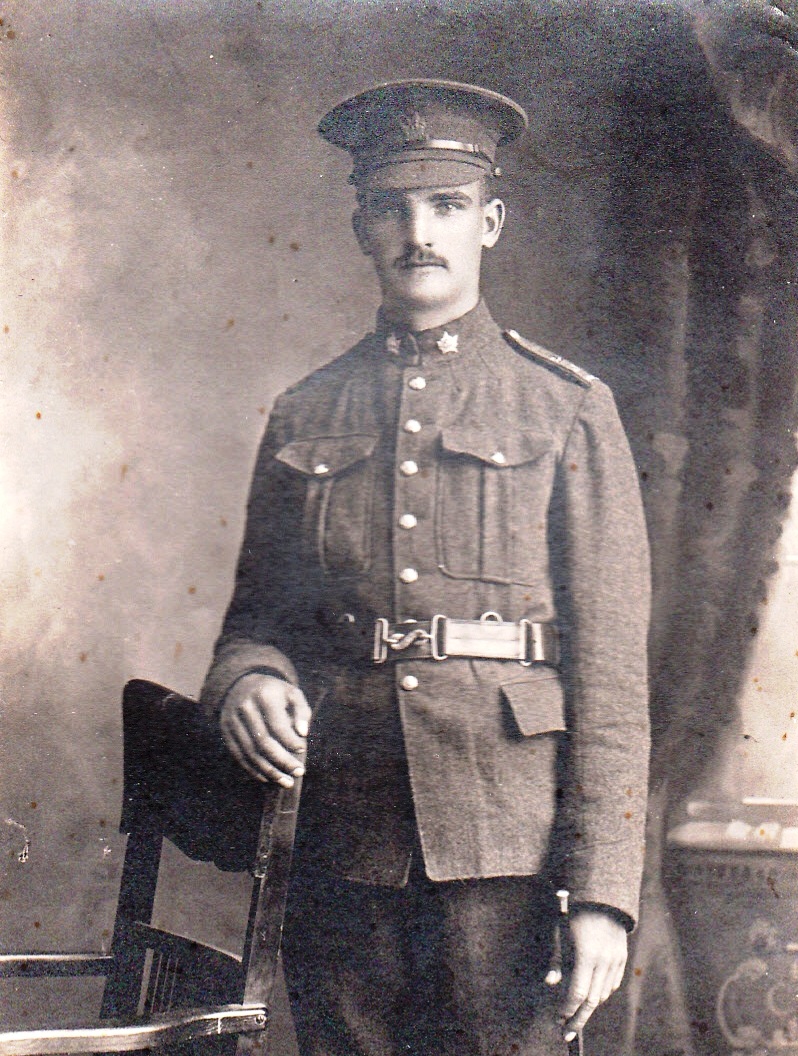
Photo: George Albert Campbell.  (Photo courtesy of Gerald Tingley collection)

  • William Galen CAMPBELL, born June 16, 1897 in Wellington to John George Campbell and Grace Emma, nee Barlow. He married Ida May McNally in 1919.  No photo.
  • Vincent CARR, born May 3, 1894 in North Tryon to Robert Carr and Catherine. He married Bessie Carr of Summerside.

1915 Photo Vincent E Carr in uniform.jpgPhoto: Vincent Carr in 1915, in the uniform of the 55th Battalion.  (Photo courtesy of Delbert Carr collection)

  • Arthur Leigh COLLETT, born December 8, 1888 in Victoria to Ella May Simmons, and was adopted by William Henry Collett and Alice M., nee Moore.Arthur Collett blogPhoto: Arthur Leigh Collett.  (Photo courtesy of Paul and Heather Moore collection)
  • Bazil CORMIER, born January 8, 1897 in Tignish to Joseph Cormier and Marie, nee Arsenault. No photo.
  • Patrick Philip DEEGAN, born November 25, 1894 in Cape Traverse to Alexander Deegan and Margaret Ann, nee Tierney. No photo. UPDATE: PHOTO FOUND
  • Joseph Arthur DESROCHES, born August 8, 1891 in Miscouche to Zephirim Desroches and Priscilla, nee Gaudet. He married Mary Ann Wedge in 1910 and had 3 children: Elizabeth Eileen, Joseph Alfred, Lucy Priscilla, and Charles Arthur. No photo. UPDATE: PHOTO FOUND
  • James Graham FARROW, born April 4, 1856 to Henry Farrow and Jan Gouldrup, birthplace unknown. No photo.
  • Percy Earl FARROW (FARRAR), born July 30, 1895 in North Tryon to William Farrar and Margaret Jane, nee McKinnon.

Percy Farrar

Photo: Percy Farrar.  (Photo courtesy of South Shore United Church collection)

  • Ellis Moyse HOOPER, born October 20, 1895 in Central Bedeque to Charles Frederick Allison Hooper and Bessie Marie, nee Moyse.

Hooper, Ellis Moyse blogPhoto: Ellis Moyse Hooper.  (Photo courtesy of Lana Churchill collection)
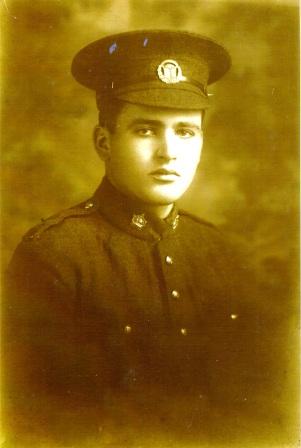
  • John Goodwill HOWATT, born May 8, 1894 in Cape Traverse to Edward George Howatt and Emma May, nee Wood. No photo. UPDATE: PHOTO FOUND
  • Charles W. LOWTHER, born September 27, 1896 in North Carleton to Henry George Lowther and Bessie Cottrell, nee Wright. No photo.
  • Bruce Sutherland MCKAY, born April 15, 1897 in Albany to David McKay and Elmira (Almira), nee Harvey. No photo. UPDATE: PHOTO FOUND
  • Arthur Clinton ROBINSON, born July 20, 1896 in Tryon to Albert James Robinson and Flora P., nee Scruton. His step-mother was Mary Mooney. No photo.
  • Harry ROBINSON, born July 9, 1881 in Augustine Cove to Thomas Robinson and Sarah, nee Campbell. He married Clara J. Wadman in 1905 and had a daughter Merilla. No photo.
  • Henry Warburton STEWART, born April 15, 1884 in Strathgartney to Robert Bruce Stewart and Ann, nee Warburton. No photo. UPDATE: PHOTO FOUND
  • John Lymon WOOD, born July 8, 1897 in North Tryon to George William Wood and Martha, nee Heatly.
Photo Lyman Wood

Photo: John Lyman Wood shortly after enlistment in October 1915. (Photo courtesy of Gene Rogerson collection)

We hope you enjoy this third article that ran in July 2017, “Are You Related To These WWI Soldiers?” in the County Line Courier.    CLC July 5 2017 p4 Are you related to WW1 soldiers

If you have photos or documents you’d like to share, please email them to memorialtrail@gmail.com.  Comments or stories?  You can share them by email or by commenting on this blog.

© Daria Valkenburg

….Want to follow our research?….

If you are reading this posting, but aren’t following our research, you are welcome to do so.  Our blog address: https://onthewarmemorialtrail.com/

Front cover OnTheWarMememorialTrailinEurope4 countries, 6 weeks, 7,000 km – an unforgettable war memorial journey in Europe…. Daria’s book ‘No Soldier Buried Overseas Should Ever Be Forgotten‘ is available in print and e-book formats.  Net proceeds of book sales help support research costs and the cost of maintaining this blog. For more information see https://nosoldierforgotten.com/ 

You are also invited to subscribe to our YouTube Channel: On The War Memorial Trail With Pieter Valkenburg: https://www.youtube.com/channel/UCJ591TyjSheOR-Cb_Gs_5Kw

Never miss a posting!  Subscribe below to have each new story from the war memorial trail delivered to your inbox.