On The War Memorial Panel…A Memorial Panel Honours The Crew On The Last Flight Of Halifax DT630

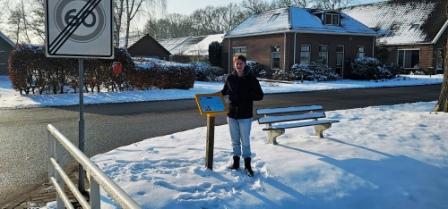
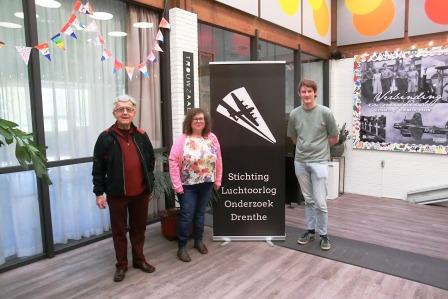
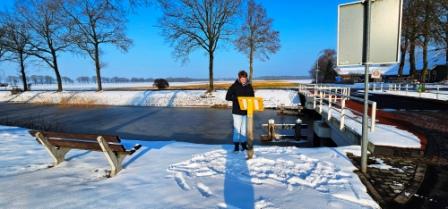
Yannic Wethly by the Halifax DT630 panel in Odoornerveen. (Photo courtesy of Yannic Wethly – Stichting Luchtoorlog Onderzoek Drenthe)

March 18, 2026. Occasionally, one story takes us in unexpected directions.  In February 2023, we posted on this blog the story about Jack ‘Douglas’ MACKENZIE, of Winnipeg, Manitoba, the pilot of Halifax DT630 that was shot down by a night fighter over the province of Drenthe in The Netherlands on February 3, 1943. (See https://onthewarmemorialtrail.com/2023/02/19/on-the-war-memorial-trail-the-wwii-pilot-killed-at-the-controls-of-his-halifax-bomber/)

A few months later, we were contacted by Yannic Wethly, one of the volunteers with Stichting Luchtoorlog Onderzoek Drenthe (Air Research Drenthe Foundation) in The Netherlands. This non-profit organization researches WWII air crashes in the province and places information panels near the crash sites.

Yannic asked for help in finding a photo and family of a crew member, Eric ‘Raymond’ MARQUAND, the bomb aimer on that flight, who was also from Winnipeg.  Raymond survived the crash and spent the remaining war years in prisoner of war camps before being liberated.  We were very happy when his niece, Jamie Nelson-Dixon, got in contact and provided a photo. (Raymond’s story is coming up in a future posting.)

Jamie Nelson-Dixon, Craig MacKenzie, and Daria had a chance to meet in Winnipeg. (Photo courtesy of Valkenburg Family)

In May 2024, when we were in Winnipeg, we met Craig MacKenzie, nephew of Douglas, and his wife Sue, plus Jamie and her husband Don.  (See https://onthewarmemorialtrail.com/2024/11/10/on-the-war-memorial-trail-remembrance-week-2024-reflections-and-updates/)

Pieter and Daria with Yannic Wethly of the Air Research Drenthe Foundation.  (Photo courtesy of Valkenburg Family)

And in April 2025, when we were in The Netherlands, we had a chance to meet Yannic.  (See https://onthewarmemorialtrail.com/2025/06/15/on-the-war-memorial-trail-a-visit-to-sleen-general-cemetery/)

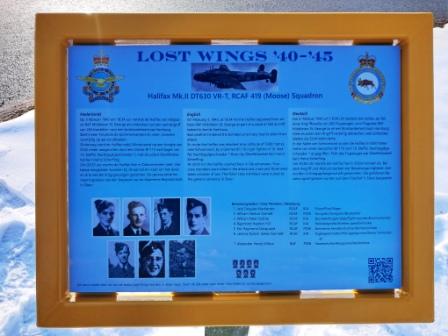
On January 30, 2026, Yannic sent photos of an updated memorial panel for Halifax DT630, which now includes photos of all 7 crew members, who wrote us saying “….Thank you for your efforts. They played a key part in getting to this moment, where now all seven crew members have their faces back….

….The last flight of Halifax DT630…

Halifax Mark 3 bomber.  Photo source: http://www.raf.mod.uk Public Domain, https://commons.wikimedia.org/w/index.php?curid=751869)

On February 3, 1943, Douglas was the pilot of Halifax DT630 (call sign VR-T), one of 8 heavy Halifax bombers sent on a night raid to Hamburg, Germany.  They took off at 6:34 pm from the airbase at Middleton St. George, England. (See https://aviation-safety.net/wikibase/52181)

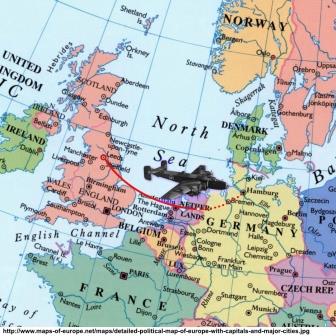
Map showing the plane’s path from England towards Hamburg, but being shot down over The Netherlands.  (Map prepared by Wendy Nattress)

According to the Aviation Safety Network Wikibase report on Occurrence # 52181, the Halifax bomber was shot down by night fighter pilot Oberfeldwebel (Senior Staff Sgt) Karl-Heinz Scherfling of the 10./NJG 1, flying a Bf 110 F-4 from Leeuwarden airfield, in the province of Friesland in The Netherlands.  At 8:55 pm it crashed in Odoornerveen.  (Scherfling died when his plane was shot down in July 1944 near Mol, Belgium by a Mosquito night fighter of No. 169 Squadron. See https://military-history.fandom.com/wiki/Karl-Heinz_Scherfling)

….The crew of Halifax DT630….

4 crew members lost their lives and are buried in Sleen General Cemetery in The Netherlands.  The other 3 crew members spent the remainder of WWII in POW camps before returning home.

  • Pilot P/O Jack ‘Douglas’ MACKENZIE of Winnipeg, Manitoba, RCAF, killed
  • Flight Engineer Sgt. William Peter DUTHIE of Winnipeg, Manitoba, RCAF, killed
  • Navigator Sgt. William Nelson GARNETT, RCAF, survived
  • Bomb Aimer Sgt. Eric ‘Raymond’ MARQUAND, RCAF, survived
  • Air Gunner W/O II Raymond Hepton HILL of Montreal, Quebec, RCAF, killed
  • Rear Air Gunner F/Sgt. Alexander Henry MILTON, RAF, survived
  • Air Gunner W/O II Lennox Alwin GONNETT of Westmount, Quebec, RCAF, killed

….The memorial panel honouring the crew of Halifax DT630…

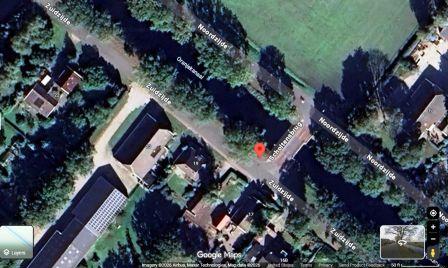
On January 30, 2026, a few days before the 83rd anniversary of the crash on February 3, 1943, Yannic wrote that “we updated the information panel for Halifax DT630 today. The panel stands near the Scholtensbrug on Zuidzijde, Odoornerveen.” (See https://www.facebook.com/slodrenthe/posts/pfbid0a7d47BcHoD5scBZERjEctYj2mmWbuvgrotFqLzG8USnReGYxbVN83wzoATAuTkLil)

Location of the panel stands near the Scholtensbrug on Zuidzijde in Odoornerveen. (Map source: Google maps)

When we saw the photos, we were astonished to see snow!  It could have been Canada, not The Netherlands!  “Quite exceptional times here….” he explained. “…We had sleet and 10-15cm of snow. Then it all disappeared and now, a week later, it’s back!…

The Halifax DT630 panel summarizes what happened on the night of the crash, and includes photos of all 7 crew members. The 4 who died are shown above the 3 that survived. (Photo courtesy of Yannic Wethly – Stichting Luchtoorlog Onderzoek Drenthe)

The panel is located along a canal, next to the Scholtens bridge, in Odoornerveen, in a residential area. 

Yannic Wethly by the Halifax DT630 panel in Odoornerveen. (Photo courtesy of Yannic Wethly – Stichting Luchtoorlog Onderzoek Drenthe)

….Excerpt from the Foundation’s report on Halifax DT630….

Yannic shared information on the Air Research Drenthe Foundation’s report on Halifax DT630, an excerpt of which is below.  (See https://www.slodrenthe.nl/halifax-mk-ii-dt630-vr-t/ for more information, which is available in Dutch, English, French, or German.)

On February 3, 1943, Halifax DT630 VR-T, “T for Tommy,” of RCAF 419 (Moose) Squadron, departed RAF Middleton St. George at 6:34 p.m. as part of a raid wave of 263 aircraft. The target of this attack was Hamburg. On the outward journey, the bombers were hampered by bad weather, forcing many of them to abort the raid prematurely.

The crew of Halifax DT630 VR-T was five minutes late crossing the Channel on the night of this bombing raid on Hamburg. This delay caused pilot Jack D. MacKenzie to pitch the nose down slightly, increasing speed. The fact that Halifax DT630 VR-T was late and therefore flying behind the formation wasn’t the pilot’s only problem: contact with the tail gunner, Alexander H. Milton, had been lost. The entire intercom system had stopped working. Jack D. MacKenzie had to choose between turning back or continuing on and hoping the intercom would work again soon.

About 25 minutes out from the target, Halifax DT630 VR-T was attacked from behind and below by what they thought was an Fw 190. Only bomb aimer Eric R. Marquand noted in his report that he believed it was a Bf 110.

In reality, Halifax DT630 VR-T was indeed attacked by a Messerschmitt Bf 110. It was a German Bf 110G-4 night fighter of the 10th Staffel, Nachtjagdgeschwader 1, with pilot Oberfeldwebel Karl-Heinz Scherfling on board. He attacked the Halifax and its crew over Schoonoord at an altitude of 5,300 metres.

Tail gunner Alexander H. Milton later testified that an evasive maneuver, a so-called “corkscrew,” had been executed. Somehow, this command from Alexander H. Milton to pilot Jack D. MacKenzie got through, and Jack D. MacKenzie executed the maneuver.

The evasive maneuver was to no avail: the entire fuselage of the aircraft was pierced by the German night fighter’s cannon fire. Jack D. MacKenzie and probably also Lennox A.J. Gonnett, the dorsal turret gunner, were fatally wounded. The cannon fire also ignited the incendiary bombs on board, burning the vital cables and lines leading to the engines and controls.

Flight engineer William P. Duthie attempted to extinguish the fire but was unsuccessful due to the flammable and difficult-to-extinguish nature of the incendiary bombs. Navigator William N. Garnett later reported that he gave the order to abandon the aircraft following a previously arranged sequence of flashes. This implies that the intercom system was still inoperable.

Eric R. Marquand, the bombardier, was the first of the crew to abandon the aircraft. He was followed by William N. Garnett, who was checking on the condition of the rest of the crew. He saw that radio operator Raymond H. Hill was still in his position, as was William P. Duthie. Both, however, were preparing to abandon the out-of-control aircraft. At this point, the German fighter returned and attacked the falling Halifax once more.

Eric R. Marquand was hit in the ear area as he prepared to bail out. Alexander H. Milton continued to fire at the German fighter to drive it off, allowing the other crew members to bail out. He continued firing until he fell from his turret in the dark night. It is unknown what happened to the radio operator and flight engineer or why they did not bail out. The second attack by the German fighter may have prevented them from bailing out.

At 8:55 p.m., Halifax DT630 VR-T crashed in Odoornerveen. Only Eric R. Marquand, William N. Garnett, and Alexander H. Milton managed to evacuate the aircraft. All three were quickly taken prisoner of war and interned at Stalag VIIIB (Lamsdorf). The four remaining crew members perished in the crash….

Thank you to Yannic Wethly for sending photos of the new memorial panel, and to Wendy Nattress for preparing the map showing the flight path for Halifax DT630.  And thank you to Craig MacKenzie and Jamie Nelson-Dixon for providing photos of Douglas MacKenzie and Raymond Marquand.  Thank you also to Judie Klassen for doing the research that led to finding Jamie Nelson-Dixon.

Pieter’s research efforts to find photos and families of soldiers continue, doing his part to ensure that each individual soldier is remembered. If you have photos or information to share about soldiers buried in The Netherlands or Belgium, please email him at memorialtrail@gmail.com, or comment on the blog.    

© Daria Valkenburg

….Want to follow our research?…

If you are reading this posting, but aren’t following our research, you are welcome to do so.  Our blog address: https://onthewarmemorialtrail.com/

4 countries, 6 weeks, 7,000 km – an unforgettable war memorial journey in Europe…. Daria’s book ‘No Soldier Buried Overseas Should Ever Be Forgotten‘ is available in print and e-book formats.  Net proceeds of book sales help support research costs and the cost of maintaining this blog. For more information see https://nosoldierforgotten.com/

Subscribe to our YouTube Channel: On The War Memorial Trail With Pieter Valkenburg: https://www.youtube.com/channel/UCJ591TyjSheOR-Cb_Gs_5Kw

Never miss a posting!  Subscribe below to have each new story from the war memorial trail delivered to your inbox.

On The War Memorial Trail…..The WWII Signalman From Charlottetown Who Died In A Vehicle Accident In The Netherlands 6 Weeks After WWII Ended In Europe

March 15, 2026.  In going through the last few names on a photo wish list for soldiers from New Brunswick who are buried in the Canadian War Cemetery in Groesbeek, Pieter’s initial research found that one of the names was of a soldier from Prince Edward Island.
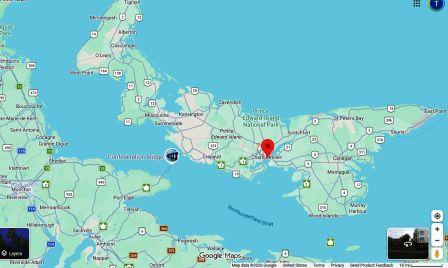
Charlottetown, the capital of Prince Edward Island, is on the east coast of Canada. (Map source: Google)

Alfred Edward Stanley FORD was born February 12, 1918 in Charlottetown, Prince Edward Island, son of Alvin Chester and Ethel Maud (nee Roebuck) Ford.  He was one of two children in the family and Pieter at first thought it would be a challenge to find a photo.

However, an obituary for Alfred’s sister Marjorie led him to the Cummins family, and he was soon in contact with Marjorie’s son Dave, who wrote to Pieter, saying “….I greatly appreciate all the work you and your wife are doing on the memories of our fallen soldiers…” And yes, he did have a photo of his uncle.

….Alfred worked as a waiter and butler…
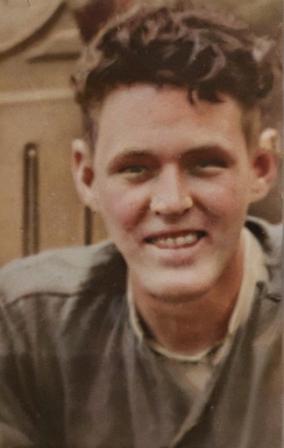
Alfred Edward Stanley Ford. (Photo courtesy of Cummins/Ford archives.  Photo restoration and colourization by Pieter Valkenburg)

When Alfred enlisted at the No. 4 District Depot in Montreal, Quebec on December 3, 1941, he stated that he had served in the Reserve Formation of the Royal Canadian Corps of Signals (RCCS) in Prince Edward Island for 2 years, from July 1936 until July 1938. 

After leaving school at aged 16, he’d worked as a waiter at various hotels between 1933 and 1936, and then was a butler for the Polish Consul-General, Dr. Sylwester Gruszka, in New York City between 1936 and 1939. (A career diplomat, Dr. Gruszka was the Consul-General from 1935–1940. For more information, see https://pl.wikipedia.org/wiki/Sylwester_Gruszka)

Alfred’s time working for the Consul-General resonated with us, as decades later Pieter worked in the Consulate in New York and later in the Embassy in Warsaw, Poland, during his career in the Dutch Foreign Service.

While working for Dr. Gruszka, Alfred took a short order-barman course and received a diploma for successfully completing a course at the Fanny Farmer School of Cooking in 1937. 

From 1939 to 1941, Alfred worked as a barman and later as a waiter in New York. 

….Alfred was drafted one country and enlisted in another….

On October 16, 1940, he was required to fill out a US Draft Card Registration. At the time, he was between jobs in New York City, and living with a friend. Although the USA didn’t officially enter World War II until December 8, 1941, after the attack on Pearl Harbor, Hawaii, US President Franklin Delano Roosevelt had signed into law in October 1940 the first peacetime selective service draft in US history because of rising world conflicts.

Since he was living in the USA, Alfred was required to register for the US Draft, but never joined the US Army as he subsequently moved to Montreal, Quebec and enlisted in the Canadian Army.

During his interview, Alfred expressed an interest in becoming a lineman with the Royal Canadian Corps of Signals, and it was noted that he played hockey as a sport.  The interviewer described Alfred as “…respectful, cheerful, and neat in appearance...” and noted that 23 year old Alfred had “…done well in civilian life…

….Alfred was trained as a Signalman….

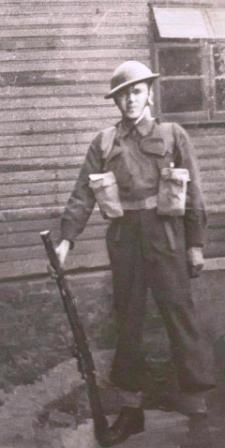
Alfred Edward Stanley Ford during basic training. (Photo courtesy of Cummins/Ford archives.  Photo restoration by Pieter Valkenburg)

Alfred’s military career began when he was sent for basic training to No. 41 Canadian Army (Basic) Training Centre (CABTC) in Huntingdon, Quebec on December 8, 1941. 

After completing his basic training, he was transferred to A7 Canadian Signal Corps Training Centre at Camp Barriefield, Ontario on March 12, 1942 for advanced training.  He remained there until May 5, 1942 when he was posted to the 6th Light Anti-Aircraft (LAA) Regiment Signals Section, Royal Canadian Artillery, in Petawawa, Ontario as a Signalman.

As a Signalman, Alfred would have been trained to manage radio (wireless), telephone, and visual signaling, and to ensure that his Regiment received air raid warnings and to relay gun target information.

On November 2, 1942, Alfred was given embarkation leave until November 15, 1942, the last chance he had to see his family. 

….Alfred left Canada for overseas service….

Shortly after returning from his embarkation leave, Alfred was on his way overseas, leaving Canada on December 12, 1942.  Upon arriving in the United Kingdom on December 18, 1942, he was assigned to No. 1 Canadian Base Staging Camp (CBSC) in Colchester.

On March 6, 1943, Alfred was sent on an Operators Course at No. 1 Canadian Signals Reinforcement Unit (CSRU), located at the Blandford Camp in Cove, Farnborough, Hampshire.

Alfred was transferred to the Canadian Signals Reinforcement Unit (CSRU) on April 2, 1943.  His training continued and on July 29, 1943, he qualified as a Lineman Group ‘C’ Class 3.  A Lineman would be involved in constructing and repairing overhead telephone and telegraph lines to support military communications.

A month later, on August 26, 1943, he was transferred to the 1st Canadian Line of Communications Signals (L of C Sigs), a key unit within the Royal Canadian Corps of Signals (RC Sigs) during WWII.  Formed in England, this unit was responsible for maintaining communications along the supply and transport routes (lines of communication) supporting the Canadian Army’s overseas operations in Europe. 

As training and preparations began for Operation Overlord (the invasion of Normandy), which began on what we know as D-Day (June 6, 1944), Alfred was transferred to the 16th Canadian Anti-Aircraft (CAA) Operations Room Signal Section in Womenswold in Kent on May 2, 1944, along with another linesmanThe war diary for May 2, 1944 noted that “…2 Line Detachments arrived today from L of C Signals….” 

This unit provided communication and signaling support for anti-aircraft operations, and training and exercises continued ahead of being sent to France after D-Day. They would be part of the signals composition of the Canadian Army Overseas.

….Alfred and his unit were sent to France in August 1944…
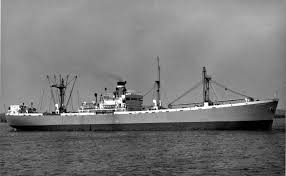
Liberty ship ‘Samarina’. (Photo source: Ships Nostalgia)

On August 1, 1944, Alfred and other members of the 16th Canadian Anti-Aircraft (CAA) Operations Room Signal Section travelled to London, for the move into France as part of the 21st Army Group.  The following day they boarded the Liberty ship ‘Samarina’, along with their vehicles and equipment. They set sail for France on August 3, 1944. 

Map showing Courselles-sur-Mer on the coast of France, near Caen.  ‘La Manche’ in French is what we call the ‘English Channel’.  (Map source: https://www.viamichelin.fr)

Per the August 5, 1944 war diary, they arrived at 9:10 pm “…at the anchorage off Courcelles…” but had to wait until August 7 to disembark.  On August 8, 1944, “…the unit arrived Bény-sur-Mer….” and “…established communications with Brigade HQ…” The unit arrived in the midst of Operation Totalize, fought between August 7-11, 1944, in an offensive designed to break through the German defences south of Caen and toward Falaise.  (See https://en.wikipedia.org/wiki/Operation_Totalize)

They had their work cut out for them once they reached Caen and took over from 51 Anti-Aircraft Operations Room (AAOR).  As recorded in the war diary for August 12, 1944, the unit “…controlled 16 AA guns in defence of Caen from 1800 hours today.  Line communications are difficult as some of the line has been badly laid and not maintained.  All broadcasts must go down to guns by line and upward intelligence must go up the same way.  This is not satisfactory….”  

On August 28, 1944, they were ordered to leave Caen and move to Lisieux. The war diary entry for August 29, 1944 recorded that at 8 am “…AAOR handed over to 152 and moved to concentration area at Lisieux….”  However, by 6 pm that same day, there was a change.  “… Unit was ordered to deploy from concentration area Lisieux for the defence of Brienne….

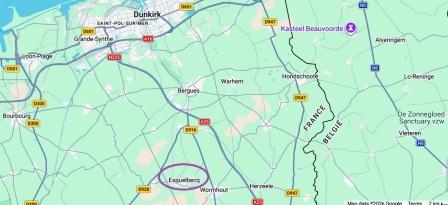
Map shows location of Esquelbecq (purple circle) in France, near the Belgian border. (Map source: Google maps)

By September they had moved up through France near the Belgian border, and were based in Esquelbecq, responsible for the Gun Operations Room (GOR) in the Dunkirk area.  Linesmen like Alfred worked in difficult and dangerous conditions, as evidenced in just one line from the September 21, 1944 war diary. “…Linemen found that laying lines in the forward area became a bit tricky with snipers and machine gun fire near vicinity….

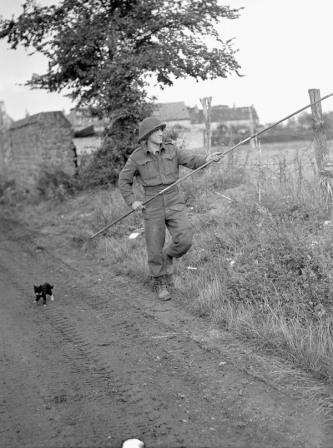
An unidentified lineman laying a telephone line in France in September 1944 gives an idea of what Alfred Ford did as a lineman. (Photo Credit: Lieut. Donald I. Grant / Canada. Dept. of National Defence / Library and Archives Canada / PA-174411)

Alfred was twice admitted to hospital, first from November 17 until December 18, 1944 at No. 16 Canadian General Hospital in Saint Omer, France, and then from January 6 to 18, 1945 at No. 2 Canadian General Hospital in Bruges, Belgium. The war diary reported that several men had been ill with colds and flu, and perhaps this is what happened to Alfred, as there was no report of an accident or being wounded by enemy action.  He returned back to his unit, which was still in France, but now in Wormhout, just a short distance from Esquelbecq, on January 28, 1945.

On February 9, 1945, the unit moved to Desselgem, Belgium, located between Ypres and Ghent.  They remained there until February 28, 1945 when they moved to Hallaar, not that far from the Dutch border, where the Operations Room for the unit would be temporarily based, during Operation Blockbuster.  (See https://en.wikipedia.org/wiki/Operation_Blockbuster). 

On March 12, 1945, the unit moved again, to Linden, The Netherlands, 10 kms (6 miles) south of Nijmegen, and near the German border. On March 13, 1945, the war diary recorded that “…as the Ops Room Section…is going to be deployed in the defence of Kleve, a Recce party went to that almost completed ruined city and found a site for the Ops Room, and billets in partially demolished houses nearby…”  The unit moved to Kleve, Germany 10 days later.

On April 14, 1945, the war diary reported that “…line party across Rhine to lay line to Units under this Unit from proposed new location of AAOR…” Two days later, they moved to Oldenzaal, The Netherlands, near the German border.

On May 7, 1945, a day before the official end of WWII hostilities in Europe, the unit moved to Oldenburg, Germany, before being redirected to Wilhelmshaven on May 10, 1945, and placed on temporary guard duty.  The war diary for May 24, 1945 noted another upcoming move. “…Guard commitments to be turned over by midnight of the 25 May 1945.  This unit will move to Arnhem area where it will come under command 2 Canadian Heavy Anti-Aircraft Regiment…

The move was delayed a few days.  On May 26, 1945, the war diary recorded that …we are to move at 0700 hours tomorrow to Otterlo in Holland where we come under Command of I-Corps and are attached to 2 Canadian Heavy Anti-Aircraft Regiment…”  In Otterlo they camped in an old Dutch barracks in the woods.

The war diary summarized May 1945 by stating that “…except for four days the entire month has been spent in Germany with the unit personnel doing guard duties for a greater portion of that period….

On June 7, 1945, Alfred was given 11 days leave to the United Kingdom, returning on June 18, 1945, just in time to learn, on June 19, 1945, that the 16th Canadian Anti-Aircraft (CAA) Operations Room Signal Section was to be disbanded immediately. The next few days were spent packing up all the equipment and vehicles. 

On June 22, 1945, most of the unit moved to the Artillery Reallocation Centre 13 Canadian Base Reinforcement, located south of Nijmegen. However, the Signals detachment, which Alfred was part of, remained at Otterloo for the night, as they had been assigned to HQ 1st Canadian Army Signals for cross postings, and were scheduled to report there on June 23, 1945. 

….Alfred died of injuries from a vehicle accident…
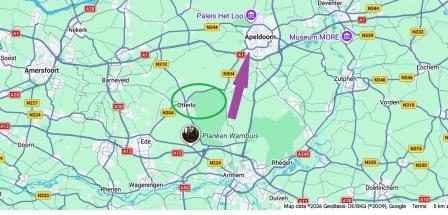
Alfred and the Signals Detachment were camped in a barracks in the woods outside Otterlo (green circle). The vehicle he was in was going in the direction of Apeldoorn (purple arrow).  (Map source: Google maps)

However, Alfred never arrived at his next posting as he died in a vehicle accident on June 22, 1945. The circumstances of what happened are unclear.  According to a witness, Lance Corporal R. A. MacDonald of the Canadian Provost Corps, who was on traffic patrol duty at the Arnhem-Apeldoorn Highway, around 9:15 pm a vehicle travelling in the direction of Apeldoorn approached him “…at a fast rate of speed. The vehicle was unsteady in its course, weaving as if out of control….” 

As it neared the witness, the vehicle veered to the right, likely because the driver suddenly noticed him and lost control of the vehicle in trying to avoid an accident.  Unfortunately, it crashed into a tree beside the road. The driver was 27 year old Alfred, who died from head injuries sustained in the crash. He was alone in the vehicle, and no one knew why he was driving a vehicle from another unit, as he was not assigned to be on duty at the time. A Court of Inquiry ruled it as an accidental death. 

….Alfred is buried in Groesbeek….
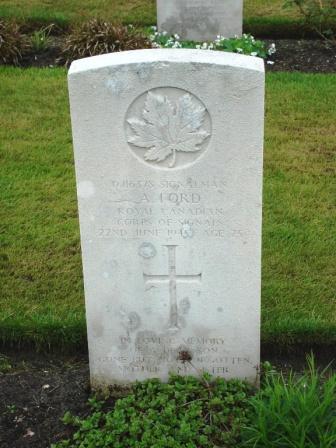
Grave of Alfred Edward Stanley Ford in the Canadian War Cemetery in Groesbeek, The Netherlands.  (Photo source: Find A Grave)

Alfred was temporarily buried in Jonkerbos Cemetery in Nijmegen, The Netherlands, before being reburied in the Canadian War Cemetery in Groesbeek on August 2, 1945.
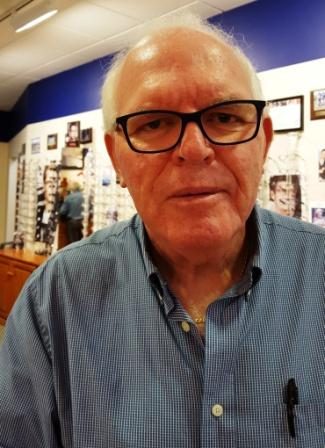
Dave Cummins provided photos of his uncle Alfred.  (Photo courtesy of Dave Cummins)

Thank you to Dave Cummins for providing photos and information on his uncle, and to Chris Cummins for notifying Dave of the photo search request. “…Thank you Pieter, my family appreciates all you have done for Alfred…” Dave wrote.  “…Keep up the good work….

Pieter’s research efforts to find photos and families of soldiers continue, doing his part to ensure that each individual soldier is remembered. If you have photos or information to share about soldiers buried in The Netherlands or Belgium, please email him at memorialtrail@gmail.com, or comment on the blog.    

© Daria Valkenburg

….Want to follow our research?…

If you are reading this posting, but aren’t following our research, you are welcome to do so.  Our blog address: https://onthewarmemorialtrail.com/
4 countries, 6 weeks, 7,000 km – an unforgettable war memorial journey in Europe…. Daria’s book ‘No Soldier Buried Overseas Should Ever Be Forgotten‘ is available in print and e-book formats.  Net proceeds of book sales help support research costs and the cost of maintaining this blog. For more information see https://nosoldierforgotten.com/

Subscribe to our YouTube Channel: On The War Memorial Trail With Pieter Valkenburg: https://www.youtube.com/channel/UCJ591TyjSheOR-Cb_Gs_5Kw

Never miss a posting!  Subscribe below to have each new story from the war memorial trail delivered to your inbox.
On The War Memorial Trail…. The WWII Soldier From Kingsclear Who Lost His Life During Operation Suitcase

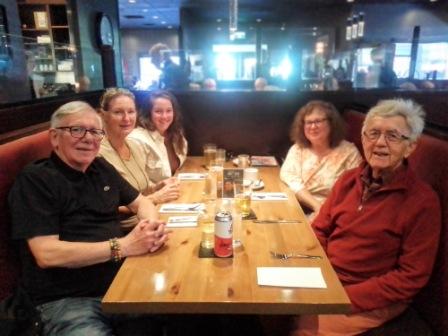
Pieter and Daria (right) with Larry Stewart, Uta Stewart, and Manuelle Bibeau.  (Photo courtesy of Valkenburg Family)

March 8, 2026. Sometimes we learn about a soldier in the most unexpected ways.  A few months ago I was at dinner with two audiologists who would be giving an information session on cochlear implants, part of the outreach we do at Hear PEI. Pieter came along with me for dinner, and Larry Stewart came with his wife, audiologist Uta Stewart.  The two men got along like a house on fire, and when Larry mentioned that his friend, psychotherapist Robert Leek, had an uncle who is buried in the Canadian War Cemetery in Bergen Op Zoom, the discussion turned serious about the sacrifices of so many families during WWII.

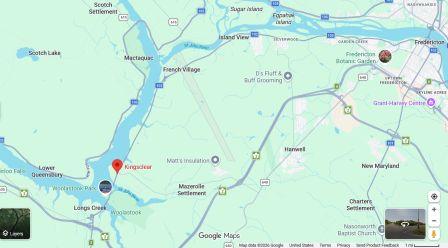
Kingsclear is near Fredericton, New Brunswick.  (Map source: Google maps)

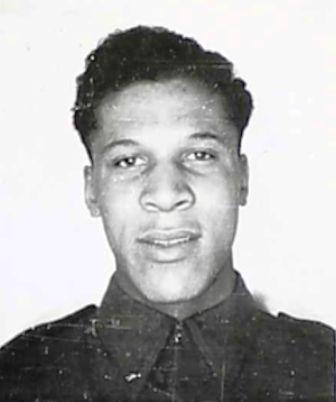
Larry emailed Robert while we were at the restaurant, and within minutes we saw a photo of his uncle, Albert John LEEK, who was born on April 21, 1925 in Kingsclear, New Brunswick, the son of WWI and WWII veteran Earle McCarthy Leek and his wife Mary Gertrude (nee Howe).   

Albert John Leek.  (Photo source: Identification card in the service file)

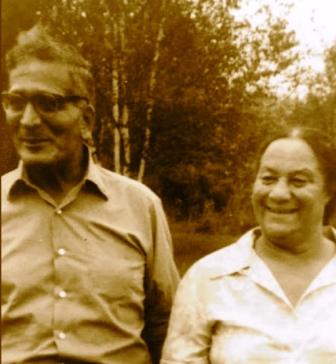
Robert said that his 90 year old aunt, Albert’s youngest sister Gertrude, lives in Fredericton, and that Albert’s father Earle served in both WWI and WWII.  Albert was the oldest in the family, with 3 brothers and 4 sisters.  “…My father Mauncell, who served in the RCAF, was the next oldest boy…

Albert’s parents Earle and Mary Gertrude (nee Howe) Leek.  (Photo courtesy of Robert Leek)

 …The Leeks were Loyalists who came to Canada, most likely from the Carolinas…” after the American War of Independence, Robert explained. “…Most of my relatives live in Bangor, Maine, and my father was born there…” He thought that Albert’s mother had “…Indigenous roots through the Maliseet…” (Maliseet are now referred to as the Wolastoqey Nation.) 

Albert’s father “…re-enlisted during WWII at the same time as Albert so he could protect his son, but they ended up in different units…

….Albert first enlisted in December 1940…

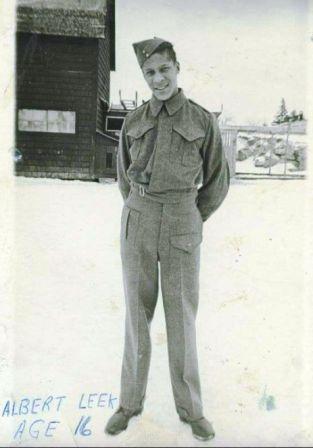
Albert John Leek during his first enlistment.  (Photo source: Canadian Virtual War Memorial)

When he enlisted at the No. 7 District Depot in Fredericton, New Brunswick on April 22, 1942, Albert stated he had been born in 1924 (a year earlier than his actual birth year) and had worked as a carpenter for the Department of National Defence.

This was his second time enlisting at the No. 7 District Depot.  He had first enlisted on December 30, 1940, at the age of 15.  After completing his basic training and a 3 month Motor Mechanics Course in Kingston, Ontario, he had finished taking advanced army training when his mother found his name on an overseas draft listing….and notified the authorities that he was underage.  Albert’s initial military career ended when he was discharged on September 8, 1941 due to being underage. 

Albert was tall, at 6 feet 1 inch, so it wasn’t a surprise that he had been able to pass as older.  When his nephew Robert was asked why his uncle would have enlisted so young, he explained that his uncle “…was desperate to leave his home situation and make something of himself…

….Albert was sent for artillery training…

When he enlisted for the second time, Albert stated that he had worked on his parents’ farm after leaving school, and listed his interests as boxing, skating, ice hockey, and softball.

On May 16, 1942, he was sent to No. 70 Canadian Army Basic Training Centre (CABTC) in Fredericton, where he had to undergo basic training again.  After completing this training, he was transferred to the X-A-1 Canadian Artillery Training Centre (CATC) in Petawawa, Ontario.  This was a major training facility for the Royal Canadian Artillery (RCA), where artillery soldiers were trained in gunnery, routines, and military customs.  

A subsequent interview while in Petawawa recommended that he be trained as a Driver i/c but that never happened. (The term ‘Driver i/c’ refers to ‘Driver, internal combustion’.)  Instead, Albert was promoted to Lance Bombardier on May 1, 1943 and received final training in preparation for overseas service.

….Albert left Canada for overseas service ….

On July 24, 1943, Albert left Canada, arriving in the United Kingdom on July 28, 1943, where he was placed with No. 2 Canadian Artillery Reinforcement Unit (CARU).

In an interview with a Captain McCormick on August 9, 1943, he was described as “…a tall, husky, active lad…” with “…pleasant features and a pleasant personality…” The interviewer quoted Albert as saying that he “…used to pick up some extra money boxing in civilian life…” and that he had expressed a wish to “…transfer to the Black Watch Regiment to join a younger adopted brother of his father whom he practically grew up with…” 

Albert stated that he “…likes Infantry Service…” and the interviewer thought that he “…should make a good commando…”  

Training continued. On October 14, 1943, Albert reverted to the rank of Gunner at his own request.  As part of his ongoing training, he was sent to an Army Physical Training Corps (APTC) course from December 3, 1943 until December 24, 1943. Training would have been focused on fitness for specific purposes, and would have included unarmed hand-to-hand combat, bayonet fighting, and specialized assault courses, strength exercises using ammunition boxes, and combat-oriented activities.

On January 9, 1944, Albert was sent on for a Commando Physical Training course.  Unfortunately, while at the Jasper Whitley Centre in Surrey, he fell on January 27, 1944 during physical training, and injured his feet.   In the accident report, he stated that he had “…climbed up a rope and was crossing a beam.  The beam slipped and I fell, landing on my feet….” 

Although he seemed all right initially, he had difficulty walking and was taken to hospital on February 2, 1944, due to suspected fractures of his feet.  He remained in hospital until March 2, 1944, after which he was sent to a convalescent hospital until July 29, 1944. 

On August 12, 1944, Albert was transferred to the Canadian Infantry Corps, exchanging the rank of Gunner for the equivalent rank of Private.  He left England on September 6, 1944 for France, arriving the following day and assigned to the X-4 Reinforcement List of the 11th Battalion, part of the 21st Army Group. Once in northwest Europe, he was with 58 Company, 13th Battalion, 2nd Canadian Base Reinforcement Group (CBRG). 2nd CBRG was responsible for receiving, training, and holding personnel to reinforce combat units in the field.

….Albert lost his life during Operation Suitcase…

Albert was subsequently transferred to the Lincoln & Welland Regiment on September 22, 1944, joining them in Maldegem, Belgium, where he was assigned to ‘A’ Company.  He was one of a large number of reinforcements sent to the Regiment.

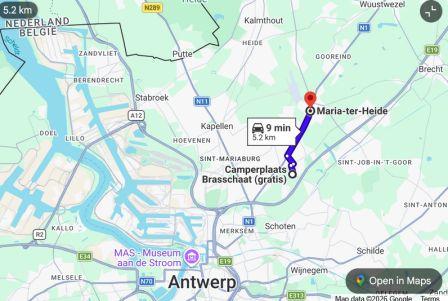
Map showing Camp De Brasschaat and Maria-ter-Heide in Belgium.  (Map source: Google maps)

The Regiment moved towards Camp De Brasschaat, just north of Antwerp and near the Dutch border, arriving on October 19, 1944. The war diary entry for October 19, 1944 recorded that the Commanding Officer “…issued information and orders regarding the Lincoln & Welland Regiment’s next attack.  The Battalion objective was to clear the wood north of Camp De Brasschaat and to gain control of the main road leading northwest of the town. Typhoons were to cover the roads and harass enemy defences in the area….” (Typhoons were single-seat fighter-bomber aircraft, heavily used by the RCAF during WWII.)

On October 20, 1944, Operation Suitcase, a Canadian offensive to isolate German forces on Walcheren Island in The Netherlands began. The Lincoln & Welland Regiment was part of this operation, advancing from Maria-ter-Heide and the Brasschaat airfield. (See https://canadianbattlefieldtours.ca/operation-suitcase/)

According to the war diary entry for October 20, 1944, it was “….overcast with heavy rain…” that day.  “…As the troops crossed the start line the Typhoons appeared on the scene.  The carrier recce, which had patrolled the main road, reported it clear, but heavy minefields lined the east side of the road.  The troops advanced in the following order: ‘A’, ‘C’, and ‘B’ Companies, ‘D’ Company remaining in reserve. 

 ‘A’ Company was pinned down by small arms and mortar fire 500 yards from their objective. The tanks supported them across the open stretch to their objective in the area of Groote Heide…

Close to midnight, the war diary recorded that “…our casualties for the day were four killed and twenty-four wounded….”  One of the fatalities was 19 year old Albert.

….Albert is buried in Bergen Op Zoom…

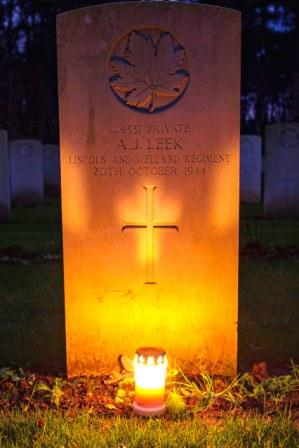
Grave of Albert John Leek in the Canadian War Cemetery in Bergen Op Zoom, The Netherlands with a Christmas Eve candle.  (Photo courtesy of Caroline Raaijmakers)

Albert was temporarily buried on October 31, 1944 in Maria-ter-Heide Civil Cemetery in the municipality of Brasschaat, before being reburied in the Canadian War Cemetery in Bergen Op Zoom, The Netherlands on May 1, 1945. 

….Albert is commemorated on the Fredericton War Memorial…

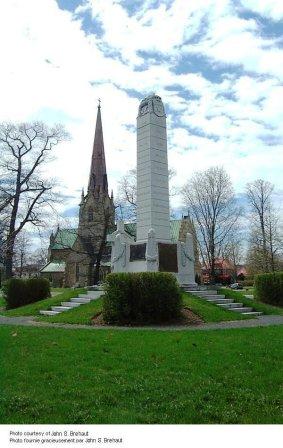
Fredericton War Memorial. (Photo courtesy of John S. Brehaut)

Albert’s name is listed on a panel on the Fredericton War Memorial in Fredericton, New Brunswick. The Leek family has served Canada – Albert’s father Earle served in WWI and WWII, Albert gave his life during WWII, and his younger brother Mauncell served in the RCAF.  “…I broke the mold…”  Robert said, “…as I became a psychotherapist, rather than a soldier….

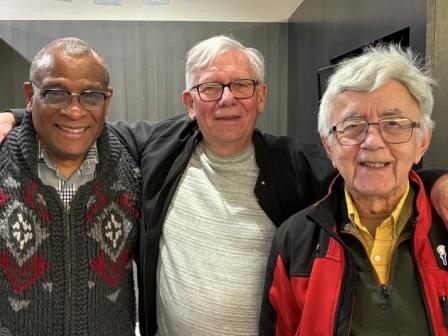
Left to right: Robert Leek, Larry Stewart, and Pieter.  (Photo credit: Uta Stewart)

We are always happy to meet family of the soldiers that Pieter researched, and were especially pleased when we met with both Robert Leek and his friends Larry and Uta Stewart. Thank you to Robert Leek for providing photos and information on his uncle, and to Larry and Uta Stewart for telling us about Robert and his uncle Albert.

If you have photos or information to share about soldiers buried in The Netherlands or Belgium, please email him at memorialtrail@gmail.com, or comment on the blog.    

© Daria Valkenburg

….Want to follow our research?…

If you are reading this posting, but aren’t following our research, you are welcome to do so.  Our blog address: https://onthewarmemorialtrail.com/

4 countries, 6 weeks, 7,000 km – an unforgettable war memorial journey in Europe…. Daria’s book ‘No Soldier Buried Overseas Should Ever Be Forgotten‘ is available in print and e-book formats.  Net proceeds of book sales help support research costs and the cost of maintaining this blog. For more information see https://nosoldierforgotten.com/

Subscribe to our YouTube Channel: On The War Memorial Trail With Pieter Valkenburg: https://www.youtube.com/channel/UCJ591TyjSheOR-Cb_Gs_5Kw

Never miss a posting!  Subscribe below to have each new story from the war memorial trail delivered to your inbox.
On The War Memorial Trail….. The WWII Soldier From Newport Who Lost His Life During The Moro River Campaign In Italy

March 2, 2026. The search for photos of soldiers who lost their lives in wartime sometimes takes Pieter on unexpected paths. Whenever possible, he tries to help other researchers.  One of them was David Archer, who explained that he was “with the 48th Highlanders army reserve in the 1970s….” 

Over the past 20 plus years, David has been looking for photos of members from that Regiment, and when he wrote to Pieter, he said that “… there is one PEI soldier on my cold list. His name is Kevin Delorie KIA Dec 20th 1943. …

Pieter decided to help find a photo, and the search for a photo of WWII soldier Kevin Joseph DELORIE began. Pieter’s initial research found that most of the family moved to Oregon (USA), but one sister, Margaret ‘Clare’, married a Murphy and remained in Canada.

….A newspaper appeal led to family and a photo of the soldier…

In the hope to find family, Charlotte MacAulay, Editor of the Eastern Graphic newspaper was contacted, and she agreed to publish a photo appeal.  (See EAG-A04-102324-K Searching for photo of Kevin Delorie)

Within hours of the article being published, Pieter received a phone call from Bernice Delory in Georgetown, Prince Edward Island, saying that Clare had a photo at one time. Bernice gave Pieter contact information for Clare’s daughter, Tammy Murphy, in Halifax.  When he called her, Tammy said that her brother, Tim Murphy, a retired teacher in Montague, may have photos. 

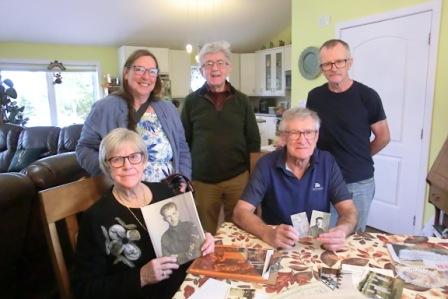
She called Tim and it wasn’t long before we were on our way to Montague to meet Tim, Clare, and Clare’s nephew, Norbert Murphy, who brought the photos. Charlotte MacAulay came as well, to do a follow-up story.  (See EAG-A11-110624 C Remembering Kevin Delorie)  “…It’s wonderful that Kevin is being honoured…” Clare said.

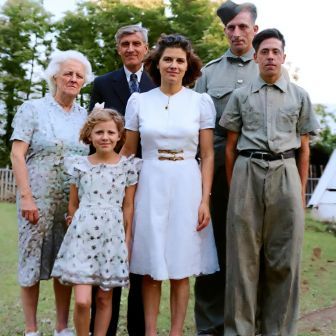
Left to right: Clare Murphy holding a photo of her brother Kevin, Charlotte MacAulay, Pieter, Norbert Murphy, Tim Murphy. (Photo credit: Daria Valkenburg)

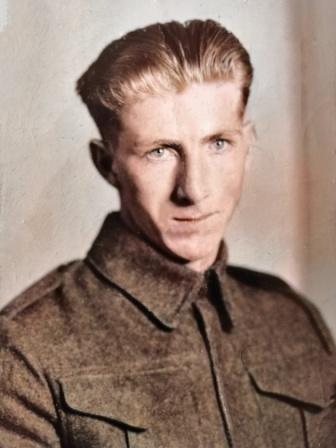
Born June 30, 1923 in Newport, Prince Edward Island, Kevin was the son of Eugene and Catherine ‘Katie’ (nee McDonald) Delorie.

Kevin Joseph Delorie. (Photo courtesy of the Delorie Family.  Photo colourization: Pieter Valkenburg)

When he enlisted on August 15, 1940 with the Prince Edward Island (PEI) Highlanders in Charlottetown, Prince Edward Island, Kevin stated he was born in 1921, adding 2 years to his actual age of 17.  At 6 feet 4 inches (1.93 metres), he was very tall!  Clare told us that she had travelled with her brother from Newport to Charlottetown on the day that he enlisted.

After completing his basic training at No. 62 Canadian Army (Basic) Training Centre in Charlottetown, he joined others from PEI Highlanders in serving at the Halifax Fortress (specifically the Halifax Citadel and surrounding areas in Nova Scotia), tasked with guard duties and receiving additional training in the Halifax/Dartmouth area as part of Canada’s home defence.

Kevin remained in Halifax until June 3, 1941, when he was sent to Valcartier, Quebec in preparation for guard duty in Newfoundland.   Another Islander was with him – Daniel ‘Dan’ Peter MACKENZIE. (See https://onthewarmemorialtrail.com/2023/06/29/on-the-war-memorial-trail-the-wwii-soldier-from-victoria-cross-fatally-wounded-during-the-liberation-of-posterenk/)

Back row:  Kevin Delorie with his parents Katie and Eugene.  Front row: siblings Clare, Rose, and Francis. (Photo courtesy of the Delorie Family. Photo restoration and colourization: Pieter Valkenburg)

Kevin was sent to Newfoundland as part of ‘W’ Force….

Location of Botwood Military Base in Newfoundland. (Map source: http://postalhistorycorner.blogspot.com/2012/12/wwii-canadian-forces-in-newfoundland.html)

After France was occupied by the Germans in 1940, Newfoundland’s defensive position became more precarious. That same year, Canada assumed responsibility for the defence of Newfoundland with the establishment of ‘W Force’, a Canadian garrison force responsible for defending Newfoundland against enemy invasion and attacks, and providing security for existing and proposed defence facilities during WWII. It included infantry, artillery, and anti-aircraft units. (See https://en.wikipedia.org/wiki/Military_history_of_Newfoundland_during_World_War_II)

On July 23, 1941, as part of ‘W Force’, Kevin was sent to Botwood, Newfoundland.  In addition to the PEI Highlanders, troops from the Black Watch of Canada, Royal Rifles of Canada, The Algonguin Regiment, Queens Own Rifles, also served at various times. While an RCAF base in Botwood had aircraft patrolling the east coast of the Atlantic, Canadian Army personnel based at Botwood were charged with protection of military facilities that had been installed there, as well as in Gander. (See https://www.heritage.nf.ca/articles/politics/botwood-base.php)

…..Four other soldiers were in Botwood…..

Kevin was in Botwood at the same time as four other soldiers whose stories have been told on this blog:

On March 1, 1943, Kevin was temporarily promoted to the rank of Lance Corporal. Then, on March 20, 1943, he left Newfoundland, and was sent to Sussex, New Brunswick.  On June 2, 1943, Kevin was transferred to the No. 1 Transit Camp in Windsor, Nova Scotia, for final preparation and training before being sent overseas.

…..Kevin was in North Africa before going on to Italy….

Kevin boarded a ship on June 10, 1943, which left Canada on June 11, 1943.  Upon arriving in the United Kingdom on June 18, 1943, he was posted to No. 7 Canadian Infantry Reinforcement Unit (CIRU), where he reverted back to the rank of private.  Training continued to prepare troops who would be part of the Central Mediterranean Force (CMF).

On September 12, 1943, Kevin was transferred to the West Nova Scotia Regiment’s X-4 Reinforcement List, and boarded a ship that left the United Kingdom.  He arrived in North Africa on September 23, 1943, and was attached to ‘B’ Company of the 3rd Battalion of the British North Africa Force (BNAF), prior to being sent on to Italy.

On October 7, 1943 he wrote a note to his mother, confirming that he was “…now down in North Africa….”  He went on to write that “…I haven’t had any mail for 6 weeks…” and commented that “….the weather is fairly warm.  We buy lots of fruit such as grapes and melons.  The oranges will soon be ripe…

Mail arrived for Kevin, as he noted in an October 23, 1943 letter to his father.  He was still in North Africa, but had been reassigned to D Company, 1st Battalion, No. 1 Canadian Base Reinforcement Depot (CBRD), Canadian Army, BNAF.

On November 12, 1943, Kevin was part of the 4th Battalion and on his way to Italy with the CMF and the Allied Army in Italy (AAI) for the Italian Campaign, joining the West Nova Scotia Regiment, as it prepared to move towards Agnone, on November 29, 1943, one of 42 reinforcements(See https://en.m.wikipedia.org/wiki/Italian_campaign_(World_War_II))

On December 6, 1943, Canadian forces, along with British, Indian, and New Zealand infantry divisions, began the Moro River Campaign, a series of large-scale assaults on major crossing points along the Moro River in Eastern Italy, with the objective of securing a large bridgehead along the defensive line. The intention was to breach the German Army’s Winter Line defensive system and advance to Pescara—and eventually Rome. (For more information see https://en.wikipedia.org/wiki/Moro_River_Campaign)

…..Kevin was transferred to the 48th Highlanders Regiment….

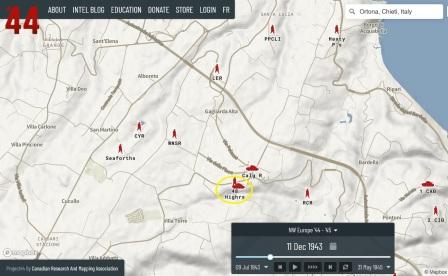
Position of 48th Highlanders on December 11, 1943 (see yellow circle).  WNSR to the left shows the position of the West Nova Scotia Regiment that Kevin had been with.  (Map source: Project 44)

On December 11, 1943, he was transferred to ‘B’ Company of the 48th Highlanders Regiment, joining them after they had moved from the Ortona area towards Villa Torre.  In what would be his last letter home, he wrote to his mother on December 14, 1943.  “….Just a few lines to say I’m OK and to give you another address. I am now with the 48th Highlanders. Aeneas Johnston and I came to the same company. I don’t know where Charlie MacDonald is, he went to some other company…

Kevin was referring to Aeneas Daniel JOHNSTON, born in Primrose, Prince Edward Island, was the son of Joseph and Gertrude Johnston, and husband of Mary Johnston.  Aeneas had been killed on December 8, 1943 and is buried in Moro River Canadian War Cemetery in Italy. 

It’s possible that Kevin was referring to Charles James MACDONALD, who was born in New Annan, Prince Edward Island, son of Mr. and Mrs. Joseph MacDonald. He died July 8, 1944 while serving with the North Nova Scotia Highlanders, and is buried in Beny-Sur-Mer Canadian War Cemetery in France.

…..Kevin was listed as MIA on December 20, 1943….

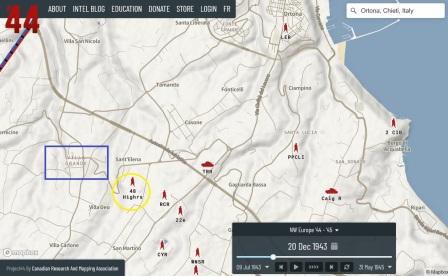
Position of 48th Highlanders on December 20, 1943 (see yellow circle) as they attempted an attack on Villa Grande (see blue square). (Map source: Project 44)

The war diary for December 20, 1943 indicated that an attack on Villa Grande was not as successful as hoped. “….Essex Regiment ….attempted to take Villa Grande and failed….Ordered by Brigade to send one Company…. ‘B’ Company attacked 1500 hours, but tanks bogged down, and Company pinned down….Tanks encountered minefield and was mined….Under cover of dark, ‘B’ Company withdrew to position around tanks”  Kevin was never seen again, and he was listed as Missing In Action (MIA) and presumed dead.

Kevin’s family was notified that he was missing, and of course hoped that he was not killed, but had been taken prisoner of war. 

Clare had gone to church, and through a miscommunication, didn’t know what happened to her brother until the moment the priest asked the congregation to pray for the fallen… and Kevin’s name was mentioned.  “…I was 13 at the time” she said.  “…Helen Farrell had a phone in her store and was supposed to tell me, but didn’t get the message to me in time…

…..The 48th Highlanders Chaplain wrote what happened on December 20, 1943….

A January 12, 1944 letter written to Kevin’s mother by Padre Stewart Bland EAST, Chaplain for the 48th Highlanders Regiment, provided an account of what happened.  “….I write to assure you that everything in our power has been done to locate his body and that we have failed. The full story is as follows.

On the afternoon of 20 December, one Company of the Highlanders were given instruction to capture an enemy position. The attack was not a success because the tanks were unable to proceed because of mines.

When the Company returned to their position, five men were missing.  The bodies of only three of these have been found, in spite of a thorough search.  All I can suggest is that your son was buried by the Germans or was not killed as reported, but was wounded and taken prisoner…

Although the letter was dated January 12, 1944, it was not mailed until much later, as a March 27, 1944 postscript explained that he had only received the day before a mailing address, and asked if she had received any further word about Kevin’s fate.

The 3 soldiers that Padre East mentioned as being found were:

  • Cpl Alexander John MACKINNON, born in Whycocomagh, Cape Breton Island, Nova Scotia, aged 26
  • Cpl Eric Morris NETTLETON of Hamilton, Ontario, aged 21
  • Pte Jack STEWART of Hastings, Ontario, aged 34

All 3 are now buried in Moro River Canadian War Cemetery.

…..Kevin is buried in Moro River Canadian War Cemetery….

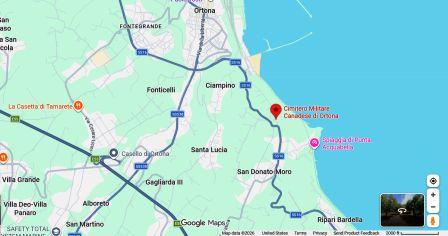
Moro River Canadian War Cemetery. To the far left is Villa Grande, near where Kevin Delorie lost his life. (Map source: Google maps)

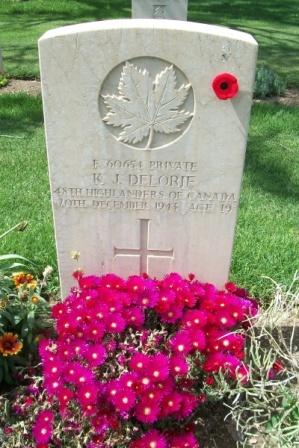
Kevin’s distraught family kept in contact with the Department of National Defence, and asked the Canadian Red Cross for help in locating him.  In June 1945, his body was found, and he was buried in the Moro River Canadian War Cemetery, located near the Adriatic Sea, 5 km (3 miles) from San Donato-Moro, near Ortona in Italy.

Grave of Kevin Joseph Delorie in Moro River Canadian War Cemetery in Italy. (Photo source: Canadian Virtual War Memorial)

Thank you to Charlotte MacAulay of the Eastern Graphic for publicizing the search for a photo of Kevin Delorie.  A huge thank you goes to Clare Murphy, Tim Murphy, and Norbert Murphy for sharing photos and information. 

Do you have a story to tell? Email Pieter at memorialtrail@gmail.com or comment on the blog. 

© Daria Valkenburg

….Previous postings on soldiers killed in Italy….

Kevin Delorie is not the only soldier from Prince Edward Island killed in Italy, and whose story has previously been told on this blog.  See:

….Want to follow our research?…

If you are reading this posting, but aren’t following our research, you are welcome to do so.  Our blog address: https://onthewarmemorialtrail.com/

4 countries, 6 weeks, 7,000 km – an unforgettable war memorial journey in Europe…. Daria’s book ‘No Soldier Buried Overseas Should Ever Be Forgotten‘ is available in print and e-book formats.  Net proceeds of book sales help support research costs and the cost of maintaining this blog. For more information see https://nosoldierforgotten.com/

Subscribe to our YouTube Channel: On The War Memorial Trail With Pieter Valkenburg: https://www.youtube.com/channel/UCJ591TyjSheOR-Cb_Gs_5Kw

Never miss a posting!  Subscribe below to have each new story from the war memorial trail delivered to your inbox.