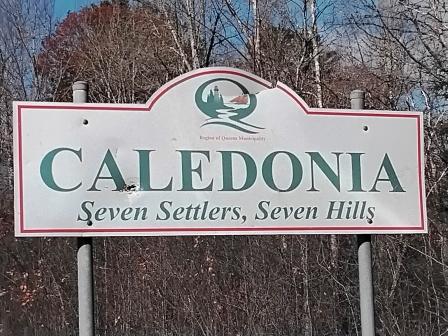
On The War Memorial Trail…..The WWII Soldier From Caledonia Who Lost His Life During The Struggle To Capture The Goch-Calcar Road

Sign for the community of Caledonia, Queen’s County, Nova Scotia. (Photo credit: Daria Valkenburg)

February 19, 2026. As Pieter works his way through the various photo wish lists he receives from the Canadian War Cemeteries in The Netherlands, he tends to be methodical.  Occasionally, however, he decides to throw a ‘wild card’ and asks me to choose a soldier to research. 

My process is definitely not methodical – I pick a soldier based on something that triggers a memory – either through a surname or place of residence or even because Pieter previously researched a soldier from the same Regiment who lost his life on the same day. This time around, I chose a soldier who came from Caledonia, Nova Scotia. Why? I remembered that when I was in school and we studied British history that Scotland was often referred to as Caledonia, its Latin name during the Roman period. Caledonia made me think of my late mother, who loved anything Scottish.  (See https://www.britannica.com/place/Caledonia-ancient-region-Britain)

….The search for family of William Owen Seldon was successful…
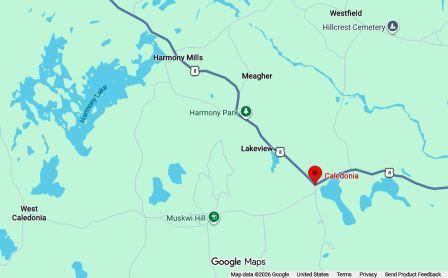
Caledonia, located in Queens County, Nova Scotia is 151 kms (94 miles) from Halifax. (Map source: Google maps)

Pieter just shook his head, but dutifully began his research into William Owen SELDON, born January 2, 1917 in Caledonia, Nova Scotia, son of Roland Chivers and Effie Bond (nee Doggett) Seldon.  William had lost his life in Germany on February 19, 1945 while serving with the Lorne Scots (Peel, Dufferin and Halton Regiment).

It wasn’t long before Pieter was in contact with retired schoolteacher, Wilma Shupe, the daughter of William’s sister Rhoda Irene Forrest….and received a photo from her. Wilma explained that …My mother always called him William.  They were very close.  They went to dances together as he could drive, and he used a truck with a flat bed, like was used for hauling logs, etc.  They would pick up people along the way and go to dances in a neighbouring community...

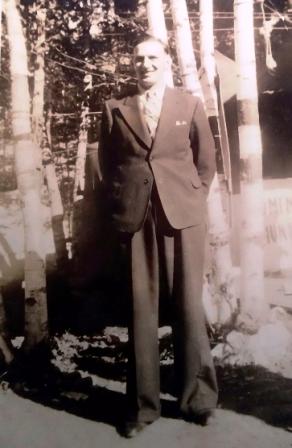
William Owen Seldon.  (Photo courtesy of the Seldon Family)

In addition to his sister Rhoda, William had a brother, George Roland, and another sister, Roseanna May.  “…Two nephews were named for him.  Rose and George, his younger siblings, named their sons after him…” Wilma noted.  “….The farm where William grew up was purchased by Dutch immigrants in the 1950s and are well known to this day as Van Dyk blueberries…” (See https://vandykblueberries.ca/)

….William enlisted in 1942…

William originally enlisted under the National Resources Mobilization Act (NRMA) at the No. 6 NRMA Clearing Depot in Halifax, Nova Scotia on July 24, 1942 and joined the 54th Heavy Anti-Aircraft Battery of the Royal Canadian Artillery (RCA) in Bedford, Nova Scotia. At the time, he stated that he’d left school at the age of 17 after completing Grade 9, and had been working ever since.   (See https://en.wikipedia.org/wiki/National_Resources_Mobilization_Act)

Wilma had mentioned that “…William worked in the woods and on the family farm before he enlisted…

His personnel file for his occupational background noted that he had been “…driving horses for 6 months. Truck driver for 3 months.  Gold miner for 1 ½ years and coal mining for 3 or 4 years. …Can operate car and truck and effect minor repairs….

His interests included “…playing softball, dancing, movies, fishing, playing cards, and recitation and dialogue…

On November 5, 1942, William enlisted in the Active Army with the 54th Heavy Anti-Aircraft Battery of the Royal Canadian Artillery (RCA). 

….William served in Newfoundland…
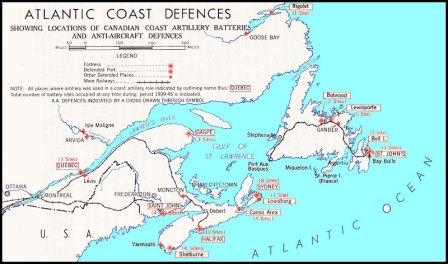
After completing his basic training, William was transferred on August 6, 1943 to the 25th Anti-Aircraft Regiment, based in St. John’s-Torbay, Newfoundland as part of Atlantic Command, and tasked with strengthening and administering home defence facilities on Canada’s Atlantic Coast and Newfoundland.  (See https://en.wikipedia.org/wiki/Atlantic_Command_(Canadian_Army))

Before travelling to Newfoundland, however, he received a furlough from August 6 to 23, 1943. (NOTE: Newfoundland and Labrador became part of Canada on March 31, 1949.)

….William briefly returned to Canada before travelling overseas…

William remained in Newfoundland until April 26, 1944, when he was transferred to No. 1 Transit Camp in Windsor, Nova Scotia. Then, on May 20, 1944, he was reallocated to the No. 1 Training Battalion of the Canadian Infantry Corps (CIC) in Debert, Nova Scotia, and received further training before being transferred to the Training Brigade Group in preparation for overseas service.

….William left Canada for overseas service …

On July 19, 1944, William left Canada, arriving in the United Kingdom on July 27, 1944, where he was placed with No. 3 Canadian Infantry Reinforcement Unit (CIRU).

The following day after arrival he was interviewed and recommended for training as a Driver I/C for the Infantry.  (The term ‘Driver i/c’ refers to ‘Driver, internal combustion’.) However, that training never happened, as a few weeks later he was transferred to the X4 Reinforcement List for the Royal Regiment of Canada, part of 21st Army Group, on August 10, 1944 and sent to France the following day, arriving on August 12, 1944.

In France he was transferred to the Black Watch (Royal Highland Regiment) of Canada on August 15, 1944, joining them as preparations were made for the upcoming Battle of Falaise Gap.  On August 18, 1944, he was sent to HQ No. 5 Canadian Infantry Brigade (CIB).

William was wounded in his right leg by mortar fire on August 22, 1944, and taken to No. 102 Field Dressing Station (FDS).   After being discharged on September 11, 1944, he was put on the X4 Reinforcement List of the 13th Battalion, where he remained until November 28, 1944, when he was transferred to No. 5 Canadian Infantry Brigade (CIB) Ground Defence Platoon (Lorne Scots Regiment), joining them in The Netherlands. (See https://en.wikipedia.org/wiki/5th_Canadian_Infantry_Brigade

Then, on January 19, 1945, he was transferred to the 4th Infantry Brigade Ground Defence Platoon (Lorne Scots Regiment). The Lorne Scots role was to mobilize units to fulfill defence and employment requirements for the Canadian Army. This included various support roles, focusing on logistical and defensive operations rather than front-line combat.

….William was attached to the Essex Scottish Regiment for an attack on the Goch-Calcar Road …

Although officially with the Lorne Scots (Peel, Dufferin and Halton Regiment), William was attached, for all purposes, to the Essex Scottish Regiment on February 8, 1945.  On February 16, 1945, the Essex Scottish Regiment left The Netherlands and crossed the border into Germany, at Kleve.  The following day, the war diary reported that the battalion “…moved off to an assembly area between Kleve and Calcar….” in preparation for an attack on the Goch-Calcar Road, which was subsequently delayed until February 19, 1945. (Calcar in English is Kalkar in German)

….Heavy fighting along the Goch-Calcar Road proved deadly….
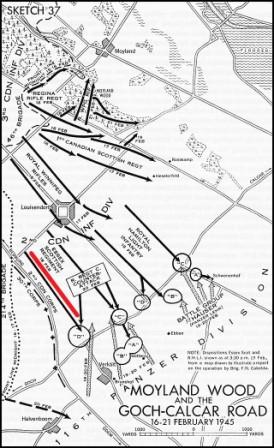
Moyland Wood and the Goch-Calcar Road, 16-21 February 1945 (Map source: HyperWar: The Victory Campaign [Chapter 18] ibiblio.org)

An account of the role played by No. 4 Canadian Infantry Brigade during the struggle for the Goch-Calcar Road on February 19-20, 1945 was provided by Brigadier Frederick Norman CABELDU on February 28, 1945.  (See https://matthewkbarrett.com/2024/07/17/brig-f-n-cabeldu/)

His report began by stating that “…prior to the attack made by 4 Cdn Inf Bde on 19 Feb 1945, the enemy controlled the main Goch-Calcar road, southwest of Calcar…The enemy held a line on the outskirts of Calcar that included Moyland,…” a wooded area, “…and that continued to the southwest.  The latter portion of this line ran parallel to, and about a mile north-west of, the main Goch-Calcar road…

A description of the attack, which began just after noon, followed.  …The attack involved an advance over open country, and sufficient ‘Kangaroos’…were used….”  Kangaroos are turret-less tanks with a platform for carrying troops.

Things didn’t go according to plan, as “…movement over the soft ground was difficult and ….several ‘Kangaroos’ and tanks became bogged down…”  They were sitting ducks. “…It soon became evident that the enemy had a screen of anti-tank defences, including many 88 mm guns…”  German positions were held by “…fresh troops of 12 Parachute Recce Regiment…” and in the rear of these positions were “…elements of Panzer Lehr Division….

The Essex Scottish Regiment’s war diary for February 19, 1945 noted that the attack on the Goch-Calcar Road resulted in the Regiment fighting “….under a heavy hail of shrapnel and small arms fire. Casualties were fairly heavy….Communications were difficult. Vehicles became bogged in the soft mud, casualties were difficult to evacuate, and guns and ammunition could not get up where they were required. Battalion HQ moved into a group of buildings which were later surrounded and demolished by tanks…” 

William, who was attached to the Essex Scottish Regiment, was one of the fatal casualties that day.  Also killed in the attack on the Goch-Calcar Road, but on the following day, was Donald Roy CARTER.  (See https://onthewarmemorialtrail.com/2024/06/09/on-the-war-memorial-trail-the-wwii-soldier-from-central-blissville-killed-along-the-goch-calcar-road/)

….William is buried in Groesbeek…
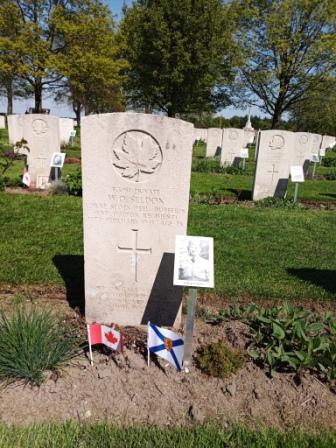
Grave of William Owen Seldon with Canadian and Nova Scotia flags placed by Pieter. (Photo credit: Pieter Valkenburg)

William was initially buried in the Canadian Military Cemetery in Bedburg, Germany, before being reburied on September 11, 1945 in the Canadian War Cemetery in Groesbeek, The Netherlands.   During our 2025 European War Memorial Tour, Pieter placed flags of Canada and Nova Scotia by his grave.
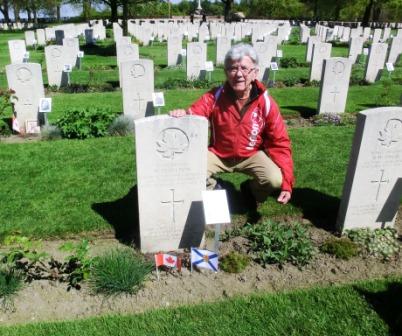
Pieter at the grave of William Owen Seldon after placing flags of Canada and Nova Scotia. (Photo credit: Daria Valkenburg)

….We met William’s family when we visited Caledonia…

We are always happy to meet family members of the soldiers that Pieter researches, and so we were delighted to have the chance to visit Caledonia and meet Wilma Shupe and her husband Tom.
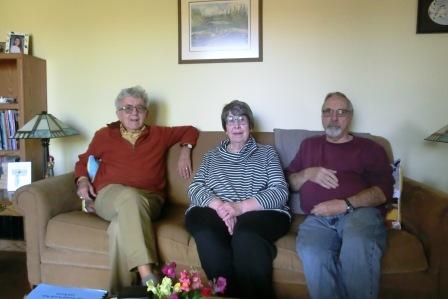
Pieter with Wilma and Tom Shupe.  (Photo credit: Daria Valkenburg)

Tom and Wilma showed us the Cenotaph in Caledonia, on which William is listed on the Roll of Honour.
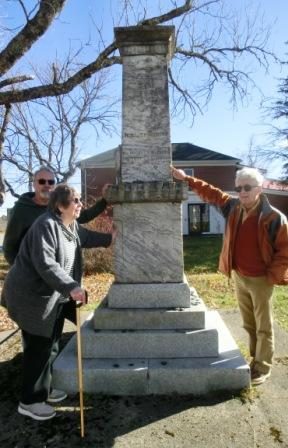
Tom and Wilma Shupe (left), with Pieter pointing to William Seldon’s name on the Roll of Honour on the Cenotaph in Caledonia.  (Photo credit: Daria Valkenburg)

Thank you to Wilma and Tom Shupe for providing photos and information, and a warm welcome during our visit.

The flags that were placed by Pieter at William’s grave were donated.  Our thanks go to: 

  • Alan Waddell, Constituent Assistant, on behalf of Heath MacDonald, MP for Malpeque, for the Canadian flag.
  • Kyle Graham, Research Officer, Military Relations, Nova Scotia Intergovernmental Affairs, on behalf of Premier Tim Houston, Province of Nova Scotia, for the Nova Scotia flag.

Pieter encourages readers with photos or stories of Canadian soldiers buried in The Netherlands or Belgium to email him at memorialtrail@gmail.com or comment on the blog. 

© Daria Valkenburg

….Want to follow our research?…

If you are reading this posting, but aren’t following our research, you are welcome to do so.  Our blog address: https://onthewarmemorialtrail.com/
4 countries, 6 weeks, 7,000 km – an unforgettable war memorial journey in Europe…. Daria’s book ‘No Soldier Buried Overseas Should Ever Be Forgotten‘ is available in print and e-book formats.  Net proceeds of book sales help support research costs and the cost of maintaining this blog. For more information see https://nosoldierforgotten.com/

Subscribe to our YouTube Channel: On The War Memorial Trail With Pieter Valkenburg: https://www.youtube.com/channel/UCJ591TyjSheOR-Cb_Gs_5Kw

Never miss a posting!  Subscribe below to have each new story from the war memorial trail delivered to your inbox.
On The War Memorial Trail……The Stordy Brothers Part 2 – The WWII Airman From Brookvale Who Lost His Life On The Last Flight Of Halifax JB-920

February 16, 2026. During WWII, the Stordy family of Brookvale, Prince Edward Island, lost  two sons:  first, John ‘Lawrence’ STORDY, who is buried in the Reichswald Forest War Cemetery in Kleve, Germany, and then, shortly after the war in Europe ended, Michael ‘Cecil’ STORDY, who is buried in Kelly’s Cross (St. Joseph) Parish Cemetery in Kelly’s Cross, Prince Edward Island.

….Two brothers gave their lives in WWII…

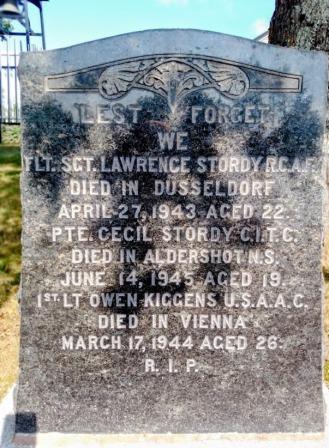
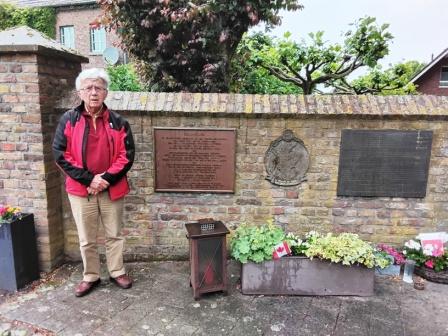
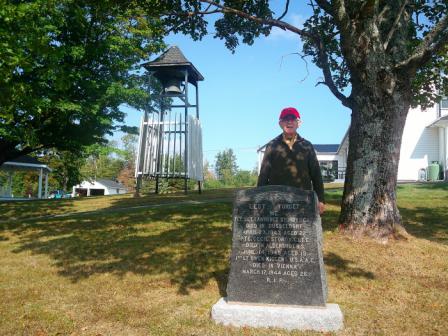
Two Stordy brothers are listed on the memorial outside St. Joseph’s Roman Catholic Church in Kelly’s Cross, behind which Pieter is standing. (Photo credit: Daria Valkenburg)

In Part 1 of this two-part series, we began with Cecil’s story, as the Stordy family became known to Pieter when he was assigned Cecil’s grave after he became a volunteer under the National Volunteer Program for the Commonwealth War Graves Commission (CWGC).  (See https://onthewarmemorialtrail.com/2026/02/11/on-the-war-memorial-trailthe-stordy-brothers-part-1-the-wwii-soldier-from-brookvale-who-drowned-during-a-swimming-exercise-in-nova-scotia/

Now, in Part 2, we tell the story of JohnLawrence’ STORDY, who lost his life in Germany on April 27, 1943, aged 22,  two years earlier than his younger brother Cecil.

….Lawrence enlisted in the RCAF in July 1941 …

Born May 31, 1921 in Brookvale, Prince Edward Island, Lawrence was the son of John ‘Anthony’ and Mary ‘Ermina’ (nee Duffy) Stordy.  When he enlisted at the Royal Canadian Air Force (RCAF) Recruiting Centre in Halifax, Nova Scotia on July 17, 1941, he stated that he had completed Grade 10 and was employed at Schwartz & Sons.  Before that he had worked as a farm labourer for D. D. MacDonald on Prince Edward Island for 4 months, then on a dairy farm for B. Baxter in Truro, Nova Scotia.

In 1940, he left the dairy farm for a better job with Nova Scotia Light and Power in Halifax, Nova Scotia, remaining there until he was laid off in 1941, after which he went to work for Schwartz & Sons, a spice and food company, as an assistant shipper.  

Asked what special qualifications or hobbies would be useful to the RCAF, he wrote down that he knew how to fish, hunt, and skate, and occasionally played baseball.

After taking his basic training in Halifax, Lawrence was sent to No. 4 Air Manning Section (AMS) in Valcartier, Quebec on September 13, 1941 and to No. 5 Manning Depot in Lachine, Quebec.  Manning Depots were reception and training centres for new RCAF recruits, serving as the initial entry point for the British Commonwealth Air Training Plan (BCATP). Recruits received uniforms, 4–5 weeks of basic military training, drills, and aptitude testing.  Upon completion, trainees were designated as ‘aircraftsmen 2’ and moved on to further specialized training schools.

Lawrence remained there until March 29, 1942, when he was sent to No. 1 Wireless School (WS) in Montreal, Quebec.  This BCATP facility for training wireless air gunners was located in the former Nazareth School for the Blind. On April 30, 1942, he was designated as Leading Aircraftman (LAC).

On June 7, 1942 he went to Composite Training School (KTS) in Trenton, Ontario for a four-week course in astro-navigation.

On July 5, 1942 he was sent to No. 9 Bombing and Gunnery (B&G) School in Mont-Joli, Quebec, where he received instruction in the techniques of bomb aiming and aerial machine gunnery.  Bombing and Gunnery schools required a large area to accommodate their bombing and gunnery ranges, and were often located near water. The Avro Anson, Fairey Battle, Bristol Bolingbroke, and Westland Lysander were the standard aircraft used.

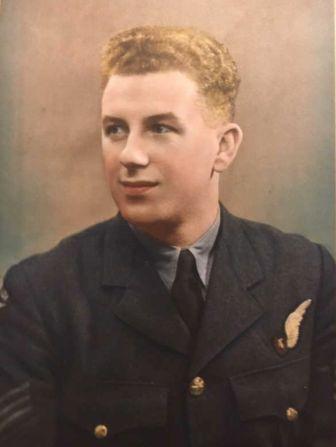
John ‘Lawrence’ Stordy. The 3 chevrons on his right arm indicate his promotion to T1 Sergeant. (Photo source: Canadian Virtual War Memorial)

While at No. 9 B&G, Lawrence was awarded his Air Gunner’s badge on August 14, 1942, and a promotion to T1 Sergeant.  (The ‘T’ stands for Technician.) His Commanding Officer at the School noted that he was “…a hard worker and applied himself diligently…

On September 11, 1942, he was sent to No. 34 Operational Training Unit (OTU) in Pennfield Ridge, New Brunswick.  An OTU was the last stop for aircrew trainees before going overseas. 

….Lawrence left Canada for overseas service …

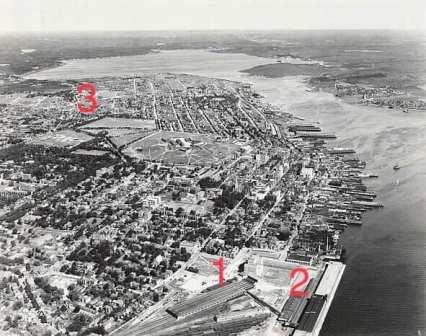
Lawrence was only in Pennfield Ridge for a few days before being transferred to the RCAF’s No. 1 ‘Y’ Embarkation Depot in Halifax, Nova Scotia.  (See https://rcaf.info/rcaf-stations/nova-scotia-rcaf-stations/rcaf-station-halifax/)

Aerial view of Halifax showing the location of the Canadian National Railroad Station (red # 1) , Pier 21 Ocean Terminals (red # 2) and No. 1 “Y” Embarkation Depot (red # 3). Halifax Harbour is foreground and right with the Bedford Basin in background. (Source: Library and Archives Canada Collections website)

Things moved quickly after that, as on September 24, 1942, Lawrence was placed in the Royal Air Force (RAF) Trainee Pool and arrived at No. 3 Personnel Reception Centre (PRC) in Bournemouth, England on October 9, 1942. This was the arrival point for thousands of Commonwealth aircrew after training in Canada. 

Lawrence would have been at No. 3 PRC at the same time as Donald David MacKenzie TAYLOR, who arrived there two days earlier, and whose story was previously told.  (See https://onthewarmemorialtrail.com/2025/12/27/on-the-war-memorial-trail-the-wwii-soldier-born-in-manitoba-who-lost-his-life-when-lst-420-hit-a-mine-in-the-harbour-outside-ostend/)

….Lawrence joined No. 405 Pathfinder Squadron…

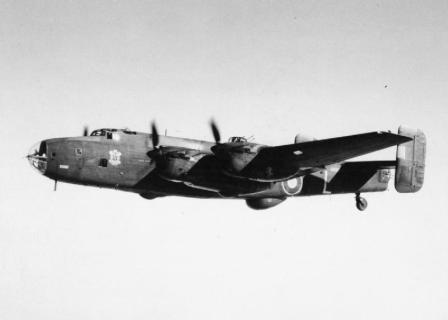
On October 28, 1942, he was transferred to No. 405’s 1659 Conversion Fleet, the main training unit for No. 405 (Vancouver) Squadron, and based at RAF Leeming and Topcliffe in Yorkshire.  No. 405 was the only RCAF Pathfinder Squadron. Formed in April 1941, No. 405 had flown Wellingtons until April 1942, when it converted to Halifax bombers, and prepared crews for the Handley Page Halifax bomber.

Halifax B Mk II bomber photo.  (Photo source: Royal Air Force official photographer – https://commons.wikimedia.org/w/index.php?curid=24454971)

Pathfinder Squadrons were target-marking squadrons that flew ahead of the main bombing crews to mark targets with slow falling, colour-coded parachute flares and very bright photo flash bombs that were on the centre of the target.  This helped bombing crews to increase the accuracy of their bombing.

Pathfinders didn’t immediately leave, but stayed around the target, to keep dropping markers on target, to keep second and third waves of bombers from ‘target creep’.  RAF and RCAF bombers were strung out like cars on the interstate, one behind the other, NOT in formation. Each individual aircraft had to navigate, get to the target, drop their bombs, and return to base – in the dark.  Pathfinders would remain until after the bombers had left to take photos of the damage inflicted.

On January 15, 1943, his training completed, Lawrence was assigned to No. 405 Squadron, based at RAF Beaulieu in Hampshire. At the time he joined, No. 405 had been detached to Coastal Command since October 1942. Coastal Command’s role was defensive, mainly protecting convoys from German U-boats(See https://en.wikipedia.org/wiki/RAF_Coastal_Command_during_World_War_II)

On March 1, 1943, No. 405 Squadron was reassigned back to Bomber Command as part of No. 6 (RCAF) Group, selected to be part of No. 8 Pathfinder Group on March 18, 1943, and based at RAF Gransden Lodge, located 16.3 km (10.1 miles) west of Cambridge, England. They were to be participants in a bombing campaign in the industrial heart of Germany.

….No. 405 Squadron was involved in the Battle of the Ruhr…

The Battle of the Ruhr was a strategic bombing campaign carried out by Bomber Command against the Ruhr Valley Area in Germany from March 5 to July 31, 1943.  Why Ruhr? Responsible for 60% of Germany’s industrial output, it was the main centre of German heavy industry with coke plants, steelworks, armaments factories and ten synthetic oil plants. (Coke is a coal-based fuel with a high carbon content, used mainly in the smelting of iron ore, steelworks, armaments factories and ten synthetic oil plants.)  (See https://en.wikipedia.org/wiki/Battle_of_the_Ruhr and https://www.worldhistory.org/article/2429/battle-of-the-ruhr/)

The Ruhr Valley was protected by about 200 flak batteries, each consisting of six or eight 88-mm (3.5 in) guns, many with radar capability. Some guns were even mounted on trains to follow the bombers. Due to this dense network of anti-aircraft guns and countless searchlights, Allied bombers soon gave the Ruhr the ironic nickname of ‘Happy Valley’.

In addition to anti-aircraft guns, smog was a big problem.  The Ruhr Valley was so heavily industrialized that constant smog in the skies above it not only impeded the bomb aimers, but also made it difficult for the navigators to find their target areas.

….The last flight of Halifax JB-920…

On the night of April 26 into 27, 1943, Bomber Command sent 561 bombers (215 Lancasters, 135 Wellingtons, 119 Halifaxes, 78 Stirlings, 14 Mosquitos) to Duisburg, Germany.  Duisburg had important railway yards, which connected the Ruhr to other parts of Germany, and the Thyssen steelworks.

In total, 17 planes were lost that night – 7 Halifaxes, 5 Wellingtons, 3 Lancasters, 2 Stirlings. German records show 130–207 people killed, 300 buildings destroyed and six other cities hit by bombs.

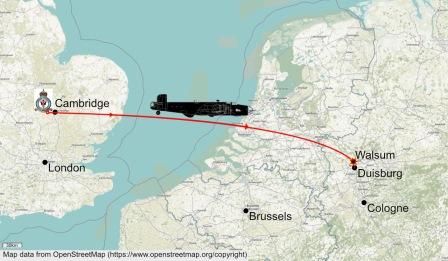
Map shows the plane’s path from England towards Duisburg.  It was shot down by German flak and crashed in Walsum, 11 km north northwest of its target of Duisburg.  (Map prepared by Wendy Nattress)

This operation was No. 405 Squadron’s first operation as a Pathfinder unit. Out of 11 Halifax aircraft dispatched, 1 was lost – Halifax JB-920.  Hit by German light and heavy flak, it was shot down as it approached the target area of Duisburg, and crashed in Walsum, 11 km (6.8 miles) north northwest of Duisburg. All eight crew members were killed, including Lawrence, who was one of the two air gunners on that flight.

….The other crew members on the last flight of Halifax JB-920…

On the last flight of Halifax JB-920, in addition to Flight Sgt John ‘Lawrence’ STORDY, the other crew members were:

  • Pilot : Pilot Officer David Edward CROCKATT of Vancouver, British Columbia
  • 2nd Pilot : RCAF Pilot Officer Chester Brockie DIXON of Maple Creek, Saskatchewan
  • Flight Engineer : RCAF Sergeant Isaac Abraham PENNER of Nipawin, Saskatchewan
  • Navigator : RCAF Pilot Officer John Robert MARRIOTT of Ottawa, Ontario
  • Navigator : RCAF Warrant Officer Class II Stewart SLEETH of Detroit, Michigan, USA
  • Wireless Operator / Air Gunner : RAF Pilot Officer Francis Edward O’HARE of the United Kingdom
  • Air Gunner : RCAF Warrant Officer Class II Thomas Lloyd BENTLEY of Moose Jaw, Saskatchewan

….Lawrence is buried in Reichswald Forest War Cemetery in Kleve…

The airmen were temporarily buried at North Cemetery in Dusseldorf, Germany, before being reburied in Reichswald Forest War Cemetery in Kleve, Germany.

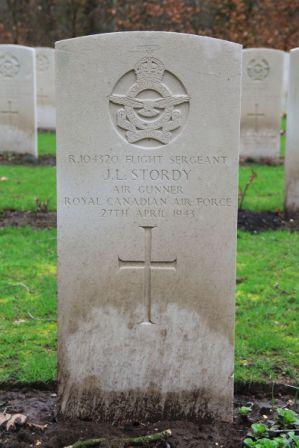
Grave of John ‘Lawrence’ Stordy in the Reichswald Forest War Cemetery in Kleve, Germany.  (Photo source: Find A Grave)

I had wondered why the men were reburied in Reichswald Forest War Cemetery, another cemetery in Germany, instead of in The Netherlands. Yannic Wethly, a volunteer with the Air Drenthe Research Foundation (Stichting Luchtoorlog Onderzoek Drenthe),  explained that “….almost all  RAF/RCAF/RAAF etc personnel who died in the German provinces that border to The Netherlands were reburied at Reichswald Forest. This explains the vast geospatial spread in the crash locations, and also why there are more than 7500 graves there….

Patti W Noonan, daughter-in-law of the late Bernadette ‘Bernie’ Stordy Noonan, the youngest sister of Cecil and Lawrence, wrote us that “….the family is very proud of the sacrifice by Lawrence and Cecil…” and rightly so.

Thank you to Wendy Nattress, who prepared the map showing the flight path for Halifax JB-920.

This concludes the 2 part series on the Stordy Brothers. Do you have a story to tell? Email Pieter at memorialtrail@gmail.com or comment on the blog. 

© Daria Valkenburg

….Want to follow our research?…

If you are reading this posting, but aren’t following our research, you are welcome to do so.  Our blog address: https://onthewarmemorialtrail.com/

4 countries, 6 weeks, 7,000 km – an unforgettable war memorial journey in Europe…. Daria’s book ‘No Soldier Buried Overseas Should Ever Be Forgotten‘ is available in print and e-book formats.  Net proceeds of book sales help support research costs and the cost of maintaining this blog. For more information see https://nosoldierforgotten.com/

Subscribe to our YouTube Channel: On The War Memorial Trail With Pieter Valkenburg: https://www.youtube.com/channel/UCJ591TyjSheOR-Cb_Gs_5Kw

Never miss a posting!  Subscribe below to have each new story from the war memorial trail delivered to your inbox.
On The War Memorial Trail……The Stordy Brothers Part 1 – The WWII Soldier From Brookvale Who Drowned During A Swimming Exercise In Nova Scotia

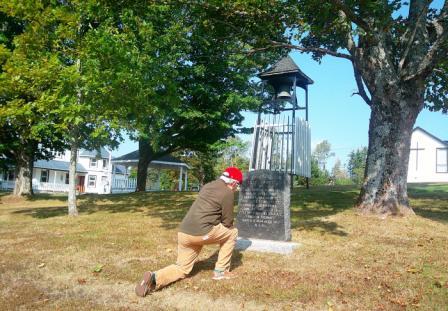
Pieter looks at the memorial outside St. Joseph’s Roman Catholic Cemetery in Kelly’s Cross. (Photo credit: Daria Valkenburg)

February 11, 2026. One of the cemeteries that Pieter was assigned when he became a volunteer under the National Volunteer Program for the Commonwealth War Graves Commission (CWGC) last year was Kelly’s Cross (St. Joseph) Parish Cemetery in Kelly’s Cross, Prince Edward Island.  There is only one CWGC war grave at this cemetery…. that of WWII soldier Michael ‘Cecil’ STORDY, who died June 14, 1945, aged 19.

….Two brothers gave their lives in WWII…

Two Stordy brothers are listed on the memorial outside St. Joseph’s Roman Catholic Church in Kelly’s Cross. (Photo credit: Pieter Valkenburg)

When Pieter visited the cemetery last summer to inspect the grave, he noticed a memorial outside St. Joseph’s Roman Catholic Church.  When he took a look at the memorial, he saw, to his surprise, that there were two Stordys listed – Michael ‘Cecil’ and John ‘Lawrence’. 

A curious Pieter looked up RCAF Flight Sergeant John ‘Lawrence’ Stordy, and discovered that this was Cecil’s older brother, who had died in Germany on April 27, 1943, aged 22.  “…We have to tell the stories of both brothers….” he said.    

We began with Cecil, who is buried in Kelly’s Cross, in a CWGC grave.

….A photo came from Cecil’s younger sister…

Born May 8, 1926 in Brookvale, Prince Edward Island, Cecil was the son of John ‘Anthony’ and Mary ‘Ermina’ (nee Duffy) Stordy.  When he enlisted at the No. 6 District Depot in Halifax, Nova Scotia on March 16, 1945, he stated that he had completed Grade 8 and was working on his father’s farm.

On March 23, 1945, Cecil was sent to No. 60 Canadian Army (Basic) Training Centre in Yarmouth, Nova Scotia, for basic training.  After successfully completing his basic training, on May 20, 1945, he was next sent to A14 Canadian Infantry Training Centre (CITC) – Camp Aldershot in Aldershot, Nova Scotia, and assigned to ‘E’ Company.

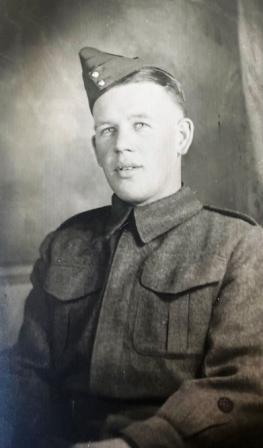
Michael ‘Cecil’ Stordy.  (Photo courtesy of Bernadette Stordy Noonan)

A photo of Cecil was submitted by Patti W Noonan, who explained that the photo came from the late Bernadette ‘Bernie’ Stordy Noonan, the youngest sister of Cecil and Lawrence.  Patti wrote “….my husband – Sgt Barry Noonan, RCMP (Rtd) is Bernadette’s son and the grand-nephew of both Cecil and Lawrence. He is a member of our Legion and proudly remembers them at our November 11 ceremonies as well as the December Candlelighting. …

….A drowning accident claimed Cecil’s life…

Camp Aldershot primarily featured infrastructure for land-based warfare, such as rifle ranges, trench systems, and bayonet assault courses. While undergoing infantry training at Aldershot, Cecil was part of a group involved in a swimming exercise on June 14, 1945. Swimming training was designed for ‘water-proofing’ soldiers and conducting emergency, wet-gap crossings. 

According to Cecil’s service file, the exercise took place at Peach Lake, which likely was near Kentville, in one of the water areas frequently used for training, including water obstacle courses and swimming. 

The exercise began around 2 pm. Unfortunately Cecil accidentally drowned about half an hour later, at 2:30 pm. According to a Court of Inquiry Report into the accident, Cecil “…got on a raft in the area used for swimming, got into water over his depth, was unable to hang onto the raft, and went under the surface.

 His body was found and artificial respiration was commenced and continued while being transferred to hospital and after 2 hours he was pronounced dead…

….Cecil was buried in St. Joseph’s Parish Cemetery in Kelly’s Cross…

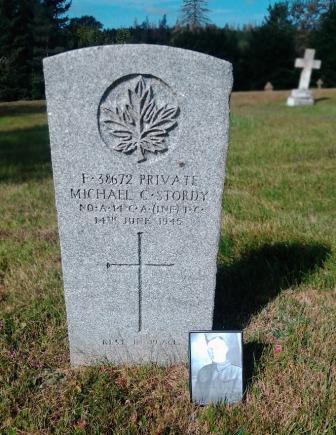
Grave of Michael ‘Cecil’ Stordy, with a photo of him that was placed by Pieter. (Photo credit: Pieter Valkenburg)

On June 17, 1945, Cecil was buried in St. Joseph’s Parish Cemetery in Kelly’s Cross, Prince Edward Island.  Reverend Ayers stated that he “….officiated at the services in the church and at the grave.  Sgt Thomas Whelan of the 17th Armoured Regiment, Charlottetown, was in charge of the firing party….

Patti wrote that “….all of the family is very proud of the sacrifice by Lawrence and Cecil…” and rightly so.

Coming up in Part 2, the Stordy Brothers series continues, with JohnLawrence’ STORDY, who lost his life in Germany in 1943.

Thank you to Patti Noonan and the late Bernadette Stordy Noonan for providing a photo. Do you have a story to tell? Email Pieter at memorialtrail@gmail.com or comment on the blog. 

© Daria Valkenburg

….Want to follow our research?…

If you are reading this posting, but aren’t following our research, you are welcome to do so.  Our blog address: https://onthewarmemorialtrail.com/

4 countries, 6 weeks, 7,000 km – an unforgettable war memorial journey in Europe…. Daria’s book ‘No Soldier Buried Overseas Should Ever Be Forgotten‘ is available in print and e-book formats.  Net proceeds of book sales help support research costs and the cost of maintaining this blog. For more information see https://nosoldierforgotten.com/

Subscribe to our YouTube Channel: On The War Memorial Trail With Pieter Valkenburg: https://www.youtube.com/channel/UCJ591TyjSheOR-Cb_Gs_5Kw

Never miss a posting!  Subscribe below to have each new story from the war memorial trail delivered to your inbox.
On The War Memorial Trail…..We Follow The Route Taken Into Germany By Canadian Troops In 1945

February 6, 2026. Last spring we were in The Netherlands and Belgium for the 80th Anniversary of Liberation Commemoration events. We placed flags at the graves of 383 soldiers in 14 cemeteries, plus visited a number of memorials, museums related to WWII, and even did a battlefield tour. 

We had one last adventure on our 2025 European War Memorial Tour – a trip to Germany to follow the route taken by Canadian troops during the winter of 1945.

We had been in Mook, near Groesbeek, in The Netherlands, as we’d been invited to attend a Faces To Graves Groesbeek meeting, at which we had been surprised with a Faces To Graves Groesbeek ‘coin’ and a certificate for the work done in researching soldiers, finding families, and sharing photos.  (See https://onthewarmemorialtrail.com/2025/05/30/on-the-war-memorial-trail-pieter-and-daria-honoured-by-faces-to-graves-groesbeek-foundation/

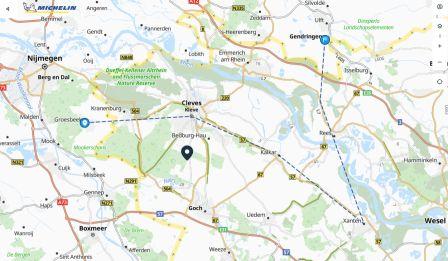
Route taken into Germany from Groesbeek to Kleve, Kalkar, Xanten, Bienen (now part of Rees), and Gendringen. (Map source: Michelin Maps)

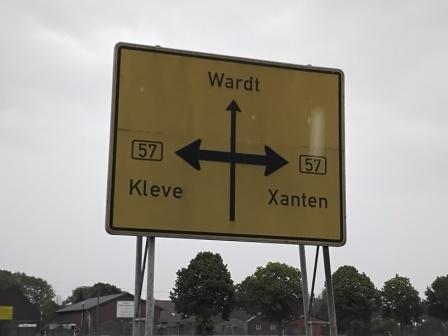
Instead of returning to Zaltbommel, where we were staying, Pieter decided to drive into Germany and follow the route taken by Canadian troops in the winter of 1945.  We first travelled to Kleve, then went on to Kalkar, from there to Xanten, and then to Bienen, which is now part of Rees.  From Bienen we returned to The Netherlands and made a very brief stop in Gendringen. 

.…Our first stop was Kleve…

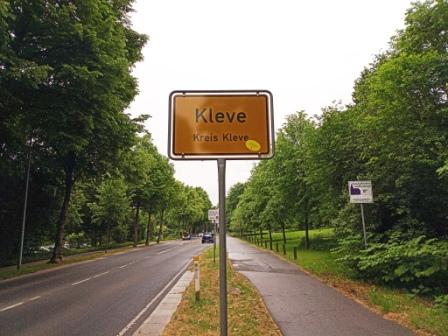
Canadian troops would have travelled along this route into Kleve.  (Photo credit: Daria Valkenburg)

Kleve was bombed heavily before being captured by Allied troops on February 11, 1945 during Operation Veritable, as the 21st Canadian Army Group and British troops fought their way through the difficult terrain of the Reichswald Forest.  The goal of Operation Veritable was to reach the Rhine, part of a pincer movement to allow Allied troops to advance towards Berlin. (See https://en.wikipedia.org/wiki/Operation_Veritable)

The dense wooded area of the Reichswald Forest. (Photo credit: Daria Valkenburg)

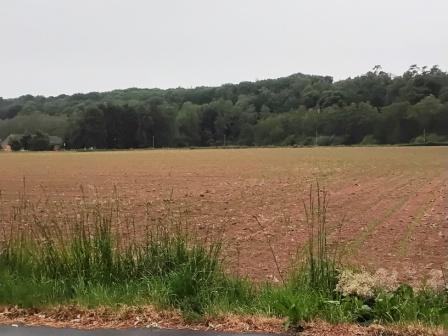
When the Allies crossed the border into Germany they entered the Reichswald Forest, a densely wooded area, as we saw from the road. It wasn’t hard to understand how the Germans had turned the forest into a death trap during WWII. The already natural obstacles of a forested area were heavily reinforced by German troops and rigged with trenches, mortar pits, barbed wire, mines, and anti-tank ditches.

Two major roads provided the only means of an Allied approach, while inside the forest there were no surfaced roads. Zig-zagged paths snaked through the woods, making it ideal for preparing ambushes to trap Allied troops.

Canadian and British troops were forced to advance on a narrow front, with their movements further restricted by bad weather and mud….as well as German ambushes.

On this journey through Kleve and the road bordering the Reichswald, we remembered:

…..Kalkar was the scene of brutal battles in February 1945….

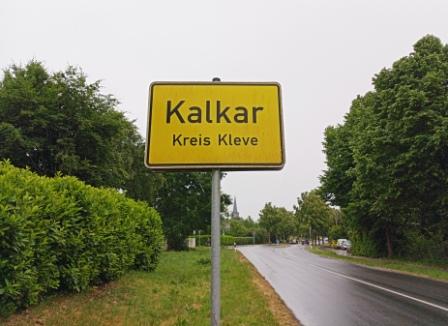
Canadian troops continued from Kleve towards Kalkar.  (Photo credit: Daria Valkenburg)

About 10 km (6 miles) south-east of Kleve is Kalkar, scene of two terrible battles that Canadian troops participated in during Operation Veritable

First came the Battle of Moyland Wood, which lasted a brutal six days, from February 16–21, 1945, in which several Canadian Regiments, such as the Regina Rifle Regiment, Canadian Scottish Regiment, and Royal Winnipeg Rifles fought to clear German paratroopers from a key position near Kalkar.  (See https://legionmagazine.com/clearing-moyland-wood/

The goal of the Battle of Keppeln, fought on February 26, 1945, was to break the German Siegfried Line during Operation Blockbuster, the last part of Operation Veritable. (See https://en.wikipedia.org/wiki/Operation_Blockbuster) Troops encountered heavy artillery and mortar fire in intense fighting from German paratroopers, and had to make their way through heavy mud and minefields.

The battle finally ended when Canadian troops used flame-throwing Wasp carriers to clear German-held houses in Keppeln. The village needed to be secured as part of a push towards Uedem. The capture of Keppeln allowed Canadian forces to clear the Kalkar Ridge and proceed towards the Hochwald Forest gap, and later to break through to the Rhine.

As we passed Kalkar on our way towards the Hochwald Forest, we remembered:

….The Hochwald Forest was where the Battle of Hochwald Gap was fought….

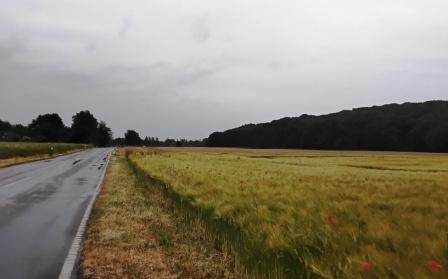
The road bordering the Hochwald Forest was bleak and lonely on the rainy day we drove on it.  (Photo credit: Daria Valkenburg)

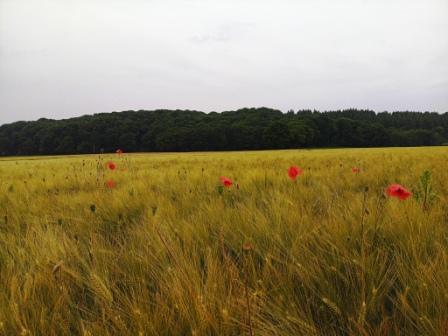
From Kalkar we turned off the road to go along the Hochwald Forest.  It was perhaps fitting that by this time it was raining, with bleak, grey skies, as so many tears would have been shed here during the winter of 1945.   We were alone on this road, with the Hochwald off in the distance, and the only colour coming from the red poppies growing in the field by the road.

Red poppies grew along the road bordering the Hochwald Forest.  (Photo credit: Pieter Valkenburg)

The Hochwald Forest was a second, separate defensive line located about 10 km (six miles) east/southeast of the Reichswald, stretching toward the Rhine.  It was where the Battle of Hochwald Gap, part of Operation Blockbuster, was fought between February 28 and March 1, 1945, the final push by Canadian troops towards the Rhine River. (For more information, see https://canadianbattlefieldtours.ca/operation-blockbuster/ and https://civilianmilitaryintelligencegroup.com/10742/the-battle-of-hochwald-gap-one-of-the-largest-armor-engagements-you-probably-have-never-heard-of)

On this bleak and lonely road bordering the Hochwald Forest, we remembered:

….Xanten is now the home of an archeological park…

We followed the road from Kleve to Xanten. (Photo credit: Daria Valkenburg)

After detouring onto the road along the Hochwald, we returned to the highway and travelled to Xanten, 26 km (16 miles) from Kleve.  The battle to capture Xanten, near the end of Operation Blockbuster, was the responsibility of Canadian troops of 2nd Canadian Infantry Division, in early March 1945.  (See https://legionmagazine.com/the-taking-of-xanten/)

Beginning on March 8, each brigade was accompanied by two squadrons of flame-throwing tanks, with enemy artillery positions attacked by air support. German troops were desperate to win against the Allies, and fought fiercely, but in the end they evacuated Xanten in the middle of the night on March 10 into March 11.

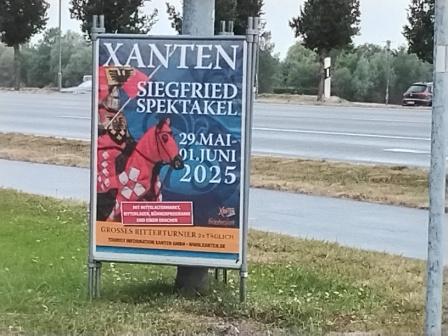
Poster advertising the upcoming Siegfried Spectacle in Xanten. (Photo credit: Pieter Valkenburg)

Much of Xanten had been destroyed during WWII, but today it’s the site an archeological park, with no reminders of WWII – at least none that we saw. When we drove through the town, we noticed a large poster advertising a medieval festival to honour Siegfried, a hero of Xanten, billed as a reunion with knights, jugglers, and dragons! It was an odd note on this solemn journey we were taking, in which we remembered:

….In Bienen we looked for the memorial plaque honouring North Novies who died during the Battle of Bienen….

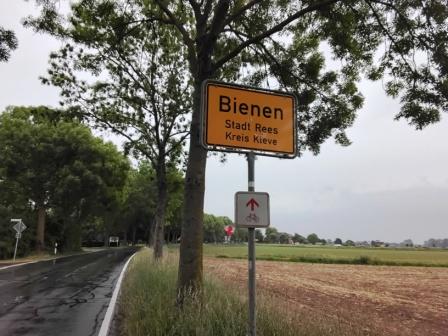
We travelled to Bienen from Xanten. (Photo credit: Daria Valkenburg)

From Xanten, we began the journey back into The Netherlands, with a slight detour along the way to Bienen, the scene of the Battle of Bienen on March 25, 1945. In 2023 we’d done a multi-part series on several soldiers from the North Nova Scotia Highlanders Regiment who had died in this battle. We wanted to see a memorial plaque, which was on a wall behind a church in Bienen.

Pieter beside the memorial plaque behind a church in Bienen. (Photo credit: Daria Valkenburg)

Alice van Bekkum, Chair Faces To Graves Foundation Groesbeek, had told us that the memorial plaque by the church in Bienen, Germany, commemorating the lives lost by the North Nova Scotia Highlanders during the Battle of Bienen on March 25, 1945, was the …first German/Canadian (Commonwealth) monument in Germany….

It might have been raining while we were by the memorial plaque, but we made sure to remember:

….The final stop on our journey of remembrance was in Gendringen….

Pieter by the memorial in the cemetery in Gendringen.  (Photo credit: Daria Valkenburg)

From Bienen, we returned to The Netherlands, stopping for a few moments in Gendringen, where 3 soldiers who had been researched by Pieter had lost their lives. Although it was still raining, we wanted to see the memorial, located in a cemetery in Gendringen. 

The text on the memorial means ‘so that we don’t forget’, or, as said more commonly during Remembrance Services in Canada, ‘lest we forget’.  While at the memorial, we remembered:

By now, it was well after 4 pm, with the rain making the skies very grey.  We were tired and still had a long drive back through heavy traffic to our hotel in Zaltbommel.  Luckily, Pieter is a genius at staying calm in traffic, and we arrived safely, in time to enjoy a quiet and relaxing dinner. 

This concludes the stories of the highlights of our 2025 European War Memorial Tour to commemorate the 80th Anniversary of the Liberation of Europe.

Our trip is now long over, but the research work continues for Pieter.  If you have photos or information to share about soldiers buried in The Netherlands or Belgium, please email him at memorialtrail@gmail.com, or comment on the blog.    

© Daria Valkenburg

….Want to follow our research?…

If you are reading this posting, but aren’t following our research, you are welcome to do so.  Our blog address: https://onthewarmemorialtrail.com/

4 countries, 6 weeks, 7,000 km – an unforgettable war memorial journey in Europe…. Daria’s book ‘No Soldier Buried Overseas Should Ever Be Forgotten‘ is available in print and e-book formats.  Net proceeds of book sales help support research costs and the cost of maintaining this blog. For more information see https://nosoldierforgotten.com/

Subscribe to our YouTube Channel: On The War Memorial Trail With Pieter Valkenburg: https://www.youtube.com/channel/UCJ591TyjSheOR-Cb_Gs_5Kw

Never miss a posting!  Subscribe below to have each new story from the war memorial trail delivered to your inbox.
On The War Memorial Trail…..Our 2025 Visit To The Indigenous Liberators Exhibition At Freedom Museum Groesbeek

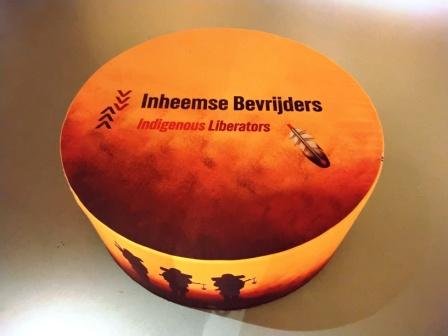
Ottoman in the Indigenous Liberators Exhibition room at Freedom Museum Groesbeek. (Photo credit: Daria Valkenburg)

February 2, 2026. Last spring we were in The Netherlands and Belgium for the 80th Anniversary of Liberation Commemoration events, and placed flags at the graves of 383 soldiers in 14 cemeteries, plus visited a number of memorials, museums related to WWII, and even did a battlefield tour. 

….4 photos of Indigenous Soldiers had been provided by us…

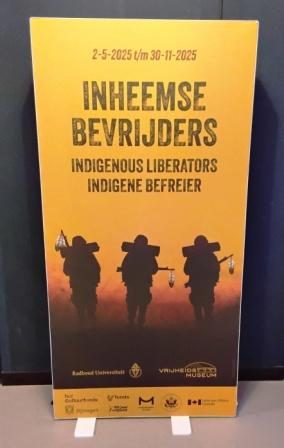
Banner at the entrance to the Indigenous Liberators Exhibtion room.  (Photo credit: Daria Valkenburg)

Towards the end of our stay in Europe, we went to the Freedom Museum (Vrijheids Museum in Dutch) in Groesbeek to see the Indigenous Liberators Exhibition, entitled ‘Indigenous Liberators: First Nation, Métis and Native American soldiers and the Liberation of the Netherlands WWII. It was a very special visit for us as over the years we’d provided 4 of the photos of soldiers that were used:

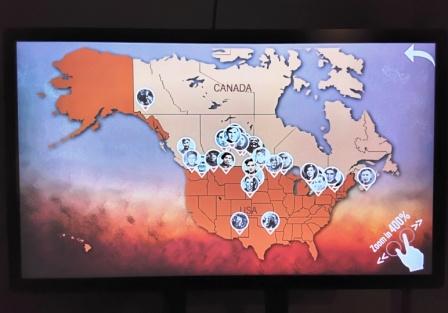
Interactive map showed where the Indigenous soldiers came from.  Two examples: Harry Henry Davis is seen at the top far left, and at the far right is Leo Francis Toney. (Photo credit: Daria Valkenburg)

….Niece of WWII soldier Leo Toney provided a Lnu flag as well as permission to use a photo of her uncle…

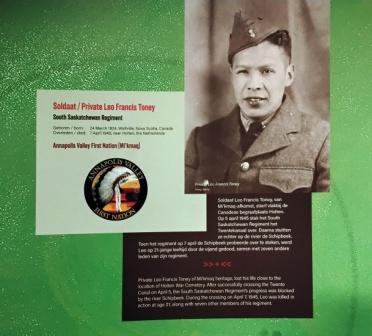
Leo Francis Toney Exhibit. (Photo credit: Daria Valkenburg)

Before featuring photos of the WWII soldiers in the Indigenous Liberators Exhibition, permission had been received from the families to do so. When we contacted Della Maguire, niece of Leo Francis TONEY, on behalf of Radboud University, which was preparing the exhibits,  she emailed us to say “…yes of course I would feel very honoured for Radboud University to use Uncle Leo’s photos.… This sounds like a beautiful Indigenous Exhibition….So happy you both will be there. Wela’lin (thank you)….

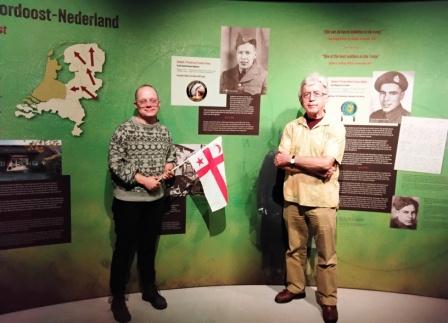
Rense Havinga, holding the Lnu flag, and Pieter by the Leo Francis Toney exhibit.  (Photo credit: Daria Valkenburg)

Della then asked if we would give a Lnu (Mi’Kmaq) flag to the museum, which we did. (See https://en.wikipedia.org/wiki/Mi’kmaq) The flag was presented to Rense Havinga, Curator at the Freedom Museum, who was deeply touched by this donation.

….We wrote in the visitors’ book that we’d come on behalf of the Toney family…

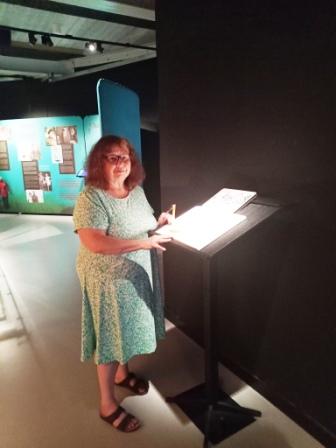
Daria wrote in the visitors’ book. (Photo credit: Pieter Valkenburg)

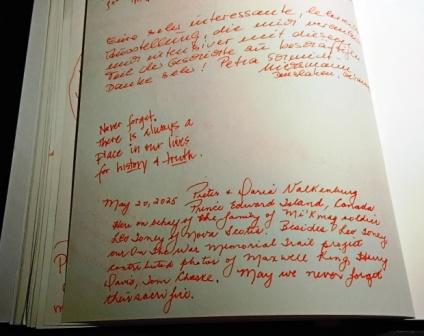
I wrote in the visitors’ book that we had come on behalf of the Leo Toney family, and mentioned the names of the other 3 soldiers whose photos we had provided. 

Entry in the visitors’ book. (Photo credit: Daria Valkenburg)

Thank you to Della Maguire for providing a Lnu (Mi’Kmaq) flag to donate to the museum. 

We had one last adventure on our 2025 European War Memorial Tour – a trip to Germany to follow the route taken by Canadian troops during the winter of 1945.

The research work continues for Pieter.  If you have photos or information to share about soldiers buried in The Netherlands or Belgium, please email him at memorialtrail@gmail.com, or comment on the blog.    

© Daria Valkenburg

….Want to follow our research?…

If you are reading this posting, but aren’t following our research, you are welcome to do so.  Our blog address: https://onthewarmemorialtrail.com/

4 countries, 6 weeks, 7,000 km – an unforgettable war memorial journey in Europe…. Daria’s book ‘No Soldier Buried Overseas Should Ever Be Forgotten‘ is available in print and e-book formats.  Net proceeds of book sales help support research costs and the cost of maintaining this blog. For more information see https://nosoldierforgotten.com/

Subscribe to our YouTube Channel: On The War Memorial Trail With Pieter Valkenburg: https://www.youtube.com/channel/UCJ591TyjSheOR-Cb_Gs_5Kw

Never miss a posting!  Subscribe below to have each new story from the war memorial trail delivered to your inbox.