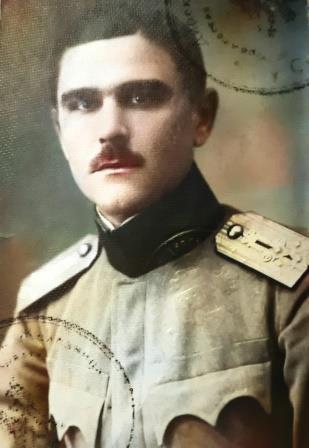
Nikola Ostojic. (Photo courtesy of the Nikola Ostojic Family. Photo colourization by Pieter Valkenburg)
February 28, 2025. In Part 1, the active WWI and WWII military service of Croatian-born Nikola ‘Nick’ OSTOJIC, grandfather of Bedeque resident Liz Hubert, came to a halt when the Royal Yugoslav Army surrendered on April 17, 1941 and Nikola became a prisoner of war in Germany. (See https://onthewarmemorialtrail.com/2025/02/20/on-the-war-memorial-trail-the-pow-who-raised-horses-in-pei-part-1-the-serbian-colonel-who-was-a-pow-in-oflag-xiii-b/)
In Part 2, Nikola spent 4 years in a German POW camp until he was among the POWs liberated on April 6, 1945 by American troops. (See https://onthewarmemorialtrail.com/2025/02/23/on-the-war-memorial-trail-the-pow-who-raised-horses-in-pei-part-2-four-years-as-a-pow-in-oflag-xiii-b/)
Now, in Part 3, Nikola’s story concludes with the long road ahead of him before finally finding freedom and a new life in Prince Edward Island, and later Ontario, in Canada.
….Nikola became a Displaced Person in Austria….
After 4 years in a POW camp, Nikola had to make a decision once he was liberated – whether to return to Serbia – now part of Yugoslavia and under Communist rule, or refuse repatriation. Nikola refused to be repatriated.

Map shows location of Hammelburg where Oflag XIII B was located, Moosburg, where the liberated POWs marched towards, and St Johann im Pongau, where Nikola lived in a DP camp. (Map source: Google maps)
After being liberated from the POW Camp Oflag XIII B on April 6, 1945, it appears that he went his own way, as many former POWs did. According to a report on the Liberation of Stalag 7A in Moosburg, written by Col. Paul Goode, the Senior American Officer at Oflag XIII B, after liberation, the group of freed POWs “….stayed at Hammelburg about a week, and then was marched to Stalag A, Moosburg. It took 15 days to cover about 90 miles. There was no particular attempt at control, and escape was extremely easy, and many officers did escape, and many more just wandered off to live in the country and were ultimately picked up by the SS…”
Liz believed that Nikola was among the officers who escaped “….with another officer and was then taken by the British Army….” No record is left of what his plans were, but perhaps he had intentions of travelling towards Serbia to find his family. If that was the case, he never got there.
On June 23, 1945 he entered Austria, and 2 days later became a resident of the UNDP-led Camp XVIII C in Markt-Pongau, now known as Sankt Johann im Pongau, a small town south of Salzburg. According to the information provided when Nikola entered the camp, he spoke Serbo-Croatian, English, German, and Russian.
As a displaced persons camp in the American Zone, Pongau had a large number of Jewish refugees, as well as former POWs, like Nikola, who didn’t want to be repatriated. During WWII, it had been Stalag 18 C, a prisoner of war camp.

The Markt-Pongau POW Camp in May 1945. (Photo source: http://www.stalag18a.org)
After WWII ended, the former Nazi territories had been divided into British, American, and French Zones. (See https://en.wikipedia.org/wiki/Allied-occupied_Austria)

Post WWII Austria Occupation Zones. Pongau fell under Salzburg. (Map source: https://commons.wikimedia.org/w/index.php?curid=95563608)
….Nikola left Continental Europe….
Nikola remained in the camp in Pongau until April 21, 1948, when he was deemed eligible to immigrate to the United Kingdom.

Nikola arrived in Halifax aboard the ‘Neptunia’. (Photo source: www. http://ssmaritime.com)
On May 24, 1952 he immigrated again, leaving Southampton, England aboard the Greek Line T.S.S. ‘Neptunia’, and arriving in Halifax, Nova Scotia, Canada. He was 55 years old.
He most likely had been sponsored by Pero Bulat, who had been born in the same province of Banija, but immigrated to Canada in 1926, and became the publisher of ‘The Voice of Canadian Serbs’. On April 22, 1947, he’d visited Ottawa with Bishop Dionisije Milivojević to ask Canadian authorities to permit 10,000 out of the 80,000 displaced Serbs in Western Europe to enter Canada. (See https://wikitia.com/wiki/Pero_Bulat)
….Nikola found peace of mind while raising horses….

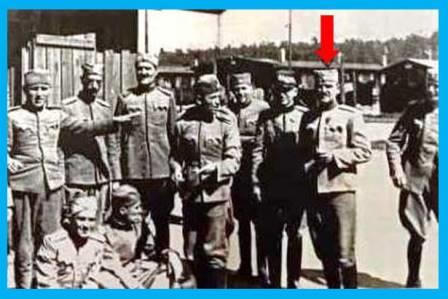
Nikola (identified by red arrow) in St Peters Bay, Prince Edward Island. (Photo courtesy of the Nikola Ostojic Family)
Once in Canada, Nikola moved to Prince Edward Island, where he settled on a farm in St Peters Bay, and raised horses. Liz explained that the quieter Island life and working with horses helped him find peace of mind.
He had never forgotten his wife and daughter. He had “…connected with them only after he arrived to England. Once he got to PEI he sent for them. They traveled via boat to Canada….” said Liz. “….My mother said they landed in Montreal by boat…”
While Nikola found peace of mind on the Island, his wife Marija found it too quiet. The family moved to Windsor, Ontario, where Pero Bulat lived. “…In 1962 he was in Windsor. Pero was very influential and a great supporter of my grandfather…”
Liz recalled that Nikola worked as a bartender into his early 70s, probably at Europe Tavern, one of the many businesses owned by Pero Bulat. Unfortunately, Nikola’s PTSD never left him. “…Both my grandmother and mother said that his screaming at night never ceased….”
Nikola died on September 17, 1972 at Hotel Dieu Hospital in Windsor, Ontario, aged 76, and is buried in the Windsor Memorial Gardens. His 1972 obituary in the ‘Voice of Canadian Serbs’ summed up how so many felt about Nikola. “….Everyone who knew him, thought that his zest for life, vitality, and physical endurance and strength were invincible…At the cemetery, final words to the Colonel were given by the famous Nationalist Pero Bulat with heartwarming words of the man who arrived in Canada and his lifework: ‘this is how we lost another unbeatable national fighter’….”
….Reflections from Nikola’s granddaughter….

Daria (standing) with Liz Hubert. (Photo credit: Pieter Valkenburg)
Researching the story of Nikola Ostojic was done with the active assistance of Liz Hubert and her brother Alexander. Liz’s reaction was similar to that of what Pieter and I experienced when we researched my father’s WWII story. “… It was so difficult to see, it’s so real now I feel like I’m living it….”
As we came to the end of Nikola’s story, Liz expressed her “…reflecting thoughts on this experience with my grandfather….As a child, the towering presence of my Grandfather shone over me like a guiding beacon, inspiring awe and reverence. Throughout this process of discovery of the man he truly was, as an adult, I came to appreciate the complexity, struggles, triumphs, and passions of his life. Understanding him allowed me to understand myself, instilling a sense of responsibility, empathy, and gratitude…”
Thank you to Liz Hubert for sharing photos and information on her grandfather, and translating his obituary into English. If you have a story or photo to share, please contact Pieter at memorialtrail@gmail.com or comment on the blog.
© Daria Valkenburg
….Previous stories about WWII POWs….
To read previous stories about WWII POWs see:
- John ‘Hubert’ HALL: https://onthewarmemorialtrail.com/2023/10/23/on-the-war-memorial-trail-an-island-airman-in-stalag-luft-iii-part-1-2-families-connected-by-1-letter-from-a-pow-camp/and https://onthewarmemorialtrail.com/2023/10/30/on-the-war-memorial-trail-an-island-airman-in-stalag-luft-iii-part-2-escape-from-the-pow-camp/
- James ‘Jimmy’ Oliver THOMAS: https://onthewarmemorialtrail.com/2024/02/18/on-the-war-memorial-trail-the-wwii-soldier-from-manitoba-who-died-shortly-after-being-liberated-from-stalag-vii-a/
….Want to follow our research?….
If you are reading this posting, but aren’t following our research, you are welcome to do so. Our blog address: https://onthewarmemorialtrail.com/
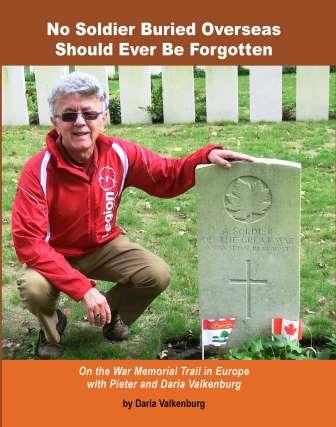 4 countries, 6 weeks, 7,000 km – an unforgettable war memorial journey in Europe…. Daria’s book ‘No Soldier Buried Overseas Should Ever Be Forgotten‘ is available in print and e-book formats. Net proceeds of book sales help support research costs and the cost of maintaining this blog. For more information see https://nosoldierforgotten.com/
You are also invited to subscribe to our YouTube Channel: On The War Memorial Trail With Pieter Valkenburg: https://www.youtube.com/channel/UCJ591TyjSheOR-Cb_Gs_5Kw.
Never miss a posting! Subscribe below to have each new story from the war memorial trail delivered to your inbox.


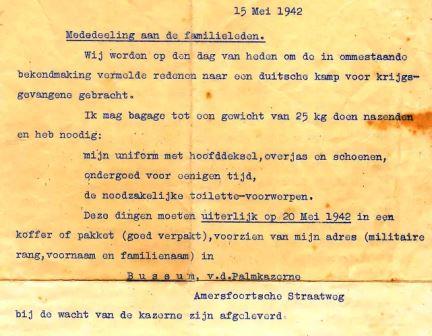
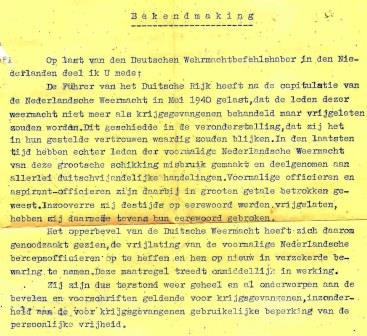









 On The War Memorial Trail Research Project........ with Pieter and Daria Valkenburg