On The War Memorial Trail….. The WWII Signalman From Charlottetown Whose Jeep Ran Over A Mine 6 Days Before The War Ended

May 29, 2024.  This is the 10th year that Pieter has been helping researchers at the Canadian War Cemetery in Holten, The Netherlands to find photos of soldiers buried there.  He began with a list of soldiers who were from Prince Edward Island. It wasn’t until a year later that newspaper articles were published with stories related to Pieter’s research, and three years before this blog began in 2017.   Since then, the scope of his ‘little research project’ has expanded several times to include soldiers from across Canada and several cemeteries.

Back in 2014, Pieter was initially sent a list of 9 names, one of which was Maurice James HUGHES, who was born December 19, 1919 in Charlottetown, Prince Edward Island, the son of James M. and Nora (nee Gallant) Hughes.  

In the search for a photo of Maurice, Pieter ran into one stumbling block after another. He’d found family members, but none ever responded to inquiries.  Then, in the fall of 2019, we met with Ray Arsenault, a member of the Royal Canadian Legion in Charlottetown, who brought a scrapbook he’d received from a friend, Kaye Collins, which contained photos and articles about soldiers from the newspaper.  In a moment of serendipity that happens all too rarely, there was a photo of Maurice! 
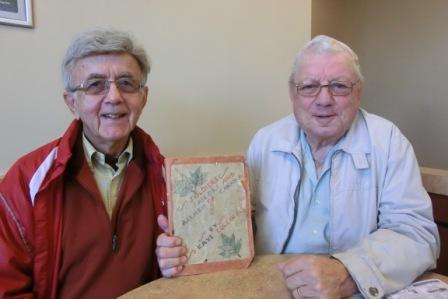
CIMG3147 Sep 13 2019 Pieter with Ray Arsenault

Pieter with Ray Arsenault and the scrapbook in which a photo of Maurice James Hughes was found. (Photo credit: Daria Valkenburg)
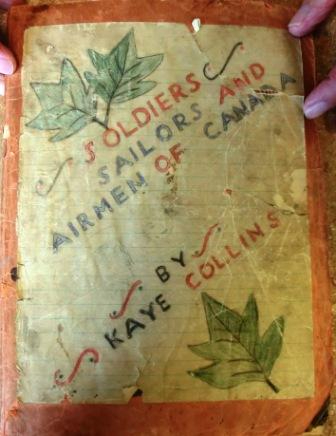
CIMG3149 Sep 13 2019 Cover of Ray Arsenault notebook

The scrapbook collated by Kaye Collins that contained a picture of Maurice James Hughes. (Photo credit: Daria Valkenburg)
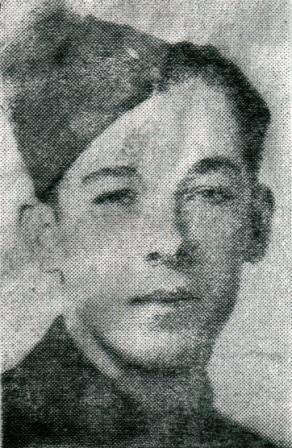
Maurice James Hughes newspaper article from Ray Arsenault

Picture of Maurice James Hughes found in the scrapbook collated by Kaye Collins.

…In 2023 a family member contacted us….

Four years after receiving the photo from Ray Arsenault, Pieter received an email from Lisa Hughes Bell: “… I recently read an article about you, regarding a face for every grave. My Great-Uncle was buried at the Holten Cemetery …. His name was Maurice J. Hughes from Charlottetown….” 

Lisa included a similar photo to what we’d already received.  After acknowledging her email, we received another email.  “…I really don’t know much about Maurice, but am really excited about doing research to find out as much as I can. My Grandfather (Maurice’s brother Frank) was in the Navy and really didn’t talk much about the war. We always knew that he never got over losing his big brother.…” 

As so often happens when family learns that a soldier died so close to the end of WWII, Lisa noted that “…there has always been a sadness in our family about Maurice because he died May 2, 1945, so close to coming home….”  She ended by saying that the family “….would be pleased if you did a story on Maurice…”  Since Maurice’s story had not yet been told on this blog, we decided to do so.

….Maurice was a signalman….

According to a May 10, 1945 obituary in The Guardian, he had been “…a popular member of the Maritime Electric’s staff…” as an assistant fireman before enlisting for active service as a signalman with the No. 6 District Signals, Royal Canadian Corps of Signals (RCCS) in Charlottetown on October 28, 1939. 

A signalman was a specialist responsible for military communications, doing works such as radio or telephone operators, laying cables for communications, and relaying messages for field commanders at the front line.

Before joining the active service, Maurice had joined the No. 6 District Signals militia on May 17, 1937 in Charlottetown. 

After completing his basic training, Maurice was sent to Halifax, Nova Scotia.  Then, on June 16, 1940, he was transferred to No. 3 Canadian Infantry Division, Signals.

On July 5, 1940, he reported for duty at Barriefield Camp in Kingston, Ontario. This was the home of the Royal Canadian Corps of Signals.  NOTE: As of 1966, Barriefield Camp was renamed Canadian Forces Base Kingston (CFB Kingston).

Next, Maurice was sent to Sussex Camp, New Brunswick for training as a linesman on October 15, 1940, and qualified as a Tradesman Group C Linesman on February 25, 1941.

Then, in preparation for overseas service, Maurice was assigned to No. 1 Training Brigade in Debert, Nova Scotia on July 5, 1941.

…Maurice left Canada for overseas service – including D-Day….

On July 19, 1941, Maurice and his Regiment left Canada from Halifax, Nova Scotia, arriving in Avonmouth in the United Kingdom on July 31, 1941.  His training continued, as extensive preparations began for Operation Overlord (the larger Normandy invasion) and Operation Neptune (the English Channel-crossing portion of Operation Overlord) on June 6, 1944 – what we know today as D-Day.

Assigned to the 3rd Canadian Infantry Division, the role of the Signal Corps was to ensure smooth communications on that fateful day. (See https://www.veterans.gc.ca/en/remembrance/history/second-world-war/normandy-1944)
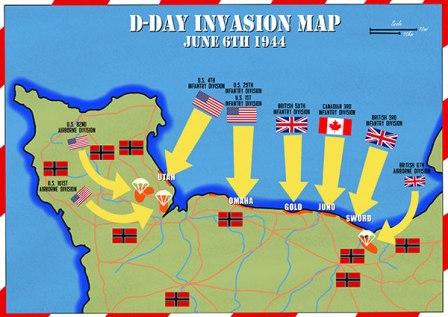
Dday Invasion-map

D-Day invasion map. The Canadians landed on Juno Beach in Normandy, France. (Map source: https://www.ddaylepe.org.uk/index.php/overlord-neptune/)

…Maurice was recommended for a Military Medal for an incident that happened on D-Day….

No mention was made of what Maurice encountered during the day, but just before midnight on June 6, 1944, Maurice and two other signalmen, E. W. MARTIN and J. D. MCPHEE, were near Banville, when they encountered German soldiers.  Lt. (later Captain) J. W. GROSS reported that as the 3 men were ….returning from 7 Canadian Infantry Brigade Headquarters to 12 Canadian Field Regiment with a line, they were 1 ½ miles from our exchange and making a crossing at a crossroads…

They’d encountered sniper fire all night, so Martin was in a ditch, covering the other two with a Bren gun.  Suddenly, “… a German soldier walked out from a side road….” and surrendered.  Unfortunately, a German officer also stepped out and began shooting at Maurice and McPhee, which ended when Martin opened fire.

Then, “....a German Major came up….” and told them that his whole company, part of the 11th Grenadier Regiment, wanted to surrender.   As the Germans “.…came up they handed over their arms and were searched by the three linesmen…”  Within 15 minutes they had 60 prisoners of war.

This was not the end!   “… About 20 minutes later two Canadian officers came upon the scene and joined the three linesmen…” as the contingent, except for Maurice, moved toward Banville.

Maurice “... stayed at the cross roads and 30 more surrendered to him. He moved them along the road and joined the party….” 

After the prisoners of war were taken to the POW cage on the beach, the linesmen continued their work and finished laying the line!

The three linesmen were recommended for a Military Medal for their actions, but sadly, their bravery and actions in having so many Germans surrender to them was not rewarded.  The recommendation for a Military Medal was not approved. 

….A Canadian Army Newsreel film was taken in The Netherlands….

Following upon the success of D-Day, Maurice and his Regiment were involved in the Allied advance through Northwest Europe.  In The Netherlands, a Canadian Army Newsreel briefly filmed members of the Royal Canadian Corps of Signals (RCCS). Film Source: Library and Archives Canada.  Take a look:

….The Regiment moved into Germany on April 26, 1945….
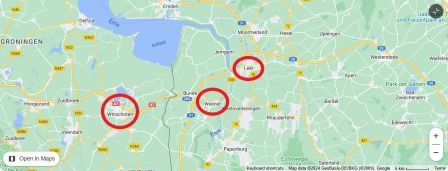
Screenshot 2024-05-26 at 10-13-08 winschoten - Google Search

Map shows location of Winschoten, The Netherlands, as well as Weener and Leer in Germany.  (Map source: http://www.google.ca)

In the last week of April 1945, the Regiment prepared to leave The Netherlands. The after-action report on communications in the Regiment’s War Diary noted that after leaving Winschoten, The Netherlands, the “…Divisional Headquarters moved onto Germany on 26 April 1945…” and re-established “…preparatory for the operation to capture Leer….” on April 28, 1945.

In order to have communications available, a “…cable was taken across the River Ems at Weener, one circuit to connect 7 Canadian Infantry Brigade, which was on the opposite side of the river, and one circuit was extended to the bridge site on the river Leda, ready to be extended when 9 Canadian Infantry Brigade crossed into Leer. A line was laid to 16 Field Company RCE and extended on to a point on the Ems where the rafts were being assembled...

….Maurice lost his life near Leer, Germany….

Lt. Colonel George Clarence LEECH, the Commanding Officer of Maurice’s unit, had recorded in his personal notes that Maurice, whose nickname was ‘Maw’, was very well liked and had not only participated in D-Day, but had been in the front line from then until his death on May 2, 1945 when the jeep he was riding in was hit by a mine.

On May 9, 1945, Lt. Colonel LEECH wrote a letter of condolence to Maurice’s mother, saying that “….Cpl Hughes was killed while riding in a jeep with Sgt Nixon on May 2nd when it ran into an enemy mine and blew up.  He did not suffer at all as death was instantaneous….”  Sgt E. C. ‘Nick’ NIXON was seriously wounded, but survived.

Lt. Colonel Leech went on to note that “…Maurice was one of my finest Corporals.  Since enlisting in 1939, he has given everything for the cause which we have been fighting for have at lost won…” Germany had signed an unconditional surrender, ending the war in Europe, on May 8, 1945, just a few days after Maurice lost his life.

.…Maurice is buried in Holten ….
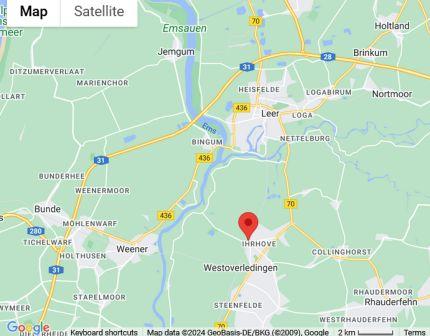
Initial burial in Ihrhove The Coordinate Translator

Map shows location of Ihrhove, Germany, where Maurice James Hughes was initially buried.  (Map source: Google)

Maurice was originally buried in a temporary Canadian Military Cemetery in Ihrhove, Germany.  In his letter, Lt Colonel Leech wrote that the “…burial service was conducted by Father McCarney…” and that “….most of the men of his section attended his funeral…

On March 12, 1946, Maurice was reburied in the Canadian War Cemetery in Holten, The Netherlands.
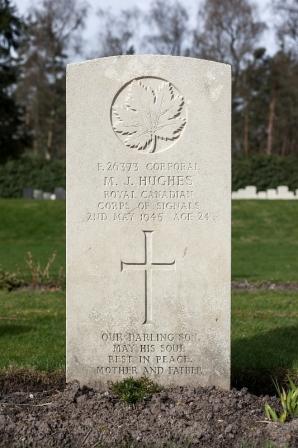
Hughes MJ Maurice James F26373

Grave of Maurice James Hughes in the Canadian War Cemetery in Holten, The Netherlands.  (Photo courtesy of the Canadian Virtual War Memorial)

After the war ended, many Dutch people adopted a soldier’s grave, as a way to give thanks for the sacrifices made by Allied soldiers.  Maurice’s grave was adopted by Mr. J. Schut from Deventer.  In a January 14, 1949 letter to the Department of Defence, he stated that he was 38 years old and asked that his letter be sent to Maurice’s family so they would know that Maurice would not be forgotten.  An abridged English translation of his letter was forwarded to Maurice’s father on February 28, 1949. 

Thank you to Ray Arsenault for providing a photo from the scrapbook collated by Kaye Collins, and to Lisa Hughes Bell for sharing how the family felt about the loss of Maurice. Do you have photos or information to share? Email Pieter at memorialtrail@gmail.com, comment on the blog, or tweet to @researchmemori1.

© Daria Valkenburg

….Want to follow our research?….

If you are reading this posting, but aren’t following our research, you are welcome to do so.  Our blog address: https://onthewarmemorialtrail.com/
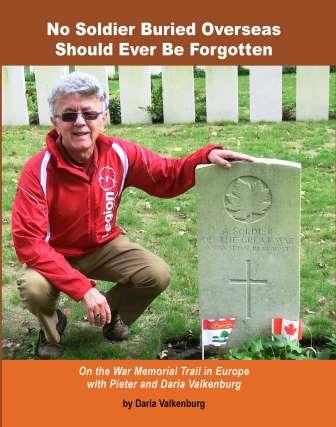
Front cover OnTheWarMememorialTrailinEurope4 countries, 6 weeks, 7,000 km – an unforgettable war memorial journey in Europe…. Daria’s book ‘No Soldier Buried Overseas Should Ever Be Forgotten‘ is available in print and e-book formats.  Net proceeds of book sales help support research costs and the cost of maintaining this blog. For more information see https://nosoldierforgotten.com/ 

You are also invited to subscribe to our YouTube Channel: On The War Memorial Trail With Pieter Valkenburg: https://www.youtube.com/channel/UCJ591TyjSheOR-Cb_Gs_5Kw

Never miss a posting! Subscribe below to have each new story from the war memorial trail delivered to your inbox.
On The War Memorial Trail…..The WWII Soldier From Stellarton With A Street Named In His Honour

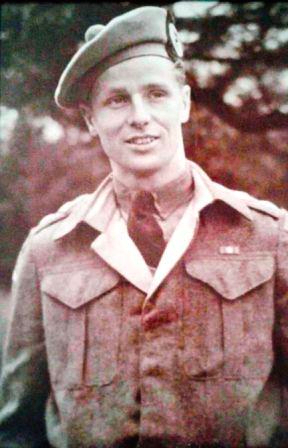
Lt. Percy Dexter Higgins

Percy Dexter Higgins.  (Photo courtesy of the Higgins Family)

May 6, 2024. In a January 2021 posting in the Atlantic Canada Remembers series, we wrote about Percy ‘Dexter’ HIGGINS of Stellarton, Nova Scotia, who was serving with the North Nova Scotia Highlanders when he lost his life during the Battle of Warnsveld in The Netherlands on April 4, 1945. (See https://onthewarmemorialtrail.com/2021/01/16/on-the-war-memorial-trail-atlantic-canada-remembers-part-3/)

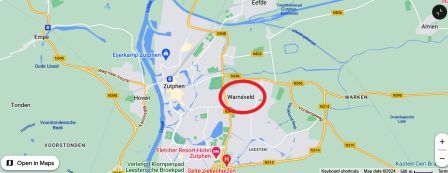
Screenshot 2024-04-24 at 10-46-59 warnsveld - Google Search

Map shows location of Warnsveld, The Netherlands.  (Map source: Google)

Warnsveld is located in the eastern part of The Netherlands about 2 km (1.2 miles) from Zutphen.  Not long after the article was posted, we received an email from Warnsveld resident Harm Kuijper, advising that there was a proposal to name a street after Dexter, near where he lost his life. 

Harm asked if we would contact Dexter’s family about this initiative, which we did.  Donald Higgins had submitted a photo of his uncle, Percy ‘Dexter’ HIGGINS, writing that “…My father’s brother, Lt. Percy Dexter Higgins, is buried in Holten Cemetery. He served with North Nova Scotia Highlanders R.C.I.C. (from N.S.)…

…A street in The Netherlands was named for Dexter in 2024 …..

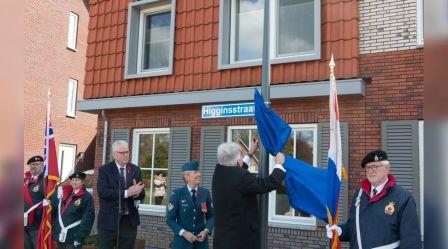
On April 5, 2024, Harm contacted us again, this time to let us know that Higginsstraat (Higgins Street) had been unveiled the day before.  “Higginsstraat was officially unveiled yesterday…..” he wrote.  “…. We had the Canadian ambassador visiting, who was able to attend our first two commemorations. Then unfortunately he had to return to The Hague due to commitments. Sergeant Nicole Mitchell then revealed the street name together with the Mayor of Zutphen….

Harm also included a link to a Dutch language article from ‘Achterhoek Nieuws’:  https://www.contactzutphen.nl/nieuws/algemeen/482711/onthulling-straatnaambord-markeert-herdenking-bij-het-witte-k

An English translation of the article is below:

Screenshot 2024-04-15 at 11-39-35 Onthulling straatnaambord markeert herdenking bij het Witte Kruisje

Unveiling of the street sign honouring Lieutenant Percy Dexter Higgins. Photo: Henk Derksen.  Left to right: Barry and Yvonne Swarthoff from RCL Branch 5, Harm Kuijper, Sgt Nicole Mitchell of the Canadian Army, Zutphen mayor Wimar Jaeger, Wim Poppink from RCL Branch 5.

Unveiling of the street name sign marks the commemoration at the Witte Kruisje 

ZUTPHEN – Every year the commemoration is held at the Witte Kruisje (White Cross) in Leesten in honour of the Canadian corporal A.P. Periard, who was killed on April 4, 1945. This year the commemoration took on a special character due to the presence of the Canadian ambassador, relatives of Private Harry Gervais, and the unveiling of a street sign in honour of Lieutenant Percy Dexter Higgins. 

For this special occasion, the 48th Highlanders Pipes And Drums and the Royal Canadian Legion Branch 005 were also present. The commemoration at the Witte Kruisje was led by group 6 of the Lea Dasbergschool, where Mrs. Ineke Hissink welcomed those present. Mayor Wimar Jaeger addressed those present and laid a flower arrangement, followed by the ambassador and other attendees. 

After two minutes of silence, the Wilhelmus (Dutch National Anthem) and the Canadian National anthem were played and sung. Students from the Lea Dasbergschool recited poems and placed their flower arrangements. 

Afterwards, the students returned to school, while the other guests moved to the Canadian monument on Kerkhofweg. This monument contains the names of 35 Canadian and one English soldier who died during the liberation of Warnsveld and Zutphen. Harm Kuijper, the Canadian ambassador (Hugh Adsett), Mayor Jaeger, and Scott Gravel spoke at this monument. Flowers were laid and after a moment of silence the national anthems were played and sung. 

Finally, all those present returned to Leesten, where Mayor Jaeger, together with Sergeant Nicole Mitchell, unveiled the street sign in honour of Lieutenant Percy Dexter Higgins, who was killed on the grounds of the Groot Graffel (now GGnet)….

Private Harry Louis GERVAIS, son of Moise and Hattie-Mae Gervais, of La Passe, Ontario, died April 4, 1945 while serving with the Stormont, Dundas and Glengarry Highlanders, aged 19, and is also buried in the Canadian War Cemetery in Holten, The Netherlands.

..…Who was Percy ‘Dexter’ Higgins? …..

Born October 4, 1921 in Stellarton, Nova Scotia, Dexter was the son of Percy Dowell and Evangeline Higgins. On June 28, 1938, Dexter joined ‘C’ Company of the Pictou Highlanders Militia in Stellarton, giving his year of birth as 1919, to make him two years older.  In reality, he was still in high school.

On October 12, 1939 he signed up for active service with ‘C’ Company of the Pictou Highlanders in Stellarton, this time using his actual birth year.  At this point in time Dexter was working as a grocery clerk for Blair Brothers, a retail store in Stellarton. 

Dexter was transferred to Amherst, Nova Scotia and the North Nova Scotia Highlanders, 3rd Division, on October 26, 1940.   In an interview for his Occupational History Form, it was recorded that in addition to being fluent in English, he was able to read French.

….Dexter left Canada for overseas service….

On July 7, 1941, Dexter was sent to Debert, Nova Scotia, in preparation for overseas service.  Dexter and his fellow North Novies boarded the ‘Orion’ on Halifax, Nova Scotia on July 19, 1941, arriving in Avonmouth, United Kingdom on July 31, 1941.

Dexter qualified as a Clerk Group C on June 24, 1942 and was promoted to Lance Corporal from Private on May 27, 1943.

On November 1, 1943, Dexter received permission to marry Elizabeth Mary Minihane, of Cowfold, Sussex, England.  They married in West Grinstead not long afterwards.

Dexter was then attached, for all purposes, to No. 1 Canadian Officers Cadet Training Unit (OCTU) School on December 15, 1943. His daughter Carol Anne was born on March 30, 1944, just ahead of his transfer to No. 4 Canadian Infantry Reinforcement Unit (CIRU) on April 4, 1944.

On May 1, 1944, Dexter was selected for officers training and sent to No. 1 Pre-Officers Cadet Training Unit School, receiving a commission as Lieutenant on November 16, 1944. 

He next was sent to the Canadian Military Headquarters (CMHQ) course on January 28, 1945, which he completed on March 12, 1945.  A few days later, on March 16, 1945, Dexter was transferred to the X-4 Reinforcement List of the Canadian Infantry Corps.

The next day, March 17, 1945, he left for North West Europe, arriving the following day.  On March 27, 1945, he returned to the North Nova Scotia Highlanders, and assigned to ‘B’ Company the following day.  He joined the North Novies in Rees, Germany, as one of the reinforcements following the losses of 39 men during the Battle of Bienen two days earlier. (For links to previous stories told about North Novies killed during this battle, see https://onthewarmemorialtrail.com/2023/09/02/on-the-war-memorial-trail-honouring-the-memories-of-the-north-novies-who-lost-their-lives-during-the-battle-of-bienen/)

Dexter’s lack of actual combat experience would soon prove deadly, as the battle-hardened North Novies moved towards German/Netherlands border and into The Netherlands for the upcoming Battle of Warnsveld.       

..…Dexter died during the night of April 4-5, 1945 …..

Dexter lost his life during the Battle of Warnsveld which began late in the day on April 4, 1945. Three accounts state he died on April 4, 1945, while his service file states April 5, 1945.  The discrepancy between the accounts and the service file is likely because April 5 is when his body was retrieved.

An account of the events is in Will R. Bird’s ‘No Retreating Footsteps… the story of the North Novas’: “…. April 4th was bright and sunny…The Brigadier arrived and the Novas’ next objective was the town of Warnsveld…. The troops were carried in vehicles to a debussing point in the woods…… there was a delay as a huge crater in the road had to be filled by the Sappers before the ‘Wasps’ could get over. Then the tanks had not arrived and the company could not get forward until 1730 hours. ‘A’ Company started to hit snipers in concealed positions and progress was slow as each house had to be searched in turn….

Bird’s account mentions what happened next. “….There was considerable shooting going on in various spots and ‘B’ Company sent a platoon to make sure of an area between them and ‘A’ Company.  Lt Higgins was in command. There was open ground to be crossed with a fence running at an angle. Three attempts to get over were driven back by machine gun fire.  Lt Higgins then tried to lead a rush up by the cover of the fence and was killed as he jumped over on the other side….

..…The war diary for the North Novies also states Dexter died April 4, 1945 …..

The war diary entry for April 4, 1945 for the North Nova Scotia Highlanders also states that Lt Higgins died on April 4, 1945.  “…The Brigadier came to see the Commanding Officer at 1150 hours and gave to the North Nova Scotia Highlanders as their next objective, the town of Warnsveld, code name DAFFODIL….

As reported in Will Bird’s account, the actual battle began at 5:30 pm.  Over the course of the evening, one platoon of ‘B’ Company “…had been sent to clear the area between them and ‘A’ Company and while doing so they came under Machine Gun fire and Lt. P. Higgins was killed. The troops ‘A’ Company were meeting were 16 years old, who were fighting fanatically and surprisingly well with very little support outside of machine guns and bazookas…

‘A’ Company reached its position by 11:00 pm, and reported that “…they sent back 18 prisoners of war, all young fanatics….

The fight continued into the night.  Shortly after midnight, the war diary entry for April 5, 1945 noted that “…at this point of the attack ‘A’ Company became involved in a fierce fight for a hospital in the woods…The Germans were well dug in and held a fairly strong position…..By 0300 hours ‘A’ Company reported the hospital and woods cleared…” 

..…A former Warnsveld resident related an eyewitness account that also stated Dexter had died April 4, 1945…..

After the original posting about Percy ‘Dexter’ Higgins in 2021, we also received an email from retired United Church Minister, Reverend Henk Dykman, who grew up in the Warnsveld area, and now lives in Ontario.  The North Nova Scotia Regiment “….had on the 4th of April 1945 its worst day of all of their campaign in The Netherlands…

Henk then explained that he had been told a slightly different account of how Dexter had died than was in Will Bird’s book, while at a reunion of North Nova Scotia Highlanders in Guelph, Ontario in the 1990s. “….The official records of the North Novas do not mention it, but he died in front of the large main building of Het Groot Graffel, a psychiatric hospital. The actual date was April 4 around 10:00 pm but we hang on to April 5, when his body was recovered…

Henk recalled being approached by veteran Vincent HULL.  “ ‘I heard you mentioning Dexter Higgins to someone. I was in his platoon and with him when he died’ Hull said….

Henk asked for more information as Dexter had died a bit less than one kilometre (0.6 mile) north of the teacherage where Henk’s father was principal at the elementary school and where Henk grew up.

….Vincent grabbed a piece of paper and drew a little map. I recognized right away what he was drawing. ‘We came from the north over a low sandhill to a highway and ducked into a dry ditch. On the other side of the road was a wood with here and there some buildings. We could see them well because of the floodlights which were bounced off low clouds and gave a diffused shine. On several roofs were red crosses. It was obviously a hospital.’ ”  This most likely is the hospital mentioned in the war diary.

Henk recalled Vincent’s words.  “…. ‘We better radio the company to give our position, I said to Dexter.’  Dexter decided to investigate further, however, saying “ ‘Well, it’s quiet now, there is a road over there, let’s move on’….

Vincent then explained how Dexter lost his life. “…We went to a wide lane towards the biggest building, Dexter in front. He had not gone far on that lane when a machine gun opened up from a small window in the roof and shot him. A sergeant and a corporal were wounded as we ran back to the ditch as fast as we could. Everything was quiet again and after we bandaged the wounded we decided to stay where we were. It was before midnight and we did not move till dawn. We saw quite a few German soldiers retreating, but they did not see us. At dawn we saw our comrades from ‘A’ Company moving from one building to another so we got up and went again towards that big one….” 

….So that was Vincent’s story and the details fitted my memories about where it was very well….” Henk wrote.  “….Dexter was the only Canadian killed at that hospital. So now he will be honoured with a street name at a new subdivision south of the hospital….

..…Dexter is buried in Holten …..

Dexter was originally buried in the Civilian Cemetery in Warnsveld, before being reburied in the Canadian War Cemetery in Holten. 

Grave of Percy Dexter Higgins CVWM

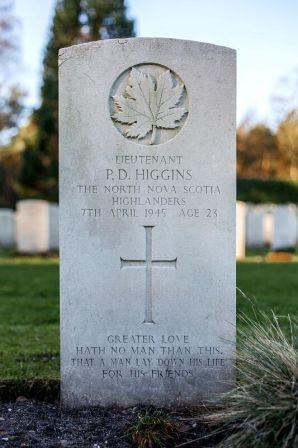
Grave of Percy ‘Dexter’ Higgins in the Canadian War Cemetery in Holten, The Netherlands.  (Photo courtesy of the Canadian Virtual War Memorial)

An error was made in recording the date of Dexter’s death as April 7, 1945 on the Canadian Virtual War Memorial and on his gravestone.  The family was provided with the service file records should they wish to ask the Commonwealth War Graves Commission for a correction to be made on his gravestone, and for a correction to be made on the Canadian Virtual War Memorial. 

Thank you to Donald Higgins for providing a photo, to Harm Kuijper for letting us know about the street naming ceremony, and to Henk Dykman for relating the story he’d heard about how Lt Higgins died. Do you have photos or information to share? Email Pieter at memorialtrail@gmail.com, comment on the blog, or tweet to @researchmemori1.

© Daria Valkenburg

….Want to follow our research?….

If you are reading this posting, but aren’t following our research, you are welcome to do so.  Our blog address: https://onthewarmemorialtrail.com/

Front cover OnTheWarMememorialTrailinEurope4 countries, 6 weeks, 7,000 km – an unforgettable war memorial journey in Europe…. Daria’s book ‘No Soldier Buried Overseas Should Ever Be Forgotten‘ is available in print and e-book formats.  Net proceeds of book sales help support research costs and the cost of maintaining this blog. For more information see https://nosoldierforgotten.com/ 

You are also invited to subscribe to our YouTube Channel: On The War Memorial Trail With Pieter Valkenburg: https://www.youtube.com/channel/UCJ591TyjSheOR-Cb_Gs_5Kw

Never miss a posting!  Subscribe below to have each new story from the war memorial trail delivered to your inbox.